


Promoting knowledge sharing and preventing knowledge withholding are crucial for organizations. Drawing on organizational support and transformational leadership theories, this study aims to examine how transformational leadership influences knowledge creation, knowledge sharing with other teams and knowledge withholding from other teams, mediated through perceived team communities of practice (CoPs).
A three-wave questionnaire survey was administered to 444 employees working in various organizations in Japan. Structural equation modeling and a latent moderated structural equation approach were used to test the hypotheses.
The results indicate that transformational leadership promotes knowledge creation and knowledge sharing with other teams, fully mediated by perceived team CoPs. Moreover, transformational leadership negatively moderates the effect of perceived team CoPs on knowledge withholding from other teams.
This study contributes to the literature by identifying the role of transformational leadership and team CoPs in overcoming knowledge-sharing barriers in organizations.
1. Introduction
Knowledge creation and sharing are fundamental components of knowledge management (Goswami and Agrawal, 2023; Rezaei et al., 2022; Wen and Wang, 2022). Recent studies have focused on knowledge withholding or hiding, because such behaviors negatively impact organizational innovation and performance (Anand et al., 2022; Gonçalves et al., 2023; Kmieciak, 2022, 2023; Zhang et al., 2025). Employees’ self-interest is a major barrier to knowledge sharing, as it induces them to withhold or hide their knowledge (Aleksić et al., 2022; Khoreva and Wechtler, 2020; Lu et al., 2019; Zhang et al., 2024).
Transformational leadership theory postulates that transformational leaders motivate followers to go beyond immediate self-interest and exceed the minimal requirements of their job descriptions (Bass, 1985, 1999; Wang et al., 2011). Although previous research has established a positive relationship between transformational leadership and knowledge sharing based on this theory (Al-Husseini et al., 2021; Le and Lei, 2018, 2019), few studies have explored how transformational leadership influences knowledge sharing (e.g. Li et al., 2014). In addition, the effect of transformational leadership on knowledge withholding or hiding remains understudied (e.g. Nguyen et al., 2022).
To address these research problems, this study explores how transformational leadership influences knowledge creation, knowledge sharing and knowledge withholding by examining the role of team-level communities of practice (CoPs), defined as “groups of people who share a concern, a set of problems, or a passion about a topic, and who deepen their knowledge and expertise in this area by interacting on an ongoing basis” (Wenger et al., 2002, p. 4). This study focuses on CoPs given their significance in facilitating innovation, developing competencies and sharing knowledge in organizational contexts (Brown and Duguid, 1991; Mládková, 2023; Nicolini et al., 2022; Rowe et al., 2023). According to organizational support theory (Eisenberger et al., 2020; Kurtessis et al., 2017), employees view their supervisors and colleagues as embodying the organization, and perceived support from both sides motivates them to feel an obligation of contribution to the organization. Thus, employees who perceive their teams as CoPs may transcend self-interest and share their knowledge within the organization.
Considering that transformational leadership refers to a meaningful and creative exchange between leaders and followers, with the aim of guiding followers through vision-driven change (Bass, 1985; Niessen et al., 2017), transformational leaders are likely to build CoPs in their teams. However, few studies have investigated the relationship between transformational leadership and learning communities (e.g. Becker et al., 2022; Luyten and Bazo, 2019). Thus, this study aims to explore how transformational leadership directly and indirectly influences knowledge creation, sharing and withholding through perceived team CoPs. Moreover, this study hypothesizes that transformational leadership positively moderates the effect of perceived team CoPs on knowledge creation and sharing and negatively moderates the effect of perceived team CoPs on knowledge withholding.
This study contributes to the literature in two ways. First, the present research identifies how transformational leadership influences knowledge creation, sharing and withholding, drawing on organizational support theory (Eisenberger et al., 2020; Kurtessis et al., 2017) and transformational leadership theory (Bass, 1985, 1999). The findings indicate that transformational leadership promoted knowledge creation and knowledge sharing with other teams, which was fully mediated through perceived team CoPs, and that knowledge withholding from other teams was weakened when transformational leadership and perceived team CoPs were high. Although a positive relationship was found between transformational leadership and knowledge sharing or knowledge hiding (Al-Husseini et al., 2021; Le and Lei, 2018, 2019; Scuotto et al., 2022), the processes underlying these factors were minimally explored (e.g. Li et al., 2014; Nguyen et al., 2022). Second, this study identifies the leadership type that promotes team CoPs. Previous studies have highlighted the importance of leadership in establishing CoPs (Aljuwaiber, 2016; Kirkman et al., 2011; Noar et al., 2023), whereas few quantitative studies have explored the influence of transformational leadership on learning communities (e.g. Becker et al., 2022; Luyten and Bazo, 2019). The findings provide valuable insights into the development and management of CoPs.
In the following sections, the theoretical background and hypotheses are presented. Next, the methodology and results are described. Then, results are theoretically and practically discussed. Finally, limitations and future research are explained.
2. Theoretical background and hypotheses
2.1 Knowledge creation, sharing and withholding
Knowledge creation is a process through which individuals, groups or organizations transcend the boundary of the old into a new self by acquiring new knowledge (Nonaka and Toyama, 2003). Knowledge sharing is the provision or receipt of task information, know-how and feedback on a product or procedure (Cummings, 2004, p. 352). As shared knowledge can be used to create new knowledge (Malhotra and Majchrzak, 2004), knowledge creation and sharing are fundamental components of knowledge management (Goswami and Agrawal, 2023; Rezaei et al., 2022; Wen and Wang, 2022).
Based on a literature review, Ahmad and Karim (2019) indicated that knowledge sharing is positively related to creativity, learning and performance at the individual, team and organizational levels. However, the disciplinary or functional segment often hinders knowledge sharing across boundaries (Sapir et al., 2016; Tasselli, 2015; Wang and Noe, 2010), which is called “knowledge sharing barrier” (Karagoz et al., 2020). As individual self-interest is a major barrier to knowledge sharing (Aleksić et al., 2022), this study focused not only on knowledge sharing with other teams but also on knowledge withholding from other teams.
Knowledge withholding refers to an intentional attempt to conceal knowledge that individuals could have shared (Tsay et al., 2014), or to make less than full effort to contribute knowledge (Lin and Huang, 2010). Knowledge withholding is not the opposite of knowledge sharing (Kmieciak, 2023), because a lack of knowledge sharing can be caused by the inability to share relevant knowledge, unfamiliarity with the subject or the absence of knowledge itself (Connelly et al., 2012; Kang, 2016; Tsay et al., 2014). Following Anand et al. (2020), this study considers knowledge withholding, knowledge hiding and knowledge hoarding to be synonymous.
Gonçalves et al. (2023) stated that knowledge withholding has recently gained interest, as it has been linked to lower organizational innovation and performance. In terms of antecedents, knowledge withholding or hiding was weakened by trust and distributive justice (Lin and Huang, 2010), perceived organizational support, leader-member exchange, team-member exchange (Tsay et al., 2014; Weng et al., 2020) and supervisor support (Kmieciak, 2023), but was strengthened by role conflict, job insecurity and cynicism (Nguyen et al., 2022). Accordingly, Shen et al. (2025) conducted a meta-analysis of knowledge hiding and found that human resource practices, leadership and personality significantly influenced knowledge-hiding behavior. However, few studies have examined the combined effects of leadership and organizational or team characteristics on knowledge withholding. Considering that employees’ self-interests are major barriers to knowledge sharing (Aleksić et al., 2022; Khoreva and Wechtler, 2020; Lu et al., 2019; Zhang et al., 2024), this study focuses on transformational leadership and CoPs that may motivate employees to transcend self-interest and share their knowledge within the organization.
2.2 Organizational support theory and transformational leadership theory
To develop a research model, this study draws upon organizational support theory and transformational leadership theory, because these theories explain how employees go beyond self-interest and share their knowledge within the organization. According to organizational support theory (Eisenberger et al., 2020; Kurtessis et al., 2017), employees develop a general perception of the extent to which the organization values their contributions and cares about their well-being. This perception is called “perceived organizational support” (Eisenberger et al., 2020). The organizational support theory includes two processes: social exchange processes and self-enhancement. First, social exchange theory suggests that perceived organizational support makes employees feel obligated by the reciprocity norm to help their organization reach its goals (Rhoades and Eisenberger, 2002). Second, organizational support theory postulates that perceived organizational support fulfills employees’ socioemotional needs such as esteem, approval and emotional support, which results in employee identification with the organization (Eisenberger et al., 2020). Consistent with these two mechanisms, a meta-analysis (Kurtessis et al., 2017) showed that perceived organizational support enhanced employees’ felt obligation toward organizational objectives, organizational identification, in-role performance and organizational citizenship behaviors, whereas perceived organizational support reduced job stress, burnout and withdrawal behaviors.
Importantly, employees tend to view supervisors, coworkers, teams and divisions as embodying the organization (Eisenberger et al., 2020). Using a meta-analysis, Rhoades and Eisenberger (2002) found that supervisory support was positively related to perceived organizational support suggesting that employees regard their supervisors as agents of the organization and view their supervisors’ support toward them as indicative of the organization’s support. Accordingly, previous studies showed that perceived supervisors’ support was positively associated with perceived organizational support, suggesting that employees perceive organizational support through supervisory support (Kossek et al., 2011; Shanock and Eisenberger, 2006). Pearce and Herbik (2004) found that team leaders’ behaviors and perceived team support promoted team citizenship behaviors, which is consistent with organizational support theory. These arguments indicate that transformational leadership is closely associated with organizational support theory.
In contrast to transactional leaders who try to meet followers’ self-interests, transformational leaders move followers beyond their immediate self-interests through “idealized influence” (becoming role models that followers want to emulate), “inspirational motivation” (providing a desirable future vision and meaning to set goals), “intellectual stimulation” (stimulating followers to be innovative and creative by questioning assumptions) and “individual consideration” (paying attention to followers’ need for developmental by acting as a mentor or coach) (Bass, 1999; Bass et al., 2003; Díaz-Sáenz, 2011). These dimensions include challenging and supportive aspects (Niessen et al., 2017). Given the strong correlations among the four dimensions (Díaz-Sáenz, 2011; Tejeda et al., 2001; Tracey and Hinkin, 1998), transformational leaders may combine these four behaviors to promote innovation and learning within their teams, units and organizations.
Previous studies have found that transformational leadership enhances psychological empowerment, self-efficacy (Gao et al., 2020), mastery goals (Hamstra et al., 2014), autonomous motivation (Fernet et al., 2015) and psychological needs, such as autonomy, relatedness and competence (Kovjanic et al., 2012). Using a meta-analysis, Koh et al. (2019) reported that transformational leadership promoted employee creativity, mediated through several group and individual factors. Song et al. (2012) found that transformational leadership enhanced knowledge creation practices in organizations. Empirical evidence indicates that transformational leadership improves employees’ psychological conditions for creativity. Therefore, the following hypothesis is generated:
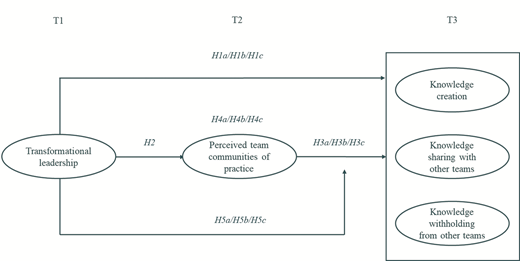
Transformational leadership is positively related to knowledge creation.
As suggested earlier, transformational leadership encourages followers to go beyond immediate self-interest and the minimal requirements of their job descriptions (Bass, 1985, 1999). A meta-analytic review by Wang et al. (2011) revealed that transformational leadership has a stronger influence on contextual performance such as extra-role performance and organizational citizenship behavior than on in-role performance. They interpreted these findings to mean that transformational leaders motivate followers to perform beyond the minimum requirements specified by the organization (Podsakoff et al., 1996). Le and Lei (2018) revealed that transformational leadership enhanced knowledge donation, whereas Han et al. (2016) found that transformational leadership promoted knowledge-sharing intention through organizational commitment and psychological empowerment. These results can be explained by the organizational support theory (Eisenberger et al., 2020; Kurtessis et al., 2017) suggesting that members who receive support from their supervisors feel an obligation to contribute to the organization. Based on theories and evidence, members who perceive their supervisors as transformational leaders are likely to share their knowledge with other teams, and are unlikely to withhold knowledge from other teams. Therefore, the following hypotheses were formulated:
Transformational leadership is positively related to knowledge sharing with other teams.
Transformational leadership is positively related to knowledge withholding from other teams.
2.3 Communities of practice
This study focuses on CoPs, given that such communities can be sites for promoting innovation, competencies and knowledge sharing within organizations (Brown and Duguid, 1991; Mládková, 2023; Nicolini et al., 2022; Rowe et al., 2023). Globalization has encouraged firms to establish CoPs as an important tool for knowledge management (Aljuwaiber, 2016), including online or virtual CoPs that allow geographically dispersed participants to share knowledge (Haas et al., 2021; Hennekam et al., 2020; Schwartz, 2018). CoPs promote members’ absorptive capacity (Cadiz et al., 2009) and develop their skills and careers (Hennekam et al., 2020; Kost et al., 2020; Schwartz, 2018).
According to Wenger (2011) and Wenger et al. (2002), CoPs comprise three elements: domain (passion and interest for a specific domain), community (relationships that enable members to learn from each other) and practice (a shared repertoire of tools, frameworks, methods and stories). In earlier work, Wenger (1998) called the three elements “joint enterprise,” “mutual engagement” and “shared repertoire,” but he revised the terms to clarify the meaning of CoPs in later work (Farnsworth et al., 2016). Many studies have adopted the three-element conceptualization of CoPs (McGrath et al., 2020; Pyrko et al., 2017) to explain the social nature of knowledge in organizations, the knowledge sharing process and the socialization of newcomers (Nicolini et al., 2022). Previous studies have shown that CoPs improve practices, services and capabilities; provide safe but challenging spaces; and enhance members’ organizational commitment and job satisfaction (Chang et al., 2009; Noar et al., 2023; Patton and Parker, 2017; Terry et al., 2020). CoPs have been explored at the group, organization and interorganization levels, both in face-to-face and online interactions, whereas this study focuses on team-level CoPs, given that, by definition, a team is the minimal unit of a CoP (Wenger et al., 2002). As this study adopted questionnaire surveys to measure team CoPs by asking members to evaluate the characteristics of their teams, the term “perceived team CoPs” was used.
With regard to facilitators of CoPs, it was found that leadership (Aljuwaiber, 2016; Borzillo et al., 2011; Kirkman et al., 2011; Noar et al., 2023), task interdependence (Kirkman et al., 2011), structure and culture (Aljuwaiber, 2016), reciprocity, enjoyment in helping (Jeon et al., 2011), diverse networking (Barbour et al., 2018) and external coach (Mayer et al., 2013), had positive impacts on effectiveness of CoPs. Meanwhile, fear of criticism or misleading members (Ardichvili et al., 2003), time constraints and funding (Noar et al., 2023) have shown to hinder members’ intentions to participate in and engage with CoPs.
Of these factors, previous studies indicate that community leaders play an important role in promoting effective CoPs. For example, Zboralski (2009) analyzed CoPs in a multinational company and found that the community leader positively influenced the frequency and quality of interaction. Noar et al. (2023) reviewed 50 papers on CoPs in healthcare and found that the main facilitator of engagement with CoPs was strong leadership. However, little is known about the leadership types that facilitate CoPs. A notable exception is Kirkman et al. (2011), who report that community-oriented external leadership (including task-oriented behaviors, interpersonal processes, boundary spanning and resource acquisition) strengthened the effectiveness of organizational CoPs through empowerment. Therefore, further research is required to identify the community development process and investigate the relationship between leadership and CoPs.
According to organizational support theory (Eisenberger et al., 2020), transformational leadership may promote CoPs. For example, a meta-analytic study (Kurtessis et al., 2017) reported that transformational leadership was positively associated with perceived organizational support, explaining that transformational leaders pay attention to their followers’ needs for development (individualized consideration) and provide them with purpose and efficacy (inspirational motivation). Dionne et al. (2004) argued that transformational leadership should increase team cohesion and communication through a shared vision, team commitment and an empowered environment. Previous studies have indicated that transformational leadership enhances internal teamwork quality (Cha et al., 2015), team efficacy, trust, commitment (Arnold et al., 2001), job resources (Fernet et al., 2015) and intrinsic team motivation (Wang et al., 2016).
These empirical findings indicate that transformational leaders can build CoPs within teams. Although it is difficult to identify the exact correspondence between transformational leadership’s four dimensions and CoPs’s three elements, leaders’ challenging behaviors (“idealized influence” and “inspirational motivation”) may inspire team members’ passion and interest for a specific task (domain); supportive behaviors (“intellectual stimulation” and “individual consideration”) may facilitate learning-oriented relationships among members (community) and enhance shared repertoire of tools, methods and stories (practice) (Bass, 1999; Bass et al., 2003; Wenger, 2011; Wenger et al., 2002). Organizational support theory (Eisenberger et al., 2020) and empirical evidence suggest that transformational leaders are likely to build CoPs by promoting domains, communities and practices. Therefore, the following hypothesis was generated:
Transformational leadership is positively related to perceived team CoPs.
Organizational knowledge creation theory (Nonaka et al., 2006) postulates that knowledge creation depends on “Ba,” or a shared space for emerging relationships. Nonaka (1994) insisted that a community of interactions among members promotes the development and amplification of new knowledge. Adenfelt and Lagerström (2006) asserted that knowledge creation requires cooperation and interaction among individuals. As CoPs are groups that increase learning or creativity (Cox, 2005), they can be regarded as a Ba for creating knowledge. According to job demands-resources model (Bakker and Demerouti, 2014, 2017), CoPs provide members with job resources in creating new knowledge. Conceivably, passion and interest for a specific domain (domain) motivate members to create new knowledge, relationships among members (community) enable individuals to learn from each other and a shared repertoire of tools, frameworks and methods (practice) can be used to create new knowledge (Wenger, 2011; Wenger et al., 2002; Wenger and Snyder, 2000).
Although a few studies have quantitatively examined the effect of CoPs on knowledge creation, some have shown that constructs similar to CoP elements are positively associated with knowledge creation. For example, Goswami and Agrawal (2020) found that shared goals positively impacted employees’ knowledge creation. Yoo et al. (2021) reported that supportive learning cultures promoted knowledge creation. Jeong (2021) found that the quality of interpersonal relationships was positively associated with organizational knowledge creation. As shared goals, a supportive learning culture and interpersonal relationships are associated with CoP elements, employees who perceive their teams as CoPs may create new knowledge. Based on organizational knowledge creation theory (Nonaka et al., 2006), team CoPs as “Ba” may provide members with job resources for knowledge creation. Therefore, the following hypothesis is proposed:
Perceived team CoPs is positively related to knowledge creation
One of the most critical barriers to knowledge sharing is the lack of organizational support, such as leadership, trust and climate (Al-Kurdi et al., 2020; Anwar et al., 2024; Karagoz et al., 2020; Lekhawipat et al., 2018). Based on organizational support theory (Eisenberger et al., 2020; Kurtessis et al., 2017), team members who receive support from teams and supervisors tend to share their knowledge with other teams because they may feel obligated by the reciprocity norm and identity within the organization. Previous studies have reported findings consistent with this hypothesis. For example, Han et al. (2019) reported that perceived organizational support had direct and indirect positive impacts on knowledge sharing intentions through citizenship behavior. Shateri and Hayat (2020) found that perceived organizational support promoted knowledge sharing both directly and indirectly through organizational trust. Jeung et al. (2017) also found a positive influence of perceived organizational support on knowledge sharing, mediated through affective organizational commitment. Moreover, perceived organizational support and perceived supervisors’ support have been shown to reduce knowledge withholding intention (Kmieciak, 2023; Tsay et al., 2014).
As employees tend to view coworkers, teams and divisions as embodying the organization (Eisenberger et al., 2020), CoP members may perceive support from the organization; thus, they may be obligated by the reciprocity norm to contribute to the organization by sharing knowledge within the organization. Ghamrawi et al. (2024) qualitatively analyzed school principals and found that virtual CoPs provide a rich environment for sharing knowledge. Škerlavaj et al. (2019) reported that prosocial motivation weakened knowledge hiding. Based on organizational support theory (Eisenberger et al., 2020; Kurtessis et al., 2017) and empirical evidence, employees who perceive their teams as CoPs are likely to share their knowledge with other teams and are unlikely to withhold their knowledge from other teams. Therefore, the following hypotheses were formulated:
Perceived team CoPs are positively related to knowledge sharing with other teams.
Perceived team CoPs are negatively related to knowledge withholding from other teams.
Given H2, H3a, H3b and H3c, the perceived team CoPs partially mediate the effects of transformational leadership on knowledge creation, knowledge sharing with other teams and knowledge withholding from other teams. Such mediational effects can be explained by organizational support theory (Eisenberger et al., 2020; Kurtessis et al., 2017), suggesting that transformational leadership enhances members’ perceptions of organizational support, resulting in positive individual outcomes. Accordingly, Nielsen et al. (2008) revealed that positive work characteristics partially mediated the relationship between transformational leadership and followers’ well-being. Walumbwa et al. (2004) also found that collective efficacy partially mediated the relationship between transformational leadership and followers’ organizational commitment. On the basis of the theory and empirical results, the following hypotheses were proposed:
Perceived team CoPs positively and partially mediate the effect of transformational leadership on knowledge creation.
Perceived team CoPs positively and partially mediate the effect of transformational leadership on knowledge sharing with other teams.
Perceived team CoPs negatively and partially mediate the effect of transformational leadership on knowledge withholding from other teams.
2.4 Moderating role of transformational leadership
Transformational leaders motivate followers to go beyond the immediate self-interest (Bass, 1985, 1999; Wang et al., 2011) and promote their creativity by developing an innovative environment and enhancing followers’ intrinsic motivation for creativity (Koh et al., 2019). Meanwhile, CoPs effectively promote innovation and knowledge sharing within organizations (Brown and Duguid, 1991; Mládková, 2023; Nicolini et al., 2022; Rowe et al., 2023). According to organizational support theory (Eisenberger et al., 2020; Kurtessis et al., 2017), transformational leadership and team CoPs should motivate members to go beyond self-interest to create and share their knowledge with other teams. Considering these effects, members may be motivated to create new knowledge and share it with other teams when they perceive their teams as CoPs and their supervisors as transformational leaders. Therefore, the following hypotheses were formulated:
Transformational leadership positively moderates the effect of perceived team CoPs on knowledge creation.
Transformational leadership positively moderates the effect of perceived team CoPs on knowledge sharing with other teams.
Transformational leadership negatively moderates the effect of perceived team CoPs on knowledge withholding from other teams.
Figure 1 illustrates research model.
3. Methodology
3.1 Data collection and procedures
For data collection, a three-wave questionnaire survey was conducted in 2024 with a one-week interval between waves using a large-scale internet research company in Japan to test the research model. A multi-wave design was adopted in this study as it allows researchers to infer the causal ordering of variables (Dormann and Zapf, 2002; Marsh et al., 1999). Internet surveys were used given their ability to obtain large, diverse samples and collect anonymous data (Gosling and Mason, 2015). A one-week interval was chosen because Dormann and Griffin (2015) recommended the use of short-time-interval research designs (from two days to one week) to identify the possible relations among variables. Some organizational psychology studies have also adopted a one-week interval in longitudinal surveys (e.g. Sun, 2022; Tims et al., 2016). This study was reviewed and approved by the Research Ethics Committee of the Centre for Experimental Research in Social Sciences, Hokkaido University (No. 05–25).
The Japanese context may be adequate to examine the research model for two reasons. First, the Japanese are known to have an interdependent culture compared to Western countries (Kitayama et al., 2009); thus, CoPs may be formed in many organizations in Japan. Second, a meta-analytic study (Crede et al., 2019) found that the relationship between transformational leadership and employee performance is stronger in countries whose culture is incongruent with transformational leadership (e.g. Africa, the Middle East, South America and Southeast Asia) than in Western Europe and North America. Thus, Japan may be an appropriate site to examine the effects of transformational leadership on CoPs and knowledge-related activities.
This study focused on employees who worked full-time in nonmanagerial positions for more than one year in current teams because they were asked to evaluate team leaders’ behaviors and team characteristics in the questionnaire. About 1,172 candidates who were registered with the research company and fulfilled the above criteria were invited to participate in the study by considering gender balance. At Time 1, 751 (response rate = 64.1%) employees responded to the questionnaire. At Time 2, the number of respondents was 625 (53.3%). At Time 3, the survey was completed by 541 (46.2%) employees. Among the respondents, 444 (37.9%) employees who belonged to their respective teams with more than three members, including team leaders, were selected as the sample; because such teams enable members to interact with each other, as opposed to dyads (Kozlowski and Bell, 2006). The same approach was adopted in previous team studies (e.g. Jackson et al., 1991).
Participants included 52.9% women who worked in diverse industries (22.7% manufacturers, 14.0% public sector, 11.5% services, 11.5% health care, 8.8% wholesale and retail, 6.3% finance and insurance, 6.1% construction, 5.9% telecommunications, 4.3% transportation and 8.9% other industries) and diverse functional departments (21.4% sales, 15.3% human resources, general affairs and low, 10.6% production, 7.9% engineering, 7.7% finance and accounting, 8.3% other staff departments, 4.1% information, 3.4% R&D and 21.3% other departments). Regarding the number of employees, participants belonged to various sizes of organizations (44.1% below 100, 22.5% 100–499, 8.6% 500–999, 11.3% 1,000–4,999, 3.6% 5,000–9,999 and 9.9% above 10,000). The average age of the participants was 37.91 years (SD = 10.33). The average team size and tenure were 7.61 years (SD = 3.92) and 2.84 years (SD = 0.37), respectively.
3.2 Measurement scales
The surveys were conducted in Japanese. Thus, the original English items were translated into Japanese. To check and improve the translation quality, a back-translation procedure was conducted by a bilingual professional (Cascio, 2012). All variables were evaluated on a five-point Likert-type scale (1 = strongly disagree; 5 = strongly agree), except for transformational leadership (1 = rarely; 5 = very frequently).
At Time 1, transformational leadership was assessed using a seven-item scale created by Carless et al. (2000). Given that previous studies have indicated a high level of intercorrelation among the subscales (Díaz-Sáenz, 2011; Tejeda et al., 2001; Tracey and Hinkin, 1998), the one-factor model was adopted in this study. Respondents were asked to evaluate team leaders’ behavior. A sample item was “Team leader communicates a clear and positive vision of the future.” The Cronbach’s alpha was 0.92.
At Time 2, perceived team CoPs were assessed using a nine-item scale based on items from Cadiz et al. (2009), Chiu et al. (2006), Jeon et al. (2011) and Wenger’s (2011) conceptualization of CoPs. As Wenger (1998) suggested that three dimensions of CoPs are closely associated with one another, the one-factor model was adopted in this study. The scale items are presented in the Appendix Table A1. The respondents were asked to describe the characteristics of their teams. The Cronbach’s alpha was 0.91.
At Time 3, knowledge creation was assessed using a six-item scale. Following Goswami and Agrawal (2020), this study used three items from Andreeva and Kianto (2011) and three items from Khedhaouria and Jamal (2015), which were slightly different from Goswami and Agrawal (2020). As these studies measured knowledge creation at team and organizational level, subject of items were changed to “I” in this study. The respondents were asked to evaluate their own behavior in generating new work processes and methods. A sample item is “I frequently come up with new ideas about our working methods and processes.” The Cronbach’s alpha was 0.91.
At Time 3, knowledge sharing with other teams was assessed using a five-item scale based on Bock et al. (2005). In this study, “other organizational members” was modified to “other teams.” Respondents were asked to describe the extent to which they intended to share their knowledge with employees of other teams. A sample item is “I intend to share my experience or know-how with other teams.” The Cronbach’s alpha was 0.86.
At Time 3, knowledge withholding from other teams were assessed using a five-item scale based on Lin and Huang (2010). In this study, “other members” was modified to “other teams.” Respondents were asked to describe the extent to which they hesitated or resisted sharing knowledge with the employees of other teams or units. A sample item is “I contribute less knowledge than I know I can for other teams.” Cronbach’s alpha was 0.81.
Control variables Regarding control variables: Age, gender (1 = male, 2 = female), team tenure (years), team size (number of team members, including leader), organization type (1 = profit, 2 = nonprofit) and organization size (1 = 1–99, 2 = 100–499, 3 = 500–999, 4 = 1,000–4,999, 5 = 5,000–9,999 and 6 = above 10,000) were included in the model (At Time 1). Additionally, to reduce common method variance, social desirability was assessed at Time 1 using the six-item scale developed by Paulhus (1991). A sample item is “I am very confident of my judgments.” The Cronbach’s alpha was 0.83.
3.3 Analytic strategy
A confirmatory factor analysis was conducted to assess the measurement model. To test H1, H2, H3a–3c and H5a–5c, a latent moderated structural equation (LMS) approach (Cheung et al., 2021) was performed using Mplus 8.6 (Muthen and Muthen, 1998). This approach was adopted as it corrects for measurement errors in estimating latent interaction effects and produces more accurate estimated effects and confidence intervals than moderated multiple regression (Cheung et al., 2021; Cheung and Lau, 2017; Su et al., 2019). To test the mediating H4a–4c, a structural equation modeling (SEM) and bootstrapping analysis (sample size = 2,000) were conducted to analyze the baseline model that does not include interactive effects using Mplus 8.6 with maximum likelihood estimation. This is because the LMS cannot evaluate the indirect effect. To check the robustness of the LMS results, hierarchical regression analysis was used to examine the research model.
4. Results
4.1 Common method variance
As this study used self-reported data from a single source, a common method bias could have affected the results. To control for common method bias, this study adopted two procedures, following Podsakoff et al. (2003). First, the present research introduced a time lag between the measurements of the independent and dependent variables by conducting a three-wave survey. Second, social desirability (Paulhus, 1991) which can create common method variance, was included as a control variable to separate its effects on the predictor and criterion variables.
To diagnose common method variance, the following two procedures were performed based on Podsakoff et al. (2003). First, Harman’s single-factor method was applied. An exploratory factor analysis with unrotated factor solution for all measured items generated eight factors, with the first factor accounting for 22.59% of the total variance. In addition, confirmatory factor analyses show that hypothesized five-factor model fitted significantly better than one-factor model (Δχ2 = 1,659.99, Δdf = 10, p < 0.001). Second, a latent common method factor was added to the hypothesized five-factor model in confirmatory factor analysis. Results indicate that the method factor accounted for only 5.85% of the total variance, which was below the median amount of method variance (25%) (Williams et al., 1989). These results suggest that common method variance was not a serious problem in the present study.
4.2 Measurement validation
To examine reliability of the constructs, Cronbach’s α and composite reliability (CR) were calculated. As described above and shown in Table 1, the values of Cronbach’s α and CR of all variables exceeded the cut-off value of 0.7. The results indicated sufficient reliability of the studied constructs. A series of confirmatory factor analyses was conducted to assess the convergent and discriminant validity of the constructs. The results showed that hypothesized six-factor model provided a good fit to the data (χ2 = 954.71, df = 454, comparative fit index (CFI) = 0.94, TLI = 0.93, root mean square error of approximation (RMSEA) = 0.05, standardized root mean square residual (SRMR) = 0.05), which was significantly better than five-factor, four-factor, three-factor, two-factor and one-factor models. As shown in Table 1, the average variance extracted (AVE) of the variables was greater than the cutoff value of 0.5 (Fornell and Larcker, 1981) except for knowledge withholding, which was slightly below the criterion (0.47). To evaluate discriminant validity, the AVE of the constructs was compared with their shared variance. Table 1 shows that the AVE for each variable was higher than the shared variance between variables. These findings provide evidence of the acceptable convergent and discriminative validity of the constructs.
Descriptive statistics and correlations
| Variable | M | SD | α | CR | AVE | 1 | 2 | 3 | 4 | 5 | 6 | 7 | 8 | 9 | 10 | 11 | 12 |
|---|---|---|---|---|---|---|---|---|---|---|---|---|---|---|---|---|---|
| 1. Age | 37.91 | 10.33 | – | – | – | – | |||||||||||
| 2. Gender | 1.53 | 0.50 | – | – | – | 0.04 | – | ||||||||||
| 3. Team tenure | 2.84 | 0.36 | – | – | – | 0.21*** | 0.03 | – | |||||||||
| 4. Organization type | 1.14 | 0.35 | – | – | – | −0.05 | −0.04 | −0.09 | – | ||||||||
| 5. Team size | 7.61 | 3.92 | – | – | – | −0.06 | 0.03 | −0.08 | −0.01 | – | |||||||
| 6. Organization size | 2.37 | 1.66 | – | – | – | −0.14** | 0.02 | −0.10* | 0.11* | 0.15** | – | ||||||
| 7. Social desirability (T1) | 2.91 | 0.70 | – | – | – | −0.12** | −0.18*** | −0.14** | 0.08 | −0.01 | 0.03 | – | |||||
| 8. TL (T1) | 2.86 | 0.82 | 0.92 | 0.92 | 0.61 | −0.16** | −0.03 | −0.08 | 0.07 | −0.06 | 0.02 | 0.37*** | – | 0.18 | 0.05 | 0.05 | 0.01 |
| 9. Perceived CoPs (T2) | 3.31 | 0.66 | 0.91 | 0.91 | 0.54 | 0.02 | 0.01 | 0.01 | 0.08 | 0.06 | 0.06 | 0.16** | 0.43*** | – | 0.10 | 0.07 | 0.01 |
| 10. KC (T3) | 2.97 | 0.77 | 0.91 | 0.91 | 0.63 | 0.01 | −0.07 | −0.01 | 0.10* | 0.03 | −0.02 | 0.36*** | 0.23*** | 0.32*** | – | 0.33 | 0.04 |
| 11. KS with other teams (T3) | 2.99 | 0.76 | 0.86 | 0.86 | 0.56 | 0.02 | −0.07 | 0.04 | 0.02 | 0.01 | 0.01 | 0.22*** | 0.22*** | 0.26*** | 0.57*** | – | 0.01 |
| 12. KW from other teams (T3) | 2.86 | 0.66 | 0.81 | 0.81 | 0.47 | −0.14** | −0.11* | −0.10* | 0.13** | −0.01 | 0.01 | 0.20*** | 0.07 | 0.06 | 0.21*** | 0.11* | – |
Note(s): Gender (1 = male, 2 = female). Organization type (1 = profit, 2 = nonprofit). Organization size (1 = 1–99, 2 = 100–499, 3 = 500–999, 4 = 1,000–4,999, 5 = 5,000–9,999 and 6 = above 10,000). *p < 0.05; **p < 0.01; ***p < 0.001. Correlations are below the diagonal, squared correlations are above the diagonal. α = Cronbach’s α. CR = composite reliability. AVE = average variance extracted
4.3 Testing the hypotheses
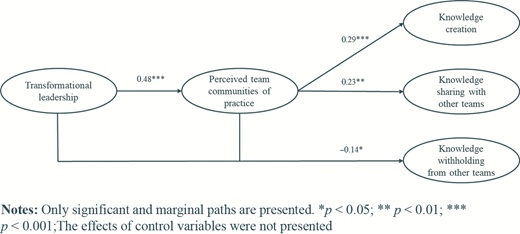
Table 2 and Figure 2 present the LMS results. As the LMS in Mplus did not provide traditional model fit indices (Maslowsky et al., 2015), the fit of the interaction model was compared with that of the baseline model in terms of the Akaike Information Criterion (AIC), following Burnham et al. (2011). As the AIC value of the interaction model was smaller compared to that of the baseline model by ΔAIC = 11.39, the inclusion of the interaction terms in the model improved the model fit. Considering the fit indices of the baseline model (χ2 = 1,284.063, df = 650, CFI = 0.92, TLI = 0.91, RMSEA = 0.05 and SRMR = 0.06), the interaction model provided a good fit to the data.
Results of latent moderated structural equation modeling
| Variables | Perceived team CoPs | Knowledge creation | Knowledge sharing with other teams | Knowledge with holding from other teams |
|---|---|---|---|---|
| Direct effects | ||||
| Transformational leadership | 0.48*** | −0.02 | −0.04 | 0.10 |
| Perceived team CoPs | 0.29*** | 0.23** | 0.05 | |
| Moderating effects | ||||
| Transformational leadership × perceived team CoPs | 0.01 | 0.11+ | −0.14* | |
| Controls | ||||
| Age | 0.10* | 0.03 | 0.04 | −0.12* |
| Gender | 0.01 | −0.01 | −0.06 | −0.07 |
| Team tenure | 0.03 | 0.04 | 0.07 | −0.04 |
| Organization type | 0.06 | 0.07 | −0.02 | 0.11* |
| Team size | 0.10* | 0.02 | 0.01 | −0.02 |
| Organization size | 0.05 | −0.06 | 0.01 | −0.03 |
| Social desirability | 0.01 | 0.34*** | 0.18** | 0.18** |
| R2 | 0.25 | 0.21 | 0.14 | 0.11 |
Note(s): CoPs = communities of practice. Gender (1 = male, 2 = female). Organization type (1 = profit, 2 = nonprofit). Organization size (1 = 1–99, 2 = 100–499, 3 = 500–999, 4 = 1,000–4,999, 5 = 5,000–9,999 and 6 = above 10,000). +p < 0.10; *p < 0.05; **p < 0.01; ***p < 0.001
Table 2 shows that transformational leadership was not significantly related to knowledge creation (β = −0.02, ns), knowledge sharing with other teams (β = −0.04, ns) and knowledge withholding from other teams (β = 0.10, ns). Thus, H1a, H1b and H1c were not supported. Table 2 also shows that transformational leadership was significantly and positively related to perceived team CoPs (β = 0.48, p < 0.001), thereby supporting H2. The results indicated that perceived team CoPs were significantly and positively related to knowledge creation (β = 0.29, p < 0.001) and knowledge sharing with other teams (β = 0.23, p < 0.01), but were not significantly related to knowledge withholding from other teams (β = 0.05, ns). Thus, H3a and H3b were supported, but H3c was not. Table 3 shows the results of bootstrapping analysis (sample size = 2,000). The results indicated that perceived team CoPs positively and fully mediated the relationship between transformational leadership and knowledge creation (indirect effect = 0.14, p < 0.001; 95% CI [0.08, 0.21]) and knowledge sharing with other teams (indirect effect = 0.11, p < 0.01; 95% CI [0.04, 0.20]). However, the mediation effect of perceived team CoPs between transformational leadership and knowledge withholding from other teams was not significant (indirect effect = 0.02, ns: 95% CI [−0.04, 0.91]). As this study predicted partial mediating effects, H4a, H4b and H4c were not supported.
Results of indirect effects based on bootstrap estimates (baseline model)
| Mediating effects | Estimate | SE p | Bias-corrected 95% CI | ||
|---|---|---|---|---|---|
| Lower | Upper | Hypothesis | |||
| TL → perceived team CoPs → KC | 0.14 | 0.03*** | 0.08 | 0.21 | H4a |
| TL → perceived team CoPs → KS | 0.11 | 0.04** | 0.04 | 0.20 | H4b |
| TL → perceived team CoPs → KW | 0.02 | 0.03 | −0.04 | 0.09 | H4c |
Note(s): TL = transformational leadership. CoPs = communities of practice. KC = knowledge creation. KS = knowledge sharing with other teams. KW = knowledge withholding from other teams. Standardized estimates are reported. *** p < 0.001; ** p < 0.01. Bootstrap sample size = 2,000
The measurement scales
| Items | Standardized factor loadings | Sources |
|---|---|---|
| Transformational leadership | Carless et al. (2000) | |
| Team leader communicates a clear and positive vision of the future | 0.726 | |
| Team leader treats staff as individuals, supports and encourages their development | 0.761 | |
| Team leader gives encouragement and recognition to staff | 0.823 | |
| Team leader fosters trust, involvement and cooperation among team members | 0.798 | |
| Team leader encourages thinking about problems in new ways and questions assumptions | 0.755 | |
| Team leader is clear about his/her values and practices what he/she preaches | 0.803 | |
| Team leader instills pride and respect in others and inspires me by being highly competent | 0.797 | |
| Perceived team CoPs | ||
| The domain | ||
| Team members share concerns and interests at work | 0.709 | Wenger (2011) |
| Team members share the vision of helping others solve their problems | 0.773 | Chiu et al. (2006) |
| Team members share the same goal of learning from each other | 0.737 | Chiu et al. (2006) |
| The community | ||
| Team members learn new skills and knowledge through collaborating with one another | 0.775 | Cadiz et al. (2009) |
| In our team, there is an open environment for free communication | 0.628 | Cadiz et al. (2009) |
| Team members help each other at work | 0.731 | Wenger (2011) |
| The practice | ||
| Team members share our experience or know-how from work with one another | 0.759 | Jeon et al. (2011) |
| Team members share our expertise from education or training with one another | 0.730 | Jeon et al. (2011) |
| Team members shared what we learned at work | 0.770 | Cadiz et al. (2009) |
| Knowledge creation | ||
| I frequently come up with new ideas about our working methods and processes | 0.786 | Andreeva and Kianto (2011), Goswami and Agrawal (2020) and Khedhaouria and Jamal (2015) |
| If a traditional method is not effective anymore, I develop a new method | 0.802 | |
| I use existing know-how in a creative manner for new applications | 0.782 | |
| I frequently experiment with new alternatives | 0.761 | |
| I am highly imaginative in thinking about new or better solutions to resolve problems | 0.809 | |
| I often invent new ideas to resolve nonroutine situations | 0.814 | |
| Knowledge sharing with other teams | ||
| I will share my work reports and official documents with other teams | 0.721 | Bock et al. (2005) |
| I will always provide my manuals, methodologies and models for other teams | 0.779 | |
| I intend to share my experience or know-how with other teams | 0.796 | |
| I will always provide my know-where or know-whom at the request of other teams | 0.676 | |
| I will try to share my expertise from my education or training with other teams in a more effective way | 0.761 | |
| Knowledge withholding from other teams | ||
| I contribute less knowledge than I know I can for other teams | 0.704 | Lin and Huang (2010) |
| I give less effort on knowledge contribution than other teams | 0.616 | |
| I often leave contributing knowledge to other teams | 0.708 | |
| I often take advantage of other teams’ knowledge without contribution | 0.640 | |
| I avoid contributing knowledge to other teams as much as possible | 0.749 | |
Table 2 shows that transformational leadership significantly and negatively moderated the effect of perceived team CoPs on knowledge withholding from other teams (β = −0.14, p < 0.05), thereby supporting H5c. However, transformational leadership marginally and positively moderated the effect of perceived team CoPs on knowledge sharing with other teams (β = 0.11, p < 0.10), and did not significantly moderate the effect of perceived team CoPs on knowledge creation (β = 0.01, ns). Thus, H5a and H5b were not supported.
To further evaluate the moderating effects, interaction graphs with one standard deviation (SD) above and below the mean were plotted using the PROCESS macro developed by Hayes (2017). As shown in Figure 3, perceived team CoPs were not significantly related to knowledge withholding from other teams when transformational leadership was high (+1SD) (effect = −0.04, ns); however, such a relationship was positively significant when transformational leadership was low (−1SD) (effect = 0.10, p < 0.05). These results suggested that transformational leadership combined with team CoPs protected knowledge withholding from other teams.
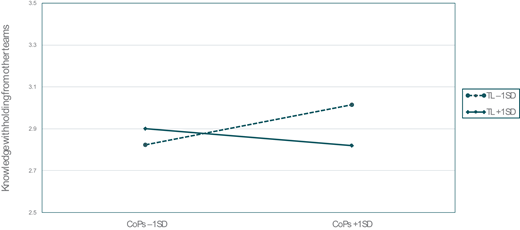
Interaction of TL and perceived CoPs on knowledge withholding from other teams
Note(s): CoPs = perceive team communities of practice; TL = transformational leadership
Source(s): Author’s own work
Interaction of TL and perceived CoPs on knowledge withholding from other teams
Note(s): CoPs = perceive team communities of practice; TL = transformational leadership
Source(s): Author’s own work
As a robustness test of the moderating analysis, the research model was analyzed using hierarchical regression analyses. The results of the analysis were consistent with those of the LMS. The exception was that the regression analyses produced a significant and positive moderating effect of transformational leadership on the relationship between perceived team CoPs and knowledge sharing with other teams (β = 0.10, p < 0.05), whereas the LMS produced a marginal moderating effect (β = 0.11, p < 0.10). These results indicated the stability of the results.
5. Discussion
Although transformational leadership promotes knowledge sharing (Al-Husseini et al., 2021; Le and Lei, 2018, 2019), few studies have investigated how transformational leadership influences knowledge sharing and withholding (e.g. Li et al., 2014; Nguyen et al., 2022). Drawing on organizational support theory (Eisenberger et al., 2020; Kurtessis et al., 2017) and transformational leadership theory (Bass, 1999; Bass et al., 2003), this study found that transformational leadership promoted knowledge creation and knowledge sharing with other teams, which was fully mediated through perceived team CoPs. In addition, knowledge withholding from other teams was weakened when transformational leadership and perceived team CoPs were high.
5.1 Theoretical implications
The findings have several theoretical implications. First, contrary to the hypotheses, transformational leadership had no significant direct effect on knowledge creation, knowledge sharing with other teams and knowledge withholding from other teams. Although transformational leadership theory (Bass, 1985, 1999; Wang et al., 2011) postulates that transformational leaders motivate employees to go beyond the immediate self-interest, the findings suggest that transformational leadership does not automatically enhance knowledge creation and sharing or weaken knowledge withholding. Interestingly, Le and Lei (2019) found that the positive influence of transformational leadership on knowledge sharing depends on employees’ perceptions of organizational support. A meta-analytic study (Kurtessis et al., 2017) indicated that transformational leadership is closely associated with perceived organizational support; thus, the linkage between transformational leadership and organizational support may be necessary to enhance knowledge creation and sharing.
Second, in accordance with the above discussion, the results indicate that transformational leadership promoted knowledge creation and knowledge sharing with other teams, which was fully mediated through perceived team CoPs. The full mediation effects suggest that team members are motivated to create and share knowledge when transformational leaders develop CoPs. Specifically, team CoPs may provide members with useful job resources (Bakker and Demerouti, 2014, 2017) to create knowledge, whereas team members feel obligated by the reciprocity norm to share their knowledge across teams because they perceive organizational support, as explained by organizational support theory (Eisenberger et al., 2020; Kurtessis et al., 2017). Transformational leaders may promote the three elements of team CoPs (domain, community and practice) through challenging (idealized influence and inspirational motivation) and supportive dimensions (intellectual stimulation and individual consideration) (Bass, 1999; Bass et al., 2003; Niessen et al., 2017; Wenger et al., 2002). This study contributes to the literature by identifying the understudied relationship between transformational leadership and knowledge sharing (Al-Husseini et al., 2021; Le and Lei, 2018, 2019; Li et al., 2014) in terms of CoPs as mediators. In addition, this study specified the type of leadership required for developing CoPs, which is a vital, yet underexplored factor (Aljuwaiber, 2016; Kirkman et al., 2011; Noar et al., 2023).
Third, the effect of perceived team CoPs on knowledge creation can be explained by the organizational knowledge creation theory (Nonaka, 1994; Nonaka et al., 2006), which postulates that knowledge creation depends on a shared space for relationships or interactions. Conceivably, a “domain” directs team members to create knowledge for future visions, a “community” enables them to collaborate and learn from one another and a “practice” allows them to use shared experiences and tools in generating new knowledge (Wenger, 2011; Wenger et al., 2002; Wenger and Snyder, 2000). Regarding the relationship between perceived team CoPs and knowledge sharing with other teams, team CoPs may enhance members’ trust and commitment toward the organization, which motivates them to share their knowledge with other teams. Accordingly, previous studies have reported that perceived organizational support positively influenced knowledge sharing, mediated through organizational trust (Shateri and Hayat, 2020) and affective organizational commitment (Jeung et al., 2017). Although the majority of CoP studies have adopted qualitative methods (Nicolini et al., 2022), this study quantitatively clarified the role of team CoPs in enhancing knowledge creation and sharing in organizations.
Finally, the findings indicate that transformational leadership negatively moderated the effect of perceived team CoPs on knowledge withholding from other teams. These results suggest that strong support from leaders and coworkers is necessary to avoid knowledge withholding among employees. According to organizational support theory (Eisenberger et al., 2020; Kurtessis et al., 2017), perceived team CoPs are likely to enable members to feel obligated by the reciprocity norm to share their knowledge with other teams; this effect may be strengthened by transformational leadership, which encourages members to perform extra-role activities (Bass, 1985, 1999). As such, combination of transformational leadership and team CoPs may help employees go beyond self-interests that are major barriers to knowledge sharing (Aleksić et al., 2022). Although previous studies have reported the influences of transformational leadership, organizational culture and climate on knowledge sharing (Al-Kurdi et al., 2020; Fullwood and Rowley, 2017; Le and Lei, 2018), the present study may be the first to find the combined effects of transformational leadership and team CoPs in overcoming knowledge sharing barriers in an organization.
5.2 Practical implications
There are some practical implications. First, managers should note that employees create and share knowledge within an organization when they perceive their teams as CoPs. As suggested by organizational knowledge creation theory (Nonaka, 1994), knowledge created by individuals moves to the organizational level through team CoPs. Developing many team-level CoPs may be an effective way to reduce knowledge sharing barriers in organizations. Assessing and monitoring the extent of employees’ perceived team CoPs using a questionnaire survey is necessary; thus, programs for designing, establishing and supporting CoPs in the organization must be introduced (Kirkman et al., 2011). Such programs may include methods for enhancing passion and interest in a specific field (domain); establishing collaborative relationships (community); and developing a shared repertoire of tools, methods and frameworks (practice) (Wenger, 2011; Wenger et al., 2002).
Second, the findings suggest that team CoPs are strengthened through the development of transformational leaders. Thus, hiring transformational leaders and introducing transformational leadership training (Brown and May, 2012) can indirectly increase CoPs in an organization. However, transformational leaders promote knowledge creation and sharing through team CoPs only. As such, leaders need to learn how to develop team CoPs through transformational leadership training. Specifically, participants must be trained to master the skills to facilitate “domain,” “community” and “practice” (Wenger et al., 2002) through “idealized influence,” “inspirational motivation,” “intellectual stimulation” and “individual consideration” (Bass, 1999; Bass et al., 2003).
Finally, organizations must be aware that employees do not withhold their knowledge when their leaders are transformative and when they perceive their teams as CoPs. These findings suggest that preventing knowledge withholding is more challenging than promoting knowledge creation and sharing. As aforementioned, knowledge withholding is not the opposite of knowledge sharing (Kmieciak, 2023). Knowledge withholding is an intentional attempt to conceal knowledge or make less than a full effort to contribute knowledge, whereas a lack of knowledge sharing can be caused by an inability to share relevant knowledge or unfamiliarity with the subject (Kang, 2016; Lin and Huang, 2010; Tsay et al., 2014). As most employees tend to conceal their knowledge for self-interest (Khoreva and Wechtler, 2020; Zhang et al., 2024), organizations must implement a combined approach of transformational leadership and team CoPs to prevent knowledge withholding.
5.3 Limitations and future research
This study had some limitations that need to be addressed. First, the present research measured individuals’ perceptions of transformational leadership and CoPs based on the organizational support theory (Eisenberger et al., 2020; Kurtessis et al., 2017) assuming that perceived support from supervisors and teams enhances employees’ extra-role behaviors. However, it is possible to adopt a multilevel analysis to examine the effects of team-level transformational leadership and CoPs on individual-level knowledge creation, knowledge sharing with other teams and knowledge withholding from other teams using survey data with participants’ team information.
Second, CoPs may exist not only at the team level but also at the departmental, organizational and interorganizational levels. It would be interesting to quantitatively investigate the effect of departmental, organizational and interorganizational CoPs on knowledge creation, knowledge sharing and knowledge withholding in an organization. Future research should examine how CoP size influences the knowledge management process. The nine-item scale used in this study can be revised to develop CoPs at multiple levels by changing the items.
Third, the results indicate a positive influence of transformational leadership on perceived team CoPs; however, the underlying mechanisms remain unclear. Previous studies have shown that the four dimensions of transformational leadership are highly interrelated (Niessen et al., 2017), whereas the three dimensions of CoPs are closely related to one another (Wenger, 1998). However, a qualitative study using interview data is warranted to analyze how the four dimensions of transformational leadership influence the three elements of CoPs.
Finally, this study analyzed questionnaire survey data of employees working in Japanese organizations in various industries, and indigenous national culture may have affected the results. For example, the full mediation of perceived team CoPs between transformational leadership and knowledge creation and sharing may be due to the interdependent Japanese culture (Kitayama et al., 2009). Furthermore, Crede et al. (2019) reported that the relationship between transformational leadership and employee performance depends on the respective national culture. To generalize these findings, the model must be tested using data derived from employees in Western countries.
Funding statement: This work was supported by JSPS KAKENHI Grant Number JP 24K05059.
Data availability statement: The data that support the findings of this study are available from the corresponding author upon reasonable request.
Conflict of interest disclosure: There are no conflicts of interest to declare.

