The purpose of this study is to provide new insights into the differences between the attractiveness drivers in different types of public procurement (i.e. efficient, technological, adapted and experimental).
This study used a qualitative multiple-case study design. The study examined eight public procurement cases by interviewing the representatives of 18 suppliers and, through cross-case analysis, formulated a framework of customer attractiveness drivers for different types of public procurement.
This study reveals differences in customer attractiveness drivers between efficient, technological, adapted and experimental public procurement. This study finds that economic and market growth drivers are only sufficient for efficient procurement, while all the identified drivers are relevant for experimental procurement.
The contribution guides public organizations to increase their attractiveness by considering the supplier perspective in different types of procurement to increase supplier participation in public tenders.
The research contributes to the literature on customer attractiveness in public procurement by shedding light on the impact of procurement type on customer attractiveness drivers, and elaborating it through the lens of social exchange theory. In addition to the differences between procurement types, the study found evidence for a previously unintroduced driver – societal attractiveness.
Introduction
Suppliers who perceive customers as attractive provide better resources, innovations and prices (Schiele, 2020; Kelly et al., 2021; Fridner, 2024). Private sector research has shown that buyers have the ability to influence their attractiveness in the eyes of suppliers, thereby improving the buying organization’s access to resources (Edler et al., 2015; Garzon et al., 2019; Hesping and Schiele, 2016). However, the supplier perspective on public procurement has been covered only to a limited extent in the literature (Patrucco et al., 2017). In addition, there have been calls for such a perspective for a better understanding of public customer attractiveness (Schiele, 2020), as previous research on customer attractiveness has primarily focused on the private sector (Karttunen et al., 2022). This study sheds light on the attractiveness drivers reported by public sector suppliers and examines their importance in alignment with the strategic importance of procurement and supplier type.
Customer attractiveness has become increasingly important with the increased strategic nature of public procurement (Karttunen et al., 2022). When innovation (Adjei-Bamfo et al., 2022; Lenderink et al., 2022) and sustainability (Grandia and Meehan, 2017; Obwegeser and Müller, 2018) are sought from suppliers with strategic procurement, challenges can present in the form of lack of competition and limited supplier participation in tenders. The number of bidders has been decreasing for years, causing a lack of competition in public procurement and indicating a lack of customer attractiveness of public organizations (Fridner, 2024; Jääskeläinen and Tukiainen, 2019; Karttunen et al., 2022). This problem may result in failure in achieving the strategic objectives of public procurement. At the same time, it reduces the potential for value creation through public procurement and diminishes value for money due to lack of competition (European Commission, 2022). Research has found that the factors affecting the attractiveness of a buying organization (i.e. customer attractiveness) can enable higher supplier participation in tenders (Edler et al., 2015; Garzon et al., 2019; Hesping and Schiele, 2016). However, according to recent studies, it is not even enough for suppliers to be attracted to tendering, but they should perceive the customer as attractive enough to mobilize their resources toward the public sector (Fridner, 2024). Nevertheless, initial findings by Karttunen et al. (2022) and Fridner (2024) show that customer attractiveness in public procurement can be influenced by the innovation- and exploration-oriented procurement strategies of public customers. Although these initial findings show that the customer attractiveness of public organizations can be influenced, the question emerges as to whether the attractiveness factors are the same in different procurement contexts. This question is crucial in identifying and implementing the most appropriate means to develop customer attractiveness.
Kraljic (1983) identified the importance of being aware of the possibility that a variety of product/service groups, as well as suppliers in these groups, might exist. More recently, Uyarra and Flanagan (2010) offered a typology of the public procurement regarding demand types (generic or dedicated) and the production process of an offering (standardized or specialized) in helping distinguish among different supplier groups. For example, it is expected that a specialized offering requires more innovative and agile suppliers, which might value attractiveness factors distinct from those valued by more traditional service/product suppliers. This assumption is supported by Fridner (2024), who showed that suppliers differ in terms of the type of innovation context (incremental versus substantial) when assessing the attractiveness of public sector customers. In this study, we explore how different types of procurement are related to customer attractiveness drivers in the public sector. This will increase the understanding of customer attractiveness as a phenomenon, and of the strategies that public managers can use to increase their attractiveness depending on the type of supplier they want to approach.
In summary, there is a lack of research on strategy implementation in public procurement management and processes (Plantinga et al., 2020), such as procurement classification. At the same time, there is a dearth of research on public procurement management using procurement classification (Apte et al., 2019). Nonetheless, previous research has recognized that customer attractiveness plays a role in motivating suppliers to participate in tendering (Karttunen et al., 2022), and even in supplier behavioral outcomes (Fridner, 2024). Furthermore, the right strategy for the right suppliers seems to be important in enhancing customer attractiveness (Fridner, 2024). However, none of the above studies consider the different types of procurement, nor examine the customer attractiveness through them, even though we can assume that suppliers of these different types of procurement have different business strategies and even values by which they assess customer attractiveness. Therefore, to gain further insight into the drivers of the most appropriate suppliers in specific types of procurement, this study was designed to answer the following research question (RQ):
How are customer attractiveness drivers reflected in different types of public procurement?
To gain an understanding of the less common types of public procurement, we used a qualitative approach. To collect the interview data, we first searched for actual procurement cases as a way of reaching informants who both represented a particular type of procurement and had found a public customer attractive. Next, we decided that the unit of analysis in this study would relate to a public customer and a recent procurement case perceived by the supplier(s) of this case. We interviewed suppliers because this qualitative research approach was deemed to provide us with in-depth insights into the attractiveness factors influencing suppliers of specific types of cases. For the analysis, we first used customer attractiveness drivers (Hüttinger et al., 2012) to classify the findings and then compared the findings across the four types of procurement − efficient, technological, adapted and experimental (Uyarra and Flanagan, 2010) − thereby identifying a clear enrichment of customer attractiveness drivers as the object of procurement changes from a standard demand/offering to a more specialized one.
As a theoretical contribution of the study, we explain how the customer attractiveness drivers vary in different types of public procurement, and elaborate these drivers through the lens of SET. Using the lens of SET, we found that the variation in customer attractiveness drivers in different types of public procurement is related to desired and/or perceived benefits, which can be considered as social exchange elements and strategically relevant to suppliers. Understanding these varying underlying social exchange elements, and hence supplier behavior, is important for the strategic planning of public procurement and making social exchange mutually rewarding to attract the most appropriate suppliers. For example, as innovation, sustainability and long-term effectiveness become more important aims in public procurement, there will also be an increase in experimental public procurement. According to our findings, such procurement may differ significantly from other types of procurement in terms of the customer attractiveness drivers, while the resources of the most capable suppliers may be critical to successful outcome. Our study is the first to provide an insight into the relation between the type of public procurement and customer attractiveness drivers, and hence the social exchange elements. As an additional contribution, the study discusses the novel societal driver of customer attractiveness.
Literature review
Social exchange theory
At the heart of attractiveness research is the social exchange theory (SET). The basic assumption of SET is that parties start and sustain a relationship when it is expected to be rewarding for all involved (Emerson, 1976; Homans, 1958; Lambe et al., 2001). The parties remain in the relationship as long as the expected net benefits are greater than the benefits available in alternative relationships (Lambe et al., 2001). These benefits are resources that the parties seek, such as status, information, goods, money or services (Foa and Foa, 1974). Thus, resources are exchanged through the process of reciprocity, whereby one returns the good things received by the other (Cropanzano et al., 2017; Gouldner, 1960). The social exchange process can be summarized in three features:
an actor’s initial treatment toward the target organization;
the target’s attitudinal and behavioral responses to the action; and
relationship formation: a series of successful reciprocal exchanges can improve an economic exchange relationship into a high-quality social exchange relationship (Cropanzano et al., 2017).
SET helps in answering questions regarding the initiation, continuation and termination of business relationships, especially in the context of buyer–supplier relationships (Schiele et al., 2012).
In our research, we follow the definition of customer attractiveness recently applied by Karttunen et al. (2022, p. 81): “Customer attractiveness is the result of value perceptions of suppliers in a reciprocal exchange where actors maximize the amount of net value gain in their relations.” This definition is based on the tenets of SET, that the assessment of net benefits is considered rewarding only if the receiver perceives it as such (Emerson, 1976), that successful reciprocal exchange leads to attractive relationships, and that actors actively seek to maximize the benefits.
Customer attractiveness
A supplier considers a public customer attractive if the supplier has positive expectations regarding a relationship with the public customer (Karttunen et al., 2022). According to Karttunen et al. (2022), the ambidexterity perspective, i.e. how a supplier emphasizes or balances exploitation and exploration in its strategy, influences the social exchange the supplier is aiming for and what the supplier assesses as rewarding. Similarly, Tanskanen and Aminoff (2015) argued in their private sector study that customer attractiveness is related to the strategic orientation of the supplier, whether the offering is standardized or specialized, and the overall standards of the supplier organization. In addition, the customer attractiveness factors that are perceived as desirable in social exchanges within the supplier organization have been found to be highly subjective (Tanskanen and Aminoff, 2015). However, research has shown that relational behavior is desirable in social exchange especially in the public sector, where the development of buyer−supplier relationships is influenced by public procurement law (Karttunen et al., 2022; Schiele, 2020). On the other hand, based on SET, the fulfillment of the buyers’ strategic objectives depends on how the buyer gets the right suppliers to collaborate (Tanskanen and Aminoff, 2015). However, it should be noted that customer attractiveness from a market perspective will not sustain social exchange for very long unless customer behavior and investments in collaboration support the maintenance of attractiveness in the long run (Patrucco et al., 2024). Therefore, the public sector needs the right customer attractiveness strategies, aligned with suppliers’ strategies and expectations, to make the social exchange mutually rewarding and to sustain attractiveness.
Regarding the drivers of customer attractiveness, SET argues that the value perceptions of an exchange are important, as parties try to maximize the number of net benefits from their relationships (Calhoun et al., 2012; Homans, 1958; Karttunen et al., 2022; Schiele et al., 2012; Thibaut and Kelley, 1959). The characteristics of this value perception have been extensively examined, with the most comprehensive studies of customer attractiveness coming from Hüttinger et al. (2012) and Hüttinger et al. (2014). They separated the drivers of several relational concepts, including customer attractiveness, supplier satisfaction and preferred customer status and identified detailed factors constituting these drivers, factors that can also be used to identify the driver in question. In addition, Hüttinger et al. (2012) stated in their literature review that the majority of studies investigating customer attractiveness have used SET as the theoretical basis for deriving possible antecedents of customer attractiveness. Thus, the drivers of customer attractiveness can be interpreted as subdimensions of suppliers’ value perceptions in a reciprocal exchange. Since SET states that successful economic exchange is associated with successful social exchange, Hüttinger et al.’s (2012) list of drivers could be understood as the exchange received by suppliers, and manifest the benefits of social exchange. Although the concepts identified by Hüttinger et al. (2012) were not specifically developed for the private sector, subsequent research showed that the fundamental drivers of attractiveness, such as economic, social and risk drivers, were also valid for customer attractiveness in the public sector (e.g. in the form of pricing, attentiveness and priority) (Schiele, 2020; Fridner, 2024). Hüttinger et al. (2012) identified key customer attractiveness drivers from a range of sources (see Table 1).
Despite research evidence showing that customer attractiveness in the public sector can be influenced (Karttunen et al., 2022), the question emerges as to whether customer attractiveness factors are a one-size-fits-all solution. In this regard, the in-depth case descriptions of Fridner (2024) show a range of perceptions of customer attractiveness in the public sector, depending on the industry in which a supplier is working. In particular, there are differences between suppliers engaging in standardized versus more specialized solutions. However, these differences were not structurally assessed, and it remains unclear whether they also lead to different attractiveness factors in the various procurement contexts. The next section delves into the relevance of distinguishing different procurement contexts and identifying different supplier groups, which are expected to comprise a different set of customer attractiveness factors.
Classification of procurement portfolio in public procurement
Portfolio models have commonly been used as a management tool to allocate resources to strategically important areas (Olsen and Ellram, 1997). For example, in the procurement context, the portfolio model has been used to classify commodities based on their profit impact and delivery risk (Kraljic, 1983), the level of difficulty managing the purchase situation and the importance of the purchase (Olsen and Ellram, 1997), the supplier market based on performance and competition (Kashiwagi, 1999) and relationships based on cooperative norms and information exchange (Wang and Bunn, 2004).
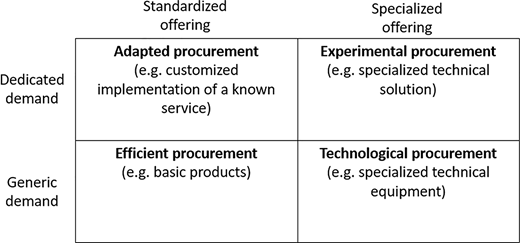
Uyarra and Flanagan (2010) developed a fourfold typology of public procurement based on Kraljic (1983)’s model and Storper (1997)’s product differentiation. This typology classifies public procurement according to the user’s market (demand) situation and the nature of the production process (offering). As shown in the typical quadrant matrix of the portfolio models in Figure 1, the objective of the procurement can vary significantly, ranging from cost and volume weighted (efficient), specialized product fit for use (technological), the best customized service (adapted) or the most innovative solution (experimental) (Uyarra and Flanagan, 2010). However, in addition to the objective of the procurement, the maturity of the available solutions needs to be considered when assessing possible implementation options (Lenderink et al., 2022). Furthermore, these varying procurement types are typically not all managed in the same way. According to Uyarra and Flanagan (2010), one approach does not fit all procurement cases and that the complexity and nature of the object of the procurement lead to different approaches. For example, the efficient procurement type is characterized by arm’s-length contracting and price-oriented tendering, while high product complexity and high outcome uncertainty in experimental procurement are seen to require collaborative relationships with suppliers and even codevelopment of solutions (Uyarra and Flanagan, 2010). Thus, public organizations need to be able to adapt their interactions with suppliers according to the type of procurement (Erridge and McIlroy, 2002; Lenderink et al., 2022).
As public procurement is highly diverse and the nature and complexity of the objects of procurement vary widely, the use of dedicated strategies for each type of procurement is justified (Erridge and McIlroy, 2002; Uyarra and Flanagan, 2010). This is supported by Patrucco et al. (2017), who argued that the strategy portfolio of public procurement also includes a category strategy to describe the adaptation of procurement decisions to different types of procurement.
The significant variation in the complexity of offerings and degree of specialization across procurement types suggests that the associated supplier groups also differ. According to Patrucco et al. (2017), it is possible to align a procurement category strategy and decision-making with the characteristics of the supplier market for the procurement in question. In addition, O’Brien (2019) argued that the use of procurement classifications to examine the market and suppliers from which a public organization buys certain types of procurement can achieve better outcomes. In addition, demonstrating potential benefits and value to suppliers can increase their willingness to establish business relationships (Pulles et al., 2016), but first it is necessary to understand what is considered beneficial and valuable in a particular market and supplier group.
Methodology
A qualitative multiple-case approach following abductive logic (Dubois and Gadde, 2002) was chosen for the study. This approach was deemed suitable for the theory elaboration (Ketokivi and Choi, 2014) of customer attractiveness drivers in alignment with different types of public procurement, as a new investigation area (Baxter and Jack, 2008). As many earlier studies on customer attractiveness have been conducted in the private sector and aimed at generalizations through the survey approach, a qualitative study was deemed necessary to gain an in-depth understanding (Gummesson, 2000) of the customer attractiveness factors in the public sector context, where only few studies on the topic exists. Moreover, as the aim of the study was to identify differences between types of procurement in terms of customer attractiveness, we opted for a cross-case analysis by searching for patterns in the empirical data (Eriksson and Kovalainen, 2008) at the driver level and comparing the patterns between the different types of procurement.
Case selection followed theoretical sampling in alignment with the typology of public procurement chosen for this study. More specifically, two case examples from each of the four types of procurement were sought. Local public administration in Finland was chosen as the context for two reasons. First, public procurement in Finland has been the subject of notable development efforts in recent years, including the piloting of novel procurement approaches, such as public procurement of innovation (European Commission, 2021). Thus, it was expected that customer attractiveness would be built on more than just financial factors. Second, local administration has generally received less attention in public procurement research (Patrucco et al., 2017). Still, local administration organizations are expected to play an important role in developing supply markets in various locational areas (including remote areas) where the availability of innovative suppliers is not self-evident. Therefore, studying customer attractiveness in the local context is of high relevance.
We asked the representatives of procurement organizations (two municipalities and two regional public health-care organizations) about successful procurement cases that fit our theoretical framing. The successful cases were regarded as the best starting point for understanding what creates attraction in the eyes of suppliers. Then, the buyer organizations were asked to name the suppliers for these cases and propose the key contact persons from the supplier firms. These supplier firms represent the technology, food, transport and service industries.
Empirical interviews with multiple respondents ensure rich data, a variety of observations and limited bias (Eisenhardt and Graebner, 2007). A total of 18 semistructured themed interviews were conducted. They addressed factors that improve customer attractiveness, including buyer practices and suppliers’ perceived benefits from customer relationships. All interviews were conducted in individual Teams sessions with an average duration of 49 min. The interviews were recorded and manually transcribed. The procurement cases arranged by type and the informants by procurement case are summarized in Table 2.
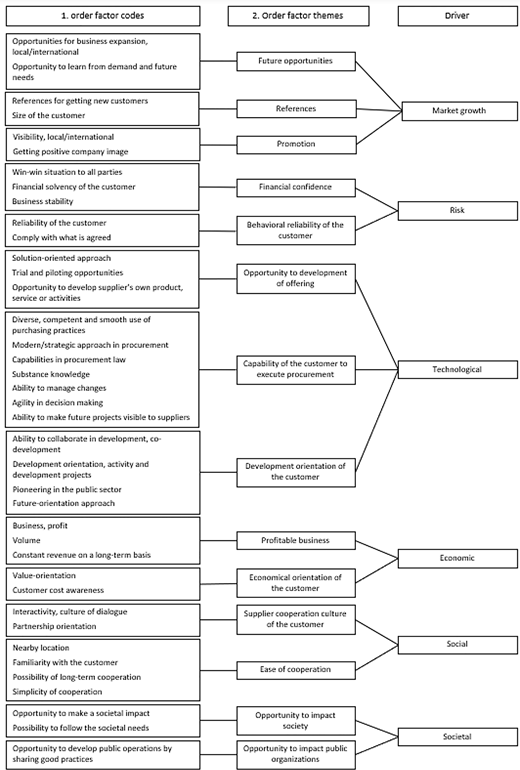
Qualitative content analysis was used to analyze the empirical data. Observations were made at each point in the interview and the elements found related to customer attractiveness were collected in an Excel spreadsheet for each respondent. The coding was done by corresponding author and checked by the other authors for logic and consistency. No specific coding software was used. The coding structure is presented in the coding tree in Figure 2.
In the first phase in the coding process, manual open coding was used to identify similar descriptive meanings, and in the next stage, similar descriptive meanings were merged as codes in the Word spreadsheet (first-order factor codes). For example, “the customer is usually the first to adopt solutions in Finland” (EXP5), “pioneering customer” (EXP6) and “the customer acts as a pioneer, as a forerunner” (EXP7) were merged under the code pioneering in the public sector. Second, in the axial coding, we used the framework of Hüttinger et al. (2012) to form the second-order themes to link the results to the attractiveness drivers. At this phase, some reorganization of the first-order factor codes was done in the table, which also classified the observations by case and type of procurement, resulting in the form of the table in Appendix. Then, the codes that did not fit into the framework of Hüttinger et al. (2012) were examined by all authors, and as they were all societal factors, a new societal driver and related factor themes were added to extend the original classification of attractiveness drivers in the context of public procurement.
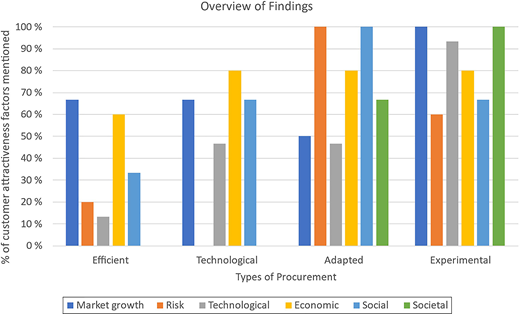
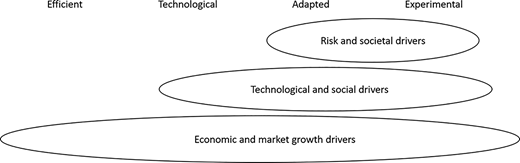
Next, each case was analyzed separately, and the results were compared with the previous literature. In the final phase of the analysis, the data in the tables were examined for patterns, and the findings from two cases from the same type of procurement were compared with those from other types of procurement. In the analysis, we did not count the number of responses or focus on individual factors, but made our interpretations primarily at the driver level. Then, we examined the findings graphically, showing in the Figure 3 the percentage of factors present in the drivers by type of procurement. For example, if four of the six market growth factors mentioned in the interviews appeared in the responses to the efficient procurement cases, the market growth driver in the efficient procurement takes on a value of 67% in the graph. However, we emphasize that the interpretations are qualitative in nature, and the graph was developed to ensure the reliability of the interpretation. In addition, the graph was also used to visually present the results. At the end of the cross-case analysis, the relevant drivers were identified by procurement type and organized into a framework in the Figure 4. In addition, the results were discussed in terms of how the different customer attractiveness drivers are perceived as valuable social exchange elements and strategically relevant for suppliers in different types of public procurement.
Results
The results show cross-case variation in the customer attractiveness drivers. First, Figure 2 shows the coding tree used. In the coding tree, the first-order attractiveness factor codes identified from the interviews are presented. Then, the second-order attractiveness factor themes are used to indicate what suppliers found rewarding in initiating the relationship with the public customer. Attractiveness factor themes include elements that suppliers can gain directly (e.g. profitable business and ease of collaboration) and elements related to customer behavior and orientation (e.g. behavioral reliability and supplier cooperation culture of the customer). The variability and quantity of the first-order codes reflect the argument of Tanskanen and Aminoff (2015) that customer attractiveness is highly subjective and related to the overall standards and strategic orientation of the supplier.
In our analysis, we found that economic and market growth drivers were strong in all four types of public procurement. In addition, a single social factor − the culture of dialogue − emerged as a clear attractiveness factor for suppliers across the procurement types. However, as offerings became more specialized and demand more dedicated, the drivers for suppliers broadened, and the attractiveness factors acquired new nuances. The results suggest that customer attractiveness was not a one-size-fits-all solution. Figure 3 provides an overview of the observations related to the different procurement types. In Figure 3, the bars represent the drivers associated with each procurement type, and the height of the bar indicates the percentage of factors present in the driver. In addition, in the Figure 3, we found an enrichment of drivers as the procurement type changes from efficient to experimental. Moreover, a summary table presenting the informants allocated to the attractiveness drivers is provided in Attachment 1.
In efficient procurement, where the buyer typically selects traditional competitive tendering as a procurement strategy, the main drivers for suppliers included predominantly economic and market growth factors. For this group of suppliers, the important factors seemed to be business (e.g. EFF3: Business in the contract period brings salaries for the employees) and volume (e.g. EFF1: Big customer, big opportunities). In addition, the visibility of the field instantiated through public customers can be seen as an attractiveness factor for suppliers in the efficient procurement type:
You get visibility when you drive there, and of course you have your own ads on your own cars, so customers can see which company is driving. If they need a transport company at other times, they can call us (EFF2).
However, from the risk driver, only financial solvency seemed to attract suppliers of this type of procurement, as described by one informant: The public customer usually has the solvency to pay on time (EFF1).
As the offering is more specialized in technological procurements, technological and social drivers begin to emerge alongside economic and market growth drivers. Suppliers of this type of procurement are particularly attracted by the potential to develop new product and service offerings to address customer problems and, therefore, are attracted by the development orientation of the customer and the potential development projects that reflect this orientation. Moreover, if the opportunity to collaborate with the customer on development activities is identified, this especially attracts the technology-oriented supplier group, as described by one informant: In my opinion, the best customers are those who want to develop their operations, and we can participate in developing their processes and information systems in cooperation with them (TEC3). On the other hand, the familiarity of a customer can affect their attractiveness if a business relationship already exists, as described by TEC1: We want to keep this customer. As a small customer, it is quite dynamic and, therefore, a pleasant partner to work with.
As demand becomes more dedicated, even more drivers of attractiveness can appear, in addition to previously existing ones. In adapted and experimental procurement, economic, market growth and social drivers, as well as development orientation factors, are still strong. Similar to effective procurement, fundamentals such as business, volume and profit also appear in these quadrants, as illustrated by EXP1: We are a company that is supposed to make a profit, so that should not be forgotten. However, third sector supplier firms do not differ in this respect, as exemplified in a response by ADA1: The volumes are so much larger and the purchases so much more expensive that, in monetary terms, they are becoming more interesting. However, risk factors are starting to have a greater influence on attractiveness, with the technological driver factors also including trial and piloting opportunities and the social driver factors adding, for example, a long-term partnership orientation to both adapted and experimental procurement types. To illustrate, business stability (e.g. ADA4: stability is a positive thing, with a steady flow of customers), trial and piloting opportunities (e.g. EXP7: Part of the R&D investment can be financed through the pilot), long-term partnership opportunities (e.g. EXP2: long-term partnerships are always pursued) and partnership orientation (e.g. ADA3: a genuine partnership approach) all seemed to be relevant attractiveness factors for this group of suppliers, as they customized their offerings to customer needs and considered the associated risks.
However, there were supplier perceptions on experimental procurement, where not only was the offering customized, but a new offering was also created, which were not identified in the other findings. Experimental procurement that can be used as a classification for the procurement of innovation, sustainability and effectiveness seems to have its own specificities. Suppliers of experimental procurement found it attractive if the customer was known as a pioneer in the public sector or if the customer’s practices could be described as modern in the field of public procurement. The informants described these attractiveness factors as follows: xx is a very attractive customer. The solution that xx is implementing is usually one of the first in Finland (EXP5);
(We prefer to cooperate) with the type of customer who wants to be perhaps a kind of pioneering customer, who wants to actively develop their own activities, who has ideas and things like that, which they want to implement (EXP6);
and What makes the public customer attractive is that even large traditional organizations are in some ways modernizing and becoming more agile in terms of procurement (EXP2).
Of particular interest were the additional findings, those that did not fit under any of the abovementioned customer attractiveness drivers. It is perhaps natural for third sector firms to perceive a societal impact as attractive, but the informants from the technology firms also saw societal factors as important in public customer attractiveness. One informant saw the public sector in general as an opportunity to follow societal development, as the following response shows:
The public sector offers an opportunity to influence, and when you see the development of the whole public sector and what the public sector is doing in Finland, it is of course a good view of what is really happening in Finland (EXP4).
On the other hand, another informant saw the opportunity provided by the public customer to make a societal impact as rewarding:
It feels nice to be able to do things that improve society and Finnish cities and to bring our technological expertise to reduce emissions, optimize costs in cities, and improve services for citizens; so it is of course quite rewarding (EXP7).
In addition, the attractiveness of a public customer can increase because of the opportunity to spread good practices to the wider society, as enunciated by EXP4:
We can bring certain good news (to the receptive public customer), that in that sector, that public actor has done this, that you could do this too if you would like to, and, thus, even improve public operations.
However, the answers related to societal impact often did not focus on a specific public customer but, rather, on how the public sector in general could be perceived as attractive. Nevertheless, some public sector organizations were seen as channels for societal missions, which is interesting when considering the utilization of drivers to improve customer attractiveness.
Furthermore, Figure 3 and the attached summary table ( Appendix) indicate that the findings were not unambiguous but often subjective and that it is possible that subjective perceptions of individual attractiveness factors could cause variation within or between the quadrants in the supplier field. As an example of such subjective individual observations, the diverse and competent use of procurement practices was perceived as attractive in the efficient quadrant in addition to the adapted and experimental procurement types: When they (public customer) have experienced professionals placing orders and handling the paperwork on their side, it appears much smoother to us (EFF1). Conversely, the ability to make future projects visible to suppliers made the customer attractive to suppliers in the experimental and technological quadrant, as described by EXP3:
Perhaps the customer’s communication with the suppliers could also be in a way that brings out the possibilities at some stage before the formal tendering processes or market dialogues begin. It could be quite reasonable because it generates the interest that suppliers follow customers and customer needs, even if there is no tendering ongoing, but not in the adapted quadrant.
Moreover, the one-size-fits-all approach did not seem to apply, even within the same type of procurement. However, despite the variation in details, the results show that different patterns of attractiveness drivers can be identified between the types of procurement. Figure 4 summarizes the results and helps in understanding the diversity in the types of procurement and the associated supplier groups by presenting a conceptual model to describe the enrichment of the attractiveness drivers as the complexity of procurement increases. These findings strengthen the argument that public procurement evolves in an increasingly strategic direction, and that it is appropriate to differentiate approaches to different types of public procurement, such as efficient, technological, adapted and experimental procurement.
As the Figure 4 illustrates, economic and market growth drivers provide the basis for a business relationship in all types of public procurement. However, as such, they are only sufficient for efficient procurement when the demand is generic, the offering is standardized and the relationship is more or less at arm’s length. As the supplier’s offering becomes more specialized, in the technological procurement, the supplier begins to find it rewarding, and therefore attractive, to have a customer relationship that allows the offering to evolve. On the other hand, when a supplier has an expectation of development collaboration in technological procurement, and an expectation of collaboration in adapting the offering to the customer’s needs in adapted procurement, the expectation of an attitudinal and behavioral response to the supplier’s efforts becomes relevant and the social driver becomes meaningful. While suppliers strongly adapt their offerings to the customer’s needs with less direct transferability, in adapted and experimental procurement, suppliers begin to assess business risks, and consider the customer relationship as more rewarding if the customer demonstrates reliability and the business can be expected to remain in the long term. In addition, when the supplier’s strategy includes an attempt to deliver solutions to the customer’s problems, for example in the form of innovation or sustainable solutions, in experimental procurement, the supplier’s expectations of reciprocity in the relationship are at a different level than, for example, in efficient procurement, and the expectations of reward in the relationship include attractiveness factors broadly drawn from all of the above drivers. A surprising, and therefore interesting, finding was a new societal driver that appeared in both types of public procurement (adapted and experimental) in which offering is specialized.
Discussion
Implications for research
Previous research suggests that the benefits of customer attractiveness for public buying organizations are significant and worth pursuing (Fridner, 2024; Karttunen et al., 2022; Kelly et al., 2021; Schiele, 2020). Furthermore, the steps have been taken at studying customer attractiveness drivers and factors (Hüttinger et al., 2012; Hüttinger et al., 2014) and their applicability to the public sector (Schiele, 2020). However, these studies have been rather general in nature; for example, they created general lists of customer attractiveness drivers and factors (Hüttinger et al., 2012) or compared known customer attractiveness factors (Schiele, 2020). However, recent research related to the utilization of customer attractiveness in supplier resource mobilization has pointed differences between public procurement contexts (Fridner, 2024). This is in line with the assumption of Uyarra and Flanagan (2010), who argued that different types of public procurement have to be differentiated, as well as that of Patrucco et al. (2017), who argued that there are benefits from aligning public procurement strategies with the supplier market in question. Accordingly, our study extends previous research on customer attractiveness by providing insights into how customer attractiveness is reflected in efficient, technological, adapted and experimental public procurement.
As a theoretical contribution, we show that in attractiveness drivers one size does not fit all, but that the strategies, and possibly even the values, of different suppliers and supplier groups determine what the supplier finds attractive, i.e. rewarding, in a business relationship with a public buyer. Building on Tanskanen and Aminoff's (2015) SET-based argument that achieving a buyer’s strategic objectives depends on getting the right suppliers to collaborate, we argue that understanding the attractiveness drivers specific to the procurement type is relevant to achieving public policy objectives. By aligning the public buyer’s customer attractiveness strategy with the supplier’s strategy, both the supplier and the public buyer can perceive the relationship as rewarding, which according to Schiele et al. (2012) is essential for initiating a relationship.
Public procurement should remember that the value of social exchange in the relationship goes beyond pure economic exchange. In the efficient procurement, economic exchange may be a sufficient starting point for customer attractiveness to some extent, but in all other types of procurement, the relationship needs to evolve into a high-quality and diversified social exchange that enables certain drivers such as market growth, risk, technological and social – perhaps even societal drivers. On the other hand, customer attractiveness would increase if the public buyer could communicate how to win public sector contracts in the future (Purchase et al., 2009). However, it is not self-evident that the public buyer could always support future business opportunities, and withholding of desirable behavior leads to reduced value perception from the supplier’s perspective as proposed by recent developments of SET (Cropanzano et al., 2017).
Market growth as a driver of customer attractiveness includes promotion, and the ability to use the public buyer as a reference are similar to status enhancement. SET finds status as a resource that suppliers seek (Foa and Foa, 1974), and suppliers’ reputational benefits emerging from the relationship with the public buyer are seen as sources of value (Malacina et al., 2022). Opportunities for business expansion and learning about customer needs also generate positive value perceptions for suppliers (Malacina et al., 2022; Selviaridis, 2021).
The risk driver includes value perceptions of suppliers such as financial stability and the behavioral reliability of a buyer. According to SET, financial stability is a guarantee that the resource exchange is reciprocal and based on negotiated rules – the supplier receives the payment when goods, services or work are delivered. Behavioral reliability is consistent with SET’s main tenet about social exchange that a behavioral response of a party is consistent with the initial treatment it received. Behavioral reliability can, of course, be the result of explicitly negotiated rules of exchange, but it also involves implicit reciprocity rules of exchange (Cropanzano and Mitchell, 2005).
The technological driver of customer attractiveness includes elements of resource exchange, such as knowledge transfer and training, but also expectations about the possibility to develop the offering. In the light of SET, trust, commitment and goal congruence cultivate further exchanges between parties, which, in turn, influence the success of technology development, as studies from the private sector have shown (Malmström and Johansson, 2015). Moreover, our findings are in line with Malacina et al. (2022), who found in their literature review that improved supplier innovativeness in terms of developing of new offerings and flexibility of the development process are value components that suppliers can receive from the public buyer. Our findings also highlight how the public buyer could create beneficial conditions for technological resource and social exchange between partners, which suppliers could assess valuable.
The social driver of customer attractiveness aligns well with SET because it describes how attitudinal and behavioral responses of a buyer align with the suppliers’ expectations and value perceptions. Cropanzano and Mitchell (2005) discussed how a party (public buyer) can have a culture of reciprocal social exchange, or it can even be seen as a norm, something that should be done. The culture of cooperation and the ease of cooperation with a buyer reflect a positive cycle of reciprocal social exchange based on culture or even norms.
The societal driver that we found in our study, but which has not been presented in previous studies, is interesting because it shows that some groups of suppliers or individual suppliers consider participation in societal aspects to be important, attractive and/or rewarding for the development of society, but also for themselves, as they mention societal factors as increasing the attractiveness of the public buyer and thus as one of the value perceptions that increase the net value of the relationship, which according to Karttunen et al. (2022) is at the core of the definition of customer attractiveness. The societal driver was absent in efficient and technological procurement, but influenced the attractiveness in adapted and experimental procurement. The appearance of this driver in groups of suppliers with specialized offerings may reflect suppliers’ efforts to align their offerings with the development of their local public organization to provide better public services to the region. However, global efforts to implement sustainability changes in society as a megatrend are driving firms to engage in systemic change more broadly (Gaudig et al., 2021). Thus, in the long run, this systemic change may have the potential to increase the attractiveness of the public sector, even for unexpected types of procurement, due to suppliers’ desire to contribute to this change.
In addition, we found some differences compared to previous customer attractiveness research. Previous studies on customer attractiveness, both in the private and public sectors, have identified operative excellence, growth opportunities and relational behavior as significant attractiveness factors (Hüttinger et al., 2014; Schiele, 2020), which can be interpreted as related to the operational approach of procurement. As the research setting allowed us to study also more atypical, strategic and complex public procurement, we found that in some types of procurement, operative excellence, growth opportunities and good relational behavior are not necessarily sufficient to ensure customer attractiveness. Instead, in technological, adapted and experimental procurement, development orientation, development opportunities and the customer’s potential ability to collaborate in development seem to have a considerable impact on the supplier’s assessment of customer attractiveness.
Furthermore, contrary to our findings in the context of experimental procurement, factors previously identified in the general private sector literature, such as innovation potential and supplier involvement, have been shown to have no impact on customer attractiveness (Hüttinger et al., 2014). However, our research shows that innovation potential and supplier involvement, and even customer pioneering do matter in the context of experimental public procurement, which is more in line with a public procurement study by Karttunen et al. (2022), which suggests that innovative suppliers are attracted by potential innovation enablers. Another difference with private sector research relates to the factors identified by Hüttinger et al. (2012), such as negotiation pressure, tight personal relations, trust, commitment and loyalty, which were not found to be relevant in our study. This may reflect that public customers may be seen as promoters of innovation (e.g. experimental solutions, which may explain the relevance of innovation potential and involvement), but are often not expected to establish overly trust-based relationships with suppliers to avoid law violations (which explains the irrelevance of personal ties, trust and commitment). This is in line with Telgen et al. (2012), who described differences between private and public procurement in terms of the need for public procurement to consider political goals (e.g. innovation promotion) and concerns about transparency, integrity, accountability and exemplary behavior.
Implications for practice
Public sector managers can build strategies based on our main findings. Improving customer attractiveness to increase the participation of the most appropriate and capable suppliers in tenders first requires an understanding of the types of suppliers that a public organization wants to target. Thereafter, public customers need to consider how the public organization presents itself to potential suppliers and how this is reflected in its procurement strategy and planning. Accordingly, as a first step, we advise managers to distinguish the different types of procurement based on the fourfold typology presented by Uyarra and Flanagan (2010). In addition, similar to Hüttinger et al. (2014) and Schiele (2020), we suggest that reverse marketing can be useful to improve attractiveness, but that marketing should be targeted more specifically by procurement type in the potential supplier market.
If public organizations want to improve their attractiveness as customers, they should emphasize attractiveness factors in a targeted way. Figure 3, Figure 4 and Attachment 1 all provide details regarding which attractiveness drivers might be relevant in specific types of procurement (i.e. efficient, adapted, technological or experimental). In a nutshell, in terms of efficient public procurement, customer attractiveness in the supplier market can be enhanced by emphasizing, for example, constant revenue flows and reference opportunities. When technological procurement is in focus, highlighting development orientation and openness to codevelopment can attract supplier partnerships. Moreover, in the case of adapted procurement, which is tailored to the customer, the associated supplier group might be interested in communication that emphasizes business stability and a collaborative approach with suppliers. Finally, for experimental procurement, pioneering, modern and piloting opportunities are clear characteristics to be emphasized in a public organization wishing to reach a group of suppliers capable of delivering experimental solutions. As our research examined a diverse set of suppliers, we implore managers to take a deeper look at Attachment 1 to match their situation to a case and identify attractiveness drivers of relevance to their situation.
Limitations and future research
Besides the above-explained contributions to research and practice, this study also has limitations. First, although qualitative conclusions could be drawn at the level of drivers, the results show that at the factor level, informants’ perceptions were highly subjective and varied even within the type of procurement, which needs to be considered. In addition, due to the varying size of the cases, despite our best efforts, there was not a consistent sample of informants available for all cases, and therefore some cases included more interviews than others, or informants presented more heterogeneous positions, which may have influenced the analysis. Therefore, future research could seek to validate the framework through a large-scale survey. Furthermore, this study classified the cases into efficient, technological, adapted and experimental procurement types. A different classification such as a comparison between services or products might have provided additional insight into our findings. Thus, future studies may consider using a different classification of public procurement. On the other hand, procurement classification and category management in public procurement seem to be taking their first steps. Therefore, a longitudinal study could be of interest to ascertain how the evolution toward more strategic public procurement is reflected in the attractiveness drivers or factors in the long term. Furthermore, our findings are based on interview data, although secondary data from suppliers could provide opportunities for data triangulation, for example in future in-depth single case studies of experimental public procurement, which are still rare.
In addition, our study does not consider the stage of the relationship, and further research could examine how the attractiveness drivers manifest in the relationship stages (initiation, continuation and termination) in different types of public procurement and how competitive tendering processes affect the assessed/perceived customer attractiveness. This study focused on the interviewees’ customer relationships with public organizations. On the one hand, an existing customer relationship provides insight into what makes a particular public customer attractive as a customer; on the other hand, the views of suppliers who do not have a customer relationship on the attractiveness of a public customer could have been interesting and potentially provide a different angle to the study. For example, it might be useful to study suppliers who do not yet have relationships with public sector customers and what these groups of suppliers find attractive or unattractive. However, it would be more difficult to integrate the types of procurement in such a study. Identifying of unattractiveness factors could also help public organizations in their marketing and image-building efforts.
Finally, the newly discovered, but limited data-based, societal driver of customer attractiveness in the public sector context raises new opportunities for future research, as we were only able to achieve a certain level of analytical depth on this factor in our study. For example, future research could explore what other types of supplier firms value the societal driver, what other societal factors can be found beyond those presented in this study, whether the societal driver can influence tender attractiveness, and whether the societal driver has the potential to become a specific public sector driver for increasing participation in government tenders, for example, through the sustainability megatrend.
Conclusion
Overall, there is very limited research on customer attractiveness in the public procurement context, despite indications in the literature that private sector attractiveness findings do not necessarily apply as such in this context. In addition, attractiveness improvement has been identified as important for the purpose of increasing the number of high-quality offerings and, thus, enabling more participation in government tenders. Our research responds to this need by providing a conceptual framework of customer attractiveness drivers for different types of public procurement and elaborates it through the lens of SET. In addition, based on our findings, we argue that rather than a generic approach, public organizations can benefit from understanding what attracts particular supplier markets to enhance customer attractiveness. Moreover, our study considers procurement types that do not necessarily represent the mainstream of public procurement but that may have particular strategic importance (i.e. innovative procurement as an experimental procurement type) and whose customer attractiveness drivers may be significantly richer than those of efficient public procurement. This may be especially relevant when a public organization wants to be attractive to innovative suppliers. For example, if the public buyer relies only on economic and market growth factors when the supplier provides specialized offerings to the dedicated demand, it is in danger of failing to gain the interest of the most capable suppliers. In turn, if the supplier provides basic supplies, there is no additional benefit in investing in most of the attractiveness factors presented.
This research is supported by the INNOPROCU project funded by the Academy of Finland. The authors are grateful for the support.