Alliance contracts (ACs) are used for complicated public construction projects where clients and governmental institutions supervising them expect cost savings and social benefits. However, cost fluctuations are common, and previous research has not yet addressed them properly. Thus, this study aims to increase understanding of the cost performance of ACs compared to traditional projects by identifying cost fluctuations at different phases of the project and the reasons for such fluctuations.
The archival study approach was utilised to analyse the project cost estimates of 10 Finnish large scale public ACs.
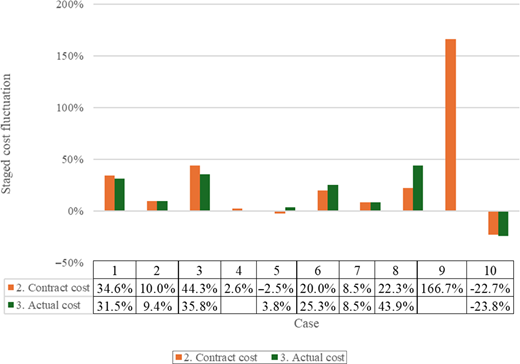
The costs of public ACs mostly increased during the development and implementation stages, with only one project staying below the original estimate. The mean cost increase from the baseline estimate was 28% during the development phase and 12% between the implementation and development phases, consistent with variations linked to design maturity as specified in standard cost estimation practices. The main sources of cost disparities included design development, client modifications and subsurface urban infrastructure.
These findings caution public procurement agencies, researchers and professionals about expecting ACs to have considerably lower investment costs than other initiatives.
Contrary to previous AC studies that emphasised the alliance model’s effectiveness, our findings reveal that significant cost increases are common and systematically related to design maturation and scope refinement rather than to uncontrolled overruns. This study challenges prevailing assumptions about alliance performance and highlights the need for more transparent reporting, refined incentive systems and rigorous early-stage validation.
Introduction
Research indicates that 90% of megaprojects predominantly financed by public funds surpass their original budgets, highlighting the widespread occurrence of cost overruns in large-scale infrastructure projects (Flyvbjerg and Gardner, 2023). However, multiple studies have found that an alliance contract (AC), a form of integrated project delivery (Howe, 2022), offers advantages to the parties involved and the public entity (Fernandes et al., 2018; Galvin et al., 2021). These benefits include improved trust amongst project parties, better communication, adherence to schedules and budgets (i.e. clients’ internal financial limits or allocations for a project, established before the alliance target costs are set) and the successful achievement of objectives deemed important to public clients (Jefferies et al., 2014; Laan et al., 2011). In addition, alliances help reduce the occurrence of disputes and litigation, which are often too common in the construction industry (Davis and Love, 2011; El-adaway et al., 2017; Young et al., 2016). Nevertheless, a significant proportion of cost-related data in alliance studies relies on geographically limited interviews and surveys (Mills et al., 2011; Walker et al., 2013). Despite the advantages of ACs, there are indications that cost fluctuations in such contracts are common (Davies, 2009; Nalewaik et al., 2015). Yet, there is a lack of nuanced empirical research on how cost fluctuations occur in the alliance project lifecycle and the underlying reasons of these fluctuations.
Cost disparities in ACs, similar to other public investment projects, also signify numerous additional phenomena that underlie these procurements. These phenomena encompass political aspirations and fervour, established behavioural patterns, bureaucratic and legal factors and various other aspects that can be enhanced through the examination of public procurement and investment (Flyvbjerg and Gardner, 2023; Ganuza, 2007; Uyarra and Flanagan, 2010). Discovering cost fluctuations over time and their underlying reasons is also an effective public governance approach to identifying unexpected increases in costs, fraudulent practices and other discrepancies. Due to their substantial scale and intricate nature, ACs are inherently vulnerable to corruption (De Jong et al., 2009; Stansbury, 2005). Thus, examining the cost fluctuations for each stage of ACs is crucial to combating corruption in public procurement.
The starting point of this article is that despite the increasing number of ACs, there remains a lack of clear and verifiable data on how and why the expenses of these projects are changed over the various stages of the alliance. Therefore, the objectives of this study are to analyse the staged cost fluctuations in Finnish public-sector ACs and to explore the underlying factors affecting cost development. In particular, this study addresses the following research questions (RQs):
How do cost fluctuations appear in different project phases in public alliance construction projects?
What are the main factors that influence such fluctuations?
This study aims to provide novel insights into the cost disparities in alliance projects and the underlying factors that contribute to them. The study is founded on careful archival research utilising publicly accessible comprehensive information on ACs. Simultaneously, this archival study expands the geographical scope of the existing research on alliance costs, which has primarily concentrated on Australasia (Ross, 2009; Mills et al., 2011; Walker et al., 2013). The study will also contribute insights into individual ACs, cross-cases, comparison of ACs with other projects and cost estimation standards, which could benefit the construction industry as a whole. By gaining a deeper understanding of these factors, researchers and practitioners can make more informed assessments of ACs in the future.
The remainder of the study is organised in the following manner. Initially, a concise overview of the relevant literature on cost fluctuations and alliance contracting is presented, followed by an introduction to the research subject addressed in this study. Furthermore, the study’s methodology is outlined. This case study from Finland presents a detailed analysis of 10 alliance projects, focusing on the cost fluctuations throughout the duration of these projects. The study also offers estimations of the factors that contribute to such cost fluctuations. Finally, the study’s conclusions are presented.
Literature review
Cost fluctuations in large construction projects
Cost fluctuations in public procurement can indicate various phenomena that differ from those in the private sector. For instance, the public sector might be willing to incur more expenses or experience reduced efficiency if it can help achieve specific policy goals or address social needs (Uyarra and Flanagan, 2010). Public procurement can also be characterised by a setting in which the public entity intends to implement a project but does not know the ideal plan at the start of the procurement process. Therefore, the public entity invests in determining this preliminary optimal plan, and the contractor is provided with the initial plan through a price auction. Once the contractor is awarded the project, new information on the optimal plan is obtained. This information serves as a basis for negotiations between the public entity and the contractor to adjust the initial price, considering the new information. These renegotiations frequently result in cost overruns and fluctuations (Ganuza, 2007). Unfortunately, according to Flyvbjerg (2014), 9 out of 10 megaprojects, which are often public projects, go over budget.
The costs of construction projects consist of numerous interconnected components that are prone to fluctuations during the project lifecycle. In extensive and protracted construction projects, costs are affected not just by technical decisions and design solutions but also by organisational, contractual and human variables. Research conducted by Flyvbjerg (2009, 2014) indicates that cost estimates are consistently underestimated and that this occurrence cannot be solely attributed to the aforementioned variables. Flyvbjerg (2009) categorises the causes of cost overruns into three distinct types:
technical causes, which include insufficient baseline data, design flaws and unexpected changes in conditions;
psychological causes, which are exemplified by optimism bias wherein initial project cost estimates are excessively favourable; and
strategic causes, which are characterised by the intentional underestimation of costs to enhance project acceptability, commonly referred to as strategic bias.
The combined impact of these categories establishes circumstances in which cost overruns are both recurrent and foreseeable.
Transaction cost theory elucidates the variations in construction project costs and offers a framework for understanding how uncertainty, opportunism and trust amongst stakeholders influence project costs (Ping Ho et al., 2015). Distrust amongst project organisations raises the expenses associated with monitoring, negotiation and contract management, collectively termed transaction costs (Li et al., 2013). In building projects, these represent a substantial cost factor, particularly when the contractual form fails to facilitate collaboration or when duties are ambiguous.
Another significant phenomenon influencing cost fluctuations is scope creep, which is defined as the unregulated extension of the project scope without an accompanying adjustment to the budget or timeline (Okafor and Odubade, 2022). Hughes et al. (2017) identified inadequate scope management as a prevalent factor contributing to project failure. Scope creep may occur when supplementary requirements are sanctioned without an effect assessment or when there is ambiguity regarding the components of the initial scope. Effective scope management necessitates precise definition, ongoing monitoring and decision-making control systems. This is also intrinsically connected to cost management, as uncontrolled scope alterations might result in substantial additional expenses.
The American Association of Cost Engineering (AACE) has developed one of the most widespread pragmatic approaches to cost management (Christensen et al., 2005). This method underscores not just predictability and planning but also the capacity to respond to changes and perpetually revise forecasts throughout the project’s advancement. It differs from deterministic costing, which relies on the premise of steady and predictable conditions. AACE (2020) asserts that good cost management relies on the following principles:
precise definition and management of project scope;
ongoing cost monitoring and analysis;
comparison of predictions with actual expenditures; and
immediate decision-making informed by cost implications.
This method facilitates pattern matching in result analysis in which cost generation mechanisms can be discerned through theoretical models and juxtaposed with empirical project data phenomena. Table 1 illustrates the standard cost fluctuations in accordance with the AACE approach.
The classification in Table 1 can also be applied to alliance projects. During the initial phases of design (preliminary and schematic design), the alliance team, comprising the client, contractor and lead consultants, is established based on performance and expertise rather than the lowest bid (Raisbeck et al., 2010). At this stage, first cost projections and performance objectives are collaboratively developed, in accordance with the AACE Categories 4–5, wherein design specifications remain constrained and uncertainty is elevated. During the design development and construction documentation phase, the alliance persists in refining the design whilst simultaneously enhancing cost estimates as the scope definition broadens. This is aligned with AACE Classes 2–3 in which accuracy increases with the availability of additional information. Ultimately, during the postconstruction phase, the alliance will distribute savings and losses based on a predetermined formula, thus avoiding litigation. In this phase, the final cost (AACE Class 1) will be ascertained.
Alliance contracting in the toolbox of public authority
Public procurement contracts in the EU have a substantial influence on the economies of its member states, accounting for approimately 14% of the EU’s gross domestic product (GDP; European Parliament , 2026). In the UK, the construction industry plays a significant role in the economy, contributing over £100bn annually, which is almost 10% of the country’s GDP. The public sector accounts for roughly 40% of this total turnover (Menteth et al., 2014). Due to the scarcity of financial resources, public entities are currently aiming to maximise the value they gain from their construction projects (Aaltonen et al., 2019). In this regard, there has been a global increase in the use of public–private partnerships (PPPs) for large and complex construction projects (Hodge et al., 2017; Jefferies et al., 2014).
The objective of such partnerships is to actively engage contractors, consultants and clients in addressing project risks and, together, determining the steps to be taken to effectively manage them via shared decision-making (De Bettignies and Ross, 2004; Jefferies et al., 2014). PPPs have been extensively used in municipal infrastructure projects and have been broadly assessed in the literature (Ghobadian et al., 2004; Grimsey and Lewis, 2007). Their essential components encompass the funding, building, operation and maintenance of infrastructure (Brinkerhoff and Brinkerhoff, 2011).
Cooperation between corporate and public participants in PPPs might be enhanced using ACs (Palacios et al., 2014). ACs, also known as integrated project delivery (IPD), have emerged as a response to the shortcomings of conventional project delivery methods, such as design–bid–build and design–build contracts (Howe, 2022; Laan et al., 2011; Walker et al., 2015). AC and IPD models share essential characteristics, both prioritising an initial phase of workshops and collaboration amongst contracting partners, along with the joint investment of the parties involved in shared workplaces from a project’s beginning (Raisbeck et al., 2010). In accordance with Australia’s National Guide to Alliance Contracting, the stages of an alliance include selection, development and delivery or implementation (Ross, 2009; Australian Government, 2015). Similarly, although the listing of phases varies and is not always as clear as in traditional models, in practice, IPD models can also be identified as follows: predesign or concept phase, joint design or development phase, construction phase and handover or maintenance phase (Allison et al., 2018). Both models aim to address the challenges and negative consequences associated with traditional approaches and both are commonly categorised as a form of relative and collaborative contracting (Chen et al., 2010; Lahdenperä, 2012; Palacios et al., 2014).
An alliance differs from a partnership in that it serves as both a relationship management system and a delivery system, whilst a partnership does not function as a delivery system (Yeung et al., 2007). Alliances can be characterized by interdependence and a shared sense of purpose that binds partners together (McGeorge and Zou, 2012). ACs have also been defined as partnerships based on economic rationality, where the agreed-upon benefits and drawbacks are obligatory for all parties involved (McGeorge and Zou, 2012; Yeung et al., 2007).
Furthermore, ACs enable deeper partnerships, joint decision-making and enhanced cooperation between the parties involved whilst also sharing the risks and opportunities (Davis and Love, 2011; Forward, 2006). In contrast to conventional methods of public project procurement that prioritise maximising individual results and tendering, alliances are characterised by mutual trust, dedication to shared goals and the minimisation of contractual disputes (Kumaraswamy et al., 2005; Lambe et al., 2000; Lee and Cavusgil, 2006). The significance of trust is particularly highlighted in construction management and organisational theory. Trust-based collaboration facilitates enhanced decision-making, promotes adaptability to changes and diminishes the necessity for bureaucratic oversight (Bello et al., 2024; Laan et al., 2011). As Laan et al. (2011) pointed out, the construction sector has begun to explore alliance models as a contractual framework that prioritises trust amongst the parties involved.
Due to its advantages, the AC model, first developed in Australia, has gained widespread application in complicated and large public construction projects in many countries (Lahdenperä, 2012). Given the difficulties and intricacies of conventional procurement procedures, especially in handling substantial risks, public procurement has been essential for exploring alternative contracting models (Lahdenperä, 2015; Walker et al., 2015). For example, the Australian government has initiated experiments with public procurement organisations, adapting the model to various projects and local markets (Rankohi et al., 2023; Sinkovics, 2018; Valkama et al., 2019). Public procurement authorities in countries that have embraced alliances have played a crucial role in driving change and implementing alliance model practices in their respective procurement rules and processes (Walker et al., 2013). Thus far, the public sector has played a crucial role in the development of the alliance model and its growing adoption in the construction industry. Hence, the decision to choose ACs is mainly determined by the project’s attributes and the client’s preferences.
Multiple studies have recognised the advantages of alliances for both the parties involved in the contract and the public entity that stands to benefit from the project at hand. These benefits include enhanced communication, adherence to financial plans and timelines and the successful accomplishment of client-centric goals. Alliances also assist in minimising the conflicts and legal disputes commonly observed in this industry (Davis and Love, 2011; El-adaway et al., 2017; Young et al., 2016).
ACs in public procurement are normally established through two distinct phases: the contract notice phase and the tendering phase. The notice phase entails the announcement of a project to market actors (i.e. competition), which are then screened in a reliable and transparent manner to select candidates for the alliance phase (Fernandes et al., 2018). The selection phase comprises multiple rounds of negotiations, culminating in the submission of the final offers to the contracting authority for comparison. Once the contractor has been chosen, the real partnership is initiated, which consists of three distinct phases: development phase, implementation phase and defects liability period (Ross, 2009). In the development phase, the design and plans created in the previous stages are transformed into feasible solutions (Fernandes et al., 2018; Love et al., 2010). During this phase, the project’s scope, quality standards and the desired cost outcome are determined. At the cooperative level, once an AC is signed, a process commences in which the parties collaboratively and gradually comprehend the implications of the connection in terms of contractual obligations and behavioural expectations (Dewulf and Kadefors, 2012). The entire procedure, starting from the notification to the defects liability period, typically spans several years of ‘alliancing’. However, this lengthy process, serves as a significant constraint on the adoption of ACs (Lahdenperä, 2012).
Other researchers have examined and identified vulnerabilities of ACs. For instance, Palacios et al. (2014) discovered that alliances may not always be adequate. This can occur when the expenses associated with a large-scale project outweigh the benefits gained from the alliance or when the benefits derived from an alliance are comparatively limited compared to alternative project delivery methods (Palacios et al., 2014).
Research gap and primary research questions
Public procurement has played a crucial role in exploring new contracting models due to the difficulties and intricacies associated with traditional procurement processes, especially in effectively managing substantial risks (Lahdenperä, 2015; Walker et al., 2015). Public procurement bodies in Australia have initiated experiments in which various approaches to project types and local markets have been adapted (Rankohi et al., 2023; Sinkovics, 2018; Valkama et al., 2019). Procurement authorities in countries that have embraced alliances have played a crucial role in driving change and implementing alliance model practices in their respective procurement rules and processes (Walker et al., 2013). Given that the public sector has played a crucial role in the development of the alliance model and its growing adoption in the construction industry, the decision to choose ACs has mainly relied on the project’s attributes and the client’s preferences.
In recent literature, various expectations have been set for ACs, especially in terms of the iron triangle of project management, comprising improved construction schedule management, stable cost estimates and precise attainment of the client’s main objectives (MacDonald et al., 2013). Ross (2009) examined 30 alliance projects and found that 80% were within or below the estimated cost, whilst only 2 projects surpassed the cost estimate by a substantial margin. However, this study, which used a survey of individuals involved in alliance projects, did not make any comparisons with other types of contracting models. In their interview study, Mills et al. (2011) found that out of the 18 alliance projects examined, the costs of 12 projects were within a range of ± 10% of the target cost. Here, target cost refers to the jointly agreed-upon estimate of total project costs that serves as the basis for cost and profit sharing and usually corresponds to the contract cost in alliance projects. Furthermore, the study demonstrated a range of project cost fluctuations, from a decrease of 12% to an increase of 128% (Mills et al., 2011).
Another comprehensive research is the longitudinal interview study conducted by Walker et al. (2013), which examined 60 infrastructure projects in Australia and New Zealand over a span of five years. Out of the 60 organisations surveyed, 50 were able to provide data on both initial target costs and actual costs. The findings revealed that approximately 66% of the alliance projects analysed were completed within or below the estimated cost during the development stage, whilst 44% exceeded the initial cost estimate (Walker et al., 2013). The investigation also gathered rationales for the cost escalation above the first projection, including broadened scope, cost delays, protracted approval procedures, volatile market conditions, more intricate designs than initially expected and underestimation of design efforts (Walker et al., 2013).
Although considerable expectations are set for alliances in the construction sector and the projects carried out under this model received a great deal of attention amongst the public, the data collection process has primarily concentrated on gathering quantitative information from Australia, the origin of the alliance contracting. In terms of methods, prior studies have primarily concentrated on conducting interviews and surveys rather than utilising information obtained from public archives.
The current research, conducted through a comprehensive examination of Finnish alliances in historical records, aims to enhance the capacity of public entities to make informed judgments and to assess the merits and advantages of ACs in a more adaptable manner. In particular, we access robust archival data by formulating the following primary RQs: (RQ1) How do cost fluctuations appear in different project phases in public alliance construction projects? and (RQ2) What are the main factors that influence these fluctuations? In addition to previous interviews and survey studies by other scholars, this case study relies on archival data, which are analysed individually and across cases (Yin, 2009).
Methods
The researchers opted for archival research as the main data collection method in this study for several reasons (Das et al., 2018). First, archival data were selected as the research technique because archives offer original, current and verifiable information on cost developments at various project stages. Such data are seldom accessible through interviews or surveys due to confidentiality and memory inaccuracies. The literature study indicated that results vary considerably when ACs are examined using more quantitative and objective methodologies. In contrast, information on the most favourable outcomes of ACs was obtained through interviews.
Second, the primary and evident benefits of archival data are their accessibility and affordability (Das et al., 2018). Organisations generally gather and retain extensive data concerning employees, customers, suppliers, competitors and other stakeholders. Utilising these high-quality data sets is a logical approach for evaluating novel concepts with current data, especially those involving large samples, thus conserving time and resources (Payne et al., 2003).
In alliance projects, cost estimates and changes in target costs are formally documented at each stage, which makes the archival material particularly suitable for studying cost changes and their causes during a project’s life cycle. This is directly in line with one of the aims of our study, which is to conduct a step-by-step analysis of cost fluctuations. In addition, the archival research approach allows for the comparison of actual recorded figures (quantitative data) with contextual qualitative evidence from the same document (e.g., phase-specific reports), thus supporting both case-specific and cross-case analysis. As such, this approach improves the internal validity of the research and reduces subjectivity.
The case study method was used in this study because of the trustworthy and comparable information on alliance projects in Finland, which is mostly accessible through publicly available archival project data (i.e. case data). Archival research allows the use of authentic, up-to-date documents that accurately reflect the decision-making and cost-development processes of each project, avoiding the recall bias typical of interviews or surveys (Yin, 2009). In this context, multi-case research involving 10 public-sector partnership projects, which were selected based on established inclusion criteria, was conducted.
The research focuses on quantitative and qualitative archival data. Integrating qualitative research with quantitative data on cost fluctuations can greatly enhance the analysis (Creswell and Creswell, 2017). Data for this study were collected from all ACs implemented in Finland between 2011 and 2024. This decision was driven by the researchers’ access to the research data and use of their native language, which benefitted this Finnish-focused archive analysis. The data were collected from publicly accessible data sets that were previously published by Lappalainen et al. (2024), the initial part of which was first compiled by Vison Ltd., an alliance consulting company (Vison Ltd., 2023). The preliminary information comprised the title, the client’s name and the budget for each project. The cumulative value of the projects amounts to €9.05 bn, with a mean project size of €50m. Subsequently, the projects and firms examined in this study were anonymised and assigned numerical codes by the authors.
Subsequently, a preliminary screening (Phase 1) was conducted to exclude projects that did not fall within the category of construction projects. For instance, ACs for railway infrastructure maintenance were not considered in the data set. During the subsequent phase, the projects were prioritised based on the Pareto principle, which states that 20% of the projects accounted for 80% of the costs (Phase 2). The ranking was done in descending order, with the larger projects given the highest priority. In the third phase, completed projects with a final report ready by April 2024 were included, initiating the data analysis process. Phase 1 involved screening 80 projects, whilst Phase 2 involved screening 28 projects (35% of the projects accounted for 80% of the cost). The third screening phase led to a total of 10 projects, with 9 completed projects and 1 terminated project. In particular, the terminated project started with an alliance model, but was subsequently terminated during the development phase. Table 2 displays the alliance projects chosen after going through the screening process (Phases 1–3) and subsequently included in this study.
A qualitative analysis was conducted to identify the underlying factors influencing cost fluctuations across the 10 alliance projects. Project-specific documentation, such as phase reports, cost summaries and meeting records in some cases, were examined to capture the explanatory elements behind the numerical cost fluctuations. Each case was first reviewed individually to identify explicit and implicit references, for example, to design development, quality adjustments and scope changes. This approach allowed the cross-case comparison and identification of common causal mechanisms across project types (rail, hospital, tunnel and road).
Data analysis strategy
Once the researchers determined which data to analyse, they collected the data from the case studies for the selected projects. The data were collected from publicly accessible materials, including news stories, project reports, internet searches, project websites and university thesis databases. The research data were compiled into a data set shared by the researchers.
The empirical material consisted of 10 completed or ongoing public sector alliance projects. For each case, we reviewed publicly available project documentations, including cost estimates, target cost calculations, phase reports and final cost statements. In total, 34 project documents and 1141 document pages were analysed (ranging from 1 to 9 per case, depending on data availability).
The data structuring was carried out in three consecutive stages:
gathering and organising quantitative cost fluctuation data;
gathering and categorising the items causing cost fluctuations; and
combining the findings to form a comprehensive synthesis of cost fluctuations in these alliance projects.
The analysis commenced by ‘playing’ with the data, as recommended by Yin (2009) and conducting pattern-matching, as recommended by Sinkovics (2018).
During the initial phase of the analysis, the collected data were processed at a less detailed level, primarily focusing on identifying specific aspects of cost fluctuations for each case. Subsequently, the following course of action involved examining these attributes across cases (i.e. cross-case synthesis), with the goals of identifying commonalities and disparities and potentially elucidating the underlying reasons for such fluctuations. When examining cost fluctuations in individual cases, it is evident that the fluctuations are caused by various factors. Thus, identifying the factors and patterns that connect cases can provide knowledge that can be applied in general (Yin, 2009). Therefore, when reviewing the data, the following guiding questions were asked:
How did cost changes in each case occur?
Why did costs fluctuate in each case?
Is there an identifiable pattern?
If so, what are the factors behind the pattern? What is included, and what has been omitted? (Rapley, 2018; Yin, 2009).
The third and final phase of the analysis was dedicated to identifying rival explanations to account for the observed cost fluctuations. These rival explanations may arise during the data-gathering process; thus, it is appropriate and beneficial to consider them in this phase (Yin, 2009). For each step of the analysis, the researchers recorded an analysis note along with these explanations, which were stored in a database.
Consistent with standard archival research methodologies (e.g. Yin, 2009; Ventresca and Mohr, 2017), the data were categorised into three tiers of reliability in accordance with their source and validation technique. The source reliability is demonstrated in Table 2. Highly reliable sources (“HR” in Table 2) encompass official project documentation, including audited financial statements, authority-approved stage reviews and final cost summaries sourced directly from public archives. Moderately reliable sources (“MR” in Table 2) comprise public reports or publications (e.g., project press releases or municipal audit committee reports) from clients and contractors, which have been corroborated by a minimum of two independent sources. Finally, limited-reliability sources (“LR” in Table 2) encompass media articles or public declarations, which have solely been utilised to augment missing information. In the absence of official numerical data, estimations were generated using publicly reported value ranges or validated through comparisons with other independent media sources.
Findings
Findings on a case-by-case basis
The cost fluctuation data collected from the selected cases are presented in Table 3, while the cost fluctuation trends are presented in Figure 1.
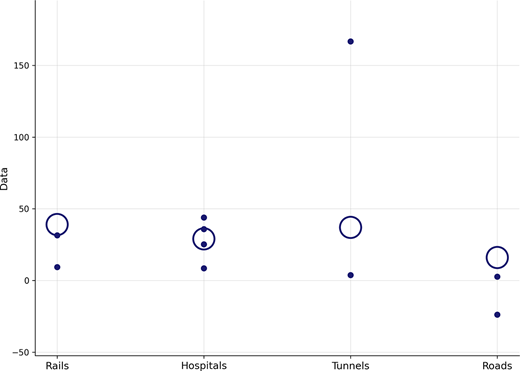
As shown in Figure 1, Cases 1, 3, 6, 8 and 9 exhibit a significant escalation in the development phase relative to the initial cost estimate. Specifically, in Case 9, the AC was terminated by the client. As for the remaining cases, Cases 4 and 5 exhibit no significant fluctuations over time. Figure 2 illustrates a comparison with typical mean cost overruns in similar projects. The comparison data in the table were derived from Flyvbjerg and Gardner (2023), which included a cost database of over 16,000 projects across 136 countries.
In particular, the rail projects, Cases 1 and 2, exceeded their budgets by 31.5% and 9.4%, respectively. The typical mean cost overrun for rail projects is estimated at 39% (Flyvbjerg and Gardner, 2023). Amongst the hospital projects, Cases 3 and 8 were above the typical mean cost overrun of 29%; however, Cases 6 and 7 fell below the mean overrun threshold. Amongst the tunnel projects, one project was halted after the development phase and substantially exceeded the mean cost overrun, whereas the other case was close to its budget, remaining well within the typical mean overrun value. As for the road projects in the data, Case 4 had costs only slightly above the typical mean cost overrun, whilst Case 10 was nearly a quarter under the cost estimate.
Qualitative findings on cost fluctuations
In Case 1, multiple variables contributed to the increased costs of this rail project, including more detailed design, mitigation and relocation of existing urban infrastructure, costs arising from polluted soil remediation and complex traffic management during construction. In Case 3, the quality requirements were increased by, amongst other measures, extending the tram length, augmenting the number of stops and modifying the design requirements. Furthermore, the city’s infrastructure and the quantity of traffic arrangements during construction were initially overestimated, as in Case 1, resulting in additional costs throughout the development phase.
In the hospital projects, evaluating the cost variations in Case 3 proved challenging, as the researchers encountered a lack of publicly available documents, primarily encountering statements indicating that ‘it went well’. In Case 6, the factors contributing to the rise in predicted development costs were identified as an increase in design volume, an elevation in quality standards and a surge in construction expenses. During the implementation phase, the primary cost overrun in Case 6 was mainly due to client-initiated adjustments, totalling €4.1 m. The third hospital project received extensive media publicity, although limited public documentation was available. In addition, media reports indicated that alterations in scope and insufficient preparation caused these cost overruns.
Regarding the tunnel projects, during the development phase of Case 5, specific designs and technical solutions – including the realignment of the drive tunnel – were formulated based on the available data, facilitating more effective excavation and cost reductions. In Case 9, it was challenging to ascertain justification in the public information for the significant cost overrun and termination of the alliance contract. Nevertheless, the project persisted until the dissolution of the alliance and currently operates as an engineering, procurement and construction management contract (EPCM) with a cost projection of €200m.
Road projects differ distinctly from other case projects in that the initial budget was either maintained (Case 4) or significantly under budget (Case 10). In Case 4, the cost increases were attributed to the inclusion of an extra road junction (scope change) and the revision of the cost estimate once the designs were finalised. Meanwhile, the cost savings in Case 10 were ascribed to innovative strategies to improve work efficiency, effective risk management, systematic project content optimisation, methods to reduce material use, the successful coordination of work phases with train operations and a flexible schedule.
In the analysed cases, cost fluctuations were consistent with the scale and quality of standard construction projects, together with supplementary expenses resulting from the design development and refinement, as outlined in the AACE model. No unforeseen significant issues were identified in the investigated cases that could explain the cost variations. Street infrastructure in metropolitan settings is prevalent in these initiatives, especially in rail developments. Notably, reports and investigated data omitted references to design-related delays, cost escalations due to alterations in design or contractual conflicts associated with project reporting. These are typically reported topics in construction projects that exceed their budgets, as most of these cases are. Table 4 presents the key cost drivers particular to each case.
Although the analysed projects received significant public funding, it was somewhat challenging to gather information on them, and there was a considerable amount of conflicting communication. One recurring characteristic observed in the analysed cases was the utilisation of innovation registers. In most cases, innovation registers were identified and used in the ACs, as well as actively pursued and documented. Nonetheless, innovations seemed somewhat traditional regarding their influence on work methodologies, project planning and the choice of many alternatives, thereby failing to satisfy the criteria for originality. Similar to the issues and obstacles, these measures, termed innovations, seem to be somewhat traditional methods employed in construction projects.
Summary of findings
Based on our analysis of the 10 completed Finnish alliance projects and the preceding studies highlighted in the literature review, the analysis indicates that in alliance projects, significant cost overruns were not detected between the development and implementation phases, with the exception of one hospital project. In all other projects that progressed to the development phase prior to the investment decision and implementation, the mean cost overrun was approximately 12%, which may be classified within the AACE standard accuracy Category 2 (semi-detailed design and quantity take-off for bids and tenders). The data indicated that the participants advanced the detailed design due to the development phase of the alliance projects. Conversely, substantial changes existed between the initial budget and the estimations during the development phase in several projects. The estimations during the development phase were, on mean, 28% more than the initial cost estimate. In accordance with the AACE standard, this is classified as Category 4 (−10 to + 50%) associated with schematic and conceptual design.
In addition, qualitative analysis of the data revealed a notable development in design, which is expected throughout the developmental phase of an alliance project. This finding aligns with the advancement of cost maturity in building projects, as per the AACE standard. As identified in the data, other notable factors contributing to cost overruns include modifications initiated by the project owner and, especially in urban rail projects, the pre-existing subterranean infrastructure, which is a clear catalyst for cost escalations. For instance, a cancelled project involved the development of an innovative heat storage facility utilising rock; hence, the escalation in project expenses and the cessation of the AC appear typical, considering the project’s distinct nature. All other projects, irrespective of their scale, are predominantly conventional transport projects and hospitals, each presenting specific issues in terms of cost management. No notable or unforeseen events were detected in the archival material that could have resulted in unanticipated substantial expense escalations. Conversely, there were no signs of design delays or substandard design quality in the analysed projects. Likewise, contractual conflicts were not observed in the analysed material.
Furthermore, the findings did not demonstrate that alliance projects consistently produced substantial cost reductions prior to or following the development phase. In fact, the analysed alliance projects conformed to the cost variation range established by the AACE and the variation ranges identified in prior studies. However, the data also indicated that following the development phase, there was a relatively stable increasing trend in expenses leading to the actual cost, which most project owners anticipated by allocating reasonably sized contingencies (i.e. the allowances included within the target cost to cover identified but uncertain risks). The findings also indicate that the alliance’s development phase may function as planned and expected by the proponents of the alliance model. Overall, these findings demonstrate that a sufficiently stable environment for execution can be attained by developing the construction design, planning the project and mitigating risks before the implementation decision.
Discussion
Limitations
The primary limitation affecting the reliability of this study was the availability of public documentation. In particular, the content was often absent from public databases and when available, the links on the alliance parties’ websites were not reliably functional. Significant cost overruns, as exemplified by the hospital project (Case 8) and the tunnel project (Case 9), were particularly challenging cases in terms of data collection. It appears that the transparency requirements imposed on public authorities do not necessarily thrive in alliance projects, especially those in which costs significantly exceed estimates. In those instances, researchers had to evaluate cost fluctuation data mostly from media reports rather than from original sources, in contrast to projects in which cost overruns were minimal or savings were realised. This observation underscores the need for public databases devoted to project research, particularly for innovative project management approaches, such as alliances, which require rigorous evaluations of their effectiveness and functionality prior to widespread societal adoption.
Another limitation of the analysis was the selection of archival documents. In particular, the researchers lacked access to any technical drawings pertaining to the analysed projects. By assessing design maturity, one could scrutinise the design development of each project prior to the commencement of the alliance development phase and its subsequent evolution in the post development phase. The results might subsequently be juxtaposed with the AACE (or similar standards) cost estimate accuracy classifications (e.g. ± percentage ranges), thus indicating the influence of design precision on the dependability of cost estimates. In addition, a comprehensive examination of the technical drawings could facilitate the assessment of whether projects can be categorised into groups with low or high design maturity and variations in the cost development or predictability of these groups. Therefore, we propose that researchers in future studies should have access to the technical documentation of alliance projects in a broader context than this study.
The study’s geographical restriction to Finland and the limited number of cases (n = 10) examined were also major limitations. The sample of 10 cases was a limited sample size for quantitative analysis. These projects were intentionally chosen from the extensive material accessible to the researchers, utilising selection criteria pertaining to the projects’ scope, the thoroughness of the documentation and the availability of phase-specific cost data. Therefore, the chosen cases represent the most thorough and similar instances from the national alliance project portfolio, focusing on complicated and challenging projects rather than on the smaller alliance projects that are also contained in the data set available. Nevertheless, whilst this intentional selection constrains the generalisability of the findings, the cases provide adequate diversity regarding project type, size and sector, facilitating significant case comparisons and achieving local saturation concerning cost variation patterns in these large, complex projects.
Conversely, the selected projects were substantial in scale and duration, providing ample information to identify cost fluctuations across project phases. In this regard, further research is advisable, particularly through the enhancement of project design evaluations prior to and following the development phase. Such research may yield additional insights into the evolution of design, which is frequently regarded as beneficial in alliance projects, as well as into the collaboration between contractors and designers to augment design feasibility.
Furthermore, an assessment from the archival data noted a degree of inaccuracy and ambiguity in the cost terminologies employed in the project reports. For instance, the same phrases as ‘total cost’ or ‘cost estimate’ were employed in several documents to denote distinct concepts, namely target costs, actual costs or preliminary estimates, but lacked precise meanings. This terminological inconsistency complicates case comparisons and may diminish the transparency of cost management throughout projects. In alliance projects, cost management may rely on collaborative development efforts with reporting techniques that are occasionally tailored to unique projects and a deficiency in set standards. This is evidenced by the absence of references to industry standards for cost estimation, such as the AACE. This terminological ambiguity may have influenced this study, prompting the authors to encourage readers to critically review the absolute data and focus more on patterns and evaluations pertaining to groups.
Cost fluctuations, success factors and governance challenges in alliances
This study presents a contrasting perspective to the assertions frequently reiterated by the expert-driven narrative of the alliance model, such as Ross (2009), who contends that up to 80% of alliance projects adhere to or fall below budget, with cost overruns being mere anomalies. Our research indicates that the largest-scale alliance projects in Finland surpass their budgets by roughly 12%–28%, depending on the project phase. While this study represents a limited sample of total alliance projects in Finland, the selected projects adhere to the same criteria as those endorsed for the alliance model: project complexity and scale.
Furthermore, this study aligns with other research indicating that alliance projects experience cost fluctuations characteristic of typical construction projects, as documented by Mills et al. (2011), Walker et al. (2013) and Flyvbjerg and Gardner (2023), amongst others. However, our findings are comparatively more robust than those of previous research, indicating that a greater number of ACs exceed their budgets rather than go under budget. Our data also included one terminated alliance project, which we regrettably could not explain based on the archival material in terms of the detailed causes of the significant cost overrun that prompted the project’s termination. In this regard, we hope that researchers working on future studies will acquire additional insights into the project through qualitative methods.
When comparing our findings with the global benchmark identified by Flyvbjerg and Gardner (2023), our findings indicate that the mean cost escalation in Finnish large-scale public-sector alliance projects does not markedly diverge from the values associated with similar project types within the sector. This phenomenon can primarily be attributed to standard project-specific variability and escalating costs throughout project timelines (cost indexes) as well as designs and plans developed during the projects’ progression (AACE model). The results indicate that the incremental cost variations seen in alliance projects represent intentional and clear adjustments to the design scope rather than unrestrained cost escalations. This finding substantiates the perspective that collaborative delivery models, such as alliances, can mitigate the behavioural and organisational cultural biases that contribute to cost overruns in conventional projects. These biases include undue optimism, strategic underestimation and information silos, which have been identified by Flyvbjerg and Gardner (2023) as principal factors driving cost escalations. Nonetheless, the persistent increase in cost estimates at every phase underscores the necessity for a more precise initial scope definition and contingency planning – an aspect that future research could explore in greater depth in terms of the interplay between alliance governance mechanisms and the precision of cost estimates.
In addition, data on the reasons for cost variations were collected using qualitative methods; however, the findings were largely consistent with existing findings. In particular, our findings predominantly align with the factors contributing to cost increases in alliance projects identified by Walker et al. (2013). Conversely, we did not detect any unstable market conditions, overly complex designs or underestimation of design efforts, as noted by Walker et al. (2013). This may suggest that the implementation strategies for alliance projects have evolved over the past decade, allowing multiple stakeholders to collaborate more effectively. In turn, this has facilitated the planning and management of market conditions with greater sophistication than in earlier alliance projects.
Whilst ACs strive for a greater degree of trust and collaboration amongst contract parties compared to traditional construction projects, there is also a constant possibility that one party involved in the alliance will try to take advantage of the other parties (Davis and Love, 2011). Various forms of exploitation have been observed, including the imposition of designers bound to an alliance for an over-extended period, the limited and temporary involvement of team members, the intermittent involvement of team members due to concurrent projects and the practice of concealing and withholding information for personal gain (Laan et al., 2011; Galvin et al., 2021).
Of particular significance to this study is the concealment of costs during the development stage, which has several negative consequences. First, previous research indicates that corruption is more prevalent in the construction industry than in other sectors (Stansbury, 2005). ACs possess various characteristics sharing common elements that render them susceptible to corruption. These elements include project scale (costs can be concealed within a substantial volume), project uniqueness (makes comparisons challenging), project complexity (convenience of unjustified claims) and government participation (insufficient control over public officials) (De Jong et al., 2009; Stansbury, 2005). Second, the consortia required for ACs are prone to collusion amongst construction players and the practice of ‘hidden pricing’, which is detrimental to the transparency of public projects (Lehtinen et al., 2022).
We found our insights into the challenges of acquiring data on public projects somewhat concerning. Specifically, our observations indicate that public entities commissioning alliance projects should consider the drawbacks identified by Stansbury (2005), De Jong (2009) and Lehtinen et al. (2022). These drawbacks include the adverse impacts of cost concealment, hidden pricing, clandestine collaboration and inadequate project transparency, which can be alleviated in these socially significant initiatives (Lappalainen et al., 2024). Therefore, we recommend that public alliances create a comprehensive final financial report that transparently delineates the costs associated with each stage.
However, prior research has also identified numerous essential success factors for alliance and early contractor involvement projects, such as mutual trust, transparent cost accounting, early integration of design and construction expertise and collaborative problem-solving (Walker et al., 2016; Lahdenperä, 2012). These variables have facilitated the ongoing refining of design scope and risk allocation, thereby fostering innovation and adaptability throughout the project lifespan. The results of this study on Finnish alliance projects and the observed phased cost changes can likewise be understood as symptoms of this collaborative process. Initial moderate cost increases may not indicate inefficiency; instead, they may signify an improved delineation of scope, quality standards and constructability, which are essential results of efficient collaboration and collective learning.
Conversely, the principal finding of this study, specifically the persistent increase in alliance cost estimates, indicates a constraint on project success: if design development consistently results in elevated costs, it may suggest the overly restrictive nature of the initial scope or the excessively optimistic assumptions regarding the project. Therefore, the financial stability of an alliance project may necessitate a balance between flexibility and transparency, including rigorous initial validation and realistic cost estimates. The equilibrium between flexible collaboration and stringent cost control may constitute a novel success factor in forthcoming alliance contract strategies.
Ultimately, our findings provide a novel perspective on alliance projects in relation to existing studies from Australasia. Therefore, this study aims to facilitate the comparison of country-specific variations in the formation of these novel project models. This study also aims to stimulate additional research and generate novel research questions into the global similarities and differences among alliance projects, extending the scope beyond a cost-centric perspective.
Practical implications
The findings of this study offer several practical implications for public-sector clients, project managers and policymakers involved in collaborative contracting. First, the findings suggest that the progressive cost fluctuations observed in Finnish alliance projects could be systematically utilised to support a phase-based investment decision model. In such a model, project owners would formally validate cost estimates and design maturity and risk assessments at predefined stage-gate points before committing to the next phase. This approach aligns the financial decision-making process with the actual readiness of the design, thereby ensuring that each subsequent commitment is based on verified information rather than preliminary assumptions. By embedding cost verification within phase transitions, public-sector clients could strengthen accountability and predictability in project delivery, thereby minimising the risk of unrecognised scope growth and late-phase budget pressure.
Second, the findings provide material for training programs targeting public-sector clients, alliance facilitators and project managers. In particular, the documented patterns of cost evolution can be used to illustrate how iterative design refinement contributes to increasing costs. Training based on real case data would help practitioners better anticipate cost dynamics in different phases and interpret fluctuations as indicators of design maturity. By fostering a deeper understanding of the cost development process, these training programs could enhance the overall competence and confidence of organisations engaging in alliances or other collaborative delivery models.
Third, the study’s findings may impact the formulation of public procurement criteria for cooperative agreements from a policy standpoint. The implementation of a common phase-gate framework and cost reporting models may enhance project comparability and augment transparency for stakeholders and auditors. Furthermore, documented evidence of cost trends can assist decision-makers in justifying the utilisation of alliance models in scenarios wherein flexibility and shared risk management yield long-term value, notwithstanding initial cost escalations. Ultimately, these criteria may enhance the institutional legitimacy of collaborative delivery models and improve their alignment with public accountability standards.
Finally, the findings of this study indicate the necessity of reassessing the incentive frameworks that direct the development phase of alliance projects. In the existing approach, where a contractor’s remuneration and bonuses are predominantly tied to the mutually established target cost, there exists an intrinsic motivation to prioritise cost increases above reductions during the development phase. This can be partially seen as natural risk management by the parties when the project participants endeavour to establish an adequate safety buffer prior to finalising a cost commitment. This practice may inadvertently incentivise caution and an upward skew in initial cost estimates instead of promoting efficiency or value optimisation. The findings indicate that, despite the AACE model’s range encompassing negative and positive values, there remains a predominant trend of cost increases at each level.
Therefore, we encourage the actors in the field to implement a critical review and improvement of the incentive system to decouple a portion of the financial reward from the final target cost, linking it instead to measurable indicators, such as design maturity, risk mitigation, enhanced constructability or innovation outcomes, attained during the development phase. This method may also encourage the alliance team to delineate the project scope and manage uncertainties without consistently increasing cost projections. This might also include the implementation of a dual payment framework, in which one component would be associated with cost efficiency during the delivery phase, whilst the other would pertain to verified enhancements in design completeness and risk transparency prior to the confirmation of target costs. The use of such a framework could more effectively align incentives with the ideals of collaboration in the alliance model and mitigate unnecessary cost fluctuations.
Conclusion
The public sector plays a pivotal role in construction projects. Hence, numerous countries have recently sought to address construction-related issues through the implementation of alliance projects. Alliance projects have often been regarded with cautious optimism, as the public anticipates that they will result in the more efficient utilisation of public funds through improved scheduling, cost management and collaboration amongst the various parties involved. By analysing 10 large and complex alliance projects completed in Finland, along with their cost fluctuations and the underlying causes of these variations through archival research, this study aims to enhance the knowledge of public officials, who remain the primary decision-makers in alliance projects, and to evaluate the economic performance of such projects. The study also offers construction management researchers novel insights into the cost fluctuations of the alliance project model, whilst also presenting a quantitative perspective that complements the robust although mostly qualitative narrative of alliance contracting in construction sector.
The findings did not demonstrate that alliance projects reliably produced substantial cost reductions before or following the development period. Amongst the analysed projects, one was under budget, one was terminated by the client during the development phase and the other eight exceeded the cost estimate. Throughout the development period, the original cost estimate exceeded the initial estimate by a mean of 28%. During the development phase, the project costs for which a procurement choice was made increased by a mean of 12%. The detected cost fluctuation was predominantly consistent with prior studies and adhered to standard alterations in cost accounting principles across various stages of design maturity. The findings also corroborate the findings of prior research, which indicate that alliance projects exhibit no substantial variations in cost performance compared to other analogous construction projects.
Another discovery was the identification of factors leading to cost variability. In particular, the analysed projects revealed the cost fluctuation contributors: design development and refinement, alterations in quality and scope changes by the client and – notably in urban rail transport – the influence of pre-existing underground infrastructure. An intriguing anomaly was a tunnel project that was halted during the development phase; nevertheless, insufficient data hindered the researchers from conducting a more thorough analysis of the reasons behind the termination. Although the projects were publicly accessible, the researchers encountered challenges in obtaining the original archival materials, thus constraining the study’s utility whilst simultaneously presenting avenues for future research.
Uncontrolled scope creep is typically regarded as detrimental in projects (Okafor and Odubade, 2022). The utilisation of ACs may influence scope creep in projects given the adaptable processes for controlling alterations inherent in these models. There have also been indications of this finding in past research (Howe, 2022; Walker et al., 2016). Conversely, adaptability in scope may enhance client value, particularly when executed through collaboration (Pargar et al., 2019).
Furthermore, no notable or unforeseen occurrences were detected in the archival material that could have resulted in unexpected substantial cost escalations; rather, we found that cost fluctuations primarily arose when the design and project advanced towards the implementation decision. Moreover, there were no indications of design delays, shortcomings in design quality, contractual disagreements between the alliance parties or substantial quality issues typically associated with building projects. However, this study is limited to public sources, which may have resulted in the unintended omission of prevalent project challenges not documented in public reports. This limitation highlights the need for further comprehensive research, such as in an alliance project, where researchers can closely observe the resolution of these issues.
The examined alliance projects seem to adhere to the cost fluctuation parameters previously outlined in the cost estimation standards. Following significant cost escalations during the development phase, a relatively consistent upward trend in actual costs was noted. The findings suggest that, following the development phase, cost escalations in the projects are mild but cannot be entirely eliminated, as evidenced in alliance projects.
The study offers several practical insights for public organisations planning to implement alliance projects. First, alliance projects are susceptible to cost escalations yet appear to adhere to the cost fluctuation parameters outlined in the cost estimation standards in the sector. Second, acquiring dependable and authentic data regarding the cost performance of alliance projects is difficult, and even when such data is available, the trustworthiness of the information is inconsistent. In instances of cost overruns, accessing information is regrettably challenging, and the exchange of lessons gained between researchers and practitioners is often insufficient or prone to speculation.
The alliance project model has been suggested as a mechanism for executing large and complex construction projects. Our data indicate that the causes of cost fluctuations in alliance projects are predominantly standard construction-related issues, which is consistent with findings from prior studies. Likewise, concerning cost variances, the investigation and the associated literature analysis revealed no data that deviated significantly from typical construction projects. Therefore, this limited case study indicates that the economic advantages of alliance projects deserve more rigorous and critical examinations than previously conducted.
Ethics statement and data availability
Data are available upon request from the authors. This study is based solely on publicly available archival data from official project reports, publicly released cost statements and government publications. No confidential or personal information was accessed; therefore, formal ethical approval was not required under national research guidelines. Furthermore, no individual-level or sensitive data were collected or processed. Artificial intelligence tools were used only to assist with language editing and formatting; no generative tools were used in data analysis or interpretation.