


This study aims to investigate the livelihood approaches, socio-economic effects and challenges related to informal waste collection, focusing on informal women waste collectors in rural QwaQwa, South Africa. It addresses gaps in gender and rural–urban divides by positioning these women as active place-makers who, through their daily practices, transform marginalised rural spaces into cleaner, more functional and resilient environments. This spatial agency supports household survival, inclusive rural development, and reduced vulnerability while advancing circular economy principles.
Grounded in the sustainable livelihood framework (SLF) and place-making theory, the study adopted a qualitative case study design. Data were collected through focus group discussions, interviews, field observations and secondary sources and analysed thematically.
Informal waste collection serves as a vital livelihood strategy for women in rural QwaQwa, driven by poverty and unemployment. Leveraging social networks, local knowledge and child collaboration, these women generate income and contribute to sustainable waste management. Critically, their everyday practices of waste recovery actively reshape rural landscapes, reducing illegal dumping, improving public spaces and fostering environmental stewardship, positioning them as unrecognised place-makers. However, earnings remain insufficient for resilient livelihoods, and they face significant challenges including resource scarcity, institutional neglect, social stigma, child labour concerns and exposure to violence.
This research examines rural QwaQwa as a case study, limiting the generalisability of its findings to other rural areas in South Africa and beyond. Nonetheless, it provides insights into women’s roles in informal waste collection, its impact on livelihoods and the relevance of the SLF in analysing gendered livelihood systems. The integration of SLF and place-making theory provides a novel lens for understanding how marginalised women exercise spatial agency to build more sustainable rural places.
The study highlights the need for policy changes to integrate women who collect waste informally into formal waste management systems. Providing equipment, infrastructure and capacity-building programmes enhances their income, productivity and safety while reducing exploitation. Empowering these women supports rural livelihoods and promotes poverty alleviation, gender equity and environmental stewardship through initiatives like formal registration and participatory policy forums.
The results highlight significant societal issues like stigma, gender inequality and child labour. Addressing these through awareness campaigns, social protection programmes and inclusive governance can enhance the dignity and well-being of women in the informal sector.
This study makes a novel contribution by foregrounding rural contexts and demonstrating the interconnectedness of informal waste collection, gender, livelihoods and place-making in QwaQwa. Guided by the SLF and place-making theory, it reveals how women transform passive survival strategies into active processes of spatial transformation, generating income alongside broader social and environmental value. This nexus offers a framework for reducing vulnerability and promoting inclusive rural development.
1. Introduction
Places are profoundly shaped by their cleanliness and environmental condition, which in turn affect public health, social well-being and the liveability of everyday environments (Pasanen et al., 2004). In developed countries, formal municipal waste management systems generally ensure high standards of cleanliness and hygiene in public and private spaces, with limited dependence on informal community actors to produce clean, environmentally aesthetic places (Cook et al., 2026). By contrast, in many African contexts, including rural South Africa, inadequate and uneven municipal services result in widespread illegal dumping, open burning and degraded environments that compromise public health, water quality, soil integrity and the aesthetic and functional quality of places (Rodseth et al., 2020; Schenck et al., 2019). These conditions create a distinct form of place-making in which local communities, particularly women, actively intervene through informal waste collection to restore cleanliness and environmental quality. Unlike the more institutionalised systems of the Global North, African rural places often depend on the everyday spatial practices of informal actors to maintain liveable environments amid structural neglect (Koroma et al., 2025). This paper examines how rural women in QwaQwa, South Africa, function as place-makers by transforming unclean, marginalised spaces into cleaner, more functional environments through their informal waste collection activities.
Rapid population growth, urbanisation, technological advancements and changing consumption patterns have significantly increased global waste generation in recent decades (Kaza et al, 2018). This rise creates serious environmental, health and economic challenges for governments worldwide, particularly in developing countries where waste management infrastructure remains inadequate (Akyen et al., 2025; Dada et al., 2023). In many parts of the Global South, formal waste collection services are limited, especially in rural and semi-rural areas characterised by geographic isolation, low population density and high transportation costs (Koroma et al., 2025). As a result, open dumping and burning of waste remain common practices, posing risks to public health, water quality, soil integrity and overall environmental sustainability (Rodseth et al., 2020; Schenck et al., 2019). In South Africa, municipalities are responsible for waste management; however, coverage is uneven, leaving many rural communities underserved. Informal waste collectors, therefore, play a crucial bridging role by collecting, sorting and selling recyclable materials such as plastics, paper, glass and metals, thereby diverting waste from the environment and supporting resource recovery (Koroma et al., 2025).
This informal sector provides essential income for vulnerable households while contributing to cleaner communities and circular economy principles (Jerie et al., 2025). However, the activity is labour-intensive, unregulated and often stigmatised, exposing participants to significant physical, social and economic risks (Marques et al., 2021; Yu et al., 2020). Women constitute a large proportion of informal waste collectors, particularly in rural settings where formal employment opportunities are scarce (Schenck et al., 2019). They frequently balance waste collection with domestic responsibilities such as childcare and household chores, which adds to their workload and limits productivity (Koroma et al., 2025). Through these everyday spatial practices, they simultaneously act as place-makers, transforming marginalised rural spaces while navigating gendered burdens. Many women also rely on their children’s involvement to assist with heavy loads or sorting tasks, raising concerns about child labour, educational disruptions and long-term family well-being (Xweso, 2025). Despite these contributions to household survival and local environmental management, informal women waste collectors receive limited recognition or support from formal institutions, resulting in unstable incomes, lack of protective equipment and heightened vulnerability to theft and harassment (Mukucha and Jaravaza, 2025; Sibanda and Erwin, 2023).
Most existing research on informal waste collection has focused on urban centres where activities are more visible and concentrated (Schenck and Blaauw, 2011). This urban bias has left the experiences of rural women waste collectors largely underexplored, creating a significant knowledge gap regarding their livelihood strategies, socio-economic contributions and specific challenges in remote areas like QwaQwa in the Free State province. Rural contexts differ markedly because of poorer infrastructure, greater reliance on subsistence activities and weaker institutional presence, which shape how women engage in waste work (Xweso, 2025). In QwaQwa, high unemployment, poverty and dependence on social grants push many women into informal waste collection as a key survival strategy (Muyambo et al., 2024).
While informal waste collection primarily serves as a survival strategy amid structural unemployment and poverty, it also embodies profound spatial agency. Drawing on place-making theory, this study conceptualises the women’s daily practices as inherently spatial interventions that reshape environments and influence community well-being. This perspective shifts focus from passive survival strategies to active place-making roles, where women transform marginalised rural areas into more resilient and functional places. Integrating place-making with livelihood studies reveals how everyday work generates not only income but also broader social and environmental value (Pitria and Andari, 2023). In QwaQwa, by recovering recyclables, reducing illegal dumping and enhancing the usability of public spaces, these women act as unrecognised environmental stewards and place-makers, turning institutional neglect into sites of quiet transformation. This central contribution, that livelihood activities are spatial practices that actively co-produce more liveable rural landscapes, threads through the entire analysis. This study addresses this gap by investigating the livelihood approaches, socio-economic impacts and challenges faced by these rural women collectors, with a particular emphasis on their role as place-makers. Guided by the sustainable livelihood framework (SLF) and place-making theory. Guided by the SLF and place-making theory, the research examines how women mobilise available assets, such as social networks, local knowledge and family labour, to sustain their households amid structural constraints.
Place-making theory is central to this study because it emphasises how ordinary people, through their everyday practices, actively shape and transform local spaces into more functional, liveable and meaningful places (Wade and Galpin, 2026). In the livelihoods discourse, place-making thinking highlights the essence of spatial agency: it shows that livelihood activities are not only economic survival strategies but also processes that reshape environments, foster community well-being and promote environmental stewardship (Strydom et al., 2024). Women waste collectors in QwaQwa, for instance, contribute to cleaner rural landscapes by recovering waste, reducing illegal dumping and enhancing the usability of public and private spaces, thereby turning marginalised areas into more sustainable and resilient places despite institutional neglect (Strydom et al., 2025).
By focusing on this understudied rural population, the study makes an important contribution to understanding gendered informal livelihoods in marginalised areas. It highlights the need for policy interventions that formally recognise informal women waste collectors, provide them with basic equipment and storage facilities and integrate them into municipal waste management systems. Such measures can enhance income stability, improve safety, reduce exploitation and promote gender equity while supporting broader goals of poverty alleviation, environmental sustainability and sustainable rural development. Consequently, the findings offer practical insights for aligning informal waste activities with national and global sustainability objectives, including the United Nations Sustainable Development Goals related to poverty reduction, decent work, gender equality and sustainable communities.
2. Gendered dimensions and theoretical perspectives on informal waste collection
Women constitute a substantial share of informal waste collectors in South Africa, driven by pervasive unemployment, poverty and limited access to formal employment (Sibanda and Erwin, 2023). In rural areas, traditional gender roles and limited access to land or credit further push women into this sector as a survival strategy (Yu et al., 2020). Female collectors typically juggle waste picking with extensive unpaid domestic and caregiving responsibilities, creating a double burden that constrains productivity and income generation (Koroma et al., 2025). This intersection of productive and reproductive labour intensifies their workload and exposes them to compounded physical and emotional strain (Wittmer, 2021). Feminist political economy perspectives highlight how women’s unpaid care work subsidises capitalist accumulation while remaining invisible and undervalued, thereby deepening gendered precarity in informal livelihoods (Woyo et al., 2025).
Gendered challenges extend beyond workload to include social stigma, harassment and safety risks. Community attitudes frequently portray women waste collectors as undesirable or undignified, eroding their social standing and access to support networks (Ngalo and Thondhlana, 2023). Many operate in isolated locations or late hours, increasing vulnerability to theft and violence from criminal elements. The absence of basic equipment and designated storage forces women to sort materials at home, which degrades living environments and affects family health (Hidalgo-Crespo et al., 2023). Additionally, reliance on child assistance after school hours raises serious concerns about child labour, educational disruption and long-term intergenerational impacts (Xweso, 2025). Theories of gendered precarity underscore how informal work for women is characterised by instability, lack of social protection and heightened exposure to exploitation, intersecting with class and spatial marginality in rural contexts (Marques et al., 2021).
These gendered dimensions highlight the need for intersectional feminist approaches in waste management research and policy. Women’s contributions to household survival and environmental management are significant, yet they remain undervalued and unsupported by formal institutions. Economic exploitation through fluctuating prices set by middlemen further limits financial security (Mukucha and Jaravaza, 2025). Addressing these issues requires targeted interventions that recognise women’s agency while tackling structural barriers related to gender, space and informality. Feminist theories on care labour and marginality provide a critical lens for understanding how the care burden reproduces vulnerability in informal waste work, calling for policies that integrate recognition of unpaid labour with protections for women in the informal economy (Chireshe et al., 2023).
3. Theoretical framing
3.1 Sustainable livelihood framework in livelihood studies
The SLF, originally proposed by Chambers and Conway (1992) and further developed by Scoones (2009), offers a comprehensive approach to understanding how individuals and households build and sustain livelihoods. It centres on five key capital assets: human, social, natural, physical and financial, that people access and combine within specific vulnerability contexts (Figure 1). These assets are influenced by transforming structures and processes, such as policies, institutions and cultural norms, which shape available livelihood strategies and resulting outcomes. SLF emphasises people-centred analysis, highlighting how marginalised groups diversify activities to cope with shocks like unemployment and poverty. In informal sector studies, the framework reveals how workers mobilise limited resources creatively to achieve resilience (Natarajan et al., 2022).
 The flow begins with Vulnerability Context, comprising Shocks, Trends, and Seasonality, and leads to Livelihood Assets. The asset pentagon is labelled H, N, F, P, and S, defined in the key as Human Capital, Natural Capital, Financial Capital, Physical Capital, and Social Capital. Livelihood Assets connect through Influence and access to Transforming Structures and Processes. Structures include Levels of Government and Private Sector. Processes include Laws, Policies, Culture, and Institutions. These lead to Livelihood Strategies, which are pursued in order to achieve Livelihood Outcomes. The outcomes listed are More income, Increased well-being, Reduced vulnerability, Improved food security, and More sustainable use of natural resource base. Feedback arrows return from the outcomes towards the livelihood assets and vulnerability context.
The sustainable livelihood framework
Source: Adapted from the Department for International Development (DFID, 1999)
The flow begins with Vulnerability Context, comprising Shocks, Trends, and Seasonality, and leads to Livelihood Assets. The asset pentagon is labelled H, N, F, P, and S, defined in the key as Human Capital, Natural Capital, Financial Capital, Physical Capital, and Social Capital. Livelihood Assets connect through Influence and access to Transforming Structures and Processes. Structures include Levels of Government and Private Sector. Processes include Laws, Policies, Culture, and Institutions. These lead to Livelihood Strategies, which are pursued in order to achieve Livelihood Outcomes. The outcomes listed are More income, Increased well-being, Reduced vulnerability, Improved food security, and More sustainable use of natural resource base. Feedback arrows return from the outcomes towards the livelihood assets and vulnerability context.The sustainable livelihood framework
Source: Adapted from the Department for International Development (DFID, 1999)
Applications of SLF to waste collection contexts demonstrate its utility in mapping asset portfolios and vulnerabilities. Collectors often rely heavily on social capital through networks and human capital via local knowledge and skills, compensating for deficiencies in physical equipment and financial resources (Velis et al., 2022). The framework helps identify how institutional neglect and stigma act as barriers within the vulnerability context, limiting access to supportive structures. Recent adaptations of SLF stress the importance of context-specific factors and dynamic interactions among assets. However, some scholars note that traditional SLF applications may underplay spatial and place-based dimensions of livelihood activities.
By using SLF, this study analyses how rural women in QwaQwa mobilise available capital amid structural constraints. The framework guides examination of livelihood strategies, socio-economic outcomes and persistent challenges. It also provides a foundation for integrating complementary perspectives that address spatial agency. This theoretical grounding enhances understanding of gendered informal livelihoods and supports policy recommendations for asset strengthening and institutional inclusion. Overall, SLF remains a powerful tool for linking micro-level experiences to broader development goals (Natarajan et al., 2022).
3.2 Place-making theory and its relevance to informal livelihoods
Place-making theory emphasises how ordinary individuals and communities actively shape and transform local spaces through everyday practices, turning them into more functional, meaningful and sustainable environments (Friedmann, 2010; Lew, 2017). This study foregrounds place-making as the golden thread connecting livelihood strategies to spatial transformation in rural QwaQwa. Rooted in multiple disciplines, including urban planning, geography and sociology, it highlights the agency of marginalised actors in creating liveable places despite structural limitations (Lew, 2017). The theory considers economic, social and environmental dimensions, stressing collaborative processes, community empowerment and environmental stewardship (Figure 2) (Strydom et al., 2024). In practice, place-making involves physical interventions, social interactions and cultural connections that enhance place identity and resilience (Wade and Galpin, 2026).
 The outer Environment circle contains Spatial layout, Visual excitement, Conservation and Preservation of Built and Natural environments, Environmental management, Challenges, Socio-spatial innovation, Bio-economy, and Eco-economy. Within it, the Social circle contains Social identity, People-people interaction, Socio-economic aspects including Poverty and Unemployment, Culture and heritage preservation, Power relations and political aspects, and Challenges. Within the Social circle, the Economic circle contains Resource availability for upkeep and maintenance, Place branding and imageability, Scale of capital investment and funding, and Visitor and investor attraction.
Dimensions of strong sustainable placemaking
Source:Strydom et al. (2025), p. 4
The outer Environment circle contains Spatial layout, Visual excitement, Conservation and Preservation of Built and Natural environments, Environmental management, Challenges, Socio-spatial innovation, Bio-economy, and Eco-economy. Within it, the Social circle contains Social identity, People-people interaction, Socio-economic aspects including Poverty and Unemployment, Culture and heritage preservation, Power relations and political aspects, and Challenges. Within the Social circle, the Economic circle contains Resource availability for upkeep and maintenance, Place branding and imageability, Scale of capital investment and funding, and Visitor and investor attraction.Dimensions of strong sustainable placemaking
Source:Strydom et al. (2025), p. 4
Within livelihoods discourse, place-making thinking introduces a vital spatial lens that complements asset-based frameworks (Strydom et al., 2025). It recognises that livelihood activities are inherently spatial practices that reshape environments and influence community well-being. Informal waste collectors, for example, contribute to cleaner landscapes by recovering materials and reducing illegal dumping, thereby enhancing the usability and health of rural spaces. In QwaQwa, the women’s daily collection practices actively reshape dumpsites and neighbourhoods, positioning them as unrecognised place-makers. This perspective shifts focus from passive survival strategies to active place-making roles, where women transform marginalised areas into more resilient and functional places. Integrating place-making with livelihood studies reveals how everyday work generates not only income but also broader social and environmental value (Pitria and Andari, 2023).
This study applies place-making theory to illuminate how rural women waste collectors in QwaQwa act as environmental stewards and place-makers. Their activities improve community hygiene and sustainability while facing institutional invisibility. The theory enriches analysis by connecting livelihood outcomes to spatial transformation processes. By combining it with the SLF, the research offers a holistic understanding of gendered informal labour in rural contexts. This integration advances theoretical debates on how place-based agency can support inclusive development and environmental justice (Ng, 2016).
4. Methodological considerations
4.1 Study area
QwaQwa is a semi-rural area situated in the Maluti-a-Phofung Local Municipality (Figure 3), located in the eastern Free State, South Africa. It is situated near the Drakensberg Mountains, which are in the small country of Lesotho. The most notable source of water in the area is the Fika-Patso Dam with a capacity of 26.3 million cubic meters. QwaQwa falls within the summer-rainfall region of South Africa, and much of the rainfall is received between October and March (Avenant et al., 2024). The area is divided between two groups of Southern Sotho people, the Tlokwa and the Kwena. QwaQwa is densely populated, with about 56,251 inhabitants, an annual population growth rate of approximately 0.87% and a population density per sq km of 2,288.75. The economy and livelihood are largely based on subsistence agriculture and industries that focus on gravel quarries, brickworks, furniture and bakeries. QwaQwa also experiences protests and residents’ complaints related to the failure of the municipality to provide adequate services. Basic infrastructure in the area is non-existent or in poor condition and approximately 61% of the population depends on government grants (Muyambo et al., 2024). Owing to the failure of the municipality to offer adequate services, it is not surprising that waste management is a problem in the area. Also, high reliance on government grants, which are not adequate for survival, explains why a large number of people, including women, engage in informal waste management activities for survival.
 The upper-right map outlines South Africa and marks Free State within the country. An arrow leads downward to the lower-right map, which outlines Free State and marks Maluti along its eastern side. A horizontal arrow leads from Maluti to the enlarged map at left. The left map outlines Maluti-A-Phofung and labels it near the centre. A compass indicates north, south, east, and west. The scale bar ranges from 0 to 1,000 kilometres with markings at 125, 250, 500, and 750 kilometres. Legends identify South Africa, Free State, and Maluti.
Study area map
Source: Authors
The upper-right map outlines South Africa and marks Free State within the country. An arrow leads downward to the lower-right map, which outlines Free State and marks Maluti along its eastern side. A horizontal arrow leads from Maluti to the enlarged map at left. The left map outlines Maluti-A-Phofung and labels it near the centre. A compass indicates north, south, east, and west. The scale bar ranges from 0 to 1,000 kilometres with markings at 125, 250, 500, and 750 kilometres. Legends identify South Africa, Free State, and Maluti.Study area map
Source: Authors
4.2 Research design
To gain a comprehensive, contextualised understanding of the real-life circumstances of informal women waste collectors in QwaQwa, South Africa, this study adopted a qualitative research design. The case under investigation is how rural women in QwaQwa support their livelihoods through informal waste collection. A qualitative research design is particularly appropriate for this study because it allows for an in-depth exploration of complex social phenomena from the perspectives of the women themselves. As Oranga and Matere (2023) note, qualitative research is flexible and well-suited to understanding social phenomena and human experiences in their natural context.
The design facilitated the collection of rich data through multiple methods, including field observations, in-depth interviews and focus group discussions. This approach enabled a holistic analysis of how women involved in informal waste collection sustain their livelihoods and contribute to the broader community. The women informal waste collectors were selected as the primary unit of analysis. This focus allowed the study to examine their livelihood strategies, the socio-economic impacts of their work and the specific challenges they face. While data were also collected from traditional leaders and municipal officials, these participants served only as key informants to provide essential contextual information on social norms, policies and structures that influence the women’s experiences. The municipality, the waste itself and the wider community were not treated as units of analysis, as the main aim of the study was to centre the lived realities of the women waste collectors.
4.3 Population and sampling strategy
The targeted population for this study included women informal waste collectors, municipal officials and traditional leaders (Table 1). Sample size determination for the women informal waste collectors was guided by the concept of data saturation, which is widely regarded as a fundamental criterion in qualitative research (Ahmed, 2025). In total, 30 women informal waste collectors were included, as they were the primary focus of the study exploring their lived experiences, well-being and livelihood strategies. There was considerable homogeneity among these women in environmental conditions, livelihood strategies and socio-economic circumstances in QwaQwa. Such homogeneity facilitated the achievement of data saturation within a sample of 30 participants. As Braun and Clarke (2021) noted, a sample of 20–40 participants is often sufficient to reach saturation and identify key themes within a relatively homogeneous group.
Participants and sampling strategy
| Participant | Sampling strategy | Number (how many) |
|---|---|---|
| Informal women waste collectors (IWC) | Snowball and purposive | 30 |
| Municipality officials | Purposive sampling | 1 |
| Traditional leaders | Purposive sampling | 1 |
One municipal official and one traditional leader were also included as key informants. The municipal official was selected to provide insights into waste management responsibilities, awareness of informal waste collectors and perspectives on integrating them into formal systems. The traditional leader was included because of their role as custodians of rural communities and customary practices and their influence on local development. Their participation offered a valuable contextual understanding of social norms, stigma and the relationship between informal livelihoods and traditional governance structures.
The study used two sampling strategies. Purposive sampling was used to identify key informants, including the municipal official responsible for waste management policies at Maluti-A-Phofung Local Municipality and the traditional leader of the Marakong and Phuthaditjhaba communities. These individuals were chosen directly by the researcher based on their official positions and unique knowledge relevant to the study. Informal women waste collectors were sampled in two stages. Firstly, purposive sampling was applied to recruit initial participants who were familiar with other collectors, based on their location (dumpsite or street) and willingness to participate. In the second stage, snowball sampling was used to expand the sample. The initial participants were provided with clear inclusion and exclusion criteria to refer suitable women. Inclusion criteria required participants to be women, actively engaged in waste collection for income generation and residents of the QwaQwa area. Women who collected waste solely for personal use (such as burning as fuel) and those formally employed in the waste management sector (municipal workers) were excluded.
4.4 Data collection procedures
Data were collected through semi-structured interviews, focus group discussions, direct field observations and secondary sources during September and October 2025. Multiple methods were triangulated to capture participants’ narratives while validating observed practices. Interviews were conducted with six key informants using structured interview guides. These interviews took place in convenient public locations, such as parks and dumpsites. The interview guide for the municipal official focused on their awareness of informal women waste collectors and their views on integrating them into formal waste management systems. Interviews with the traditional leader explored cultural norms, community attitudes toward women waste collectors and the role of traditional governance in supporting informal livelihoods. The interview with the traditional leader lasted 56 min, while the session with the municipal official lasted 60 min. These durations are consistent with recommendations in the literature, which suggest that interviews typically last 45–60 min but can be extended when participants are willing to share detailed information (Nyariki, 2009).
Focus group discussions were held with five groups, each comprising six informal women waste collectors. This group size aligned with established guidelines in qualitative research (Phuyal et al., 2022). The discussions explored collective opinions, experiences, livelihood strategies, the role of women in poverty alleviation and income generation and the challenges encountered in informal waste collection. Smaller groups of six participants facilitated effective moderation, active participation and rich interaction among members. Each focus group discussion lasted approximately 1 h and 45 min, which falls within the typical range for such sessions (van Eeuwijk and Angehrn, 2017).
Field observations were conducted over ten consecutive days, with each session lasting 4.5 h. These observations took place at dumpsites in QwaQwa to directly document the working conditions, daily routines, types and quantities of waste collected, equipment used and interactions between women collectors and their children. A structured observation checklist guided the process, and detailed field notes were recorded alongside photographs. The observations were crucial for triangulating and validating data obtained from interviews and focus groups, particularly regarding child involvement, working conditions and the absence of protective equipment. The SLF served as a conceptual lens to structure observations and interpret what was seen in the women’s natural working environments. In addition, secondary data were collected to corroborate primary findings. Fifty-eight documents, including peer-reviewed journal articles, consultancy reports, NGO publications, policy documents and other relevant sources from databases such as Scopus and Google Scholar, as well as South African websites, were reviewed. These sources provided important contextual information on poverty, unemployment, livelihood strategies, socio-economic impacts, challenges, child labour and waste management practices in rural settings.
4.5 Data analysis procedure
Thematic analysis was used to analyse data collected through field observations, focus group discussions and interviews, in line with Braun and Clarke (2006) six-phase framework. Thematic analysis was chosen because it is flexible and suitable for recognising, analysing and synthesising themes in qualitative data, which allows the production of a thorough description of the livelihood experiences of women informal waste collectors. Data analysis was done in a systematic and continuous process, moving from initial findings to conclusions. The SLF guided the process since it serves as a theoretical framework that contextualises the newly emerging themes. Table 2 shows the detailed stages of the six-phase framework. During the analysis, secondary data sources were used to corroborate or challenge findings from primary data collection methods, situate local QwaQwa findings within national and global literature and assess gaps between local realities and policy commitments while justifying the adoption of the SLF as the guiding theoretical framework. Data collected during field observations were analysed thematically alongside focus group discussions and key informants’ data using the six-phase framework (Braun and Clarke, 2006) described in Table 2. The SLF was essential for analysing field observation data because it provided a deductive analytical structure that transformed raw visual observations into theoretically meaningful categories of livelihood vulnerability.
Steps of thematic analysis
| Thematic phase | Description of each phase |
|---|---|
| In the first phase of thematic analysis, the researcher immerse him or herself in the data to become familiar with the information (Ahmed, 2025). All focus group discussions and interviews were transcribed. The research team read again and again the transcripts and field observation notes several times. Initial ideas, observations and possible patterns were noted. The recurring terms identified during the familiarisation stage include fear of nyaope boys, community disrespect, children assisting in the collection of waste, lack of equipment, unemployment and municipality neglect. The foundation for coding was formed by these recurring terms |
| After familiarisation, the data were coded. The elements of the sustainable livelihood framework, such as vulnerability context, social capital and human capital, were used as a basis for the codes. For example, information provided by one of the participants shows that, “I normally work with my children when they come back from school”. The code generated for this quotation was “children assist in the collection of waste” |
| Codes were collated and sorted into potential themes. Different codes were combined to form an idea or sub-theme. For example, the codes home-based sorting and work with children were collated and form a theme “coping mechanisms” |
| Potential themes were reviewed against the entire data set and the data extracts that were coded. During the review of potential themes, “coping mechanisms” extracted codes such as home-based sorting resulting in degradation of the homestead and work with children resulting in child labour. Therefore, the theme was refined as “constraining coping mechanisms”. This was done to portray how they serve as strategies for survival and causes of vulnerability |
| Ongoing analysis of each theme was done to specify its relationship with the study objectives. For example, “social stigma” is characterized as “negative attitudes in the community and verbal insults given to women involved in informal waste collection, which affects their social status” |
| To create an integrated narrative that addresses the research objectives, the final step entailed choosing significant verbatim quotations that address the research objectives effectively. Lastly, themes were supported by data from the participants and linked to the sustainable livelihood framework. For example, findings of the study focusing on challenges and vulnerabilities indicated that women informal waste collectors are affected by a lack of resources, municipality neglect and societal stigma. The sustainable livelihood framework illustrates how these aspects weaken their social, financial and physical capital, hence creating poverty |
5. Results
5.1 Profiles of women waste collectors
The data revealed that informal waste collection for survival was largely performed by middle-aged women who had lived in QwaQwa for a decade or more. This long-term residency reflects a strong attachment to the area and limited outward migration. An extended period of residence enabled the women to develop deep local knowledge of waste sources, collection routes and markets for recyclables while building trust within informal networks. Most of the women had between one and six children, which increased their household responsibilities and motivated their sustained engagement in waste collection as a means of supplementing limited income from child support grants.
Within the SLF, these women drew heavily on human capital (accumulated local knowledge and practical skills) and social capital (networks with other collectors and community members) to navigate the daily demands of waste work despite constrained financial and physical resources. Importantly, through place-making theory, their profiles reveal them as embedded actors who continuously interact with and transform their local environment. By regularly moving through dumpsites and neighbourhoods to recover waste, these long-term residents contribute to the gradual creation of cleaner and more functional rural spaces, positioning them as embedded place-makers who sustain households while reshaping the liveability of rural QwaQwa through their everyday practices.
5.2 Livelihoods and unemployment
5.2.1 High unemployment.
High unemployment emerged as a central push factor driving women in QwaQwa into informal waste collection. Participants repeatedly described financial shortages and the absence of formal job opportunities as defining features of their community. Waste picking served as a vital livelihood diversification strategy, enabling them to support their children and supplement inadequate social grants. This aligns with the SLF, where women mobilise human capital (skills and local knowledge) and social capital (networks) to cope with a harsh vulnerability context characterised by structural unemployment and poverty.
One municipal official acknowledged the broader community benefit, stating:
From the municipality’s perspective, the informal waste collectors help with minimising poverty around the area (MO).
A participant explained her situation as follows:
There is no other source of income I receive; I only get a child support grant, which is money that is only for their needs. Meaning, waste picking only adds a bit, but it’s not enough (WP1).
Another woman shared:
After completing Grade 12, I saw that people can make a living from waste materials and make money. Also, by looking at the situation at home. Sitting at home and doing nothing caused me a lot of stress, so I have to make money because I have children, and I don’t want to be dependent on a child support grant only (WP2).
Even women with some employment continued waste collection to supplement income. One noted:
Although I am currently working, I started when I was unemployed due to a bad situation at home and over-reliance on grandma’s grant, I will continue to supplement my work income with earnings from waste collection (WP3).
These accounts illustrate how unemployment affects both educated and less-educated women, compelling them to engage in informal waste collection as an essential survival mechanism. Through the lens of place-making theory, this daily labour represents more than economic survival. By consistently moving through their local environment to collect and transform waste into resources, the women actively engage in the ongoing creation of cleaner and more liveable rural spaces, even as they remain largely invisible to formal systems.
5.2.2 Child collaboration.
Collaboration with children was a widespread livelihood strategy among the women waste collectors. Lacking basic equipment such as wheelbarrows, many mothers relied on their children’s assistance after school hours to manage heavy loads and increase collection efficiency. This practice allowed households to mobilise all available human capital within the constraints of the SLF. While it helped ease the physical burden on mothers and boosted daily income, it simultaneously introduced new vulnerabilities related to child labour, fatigue and reduced study time.
One participant described her routine in these terms:
I normally work with my children when they come back from school (WP6).
From a place-making perspective, this family-based approach extends the women’s role as place-makers. By involving children in waste recovery, households collectively contribute to reducing illegal dumping and improving the functionality and cleanliness of rural spaces in QwaQwa. However, this strategy also highlights the constraining nature of their coping mechanisms, as short-term livelihood gains risk long-term social and educational setbacks for the next generation. It violates children’s rights to education, a situation that creates a future vicious cycle of poverty. The current situation contradicts Sustainable Development Goal 4 (SDG 4), which promotes inclusive and equitable quality education for all.
5.3 Challenges and vulnerabilities
5.3.1 Social stigma.
Social stigma was one of the most prevalent and damaging challenges reported by the informal women waste collectors. Despite community awareness of the link between unemployment and waste picking, negative attitudes persisted, with many viewing the women as “crazy” or “useless”. This stigma weakened their social capital and contributed to broader feelings of marginalisation.
A traditional leader captured this reality:
Some understand that it’s unemployment, but some view them as crazy, useless and they disrespected people involved in informal waste collection (TL).
From a place-making theory perspective, these challenges are particularly distressing. Although the women actively contribute to transforming dumpsites and neighbourhoods into cleaner and more functional spaces through their daily waste recovery efforts, they face social exclusion and safety risks precisely because of this essential place-making work. Although the women actively contribute to transforming dumpsites and neighbourhoods into cleaner and more functional spaces through their daily waste recovery efforts, they face social exclusion and safety risks precisely because of this essential place-making work.
5.3.2 Impact on domestic life and appearance.
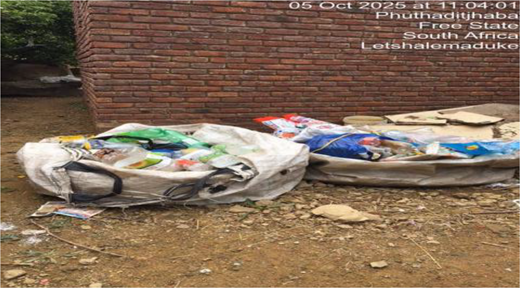
The lack of formal storage facilities forced women to keep sorted waste materials in their home yards (Figure 4). This practice blurred the boundaries between income-generating activities and domestic life, resulting in degraded living conditions and further social disapproval.
A traditional leader explained the situation:
Another thing is that the materials that they collect, they usually store them in their yards, before selling, so it damages their houses, and makes them look bad (TL).
Within the SLF, this reflects severe limitations in physical capital and transforming structures, as the absence of institutional support turns households into makeshift workspaces. Place-making theory highlights how these women actively transform public spaces through waste recovery, yet their private home spaces become sites of visible marginality and environmental strain while still contributing to the broader transformation of rural spaces.
5.3.3 Gendered labour.
Women waste collectors carried a heavy double burden, balancing informal waste work with extensive unpaid domestic and caregiving responsibilities. This gendered division of labour limited their productivity, working hours and overall income.
One participant described her typical day:
My day as a waste collector, I just wake up, prepare my kids for school, then do the things I do at the house and later on visit the nearby dumpsite to collect disposed plastic bottles (W5).
This overlapping of productive and reproductive roles, as illuminated by feminist perspectives on care labour, reinforces gender inequalities and constrains livelihood outcomes. In terms of Place-Making, the women’s daily movements across domestic and public spaces demonstrate their ongoing contribution to community cleanliness, even as structural gender norms limit the benefits they derive from this labour.
5.3.4 Lack of recognition and support.
A profound sense of institutional neglect characterised the women’s relationship with the municipality. Despite their significant contribution to waste management and environmental stewardship, they received no formal support, equipment or recognition.
One participant expressed this frustration:
No. I doubt if the municipality even cares about us (WP6).
This lack of integration into formal waste management systems left the women exposed to exploitation, health hazards and unstable incomes. The SLF shows how weak transforming structures (institutions and policies) undermine their access to assets and limit positive livelihood outcomes. Place-making theory further reveals the paradox: these women act as unrecognised place-makers who improve the liveability and sustainability of rural QwaQwa. However, formal governance structures render their contributions invisible.
6. Discussion and analysis
6.1 Livelihood strategies
The findings of this study show that informal waste collection is a central livelihood strategy for rural women in QwaQwa, adopted primarily out of economic necessity rather than personal choice. Women engage in the regular collection, sorting and sale of recyclables to supplement inadequate social grants and support their households in the face of high unemployment and poverty. This reflects a common pattern observed in other studies where informal waste picking serves as a vital survival and diversification mechanism for marginalised groups in resource-scarce environments (Velis et al., 2022).
A distinctive feature of the livelihood strategies in QwaQwa is the strong influence of gendered domestic responsibilities. Women carefully schedule their waste collection activities around childcare and household chores, often only starting collection work in the afternoon. This double burden of productive and reproductive labour limits their working hours and overall productivity (Wittmer, 2021; Xweso, 2025). The study also found widespread use of child collaboration after school hours to overcome the lack of basic equipment. While this strategy helps increase daily output, it simultaneously introduces risks of child labour and reduced educational opportunities (Xweso, 2025).
These results align closely with the SLF, which explains how vulnerable households mobilise human capital (such as local knowledge and skills) and social capital (family and community networks) to cope with deficiencies in financial resources and physical assets (Natarajan et al., 2022). The findings further demonstrate that these adaptive strategies, though essential for short-term survival, often remain insufficient for building long-term livelihood resilience. Complementing this, place-making theory helps illuminate the broader spatial dimension of the women’s work. By recovering waste and reducing illegal dumping across dumpsites and neighbourhoods, the women actively contribute to creating cleaner and more functional rural spaces, thereby acting as place-makers who enhance community liveability through their everyday practices (Strydom et al., 2024).
6.2 Socio-economic impacts of informal waste collection
The current study found that social stigma and lack of recognition are among the most significant negative socio-economic impacts of informal waste collection for rural women in QwaQwa. The results show that women face intense social stigma, with many community members viewing them as “crazy” or “useless”. This public shame undermines their dignity and social standing, forcing them to cope with the emotional consequences of societal perceptions. Their homes also become stigmatised because, due to the lack of formal storage facilities, women are forced to keep sorted waste in their yards. This situation links the problems of the informal economy directly to inadequate infrastructure and further erodes their social capital.
These findings align with previous research indicating that informal waste workers are frequently stigmatised, excluded from society and the economy and perceived as “polluted”, which deepens their marginalisation (Mukucha and Jaravaza, 2025; Ngalo and Thondhlana, 2023). The study also found that women feel largely excluded from official waste management systems. This lack of integration into formal structures makes them more vulnerable to societal stigma and institutional neglect, consistent with observations from other developing country contexts (Shabani and Jerie, 2023).
The results of this study indicate that these socio-economic impacts correspond closely with the SLF. Social stigma and lack of recognition act as critical elements of the vulnerability context that weaken women’s social capital while restricting access to financial and physical assets. In addition to undermining their dignity, the absence of official storage and institutional support limits their ability to achieve stable income and resilient livelihoods. Consequently, despite their contributions to household survival and environmental sustainability, the women face multifaceted disadvantages.
Complementing the SLF analysis, place-making theory provides important additional insight. The findings demonstrate that women waste collectors play a vital role in keeping rural areas healthier and cleaner, thereby actively creating and sustaining more functional places. However, they continue to face exclusion due to institutional neglect and stigma, despite their positive contributions to environmental stewardship and community well-being. The use of private home spaces for waste storage further illustrates how informality reshapes the relationship between livelihood activities and place, turning domestic spaces into sites of both economic survival and social marginalisation.
6.3 Challenges experienced by informal women waste collectors
The study found that informal women waste collectors in QwaQwa encounter a wide range of challenges that significantly hinder their ability to work and support themselves. The results show that the absence of basic equipment, such as wheelbarrows, is a major structural barrier. As a result, women are forced to rely on manual carrying or child labour, making their work physically exhausting and exposing them to musculoskeletal disorders, back pain, joint pain and other health risks. The study also found that the lack of support from the local municipality or non-governmental organisations represents a critical institutional challenge. Women feel neglected and unrecognised because their activities are not integrated into the formal waste management system. These findings align with previous research indicating that informal recyclers, particularly women, face more adverse working conditions, lower earnings and heightened health risks compared to their male counterparts (Chireshe et al., 2023; Sibanda and Erwin, 2023).
Another important finding concerns economic vulnerability and exploitation. Due to their marginal position, women are often forced to accept prices set by buyers, making them highly susceptible to market fluctuations and limiting their earning potential. The results of this study indicate that institutional exclusion keeps women on the margins, undermining their financial stability and contradicting policy commitments to inclusive and sustainable waste systems. These challenges reflect key components of the SLF, particularly the vulnerability context and restricted access to livelihood assets. Factors such as economic exploitation (financial capital), inadequate institutional support (social or institutional capital) and lack of equipment (physical capital) collectively hamper the women’s ability to achieve sustainable livelihood outcomes. Gendered labour burdens and health hazards further weaken their human capital, reinforcing livelihood instability (Morais et al., 2022).
By examining these challenges, the current study expands and strengthens the SLF. While the SLF effectively explains how limited access to assets constrains outcomes, the findings demonstrate that livelihood vulnerability in this context is also significantly shaped by gendered informal labour relations and location-specific factors. The double burden of unpaid domestic work and waste collection is not adequately captured in traditional applications of the framework. Complementing this, place-making theory adds valuable insight. The results show that despite social exclusion and institutional neglect, women waste collectors actively create and maintain cleaner, more functional rural areas through their recycling activities. However, the same spaces they help improve often become sites of vulnerability and instability. This illustrates how place both enables and constrains informal livelihoods.
6.4 Theoretical interpretation
The results of this study are consistent with the SLF. The study found that women waste collectors in QwaQwa rely on a combination of human capital (labour and experience), social capital (networks and community connections) and limited physical capital (lack of equipment and storage) to sustain their livelihoods amid high unemployment and poverty. However, despite the vital role of informal waste collection in household resilience and environmental sustainability, vulnerabilities such as social stigma, gendered labour burdens, child involvement and institutional neglect weaken their livelihood outcomes by limiting access to institutional and financial capital. These findings map closely onto the core components of the SLF, particularly the vulnerability context, livelihood assets and livelihood strategies (Scoones, 2009).
The study confirms that informal waste collection is not a professional choice but a necessary survival strategy driven by high rates of unemployment and poverty in the rural environment. This aligns directly with the SLF’s emphasis on how vulnerable populations adopt specific strategies, such as livelihood diversification, to cope with shocks and stresses (Natarajan et al., 2022). The women’s circumstances illustrate continuous exposure to multiple stresses, including unstable and low income, exploitation by middlemen through fluctuating prices, targeted crime, health risks due to lack of protective gear, social stigma and institutional neglect. The major challenges identified directly constrain the SLF’s asset categories. The lack of basic equipment severely hinders efficiency and forces reliance on child labour, while the complete neglect by the local municipality acts as the most critical institutional barrier, reinforcing marginalisation and livelihood insecurity.
The current study, therefore, proposes a framework (Figure 5) to enhance the recognition and livelihood of women involved in informal waste collection. Figure 5 presents an integrated pathway that links the vulnerabilities experienced by rural women informal waste collectors in QwaQwa to targeted interventions and sustainable livelihood outcomes. The empirical results showed that unemployment, poverty, social stigma, institutional neglect, poor equipment, child participation, gendered labour burdens and exposure to crime and exploitation limit women’s means of survival. These difficulties reflect deficits in financial, social, human and physical capital. The framework positions recognition, institutional support, equipment provision, skill development, social protection and participation in municipal waste management systems as critical transformative structures and processes that can reduce vulnerability and lead to broader sustainable development goals.
 The flow begins with Enabling environment and interventions to address the vulnerability and challenges. Human capital includes health support and skills training. Financial Capital includes fair pricing and access to credits. Social capital includes networks and co-operatives. Physical Capital includes storage facilities and tools. Institutional capital includes inclusive policies and legal recognition. A further intervention is formulation of group-based livelihood diversification projects. Arrows lead from these interventions to Desired objectives and Measurable outcomes. Desired objectives include sustainable waste management, recognition of women in the informal waste management sector, and resilient livelihood for women in the informal waste management sector. Measurable outcomes for women include financial security, social recognition, better working conditions and safety, gender equality, women’s empowerment, and livelihood stability. Measurable outcomes for the environment include reduced pressure on landfills, a clean environment, and an enhanced circular economy. Arrows from both Desired objectives and Measurable outcomes lead to Sustainable Development Goals attained: S D G 1, No poverty; S D G 2, No poverty; S D G 3, Good health and well-being; S D G 5, Gender equality; S D G 8, Decent work and economic growth; and S D G 11, Sustainable cities and communities.
A framework to reduce vulnerability, enhance recognition and livelihood of women in the informal waste management sector
Source: Authors
The flow begins with Enabling environment and interventions to address the vulnerability and challenges. Human capital includes health support and skills training. Financial Capital includes fair pricing and access to credits. Social capital includes networks and co-operatives. Physical Capital includes storage facilities and tools. Institutional capital includes inclusive policies and legal recognition. A further intervention is formulation of group-based livelihood diversification projects. Arrows lead from these interventions to Desired objectives and Measurable outcomes. Desired objectives include sustainable waste management, recognition of women in the informal waste management sector, and resilient livelihood for women in the informal waste management sector. Measurable outcomes for women include financial security, social recognition, better working conditions and safety, gender equality, women’s empowerment, and livelihood stability. Measurable outcomes for the environment include reduced pressure on landfills, a clean environment, and an enhanced circular economy. Arrows from both Desired objectives and Measurable outcomes lead to Sustainable Development Goals attained: S D G 1, No poverty; S D G 2, No poverty; S D G 3, Good health and well-being; S D G 5, Gender equality; S D G 8, Decent work and economic growth; and S D G 11, Sustainable cities and communities.A framework to reduce vulnerability, enhance recognition and livelihood of women in the informal waste management sector
Source: Authors
Figure 5 further supports place-making theory by showing how women who work as informal waste collectors actively create cleaner, healthier and more functional rural areas rather than simply seeking a means of livelihood. Through their place-making practices of gathering, sorting, recycling and diverting waste, they contribute substantially to environmental stewardship and the transformation of rural spaces, despite receiving little credit from official institutions. The framework emphasises inclusion and recognition as key tools to transform women from excluded actors into recognised contributors to local development. As a result, Figure 5 presents a condensed conceptual model illustrating how place-making and livelihood resilience are interdependent processes. This integration promotes social inclusion, environmental sustainability, gender equality and broader goals of rural development.
7. Theoretical and practical implications of the research
7.1 Theoretical implications
Previous applications of the SLF have established that vulnerable households mobilise combinations of human, social, natural, physical and financial capital within specific vulnerability contexts, and that transforming structures and processes shape the conversion of these assets into livelihood strategies and outcomes (Chambers and Conway, 1992; Scoones, 2009; Natarajan et al., 2022). Research on informal waste collection has similarly shown that collectors rely heavily on social and human capital to compensate for limited physical and financial resources (Velis et al., 2022). The present study builds on these insights by demonstrating that, for rural women waste collectors in QwaQwa, access to livelihood assets alone does not fully explain livelihood outcomes. Social stigma, unpaid caregiving responsibilities, gendered labour burdens and institutional neglect significantly constrain the conversion of available assets into sustainable livelihood outcomes. In this way, the findings extend the SLF by highlighting how gendered and place-based forms of marginalisation mediate the relationship between assets, strategies and outcomes in rural informal economies.
Existing place-making scholarship has emphasised how ordinary people, through everyday practices, actively shape local spaces into more functional, meaningful and sustainable environments (Friedmann, 2010; Lew, 2017; Strydom et al., 2024). Studies have largely focused on urban or planned interventions. The findings of this study show that livelihood practices undertaken primarily for economic survival simultaneously function as place-making practices: through collecting, sorting and diverting waste, rural women materially contribute to the production and maintenance of cleaner, more liveable rural places while remaining socially and institutionally marginalised. This extends place-making theory by illustrating how informal, gendered livelihood activities can constitute a form of quiet, everyday spatial agency in contexts of institutional neglect, a dynamic less visible in the predominantly urban place-making literature. While the urban bias of existing waste-picker research is an important contextual gap, the theoretical contribution of studying this rural and gendered setting lies in revealing how place-based marginality and the double burden of productive and reproductive labour reshape both livelihood resilience and the spatial practices of place-making. These dynamics are less apparent in urban studies where formal systems and denser markets may obscure the centrality of gendered care labour and institutional invisibility to informal place-making.
7.2 Practical implications
The results offer important practical guidance for municipalities, policymakers and development practitioners seeking to support informal women waste collectors in rural South Africa without reinforcing their marginalisation. A key implication is the formal recognition and integration of these women into municipal waste management systems as legitimate environmental service providers rather than as informal actors to be ignored or displaced. This integration should prioritise the provision of basic equipment such as wheelbarrows and protective gear, designated sorting and storage facilities and capacity-building programmes that enhance productivity, safety and income stability.
The findings further indicate that interventions are more effective when they address the gendered double burden of productive and reproductive labour. Policies should therefore incorporate flexible working arrangements, social protection measures linked to child support and awareness campaigns that combat stigma and reframe informal waste collection as valuable environmental stewardship and place-making work. Municipalities in contexts such as QwaQwa are encouraged to establish registration systems, participatory waste planning forums and cooperative structures that strengthen women’s social capital and reduce exploitation by middlemen.
In collaboration with traditional leaders and community organisations, public education initiatives can highlight the contributions of women collectors to cleaner public spaces and reduced illegal dumping, thereby enhancing their social standing and supporting gender equity. These measures align with the United Nations Sustainable Development Goals, particularly SDG 1 (No Poverty), SDG 5 (Gender Equality), SDG 8 (Decent Work and Economic Growth), SDG 11 (Sustainable Cities and Communities) and SDG 12 (Responsible Consumption and Production), as well as with Africa Agenda 2063 objectives of women’s economic empowerment and inclusive development. Ultimately, recognition and support can transform informal waste collection from a precarious survival strategy into a more secure, dignified and environmentally productive livelihood pathway.
7.3 Directions for further research
This study examined the livelihood strategies, socio-economic impacts and challenges of informal women waste collectors in rural QwaQwa, South Africa, through the lenses of the SLF and place-making theory. While the results offer theoretical and practical contributions, several limitations warrant consideration and provide avenues for further research.
Firstly, the research is confined to a single rural case study in the Free State province. Findings should therefore be interpreted within the specific institutional, socio-economic and geographic characteristics of QwaQwa. Comparative research across different rural areas in South Africa and other African countries would allow scholars to test the transferability of the integrated SLF–place-making framework and to identify context-specific variations in gendered informal waste economies. Secondly, the qualitative design, while appropriate for capturing lived experiences, does not quantify the scale of contributions or the magnitude of livelihood outcomes. Future studies could use mixed-methods or quantitative approaches to measure income effects, waste diversion volumes and health impacts, thereby strengthening the evidence base for policy design.
Thirdly, the study focused primarily on women collectors and key informants. Research that systematically includes the perspectives of children involved in waste work, male collectors, buyers or middlemen and municipal officials across multiple sites would deepen understanding of intergenerational dynamics, gender relations and institutional barriers. Fourthly, the cross-sectional nature of the data limits insight into how livelihood strategies and place-making practices evolve. Longitudinal research could examine whether recognition interventions improve resilience, reduce child labour or alter spatial outcomes in the longer term.
Lastly, although the study integrated the SLF and place-making theory, further theoretical development is possible. Future research may incorporate additional concepts such as environmental justice, care ethics or circular economy frameworks to refine understanding of how informal gendered labour simultaneously sustains households and produces more sustainable rural places.
8. Conclusion
The main objective of this study was to investigate the livelihood strategies, socio-economic impacts and challenges faced by informal women waste collectors in rural QwaQwa, South Africa, through the lenses of the SLF and place-making theory. The study revealed that, although marginalised, informal waste collection remains a vital livelihood strategy for these women. Driven by limited formal economic opportunities, high unemployment and poverty, they view waste picking as a practical means to diversify income sources, support their households and supplement inadequate social grants. Consistent with the SLF, the findings show that these women mobilise social and human capital through networks, local knowledge and the involvement of children to enhance household resilience and generate income.
However, while informal waste collection sustains livelihoods, it also presents significant challenges, including gender-specific labour burdens, social stigma and inadequate resources. Place-making theory complements the SLF by illustrating how the women’s daily waste collection activities, through their place-making practices, actively transform rural environments into cleaner and more functional spaces. In doing so, these women act as unrecognised environmental stewards and place-makers, contributing to community well-being in ways that remain largely invisible to formal governance structures. Although their work supports the circular economy and helps reduce land pollution, the income generated is often insufficient for alleviating poverty and ensuring long-term livelihood security.
Moreover, combining income-generating activities with domestic responsibilities deepens gender inequalities, while involving children raises serious concerns about child rights and education. Despite these adverse conditions, women play a vital role in maintaining households and environmental health as place-makers. Yet, they continue to be excluded from and unrecognised in formal waste management decisions. The integration of the SLF and place-making theory offers a holistic understanding of how gendered informal labour simultaneously sustains household resilience and shapes rural landscapes. Overall, the findings call for a reconceptualisation of informal waste collection by women, not only as a survival strategy but also as a significant contributor to sustainable rural development and place-making.

