The purpose of this paper is to analyse how different strategic goals of (micro-, small- and medium-sized firms=SMEs) relate to the business model innovation (BMI) paths that SMEs take when improving their business.
The authors conducted 11 in-depth case studies involving SMEs innovating their business models (BMs).
The authors found evidence that strategic goals of SMEs (start new business, growth and profitability) lead them to alternative innovation path in terms of BM components affected. Growth seekers start from the right-hand side of a BM Canvas, while profitability seekers start from the back end, the left side of a Canvas; and new businesses adopt a cyclical approach considering BM components in turn, while at the same time redesigning and testing the BM. The findings of this study also indicate that all three paths gradually lead to improvement in several BM components.
Findings indicate that a strategic management view in which strategic goals define BMI also applies to SMEs. The distinctive BMI paths that the authors identified provide evidence to suggest that, although the SMEs may not have an explicitly formulated strategy, their strategic goals determine the type of improvements they make to their BM. All three SME groups started their improvements from different BM components and changed several elements in their BMs in a specific order, forming distinctive BMI paths. Finally, to understand the BMI in SMEs better, more research is needed into BMI processes and into the way BMI is managed in SMEs.
The findings of this study help SMEs to anticipate the next steps in their path towards an improved BM. By mirroring their approach to the BMI paths, they can better manage their BM makeover process and focus on their innovation activities. For providers of BMI tools and methods, the study indicates which SME innovation tasks could be supported by tools and how the tools should be aligned with the BMI paths.
BMI is attracting growing attention in both research and practice. However, knowledge concerning BMI in SMEs is limited. The authors contributed to BMI research by focussing on the BMI paths of SMEs, i.e. the often sequential, non-linear and iterative steps taken to improve the business by making changes to specific BM components.
1. Introduction
Although recent research shows that micro-, small- and medium-sized companies (SMEs) can improve their performance by innovating their business model (BM), for researchers and practitioners it is still relatively unclear how SMEs actually innovate their BMs (Barjak et al., 2014; Foss and Saebi, 2017). Business model innovation (BMI) is described as an activity or process in which core elements of a firm and its business logic are deliberately altered (Bonakdar, 2015; Bucherer et al., 2012; Hartmann et al., 2013; Lindgardt et al., 2009; Pohle and Chapman; 2006). In general, BMI is seen to be derived from the strategic activities of a company (Cortimiglia et al., 2016; DaSilva and Trkman, 2014), and managers are expected to maintain consistency between their strategic goals and the core components of the BM (Demil and Lecocq, 2010).
While SMEs are the economic driving force of many countries and de facto employ the most people (EASME, 2015), few studies have thus far focussed specifically on their BMs and how they improve their BMs; after analysing CIS survey data, Barjak et al. (2014) concluded that about 1 in 20 SMEs has innovated its BM. An empirical study by Cortimiglia et al. (2016) involving small-, medium-sized and large firms found that when BMI is used alongside a formal strategic approach, most companies tend to focus first on the design or improvement of their key activities and resources (i.e. the value creation dimension of BM), after which they innovate the other BM components. The suggestion is that companies adhere to a certain process, starting from their strategy. However, previous studies indicate that most SMEs do not have a formal strategy process, do not implement a structured process when engaged in a BMI process (Lindgren, 2012) and typically experience BMI as a highly emergent and often unintended process (Laudien and Daxböck, 2017). This calls into question whether the strategic management view, which is mainly based on research into formal strategy formulation and execution processes defining the pattern of subsequent BMI in larger corporations, does apply to SMEs (Chesbrough, 2010; Teece, 2010; Cortimiglia et al., 2016).
The relationship between strategic goals, for instance, regarding starting a business, profit and growth, and the BMI process at SMEs, has not yet been clarified. As such, the aim of this paper is to examine the specific connection between strategic goals and BMI paths regarding SMEs. We contribute to existing research into BMI, especially with regard to SMEs, by focussing on the BMI paths adopted by SMEs. We adopt the definition of SMEs used by the EU, which includes micro-organisations, small- and medium-sized companies (EU 2003/361/EC, 2003)[1].
Our main research question is as follows:
Do strategic goals of the SME – starting a new business, generating profit and realising growth – lead to different BMI paths?
To answer this question, we conducted an in-depth case study involving 11 SMEs. Our working proposition is that the strategic goals of SMEs should lead to different BMI paths. In other words, we expect there to be clear differences in the paths involving the BM components involved.
The paper is structured as follows. Section 2 contains a discussion of the existing literature on the BMI process and strategic goals of SMEs. Section 3 describes the research method. Section 4 presents the empirical results. In Section 5, we discuss the findings and Section 6 concludes the paper with a discussion on the practical relevance, limitations and future research.
2. Literature review
BMs (DaSilva and Trkman, 2014; Wirtz et al., 2016) and BMI (Foss and Saebi, 2017) have drawn increasing attention in the academic literature. We are particularly interested in the BMI of SMEs, because they are a significant source of competitive advantage, economic performance and job creation (Amit and Zott, 2012; Barjak et al., 2014; EASME, 2015). BM – as an outcome – is the logic of how organisations or firms create, capture and distribute value. In BMI, companies either develop and implement a totally “new-to-their-business” BM or modify the components of existing BMs (Aspara et al., 2010).
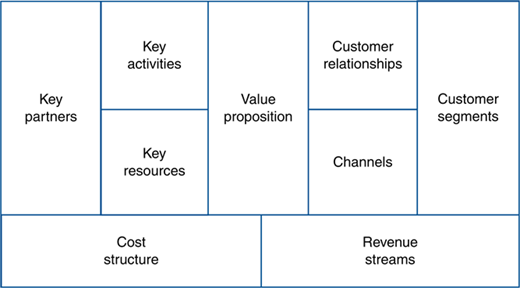
Numerous articles provide overviews of BM components (e.g. Lambert and Davidson, 2013; Morris et al., 2005; Pateli and Giaglis, 2004; Wirtz et al., 2016; Zott et al., 2011) and several alternative BM ontologies – such as the STOF model by Bouwman et al. (2008), CSOFT by Heikkilä et al. (2010), VISOR by El Sawy and Pereira (2013) and the BM Canvas by Osterwalder and Pigneur (2010). The STOF model focusses on the services provided by networked enterprises. The unit of analysis is the service being offered, and the model has five components, i.e. value proposition, service, technology, organisational and financial components. As part of the value proposition, the model includes intended, delivered, expected and perceived value. Market segmentation, context of use, efforts to be made by the customer and customer relations are included in the service component, while, in the technical component, the architecture of the service platform, access devices, channels and applications are included, as well as additional functionalities like security and privacy. In the organisational component, actor’s strategic interest in participating in service delivery and access to critical resources and capabilities are discussed. In the financial component investments, costs, revenue including pricing model and risks are included. The components of CSOFT are similar to STOF: customer, service, organisation, technology and finance. The aim is to analyse multiple BMs within a single firm. VISOR components are also comparable with the STOF components, but they are organised somewhat differently. The core components are value proposition, interfaces, service platforms, organising model and revenue model. Finally, the BM Canvas (Osterwalder and Pigneur, 2010) is non-technical in nature and can therefore be applied more widely. Moreover, BM Canvas is less complex, making it easier to communicate. As a result, BM Canvas is well known and widely used by business and strategy consultants. For the reasons outlined above in this paper, we refer to the BM components from the BM Canvas ontology (Osterwalder and Pigneur, 2010): product is described with the value proposition, infrastructure (i.e. back end) is described with key activities, key resources and partners. The customer side of BM includes customer relationships, segments and channels. On the financial side, the cost and revenue structure are the core components (see Figure 1).
2.1 BMI process and strategy
Even though BMI is a complex process in which action and cognition intertwine (Berends et al., 2016), the BMI process – like any innovation process – consists of initiation, ideation, experimentation and implementation. Bucherer et al. (2012) identified strong similarities between product innovation and BMI. Teece (2010) suggested that a company wanting to implement a sustainable BM should start from market segmentation, then create a value proposition for each segment, design and implement mechanisms to capture value from each segment and, finally, figure out and implement “isolating mechanisms” to prevent or block imitation by competitors and disintermediation by customers and suppliers. Frankenberger et al. (2013) included the management of idea creation, internal resistance and partners to that list. In the context of business networks, Heikkilä and Heikkilä (2013) pointed out that BMI requires the development of the BM itself, as well as mutual learning and harmonisation of operations between partners. Moreover, existing studies emphasise the importance of customer-oriented design aimed at solving a customer’s problem (Johnson et al., 2008), while also proposing a discovery-driven approach to testing new BMs in “the real world” (McGrath, 2010), to determine which BM offers the best alternative to the existing BM, what their future viability may be or how to measure and change BMs (Teece, 2010; Chesbrough, 2010; Mitchell and Bruckner Coles, 2004; Heikkilä et al., 2016).
BM is considered to be a direct result of strategy (Casadesus-Masanell and Ricart, 2010). There are many different views on strategy, ranging from strategy design (Chandler, 1962), planning (Ansoff, 1965), strategic positioning (Porter, 1980) and the resource-based view (Wernerfelt, 1984; Collis and Montgomery, 2008), to strategy learning (Quinn, 1978; Hamel and Prahalad, 1994) and experimentation (Mintzberg and Waters, 1985; Mintzberg et al., 2005). For example, Doz and Kosonen (2010) considered successful BM renewal and transformation as one of the main outcomes of strategic agility. Arbussa et al. (2017) suggested that resource fluidity and leadership unity (as proposed in Doz and Kosonen, 2010) are important within the SME context, while strategic sensitivity, described as “the sharpness of perception of, and the intensity of awareness and attention to, strategic developments” (Arbussa et al., 2017, p. 273), is less natural and therefore more critical as far as SMEs are concerned, while the authors also pointed out that resourcefulness allows SMEs to overcome limitations of size and increases their agility.
Following strategic management reasoning (see e.g. Galbraith, 1977), Demil and Lecocq (2010), in their conceptual paper on BM evolution, argued that the role of management is to monitor and act on uncertainties, and to ensure that the BM components are adjusted to meet changing requirements. Furthermore, they discussed three specific tasks in relation to managing BM dynamics, which are in line with Foss and Saebi (2017): to monitor the external and internal risks and uncertainties that may harm the BM, to anticipate the potential consequences and to implement actions designed to modify the BM so that the performance of the company is preserved or increased. This shapes the company’s strategy, providing a basis for a roadmap, which, in turn, sets guiding principles that define the appropriate actions. This implies that a firm’s strategic goals not only define its BM focus, but also confine subsequent BMI looking for feasible paths to sustain the company’s competitive advantage (Chesbrough, 2010; Teece, 2010; Cortimiglia et al., 2016). Cortimiglia et al. (2016) used a mixed-method approach to study the relationship between BMI and formal strategising. They concluded that most companies tend to start with designing or improving their key activities and key resources (i.e. the value creation components of BM) and then innovate all other BM components. Their results apply to large companies and SMEs following a formal strategy process. However, Lindgren (2012) and Laudien and Daxböck (2017) confirmed that most SMEs do not have formal BMI strategy, but that the BMI process is more contextual and emergent in nature. SMEs that improve their BMs typically focus on individual BM components, such as value proposition, target customer or internal value chain (Lindgren, 2012; Arbussa et al., 2017).
Based on the limited research that is available (summarised in Table I), we can conclude that, as far as SMEs are concerned, having a formal strategy as a leading principle is less important than it is in large organisations, and that it would appear that SMEs are more likely to improve their BM in response to the challenges they face along the way. However, it is still unclear to what extent the BM is modified when SMEs engage in BMI (i.e. how many BM components are changed) or whether the strategic goal leads to a specific sequence when focussing on the BM components.
2.2 Strategic goals of SMEs
Despite their limited resources, capabilities and skill sets, SMEs are considered to be agile (Arbussa et al., 2017). SMEs act in networks to enhance their resources and to be able to respond to changing demand, and even though they tend to adopt a flexible and informal strategy (Levy and Powell, 2004; Lindgren, 2012), existing literature suggests three generic strategic goals that are related to their life cycle: starting a new business, generating growth and increasing profitability. As Wolff and Pett (2006) pointed out, logically, profitability and growth should be highly correlated. However, some SME managers favour one over the other. The three strategic goals also relate to the phases of the SME’s life cycle. After the starting phase, the focus typically shifts towards growth. While profitability is important in all phases, it is most under pressure in the maturity and decline phases and, in the decline phase, it even leads to cost cutting to maintain profitability (Lynch, 2003).
Start a new business
New firms are the vehicle of economic renewal and growth (Birch, 1987), and they have become more important, especially in terms of employment (http://ri-policy-analysis.eu/studies/the-need-for-innovations-in-business-models/). Starting a new business has been studied from many different perspectives, like entrepreneurship (Aldrich, 1995), venturing (Wasserman, 2008), networks approaches (Elfring and Hulsink, 2007) and the characteristics of entrepreneurs (Miner, 1997; Treleaven, 2000), and from a high-tech (Baron and Hannan, 2002) or lean start-up vision (Blank, 2013; Ries, 2011). Some studies indicate that business planning offers little advantage to new ventures and that founders should instead move directly to action (Bhide, 2000; Carter et al., 1996) or develop their BM iteratively (Wolff, 1998), while others (i.e. Delmar and Shane, 2003) argue that business planning helps firm founders develop their venture more quickly and cheaply than engaging in a trial-and-error process. It also helps turn abstract goals into concrete operational activities in a more efficient way. Brinckmann et al. (2010), for example, showed that there is a positive relationship between business planning and new firm success, but they also suggested that business planning promises greater returns for the average small firm than it does for start-up firms, because start-ups usually have to carry out planning without prior information, while lacking the structures and procedures required to support the planning process. The lean start-up approach (Ries, 2011) follows the reasoning presented in the scientific literature (Frederiksen and Brem, 2017) and suggests that start-ups should build up their business by constantly adjusting their plans in fast iterative build-measure-learn feedback loops, rather than relying on fixed plans based on multiple assumptions.
After establishing a firm, there are basically two clear strategic options: focussing on profitability or on growth.
Growth
Growth is considered to be an indication of business success, and is supported by several theoretical arguments about economies of scale (Besanko et al., 2004), which suggest that there is a recursive, reinforcing relationship between market position and growth, enabling further investments. By contrast, the strategy of SMEs is often based on differentiation, providing products or services that are different from others in the market. This is typically refined further to a particular market niche in domestic markets and to a limited geographical scope (Levy and Powell, 2004). As such, the decision to expand to new markets is crucial to SMEs, in light of their (often small) financial base. For instance, Lu and Beamish (2006) showed that expanding to foreign markets has a positive impact on the growth of SMEs, but a negative impact on their profitability. Gundry and Welsch (2001), studying high growth-oriented entrepreneurs, found that they select strategies that allow for a greater focus on market expansion and new technologies. The high growth-oriented entrepreneurs also tend to have a more structured approach to organising their businesses and initiate earlier planning for the growth of their business.
Profitability
Most firms only grow during the first few years of their existence and then stabilise to provide the owner or manager with an acceptable income. Many are satisfied with this level of activity and are not actively trying to make their firms grow (Feindt et al., 2002). This view is supported theoretically, for instance, by Davidsson et al.’s (2009) conclusion that the resource-based view logically supports the argument that firms should pursue growth opportunities that match their resource advantages and that, if they pursue other opportunities, growth may destroy rather than create value (Kogut and Zander, 1992).
Typically, SMEs pursuing profitability focus on price competition and operational planning, with limited attention for strategic planning, the main objective being efficiency and cost reduction. By monitoring and developing the external relationships upstream and downstream, they can improve the efficiency and profitability of their business. A day-to-day survival approach may lead them to drift in their decisions instead of consistently adhering to a strategic objective (Levy and Powell, 2004). However, in practise, SME owners/managers may find it useful to pursue strategies that sacrifice (short term) profitability for growth, for instance, when aiming to reach critical mass and making customers dependent on them for their innovative products or services, or by pursuing price competition in a mature market with well-known products.
To summarise, three generic strategic goals for SMEs are proposed:
start a new business, by new product development, trials, planning and enterprise building;
growth, scaling up the business to meet market need; and
profitability, by typically focussing on improving internal efficiency and price competitiveness.
We use these three strategic goals in our empirical analyses, studying SMEs with different strategic goals and seeing whether these strategic goals lead to different paths regarding BMI.
3. Method
3.1 Research approach and theoretical reasoning
The empirical data for this paper were collected in a research project using a multiple case study approach to analyse BMI in European SMEs. It has been suggested that multiple case studies are well suited to building theory or constructs, because they permit replication and extension among individual cases (Yin, 1984/2003; Cunningham, 1997; Eisenhardt and Graebner, 2007). Replication is central to building theory from case studies (Eisenhardt, 1989): multiple cases serve as repetitions, extensions and contrasts to the emerging theory, and the researcher develops an understanding of why certain conditions did or did not occur, and then offers interpretations (Yin, 1984/2003). The researcher uses the cases to test and demonstrate the soundness of new concepts (Cunningham, 1997). In multiple case study approach, the number of cases is usually relatively limited.
Our theoretical reasoning can be described as abductive. Even though it has been subject to criticism, abduction is seen as a method for testing new ideas or for making sense of new (or unknown) situations by moving back and forth between empirical discovery and theory (Dubois and Gadde, 2002). Although we are aware of the grounded theory view (Glaser and Strauss, 1967), in which the assumption is that the object of study is approached in an open way, we follow Corbin and Strauss (1990), Strauss and Corbin (1990) and Miles and Huberman (1994) by making our theoretical starting points explicit, in the section on strategic goals by SMEs.
3.2 Case selection, data collection and analysis
To study BMI in SMEs, we defined the following case selection criteria:
type: SMEs that are/have been innovating their BMs; and
size: micro-enterprises, small- or medium-sized enterprises (using definition by EU 2003/361/EC, 2003).
Using these criteria, we collected 11 SME cases. Table II provides a short description of the cases. Data were collected between 2013 and 2016 by the authors of this paper and by other partners in the research project. A case study protocol, together with a fixed case report format, was used by all researchers of the project for all cases. The protocol contains instructions for interviews and guidelines for the use of triangulation techniques, both in terms of data collection and data analyses. Both the protocol and pre-structured case reporting format are available on request.
The main informants were mostly company owners or managers. The data were gathered in one or more interviews, each lasting between one and two hours. Following standard procedures in case study research, we further triangulated our primary data source with secondary documents, to cross-validate factual information regarding the cases. During the interviews, we also collected longitudinal data on the changes made to the BMs.
The reliability of our data analysis was improved by involving the original researchers of each case study in reviewing our analysis. Next, the cases were reviewed by multiple researchers who were themselves not engaged in studying the specific cases. Case reports were sent to the organisations for validation and informed consent. All the data (interview recordings, transcripts, case reports, etc.) are available to project researchers from a structured and secure database.
The case data include background information, such as age, size, industry, ownership and management team formation. We collected information on the firm’s culture and innovativeness, backed up with factual information on R&D, if available. We also collected information on the value proposition and BM, and, if available, the way the BM was described, the focus of BMI and the connection with specific BM components, tooling and metrics being used and, finally, the impact of the BMI on the business logic and business performance. The data involving strategy included a description (by the entrepreneurs) of the firm’s strategy, along with their challenges or needs in relation to improving the BM. Using the wordings of the SMEs, we called these needs as “I want to”.
We systematically analysed the case data, using a qualitative data analysis proposed by Miles and Huberman (1994). Since the SME’s strategy was reported in a free-form text as expressed by the SME itself, we first grouped the cases based on the independent assessment of the core researchers involved, which was then confirmed by co-researchers. As a result, the 11 cases were divided into three groups, according to their more or less mutually exclusive strategic goal showing their preference for growth (4), profitability (3) or starting a new business (4).
Because our aim was to understand the relationship between the strategic goal and BMI processes involved, we coded each step taken by the SMEs while innovating their BM, as well as the BM components they changed, which allowed us to extract several steps of “I want to’s” that together formed a BMI path of the SME involved. The codes are included in the results section between brackets ([ ]).
4. Results
The analysis of the 11 in-depth cases revealed three different BMI paths. The results are summarised into figures of BMI path of each group. On the x-axis, we list the BM components involved. Note that, although a more or less linear process is suggested, in reality the steps sometimes overlap or are repeated.
4.1 Profitability seekers
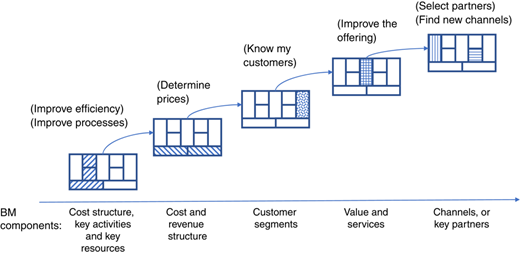
Three of the SMEs under study focussed on improving the profitability of their business (Figure 1). All three started their improvements by focussing on efficiency in their key activities and an efficient use of internal resources [Improve efficiency]:
Due to the recession and increasing competition, sales volume went down, we were making a loss and we had to reconsider and harmonize our core processes between the three stores (CEO, Hardware Store, Finland).
A family-owned Hardware Store in Finland, for instance, analysed its processes and managed to cut its costs by rearranging the holidays of its employees from high season to low season (from Summer to Winter), thus ensuring that personnel capacity remained adequate all the time. Next, the owner continued harmonising and adjusting the prices of the products in the company’s three stores [Determine price], making it possible to compete on price without facing uncontrolled discounts, which is a nuisance in the business sector.
A family-owned candy manufacturer in Spain wanted to start by improving its machinery and quality assurance processes [Improve efficiency] [Improve quality]. Also, a family-owned wine trading SME, which wanted to switch from importing to manufacturing, wanted to start BMI by reducing its operating costs and product range [Improve efficiency]. As a next step, Both SMEs considered obtaining more information about their customers’ needs [Know my customers]:
We have a need to obtain information from end-customers, but this is really difficult, due to the fact that we do not engage in direct selling (Owner, Wine Trading Company, Spain).
The Hardware Store already knew its clients well:
We are located within the local community. We know our customers, and they know us (CEO, Hardware Store, Finland).
Based on the knowledge about demand, the profitability seekers then wanted to analyse their offering and made adjustments to improve profitability [Redefine the offering]. Finally, the candy manufacturer wanted to develop new as well as international distribution channels for its products [Find new channels], while the Hardware store wanted to limit and focus its supplier network [Select partners], and the Wine Trader want to do both [Find new channels] and [Select partners].
Figure 2 summarises how SMEs wanting to increase their profitability typically want to start by cutting costs and improving the quality and efficiency of their key activities and resources, after which they also look for ways to improve their pricing. Later on, in the BMI process, their focus changes from “back office” improvements towards greater customer orientation: they want to know their customers better in order to be able to change or reduce the range of their offering, which leads them to make changes in the value chain, either involving their supplier network or the channels they use to reach the customers.
4.2 Growth seekers
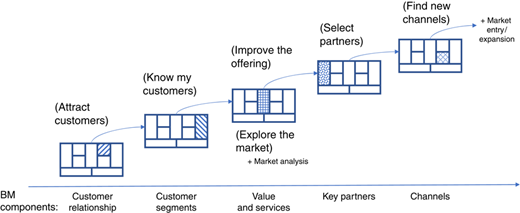
All four growth seekers stated that their first desire is to attract more customers and know their existing customers better [Attract more customers and know my customers] (Figure 3). After that, the growth path divides into the following: High-Performance Computing Company from Slovenia and Space Saving Containers from the Netherlands, who wanted to pursue growth by improving their offering [Improve my offering]:
We have always operated in the front line, we are innovators […] we strive to be find new market opportunities (CEO, High-Performance Computing Company, Slovenia).
By contrast, a Sewing Service and a Meal Delivery Service in Lithuania were interested in entering new (foreign) markets [Explore market]:
We are interested in reaching B2C customers in international markets, but we understand that it takes time to develop a brand, so our current strategy is to focus our efforts on international B2B markets (CEO, Sewing Service Provider, Lithuania).
The fourth step again appears to be common to all and involves selecting and convincing partners [Select and convince partners]. Finally, the growth seekers expressed a need to expand to foreign markets [Go to new/foreign markets] or to find new channels for their products [Find new channels]:
We turned to another segment, finding new international clients, communicating with them, developing new relationships and using new channels (CEO, Sewing Service Provider, Lithuania).
Figure 3 shows that growth seekers typically want to start from customer relationships and customer segments in their current markets. After that, they may want to improve their offering to existing markets or explore new or foreign markets. The next steps are to find partners and channels to serve their new customers. Figure 3 shows how the BMI path of growth seekers is focussed mostly on the customer side.
4.3 Start a new business
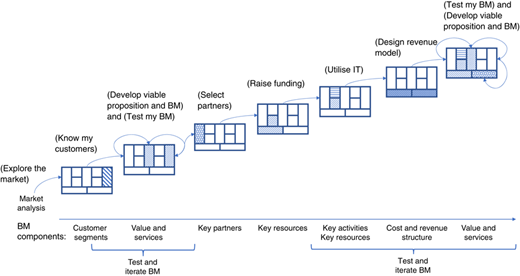
The BMI path for the SMEs starting a new business appears to be explorative in nature and includes several iterative steps (Figure 4). Whereas the two other groups had a more or less a linear process, the BMI path of new business is more cyclical, although there is still a clear path. For example, a Dutch entrepreneur providing a platform for the elderly care wanted first to know the market for match-making platforms in care [Explore the market], before it could develop the business proposition, explore the BM [Develop viable proposition and BM] and test it [Test my BM]. As a next step, the company wanted to find the right partners and arrangements [Select partners], find investors [Raise funding] and select and apply the right information technology [Utilise IT], and then determine which revenue models are viable [Determine revenue/price]. Finally, the SME wanted to know if its BM was future proof [Test my BM] and make revisions accordingly [Develop viable proposition and BM]. These goals lead to a meandering through the BM components, where, for instance, the value proposition was tested and adjusted multiple times (see also a detailed report by Keijzer-Broers, 2016). The path of an Austrian Portable Solar Cell SME followed the same lines:
The changes in the BM followed some incremental steps, starting with a market assessment and defining the proposition, looking for the right suppliers, and so on (CEO, Portable Solar Cell, Austria).
An entrepreneur in Finland, who wanted to start an e-health service based on Sports Prescriptions, followed almost exactly the same path as the Dutch entrepreneur, the difference being that the aim was not to raise funds, mainly because his plan was to share the investment costs with well-established partners:
We have to build the ecosystem based on trust and benefits for all the participants (CEO, Sports Prescription, Finland).
The fourth start-up case shows how the SMEs may sometimes only want to take some of the steps: a company that provides Lotteries as a Service for charity organisations followed the path up to the testing phase [Explore the market, Develop viable proposition and BM Test my BM]. Their conclusion was that:
“Our Business Model needs to be reshaped in order to fit the market, not only now, but every year” […] “we have to develop a new and better version of this product, before introducing it in the market” (Member Management Team, Lotteries as a Service, The Netherlands).
Figure 4 illustrates how SMEs starting up a new business are systematically and cyclically building their BM during the BMI process. They appear to cover most or all BM components, analysing and testing the viability of the BM throughout the process. This shows that they need to improve the BM as a whole and cannot afford only to look at individual components.
Interestingly, whereas growth-oriented companies place a great deal of focus on improving customer relations and channels, these two components are the only components on which starting businesses do not focus. The explanation for this may be that, because they are in an early phase, they are relying on a few pioneer customers that they can serve by being agile. As such, customer relations and channels have not become all that important yet.
5. Discussion
Our study analysed the relationship between SMEs’ strategy and BMI (Barjak et al., 2014; Foss and Saebi, 2017). We divided SMEs into three groups on the basis of their strategic goals (start a new business, realising growth and creating profitability) and used the nine components of BM Canvas (Osterwalder and Pigneur, 2010), showing how their focus advanced from one component to another, eventually forming a BMI path. We found that the three groups have distinct BMI paths:
Typically, SMEs wanting to increase profitability first want to improve the efficiency of their back-end operations and their use of resources. Later on, in the BMI process, their focus shifts towards other BM components, as they want to know their customers better and adapt their offering accordingly, which, in turn, leads to changes in the upstream or downstream value chain.
Growth-oriented companies adopt a front-end approach: they typically want to start by improving customer relationships and customer segments in their existing markets, and then move on to improving their offering and finding new partners and channels, sometimes pursuing an approach involving internationalisation.
SMEs that are starting a new business have a completely different BMI process: they are systematically building their BM throughout the BMI process in an iterative way. They appear to cover most or all BM components, iterating between technology, innovation and testing their service concept, while at the same time analysing and testing the viability of their BM and the way their potential customers respond throughout the process. This shows how they want to improve the BM as whole, not just individual components, which is in line with earlier analyses on BM agility (Arbussa et al., 2017).
Our findings offer several contributions to literature on BMI in relation to SMEs. While most existing literature focusses on BMI in large corporation, this is one of the first studies that focusses on innovation of BM by SMEs, as well as being one of the first studies to examine the dynamics of BM change at the level of BM components, starting from a specific strategic orientation of the SME in question.
First, our findings support the strategic management view (Chesbrough, 2010; Teece, 2010), according to which strategic goals and incentives define BMI. Our research confirms that this view also applies to SMEs. The distinctive BMI paths that we identified provide evidence to suggest that, even though the SMEs may not have an explicitly formulated strategy, their strategic goals determine the type of improvements they make to their BM.
Second, whereas Cortimiglia et al. (2016) found that most companies – following a formal strategy-making approach – start by improving their key activities and key resources, and then innovate the other BM components, our findings show that the three groups started their improvements from different BM components, and that the SMEs we analysed changed multiple elements in their BMs in a specific order, forming distinctive BMI paths.
Third, our findings indicate that, regardless of the strategic goals that exist at the outset, all three strategic objectives gradually lead to an improvement in several BM components. To some extent, this contradicts the conclusion drawn by Lindgren (2012) that most SMEs tend to focus on just a few BM components, i.e. value proposition, target customer and internal value chain.
Fourth, BMI is a subject that is still underresearched. Research topics like BMI within SMEs, management of BMI, methods and processes of how companies experiment, explore and learn when improving their BM require further attention (see also Frankenberger et al., 2013). For instance, from the perspective of managing the BMI process, we need a better understanding of how BMI teams operate, manage and communicate their practices, and how BMIs are implemented. Our research into “I want to’s” and the BMI paths of SMEs provides at least some directions.
Existing literature suggests using a discovery-driven approach for testing new BMs (McGrath, 2010; Teece, 2010, Chesbrough, 2010; Mitchell and Bruckner Coles, 2004; Ries, 2011). This approach is only clearly visible in the BMI path of the new businesses in our study. However, we can speculate that the other two groups – profit seekers and growth-oriented SMEs – also engage in “real world” testing when they gradually improve several BM components.
Our results help SME manager anticipate the next steps in their path towards an improved BM. By mirroring their approach to commonly used paths, SMEs can reduce uncertainty. Moreover, it helps them break down the BMI activities into steps that follow a clear roadmap (De Reuver et al., 2013), generating clarity about what they want to achieve, as well as allowing them to manage and govern their BM makeover process carefully.
Furthermore, this study shows that there is a clear potential for BMI tooling, combining specific steps in the BMI with dedicated tools to support the tasks involved. The insights provided in this study make it possible to relate BMI tooling to the different paths. For example, although there are clear differences, there are also a number of common elements in the BMI paths, including value proposition, identification of new partners and customer segments. Providing tools that support these three tasks would benefit all SMEs.
Moreover, this study indicates that, instead of providing isolated BM tools, it would be better to provide tools that would support SMEs throughout the entire BMI process. Therefore, our EU project has developed a web platform to help SMEs innovate their BM, using the strategic goals identified in this study to create different user groups, and offers them different sets of logically interrelated BM tools (see www.businessmakeover.eu/platform/home/).
The crucial question that we cannot yet answer is whether the paths we identified lead to an improved performance, or how disruptive these BMIs are. Before we can develop more predictive models, more analyses are required. Moreover, our research also makes it clear that simple econometric models, in which BMI is related to performance (Aspara et al., 2010; Hartmann et al., 2013; Velu and Jacob, 2014; Zott and Amit, 2007), cannot ignore the role of the BMI processes, the way BMI is managed and the learning processes involved (Martins et al., 2015; Reymen et al., 2016).
6. Conclusions and limitations
This paper analysed the relationship between strategic goals and the BMI processes within micro-, small- and medium-sized enterprises. To our knowledge, this is one of the first papers do so. Our in-depth case studies provide evidence that strategic goals of SME do lead to differing BMI paths.
We analysed three groups of SMEs with different strategic goals – starting a new business, realising growth and generating profitability. We collected longitudinal information involving the needs or intentions of SMEs to change some of their BM components. This allowed us to illustrate their BMI paths, i.e. the sequential changes made regarding BM components. The in-depth study reveals the differences in the BMI paths of the three SME groups: growth-oriented companies start from the right-hand side of a BM Canvas, while profitability seekers start from the back end, the left side of a BM Canvas, and the third group, new businesses, adopt a cyclical approach, considering BM components in turn, while at the same time redesigning and testing their BM. Our findings also indicate that all three paths gradually lead to an improvement of and changes in several BM components.
Like any research, this study has its limitations. Due to a lack of resources, the results are based on 11 SMEs. Furthermore, we divided the SMEs on the basis of their strategic goals, building on the theories discussed in the section on strategic goals and confirmed by the insights gained while conducting the research and analysing the data. Other categorisations (for instance, a family business’ desire for continuity) could shed further light on the relationship between strategy, strategic goals and BMI. Similarly, while our findings show a consistency in the paths we identified, there may be other paths that have to be explored in greater detail.
In this paper, we analysed the BMs, using components proposed by Osterwalder and Pigneur (2010). In the literature section, we discussed alternative ontologies, with their own preferred components and emphases. Although there are some common components, others are more specific, for instance, with a greater focus on digital transformation. Future research could examine whether the use of different ontologies may lead to different paths in terms of which components are changed. Such detailed analyses could shed light on the complex relationship between business and IT, which is relevant because BMs increasingly are built on Big Data and Big Data Analytics, topics that are also of the utmost importance to SMEs.
Further analyses and more advanced conceptualisation are certainly needed to understand the relationship between the strategic goals and the BMI processes of SMEs. Since BM thinking is embedded in theories from marketing, service innovation and engineering, organisational theory, and platform and ecosystem thinking, as well as financial models, there are ample opportunities to explore BMI in greater detail and determine whether BMI has a genuine impact on firm performance.
The work leading to these results has received funding from the European Community’s Horizon 2020 Programme (2014-2020) under grant agreement 645791.
Note
Micro-organisations have less than 10 employees, turnover⩽€2 m, balance sheet total⩽€2 m; small companies have less than 50 employees, turnover⩽€10 m, balance sheet total⩽€10 m; and medium-sized companies have less than 250 employees, turnover⩽€50 m, balance sheet total⩽€43 m (EU 2003/361/EC, 2003).