fib-news is produced as an integral part of the fib Journal Structural Concrete. Larger quantities of offprints are made available to National Members Groups on request.
Successful fib International PhD Symposium in Zurich, Switzerland
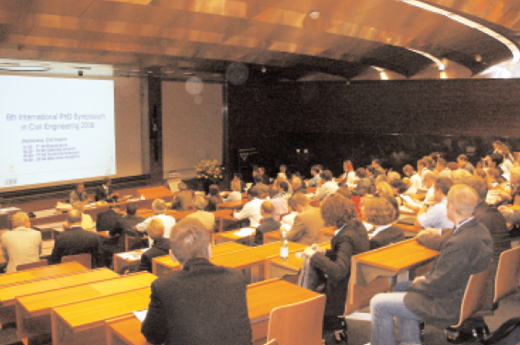
Continuing the tradition of the CEB and fib International PhD Symposia in Civil Engineering held during the last decade in Budapest (1996, 1998), Vienna (2000), Munich (2002) and Delft (2004), the sixth edition was organised by the Institute of Structural Engineering, ETH Zurich, Switzerland, and took place from 23-26 August 2006.
The objectives of the symposium were to:
provide a forum for PhD candidates in civil engineering to present their research results;
discuss the results of ongoing PhD studies in order to support future work;
give PhD candidates the opportunity to establish contacts within the international scientific community;
compare PhD programs of various countries.
The Symposium was extremely well organised by Professors Thomas Vogel, Peter Marti and their co-workers, in particular Dr. Nebojsa Mojsilovic who acted as the secretary of both the Scientific and the Organising Committee. Organisers and participants expressed their gratitude to all sponsors and to the ETH Zurich for its generous support and the excellent infrastructure provided.
Out of 140 abstracts submitted, 121 contributions were admitted. Finally, 81 of them submitted an eight-page paper as requested. Of those, 75 were accepted for printing and oral presentation. This rigorous selection process meant a lot of work for the Scientific Committee, but also resulted in a very high level of quality of the presentations.
In two parallel sessions the 75 PhD candidates from 17 countries presented their research to an international audience that included many of their supervisors and further experts from science and industry. Vivid discussions, which often continued during the coffee breaks, contributed to the success of the event.
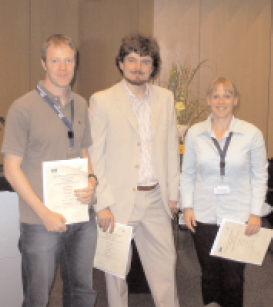
The Civil Engineering Group of the Swiss Society for Engineers and Architects (SIA) generously contributed prize money for the best papers totalling 10'000 CHF; the rating of the presentations again created some work for the present members of the Scientific Committee, who finally awarded three authors (one first prize and two second prizes) for their outstanding contributions:
First prize: Mr. Gabriele Bertagnoli, Dipartimento di Ingegneria Strutturale e Geotecnica, Politecnico di Torino, Italy, for his paper entitled: “Nonlinear finite element for reinforced concrete structures in plane stress” (supervisor Prof. Giuseppe Mancini).
Second prize: Mrs. Petra Schumacher, Delft University of Technology, The Netherlands, for her paper entitled: “Rotation capacity of steel fiber reinforced concrete beams” (supervisors Prof. Joost Walraven, Ir. Joop den Uijl, Dr. Agnieszka Bigaj van Vliet).
Second prize: Mr. Lars Dick-Nielsen, Technical University of Denmark, Department of Civil Enginieering, Kgs. Lyngby, Denmark, for his paper entitled: “Modeling of ECC materials using numerical formulations based on plasticity” (supervisors Henrik Stang, Peter N. Poulsen).
The winning papers are available for downloading as PDF files from the IBK website: www.ibk.ethz.ch/6phdce/awards.
All presenters were offered a free subscription as Ordinary Members of fib for one year, and quite a few of them have already taken advantage of this opportunity.
Proceedings were issued containing extended abstracts in print and a CD-ROM with the full length papers. There are still a few copies available that can be ordered through the fib website: www.fib-international.org.
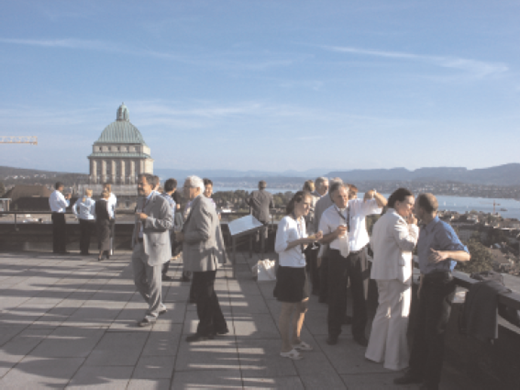
In the evening of the first day (Wednesday, 23 August) buses brought all participants from the Hönggerberg campus downtown to the ETH Main Building were a welcome reception was organised on the beautiful roof terrace of the building. With a beautiful view of Zurich and its lake, a glass of wine or another refreshment at hand, social contacts were made or renewed with ease.
As all participants had received a three day ticket for all public transport in the Zurich area, including some boat routes on the lake, the second evening (Thursday) saw many of them strolling downtown, taking a boat ride on the Limmat river towards the lake, stopping over at one of the marvellous places that could be reached in this way, for example the theatre festival and fair on the Ländi embankment, and coming back with the boat after nightfall, approaching glittering Zurich from the lake.
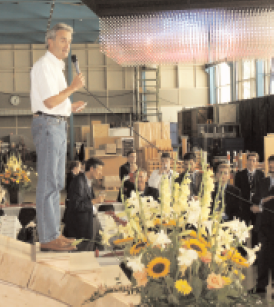
The third evening (Friday) was reserved for the symposium dinner, which was in fact a barbeque in the laboratory of the Institute of Structural Engineering, with Peter Marti as Chef de cuisine.
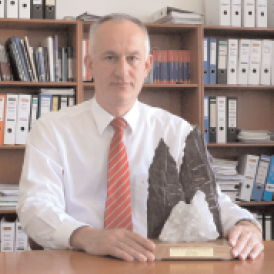
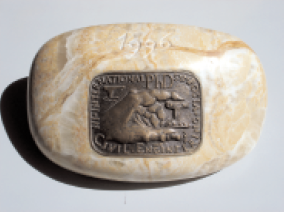
Finally, during the closing session on Saturday morning, the prices were given to the winners and the ‘burden’ of organising the next fib international symposium was handed over to Prof. Ulrike Kuhlmann from Stuttgart University: the ‘burden’ is symbolised by a (fairly heavy) natural stone (shown in photo, right). Engraved on a plaque on the rear are the dates and names of the hosting institutes since 1996. It will remind her and Prof. Rolf Eligehausen to invite in time for the 7th fib International PhD Symposium to be held in Stuttgart in 2008.
Swiss fib concrete day, Zurich
On 18 August 2006 the National fib Group Switzerland (fib-CH) organised for the first time a one-day seminar, called ‘Concrete Day fib-CH’, at the Swiss Federal Institute of Technology Zurich (ETHZ). It is intended to be organised henceforward at least every four years, following the fib congresses. As this approach will certainly be of interest for other national groups in fib, a short report is given here.
Already in the former FIP, the Swiss group published prestigious national reports that became over the years a veritable state-of-art documentation on national achievements in concrete construction. The 2006 report, produced in 6000 copies and distributed freely at the fib congress in Naples, was handed out to all participants and formed the basis for this ‘concrete day’. It is another milestone in this tradition: on 200 pages (plus a CD) the report, sponsored by about 20 companies, university institutes and professional organisation, contains 29 contributions in three national languages (23 German, three French, three Italian) always accompanied by an English translation. It covers the entire range of structural concrete, from research, development and codes over buildings and multifunctional structures to bridges, tunnelling, concrete technology and maintenance and monitoring.
Eleven of these contributions were presented in Zürich, including the reports on the projects ‘Forsterstrasse Appartment House’ and ‘Flaz River Bridges’, both ‘Special mentions’ in the 2006 contest “fib awards for outstanding concrete structures” (see the June 2006 issue of fib-news and Bulletin 36). The audience of about 220 participants, consisted mostly of practicing engineers, invited by the Swiss Association of Engineers and Architects (SIA). After an opening speech given by Prof. Hafen, the President of the ETHZ, Peter Ritz as Head of the Swiss fib group gave a brief introduction on fib activities, summarising the fib congress Naples and introducing Hans-Rudolf Ganz as newly elected fib president for 2007-2008. He in turn took pleasure in awarding the Freyssinet medal to Heinz Isler, who participated in the conference accompanied by his wife and Heinz Bösiger who constructed most of Isler's shell structures.
Peter Marti, in his final statement as host of this meeting, confirmed that this oneday seminar had been a very rewarding experience and will certainly be repeated in four years, when the 2010 fib congress will provide the opportunity to publish again a national report on the state-of-art in concrete construction.
Reinforced concrete slab shear prediction competition
In 2005, an international competition was organized by the Institute of Structural Engineering of the ETH in Zurich, Switzerland, to predict the response of eight selected tests to failure on reinforced concrete slabs.
The prediction competition was announced on May 23, 2005 at the fib Symposium “Keep Concrete Attractive” in Budapest, Hungary. Researchers were invited to submit predictions of the expected response by the end of September 2005. While from the initial reactions to the announcement, a considerably higher participation was expected, eventually, eight entries from six different countries were received (Table 1).
Test results and predictions were presented and compared on June 7, 2006 at the Second International fib Congress in Naples, Italy. All entries were ranked and their authors were honoured with a Swiss quartz crystal to recognize their courage to participate in the competition and to appreciate the tremendous amount of work put into the predictions.
The prediction competition included two specimens with a thickness of 200 mm (A and B) and two geometrically similar specimens (C and D) with a thickness of 500 mm. All specimens were designed with different reinforcement layouts at their two ends, allowing two tests to be performed on each specimen.
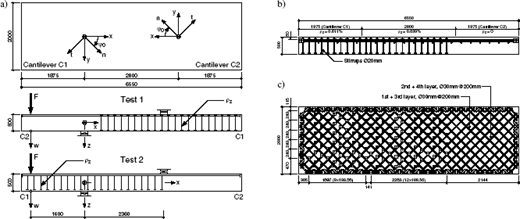
Figure 1 shows the test concept of the 500 mm thick slabs as well as the geometry and the reinforcement of Slab C. The test parameters included the slab thickness h, the direction φ0 of the in-plane reinforcement (n- and t-direction) and the ratios of the in-plane and transverse reinforcements (ρn, ρt and ρz, respectively).
The experiments demonstrated the significant influence of a deviation of the principal shear and moment direction (φ0 ≠ 0) from the in-plane reinforcement direction on the load-deformation response and the shear strength of reinforced concrete slabs. Such a deviation resulted in a softer behaviour and significantly wider cracks. The specimens with φ0 = 0° exhibited a stiffness that was approximately twice that of those with φ0 = 45°. The tests also demonstrated that a sufficient transverse reinforcement lead to a ductile flexural failure and eliminated the size effect in shear, while without transverse reinforcement, brittle shear failures occurred.
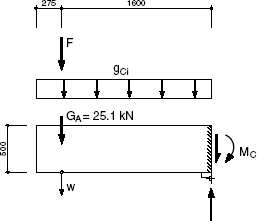
The participants had to submit the moment-deflection response and the crack pattern at peak load for all eight tests as well as a brief description of their methods of analysis. Figure 2 shows a free-body diagram of the cantilevers of the 500 mm thick slabs with the definition of the required moment MC and deflection w.
The prediction competition revealed that the modelling of reinforced concrete still causes significant difficulties, even for experienced researchers equipped with sophisticated analytical tools. In particular, the improvement of the deformation behaviour due to a transverse reinforcement as well as the considerable stiffness reduction as a result of a deviation of the principal shear and moment direction from the in-plane reinforcement directions were successfully predicted by only a few participants.
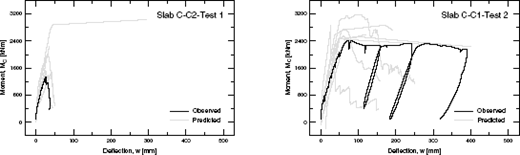
Figure 3 depicts the experimentally observed and the predicted MC-w diagrams of Slab C.
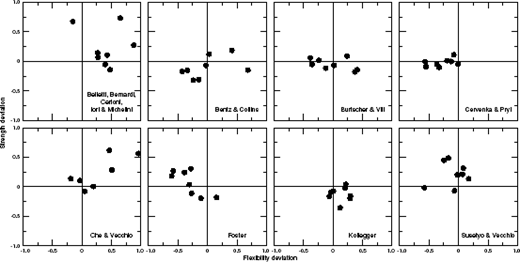
The ranking of the predictions is based on the deviations of the predicted from the experimentally observed strengths and the associated flexibilities. Figure 4 shows the flexibility-strength-diagrams for all eight entries. Points above (below) the abscissa correspond to “too strong” (“too weak”) strength predictions. Similarly, points to the left (right) of the ordinate correspond to “too stiff” (“too soft”) stiffness predictions. Ideally, the prediction points should coincide with the origins of the diagrams.
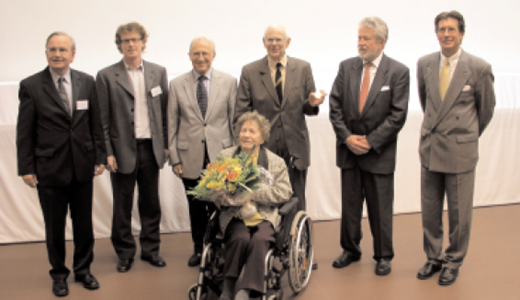
Professor Kollegger (Figure 5) was declared the winner of the competition considering both the ultimate strength and the stiffness predictions. Remarkably, Kollegger's predicted deformation capacity closely approximated the observed response of all specimens containing transverse reinforcement.
T. Jaeger, IBK, ETHZ
Reference
Elected fib officers
As reported in the September 2006 issue of fib-news, the General Assembly convened in Naples on 4 June 2006 and elected the President and Deputy-President of fib for the next two years (2007– 2008), as well as four Presidium members for the next four years (2007 – 2010).
As stated in the new fib statutes, approved by the GA during the same meeting in Naples, the Presidium is composed of the President, the Deputy-President and the four elected members mentioned above, and the following further statutory members of the Presidium: the immediate Past-President Giuseppe Mancini, the two Deputy-Chairmen of the Technical Council (to be elected in December 2006), the Secretary General Rüdiger Tewes, and up to two co-opted members for 2007- 2008, on recommendation of the President.
Here are the brief curriculum vitae of the Presidium members who will guide fib during the coming years.
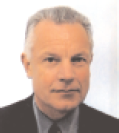
Ganz, Hans Rudolf, fib President 2007 – 2008, was born in 1955, graduated and received his PhD in Civil Engineering from the Swiss Federal Institute of Technology Zurich. He holds currently the position of Chief Technical Officer at VSL International Ltd. His main responsibilities include research and development; quality, safety and environment; and technical support and engineering for the activities of the specialist contractor firm. A member since 1991, in 1996 he became Chairman of the then FIP Commission 2 “Prestressing Materials and Systems” and served as a member of FIP Commission 3 “Practical Design” since 1989. Being a member since 1992, he was appointed Chairman of the FIP Editorial Board in 1997. Further affiliations include membership in ACI (ACI Committees 423, 440, 530), ASCE, IABSE and other national organisations in France, Switzerland and USA. Since 1998 he has served as Chairman of fib Commission 9 “Reinforcing and Prestressing Materials and Systems”.
Fardis, Michael N., fib Deputy President 2007 – 2008, was born in 1949, received his Diploma in civil engineering in 1971 at the National Technical University of Athens, Greece, obtained in 1977 an MSc in Civil Engineering, in 1978 an MSc in Nuclear Engineering, and in 1979 his PhD in Structural Engineering, all from the Massachusetts Institute of Technology, where he subsequently became Assistant and Associate Professor of Civil Engineering. In 1982 he was appointed Professor of Concrete Structures at the University of Patras, Greece, a position which he still holds today, as well as Director of the Structures Laboratory in the Department of Civil Engineering. In 1993 he received the Wason Medal for Materials Research of the American Concrete Institute (ACI). Prof. Fardis co-authored several books and authored about 55 papers in international refereed journals, about 150 papers in international conference proceedings, and numerous research reports. He has been active in CEB since 1985 in various bodies such as the Revision Group of the 1978 Model Code and the Committee for the CEB/FIP Model Code 1990, the Commission 3 ‘Design’ where he also became the convenor of the Task Group on ‘Behaviour and analysis of reinforced concrete structures under alternate actions inducing inelastic response’. He was a member of the CEB Administrative Council in 1997 and an active member of the CEB/FIP Strategy Group. From 1999 to 2005 Prof. Fardis was Chairman of CEN/TC250/SC8, responsible for Eurocode 8, “Design of Structures for Earthquake Resistance”, and for the conversion of its six parts from ENV to EN (European Norm). He was the lead author of the “Designers’ guide to EN 1998-1 and EN 1998-5, Eurocode: Design of structures for earthquake resistance”. He is on the editorial boards of fib’s “Structural Concrete” Journal, of the “Journal of Earthquake Engineering and Structural Dynamics” and of the “Bulletin of Earthquake Engineering”. Since 1998 he has been a member of the Technical Arbitration Panel in the concession contract for the construction of the 2.5 km deep-water Rion-Antirion bridge, Greece. He is presently a member of Commission 7 on Seismic Design and chaired Task Group 7.1, “Assessment and Retrofit of Existing Structures”, from 1998 to 2002. He is also a member of the Working Group on Short Courses of Special Activity Group 2 and has organised fib courses held in Greece and Turkey. He was chairman of the organising committee of the 2003 fib Symposium in Athens. He was elected member of the Steering Committee for the years 1998-2002 and is Head of the Greek National Member Group in fib.
Mancini, Giuseppe, Immediate Past-President, was born in 1947 and graduated 1972 in Mechanical Engineering at the Politecnico di Torino where he is currently Professor of Structural Engineering and Bridge Design at the Engineering Faculty. He is also a Partner in Sintecna Engineering Consulting, Torino. His engagements in Code Committees include the chairmanship of the National Council for Bridges Code, of CEN/TC250/SC2 and for Eurocode 2, Part 2, Concrete Bridges. He also served as an expert member on the Steering Committee. For numerous years he has served on the CEB Commission 2 ‘Material and Behaviour Modelling’ and as a convener of its Task Group 2.3 ‘Ultimate Limit State Models’. He is also a member of ACI, IABSE and ASCE. He was elected as a member of the Steering Committee of the fib for the years 1998 - 2002, and later as its Deputy-Chairman, representing the Committee in the Presidium during the same period.
Balázs, György L., elected fib Presidium member 2007 – 2010, was born in 1958 and graduated in 1982 at the Budapest University of Technology in Hungary. He worked for a year as bridge designer in the design office Uvaterv before returning to Budapest University for his PhD; part of this period was spent at the Politecnico di Milano. Having received his PhD degree in 1988 he became a lecturer and later a senior lecturer. After three and half years at the University of Stuttgart (from 1990 to 1994) he was appointed as a reader at the Budapest University of Technology, and in 1999 as a professor in structural engineering. His main fields of activities are: experimental and analytical investigations as well as modelling of reinforced and prestressed concrete, fibre reinforced concrete, fibre reinforced polymers, durability, bond, and cracking in concrete. In fib he served as chairman of the jury for the fib Awards for Young Engineers from 1999 to 2005, and currently serves as chairman of the fib Special Activity Group on Dissemination of knowledge and convener of the fib Task Groups on Serviceability models, fib Courses and Model Code Textbook. He also is a member of several other fib groups. He founded the fib International PhD Symposium in 1996, acts as Head of delegation for the Hungarian Group of fib and is a member of the Council since 1998. He was elected a member of the Steering Committee and as its Deputy-Chairman represented the Committee in the Presidium for the period 2002-2006.
Corres-Peiretti, Hugo, elected fib Presidium member 2007 – 2010, was born in 1954. He graduated in Civil Engineering from the Civil Engineering School of Madrid (1977), where he obtained his PhD in 1980. At the same school he was Associate Professor of materials physics from 1982 to 1985, and then became Professor of structural concrete in 1985 and Head Professor in 1993. His main academic and research activities focus on a variety of topics: second order effects of structural members, structural effects of creep and shrinkage, serviceability, and integral structures. His work is reflected in more than 120 publications (books, monographs, articles) of which he is author or co-author. He has also directed several PhD theses. He was the head of the Committee that prepared the last edition of the Spanish Code on Structural Concrete (EHE, 1999), which was completely reorganised and updated.
Between 1999 and 2003 he was member of the project team that prepared the new edition of Eurocode 2. His is also member of national and international committees on Seismic Design, Basis of Design, Composite Structures and Practical Construction. He was a member of the former CEB and FIP, active in several Commissions and Task Groups. Currently he is head of the Spanish Delegation in fib. He was elected President of the Spanish Association on Structural Concrete (ACHE) for the period 2002-2005. This Association awarded him in 1999 with the ACHE Medal. Prof Corres-Peiretti is also a consulting engineer, as president of FHECOR Ingenieros Consultores.
Muller, Harald S., elected fib Presidium member 2007 – 2010, was born in 1951. He studied first physics then civil engineering and graduated in 1986 as Doctor-Engineer from the Faculty of Civil and Survey Engineering at the University of Karlsruhe, Germany. Afterwards, he worked as a chief engineer at the Institute of Concrete Structures and Building Materials of the University of Karlsruhe before he moved to Berlin, Germany, in 1989 where he joined the Federal Institute of Materials Research and Testing (BAM), and where he was appointed as Director and Professor in 1990. In 1995, he returned to the University of Karlsruhe as full professor at the Institute of Concrete Structures and Building Materials and, simultaneously, as Director of the Materials Testing Institute (MPA Karlsruhe). Since 1998 he is also senior partner in a civil engineering company and sworn expert. His main teaching and research areas are building materials, in particular constitutive modelling and durability of concrete, maintenance and repair of concrete and masonry structures, building physics and life cycle analyses for buildings and structures. He was elected dean for training and education in civil engineering at the University of Karlsruhe in 2000 and has become member of the directory board of the faculty. Besides his activities within the University of Karlsruhe, he is engaged in various national and international scientific and technical commissions and associations for standardization, e.g. DIN (CEN), DAfStb, ACI, RILEM. He is member of the advisory board of German Institute of Building Technique (DIBt) and member of the expert board of the German Research Foundation (DFG). He started in CEB in 1982, where he was involved in developing chapter 2.1 “Concrete Classification and Constitutive Relations” and Appendix D “Concrete Technology” of the MC 1990. Later he became chairman of fib TG 8.2 “Constitutive Laws for High Strength/High Performance Concrete” and since 2002 he has been chairman of fib Commission 8 “Concrete”. In 2006 he was elected as member of the fib Presidium.
Yamazaki, Jun, elected fib Presidium member, 2007-2010, was born in 1942. He was educated in Civil Engineering, earning his BS (1965) and MS (1967) at the University of Tokyo and his PhD (1975) at the University of Washington, Seattle. He worked for Concrete Technology Corporation, Tacoma, (1975-76), has been on faculty of University of Tokyo (1977-79), Tokyo Metropolitan University (1979-91), and currently teaches structural concrete at Nihon University (1991-present). The technical issues he works with are extradosed prestressing, corrugated steel webs, precasting techniques, and utilization of high strength concrete for bridges. He served advisory committees on design and construction set up for several bridges of Japan Highway Public Corporation (JH), now reformed into three regional organizations, NEXCO, west, central and east Japan. The results were reported in fib symposia in New Delhi (2004), Budapest (2005) and the second fib congress 2006 Naples. He served as chair of Japan Prestressed Concrete Engineering Association, (2001-03), and is on its board of directors. He has been on the fib Steering Committee and Council since their inception in 1998 and was part of the organizing group of the first fib congress 2002 Osaka. He is currently Head of the Japanese National Group in fib.
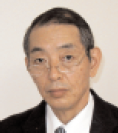
Litzner, Hans-Ulrich, elected Honorary Treasurer and invited fib Presidium member 2007 – 2010, was born in 1945 and graduated in Civil Engineering from the Technical University (RWTH) Aachen, Germany, where he also obtained his PhD. He subsequently worked with the Institute for Metallic Structures at the Swiss Federal Institute of Technology in Lausanne and later joined the German Concrete Society (Deutscher Beton-und Bautechnik-Verein) where he was appointed Director in 1990 and Managing Director in 1995. He has been involved for more than 20 years in the development of national and international codes of practice. From 199 to 2002 he was chairman of CEN TC 250 / SC 2, preparing European Standards (EN) for the design and execution of concrete structures. Active in CEB since 1979 he was involved in the Model Code Revision Group responsible for the preparation of the 1990 CEB-FIP Model Code. Dr. Litzner was elected member of the CEB Administrative Council in 1993 and was appointed as its Honorary Treasurer in 1997. He is the head of the German National Member Group in fib. He has served as elected member of the Presidium and Honorary Treasurer of fib already for the years 1998 - 2006.
New bulletins
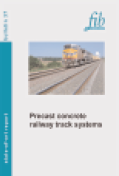
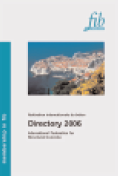
The series of fib Bulletins for the subscription year 2006 ended with number 37, Precast concrete railway track systems, and the 2006 Directory, both mailed to members in November. Brief descriptions are given below. Non-members may order this or any other publication by simply following the instructions given at www.fib-international.org/publications/.
Precast concrete railway track systems (fib state-of-art report)
In 1986, the FIP Commission on Prefabrication issued the state-of-art report “Concrete Railway Sleepers”, which included design considerations, manufacturing methods, rail fastening systems and field performance. During the two decades since that report, precast concrete has gained importance in the field of railway track systems for plain track, switches and crossings, tunnels and other applications. Developments in production methods for concrete sleepers in switch and crossing layouts to cope with the complex geometry and the industry's confidence in their performance have contributed to the huge increase in the use of this type of sleeper. The use of slab track for high-speed track has also grown, particularly where either new track is built or where existing track is renewed and long periods of track possession are possible.
There has also been progress in the development of plant and equipment for the installation, renewal and maintenance of concrete sleepered track. With machines now able to replace existing track at a rate of 5000 sleepers (over 3 km track) per day, choosing concrete sleepers can reduce the time on site, meaning tracks can be reopened quickly whilst reducing labour requirements and costs.
Today, precast concrete is considered to be the best performing and preferred material for railway sleepers, due to the following factors:
long-term durability;
improved geometric retention of track and greater weight vital for high-speed and heavy freight lines;
improved elasticity of track;
improved ride quality;
low first cost;
minimum life cycle cost;
low cost of maintenance;
environmental friendliness – no chemical treatment required and can be recycled.
As all aspects of precast concrete railway track systems, from design through manufacture to installation and maintenance, have progressed since the publication of the FIP report, an update was considered timely, in order to provide a synthesis of currently available information. This new edition covers quality, design, production, durability, maintenance and environmental considerations, and includes survey on the use of precast concrete track systems in over 30 countries.
Bulletin 37 was prepared by Task Group 6.5, Precast concrete railway track systems, in Commission 6, Prefabrication, successor to the FIP Commission.
Directory 2006
The 2006 edition of the fib Directory is in publication and is expected to be delivered to members at approximately the same time as this December issue.
This edition reflects number of significant changes within the organisation this year, resulting from the association's new statutes, approved by the General Assembly in June, and the election of new officers. The new statutes specify a revised operating structure, in which the most notable change is the creation of the Technical Council. This body, composed of the Heads of Delegation, Commission/SAG chairs and Presidium members, is primarily responsible for overseeing the activities of the Commissions, Task Groups and Special Activity Groups, and makes recommendations to the Presidium regarding the dissemination of the results of the work.
This edition of the Directory provides an overview of the revised operating structure of the association following the decisions taken by the General Assembly; however some information, in particular the composition of the Technical Council and Presidium, is incomplete as there are still members to be appointed. It is therefore planned to publish a new edition of the Directory in 2007, reflecting the definitive composition of the association's governing bodies for the next two years.
As in past issues, the Directory provides complete addresses for both fib members and for non-members participating in one of the working bodies in the ‘yellow pages’ section. The ‘blue pages’ provide an alphabetical list of active fib participants and the working bodies in which they are involved. It should be noted that the terms ‘member of fib’ and ‘member of a Commission or Task Group’ are not synonymous, as membership in fib is not a prerequisite to participate in its work. However most Commission members are or will become fib members, as recommended in the association's statutes. Task Groups members often start through their interest the work itself, but it is hoped that many of them will enjoy the friendly atmosphere and international cooperation so much that they decide sooner or later to become, either personally or through their employers, members of fib.
Finally, users of this Directory should note that the information given herein is also available, and continuously updated, on fib's website, www.fib-international.org; however access to certain information, for example addresses, is reserved for members only.
Bulletins can be ordered via the internet (www.fib-international.org) or by mail, e-mail or fax. They are sent regularly to all individual subscribing and corporate members of fib as part of their annual subscription. Ordinary members receive the the Directory and Journal only, however they are entitled to order a Bulletin once a year at a discount rate.
Obituary
Born in 1935 in Belgrade, Zivota Perisic received his M.Sc. and at the Faculty of Civil Engineering in Belgrade, where he later became Professor, Vice Dean (1975 to 1977), Faculty Dean (1991 to 1996) and President of the Faculty Council (1998 to 2000). He was President of the Yugoslav Association for Bridge and Structural Engineering (1987 to 1998), President of the Commission for Approval of Civil Engineering Projects of the Republic of Serbia (1995 to 2001), and a Member of the Technical and Technological Sciences Board of the Ministry for Science and Technology of Serbia (1997 to 2000).
He was a visiting professor at École Polytechnique Fédérale in Lausanne and lectured at many univeristies in Europe, Asia and the U.S. He was the author or coauthor of a number of books in the field of reinforced and prestressed concrete and published over 260 papers in scientific and professional periodicals, congresses and symposia. For the past 15 years he led the project ‘Introduction of Structural Eurocodes in Structural Engineering of Serbia’.
Professor Perisic was also very active as a designer, consultant or reviewer for the building or reconstruction of many of special concrete structures, including the Yugoslav Airlines hangar at the Belgrade airport (awarded as the best structural achievement in Yugoslavia in 1986) and the Belgrade Arena for 20'000 spectators in New Belgrade (awarded as the best structural achievement in Yugoslavia in 1999). He was an expert of the World Bank for prestressed concrete bridges in South Korea.
In 1985 he was awarded the October Prize, the highest acknowledgment for scientific and technical contributions of the City of Belgrade. In 1998 he obtained the highest award of the Yugoslav Association for Bridge and Structural Engineering, the Life Achievements Award in Structural Engineering. He has obtained a number of Yugoslav decorations, charters, awards and acknowledgments.
For 30 years he was very active in CEB and fib. He was a Deputy National Delegate of Yugoslavia in CEB since 1978 and was a National Delegate in CEB/fib since 1992.
He was the main organizer of the CEB General Assembly in Dubrovnik, member of the CEB Administrative Council for three years and the Advisory Committee for seven years, and Head of Delegation of his country for 15 years. In June 2006 he received an Honorary Life Membership in fib, in recognition of his outstanding contributions to the association.
Short notes
On 13 September 2006, IABSE President Manfred A. Hirt presented the 2005 Outstanding Paper Award to Jean-Michel Lucas, Michel Virlogeux (Freyssinet medallist and Honorary fib President), and Claude Louis for their paper: “Temperature in the Box Girder of the Normandy Bridge” published in Structural Engineering International, August, 2005.
The IABSE Outstanding Paper Award is presented each year in recognition of an outstanding article published in ‘Structural Engineering International’, thus encouraging and rewarding contributions of the highest quality.
Congresses and symposia
The calendar lists fib congresses and symposia, co-sponsored events and, if space permits, events supported by fib or organised by one of its National Groups. It reflects the state of information available to the Secretariat at the time of printing; the information given may be subject to change.
fib-news is compiled, drafted by and produced under the sole responsibility of the Secretary General as an integral part of the fib journal Structural Concrete. Members of fib or participants in its work (for ex. members of one of its Commissions, Task Groups or Working Parties) are invited to submit to the secretariat any information they would want to disseminate through fib-news. Although the secretariat does its best to ensure that the published information is accurate, no liability or responsibility of any kind (including liability for negligence) is accepted in this respect by fib or its Secretary General. Contributions signed by an author were invited by the secretariat or proposed by the authors. They are published under the sole responsibility of the authors and, contrary to papers in the Journal itself, they are not submitted to a peer review process. Recent issues of fib-news are available free of charge as pdf files on the fib website, www.fib-international.org.
©fib 2006. fib, Case Postale 88, CH-1015 Lausanne, Switzerland. Tel: +41 21 693 2747; Fax: +41 21 693 6245; Email: fib@epfl.ch
Secretary General (Executive Director)
Due to the retirement of the present Secretary General in 2008, fib is seeking a highly motivated person with a strong interest in the association.
The Secretary General manages the secretariat of fib with its staff. As such he/she is involved in all activities and the management of the federation. His/her responsibilities will include internal and external communication, editing and publishing of fib publications (bulletins, journal, fib-news, website), participation in preparation and coordination of fib conferences, preparation of meetings of Presidium/Technical Council/General Assembly, administrative matters for membership (National Delegations, individual members and sponsors) and commissions, representation of the fib President for all administrative, management and financial matters, co-operation with partner associations, and promotion of fib in general.
He/she is expected to have a minimum of 10-15 years of experience in engineering and in activities related to structural concrete. The full time position requires an excellent command of the English language. Since he/she will be based in Lausanne, Switzerland, at the headquarters of fib, working knowledge of French would be beneficial. Start of employment is expected in the second half of 2007.
Applicants should provide the following documents: Letter of motivation, curriculum vitae, photo, and the names and contact details of three referees.
Applications should be made before March 1, 2007 and should be addressed to:
Hans Rudolf Ganz, fib President, c/o fib secretariat, CP 88, EPFL, CH-1015 Lausanne or in PDF format to fib@epfl.ch
For additional information on fib please consult: www.fib-international.org
For additional information on the position, call Hans Rudolf Ganz: +41 32 613 3080