Drawn on an integrated model of motivating language theory and social exchange theory, this study examines how leaders' motivating language (LML) influences two forms of organizational citizenship behaviors directed toward individuals (OCBI) and toward the organization (OCBO) through the mediating roles of job satisfaction and affective commitment, and the moderating role of perceived voice opportunity.
Data were collected through a cross-sectional survey of 572 full-time employees in Vietnam who reported to a direct manager. Partial least squares structural equation modeling (PLS-SEM) technique was used to test the hypotheses.
Results show that LML positively influences job satisfaction, affective commitment, OCBI and OCBO. The study confirms the partial mediation effects of job satisfaction and affective commitment. Additionally, perceived voice opportunity positively moderates the relationships between job satisfaction and OCBO, and between affective commitment and OCBO.
This study contributes to the LML literature by simultaneously examining job satisfaction and affective commitment as parallel mediators linking LML to differentiated forms of OCB, clarifying the dual attitudinal architecture through which motivating language activates reciprocity. By incorporating perceived voice opportunity as a contextual boundary condition, this study extends motivating language theory beyond its original focus on leader-to-follower communication by showing that LML's behavioral effects depend on organizational context. By focusing on Vietnam, a high-power distance, collectivistic emerging economy, this study also broadens the understanding of leader communication's impact on OCB beyond Western settings, offering practical insights for managers and policymakers in rapidly developing economies.
1. Introduction
The capacity of firms to compete in an international market, sustain entrepreneurial ventures, and contribute to national economic development rests fundamentally on the productive and discretionary effort of their workforce (Burger et al., 2024). While macroeconomic analyses of competitiveness emphasize capital flows, technology, and institutional quality, firm-level performance, such as productivity and efficiency, which enhance firm competitiveness and its market position relative to its competitors, depends critically on human capital and the voluntary contributions employees make beyond their formal requirements (Ocampo et al., 2018). Indeed, while physical and financial capital can be acquired, replicated, or substituted, the discretionary effort, knowledge, and cooperative behavior of a committed workforce represent a form of organizational capital that is inherently social, accumulated over time, and not easily imitated, making human capital not merely a resource to be managed, but the primary engine of sustained organizational development (Barney, 1991). This understanding has repositioned workforce management from a primarily operational concern to a strategic and sustainability imperative: how organizations attract, motivate, and retain human capital determines not only their short-term productivity, but their long-term capacity to survive and develop in dynamic environments. This concern is particularly pressing in developing and emerging economies such as Vietnam, where organizations face simultaneous pressures to compete in dynamic business environments and address sustainability challenges related to workforce wellbeing and human capital development (Tran et al., 2022), but leadership communication practices remain understudied (Omair et al., 2025). In this context, communication is viewed as a core competency for managers and leaders (Mayfield and Mayfield, 2007), and leaders who communicate in ways that motivate discretionary behavior generate a competitive resource that is difficult to replicate and directly relevant to organizational sustainability.
Motivating language theory (MLT), a linguistic framework for leaders' work-related verbal communication (Sullivan, 1988), is widely used to explain effective leadership language at work (Omair et al., 2025). Prior research shows that leaders' motivating language (LML), defined as the strategic use of directive, meaning-making, and empathetic speech to inspire and empower followers, positively shapes employee attitudes and behaviors, including in-role performance and extra-role behaviors such as organizational citizenship behavior (OCB) (Fuller, 2023; Guo and Ling, 2020). OCB refers to discretionary workplace behavior that goes beyond basic requirements, such as helping and mentoring coworkers, staying well-informed about the organization, voicing constructive suggestions, and volunteering for additional responsibilities (Organ, 1988). It reflects the durable, intrinsically motivated engagement that sustains organizations by supporting loyalty and smooth functioning (Ocampo et al., 2018). Despite growing recognition of the LML-OCB link, three important gaps remain.
First, the mechanisms linking LML to OCB are insufficiently understood. Prior studies grounded in social exchange theory show that LML is associated with job satisfaction and affective commitment (Talukder and Atinc, 2024), two well-established attitudinal antecedents of OCB (Kim, 2013; Mohammad et al., 2011). However, these variables have never been modeled simultaneously as parallel mediators connecting LML to differentiated forms of OCB, leaving the motivational chain behind citizenship behavior only partially specified. Clarifying the mediating roles of these two attitudinal variables is essential for building a more complete account of the underlying process linking LML to OCB as well as for guiding leaders on the attitudinal and behavioral outcomes they can foster in employees.
Second, prior empirical evidence on how job satisfaction and organizational commitment translate into OCB is inconsistent (Jehanzeb and Mohanty, 2019), suggesting that contextual conditions may shape this translation. This is especially salient in high-power distance collectivistic settings such as Vietnam, where cultural norms may influence whether employees feel empowered to express discretionary behavior in response to leader communication (Nguyen and Truong, 2016). The LML field has predominantly examined leader characteristics while neglecting organizational conditions that shape whether positive leader communication translates into behavioral outcomes (Omair et al., 2025). Perceived voice opportunity, specifically the extent to which employees believe their views are genuinely invited and considered, represents one such condition and is itself a perception of procedural fairness and psychological safety (Avery et al., 2011). No previous study has examined whether it moderates the pathway from LML-induced attitudes to citizenship behavior.
Third, OCB has evolved from a unidimensional to a multidimensional construct and is now commonly differentiated by its target (Jehanzeb and Mohanty, 2019). Organ's (1988) five dimensions of OCB - namely altruism, conscientiousness, courtesy, civic virtue, and sportsmanship - have shaped later conceptualizations. For example, Williams and Anderson (1991) subsequently classified OCB as behaviors directed toward the individual (OCBI) or the organization (OCBO), while Van Dyne et al. (1994) mapped Organ's dimensions onto those two forms, with altruism and courtesy as individually directed behaviors (OCBI), while civic virtue, conscientiousness, and sportsmanship are organization-directed behaviors (OCBO). This distinction is theoretically important and more informative than a general aggregate construct because OCBI and OCBO may be driven by different antecedents (Williams and Anderson, 1991). Nevertheless, most research on LML has treated OCB as a single composite construct, thereby obscuring how OCBI and OCBO may emerge differently.
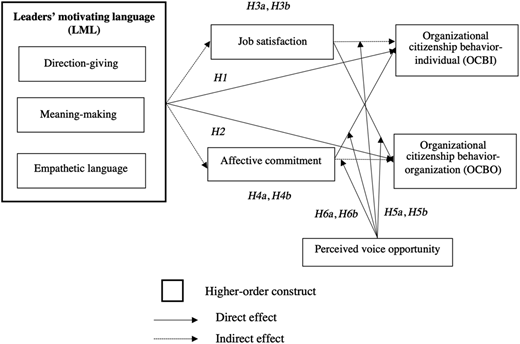
To address these gaps, this study develops a conceptual model linking LML to both OCBI and OCBO, with job satisfaction and affective commitment as parallel mediators, and perceived voice opportunity as a boundary condition moderating the translation of these attitudes into citizenship behavior. This research aims to answer the following three questions:
How does leaders' motivating language influence organizational citizenship behaviors directed toward individuals and organizations?
To what extent do job satisfaction and affective commitment mediate the link between leaders' motivating language and organizational citizenship behaviors directed toward individuals and organizations?
Does perceived voice opportunity positively moderate the links between job satisfaction, affective commitment, and organizational citizenship behaviors directed toward individuals and toward organizations?
This study makes several contributions to the leadership and organizational behavior literature. First, it advances understanding of how LML produces citizenship behavior by jointly modeling job satisfaction and affective commitment as parallel attitudinal mediators, a combination that has not been examined within the LML-OCB relationship despite both variables being individually linked to LML and OCB in separate research (Omair et al., 2025; Sabir and Bhutta, 2018), thereby closing a gap between two bodies of evidence that have developed in parallel without being integrated. Second, it extends MLT by introducing perceived voice opportunity as a contextual boundary condition that influences when leader communication successfully activates the social exchange processes driving citizenship behavior. Third, by distinguishing OCBI from OCBO, it provides differentiated insights into which dimensions of leader speech cultivate interpersonally versus organizationally directed citizenship, a distinction with direct relevance for building sustainable workplace cultures. Fourth, by situating the study in Vietnam, an emerging collectivistic economy with high power distance that has received scant attention in LML scholarship, this study responds to the calls for greater diversity in leadership communication research (Omair et al., 2025) and contributes to understanding how motivating language operates beyond the Western settings in which motivating language theory has been predominantly developed and tested.
The rest of the paper is structured as follows: section 2 presents the theoretical framework and formulates the hypotheses; section 3 explains the research methodology; section 4 details the analyses and empirical findings; section 5 discusses the key findings and their implications for theory and practice; and finally, section 6 summarizes the study's limitations and suggests avenues for future research.
2. Theoretical background and hypotheses development
2.1 Motivating language theory
Motivating language theory (MLT), grounded in speech act theory (Austin, 1975), conceptualizes leader talk as a performative action that can shape employee motivation (Sullivan, 1988). MLT distinguishes three leader speech acts: direction-giving language (clarifying goals, priorities, and rewards), meaning-making language (conveying organizational values and shared interpretations, often through stories, particularly during change), and empathetic language (acknowledging emotions, offering support, and recognizing performance) (Mayfield and Mayfield, 2007). The theory further assumes that these speech acts capture most of the leader-subordinate communication, that message effectiveness depends on consistency between leaders' words and behaviors, and that the framework emphasizes leader-initiated communication more than subordinate sensemaking or upward exchanges (Mayfield and Mayfield, 2007). Finally, MLT posits synergy among the three language types as their combined use yields further effects beyond their isolated contributions (Mayfield and Mayfield, 2007). Consistent with prior works (Guo and Ling, 2020), this study models LML as an integrated construct comprising all dimensions.
Despite its explanatory power, MLT has an important limitation in that it treats leader-to-follower communication as the primary driver of motivational outcomes without explaining how the broader organizational environment shapes whether followers act on the attitudes that motivating language produces. Because attitudes and behaviors are distinct outcomes, the conditions under which positive attitudinal states, such as job satisfaction and affective commitment, translate into voluntary discretionary action representing a separate theoretical question MLT alone cannot answer (Omair et al., 2025). This study addresses this limitation by incorporating perceived voice opportunity as a contextual boundary condition that shapes whether the attitudinal effects of motivating language translate into citizenship behavior.
2.2 Social exchange theory
Social exchange theory (SET), originating from Blau (1964), describes human relationships as governed by reciprocity, in which individuals engage in exchanges expecting mutual benefit. In the workplace, this manifests as an ongoing cycle of giving and receiving, through which positive leader-follower interactions foster trust, commitment, and cooperative behavior (Cropanzano and Mitchell, 2005). In studies of OCB, SET posits that, when employees perceive favorable treatment or positive organizational conditions, they reciprocate by engaging in discretionary behaviors that go beyond formal role expectations and benefit the organization (Ocampo et al., 2018).
In the present model, SET provides the relational mechanism through which LML produces behavioral outputs, offering a relational perspective on how individuals evaluate interactions and decide whether to engage in extra-role performance (Nguyen, 2026). LML functions as a relational resource that activates reciprocity norms by generating felt obligations to reciprocate, which reflects an internalized sense of personal duty arising from perceived relational benefits and rooted in relational expectations rather than immediate emotional reactions (Nguyen, 2026). Through job satisfaction and affective commitment, these psychological states are enacted as citizenship behaviors directed toward colleagues and the organization. SET therefore explains why and through what psychological pathway the communicative inputs described by LML produce behavioral outcomes, bridging the gap between leader speech acts and employee citizenship behavior.
2.3 Motivating language, OCBI, and OCBO
This study adopts Williams and Anderson's (1991) distinction between OCB directed toward individuals (OCBI), such as helping newcomers adjust and covering colleagues' assignments (Lin and Peng, 2015), and OCB directed toward the organization (OCBO), such as complying with rules, taking on challenging tasks, and suggesting improvements (Mohammad et al., 2011). From the SET perspective, employees reciprocate motivating communication by engaging, not only in required in-role behaviors, but also in voluntary extra-role behaviors that are not formally specified or rewarded (Guo and Ling, 2020). Accordingly, leaders who frequently use motivating language are expected to elicit higher levels of both OCBI and OCBO. Based on this reasoning, the following hypotheses are formulated:
LML is positively related to OCBI.
LML is positively related to OCBO.
2.4 The mediating role of job satisfaction
Job satisfaction refers to the extent to which employees perceive their job as fulfilling their needs and expectations (Kuhlen, 1963) with common antecedents including salary, growth opportunities, appraisal systems, empowerment, communication, and leadership quality (Spector, 1997). Empirical research consistently shows that LML enhances job satisfaction, with employees receiving high-motivating language being significantly more likely to report job satisfaction than those who receive less (Nguyen et al., 2020). Job satisfaction, in turn, is one of the strongest predictors of OCB (Williams and Anderson, 1991), as satisfied employees are more willing to contribute beyond formal role requirements (Bowling and Hammond, 2008). Grounded in the preceding evidence and a social exchange view of employee reciprocity, this study proposes that job satisfaction mediates the relationship between LML and both OCBI and OCBO, such that motivating communication enhances job satisfaction, which subsequently translates into increased levels of these two forms of OCB. Accordingly, the following hypotheses are proposed:
Job satisfaction positively mediates the relationship between LML and OCBI.
Job satisfaction positively mediates the relationship between LML and OCBO.
2.5 The mediating role of affective commitment
Organizational commitment reflects employees' acceptance of organizational values, willingness to work for the organization, and intention to remain (Meyer et al., 1993). Meyer et al. (1993) distinguished three components of commitment: affective, continuance, and normative. Among these, affective commitment, defined as emotional attachment to and identification with the organization, is the most robust predictor of OCB due to its voluntary identity-based nature (Jahangir et al., 2004). Unlike continuance commitment, which reflects the perceived costs of leaving, and normative commitment, which reflects a sense of duty to stay, affective commitment motivates OCB because employees genuinely want to contribute, not because they feel they must (Meyer et al., 1993).
LML strengthens affective commitment through multiple pathways. Meaning-making language conveys organizational values and helps employees see their work as purposeful and aligned with organizational goals (Sabir and Bhutta, 2018). Empathetic and direction-giving language fosters a sense of value and clarifies roles, deepening employees' sense of belonging and shared purpose (Sabir and Bhutta, 2018; Fuller, 2023). Because affective commitment sustains behavior even when formal rewards are limited (Allen and Meyer, 1996), it is especially likely to drive the discretionary extra-role contributions that characterize OCB. This reasoning underpins the following hypotheses:
Affective commitment positively mediates the relationship between LML and OCBI.
Affective commitment positively mediates the relationship between LML and OCBO.
2.6 The moderating role of perceived voice opportunity
Perceived voice opportunity reflects employees' sense that they can express views, suggestions, and concerns and that these inputs will be heard (Avery et al., 2011). Because voice signals procedural fairness and member value, it strengthens employees' sense of influence and ownership (Tyler and Blader, 2003). Prior work also suggests that employees calibrate discretionary effort based on whether the environment is receptive and psychologically safe (Morrison, 2014). From a social exchange perspective, satisfied employees are more likely to reciprocate with positive support behaviors, such as expressing creative ideas for organizational development (Lu and Lu, 2019). This satisfaction-driven motivation is intensified when employees perceive a safe and supportive environment within the organization (Hameed et al., 2020). These findings suggest that job satisfaction provides the motivation to perform OCB (Williams and Anderson, 1991), whereas perceived opportunity to input offers the autonomy and psychological safety needed to convert these positive attitudes into tangible contributions (Jena et al., 2017) that benefit coworkers (OCBI) and advance organizational goals (OCBO). Accordingly, we propose:
Perceived voice opportunity positively moderates the relationship between job satisfaction and OCBI (H5a) and job satisfaction and OCBO (H5b), such that these relationships are stronger when perceived voice opportunity is high.
Perceived voice opportunities may likewise strengthen the link between affective commitment and OCB. Employees form their overall perceptions of the organization based on their work experiences and the organization's internal environment (Licciardello et al., 2013) and prior research shows that positive work environments foster passion for work and improve performance (Suprapti et al., 2020). When employees have opportunities to voice their opinions, this can create a positive organizational climate that promotes shared values, beliefs, and behaviors, ultimately encouraging behaviors that benefit the organization (Novitasari and Iskandar, 2022). Building on this reasoning, the current study proposes that a supportive and fair climate in which employees feel their input matters increases the likelihood of affective commitment expressed through discretionary behaviors benefit coworkers and the organization (Allen et al., 2011; Novitasari and Iskandar, 2022).
Perceived voice opportunity positively moderates the relationship between affective commitment and OCBI (H6a) and affective commitment and OCBO (H6b), such that these relationships are stronger when perceived voice opportunity is high.
Figure 1 presents the proposed research model.
3. Research method
3.1 Research context
This study examines the association between LML and OCB, in which job satisfaction and affective commitment function as mediating mechanisms, and perceived voice opportunity serves as a moderating condition. As a rapidly developing Southeast Asian economy, Vietnam has undergone substantial growth in recent decades, yet research on the effect of motivational language on positive employee outcomes remains limited (Nguyen et al., 2020). Moreover, Vietnam is characterized by strong collectivism and high power distance (Nguyen and Truong, 2016) and therefore provides a unique cultural context for examining how motivating language operates within hierarchical structures to catalyze employees' prosocial behaviors toward the organization.
3.2 Instruments
Measures for all variables in this study were drawn from established scales that have been validated in prior studies and demonstrate high reliability and validity. Direction-giving, meaning-making, and empathetic language were all assessed using three items adapted from Mayfield and Mayfield (2007) as these three dimensions constitute the reflective-reflective second-order construct of LML. Job satisfaction was measured using a three-item scale referenced from Bowling and Hammond (2008), affective commitment was assessed using the six-item scale proposed by Meyer et al. (1993), and perceived voice opportunity was measured using three items adapted from Avery et al. (2011). OCBI and OCBO were each measured using eight items from Lee and Allen (2002) and all eight constructs are reported in Table A1, Appendix, and all items were rated on a five-point Likert scale. To ensure accuracy and consistency, the questionnaire was translated from English into Vietnamese using Brislin's (1970) back-translation procedure. Before the main survey, two rounds of pretesting were conducted to verify the content and face validity of the measurement instruments. First, an expert panel comprising five organizational behavior researchers and two human resources department heads from companies in Vietnam evaluated the items to identify potential issues related to wording, layout, and structure. Based on their feedback, minor adjustments were made to the wording of some items. Second, a pilot study with 35 respondents was conducted to assess the scales' reliability. The participants reported that the questionnaire was clear and easy to understand, supporting the decision to proceed with the formal survey.
3.3 Data collection procedure
The target population comprised Vietnamese citizens who (1) were currently working as full-time employees at an organization in Vietnam and (2) worked under the supervision of a direct manager. Only full-time employees were included as part-time employees are less likely to interact consistently with a specific leader, which reduces their likelihood of providing reliable responses. In addition, (3) respondents were required to have a minimum of one year of tenure at their current institution, to ensure they were sufficiently familiar with their work environment and organizational culture, thereby enabling valid assessment of the study constructs. In total, three corresponding screening questions were placed at the beginning of the questionnaire to filter qualified respondents. A purposive sampling technique was used to administer the questionnaire to eligible respondents, with support from human resource staff in several organizations in Vietnam, who distributed it to organizational members. A mix of hard copies and an online questionnaire was distributed.
This research involved human participants. While formal ethics approval was not required, the study strictly followed “the guidelines of the Declaration of Helsinki” to ensure adherence to ethical standards. The questionnaire assured respondents' anonymity and confidentiality and respondents were also informed that participation was entirely voluntary and that there were no right or wrong answers. To ensure data quality, one attention-check question was included, which required respondents to select a “neutral” option. A total of 616 responses were received during the third quarter of 2025. After excluding 44 responses that contained missing data, did not meet the inclusion criteria, or failed the attention check, 572 usable responses remained for data analysis. Sample size was determined using the 10-times rule recommended by Hair et al. (2022). With 37 items across eight constructs, the minimum required sample size was 370 (37 x 10) and the final sample size of 572, therefore, exceeded the recommended threshold. Table 1 presents the respondents' profile.
The sample comprised 282 males (49.3%) and 290 females (50.7%), slightly deviating from the 2024 labor force statistics, which show males representing a larger share of the workforce (Pham, 2025). Most respondents were aged 25–35 years, consistent with prior studies on motivating language and employee behavior in Vietnam (Nguyen et al., 2020). The majority held undergraduate degrees, reflecting the outcomes of higher education reform in Vietnam, which expanded the number of higher education institutions and improved training quality (Nguyen and Do, 2015). Respondents also reported substantial institutional experiences in their current organizations (most had a tenure of seven to ten years) and sufficient time working under their current direct manager (most had one to three years of experience with the same supervisor), allowing for the development of an ongoing leader-member relationship.
3.4 Analytical methods
Following Kim's (2013) recommendation, gender, age, education level, work tenure, and time working under the current direct manager were included as control variables because prior research suggests these demographic factors may predict OCB. Partial least squares structural equation modeling (PLS-SEM) was employed for data analysis because it is particularly appropriate for theory development (Hair et al., 2019). As this study integrates MLT and SET into a single model and examines the boundary condition of perceived voice opportunity, it extends both theoretical frameworks. In addition, PLS-SEM can accommodate complex models with mediation and moderation paths, such as those tested in this study (Hair et al., 2019). Finally, PLS-SEM is well-suited to data that deviate from multivariate normality, a common characteristic of social sciences datasets (Hair et al., 2019). A disjoint two-stage approach was employed to specify the reflective-reflective higher-order construct and examine the relationship between LML, as a second-order construct, and its three first-order constructs. In the first stage, the measurement model for the first-order constructs was assessed against their respective indicators. The resulting latent variable scores were then extracted and used as manifest indicators in the second stage to evaluate the measurement model of the second-order construct (Sarstedt et al., 2019).
4. Results
4.1 Assessment of first-order constructs
In the first stage, the validity and reliability of the first-order constructs were assessed. Table 2 shows that the outer loadings of all first-order reflective constructs exceeded the 0.70 threshold (Hair et al., 2019), except for one item (OCBI8) with a factor loading below 0.40. This item was therefore removed from the analysis. Composite reliability (CR) and Cronbach's alpha values for all constructs exceeded 0.70, and the average variance extracted (AVE) values exceeded 0.50, confirming high internal consistency and convergent validity (Hair et al., 2019). Discriminant validity was assessed using the Heterotrait-Monotrait (HTMT) ratio and Table 3 shows that all HTMT values were well below the 0.85 cutoff (Henseler et al., 2015), confirming satisfactory discriminant validity for all constructs.
4.2 Assessment of second-order constructs
Following Sarstedt et al. (2019), this study assessed, in the second stage, the internal consistency reliability, convergent validity, and discriminant validity of the second-order LML construct, comprising three dimensions: direction-giving, meaning-making, and empathetic language. As reported in Table 4, the higher-order construct exhibited satisfactory reliability, as the outer loadings, Cronbach's alpha, and CR values were all above the 0.70 cutoff. Convergent validity was supported by an AVE value above the recommended threshold of 0.50. Table 5 shows that each HTMT value was below 0.85, confirming discriminant validity.
4.3 Common method bias
Since a single-format approach was used to collect the data, common method bias (CMB) was a potential concern (Podsakoff et al., 2003). Accordingly, three different statistical methods were used to assess the presence of CMB. First, Harman's single-factor test was conducted, which showed that the first factor accounted for 33.602% of the variance, below the 50% cutoff, indicating that CMB was not a serious issue in this study. Second, the full collinearity test showed that all variance inflation factor (VIF) values within the inner matrix were below 3.0, suggesting that CMB was unlikely and that multicollinearity was not a concern (Hair et al., 2019; Kock, 2015). Finally, partialling out a general factor did not yield a significant increase in the values of the endogenous constructs (job satisfaction, affective commitment, OCBI, and OCBO), further indicating that CMB was not a severe concern in this sample (Podsakoff et al., 2003).
4.4 Hypothesis testing results
Table 6 presents the path coefficients and corresponding p-values. LML was positively associated with OCBI (β = 0.426, p < 0.001, 95% CI = [0.325, 0.543]) and OCBO (β = 0.238, p < 0.001, 95% CI = [0.149, 0.338]), supporting H1 and H2. In addition, LML was positively associated with job satisfaction (β = 0.611, p < 0.001, 95% CI = [0.531, 0.680]), which was positively associated with OCBI (β = 0.233, p < 0.001, 95% CI = [0.126, 0.334]) and OCBO (β = 0.149, p < 0.01, 95% CI = [0.054, 0.244]). Following Preacher et al. (2007), a bootstrap analysis with 5,000 resamples and a 95% confidence interval was conducted. The results indicate that the indirect effect of LML on OCBI (β = 0.142, p < 0.000, 95% CI = [0.080, 0.210]) and OCBO (β = 0.091, p < 0.01, 95% CI = [0.036, 0.153]) through job satisfaction was statistically significant, supporting H3a and H3b. Similarly, LML was positively associated with affective commitment (β = 0.471, p < 0.001, 95% CI = [0.384, 0.553]), which was positively associated with OCBI (β = 0.200, p < 0.001, 95% CI = [0.094, 0.303]) and OCBO (β = 0.278, p < 0.001, 95% CI = [0.173, 0.374]). The bootstrap results further reveal that the indirect effect of LML on OCBI (β = 0.094, p < 0.001, 95% CI = [0.047, 0.148]) and OCBO (β = 0.131, p < 0.001, 95% CI = [0.083, 0.185]) through affective commitment was statistically significant, supporting H4a and H4b. Given that LML has a significant direct effect on both OCBI and OCBO, the mediating roles of job satisfaction and affective commitment can be characterized as partial mediation (Zhao et al., 2010).
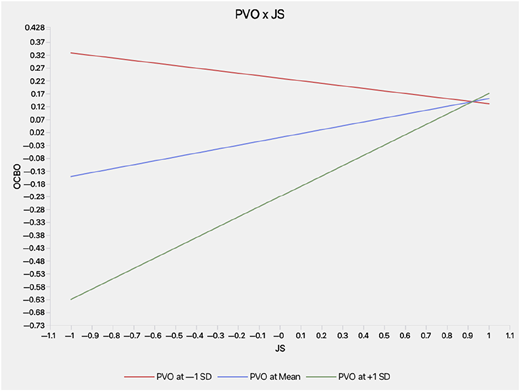
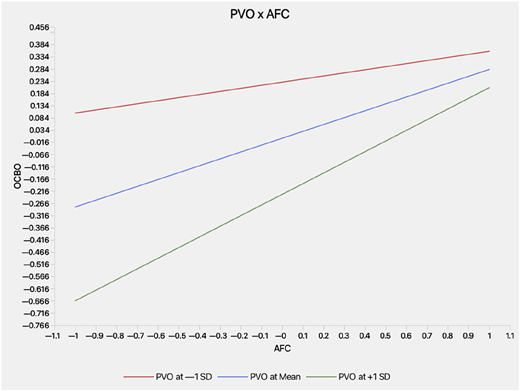
Furthermore, the interaction effect between perceived voice opportunity and job satisfaction did not significantly affect OCBI (β = 0.019, p > 0.05, 95% CI = [−0.075, 0.105]). Therefore, H5a is not supported. In contrast, the interaction effect between perceived voice opportunity and job satisfaction was positively associated with OCBO (β = 0.249, p < 0.001, 95% CI = [0.185, 0.318]), supporting H5b. Moreover, the interaction effect between perceived voice opportunity and affective commitment did not significantly affect OCBI (β = −0.006, p > 0.05, 95% CI = [−0.101, 0.096]), thus H6a is not supported. By contrast, the interaction effect between perceived voice opportunity and affective commitment was positively related to OCBO (β = 0.153, p < 0.01, 95% CI = 0.062, 0.248]), supporting H6b. Figures 2 and 3 illustrate the cross-level moderation of perceived voice opportunity on the relationship between job satisfaction and OCBO, and between affective commitment and OCBO.
None of the five control variables had significant effects on OCBI or OCBO. The values for job satisfaction (0.373), affective commitment (0.222), OCBI (0.517), and OCBO (0.486) were all above 0.10, supporting the model's predictive accuracy. The values computed through the blindfolding procedure were 0.367 for job satisfaction, 0.216 for affective commitment, 0.419 for OCBI, and 0.312 for OCBO. All values were greater than 0, confirming predictive relevance for all factors (Hair et al., 2019).
5. Discussion and implications
5.1 Discussion of findings
This study examined the impact of LML on employees' OCBI and OCBO, mediated by job satisfaction and affective commitment, while considering the perceived voice opportunity as a boundary condition. Data collected from Vietnam validated the research model. The findings offer a more complete and contextual account of how leader communication generates employees' extra-role behavior.
First, the results show that LML significantly enhances employees' OCBI and OCBO, underscoring the pivotal role of leaders' day-to-day communication in encouraging employees to go beyond formal job requirements. These findings align with prior work by Fuller (2023) and Guo and Ling (2020) which highlighted that leadership communication serves as a motivational tactic that fosters self-initiated behavior. The results are consistent with SET's perspective that employees reciprocate positive leader treatment through discretionary contributions. Importantly, the positive effects of LML on both OCBO and OCBI suggest that motivating language simultaneously activates reciprocity obligations at both the interpersonal and organizational levels.
Second, the present study reveals partial mediation by job satisfaction and affective commitment in the link between LML and both forms of OCB. Job satisfaction mediates the relationship between LML and both OCBI and OCBO, consistent with previous research showing that language that reduces task ambiguity, articulates organizational goals, and expresses genuine concern for employee wellbeing elevates employees' evaluation of their work (Sharbrough, 2006), which in turn motivates reciprocal contributions in both interpersonal and organizational directions. Affective commitment similarly mediates both relationships, in alignment with Sabir and Bhutta's findings (2018), indicating that when leaders communicate organizational values, resolve confusion, and build emotional connections with employees, they strengthen employees' commitment to the organization by fostering a sense of belonging and identification with its values and objectives. Consequently, employees who identify with their organization are more likely to voluntarily contribute ideas to improve its functioning and support its members as they perceive it as their own.
Third, the study's findings enrich the understanding of the moderating role of perceived voice opportunity, a mechanism that has been underestimated in the literature. The moderation tests reveal a clear pattern: perceived voice opportunity significantly moderates the relationships between job satisfaction and OCBO, and affective commitment and OCBO, but does not exert a similar moderating effect on OCBI. This difference likely reflects the target-specific nature of citizenship behavior. OCBO encompasses discretionary contributions directed at the formal organizational system, such as suggesting improvements, voluntarily complying with rules, and engaging in civic virtue, behaviors that are inherently contingent on employees' perceptions that the organization is receptive to their input (Williams and Anderson, 1991). This finding aligns with Utina and Junaidin (2025), who reported that when employees feel their voices are valued, they are more likely to channel satisfaction and commitment into organization-directed discretionary action because the perceived risk of contributing to the formal system is lower and the expected return is higher. OCBI, in contrast, includes interpersonally directed helping behaviors, such as assisting colleagues, covering workloads, and supporting newcomers, which are governed primarily by interpersonal dynamics and immediate team norms rather than by formal organizational channels (Tremblay, 2024). As perceived voice opportunity primarily signals receptiveness at the organizational level, it is less likely to intensify the shift from job satisfaction and affective commitment to interpersonal helping behavior to the same extent. Another plausible explanation lies in the Vietnamese cultural context, where interpersonal helping behaviors are deeply rooted in collectivist values, rendering OCBI a normative expectation among colleagues rather than a discretionary response contingent on organizational conditions.
5.2 Theoretical implications
This study's findings contribute to the ongoing scholarly discussion on how leaders' motivating communication shapes employee outcomes. First, the study offers an integrated model in the LML literature by examining job satisfaction and affective commitment simultaneously as parallel mediators linking LML to differentiated forms of OCB. Prior research has established each pathway independently. By modeling them concurrently, the study shows that LML promotes OCB through two distinct psychological mechanisms operating in parallel: an evaluative route through job satisfaction and a relational identity-based route through affective commitment. Both pathways are required to fully explain how leader communication shapes citizenship behavior. This advances SET's application to leader-member communication by specifying the dual attitudinal architecture through which motivating language activates reciprocity.
Second, by examining voice opportunity as a contextual boundary condition, the study responds to the calls in the LML literature for greater attention to organization and structural conditions that shape the link between leader communication and employee behavior (Omair et al., 2025). The findings illustrate that voice opportunity selectively strengthens the links between job satisfaction and OCBO, and affective commitment and OCBO, but not the corresponding links to OCBI, extending the theory in two ways. They show that the enabling effect of structural empowerment is target-specific, and clarifies the conditions under which job satisfaction and affective commitment lead to citizenship differ depending on whether the behavioral target is interpersonal or organizational. This pattern also enriches SET by indicating that exchange dynamics between employees and the organization are contingent on organization-level signals of receptivity and value, rather than being uniformly activated by positive evaluations and commitment.
Third, the study extends MLT beyond its original focus on the content and delivery of leader speech acts by incorporating the organizational context in which motivating language is received and acted upon. The moderating results underscore that the positive effects of motivating language are conditioned by perceived voice opportunity. Leaders who communicate motivationally in organizations that provide voice opportunities elicit stronger organization-directed citizenship than leaders whose motivating communication is not accompanied by structural empowerment. This does not alter MLT's core propositions, but rather situates the theory within a broader organizational system in which leader communication is necessary, but not sufficient, for OCB.
Fourth, the study contributes to the growing literature on sustainable human resource management by showing leadership communication as a foundational human resource practice that can simultaneously support positive employee attitudes, job satisfaction and affective commitment, and organizational performance through OCBI and OCBO. This joint outcome is central to organizational sustainability because it underlines that OCB can be generated through relational investment rather than through coercive or purely transactional mechanisms. By grounding these findings in Vietnam, a rapidly developing economy in which organizations face pressure to build competitive workforces while addressing long-term growth challenges, the study extends the geographical scope of LML research beyond its predominantly Western empirical base (Omair et al., 2025) and speaks directly to human capital development challenges in emerging economies.
5.3 Managerial implications
These findings offer guidance for organizations seeking to enhance employees' OCBI and OCBO by encouraging leaders to use motivating language. First, the positive direct effect of LML on OCBI and OCBO indicates that communication is a vital managerial practice for cultivating voluntary employee contributions. For organizations operating under resource constraints, investing in leaders' communicative competence can yield substantial benefits, and as such training programs should address all three dimensions in an integrated manner. Direction-giving language reduces ambiguity and clarifies expectations, mean-making language strengthens identification and shared purposes while empathetic language fosters trust and belonging.
Second, the dual-mediator findings highlight that both job satisfaction and affective commitment are crucial managerial targets, and each respond to different communication practices. To enhance job satisfaction, leaders' day-to-day communication should reduce role ambiguity, recognize contributions, and convey care for employee wellbeing. To reinforce affective commitment, leaders should connect work to organizational values and goals and align employees' career goals with organizational goals by involving employees in decision-making. The affective commitment-to-OCBO pathway is particularly relevant for entrepreneurial ventures where formal HR infrastructure is limited and leaders must rely on relational communication to sustain discretionary effort.
Third, the moderation mechanisms imply that perceived voice opportunity intensifies the relationship between job satisfaction, affective commitment, and OCBO, therefore organizations that invest in leader communication but do not create opportunities for employee voice may capture only part of the behavioral return. Managers should complement motivating language with feedback channels, participative decision-making, and regular opportunities for upward communication. The absence of moderation for OCBI suggests that interpersonal skills being helpful depends more on team relationships and peer dynamics. Managers should therefore focus on team cohesion, peer recognition, and modeling helping behavior.
Finally, the findings also inform policymakers and management educators in Vietnam and similar emerging economies. Incorporating LML training into management education and workforce development programs can equip leaders with communication practices shown to support employee and organizational performance immediately as well as in the future.
6. Conclusion, limitations, and future research
Drawing on MLT and SET, this study develops and validates an integrated model of how LML shapes OCBI and OCBO via job satisfaction and affective commitment, and explores perceived voice opportunity as a boundary condition in Vietnamese organizations. Findings show LML positively predicts both OCBI and OCBO and leader communication emerges as a relational resource that activates reciprocity expressed as discretionary citizenship behavior (Research Question 1). The results support the parallel mediating roles of job satisfaction and affective commitment and these two distinct psychological pathways clarify how motivating language drives citizenship behavior (Research Question 2). Perceived voice opportunity selectively moderates the job satisfaction-OCBO and affective commitment-OCBO relationships, but not those with OCBI which suggests that structural empowerment steers job satisfaction and affective commitment toward organization-focused rather than interpersonal citizenship behaviors (Research Question 3). Overall, these findings clarify the communicative and contextual conditions by which leaders foster sustainable workforce engagement and offer actionable guidance for managers and policymakers in Vietnam and similar emerging economies.
This study has several limitations that open up avenues for future investigation. First, the findings rely on self-reported cross-sectional data, which may be subject to social desirability bias and future studies should adopt longitudinal designs and employ multiple data sources to scrutinize the findings. Second, because this study covered only employees from Vietnam, the representativeness and generalizability of the findings are constrained and future scholars should consider cross-country studies with larger and more diverse samples. Third, this study applies the same OCB measurement scales for all employees without customization and as such another direction for future research is to tailor OCB constructs to different organizational types or industries (e.g. export-led growth firms) to provide deeper insights into OCB practices across organizational contexts.
The supplementary material for this article can be found online.