


This paper offers a theoretical explanation to a positive story of a micro enterprise found in Uganda, an African developing country that has successfully managed workplace relationships, its survival and good performance. Specifically, the paper examines multiple theories to explain the practice in this enterprise.
The study uses storytelling, a form of narrative inquiry embedded in qualitative methodology. Based on in-depth interviews with the owner-manager and employees, a story was developed detailing their practical experience while focusing on the context, actions, results and lessons.
Findings reveal that micro enterprises that allow free generation of ideas across all levels with optimistic people who reciprocate and work together create a friendly work atmosphere with support for one another, with the ability to amicably resolve conflicts and build trust. More so, theories including social exchange theory, relational cohesion theory, complex adaptive systems theory and cultural historical activity theory help explain the manifestations of relational people management in micro enterprises.
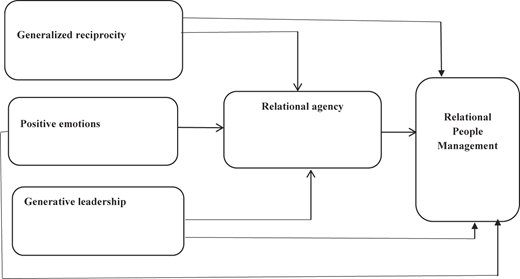
This paper is unique in its use of a positive story showing a practical experience of how workplace relationships are managed in a micro enterprise found in Uganda. In addition, a multi-theoretical perspective is used to explain the manifestations in the story which may be novel in the study context. Thus, a conceptual model is proposed depicting generalized reciprocity, positive emotions, generative leadership and relational agency as antecedents of relational people management with relational agency again mediating the other relationships.
1. Introduction
Globally, micro enterprises substantially contribute to the development of national economies (Shafi et al., 2021). It is thus imperative to understand the nature of the workplace in these enterprises (Mazzorol et al., 2021). Unlike the large organizations that depend on structures to drive performance, micro enterprises mainly rely on interpersonal relationships to accomplish work (Jochims, 2016; Mallet and Wapsholt, 2014). This is because these enterprises constitute intense, close and casual working relations among employees and owner-managers (Cuéllar-molina et al., 2019). Relatedly, since micro enterprises are characterized by insufficient resources, less market control and informality, their leverage lies in the kind of relationships created between individuals (Al Mamun et al., 2018; Vanharanta et al., 2022). In these enterprises, people confide in others, support one another, create friendly ties and work harmoniously (Mascarenhas et al., 2010; Shier et al., 2018). Consequently, these interpersonal competencies determine the extent to which work outcomes are successfully achieved. Heaphy and Dutton (2008) noted that enterprises that nurture positive relational behaviors improve the physiological health of individuals. According to Dimotakis et al. (2011), the relational aspects not only promote the welfare of people at work but also the health and survival of enterprises. In addition, positive workplace relationships create harmony between employees and owner-managers (Ram et al., 2001). This is because they increase chances of people remaining at the workplace (Abugre, 2017; Madden et al., 2015). Curado and Vierra (2019) asserted that micro enterprises are characterized by a high level of employee satisfaction arising from trustworthy relationships. In support, a study revealed that 80% of owner-managers were interested in long-term working relationships with an intention of retaining employees. This is achieved through building trust and assisting employees when they have challenges (Rasheed et al., 2017). Similarly, a study on “work spouse” which is a unique kind of workplace relationship found out that such instances led to high levels of job satisfaction and commitment more so during times of crisis like the COVID-19 pandemic (Frieder et al., 2022).
Although research shows that positive workplace relationships significantly enhance the performance of the enterprises the, majority of micro enterprises hardly nurture these social relationships (Kanu, 2015). Yet for a few enterprises where people portray positive interpersonal conduct, these enterprises have survived and succeeded (Kroon et al., 2013). Besides, most of the previous studies on workplace relationships have predominantly been carried out in large organizations (Mallet and Wapshott, 2014). There is scant research on how workplace relationships manifest in the context of micro enterprises (Harney and Alkalaf, 2021). Dutton and Ragins (2007) indicate that research on workplace relationships has single-handedly used the Social Exchange Theory. Subsequently, scholars of workplace relationships have called for a broad range of theories to study the concept, more so, from the context of micro enterprises (Heaphy et al., 2018). Thus, it is such deficiencies that enticed the onset of this paper.
To overcome these paucities we use a positive story of a micro enterprise from Uganda, an African developing country whose success is premised on the ability to manage workplace relationships. The use of a successful story is supported by Yost et al. (2015) who noted that such stories with positive outcomes can be replicated. This is also supported by Rossetti and Wall (2017) who asserted that narratives in form of workplace stories are effective in drastically influencing performance at work. Perhaps, this story could be a benchmark for other enterprises to manage workplace relationships. Furthermore, the authors use several theories to explain the reality in the story. The use of a multi-theoretical approach is supported by Shepherd and Suddaby (2017) who noted that theorizing entails combining constructs from numerous knowledge areas. Indeed, as authors of this paper, we pay allegiance to the assertion that stories of this nature could be better explained using several theoretical perspectives (Mugambwa et al., 2017).
In the subsequent sections, first, the paper looks at the literature review and theoretical underpinnings, the next section explains the methodology, then the findings, discussion, conclusion, implications, limitations and areas for further research.
2. Literature review and theoretical underpinnings
The concept of relational people management is traced back to George Elton Mayo's 1924–1932 famous “Hawthorne experiments” carried out at Western Electric Hawthorne Works in Cicero, Chicago (Roethlisberger and Dickson, 1939; Muldoon, 2012). Despite several criticisms, the Hawthorne studies laid a foundation for modern management theory and practice (Muldoon et al., 2021). Further investigations concluded that positive interpersonal relationships depicted by the desire to remain in harmony and maintain friendly ties with colleagues and supervisors was responsible for productivity in small groups at work (Muldoon, 2017). For instance, a research paper to assess the social conditions of the community of employees in the Hawthorne studies concluded that solidarity after a tragedy was responsible for the performance (Zoller and Muldoon, 2021). Subsequently, scholars have carried out research acknowledging the role of positive social encounters at the workplace.
Relational people management involves mechanisms used by employees and managers to nurture positive relationships among people at work while undertaking tasks (Madden et al., 2015). This is depicted in the form of assistance at work, personal lives and creating a friendly work atmosphere (Pandita et al., 2017). It also entails the degree to which individuals at work can count on others for help in social ties (Sloan et al., 2013). This is portrayed in aspects such as social support, listening, friendly ties and trust building in relationships at the workplace (Shier et al., 2018; Madden et al., 2015). In other words, it is the constructive interpersonal behavior portrayed by superiors and subordinates toward others at the workplace (Wager et al., 2003). Relational people management requires superiors to possess relational abilities with an ultimate aim of strengthening long-term positive relationships (Mascarenhas et al., 2010). Such relational competencies are also reflected through conflict resolution skills (Benitez, 2018).
To explain relational people management, this paper advances several theories. These include: the social exchange theory (SET), relational cohesion theory (RCT), complex adaptive systems theory (CAST) and the cultural historical activity theory (CHAT). The SET (Homans, 1958; Blau, 1964) is deemed relevant in explaining results of the Hawthorne studies whose principles laid a foundation for the nurturing of positive workplace relationships (Zoller and Muldoon, 2019). The theory stipulates that relationships are based on reciprocal norms whereby parties are under obligation to fulfill the expectations of either party (Blau, 1964). These high quality relationships under the reciprocal norms between parties are sparked off by initiating behaviors (Cropanzano and Mitchell, 2005). This implies that as one party does something for the other, they anticipate that they will also receive something back from that other party since they feel mandated to give back. In a work setting, once employees receive respect, they are likely to give back by indulging in positive behaviors (Ma and Qu, 2011).
Empirically, studies have indicated that people engage in positive behaviors towards those from whom they once obtained a benefit (Tsang and Martin, 2019). Thus, organizations ought to nurture social exchange relationships with superiors and colleagues to stimulate pro-social behaviors at work owing to a feeling of obligation which ultimately benefits the workplace (Kim and Qu, 2020). Accordingly, the preceding review reveals SET's ability to explain relational people management which is a major concern of this paper. Despite its contribution, SET puts less emphasis on positive emotions that play a role in nurturing positive relationships (Lawler and Yoon, 1993). This calls for the RCT.
RCT emphasizes the role played by positive emotions in enhancing relations among people (Lawler and Yoon, 1993). This assertion is based on the notion that individuals who portray positive emotions enable relationships to thrive as parties seek for a possible source of such emotions (Lawler et al., 2000). It implies that these positive moods would lead parties to engage more in quality relationships as individuals get interested in ascertaining those people who experience positive emotional states (Lawler, 1996). Thus, positive emotions as an aspect of positive psychology are the force behind employees flourishing which ultimately leads to organizations thriving (Money et al., 2009).
Empirically, positive emotions as a cornerstone of RCT have a tremendously varied influence in the workplace (Wall et al., 2017). For example, Mcgrath et al. (2017) found out that individuals who experienced positive moods in the morning easily extended help to colleagues at work. In addition, a study found out that positive emotions such as pleasure, satisfaction and interest result in solid relationships (Hernandez-Ortega et al., 2021). Similarly, in another study it was indicated that RCT positively contributed to strengthening of social relationships among online gamers (Liao et al., 2020). Therefore, the foregoing review indicates RCT's capability to address the authors' study issues on relational people management. However, RCT pays less attention to the type of leadership suitable for nurturing positive workplace relationships in a dynamic environment. This calls for the CAST.
CAST stipulates that organizations operate in a dynamic environment where outcomes can hardly be anticipated. This calls for a type of leadership which is generative, one that encourages the generation of new ideas. Such leadership also entails being equipped with relevant competencies and pro activeness where agents in the system are in charge (Goldstein et al., 2010). Generative leadership is not about an individual but sprouts from both “bottom-up” and “top-down” approach (Hazy, 2011). Hence, the sole responsibility of the leader is to give individuals a chance to contribute to decisions and to have the capacity to adapt to emerging changes. More so, these dynamic environments consist of complex challenges with scant information necessitating leaders to bring others on board. This involves offering support, mutual respect, accepting that others might be more informed and showing interest in others (Castillo and Trinh, 2018).
Based on empirical evidence, leaders have been called upon to embrace generative leadership attributes such as compassion and listening (George, 2022). This reflects a move from the ancient view where the chain of command bestowed an individual onto a leadership position. There is a refocus from leaders as individuals to leadership as a relational obligation (Gordon et al., 2016). In transdisciplinary enterprises such as health care, people are empowered differently. This means that leaders in these enterprises have to create an environment where workplace relationships flourish so as to solve problems (Mäkinen, 2018). Relatedly, in interprofessional healthcare teams, generative leadership is at the forefront of encouraging interpersonal connections throughout all contingent work groups (Gordon et al., 2016). Therefore, generative leadership puts emphasis beyond individuals to the interpersonal space that lies between them (Goldstein et al., 2010). The preceding review reveals CAST's ability to explain relational people management. However, CAST pays less attention to human activity as a collective endeavor and the synergism that emerges out of such an activity to achieve a common goal. The CHAT addresses this concern.
According to CHAT, human activity is a collective endeavor reflected in the form of agency (Engeström, 1987). The activity system consists of a multiplicity of individuals that interact with one another to accomplish a common goal. The players in the activity system cease to look at themselves as individuals but as interactants who are interdependent. They believe in their joint capabilities, continuously share information and appreciate each other's perspective. From such dialogues, a mutual response is generated to target the object (Bandura, 2000; Edwards, 2010). Indeed, it is evident that CHAT centers on collaboration as a cornerstone. According to Engeström et al. (2008), among the forms of collaboration that CHAT focuses on is problem-oriented cooperation. In this form of collaboration, emphasis is on solving a mutual problem; the actors come up with a joint solution that puts into consideration everyone's perspective. In research, this has been coined as “relational agency” conceptualized as the synergy that emanates from collective activity while solving mutual problems (Edwards, 2010). This collective endeavor is a clear reflection of human agency also termed as human activity, which is relational in nature characterizing the activity system (Engeström, 1987).
Research has indicated that relational agency has the ability to foster relationships not only across practices but also among people who carry out different tasks even in a similar profession. During agency endeavors, as individuals reach a mutual agreement, that atmosphere results into trust and friendship among the interacting individuals (Edwards, 2010). A study on SMEs revealed that owner-managers who instill a collaborative working culture create strong bonds which result in positive workplace relationships (Cuéllar-molina et al., 2019). In another study hinged on CHAT, it was found that “co-working” as a collaborative effort inculcated values of cooperating with others and sharing ideas hence nurturing relationships (Ivaldi et al., 2022). Relatedly, a study on home care service provision revealed that “carnivalization” as a new form of collaboration under CHAT fostered relationships among home care workers and clients (Kajamaa and Lahtinen, 2016). The tenets of CHAT as reviewed in the preceding literature make it a suitable theoretical lens to understand a phenomenon as collective as relational people management. Therefore, based on the foregoing review of literature and theoretical underpinnings, it may be justifiable to use a combination of SET, RCT, CAST and CHAT to offer a theoretical explanation to the manifestations of positive workplace relationships in the story of a micro enterprise under study.
3. Methodology
3.1 Study context
The study was carried out on Santos Metal Works (pseudonym), a micro enterprise found in Wakiso district in Uganda. The enterprise mainly deals in metal fabrication of windows, doors, gates and beds. It employs about 15 people and has been in existence for 16 years. A micro enterprise was selected because relationships thrive more in settings with fewer people as they depend on physical contact and proximity (Jochims, 2016). According to Uganda Bureau of Statistics- Report on the Census of Business Establishments (2010/2011), a micro enterprise is one that employs between 1 and 19 people. Lastly, Uganda was selected because it is ranked high as a collectivist society whose cultural values greatly embrace social relationships (Scharpf et al., 2017).
3.2 Research philosophy
Ontologically, this study embraced social constructivism which assumes that the reality is socially constructed based on people's perceptions, hence it is unstructured. In this study, both the owner-manager and employees had individual opinions regarding the manifestations of positive workplace relationships. To tap into this unstructured nature, the researchers encompassed interpretivism (Antwi and Hamza, 2015). Interpretivism enables the researcher to obtain understanding about the phenomenon through interactions with participants (Manroop, 2017). This is in line with Mafabi and Kabagambe’s (2021) assertion that “reality is in the minds of the people”, hence the need to tap into their perceptions. The authors then used a qualitative methodology through in-depth interviews to obtain knowledge about relational people management. Such a qualitative methodology is good for obtaining detailed individual perspectives on the issue under investigation (Nzekwe-Excel, 2021).
3.3 Research design
The study used storytelling as a form of narrative inquiry embedded in the qualitative methodology. Storytelling offers a detailed understanding of the phenomenon (Wang and Geale, 2015). More so, this form of narrative inquiry gives a comprehensive picture of the phenomenon which can be explained by several theoretical perspectives (Liu et al., 2012).
3.4 Population and sample
The population comprised of the owner-manager and employees of Santos Metal Works. Using purposive sampling, we targeted participants who agreed to take part in the study were above 25 years of age and had more than five years work experience. These participants were considered mature and knowledgeable enough to provide the required information. Purposive sampling enables researchers to choose participants who are informative and is more suitable for qualitative research (Creswell, 2013). The researchers reached the saturation point on the interview where interviewing of additional participants would only result into the same information. Therefore, a sample size of eight participants was adequate.
3.5 Data collection
This being a strength-based study, the researchers used an interview guide design based on appreciative inquiry to collect data. Appreciative inquiry is suitable for strength-based research because it enables probing which generates descriptive positive conversations premised on social reality (Cooperrider et al., 2008; Watkins et al., 2016). The researchers made several physical visits to the metal workshop to conduct in-depth interviews. As indicated by Boje and Rosile (2022), we held “conversational interviews” to come up with a coherent story. Every interview lasted between 45 and 60 min; and during these interviews, participants gave individual perspectives on how positive workplace relationships were nurtured. The researchers observed work interactions and confirmed what the participants were saying. Besides which, spending more time with the participants enabled tapping into what they knew and getting first-hand information. This is in line with Creswell’s (2013) assertion on the importance of carrying out qualitative studies in the participants' places of work and spending more time with them. While undertaking this study, we sought for the views of both the owner-manager and employees. This resulted into what Saunders et al. (2012) coined as “reported consensus” as cited in Nwagbara (2020) and thereby enhancing validity. In further support, Neuman (2007) indicated that perspective diversity is one way of ensuring reliability and validity of qualitative research. On several occasions, the information provided was confirmed through more discussions (Simon, 2011). The researchers took extensive notes, audio-recorded the interviews and continuously sought for active participation to ensure that the exact information was captured (Kagaari et al., 2017). The recorded interviews were transcribed verbatim.
3.6 Data analysis
To analyze the transcripts and field notes the researchers used qualitative content analysis in the form of discourse tracing methods to analyze how participants were able to comprehend the manifestations of relational people management (LeGreco and Tracy, 2009). Since the researchers' aim was to come up with a coherent story, we used predetermined themes of context, actions, results and lessons. According to Smith (2012), context gives the prevailing situation that needed to be changed, actions comprise of the activities to overcome the challenges, results consist of the outcomes and lessons are the learning points drawn from the story. As indicated by Mafabi and Kabagambe (2021), these respective themes became the unit of analysis. The initial coding was done by the lead researcher which was later confirmed by the entire research team during several meetings. Thus aiming to eliminat bias from the coding process (Strauss and Corbin, 1990). The researchers read the transcripts carefully to ensure that the right information was captured under the respective themes for each interview. Subsequently, the perceptions that seemed common across all interviews and aligned with a particular theme were put together to give a coherent story. This is in line with the guidelines provided by Abdallah et al. (2019) on analyzing narrative process research whose aim is to generate a chronological story.
3.7 Ethical considerations
The lead researcher sought for an introductory letter from the university which was presented to participants on the first visit. The participants were enlightened and reminded about the intention of the study, which was for purely academic reasons (Saunders et al., 2012). Verbal consent was confirmed and the researchers further informed participants that participation was not mandatory and this was done on all subsequent interviews. We further sought for permission to record the interviews. In addition, both the researcher and participants agreed to disguise any identification details (Uganda's Data Protection and Privacy Act, 2019). In some instances, pseudonyms were used to indicate the names of the enterprise and some participants (Nwagbara, 2020).
4. Findings
We present our findings in the form of a positive story below titled, Bonding at the Workplace, structured under the themes of context, actions, results and lessons (Smith, 2012). According to Wang and Geale (2015), using a story format to present findings provides detailed information about the perspectives of participants. The story also contains verbatim quotes to strengthen the findings of the study (Nzekwe-Excel, 2021).
4.1 Bonding at the Workplace
4.1.1 Context
In 1998, Santos Mubiru (pseudonym) joined a metal fabrication workshop in Kasubi as an apprentice. He trained in the art of metalwork including cutting, welding and spraying products such as doors, gates and windows. After three years, Santos left to work in another workshop but as a new employee he did not easily get along with old workers. During work, his overalls and tools like hacksaw blades would be hidden. After work, the old workers would go to clubs to have fun and not invite Santos. At lunchtime, the boss would go out while employees bought food from nearby kiosks. On his way out, the boss would shout and warn those that made jokes while working. Employees feared to inform the boss about challenges both at home and work. One time, an employee lost his mother but did not receive any help from his workplace. Accordingly, employees made small fixed old-fashioned metal products and at times customers rejected them. Given the appalling conditions, Santos and three other employees left to work in other workshops. Santos worked hard and saved money for his own workshop in future. However, the boss learnt of his plans; accused him of theft and terminated his services. Santos dreamt of a workshop where employees would freely cooperate with one another and the boss. In turn, the business would strive to satisfy their needs. In 2006, Santos Metal Works (pseudonym) was born with two employees at Nansana, Wakiso district.
4.1.2 Actions
One Friday evening, Santos made a decision to go out and have fun once a month with all employees. During one of the evenings, they discussed the need to train in making new trendy metal designs. He encouraged employees to bring on board new ideas and emphasized that metal can be turned into anything. During the discussion, employees revealed that customers moved all the way to Katwe to buy stylish metal products. In Kampala-Uganda, Katwe is the epicenter of metal fabrication innovations. An employee of Santos Metal Works who had previously worked at Katwe offered to train others. They trained in cutting metals, welding, finishing and spraying of trendy modified wide sliding windows, doors and gates respectively. At Santos Metal Works, old workers are encouraged to spare some time and train new employees. An employee (EMP2) revealed that “whenever Santos is introducing new workers he reminds us that we were also once new in this place and someone spared time to train us”. During the daytime, Santos travels with one employee to customer sites to take measurements. An employee (EMP3) said that “but every morning we all meet to agree on the day's work. We discuss the needs of the customer in each particular job and agree on the activities required to have the work accomplished. Santos cautions us about the deadlines.” In fact, within the workshop there is a board where pending customer orders are written. Santos works along with them in an open workshop where the different groups exchange ideas. Santos (OM) admits, “I cannot keep away from the actual work that made me who I am today, I have got to roll up my sleeves.” For instance, the group that welded had to confirm that metals were cut to the right measurements. Whenever a customer order came in, the various groups met to agree on how the work would be done. One employee (EMP7) confessed that; “none of us is good at everything, we need each other. Some are excellent at making windows while others are superb at creating doors, gates and beds respectively.” As they worked, Santos moved around thanking them. During lunchtime, they engaged in jokes about football and at times discussed trends in metal fabrication. The business provided free lunch and employees dined together with Santos. On one of the lunch sessions, an employee invited them to his home for a birthday party. While at the party, Lugemwa (pseudonym) an employee received a call that his guardian had passed away. The enterprise provided a vehicle with fuel that transported his workmates to Luweero for the burial.
4.1.3 Results
Today, Santos Metal Works is a family of 15 young multiskilled workers who believe that together they can work on any order. When Santos is away, they know what to do. They assist one another when challenged. One time, they rescued a colleague who had been imprisoned. One day while working, two employees disagreed over tools but Santos intervened and the person in the wrong apologized. Those with financial challenges like rent can be paid advance. When one is unable to come for work, they inform Santos. Santos (OM) acknowledges, “much as I want them to work for me, as young people they are prone to challenges in life”. People feel happy and energized working in this business. Santos Metal Works is home to its employees and people enjoy each other's company. An employee (EMP5) revealed that, “so far, I have no reason to leave, Santos Metal Works is family to me”. About 70% of the employees have stayed for over ten years and the enterprise's net worth has grown.
4.1.4 Lessons
From the story we learn that leadership that freely embraces new ideas enables enterprises to thrive. When people engage in jokes and have fun at work they feel happy and energized. Initiating positive actions toward others enables people to feel obliged to give back and when people work together, they successfully accomplish tasks.
5. Discussion
Findings indicate that Santos Metal works provided free lunch and transported mourners when an employee lost a guardian. In addition, a fellow employee offered to train his colleagues in trendy metal designs. At the enterprise, old employees are encouraged to train new ones. Participant (EMP2) revealed that “whenever Santos is introducing new workers he reminds us that we were also once new in this place and someone spared time to train us”. Consequently, employees are friendly and assist one another when challenged. About 70% of employees have stayed in the enterprise for over ten years. Such a finding implies that when individuals at work initiate positive actions toward others, they are also likely to receive a benefit in return and thereby fostering positive relationships. This finding agrees with Tsang and Martin (2019) who indicated that people engage in positive behaviors toward those from whom they once obtained a benefit. Thus, organizations ought to nurture social exchange relationships with superiors and colleagues to stimulate pro-social behaviors owing to a feeling of obligation (Kim and Qu, 2020). The finding concurs with SET which stipulates that relationships are based on reciprocal norms whereby parties are under obligation to fulfill the expectations of either party in relationships (Blau, 1964).
The findings also reveal that during work, Santos (OM) appreciated employees and often engaged in jokes. Santos regularly went out to have fun with employees, consequently employees felt happy. The enterprise is home to its employees and they enjoy each other's company. Participant (EMP5) revealed that, “so far, I have no reason to leave, Santos Metal Works is family to me”. This means that when employees feel happy, they form strong friendships which ultimately benefit the enterprise. The finding is similar to Hernandez-Ortega et al. (2021) who found out that positive emotions such as pleasure, satisfaction and interest result in solid relationships. Such a finding is explained by RCT which asserts that when individuals portray positive emotions, relationships do sprout as parties seek for a possible source of these emotions (Lawler et al., 2000).
In addition, findings indicate that at Santos Metal Works employees proposed to embrace trendy metal fabrication designs. A fellow employee trained others in making trendy wide sliding windows, doors and gates. Santos emphasized that metal can be turned into anything and worked along with employees. Participant (OM) admits, “I cannot keep away from the actual work that made me who I am today, I have got to roll up my sleeves.” Even when Santos is away, any customer order can be handled. The enterprise is proud of a team of 15 young multi skilled employees who work on a range of trendy metal products. This finding means that when employees freely contribute ideas and are equipped with relevant skills, trust is built. Such a finding concurs with Mäkinen (2018) who found out that because individuals in enterprises are empowered differently, leaders nourish positive relationships to deal with work challenges. Therefore, this finding lends support to CAST which asserts that organizations operate in a dynamic environment which requires leaders to bring others on board to generate ideas and with relevant skills (Goldstein et al., 2010). Thus, in CAST there is a refocus from leadership as a sole responsibility to being a relational obligation (Gordon et al., 2016).
The findings further show that at Santos Metal Works employees worked together along with Santos in an open workshop where groups exchanged ideas. While working, those who weld ensure that metals are cut to the right measurements and the same applies to those who spray and do finishing. Every employee is good at something and do believe that together, they can handle the varied customer orders. Participant (EMP7) confessed that; “none of us is good at everything, we need each other. Some are excellent at making windows while others are superb at creating doors, gates and beds respectively.” The enterprise is now a family where people are friendly, have confidence in one another and misunderstandings are resolved amicably. About 70% of the employees have stayed for over ten years and the enterprise's net worth has grown. This finding implies that when people cooperate and work together, they are likely to develop friendly ties, exhibit trust and help each other. Such a finding is in agreement with Cuéllar-molina et al. (2019) and Ivaldi et al. (2022) who found out that collaborative endeavors are a basis for positive relationships to flourish. The finding concurs with CHAT which states that human activity is a collective endeavor which is relational in nature characterizing the activity system to solve a mutual problem (Engeström, 2008). Based on the foregoing discussion, as authors we propose a conceptual model (Figure 1) for managing workplace relationships in micro enterprises.
6. Conclusion, implications, limitations and areas for further research
This study aimed at theorizing relational people management in micro enterprises using several theories. Based on the interviews with the owner-manager and employees, a positive story was generated detailing perceptions on workplace relationships. From the findings, it emerged that SET, RCT, CAST and CHAT are possible explanations for relational people management in micro enterprises. As authors, we argue that stories of this kind are better explained using various theoretical perspectives. From these multiple theories, a conceptual model (Figure 1) is suggested depicting generalized reciprocity, positive emotions, generative leadership and relational agency as antecedents of relational people management. These constructs were obtained from the respective preceding theories. Future studies may build on this model to explain relational people management.
The study suggests a multi-theoretical approach as a comprehensive explanation to nurturing positive workplace relationships in micro enterprises. By so doing, the study has responded to a call to use various theories to study workplace relationships in the context of micro enterprises hence contributing to literature and further theory development. Methodologically, this paper uses storytelling as a form of narrative inquiry to study relational people management. Such an approach is suitable in providing detailed information that truly reflects the reality in the phenomenon. Therefore, the study has responded to the call to use conversational ways of inquiry that involve key players. In practice, owner-managers and employees may benchmark on the findings to nurture positive workplace relationships which ultimately contribute to the enterprise's success. This could be a solution to the low survival and poor performance of micro enterprises, especially in the African developing countries like Uganda where this is a major challenge. Specifically, the workers and management of Santos Metal Works may leverage on the positive workplace relationships to overcome challenges and sustain the enterprise's performance.
This study’s limitations are discussed alongside areas for future research. The study focused on the context of a micro enterprise. Findings could be different in other study contexts which future research may investigate. Second, the study being conceptual lacked statistical testing. It would be a worthwhile endeavor if future studies quantitatively tested the proposed model. Despite the limitations, the findings of this study remain relevant.
The authors extend gratitude to Makerere University Business School. This research is part of a PhD study sponsored by Makerere University Business School and the listed co-authors are my supervisors. The authors also thank the Editor and the two anonymous reviewers for their prompt and constructive feedback.

