Small and medium-sized enterprises (SMEs) are a critical pillar of the European economy, contributing to employment, regional and global development. However, many SMEs face heightened failure risks linked to limited financial resources, labour market pressures and significant knowledge loss. Developing strong managerial competencies has emerged as a key strategy for improving organisational performance and long-term sustainability. The COVID-19 pandemic accelerated the shift from traditional training to online learning, yet research remains limited, this paper examines how digital learning environments can support the development of managerial capabilities within SMEs.
To understand how online learning can enhance knowledge acquisition, retention and sharing within management teams in European technology SMEs, Ireland was chosen as a case study in the tech sector to identify start-ups launching trends through FAME database analysis, followed by a critical literature review to design a theoretical framework that adopts pedagogical approaches to business education.
The findings contribute to theory by developing a conceptual framework which helps start-up executives reassess their role in working with knowledge as a critical managerial capability through online learning mechanisms. This pathway leverages critical enablers, overcomes barriers and boosts managerial skills development. This framework supports knowledge acquisition, retention practices and knowledge sharing across teams to support business performance and competitive advantage.
The effectiveness of online learning depends on organisational culture, digital readiness and alignment between learning goals and managerial tasks. The conceptual framework developed in this study highlights the pathways by which SMEs can leverage online learning to build robust knowledge management capabilities. In addition, the framework offers practical managerial recommendations for its use.
Introduction
The transition to the digital economy requires the development of skills and competencies that enable interaction with emerging technologies, driven by the explosion of artificial intelligence (AI) and automation (Vrontis et al., 2022). As software becomes increasingly complex, it significantly increases the demands on employees’ and managers’ skills, challenging Higher Educational Institutions (HEIs) and training systems to offer relevant programmes and address changing industry demands. European companies’ heavy dependence on US and Chinese technological solutions in the digital, energy and innovation sectors, combined with a growing level of automation, has created additional pressure on entrepreneurs balancing technology and human labour and has led to serious competition over salaries, rewards and development opportunities for human talent (Vrontis et al., 2022; Pereira et al., 2023). Changes in industry demands and strategic priorities keep reshaping requirements for employees’ skill sets. Ubiquitous data-driven technologies significantly impact digital skills gaps, as educational systems and models struggle to respond. In such an environment, most small and medium-sized enterprises (SMEs) find it extremely challenging to secure investments to support human capital development through the integration of training programmes aiming at critical up- and reskilling of the workforce (Sun and Song, 2025). Rapid technological change and the need to follow it to stay competitive have made the technology sector strategically important, as it pioneers emerging innovations that will subsequently be extrapolated to other sectors (Pereira et al., 2023).
Within the outlined changing landscape, HEIs have a crucial role to play in developing the digital economy and future business leaders. At the same time, the educational system faces a variety of challenges in implementing innovative teaching models supported by research-informed practices that help to connect curriculum and business demands and measure effectiveness in the new digital era (Hägg and Gabrielson, 2020; Hermann et al., 2022). In addition, emerging technological pressures require constant updates to the offered programmes, including the integration of expensive software and training for teaching staff, which can be problematic in rigid and inflexible academic environments (Hermann et al., 2022). Acknowledging that the business sector is guided by the tenet of shareholders’ wealth maximisation, there is an active need to reassess the best approach to support the transformation of business education and the understanding of a pedagogy that supports the development of entrepreneurs, business leaders and innovators. Business education needs to transition towards innovative, agile, adaptable and flexible processes that align with industry working contexts and require significant effort to advance learning activities that address the realities of contemporary problems (Hermann et al., 2022). To better understand the training and pedagogical challenges ahead and their implications for the technology industry, this paper employs an Irish tech sector FAME database analysis, followed by a critical literature review, to address the following research question:
How can digital learning environments support the development of managerial capabilities within SMEs?
As businesses mostly practice experience-based learning approaches and lack learning-theory underpinning, the research identified the need to develop a framework that adopts pedagogical approaches to business education that offers practical recommendations for academics and practitioners on how to use them as a bridge between theory and the reality of businesses.
Online learning framework for management capability development
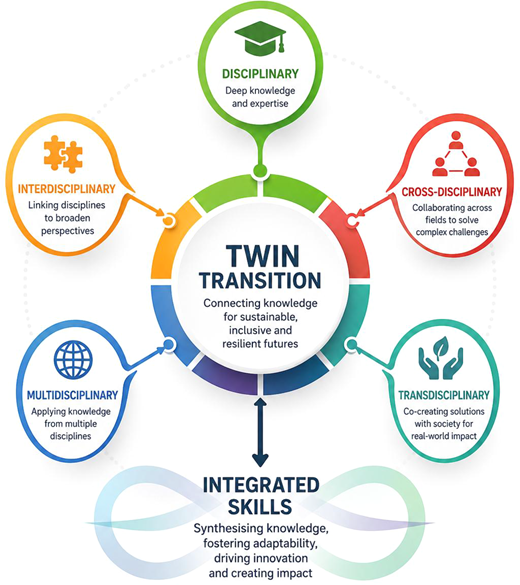
To support the technology- or so-called “knowledge-intensive” sector, entrepreneurs’ learning experiences should align with the high demands for knowledge, expertise and managerial capabilities. To address these challenges, entrepreneurs face numerous hurdles in successfully implementing training, starting with understanding the training needs of the management team and staff, given the expectations of the people being managed in a fast-evolving environment driven by socio-economic and environmental demands and pressures. A simple, cost-effective and flexible approach to meeting training needs and addressing an immediate gap can be implemented through digital learning and the development of additional skills aligned with the integrated skills dimension introduced by Peev et al. (2025), as illustrated in Figure 1. The integrated skills framework is built within a transdisciplinary context, referring to a coherent set of capabilities that enable learners to connect knowledge, methods and values, and empower decision-making processes that lead to action for change across disciplines. The integrated skills framework seeks to foster learning, knowledge-generation and transfer processes that help learners move beyond knowledge silos, as business complexities and the evolving nature of the economic and political systems require different skills to help professionals from different disciplines interact within a broader problem-solving context that requires different perspectives. The evolving reality is defined by high levels of uncertainty, rapid transformation driven by technological development and innovation, and a need to connect knowledge, methods and decision-making across disciplines. The reality of a global interconnected society requires the integration of cognitive, digital, social, ethical and reflective capabilities that support entrepreneurs as they guide their businesses through a very complex environment that requires agility and flexibility and that needs to be supported by innovative frameworks capable of addressing real-world challenges across disciplinary and societal boundaries (Ilcic, Fuentes and Lawler, 2025). Entrepreneurs’ working environments are defined by continuous change and rapid evolution, requiring engagement with real-world societal challenges such as climate change, sustainability, inequality, rising levels of conflict and the twin transition (i.e. green and digital) (Eelager et al., 2025). As such, training programmes and learning processes need to be organised to empower learners to “go across, between, and beyond subjects” so they can develop coherent capabilities within diverse working teams that enhance decision-making.
Depending on business objectives, entrepreneurs can adopt chatbots, AI or machine learning algorithms when they have sufficient technical skills, enabling them to address complex organisational problems and enhance team effectiveness and productivity (McNamara and Emn, 2020; Kearney and Lichtenstein, 2023). Chatbots, such as ChatGPT, allow managers to develop business strategies, assign them to teams and coordinate goal achievement simultaneously. Overall, digital learning offers a wide range of solutions for the entrepreneur’s immediate needs, helping them grow their general knowledge and managerial capabilities without disrupting overall engagement and dynamics (Cheng et al., 2014; Mishra et al., 2021). Building management experience and expanding managerial skills are essential pillars for a smooth transition from a start-up to a growth company (Liu et al., 2022; Kuratko and Morris, 2018). Entrepreneurs’ management development heavily relies on developing their expertise in teamwork skills, collaboration, participation, team learning and networking. Despite the strong emphasis in the literature, entrepreneurs do not always provide management training or encourage their teams. The role of managers as a critical element in the company and a change driver in sustainable development mechanisms would also be challenged by the growing rise of AI (Nazim et al., 2024; Kerimbayev et al., 2023). In this regard, it is worth considering how to build a theoretical framework that connects to the reality of business education and, in particular, supports the development of entrepreneurial skills in digital learning environments that foster managerial capabilities within SMEs. The framework uses knowledge explanation through organisational studies and management paradigms, identifying perspectives on effective team learning based on Constructivist learning theory as a theoretical framework for team construction, networking, social interaction, knowledge sharing and retention (Kuratko and Morris, 2018). Simultaneously, Humanism theory underpins the development of human potential across intellectual, creative and social domains, serving as a foundation for learning motivation and lifelong learning (Kearney and Lichtenstein, 2023).
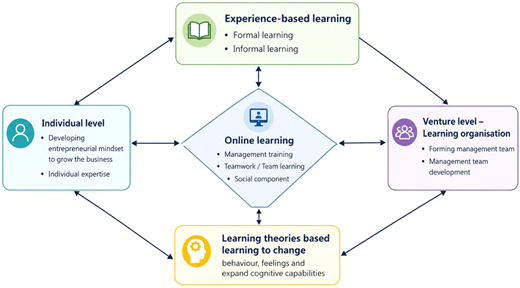
Recognising that SMEs operate in very complex and evolving environments where learning theories play a critical role, it is important to help develop, design and implement effective learning environments that nurture participants’ understanding and ability to collaborate, co-create and share knowledge (Kuratko and Morris, 2018). The experiential learning theory in entrepreneurial education helps determine the need to elaborate on entrepreneurial programs and instructional design (Rae, 2009). For management team development, the implementation of specific learning theories, such as behaviourism, cognitivism, humanism, constructivism and connectivism, is essential, as they provide an in-depth understanding of the learning process, helping to define and construct the focus of learning and outline educational strategies (Hägg and Gabrielson, 2020). Figure 2 presents management team development as an extension of individual skills development through teamwork within an online framework to support a smooth transition from newly created ventures to established companies (Liu et al., 2022). Management development supports executives’ cognitive abilities to change their behaviour and aligns online learning with learning approaches to foster successful company growth and build and grow management teams (Kuratko and Morris, 2018). Moreover, learning theories support knowledge circularity, representing a changing and evolving process of knowledge that is built on the construction, co-design, participation and sharing of dynamic and proactive processes and becomes a basis for critical entrepreneurial skills development (Nazim et al., 2024; Kerimbayev et al., 2023; Morales et al., 2022).
Technological literacy, in line with management capability, plays a crucial role in the digitalisation of successful companies and supports significant changes in organisational structures and decision-making processes (Fatima and Abu, 2019; Penco et al., 2022). The literature highlighted the role of digital learning in diversifying business approaches, the missing in-person communicative components and the broad interest in AI as a primary information source. Entrepreneurs face major challenges as they are required to engage with vast volumes of information to survive in an industry characterised by high levels of uncertainty and rapid global change (Kearney and Lichtenstein, 2023). Thus, the team is a critical information holder. While entrepreneurs recognise their main problem as attracting qualified staff, the literature instead states that direct access to finance is the major obstacle for SMEs on their developmental journey (OECD, 2022).
In comparison, global companies take a different approach to training and learning, treating it as a compulsory part of their development plans and a way to leverage human talent. Multinational corporations (MNCs) have dedicated platforms for uploading all required training courses, depending on the companies’ sectors, and divide them into compulsory courses and additional courses that employees can apply for and participate in if approved by the manager (Smith et al., 2022). These employees’ development plans represent a career progression track, and staff are encouraged to keep progressing and engaging in professional and interpersonal development. Therefore, it is fundamental to understand the distinction between management and leadership skills and how they are acquired. Management skills are seen as more practical competencies for working with staff, while leadership is already associated with empowerment, motivation and engagement (Nazim et al., 2024; Kerimbayev et al., 2023). However, knowledge sharing can be considered a weak point in global companies, as it raises numerous concerns about its rationale. In contrast, SMEs use online learning to identify and acquire the required skills promptly, highlighting a significant learning and training gap that distinguishes corporations from SMEs. Differences in learning and training strategies and pathways between start-ups and corporations affect how managers view this task for their companies. Recognising the criticality of continuous learning is important for start-ups, as it can help them achieve a competitive advantage, stable growth and mitigate the risks of knowledge loss. Therefore, it is relevant to identify online learning mechanisms for managers’ capability development, design a framework and provide practical recommendations based on insights from specific sectors and case studies. This paper provides evidence by drawing on the Irish tech sector as the case study.
Irish technology start-ups
SMEs significantly influence global and regional economies, providing a favourable business climate and strengthening economic competitiveness (Pereira et al., 2023). The technology sector has a paramount priority for the European Union, as SMEs can help reduce high dependence on American and Chinese technological giants (Vrontis et al., 2022; Pereira et al., 2023). Investing in SMEs development is significant to alleviate heavy reliance on international corporations, as these measures reduce the pressure of their possible exit from the domestic market, potential redirection or reallocation of their markets and give them greater freedom to use economic resources while enabling a more balanced and diversified business sector (Rokhmawati, 2021; Bohle and Regan, 2021).
Ireland was chosen as a case study because it offers an illustrative example of the current situation in the European technology sector, where SMEs account for 99.5% of all Irish businesses and create two-thirds of all employment (FAME, 2025). To illustrate the situation further, the study used the industry stock database FAME, developed by Moody’s (2025) and carefully analysed the businesses’ structures in accordance with the industry classification parameters. To undertake a search in FAME, the following parameters were included: location – Republic of Ireland; industry classification: 18 – Printing and reproduction of recorded media, 58 – Publishing activities, 60 – Programming and broadcasting activities, 61 – Telecommunications, 62 – Computer programming, consultancy and related activities, 63 – Information service activities, 95 – Repair of computers and personal and household goods. The search results were downloaded as an Excel file, allowing further filtering, cleaning and analysis procedures. According to FAME, the total number of active companies operating in Ireland in 2025 reached 295,661, of which 7,449 (2.5%) are in the technology sector. This sector shows a constant upward trend in absolute numbers, with 17% growth in new ventures over the last 5 years and 63% over the previous 10 years. The results also demonstrate a noticeable decrease in start-up launches, while the numbers of SMEs and multinationals are growing. This trend supports the growing need for the Irish economy to diversify to reduce its dependence on foreign direct investment from the USA, which has entered a period of turbulence and is identified as the epicentre of global economic and political instability (Rokhmawati, 2021; Bohle and Regan, 2021; Tollefson et al., 2025). By company size, 96% of all Irish technology companies are SMEs, accounting for 2% of turnover.
In comparison, non-SMEs account for 4% of absolute numbers and generate 98% of all turnovers, as illustrated in Table 1 below. At the same time, SMEs’ employment capacity is close to 4%, compared to 96% in corporations. Therefore, the Irish technology sector has demonstrated stable growth in new venture launches, turnover and employment creation since 2015.
Overall, according to FAME (2025), 1,107 companies were identified as start-ups, representing 15% of total companies, 9% of turnover and 12% of total employment capacity. Although turnover and employment indicators have increased over the past 10 years, start-ups have experienced an overall downward trend in new openings despite intensive government support and economic demand (Rokhmawati, 2021; Bohle and Regan, 2021). Consequently, start-ups occupy a vulnerable position, as this stage has the highest failure rate and is defined by significant limitations in access to finance (OECD, 2022).
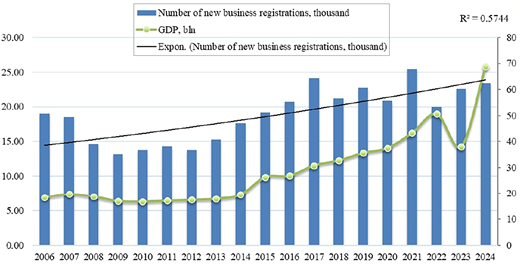
The research findings show an inconsistent trend in the opening of new ventures, as shown in Figure 3, beginning in 2014 (CRO, 2024; FAME, 2025), affected by disruptions in 2022 caused by the lagging effects of the 2020 Global Health Crisis due to prolonged restrictions, social distancing measures and economic hibernation that contributed to financial distress and revenue shortfall. The number of newly registered businesses in 2023 has not revealed the recovery trend for SMEs (Kren et al., 2021). In contrast, gross domestic product (GDP) has grown since 2014, with a significant decline in 2022 and a relatively rapid recovery thereafter. The significant GDP decline in 2022 can be explained by the potential impact of the Russian invasion of Ukraine, which raised consumer prices, increased pressure on energy markets and heightened economic and political uncertainty across Europe (Kren et al., 2021). At the same time, private companies’ unwillingness to disclose necessary data constrained access to SMEs’ financial results, offering a better understanding of the sector’s financial limitations. Furthermore, recent research underscores a significant limitation affecting SMEs’ access to funding, which is a substantial constraint on attracting the required resources and poses substantial hurdles to their growth capacity (Liu and Suzuki, 2024).
Learning theories as the foundation of executives’ competencies
In start-ups, a management team usually equals an entrepreneurial team, which requires a high level of expertise and professional experience. In small companies, review meetings can be part of management development. To run review meetings successfully, business owners need to complete CEO training and develop their teamwork skills, upskill their employees and leverage their expertise as part of the company’s learning strategy (Kearney and Lichtenstein, 2023). According to the literature, entrepreneurial education actively uses components of experience-based learning, with embedded practice-oriented tasks. However, there is a significant disconnect in linking to core learning theories: humanism, connectivism, cognitivism, constructivism and their diverse approaches (Hägg and Gabrielson, 2020). Moreover, despite learning theories supporting knowledge circularity and providing a basis for the development of critical entrepreneurial skills, they do not seem to be recognised by businesses, requiring a reconceptualisation of business education and the development of research with practical implications that contributes to frameworks that enhance business studies pedagogy. In this regard, learning theories can help develop knowledge and competencies in systems thinking and problem-solving, change behaviour to help enterprises become more effective and raise sustainability awareness (Kuratko and Morris, 2018). If a team collaborates effectively to harness its members’ diverse backgrounds and expertise, company performance improves significantly (Hägg and Gabrielson, 2020). Because teams rely on direct interaction among individuals with complementary skill sets, developing integrated capabilities is crucial for cross-disciplinary communication and decision-making (Peev et al., 2025). In addition, the ability to facilitate collaboration within teams will mitigate the risk of the company’s failure in its early stages. Further aspects to be considered relate to the value added by teamwork to the company’s performance and through the knowledge transfer process (Peev et al., 2025).
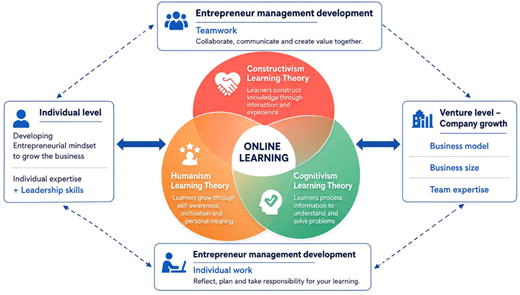
Despite numerous research studies on team effectiveness in general, a comprehensive analysis of management team effectiveness remains limited (Overfield, 2016). Management teams are effective when they achieve satisfactory results in task performance, individual growth and team viability. Thus, to be effective, management teams need to learn, as researchers have found that the ability to learn may be essential for companies to compete in an unpredictable, unstable environment. If the leader demonstrates a readiness to invest time in learning and development, the whole team will be encouraged to build a culture of learning in the company (Hägg and Gabrielson, 2020). Furthermore, business owners face significant demand for knowledge, expertise and skills to lead and guide the company to success, particularly people-management skills to retain their core staff more effectively and mitigate the risk of company failure (Nazim et al., 2024; Kerimbayev et al., 2023). The framework for acquiring people’s performance skills includes a combination of teamwork and individual work, using online learning to build cognitive constructs and acquire knowledge, drawing on cognitive learning theory and constructing meaning in alignment with constructivist theory (Kuratko and Morris, 2018). However, the techniques and practical, experience-based learning offered are unable to address the lag in the human-centred application of Humanism theory, as shown in Figure 4, which presents an innovative framework that seeks to contribute to business education and pedagogical approaches with a more practical foundation.
Therefore, to support businesses’ growth goals, it is critical to invest in building the management team. Entrepreneurs will need to expand their knowledge of hiring, onboarding and retention processes, which emerge as a critical management skill set (Durst and Edwardson, 2012; Massaro et al., 2016). This novel framework views management team development as the expansion of individual entrepreneurial skills, combined with teamwork within an online social framework, which supports a smooth transition from newly created ventures to developing companies (Liu et al., 2022; Durst and Edwardson, 2012). Management development involves developing executives’ cognitive abilities, such as systems and critical thinking, self-awareness, problem-solving and leadership, through an integrated skills-working environment that changes their behaviour and aligns online learning approaches that facilitate successful company growth (Kuratko and Morris, 2018). The importance of the framework is supported by an understanding of knowledge circularity, grounded in construction, co-design, participation and dynamic sharing, which serves as a basis for developing critical entrepreneurial skills (Nazim et al., 2024; Kerimbayev et al., 2023; Morales et al., 2022). Executives move towards understanding what needs to be done for management team development and help acquire and build knowledge in systems thinking and problem-solving competencies, and change behaviour to become more effective (Kuratko and Morris, 2018).
Another aspect to be considered in the context of the CEO’s management development is professional training, knowledge of working with the team and the expansion of one’s leadership skills, moving from individual to team expertise. The transferability of knowledge and skills becomes critical, as tacit knowledge needs to be integrated into business structures to mitigate adverse impacts from a mobile workforce. In a highly competitive labour market, failing to incorporate tacit knowledge into processes can result in significant operational losses and a negative impact on business resilience. In this regard, online learning has become an essential tool for achieving these goals, as it can help mitigate the risk of failing to formalise the transfer of this elusive knowledge. Businesses face major challenges when experienced staff leave, as tacit knowledge is challenging to replicate and can erode an organisation’s unique market position and innovation capacity. The reviewed literature offers insights suggesting that executives recognise that only a few core people in the company possess all essential knowledge, and that they are making efforts to retain these people (Durst and Edwardson, 2012; Massaro et al., 2016).
The challenges associated with human talent development and retention are compounded by economic and financial uncertainty, which are critical aspects, as liquidity concerns and growing business uncertainty are driven by an unstable global economic and political context, manifested in higher levels of geopolitical risk and trade conflicts that permeate the financial system through tightening financial conditions. The literature emphasises the role of investments in a long-term company perspective and the potential constraints for business owners without adequate funding to balance their operational activities and developmental needs (Nazim et al., 2024; Kerimbayev et al., 2023). Although companies’ liquidity ratios fluctuate around zero and require significant funds for research due to the “knowledge intensity”, CEOs rarely raise this point in discussions, which is even more acute in the context of SMEs and start-ups. Investments that ignore continuous investment in human capital lead to an underestimation of the extent to which AI impacts productivity and drives further gains, affecting GDP. In this regard, it is fundamental to consider that the US and Chinese economies are heavily investing in hardware, software and research and development as new AI tools emerge, posing significant demands on the labour market that must shift rapidly to meet the needs of the industrial sector and requiring a reconsideration from European countries regarding their business investment strategies (Rokhmawati, 2021; Bohle and Regan, 2021; Tollefson et al., 2025).
Theoretical contributions
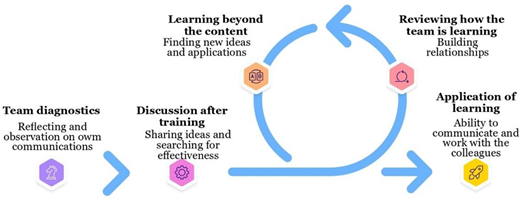
Online learning became an obvious choice for many companies first due to COVID-19 pandemic restrictions in 2020, and then for its simplicity, cost-effectiveness and flexibility in meeting business objectives. However, depending on the company’s structure and size, online learning may be interpreted differently. Generally, learning online is understood as online courses to develop skills, platforms for managing the overall learning process or degree programmes as part of formal education (McNamara and Quinn, 2020; Kearney and Lichtenstein, 2023). However, the online learning environment integrates internal and external knowledge management, aiming to convert individual knowledge and skills into the company’s internal expertise and to build a learning organisation. We argue that online learning offers a broader perspective than responding to the entrepreneur’s immediate knowledge-gap requests (Cheng et al., 2014; Mishra et al., 2021). Built on the theoretical framework presented in Figure 2, this study offers insights into online learning through the lens of individual mindset and company growth, enabling the creation of a novel conceptual framework of the mechanisms required to develop entrepreneurs’ knowledge management capability as a skill. Having analysed the representation and trends among start-ups and established companies in the Irish technology sector for the past 10 years and identified the concerning downward trend in launching new businesses, additional efforts are needed to support potential and existing executives. Emphasising the requirement of internal company knowledge retention, business owners require supplemental mechanisms for developing their own managerial competencies. Therefore, we propose an innovative framework that explains how this improvement in competencies can be achieved. Figure 5 illustrates the knowledge acquisition process for small-company teams, from knowledge acquisition to knowledge application. Online instruments allow managers to diagnose and observe team activities during and after the learning process, extending these observations through post-training discussions to share ideas and assess them in subsequent reflections. These activities do not need to occur sequentially, given the cyclical nature of learning (Cheng et al., 2014); they can also occur simultaneously. Through these circular processes, entrepreneurs can observe how the team is learning together, build relationships and encourage idea generation, thereby going beyond the learning content and learning to reflect on business tasks. By treating these activities as an ongoing cycle, every team member identifies relevant knowledge applications, keeping communication at the centre of the process. This learning framework, applied as an executive management capability in teamwork and knowledge management, needs to be embedded in an online learning ecosystem, as a core between internal and external knowledge management. The framework presents knowledge management competence as a whole rather than a set of distinct skills, meaning that a manager must be able to diagnose a knowledge gap, select the appropriate learning activity, facilitate discussion and reflection within the team and identify potential applications of newly acquired knowledge.
The ongoing digitalisation of companies significantly alters organisational structures and decision-making processes, placing greater demands on teams’ competencies (Fatima and Abu, 2019; Penco et al., 2022). In turn, online learning provides critical mechanisms to build online learning environments that develop managerial capability in knowledge management in SMEs, diversify business processes, ensure stable communication between team members and apply complex software, e.g. AI and chatbots, to stay competitive and effective. Knowledge management capabilities within the company will strengthen entrepreneurs’ leadership role and help engage and motivate staff (Penco et al., 2022). Simultaneously, building and implementing knowledge-sharing practices requires a high level of expertise and experience from the company’s executives to overcome numerous staff concerns and the resistance to knowledge sharing. As such, SMEs executives have to reassess their role in working with knowledge and overcome various biases more quickly than corporate executives, due to their flexible organisational structures and less bureaucracy, based on the proposed online learning mechanism framework to enhance managerial competencies.
Practical implications
Given the importance of knowledge management practices and their application to start-ups, Table 2 shows how knowledge management concepts can be aligned with learning theories, which is crucial because academics and business leaders use different languages, have different priorities and goals, which leads to potential misunderstanding regarding the importance of knowledge and its development through business training programmes. In this regard, it becomes critical to understand how management capability development can be achieved through closely linked decisions and a knowledge-based approach, and it echoes human capital and leadership development through knowledge application (Durst and Edwardson, 2012; Massaro et al., 2016). Knowledge management, as a category, refers to tacit knowledge sharing and communities of practice, which are extremely important in small companies to reduce knowledge loss, foster team learning and nurture trusted communication (Asher and Popper, 2021). It is also vital to consider that organisational structure, culture and strategy within companies must include an organisational learning culture to support strategic knowledge sharing and digital transformation (OECD, 2024). To support knowledge retention and continuous skills upgrading, small companies can use digital learning platforms to exchange and expand knowledge and build online learning ecosystems to facilitate these practices.
The learning activities in Table 2 were proposed through the lens of a specific learning theory and its relevance to online environments. Depending on the learning outcome, different activities can be implemented within an organisation. Using them as a jigsaw, executives have a practical tool for changing employees’ behaviour, supporting knowledge construction or categorisation, nurturing collaboration or fostering network building (Kuratko and Morris, 2018). Among some practical recommendations, we offer the following points to the tech start-up executive:
Implement regular collaborative and peer learning: peer-learning sessions, team problem-solving workshops and knowledge-sharing meetings. These activities enforce knowledge exchange, absorption and retention within the company and strengthen networking and collaboration (Kuratko and Morris, 2018).
Create and nurture an open knowledge-sharing environment. Managers can incorporate digital platforms such as shared knowledge bases for internal discussions, collaborative workspaces and idea-generation spaces. These activities support continuous knowledge construction and reduce the risk of knowledge loss (Asher and Popper, 2021).
Align learning activities with strategic business decision-making processes. Executives must select learning activities based on specific organisational challenges to ensure employee learning is directly connected to business objectives and enables the start-up to develop stronger knowledge-management capabilities (Durst and Edwardson, 2012).
Foster a culture of knowledge exchange, transparency and transferability to enable tacit knowledge to become explicit by fostering collaboration, participation, open dialogue and critical thinking (Morales et al., 2026).
Create transdisciplinary working teams for problem-solving and decision-making to enable the development of integrated skills (Peev et al., 2025).
Thus, managers can apply the foundations of learning theories in practice by selecting learning activities as outlined in Table 2 based on the business learning needs. As a result, knowledge management capability will be developed by facilitating knowledge-sharing behaviour through open communication to strengthen knowledge-based decision-making. The manager facilitates this process through trust-building, communication and teamwork, and guides how knowledge should be interpreted and shared. An online learning ecosystem offers technology-enhanced learning to support organisational knowledge retention and continuous skill upgrading. This includes specific learning activities that help managers gain structured knowledge through gamification, reflection and collaborative elements, providing each team member with a personalised, self-directed learning path.
Conclusion
Digital learning represents an advanced approach to expanding individual executive expertise to a venture level, effective teamwork, team expertise and team training. With the help of formal and informal learning, online learning can become an essential component of a company’s lifelong learning strategy (Penco et al., 2022). Entrepreneurs recognise the value of digital learning for its ability to rapidly and effectively achieve various learning goals. Still, they do not recognise academic theoretical language, creating a detachment between them. Online learning offers a wide range of solutions for the entrepreneur’s immediate needs, helping them grow their overall knowledge without overextending themselves.
In addition, online learning provides various opportunities to build teamwork through online meetings or fully remote interactions, to develop management skills through people and project management and to enable knowledge exchange and transfer in working environments. Online learning is a powerful tool that offers a range of possibilities and can contribute to opening new horizons for teamwork, collaboration and managing remote teams without the need for continuous physical meetings. Generally, online learning mechanisms can support the transfer of tacit knowledge into explicit knowledge by using digital platforms to document experiences, capture “know-how” and register knowledge that supports organisational development and mitigates the risk associated with staff turnover.
For years, companies have measured effectiveness through labour productivity, defined as the growth in domestic product (GDP) per hour worked, to quantify the effectiveness of human capital or as the ratio of output to input (OECD, 2024). At the firm’s micro level, productivity represents a summarised measure of an individual’s capacity to produce services or products, driven by the company’s financial goals (OECD, 2024). However, this method underwent significant transformation with the rise of AI, chatbots and machine learning, making productivity measurement relatively complex (Zafar, 2024; Sun and Song, 2025). Additional challenges in working with productivity metrics and systems can arise from the knowledge intensity involved in a company’s performance, size and managers’ skills and capabilities. Moreover, ongoing debates about the necessary skills in the current transition from Industry 4.0 to Industry 5.0 highlight the importance of soft or transversal skills, and as argued in this paper a shift towards integrated skills, including the ability to engage in continuous learning, a human-centred approach to business and a minimum technical background (Zafar, 2024; Peev et al., 2025).
This research contributes to the academic literature by proposing a practical learning framework that supports small business managers’ development of managerial capability by aligning digital interventions with team-building and learning skills, thereby enhancing SME resilience, performance and sustainable growth. Our proposed innovative framework presents a novel contribution as an approach to business education underpinned by pedagogical approaches. The framework’s importance is based on knowledge circularity, construction, integrated skills, co-design, participation and dynamic sharing within start-ups to mitigate a company’s failure risk and potential knowledge loss (Nazim et al., 2024; Kerimbayev et al., 2023; Morales et al., 2022). Despite extensive governmental support for venture creation, the number of start-ups has decreased, as evidenced by a database search (FAME, 2025). In scenarios where entrepreneurs prefer not to start a business and join a corporation, team expertise no longer circulates within the SME; instead, it dissolves within corporations, as MNCs require such narrow expertise and treat online learning as a tool rather than an ecosystem. This situation poses a complex challenge for governments in how to curb the spread of knowledge and encourage entrepreneurs to start businesses (McNamara and Quinn, 2020; Kearney and Lichtenstein, 2023).
Despite having an advantage in the speed of reaction to ongoing changes, decentralised decision-making structures and developed networks, SMEs experience difficulties caused by the necessity to compete with corporations in terms of constant technological advancements and limited access to finance (Kearney and Lichtenstein, 2023). These challenges can be addressed by implementing educational support for managers to build a knowledge management framework, equipping executives to share and retain core knowledge within the company. Another point for policymakers’ consideration is access to online knowledge databases created from collective knowledge contributions from various business representatives. Such an approach will require governments to offer further support, as companies may resist knowledge sharing. The proposed knowledge management framework may require reassessing existing managerial programmes and developing a new approach to equip executives to share and retain core knowledge within the company. Consequently, future research is needed on the design, implementation and long-term evaluation of potential results, with further consideration of the development of a pedagogical framework for business education.
The authors would like to sincerely thank the Editor and the reviewers for their invaluable time and thoughtful, constructive comments on this manuscript, which helped them improve the clarity, rigour, and presentation of the work.