One of the severe challenges that the mankind has ever faced is climate change. The mitigation climate change effects necessitate a holistic approach that ensures sustainable future for coming generations. Leveraging psychological green empowerment as a significant component of achieving environmental sustainability and using ability-motivation-opportunity (AMO) theory as a lens, this study investigates the influence of environment-specific servant leadership (ESSL) on employees’ in-role and extra-role green work behaviours through mediation of psychological green empowerment and moderation of psychological green climate.
To test hypothesized relationships, the data were collected from 295 leader–follower dyads working in different manufacturing and services companies. The collected data were analysed through partial least square structural equation modelling technique.
Our findings revealed that ESSL significantly influences employee in-role and extra-role green work behaviours. We also discovered that psychological empowerment acts as a mediator between the relationships and significantly influences employee in-role and extra-role green work behaviours. Likewise, the moderating effects of psychological green climate between ESSL and psychological empowerment were also found statistically significant.
Using AMO theory as lens, our findings suggest that by adopting ESSL practices, empowering individuals and fostering a psychological green climate, organizations in lower-middle-income countries can create an environment where environmental sustainability is actively pursued.
1. Introduction
Environmental degradation is one of the most severe challenges mankind has ever faced (Umrani et al., 2022; Channa et al., 2021), affecting both wealthy and impoverished nations. Lower-middle income countries such as Pakistan, with limited resources and high poverty rates, are particularly vulnerable to the impacts of climate change (Zia et al., 2023). Low-income countries are particularly vulnerable to climate change impacts due to their limited capacity to prepare for and recover from climate-related disasters. Pakistan for instance, a country highly vulnerable to climate change, has historically been affected by floods, droughts and other natural disasters that have significantly impacted its socio-economic dynamics (Anser et al., 2023). These climatic disasters, coupled with global warming, are projected to exacerbate existing socio-economic disparities and widen the gap between the wealthy and low-income populations worldwide. This raises profound ethical questions regarding who should take the initiative in mitigating climate change and safeguarding the most vulnerable individuals in society. Therefore, comprehending the effects of climate change necessitates a holistic approach that ensures sustainable future for coming generations.
To tackle environmental challenges and minimize the global environmental impact of business practices, environmentalists and sustainability advocates are actively campaigning against business conglomerates for their harmful environmental practices and asking for environmental sustainability (Iliopoulou et al., 2024; Rattle et al., 2024; Figueroa, 2022). From ethical and sustainability point of view, those responsible for carbon emissions and climate change should bear greater responsibility for addressing its consequences (Anser et al., 2023). Therefore, the corporate sector, which has historically been the largest contributor to greenhouse gas emissions, should actively participate and contribute their efforts to mitigate environmental effects of their business practices and support nations in adapting to climate change and promoting environmental sustainability.
Consequently, corporate organizations are now taking proactive steps and allocating resources to promote environmentally sustainable business practices and improve their environmental performance (Dumont et al., 2017; Channa et al., 2021). To some extent the success of these environmental initiatives hinges upon organizational leadership (Luu, 2019a). However, the critical review of prior literature in environmental management domain suggests that most of the previous studies conducted in this area remained employee and consumer inclined (Perano et al., 2025; Umrani et al., 2020, 2022; Channa et al., 2022), and there is severe paucity in environmental management literature regarding how leadership influences the behaviour, motives and response of employees toward environmental management.
Academic literature has particularly emphasized the potential of organizational leaders to influence their followers’ green behaviours and attitudes by implementing environmental policies and green practices. Particularly, in low-middle income economies context, researchers have emphasized that ecological management necessitates leadership that serves as a role model by showcasing pro-environmental behaviours in their actions (Zafar et al., 2025; Siddiquei et al., 2021). Specifically, we contend that organizational leaders in developing economies may influence their followers’ environmental behaviours by demonstrating genuine concerns for the ecological issues. However, academic literature has previously overlooked the significance of servant leadership dimensions in fostering employee green performance to pursue environmental sustainability within the context of corporations in developing economies (Zafar et al., 2025; Afridi et al., 2024). Despite previous studies offering empirical evidence of servant leadership’s pro-environmental outcomes (Peng et al., 2021; Mi et al., 2019), the significance of servant leadership as a crucial resource in generating green outcomes in emerging market economies has been neglected. Integrating environmental concerns with servant leadership, Luu (2019a) labelled it as “environment-specific servant leadership”. Environment-specific servant leadership (ESSL) emphasizes the preservation of the natural environment through socially responsible environmental behaviours (Luu, 2019b). Given ESSL’s people-centric approach, we believe it could play a pivotal role in achieving employee green work behaviours.
In addition, employees’ discretion in green work behaviours can be categorized into in-role behaviours, which are part of formal job duties, and extra-role behaviours, which are beyond formal job responsibilities (Williams and Anderson, 1991). According to Norton et al. (2014), the sustainability policies and practices of an organization influence in-role and extra-role green behaviours differently. However, to the best of the authors’ knowledge, very limited research has been conducted to explore the extent of the influence of ESSL practices on green work behaviours. Specifically, it remains unclear whether the effects of ESSL are stronger on in-role green work behaviours or extra-role green work behaviours. To address this gap, we embarked on an investigation to examine the intensity of ESSL’s influence on employees’ in-role and extra-role green work behaviours to determine whether the effects of ESSL are more pronounced on employees’ in-role green work behaviours or extra-role green work behaviours. Furthermore, delving into the underlying social and psychological mechanisms through which ESSL influences employee green behaviours will contribute significantly to the existing academic literature (Hou et al., 2023; Afridi et al., 2024).
Thus, realizing the importance of this overlooked research phenomenon, we posit following research questions to structure our inquiry:
What are the antecedents of employee in-role and extra-role green work behaviours?
What are the underlying psychological mechanisms through which ESSL impacts employee in-role and extra-role green work behaviours?
Does the impact of ESSL differ based on the nature of employees’ green work behaviours (i.e. in-role and extra-role)?
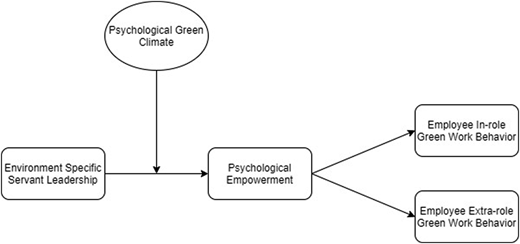
The ability-motivation-opportunity (AMO) theory (Appelbaum, 2000) was utilized to investigate our research questions. AMO theory is extensively applied in management research to emphasize the significance of organizational practices and systems on employee behaviours (Doshi and Nigam, 2023). According to AMO theory, ability, motivation and opportunity are crucial in achieving environmental objectives (Yu et al., 2020). Consequently, AMO theory facilitates the framing of strategic and tactical green initiatives and practices in corporations to enhance the value derived from ESSL. Additionally, AMO theory aligns with other theoretical frameworks, such as environmental sustainability and its components, which are used to shape employees’ pro-environmental behaviours (psychological green climate and empowerment) and assess their impact on the environmental sustainability. By collecting data from leader–follower dyads working in different manufacturing and services companies located in Pakistan, we confirmed that ESSL nurtures employees’ in-role and extra-role green work behaviours. Our results also support the mediating effects of psychological empowerment in relationship between ESSL and employee in-role and extra-role green work behaviours. Similarly, we found support for moderating effects of psychological green climate in relationship between ESSL and psychological empowerment.
The theoretical model of our study is presented in Figure 1.
2. Literature review and hypothesis development
2.1 Theoretical underpinnings
The corporate sector can play a significant role in promoting environmental sustainability by adopting practices that ensure fair treatment and meaningful involvement of people in environmental decision-making. Corporations can develop and enforce policies that prioritize environmental sustainability. This includes ensuring that their operations do not disproportionately impact communities while actively mitigating any negative environmental effects from business practices (Nadeem, 2021). It is also their ethical and environmental responsibility to adopt sustainable business practices that can help reduce environmental harm and promote equity. Therefore, we used theoretical lens of AMO theory to understand how organizations can contribute to environmental sustainability by fostering green behaviours of employee using ESSL practices.
AMO theory focuses on empowering individuals and communities to address environmental inequalities (Appelbaum, 2000). The theory stresses on enhancing individual skills and knowledge to address environmental degradation through provision of education and training on the need of sustainable practices and environmental issues. By building these abilities, people are better equipped to understand and tackle environmental degradation, advocate for their rights and implement effective solutions. Similarly, provision of incentives, recognition and creating a sense of urgency about environmental issues may erose individual motivation to engage in behaviours that promote environmental sustainability, such as advocating for policy changes and supporting sustainable practices. Likewise, ensuring that individuals have the resources such as providing access to funding, participation in policymaking will result into creation of opportunities so that people can actively contribute to environmental sustainability efforts and ensure that their needs and perspectives are considered (Sibian and Ispas, 2021). By integrating these elements, AMO theory helps to create a framework where individuals are empowered to pursue environmental sustainability. This approach ensures that people have the ability, motivation and opportunity to contribute to a fair and sustainable environment.
AMO theory further suggests that ESSL is crucial to nurture a psychological climate where organizational members are empowered to engage in green work behaviours to address environmental degradation. ESSL enhances the skills and knowledge of their followers, enhances their environmental abilities and enables them to understand and tackle environmental sustainability issues. Inspire and motivate their followers to engage in green behaviours and advocate for environmental sustainability. Provide their followers with opportunities to participate in environmental decision-making processes and initiatives. By integrating these elements, environment-specific servant leadership can effectively address environmental sustainability, ensuring that individuals have the ability, motivation and opportunity to contribute to a fair and sustainable environment (Hou et al., 2023; Zafar et al., 2022).
2.2 ESSL and employee green work behaviours
In recent times, scholars have broadened the scope of servant leadership to encompass the dimension of environmental sustainability. This has led to the introduction of ESSL (Luu, 2019a), which is a manifestation of servant leadership where the primary focus of leadership behaviours is on nurturing green work practices (Tuan, 2019). ESSL is conceptually and motivationally distinct from other green leadership styles such as green transformational leadership (GTL) and green authentic leadership (GAL). While all three promote pro-environmental outcomes, their core drivers differ significantly. ESSL is fundamentally other-centric and stewardship-oriented; its primary motive is a moral obligation to serve followers, the community and future generations, thereby fostering a culture of environmental care as an act of service and ethical responsibility (Liden et al., 2008). In contrast, GTL is primarily vision and change oriented. It inspires and motivates followers through a compelling green vision, intellectual stimulation to find innovative eco-solutions and individualized consideration for their environmental development, often leveraging charisma to drive strategic change (Robertson and Barling, 2013). Similarly, GAL is self-centric and values-based, rooted in the leader’s internalized moral perspective and self-awareness. Their environmental actions are an authentic expression of deeply held personal values, promoting transparency and balanced processing of ecological information with followers (Hannah et al., 2011).
Environment-specific servant leaders personally feel responsible for serving all environmental stakeholders and their followers, placing trust in their ability to prioritize environmental protection and sustainability (Rafiq, 2025; Afsar et al., 2018). Research conducted by Reyes-Rodríguez et al. (2016) revealed that employees develop a sense of belonging to an organization through their leader, as they perceive the leader as a representative figure of the organization. Furthermore, environment-specific servant leaders who respect and appreciate employees’ contributions to green initiatives can further boost their self-esteem, fostering a sense of environmental responsibility within the organization (Zafar et al., 2025; Afsar et al., 2018). ESSL emphasizes provision of direction, develop and empower employees to become environmentally responsible citizens and exhibit stewardship towards employees’ green contributions (Luu, 2019b). Having these attributes, ESSL can be a source of providing green resources to employees (Luu, 2019a). The same is reiterated by AMO theory suggesting that ESSL can serve their followers by equipping them with the knowledge, skills and abilities required for environmental activities (Luu, 2019b). They can also extend their support to followers to develop and engage in green initiatives and foster their pride to contribute to eco-friendly activities (Luu, 2019a). As discussed earlier, environment-specific servant leaders provide green resources to employees, for instance, green knowledge, values and skills; therefore, through the availability of these green resources, employees generate positive perceptions about green goals. By getting green resources from environment-specific servant leaders, employees are likely to take a proactive strategy to acquire more resources from others, witness resource gains, share resources with other employees and proactively engage in performing green behaviours within and beyond their formal job responsibilities (Luu, 2019b).
Academicians have observed a trickle-down impact of servant leadership on its followers. Servant leaders inspire followers to practice citizenship behaviours and themselves become servant leaders in the future (Ling et al., 2018). By observing ESSL, followers also acquire similar pro-environmental values (Van Dierendonck, 2011). Moreover, environment-specific servant leaders are often considered role models within their organizations. ESSL develops followers to lead as environmental agents, evidenced by pro-active environmental behaviour (Afsar et al., 2018). Beyond the environment, servant leaders focus on grooming followers by assisting them in achieving environmental goals and acquiring new environmental knowledge and skills (Luu, 2019b). Consistent with these assertions, cited literature and theoretical notions of AMO theory, we believe that environment-specific servant leaders are role models and provide necessary green resources and knowledge to their followers. Resultantly, followers get inspiration from environment-specific servant leaders and acquire pro-environmental values to protect and preserve the natural environment through their green work behaviours. Hence, we propose the following hypotheses:
ESSL is positively related to employees’ in-role green work behaviours.
ESSL is positively related to employees’ extra-role green work behaviours.
2.3 Mediation of psychological green empowerment
Psychological green empowerment refers to the process of enabling individuals to feel capable and motivated to engage in pro-environmental behaviours through psychological means (Islam et al., 2022; Amrutha and Geetha, 2024). Research conducted by Yang et al. (2019) revealed that servant leaders possess the potential to boost employees’ motivation. Consequently, environment-specific servant leaders can significantly influence employees’ psychological empowerment by enhancing their capabilities and fostering trust through selfless service. Servant leaders enable employees to engage in meaningful work (Newman et al., 2017). They actively encourage and support their followers in achieving organizational goals by acquiring new skills and abilities. This fosters a sense of competence and accomplishment among followers, leading to successful performance of creative tasks (Newman et al., 2017). ESSL enables employees to feel empowered to work independently with considerable autonomy and freedom at work. This autonomy enhances self-determination among employees (Newman et al., 2017; Van Dierendonck, 2011). Furthermore, servant leaders recognize the impact of their followers’ contributions and actively encourage their participation in decision-making processes (Newman et al., 2017). Based on these findings, we firmly believe that servant leadership has a profound influence on followers’ psychological empowerment.
Academic literature further suggests that psychological empowerment can be used to predict important employee-level outcomes, such as work behaviours (Ugwu et al., 2014). Research further indicates that psychological green empowerment enhances employees’ awareness of green behaviour, leading to refined and shaped green attitudes towards work and personal life (Saeed et al., 2019). At its core, employee empowerment relates to employees’ inclination to engage in green behaviours (Tariq et al., 2016). Literature has reported positive effects of psychological green empowerment and suggests that it can enhance green performance and work behaviours. Employee green empowerment involves empowering employees through the development, implementation and maintenance of activities that encourage them to adopt green practices with the organization (Amrutha and Geetha, 2024). Therefore, organizations should empower their employees to take responsibility for the environment and its sustainability, as empowered employees are more motivated to do so (Zaki and Norazman, 2019). Empowerment encompasses bridging trust, decision-making and inspiration goals between employees and the organization (Meyerson and Dewettinck, 2012). According to Ying et al. (2020), employee empowerment led to green behaviours aimed at achieving organizational environmental objectives. Providing employees with opportunities to engage in environmental management activities empowers them to control pollution and improve the natural environment, fostering a sense of empowerment to perform both in-role and extra-role green work behaviours. Furthermore, psychologically empowered employees possess the motivation and commitment to pursue both in-role and extra-role organizational tasks, leading to excellent environmental performance (Yusliza et al., 2017).
Therefore, in line with these assertions and cited literature, the authors asserted that ESSL psychologically empowers employees to engage themselves in extra-role and in-role green work behaviours. Thus, based on these arguments, it is hypothesized that
Psychological green empowerment mediates the relationship between ESSL and employees’ in-role green work behaviours.
Psychological green empowerment mediates the relationship between ESSL and employees’ extra-role green work behaviours.
2.4 Moderation of psychological green climate
Psychological green climate has the tendency to shape specific behaviours that enhance employee green performance (Tuan, 2020). In presence of a strong psychological green climate, the positive impact of organization’s environmental sustainability initiatives such as ESSL on employee work behaviours is significantly enhanced (Naz et al., 2023). This is because employees feel more supported and motivated to emulate their leaders’ pro-environmental actions. A robust psychological green climate creates an environment where employees feel their green initiatives are valued and acknowledged (Tuan, 2020) and thus significantly enhance their motivation to engage in green behaviours and feel psychologically empower to make environmental decisions. This supportive atmosphere strengthens the connection between ESSL and employee psychological empowerment to engage in environmental initiatives, resulting in more consistent and widespread adoption of green behaviours. In a workplace with a strong psychological green climate, green norms and values are reinforced. This alignment between leadership and organizational climate ensures that employees are more empowered to adopt and sustain green behaviours (Naz et al., 2023). Specifically, ESSL provides its followers with the resources and support necessary for pro-environmental initiatives, while making them feel psychologically empowered in performing green behaviours to prevent environmental degradation (Tuan, 2021). Furthermore, the resources provided by ESSL and employees’ perception of their organization’s eco-friendly policies, practices and processes together empower employees to engage in green initiatives. Thus, consistent with these assertions and citied studies, we believe that the impact of ESSL on psychological green empowerment will be more relevant in the presence of a green climate where individuals perceive their organization’s eco-friendly policies, practices and processes that are contributing to environmental sustainability. Therefore, we propose the following hypothesis:
Psychological green climate moderates the relationship between ESSL and psychological green empowerment.
3. Methodology
3.1 Participants and procedure
In order to minimize the common method bias, we collected multi-level data from leader–follower dyads working in telecom, manufacturing, software, hospitality and retail organizations located in Karachi, Hyderabad, Sukkur and Rahimyar Khan cities of Pakistan. A convenience sampling method was used to recruit participants. The leader–follower dyads were composed of middle and senior managers serving as heads of different departments in their respective organizations and their immediate subordinates. The key criteria for inclusion were that participants had to be full-time employees, and the dyads must have had a working relationship for at least six months to ensure a well-established reporting dynamic.
Following guidelines suggested in previous academic studies, we collected survey data using convenience sampling technique. Two separate survey questionnaires were designed to collect data from supervisors and their subordinates. In each survey, respondents were asked to rank a series of questions on a Likert scale ranging from 1 = strongly disagree to 5 = strongly agree. The survey designed for supervisors comprised items related to participation of their subordinates in extra-role and in-role green work behaviours, whereas the questionnaire designed for employees comprised items related to ESSL, psychological green climate and psychological empowerment. The confidentiality of personal information was ensured, and respondents were told that their identity or personal data will not be revealed at any level of the study. To ensure confidentiality and anonymity of research participants, we assigned a unique code to each questionnaire to match the respective questionnaire with relevant leader–follower dyad. Initially, we distributed 350 leader–follower matched surveys and received back 317 completed surveys, out of which 22 responses were discarded due to incomplete data. Thus, we get a final sample of n = 295 and a response rate of 84%. The detailed profile of respondents is presented in Table 1.
3.2 Measures
We adapted validated scales used in previous studies and worded them painstakingly to fit with the context of the study. ESSL was measured by adapting 12 items from Luu (2019a). Similarly, psychological green empowerment was assessed by adapting 12 items from Pieterse et al. (2010). Likewise, psychological green climate was measured through in-role and extra-role green work behaviours, using 5 and 6 items from Dumont et al. (2017), respectively. The detailed survey measures and items are shown in Appendix.
3.3 Statistical procedures
By using Smart PLS version 4, the collected data were analysed through partial least square structural equation modelling (PLS-SEM) technique. This study investigates whether ESSL affects employees’ in-role and extra-role green work behaviours. Therefore, the focus of this study is on prediction. As a result, PLS-SEM determined to be appropriate analytical tool as previous studies recommended PLS-SEM as an effective method to predict relationships (Hair et al., 2017). Furthermore, our conceptual model contains both mediation and moderations links; thus, the recommendations of Preacher and Hayes (2004) were followed to assess the mediating effects of psychological empowerment by performing a bootstrapping procedure with 5,000 sub-samples. Similarly, we incorporated the product indicator approach (Henseler and Chin, 2010) to examine moderating effects of psychological green climate.
4. Results
We adopted the recommended approach of PLS-SEM by following a two-step method to analyse the data (Hair et al., 2016). First, we examined the measurement model followed by analysis of the structural model to test hypothesized relationships (Hair et al., 2016; Henseler et al., 2009).
4.1 Measurement model
To ensure the validity of our framework, we calculated the factor loadings of inter-item reliability to meet the threshold of 0.50 (Hair et al., 2016). We also tested for convergent validity by examining assessment of the average variance extracted and ensuring that it exceeded the recommended threshold of 0.50 (Gefen et al., 2000). Finally, we computed composite reliability scores to examine reliability and internal consistency, ensuring that they exceed the 0.70 threshold (Hair et al., 2016). The results presented in Table 2 demonstrate the achievement of all specified thresholds and robustness of the measurement model.
4.2 Discriminant validity
To determine discriminant validity, the heterotrait–monotrait ratio criterion was employed, based on a multi-trait-multimethod matrix (Henseler et al., 2015). Table 3 presents all the values for discriminant validity that fall below the threshold of 0.85.
4.3 Structural model
Pertaining to address RQs 1 and 2, the structural model was examined after assessment of measurement model. We assessed the significance of path co-efficient to test hypothesized relationships (Hair et al., 2014, 2016; Henseler et al., 2009). Bootstrapping procedure was followed by taking 5,000 subsamples as suggested in previous PLS-SEM literature (i.e. Hair et al., 2011, 2016, 2021). Results presented in Table 4 show that all hypothesized results’ relationships are statistically significant. For instance, H1 and H2, which possess a positive relationship between ESSL and employee in-role and extra-role green work behaviour, accordingly, are supported. The analysis reveals a positive and significant path coefficient (β = 0.355, p < 0.001; β = 0.522, p < 0.001). These results provide a clear answer to RQ1, indicating ESSL is a substantive driver of employee green behaviours.
4.4 Assessment of mediation effects
The mediation effects of psychological empowerment were assessed using procedure suggested by Preacher and Hayes (2004, 2008). As recommended by Preacher and Hayes (2004, 2008), we calculated indirect effects. This approach is considered rigorous and powerful (Zhao et al., 2010; Shrout and Bolger, 2002) and widely recommended by researchers, such as Hair et al. (2016) and Preacher and Hayes (2004, 2008). As Table 4 shows, we found statistically significant results for all hypothesized mediation relationships. H3 and H4, which possess that psychological empowerment mediates the relationship between ESSL and employee in-role and extra-role green work behaviour, accordingly, are also supported. The analysis reveals positive and significant path coefficients (β = 0.144, p < 0.005) and (β = 0.177, p < 0.005). These results provide a clear answer to RQ2, indicating that psychological empowerment is one of the mechanisms through which ESSL affects employee green work behaviours.
4.5 Assessment of moderation effects
Analysis of moderation effects was performed through product indicator approach using PLS-SEM (Henseler and Chin, 2010). H5, which suggests that psychological green climate moderates the link between ESSL and psychological green empowerment, is fully supported as shown in Table 4. Path coefficient (β = 0.119, p < 0.010) reveals a significant positive moderating path in relationship between ESSL and psychological green empowerment.
4.6 Strength of moderating effects
The assessment of the strength of moderating effects of psychological green climate was performed by following the guidelines suggested by Henseler and Fassott (2010). Following recommendations suggested in the literature, we computed the values of coefficient of determination or f2. Previous research refers the f2 value of 0.02 as weak, 0.15 as moderate and 0.35 as strong moderating effect (Aisha et al., 2024; Umrani et al., 2022). Our moderating effects’ results suggest a value of 0.045, which is regarded as small. According to Chin et al. (2003), even a small moderation effect size is considerable and cannot be considered as negligible (Chin et al., 2003).
4.7 Explanatory power of the model
The explanatory power of the model is examined by coefficient of determination or R2 using the PLS algorithm (Ringle et al., 2022). The suggested threshold is 0.10 (Falk and Miller, 1992), and all the values were found above it. In Table 4, the values of R2 values are shown for employees’ in-role green work behaviours (0.578), employees’ extra-role green work behaviours (0.681) and psychological green empowerment (0.657). The data shown in Table 5 suggest that our calculated values meet the recommended threshold.
4.8 Predictive relevance of the model
To determine predictive relevance of the model, we used a holdout sample-based approach proposed by Shmueli et al. (2019). We computed PLS-predict values using PLS-predict function in smart PLS (Ringle et al., 2022). Shmueli et al. (2019) suggested that if all PLS-LM values are lower than LM- Root Mean Square Error of Approximation (LM-RMSEA), then predictive power is strong; if all PLS-LM values exceed LM-RMSEA values, then there is no predictive relevance. If majority of PLS-LM values are lower than LM-RMSEA, then the predictive relevance is moderate, but if the minority of PLS-LM values are lower than LM-RMSEA values, then the predictive relevance is low. The results presented in Table 6 show that only one value (EGB1) exceeds LM-RMSEA value, suggesting that predictive relevance of the model is strong.
4.9 The intensity of ESSL impacts
To address RQ3, we examined the intensity of ESSL’s influence on employees’ in-role and extra-role green work behaviours to determine whether the effects of ESSL are more pronounced on employees’ in-role green work behaviours or extra-role green work behaviours. To do so, we examined path coefficients and coefficients of determination (R2) (Hair et al., 2016). Path coefficients represent the direct effects of the independent variable on each dependent variable (Hair et al., 2017). By comparing the magnitude of these coefficients, we can predict which dependent variable has a stronger relationship with the independent variable (Hair et al., 2017). Larger path coefficients indicate a stronger effect (Hair et al., 2016, 2017). Similarly, R2 quantifies the proportion of the variance in the dependent variable that can be predicted from the independent variables (Hair et al., 2017). A higher value indicates a better fit of the model to the data (Hair et al., 2016, 2017). The path coefficient values shown in Table 3 suggest that the relationship between ESSL and employee extra-role green work behaviours has a higher path coefficient value of 0.522 as compared to value of 0.355 for ESSL and employee in-role green work behaviours. This is evident from R2 values presented in Table 4, suggesting a higher coefficient of determination for employees’ extra-role green work behaviours (0.681). Therefore, we can conclude that ESSL has a more significant impact on employee green work behaviours that go beyond their formal job duties.
5. Discussion
A considerable number of studies have suggested the impact of leadership practices on employee work behaviours. However, there is paucity in academic literature on underlying mechanisms through which ESSL shapes employee green work behaviours in context of developing economies. The contribution of this research endeavour to academic literature is threefold. First, our study extends previous ESSL and employee work behaviours research (i.e. Robertson and Barling, 2017) by examining the link between ESSL and employee in-role and extra-role green work behaviours through mediation of psychological green empowerment and moderation of psychological green climate using AMO theory as lens. Second, our study adds to the existing literature by demonstrating that the effects of ESSL on employee green work behaviours differ between their in-role and extra-role responsibilities. Our findings particularly emphasize the significant influence of ESSL on employee extra-role green work behaviours. This finding aligns with previous studies (i.e. Norton et al., 2014; Dumont et al., 2017; Robertson and Barling, 2017) that suggest that when employees perceive their leadership is sincere in taking environmental measures and leading the organization’s environmental initiatives with a people-first approach, they transcend their formal job descriptions and responsibilities to support environmental sustainability initiatives. Third, our study contributes to investigation of this link focussing on psychological green empowerment and psychological green climate as significant component of achieving environmental sustainability. Empowering individuals with the green knowledge, skills and authority enable them to take environmentally responsible actions. When employees feel empowered, they are more likely to engage in behaviours that support environmental sustainability, such as advocating for equitable environmental policies and practices. Psychological green empowerment ensures that individuals have the ability and motivation to address environmental issues, contributing to a more just and sustainable environment (Zafar et al., 2022). Similarly, green climate can foster a culture where environmental sustainability is prioritized, ensuring that all employees are aware of and committed to sustainable practices. This collective mindset can drive organizational efforts towards reducing environmental disparities and promoting fairness in environmental policies (Khan et al., 2019). Thus, by empowering individuals and fostering a psychological green climate, organizations can create an environment where environmental sustainability is actively pursued. These elements help ensure that everyone has the opportunity to participate in and benefit from sustainable practices, addressing environmental inequalities and promoting a fairer distribution of environmental benefits and burdens (Riemer and Van Voorhees, 2014).
Consistent with our expectations, we discovered that ESSL significantly promotes employees’ in-role and extra-role green work behaviours. This finding aligns with the conclusions of previous studies conducted in developed economies that suggested a correlation between ESSL and environmental performance (Robertson and Barling, 2017). This alignment suggests that ESSL practices influence employee green work behaviours in developing economies in a similar way to how they affect employee behaviours in developed economies. Additionally, Norton et al. (2014) reported that organizational sustainability policies and practices influence in-role and extra-role green behaviours differently. These findings imply that when employees recognize their leaders as agents of environmental protection, providing resources, opportunities and serving as role models, they are more likely to engage in pro-environmental behaviours.
Likewise, we discovered a positive correlation between ESSL and psychological empowerment, which, in turn, fosters employees’ in-role and extra-role green work behaviours. This finding implies that when leaders provide support and demonstrate environmental stewardship, employees feel psychologically empowered to engage in green behaviours and modify organizational routines and procedures to reduce the organizational business practices’ environmental footprint. In essence, psychological empowerment significantly mediates the relationship between ESSL and employees’ advancement of in-role and extra-role green work behaviours. This significant mediating role of psychological empowerment provides critical insight into the underlying psychological machinery through which ESSL influences employee green work behaviours. This suggests that ESL’s primary influence is not through command and control but through shaping the internal motivation of employees. We can explain this process by considering the four facets of empowerment (Spreitzer, 1995). First, ESL leaders instil meaning by framing sustainability as a moral imperative, aligning employees’ work with a broader, valued purpose. Second, they build competence through training and support, ensuring employees feel capable of executing green tasks effectively. Third, they grant self-determination by delegating authority, allowing employees ownership over their environmental initiatives. Finally, they demonstrate impact by creating clear lines of sight between employee actions and environmental outcomes, countering feelings of futility. Consequently, employees are not just complying with instructions but are acting out of a genuine sense of capability, ownership, and purpose. This explanation moves beyond establishing a statistical mediation to theorizing the specific cognitive and motivational pathways that trigger this mechanism. This finding aligns with previous studies that suggest when employees feel empowered, they actively work and exhibit their behaviours beyond their job responsibilities (Spreitzer, 2008; Van Dierendonck, 2011; Newman et al., 2017).
Finally, our results reveal that the relationship between ESSL and psychological empowerment will be stronger in the presence of a psychological green climate. This concludes that psychological green climate moderates the link between ESSL and psychological empowerment. This finding is in line with findings of previous studies, suggesting that ESSL provides its followers with the resources and support necessary for pro-environmental initiatives and making them feel psychologically empowered in performing green behaviours to prevent environmental degradation (Tuan, 2021).
6. Implications for theory
The findings of our study contribute to academic literature in numerous ways. First, we utilized AMO theory to achieve environmental outcomes as suggested by previous studies (i.e. Appelbaum, 2000) and examined how ESSL nurture in-role and extra-role green work behaviours among employees. Our findings suggest that ESSL positively influences in-role and extra-role green work behaviours among employees when leaders lead with people first approach and place morality and environmental ethics above all, it provokes a sense of pride and responsibility among their employees. In this way, employees will feel a sense of moral responsibility to behave in an environmentally responsible behaviour and go beyond their defined job responsibilities to preserve environment. Thus, our research contributes to broadening the concept of AMO theory by suggesting that employee in-role and extra-role green behaviours can be nurtured through ESSL.
Second, prior studies highlighted the distinction between employee in-role and extra-role green behaviours (Dumont et al., 2017) and suggested that different organizational policies and practices influence in-role and extra-role green behaviours differently (Norton et al., 2014). However, a paucity has been observed in academic literature on the impact of ESSL varies on employee in-role and extra-role green behaviours. Our study appears to be the initial attempts to unveil the variation between ESSL and employee green work behaviours. Specifically, the findings of this study suggested the variation of the influence of ESSL on both types of employee green work behaviours. Our findings highlighted that ESSL produces stronger impact on employee extra-role green work behaviours that are beyond their formal job responsibilities, suggesting that when employees perceive their leadership is sincere in taking measures to protect environment and is leading the environmental initiatives of the organization with people first approach, they will go beyond their formal job descriptions and responsibilities to support environmental sustainability initiatives.
Third, our study unveiled the mediating effects of psychological empowerment in relationship between ESSL and employee in-role and extra-role green work behaviours. Specifically, this study highlights that employees perceive ESSL as an indicator that their leadership is sincere in taking environmental measures and put environmental management at top of their agenda. This perception provokes a sense of empowerment among employees that they are empowered to take pro-environmental measures while doing their job. This sense of empowerment in turn provokes pro-environmental behaviours among employees, and they will contribute their efforts in making the environment green beyond their defined job duties.
Finally, our study explored the moderating effects of psychological green climate in relationship between ESSL and psychological empowerment. Our results suggest that the relationship between ESSL and psychological empowerment will be more relevant in the presence of a green climate. In this way, our study paid attention to various research calls from academicians to explore mechanisms through which leadership produces desired organizational outcomes. Thus, our study contributed to unveiling social and psychological mechanisms through which ESSL impacts in-role and extra-role green work behaviours.
7. Implications for practice
Our findings offer some implications that may help policymakers and practitioners in mitigating environmental issues. Our findings indicate that to nurture employee green behaviours, organizations need to integrate pro-environmental values into leadership behaviours. It is because integrating leadership behaviours with environmental values will provide employees with the resources and tools required to engage in pro-environmental behaviours. It will enhance employees’ motivation and passion to perform green behaviours. Thus, organizations aspiring to nurture green work behaviours of their employees may need to practice ESSL approach to promote green work behaviour of employees. Specifically, we found that ESSL positively affects employee psychological empowerment, psychological green climate, in-role and extra-role green work behaviours. Therefore, we recommend organizations to devise strategies to develop ESSL. Our findings also suggest policymakers to consider psychological green climate as an important construct to develop psychological empowerment and induce in-role and extra-role green behaviours of employees. Thus, we conclude that our study has signified the importance of ESSL as a strategic tool to promote employee green work behaviours. Our findings suggest that ESSL may help organizations to enhance their environmental performance through affecting the green behaviours of their employees. Therefore, practitioners and policymakers seeking to improve their environmental management may invest in developing environment specific servant leaders.
8. Limitations and future research
Despite its significant contribution to leadership and environmental management literature, this study has several limitations that warrant future research. Firstly, academic research suggests that environmental management is influenced by job level, grade, type and the services an organization offers. Furthermore, different types of companies, that is SMEs, large business conglomerates, local and multinational organizations, have different types of environmental management systems. This study used a sample of various leader–follower dyads from different organizations and grades, which prevented analysis of differences across job level, grade, type and organizational type. Future researchers should conduct cross-sectional research studies to compare these demographic differences across various organizational types. Secondly, academic research indicates that organizational policies and practices may influence employee-level outcomes through various mechanisms (Jiang et al., 2012). In this context, this study tested the mediator of psychological green empowerment and the moderator of psychological green climate. However, it was practically impossible to empirically test every mediator and moderator that could influence the ESSL–employee in-role and extra-role green work behaviours relationship. Future studies can enrich environmental management and organizational behaviour literature by testing potential mediating effects of organizational citizenship behaviour, employee satisfaction with autonomy and moderating effects of environmental concerns and life goals. Finally, while the reliance on a quantitative survey design is appropriate for testing the hypothesized model, it inherently limits the depth of insight into the underlying processes and contextual nuances of the phenomena studied. Our findings demonstrate the existence and strength of relationships between ESSL and green work behaviours; they cannot fully uncover the “how” and “why” these relationships manifest in practice. To address this, we propose future research employing a mixed-methods approach, particularly an in-depth qualitative case analysis. Conducting detailed interviews and observations within specific organizations would provide direct, rich insight into the causal mechanisms and real-world complexities that underpin our statistical results.
Appendix
Scale and Items
| Variable | Items | Scale |
|---|---|---|
| Environment-specific servant leadership | My supervisor cares about my eco-initiatives | Luu (2019a) |
| My supervisor emphasizes the importance of contributing to the environmental improvement | ||
| My supervisor is involved in environmental activities | ||
| I am encouraged by my supervisor to volunteer in environmental activities | ||
| My supervisor has a thorough understanding of our company and its environmental goals | ||
| My supervisor encourages me to contribute eco-initiatives | ||
| My supervisor gives me the freedom to handle environmental problems in the way that I feel is best | ||
| My supervisor does what she/he can do to realize my eco-initiatives | ||
| My supervisor holds high environmental standards | ||
| My supervisor always displays green behaviours | ||
| My supervisor would not compromise environmental principles in order to achieve success | ||
| My supervisor values environmental performance more than profits | ||
| Psychological empowerment | The work I do is very important to me | Pieterse et al. (2010) |
| My job activities are personally meaningful to me | ||
| The work I do is meaningful to me | ||
| I am confident about my ability to do my job | ||
| I am self-assured about my capabilities to perform my work activities | ||
| I have mastered the skills necessary for my job | ||
| I have significant autonomy in determining how I do my job | ||
| I can decide on my own how to go about doing my work | ||
| I have considerable opportunity for independence and freedom in how I do my job | ||
| My impact on what happens in my department is large | ||
| I have a great deal of control over what happens in my department | ||
| I have significant influence over what happens in my department | ||
| Employee in-role green work behaviour | I adequately complete assigned duties in environment-friendly ways | Dumont et al. (2017) |
| I fulfil responsibilities specified in my job description in environment-friendly ways | ||
| I perform tasks that are expected of me in environment-friendly ways | ||
| Employee extra-role green work behaviour | I take chance to get actively involved in environmental protection at work | Dumont et al. (2017) |
| I take initiative to act in environment-friendly ways at work | ||
| I do more for the environment at work than I was expected to | ||
| Psychological green climate | My organization is worried about its environmental impact | Dumont et al. (2017) |
| My organization is interested in supporting environmental causes | ||
| My organization believes it is important to protect the environment | ||
| My organization is concerned with becoming more environment friendly | ||
| My organization would like to be seen as environment friendly |
| Variable | Items | Scale |
|---|---|---|
| Environment-specific servant leadership | My supervisor cares about my eco-initiatives | |
| My supervisor emphasizes the importance of contributing to the environmental improvement | ||
| My supervisor is involved in environmental activities | ||
| I am encouraged by my supervisor to volunteer in environmental activities | ||
| My supervisor has a thorough understanding of our company and its environmental goals | ||
| My supervisor encourages me to contribute eco-initiatives | ||
| My supervisor gives me the freedom to handle environmental problems in the way that I feel is best | ||
| My supervisor does what she/he can do to realize my eco-initiatives | ||
| My supervisor holds high environmental standards | ||
| My supervisor always displays green behaviours | ||
| My supervisor would not compromise environmental principles in order to achieve success | ||
| My supervisor values environmental performance more than profits | ||
| Psychological empowerment | The work I do is very important to me | |
| My job activities are personally meaningful to me | ||
| The work I do is meaningful to me | ||
| I am confident about my ability to do my job | ||
| I am self-assured about my capabilities to perform my work activities | ||
| I have mastered the skills necessary for my job | ||
| I have significant autonomy in determining how I do my job | ||
| I can decide on my own how to go about doing my work | ||
| I have considerable opportunity for independence and freedom in how I do my job | ||
| My impact on what happens in my department is large | ||
| I have a great deal of control over what happens in my department | ||
| I have significant influence over what happens in my department | ||
| Employee in-role green work behaviour | I adequately complete assigned duties in environment-friendly ways | |
| I fulfil responsibilities specified in my job description in environment-friendly ways | ||
| I perform tasks that are expected of me in environment-friendly ways | ||
| Employee extra-role green work behaviour | I take chance to get actively involved in environmental protection at work | |
| I take initiative to act in environment-friendly ways at work | ||
| I do more for the environment at work than I was expected to | ||
| Psychological green climate | My organization is worried about its environmental impact | |
| My organization is interested in supporting environmental causes | ||
| My organization believes it is important to protect the environment | ||
| My organization is concerned with becoming more environment friendly | ||
| My organization would like to be seen as environment friendly |