


Despite a significant rise in the adoption of online stock trading applications, the research on measuring and enhancing the service experience of customers is scarce. This paper aims to put forth a credible service performance measurement tool, APPQUAL, customized for stock trading applications.
The paper is based on a multi-method research using qualitative and quantitative research. Further, structural equation modeling is used to establish constructs for measuring service performance.
APPQUAL is conceived and built to measure the service performance of stock trading applications. The APPQUAL measures service performance based on five unique dimensions – Safety Accuracy, Performance, Support and Usability associated with the perceived e-service quality of stock trading applications.
This study extends measurement scales for service quality measurement for a relatively new service of online stock trading applications. The scales are adapted as well as built with the help of an iterative process. The methodology is in line with the previous academic research, and the new scales developed can lead to further extensions to scale for different services.
The APPQUAL tool developed as part of this study can be applied to assess service performance and perceived service quality of stock trading applications, which have leap frogged in terms of adoption but have also been met with criticism on poor customer experience. This study shall add to the body of knowledge of stock trading platforms to enhance service experience by targeting the right factors and underlying items. The efficacy and application of the tool have been demonstrated in this paper by applying it to Zerodha and Upstox, the two of the biggest online stock trading applications in India.
There is no research or tool available currently which focuses on the service quality of the new-age platform application of stock trading apps. This is especially glaring due to the large-scale adoption of these applications by Indian customers.
1. Introduction
The COVID19 pandemic altered human behavior and actions in more ways than recognized. These behavior traits and actions are altered around a range of areas and activities, including wealth management. The destruction caused during the pandemic was widespread and it barely missed any economic sector. However, it was around this time of doom and gloom that a group of first-time investors chanced upon the super-low valuation of stocks in the stock market across the globe. They were called the Robinhood investors for different reasons, but the most prominent reason was due to their usage of the Robinhood App, which is a zero-brokerage app in the USA, for their first-time investment and trading purpose. These were newbie investors in stock trading who were forced to stay at home for months due to the lockdown. The rise in savings due to cuts in spending encouraged these people to learn about stock market investing to make a quick buck (Shetty, 2020; Sharma, 2020). Specifically in the USA, it was also aided by the stimulus cheques that people received for tackling the pandemic. A lot of trading brokerages advertised to encourage beneficiaries to invest the money from the stimulus cheques in the stock market (Acharya, Mazumdar, & Mookerjee, 2021). These investors collectively increased their holdings starting from the March 2020’s COVID bear market, indicating a lack of any sort of panic. Their steadfastness was rewarded in the subsequent bull market across countries’ stock markets (Welch, 2020).
Back in India, trends suggested that overall retail participation increased in terms of “Cash Average daily turnover.” Experts opined that “Work from home” has generated greater traction in the stock markets as a medium of earning higher interest in the long-term. This growth is not just due to the retail participation of existing players that grew during the pandemic but also due to the rush to open new accounts for trading in equity markets (Sharma, 2020).
This rush was supported by the rise in a host of online-only stock trading applications, including that of the zero-brokerage platforms or applications, often called discount brokers, whose share rose from 4% market share in FY14 to 26% by FY21 (Sharma, 2020). These claims are corroborated by the growth posted by the various online applications. While Zerodha claimed to have seen about a 300% jump in monthly account opening from before the pandemic, IIFL and Angel Broking saw a doubling up of monthly client additions. Motilal Oswal also recorded a 50% increase in the download of its mobile app for trading (Shetty, 2020). About 10 million new investing accounts were opened last year in India.
A majority of these were opened by retail investors. Subsequently, India’s average daily stock turnover almost doubled to 16.3tn rupees in January from a year earlier (Acharya et al., 2021). Sharma (2020) posited that Zerodha and Upstox – now have over 26 lakh and nearly 14 lakh active clients, respectively, on the NSE as of October-end, while ICICI Securities has 12.15 lakh clients. The total number of active clients stood at 1.47 crores as of October-end.
The ease of transaction starting from account opening to buying and selling of stocks that online broker applications offer to customers has led to a frenzy among people. Since trading has been made easy with no requirement of lengthy documentation or complicated regulation, more and more investors and traders are expected to join the stock market in the future (Acharya et al., 2021). With an ever-growing base of investors and traders, the word of mouth plays its role as well, and more people end up joining this frenzy. This is sometimes a result of careful decision-making, while at other times due to the fear of missing out. Thus, the growth in the number of retail investors is a high probability, which is recognized by various trading applications. However, the frenzy in the customer base has also led to a rise in the number of full and discount brokers who facilitate the trading and investing for customers.
Thus, these online stock trading companies need to acknowledge that different customers may perceive their online services differently (Syamsundar, 2019). Understanding customer requirements intimately, thus, is no more hygiene, but compulsory. Hence, stock brokering companies which offer online platforms to their customer for trading or investing in the stock market must be able to assess the e-service quality of their services (Somani & Mandlekar, 2023). E-service quality, unlike traditional service quality, does not depend upon the physical aspects of the service, since almost all the transactions happen on a smartphone app or a website. The right and timely assessment of the e-service quality of their service offerings, as perceived by the customers can help them improve customer satisfaction, as well as attract new customers.
Measuring perceived e-service quality is considered an effective way to assess consumer’s voices about a particular online service. As Internet-based services proliferate, the key determinants of success for a service are not just present on the web, but how effectively the electronic service or service through the internet is delivered to the customers (Zeithaml, Parasuraman, & Malhotra, 2000). Understanding customer preference and their attitude towards service are crucial for companies to offer services that can meet the expectations of the customer (Parasuraman, Zeithaml, & Malhotra, 2005).
In this paper, we explore various models for measuring perceived e-service quality and go on to develop a scale for measuring perceived e-service quality for stock trading applications, either on the web or on an App. Further, the scale is tested for two different trading applications – Zerodha and Upstox, to understand the difference in perceived e-service quality of the two platforms.
2. Evolution of perceived e-service quality tools
There is a wide range of research available on the e-SQ or electronic service quality for a range of service sectors like e-tailing (Tabaeeian, Mohammad Shafiee, & Ansari, 2023a, b), Internet banking (Shafiee, 2022; Sleimi, Musleh, & Qubbaj, 2020; Raza, Umer, Qureshi, & Dahri, 2020), online shopping (Shafiee & Bazargan, 2018), on-demand taxis (Guo, Park, & Lee, 2018), academic website (Faizal & Prasetio, 2020), e-commerce (Yoo & Donthu, 2001; Lee & Lin, 2005; Barnes & Vidgen, 2002), bookstores (Barnes & Vidgen, An Evaluation of Cyber-Bookshops: The WebQual Method, 2001), retail website (Kim, Kim, & Kandampully, 2007), pharmacy (Yang & Peterson, 2001), etc. Some of the more contemporary research in the area points towards sector sector-specific need for such frameworks, which while narrows the application of these tools also increases the practical applicability. For example, Tabaeeian et al. (2023a, b) in one of the most recent papers on service quality measurement which was specific to gamification in retaining bring in the visual appeal of the merchandising as a factor that influences perceived quality for the customer. Another research by Tabaeeian, Mohammad Shafiee, and Ansari (2024) went a step ahead and looked at e-service quality outcome as a factor of customer co-creation in the e-tailing domain. A majority of e-SERVQUAL research for the consumer-facing services have been for retail and internet banking dominas. Table 1 details various tools available to measure perceived e-service quality for various services including banking and retail:
Frameworks and tools to measure e-service quality
| Sr. No. | Tool | Key research takeaway | Author(s) |
|---|---|---|---|
| 1 | WEBQUAL | Online retailing service quality comprised of 12 dimensions; namely, informational fit to the task, interaction, trust, response time, design, intuitiveness, visual appeal, innovativeness, flow (emotional appeal), integrated communication, business processes and substitutability | Loiacono, Watson, and Goodhue (2000) |
| 2 | e-SQ | e-Scale has six underlining criteria like information availability, content, ease of use or usability, privacy/security, graphic style and fulfillment | Zeithaml et al. (2000) |
| 3 | SITEQUAL | Online website quality. These dimensions include ease of use, aesthetic design, processing speed and interactive responsiveness | Yoo and Donthu (2001) |
| 4 | Online Service Quality | Factors of online service quality that align with those of SERVQUAL (Parasuraman, Zeithaml, & Berry, 1985) based on reliability, responsiveness, access, ease of use, attentiveness and credibility | Yang (2001) |
| 5 | eService Quality | Service quality measurement based on product cost, customer service and online information system | Yang and Peterson (2001) |
| 6 | WEBQUAL (Website Quality) | A scale for measuring website quality based on three factors: usability, information quality and service interaction quality | Barnes and Vidgen (2002) |
| 7 | Study on online shopping sites consisting of four dimensions of Web site design, reliability, privacy/security and customer service | Wolfinbarger and Gilly (2003) | |
| 8 | 2QCV3Q | E-service quality model measured on identity (Quis), content (Quid), services (Cur), Location (Ubi), Maintenance (Quando), Usability (Quomodo), Feasibility (Quibus Auxillis) | Mich, Franch, and Cilione (2003) |
| 9 | Inter-organizational functions | Active and incubative aspects of service proposed to measure e-service quality | Santos (2003) |
| 10 | e-SERVQUAL | e-SERVQUAL scale and further split into two parts: “E-S-QUAL” measuring on efficiency, reliability, fulfillment, privacy dimensions and “E-RecS-QUAL” having responsiveness compensation, contact as measuring parameters | Parasuraman et al. (2005) |
| 11 | WEBQUAL 4.0 or eQUAL scale | The latest version of WebQual with three dimensions measured on 22 scale items on usability, information quality and service interaction quality | Barnes and Vidgen (2005) |
| 12 | e-SERVQUAL for Gamified Services | Six dimensions – “Ease of use,” “reliability,” “emotional appeal,” “interactivity,” “security” and “visual appeal” were identified as the dimensions of the gamified e-service quality scale in the e-retailing industry | Tabaeeian et al. (2023b) |
| 13 | Explore and found strong moderating role of perceived trust and perceived service qualityon consumers’ behavior while using e-wallet System | ||
| 14 | Perceived Service Quality | Found the linkage between service quality, customer satisfaction and customer engagement in Indian public sector banks along with the mediating role of customer satisfaction between perceived service quality and customer engagement | Ananda, Kumar, and Singh (2023) |
| 15 | E-Service Quality and E-Recovery in online shopping | e-service quality, influenced by website performance and information security, impacts customer loyalty. Moreover, e-recovery, which is affected by responsiveness, compensation and contact can lead to improved customer satisfaction. This in turn increases online repurchase intentions ultimately resulting in long-term profits | Shafiee and Bazargan (2018) |
| 16 | Market Orientation, Service Innovation and Service Quality on Brand Preference and Willingness | Market orientation and its dimensions have a positive and significant effect on service innovation and services quality | Mohammad Shafiee, Tavakoli, and Tabaeeian (2018) |
| 17 | E_SERVQUAL | Role of Gamified e-service quality in building relationship with the customers is researched and found to be as hypothesized. The GE-SQ influence customer co-creation and relationship quality positively | Tabaeeian et al. (2024) |
| 18 | SERVQUAL | Role played by customer service satisfaction on service quality for e-banking services is positive and has a bearing on consumer satisfaction | Sleimi et al. (2020) |
| 19 | SERVQUAL | Used SERVQUAL to measure and compare service quality of specialized health clinics | Shafiee (2022) |
| 20 | e-SERVQUAL | How consumer behavior in an e-tailing industry can be influenced positively by improving e-service quality by integrating gamification in service experience | Tabaeeian et al. (2023a, b) |
| 21 | e-SERVQUAL | Positive relationship between the service quality dimensions in Internet banking and their impact on e-customer’s satisfaction and e-customer’s loyalty | Raza et al. (2020) |
| 22 | e-SERVQUAL | Service quality measurement using e-SERVQUAL for banking services | Gissell, Edwin, Arthur, and Franklin (2022) |
| 23 | e-S-QUAL | Service Quality Determinants for Online Trading Platform in India | Somani and Mandlekar (2023) |
Source(s): Table by authors
While there has been extensive research on the e-service quality for various banking services (Sleimi et al., 2020; Raza et al., 2020; Gissell et al., 2022; Lardo, Legowo, & Sundjaja, 2023; Theresia & Tan, 2021), no such research has been done on the stock trading services offered online by a host of companies. Stock trading applications are peculiar in their need to undertake transactions quickly and successfully, maintain funds in the user account and act as an intermediary between the stock exchanges, depositors and end-customers (Chong, Ong, & Tan, 2021; Anute, Sharma, & Ingale, 2021; Hendershott, Zhang, Zhao, & Zheng, 2021). Further, the transaction happens at moving prices, hence the accuracy of information and trust between the application and customer is critical as rational decision style is significantly and positively related to the behavioral intention to use these platforms (Nourallah, Öhman, & Amin, 2023). Unlike many services, this service is often used by customers every day for a fixed time that indicates a predetermined start and stop time of service.
Nevertheless, most critically, the financial risk involved in this service for the customers is high on multiple accounts. First, customers have to keep money in these applications to purchase any of the asset class-equity, commodity, F&O, etc. Second, the financial transaction happens at a price that is indicated by the application and is expected to execute at the same price. Third, the sale of any asset class unit would add funds to the application instead of going directly to a bank account, thus adding more money to the customer’s account in the application (Singh & Farozan, 2024). The financial nature of these services makes them especially critical for customers. The existing e-service quality tools for financial services mostly stop at banking services, while a few of them extend towards other financial services like credit card services (Theresia & Tan, 2021) or even insurance services (Bențe, 2021; Lardo et al., 2023). It is clear that services offered by stock trading applications are not the same as services offered by online banking services. This is especially true for the level of customer involvement and decision-making required while using a stock trading application and while using a banking platform.
This makes it imperative to look at the e-service quality for stockbroking or trading applications, be it through the web or smartphone app, separately from other online services including that of online banking services. The authors through this paper propose APPQUAL's new scale developed precisely for the objective stated earlier. It measures the perceived e-service quality of stock trading applications, as voiced by customers. The further section discusses the process of developing APPQUAL as a new scale for measuring e-service quality for stock trading applications.
3. APPQUAL scale development for measuring e-service quality
APPQUAL was developed through a systematic multi-method approach. As the first step towards developing APPQUAL as preparatory research, the existing literature was referred to extract dimensions from extant e-service quality measurement tools.
This was done based on drawing similarities between services for which the existing e-service quality measurement tools were developed and that of the stockbroking applications. Some of these dimensions that were assumed to be of importance for stock trading applications were usability, service interaction (Barnes & Vidgen, 2005), reliability, privacy (Parasuraman et al., 2005), website design (Wolfinbarger & Gilly, 2003), credibility (Yang, 2001), speed, interactive responsiveness (Yoo & Donthu, 2001) and integrated communication (Loiacono, Watson, & Goodhue, 2002).
It must be noted that these dimensions were not used as is but were discussed as a part of the qualitative research to extract as many possible aspects of the e-service quality as possible. This information was used while developing a preliminary set of items for measuring perceived e-service quality.
As the next step towards the development of APPQUAL, qualitative research was conducted in the form of telephonic interviews. A preliminary set of items were extracted which were assumed to be critical constituents of the perceived e-service quality of stock trading applications. Once this preliminary set of items was ready, a survey instrument was prepared for quantitative research. Exploratory factor analysis (EFA) was conducted to extract a stable structure of factors (dimensions) and underlying predictors (items). This stage was followed by confirmatory factor analysis (CFA) where the model fit was tested along with testing the validity and reliability of the constructs (factors/dimensions) extracted. The final structure was accepted as APPQUAL which can be used to measure the perceived e-service quality of stock trading applications. Further sections detail the aforesaid steps of developing APPQUAL.
3.1 Development of an initial set of items
To develop a preliminary list of items for exploratory research, 10 customers of stock trading applications were reached out individually for telephonic interviews. The selection was based on judgment sampling where known investors and traders on stock trading applications were selected. Respondents were male and female and came from Mumbai, Delhi, Ahmedabad and Bangalore in India. The age bracket of the respondents was 25–40 years and all of them were active customers, i.e. checked the application at least once a month. In order to avoid any preliminary bias, the responses were checked for reliability. The selection was based on judgement sampling but was purely made to reflect the reality of the actual stock market customer population in terms of age, income group and gender distribution. However, it must be noted that the demographic variables were only to reflect reality and did not have bearance on the analysis later on.
In the first stage of the interaction, respondents were asked to discuss the motivation, challenges and experience of trading on a stock trading application. They were also asked to dictate their journey for different types of transactions on a stock trading app. The first part of the interview was an unstructured free-flow discussion with no leading questions.
After this stage, respondents were asked e-service quality-specific questions to record respondents’ perceptions of these questions. At this stage, some of the factors which were listed down during preparatory research, which were believed to be of similar importance for stock trading application, were discussed with the customers. It was done at the end of the interview to have a minimum bearing on the discussion but instead add to, if required to what had already been discussed.
As a result of this exploratory phase, 29 unique items about the stock trading applications were listed down which defined the service quality of the application as per the customer. Thus, the perceived e-service quality of trading apps as per the initial round of customer interviews was represented by a group of 29 unique items of the service application. Barring a few, most of the elements were common across all respondents. The five predominant themes that came out of the items were – ease of transaction, speed and responsiveness, privacy and security concerns, app design and information accuracy. To establish the results, quantitative research was conducted post this stage. Based on the items listed after the interviews, a survey instrument was prepared which was then used to collect data. Further, exploratory research was conducted on this data. Further sections will detail the same.
3.2 Data collection
3.2.1 Sample
The survey was conducted through social media platforms as well as through professional networks. The qualifying criterion for a respondent to fill survey was that the respondent should be an active user of these apps. Since the focus was not only on the day traders but also on the long-term investors, the “active” status was assumed if the respondent accessed the trading application at least once a month. No age restriction was used for respondents. The survey terminated for those respondents who were not “active,” thus all responses were qualified ones. The survey did not have any restriction on geographical location and investors who invested or traded through brokers and not by themselves were not considered for the survey. Since the core requirement for a respondent here was to be an active trader/investor on online platform, irrespective of the demographic or geographic segmentations, no major restrictions on the sample were enforced except for active status in the Indian stock market through online trading platforms.
A total of 297 responses were received, out of which 289 responses were accepted for further analysis (acceptance ratio of 97.9%). This was sufficient for a factor analysis as it satisfied both the criteria of minimum responses per item (10 per item for a scale of 29 items), as well as that of a minimum of 200 responses to conduct EFA (MacCallum, Widaman, Zhang, & Hong, 1999; Arrindell & van der Ende, 1985). About 70% of all respondents belonged to an age group of less than 40 years, while women made less than 20% of all respondents. About 40% of all respondents accessed the applications at least once a week, while a quarter of respondents claimed to be using the application on an everyday basis.
The respondents were fairly distributed majorly between tier-1 and tier-2 cities. The number of respondents who started trading in the last year was almost equal to those who were trading in the stock market for more than 5 years. Accessing trading applications through smartphone apps was the preferred medium for the majority of respondents.
3.2.2 Survey instrument
The survey instrument comprised of scales that were adapted from the existing e-service quality scales based on the consumer interviews conducted in the previous stage. The survey was administered online. Respondents were asked basic demographic questions, a set of usage questions and a group of 29 items to generate a response on various elements of an e-service quality for stock trading applications. Response on these 29 items was measured on a seven-point Likert scale anchored by “1 = strongly disagree” to “7 = strongly agree.” The further sections describe in detail the steps for adapting and building scale, followed by factor analysis for factor confirmation.
3.3 Exploratory factor analysis and item reduction
Iterative factor analysis was done on the data with factor reduction using principal component analysis with Varimax rotation. The items with factor loading <0.5 were suppressed. Multiple iterations were conducted and 7 items were dropped over a total of 6 iterations. The items were removed due to lower test-retest correlations (<0.5) as it would mean that these items generated noise in the analysis (Sweeney & Soutarh, 2001). Items with lower anti-image correlations (<0.7) and lower communalities (<0.5) were also dropped suggesting a poor fit of these items for the overall construct definition (Hair, Black, Babin, & Anderson, 2010). Finally, those factors that did not load with a minimum loading of 0.5 were also dropped. 22 items were retained which formed six factors in groups of 5, 4, 4, 4, 3 and 2 items each. This resulted in a stable structure of six factors and 22 items, where the items were loaded onto one factor only without cross-loadings (Table 1). The Kaiser–Meyer–Olkin (KMO) measure of sampling adequacy stood at an acceptable 0.854, while Bartlett’s test of sphericity was significant (<0.001) indicating that factor analysis can lead to useful results.
The final iteration during the EFA led to the factors extracted which had related items associated with each factor. These were clubbed as:
Safety: Safety of money kept in the application, as well as that of the data related to financial transactions. This is critical as trading applications are privy to chunks of financial transaction data. Further, these apps also store money for users to buy and sell stocks. Thus the security and privacy of user data are of utmost priority.
Information accuracy: This factor deals with consistency and accuracy of information on the trading application. It is important because the decision of the buying and selling stocks is taken based on information such as prices, trends and indicators like earning per share, P/E ratio, Industry P/E ratios, etc. thus accuracy and consistency of these information are important.
Performance: The items related to the working efficiency of the application which deals with its speed are clubbed under this dimension. Transaction on the trading application must be executed almost in real-time since the price fluctuation is high, and a delay in execution of the order may lead to losses for the user. Thus the speed of the execution, the ability to seamlessly move from one tab or screen to another and do all this with limited memory space, especially on a smartphone, is very important. It is also important that the application does not crash while in use.
Support: Despite intuitive navigation and awareness about the application as well as the stock market, it is possible that customers would need support from the service team. This support could be a general query or for a specific transaction. Since these are financial transactions, and delays may lead to permanent loss to the customer, ease of reaching out to the service team, the turnover time of the service representative and prompt resolution of queries and complaints are critical for these applications.
Usability: This dimension is adapted from the items laid down for website service quality by various researchers (Barnes & Vidgen, An Evaluation of Cyber-Bookshops: The WebQual Method, 2001; Zeithaml et al., 2000). Usability of an application or ease of using it is critical for all applications, especially with trading apps since there is financial risk involved. Usability points toward how easily a customer can adopt, understand and use the application without an external support.
Design: The visual appearance of the app including the color theme and major and minor structures in the layout. The visual aspects of the application can help customers prefer an app over others.
3.3.1 Reliability of the scale
The six factors were checked for reliability using Cronbach’s alpha and each one was found to be reliable (>0.7) (Peterson, 1994).
Further, CFA was conducted to test the validity and reliability of the constructs and also assess the model fit indices associated with the measurement models. The further section details the same.
3.4 Confirmatory factor analysis and scale refinement
The six factors extracted from the iterative EFA were then tested through CFA to refine the scale further for robust application. CFA was conducted using AMOS 18.
It was found that all items except one, loaded significantly onto the factors. This item under the “Usability” dimension had a factor loading of only 0.46 and hence was subsequently dropped. This left us with 21 items spread over 6 dimensions. With this slight modification, the scale dimensions were stable. Table 2 shows the factor loadings with EFA and CFA, along with Cronbach’s alpha for each of the dimensions (factor).
Sample description
| No. | Sample metric | Value |
|---|---|---|
| 1 | Number of Respondents | 289 |
| 2 | Qualifying Criterion | Active stock market investor or trader on one or more online platforms in India (Transacts at least once a month) |
| 3 | Gender Breakup | Male-82%; Female-18% |
| 4 | Age Break up | Below 25 years-13%; 25–40 years-56%; More than 40 years-31% |
| 5 | Annual Household Income | Less than 10 lakhs INR per annum-47%; 10–20 lakhs INR per annum- 37%; More than 20 lakhs INR per annum – 16% |
| 6 | Customer Location Tier | Tier 1–38%; Tier 2–34%, Tier-3–29% (all responses from India only) |
Source(s): Table by authors
3.5 Model fit and associated indices
The model fit indices were recorded for the given measurement models based on six factors. The overall model fit statistics suggested a reasonable model fit (CMIN = 329.31, t = 1.706, p < 0.001 at of 193). Table 3 details the observed and acceptable values for the model fit indices based on the analysis done on Amos 18:
Exploratory and CFA results for APPQUAL factors/dimensions
| Dimension (factors) and items | Mean | Factor loading exploratory | Factor loading confirmatory | Cronbach's alpha |
|---|---|---|---|---|
| Safety | 4.27 | 0.84 | ||
| This application must protect information about my financial transactions (Parasuraman et al., 2005) | 4.60 | 0.83 | 0.76 | |
| The application should not share my personal information with other sites. (Parasuraman et al., 2005) | 4.56 | 0.77 | 0.73 | |
| The application should be trustworthy (Suh & Han, 2002) | 4.00 | 0.71 | 0.73 | |
| It must feel safe to complete the transaction on the application (Barnes & Vidgen, 2001) | 4.01 | 0.62 | 0.71 | |
| I must be confident about the security of the application (Yoo & Donthu, 2001) | 4.21 | 0.51 | 0.67 | |
| Information accuracy | 4.48 | 0.79 | ||
| The application provides quick and easy access to finding information (Barnes & Vidgen, 2001) | 4.29 | 0.77 | 0.70 | |
| The application provides information at an appropriate level of detail (Barnes & Vidgen, 2001) | 4.27 | 0.77 | 0.78 | |
| The application has information that is updated regularly and quickly (Barnes & Vidgen, 2001) | 4.62 | 0.72 | 0.72 | |
| The application provides information that can be relied upon (Barnes & Vidgen, 2001) | 4.75 | 0.67 | 0.69 | |
| Performance | 5.61 | 0.82 | ||
| The application must load quickly all the information as soon as I log in (Lin, Fofanah, & Liang, 2011) | 5.55 | 0.80 | 0.81 | |
| The application should never crash (Parasuraman et al., 2005) | 5.69 | 0.78 | 0.63 | |
| The application should load various screens fast (Parasuraman et al., 2005) | 5.63 | 0.76 | 0.62 | |
| The application must be able to process data and transaction quickly (Yoo & Donthu, 2001) | 5.58 | 0.76 | 0.82 | |
| Support | 5.58 | 0.79 | ||
| The application platform must have customer service representatives available to help customers. (Parasuraman et al., 2005) | 5.39 | 0.81 | 0.70 | |
| I must receive an immediate service if any problem occurs when I am using this application (DeLone & ER, 2003) | 5.54 | 0.80 | 0.83 | |
| The service support of the application must take care of problems promptly. (Parasuraman et al., 2005) | 5.63 | 0.76 | 0.65 | |
| The application must make it easy for customers to contact the company (e.g. provides 1–800 numbers) (Kim et al., 2007) | 5.78 | 0.61 | 0.63 | |
| Usability | 3.66 | 0.70 | ||
| It must be easy for me to operate this application (Liao & Cheung, 2002) | 3.94 | 0.70 | 0.81 | |
| I should be able to use the application anytime and anywhere (Noh & Lee, 2016) | 3.37 | 0.66 | 0.65 | |
| Visual design | 3.25 | 0.71 | ||
| The application must have an overall attractive appearance (Faizal & Prasetio, 2020) | 2.90 | 0.83 | 0.59 | |
| The application must portray the identity (theme, color, logo) of the organization (Vakkalanka, Prasadu, Sasank, & Surekha, 2018) | 3.61 | 0.74 | 0.68 |
Source(s): Table by authors
3.5.1 Construct validity and composite reliability for measurement models
Six measurement models were thus created based on the sequential EFA and CFA with 21 items or predictors underneath these factors or dimensions.
Construct validity and composite reliability were tested for the scales thus derived (Table 4). It was found that all factors except “Visual Design” had acceptable construct validity (both convergent and discriminant validity) and composite reliability. Thus, the sixth factor of “Visual Design” was dropped from the scale, leading to 5 dimensions (factors) and 19 items (indicator) scale. The five dimensions thus derived as a stable structure were – Safety, Information Accuracy, Performance, Support and Usability.
Model fit indices from CFA
| Model fit indices | Suggested values | Observed values | Result |
|---|---|---|---|
| Chi square/d.f | <3.0 (Hair et al., 2010) | 1.706 | Accepted |
| GFI | >0.9 (Scott, 1994) | 0.91 | Accepted |
| AGFI | >0.8 (Baumgartner & Homburg, 1996; Doll, Xia, & Torkzadeh, 1994) | 0.89 | Accepted |
| CFI | >0.9 (Bagozzi & Yi, 1988) | 0.94 | Accepted |
| TLI | >0.9 (Bentler & Bonett, 1980) | 0.93 | Accepted |
| IF | >0.9 (Bentler & Bonett, 1980) | 0.94 | Accepted |
| RMSEA | <0.08 (Jarvenpaa, Tractinsky, & Vitale, 2000) | 0.058 | Accepted |
Source(s): Table by authors
4. APPQUAL for stock trading application platforms
As discussed in the earlier sections, the services offered by the stock trading applications to the customers are different from traditional services, including financial services like banking, in many ways (Hendershott et al., 2021). The difference predominantly is in the area of control that the customers have over the transactions and the continuous decision-making that is required in transactions executed by stock trading application platforms (Chong et al., 2021). Further, unlike other contemporary non-financial services, the quantum of risk and legitimate security concerns, due to potential losses, trading apps are expected to be consistent and accurate in their functioning (Sumant, Bhavsar, Sinha, & Bhatt, 2022).
Organizations that run these stock trading apps, which are banks as well as niche pure-play stock trading service providers, must adopt a more relatable and effective e-service quality framework to understand the customers’ perception of the e-service quality of the services being offered. The nature of trading apps and the financial risks involved heighten the criticality of perceived service quality by the customers (Sumant et al., 2022). While there have been many versions of service quality measurement tools proposed, in the case of financial services, most of these tools stopped at banking services, while some further move into credit cards and insurance. Stock trading and asset class purchase through stock markets are not discussed in detail or with the comprehension, it deserves (Syamsundar, 2019; Somani & Mandlekar, 2023). Diverging nature of traditional financial services and stock trading apps further accentuates the need to adopt a customized e-service quality measurement tool that can measure the perceived service quality of stock trading apps.
This study extends measurement scales of online service quality or e-service quality for relatively newer services of online stock trading applications. As more investors and traders adopt online trading platforms for stock market trading, the focus is now on these platforms to offer fast yet robust platforms that enhance service experience of their customers. The e-service quality tools offered for other businesses, including the financial services cannot be applied as is on stock market applications owing to disparate underlying motivations and expectations. The APPQUAL tool offered through this study can be applied to assess service performance and perceived service quality of stock trading application effectively as it captures relevant emotions and expectations of customers as it builds upon factors that matter for the customers to enhance their service experience. The limitation of the study, however, lies in the nature of the study which was found specifically for the Indian stock market applications. Thus, there may be a need to adapt to the scale to reflect the varied traits, attitudes and expectations which are unique to cultures and sub-culture across markets.
APPQUAL, as introduced earlier, is a tool that would help internet-based stock trading service providers to assess the perceived e-service quality of their application from the customer point of view. It measures the perceived e-service quality of the application on five unique dimensions, which are explained with the help of 19 items. These dimensions have been specially extracted for the stock trading application. Thus, generic analysis of perceived service quality using tools, which may not find specific applications for stock trading apps, can be avoided. Instead, only those dimensions that are applicable for stock trading apps can be explored, making this useful for the specific objective and application. These dimensions are:
Safety: Perceived security on the application for financial transactions and user details
Information accuracy: Accuracy of information offered by the application as perceived by customers
Performance: Actual performance of the application in terms of uptime, speed and bug fixes
Support: Perceived quality of support offered to customers for queries and complaints
Usability: Ease of navigation, intuitiveness offered by the application
The mathematical calculation for APPQUAL is the same as the widely used “perceived service quality” measurement tool – SERVQUAL, proposed by Parasuraman et al. (1985). A complete explanation of the calculation as given by Parasuraman et al. (1985) is out of this paper’s scope, but a simple step-by-step process is explained below. Further, the next section of this paper would calculate and compare the perceived e-service quality of two stock trading application platforms – Zerodha and Upstox for the reader’s convenience in understanding APPQUAL calculation. Table 5 gives a simple algorithm for calculating the APPQUAL score and APPQUAL Gap Contribution.
Construct validity and composite reliability for all measurement models
| Item | Factor | Convergent validity (a) | Discriminant validity (b) | Composite reliability (c) | ||||
|---|---|---|---|---|---|---|---|---|
| AVE | Result | Square Root AVE | Correlation between factors | Result | Composite reliability | Result | ||
| This application must protect information about my financial transactions | Safety | 0.52 | Accepted | 0.72 | Information Accuracy – 0.71 Performance – 0.22 Support – 0.11 Usability – 0.67 Visual Design – 0.48 | Accepted | 0.84 | Accepted |
| The application should not share my personal information with other sites | ||||||||
| The application should be trustworthy | ||||||||
| It must feel safe to do the transaction on the application | ||||||||
| I must be confident about the security of the application | ||||||||
| The application provides quick and easy access to finding information | Information Accuracy | 0.53 | Accepted | 0.73 | Safety – 0.71 Performance – 0.19 Support – 0.08 Usability – 0.61 Visual Design – 0.44 | Accepted | 0.82 | Accepted |
| The application provides information at an appropriate level of detail | ||||||||
| The application has information that is updated regularly and quickly | ||||||||
| The application provides information that can be relied upon | ||||||||
| The application must load quickly all the information when I log in | Performance | 053 | Accepted | 0.73 | Safety – 0.22 Information Accuracy – 0.19 Support – 0.59 Usability – 0.30 Visual Design – 0.05 | Accepted | 0.81 | Accepted |
| The application should never crash | ||||||||
| The application should load various screen fast | ||||||||
| The application must be able to process data and transaction quickly | ||||||||
| The application platform must have customer service representatives available to help customers | Support | 0.50 | Accepted | 0.71 | Safety – 0.11 Information Accuracy – 0.08 Performance – 0.59 Usability – 0.12 Visual Design – 0.07 | Accepted | 0.80 | Accepted |
| I must receive an immediate service if any problem occurs when I am using this application | ||||||||
| The service support of the application must take care of problems promptly | ||||||||
| The application must make it easy for customers to contact the company (e.g. provides 1–800 numbers) | ||||||||
| It must be easy for me to operate this application | Usability | 0.54 | Accepted | 0.74 | Safety – 0.67 Information Accuracy – 0.6 Performance – 0.30 Support – 0.13 Visual Design – 0.52 | Accepted | 0.70 | Accepted |
| I should be able to use the application anytime and anywhere | ||||||||
| The application must have an overall attractive appearance | Visual Design | 0.40 | Rejected | 0.63 | Safety – 0.47 Information Accuracy – 0.44 Performance – 0.05 Support – 0.07 Usability – 0.53 | Accepted | 0.57 | Rejected |
| The application must portray the identity (theme, color, logo) of the organization | ||||||||
Source(s): Table by authors
5. APPQUAL assessments for Zerodha and Upstox
5.1 Sample
A survey was conducted through social media platforms as well as through professional networks to assess customers’ perception about the two stock trading platforms – Zerodha and Upstox. The respondents were restricted to those who are actively associated with stock market trading and investment in Indian stock exchanges. Another qualifying criterion was that the respondents should be trading themselves through smartphone apps or website applications, but not through wealth managers, brokers or agents, i.e. they should be the active decision-makers. Respondents were asked to fill in at the start of the stock trading application they used and only those who were trading on Zerodha and Upstox were allowed to complete the survey. For the other respondents, the survey terminated after filling in the trading application name. A total of 244 correct responses were collected, out of which 129 respondents claimed to be using Zerodha for their trading, while 115 respondents claimed to be using Upstox. Since the users were already restricted through multiple qualifying criteria, all responses were accepted.
5.2 Survey instrument
The survey instrument had basic demographic and usage questions and three major questions for deriving the APPQUAL score. The first major question was about the expectation that customers had from an industry-best stock trading application based on 5 dimensions and 19 underlying indicators. This was similar to the expectations score recorded in SERVQUAL (Parasuraman et al., 1985). The second major question was about the perception that customers have about the trading app that they are using – Zerodha or Upstox. Both the expectation and perception scores were evaluated on the 19 indicators extracted earlier that fell into 5 unique dimensions of e-service quality for the stock trading application platform. Response to these two major questions was measured on a seven-point Likert scale anchored by “1 = strongly disagree” to “7 = strongly agree.” The third and last major question was about customers allocating weight to each of the five dimensions. The question had five unique dimensions mentioned for the customer, to which a weight had to be assigned by the respondent based on the importance that the customers give to each of these dimensions. The score had to be assigned in percentage value with the total of all percentage weights assigned to the five dimensions being exactly 100%. Further sections explain the application of APPQUAL on Zerodha and Upstox.
5.3 APPQUAL assessment for Zerodha and Upstox
As per the survey, 129 respondents were active on Zerodha and 115 respondents who used Upstox. The APPQUAL assessment looked at the perceived e-service quality of the two stock trading platforms one at a time. As a next step, for a conclusive analysis, the responses for Zerodha and Upstox for the five unique dimensions were evaluated in direct comparison with each other.
5.3.1 APPQUAL for Zerodha and Upstox
Based on the calculation discussed earlier, Table 6 shows the Expectation score, Perception score, Gap score, Weight allocation to each of the dimensions, APPQUAL score and APPQUAL Gap Contribution for Zerodha, as well as for Upstox.
APPQUAL algorithm
| No. | APPQUAL algorithm |
|---|---|
| 1 | Take a Perception score from the customer on each of the 19 items under the 5 dimensions about the company for which the APPQUAL score is being calculated. The score can range from 1 (“Strongly Disagree”) to 7 (“Strongly Agree”) |
| 2 | Take Expectation scores from the customer on each of the 19 items about a company that the customer considers to be the best in the industry. The score can range from 1 (“Strongly Disagree”) to 7 (“Strongly Agree”) |
| 3 | Assign weights to each of the five dimensions where each dimension can be given a weight between 0 and 100%, but the total of all weights should be exactly equal to 100% |
| 4 | Calculate the Gap score for each of the 19 items under the 5 dimensions by subtracting the Expectations score from the Perception and taking a mod to keep the value positive (Gap score = |Perception Score – Expectation score|) |
| 5 | Take the average of Gap score for all items under each dimension. This becomes the Gap score for each of the dimension |
| 6 | Multiple the Gap score of each dimension with the weight assigned to each of the dimensions. This gives a weighted Gap score for each of the dimension |
| 7 | Take the total weighted Gap scores of all dimensions. This is the APPQUAL score of the platform. Ideally, lower the APPQUAL score, better is the perceived e-service quality |
| 8 | Finally, take the percentage contribution of each of the dimensions towards the total Gap score. This is the APPQUAL Gap contribution in percentage value. Higher the contribution, weaker is the perceived e-service quality of that particular dimension |
Source(s): Table by authors
Table 7 consolidates the expectation score for customers for an industry-best stock trading application, the perception that customers have for each of the 19 items under 5 dimensions for Zerodha and Upstox, respectively, and APPQUAL scores calculated based on expectation and perception scores.
APPQUAL evaluation for Zerodha and Upstox
| Factors and item (Expectation/Perception statements) | Zerodha | Upstox | ||||||||||
|---|---|---|---|---|---|---|---|---|---|---|---|---|
| Expectation mean score | Perception mean score | Gap score |(P-E)| | Weight | App QUAL score | APPQUAL gap contribution | Exp. mean score | Per. mean score | Gap score |(P-E)| | Wt | App QUAL | APPQUAL gap contribution | |
| Safety | 6.02 | 5.16 | 0.86 | 23.2 | 19.9 | 23% | 5.97 | 4.93 | 1.04 | 20.7 | 21.7 | 28% |
| This application must protect/protects information about my financial transactions | 6.05 | 5.43 | 0.62 | 5.97 | 4.83 | 1.14 | ||||||
| The application should/does not share my personal information with other sites | 6.06 | 5.47 | 0.59 | 6.03 | 5.45 | 0.58 | ||||||
| The application should/does be trustworthy | 6.09 | 4.95 | 1.14 | 6 | 4.41 | 1.59 | ||||||
| It must/does feel safe to complete the transaction on the application | 5.94 | 4.97 | 0.97 | 5.87 | 4.99 | 0.88 | ||||||
| I must be/am confident about the security of the Application | 5.96 | 5.00 | 0.96 | 6 | 4.97 | 1.03 | ||||||
| Information accuracy | 5.99 | 4.77 | 1.23 | 24.1 | 29.5 | 35% | 6.01 | 4.71 | 1.29 | 22.3 | 28.8 | 36% |
| The application provides quick and easy access to finding information | 6.08 | 5.52 | 0.56 | 5.98 | 5.37 | 0.61 | ||||||
| The application provides information at an appropriate level of detail | 5.91 | 4.91 | 1 | 5.97 | 5.09 | 0.88 | ||||||
| The application has information that is updated regularly and quickly | 5.91 | 4.05 | 1.86 | 6.01 | 4.01 | 2 | ||||||
| The application provides information that can be relied upon | 6.09 | 4.6 | 1.49 | 6.06 | 4.38 | 1.68 | ||||||
| Performance | 5.99 | 4.99 | 1.00 | 25.4 | 25.3 | 29% | 6.06 | 5.20 | 0.87 | 23.0 | 19.9 | 25% |
| The application must/does load quickly all the information as soon as I log in | 6.06 | 4.99 | 1.07 | 6.1 | 5.68 | 0.42 | ||||||
| The application should/does never crash | 6.06 | 4.64 | 1.42 | 5.96 | 4.48 | 1.48 | ||||||
| The application should/does load various screen fast | 5.93 | 5.86 | 0.07 | 6.09 | 6.01 | 0.08 | ||||||
| The application must be/can process data and transaction quickly | 5.92 | 4.5 | 1.42 | 6.1 | 4.61 | 1.49 | ||||||
| Support | 6.00 | 5.62 | 0.38 | 13.9 | 5.2 | 6% | 6.00 | 5.89 | 0.11 | 23.7 | 2.6 | 3% |
| The application platform must/does have customer service representatives available to help customers | 6.02 | 5.41 | 0.61 | 6.04 | 5.5 | 0.54 | ||||||
| I must/do receive an immediate service if any problem occurs when I am using this application | 5.99 | 5.7 | 0.29 | 5.95 | 5.73 | 0.22 | ||||||
| The service support of the application must/does take care of problems promptly | 5.94 | 5.35 | 0.59 | 5.97 | 5.83 | 0.14 | ||||||
| The application must/does make it easy for customers to contact the company | 6.07 | 6.02 | 0.05 | 6.02 | 5.48 | 0.46 | ||||||
| Usability | 5.00 | 4.46 | 0.54 | 13.4 | 7.2 | 7% | 5.07 | 4.46 | 0.62 | 10.3 | 6.4 | 8% |
| It must be/is easy for me to operate this Application | 4.97 | 4.02 | 0.95 | 4.97 | 3.95 | 1.02 | ||||||
| I should be/can use the application anytime and anywhere | 5.03 | 4.9 | 0.13 | 5.17 | 4.96 | 0.21 | ||||||
| APP QUAL Score | Zerodha | 87.1 | Upstox | 79.4 | ||||||||
Source(s): Table by authors
As for Zerodha, two observations can be made from the table. First, the dimension, on which there is the largest gap observed for Zerodha in terms of perceived e-service quality, is the “Information Accuracy” of the application. When weights are taken into consideration, even then, Information Accuracy due to its sheer quantum of gap score remains the weakest link in the e-service quality of Zerodha as perceived by the customers. The total APPQUAL score is the sum of APPQUAL scores for each of the five dimensions. As per this research, the total APPSQUAL score for Zerodha for the sample studies was 87.1. Please note that the magnitude of this score will change every time a new sample is chosen. However, the values must be close to a standard to be sure that the variation among different samples is not high. If it were high, it would mean the presence of a large number of outliers in the sample. The APPQUAL score is also important to calculate the Gap Score Contribution of each of the five dimensions. APPQUAL Gap Score Contribution helps in identifying the extent of the impact that each of the dimensions is having on the overall APPQUAL Gap Score.
For Upstox, while the “Information Accuracy” remains the dimension with the highest gap in the APPQUAL score, there is a major change in standings of “Safety” and “Performance” as compared to scores for Zerodha. While “Performance” was the second biggest contributor to the APPQUAL Gap Score for Zerodha, in the case of Upstox, “Saftey” takes a higher precedence. This means that after “Information Accuracy,” Upstox customers perceived “Safety” as a weaker dimension in terms of e-service quality, while in the case of Zerodha, customers were more dissatisfied with the “Performance” dimension.
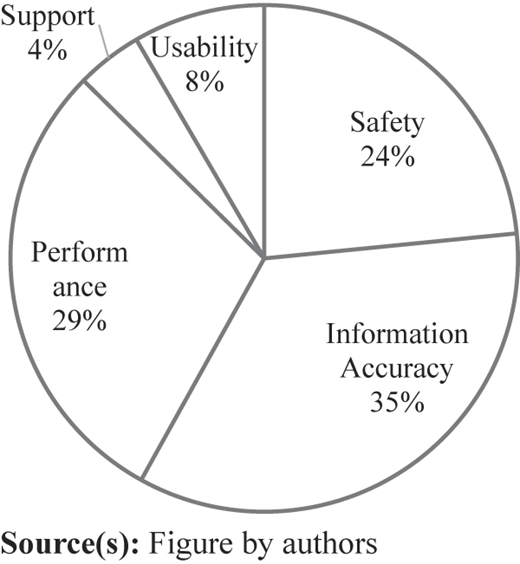
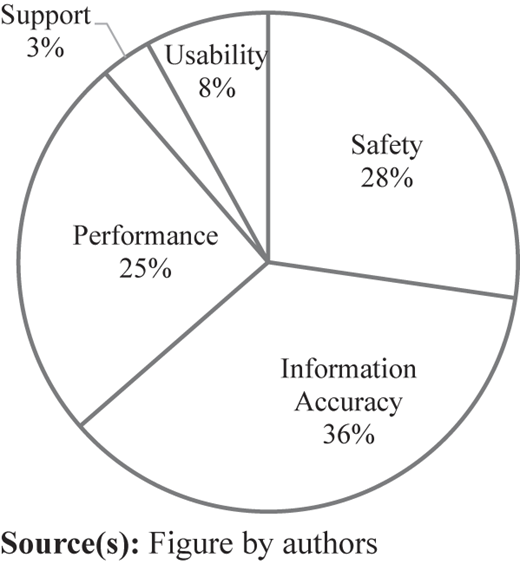
As for the Gap Score Contribution of each of the dimensions to the APPQUAL score for Zerodha, “Information Accuracy” was contributing most to the APPQUAL Gap score at 35%, while “Performance” was the second contributor with a 29% contribution to the APPQUAL Gap score. Thus, APPQUAL Gap score contribution can help in pointing out the most critical of the five dimensions that need to be managed due to higher contribution to the APPQUAL Gap score. In the case of Upstox, after “Information Accuracy” which contributed 36% to the APPQUAL score, “Safety” contributed 28%, while “Performance” contributed 24%. Figures 1 and 2 show the APPQUAL Gap Score Contribution of each of the five dimensions for Zerodha (Figure 1) and Upstox (Figure 2).
5.3.2 Comparative analysis of Zerodha and Upstox
A comparative analysis between Zerodha and Upstox with the help of the mean scores recorded for consumer expectations from the industry-best stock trading application and their perception of e-service quality for Zerodha and Upstox on each of the five dimensions was conducted. The two comparisons are based on – (1) different expectations that Zerodha and Upstox customers have for the industry-best application and (2) the difference in perceived e-service quality of the two applications by their respective users. Figure 3 shows the comparison between the customers of the two platforms on their respective expectations they have from the industry-best stock trading application on five unique dimensions – safety, information accuracy, performance, support and usability. Figure 4 shows the comparison between Zerodha and Upstox customers’ perceived e-service quality of the respective application based on the same five unique dimensions.
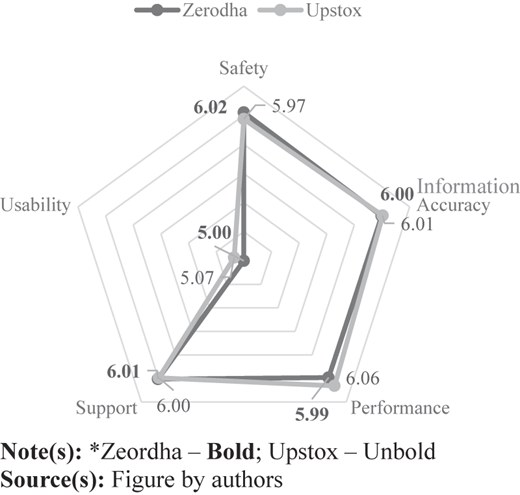
Radar chart comparison of expectations from an industry-best stock trading application on APPQUAL dimensions between customers of Zerodha vs Upstox
Radar chart comparison of expectations from an industry-best stock trading application on APPQUAL dimensions between customers of Zerodha vs Upstox
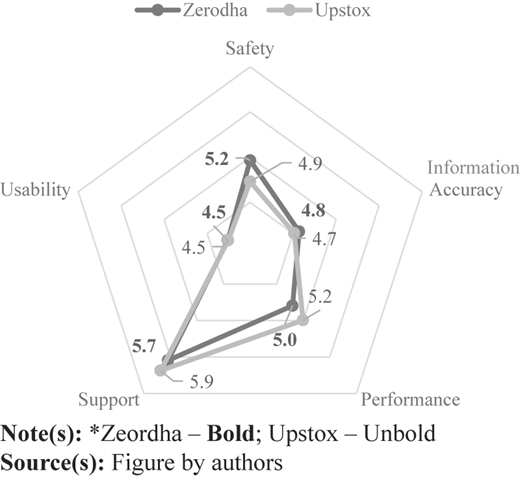
Radar chart comparison of perceived e-service quality of APPQUAL dimensions between Zerodha and Upstox
Radar chart comparison of perceived e-service quality of APPQUAL dimensions between Zerodha and Upstox
As expected, there is an almost perfect overlap between the two applications when it comes to expectations from the customers’ end. This is understandable as irrespective of whichever application the customers are using, as a whole, the expectations are not going to be much different from the industry-best stock trading application. This was also tested with the help of an independent samples t-test. The difference between the two applications on all five dimensions was found to be statistically insignificant (p > 0.05).
For perceived e-service quality, however, there is a small but visible divergence between the two applications on the dimensions of “Safety” and “Performance.” Zerodha is said to have higher perceived e-service quality when it came to the “Safety” offered by the application, while when it came to “Performance” of the application Upstox fared better in e-service quality. However, an independent samples t-test showed that the difference was statistically insignificant for all dimensions except that of the “Performance” dimension (p < 0.05).
6. Conclusion and discussion
6.1 Research results and discussion
Perceived e-service quality is a critical driver of customer satisfaction. Customer satisfaction in turn is a key driver for businesses in retaining existing customers as well as attracting new customers (Parasuraman et al., 1985; Zeithaml et al., 2000). As more services move towards the online medium, the perceived e-service quality has gained prominence in service marketing research and has seen a lot of research in define e-service quality and developing tools around it for various types of online services (Tian, Chan, Suki, & Kasim, 2023). The majority of such research is for a specific service category like online banking, food aggregators, cab aggregators, e-commerce or academic websites as discussed earlier in this paper. This is logical since these services diverge from each other on various functional aspects which were discussed earlier in this paper. Some of the researchers have also attempted to create an e-service quality framework for generic applications in the service sector, but often the peculiarities of specific services may discourage the application of those frameworks on specific services.
While there have been frameworks proposed to evaluate the e-service quality of financial services, the research is almost always about online banking services baring a few instances for insurance and credit card services (Raza et al., 2020; Sleimi et al., 2020; Theresia & Tan, 2021). Stock trading online platforms offer financial services to customers, which are different from traditional financial services in terms of customer involvement, decision-making structure, the role of the service provider, the risk associated with the service and tenure of service, etc. (Syamsundar, 2019; Somani & Mandlekar, 2023). Thus, it was important to create a framework and tool to measure the e-service quality of stock trading applications that considers the diverging nature of these applications compared to traditional banking services. Further, there has been a meteoric rise in the number of customers who have started using these applications for investments as well as trading. Expanding customer base for the category also means that the number of stockbroking companies and platforms has also grown at a fast pace, thus adding to the competition. Hence, it would be worthwhile to have a framework that can effectively evaluate the e-service quality of stock trading applications. This would help such platforms to timely identify the areas of weakness in the perceived e-service quality of their services and fix them.
Having identified the research gap, a multi-item scale-based APPQUAL was developed to evaluate the perceived e-service quality of stock trading applications. This study empirically examined the underlying dimensions of e-service quality in the context of stock trading applications to arrive at APPQUAL. The APPQUAL has the following five dimensions which define the e-service quality of a stock trading application – Safety, Information Accuracy, Performance, Support and Usability. The “Safety” dimension is comprised of items related to the safety of financial transactions, as well as financial data. This dimension was about the financial risks associated with trading with a stock trading application. “Information Accuracy” was about consistency and accuracy of information shared by the application. Error-free information and consistent availability of the information are critical for traders and were prominent indicators for this dimension.
The “Performance” dimension explains the speed of the functioning of the application and the processing speed of the transaction. Since the timely placement of an order is critical in stock trading, “Performance” plays a critical role in the overall perception of e-service quality of the stock trading applications. The “Support” dimension represents the intent and the ability of the application to listen to customers’ complaints and feedback and address them promptly. Finally, “usability” represents the ease of operating the application, and the ability to use it anywhere and anytime possible.
Once the APPQUAL was finalized, the tool was applied to two leading stock trading applications in India – Zerodha and Upstox. It was found that for Zerodha, the “Information Accuracy” dimension had the biggest gap between what the customers expect from an industry-best application versus what they perceived for Zerodha’s application. This was followed by “Performance” and “Safety” dimensions. When applied on Upstox, APPQUAL revealed that “Information Accuracy” again contributed to the maximum APPQUAL gap score. “Safety” was the second-largest contributor to this gap, while “Performance” was the third-largest contributor. A radar chart-based comparison between the two applications revealed that the expectations from the industry-best stock trading application were more or less the same, while there were some significant differences when it came to the perceived e-service quality for the respective application.
It is imperative to highlight here that there have been a large number of work in the area of SERVQUAL first, then e-SERVQUAL before this study. The extensive work in this area made it possible for this study to find a niche application of the service quality measurement framework. There have been e-servqual frameworks created and tested in past in financial services (Ananda et al., 2023; Gissell et al., 2022; Theresia & Tan, 2021), with some even extending the study to stock market platforms (Chong et al., 2021; Somani & Mandlekar, 2023; Shetty, 2020). However, this study takes a different path in terms of the aims of the research.
The service experience of the Indian stock market customers has largely transformed in the past few years, however, the change in the customer demography and expectations have also paved the way for frequent criticism of these platforms owing to inconsistent service experience. Stock trading is a special type of service, where the consumer behavior is significantly different than other services, due to the inherent risks and significance of accuracy and performance. Thus, it was critical to be able to create a framework that caters to this segment albeit niche in nature. However, it may not be advised to make APPQUAL a generalized tool for service quality measurement of all apps and platforms, given the differential nature of stock trading behavior compared to other services. The tool, despite its limited application is expected to help improve the efficiency and acceptance of a large wave of new users, mostly younger ones, for these platforms.
6.2 Theoretical and practical implications
Theoretically, this study extends measurement scales of online service quality for various online services to a relatively newer service of online stock trading applications. The service quality domain has been researched for more than three decades. Parasuraman et al. (1985) proposed the SERVQUAL model which has been used as a foundation for research in this area. With the advent of the online medium for services in the 1990s and more rapidly in the early 2000s, research in the area of online service quality increased with prominent work from Yoo and Donthu (2001), Barnes and Vidgen (2001) and Parasuraman et al. (2005).
The study explored and firmed up five dimensions that came together to form APPQUAL, which is a tool to calculate the APPQUAL score for stock trading applications. There has been an active call by researchers as well as practitioners for customizing the existing service quality measurement tools to reflect the divergent nature of services, especially within online-native and online-first services that have emerged in the last two decades in the Indian market. The APPQUAL tool proposed in this paper is a reliable and valid extension to the e-service quality research, for the stock trading application segment.
This paper explores a wide range of items and constructs that are partly adapted and partly built from scratch that offers a new foundation for the research in terms of scale building for this particular domain. The multi-method approach, including a robust application of EFA and CFA shall also help in extending studies further from this paper adapted through different influencers that may be identified in a different external and internal environment for different domains.
The APPQUAL tool is developed keeping in mind the influence of the cultural and external environment of trading as a service for customers, thus while it is limited to the Indian markets, with a probable need to adapt for other markets, it also builds for itself a case to be a reliable tool for measuring efficacy and relevance of stock trading applications for the Indian platforms and customers.
As the number of investors and traders in the stock market in India increases, the competition among the stock trading application offering trading services to customers is rising too. Thus stock trading platforms that offer convenience to the customer for click-based trading must recognize the challenge and build a competitive advantage for themselves. The ability to attract and retain customers in a competitive environment is important, and customer satisfaction plays a significant role in ensuring that.
Stock trading platforms can achieve that by improving the perceived e-service quality of the service offered, by focusing on those aspects of service which are more critical and have a higher gap between the customer’s expectation and perception of the application. APPQUAL offers five dimensions that can be used to identify the weaker links in the overall e-service quality of the application. Companies can identify and explore the shortcomings in these dimensions as perceived by the customers and work towards improving them.
A monitored APPQUAL score over a period can help measure the change in the APPQUAL score that can be measured against the effort and resources invested. APPQUAL score can also be used to set priorities for improving on the five dimensions. For example, in the case of Zerodha, while there are gaps found in “Support” and “Usability” dimensions too along with others, but these two dimensions are hardly contribute to the overall gap. Instead, “Information Accuracy,” “Performance” and “Safety” are the major contributors. This means, that even if there are gaps identified on all five dimensions, the most critical one to tackle for Zerodha is “Information Accuracy,” followed by “Performance” and then “Safety.” Thus, APPQUAL can be used by businesses to understand what is shaping the perceived e-service quality of their business among customers and how they can improve this perception.
6.3 Limitations of the study
There are several limitations to the current study. First, the sample is specific to the Indian market only, and the respondents may have traits, attitude and expectations which are unique to Indian culture and sub-culture. Besides, about 80% of the respondents were male which shows gender skewness. Since data collection was done online, it was difficult to reach out to each respondent and work on managing various biases in the respondents. Finally, this research is specific to online or e-trading undertaken by the customers or retail investors themselves, and thus this paper did not include the traditional stockbroking services and companies that offer trading services to customers where the customer does not get actively involved in the decision making. As discussed earlier, this limitation is accepted out of choice to ensure a high relevance and adoption in the niche segment of stock trading applications, which APPQUAL aims to target. Considering the peculiar representation of usage and decision-making observed in trading and investing by users, the tool is aimed at a narrow but relevant segment only.

