This study examines the physical internet (PI) concept, characterised as a global, open, interconnected logistics system, as a robust framework for reducing supply chain and logistics risks and significantly improving overall network resilience. PI addresses the systemic inefficiencies and lack of adaptive capability inherent in traditional dedicated logistics structures.
This study identifies a comprehensive set of 26 supply chain and logistics risks across four major categories: supply, demand, operational and external environmental risks. A quantitative decision-making model was employed to assess the capability of the emerging PI paradigm to mitigate these risks. The effectiveness of PI as a risk mitigation solution is assessed by evaluating the four core components of the logistics web, mobility, distribution, realisation, and supply, against the identified risks using the Fuzzy TOPSIS (Fz–Ts) approach.
The implementation of the PI framework demonstrates significant potential to build resilience, especially against possible supply chain risks. The Fz–Ts analysis, based on expert judgment, quantified the mitigating impact of the PI on major risks. The top three risks prioritised for reduction by PI implementation are logistics outsourcing risks, supplier logistics service risks and risk in custom clearances. The underlying flexibility and greater agility afforded by PI's interconnected logistics services outperform classic models in terms of resilience when facing facility disruptions.
New PI capabilities are synthesised through the encapsulation component of the logistics network to address supply chain risks. Organisations in the logistics sector can use the results of this study to develop more effective risk management strategies in the context of PI. Organisations will find PI useful for monitoring emerging risks, updating processes and integrating new technologies to stay ahead of potential disruptions to their operations.
This study formalises the risk spectrum of supply chains and their management using PI elements. PI web capabilities, such as realisation, distribution, mobility and supply webs, have been innovatively used to propose risk mitigation and management insights. The new capabilities of PI are synthesised by encapsulating the components of the logistics web to address supply chain resilience.
1. Introduction
Future businesses are about to witness a significant change in their functioning, thanks to the onset of Industry 4.0 and its associated technologies, such as Automation, Cloud Computing, Internet of Things (IoT), Big Data, Physical Internet (PI) and 3D printing, which will inevitably change the face of the industry altogether (Narula et al., 2020; Bigliardi et al., 2021).
The PI is recognised globally as a foundational response to the unsustainability and inefficiency of traditional logistics, aiming to address the “global logistics sustainability grand challenge” (Montreuil, 2011). The PI concept aims to replace the current logistics model by integrating independent logistics networks into a global, open and interconnected logistics system. This vision is structured on core principles: modularity, connectivity, optimisation, and collaboration which enable substantial efficiencies, such as load consolidation, asset sharing, and reduction of empty runs (Landschützer et al., 2015; Sarraj et al., 2014). Early applications, such as the Modulushca project in Europe, validated these outcomes, reporting notable reductions in logistics costs and carbon emissions (Danube Commission, 2025).
Successfully implementing this paradigm shift is intrinsically linked to overcoming global supply chain and logistics risks, which constantly threaten stability and interrupt the supply chain structure (Olson and Dash, 2011; Prakash et al., 2017b). Supply chain disruptions are a significant concern for enterprises, often resulting in adverse consequences and dramatic financial losses (Bugert and Lasch, 2018). Traditional supply chain networks, which are defined by dedicated assets and fixed configurations, inherently limit the capacity to cope with unforeseen disturbances. Critically, the PI provides innovative features that can fundamentally address these traditional problems in the logistics sector, including risk management and the creation of supply chain resilience (Montreuil, 2011).
The core mechanism of this resilience lies in PI's interconnected structure of the PI. Inventory models that apply interconnected logistics services in the PI demonstrate greater agility and flexibility, enabling them to outperform classic inventory models in terms of resilience when facing disruptions at facilities such as hubs and plants (Yang et al., 2017). This dynamic interconnectedness allows for swift stock repositioning, multisourcing options and adaptation to short- and long-term disturbances.
Although PI offers a paradigm shift in supply chain logistics, a systematic study of its role in improving resilience against a comprehensive spectrum of logistics risks remains underdeveloped (Wang et al., 2020). Previous studies have established that the PI framework relies on four primary structural elements, collectively known as the Logistics Web (Mobility, Distribution, Realisation and Supply) (Hakimi et al., 2012; Montreuil et al., 2013). The necessity for robust supply chain risk management (SCRM) strategies is well established in the literature, providing a foundation for understanding both empirical and conceptual findings and offering a roadmap for practical implementation (Pfohl et al., 2010). However, there is a distinct gap in the literature regarding a quantitative decision-making framework that systematically assesses how the capabilities of these four specific PI elements mitigate various categories of supply chain and logistics risks under uncertain conditions.
To address this gap, this study formalises the risk spectrum of supply chains and logistics, specific to PI elements. We investigate how implementing the PI and utilising the capabilities encapsulated within the Logistics Web provides a robust strategy for reducing supply chain risks and boosting the overall resilience of logistics operations. Effective risk management within the supply chain is critical, as it demonstrably increases organisational competitiveness (Chibaro et al., 2024). We achieve this by employing a decision-making model capable of handling the vagueness and imprecision inherent in the expert judgment. This study investigates the following two research questions:
How do different risk categories within supply chain systems affect logistics operations?
What strategies can be employed for supply chain risk management (SCRM) within the physical internet (PI)?
The remainder of this paper is organised as follows: Section 2 presents the literature review and identifies risk factors from the literature. Section 3 highlights the study's research design. Section 4 conducts an impact assessment of the risks using the Fz–Ts method. Section 5 presents the results of the study. The discussion is presented in Section 6. Finally, the conclusions and future research directions are presented in Section 7.
2. Literature review
The following sections present a literature review focusing on the fundamental concepts and vision of PI, the spectrum of risks inherent in supply chain systems, and the intersection where PI acts as a strategic framework for managing these risks and building organisational resilience.
2.1 Physical internet (PI)
The PI is a concept aimed at transforming how physical objects are handled, moved, stored, realised and supplied efficiently, addressing the “global logistics sustainability grand challenge” identified by Montreuil (2011). This requires innovation in transportation methods, technology and adoption (Montreuil, 2011; Montreuil et al., 2013; Hakimi et al., 2012). According to the PI initiative manifesto, PI intends to transform how physical objects are handled, moved, stored, realised and supplied efficiently (Link to the website).
The PI is similar to the digital Internet but for physical items. In contrast to existing dedicated goods distribution solutions, PI entails the encapsulation of goods within modular, easy-to-interlock smart containers in an open, interconnected logistic system (Yang et al., 2018). Industry 4.0 is a rising technological movement that utilises next-generation information and communication technology (Wang et al., 2020; Narula et al., 2020). The smart factory system of Industry 4.0 will bring a paradigm shift across production systems, and logistics will align.
Recent academic research highlights the increasing significance of decision-making models in PI for strengthening supply chain resilience and reducing logistics-related risk. Mathematical optimisation remains a key focus in this field. Following Table 1 shows the summary of the recent literature. Collectively, these studies present a diverse yet convergent body of evidence that the PI, through robust decision models and emerging technologies, serves as a strategic framework for addressing various forms of supply chain and logistics risk in uncertain environments.
2.2 Supply chain risk and logistics
Supply chains are inherently dynamic systems that constantly face operational, environmental and financial instability, necessitating active SCRM strategies. Disruptive events, broadly defined as unplanned occurrences that hamper the SC system, range from natural disasters and civil disputes to financial crises and transportation infrastructure failure. This study extends the risk classification proposed by Christopher and Peck (2004). The possible risks in supply chain systems were synthesised from the literature. The broad classifications used were risk and business management (Jüttner, 2005), risk management (Bandyopadhyay et al., 1999), strategy (Jüttner, 2005), sustainability (Bai et al., 2010; Wu et al., 2006) and supply chain management (SCM) (Olson and Dash, 2011; Harland et al., 2003; Jüttner, 2005). These studies provide directions for four categories of risks to be assessed. The results of the risk categories are shown in Table 2. This section contributes to answering the first research question.
Recent studies by Frendi et al. (2024) emphasised the mitigation of SC disruptions by integrating various logistics services within the PI framework. PI can improve the control of physical and information flows, thereby enhancing supply chain transparency and reducing risks related to inefficiencies and customer dissatisfaction (Nachet et al., 2024). Pan et al. (2022) highlight how PI can reduce risks related to costs and waste associated with perishable goods, offering a solution to mitigate risks in the supply chain of perishable products. PI enhances supply chain resilience and sustainability by standardising and optimising physical components, thereby reducing the risks associated with disruptions (Tordecilla et al., 2025). Delay and last-mile inefficiency are common in e-commerce. Omni-channel retailing and decentralised distribution reduce the risks associated with fragmented orders (Luo et al., 2022). The idea of reducing the idle runs of container trucks in PI helps address the risks associated with inefficiencies and profitability (Li et al., 2022).
2.3 Building resilience through PI
Adopting technology will be a significant factor in the logistics sector, as it will enhance business capabilities (Treiblmaier et al., 2019; Narula et al., 2020). The current methods of shipping, delivery, storage and logistics of physical goods are unsustainable (Montreuil, 2011). The use of freight delivery in PI supply chains (Chadha et al. (2022), PI hubs and linked delays (Naganawa et al. (2024), cross-docks and transportation flows at ports with their design and operational agility Chargui et al. (2022), Essghaier et al. (2023) are examples. Niu et al. (2022) emphasised that PI can improve logistics efficiency and sustainability by effectively allowing door-to-door services with great parcel security. Achamrah et al. (2024) proposed a dynamic and reactive routing protocol for PI networks that addresses the complexity of managing interconnected logistics systems. Pan et al. (2021) assert that interoperability has become a critical component of supply chain systems due to the increasing trend of collaboration among various elements aimed at risk reduction. A significant portion of supply chain risks is associated with container management. Chargui et al. (2019) highlight the importance of planning, scheduling and managing PI containers.
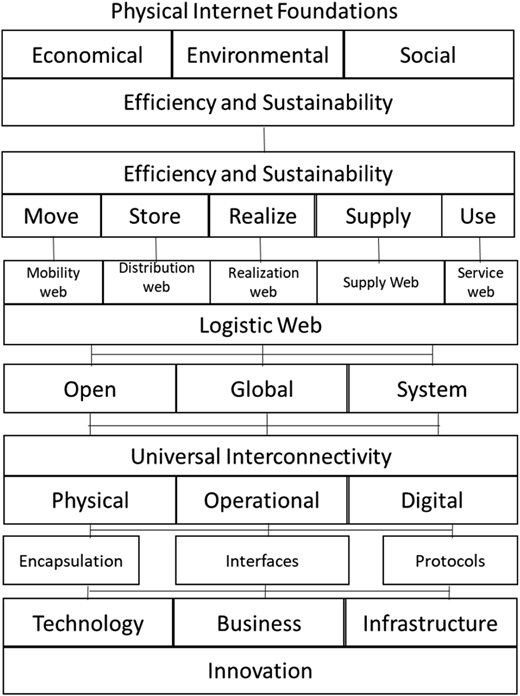
The PI (or π) model has evolved into a global logistics system that moves, processes, stores and transports logistics products sustainably and efficiently (Matusiewicz, 2020). PI improves the mechanism of delivery time, cost and environmental risk (Jaziri et al., 2020). PI-enabled visibility of vehicles and routing optimisation help drivers recover in logistics support (Fazili et al., 2017). The PI foundation framework aims to achieve the global logistics sustainability challenge (Montreuil, 2011). This will increase sustainability in physical movement, storage, realisation and supply (Bai et al., 2010; Montreuil et al., 2013). PI is the largest resource that can be used to build consensus in supply chains for the efficient use of blockchains (Treiblmaier et al., 2019). Figure 1 depicts the framework of the PI foundations. PI is committed to establishing and implementing an efficient and sustainable logistics network. Such a framework can substantially mitigate supply chain risks and enhance the overall resilience of logistics operations by utilising advanced technologies and innovative strategies (Nguyen et al., 2022; Frendi et al., 2024). This study investigates how PI can provide a robust framework for reducing supply chain risks and enhancing the overall resilience of logistics operations.
In addition, this study utilises the Fuzzy TOPSIS (Fz–Ts) method to assess and manage supply chain risks within the PI framework. This methodological approach enhances the robustness of our analysis and offers a systematic means of evaluating the effectiveness of risk management strategies. The following section delineates the specifics of the logistics web pertinent to the PI.
3. Research methodology
The integration of PI into the larger framework of Industry 4.0 involves complex, multi-participant settings where uncertainty, risk and emerging technologies interact. Owing to the innovative nature of PI and its continuous development, relying solely on traditional quantitative methods is inadequate for PI assessment. To address this challenge, our research used a combined qualitative–quantitative mixed methodology. Initially, we identified pertinent risk constructions from the existing literature, using expert opinion as suggested by Eisenhardt (1989), followed by an expert survey.
In this study, we followed the consensus-based decision-making processes defined by The Consensus Council (CSH Org, 2021) which is an excellent method for capturing the varied opinions of people and synthesising them for final decision-making. One should not confuse this concept with a blockchain architecture-based consensus mechanism (Gai et al., 2024) that serves security purposes. The industry expert selection criteria included technological experience, possession of at least a master's degree, and a minimum of ten years in the supply chain/logistics. Ultimately, we identified 20 industry experts and three academic experts with some familiarity with the methods, tools and knowledge of the new technological approach to logistics known as PI. We employed a novel consensus-based method to gather input from all the participating experts. Three expert groups (six experts in one group) were formed, each led by an academic expert who provided research details and protocols to 18 industry experts, as two respondents withdrew during the online meetings. The compositions of these groups are detailed in Appendix 1.
The primary objective was to collect input for the linguistic scale (refer Table 3) to assess the ratings of various supply chain risks and criteria weights. This process enabled the authors to subsequently apply the Fz–Ts methodology and determine the prioritised risks for mitigation. The online discussion was moderated by the group lead, an academic person with an agenda to finalise the inputs for applying the Fz–Ts methodology. This process was inspired by the Delphi method (Rayens and Hahn, 2000). The consensus among the group members was reached by following the guidelines defined by The Consensus Council, Inc (CSH Org, 2021). In this way, each group removed bias and diversions in their inputs about PI, and we obtained refined views of the experts for our analysis. The inputs of the three decision-maker (DM) groups were used to apply the Fz–Ts method, which is similar to the methods used by Yadav et al. (2018). The Fz–Ts method was chosen because of its efficacy in addressing vagueness and imprecision inherent in human judgment, especially when decision variables are subjective and linguistic in nature. These characteristics are prevalent in the evaluation of emerging risks within PI logistics systems (Essghaier et al., 2023; Sofyalıoğlu and Kartal, 2012).
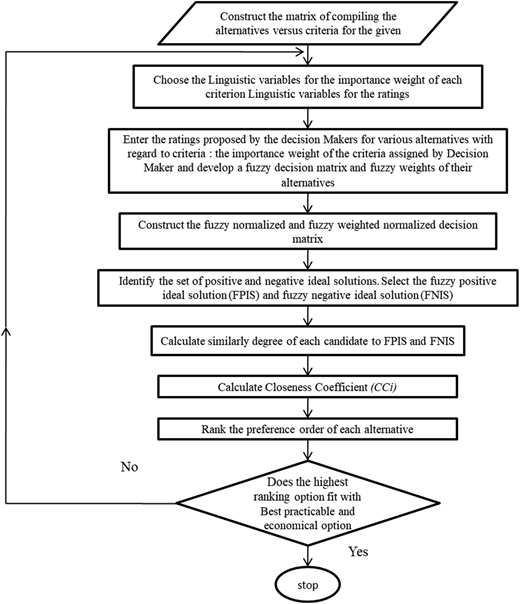
Table 2 demonstrates that contemporary supply chains encounter substantial risk challenges, which are thoroughly documented in the SCRM literature. Current SCRM methodologies primarily focus on formulating strategies to manage or mitigate internal and external risks. Various analytical tools, including cause-and-effect analysis, failure mode and effects analysis (FMEA), stochastic programming, fuzzy applications and robust optimisation, have been employed to model diverse risks within supply chain systems (Prakash et al., 2017a). A flow diagram of the proposed methodology is presented in Figure 2.
4. Assessing the impact of PI on supply chain risks
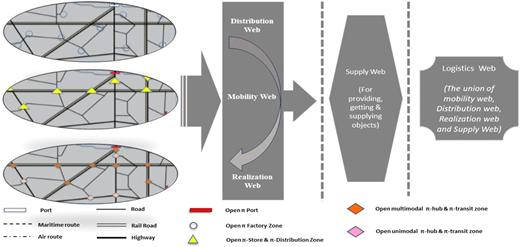
In this study, the four web features of PI are considered the main criteria and are used to assess the impact of 26 identified supply chain risks. PI leverages web dimensions to facilitate the efficient and sustainable establishment, construction and operation of a global and open logistics network (Montreuil et al., 2013). The logistic web comprises four key components, as shown in Figure 3 (Hakimi et al., 2012). A logistics web framework was used to access risk management in the PI environment.
4.1 The logistic web
The mobility web aims to meet the transportation needs of people, goods, and materials in a seamless, efficient, and reliable multi-modal and cross-segment mode. Physical objects move seamlessly, efficiently and reliably within connected open unimodal hubs, transits, ports and roads (Hakimi et al., 2009, 2012). The distribution web is a concept aimed at meeting the need to distribute physical objects in a timely manner. It addresses the physical distribution of products through world-interconnected open warehouses and distribution centres. The realisation web takes on the role of open global production plants or plants. These are about making, assembling and personalising physical products within open, internationally interconnected factories. The supply web is an interconnected supply network, each having embedded interrelated supply chains of many organisations. Simultaneously, the logistics web is an open and global logistics system of people, organisations, communities and society (Jaziri et al., 2020; Montreuil et al., 2013). These webs constitute essential elements within the foundational framework of PI and are extensively explained by Montreuil et al. (2013). However, it is necessary to note that this study does not include an analysis of the service web, as it primarily centres on using objects to access the functionality offered by other objects, as elucidated by Montreuil et al. (2013). Figure 3 shows the constituents of the logistic webs. The following section presents the methodology adopted in this study.
4.2 Data analysis
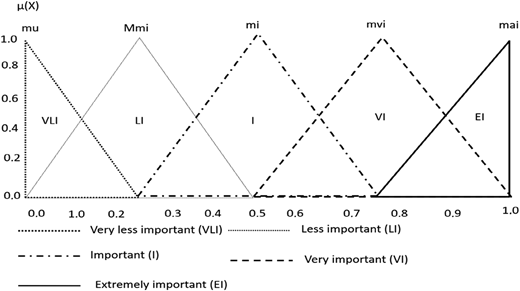
This study employed a structured methodology to analyse the data by integrating expert opinions with the Fz–Ts decision-making approach. The inputs from the decision-maker (DM) group were utilised within the Fz–Ts framework, which was deemed the most appropriate method because of its widespread application in prioritising factors with uncertain data (Yazdi, 2018). Historically, Yazdi (2018) extensively applied Fz–Ts to evaluate various types of risks within the supply chain. All calculations were conducted using Microsoft Excel, adhering to the best practices established in previous research (Yadav et al., 2018). Appendix 2 delineates the implementation steps for the Fz–Ts method. The initial step involves assigning weights to the different supply chain webs. Subsequently, the responses were converted into linguistic terms (fuzzy triangular numbers) to evaluate the impact of the four webs on the 26 distinct supply chain risks. According to Lima et al. (2014), the criteria weights within the linguistic scale can be categorised into five groups: Further details regarding the linguistic scale used to assess the criteria weights are presented in Table 3.
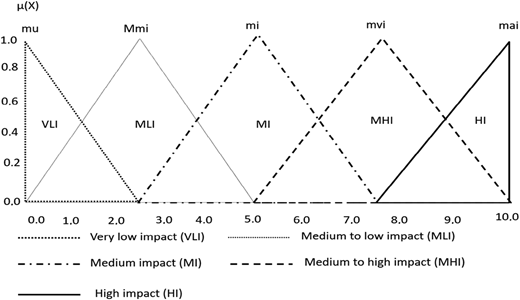
Similarly, the evaluation of the ratings of all supply chain risks on a linguistic scale can be divided into five groups: very low impact (VLI) (value range “0.0, 0.0, 2.5”), medium to low impact (MLI) (Value range “0.0, 2.5, 5.0”), medium impact (MI) (Value range “2.5, 5.0, 7.5”), medium to high impact (MHI) (Value range “5.0, 7.5, 10.0”) and high impact (HI) (Value range “7.5, 10.0, 10.0”) (see Table 4).
According to the inputs of the DM groups, the importance of different supply chain webs (considered as criteria) weights in the supply chain is shown in Table 5. Table 6 shows the impact of supply webs on various supply chain risks. It should be noted that supply chain risks are similar to the ratings of alternatives.
This study employed the Fz–Ts method proposed by Chen (2000) and Yadav et al. (2018). This method is based on fuzzy set theory, which was initially introduced by Zadeh (1965). Within this framework, the decision-making group utilises linguistic variables to evaluate the weightage of variouss attributes or alternatives. The procedural steps for implementing the Fz–Ts method are detailed in Appendix 2.
5. Results
As discussed earlier, the responses were converted into linguistic terms to represent the fuzzy triangular numbers (FTN) suggested by Lima et al. (2014). Figure 4 shows the scheme of criteria weights (webs), and Figure 5 shows the scenario ratings.
The responses of the DM groups were converted into FTN. The aggregate FTN of the criteria weights is presented in Table 5. The aggregate rankings of the alternatives (risks) are presented in Table 7. In the next step, an aggregate supply chain risk ranking matrix was obtained (Table 8).
A weighted normalised fuzzy decision matrix (FzDM) can be generated by directly multiplying the aggregated criteria weights with the aggregated alternative rankings. The resulting matrices are listed in Table 9.
Finally, the closeness coefficient (CCi) was calculated. The closeness coefficient (CCi) results are presented in Table 10 to prioritise the impact of different supply chain webs on various supply chain risks.
6. Discussion
The study results show that the top three risk categories are logistics outsourcing risks, supplier logistics services and customs clearances. Table 11 shows the values of CCi rearranged to gain insights into the top three items in the risk categories. To investigate further, the top three risks for each constituent of the logistic web were analysed.
6.1 Discussion on risk management through PI
The PI framework fundamentally improves risk management by transforming traditional dedicated networks into open, interconnected services anchored by Logistics Web components (Mobility, Distribution, Realisation and Supply).
6.1.1 Handling supply risks and mitigation
PI mitigates supply-side risks (such as supplier dependency, outsourcing and customs issues) through network restructuring and transparency. By leveraging the supply web, suppliers can strategically position their inventories closer to key markets, thereby reducing dependence on any single supplier and addressing risks related to resilience planning (Chowdhury et al., 2022). The globally connected open hubs of the mobility web reduce reliance on individual companies' fixed logistics resources (Nikitas et al., 2020), which is crucial for managing the inherent risks of outsourcing processes to 3PL or 4PL providers. PI also enables enhanced disruption mitigation through safety stock planning and optimised rerouting (Guo et al., 2023).
Standardisation and encapsulation protocols increase shipment transparency and security for customs. The realisation web aids compliance by supporting local production and assembly, which can eliminate customs burdens and reduce risks associated with customs clearance processes (Zidi et al., 2023). Automated customs processes are supported by intelligent standard universal containers (Yang et al., 2018).
6.1.2 Handling operational risks and mitigation
Operational risks, particularly those related to costs, inefficiency and inventory, are addressed through PI's optimised resource utilisation and flexibility. Mobility webs address operational inefficiencies, leading to high transportation costs by enabling the open sharing of excess transportation capacity and intensive consolidation. Simulation models confirm that PI improves efficiency indicators such as cost, emissions, transit time, and delivery time through efficient path routing and fewer truck trips (Sarraj et al., 2014; Pan et al., 2014; Yang et al., 2018). Logistics, a major component of the supply chain, presents specific vulnerabilities, such as cargo accumulation risks in maritime supply chains, emphasising the need for focused risk management (Freichel et al., 2022).
PI significantly impacts inventory costs by reducing the storage cubic volume and inventory product count. The distribution and mobility web enables the strategic deployment and redeployment of products, minimising the need for extensive inventory to avoid stock-outs under fluctuating demand (Fazili et al., 2017; Chowdhury et al., 2022). PI substantially mitigates the risk of cargo theft in road transportation (Gastón Cedillo-Campos et al., 2024; Flores-Franco and Covarrubias, 2024). The realisation of the web's encouragement of local manufacturing reduces the volume of truck trips required by finishing products closer to target markets.
6.1.3 Mitigating demand risk
The PI enhances responsiveness by mitigating demand volatility and forecasting errors. The PI supply web allows supply chain managers to quickly accommodate a greater supply of materials, meeting demand promptly. The realisation web minimises forecast errors by enabling dynamic production, assembly or customisation based on current market needs (Chargui et al., 2019). Owing to the high interconnectivity across the distribution, realisation and supply networks, PI can efficiently reduce the impact of non-generalised labour strikes (Li et al., 2022; Naganawa et al., 2024). Disruptions can be mitigated by redirecting production or distribution via unaffected regions (Nikitas et al., 2020).
6.1.4 External environment risks and mitigation
PI's modularity and collaboration of PIs provide robustness against external shocks. Encapsulation and synchronised transfer routes in mobility and distribution webs help manage unforeseen events, such as natural disasters (Yang et al., 2018). The collaborative nature of the realisation and supply webs supports co-production during difficult times for effective disaster mitigation (Jaziri et al., 2020). The distribution web supports rapid responses to new market conditions during economic downturns. Similarly, the realisation web helps mitigate financial risk by allowing firms to cater to different market locations and protect revenue streams. PI integration with Industry 4.0 technologies enables effective risk handling. Overall, PI provides a robust framework for reducing supply chain risks and boosting the overall resilience of logistics operations (Nguyen et al., 2022; Frendi et al., 2024).
6.2 Research implications
6.2.1 Theoretical implications
The concept of PI represents a significant theoretical advancement in supply chain and logistics management, offering a novel approach to tackling the complexities of modern supply chains. This study is an original attempt to evaluate the proposed risks and systems. Researchers may create theoretical models that explain how these elements work together to reduce risks by utilising PI's supply, mobility and realisation webs. Theoretical frameworks can be created to investigate how PI affects operational inefficiencies in transportation networks.
6.2.2 Practical implications
Businesses can expedite customs clearance procedures and improve transparency and security in cargo processes by adopting PI concepts, such as containerisation and standardisation (Flores-Franco and Covarrubias, 2024). By placing inventory closer to essential markets and clients, supply chain participants can strategically use the supply web to lessen their dependency on specific suppliers and lower supply side risks. Implementing PI in supply chain and logistics businesses can bring significant practical benefits, including enhanced efficiency, cost reduction, improved customer service, streamlined operations, better collaboration with partners and increased adaptability to market changes. Embracing PI principles can help businesses overcome modern supply chain challenges and achieve sustainable growth. The study results offer researchers new insights into the application of industry 4.0 technologies in SCRM within the PI.
6.2.3 Policy making implications
Practitioners and policymakers can benefit from practical guidelines to enhance risk management strategies, improve operational efficiency and support sustainable practices in logistics operations (Bai et al., 2010; Yang et al., 2017). Universal and public service/infrastructure alignment with PI requirements will be challenging. If firms start adopting the PI framework, the government and other support bodies need to support the initiative. This study shows the direct benefit potential of the unified approach of PI and how many current challenges become irrelevant in the PI environment. If the initiative receives support from the government and industry bodies, future logistics may realise the dream of the flow of products like data packets.
Practitioner policymakers and decision-makers can benefit from practical guidelines to improve risk management strategies, operational efficiency and support sustainable practices in logistics operations (Bai et al., 2010; Yang et al., 2017). However, the universal and public service/infrastructure orientation with the PI requirements is a challenge. If companies accept the PI framework, the government and other support authorities must support the initiative. This research shows the direct benefit potential of PI and whether the initiative is beneficial for current SCRM (Chowdhury et al., 2022; Gastón Cedillo-Campos et al., 2024).
7. Conclusion
The PI with Industry 4.0 technologies offers a potent approach to address logistics challenges within supply chains. This study categorised supply chain risks into four categories: supply, demand, operational and environmental risks. This study utilised the PI concept as a logistics web, incorporating elements of mobility, sales, realisation and the supply web to analyse the risk in supply chains. The potential status of each risk category in PI activation and a fresh risk management perspective within the logistics web concept are discussed. Utility networks can better withstand disruptions without significant losses, thereby reducing waste and increasing overall efficiency. The risks associated with supplier logistics services, customs clearance and logistics outsourcing can be significantly reduced or eliminated by implementing PI systems. There is substantial evidence that PI offers benefits such as reduced transportation costs, decreased port and road congestion and significantly shorter transit times for freight. However, the proposed risk assessments for each PI element require validation. This can be accomplished through PI-powered supply chain case studies. Flexibility in route planning and faster transit times comprehensively address demand-side and supply chain risks, ultimately improving business profitability.
To leverage the “mobility web”, “distribution web”, “realisation web” and “supply web” for effective risk management, the following actionable recommendations are made.
Use of IoT and blockchain technologies to complement the mobility web objectives of secure logistics.
Flexible and decentralized logistics hubs and movement of packages through shared networks with automation and AI implementation
Promoting collaboration through platform sharing, such as shared ERPs and fleets, to achieve the greater goals of PI objectives and sustainable practices.
Future research should focus on validating the proposed risk assessments for each PI element through case studies to demonstrate the benefits of PI systems in reducing transport costs, decreasing congestion and shortening transit times. Additionally, exploring how the combined use of PI with Industry 4.0 technologies can enhance risk management strategies is an essential area for future exploration.
Data availability
The format of the survey sample and a summary of the expert findings can be obtained from the corresponding author on reasonable request.
We extend our sincere gratitude to the experts who generously contributed their time and expertise to participate in the survey for this research. The author acknowledges the utilisation of Paperpal (Link to the website) for basic editing, grammar and spell-checking.
The supplementary material for this article can be found online.