The main objective of this study is to lay the groundwork for a systematic approach to selecting social media influencers (SMI) for influencer marketing campaigns.
This study achieves its objective by presenting an innovative framework that combines the ordinal priority approach (OPA) with the Delphi method. This hybrid approach is applied to an academic event promotion case study. The original 22 selection criteria for SMIs were derived from the Delphi evaluation. These criteria were subsequently ranked using modified OPA to select influencers in a systematic and hierarchical fashion.
This research proves the effectiveness of the framework by applying it to a case study. Three top-level critical criteria, 13 intermediate-level criteria and six additional criteria are revealed by this hierarchical prioritization of SMI selection criteria. This methodical procedure allows for a more logical and educated decision-making process in selecting the best influencers for marketing campaigns. This research also proves the feasibility of the proposed model.
Better influencer marketing campaigns and marketing resource allocation are possible outcomes of the suggested framework, which marketers and businesses can use as a more organized and objective tool for selecting SMIs.
This study contributes to the field of influencer marketing by developing and validating a novel decision framework. This work not only fills the gap in existing research regarding quantitative decision-making models for SMI selection but also expands applications of the OPA method to address service supplier selection problems.
1. Introduction
Amidst the prevalent supply chain challenges across the globe, many brands and retailers are prioritizing the implementation of regular and anticipatory marketing outsourcing to address marketing demand (Min and Mentzer, 2000; Jüttner et al., 2007). Although marketing on social media platforms has changed how businesses compete (Cheah et al., 2024), the scientific literature significantly lacks exploration into the dynamic effectiveness of social media marketing and methods to maximize their potential impact (So et al., 2024). Social media has emerged as a crucial marketing arena in the digital era and has drastically transformed the marketplace. As a result, organizations are forming strategic alliances with social media influencers (SMIs) to increase their exposure and reach (Cheah et al., 2024; Xu and Pratt, 2018).
Cheah et al. (2024) found that the majority of today’s businesses allocate budgets for collaboration with influencers. They also state that this is a strategic shift toward utilizing influencers’ services to enhance business reputation, expand client base reach, and increase revenue. In the commercial world, this approach is known as influencer marketing (Ooi et al., 2023). SMIs are service suppliers in the areas of marketing and customer relationship management (Viana et al., 2020). After seeing SMIs bring in new customers, companies recognized them as an effective, personal way to engage consumers. SMIs have thus become modern brand ambassadors, spokespersons, opinion-makers, advocates, or formal representatives of a brand or organization (Negri, 2023). According to Stubb et al. (2019), this marketing approach is widely acknowledged as a highly impactful means for businesses and organizations to effectively convey information about their products to consumers. (Wielki, 2020) predicted a future where businesses will employ SMIs more frequently in their marketing efforts. Thus, the selection of the right SMI is a critical factor for businesses when outsourcing promotional tasks (Leung et al., 2022; Woods, 2021).
SMIs can be seen in the wider category of celebrities and are generally considered Internet celebrities (Xu and Pratt, 2018). Still, in general, there is a lack of research on quantitative decision-making approaches and models of celebrity selection that could aid business decision-makers in making more well-informed choices of celebrity endorsers for their brand/product (Shukla and Dubey, 2022). This situation is true not only for the modern concept of Internet celebrity but also for the more traditional concept of celebrity selection for sponsorship and/or engagement. The existing selection processes are predominantly non-interactive, non-participative, intuitive, and subjective in nature (Shukla and Dubey, 2022; Kim et al., 2017). According to Haenlein et al. (2020), while the practice of influencer marketing is on the rise, most marketers still have a limited understanding of it, leaving them vulnerable to making poor decisions. Selecting influencer marketing service suppliers who are a good fit for the business remains an unresolved significant challenge (Ooi et al., 2023). Shamim et al. (2024) and Cheah et al. (2024) also express that businesses are facing difficulties in receiving the full expected outcomes of sponsored content. Nevertheless, when seeking to improve business outcomes through digital marketing growth, careful decision-making is still required, as these decisions carry major implications for the organization’s success and survival (Erhan et al., 2024). Brands face the risk of financial losses and missed opportunities if they select their endorsers incorrectly (Thwaites et al., 2012; Till and Shimp, 1998; Woods, 2021). Woods (2021) highlighted this situation, stating that choosing an unsuitable SMI to collaborate with has the potential to cause a significant crisis for a business.
Such shortcomings emphasize the need for a methodical and informed strategy for choosing influencers, with the aim of reducing risks and optimizing the potential advantages for companies. Therefore, to bridge the literature gap, this paper provides a structured framework for selecting the right Internet celebrities by factoring in key criteria and complex market conditions. This framework offers decision-makers an objective approach to selecting the most suitable influencers for their brands, which is especially useful in light of the vital role of customer relationship management in the supply chain (Wisner et al., 2019) and the rising importance of influencer endorsements nowadays. The significance of this research is that it could assist with better decision-making, minimize financial risks, and increase opportunities for businesses in a dynamic market. This framework contributes to the existing body of knowledge by filling a gap in comprehensive decision-making approaches for celebrity selection, and it provides practical guidance for marketers and business leaders on how to make the most of influencer marketing to reach and engage with their target audiences.
This paper is organized as follows: The introduction summarizes the subject matter, highlighting the importance of influencer marketing’s service supplier selection in today’s business era and presenting the research objectives. A review of relevant literature is then conducted, building a common understanding of supplier selection strategies and influencer marketing. Next, the modeling approach is described in depth, and its effectiveness is analyzed. Afterward, the framework is applied to an industry case study with actual data and situations. The results of the case study and their relevance to the framework’s potential application are discussed. Finally, the major findings and potential future research directions are summarized. Following this format ensures that your research is presented in a logical fashion, beginning with an introduction to the problem at hand, and progressing through a literature review, methodology to propose a solution, case study to validate your solution, and synthesis of the outcomes (Sorooshian, 2018, 2023).
2. Literature review
SMIs have become increasingly important in marketing strategies (Cheah et al., 2024). Chen and Wang (Chen and Yang, 2023) explained that SMIs are individuals or groups who use social media platforms to develop a unique self-image, thereby gaining a significant number of followers. Social media users tend to engage with SMIs across diverse platforms, such as Facebook, Instagram, Twitter, YouTube, and LinkedIn (Hermawan, 2020; Koay et al., 2022; Makrides et al., 2020). In contemporary marketing practices, SMIs are regarded as service suppliers and endorsers who promote various brands, products, and services (Kurdi et al., 2022). To facilitate understanding, this section is divided into three subsections: modern marketing, service supplier selection criteria, and SMI selection issue resolution.
2.1 Modern marketing
Ninety-two percent of customers trust recommendations from others (anonymous or media) more than they more than they trust a brand’s own claims (Negri, 2023). Opinion leaders have long been used to sway consumer behavior. The concept of opinion leadership was first presented in the 1940s and has played a vital role in marketing success (Ha and Yang, 2023). Influencer marketing utilizes opinion leaders because opinion leaders are reference groups who influence others given their important position within communication networks (Kapoor et al., 2022). According to Tobon and García-Madariaga (2021), opinion leaders, or influencers, are individuals who can influence the attitudes and behavior of consumers. This influence is typically achieved through the dissemination of information via word of mouth, as noted by Schneider and Huber (2021). According to Wang et al. (2022), the impact of opinion leaders is derived from their attractiveness, social status, or prestige. In the past, marketers employed conventional celebrities, such as models, actors, and athletes, to enhance brand value and increase popularity (Schouten et al., 2020). In contemporary times, brand proprietors have resorted to leveraging the clout of SMIs, who are the latest type of opinion leaders (Ha and Yang, 2023; Wu et al., 2024), to promote their products. Brands have adopted this approach because the number of people using online social networks has been growing exponentially (Subramani et al., 2023; Wu et al., 2024), and reaching out to individuals through these platforms is relatively easy (Sunarso et al., 2024). Social media enables fast and easy communication through collaboration and information sharing, making it a valuable marketing tool due to its mobile-based nature (Karacaer, 2022). Unlike conventional celebrities who have achieved widespread public acclaim through their exceptional abilities, SMIs have garnered a significant following by means of their branding efforts on various social media platforms (Khamis et al., 2017). According to Kim and Kim (2020), scrutinizing the fundamental motives that drive users to consume digital content, such as those that promote pleasure, enjoyment, happiness, and social interaction, is important to understand why social media users are loyal to their favorite influencers. Thus, the Internet is constantly being updated with new content as an increasing number of users use social media platforms to present themselves and gain followers (Subramani et al., 2023).
In the past, marketing professionals utilized a well-established marketing strategy that involved leveraging the popularity of celebrities and well-known individuals to enhance their communication efforts (Knoll and Matthes, 2017). Today, according to Cheung et al. (2020), social media platforms have emerged as a highly desirable avenue for marketers to present their products to consumers, thus achieving a wide reach rapidly. Therefore, the rise of influencer endorsement has been increasing since the advent of social media (Wang et al., 2022). Statistics presented by So et al. (2024) indicate that approximately 85% of business use social media marketing, as nearly 75% of consumers rely on these platforms to discover or share information. In today’s business, the utilization of SMIs is a new marketing strategy called online influencer marketing, which resembles the use of opinion leaders for promotion (Leung et al., 2022). Consumers are more influenced by opinion leaders on social media than by the platforms themselves (Vrontis et al., 2021). Online influencer marketing is a combination of sponsorship and advertising that is paid for by businesses through an intermediary (Ha and Yang, 2023), thus presenting both opportunities and challenges for brands (Leung et al., 2022). Academic studies have demonstrated that endorsements can enhance the effectiveness of advertising (Schouten et al., 2020; Weismueller et al., 2020). The advantages of collaborating with SMIs, such as providing complimentary products or compensating them for their endorsements and product promotions, have been recognized by numerous brands because of SMIs’ widespread appeal and efficacy in communication (Vrontis et al., 2021). As explained by Wu et al. (2024), the success of Tesla in attracting electric car consumers shows that social media has greatly boosted brand popularity, which has led to an uptick in the use of SMIs in marketing and sales. Influencers help establish credibility between organizations and their target audiences by serving as an intermediary for the two parties (Hermawan, 2020).
In short, organizations, from startups to large corporations, utilize and benefit from influencer marketing because of seven primary advantages: 1. Society believes in influencers. 2. Influencer marketing has a personal touch. 3. Influencer marketing has less hidden agenda. 4. The content is more influential than that of advertising. 5. Influencer marketing is cost effective. 6. Influencer marketing has less political elements. 7. Influencer marketing can help a company reach its marketing targets easily (Hermawan, 2020). When executed properly, influencer marketing can yield impressive results. Haenlein et al. (2020) found that influencer marketing was important during the 2019 release of Gucci Bloom, a fragrance collection from the Italian brand Gucci. Gucci teamed up with 23 Instagram influencers to create original content that artistically depicts the fragrance’s floral characteristics. With 135 pieces of content developed, the campaign was able to reach nearly 750,000 people. In many cases, those who decide to pursue a career as an SMI could be invited to provide their services to enterprises (Sanders, 2022). Therefore, SMIs hold a unique position in supply chains with their services (Kapoor et al., 2022).
2.2 Service supplier selection
Despite certain parallels between the process of selecting SMIs for online influence marketing and choosing celebrities for traditional [offline] influence marketing, the two approaches have significant distinctions. Making decisions about the development of digital marketing plans remains highly challenging (Erhan et al., 2024). The process of selecting SMIs is a more formidable task than selecting celebrities, an area that is already lacking in extensive research. Even so, research on the choice of celebrities has predominantly centered on scrutinizing their characteristics rather than comprehensively investigating the selection process and method (Roy and Bagdare, 2015; Shukla and Dubey, 2022). As a result, understanding and investigation within this particular domain are lacking. Only a few studies have presented objective methods for selecting celebrities (Shukla and Dubey, 2022). Research on SMI selection, an understanding of the selection procedure, and objective techniques are lacking. How, therefore, should a company choose SMIs to outsource its brand/product promotion?
SMIs’ characteristics can attract followers’ interest, encouraging followers to interact with a business or product (So et al., 2024). SMIs can utilize various forms of content such as location check-ins, images, text, and hashtags on their social media accounts to mediate their audience connection with a business (Kapoor et al., 2022; Xu and Pratt, 2018). A crucial factor for achieving success is the creation of engaging content that fosters warm and personal connections with one’s followers (Jin et al., 2019). According to source credibility theory, SMIs’ persuasiveness and effectiveness depend greatly on their credibility (Alam et al., 2024; Kim et al., 2024). Factors such as credentials, track record, and goodwill define credibility (Han and Balabanis, 2024). High credibility boosts customer trust and brand credibility, making endorsements more impactful (Han and Balabanis, 2024; Alam et al., 2024). SMIs who want to be successful need to have a thorough grasp of the vocabulary and tone of their platforms, as well as their fans’ wants and requirements as users.
SMIs need to interact with their followers on a personal level to generate genuine dialogues about a brand or topic (Ge and Gretzel, 2018). According to Makrides et al. (2020), many individuals have opted to pursue social media marketing as a profession, leveraging their influence to promote products and services. They are service suppliers of modern influencer marketing. In line with social capital theory, SMIs with stronger networks and shared values in a community have more influence over others (Chen and Lee, 2024). Influencers with low engagement, even if they have a large number of followers, find that their services are less effective (van der Harst and Angelopoulos, 2024; Beichert et al., 2024). Accordingly, influencers who have strong connections with their target audience are more effective at promoting products or services, making them valuable marketing service suppliers (Beichert et al., 2024).
According to MacDonald and Payne (Mcdonald and Payne, 2006), service possesses three distinct characteristics that distinguish it from physical products. First, service is intangible in nature. Second, it is produced and consumed simultaneously. Lastly, direct interaction between the service provider and the consumers is a crucial aspect of service provision. Although these service suppliers are offering their services, increasing competition and its failure costs in business have raised concerns about choosing and working with the right suppliers (Demiralay and Paksoy, 2022). When not conducted properly, influencer marketing can have serious negative consequences (Haenlein et al., 2020; Woods, 2021). Poor selection poses risks to both the service supplier and the service recipients. Haenlein et al. (2020) cited the example of Billy McFarland who promoted a festival on Instagram in 2017 and was sentenced to prison after the event was discovered to be fraudulent.
There have been multiple instances where the outcomes of celebrity endorsements or SMI promotions did not meet anticipated results for a business because of inadequate selection. For example, A Pepsi video on YouTube made a news for The New York Times (Victor, 2017): Pepsi was severely criticized for an advertisement that viewers felt trivialized protests in 2017 (Victor, 2017). Pepsi issued an apology in response and announced the removal of the content and a halt to future rollouts. Another example involves the consulting firm Accenture, which had a long-standing sponsorship agreement with professional golfer Tiger Woods. Accenture cut ties with Woods after news of his extramarital affairs became public, announcing the end of its sponsorship deal in 2019 (Jonas, 2009). In 2019, Buzzfeed News (Chen, 2019) reported on the involvement of a popular SMI and daughter of a well-known actress in the college admissions scandal. Brands that had previously partnered with her, such as Sephora and TRESemmé, were criticized, causing them to back out of their sponsorship agreements. Her collaborations with other brands were also called into question. In 2020, Insider (Tenbarge, 2020), an American online media company, reported on the issues associated with Jeffree Star, a well-known SMI. The cosmetics company Morphe, which had previously worked closely with Star, ended its collaboration with Star in response to widespread criticism and backlash directed at Star and his collaborators.
These examples show how a poor choice of service suppliers in influencer marketing can have consequences for businesses, including reputational damage and a failure to resonate with the intended audience. Thus, although the lowest collaboration cost criterion was traditionally used to select a supplier, this technique is not stable or helpful enough for modern supply management (Ho et al., 2010). Today, establishing business priorities for the supplier selection process is essential (Demiralay and Paksoy, 2022), and selecting SMIs is the first and crucial stage in online influencer marketing (Leung et al., 2022). Influencers who exhibit characteristics indicating a “fit” with the firm’s objectives can be selected (Wathne et al., 2018; Wathne and Heide, 2000). SMI brand fit improves the effectiveness of advertising and the influencer’s reputation, especially among followers who engage in parasocial interactions (Breves et al., 2019). Influencer marketing is an strategic approach in which an endorser’s personality, image, or values correspond to the goods or services that they are promoting (Abid et al., 2024). According to the match-up hypothesis, the effectiveness of an endorser’s endorsement is partially determined by the suitability of the product being endorsed (Hawkins and Saleem, 2024; Abid et al., 2024). The relevance of the match is critical because an appealing endorser, such as an SMI, can boost the effectiveness of the disseminated information, influencing customers or consumers. Thus, this theory emphasizes the importance of choosing influencers whose personal brand is relevant to the target audience and complements the company’s values.
However, more than one criterion should be considered by businesses as they assess alternative suppliers (Demiralay and Paksoy, 2022; Geng and Liu, 2015). As per prior literature on supplier selection, the criteria for selection generally have three categories: supplier criteria, service/product performance criteria, and cost criteria (Kahraman et al., 2003). According to previous studies, brands may choose influencers based on their number of followers, engagement, frequency of posts, and content value (Lou and Yuan, 2019; Ki and Kim, 2019; De Veirman et al., 2017). Chen and Yang (2023) focused on the importance of influencer credibility and the emotional connection that followers develop with SMIs as key drivers of influencer marketing success. Additionally, brands may select influencers whose personal position aligns with that of the brand (Breves et al., 2019; Torres-Pruñonosa et al., 2020) or who exhibit positive characteristics, such as sincerity, authenticity, and credibility (Lou and Yuan, 2019; Hughes et al., 2019; Lee and Eastin, 2020; Cheah et al., 2024). Five SMI selection criteria were suggested by another study (Lenger, 2022): (1) number of followers; (2) past campaigns; (3) budget; (4) target market; and 5) SMI’s positioning. Another study (Kapoor et al., 2022) stressed that an influencer’s style and content strength affect how convincing consumers find the message. A literature review-based framework developed to evaluate SMIs presented 10 factors (Cho et al., 2022):
Expertise/credibility: SMIs’ expertise, knowledge, and experience with a specific product or field contribute to their credibility.
Trustworthiness: The ability of SMIs to build trust with their audience, which influences purchase intentions and information adoption.
Quality content: How well SMIs deliver their messages and the usefulness of their content, which includes multimedia presentations that meet the expectations of a diverse audience.
Quality presentation: The ability of SMIs to present products and services in an engaging manner that aligns with brand images and increases brand loyalty.
Public relations: SMIs’ role in shaping audience attitudes and their understanding of business intentions, brand image, and how to effectively promote products or services.
Appearance: The impact of attractive images and relatable models on social media platforms, as well as the relationship between the attractiveness of SMIs and audience interest in products.
Quality communication: SMIs’ strategic communication with followers through tone of voice, written details, and providing immediate and honest feedback.
Participatory activities: Interactivity and engagement of SMIs’ with their audiences, leading to authenticity, emotional attachment, brand loyalty, and trust in influencers.
Affability: The ability of SMIs to be friendly, approachable, and form functional relationships with their audience, which contributes to their digital fame and word-of-mouth recommendations.
Connectedness: SMIs’ knowledge of the social media platform, its algorithms, and the links between users, products, and targeted user groups, resulting in improved accessibility and higher purchase decisions.
Selecting SMIs for marketing can be characterized as a process of service supplier selection. The service supplier selection problem is a commonly used term that highlights the importance of identifying a collaborative supplier who can provide superior service (Geng and Liu, 2015). The SERVQUAL (service quality) model is widely regarded as a highly effective approach for assessing customers’ expectations and perceptions (Aboubakr and Bayoumy, 2022) and can serve as a guiding framework for developing service supplier evaluation criteria (Geng and Liu, 2015). The SERVQUAL model, as proposed by Zeithaml, Parasuraman, and Berry (Zeithaml et al., 1990) in 1990, focuses on the following fundamental service quality dimensions (Luyen and Thanh, 2022):
Tangibles: the physical facilities, equipment, and human resources that contribute to the overall image of a business to its customers.
Reliability: the capacity of a system or process to consistently and dependably perform the intended service or function.
Responsiveness: the capacity and inclination to address the needs of customers who require assistance.
Assurance: the employees’ aptitude for proficiency, politeness, and self-assurance toward customers.
Empathy: the act of demonstrating appropriate concern and comprehension of customers’ emotions.
According to Wang et al. (2015), the SERVQUAL model has been widely utilized and referenced by scholars, thereby making a significant contribution to service quality research. Service quality is also evaluated during service supplier selection (Geng and Liu, 2015; Chou et al., 2011). Service supplier selection has the potential to enhance an organization’s efficiency and effectiveness (Secundo et al., 2017). However, consensus on a specific list of criteria is lacking, as indicated by a review of SMI literature.
2.3 Selection issue resolution
Although Sang (2024) revealed a strong correlation between supply chain management, decision-making, and digital marketing, the available literature indicates that the formation of a shared understanding or acceptance within the academic community is impeded by varying perspectives and inadequate research, which is contrary to the widely held assumption or prevailing belief. This decision-making is a complex process that needs to consider at least two criteria, including apparent factors such as technical equipment configuration and less visible factors such as the skill and attitude of personnel (Geng and Liu, 2015). Yet businesses with different marketing objectives would likely use different influencer selection criteria, but the strategy as a whole suggests that a business should combine the characteristics or qualities of SMIs that make them suitable and compatible with marketing efforts (Fountain and Stovel, 2014; Leung et al., 2022). Thus, they can determine the appropriateness of each SMI for marketing activities. In such cases, multi-criteria decision-making (MCDM) techniques can be used to achieve the best possible outcomes (Demiralay and Paksoy, 2022; Behera and Beura, 2023; Chai et al., 2023). The MCDM process can help businesses make decisions by helping structure the problem and providing a shared language for discussing the problem (Köhler et al., 2019; Vassoney et al., 2021). It could also improve the openness, auditability, and analytical rigor of choices (Vassoney et al., 2021). Various MCDM techniques can aid in decision-making processes. However, some techniques are more appropriate for specific decision problems than others (Secundo et al., 2017). A thorough evaluation of whether and how the choice of different MCDM methods might affect the final decision is important and could also provide specific guidance on how to choose the most appropriate approach for addressing complex problems (Vassoney et al., 2021).
MCDM is a useful tool for solving complicated selection difficulties with various criteria and possibilities. According to Wang et al. (2020), it is naturally associated with the supplier selection process. However, very few studies (if any) in the field of SMI selection have used and/or compared MCDM methods to solve the same problem. Although it was mostly related to goods and raw material suppliers, an overview of the literature (Ho et al., 2010) on the application of MCDM techniques to the task of selecting suppliers not only demonstrates the superiority of these techniques over the more conventional cost-based method but also lists the most common criteria for assessing suppliers. The selection of service suppliers presents distinct challenges when compared with the selection of traditional product or part suppliers (Geng and Liu, 2015; Secundo et al., 2017). The MCDM problem for selecting an appropriate choice among alternative options has two key aspects: the selection of evaluation criteria and the construction of a decision model that can effectively capture the overall performance levels of all candidates or rank them accordingly (Yang et al., 2008). The present study needs to address two questions:
How can SMI evaluation criteria be identified?
How can MCDM be used for modeling decisions?
3. Methodology
This section illustrates the methodology in which the insights obtained from the literature review will be utilized to achieve the research objectives. The article presents a methodical framework for supplier selection in influencer marketing. Two questions that emerged from the literature review need to be addressed. However, doing so is complicated unless the scope of the discussion is limited. On that account, the authors, being from academia, were inclined to focus their research efforts within their specific industry.
In academia, scholarly seminars and conferences frequently require online influencer marketing efforts to attract attendees because of various factors (Greenhow et al., 2019; Sorooshian, 2017; Da Silva et al., 2017). Conferences encompass a broad spectrum of subjects and are tailored to accommodate a variety of attendees. Efficient promotion helps reach the intended audience (Brace et al., 2002), guaranteeing that the conference details are disseminated to individuals or groups who would consider the event as beneficial and consistent with their vocational pursuits. By presenting the conference’s distinctive features and promoting notable speakers or compelling sessions, advertising stimulates interest and encourages scholars to consider attending attendance (Da Silva et al., 2017). During this era of rapid digital advancement, conferences face competition in terms of capturing the attention and time of potential attendees (Da Silva et al., 2017; Sorooshian, 2017). Decision-making aids for conference marketing are lacking, which has been largely disregarded by scholars. Advertising can effectively distinguish conferences from other events competing for attendees, thereby increasing their prominence and optimizing the potential for attracting more participants. Therefore, the questions are addressed within the context of academic conference influencer marketing.
3.1 How can SMI evaluation criteria be identified?
The Delphi method was employed as the research methodology to fill the void in a widely recognized or universally accepted list of criteria for the selection of SMIs, as suggested for decision-making with limited information scenarios (Jubidin et al., 2017). Delphi can be combined with MCDMs to improve the quality of the final output (Golbarg et al., 2018). The proposed approach involves a group of subject-matter experts. Thus, the efficacy of the Delphi study is contingent upon the identification of proficient experts (Zhang et al., 2013). The Delphi method is a collaborative approach to decision-making that requires the involvement of subject-matter experts. Needham and de Loë (Needham and de Loë, 1990) stated that, to guarantee the selection of proficient experts, the experts should represent the industry, be considered authoritative figures, or possess pertinent knowledge of the subject matter. Such selection considers the individual’s expertise in the field, their knowledge of the topic, and their hands-on experience.
The dual input collection from SMIs and conference organizers strengthens the study outputs by ensuring that they are practically applicable. Thus, to ensure the diversity and credibility of our expert panel, we carefully selected individuals with expertise in social media marketing within their professional networks or a strong experience in promoting their event by working with influencers. Combining the two groups could provide a comprehensive perspective that combines insider knowledge of social media influence with practical event marketing experience. As a result, two groups of experts were invited: SMIs associated with audience from the academic community and conference organizers who use social media to promote events. The study, based on the literature (Etikan et al., 2016; Devaney and Henchion, 2018) recommendations, utilized purposive sampling to invite expert panelists. This non-probability sampling is useful when experts with unique qualifications are needed (Devaney and Henchion, 2018). All known experts were contacted and extended an invitation to partake in the research. The researchers elucidated the scope of the study and the anticipated level of involvement while also soliciting suggestions for additional experts, if available. (The initiation of the survey was contingent on the confirmation of participation from all nominees.) The panel of experts was asked to establish a set of SMI selection criteria that a conference organizer can use as a reference when outsourcing promotional activities. According to Saunders et al. (2009), the success of a Delphi study is contingent upon the clarity of the primary research inquiry.
The literature has yet to establish a definitive number of expert participants that would be considered optimal for a Delphi study. Although a Delphi panel can consist of as few as three members (Ogbeifun et al., 2016), a panel of 5–20 experts is recommended, according to Balasubramanian and Agarwal (2012), Emovon et al. (2018), and Dohale et al. (2021). Research showed that even the response characteristics of a small expert panel in a well-defined knowledge area are stable (Akins et al., 2005). The presence of professionals who have a mutual comprehension of the field facilitates efficient and dependable employment of a reduced sample size. This approach is practical in scenarios that involve multiple specialists. However, engaging a restricted number of experts in the Delphi panel is more viable (Balasubramanian and Agarwal, 2012). Thus, a total of 29 experts were invited to participate in the present study, but only 12 ultimately agreed to do so. Notably, among the 12 experts, five of them have considerable expertise in conference coordination, having been organizing local and international events for more than five years. In addition, they engage in collaborative efforts to outsource social media advertising. Conversely, seven individuals who are experts in their respective fields are SMIs who frequently disseminate information pertaining to science, technology, higher education, and/or publication-related topics. The SMIs possess expertise in multiple social media channels, such as LinkedIn, Facebook, Telegram groups, and YouTube, and they have amassed a total audience of more than 25,000 individuals and have been consistently utilizing social media platforms for at least eight years.
Upon explaining the research objectives, one of the panel members expressed their concern as a conference organizer regarding the potential insufficiency of generated revenue to meet the event expenses, which may be due to a shortage of attendees. The experts agreed on the importance of developing a methodical approach to conference marketing. Subsequently, round 1 of the Delphi questionnaire was disseminated electronically to the respondents, accompanied by a brief guide to the Delphi methodology. The individuals were instructed to evaluate the listed criteria collected from the literature, as delineated in Table 1, according to their capacity and expertise, and to eliminate any item that they consider unsuitable as criteria for selecting SMI(s) in academia for outsourcing promotional assignments. Each criterion was accompanied by a brief description. Generative artificial intelligence (AI), specifically the ChatGPT chatbot, was utilized to ensure that the criteria terminology and definitions are brief, clear, and inclusive. Furthermore, the participants were requested to clarify and add additional criteria that were not specified in the questionnaire.
On the basis of the results of each round, subsequent rounds of the Delphi method involved disseminating a revised questionnaire to those participants who had provided responses to all preceding rounds. The process continued until a consensus was reached among the opinions of experts (Dohale et al., 2021).
3.2 How can MCDM be used for modeling decisions?
The exact number of MCDM techniques remains unknown because of continuous advancements and hybrid approaches. Traditional methods coexist with contemporary approaches (Mardani et al., 2015). However, different MCDM techniques frequently produce different results due to differences in limitations, assumptions, and computational intensity (Wu and Abdul-Nour, 2020; Sorooshian et al., 2023a). To avoid ambiguity, outdated techniques are and should be replaced with newly developed methods that are more in line with current decision-making concerns (Sorooshian et al., 2023a, b). MCDM advancements provide more effective decision-making tools, allowing them to navigate the complexities of today’s real-world problems and make informed decisions. Thus, for this study, one of the most recently introduced MCDM techniques, called ordinal priority approach (OPA) (Ataei et al., 2020), was chosen. OPA was compared with a few other MCDMs, demonstrating its ability to deliver reliable answers (Pan et al., 2024). According to Mahmoudi and Javed (2022), the advantages of OPA make it valuable method for addressing issues related to supplier selection. This MCDM method not only simplifies decision-making by relying on ordinal preferences, but it has also demonstrated versatility in a variety of fields and real-world problem solving, making it an effective tool for subjective comparison (Javed and Du, 2023). Javed and Du (2023) argued that almost no MCDM method, such as OPA, can estimate the weights of alternatives and criteria at the same time while requiring the least amount of information from experts.
OPA is highly useful for MCDM problem-solving (Pan et al., 2024) and utilizes mathematical optimization (Pamucar et al., 2022; Mahmoudi et al., 2022). A recent research used a simplified version of OPA to rank decision criteria (Hashemkhani Zolfani et al., 2022). Table 2 displays the necessary sets, indexes, indexes, and variables of OPA. OPA proceeds as follows: First, experts are first sought out, and their work experience and qualifications are established. Second, the selection criteria that are most valued by each expert are determined. Lastly, a linear programming model (Equation (1)) is constructed based on the information gathered from the previous steps.
Upon resolving the constructed model or Equation (1), the weight of the criteria can be computed by using Equation (2).
The expert weights can be calculated using Equation (3).
3.3 A framework for SMI selection for conference influencer marketing
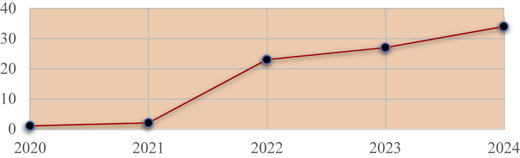
Eighty-seven documents were retrieved from the Scopus database by searching for the keyword “OPA” (Scopus search formula: TITLE-ABS-KEY [“ordinal priority approach”]). Given the incomplete nature of the 2014 data collection, as Figure 1 shows, this systematic literature assessment proves the growing utilization of the method in various fields. It also provides evidence of the method’s feasibility and validity, especially in supplier selection efforts (Pan et al., 2024; Afghah et al., 2023; Ayough et al., 2023).
However, the keyword search of the 75 collected documents did not provide evidence that the OPA has been hybridized with the Delphi method yet. The preceding discussion suggests that the Delphi-OPA method could serve as the appropriate framework for accomplishing this research’s objective. The lack of such a combination in past studies enhances this study’s contribution to the methodology. Delphi was previously combined with other MCDM techniques (Golbarg et al., 2018; Aydin and Seker, 2021; Wang et al., 2023), but as far as the author is aware, Delphi-OPA is the first of its kind. In this way, the research methods add to the current pool of research methodology knowledge. The Delphi-OPA approach combines expert consensus and MCDMs to provide a comprehensive and effective solution for SMI selection. It addresses qualitative and quantitative aspects simultaneously, giving it an advantage over traditional survey methods or standalone MCDMs. The proposed framework has the potential to offer a hierarchical prioritization of SMI selection criteria. However, the feasibility of the suggested framework needs to be verified. The next section presents the results of the investigation of the academic conference and event organizing sector based on the presented framework.
4. Findings
In round 1 of the Delphi study, 75% of the experts who participated were men and 25% were women. A perfect response rate of 100% was achieved. None of the experts advocated for removing any of the existing criteria, but an additional seven criteria were suggested. Each expert’s proposed new consideration was thoroughly examined for potential overlap with preexisting considerations. If clarification or a definition was needed, then the relevant experts were contacted directly, and AI was used to generate a definition based on expert input. For round 2 of the Delphi study, the questionnaire considered 21 factors: 14 criteria that were agreed upon by all respondents and 7 additional criteria. All experts who participated in round 1 of the survey were sent questionnaires; nine people filled out and returned the surveys, for a response rate of 75%. None of the experts favored removing any of the current criteria, but one more was proposed.
Therefore, 22 criteria were taken into account in the new round of questionnaires, 21 of which were agreed upon by all 9 respondents and 1 of which was a new factor. Round 3 obtained a response rate of 66.66% from those who filled out and round 2 surveys. With 6 received responses, none of the experts advocated for changing any of the existing criteria in any way. Hence, the list of 22 added criteria was utilized for the MCDM study. The following criteria were added to the initial Delphi items; the first seven were added in round 2, and the final one in round 3.
After-service activities: Refers to the level of SMI engagement and involvement in interactions or contributions that occur after the service or event by sharing, taking part in follow-up initiatives, and/or providing data and metrics to understand how the audience responded to the content or evaluating metrics such as likes, shares, and other relevant indicators to gauge audience engagement and sentiment.
Quality of followers: Focuses on the contribution quality of the SMI’s followers in enhancing the visibility by spreading the message or promoting the event to the target market and the overall quality and authenticity of their engagement.
Matching the SMI with the strategic mission: Examines the alignment between the SMI’s approach and values and the strategic mission or goals of the organizer. It focuses on assessing how well the SMI’s brand and content resonate with the organizer’s values and desired brand image. This also pertains to the avoidance of any sensitivity or conflict during or after service.
Creativity in services: Evaluates the range, diversity, and originality of the SMI’s content and services. It considers factors such as the creativity, innovation, and uniqueness of the SMI’s approach to creating and delivering promotional content.
Cross-platform presence: Refers to the presence and activity of the SMI across multiple social media platforms. It involves assessing the extent to which the SMI maintains an active and engaged presence on various platforms, allowing for broader reach and audience diversification.
Social responsibility and ethical consideration: Focuses on the SMI’s commitment to ethical practices, responsible behavior, and adherence to societal norms and values. It includes evaluating how the influencer handles sponsored content, collaborations, and interactions with their audience while maintaining transparency, authenticity, and ethical standards.
Collaboration history: Refers to the past experiences and interactions between the organizer and the SMI and involves evaluating previous collaborative projects or initiatives. This criterion considers the track record of successful collaborations, the outcomes, and the overall working relationship between the two parties.
Future possibilities: Pertains to the prospect of a persistent and lasting collaboration between the organizer and the SMI. This provides an overview of the potential and practicability of sustaining a long-term collaboration, taking into account various aspects such as congruence in long-term objectives, mutual commitment, coherence in values, and future collaborative possibilities.
For OPA, additional data collection beyond Delphi was necessary, which included asking the expert panel to rank each and every criterion that would be considered by OPA. All six respondents who participated in the last Delphi round provided their respective rankings. However, the data from two of the experts were deemed incomplete, and they opted not to provide further responses to the research, thereby terminating their participation in the study due to having a high amount of missing data. Therefore, OPA was conducted with input from four remaining experts, three SMIs, and a conference organizer. The experts were presumed to possess comparable weight in the decision-making process, and their data was treated with equal regard. Table 3 presents the positions of the experts regarding how to rank each of the criteria. Subsequently, an overview of the criteria weights was obtained by using the OPA linear optimization model as outlined in Equation (4).
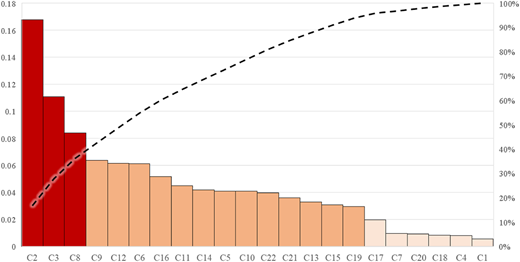
Equations (5)–(26) must be taken into account to derive the ultimate weights of criterion after the aforementioned model has been solved. A Pareto chart (Figure 2) illustrates the rank of each criterion.
The visual illustration depicts a hierarchical arrangement for selecting SMIs by using different criteria. The classification framework comprises three tiers, with each tier signifying the comparative significance of the standards. The initial tier, denoted by a deeper hue, comprises three criteria that are highly significant, which collectively contribute nearly 40% of the total weight assigned to all the criteria. Consequently, these three criteria are considered primary concerns in the SMI selection process. Options that fail to satisfy these three criteria are prone to be perceived as inferior alternatives. Subsequent to the initial tier, a total of 13 criteria are assigned moderate significance. These criteria are utilized for comparison among alternative SMIs. When evaluating different SMIs, the criteria in the first and second tiers together account for approximately 95% of the total weight assigned to all the criteria. The chart includes six additional criteria, indicated by a lighter color. Although these criteria do not hold the same level of importance as those in levels 1 and 2, they are still considered significant factors to be taken into account during the SMI selection process. To summarize, the chart presents a methodical strategy for choosing SMIs through a hierarchical prioritization of particular criteria.
5. Discussion
Only few studies similar to this one exist. Thus, the authors decided to conduct a literature review to find others that compare our results; the one that came closest was a study on celebrity selection in social media ecosystems by Shukla and Dubey (2022). Their study derives the ranking of celebrities (and influencers) using interactive and flexible criteria based on the value tradeoff approach while conceptualizing celebrity selection as a multi-attribute group decision-making problem. Therefore, their article suggests a quantitative objective approach to interactively incorporate customer preferences when selecting celebrities for a campaign or brand. They presented a generalized fuzzy evaluation approach that they improved and used secondary data on celebrities and hypothetical situations. Thus, their study’s findings were fully constrained by the availability of celebrity detailed data, among other limitations. The influence of various factors on the public’s perception and enjoyment of Taiwanese music festivals was the subject of a separate study by Lin and Chang (2020). They mapped out their development strategies using MCDM techniques. Their findings may help service providers improve the quality of their music festival plans and customer experiences.
5.1 Theoretical and methodological contributions
Our study presented the Delphi-OPA, an objective methodological approach to systematically evaluate and measure SMIs’ performance, as a novel way to handle the difficulties of service supplier selection in influencer marketing. This approach not only bridges the literature gap but also advances existing theories. It demonstrates how concepts such as adopting MCDM for service supplier selection and evaluating influencers’ fit affect marketing strategies. This study adds to the body of knowledge on influencer marketing service supplier selection. Moreover, it provides actionable recommendations for industry practice. This work is made possible by combining existing theories (including source credibility theory, social capital theory, and match-up hypothesis theory) and real-world inputs. Companies can use this work’s findings to improve their marketing decision-making processes by incorporating systematic and data-driven approaches. The findings can result in more successful marketing campaigns and a stronger adherence to established SMI selection-related theories. Although prior research recognized that SMI selection is an MCDM, it has frequently ignored the decision-making component. In contrast, research on decision-making has not provided any concrete, objective approaches to resolving this complex issue. According to the literature, many questions about SMI selection are unanswered, and more research is needed (Shukla and Dubey, 2022). According to Erdogan and Drollinger (2008), previous research focused on characteristics rather than the method used to select celebrities and the approach used in the process. SMI selection is a relatively unexplored and under-researched topic. In numerous situations, the selection process is unstructured, with little or no use of systematic investigation or reliable techniques (Shukla and Dubey, 2022). This study is one of the first to apply Delphi-OPA to address the practical challenge of using SMIs for social media marketing. The Delphi method was first used to elicit feedback from a panel of academic event industry experts and academic-related professional SMIs. The experts identified and agreed on 22 essential criteria for selecting SMIs through a series of iterative rounds. These criteria include aspects such as number of followers, historical content performance, content quality, and alignment with the target market. While all 22 criteria are important, their importance varies.
Next, OPA was used to rank and prioritize the identified criteria. OPA enables objective evaluation of the criteria by assigning weights and ranks based on their relative importance. The analysis resulted in a hierarchical order of prioritization, with three major top-level criteria carrying significant weight in the selection process. Following the top-level criteria, 13 mid-level criteria for comparative evaluation were identified. Six additional criteria were considered important, though not to the same extent as the top-level and mid-level criteria. During the selection of SMIs, the graphical representation of the criteria hierarchy assists decision-makers in making informed choices. Businesses can optimize their marketing efforts, reduce financial risks, and maximize opportunities for effectively reaching their target audience by considering the prioritized criteria.
5.2 Managerial and practical implications
To rank celebrities according to quantitative performance metrics and qualitative expert insights, the Delphi-OPA method combines the Delphi technique for expert consensus-building of decision criteria selection with OPA to systematically prioritize the decision criteria. Thus, this research helps fill the gap between theory and practice by providing a marketing decision-making framework that is both transparent and effective. Our methodology has substantial managerial implications for advertising and marketing agencies. The interactive and intuitive nature of service supplier selection can be navigated with a practical and scientific approach using the Delphi-OPA method. By putting this strategy into action with the help of data science or analytics teams, decision-makers can rank celebrities according to subjective opinions and objective measures of success. In addition, the Delphi-OPA method can be adjusted to suit different contexts, taking into account attributes that are pertinent to different marketing campaigns and the number of decision-makers. Delphi-OPA promotes inclusive decision-making processes that involve stakeholders and is objective, thus being especially useful in dynamic marketing communication contexts.
Finally, our suggested method provides a solid framework for increasing transparency, objectivity, and stakeholder involvement in choosing SMIs for advertising campaigns. Both theory and practice in marketing strategy and execution are advanced by the Delphi-OPA method, which combines expert insights with quantitative performance analysis. The case of conference marketing in this study illustrates the feasibility of our approach. The case study also provides a valuable contribution to the event marketing context. This study focuses on promoting conferences, but the developed framework can also be applied to commercial marketing for brand awareness campaigns, product/service launches, and consumer engagement initiatives because fundamental marketing principles apply to both academic and commercial settings. Academic events, like commercial marketing, prioritizes brand promotion and customer reach. To capture and retain a customer’s interest in both commercial settings and event marketing, selecting an appropriate marketing service supplier is critical for effectively conveying the value and significance of the product or service on offer. Managers seek to increase marketing effectiveness by selecting the most appropriate SMI, which involves matching influencer qualities that are relevant to the marketing campaign’s goals whether in relation to conferences or commercial products.
Event marketing is a relatively new communication technique that has expanded into event effectiveness (Setiawan et al., 2022). Kęprowska (2022) listed different types of events, including conferences for educational gathering, information exchange, and relationship building. Event marketing helps event organizers achieve their objectives, yet research is limited with regard to the effect of event marketing on customers’ purchasing behavior and loyalty (Setiawan et al., 2022). Social media is crucial for event marketing, enhancing engagement by incorporating activities that encourage attendees to engage with the brand (Karacaer, 2022). SMI selection is an understudied area, but it is an important component of event marketing and the process of selecting a marketing service provider for events. Thus, this study not only contributes to theory but also has significant implications for practice.
The proposed assessment framework in Figure 2 offers managers a systematic way to make strategic decisions for marketing campaigns. It has established standards against which potential SMIs will be evaluated, focusing on factors that contribute to campaign success. To rank SMIs, a knowledgeable individual or a decision-making team of specialists is required, including marketing professionals, communication teams, brand managers, and consultants who specialize in social media dynamics and influencer marketing. The goal is to use the developed framework to organize influencer candidates in accordance with established criteria. The decision-maker should reference the final Pareto chart produced by OPA to select the most suitable SMI for the marketing campaign. The chart’s three tiers make it easy to quickly decide which SMI candidate fits the decision criteria best. Decision-makers can prioritize high-ranking SMI candidates for further review by looking at the influencers who fall into the higher tiers. This methodical assessment ensures that influencers are chosen based on objective criteria that include expert insights and the SMIs’ consistency with influencer marketing objectives. In real-world scenarios, the developed framework is very likely to enhance the consistency of influencer marketing decisions, resulting in a cohesive and successful campaign implementation. This process enables efficient, data-driven decisions, ensuring that selected SMIs are closely aligned with the list of decision criteria and provide the best return on investment. It increases the likelihood that selected influencers will connect well with the intended audience and ensures that campaign resources are allocated to influencers who can deliver tangible results in terms of engagement and brand impact. This new framework, as a result, advances the practice, allowing managers to select influencers more effectively and efficiently.
6. Conclusion
As online social networks have grown, SMIs have become key marketing providers. Thus, this study introduces an innovative and systematic framework for selecting marketing service providers, with a specific focus on SMIs. The rise of social media platforms and online social networks in recent years has resulted in the emergence of SMIs who collaborate with brands to expand their reach and engage with target audiences. However, existing SMI selection processes frequently lack quantitative decision-making approaches and models, resulting in subjective and non-interactive decision-making, which can lead to poor choices and potential business losses. To fill this void, this study aimed to provide a comprehensive framework that takes into account key criteria, allowing decision-makers to objectively select the most appropriate influencers for their brands. This study’s methodology combines the Delphi method and OPA for the first time to create a systematic and rigorous decision-making process.
The proposed framework offers an objective and scientific approach to SMI selection, reducing subjective decision-making. It emphasizes key criteria beyond traditional financial metrics, such as content performance and market alignment. The hierarchical structure allows decision-makers to allocate resources and make strategic decisions based on each criterion’s importance. This framework helps marketers make informed decisions when selecting SMIs, increasing the effectiveness of influencer marketing campaigns. It aligns brands with SMIs with similar target demographics and personal positioning, addressing the shortcomings of existing selection processes and providing practical guidance for companies. There is still potential for further investigation in the future. One of this study’s limitations is that it is unclear whether the expert panel used in this study is relevant in other influencer marketing contexts. Moreover, because the study focused on conference promotion only, the findings should be evaluated for their relevance to SMI selection for other commercial products. Future research should consider updating or adapting this framework for use in different influencer marketing fields and other product sectors. Moreover, this study used MCDM to choose an SMI for digital word-of-mouth promotion. However, working with one SMI or creating a TV commercial means that you send out only one message. If 10 influencers are used, then 10 separate messages are communicated. Brands face a problem in determining how to systematically handle and integrate multiple messages at once (Leung et al., 2022). Future research may also want to look at what selection criteria interaction occurs when more than one SMI needs to be invited for collaborations.
The author would like to express their gratitude to expert panel of this study as well as to the reviewers for their insightful constructive comments and feedback, which greatly contributed to the improvement of this paper. I also acknowledge the use of AI-assisted tools for enhancing the readability of the text. This support has been instrumental in refining the clarity and coherence of our work.
Data availability statement: Data is available per reasonable request from the author.