


Deepfakes, the synthetic media generated using artificial intelligence to convincingly depict events that never actually occurred, pose a significant threat to society, yet we still lack efficient and effective countermeasures. While scholars have placed great hope in deepfake priming as a means to combat deepfakes, its effectiveness remains contested and superficial. The nuanced effects of deepfake priming are understudied, particularly regarding how it affects individuals' resilience to deepfakes across media. Therefore, this study examines the interactive effects of deepfake priming and the medium through which deepfakes are delivered on individuals' cognitive and behavioral responses to deepfakes.
We employed an online between-subject experimental design involving 298 US adults. The sample was recruited through a reputable online panel provider, Qualtrics, to ensure a diverse, demographically representative sample. Participants were randomly assigned to one of four experimental conditions in a 2 (deepfake priming vs. no priming) × 2 (news website vs. social media) factorial design. Then, we assessed their belief in the authenticity of the deepfake video and their intention to share it.
We find that priming significantly reduces the intention to share deepfakes but does not enhance the capability to identify them. The medium through which deepfakes are delivered (news website vs social media) does not moderate deepfake priming's influence on either belief in deepfakes or intent to share deepfakes.
This study is among the first to examine the contextual influence of media platforms on deepfake intervention. It enhances the understanding of the deepfake priming effect by exploring the intricate interplay between priming and platforms delivering deepfakes. Practically, it sheds light on developing tailored deepfake interventions and maintaining online information trust and engagement.
Introduction
Although disinformation is an ancient strategy for a geopolitical game, deepfakes have renewed disinformation's impact to the next level (Chesney and Citron, 2019; Gosse and Burkell, 2020). Deepfakes are increasingly difficult to detect due to technological advancements that enhance their visual realism and appeal, while viewers often rely on cognitive biases and mental shortcuts when processing information (Hameleers et al., 2022; Sundar et al., 2021). Individuals hold a long-existing preconception of video as a representation of reality (Sundar et al., 2021). Thus, the audio-visual nature of deepfakes significantly enhances their deceptive potential, as the integration of realistic visual and auditory cues strengthens their persuasive impact (Toder Alon et al., 2025). Moreover, deepfakes have the advantage of getting attention and stimulating engagement because of their emotionally arousing audio-visual elements (Lee and Shin, 2022). The multimodal storytelling dynamics are more likely to go viral on social media, amplifying the manipulative impact of deepfakes on a large scale (Zhang, 2025). As a result, deepfakes have become a leading societal threat, sparking widespread concern globally (CNA, 2024; Whiting, 2024).
The necessity for a thorough investigation into how the public views and reacts to deepfakes is highlighted by the devastating real-world implications of this synthetic media (Godulla et al., 2021; Hancock and Bailenson, 2021). Deepfakes have demonstrated their contribution to media distrust, public opinion manipulation, social division and polarization, and social unrest (Chesney and Citron, 2019; Hancock and Bailenson, 2021). Ultimately, preserving democratic processes and shielding digital users from exploitation depends on comprehending how the public feels about and engages with deepfakes (Godulla et al., 2021). Acquiring this knowledge is crucial in reducing possible adverse effects.
Many studies test the effectiveness of deepfake priming, the intervention strategy of informing the public about the prevalence and consequences of deepfakes in advance, hoping to activate their awareness and improve their resilience to deepfakes (Iacobucci et al., 2021; Shin and Lee, 2022). The existing evidence suggests controversial results. Rooted in priming theory, exposure to certain stimuli (priming) can influence an individual's subsequent thoughts, behaviors and perceptions, often without conscious awareness (Collins and Loftus, 1975; Scheufele and Tewksbury, 2007). The existing evidence supports the argument, showing that individuals who receive deepfake priming report a lower chance of believing in deepfakes and sharing intent on social media (Iacobucci et al., 2021; Shin and Lee, 2022). Warning individuals about deepfakes in advance could protect them from potential cognitive manipulation or behavioral engagement when encountering them later. However, deepfake priming fails to increase individuals' ability to detect deepfakes (Hancock and Bailenson, 2021; Ternovski et al., 2022). Instead, deepfake priming undermines the public trust in the media (Ahmed et al., 2023). Deepfake awareness, elicited through priming intervention, fosters a general skepticism toward all information, including authentic videos (Ahmed et al., 2023; Ternovski et al., 2022), partly due to the flawed biological structure used to detect advanced synthetic media (Hancock and Bailenson, 2021). Simply warning individuals without equipping them with tools may result in apathetic information consumers.
Despite the controversial findings, most existing research has primarily focused on the general effectiveness of deepfake priming; rarely have they investigated how platform-related factors interact with deepfake priming to influence their cognitive perceptions of and behavioral responses to deepfakes. Individuals often rely on heuristics when assessing the credibility of information, especially in fast-paced, information-rich environments (Metzger et al., 2003, 2010). These heuristic credibility decisions are shaped not only by the intrinsic qualities of the message, such as coherence or plausibility, but also by contextual cues surrounding it, including the perceived credibility of the source (who posts the information) and the medium through which it is disseminated (Metzger et al., 2003; Ou and Ho, 2024). Existing studies have initiated the examination of disinformation acceptance and engagement across information sources, grounded in the motivated reasoning theory (Clayton et al., 2019; Ludwig and Sommer, 2024) and social identity theory (Bi et al., 2025; Katsaounidou et al., 2025a; Sharma et al., 2023; Waruwu et al., 2021). However, little research addresses the differential psychological effects of priming across platforms (e.g. the informal, user-generated nature of social media vs. the institutional and professional news websites).
Since disinformation has been primarily associated with social media platforms (Bridgman et al., 2020), we believe that priming deepfakes may affect individuals' medium credibility heuristic. News media coverage primarily associates deepfakes with social media platforms, often portraying them as the primary channels through which such manipulated content circulates and gains influence (e.g. Lanxon and Chmouri, 2025). Studies also find that individuals who rely more on social media for information are more likely to hold misperceptions (Bridgman et al., 2020). Since that, some scholars argue that deepfakes may enhance online news media trust by encouraging individuals to rely on social feedback mechanisms rather than their imperfect biological senses when making decisions (Etienne, 2021). In this view, awareness of deepfakes could foster greater trust in digital information through collective evaluation and verification. Given the striking resemblance deepfakes bear to reality, the chance to detect them is like gambling (Bray et al., 2023; Jin et al., 2025). Therefore, individuals might trust reliable media platforms more, such as legitimate and professional news websites, in the age of epistemic uncertainty (Etienne, 2021). However, it remains a question how deepfake priming sways individuals' media trust across different platforms.
In the current digital information ecosystem, online news websites and social media are the most popular sources for news consumption (Katsaounidou et al., 2025a; Pew Research Center, 2025). In the United States, news websites and social media are among the most frequently used channels for accessing news, replacing traditional news media such as television, print and radio (Pew Research Center, 2025). However, these digital platforms foster exposure to disinformation. Regarding the channels through which respondents encountered false information, social media emerged as the dominant source, cited by the majority (60.9%) of participants and news websites accounted for another notable share (14.9%) of reported encounters (Katsaounidou et al., 2025a). Thus, whether deepfake priming undermines overall media trust across platforms or only reduces users' reliance on unreliable and informal news sources (such as social media) remains unclear, as it has differential democratic consequences.
Therefore, this study examines the interactive effect of deepfake priming (versus no priming) and the medium of the deepfake video (news website versus social media) on belief in deepfakes and sharing intention. Although deepfakes typically include images, audio and videos, we select a deepfake video in this experiment. Given that video-based deepfakes constitute the most influential form of synthetic media, combining both visual and auditory manipulations, they most vividly capture the defining characteristics and persuasive power of deepfakes in general. Therefore, focusing on deepfake videos provides a theoretically and empirically representative context for examining the broader psychological and communicative effects of multimodal disinformation. This study adds to the knowledge of deepfake priming as we investigate the conditioning circumstances in which priming works, considering the interplay of platform-level factors (i.e. deepfake medium). This study offers insights into the mechanisms driving cognitive adjustments toward audio-visual content across media platforms after deepfake priming. The study offers valuable insights for developing more effective deepfake countermeasures.
Literature review
Deepfakes and their interventions
Although disinformation has long been employed as a geopolitical tool to manipulate public opinion, the emergence and advancement of deepfake technology have revitalized its power. By integrating multimodal elements, deepfakes transcend the limitations of traditional text-based disinformation (Ahmed, 2021). Such multimodal dynamics not only enhance perceptual realism but also heighten emotional engagement and cognitive immersion, thereby increasing the likelihood of persuasion and engagement (Hwang et al., 2021; Jin et al., 2025; Park et al., 2024; Toder Alon et al., 2025). Empirical research supports this distinction, demonstrating that audio-visual disinformation exerts stronger effects on individuals' cognitive processing, emotional arousal and subsequent behavioral engagement than purely textual forms (Allen et al., 2024; Hwang et al., 2021; Jin et al., 2025; Lee and Shin, 2022; Park et al., 2024). This heightened influence of multimodal disinformation is further amplified by generative AI, which lowers the technical and financial barriers to producing highly realistic synthetic media, thereby enabling the rapid, scalable and decentralized creation and dissemination of deepfakes (Zhang, 2025).
Early solutions of deepfakes largely approached the phenomenon as a technical challenge, focusing on developing detection tools to counter audio-visual manipulations generated by artificial intelligence (Katsaounidou et al., 2020; Gulzar Hussain et al., 2025; Tolosana et al., 2020). On one hand, existing visual disinformation detection tools are not as sophisticated as detection systems developed for text-based disinformation (Gulzar Hussain et al., 2025). The image detection system embedded on Twitter (now X) only achieves 58.30% of accuracy, slightly higher than the guessing chance (Gulzar Hussain et al., 2025). On the other hand, the continual learning and adaptation inherent in deepfake technology enable progressive improvements across generations, often outpacing detection methods. As a result, even the most advanced detection tools struggle to keep up with the sophistication and realism of modern deepfakes, suggesting that technical solutions alone are unlikely to neutralize the threat.
As deepfake creation tools have become widely accessible, the problem has shifted from a purely technical issue to a societal one. Individuals with minimal technical expertise can now generate convincing forgeries using AI, and the rapid dissemination of such content via social media amplifies its potential impact. Consequently, addressing deepfakes requires strategies beyond technical solutions, focusing on public awareness and social interventions (Godulla et al., 2021). Social science researchers emphasize two main approaches to counter disinformation: debunking, which provides evidence-based corrections, and prebunking, which inoculates audiences against falsehoods before exposure. Debunking has several inherent limitations. First, debunking is limited in scope because it relies on targeted, case-by-case corrections and is challenging to implement effectively across the vast volume of deepfakes circulating online (Lanxon and Chmouri, 2025). Additionally, existing fact-checking practices primarily focus on rectifying misleading textual claims following authentic images; whereas they lack the technical resources and institutional capacity to systematically identify, verify and contextualize visual disinformation (Zecchinon and Standaert, 2025). Second, persistent, belief-congruent or visually compelling disinformation often resists correction, whereby individuals retain initial false beliefs despite corrective efforts (Walter and Tukachinsky, 2020). These challenges highlight the limitations of corrective interventions for deepfakes.
Therefore, more scholars have advocated for prebunking, a proactive strategy that prepares individuals to recognize and resist disinformation in advance (Deng and Ahmed, 2025; Hameleers, 2024). Unlike debunking, which responds to false information after exposure, prebunking equips individuals to critically assess misleading content beforehand, reducing its potential impact on beliefs and decision-making (Deng and Ahmed, 2025; Hameleers, 2024). Priming is a widely used prebunking technique designed to heighten individuals' awareness of deepfakes, preparing them to critically evaluate and process multimodal disinformation when they encounter it (Lee and Jang, 2023; Shin and Lee, 2022).
Deepfake priming
Priming theory holds that the human mind organizes information into interconnected networks, in which activating one concept can trigger the activation of associated concepts (Collins and Loftus, 1975). This process occurs because exposure to specific stimuli increases the accessibility and salience of related mental representations, which can influence how individuals interpret and process subsequent information (Wyer and Srull, 2022). When the media covers a topic, this exposure can activate related memories, making them more readily retrievable and influential when making judgments about subsequent issues or persons (Scheufele and Tewksbury, 2007).
In the context of deepfakes, priming the public about their prevalence and harms should, in theory, heighten awareness and activate pre-existing knowledge structures related to deepfakes (Iacobucci et al., 2021). This activation enhances the salience of deepfakes in their available knowledge pool, making individuals more attuned to the risks of manipulated synthetic media (Iacobucci et al., 2021). Therefore, priming deepfakes can influence individuals' subsequent attitudes and decision-making regarding the information they receive. Scholars examining the impact of deepfake priming have consistently demonstrated its cognitive and behavioral influence (Hwang et al., 2021; Iacobucci et al., 2021; Lee and Jang, 2023; Shin and Lee, 2022). In these studies, participants were informed about the definition, existence and potential effects of deepfakes. Those in the priming group were less likely to believe the deepfake video shown to them and exhibited lower engagement intentions than those in the nonpriming group (Lee and Jang, 2023; Shin and Lee, 2022).
Priming functions by making deepfakes salient in individuals' mindsets, ensuring that relevant information is the most accessible in subsequent information processing and decision-making (Iacobucci et al., 2021). Therefore, when they receive a video after priming deepfakes, they will easily recall knowledge about deepfakes and apply it to make cognitive decisions. In this case, priming deepfakes heightens their awareness and vigilance, preparing them to remain alert and cautious when processing and assessing subsequent information. Therefore, we propose:
Priming deepfakes has a negative impact on the belief in the video they come across later.
Social media has fundamentally transformed the news environment and the way news is consumed, produced and disseminated. With a rapid shift in the news consumption habits of large populations (Buturoiu et al., 2023), digital news outlets have adapted to the evolving preferences and behaviors of online news consumers. To maximize engagement and visibility, many digital news platforms have integrated features that facilitate seamless connectivity with social media. Digital users can share news articles and videos on their personal social media pages. This integration has significantly increased the speed and reach of news dissemination, making social media a dominant force in shaping public discourse. However, this also raises concerns about the spread of disinformation, like deepfakes, as content can quickly go viral without thorough verification and regulation (Deng and Ahmed, 2025; Zhang, 2025).
In this digital landscape, priming deepfakes can impact individuals' sharing intent. When individuals are primed about deepfakes, they become more cautious about their engagement. According to priming theory, once individuals are exposed to warnings about deepfakes, the concept becomes cognitively salient, making all associated knowledge immediately available (Iacobucci et al., 2021). As a result, even if the video they receive seems highly compelling or emotionally engaging, they will exercise heightened skepticism before sharing it (Lee and Jang, 2023).
This effect is particularly important in an era in which disinformation is embedded in visually persuasive, sensational formats to trigger impulsive sharing behavior (Iacobucci et al., 2021). Priming can heighten concern about media manipulation. Instead of engaging with videos impulsively, individuals are more likely to pause, reflect and critically assess whether the content they are about to share could be misleading or deceptive. When individuals perceive high disinformation prevalence on social media, they become more hesitant to share any news, whether true or false, both online and offline (Hwang et al., 2021; Lee and Jang, 2023; Yang and Horning, 2020). This hesitancy stems from a general distrust of online information, as users recognize the risks of unknowingly spreading false or manipulated content.
Additionally, the sharing of disinformation is very destructive to individuals' reputations. Although misinformation is commonly shared on social media, individuals in general still perceive this behavior negatively (Altay et al., 2022; Lee and Jang, 2023). Studies have indicated that individuals often refrain from sharing inaccurate or false information on social media to maintain a positive public image (Altay et al., 2022), even though it appears to them (Lee and Jang, 2023). Priming deepfakes may increase the fear of losing reputation if the video they share turns out to be false. This concern further reinforces their tendency to avoid reckless sharing unless they are completely confident in its authenticity (which is hard to achieve). Studies suggest that disinformation priming inhibits news-sharing intention, regardless of whether the disinformation is accurate (Hwang et al., 2021; Lee and Jang, 2023; Yang and Horning, 2020). The resistance to sharing any news, even if it is accurate, is adopted as a coping mechanism to avoid reputational and relationship losses from sharing misinformation (Altay et al., 2022). Based on the evidence, we propose:
Priming deepfakes has a negative impact on the intention to share.
Moderation of the deepfake medium
When unraveling the effectiveness of deepfake priming, it is essential to consider the medium through which these manipulated videos are disseminated. However, most studies tap into the simple effect of priming while ignoring the influence of platform-level factors. When judging information credibility, platform-based heuristics are an essential source (Fisher, 2016; Melican and Dixon, 2008; Metzger et al., 2003). Media credibility refers to the heuristics derived from the media platform (Metzger et al., 2010). Some platforms receive higher user trust than others. The same information on different media platforms may generate different cognitive and behavioral responses (Melican and Dixon, 2008). Thus, we assume that the effectiveness of deepfake priming intervention is not uniform across various media platforms but is instead dependent upon the platform.
Compared to the largely decentralized, user-generated nature of social media, online news websites are more regulated and institutionally vetted. Individuals tend to place greater trust in news websites than in social media platforms, due to the institutional credibility and regulatory oversight associated with traditional journalistic outlets (Karlsen and Aalberg, 2023). News websites are often perceived as professional, fact-checked and more accountable. In contrast, social media platforms, characterized by user-generated content, rapid information dissemination and minimal gatekeeping mechanisms, are often viewed as less reliable sources of news (Karlsen and Aalberg, 2023). Simply showing the same news content on social media channels instead of an official news website can significantly reduce its perceived credibility (Karlsen and Aalberg, 2023). This phenomenon is consistent with the media credibility heuristic, which posits that the platform serves as a cognitive shortcut for assessing news credibility.
Deepfake priming can asymmetrically affect this media credibility heuristic across different media platforms. Existing studies suggest how deepfake priming intensifies distrust in social media (Tandoc et al., 2018; Vaccari and Chadwick, 2020). Social media platforms are widely regarded as fertile ground for disinformation (Lanxon and Chmouri, 2025; Tandoc et al., 2018). Therefore, priming messages not only heighten cognitive vigilance but also reinforce the association between social media and deepfakes, thereby solidifying the perception that social media is an unreliable medium for news consumption (Hwang et al., 2021; Shin and Lee, 2022; Vaccari and Chadwick, 2020). Consequently, primed individuals are more likely to approach all information on social media with a default level of skepticism due to the salience of the connection between social media and deepfakes. However, it is still unclear how deepfake priming influences individuals' cognitive processing of information from news websites.
Moreover, deepfake priming may increase reliance on the media credibility heuristic, as the content heuristic is disrupted. Individuals can no longer rely on the richness of content as a measure of credibility, because nowadays (Sundar et al., 2021) deepfake technology enables the easy fabrication of audio-visual information. Therefore, media heuristics may serve as an alternative for determining information credibility. Recent scholars articulate that deepfakes may advance online trust because once individuals become aware of deepfakes, they may stop trusting their imperfect biological senses and rely more on social trust (Etienne, 2021). The high reputation of journalism could serve as one source. In this view, deepfake priming might enhance trust in established journalistic outlets by underscoring their role as reliable gatekeepers of information.
Conversely, another body of research suggests that deepfake priming may undermine trust in all multimodal content. Once individuals are warned about the deceptive nature of deepfakes, they tend to develop a generalized skepticism toward multimodal content, even when no explicit cues suggest manipulation (Ahmed et al., 2023; Hameleers, 2023; Katsaounidou et al., 2025b; Lee and Jang, 2023; Ternovski et al., 2022). Deepfake priming undermines the authenticity of all multimodal information, contributing to widespread distrust and skepticism.
Despite these competing perspectives, empirical research remains scarce on the interactive impact of deepfake priming and media platforms on credibility judgments. Thus, we ask:
How does the deepfake medium moderate the effect of deepfake priming on belief in the deepfake video?
The impact of deepfake priming on sharing dynamics introduces an additional layer of complexity. On one hand, given that deepfake priming makes audiences more aware of the deceptive potential of AI-generated content, it may exacerbate the trust gap between social media and news websites (Etienne, 2021). Deepfakes are predominantly disseminated on social media platforms. Unlike traditional news websites, which adhere to journalistic standards and fact-checking protocols, social media allows deepfakes to spread quickly through user-generated content, often without immediate verification (Tandoc et al., 2018). Therefore, deepfake priming strengthens the connection between the deepfake phenomenon and social media (Ahmed, 2021; Shin and Lee, 2022; Ternovski et al., 2022). This suggests that deepfake priming may have a differential impact on information engagement across media platforms, with individuals being more willing to engage with deepfakes from reputable news websites than from social media to avoid the personal repercussions of spreading misinformation (Altay et al., 2022).
On the other hand, an alternative scenario is also possible, particularly given the differential expectations across media platforms. According to the expectancy violation theory (Burgoon, 2015), individuals have baseline expectations for different communication contexts; violating such expectations may generate negative responses. Research has shown that when political candidates use informal language in tweets, it violates audiences' expectations and results in more negative attitudes toward the candidate and reduced support (Bullock and Hubner, 2020). Similarly, if a deepfake appears on a news website where audiences do not expect to encounter deceptive media, this expectancy violation could backfire, reducing engagement with the content. Whereas, when individuals experience a deepfake video on a social media platform, they may not be particularly surprised since social media is already associated with manipulated content. Therefore, even if deepfake priming increases skepticism, individuals might still engage with such content for other motivations, like fun (Li and Wan, 2023; Lu and Yuan, 2024).
Taken together, these perspectives suggest that the interaction between deepfake priming and media platforms may produce contrasting effects on behavioral engagement intention. From a media credibility heuristic perspective, news websites may retain more credibility, making individuals more likely to engage with content from these platforms (Karlsen and Aalberg, 2023). However, deepfake priming may amplify expectancy violations toward deepfakes on news platforms, leading to greater disengagement (Burgoon, 2015). Considering the lack of evidence, we ask:
How does deepfake medium moderate the effect of deepfake priming on deepfake sharing intent?
Figure 1 demonstrates the conceptual framework of this study.
 The conceptual model consists of four rectangular boxes connected by solid arrows. At the top left, a rectangular box is labeled “Sources (news website versus social media)”. At the center left, a rectangular box is labeled “Priming (versus no priming)”. On the right side, two rectangular boxes are vertically stacked: the top box is labeled “Belief in deepfakes”, and the bottom box is labeled “Deepfakes sharing intention”. A solid diagonal arrow begins from the “Priming (versus no priming)” box and points upward to the “Belief in deepfakes” box. A solid diagonal arrow begins from the “Sources (news website versus social media)” box and points downward to the diagonal arrow that connects “Priming (versus no priming)” and “Belief in deepfakes”. A solid diagonal arrow begins from the “Priming (versus no priming)” box and points downward to the “Deepfakes sharing intention” box. Finally, a solid diagonal arrow begins from the “Sources (news website versus social media)” box and points downward to the diagonal arrow that connects “Priming (versus no priming)” and “Deepfakes sharing intention”.
Conceptual framework. Source: Authors’ own work
The conceptual model consists of four rectangular boxes connected by solid arrows. At the top left, a rectangular box is labeled “Sources (news website versus social media)”. At the center left, a rectangular box is labeled “Priming (versus no priming)”. On the right side, two rectangular boxes are vertically stacked: the top box is labeled “Belief in deepfakes”, and the bottom box is labeled “Deepfakes sharing intention”. A solid diagonal arrow begins from the “Priming (versus no priming)” box and points upward to the “Belief in deepfakes” box. A solid diagonal arrow begins from the “Sources (news website versus social media)” box and points downward to the diagonal arrow that connects “Priming (versus no priming)” and “Belief in deepfakes”. A solid diagonal arrow begins from the “Priming (versus no priming)” box and points downward to the “Deepfakes sharing intention” box. Finally, a solid diagonal arrow begins from the “Sources (news website versus social media)” box and points downward to the diagonal arrow that connects “Priming (versus no priming)” and “Deepfakes sharing intention”.Conceptual framework. Source: Authors’ own work
Methodology
Procedure
The study applied a self-administered online between-subject experiment of a 2 × 2 design. The study received approval from the ethics committee of the first author's institution. The participants were recruited through an online panel provided by Qualtrics, a widely used social science survey platform that offers a large, diverse, voluntary online sample. The participants were contacted directly by Qualtrics, ensuring a representative quota sampling in terms of gender and age. We used G*Power analysis and determined a sample size of 178 (effect size 0.25, alpha value 0.05, power 0.80). A total of 298 participants in the United States completed the study. Their demographic characteristics are summarized in Table 1.
Demographics of the participants (N = 298)
| Demographics | Features |
|---|---|
| Age | Mean = 45.59, SD = 15.42, range from 19 to 80 |
| Gender | 50.7% males, 49.3% females |
| Race | 68.8% Caucasian, 13.8% African American, 11.4% Latino or Hispanic … |
| Religion | 37.2% Christian, 19.8% Agnostic, 16.1% Catholic … |
| Income (monthly) | Median = $5,000 to $6,999; 22.1% $3,000 to 4,999, 16.4% $5,000 to 6,999, 12.1% $7,000 to 8,999 … |
| Education | Median = bachelor's degree; 43.6% bachelor's degree, 28.2% some college, 14.8% master's degree … |
Note(s): The randomization check analysis shows that participants from these four conditions are evenly distributed in terms of these factors. Therefore, in the hypothesis test, these factors were not controlled because the random assignment neutralized the effect of these factors on the interest relationship
Eligible participants were then randomly assigned to each condition. At the first step, half of the participants see a deepfake priming text, and the other half receives no text before the video. Then, we present all participants with a deepfake video, either embedded on a social media platform or on an online news website. Participants were required to watch the full deepfake video before proceeding, as the survey design restricted navigation until the video had been played in its entirety. This procedural safeguard ensured that all participants were exposed to the stimulus. After viewing the video stimuli, participants were also asked whether they could watch the videos successfully to ensure that no technical problems disrupted their stimulus exposure. Finally, they completed a questionnaire assessing their intention to share and their perceived accuracy of the core statements in the video. Then, we asked basic demographic questions and debriefed participants at the end.
Stimuli design
Deepfake priming: Participants were first presented with a priming message adapted from previous experiments (Shin and Lee, 2022; Ternovski et al., 2022). This message highlighted three key aspects of deepfakes: their low-cost production, their widespread presence on social media and the challenges of detection. The control group received no message, following previous experimental studies (Shin and Lee, 2022; Ternovski et al., 2022), to establish a clean baseline for comparison. This way, we minimize the risk of unintentional priming or cognitive activation that might arise even from neutral or unrelated content. To ensure that participants in the priming conditions read the message as intended, we implemented a system constraint that prevented participants from proceeding to the next page until the average reading time for the message had elapsed. We included the priming message in Appendix.
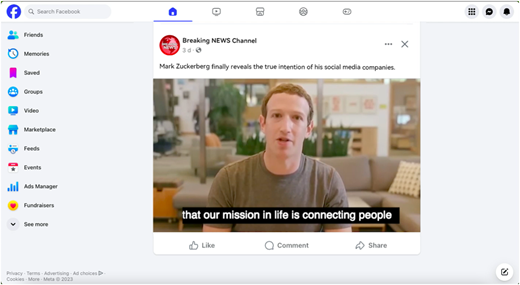
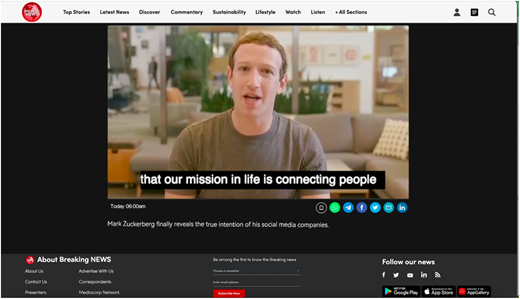
Medium delivering deepfakes: We selected a nonpolitical deepfake video that was widely spread at the time and previously used in an experimental study examining deepfake persuasiveness and priming effectiveness (Hwang et al., 2021). The video features Mark Zuckerberg delivering a speech about the mission of his social media company: to collect data from people and profit from their private data instead of connecting with people. We selected this video for two reasons. First, this video has high realism and fooled many people on social media. Second, the video does not contain apparent partisan cues, so that individuals' identity does not exert much influence (Bi et al., 2025; Sharma et al., 2023; Waruwu et al., 2021).
Before watching the video, they were informed of the medium used to deliver deepfakes, such as “Now we are presenting a video published on the news website/social media.” We also embedded the video in a news website or social media [we resembled a Facebook news feed page because it is the highest-rated source for news on social media (Buturoiu et al., 2023)] to make it look more realistic, accompanied by a short text description. On the social media page, we only include platform cues, like account profiles, interaction affordances, and contextual features of real social media posts. But we don't include any social endorsement data that may affect individuals' perceptions and engagement. For an online news website, we fabricated the news website to avoid individuals' pre-existing attitudes toward the website. This approach follows previous study designs that compare individuals' credibility attributed to various intermediary platforms (Karlsen and Aalberg, 2023). Media trust is shaped not only by heuristics related to the source of the information but also by the platform through which the content is distributed, as platforms themselves function as salient credibility cues (Karlsen and Aalberg, 2023). This study examines the latter. By closely replicating the visual cues of a news website and a social media platform, the experimental setup enhances ecological validity and allows for controlled yet realistic assessment of participants' cognitive and attitudinal responses. The design is included in Appendix.
Measures
Belief in deepfakes adopted an existing approach (Ahmed et al., 2023), asking individuals to rate the accuracy of main statements expressed in the video (M = 3.38, SD = 1.28, α = 0.89), such as “The mission of Mark Zuckerberg's social media companies is to manipulate people”. We provided four items to participants and averaged them to represent individuals' beliefs in deepfakes.
The sharing intention of the video consisted of three items adopted from previous studies (Iacobucci et al., 2021) (M = 1.96, SD = 1.30, α = 0.97), such as “I think this video is worth sharing with others.” We asked them to rate their agreement with a 5-point Likert scale (1 strongly disagree; 5 strongly agree). The measurements can be seen in Appendix.
Analysis
To ensure the validity of our experimental findings, we conducted a randomization check across the four experimental conditions. The results confirmed that participants were evenly distributed across key demographic variables, including age, gender, education level and political orientation. This balanced distribution suggests that the random assignment procedure successfully minimized systematic differences between groups. Consequently, any observed differences in outcome variables can be attributed to the experimental manipulation. Then, we proceeded with the regression analysis without controlling for covariates, as doing so is unnecessary when the randomization process has effectively equalized potential confounders across conditions.
Results
Manipulation check
For the video medium, the study asked participants which platform the video they just saw came from. Independent t-tests were conducted. Participants in the social media group (M = 0.66, SD = 0.48) selected social media more than those in the news website group (M = 0.38, SD = 0.49). The difference is significant, as the probability of error is less than 5% t(296) = 4.92, p < 0.001.
For the manipulation of priming, we didn't add a manipulation question following the previous approach (Shin and Lee, 2022). Otherwise, both groups would be primed to the deepfake topic by the question.
Hypotheses test
We first checked the distribution of our key dependent variables. Based on the one-sample Kolmogorov–Smirnov test, the participants' belief in deepfakes (D(298) = 0.15, p < 0.001) and sharing intention (D(298) = 0.28, p < 0.001) were not normally distributed. This renders traditional parametric methods such as OLS regression inappropriate. To address this, we dummy-coded both variables and employed binary logistic regression, which does not require normality assumptions and is well-suited for modeling binary outcomes. This approach ensures that the analysis remains statistically robust and aligns with best practices in social science research when working with non-normally distributed dependent variables.
Then, we applied the nonparametric analysis – binary logistic regression to test how deepfake priming and media platforms affect whether individuals are vulnerable to falling into deepfakes and engaging with them. We used hierarchical models to examine the effects of model 1 (main effects of deepfake priming and media platforms) and model 2 (two-way interactive effect between deepfake priming and media platforms) on belief in deepfakes and sharing intention, respectively. Table 2 summarizes the regression results.
Logistic regression results of deepfake priming and medium on belief in deepfakes and sharing intention (N = 298)
| Antecedent | Belief in deepfakes | Sharing intention | ||||||||
|---|---|---|---|---|---|---|---|---|---|---|
| B | SE | Exp(B) | p | WALD | B | SE | Exp(B) | p | WALD | |
| Block 1 | ||||||||||
| Constant | 0.68 | 0.39 | 0.08 | 0.08 | 3.04 | 0.37 | 0.40 | 1.44 | 0.35 | 0.85 |
| Priming (1 no; 2 yes) | −0.34 | 0.24 | 0.71 | 0.15 | 2.08 | −0.52* | 0.24 | 0.59 | <0.05 | 4.54 |
| Medium (1 social media; 2 news website) | −0.17 | 0.24 | 0.84 | 0.46 | 0.54 | −0.41 | 0.24 | 0.65 | 0.08 | 2.97 |
| R2 = 1.2% | R2 = 3.3% | |||||||||
| Block 2 | ||||||||||
| Constant | 1.19* | 0.55 | 3.31 | <0.05 | 4.73 | 0.68 | 0.52 | 1.98 | 0.19 | 1.68 |
| priming*medium | 0.64 | 0.47 | 1.90 | 0.17 | 1.85 | 0.44 | 0.48 | 1.56 | 0.36 | 0.83 |
| R2 = 2.0% | R2 = 3.7% | |||||||||
Note(s): *p < 0.05; **p < 0.01; ***p < 0.001
From Table 2, we can see that priming deepfakes does not generate a significant main effect on belief in deepfakes (B = −0.34, SE = 0.24, p = 0.15, Exp(B) = 0.71, WALD = 2.08), rejecting H1a. Although participants primed about deepfakes (N = 151, M = 1.52, SD = 0.50) are less likely to believe in deepfakes compared to those who are not primed (N = 147, M = 1.61, SD = 0.49), the difference is not statistically significant. To answer RQ1a, we can see that the medium of deepfakes has no direct impact on belief in deepfakes (B = −0.17, SE = 0.24, p = 0.46, Exp(B) = 0.84, WALD = 0.54) and there is no significant interaction effect between deepfake priming and media platforms (B = 0.64, SE = 0.47, p = 0.17, Exp(B) = 1.90, WALD = 1.85). We see a marginal difference of belief in deepfakes delivered through social media (N = 149, M = 1.58, SD = 0.49) and deepfakes on news websites (N = 149, M = 1.42, SD = 0.49), but this is not statistically significant. It suggests that priming manipulation does not work differently depending on whether the video is presented on a news website or on social media.
Then, we looked at the impact on the behavioral intention. The descriptive statistics suggest a difference across groups. Individuals from the priming group are less likely to share the deepfakes (N = 151, M = 1.31, SD = 0.46) compared to those in the condition group (N = 147, M = 1.43, SD = 0.49). For the difference across media platforms, participants watching deepfakes delivered through social media (N = 149, M = 1.42, SD = 0.49) are more likely to share than those seeing deepfakes on a news website (N = 149, M = 1.33, SD = 0.47). The same regression models were applied to test hypotheses. From Table 2, we can see that deepfake priming generates a significant main effect on the sharing intention (B = −0.52, SE = 0.24, p < 0.05, Exp(B) = 0.59, WALD = 4.54), supporting H1b. We can see a moderate decrease in the odds of expressing higher sharing intention under the priming condition, which provides meaningful evidence supporting H1b that deepfake priming can effectively suppress the willingness to share potentially misleading content. To answer RQ1b, the interactive effects were added to model 2. Medium delivering deepfakes does not affect sharing intention (B = −0.41, SE = 0.24, p = 0.08, Exp(B) = 0.65, WALD = 2.97) or interact with deepfake priming (B = 0.44, SE = 0.48, p = 0.36, Exp(B) = 1.56, WALD = 0.83). Neither the medium alone nor its combination with priming influences participants' deepfake sharing intention.
Discussion
This study examines the main and interactive effects of deepfake priming and deepfake medium on belief in deepfakes and the intention to share deepfake videos. The primary findings suggest that deepfake priming does not affect individuals' ability to identify deepfakes but significantly reduces their sharing intention. However, the media platforms delivering deepfakes do not moderate the effectiveness of the priming strategy on deepfake identification or on the intention to propagate deepfakes. This study contributes to the nuanced understanding of the deepfake priming effectiveness.
Firstly, our findings show that although priming successfully lowers individuals' propensity to share, it has no discernible effect on improving their recognition accuracy. In alignment with priming theory (Collins and Loftus, 1975; Scheufele and Tewksbury, 2007), priming deepfakes to audiences makes them a salient topic in their minds and instantly available for further processing (Iacobucci et al., 2021). Therefore, when they receive a video after priming deepfakes, the most immediately available information is the concern of deepfakes. This only prepares them to be alert before sharing the information (Hameleers, 2023; Shin and Lee, 2022) but does not enhance their capability to identify deepfakes. Despite heightened awareness, it remains challenging to differentiate hyper-realistic synthetic digital content (Allen et al., 2024; Jin et al., 2025; Katsaounidou et al., 2025b).
This cognitive assessment and behavioral intention discrepancy highlights the unintended consequences of deepfake priming, as corroborated in previous literature (Hameleers, 2023; Ternovski et al., 2022). While deepfake priming serves as a preventive measure to enhance public vigilance against synthetic media, it may also lead to generalized disengagement from online information. By heightening individuals' awareness of the potential for deception, priming can foster a climate of pervasive skepticism that extends beyond deepfakes to include authentic content as well (Ternovski et al., 2022; Vaccari and Chadwick, 2020). This heightened state of alertness may cause individuals to adopt an overly cautious or avoidant stance toward all audio-visual content, regardless of their credibility (Ahmed, 2023; Ahmed et al., 2023; Hameleers et al., 2022). As a result, deepfake priming may inadvertently reduce users' motivation to engage with legitimate news, as it does not aid in deepfake identification.
Coping theory explains this disparity between the effectiveness of deepfake priming on behavioral intention and cognitive assessment. According to coping theory, individuals' cognitive assessments of the circumstances and their perceived capacity to handle the threat affect their responses (Chang, 2021; Lee, 2021). Priming may change how individuals behave by altering their motivation and awareness, but it doesn't always equip them with the mental tools or abilities to recognize deepfakes. Rather than acting on a cognitive level, which would improve the capacity to identify deepfakes, the priming effect essentially acts on a behavioral level. This implies that while increasing deepfake awareness can stop them from spreading, developing users' ability to recognize these manipulated media may require more effective tactics that boost individuals' capacity to identify deepfakes.
Our findings also highlight the complexity of online information sharing. Believing in the deepfake is not the sole driver of sharing intention; instead, individuals may share deepfakes for other motivations. For example, scholars found intentional deepfake sharing on social media, driven mainly by fear of missing out and by social media news use (Ahmed, 2022). Other scholars also point out the weaponization of disinformation sharing to discredit political opponents and that the lack of moral consciousness drives this behavioral propensity (Sharma et al., 2023). Enjoyment of deepfakes can increase the social acceptance of deepfakes sharing, thus motivating sharing (Li and Wan, 2023). All these other motivations may be affected by the presence of deepfake priming, which highlights the threats and social repercussions of deepfakes. The priming effect may simultaneously activate knowledge and awareness related to deepfakes, such as moral consciousness and the importance of information accuracy. Thus, although priming may not always sharpen detection skills, it can still activate caution, prompting individuals to think twice before sharing potentially deceptive content.
By examining the interactive effect of deepfake priming and media platforms, our findings also provide initial empirical evidence of a consistent effect of deepfake priming across media platforms: deepfake priming equally alarms digital users about content from social media and news websites. This finding echoes the mainstream concern about deepfakes: awareness of deepfakes elicits generalized epistemic uncertainty, cynicism and apathy (Ahmed et al., 2023; Ternovski et al., 2022). Media heuristics, the credibility shortcuts derived from the media platform that delivers the messages, are important sources for credibility assessment (Metzger et al., 2003, 2010). Normally, news websites gain higher credibility heuristic than social media (Karlsen and Aalberg, 2023). However, our results suggest that deepfakes make it difficult for news websites to maintain their reputations in the current media environment. This may happen because more agents of fabricated information produce fake news websites that seem legitimate and trustworthy (Billard and Moran, 2023). Therefore, it is overly optimistic to say that deepfakes may enhance public trust in modern media by shifting trust from unreliable, user-generated social media platforms to professional and institutional news websites (Etienne, 2021). Our study offers an initial investigation and provides a deeper understanding of the unintended effects of deepfake priming on general distrust and disengagement from multimodal information, especially in the digital era.
Practically, our findings have several real-world implications. First, this study underscores the need to incorporate more effective tactics into media literacy education beyond priming interventions to enhance digital users' ability to recognize deepfakes. According to coping theory in the misinformation context (Chang, 2021), identifying deepfakes requires not only awareness but also the development of coping mechanisms, such as media literacy and critical thinking, to address the cognitive challenges posed by deepfakes. Priming interventions are insufficient in providing individuals with the cognitive skills necessary for precise identification, underscoring the need for more tactics to enhance recognition abilities. For example, deepfake inoculation games are a promising approach (Roozenbeek et al., 2021). These games offer immersive and interactive experiences that educate individuals about common deceptive tactics. This knowledge empowers individuals to spot deepfakes and resist manipulation. And more importantly, it can enhance their self-efficacy and confidence in navigating the complex digital information environment. Thus, the risk of manipulation shall not turn users against digital news platforms.
Moreover, our findings underscore the difficulty of maintaining trust in online media in the age of widespread deepfakes and suggest practical implications for platform and user interface design. Deepfakes threaten the legitimacy of online platforms, undermining consumers' trust in social media and traditional media. To counteract this growing mistrust, strategies are required. Media companies should first prioritize implementing sophisticated verification mechanisms to ensure the accuracy of their content. Collaboration with fact-checking groups, the use of AI techniques to identify and flag deepfakes, and the implementation of social verification processes like flags and reporting are a few examples. These social resources are important for preventing individuals from experiencing helplessness and hopelessness, thereby reducing the likelihood of becoming distrustful and disengaged users (Lazarus and Folkman, 1984). Practically, platforms could display verification badges, reliability scores or confidence indicators directly alongside news, helping users make informed judgments without requiring extensive effort. Such design choices not only signal that the platform is a responsible news provider but also foster user engagement and trust by reducing feelings of helplessness or cognitive overload.
Additionally, although journalists and institutions widely deploy fact-checking and verification tools, they still face challenges in gaining public trust. Studies found that the public has an ambivalent attitude toward fact-checks: they see them as a useful weapon to fight disinformation, but they don't trust them (Brandtzaeg et al., 2018). Fact-checks even worsen media trust when they correct misinformation that aligns with their pre-existing beliefs (Bachmann and Valenzuela, 2023). Therefore, media trust has emerged as a critical concern, affecting both news organizations and the perceived legitimacy of fact-checking practices. To address this, digital news platforms must prioritize consistent, neutral and transparent reporting and actively communicate the methodologies and intentions behind fact-checks. Practical strategies may include enhancing transparency about sources and verification processes, providing contextual explanations rather than simple corrections and integrating media literacy initiatives that help audiences critically engage with news content. Over time, these measures can help rebuild media confidence and strengthen the overall effectiveness of fact-checking efforts.
Despite the contributions, the study has several limitations. First, given that this experiment is an online self-administered survey, it is imperative to exercise caution regarding the external validity of the findings. Our study primarily explores the potential ramifications of priming with a single deepfake video, without accounting for the intricate dynamics of real-world situations. Future studies are recommended to incorporate multiple deepfake stimuli with varying content and contexts to enhance the robustness and generalizability of our findings. They can also delve deeper into how content-related or source-related factors may influence the deepfake priming effect. For example, the type of deepfake content may moderate the influence of deepfake priming, which largely focuses on destructive deepfakes, such as destabilizing and misleading political deepfakes. Therefore, such an intervention may have less influence on deepfakes intended for humor. Evidence suggests that individuals knowingly share political parody deepfakes for enjoyment and ease of comprehension (Lu and Yuan, 2024). Consequently, priming interventions that emphasize the risks of politically harmful deepfakes may be less effective in altering engagement with humorous or satirical deepfakes.
Second, our deepfake stimuli select a conspiracy story against social media companies, which may affect our results regarding deepfake priming's effect on deepfake resilience across media, despite the experimental design minimizing this effect through randomization. Future studies could examine how individuals' positions and preferences influence the effectiveness of deepfake priming. In this study, individuals' pre-existing beliefs and conspiracy-thinking dispositions can affect their responses to the exposed deepfake. According to the motivated reasoning hypothesis, individuals tend to be more likely to rate content that aligns with their beliefs as true (Druckman and McGrath, 2019). Thus, deepfake priming may accelerate the defensive rejection of disinformation that challenges their beliefs while having a limited effect on content that aligns with pre-existing beliefs. Future research could investigate how belief congruence or political orientation moderates the effectiveness of priming, helping to identify the boundary conditions under which such interventions are most impactful.
Additionally, we rely on self-reported sharing intentions at one time. This measurement may not fully capture the complexity of real-world sharing behavior, which is influenced by contextual and social cues. Future research could employ behavioral tracking or experimental simulations to observe participants' actual sharing actions within controlled digital environments. They could also adopt longitudinal designs to examine the durability and persistence of priming effects over time. While the current study captures immediate responses to priming, it remains unclear whether the observed decreases in sharing intention are short-lived or sustained.
Finally, our findings delineate only the difference in the effect of deepfake priming on subsequent deepfakes across social and news media. However, we ignore nuanced differences among news media, such as the history and reputation of news platforms. Future research could explore deeply how more nuanced medium-related factors, such as media modality, interactivity and social endorsement cues (Ou and Ho, 2024), influence individuals' cognitive assessment and engagement with information online.
Appendix 1 The priming message in the experiment
Deepfakes are hyper-realistic, AI-generated audio-visual videos that can make it appear as though people are saying or doing things they never did. These deceptions are becoming more sophisticated by the day that people can't distinguish them from real videos. The technology has also become cheap and available to the public. Now everyone besides technicians can make their own deepfakes. As of March 2023, IBM has detected over 1 million deepfakes videos spread on social media and many of them went viral.
Appendix 2 Design of deepfakes stimuli from social media
Appendix 3 Design of deepfakes stimuli from news website
Because reputable news organizations frequently have pre-existing reputations that could skew the results, we decided to create a news website that does not exist. This could alleviate the pre-existing bias toward the news website. To improve the study's ecological validity, we intentionally create a fictitious website that closely mimics the look and feel of actual news sources. The exact design is illustrated below.
Appendix 4 Measures of this study
Belief in deepfakes stimuli:
Think of the video you just saw, please rate the degree to which you think the following statement is accurate. (1 Not accurate at all; 5 extremely accurate).
The mission of Mark Zuckerberg's social media companies is to manipulate people in public.
The main purpose of Mark Zuckerberg's social media companies is to predict people's future behaviors in public.
The more we express ourselves on social media, the more Mark Zuckerberg's social media companies own us in public.
The intimate data we share for free on social media is used by Mark Zuckerberg's social media companies.
Deepfakes sharing intention:
Think of the video you just saw. Please rate the degree to which you agree or disagree with the following statements. (1 strongly disagree; 5 strongly agree).
I think this video is worth sharing with others.
I will recommend this video to others.
I will share this video with my friends through social media/the Internet.
Manipulation check for source of the stimuli:
Think of the video you just saw, where does the video come from?
News website
Social media
Don't know

