The objectives of this study are to understand the interdependencies between the metaverse and sustainable development. This study aims to integrate the existing body of literature within the research discipline and formulate a research agenda.
The current research applies bibliometric analysis to understand the evolution of the research area, the publication and citation patterns and the presence of prominent authors, countries and journals. In addition, the research will present clusters of key themes to present how concepts relate. A close inspection of the themes will reveal research gaps to guide future research.
It pinpoints the main trends in publication and citation, highlighting most contributors, such as top authors, countries and journals. This paper detects collaboration patterns among research and co-authorship networks and identifies major knowledge clusters shaping the domain. A detailed analysis of the latter enabled the study to detect lacunas in existing research and indicate clear directions for future studies.
Higher education institutions can enhance the learning in sustainability industries can adopt circular and artificial intelligence-based green practices, policy framers can use digital solutions for resilient cities and healthcare and can provide affordable maternal health solutions.
The article summarises the available literature to bring to the forefront the most influential authors, journals, geographies, seminal papers and publishing trends in the literature. This article also analyses the main research topics to uncover the research gaps and provide directions to researchers. This article is most helpful to a novice researcher.
1. Introduction
Sustainability has emerged as a key concern in the international business environment, with governments, non-governmental organisations and transnational corporations increasingly incorporating sustainable practices, especially through information and communication technologies (ICT) (Hilty et al., 2006). The adoption of the United Nations (UN) Sustainable Development Goals (SDGs) in 2015 offered a global framework to address interlinked challenges like climate change, poverty and inequality, while underlining the enabling potential of ICT in sustainable development (United Nations, 2023). Sustainability has come to be acknowledged as a key business imperative in response to climate variability, resource constraints and mounting pressures on energy and food systems that impact organisational functioning (Guandalini, 2022).
1.1 The SDGs and sustainability
Sustainable development is generally described as the fulfilment of current needs without compromising the ability of future generations to meet their needs (Guandalini, 2022). This is achieved by maintaining a balance among economic, social and environmental factors, using the triple bottom line approach. The SDGs were formulated to address global challenges such as climate change, environmental degradation, poverty and social inequality.
1.2 Triple bottom line and the virtual world
The virtual world, also known as the metaverse, is a digital environment that is made possible through the use of technologies such as artificial intelligence (AI), the Internet of Things and blockchain (Wang et al., 2022). In today's business environment, there is a growing need for organisations to create economic value as well as meet their social and environmental responsibilities. The triple bottom line approach can be used to assess the sustainability implications of the development of virtual worlds.
1.3 Sustainability and its intersection with the virtual world
Duglio and Ivanov (2026) explored the mutual interconnectedness between the metaverse, a collective virtual shared space, and local development in the context of SDGs. Raman et al. (2024) explored the role of the metaverse in achieving SDG 3, which is good health and well-being; they explored how augmented reality (AR) and virtual reality technologies can help achieve SDGs. Current research points to the use of virtual world technology as a means of lowering environmental effects and contributing to sustainability efforts like carbon neutrality. As sustainability becomes an increasingly complex notion, organisations need to adjust their approach to deal with environmental, economic and social issues (Jauhiainen et al., 2022). Previous studies focus on specific areas; our study explored the vital role of the metaverse in sustainable development.
In view of these, several research questions emerge to consider in conducting a literature review for this research:
What patterns can be observed in publication growth, citation impact, key contributors and collaborative linkages within virtual world and environmental sustainability?
What unexplored dimensions of the virtual world offer opportunities for future research?
To answer the above research question, the present research performs:
The performance analysis to uncover publication and citation trends and major contributors like prolific authors, countries, and journals of research domains.
Thematic analysis to identify the relationship among keywords and knowledge clusters of the research domain.
In-depth review of knowledge clusters to find the research gaps for future research in the research domain.
These questions are designed to unpack how the virtual world influences sustainable development and could affect environmental goals. To answer the research questions, this research adopts performance analysis and science mapping techniques, as they align with the exploratory aim of scrutinising the structure and advancement of research on the sustainability of virtual worlds and environments. This research study significantly contributes to the research area of virtual worlds and environmental sustainability. First, it examines existing literature using bibliometric methods, thereby enabling readers to gain insight into how the field has evolved. The performance analysis provides an overview of the publication and citation trends and major contributors. Science mapping provides insights into collaborative countries, co-authorship among the authors, and knowledge clusters of the research domain. At last, the study provides future research directions on the basis of an in-depth analysis of knowledge clusters in the research domain. Future scholars can explore the new findings in the domain and can make a significant contribution to the research domain.
The study is systematised as follows: Section 2 surveys existing literature, providing an overview of the research topic. Section 3 expresses the bibliometric analysis approach. Section 4 presents the performance analysis and scientific mapping findings, and Section 5 presents major results and conclusions.
2. Background
This section critically reviews earlier studies to chart the intellectual structure of the field. Although scholarly interest in the sustainable virtual world has accelerated in recent years, existing research remains fragmented and incomplete in several ways (Table 1). Prior bibliometric studies have provided valuable starting points but also reveal important limitations. For instance, Tiwari and Srivastava (2025) demonstrated the rapid rise in publications and leading outlets, but their performance analysis primarily focused on output and growth trends, offering limited insights into thematic or intellectual structures. Further advances include the grouping of the literature in the virtual world ecosystem and sustainable learning environment by Johri et al. (2024), although their categories function in seclusion from one another, offering little interlinking between governance and the environment. In addition, the virtual world and SDG relationships have also been investigated by Sharifi et al. (2024), revealing great concern regarding education, sustainable cities, innovation, and environmental sustainability. The sustainability issue has also been endorsed by Jauhiainen et al. (2022), revealing that sustainability studies are seldom the core in virtual world studies and are dominated in developed nations. In accumulation, Alabidi et al. (2024) emphasised the use of virtual worlds in promoting SDGs but acknowledged some digital divides, governance problems, and ecological threats that are still remotely understood. In the architectural field, the rise in building information modelling, cultural heritage, and digital twin studies has also been identified by Mutlu Avinç and Yıldız (2025), although in seclusion from sustainability issue factors such as carbon emissions, energy intensity, and equity.
Our research fills these research gaps by integrating performance evaluation, science mapping, and cluster analyses using the web of science (WoS) database to offer a holistic view of sustainable virtual world research. Whereas previous research assessed growth or body clusters exclusively, our research combines publication development, geographies of scholarship, and knowledge structure, hence allowing an understanding of the interrelations of the virtual world and sustainability. Accordingly, the research gap appears in the absence of holistic, interconnected, and geographically extended bibliometric studies on the sustainable virtual world. Our research bridges the gap by presenting an interconnected map that not only measures the increase in publications and the key journals but also identifies the silos, geographical inequities, and sustainability dimensions that remain uncharted.
3. Research methodology
In response to the research gaps acknowledged in the literature, this segment summarises the methodological framework adopted to examine the existing body of research. This section discusses the perspective and process involved in conducting a review concerning the role of the virtual world towards ensuring the sustainability of the environment. In this study, the researcher will benefit from a qualitative process that offers a wide and comprehensive understanding of the subject.
3.1 Search strategy and boundary definition
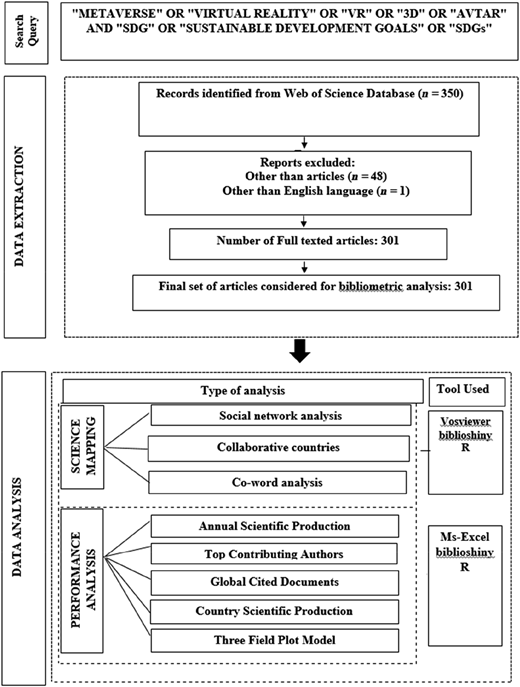
It is essential to make use of the appropriate database in carrying out a scientific literature review, as it affects the quality of the research output. Extraction of data can be carried out through the use of bibliometric databases such as the WoS, Scopus, Science Direct, or Google Scholar. The article makes use of the WoS as the primary source for the acquisition of bibliographic details due to its wide coverage and scientific standards. Rather than concentrating on precise scholars, the study embraced a keyword- and database-driven methodology, allowing dominant contributors to appear organically based on publication and citation patterns. Two steps of preliminary data analysis were carried out to evaluate and enhance the databases. The advanced search function, using operators like OR and AND, was applied across the database. In the first phase, search terms included keywords related to the metaverse. By using the search string “METAVERSE” OR “VIRTUAL REALITY” OR “VR” OR “3D” OR “AVTAR” AND “SDG” OR “SUSTAINABLE DEVELOPMENT GOALS” OR “SDGs”, the results yielded were as follows: 350 articles.
A total of 350 articles were initially extracted. A document-type filter was then applied to exclude proceedings and conference papers. After applying this filtering, 48 articles were excluded. Following this, a language filter was used to remove any non-English articles, resulting in the exclusion of one paper in another language. Ultimately, 301 papers were retained for further analysis. The research extends a wide-ranging 25-year period (2000–2025), empowering a longitudinal indulgence in the advancement, trends, and intellectual structure of the research domain. This prolonged timeframe reinforces the study by encompassing both foundational developments and recent advancements, confirming robust and holistic insights. This study does not entitle universal exposure of all research in the domain. The dataset, while systematically built, is limited by database collection, keyword design, and inclusion criteria. Hence, the outcomes must be understood as representative rather than exhaustive. Figure 1 summarises the data retrieved from WoS.
3.2 Data analysis technique
Firstly, the performance analysis technique was used to perform the analysis. To identify the most prolific writers, prominent nations, significant journals, and impactful publications, the study examined annual publishing patterns, the most productive authors and leading countries in the research domain. The second analytical approach used was scientific mapping. In this work, collaboration network analysis and co-occurrence analysis were used to investigate collaborative patterns and intellectual structures in the dataset.
This paper conducted a comprehensive bibliometric analysis using Biblioshiny and Vosviewer software. Biblioshiny is a user-friendly platform that enables researchers to perform a cultivated bibliometric analysis. VOSviewer is more preferable when considering the network analysis and visualisation of data.
3.3 Analysis framework
To answer the research questions, a bibliometric analysis was performed using the Preferred Reporting Items for Systematic Reviews and Meta-Analyses (PRISMA) framework for guidance on search and literature selection. The PRISMA flow diagram depicts the identification process, inclusion, and exclusion of the analysed literature, together with exclusion justifications. PRISMA is beneficial in handling large volumes of data for the contribution to research questions. The present research aims to discard the virtual world's potential to sustain the environment; hence, a systematic review provides a more reliable answer compared to individual studies that can only give a few insights.
3.4 Justification of statistical methodology
This research adopts bibliometric analysis using performance analysis and science mapping techniques, as they align with the exploratory aim of scrutinising the structure and advancement of research on the sustainability of virtual worlds and environments. Science mapping techniques, such as co-citation and keyword co-occurrence analysis, provide visual insights into associations and thematic clusters, helping to discover the intellectual structure of the field. These methods confirm objectivity, reproducibility, and data-driven results, while effectively capturing emerging trends and research gaps. This methodology is suitable as it simplifies an inclusive, structured, and unbiased exploration of the research domain. Unlike traditional methods focused on hypothesis testing, bibliometric analysis enables systematic and quantitative evaluation of large volumes of literature, identifying key authors, themes, and publication trends.
The study works with keyword clustering techniques to categorise thematic structures within the literature. The present study uses network-based clustering that groups keywords based on the strength of their co-occurrence connections. Specifically, the clustering in this research was performed using VOSviewer, which employs a mapping-and-clustering technique based on a weighted, parameterised variant of modularity optimisation. This approach is predominantly appropriate for bibliometric data, as it detects the underlying intellectual linkages between research themes. Notably, clustering methods used in bibliometric analysis are non-parametric in nature, meaning they do not need assumptions about the normal distribution of data. This makes them extremely suitable for keyword co-occurrence data, which is typically skewed, sparse, and high-dimensional. The non-parametric property confirms strength and flexibility in detecting natural groupings in the data without imposing restrictive statistical assumptions. Overall, this methodology is appropriate as it facilitates a comprehensive, structured and unbiased understanding of the research domain.
4. Discussion and results
4.1 Performance analysis
This technique evaluates the total contribution of research components, including nations, journals and authors, using established review processes to represent individual performance indexes.
4.2 Main information
Table 2 delivers a forecast regarding research trends in the dataset from 2000 through 2025. Over the past 25 years, there has been substantial research advancement represented by 301 scholarly documents acquired from 199 sources. It also shows that there is a wide range of sources for scholarly works related to the research area. The research area shows a dramatic growth rate of 11.13% per year, making it attract more researchers. It takes a record-high average of 21.5 authors per paper in the research area.
4.3 Annual scientific production
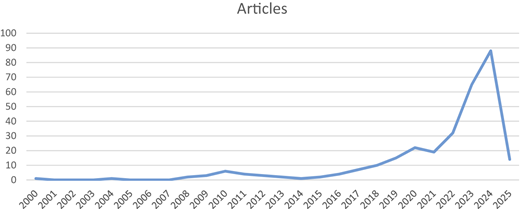
Figure 2 reveals the increase in the number of publications over the years. There was a period, between 2000 and roughly 2017, when there were fewer publications, only a handful of publications happening annually. But since 2017, there has been exponential growth, with nearly 88 publications happening annually by 2024. The dramatic rise would represent a sudden increase in publications, perhaps due to recent sources of funding, technological growth or the realisation of its significance. This would mean that there has been rapid growth in this region of study, perhaps due to the significance related to modern-day events or technological breakthroughs.
4.4 Three-field plot
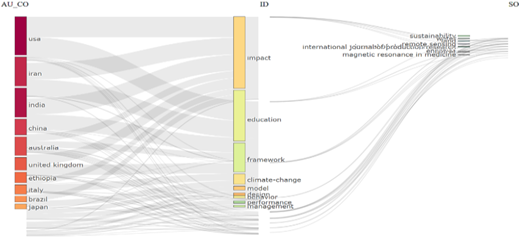
Figure 3 provides information about the link between the important topics, the different countries, and particular sources. The different countries appear on the left side, in which the respective countries, like the USA, Iran, India, and China, appear to be actively involved in the research area of the virtual world. The keywords for the authors appear in the centre, and the different sources on the right side specify that “Sustainability,” “International Journal of Production Research” and “The Lancet” refer to the detailed research sources in the particular area relating to the area of research. This fantasy demonstrates the link between the different countries and the topics, resulting in the highlighting of the diversity area in the particular subject.
4.5 Most relevant sources
Also, Table 3 illustrates the top journals containing influential research within the virtual world application for the fulfilment of the SDGs. The top influential journals are led by the Sustainability Journal, which contains a huge 30 publications, making it a prolific source of information for this particular research. Secondly, “The Journal of Cleaner Production” has seven publications, which clearly signify its importance in the publication process for further research. Thirdly, Water, which contains six publications. The remaining top 10 journals include the International Journal of Production Research, with publications amounting to five, and Land, with a similar five publications. The table further holds information about the H-index for sources, as well as the citation count for the respective journals.
4.6 Most relevant authors
Table 4 focuses on the most prolific authors in the area. KUMAR stands out as the top author, with nine publications, including the highest value for both H-Index and G-Index, addressing a broad spectrum of topics related to sustainability, climate change and technology. Following closely are authors such as “AVTAR RAM”, KUMAR PANKAJ, and “A”, who follow KUMAR with more than five publications, including high values for both H-Index and G-Index. This indicates that these authors actively collaborate in defining the research aspect and contribute diverse ideas. The area of research is enhanced by a third group consisting of five authors, with all authors contributing more than four publications, adding diverse ideas to the spectrum of research.
4.7 Scientific production of countries
Table 5 displays the scientific production of countries in this field, reflecting the impact and quality of research produced by each. The United States of America ranks first, with a notable 4,502 citations, indicating its strong influence and high-quality contributions. The United Kingdom holds the second position with 427 citations, followed by Germany, China, Japan, Sweden, Italy, Brazil, India and Korea, all of which rank within the top 10. These citation counts highlight the prominence of these countries in driving research and innovation in this area. The table also highlights the information on collaboration within the countries. China is the leading country in terms of document production, followed by the USA and India. The USA is on top with an average of 118.5 citations, followed by Germany and the United Kingdom.
4.8 Most globally cited documents
Table 6 presents the most globally referenced articles in this field. Leading the list is Liu L. et al.’s 2016 article in The Lancet, which has amassed an impressive 2,141 citations, making it the most cited work at the global level. Following this is Lozano R.'s 2018 paper, also published in The Lancet, with 320 citations. The chart highlights the top 10 most-cited articles, with The Lancet contributing the majority of these influential publications. This underscores the journal's significant role in shaping impactful research in this area.
While the performance analysis delivers an outline of publication trends and dominant contributors, the science mapping investigation offers deeper insights into the intellectual and thematic structure of the field.
4.8.1 Science mapping
This approach provides network maps to examine the links between several study components. It investigates the structural association and intellectual isolation within the study area. This work examines co-authorship analysis, collaboration analysis between countries and co-occurrence analysis.
4.9 Co-authorship analysis
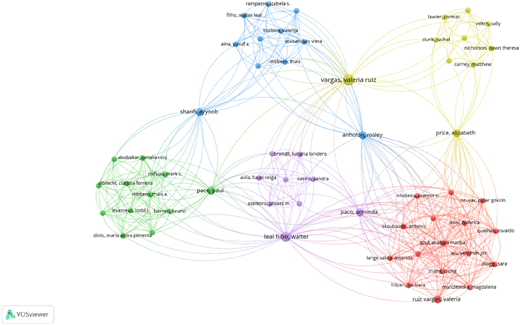
Figure 4 shows how researchers working on the virtual world are associated through co-authorship. Each circle denotes an author, and the larger the circle, the more publications that person has in this area. The lines among circles show when two authors have worked together on a paper, and thicker lines mean they've collaborated more often.
The colours group together researchers who tend to work closely with each other:
Blue group: Led by Sharifi, Ayoob, this team contains people like Rampasso, Izabela S., Kozlova, Valerija and Dibbern. They have strong links within the group.
Green group: Centred on Pace, Paul, with members like Abubakar, Ismaila Rimi, Mifsud, Mark C. and Levasseur, showing tight-knit collaboration.
Yellow group: Around Price, Elizabeth, with close partners such as Lawler, Cormac, Veitch and Nicholson, Dawn Theresa.
Purple group: Connected to Leal Filho, Walter, along with Avila, Lucas Veiga, Caeiro, Sandra and Azeiteiro, Ulisses M. – a group that also links to several other teams.
Red group: A large, highly connected network with Paco, Arminda, Ruiz Vargas, Valeria, Zhang, Qiong and Magdalena Marczewska among its most active members.
Overall, this network displays that virtual-world research is very collaborative. A few key individuals serve as connectors between different research groups, facilitating the flow of ideas and knowledge throughout the entire network.
4.10 Co-word analysis
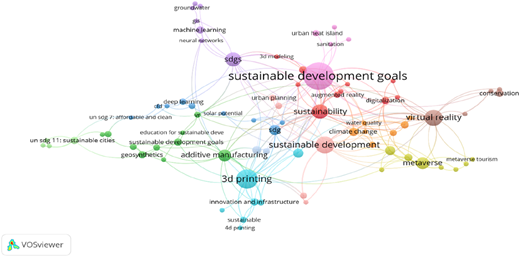
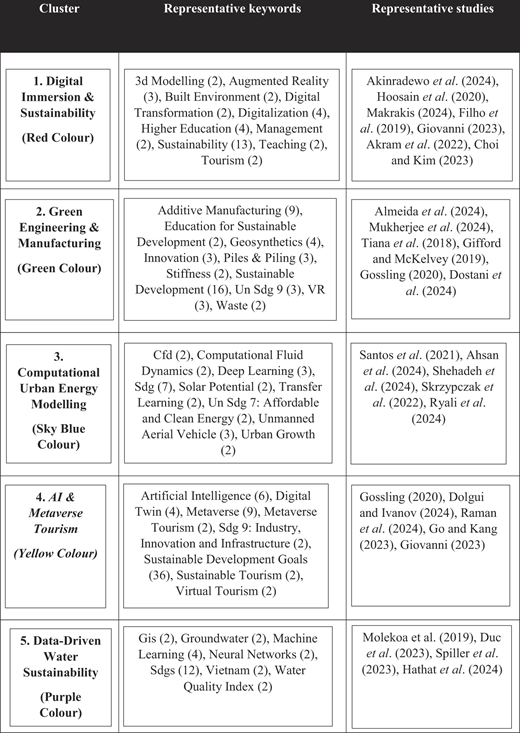
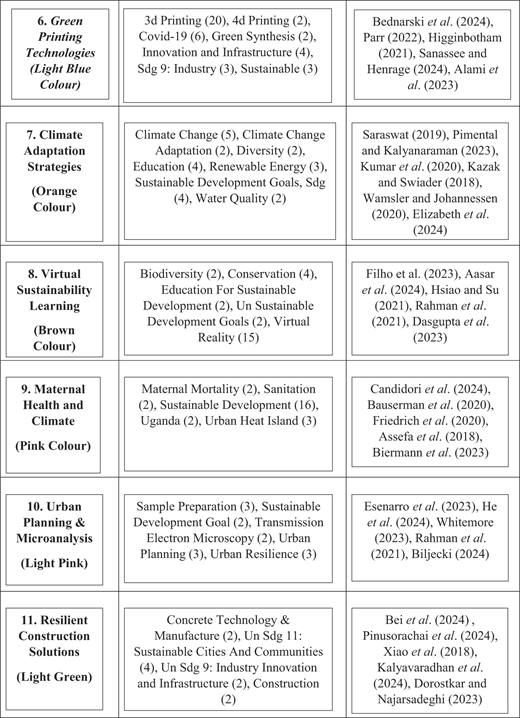
According to Donthu et al. (2021), co-word analysis is an effective tool to recognise and uncover evolving topics and associations between variables in the research domain. It also helps to expose the conceptual structure and knowledge gaps in the research domain for forthcoming research. To perform co-word analysis, a threshold of the least occurrence of the keyword was chosen to be two occurrences. Out of 1,361 keywords, 107 met the selected criteria. Based on the analysis, eleven clusters were identified, which include eligible keywords. The cluster was differentiable by colour and categorised with a name based on the keywords of the cluster (Figure 5). Furthermore, most dominant studies of the respective clusters have been reviewed to reveal the knowledge structure and connections between variables in the research domain. Table 7 provides an overview of the clusters, along with their respective keywords and representative studies.
4.10.1 Cluster 1: Digital immersion and sustainability
Cluster 1 includes 10 keywords labelled as “digital immersion and sustainability,” presented with red-coloured bubbles in the network. In light of the cluster's theme, Akinradewo et al. (2024) examined the key drivers of AR for education and training, finding that it significantly improves educational outcomes by enhancing task accuracy and mitigating misinformation. Hoosain et al. (2020) analysed the sway of digital technologies on the UN SDGs, concluding that digital technologies have a positive impact on the environment and economy. Makrakis (2024) inspected the self-efficacy and transformative teaching beliefs of teachers in adopting ICT technologies in teaching and found that both variables are significant. Filho et al. (2023) highlighted the prominence of implementing SDGs in teaching in universities. Giovanni (2023) delivers a path to manage the transition to Industry 5.0 through digital transformation tools like the metaverse.
4.10.2 Cluster 2: green engineering and manufacturing
Cluster 2 comprises 10 keywords categorised as “green engineering and manufacturing.” As the name suggests, it focuses on green engineering. Almeida et al. (2024) examined the feasibility of using industrial waste in the production of highly porous 3D-printed geopolymeric lattices for wastewater treatment applications. Additionally, Mukherjee et al. (2024) focused on SDG 6, which is clean water and sanitation and the need to prevent water pollution through the solvothermal method. Gössling (2020) investigated the role of technology and ICT in the tourism sector in fostering SDGs and concluded that ICT and technology significantly led to a positive influence on achieving SDGs. Dostatni et al. (2024) concentrated on enhancing sustainability by reducing particulate matter emissions through optimising 3D printing with the application of neural networks.
4.10.3 Cluster 3: computational urban energy modelling
Cluster 3 represents “computational urban energy modelling”, which includes nine keywords and is shown with a sky blue colour in the network. As per this theme, Santos et al. (2021) evaluated the clout of urban growth spatial patterns on sustainable development. They discovered that the urban growth pattern led to a more sustainable urban region. Shehadeh et al. (2024) investigated the role of digital twin technologies in achieving the SDGs in urban areas, which combines real-time data and community insights through machine learning. Skrzypczak et al. (2022) scrutinised the modelling of buildings through laser scanning 3D technology. They proposed that the laser scanning technique provides many advantages in architecture.
4.10.4 Cluster 4: AI and virtual-world tourism
Cluster 4, denominated as “AI and virtual-world tourism”, which covers eight keywords of co-word analysis and is expressed by the yellow colour in the network. According to the subject of the cluster, Gössling (2020) examined the role of information technology in the tourism sector to achieve SDGs and concluded that technology and ICT significantly contribute to achieving SDGs. Dolgui and Ivanov (2025) inspected the clout of the Internet of behaviour (IoB) on supply chain and operation management and concluded that IoB has significant clout on supply chain management. Go and Kang (2023) investigated the role of virtual-world tourism for achieving sustainable tourism and recommended that virtual-world products can enhance sustainable tourism by providing profitable resources. Giovanni (2023) evaluated the sustainability of the virtual world to drive the transition to Industry 5.0.
4.10.5 Cluster 5: data-driven water sustainability
Cluster 5 involves seven keywords pigeonholed as “data-driven water sustainability,” exposed with the colour purple in the network. The theme of the cluster focuses on water sustainability. Molekoa et al. (2019) evaluated water quality status and hydro-chemical processes in South Africa by performing a hydro-geochemical analysis of groundwater samples to calculate the water quality index. Similarly, Duc et al. (2023) examined the variation in surface water quality to provide information about sustainable water resource management. Spiller et al. (2023) inspected the generalisation of the capability of four neural networks: (1) fully connected, (2) one-dimensional CNN, (3) two-dimensional CNN and (4) three-dimensional CNN and offered that the fully connected model has more generalisation capability.
4.10.6 Cluster 6: green printing technologies
Cluster 6, entitled “green printing technologies,” which embraces seven keywords presented by the light blue colour in the network. In the context of this theme, Bednarski et al. (2025) performed a systematic review on the influence of geopolitical disruptions on the supply chain to identify key themes of the research domain. Parr (2022) explored the target to prepare national capacity for any pandemic preparations by the SDGs. Higginbotham (2021) reconnoitred the role of immersive technologies like virtual reality and AR in improving global neurosurgery. Sanassee and Henrage (2024) analysed the transformation of polyethene terephthalate bottles into filaments for 3D printing.
4.10.7 Cluster 7: climate adoption strategies
Cluster 7 is categorised as “climate adoption strategies,” which includes seven keywords and is shown by orange-coloured bubbles in the network. This cluster emphasises climate change and adaptation strategies. As the theme represents, Saraswat et al. (2019) investigated the hydro-chemical features of groundwater in Surat City, India, and examined the suitability of water. Pimentel and Kalyanaraman (2023) developed a “virtual climate scientist” through virtual reality to educate students about palaeoclimatology. Kumar et al. (2020) used a combination of two techniques – participatory approach and computer simulation modelling – for water resource management and discovered that population growth is a foremost reason for water quality deterioration. Kazak and Świader (2018) advanced a tool called “SOLIS” for the assessment of solar radiation.
4.10.8 Cluster 8: virtual sustainability learning
Cluster 8 contains five keywords characterised as “virtual sustainability learning,” revealed by the brown colour in the network. As per this theme, Filho et al. (2023) examined the connection between governance and sustainable development in higher education institutions. They performed a bibliometric analysis and identified the extent to which governance impacts sustainable development in higher education institutions. Hsiao and Su (2021) analysed the clout of science, technology, engineering, the arts and mathematics (STEAM) education on student motivation to learn and found that the combined use of virtual reality and STEAM education can foster learning satisfaction among students. Dasgupta et al. (2023) explored the indigenous and local knowledge and practices (ILKPS) connected with shifting cultivation for sustainable development and concluded that upholding ILKPS has a strong role in achieving SDGs.
4.10.9 Cluster 9: maternal health and climate
Cluster 9 comprises five keywords categorised as “maternal health and climate,” epitomised by pink-coloured bubbles in the network. Candidori et al. (2024) executed experimental research to examine the performance of a medical device named “BAMBI,” which is an alternative to the condom balloon tamponade technique. Similarly, Bauserman et al. (2020) reviewed maternal mortality data from six countries over 8 years to identify risk factors and trends. Friedrich et al. (2020) examined the increasing use of latrines in rural areas of Karnataka by applying psychological theory to evaluate scalable behaviour change for promoting latrine use in rural India. Assefa et al. (2018) developed a water security assessment framework for the assessment of water supply, sanitation, and hygiene factors and discovered that sanitation and hygiene factors were at a poor level.
4.10.10 Cluster 10: urban planning and microanalysis
Cluster 10 represents “urban planning and microanalysis,” with four keywords and is shown by light pink-coloured bubbles in the network. As the theme represents, Esenarro et al. (2023) developed an architectural design for an interpretation centre in Peru for the revaluation of the flora and fauna by using climate analysis and biochemical design strategies and designed an ecological network. Whitmore (2023) designed a small vibrational polishing machine (MiniViP), which was constructed through 3D printing and may help research labs to reach SDGs. Rahman et al. (2021) developed a new technique for the identification of building types in Dhaka. Macatulad and Biljecki (2024) implemented a systematic review of urban disaster risk management and highlighted the growth of research on urban resilience.
4.10.11 Cluster 11: resilient construction solutions
Cluster 11 includes four keywords pigeonholed as “resilient construction solutions,” shown by light green-coloured bubbles in the network. In light of the theme of the cluster, Xiao et al. (2018) emphasised the role of geo-informatics technologies such as photogrammetry and remote sensing in conserving cultural heritage. SDGs also focus on protecting and safeguarding cultural heritage and promoting sustainable tourism. Ambily et al. (2024) inspected the influence of sand gradations on fresh properties of printable concrete mixtures. Dorostkar and Najarsadeghi (2023) analysed the impact of the virtual world on urban planning and underlined that the virtual world is an innovative method to reduce the influence of greenhouse gases in cities all over the world.
4.11 Collaboration network
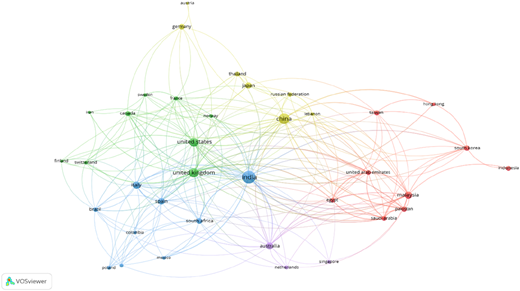
Figure 6 proposes an international collaboration network in virtual-world research, where each node denotes a country, and the extent of the node represents the volume of research production. Countries have been clustered into coloured clusters based on their patterns of collaboration. The blue cluster, led by India, includes Italy, Spain, South Africa and Brazil. The level of interconnectedness among these countries should be quite high. The green cluster, anchored by the United States of America and the United Kingdom, includes Canada, France and other Western countries. It is amazingly well-knit. The yellow cluster, centred on China, also has Germany, Japan and Russia. The strong intra-Asian and intra- and European collaborations are reflected in this cluster. The red cluster embraces Malaysia, South Korea, Saudi Arabia and the United Arab Emirates. The map underlines the global and interconnected nature of virtual-world research, with India, the United States of America, China and Malaysia as key centres connecting different regional networks.
5. Key findings
The findings of the research address the research questions to a large degree in this research because of the way in which they connect to the theoretical elements.
RQ1: What patterns can be detected in the development of publications, citing influence, major authors or cooperative associations in virtual worlds and environmental sustainability issues?
Publications on metaverse studies and environmental sustainability have dramatically accelerated from 2017 to nearly 88 pieces per year by 2024. With regard to the number of citations, publications are primarily in the USA, followed by other international nations such as the UK, Germany and China, and led by prestigious journals such as “Sustainability” and “The Journal of Cleaner Production”. Preeminent authors such as “Kumar” and “Avtar Ram” have played an important role in metaverse and sustainability research, emphasising views on climate change and educating others. Top collaboration country indices show China's prominent role in producing research, coupled with the USA's citation impact. Major research institutions such as Harvard University, Hokkaido University and others emphasise the global relevance of this ever-expanding body of research.
RQ2: What are the new research questions and knowledge areas emerging in the virtual world and environmental sustainability research?
There are some prominent research and practical aspects covered under the 11 clusters that have been exposed through the co-word analysis. Regarding digital immersion and sustainability, research has principally stayed exploratory, leading less towards comparisons and long-term impacts of digital transformation. Practically, there are opportunities to implement immersion technology for learning and for governments to promote ICT for sustainable innovation. Green engineering and manufacturing are lagging in scaling experimental results and implementing AI for optimisation, and there are chances for industries to utilise industrial waste and for universities to advance green start-ups. Computational urban energy modelling remains fragmented, with limited integration of digital twins, AI and cross-regional applications. Urban planners can address this by adopting digital tools for renewable energy mapping and infrastructure management. In AI and metaverse tourism, ethical implications and sustainability remain underexplored, though tourism boards and supply chains can leverage these technologies to reduce environmental footprints and improve customer engagement. Table 8 presents all the identified research gaps derived from the clusters.
6. Implications
6.1 Theoretical implications
The gap analysis in research for the 11 clusters throws up several critical implications for furthering the global sustainability and digital transformation agenda. The results suggest a critical need for further levels of integration among digital technology, environment and social behavioural studies for more holistic frameworks for sustainability innovation (Dostatni et al., 2024). Although much progress has been made in digital immersion platforms such as augmented and virtual reality and metaverse platforms, even they lack many concrete scientific studies and global comparisons. This requires greater emphasis and more pragmatic application levels for AI-based technologies in both the industrial and higher education sectors for long-term sustainability benefits (Hoosain et al., 2020; Giovanni, 2023). However, AI and data analytics-based technologies have unexplored levels of predictive analytics capabilities for energy sustainability and urban resilience but have largely been inadequate in terms of integration with broader decision-making and governance frameworks for sustainability (Shehadeh et al., 2024; Spiller et al., 2023). Furthermore, as made evident in the current state of literature, one area that has been left untouched by research pertains to the ethics and social aspects of digital transformation and AI-led tourism experiences and metaverse-based learning environments (Candidori et al., 2024). Likewise, additional studies regarding AI-led solutions for resilient construction projects and environmental mapping will be immensely valuable for urban adaptability and disaster risk (Xiao et al., 2018). Closing this research gap will allow for not only additional theoretical knowledge regarding digital immersion and sustainability and their relation to human experiences, among others, but also contribute meaningfully to the attainment of the UN SDGs (Filho et al., 2023).
6.2 Implications for management and economics
The study embraces a bibliometric and science-mapping approach and underwrites meaningfully to the management and economics domains by systematically synthesising the intellectual structure, evolution and developing trends at the intersection of the metaverse, virtual worlds and sustainable development. From a management outlook, our research recognises key thematic clusters such as digital immersion and sustainability, AI and metaverse tourism, green engineering and manufacturing, data-driven water sustainability, green printing technologies, climate adaptation strategies and virtual sustainability learning. These intuitions are directly significant to managerial decision-making, predominantly in areas such as strategic adoption of metaverse technologies, designing immersive customer experiences and incorporating sustainability into digital business practices. By plotting prominent authors, journals and collaboration networks, the study also aids management scholars in appreciating the knowledge base and research gaps, thereby guiding future empirical investigations.
From an economic standpoint, the convergence of the metaverse and sustainability announces new magnitudes of value creation and resource allocation. Virtual atmospheres have the potential to shrink physical resource consumption (e.g. travel and physical infrastructure), thereby contributing to environmental sustainability. At the same time, they produce new economic opportunities through digital assets, virtual goods and immersive services, reshaping traditional market structures. This study adds to the mounting discourse on virtual economies, digital assets and the role of metaverse platforms in modelling new procedures of economic interaction and value exchange. In short, the paper underwrites by connecting policy-oriented discussions on sustainability with actionable understandings and research directions applicable to management and economics scholars and practitioners.
7. Conclusion
This study provides precious insights into the research landscape on “virtual-world in advancing environmental sustainability” with the help of a bibliometric analysis of 301 articles extracted from the WoS database. This article shows an 11.13% annual growth rate in the research domain. The publication has been prominent in the research field since 2024. The “Sustainability” journal is the top contributing journal in the research field with 30 articles. The biggest prolific authors of the research domain are “Kumar” with 9 articles and 3,500 citations, followed by “Avtar Ram” with 9 articles and good H-Index and G-Index. The USA is the top contributing country, followed by China and India. Hokkaido University is the top contributor, with 23 documents, followed by Harvard University with 22 documents. The study also names the top ten articles of the research domain, which the researchers globally cite. Through science mapping, the research highlights the co-occurrence network of keywords, which represents the interconnectedness between topics. The study also reveals the emerging trending topics of the research field in which future research can be carried out. Through bibliometric coupling, the study highlights the interconnectedness between topics that express the depth of the research domain. At last, the study yields precious apprehension about the collaboration network of nations in the research domain. In short, the study demonstrates the growing significance of research on the virtual world with a notable increase in publications in the research domain.
8. Limitations and future research
The study has a few constraints that must be acknowledged. Firstly, this research includes articles that are extracted from the WoS database. It may be possible that some other useful articles in the research domain are published in journals that are not registered in the WoS database. Future scholars can explore more databases to seek the depth of the research domain. Second, the study relies on predefined keywords and search strings, which, although wisely raised, may omit relevant studies using alternative terminologies. Future researchers can expand search strategies with broader and alternative keywords. Future researchers can explore this domain by applying advanced text-mining or machine learning techniques to reveal unseen patterns. Thirdly, this study includes only articles that are published in the English language. Future researchers can add more language articles to explore the research domain and contribute more significantly to it. Table 8 also provides research gaps in the research domain based on knowledge clusters. Future scholars can explore the domain and fill the research gaps in it.
Author contributions
All authors contributed to the study conception and design. All authors have read and approved the final manuscript.
The authors thank the editor and anonymous reviewers for their time and insightful comments.