The challenges associated with cognitive biases can significantly impact individuals, particularly when making informed decisions about driving and adopting green construction practices. Recognising and approaching these barriers with understanding and empathy is essential, as they often stem from deeply rooted habits and perceptions. This study highlights the drivers and barriers to green building construction practices and identifies the cognitive biases associated with these factors that can aid global project managers, policymakers and construction professionals.
A dual systematic literature review was employed to assess academic journal articles published between 2018 and 2023, ensuring the recency of the information and utilising narrative and thematic analysis to conclude.
The study’s results reveal the profound influence of cognitive biases on the factors that shape the adoption of green building practices. A total of 95 factors and 71 cognitive biases were identified, providing substantial evidence and information for our study. These findings, presented in tables and a dynamic map, highlight the intricate interrelationships in this context, offering a comprehensive understanding of the subject matter.
Using a systematic literature review (SLR) as a qualitative research method imposes constraints on accessing the most up-to-date industry knowledge, as it limits the selection of reviewed literature. In addition, the absence of diverse academic databases restricts the availability of valuable and credible sources to support the study. Moreover, focusing solely on English-language resources overlooks relevant references published in other languages. Despite these limitations, strict adherence to journal articles and the Prisma process enhances the credibility and reliability of the paper’s findings.
The research offers valuable insights for project managers, construction professionals and policymakers, highlighting the cognitive biases that influence decision-making in green building construction. It provides a detailed analysis of the interconnected factors that promote sustainable practices and identifies the challenges that hinder their implementation. Additionally, the study explores how existing beliefs and biases influence the decisions of builders, architects and developers in their pursuit of sustainability. The theoretical implications of our study extend to future research, providing a foundation for exploring the human perspective within the construction industry.
This paper novelly explores interconnected factors by examining the key drivers that promote sustainable building practices, the barriers that hinder their implementation and the cognitive biases that influence decision-making in this context. It specifically examines the key drivers that promote sustainable building practices, the barriers that hinder their implementation and the cognitive biases that influence decision-making in this context.
1. Introduction
Climate change began to show its noticeable environmental effects in the 1970s, which called for a united response from global organisations. This led the United Nations Environment Programme (UNEP) to form the International Panel on Climate Change (IPCC) in response to the growing concerns regarding the environmental impact caused by human activities and the resulting weather catastrophes that follow (MacGregor et al., 2018). In addition, through the initiative of the IPCC, two significant efforts were established to address climate change: the Kyoto Protocol in 1997 and the Paris Agreement in late 2015, with the primary collective goal of controlling greenhouse gas emissions that affect the overall global temperature. Many countries make serious efforts in this regard.
1.1 Green building: an overview
The concept of green building is the integration of green design with the primary focus on reducing a structure’s environmental impact while improving the occupants' quality of life during its whole lifecycle compared to a traditional “non-green” facility (Ali’and Al Nsairat, 2009). Aside from improving the environment and public health, Ali and Al Nsairat (2009) also indicated that green design lowers the structure’s lifecycle costs, enhances the marketability of buildings and organisations, boosts occupant efficiency, and aids in developing sustainable communities. In general, green building is associated with sustainable construction, but despite their frequent interchange, the terms “green” and “sustainable” are not synonymous in scholarly discourse (Doan et al., 2021). In contrast, Purvis et al. (2019) suggest that sustainable construction encompasses a holistic view of sustainable development, encompassing the economic, social, and environmental aspects of a building, which are the three pillars of sustainability. These three aspects have been long accepted for organisational sustainability reporting, and many building evaluation technologies have considered them to provide organised and comprehensible information on social, economic, and environmental solutions (Du Plessis, 2007). Ali and Al Nsairat (2009) identified these evaluation tools as a comprehensive system that measures the environmental impact of a building. Among the global green rating tools are BREEAM (Great Britain), GBTool (Canada), LEED (US), EcoProfile (Norway), and Environmental Status (Sweden) (Ali and Al Nsairat, 2009). New Zealand has the Green Star NZ as its primary green rating system (Doan et al., 2021). However, it was the least effective among the green rating tools described as limited to a single aspect of sustainability: the environment.
1.2 Decision-making in construction industry literature
In the construction decision-making process, decisions can take many forms, from strategic to corrective, and are essential for all projects (Love et al., 2023). Decision-making is, therefore, necessary to ensure the success of projects. Love et al. (2023) also noted that prompt decision-making is crucial to ensure that no responsibilities are delayed and that the project’s timeline is met. Additionally, Kamranfar et al. (2022) suggested that it is vital to carefully evaluate the significance of each criterion, factor, and structure to enhance the quality of holistic decision-making. Literature is abundant regarding decision-making, addressing various construction perspectives and offering different approaches to identify factors that affect the construction industry. Conveying decision-making strategies in the construction sector assists in assessing and prioritising innovative drivers towards sustainable development (Van Nguyen, 2023). Kamranfar et al. (2022) related decision-making in uncovering the significance and connections among construction sustainability indicators. Moreover, Sun et al. (2022) employed a similar approach to reveal causal relationships and intensity within system elements, thereby facilitating the successful implementation of green supply chain management. Furthermore, decision-making is associated with understanding the causal effects of interrelationships among barriers in sustainable waste management (Negash et al., 2021).
1.3 Cognitive bias in decision-making
From the construction industry perspective, heuristics are generally regarded as liabilities resulting from cognitive biases in decision-making, particularly when determining risks and unpredictable situations (Ika et al., 2022). Moreover, different factors affect the decision-making to achieve sustainable development, and these factors also influence human behaviour and judgement through cognitive biases (Korteling et al., 2023). Korteling et al. (2023) suggested that cognitive biases may lead to prompt, sensible, and fulfilling judgements in a natural and fundamental application. However, these decisions may be inefficient and potentially harmful in addressing various modern, complex, and long-term issues, such as mitigating climate change or preventing pandemics. One notable example is the influence of cognitive biases within the Lean environment. Purushothaman et al. (2023) implied that managers could stimulate cognitive biases to benefit from Lean and its applications. The study also contributed to the well-known biases and how they affect the ideas that now assess and lessen the challenges in the Lean environment. On the contrary, cognitive biases are particularly prominent in terms of drawbacks to decision-making. Collusive bidding (Peng et al., 2022) and contracting practices (Jennejohn et al., 2022) succumb to the adverse behavioural effects of cognitive biases.
This paper analysed different drivers and barriers associated with the global construction industry, which are further investigated through the association of cognitive biases. The research questions for this study are:
What drivers and barriers are prevalent in green and sustainable construction practices?
What are the associated cognitive biases that affect drivers and barriers to green and sustainable construction practices?
This paper’s originality lies in its thorough examination of the diverse and interconnected factors that shape the construction practices associated with green buildings. It meticulously investigates the primary influences that encourage sustainable building methods, highlighting the motivating forces behind adopting eco-friendly practices. Additionally, the discussion addresses the various obstacles that impede the successful implementation of these practices, analysing the challenges faced by stakeholders in the industry. Furthermore, the paper examines the cognitive biases that can influence decision-making in this realm, illuminating how preconceived notions and biases may impact the choices made by builders, architects, and developers in their pursuit of sustainability.
2. Research methodology
To address the first research question in this study:
A systematic literature review (SLR) was employed to identify the drivers and barriers associated with green and sustainable construction practices.
The data analysis of the known drivers and barriers employs thematic analysis related to the well-established political, economic, social, technological, legal, and environmental (PESTLE) framework.
The results are presented in a system dynamic mapping, specifically a causal loop diagram, using the Vensim simulator.
To address the second research question in this study:
The identification of associated cognitive biases among different factors in the construction industry is through a systematic literature review (SLR) based on the initial results from the first question.
Data on the cognitive biases concerning the factors is analysed through narrative analysis.
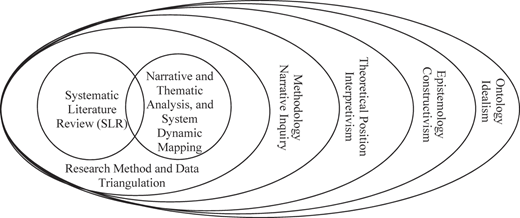
This study employs an idealistic methodology that defines various experiences from various sources (Hughes and Sharrock, 2016; Ormston et al., 2014). The study focuses on the cognitive biases related to drivers and barriers and the decision-making process of green construction, suggesting a subjective approach because different construction practices would have distinct cognitive biases. Thus, idealism was selected as the ontological perspective of the study. Decision-makers constantly construct research solutions in idealistic situations (Bryman, 2016). This research adopts a constructivist epistemological position, focusing on known factors and cognitive biases. Following the constructivist approach, the study will adopt interpretivism as its theoretical position, as the associated factors and cognitive biases are interpreted through different analyses based on the individual scope of human behaviour, as implied by Cohen et al. (2002). Moreover, to discuss the comprehensive data analysis, the study will follow a qualitative narrative inquiry as its methodology to achieve a thorough comprehension (Murray, 2009; Savin-Baden and Niekerk, 2007). The summary of research methodology is viewed as a research onion, as shown in Figure 1.
This study employed the systematic literature review (SLR) method, a thoroughly constructed and methodological review of the literature that answers research questions by identifying, selecting, and critically assessing the findings from the studies included in the review process (Rother, 2007). Moreover, Pradana et al. (2023) stated that SLR provides a straightforward and impartial comprehensive assessment of different types of literature, uncovers research gaps, gathers and integrates evidence, and suggests further research possibilities. This method is similar to the methodology used by Purushothaman and Seadon (2023), where the literature retrieved and included in the research consists of English texts, primarily focusing on journal articles, conference proceedings, and books to ensure credibility and reliability. The papers were reviewed at least twice to ensure quality control of data and information, thereby enhancing the dependability of the study. In addition, careful analysis was practised by observing the theme of the topic, which focuses on architecture, engineering, management, sustainability, and construction.
2.1 Research framework
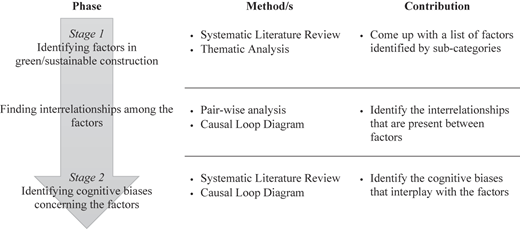
The framework (shown in Figure 2) of the study began with Stage 1 Systematic Literature Review (SLR), which identified the various drivers and barriers associated with green buildings. The identified factors were thematically analysed following the concept of the PESTLE framework but using a more straightforward approach that consists of three sub-categories. After the factors were subcategorised, the interrelationships among the factors were discussed from the authors’ perspective. They were collated in pairwise analysis, which was transferred into a causal loop diagram to visualise the pattern of interrelationships. Finally, stage two of SLR concluded the research by identifying the cognitive biases corresponding to the sub-categories of the factors. These cognitive biases were added to the causal loop diagram to describe the interplay between cognitive biases and factors related to green building.
2.2 Research database
The research was conducted in two stages using three reliable academic databases and providers: Scopus, EBSCOhost, and ScienceDirect. The databases also employ similar methods to process and assess keyword searches by matching query details to the search fields, specifically title, abstract, and keywords (TIABKW), as described by Penning de Vries et al. (2020). Scopus and Science Direct have straightforward and similar search strategies. On the other hand, EBSCOhost is a database provider that offers numerous databases to categorise the search and make it easier for researchers. For this study, the databases available on EBSCOhost were selected to align with the research topic’s theme, specifically Art and Architecture Complete, Business Source Complete, and GreenFile.
2.3 Boolean search method
The keyword search centres on the central theme of cognitive biases influencing the decision-making process in green building practice. Stage one of the SLR focused on identifying the factors, barriers, and/or drivers that affect green construction practices, while stage two focused on cognitive biases related to the identified factors.
2.3.1 Stage 1
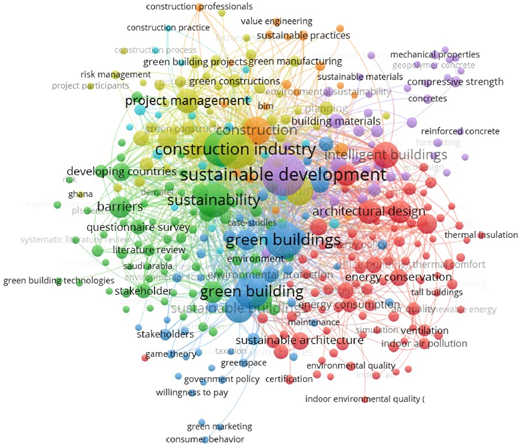
In Stage One, the main keywords used in the search were “factors,” “affect,” and “green construction.” The keywords were assessed utilising synonymous ideas, as shown in Table 1. The final keyword search was formatted using the Boolean search strategy for the different databases. Moreover, proximity search was utilised on all platforms to refine the search queries, and its implementation varies across different databases, as shown in Table 2. The stage one keyword search yielded 2,279 publications, of which 58 relevant articles were rigorously and systematically analysed using bibliometric and qualitative approaches. The keywords from articles retrieved from all databases were imported into VOSviewer to determine the co-occurrences of the keywords based on the bibliographic data from the initial systematic literature review (SLR), as shown in Figure 3. The most common keywords across all publications are construction industry, sustainable development, sustainability, green building, and project management, all of which are relevant to the research topic.
2.3.2 Stage 2
In Stage Two, the keyword search centres on cognitive bias and the factors associated with green and/or sustainable construction based on themes identified through a PESTLE analysis. However, instead of focusing on the individual PESTLE category, the factors were divided into three main sub-categories: environmental and health-related factors, industry and economy-related factors, and policy and awareness factors, as shown in Table 3. Different studies inspired the idea to form a more understandable system from complex information (Al Harazi et al., 2023; Zulu et al., 2023). Table 4 shows the Stage 2 keyword search, which generated 274 articles that were analysed, resulting in 24 relevant papers.
2.4 Database search findings
2.4.1 Stage 1
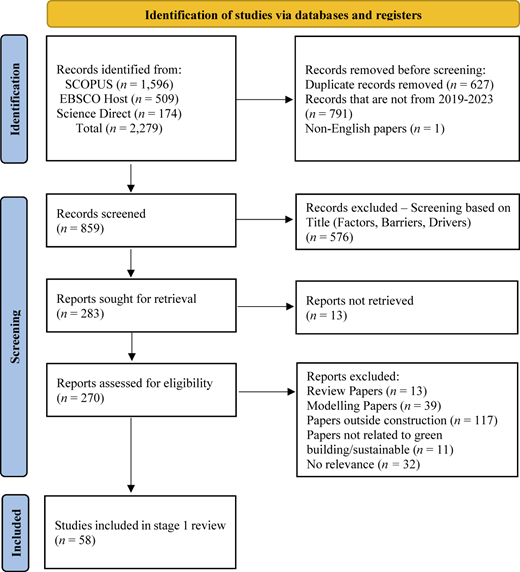
The Preferred Reporting Items for Systematic Reviews and Meta-Analyses (PRISMA) diagram (Page et al., 2021) was used to keep a systematic journal that highlights the specific steps conducted to analyse the publications that yielded the final 58, as shown in Figure 4. The stage one PRISMA diagram initial screening is based on the following criteria:
Duplicated Records—The study was optimised by automating the detection of duplicated records from different databases offered by the reference manager EndNote. In stage one, 627 articles were identified as duplicates.
Records within the selected timeline—The literature in stage one included in the study were within the 2019 to 2023 timeline to maintain the recency in the current digital era, relevance and dependability of the journal articles. This screening criteria removed 791 papers that were not within the selected timeline.
Non-English texts—This study focuses solely on the English language as its medium and found only one article that is not written in English.
Title screening—This concept opted for the direct approach in selecting the articles, which were then thoroughly screened based on their titles. The primary objective of this screening process was to select literature that included factors, drivers, and/or barriers in its titles, thereby maintaining coherence with the study’s intended focus. In total, 576 articles were excluded solely based on this criterion.
Retrieved full-text papers—The study focused on articles with open access to avoid inconvenience in searching for relevant information, as securing data requires additional time and cost. This screening process ensured that all papers included for the second screening were available online to the public, yielding 270 retrieved documents.
The 270 retrieved papers were then screened for the second time following the criteria to maintain relevance according to the research questions:
Reasons 1 and 2: Methodology of the articles—This study employs SLR as its primary method, thereby excluding papers that use a similar process to highlight the valuable quantitative methods of other articles. This paper also excluded papers that utilised “modelling,” which included articles that used variables based on a data matrix, as these papers are very comprehensive and would require extensive time to analyse. Fifty-two papers were excluded from this screening due to these reasons.
Reason 3: Articles out of scope – This study focuses on the construction industry and excludes papers that involve technology integration, such as artificial intelligence, blockchain, and cloud computing, as these research areas fall outside the scope. In total, 117 articles were removed following this reason.
Reason 4: Papers that are within scope but not the topic—This paper focuses on the construction industry, excluding other elements such as waste management, supply chain, and geotechnical data. These papers tend to focus more on specific information instead of the adoption factors in green construction, which is one of the main ideas of this study. This reason excluded a total of 11 papers.
Reason 5: No relevance—This study excluded 32 articles that were not directly relevant to the information on factors influencing the adoption of green construction.
2.4.2 Stage 2
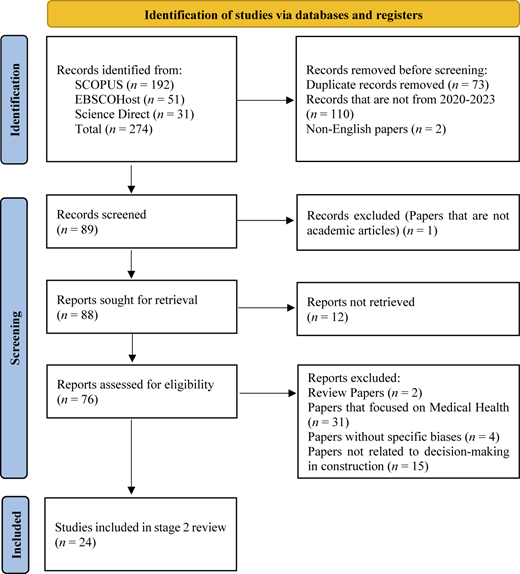
Figure 5 presents a summary of stage two of the SLR, which follows the same concept and format as stage one of the SLR. The initial stage of the screening in stage two is very similar to stage one but with only a difference in the selected timeline of 2020–2023 in stage two to analyse more recent information and exclude non-academic articles instead of the title exclusion for stage two. The main difference was in the second screening, which stage two had the following criteria:
Reason 1: Review papers – This section removed two SLR papers, similar to stage one.
Reason 2: Medical articles—Cognitive bias focuses on the medical aspect of literature, which was excluded in this research. A total of 31 medical-focused articles were removed from the selection.
Reason 3: Papers that do not have specific information—Four papers were excluded from this study because they addressed the general idea of cognitive biases. The study omitted them since this paper needed to identify specific cognitive biases.
Reason 4: Articles not in the construction decision-making process—This research focuses on cognitive biases regarding decision-making in the green construction industry. In this regard, 15 papers were excluded since they focused on decision-making in different sectors.
3. Results and discussions
This section provides detailed information on the SLR results, a discussion of the various factors, their interrelationships, and the associated cognitive biases that influence the decision-making process in green construction.
3.1 Results
3.1.1 Stage 1 SLR
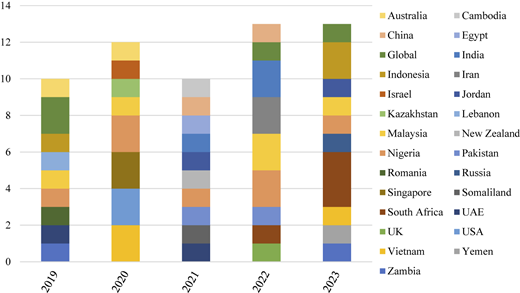
The 58 relevant SLRs, as shown in Table 5, have identified 48 barriers and 47 drivers, totalling 95 factors that influence the adoption of green construction. Table 6 shows the individual factors identified and organised according to the sub-category, as classified using thematic analysis in Table 7. Moreover, a stacked bar chart in Figure 6 was created to visualise the total number of studies concerning the countries where the articles were conducted. By geography, Nigeria has the highest number of related articles, with a total of seven references between 2019 and 2023. Malaysia follows it with five papers, and then South Africa with four. These results indicate that most factors, particularly barriers, are prevalent in developing nations, as illustrated in Table 5.
3.1.2 Thematic analysis
The qualitative thematic analysis revolved around the PESTLE analysis, which is a management tool to identify associated factors, drivers, and/or barriers concerning the political, economic, social, technological, legal, and environmental aspects that are prone to influence complex processes (Capobianco et al., 2021). They further implied that the PESTLE framework assists decision-makers in contemplating possibilities that may affect the efficacy of their decisions. Moreover, the analysis is also inspired by the three pillars of sustainability: economic, social, and environmental factors. This study identified three sub-categories in identifying the drivers and barriers to adopting green construction, as shown in Table 7.
Table 8 and Table 9 show the rankings of the drivers and barriers in green buildings. The rankings are according to the number of occurrences of each factor from the 58 screened academic journals. The top ten drivers and barriers were listed to highlight the prevalent factors in adopting green building construction. A total of thirteen drivers and ten unique barriers were identified. PARD-04 was the prevailing driver with 28 occurrences. At the same time, PARB-11 had the most occurrences for the barriers, with 45 references stating that lack of awareness about the benefits of sustainable and green construction is the predominant reason for not adopting green building construction.
3.1.3 Interrelationship
The absence of a quantitative study in the SLR necessitated a dynamic diagram of the system to analyse the collected information thoroughly. Thus, a causal loop diagram (CLD) or a system dynamic map is created to identify the interlinks between the factors and the cognitive biases associated with them (Purushothaman and Seadon, 2023). The diagram illustrates the visual representation of the links and polarities among the elements in this study, which include barriers (B), drivers (D), and cognitive biases (CB). Blair et al. (2021) discussed how the CLD begins with a primary objective and proceeds backward, adding either positive (+) or negative (−) factors until it reaches viable interrelations.
The system dynamic mapping was created using the information taken from Table 10. However, due to the large number of factors (95), the top 10 drivers and barriers from Tables 8 and 9 were considered. This method simplifies the understanding of the interrelationship between the most common factors that were identified in the tables. There were 10 total drivers and 13 barriers; all were listed and interconnected using the Vensim application. On the other hand, the data in Table 10 are based on the pairwise comparison between the individual factors in Table 6. Nordstokke and Stelnicki (2014) referred to pairwise comparison as a statistical process in evaluating connections and links between two or more data. Moreover, Nordstokke and Stelnicki (2014) further implied that pairwise comparison would comprehensively analyse the relationship between the dependent variables. The factors from Table 6 are listed in the rows and columns where the SLR articles determine the intersecting relationship among each variable. The relationship may be either positive, where factor A amplifies or supports factor B, or negative, where the connection diminishes the impact between the factors. In Table 10 , the positive and negative relationships are denoted by P and N, respectively. The digits beside P and N represent the number of occurrences of each relationship from different references.
This research uncovered 433 positive interactions or relationships between drivers and barriers in green construction adoption. These relationships exhibit varying frequencies of occurrence: 397 instances where each unique relationship was mentioned only once (1P), 22 cases where a relationship was cited twice (2P), 10 occurrences where relationships were referenced three times (3P), two instances where a relationship appeared four times (4P), and five occurrences where distinct relationships were reiterated twice (5P). On the other hand, a total of 315 negative relationships were identified. The frequencies are as follows: 306 were found once (1N), eight relationships were repeated twice (2N), and a single negative relationship was reiterated thrice (3N).
3.1.4 Stage 2 SLR
The 24 articles included in this research for Stage Two have identified a total of 71 cognitive biases based on the sub-categories identified in Table 7. Table 11 presents the number of cognitive biases identified by each author, along with the countries in which the studies were conducted. Moreover, the top 8 cognitive biases were ranked according to the number of occurrences in the articles, as shown in Table 12. On the other hand, Table 13 presents the cognitive biases identified from the 24 articles found in Stage 2, categorised by the sub-factors from Stage 1. The top bias is the status quo bias, with eight references, which is also part of the related barrier from stage one SLR, the fifth common barrier (PARB-15), with a total of 34 occurrences. The articles cover various aspects of the construction industry, including quality of living, policymaking, collusive bidding, lean construction, and risk management.
3.2 Discussions
3.2.1 General discussion
The most prevalent barrier identified by the SLR was the lack of awareness regarding adopting green building construction (PARB-11). This includes the benefits it offers, as well as the various parties involved in adopting a green approach. On the other hand, this aligns with the top driver: the clear and comprehensive government policies and building regulations regarding green construction (PARD-04). Yee et al. (2020) implied that inadequate awareness is the most significant impediment to green construction development. This suggests that raising awareness of green building practices requires additional support, particularly from the government. The government and authority accountable for this must develop a supportive presence by enforcing policies and principles (Yee et al., 2020). This understanding aligns with the findings of Tunji-Olayeni et al. (2020). The lack of awareness imposes a need for the government and stakeholders to take action together to improve public awareness through information dissemination and the implementation of innovative ideas. Tunji-Olayeni et al. (2020) believed that with proper public awareness about the benefits and implications of green building construction, it is more likely that the community and organisations will embrace green building implementation. Moreover, Jaradat et al. (2023) noted that establishing concrete guidelines to enforce green building construction will raise public awareness and encourage stakeholders to adopt green construction practices.
Most studies that highlight the drivers and barriers are from developing countries. Based on the geographic locations of the articles in Table 5, the top three countries with the most articles regarding factors affecting green building practices were Nigeria, with seven articles, Malaysia, with five, and South Africa, with four total papers from 2019 to 2023. For instance, Tunji-Olayeni et al. (2020) compared the drivers between developed and developing countries. They implied that in the US, environmental factors such as energy conservation (EHRD-01) and waste reduction (EHRD-04) are primary drivers of sustainable construction, while in Nigeria, major drivers include clients’ demand (PARD-10), international pressure (IERD-16), corporate social responsibility (PARD-09), and reputation (IERD-04), which were consistent with previous research. Sustainable construction practices in Nigeria also involve material reuse (EHRD-12) and public awareness campaigns (PARD-01) to improve environmental conditions and stakeholder understanding and support. These findings were supplemented by the study of Akindele et al. (2023), which emphasised that education and training on sustainable and green practices (PARD-03) will be the solution to the lack of knowledge (PARB-12) and awareness (PARB-11) regarding green construction, the prevalent barriers in Nigeria. Moreover, Akindele et al. (2023) stated that the positive progress from developed countries inspired most drivers of sustainable practices in Nigeria. The US and UK utilise sustainable assessment tools, such as LEED and BREEAM, which serve as rating systems for green building practices (PARD-12).
In contrast to other similarly developed nations, New Zealand adopts a conservative approach in its laws and incentives aimed at encouraging green building practices (Doan et al., 2021). Doan et al. (2021) stated that the absence of legislation or government incentives (PARB-02) is perceived as a barrier preventing New Zealand from fully embracing green construction practices. Moreover, legislation is viewed as a cost-effective and suitable method to align the construction industry with NZ’s overarching sustainability goals while providing incentives for significant investments like solar panel installations that could further motivate developers to transition towards more sustainable building practices (Doan et al., 2021).
3.2.2 Interrelationship
Based on Table 10, the high initial/capital cost associated with green building practice compared to traditional (IERB-07) and the lack of awareness about the benefits of sustainable construction (PARB-11) has the highest number of interrelationships among the factors, especially with the lack of demand/interest for sustainable practices (EHRB-01). The positive interrelation between IERB-7 and EHRB-01, as well as PARB-11 and EHRB-01, was observed five times among the 58 journal articles in the systematic literature review (SLR). This means that the expensive investment required for green building construction constitutes an inadequate demand for green building practices. Tran et al. (2020) implied that the high cost of green building technologies is one of the most significant disadvantages and a crucial hindrance to their adoption in both developing and developed markets. One of Vietnam’s most significant challenges to implementing green construction practices is the lack of stakeholder awareness regarding green building costs and sustainability, as well as the absence of a comprehensive governmental and institutional framework (Tran et al., 2020; Pham et al., 2020). In Jordan, the perception of sustainable buildings is often limited due to limited awareness and high costs (Nasereddin and Price, 2021). Zhao et al. (2020) also iterated that the perceived high-cost premium is a significant challenge to adopting green building practices in Singapore. Furthermore, Kamranfar et al. (2022) stated that the economic aspect of sustainable construction holds considerable importance in construction projects and is often cited as the primary barrier to the adoption of green buildings in Iran.
Nevertheless, the lack of awareness emerges as a significant barrier, the root cause of various obstacles to the sustainability transition (Martek et al., 2019). Individuals across different levels of the industry and policymakers are affected by misunderstandings and misconceptions about sustainability in the building industry. With the inclusion of the government, Tran et al. (2020) implied that it is imperative to integrate educational, legal, and policy measures to encourage the demand for green building construction. Moreover, the government should be more proactive in responding to the trend of sustainable construction by enacting robust legal regulations and appropriate incentive policies, such as grants or loans, to stimulate social demand for green building. This constitutes the top driver identified in the SLR, which is that there should be clear and comprehensive government policies and building regulations about green building practices (PARD-04), which can also be related to the top barrier, PARB-11. To compensate for the inadequate awareness concerning green building adoption, the government needs to be more responsive to sustainable trends in the industry by enacting mandatory legal regulations and technical codes/standards and guidelines to regulate and control the environmental performance of buildings (Tran et al., 2020). Furthermore, the government should assume responsibility as a key promoter by selecting and providing direct financial and non-financial incentive policies, such as awards, deficit subsidies, direct grants, discounted development application fees, tax reliefs, low-interest loans, gross floor area, and concession schemes.
Based on the interrelationships shown in Table 10, the typical relationship between a barrier and a driver is usually negative, while the relationship between similar drivers and barriers is positive. However, there were unique instances where a driver implies a positive relationship to a barrier and vice versa. One example is preserving culture/heritage (PARD-02), which is positive to resistance to change/status quo bias (PARB-15). In Vietnam, Pham et al. (2020) stated that the industry’s practical and results-driven mindset has led to innovation management being somewhat undervalued, with the prevailing culture (PARD-02) appearing to be unsupportive of innovation (PARB-15) and sustainability efforts. This relationship aligns with the findings of Garg et al. (2021), which indicate that people in India are risk-averse about adopting green practices but remain resistant to change regarding innovative green products and practices. This is also true for the unique correlation that PARD-02 is negative to product innovation in green construction (IERD-13). Moreover, Iqbal et al. (2021) found that the complex codes and the strict regulations of green construction practices (PARB-06) in Pakistan will ensure that the industry is capable of change (PARD-13) if necessary. This means that given that PARB-06 serves as a barrier to adopting green building practices (Marandi Alamdari et al., 2023; Van Nguyen, 2023; Zulu et al., 2023), stakeholders and private organisations will abide by and adopt the stringent regulations when imposed (PARD-13). The last unique relationship pertains to the limited availability of suppliers of sustainable resources (IERB-09), which is positive towards supporting local/national economic growth (IERD-06). This is analogous to the study of Doan et al. (2021), where the scarcity of green-certified products in New Zealand frequently leads to an ironic scenario where environmentally friendly materials accrue significant carbon emissions from overseas sourcing, highlighting the need for adjustments to the green rating system to accommodate locally sourced products better and enable contractors to utilise them more readily.
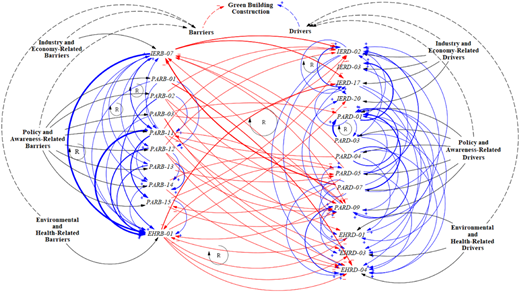
The system dynamic map shown in Figure 7 shows the interplay between barriers, drivers, and the adoption of green building practices. The barriers are denoted by the negative (N) as they hinder the adoption of green construction. At the same time, the drivers are represented by a positive (P) sign as they promote and stimulate the implementation of sustainable construction. The top 10 barriers and drivers were shown, and their interconnectivity was taken from Table 10 . Moreover, the interrelationship between factors produced seven total reinforcing loops: three positive barriers loops, two positive drivers’ loops, and two negative reinforcing loops. Reinforcing loops depict a situation where a change in one variable leads to further changes in the same direction, thus reinforcing the original change (Lannon, 2012). In contrast, balancing loops illustrate a situation where a change in one variable prompts adjustment in the opposite direction, working to counteract the original change and maintain equilibrium within the system.
3.2.3 Cognitive biases and factors affecting green building construction
The interplay between cognitive bias and the factors affecting the adoption of green construction practices plays a vital role in decision-making. For example, Yang et al. (2023) implied that the dynamic operation of improving indoor air quality (EHRD-06) in a facility is affected by different cognitive biases. One is memory bias, which influences a person’s recall by modifying the information, offering valuable insights when assessing heating experiences. Moreover, recency bias and peak-end rule are also biases associated with thermal comfort where people remember the most recent expertise on whether the temperature is hot or cold, which are the two ends of temperature (Yang et al., 2023). Political and government decision-making is another aspect influenced by cognitive bias. Espinosa et al. (2022) suggested that nudge theory describes how policymakers can design systems to guide the behaviour of less privileged individuals toward improved well-being, both for individuals and communities. This approach assumes that policymakers are aware of people’s goals and methods, aiming to create effective policies through government intervention. Moreover, the goal is to guide actions toward positive outcomes without conflicting with the well-being of those with fewer resources (Espinosa et al., 2022). On the other hand, Weber et al. (2021) found that confirmation bias and status quo bias are prevalent among policymakers. Policymakers tend to exhibit confirmation bias, relying on their preconceptions of what is true, even when presented with fact-checkers. In addition, this self-confirming bias is supported by the resistance to change among officials and legislators, which affects consumer welfare and public policy (PARD-04) (Weber et al., 2021).
Cognitive biases are also present in construction practices, such as in lean implementation (da Rocha et al., 2022; Purushothaman et al., 2023) and in safety and risk management (Galluccio, 2021; Li et al., 2020; Pooladvand and Hasanzadeh, 2022; Pooladvand et al., 2022; Wang et al., 2023). Purushothaman et al. (2023) have identified nine innovative biases concerning lean implementation, seven of which are prevalent in the New Zealand environment. These biases are in conjunction with da Rocha et al. (2022), where the understanding of lean and flow in construction management is clouded with cognitive biases. Meanwhile, underestimation bias is prevalent in risk management, which was common among the three articles. Wang et al. (2023) have identified that underestimating bias, together with overestimating bias, often transpire among flood risk where the farmers’ bounded rationality entails that there is limited knowledge and uncertainty about the risk. Pooladvand et al. (2022) have associated underestimation bias, which leads workers to overlook risks and rely more on safety intervention. This is similar to the study of Pooladvand and Hasanzadeh (2022), where the decision-making process of an individual, when faced with time constraints and mental burden, tends to focus more on seeking gains and is prone to underestimating the risk involved in the task. Furthermore, Hammond et al. (2019) implied that loss aversion influences decision-making in construction, often resulting in a strong inclination toward resistance to change. This aversion can trigger other biases, such as the status quo bias and regret aversion, all of which contribute to a preference for not adopting over adopting in green building decision-making.
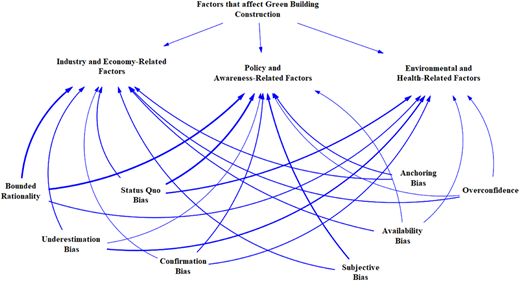
The 24 papers in Stage 2 were classified according to each theme, using the sub-categories listed in Table 7, to visualise the relationship between the cognitive biases and the factors identified in Stage 1. The causal loop diagram created using Vensim summarises the link between the different biases from Table 12 and the factors identified in Table 7 (see Figure 8). The thickness of each arrow depicts the number of occurrences for each bias concerning the factors.
4. Conclusion
The current status of implementing green building construction practices varies globally. However, the triple bottom line of sustainability needs to be prioritised to provide a better living condition for future generations. The drivers that motivate the adoption of green practices should outweigh the current barriers. The cultural difference hinders the ability to adopt green practices and view them as an improvement over traditional methods rather than a problem due to additional costs. The construction industry worldwide should be aware of and knowledgeable about the long-term benefits of sustainable construction practices, which help preserve the environment and improve the end-user quality of life. The interplay of cognitive bias in this research suggests that proper education and training will likely enhance awareness of green construction practices while mitigating the biases that may interfere.
4.1 Results
Stage one of the systematic literature review (refer to Section 2) has identified 95 factors that affect the adoption of green construction practices. There were 48 barriers, while 47 drivers were identified from 58 relevant academic journal articles (see Table 5 and Table 6). These factors were categorised based on three specific themes: Environmental and Health-Related factors, Industry and Economy-Related factors, and Policy and Awareness-Related factors to facilitate a simple analysis of the factors. The top 10 factors and barriers are shown in Table 8 and Table 9 and were discussed in Section 3. The next stage of the literature review focuses on the cognitive biases that interact with the identified factors. Seventy-one cognitive biases were identified in 24 journal articles (see Tables 11 and 12) and are also discussed in Section 3. Lastly, the interrelationships among the different factors are presented in Table 10, accompanied by a causal loop diagram that illustrates these relationships and identifies loops, as shown in Figure 7.
4.2 Limitations
The use of SLR as a qualitative research methodology limits researchers from accessing the most current industry knowledge, as it sets parameters for reviewing the literature. Additionally, the absence of other academic databases limits the number of valuable and credible sources that can support the study. Moreover, with English being the preferred medium for all resources, the study overlooks related references published in other languages. In addition, the strict use of journal articles sets a constraint but ensures the credibility and dependability of the paper’s outcome. Furthermore, the study acknowledges the limitation regarding conference papers, which may not be peer-reviewed, and grey literature that provides factual information based on expert opinions.
4.3 Practical and theoretical implications
This study provides valuable insights into green building construction practices, emphasising the need to acknowledge the impact of cognitive biases on decision-making in the construction industry. As key decision-makers significantly shape the direction and outcomes of the industry, understanding these biases is crucial. Furthermore, the research adds to the global academic knowledge on this critical topic. This study offers important insights into green building construction practices, highlighting the necessity of recognising the influence of cognitive biases on decision-making within the construction industry. By analysing these elements, the study aims to provide a deeper understanding of how stakeholders can navigate the complexities of green building construction, ultimately fostering more effective strategies for sustainability in the architectural and construction industries. Since key decision-makers, such as project managers, construction professionals, and policymakers, play a crucial role in shaping the industry’s direction and outcomes, it is vital to understand the human perspective, specifically cognitive biases. By analysing these elements, the study aims to provide a deeper understanding of how stakeholders can navigate the complexities of green building construction, ultimately fostering more effective strategies for sustainability in the architectural and construction industries. Additionally, this research contributes to the global body of academic knowledge on this significant topic.
4.4 Originality/value
This paper novelly offers a comprehensive exploration of the various interconnected factors that influence the construction practices of green buildings. It specifically delves into the key drivers that promote sustainable building practices, the barriers that hinder their implementation, and the cognitive biases that affect decision-making in this context. This study offers a comprehensive and detailed analysis of the various and interconnected elements influencing the construction practices related to green buildings. It carefully explores the key factors that promote sustainable building techniques, emphasising the driving forces behind embracing eco-friendly methods. Moreover, the examination addresses the challenges that hinder the effective implementation of these practices, examining the difficulties faced by industry stakeholders. Additionally, for the first time, the paper explores the cognitive biases that can influence decision-making in this area, highlighting how existing beliefs and biases may impact the decisions made by builders, architects, and developers as they strive for sustainability.
4.5 Future research
Future research could focus on individual biases affecting specific drivers and barriers, and assess their influence. Further research should focus more on the particular cognitive biases present within the construction industry of different nations. Moreover, quantitative research about the cognitive biases in the decision-making process for green building adoption is highly needed to identify possible ways and solutions to address these biases.
This paper is an extended version of our previous work, which was presented at the International Conference of Smart and Sustainable Built Environment, Auckland, New Zealand. The authors acknowledge the support and feedback from the chairs of the conference, Prof Ali GhaffarianHoseini, Prof Amirhosein Ghaffarianhoseini and Prof Farzad Rahimian and their team throughout the previous peer review process of SASBE2024 and during the conference that helped improve our submissions.
Declaration: Grammarly software was used to enhance the readability and language of the manuscript. Vos Viewer and MS Office tools were used to generate figures and tables. No animals or human participants were involved in this review-based research.
Funding: The research is funded by the DCT summer scholarship of the corresponding author’s academic organisation.