


This study examines the adoption potential of Earthship housing in Australia by analyzing public perceptions of its sustainability benefits, identifying systemic barriers and exploring pathways for integrating Earthship principles into mainstream housing.
A mixed-methods exploratory design was employed, utilizing a self-administered online survey that combined quantitative Likert-scale questions with qualitative open-ended responses. Participants were recruited via purposive sampling from sustainability-focused online groups. Quantitative data were analyzed using descriptive statistics, non-parametric tests, Spearman correlations and k-means clustering. Qualitative data were analyzed using thematic analysis.
Respondents expressed generally positive attitudes towards Earthship homes, particularly passive solar design, structural resilience and integrated water systems. Key barriers were identified within a knowledge–regulation–market triangle: low public awareness, complex regulatory requirements and financing challenges. The analysis also revealed two attitudinal segments: (1) Realist Supporters, recognizing both benefits and barriers and (2) Optimistic Enthusiasts, focusing on advantages. Overall, participants favored selective integration of Earthship principles into conventional homes rather than full adoption.
The small, sustainability-aware sample limits generalizability, indicating the need for broader and longitudinal studies.
This study provides the first empirical assessment of Australian public perceptions of Earthship housing, which has been under-researched. It highlights how climate-specific priorities shape benefit valuations and introduces the knowledge–regulation–market triangle as a framework for understanding systemic barriers to the adoption of alternative housing.
1. Introduction
The intensifying climate crisis necessitates a transformation toward sustainability across all sectors, with the built environment playing a pivotal and vital role. Globally, buildings account for a substantial share of energy use and emissions (Darko et al., 2016b; Saker, 2024). The building sector accounts for approximately 40% of global energy consumption and one-third of greenhouse gas emissions (Darko et al., 2016a; Pelé-Peltier et al., 2022; Lee et al., 2024). Therefore, there is growing recognition that current residential design, construction, and operational models require re-evaluation to align with sustainability goals (UNEP, 2025; IEA, 2026). In Australia, additional pressures, such as climate variability, water scarcity, and high household carbon footprints, as well as heightened carbon and environmental regulations, compound these challenges (Freney, 2014; Tapsuwan et al., 2018; Australian Government, 2026a, b; ABS, 2025; Ma et al., 2025). Conventional Australian housing often relies on resource-intensive materials, generating substantial waste and operational energy use (Freney, 2014), while housing affordability crises (Bangura and Lee, 2023, 2025) could further complicate sustainability efforts. These issues, therefore, highlight the need for alternative housing models that address both environmental and social concerns (Hu, 2025; Ma et al., 2025; MacAskill et al., 2021; Martek et al., 2019; Shooshtarian et al., 2021; Freney, 2014; Ekvall et al., 2019; Pelé-Peltier et al., 2022).
One such model is Earthship architecture, developed by Michael Reynolds in the 1970s, which emphasizes “sustainable autonomy” through off-grid living and closed-loop systems (Reynolds, 1990; Freney, 2014). Earthship is defined as “radically sustainable buildings made of recycled materials” (Reynolds, 1990). Earthships incorporate six core principles: (1) thermal/solar heating and cooling, (2) renewable energy generation, (3) contained sewage treatment, (4) building with natural and recycled materials, (5) water harvesting, and (6) food production (Booth et al., 2022; Freney, 2009, 2014; Ip and Miller, 2009; LaSalle et al., 2016). These features aim to create resilient, low-impact dwellings by turning waste into resources and reducing reliance on centralized infrastructure (Freney, 2009). These features are especially relevant in Australia, where extreme weather, water scarcity, rising energy costs, and housing affordability remain pressing issues (Tapsuwan et al., 2018; Freney, 2014; Shooshtarian et al., 2021; Saker, 2024).
Earthships have gained substantial traction internationally, with an estimated 20,000 buildings constructed worldwide (Booth et al., 2021). The United States alone accounts for roughly 3,000 Earthships (Purdy, 2017), and as Freney et al. (2013) note, many of their design principles are now regarded as best practices within the sustainable construction industry. In contrast, its adoption in Australia remains limited, with only about 15 completed Earthships nationwide (Jeffery, 2025). According to the Australian Bureau of Statistics (ABS, 2025), Australia has approximately 11.37 million residential dwellings. When compared to this figure, the number of Earthships represents an almost negligible proportion of the national housing stock.
Although it is technically promising, the use of Earthships remains marginal within Australian housing practice (Jeffery, 2025). Most research has focused on the thermal performance and environmental outcomes of Earthships under Australian conditions (Freney et al., 2013), whereas public attitudes and market feasibility remain underexplored (Booth et al., 2021; Martek et al., 2019). Factors such as costs, regulatory barriers, and low consumer awareness may hinder adoption, reflecting the need to investigate public perceptions. The lack of understanding of public perceptions is crucial to promoting the use of Earthship homes. Furthermore, mainstream construction in Australia continues to prioritize short-term economic returns over long-term resilience (Graham and Warren-Myers, 2019), leaving little room for innovation in unconventional models such as Earthships. Yet social acceptance is essential for broader uptake (Booth et al., 2021; Shooshtarian et al., 2021). Despite growing academic interest, empirical research capturing Australian end-user attitudes toward Earthships remains scarce, with most evidence of perception drawn from limited studies and largely outside the Australian context (Booth et al., 2021, 2022). Importantly, this gap is not only academic. It affects planning approval, valuation, and lending because these systems rely on perceived risk and legitimacy, but Australian evidence on these perceptions is limited.
This study addresses a critical gap by providing the first empirical evidence on Australian public perceptions of Earthship housing, and by linking these perceptions to regulatory and market practices that shape adoption. While prior studies (e.g. Freney et al., 2013) have focused on technical performance, this study examines how the Australian public perceives the environmental and lifestyle benefits of Earthships, the barriers to their adoption, and the values that shape these attitudes. Using a quantitatively dominant mixed-methods approach, which incorporates structured survey data and thematic analysis, this study offers new insights into whether Earthship principles can be realistically adopted or meaningfully integrated into the local housing landscape.
Accordingly, this study is guided by three research questions (RQs):
How does the Australian public perceive the sustainability benefits of Earthship housing?
What are the key barriers limiting Earthship adoption in Australia?
How do these perceived benefits and barriers shape overall public attitudes and potential adoption pathways?
This study advances the sustainable housing literature in three ways. First, it provides the first empirical evidence on how the public perceives Earthship homes, an extreme form of self-sufficient, low-impact housing. Whereas prior studies have emphasized technological or economic feasibility, this study highlights the social and contextual dimensions of innovation acceptance. The findings reveal strong public support for performance-oriented benefits, including passive solar heating and cooling, water independence, and structural resilience, which reflects environmental challenges, particularly in Australia. These results contribute to a more nuanced understanding of how local climatic and cultural contexts shape public sustainability priorities and energy-related behaviors.
Second, the study develops an integrated knowledge–regulation–market triangle to explain systemic barriers to adoption. Extending socio-technical transition and institutional perspectives, the framework reveals how low public awareness, restrictive regulation, and financing constraints interact to impede innovation. Notably, technical and cost barriers are viewed as secondary, redirecting policy focus toward institutional and informational reforms. Lastly, the study enhances understanding of public adoption pathways by revealing that Australians are generally open to Earthship principles but prefer to integrate selected features into conventional housing rather than adopt the full model. This preference for hybridization suggests an incremental diffusion pathway, where Earthship-inspired features gradually enter mainstream construction. Conceptually, this highlights an adaptive mechanism of sustainability transition in the built environment, whereby radical design principles influence broader housing markets through partial adoption. These findings inform future planning, regulatory, and financial strategies to accelerate the transition to low-carbon, resource-efficient housing in Australia and comparable contexts.
2. Literature review
2.1 Earthship architecture: concept and principles
Developed in the early 1970s in Taos, New Mexico, Earthships are experimental off-grid homes that challenge conventional building norms by using discarded materials such as car tires and beer cans (Reynolds, 1990; Freney, 2014). The core goal is to achieve climate control through the integration of passive solar design, thermal mass, and natural ventilation. This approach reduces environmental impact and eliminates reliance on external utilities while meeting human needs (Freney, 2014; Ip and Miller, 2009; Ekvall et al., 2019; Yeboah, 2023). Energy is typically supplied by solar panels and wind turbines, although actual performance depends on local climatic conditions (Freney, 2014). Water systems harvest rainwater for residential use and treat greywater and blackwater for reuse in landscaping or food production (Freney, 2009). These systems support self-sufficiency, yet acceptance of materials remains mixed, especially among younger generations concerned about the durability of reused materials (Sudhakaran et al., 2023).
Earthships commonly incorporate 750+ tires per building, offering significant waste diversion over the structure's lifespan (LaSalle et al., 2016). Building elements like soil-filled tires, glass bottles, and cans replace industrial materials (Booth et al., 2022; Freney, 2009), while integrated greenhouses recycle treated greywater for humidity regulation and year-round crop growth (Freney, 2014; Booth et al., 20222; LaSalle et al., 2016). Life Cycle Assessment (LCA) research in Australia shows that using recycled materials can reduce embodied energy by around 30%, although some designs still rely on cement (Freney, 2014). The most substantial environmental benefits arise from off-grid systems rather than materials alone. Earthships also employ thermal mass and passive solar orientation to adapt to site conditions, with simulation studies confirming their viability in climates (Booth et al., 2022). Overall, LCA findings suggest that Earthships have a lower total environmental impact than standard homes (Freney, 2014).
However, the current evidence has limits. Many studies rely on simulations or on a small number of case studies. This shows Earthships can work, but it does not show how consistent their performance is across different Australian climates, build quality, and occupant behavior. LCA results also depend on what is included within the system boundary (e.g. off-grid equipment, maintenance, and the continued use of cement). In short, the literature explains the concept and potential benefits well, but it is less clear regarding real-world performance reliability and the ease with which Earthship features can be used in mainstream housing.
2.2 Barriers to Earthship adoption
Despite the well-documented sustainability benefits of Earthship architecture, its adoption remains limited due to multiple barriers. In Australia, stringent building codes and approval processes often hinder the adoption of unconventional designs (Freney, 2014; Booth et al., 2021; Warren-Myers and Heywood, 2018). High upfront costs and limited financing options further restrict uptake of sustainable housing construction, despite long-term energy savings (Hulathdoowage et al., 2026; Tinarwo et al., 2025; Wang et al., 2025). Adoption remains constrained by institutional barriers, including regulative ones (Adabre et al., 2026; Azeem et al., 2017). This is despite a recent study showing that sustainable real estate and ESG are attracting greater attention in the real estate literature (Yam et al., 2025). A growing environmental inequality is also observed (Soltani et al., 2026). Since lenders primarily assess risk based on a borrower's repayment capacity and the property's resale value after foreclosure, securing mortgage financing for alternative construction remains difficult (Jones et al., 2014; Wilcox, 2017). However, with Australia's federal commitment to net-zero emissions by 2050 and 82% renewable energy by 2030 (Prime Minister of Australia, 2022; Australian Government, 2025), there is growing policy support for sustainable housing finance (Australian Government, 2024a). Major banks such as Commonwealth Bank and ANZ now offer green mortgages to support homes that lower carbon emissions, including new builds and retrofits (Rimrod, 2025). Eligibility typically requires one of the following: a NatHERS rating of 7 stars or higher, Passive House certification, a Residential Energy Efficiency Scorecard of 7 or above, or a Green Star rating with at least 8 points in the “Greenhouse Gas Emissions” category (Sunshine Coast Financial Solutions, 2024). The challenge for Earthships, however, lies in meeting mainstream certification standards that may not fully align with their unconventional design and off-grid performance.
Technical barriers also remain significant. Earthship construction requires specialized expertise in passive design, water management systems, and the use of unconventional materials such as rammed earth and recycled tires, skills largely absent from mainstream construction practice (Freney, 2014; Booth et al., 2024; Pelé-Peltier et al., 2022). Moreover, the labor-intensive nature of key building processes, particularly tire wall construction, often necessitates reliance on volunteer labor, thereby raising concerns regarding the scalability and economic viability of Earthship projects in high-cost construction environments (Freney, 2014; Booth et al., 2022; Xu et al., 2022).
However, the adoption of unconventional housing can be framed as an institutional coordination problem rather than merely a technical one (Crabtree and Hes, 2009). Institutional theory argues that adoption depends on legitimacy and fit with established routines among regulators, lenders, valuers, and buyers (Suchman, 1995). Socio-technical transition research also shows that niche innovations struggle when they do not align with incumbent rules and infrastructures (Geels, 2002). Innovation systems work conceptualizes this as a set of interdependent functions, including knowledge diffusion, legitimation, and market formation (Hekkert et al., 2007). Therefore, barriers can be conceptualized as a mutually reinforcing knowledge-regulation-market triangle: limited knowledge raises uncertainty and reduces perceived legitimacy; regulators then apply stricter or inconsistent interpretation of pathways; this weakens valuation comparables and lending confidence, constraining market formation. A thin market then limits demonstrations and information flows, which keeps knowledge low. The triangle, therefore, describes a system in which each domain constrains the others rather than imposing separate barriers.
Moreover, Earthships represent a highly idealized model. While they perform well in the extreme climate of Taos, New Mexico (Freney et al., 2013), their divergence from mainstream styles limits wider acceptance. Earlier estimates suggested approximately 1,000 Earthships existed in the U.S. (Hutson et al., 2005), whereas more recent estimates place the figure closer to 3,000 (Purdy, 2017), indicating gradual but steady diffusion over time. Despite this growth, international uptake has remained modest. Instead, many projects selectively adopt Earthship principles. For instance, France's Terre-House integrates wood-burning heaters for colder climates (Howarth and Nortje, 2010), while Long Way Home in Guatemala used Earthship methods to build a school with recycled materials (Temple and Rose, 2011). These cases suggest that hybridized or context-specific adaptations may be more feasible. Overall, Earthships face intertwined financial, regulatory, technical, and cultural challenges that constrain global diffusion.
Most studies list these barriers separately, but in practice, they often reinforce one another. For example, approval uncertainty can reduce confidence in resale value, which makes lenders more cautious. Limited finances then make it harder to hire specialist builders, which increases time and cost risks. This is important in Australia because many ‘green finance’ products rely on mainstream certification schemes that may not recognize off-grid performance or unconventional materials. As a result, we know Earthships face barriers, but we still do not know which barriers matter most to potential adopters or whether people see hybrid options as more realistic than building a full Earthship.
2.3 Public attitudes and perceptions
Despite growing interest in sustainable housing, studies reveal persistent knowledge gaps about Earthships, even among sustainability-focused groups. In Australia, awareness of alternative building techniques remains low (Booth et al., 2021; Nabahe, 2017; Wong et al., 2018), a trend also observed internationally. Booth et al. (2021) found that while UK respondents valued sustainability, their familiarity with Earthships was limited, suggesting widespread misunderstanding across contexts.
Perceptions of off-grid living are mixed. Freney et al. (2013) noted that while self-sufficiency appealed to many, concerns about system reliability, maintenance, and lifestyle changes tempered enthusiasm. Similar patterns were observed in the UK, where practical concerns, such as thermal comfort and the dependability of renewable systems, shaped opinions (Booth et al., 2021). Even though post-occupancy studies show Earthships can achieve high comfort levels (Freney, 2014), doubts about heating, cooling, and lifestyle suitability persist (Yeboah, 2023; Sporer, 2018).
Demographics also emerges as a key factor of acceptance. Younger adults (20–35) showed increased receptivity following virtual exposure (Sudhakaran et al., 2023), whereas older participants were less receptive (Yeboah, 2023). Higher levels of education were associated with greater acceptance, although income effects were less clear (Yeboah, 2023). In Australia, both income and education impact preferences for sustainable housing (Tapsuwan et al., 2018). Geographic factors also matter; rural and peri-urban residents are generally more open to Earthship style homes, likely due to land availability, regulatory flexibility, and lifestyle alignment (Booth et al., 2022; Yeboah, 2023).
Environmental concern remains a key motivator. In Freney's (2014) survey, 69% of respondents cited environmental impact reduction as a primary reason for interest. Other studies similarly find ecological values often outweigh financial considerations (Booth et al., 2021; Yeboah, 2023). Nevertheless, long-term economic incentives—such as lower utility costs—also influence interest (Freney, 2014; Wong et al., 2018). In Australia, affordability concerns may further drive openness to lower-cost housing alternatives such as Earthships (Graham and Warren-Myers, 2019; Tapsuwan et al., 2018; Shooshtarian et al., 2021).
Overall, research on Earthships has largely focused on technical aspects, primarily examining design, materials, and performance (Freney et al., 2013; Ip and Miller, 2009). This approach fails to demonstrate whether Earthships are readily accepted by buyers, obtain approval easily, or have market potential. Studies on public attitudes are scarce and typically originate from outside Australia (e.g. the UK) (Booth et al., 2021; Sudhakaran et al., 2023). These indicate low public awareness of Earthships and widespread concerns regarding comfort, reliability, and lifestyle compatibility. In Australia, evidence regarding public awareness, perceived barriers, and willingness to adopt remains scarce, leaving market viability unclear. This study aims to address this gap by assessing Australian public perceptions and examining whether people prefer to build full Earthships or selectively adopt Earthship principles.
2.4 Australian context for Earthship integration
Many researchers believe Australia's current sustainable policies are inadequate. Martek et al. (2019) argue that sustainable policies in Australia fail to account for end-user perspectives. For instance, in the Australian context, the Green Star assessment framework assigns six stars as its highest benchmark for environmental performance (Ding, 2008; Doan et al., 2017). Rating tools such as this establish a shared evaluative vocabulary through which buildings can be systematically classified and compared. By mobilizing organizations' tendencies to demonstrate environmental leadership and differentiate themselves reputationally, these instruments are intended to diffuse sustainable design principles throughout the broader property market (Bondareva, 2007; van der Heijden, 2014). Furthermore, the extent to which these rating instruments achieve their intended outcomes is contested (van der Heijden, 2018). Empirical work by Hatvani-Kovacs et al. (2018) indicates that dwellings in Sydney and Adelaide with NatHERS ratings of 6 and 8 stars, respectively, can, in practice, exhibit poorer thermal performance than comparable non-rated homes. These unexpected findings have fueled public concerns about the reliability and credibility of the rating scheme (Sutton et al., 2018). To mitigate this shortcoming, Shooshtarian et al. (2021) recommend that governments promote sustainable housing development through incentive programs. These approaches can alter the attitudes and behaviors of stakeholders in sustainable housing. In terms of the National Construction Code (NCC), although the NCC allows for performance-based solutions, Warren-Myers and Heywood (2018) argue that the system in practice tends to favor standardized approaches, thereby limiting innovation in sustainable housing. Their work suggests that regulatory reform is necessary to more effectively support alternative housing models.
The expansion of the sustainable housing market ultimately hinges on how willing end users are to adopt sustainable housing choices. In other words, demand for sustainable dwellings is driven less by the technical or performance characteristics of green buildings and more by how prospective buyers perceive and interpret the idea of sustainability itself (Martek et al., 2019). Although sustainable building designs emphasize measurable advantages such as improved energy efficiency, reduced water use, and lower operating costs, these technical benefits alone do not guarantee broad adoption. Instead, socio-psychological factors such as environmental attitudes, perceived control over purchase decisions, and trust in relevant institutions play an important role in influencing the uptake of green buildings (Rajaee et al., 2019). Recent evidence from Australia further suggests that although the public may express support for sustainable housing, this does not automatically translate into adoption behavior. Practical constraints, such as high upfront costs, unclear or fragmented information, and technical complexity, often impede implementation. In multi-unit developments, particularly apartment buildings, additional barriers arise from strata governance arrangements, property management structures, and renovation restrictions, which can significantly limit the feasibility of sustainable upgrades (Australian Government, 2024b; Poshnath et al., 2023; Charters et al., 2023; Azimi et al., 2024). Lee et al. further highlighted concerns about the depth of genuine commitment to ESG implementation in the real estate industry (Lee et al., 2024; Lee and Liang, 2026; Zheng and Lee, 2025). As such, these factors highlight the gap between expressed support for sustainability and actual market uptake. Despite the successful construction of iconic sustainable housing projects such as Earthship in Adelaide and Central Park in Sydney, public acceptance of sustainable housing in Australia remains limited. Australia's cultural diversity may further complicate the situation, as housing preferences among immigrant groups often differ from those of the mainstream population (Lee et al., 2025). A range of factors continues to deter builders and homeowners from adopting sustainable housing. Commonly cited barriers include limited subcontractor expertise, protracted construction timelines, and uncertainty regarding emerging green technologies and practices. These are compounded by higher upfront costs for environmentally oriented materials, unclear contractual or regulatory obligations, complex planning and approval pathways, and doubts about whether the financial returns justify the investment (Darko et al., 2016b; Productivity Commission, 2013; Bond, 2011; Wilson and Tagaza, 2006). As a result, despite evidence suggesting that green design solutions can lower energy expenditures by approximately 26%, many developers still favor conventional building approaches due to perceived risks and cost pressures (Shi et al., 2016).
Completed Earthship projects in Australia highlight both the potential and challenges of implementation. Freney et al. (2013) demonstrated that regulatory clearance is attainable through appropriate design modifications and proactive engagement with authorities, citing the Earthship Ironbank project in South Australia as the first council-approved Earthship in the country. Completed Earthship projects in Australia demonstrate both feasibility and implementation challenges. Earthship Ironbank in South Australia, the first council-approved Earthship in the country, shows that regulatory clearance is achievable through proactive engagement and design adaptation (Freney, 2014). Australia's diverse climate zones present both opportunities and constraints. Earthships are particularly well-suited to remote and rural areas with limited infrastructure, as their off-grid energy systems, rainwater harvesting, and wastewater management support self-sufficiency (Freney, 2014). Growing concerns over housing affordability and rising energy costs further reinforce interest in alternative models. Earthships, through reduced lifetime utility costs, offer a viable solution (Tapsuwan et al., 2018; Shooshtarian et al., 2021). In sum, while full-scale adoption remains limited, the selective integration of Earthship principles, supported by demonstration projects and regulatory reform, holds promise for advancing sustainable housing in Australia (Freney, 2014; Nabahe, 2017).
Overall, the Australian context points to a mismatch. Sustainability rating tools are intended to support innovation, but in practice, they often favor standard designs and encounter trust issues. For Earthships, this is critical as approval, valuation, and financing systems are all designed for conventional housing. Even highly efficient off-grid homes may struggle to pass through “standard” assessment frameworks. Therefore, the core issue is not only whether Earthship concepts are technically feasible in Australia, but also whether they are recognized as legitimate, attractive, and practical within the existing regulatory and market environment, which motivates the present study.
3. Data and methodology
3.1 Data
We collected primary data through a questionnaire survey targeting individuals interested in sustainable construction. These findings help us understand the Australian public's views, barriers, and attitudes toward Earthship housing, and assess whether it could be accepted as a sustainable housing option in Australia.
3.2 Methodology
This study employed a self-administered online survey via Qualtrics XM to collect both quantitative and qualitative data across six sections: demographics, awareness of Earthships, perceived benefits and barriers, willingness to adopt Earthship features, and open-ended reflections on the feasibility of Earthships in Australia. A total of 58 valid responses were collected over a three-week period, consistent with similar exploratory research (Booth et al., 2021, 2022).
Given that Earthship housing is uncommon in Australia, evidence remains limited. This study used an exploratory mixed-methods design. It aimed to capture overall patterns in public perceptions. It also aimed to explain the reasons behind those patterns. The quantitative component used closed-ended survey items. It supports systematic comparison of perceived benefits and barriers. It also allows assessment of relationships (e.g. between familiarity and attitudes). It further helps identify attitudinal subgroups. The qualitative component used open-ended responses. It explains why participants prioritized specific items. It provides context (e.g. approval, financing, and practicality). It can also capture concerns not fully represented in pre-specified items.
Integration occurred at the interpretation stage. Qualitative themes were used to contextualize the quantitative results. They were also used to corroborate and refine the quantitative findings. This approach strengthens explanatory depth. It provides a more complete account of adoption pathways than either method alone [1].
Sections 1–5 included multiple-choice and 5-point Likert-scale items adapted from Booth et al. (2021, 2022) to suit the Australian context. Thirteen benefit and fourteen barrier items were randomized to reduce response bias. Although Likert data are ordinal, responses were treated as interval-level for analysis, a common practice in the field (Harpe, 2015). Section 6 gathered qualitative insights. The survey was piloted among three professionals in sustainability, design, and property to improve clarity.
A non-probabilistic purposive sampling method was adopted to reach participants likely to hold informed views on sustainability (Etikan et al., 2016). Random sampling was avoided due to limited public awareness of Earthships in Australia (Campbell et al., 2020). Eligible participants were adults currently or previously residing in Australia. The survey was distributed via sustainability-focused Facebook groups, such as Earthship Down-Under and Permaculture Australia [2]. This approach was used to efficiently reach respondents with basic sustainability literacy or prior exposure to alternative housing, which supports an exploratory study of a niche topic. However, recruiting from sustainability-focused groups can introduce self-selection bias and may over-represent pro-sustainability attitudes and higher prior interest in Earthships. For transparency, we report respondent characteristics and awareness levels, and we interpret the findings as reflecting a sustainability-aware segment rather than the broader Australian population. Generalizability is therefore limited. Future studies should replicate the survey using broader recruitment channels and more representative sampling strategies (e.g. probability-based or quota sampling). This study employed a dual-phase analysis aligned with its mixed-methods design. After screening survey responses in Excel, 58 valid cases were retained. Closed-ended items were coded and analyzed using IBM SPSS Statistics (version 27), whereas open-ended responses were analyzed thematically.
Descriptive statistics are used to summarize data and describe relationships between variables in a sample. This is a vital first step in research and a prerequisite for any inferential statistical comparisons (Kaur et al., 2018). In this study, descriptive statistics summarized demographic characteristics and Likert-scale patterns (mean, median, standard deviation, and range). They encompassed measures of central tendency, dispersion, and position. Weighted Average Score (WAS) (Equation 1) and Benefit/Barrier Index Value (BIV) (Equation 2) were used to rank the perceived importance of the listed benefits and barriers (Booth et al., 2024). Participants rated each statement on a 5-point Likert scale where 1 = “not important at all” and 5 = “extremely important”. Thirteen benefit items and fourteen barrier items were presented in random order in the online survey (see Appendix A for the questionnaire).
For each item , the Weighted Average Score (WAS) was calculated as:
where is the Likert score for the response category (1–5), is the number of respondents selecting the category for item , and is the total number of valid responses for the item (i.e. the sum of across ).
Given that WAS reflects the average rating but not response agreement, a Benefit/Barrier Index Value (BIV) was computed to incorporate rating consistency:
where is the standard deviation of the Likert responses for item . This adjustment yields higher BIVs for items rated highly and more consistently across respondents (i.e. higher mean, lower dispersion). Items were then ranked from highest to lowest by BIV to identify the most important perceived benefits and barriers. All computations used valid responses per item (); thus, if any item had missing data, WAS/BIV were calculated using the available cases for that item.
Nonparametric tests were used because the primary variables were 5-point Likert ratings, which are ordinal and can exhibit skewness and tied responses. With a small sample (N = 58), normality and equal-variance assumptions required for common parametric tests are less reliable (Field, 2024). Non-parametric procedures, therefore, provide a more appropriate and robust way to test median differences and rank-based comparisons for benefit and barrier items.
The Wilcoxon signed-rank test is a nonparametric statistical test used to evaluate whether the median of a sample differs significantly from a specified hypothesized value, and is commonly applied when data are ordinal, non-normally distributed, or derived from small samples (Freidlin et al., 2003). In this study, the Wilcoxon signed-rank test was used to assess whether median scores differed from the hypothesized neutral value (H0 = 3), thereby assessing whether responses deviated significantly from neutrality (de Winter and Dodou et al., 2010). The procedure involves ranking the absolute differences between observed values and the hypothesized value, then analyzing the signed ranks to determine whether positive and negative differences are symmetrically distributed around zero (Ahad et al., 2014).
The Friedman test is a nonparametric statistical test used to detect differences in rankings across three or more related groups and is commonly applied when data are ordinal, non-normally distributed, or obtained from repeated measures on the same sample (Otaibi, 2023). In this study, the Friedman test compared relative rankings of benefit/barrier items (Pallant et al., 2020). The procedure involves ranking scores within each participant across the items being compared and then analyzing the mean rank differences to determine whether statistically significant differences exist among the groups.
Spearman's rho is a rank correlation coefficient used to measure the strength of association between two variables (Hazra and Gogtay, 2016). In this study, Spearman's rho was used to examine associations among familiarity, perceptions, and top-ranked items (Field, 2024). The procedure involves ranking the data for each variable and calculating correlations among the ranked values to quantify the degree of association between variables.
The Mann–Whitney U test is used to determine whether two independent groups differ in their central tendency by comparing the distribution of values between groups (Park, 2025). In this study, Mann–Whitney U tests compared subgroup differences (age: <45 vs. ≥45; dwelling: urban vs. rural). The procedure involves ranking all observations across both groups and analyzing the distribution of ranks to determine whether one group tends to have higher or lower values than the other.
Finally, k-means clustering was used as an exploratory segmentation method to identify attitudinal subgroups based on participants' benefit and barrier ratings. This approach groups respondents with similar rating profiles by iteratively assigning cases to the nearest cluster center and updating centers to minimize within-cluster variance and maximize between-cluster separation (Everitt et al., 2001). Prior to clustering, the rating variables were standardized so that each item contributed comparably to the distance calculations. The resulting clusters were interpreted as distinct patterns of perceived benefits and barriers rather than as hypothesis tests. All statistical tests used a significance threshold of p < 0.05.
Qualitative data from open-ended survey questions were analyzed using inductive thematic analysis to identify recurring patterns in perceptions of Earthships (Braun and Clarke, 2006; Terry et al., 2017). Open-text responses were exported from Qualtrics and organized in Excel. The author conducted repeated readings with analytic notes, then applied data-grounded coding that was iteratively refined through constant comparison. Related codes were clustered into candidate subthemes and broader themes, which were reviewed against coded extracts and the full dataset to ensure coherence and clear differentiation. Themes and subthemes were then defined, named, and interpreted using concise descriptive labels.
To enhance transparency and rigor, a codebook (coding definitions, inclusion criteria, and exemplar excerpts) was maintained, alongside an audit trail documenting key analytic decisions. Theme and subtheme frequencies were recorded to indicate prevalence (Vaismoradi et al., 2013), while recognizing that frequency does not determine importance (Braun and Clarke, 2021). Finally, qualitative themes were integrated with quantitative findings in Section 4 to contextualize rankings and explain why specific benefits and barriers were prioritized.
4. Results and discussion
This section presents the findings from a mixed-methods study examining public perceptions of Earthship homes in Australia. The research addressed three core objectives: assessing perceived sustainability benefits, identifying barriers to adoption, and evaluating public attitudes, collectively addressing a gap in understanding the feasibility of Earthship adoption in the Australian housing context. Data were collected through an online survey of sustainability-aware participants (N = 58) that combined Likert-scale items with open-ended responses. This approach enabled both statistical analysis and deeper exploration of the factors shaping participants' views.
4.1 Respondent profile
First, this section discusses the respondent profile. The survey included 58 participants from across Australia, reflecting varying levels of familiarity with Earthship concepts and broader sustainability principles. This section provides an overview of their demographic profiles, professional backgrounds, and housing situations in Table 1.
Respondent profile
| Profile freq | (N = 58) | % |
|---|---|---|
| Age of participants | ||
| 18–24 | 2 | 3.4 |
| 25–34 | 11 | 19.0 |
| 35–44 | 11 | 19.0 |
| 45–54 | 15 | 25.9 |
| 55–64 | 12 | 20.7 |
| 65+ | 7 | 12.1 |
| Gender | ||
| Male | 24 | 41.4 |
| Female | 33 | 56.9 |
| Non-binary | 1 | 1.7 |
| Education level | ||
| High School or Eq | 6 | 10.3 |
| Diploma or certificate | 16 | 27.6 |
| Bachelor's degree | 22 | 37.9 |
| Master's degree | 9 | 15.5 |
| PhD or higher | 3 | 5.2 |
| Others | 2 | 3.4 |
| State of residence | ||
| ACT | 1 | 1.7 |
| NSW | 13 | 22.4 |
| QLD | 12 | 20.7 |
| VIC | 15 | 25.9 |
| SA | 7 | 12.1 |
| TAS | 4 | 6.9 |
| WA | 4 | 6.9 |
| NT | 2 | 3.4 |
| Dwelling type | ||
| Earthship | 3 | 5.2 |
| Detached house | 25 | 43.1 |
| Rural property | 17 | 29.3 |
| Apartment | 6 | 10.3 |
| Townhouse/Duplex | 2 | 3.4 |
| Others | 5 | 8.6 |
| Professional background | ||
| General public with an interest in sustainable housing | 24 | 41.4 |
| Owner-Builder | 11 | 19.0 |
| Built Environment Professionals (Builder, Designer, Developer) | 17 | 29.3 |
| Sustainability Professionals (Sustainability/Environmental Consultant, Acedemic Researcher) | 6 | 10.3 |
The age distribution was relatively balanced across adult age groups over 18, with the highest representation in the 45–54 age range (25.9%), followed by the 55–64 age range (20.7%), and equal representation (19%) among those aged 25–34 and 35–44. In terms of gender, 56.9% of respondents identified as female, 41.4% as male, and 1.7% as non-binary. The educational background was skewed toward higher education: 58.6% held university degrees (34.5% bachelor's degrees and 24.1% postgraduate degrees), 22.4% held vocational qualifications, and 19% had completed secondary education.
Geographically, respondents were distributed across all Australian states and territories, with the highest representation from Victoria (25.9%), New South Wales (22.4%), and Queensland (20.7%). The largest professional group (41.4%) identified as “general public with an interest in sustainable housing” followed by built environment professionals (29.3%), owner-builders (19%), and sustainability professionals (10.3%). Regarding current dwelling types, most respondents lived in detached houses (43.1%) or rural properties (27.6%), with smaller proportions in apartments (10.3%) and other types of dwellings (19.0%). Two respondents (3.4%) reported living in Earthship homes, providing valuable first-hand experience perspectives.
Table 2 reports the respondents' awareness. Nearly all respondents (98.3%) had previously heard of Earthships, with only one respondent (1.7%) indicating uncertainty. Regarding familiarity with sustainability concepts, 77.6% reported being either “familiar” (46.6%) or “very familiar” (31%). Familiarity with Earthship principles varied more widely: 31% were “very familiar”, 20.7% “familiar”, 29.3% “neutral”, 15.5% “slightly familiar”, and 3.4% “not familiar at all”.
Earthship respondent awareness profile
| Profile freq | (N = 58) | % |
|---|---|---|
| Familiarity with sustainability concept | ||
| Not familiar at all | 1 | 1.7 |
| Slightly familiar | 9 | 15.5 |
| Neutral | 3 | 5.2 |
| Familiar | 18 | 31.0 |
| Very familiar | 27 | 46.6 |
| Awareness of Earthship among participants | ||
| Have heard of Earthship before (Yes) | 57 | 98.3 |
| May have heard of Earthship before (Maybe) | 1 | 1.7 |
| Have not heard of Earthship before (No) | 0 | 0.0 |
| Earthship principles familiarity | ||
| Not familiar at all | 2 | 3.4 |
| Slightly familiar | 9 | 15.5 |
| Neutral | 17 | 29.3 |
| Familiar | 12 | 20.7 |
| Very familiar | 18 | 31 |
These tables (Tables 1 and 2) suggest that the sample primarily reflects a population already engaged with sustainability topics, with varying levels of exposure to Earthship concepts. This demographic is likely to represent potential early adopters, advocates, or influencers in sustainable housing innovation, rather than a fully representative cross-section of the Australian public. This study specifically recruited participants with prior experience or a strong interest in sustainability. It aims to examine public perceptions of sustainability benefits, identify key barriers to adoption, and explore attitudes toward Earthships and their potential integration into Australia's housing landscape. Using a general public sample could introduce bias, as many individuals lack sufficient knowledge of sustainable housing. Therefore, participants with at least a basic understanding of sustainability or familiarity with Earthship principles were selected to ensure that the insights were relevant and meaningful.
Although other sustainable features in the construction sector have received increasing attention, the environmental potential of Earthships remains largely overlooked. In recent years, some sustainability efforts have focused on green roof design, which has been applied to high-rise buildings in city centers such as Sydney, Melbourne, and Chicago, improving urban thermal comfort (Fleck et al., 2022; Smith and Roebber, 2011; Wilkinson et al., 2014). In addition, Australia has implemented the Green Star rating system, which aims to reduce the impacts of buildings on human health and the environment. For example, by encouraging the use of supplementary cementitious materials (SCMs) to lower the carbon content of concrete (Illankoon et al., 2018; Nikmehr et al., 2024). At the international level, increasing the use of engineered wood products in the European Union has been shown to support a shift towards more energy-efficient construction material production, with engineered timber already substituting for carbon- and energy-intensive concrete and steel-based building systems (Hildebrandt et al., 2017). However, alternative building concepts such as Earthships, designed for off-grid living and material circularity, have received little attention in both research and practice. Therefore, conducting research among them will help identify barriers and assess whether they recognize the Earthship's sustainability benefits.
4.2 Perceived benefits of Earthship sustainability
4.2.1 Quantitative analysis of benefit importance values
The quantitative analysis of benefit importance values (BIV) revealed clear patterns in respondents' perceptions of Earthship sustainability benefits, as shown in Figure 1. Passive solar heating and cooling [01BN] emerged as the most highly valued benefit with a BIV of 16.50 (WAS = 4.79), followed closely by structural resilience against extreme climate conditions [07BN] (WAS = 4.74, BIV = 13.94) and water collection, recycling, and greywater reuse [02BN] (WAS = 4.64, BIV = 11.88). The fourth- and fifth-highest-ranked benefits were the use of repurposed and recycled materials [04BN] (WAS = 4.53, BIV = 11.45) and energy independence [11BN] (WAS = 4.53, BIV = 11.18). These top five benefits all received mean ratings above 4.5 on the 5-point scale, indicating very strong positive perceptions.
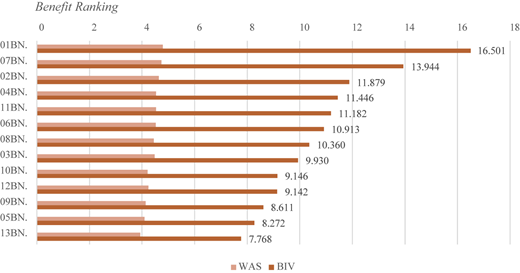
These findings are inconsistent with the conclusions of previous European-based studies. For instance, Booth et al. (2022) found that UK respondents perceived rainwater and greywater harvesting as the greatest benefits of Earthship living, followed by renewable energy use and the use of recycled materials, whereas socioeconomic aspects such as affordability and off-grid independence were considered less important. In contrast, Australian participants in this study prioritized passive solar heating and cooling, structural resilience to extreme weather events, and water collection and reuse. This divergence suggests that respondents from different geographic and climatic contexts evaluate the benefits of Earthships through distinct lenses. Specifically, Australian participants appear to prioritize performance-oriented features directly addressing extreme weather over broader environmental ideals. This preference is also reflected in household behavior, with 86% of respondents reporting the use of air-conditioning to cool their homes, underscoring the high value placed on thermal comfort and passive temperature regulation (Zander et al., 2023). The strong emphasis on water independence further reflects Australia's recurring challenges with drought and water scarcity, echoing Tapsuwan et al.'s (2018) observation that water-sensitive design elements tend to gain greater public acceptance in arid regions. Overall, these findings suggest perceptions of Earthship sustainability benefits are shaped by local environmental conditions and adaptive priorities rather than universal sustainability values, highlighting the importance of international evidence.
Conversely, the three lowest-ranked benefits were esthetic and functional integration with natural surroundings [09BN] (WAS = 4.14, BIV = 8.61), indoor food production and integrated greenhouse systems [05BN] (WAS = 4.09, BIV = 8.27), and community building opportunities [13BN] (WAS = 3.93, BIV = 7.77). Despite being ranked lowest, these benefits still received mean ratings above the neutral midpoint, indicating generally positive perceptions across all benefits.
The Friedman test results in Table 3 confirmed significant differences in respondents' ratings of the various benefits (X2(12) = 120.901, p < 0.001). Subsequent post hoc Wilcoxon signed-rank tests showed that all benefits were rated significantly above the neutral midpoint (p < 0.001). Environmental benefits generally received higher ratings than social or community benefits, suggesting that respondents valued the tangible environmental performance aspects of Earthships more highly than their social or community-building potential.
Ranked benefit statement and analysis result
| Rank code benefit statement | Descriptive | Wilcoxon test | Friedman test | |||||
|---|---|---|---|---|---|---|---|---|
| Item (N = 58) | WAS | StdDev | BIV | Siga,b(p) | Decision(H0 = 3) | Mean rank | ||
| 1 | 01BN. | Passive solar heating and cooling for | 4.79 | 0.409 | 16.501 | 0.000 | Reject H0 | 8.74 |
| energy efficiency | ||||||||
| 2 | 07BN. | Structural resilience against extreme | 4.74 | 0.515 | 13.944 | 0.000 | Reject H0 | 8.59 |
| climate conditions (bushfires, drought | ||||||||
| flooding) | ||||||||
| 3 | 02BN. | Water collection, recycling, and | 4.64 | 0.641 | 11.879 | 0.000 | Reject H0 | 8.11 |
| greywater reuse | ||||||||
| 4 | 04BN. | Use of repurposed and recycled materials | 4.53 | 0.655 | 11.446 | 0.000 | Reject H0 | 7.54 |
| to reduce waste and promote | ||||||||
| Sustainability | ||||||||
| 5 | 11BN. | Energy independence by reducing or | 4.53 | 0.681 | 11.182 | 0.000 | Reject H0 | 7.46 |
| eliminating reliance on traditional power | ||||||||
| Grids | ||||||||
| 6 | 06BN. | Suitability for remote and off-grid living | 4.52 | 0.707 | 10.913 | 0.000 | Reject H0 | 7.41 |
| with minimal reliance on external | ||||||||
| Infrastructure | ||||||||
| 7 | 08BN. | Cost savings over time through energy | 4.45 | 0.753 | 10.360 | 0.000 | Reject H0 | 7.12 |
| efficiency and reduced living expenses | ||||||||
| 8 | 03BN. | Off-grid renewable energy systems (solar | 4.48 | 0.822 | 9.930 | 0.000 | Reject H0 | 7.42 |
| wind, battery storage) | ||||||||
| 9 | 10BN. | Flexibility to support alternative or eco- | 4.21 | 0.853 | 9.146 | 0.000 | Reject H0 | 5.98 |
| conscious lifestyles | ||||||||
| 10 | 12BN. | Simplicity of construction, allowing for | 4.24 | 0.865 | 9.142 | 0.000 | Reject H0 | 6.18 |
| partial or full DIY involvement | ||||||||
| 11 | 09BN. | Esthetic and functional integration with | 4.14 | 0.926 | 8.611 | 0.000 | Reject H0 | 5.80 |
| natural surroundings | ||||||||
| 12 | 05BN. | Indoor food production and integrated | 4.09 | 0.978 | 8.272 | 0.000 | Reject H0 | 5.59 |
| greenhouse systems for self-sufficiency | ||||||||
| 13 | 13BN. | Earthship construction fosters community | 3.93 | 1.024 | 7.768 | 0.000 | Reject H0 | 5.05 |
| through shared building experiences and | ||||||||
| Volunteer | ||||||||
Note(s): X2(12) = 120.901, p < 0.001
Spearman's rank correlation analysis (Appendix B) revealed significant associations between benefit ratings and other variables. Initial perception of Earthships showed strong positive correlations with all top five benefits, with the strongest correlation being with passive solar design [01BN] (r = 0.656, p < 0.001), followed by structural resilience [07BN] (r = 0.593, p < 0.001), and water systems [02BN] (r = 0.512, p < 0.001), suggesting that greater knowledge of Earthships is associated with higher valuation of these specific benefits.
4.2.2 Qualitative insights on perceived benefits
Open-ended responses (Table 4) help explain why respondents valued specific Earthship benefits. Three benefit-related themes were most prominent. First, Environmental and Sustainability Benefits (21 mentions) were the most frequently identified theme, with particular emphasis on resource efficiency (15 mentions) and water independence (7 mentions). This aligns with the quantitative results, which highlighted high ratings for sustainability-related attributes. Respondents recognized the environmental advantages of self-sufficient systems, with one noting that “Water harvesting and recycling is a huge benefit, especially in drought-prone areas.”
Ranked barrier statement and analysis result
| Rank code benefit statement | Descriptive | Wilcoxon test | Friedman test | |||||
|---|---|---|---|---|---|---|---|---|
| Item (N = 58) | WAS | StdDev | BIV | Siga,b(p) | Decision(H0 = 3) | Mean rank | ||
| 1 | 04BR. | Lack of public awareness and education limits | 4.19 | 0.826 | 9.263 | 0.000 | Reject H0 | 10.48 |
| interest in Earthship homes | ||||||||
| 2 | 02BR. | Local building regulations make it difficult to | 4.14 | 1.017 | 8.211 | 0.000 | Reject H0 | 10.53 |
| obtain approval for Earthship construction | ||||||||
| 3 | 05BR. | Banks and lenders are unlikely to provide | 3.91 | 0.996 | 7.836 | 0.000 | Reject H0 | 9.62 |
| financing for Earthship projects | ||||||||
| 4 | 12BR. | Earthship construction is labor-intensive, relying | 3.45 | 0.94 | 7.120 | 0.001 | Reject H0 | 8.01 |
| on volunteer labor, which can be difficult to | ||||||||
| sustain | ||||||||
| 5 | 13BR. | Without volunteer support, labour costs for | 3.53 | 1.012 | 7.018 | 0.000 | Reject H0 | 8.25 |
| Earthship homes may be higher than conventional | ||||||||
| housing | ||||||||
| 6 | 06BR. | Finding qualified professionals to design and build | 3.5 | 1.112 | 6.647 | 0.002 | Reject H0 | 8.40 |
| Earthships is challenging | ||||||||
| 7 | 03BR. | Earthship aesthetics and design may not appeal to | 3.26 | 1.036 | 6.407 | 0.075 | Retain H0 | 7.41 |
| buyers in suburban or urban areas | ||||||||
| 8 | 09BR. | Securing land in appropriate locations for | 3.31 | 1.127 | 6.247 | 0.047 | Reject H0 | 7.53 |
| Earthship construction is challenging | ||||||||
| 9 | 14BR. | Acquiring the knowledge, skills, and building | 3.12 | 1.061 | 6.061 | 0.412 | Retain H0 | 7.06 |
| methods required for Earthship construction can | ||||||||
| be challenging | ||||||||
| 10 | 07BR. | The use of recycled materials may lead to | 3.17 | 1.11 | 6.026 | 0.274 | Retain H0 | 7.15 |
| misconceptions about durability and safety | ||||||||
| 11 | 10BR. | Constructing Earthships is a labor-intensive | 3.12 | 1.093 | 5.975 | 0.413 | Retain H0 | 7.03 |
| process requiring specialized skills | ||||||||
| 12 | 01BR. | The upfront cost of building an Earthship home | 2.86 | 1.067 | 5.540 | 0.343 | Retain H0 | 6.00 |
| makes it unaffordable for most Australians | ||||||||
| 13 | 11BR. | Dependence on renewable energy and water | 2.41 | 1.009 | 4.799 | 0.000 | Reject H0 | 4.66 |
| systems may pose risks in extreme climate | ||||||||
| conditions | ||||||||
| 14 | 08BR. | Earthship designs may not be well-suited for | 1.81 | 1.017 | 3.590 | 0.000 | Reject H0 | 2.88 |
| Australia's climate and environmental risks | ||||||||
Note(s): X2(13) = 216.531, p < 0.001
Second, Economic and Long-term Value (9 mentions) centered on lifecycle efficiency, including reduced maintenance and operational costs. One participant remarked that “Over the life cycle of the Earthship, which could be hundreds of years, the cost is minimal.” While some perceived high upfront costs as a barrier, others emphasized the long-term affordability of Earthships. This divergence echoes Wong et al. (2018), who observed that lifecycle benefits are often undervalued within conventional appraisal frameworks.
Third, Community and Social Benefits (11 mentions) were associated with collective participation, knowledge-sharing, and a sense of belonging developed through the building process. Participants described Earthship construction as fostering “a community of volunteers that become lifelong friends” and “a remarkable phenomenon of people helping each other build their homes.” Although these factors ranked lower in quantitative assessments, they represent what Booth et al. (2024), Saker (2024), and Sporer (2018) describe as “hidden value” emerging from the lived experience of collaborative building. The Hedgehog Housing Co-op (Booth et al., 2024) exemplifies how cooperative construction strengthens social bonds and local engagement. These findings suggest that community-related benefits, though initially underestimated, can play a meaningful role in shaping positive attitudes toward Earthships.
Overall, these themes align with the quantitative pattern in which performance-oriented environmental benefits were prioritized, whereas community-related benefits were valued but less salient in ranking outcomes.
4.2.3 Discussion of benefit perceptions
As shown in Figure 1, the high valuation of passive solar design [01BN], structural resilience [07BN], and water systems [02BN] reflects a distinctly Australian pragmatism shaped by the country's climate extremes and recurring drought conditions. Unlike Booth et al. (2022) UK respondents, who prioritized broader environmental impact, Australian participants emphasized specific, performance-oriented features that respond directly to climate extremes. This context-specific lens suggests that Earthship benefits are evaluated in terms of practical relevance rather than abstract ideals of sustainability. In particular, the strong emphasis on water independence highlights the critical role of water in a country where water scarcity is a recurring issue. This aligns with Tapsuwan et al.’s (2018) observation that water-sensitive design features are more widely accepted in drought-prone regions. Our results suggest that water independence may be a more central component of sustainable housing perceptions in Australia than previously recognized. The qualitative responses reinforce these patterns. References to water harvesting and thermal performance were frequent and specific, indicating both awareness and appreciation of these technical capabilities. These reinforce the strength of the environmental preference seen in quantitative ratings.
Overall, the findings reveal a distinctly pragmatic orientation among Australian respondents that contrasts with Reynolds (1990) more radical Earthship philosophy. While Reynolds (1990) emphasized autonomous, off-grid living as a form of resistance to conventional systems, our respondents valued specific practical benefits that could potentially integrate into conventional housing approaches. This pragmatic orientation suggests that selective incorporation of Earthship principles may be more viable in the Australian context than wholesale adoption of the complete Earthship model (Shooshtarian et al., 2021; Graham and Warren-Myers, 2019).
4.3 Perceived barriers to Earthship adoption
As previously noted, the public highly recognizes the sustainability advantages of Earthships, particularly in terms of water efficiency, thermal performance, and resilience against extreme weather. However, positive recognition does not necessarily translate into widespread adoption. Therefore, this section examines the cognitive barriers to implementing Earthships in the Australian context through both quantitative and qualitative analysis.
4.3.1 Quantitative analysis of barrier importance values
The Barrier Importance Values (BIV) analysis in Table 5 revealed clear patterns in respondents' perceptions of obstacles to Earthship adoption in Australia. A Friedman test confirmed significant differences in barrier ratings (χ[2](13) = 216.531, p < .001). Wilcoxon signed-rank tests further showed that the top barriers were rated significantly above the neutral midpoint (H0 = 3, p < .001), indicating strong consensus that these are genuine impediments rather than hypothetical concerns.
Perception of Earthship among respondent
| Profile freq | (N = 58) | % |
|---|---|---|
| Initial perception of Earthship | ||
| Somewhat negative | 2 | 3.4 |
| Neutral | 3 | 5.2 |
| Somewhat positive | 11 | 19 |
| Very positive | 42 | 72.4 |
| Viability believe | ||
| Yes | 51 | 87.9 |
| No | 2 | 3.4 |
| Unsure | 5 | 8.6 |
The quantitative analysis of barrier importance values (BIV) revealed clear patterns in how respondents perceived barriers to Earthship adoption, as shown in Figure 2. Lack of public awareness and education [04BR] was identified as the most significant barrier (WAS = 4.19, BIV = 9.263), followed by local building regulations [02BR] (WAS = 4.14, BIV = 8.211) and financing challenges [05BR] (WAS = 3.91, BIV = 7.836). Labor-intensive construction requiring volunteer support [12BR] (WAS = 3.45, BIV = 7.120) and higher labor costs without volunteers [13BR] (WAS = 3.53, BIV = 7.018) ranked fourth and fifth. All five barriers scored above the neutral midpoint, confirming widespread agreement that they pose substantial obstacles.
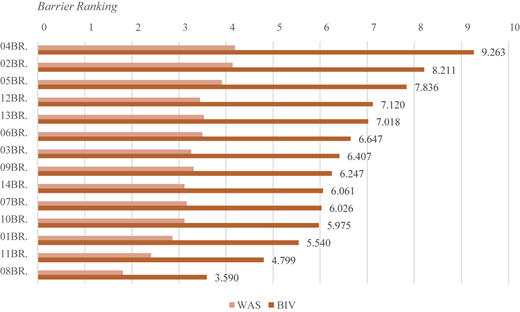
In contrast, the lowest-ranked barriers were upfront cost [01BR] (WAS = 2.86, BIV = 5.540), dependence on renewable systems in extreme conditions [11BR] (WAS = 2.41, BIV = 4.799), and climate suitability [08BR] (WAS = 1.81, BIV = 3.590). Low climate suitability ratings indicate that most respondents believe Earthship principles can be widely adapted to Australia's diverse climate zones. Earlier studies expressed greater doubts. For instance, Freney et al. (2013) questioned the thermal performance of Earthships in Australia's warm climate, arguing that insulation could be problematic. However, subsequent research (Booth et al., 2022) demonstrated that, with locally adapted materials and ventilation strategies, Earthship performance rivals that of other sustainable housing types. Current findings suggest that public opinion evolves as evidence accumulates. Respondents did not perceive Australia's extreme temperatures as a constraint but recognized that Earthship design can be refined to suit diverse climatic conditions. This shift also reflects their belief that concerns about technology will diminish as understanding deepens.
Spearman's rank correlation analysis revealed significant relationships among the barriers (Figure 3). The network figure presents statistically significant correlations, with nodes representing individual barriers and edges representing significant associations; line thickness is proportional to the strength of the association. Regulatory [02BR] and financing [05BR] barriers were strongly correlated (rs = 0.534, p < 0.001), suggesting that respondents perceive them as interconnected institutional constraints. Familiarity with Earthship principles was also positively associated with labor cost concerns [13BR] (rs = 0.363, p < 0.01), indicating that more informed participants provided more realistic assessments of implementation challenges.
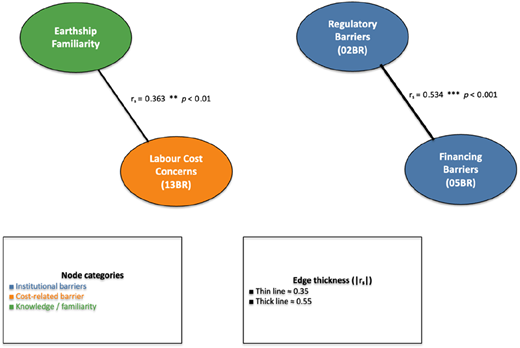
Spearman correlation network of key Earthship adoption variables. Source: Authors' own work
Spearman correlation network of key Earthship adoption variables. Source: Authors' own work
These results reveal a “knowledge–regulation–market triangle,” in which limited awareness, regulatory complexity, and financing difficulties reinforce one another. This compound structure extends Booth et al.’s (2022) UK findings by showing how barriers interact rather than occur independently. The prominence of awareness and regulatory issues likely reflects Australia's limited exposure to Earthship projects. With few local demonstrations, the knowledge gap has evolved from general environmental awareness to a more technical and procedural deficit, particularly around performance-based approvals under the National Construction Code (NCC). Respondents described the NCC process as confusing and difficult to navigate, echoing Warren-Myers and Heywood (2018), who argued that inconsistent sustainability regulations can impede innovation. Financing issues further compound these institutional barriers. As observed in the UK (Booth et al., 2022), access to credit remains limited. Conventional valuation frameworks often undervalue the long-term benefits of sustainable housing (Wong et al., 2018), making it difficult for Earthship builders, who rely on unconventional materials and off-grid systems, to secure loans. Notably, similar barriers, such as low public awareness, complex regulations, and market resistance, are also common in the promotion of other green building initiatives beyond Earthships (Azeem et al., 2017).
Overall, the quantitative results indicate that barriers to Earthship adoption in Australia are primarily institutional and systemic, rather than technical, suggesting a knowledge–regulation–market triangle in which low public awareness, restrictive regulatory frameworks, and financing constraints interact to inhibit diffusion. This finding highlights the need for policy and institutional reforms that enhance information accessibility, streamline approval processes, and expand sustainable housing finance mechanisms, thereby enabling the broader uptake of innovative, low-impact housing models. Recently, Wang and Lee (2026) found climate change policies have a significant impact on housing markets.
While the quantitative results identify which barriers were rated as most important, the open-ended responses provide explanatory detail on how respondents interpret these constraints and why they are experienced as limiting in practice. The qualitative themes reported below, therefore, complement the rankings by clarifying the underlying institutional, market, and capability issues associated with Earthship implementation in Australia.
4.3.2 Qualitative insights on perceived barriers
Open-ended responses (see Table 4) clarify the main constraints that respondents associate with Earthship delivery in Australia. Three barrier-related themes were most prominent. First, Regulatory Frustration (16 mentions) emerged as a dominant barrier, with challenges linked to building code compliance (10 mentions) and local government resistance (8 mentions). Respondents described complex approval systems and limited institutional support for alternative construction methods. One builder reflected, “It took seven years to complete my Earthship in Marulan … The skills are easy, but acquiring the knowledge takes a personal investment,” while another stated, “Council and state legislation makes Earthship housing almost impossible to construct.” These experiences mirror findings from Shooshtarian et al. (2021), Crabtree and Hes (2009), and Tually et al. (2022), who highlighted how institutional rigidity and fragmented governance hinder the adoption of sustainable housing in Australia.
Another key barrier is the practical implementation challenges (12 mentions) related to labor-intensive processes, volunteer coordination, and material sourcing. Similarly, Economic and Market Barriers (9 mentions) reflected difficulties in financing and market acceptance. As one participant observed, “The building cost is not affordable for people who can't afford their own properties, and share housing based on co-op building could just be temporary.” Others noted that long-term operational savings could offset initial costs, underscoring the complexity of financial perceptions surrounding Earthships.
Third, Knowledge and Expertise Gaps (10 mentions) were also commonly associated with the self-build nature of Earthships. One builder emphasized that “The skills are pretty easy, but acquiring the knowledge takes a personal investment. Tenacity, perseverance, and problem-solving skills are essential.” These reflections illustrate the dual role of knowledge, as both an enabler and a constraint, in alternative housing delivery. Overall, these qualitative themes indicate that perceived barriers are largely institutional, market, and capability-related, rather than primarily technical limitations inherent in the Earthship concept itself.
4.4 Strength and direction of public attitudes
The previous section identified the main barriers to Earthship adoption in Australia, including regulatory constraints, financing constraints, and limited public awareness. Building on these findings, this section examines overall public attitudes toward Earthships. It analyses how people's views of the benefits and barriers shape their willingness to support or adopt Earthship housing.
4.4.1 Quantitative analysis of attitude patterns
The analysis results in Table 6 revealed overwhelmingly positive attitudes toward Earthships among the sustainability-aware sample. A total of 91.4% of respondents reported positive initial impressions (72.4% “Very positive”, 19% “Somewhat positive”), while only 3.4% held negative views and 5.2% were neutral. The mean initial perception score was 4.60 out of 5 (SD = 0.748). Additionally, 87.9% believed Earthship features could be integrated into conventional housing.
K-mean cluster analysis summary and attitudinal group characteristic table
| Variable | Cluster 1: Realist supportive (n = 40) | Cluster 2: Optimistic enthusiasts (n = 18) |
|---|---|---|
| Pattern description | Strong supporters of Earthship sustainability features, but moderately concerned about regulatory, awareness, and financial barriers to implementation | Highly positive toward Earthship benefits, showing less concern about construction and financing barriers, suggesting greater optimism toward practical adoption |
| Age group | 79.2% under 45 years old; 61.8% over 45 years old | 20.8% under 45 years old; 38.2% over 45 years old |
| Professional background | Majority in built environment (82.4%) and sustainability (83.3%) sectors | Smaller representation across all professional groups |
| Dwelling type | 70.6% urban; 66.7% rural | 29.4% urban; 33.3% rural |
| Education level | Broad spread across qualifications; Master's holders more common (77.8%) | Broader spread, slightly higher Bachelor's degree proportion (36.4%) |
K-means cluster analysis based on standardized benefit and barrier ratings is reported in Table 7 and identified two attitudinal groups: “Realist Supportive” (n = 40, 69%) and “Optimistic Enthusiasts” (n = 18, 31%). Both clusters rated environmental benefits highly (means > 4.5), but differed in their perceptions of barriers. The Realist Supportive group rated regulatory, awareness, and financing barriers higher (means = 4), whereas the Optimistic Enthusiasts rated these barriers slightly lower, particularly labor and financial concerns (mean = 3.4).
Mann–Whitney U test result for age group variables (below 45 vs 45 and over)
| Means rank (n = 58) | ||||||
|---|---|---|---|---|---|---|
| Mann–Whitney U | Z | Asymp. Sig. (2-tailed) | Below 45 (n = 24) | 45 and over (n = 34) | Interpretation | |
| Benefit item showing significant result | ||||||
| 03BN. Off-grid renewable energy systems (solar, wind, battery storage) | 309.0 | −1.822 | 0.068 | 25.38 | 32.41 | Borderline significance (p < 0.05) |
| 07BN. Structural resilience against extreme climate conditions (bushfires, drought, flooding) | 299.0 | −2.372 | 0.018 | 24.96 | 32.71 | Significant difference |
| Barrier item showing significant result | ||||||
| 01BR. The upfront cost of building an Earthship home makes it unaffordable for most Australians | 290.0–1.937 | 0.053 | 34.42 | 26.03 | Borderline significance (p < 0.05) | |
| 10BR. Constructing Earthships is a labor- intensive process requiring specialized skills. | 277.5–2.137 | 0.033 | 34.94 | 25.66 | Significant difference | |
Note(s): Grouping Variable: Age Group (below 45 and over 45)
Demographic analysis revealed limited yet notable influences on perceptions of Earthships. Mann–Whitney U tests in Tables 8 and 9 showed that older respondents (≥45 years) rated “Structural resilience against extreme climate conditions” [07BN] significantly higher than younger respondents (U = 299.0, p = 0.018), while younger respondents (≤44 years) placed slightly greater emphasis on “Off-grid renewable energy systems” [03BN], although this difference was only borderline significant (U = 309.0, p = 0.068). For dwelling type, an unexpected result emerged: urban residents rated “Suitability for remote and off-grid living” [06BN] higher than rural residents (U = 301.5, p = 0.048). This could suggest that urban dwellers may idealize off-grid capabilities more than those with practical rural experience. In contrast, education level, gender, and professional background showed no significant differences in benefit or barrier ratings, indicating that demographic factors overall played a minor role compared to individual values and familiarity with Earthship principles.
Mann–Whitney U Test result for dwelling type variable (urban vs rural)
| Means rank (n = 58) | ||||||
|---|---|---|---|---|---|---|
| Mann- Z Asymp. Urban rural interpretation whitney sig. (2- (n = 34) (n = 24) U tailed) | ||||||
| Benefit item showing significant result | ||||||
| 06BN. Suitability for remote and off-grid living with minimal reliance on external infrastructure | 301.5 | −1.975 | 0.048 | 32.63 | 25.06 | Significant difference |
| Barrier item showing significant result | ||||||
| 01BR. The upfront cost of building an Earthship home makes it unaffordable for most Australians | 290 | −1.937 | 0.053 | 34.42 | 26.03 | Borderline significance (p < 0.05) |
| 10BR. Constructing Earthships is a labor- intensive process requiring specialized skills. | 277.5 | −2.137 | 0.033 | 34.94 | 25.66 | Significant difference |
Note(s):Grouping Variable: Dwelling Type (Urban vs Rural)
Thematic analysis result – coding and frequency table
| Code | Theme | Freq |
|---|---|---|
| A1 | Environmental and Sustainability Benefits | 21 |
| A1.1 | Resource efficiency (water energy materials) | 15 |
| A1.2 | Carbon reduction and ecological integration | 8 |
| A1.3 | Waste management and material reuse | 7 |
| A1.4 | Long-term sustainability | 6 |
| A2 | Psychological and Wellbeing Benefits | 7 |
| A2.1 | Mental health advantages from biophilic design | 4 |
| A2.2 | Connection to nature | 5 |
| A2.3 | Personal satisfaction from building process | 3 |
| A3 | Community and Social Benefits | 11 |
| A3.1 | Community building through volunteer participation | 8 |
| A3.2 | Social networks and knowledge sharing | 6 |
| A3.3 | Intergenerational knowledge transfer | 3 |
| A4 | Economic and Long-term Value | 9 |
| A4.1 | Reduced ongoing costs | 7 |
| A4.2 | Durability and longevity | 5 |
| A4.3 | Self-sufficiency and resilience | 4 |
| B1 | Regulatory and Administrative Barriers | 16 |
| B1.1 | Building code compliance challenges | 10 |
| B1.2 | Local government resistance | 8 |
| B1.3 | Certification issues | 5 |
| B1.4 | Complex permitting requirements | 6 |
| B2 | Knowledge and Expertise Gaps | 10 |
| B2.1 | Learning curve for necessary knowledge | 6 |
| B2.2 | Specialized skills requirements | 5 |
| B2.3 | Limited professional expertise | 4 |
| B3 | Practical Implementation Challenges | 12 |
| B3.1 | Labor-intensive construction | 7 |
| B3.2 | Organizational complexity | 5 |
| B3.3 | Material sourcing challenges | 4 |
| B3.4 | Land access issues | 3 |
| B4 | Economic and Market Barriers | 9 |
| B4.1 | Higher initial investment | 5 |
| B4.2 | Financing difficulties | 6 |
| B4.3 | Market acceptance concerns | 3 |
| C1 | Integration and Adaptation Strategies | 14 |
| C1.1 | Incorporation of elements into conventional building | 9 |
| C1.2 | Adaptation to Australian climate | 6 |
| C1.3 | Urban/suburban applications | 5 |
| C2 | Policy and Support Mechanisms | 11 |
| C2.1 | Regulatory reform needs | 8 |
| C2.2 | Financial incentives | 7 |
| C2.3 | Educational initiatives | 3 |
| C3 | Cultural and Mindset Dimensions | 7 |
| C3.1 | Indigenous knowledge integration | 2 |
| C3.2 | Value alignment with Australian lifestyle | 3 |
| C3.3 | Mindset evolution requirements | 4 |
| C4 | Future Vision and Scaling Potential | 5 |
| C4.1 | Mainstreaming strategies | 2 |
| C4.2 | Community-scale applications | 3 |
| C4.3 | Policy leadership potential | 2 |
The findings on attitudes toward Earthship homes in Australia reveal a complex landscape characterized by overwhelmingly positive sentiment, combined with nuanced perspectives on implementation challenges. The remarkably positive attitudes (91.4% positive initial perceptions) suggest a strong interest among sustainability-aware Australians. The emergence of two distinct attitudinal clusters, “Realist Supportive” and “Optimistic Enthusiasts”, reveals important nuances. Both clusters rated sustainability benefits highly, but differed significantly in their assessments of labor and financing barriers. This suggests attitudinal differences may center more on perceived feasibility than desired environmental goals, reflecting the gap between positive environmental attitudes and actual adoption behavior identified in previous sustainable housing research (Wong et al., 2018; Miller and Buys, 2013).
The limited demographic differences in our findings contrast with some previous research on conventional sustainable housing, where demographic factors have been found to influence preferences (Tapsuwan et al., 2018; Portney, 2002; Yeboah, 2023). Our findings suggest that, due to Earthship's niche nature, attitudes may transcend traditional demographic categories, being shaped more by values and experiences than by age or location.
4.4.2 Qualitative insights on attitude patterns
This subsection examines qualitative evidence on respondents' broader attitudes toward Earthships and their preferred pathways for adoption. Benefit- and barrier-specific themes are reported in Sections 4.2.2 and 4.3.2.
First, an unexpected but noteworthy theme concerned Cultural Dimensions (7 mentions). One Indigenous respondent described Earthships as “kind to Country” and “the most gentle way to be living with Country, not on it,” further observing that “the use of rammed earth is also an Indigenous knowledge system for housing.” Such perspectives highlight the potential alignment between Earthship design principles and Indigenous understandings of sustainable living. These findings extend the current literature, which has largely focused on environmental performance, by revealing the cultural and spiritual dimensions embedded within sustainable housing practices.
Second, psychological and Wellbeing Benefits (7 mentions) also featured in participants' reflections, linking Earthship design to enhanced mental health and emotional well-being. Respondents valued biophilic features and natural finishes, describing “mental health benefits arising from the indoor garden and organic forms—i.e. not a ‘white box’.” This supports Booth et al.’s (2024) findings that living in Earthships fosters stronger connections to nature and contributes positively to mental well-being.
Importantly, the qualitative data also suggest a preference for pragmatic adoption. Many participants supported Earthship principles but preferred to adopt specific features rather than build a full Earthship. Overall, these themes suggest that attitudes toward Earthships are influenced not only by practical considerations but also by cultural meaning, perceived well-being outcomes, and a preference for partial integration pathways.
4.5 Integration of findings
In this section, the qualitative and quantitative findings are discussed together. The quantitative results show which benefits, barriers, and attitudes were most important and how they were statistically related. The qualitative themes help explain why participants held these views by providing examples and context. Combining both types of findings provides a clearer understanding of public perceptions and pathways to the adoption of Earthship housing in Australia. Table 10 illustrates how these factors interact to influence the likelihood of Earthship adoption in the Australian context by examining the relationships among perceived benefits, perceived barriers, and public attitudes.
Qualitative and quantitative findings integration summary table
| Theme | Qualitative finding | Quantitative support | Integration insight |
|---|---|---|---|
| Environmental and sustainability benefits | Strong emphasis on resource efficiency, ecological integration, and long-term sustainability | Top 5 ranked benefits: Passive solar (BIV = 16.50), structural resilience (BIV = 13.94), waterSystems (BIV = 11.88), Recycled materials (BIV = 11.45), energy independence (BIV = 11.18) | Strong validation of environmental benefits as primary motivation for earthship interest, with practical sustainability features prioritized over abstract benefits |
| Regulatory and administrative barriers | Building code compliance, council resistance, and certification challenges identified as major obstacles | Local building regulations ranked as 2nd highest barrier (BIV = 8.21) | Qualitative data reveals specific mechanisms of regulatory barriers, including council unwillingness and certifier shortages |
| Knowledge- regulation- market triangle | Triangular relationship between knowledge gaps, regulatory barriers, and market challenges, with each reinforcing the others | Top 3 ranked barriers: Lack of awareness (BIV = 9.26), building regulations (BIV = 8.21), financing challenges (BIV = 7.84) | Quantitative rankings confirm the three interconnected barriers identified in qualitative analysis as central challenges to adoption |
| Community value perception gap | Community benefits frequently mentioned in open- ended responses as significant but often discovered through experience | Community aspects ranked lowest (13th) among benefits (BIV = 7.77) | Suggests community benefits may be undervalued in initial perceptions but discovered through engagement with earthship principles |
| Pragmatic integration pathway | Preference for selective integration of earthship principles rather than full adoption | High rankings for individual features but lower rankings for complete earthship concepts | Selective integration of highly-ranked features may be a more viable pathway than complete earthship adoption |
| Theme | Qualitative finding | Quantitative support | Integration insight |
| Economic Complexity | Nuanced view of costs considering both initial investment and long-term savings | Mixed rankings: long-term savings ranked 7th benefit, upfront cost ranked 12th barrier | Reveals tension between short-term costs and long-term value that isn't fully captured in single quantitative measures |
| Climate Appropriateness | Recognition of need for climate- specific adaptations while maintaining confidence in overall suitability | Earthship designs may not be well- suited for Australia's climate ranked lowest among barriers (14th) | While respondents believe Earthships are generally suitable for Australia, they recognize need for specific adaptations to local conditions |
| Experience- Perception Transformation | Direct experience with Earthships often transforms initial skepticism into enthusiasm | Not directly measured in quantitative items | Suggests importance of experiential learning opportunities for fostering positive attitudes toward Earthship adoption |
4.5.1 The benefit-barrier-attitude relationship
The findings reveal a complex relationship between perceived benefits, barriers, and overall attitudes. While features such as passive solar design, water systems, and structural resilience were rated highly, concerns about regulations, limited awareness, and financing created tension in perceptions of Earthships. This was apparent in the two attitude groups: the “Realist Supportive” group (69%), who valued Earthship principles but also recognized the major challenges, while the “Optimistic Enthusiasts” (31%), who focused more on the benefits and were less concerned about the barriers.
4.5.2 The knowledge-perception-action pathway
A key insight from the integrated findings is the emergence of the “knowledge–perception– action” pathway. Quantitative data showed that familiarity with Earthship concepts was associated with a stronger appreciation of key benefits such as structural resilience and water systems. Similarly, qualitative responses highlighted how direct experience often shifted skepticism into enthusiasm. This pattern could be drawn to as the “Experience–Perception Transformation.”
These findings suggest that increasing public knowledge and exposure to real-life examples could help shift attitudes and reduce the awareness barrier. However, this pathway is not straightforward. Without addressing the regulatory and financial hurdle altogether, captured in the “knowledge–regulation–market triangle”, greater knowledge alone may not lead to adoption.
4.5.3 The Australian context
The combined findings highlight how Earthships are viewed within the Australian context and are reported in Table 10. High ratings for passive solar design, water systems, and structural resilience reflect practical responses to local climate challenges such as drought and bushfires. At the same time, the strong focus on regulatory barriers highlights the challenges of complying with Australia's building code. While performance-based options exist, they are often difficult to navigate due to unconventional designs, such as Earthship-type construction.
Demographic influences were minimal. This suggests that people's attitudes toward Earthships are shaped more by their personal values, experiences, and professional backgrounds than by factors such as age or location. The large number of built environment professionals in the “Realist Supportive” group also supports the idea that technical knowledge can lead to more cautious, practical views about what is feasible in Australia.
5. Conclusion and implications
Australia faces mounting challenges in delivering sustainable and affordable housing, yet alternative models, such as Earthships, remain marginalized due to a limited empirical understanding of public perceptions. This study aimed to address this gap by assessing perceived sustainability benefits, identifying key adoption barriers, and exploring public attitudes toward Earthships and their potential integration within the Australian housing landscape.
This study contributes to research on the adoption of sustainable housing by showing that the strongest constraints on Earthship uptake are institutional rather than technical. Respondents valued Earthship's benefits (e.g. passive solar design, water systems, and resilience), yet consistently cited low awareness, regulatory complexity, and financing challenges. These constraints operate as a reinforcing “knowledge–regulation–market triangle”. This framing extends prior work that lists barriers separately by highlighting how these barriers interact and jointly limit adoption. It also aligns with institutional perspectives that emphasize legitimacy and standardization. In practice, unconventional housing can be perceived as “high risk” when it does not conform to prevailing approval, valuation, and lending practices, even when its performance benefits are recognized.
A second theoretical implication concerns the adoption pathway. Although attitudes were generally positive, many respondents preferred to adopt selected Earthship features rather than build a full Earthship. This preference indicates a “hybridization” pathway. It suggests that Earthship principles may diffuse incrementally through partial integration into conventional housing, rather than through direct replacement of mainstream housing types. This finding highlights a realistic transition mechanism in the built environment: radical innovations may influence markets through modular uptake under existing institutional conditions.
These findings lead to practical recommendations for policy, industry practice, education, and commercial decision-making. At the policy level, a priority is to reduce approval uncertainty. Regulators and councils could publish clearer guidance on performance-based pathways, including checklists for required evidence (e.g. engineering certification, water and wastewater management plans, and documentation for unconventional materials). They could also provide pre-lodgement advice on alternative housing proposals to reduce the number of applications that are unsuccessful. For finance and valuation, government and industry bodies could support demonstration projects that publish standardized performance and operating data (thermal comfort, energy, water reliability, maintenance). This would provide comparable evidence for valuers and lenders and support product design (e.g. staged lending based on verified milestones). For the industry, the hybridization preference indicates a near-term market pathway: builders and retrofit providers can package Earthship-inspired features that fit standard construction practices, approvals, and client budgets. For education, built environment, and real estate programs, curricula can include applied content on alternative housing approvals, performance evidence, and the valuation of non-standard dwellings, so that future professionals can assess these projects using consistent criteria rather than treating them as exceptions (Yam et al., 2025).
The findings also have societal implications. If the triangle remains in place, Earthships and similar models may continue to be viewed as high-risk or “niche,” thereby limiting public willingness to adopt them, even when their benefits are recognized. If guidance and evidence become more visible, Earthship-inspired features may become more commonplace in the public imagination, shifting attitudes from novelty to feasibility. In resilience terms, wider adoption of features related to passive thermal performance and water security can reduce household vulnerability to heat events, power outages, and drought. This can affect daily comfort, housing stability, and costs, which are components of quality of life.
Future studies could address the small, sustainability-aware sample by recruiting a broader demographic sample. One option is stratified sampling by age, income, education, tenure (owner/renter), and dwelling type, including participants with low levels of sustainability engagement. Recruitment can combine panels and mainstream channels, not only sustainability groups, to reduce self-selection. Studies could also compare a “sustainability-aware” subsample with a general-public subsample (and apply weighting where relevant) to test whether results differ by demographic characteristics and awareness levels.
AI generative
We confirm that an AI-assisted tool (i.e. Grammarly) was used only for minor language editing and proofreading. No AI tools were used to generate content, analyze data, or shape the intellectual contributions of the manuscript.
Notes
We collected primary data through a structured survey targeting experts and individuals interested in sustainable construction, including professionals in sustainability, design, and real estate. The survey incorporated both closed-ended (Likert-scale) questions and optional open-ended questions to capture additional qualitative insights. Although the survey invited respondents to indicate their willingness to participate in a follow-up interview, no participants expressed interest; therefore, no interviews were conducted. Accordingly, the study relies solely on survey data. The qualitative comments provided within the survey instrument were used to enrich and contextualize the quantitative findings. Together, these data enable us to examine Australian public views, perceived barriers, and attitudes toward Earthship housing, and to assess its potential acceptance as a sustainable housing option in Australia.
While the sample may reflect self-selection bias, it provides valuable exploratory insight from a sustainability-aware audience.
The supplementary material for this article can be found online

