Mobility as a Service (MaaS) platforms promote the use of shared and public transportation, contributing to the reduction of environmental impact and urban congestion. Through different reward mechanisms, MaaS platforms can encourage users' sustainable behaviors. This study investigates how MaaS platforms engage users and foster sustainable mobility behaviors by analyzing platforms that adopt gamification-based, social and economic reward mechanisms.
The authors employed a multiple case study approach and used multiple sources of evidence to triangulate the data. The data were analyzed through an inductive thematic analysis following the Gioia method.
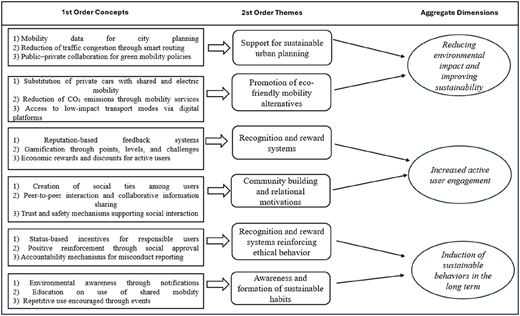
From the analysis, the authors have obtained three aggregate dimensions: (1) Reducing environmental impact and improving sustainability, which reflects how MaaS platforms contribute to lowering the environmental footprint of urban mobility; (2) Increased active user engagement, highlighting the role of MaaS applications in fostering users' active to smart mobility platform; and (3) Induction of sustainable behaviors in the long term, showing how MaaS platforms support the consolidation of sustainable mobility habits over time.
The study provides relevant insights by developing a conceptual framework for policymakers, practitioners and scholars interested in smart mobility.
The originality of this work lies in the three-dimensional approach adopted to analyze user engagement mechanisms, thereby contributing to the expansion of knowledge on how digital platforms can facilitate the ecological transition.
1. Introduction
In recent years, sustainable development has become a key element in building a more equitable and ecologically responsible global society, with the mobility sector being one of the most impacted areas in this transition. As highlighted by Zhou et al. (2025), the mobility of people has a significant impact on environmental sustainability, especially due to the widespread availability of transportation modes. In urban contexts, where pressure on urban mobility is growing increasingly intense, citizens tend to prefer owning a private car, seeing it as a symbol of independence and comfort (Redman et al., 2013). However, this trend significantly contributes to air pollution and risks to public health (Abujder Ochoa et al., 2025).
In the face of these challenges, smart mobility (SM) has emerged as a strategic response to reduce the economic, social and environmental impacts of urban traffic. SM plays a pivotal role in driving the growth and development of smart cities and intelligent regions (Albino et al., 2015; Eskandarpour et al., 2019). Indeed, Mitieka et al. (2023) attested that SM is “believed to be a solution to some of these challenges by providing comprehensive and intelligent mobility services, decreasing transportation costs, promoting safety, and combating pollution and traffic congestion”.
Thus, urban mobility has become a highly relevant topic due to its direct influence on citizens' quality of life and its contribution to achieving environmental goals (Faulin et al., 2019; Miskolczi et al., 2021; Pamucar et al., 2022). The European Commission has launched several initiatives in recent years to promote sustainable mobility. Starting with the first time, it was in 1987, with the Green Paper, which discussed the terms of “sustainable mobility.” Over the years, this term has evolved over time and is now aligned with the 2030 Agenda for Sustainable Development (Lee et al., 2016) where is reported the SDG 11 which refers to making cities inclusive, sustainable, safe and resilient, reducing polluted emissions.
In the current context, the combination of approaches and digital technologies has influenced the mobility services of people and goods (Faulin et al., 2019). Moreover, the increasing use of smartphones has radically changed how users access transportation services, facilitating the adoption of alternative solutions, such as car sharing (Firnkorn and Müller, 2011; Hildebrandt et al., 2015), bike sharing and ride sharing (Rayle et al., 2014; Teubner and Flath, 2015).
As a result of this growing interest, the number of research articles focusing on MaaS is expanding (Butler et al., 2021). Conceptualizing MaaS as a smart mobility business model grounded in service-dominant logic, recent management research emphasizes value co-creation within complex public–private ecosystems, where digital platforms orchestrate integrated, multimodal service bundles and data-driven interactions (Turetken et al., 2019; Krauss et al., 2022; Polydoropoulou et al., 2020).
Within this paradigm, sustainable urban transport is reframed as an engagement-intensive service experience rather than a mere functional trip, positioning users as active resource integrators who continuously negotiate convenience, cost and environmental impact. Building on studies of innovative urban mobility solutions from a service-dominant perspective, engagement emerges as a critical driver of adoption, particularly when smart mobility offerings align with users' values and everyday practices. Parallel research on gamification and sustainable mobility shows that rewards, points and challenges can effectively steer users toward low-carbon modes while strengthening satisfaction, loyalty and participation in co-creation processes (Vacondio et al., 2025). In this view, reward mechanisms are not merely peripheral add-ons, but central engagement levers through which smart mobility platforms can configure more sustainable, yet competitively viable, MaaS value propositions.
Within the MaaS paradigm, incentives represent a crucial mechanism to encourage behavioral shifts toward more sustainable mobility choices. MaaS platforms integrate multimodal transportation services through a unified digital interface, but their effectiveness in reducing car dependency largely depends on users' willingness to adopt alternative modes. For this reason, recent studies emphasize the importance of incentive systems as strategic tools for promoting behavioral change, enhancing engagement and fostering loyalty within smart mobility ecosystems (Guidon et al., 2020; Matyas and Kamargianni, 2021). Incentives can take multiple forms – monetary, non-monetary or gamified – and operate by reducing perceived barriers to sustainable travel while increasing the perceived value of greener alternatives. Monetary incentives typically include fare discounts, vouchers or financial rewards for the use of public or shared mobility services (Cats et al., 2017; Karolemeas et al., 2023). Non-monetary incentives encompass benefits such as priority access, exclusive features or personalized recommendations that enhance the service experience (Rosenfield et al., 2020). Gamification-based incentives, such as points, badges, challenges and rankings, leverage intrinsic motivations and have proven effective in promoting long-term engagement by transforming mobility choices into engaging and socially shared experiences (Tomè Klock et al., 2021; Amaddeo et al., 2026). As a result, incentive structures are not merely complementary features but become integral elements of MaaS business models, shaping user participation and facilitating the broader goals of sustainable and integrated urban mobility.
Despite the growing interest in research toward this topic, there is still a lack of research examining in-depth the various incentive systems adopted by sustainable mobility apps. Many studies have investigated the MaaS understanding its history (Garroussi et al., 2025; Hensher et al., 2020), identifying the main actors of this platform and how and why MaaS should be implemented (Arias-Molinares and García-Palomares, 2020). Moreover, previous studies have discussed the gamified (Avril et al., 2024; Militao et al., 2025), economic (He et al., 2025) or social incentives in the mobility sector (Huang et al., 2022; Macedo et al., 2022). Nevertheless, these incentives have mainly been analyzed singularly, and no studies have examined the MaaS from a three-dimensional perspective, by simultaneously considering different reward mechanisms and their potential long-term effects on sustainable behaviors (Hao et al., 2025).
For this reason, this study aims to fill this gap by analyzing the different incentive systems used by MaaS to promote sustainable behavior among users. The research adopts an exploratory qualitative design, using a multiple case study approach to examine three mobility apps that employ three different types of incentives for the users. The originality of this work lies in the three-dimensional approach adopted to analyze user engagement mechanisms, thereby contributing to the expansion of knowledge on how digital platforms can facilitate the ecological transition. Through this study, the authors want to answer the following research question (RQ): How does Mobility-as-a-Service incentivize users to adopt sustainable behaviors?
The paper provides relevant insights by developing a conceptual framework for policymakers, practitioners and scholars interested in smart mobility. Indeed, the results demonstrate that the chosen mobility services result in positive benefits on multiple aspects that have been summarized in three aggregate dimensions: (1) Reducing environmental impact and improving sustainability, (2) Increased active user involvement and (3) Induction of sustainable behaviors in the long term.
The paper's structure is as follows: Section 2 presents a literature background on smart mobility, maas, behavioral change and social determination theory. Section 3 details the methodology adopted for data analysis. In Section 4, the study's identified results are analyzed. Further, the main findings are discussed in Section 5, highlighting the research implications regarding strategic approaches, competencies and managerial practices. Finally, the study concludes by proposing avenues for future research and limitations.
2. Theoretical background
2.1 Smart mobility and the MaaS
The SM is a growing global phenomenon of the twenty-first century (Modarelli et al., 2024). The primary objectives of SM include reducing pollution and traffic congestion, enhancing people's safety, mitigating noise pollution, improving citizens' well-being by alleviating stress related to traffic, increasing transfer speed and lowering transfer costs (Benevolo et al., 2015). The mobility sector is benefiting from the effects of the Fourth Industrial Revolution, which enables humans to more easily manage available resources to meet their needs without limiting the quality of life for future generations (Dali et al., 2017).
In the context of SM, the application of technological innovations in cities plays a crucial role in transforming urban transportation systems through the adoption of innovative solutions that enhance operational efficiency and sustainability. Some of the most commonly identified innovations in SM services include flexible transport services, such as on-demand transportation based on fixed, semi-fixed or dynamic routes, offering more flexibility than traditional public transportation (Butler et al., 2021; Faisal et al., 2021). Other key innovations include intelligent transportation systems that leverage advanced technologies such as big data and the internet of Things for more efficient data management; autonomous vehicles that help reduce driver costs (Faisal et al., 2021); shared mobility (Contreras and Paz, 2018), which help decrease traffic congestion and increase transportation efficiency. Additionally, electric mobility contributes to the reduction of direct vehicle emissions, particularly when powered by renewable energy sources (Docherty et al., 2018). Each of these innovations is an individual approach, but can also be integrated to better achieve SM goals (Butler et al., 2021).
An innovative approach to providing transport services in smart mobility is MaaS (Nikitas et al., 2017), which, while not a direct technological innovation in the transport sector (Smith and Hensher, 2020), offers a novel way of delivering mobility services to the public.
According to Schikofsky et al. (2020), MaaS is generally described as the provision and use of integrated intermodal and multimodal mobility services, in which MaaS providers function as intermediaries and platform operators that coordinate different transport options. The MaaS integrates various transportation options through a single digital platform, allowing users to plan, book and pay for multiple types of mobility services. This integration reduces traffic, improves safety and lowers transfer costs (Hensher et al., 2021). MaaS is typically used via smartphone applications, tablets and other mobile devices and enables the increased visibility and adoption of transport modes that travelers generally tend to avoid (Headicar, 2009). Mátyás and Kamargianni (2019) show that individuals, despite generally not appreciating shared mobility, tend to experiment with new transportation modes when these are offered through a MaaS platform.
2.2 The MaaS and behavioral change
The adoption of MaaS requires more than just technological implementation; it also demands a cultural shift in individual mobility habits. This behavioral change is influenced by several factors, including trust in digital platforms, user willingness to change established routines (Matyas and Kamargianni, 2019) and their active engagement with the system.
In the current competitive context, developing a good and challenging app is a really hard task (Huang et al., 2022). Nurmi et al. (2020) and Tsirimpa et al. (2019) have investigated how apps can affect people's behaviors. These applications are typically designed using persuasive technology and human–computer interaction principles, aiming to shape or alter users' attitudes and behaviors (Schneider et al., 2016).
Within the SM domain, the concept that has gained importance is “nudging”, which in behavioral economics refers to reshaping the choice environment to influence behavior without constraining freedom of choice (Thaler and Sunstein, 2009). Digital nudging is a strategic design of the user interface that incorporates elements to guide behaviors through physical and digital cues (Weinmann et al., 2016).
The digital choices of people are influenced by digital interfaces, such as mobile apps and websites, where the users make the decisions (Schneider et al., 2018) and the digital nudges can have both positive and negative effects on users and represent a subtle way to guide user behavior without restricting autonomy (Maske and Potthoff, 2017). Key features of the persuasive design of these applications include personalized feedback, self-monitoring, setting and achieving challenges and goals, and reward systems (Jariyasunant et al., 2015). Incentive-based apps have been tested to promote sustainable mobility practices by encouraging users to modify their routines in exchange for rewards (Jariyasunant et al., 2015; Poslad et al., 2015). Gamification activities, economic and social rewards for users, provide a way to motivate behavior changes (Sailer et al., 2017; Chans and Castro, 2021) and can boost user engagement, extending commitment in the long term (Andersson et al., 2018; Kazhamiakin et al., 2021). Mobility is a habitual activity and difficult to interrupt (Pronello et al., 2017) and the motivational techniques such as gamification have proven to be effective in supporting behavior change over time (Sailer et al., 2017).
Soulé et al. (2022) have shown that goal-setting and self-tracking and monitoring, which help users make progress and improve performance, are more effective incentives than gamification. Sustained user engagement is often linked to more successful and lasting behavioral outcomes (Pronello et al., 2017). Furthermore, research shows that behavior can influence attitudes more strongly than attitudes influence behavior (Kroesen et al., 2017), suggesting that the direct influence of behavior through app features may lead to more profound and lasting changes without necessarily altering user beliefs beforehand.
2.3 MaaS and self-determination theory
To better understand user engagement of MaaS through incentives such as social recognition, challenges and discounts or coupons, it is useful to recall the self-determination theory (SDT), well established in psychology (Ryan and Deci, 2017) which explains users' behavioral intention to adopt specific types of technologies (Deci and Ryan, 2012). Nikou and Economides (2017) and Zhang et al. (2024) have adopted SDT to explain users' behavioral intentions to adopt specific types of technologies.
According to SDT, human behavior is naturally driven by both intrinsic and extrinsic motivation (Medeiros et al., 2022). Intrinsic motivation occurs when users engage in an activity because they find it interesting or enjoyable, while extrinsic motivation is driven by external rewards, such as incentives or recognition (Deci and Ryan, 1985).
Extrinsic and intrinsic motivation tend to be strengthened when the context satisfies individuals' basic psychological needs for autonomy, competence and relatedness (Deci and Ryan, 2000; Ryan, 1995). Competence is defined as feeling effective in influencing the environment around oneself (White, 1959), considering both the effort made and the performance achieved. Then, autonomy is feeling strong-willed in one's behavior, rather than feeling compelled because one is conditioned to act by the influence of external forces (deCharms, 1968). Finally, relatedness is defined as the need to feel connected to others and receive care and support, which leads to adaptive survival benefits thanks to the sharing of essential resources (Deci and Ryan, 2012). These needs are not influenced by culture (Chirkov et al., 2003) and are essential for optimal functioning (Deci and Flaste, 1995).
In the context of MaaS, these psychological needs may emerge individually or simultaneously through the use of digital mobility platforms. For instance, competence can emerge when users feel effective in managing and planning routes, making informed decisions about available transport options, and successfully achieving their intended journeys (DeCharms, 1968; Grenier et al., 2024; Schikofsky et al., 2020). While the perception of autonomy can emerge when users can freely choose between different transportation options, without feeling their choices constrained by external pressures (Márquez et al., 2019; Schikofsky et al., 2020). Finally relatedness could emerge through the feeling connected and supported by others (DeCharms, 1968; Schikofsky et al., 2020) for instance through receiving informative notifications.
The three basic psychological needs identified by SDT can be strategically further satisfied through economic, social or gamified incentives. Economic incentives, such as discounts and coupons can enhance autonomy by expanding users' perceived to have more freedom of choice, and moreover may enhance the sense of the relatedness because the user receives a reward from the system and makes them feel acknowledged and recognized (Schikofsky et al., 2020). Social incentives, including community recognition and shared achievements, foster relatedness by reinforcing users' sense of belonging (Ryan and Deci, 2000; Sweeney et al., 2014) and can reinforce the sense of competence of the users. Moreover, gamified incentives, such as points, badges and challenges, can enhance the sense of relatedness providing clear feedback on performance and progress (Cerasoli et al., 2016) or can reinforce competence when users win the challenges (Fredriksson and Lahtinen, 2024).
3. Methodology
Due to the relative novelty of the phenomenon under study and the lack of comprehensive knowledge in the area under study, as well as the lack of understanding of the formation of value in the focal company, the study's design pursues an exploratory approach. To address the RQ, the authors have conducted an exploratory analysis employing a multiple case study method as the research approach (Eisenhardt, 1989; Yin, 2017). Employing a multiple-case approach allows the authors to enhance the accuracy and the generalizability of the investigation into social phenomena (Saunders et al., 2003; Yin, 2017). This methodological approach is fundamental when the scope of the research question is “how” and the investigation is about contemporary events. The MaaS cases were selected based on the inclusion criteria outlined in the following section. The authors collected multiple sources to triangulate data (Yin, 2017), namely: (1) reviews, (2) press release, (3) reports and (4) online documentation (Table 1). Reviews were collected from September 1, 2024, to January 10, 2025, as this period included several days dedicated to raising awareness of environmental sustainability, such as Car-Free Day and National Sustainable Mobility and Smart Cities Day.
3.1 Case studies
The following sections detail the case studies' descriptions, the data collection and the analysis process. The authors realized an information-oriented selection of three extreme cases with the purpose of investigating best practices that regularly use different reward incentives to retain users to use the sustainable mobility app. The authors have selected three digital tools as case studies: (1) BlaBlaCar, (2) Moovit and (3) Ridemovi. The authors selected the following three case studies because they offer various benefits to users, encouraging app usage and, consequently, the adoption of sustainable behaviors.
The cases were selected based on the following inclusion criteria: (1) offering app-based shared mobility services, (2) operating within the SM market and (3) implementing a reward mechanism. The latter criterion was particularly crucial for the research, as it enabled the authors to exclude several apps that had been initially considered during the preliminary screening phase.
The selected MaaS satisfy the needs of the autonomy, competence and relatedness of SDT (Deci and Ryan, 2002), thereby encouraging long-term user engagement. In this case, the economic, social and gamified incentives help satisfy these needs.
Below, the authors describe the selected MaaS platforms, detailing the primary services they offer to users, their objectives, the benefits associated with their use in terms of sustainable goals and the rewards provided to users.
3.1.1 BlaBlaCar
BlaBlaCar is a platform that offers car sharing, allowing multiple people to share the same vehicle to travel the same route. This platform was created for two purposes: firstly, to optimize transportation costs borne by both the driver and the user, and secondly, to reduce the environmental impact of car traffic. MaaS was founded in 2006 in France and quickly gained popularity, becoming one of the leading global players in the shared mobility sector. Its distinctiveness is centered on social mechanism systems. The app is based on social incentive mechanisms which arise from the combination of feedback, recognition and social interaction.
3.1.2 Moovit
Moovit is a mobile application that provides users with real-time data on schedules, routes and traffic conditions of various public transportation, i.e. buses, trains, subways and ferries, while also offering directions for walking or using bike-sharing. In this way, it enables users to plan their trips more efficiently based on proper time management and present means. The app is based on a distinctive incentive model based on gamification, through points, challenges and goals, incentivizing users to use the service frequently and to contribute additional information, such as reporting extraordinary events or transportation disruptions. The app collects data on urban mobility to help local authorities optimize public transportation services. Moovit facilitates trip planning and contributes to more sustainable mobility by reducing dependence on personal vehicles.
3.1.3 Ridemovi
RideMovi provides an urban micromobility service through sustainable transportation solutions, including traditional bicycles, e-bikes and electric scooters, all available for rental via a mobile app. Ridemovi is active in several Italian cities such as Bologna, Florence, Milan and Turin. RideMovi enables users to locate, book and unlock vehicles through the app, which also facilitates payment and trip tracking management. At the end of the ride, the vehicles must be parked in designated areas, and the lock must be closed through the app. The app is based on economic reward mechanisms, providing users with credits, discounts and access to promotional credits.
3.2 Data collection
The authors have collected the reviews using Apify tools, a web scraping and automation platform (Apify, n.d.). The free version allowed the authors to extract the data by scraping individual webpages for each account that were the subjects of interest to research. The authors extracted (in.txt format), the reviews selected a maximum of the 10,000 reviews and that have selected the reviews from 1 September to 10 January both Apple Store and Google Play Store, for each app. Subsequently, secondary data were collected (Table 2).
3.3 Data analysis
Data analysis followed an iterative and inductive approach (Bansal et al., 2018; Miles and Huberman, 1984). Inductive theorizing based on qualitative data is deemed appropriate in understudied empirical contexts where there is relatively little prior work (Bansal et al., 2018). Specifically, the use of multiple sources helped the authors to avoid any subjective bias and the constant triangulation among them guaranteed congruence. Data were triangulated among the key informants, the content of the secondary sources and the interpretation of researches. Therefore, reviews, public declarations, archival data and online documentation were triangulated and analyzed following Gioia et al. (2013) method.
The qualitative analysis was conducted following several steps (Gioia et al., 2013; Merriam and Tisdell, 2015). This methodology was chosen because it provides the rigor necessary to answer the research question, allowing the data to be organized into themes and the results to be systematically derived.
The analysis was organized into four phases. First, the authors analyzed the MaaS services available in the market to identify the case studies for selection. They then conducted a screening of the main trade press articles and official reports on smart mobility. Next, official archival documentation was collected (e.g. websites, official magazines and digital platform data) for the BlaBlaCar, Moovit and Ridemovi apps. In the third phase, the authors collected user reviews for each app from the Google Play and Apple Store pages.
During the analysis, the authors practiced a first-order analysis to identify categories. The similarities and differences between each category were analyzed (Strauss and Corbin, 1998), assigning a label or phrasal descriptors (Gioia and Chittipeddi, 1991; Glaser and Strauss, 1967). Thus, the emerging themes were analyzed to catch the main themes helpful in describing the phenomenon. Finally, a second-order analysis was performed to distil the emerging themes into “aggregate dimensions”.
Qualitative data analysis was conducted by two researchers using NVivo software. To ensure the reliability of the study, any discrepancies were discussed until a consensus was reached.
4. Findings
The authors aim to explore how the use of MaaS incentivizes users to adopt sustainable mobility applications by providing rewards. The data structure is presented in Figure 1, summarizing the first-order concepts, the second-order themes and the aggregate dimensions. The authors reported the results of the multiple sources analyzed under three aggregate dimensions: (1) Reducing environmental impact and improving sustainability; (2) Increased active user engagement and (3) Induction of sustainable behaviors in the long term. In the following paragraphs, each aggregate dimension and its corresponding second-order themes and first-order concepts are explained in detail (Figure 1).
4.1 Reducing environmental impact and improving sustainability
The aggregate dimension “Reducing environmental impact and improving sustainability” captures how the MaaS platforms contribute to lowering the environmental footprint of urban mobility while promoting more efficient and sustainable transportation practices. It reflects the extent to which the apps reduce resource consumption, limit CO2 emissions and encourage users to shift from private car ownership to shared, public or low-emission transport alternatives. Two second-order themes emerge from multiple data: (1) support for sustainable urban planning and (2) promotion of eco-friendly mobility alternatives.
4.1.1 Support for sustainable urban planning
The theme “Support for sustainable urban planning” refers to first-order concept regarding how the use of the MaaS helps to plan sustainable urban and their organization in the city. From the analysis has emerged that the application Moovit improves sustainability by providing real-time data on transportation modes and suggests the quickest and least congested route, reducing travel time and, consequently, the CO2 emission disbursed for each movement of public transportation. Through user travel data, Moovit provides useful insights for sustainable urban planning, helping cities improve their transportation network in a citizen-centered green way. In fact, as it is reported by user review: “I am a frequent transport taker and utilize the bus system several times a week. The app does provide several options as far as routes go and does have accurate schedule info”.
BlaBlaCar allows users to better plan their trips. As reported: ‘BlaBlaCar allows users to find information more easily regarding the best routes to reach the destination city, but also to report an accident more quickly.’ Similarly, Ridemovi enables users to plan their trips by providing information on recommended routes and points of interest, such as charging stations or shared vehicle parking. For example, as reported: “You can find the closest bike, e-bike, or e-scooter available on your map” and “It tells you the operating areas and parking areas allowed for returning vehicles”.
4.1.2 Promotion of eco-friendly mobility alternatives
The theme “Promotion of eco-friendly mobility alternatives” refers to first-order concept regarding how MaaS platforms facilitate access to a wide range of environmentally friendly mobility services that are easy to use and readily available to users.
It has emerged from the results that the App BlaBlaCar allows to improve the environmental sustainability in terms of resources with more efficient use of resources, since for travel, it doesn't involve individual use of one's private car but allows users to use a single vehicle chosen through the platform. There is the possibility of choosing the most sustainable means of transportation by reducing fuel consumption and minimizing the use of private cars. As the results show on the platform, there is the section as shown here: “Sign up as a driver and save on travel costs by sharing your car with other passengers”. Then the platform allows any car driver to sign up and post the first pass.
Moreover, BlaBlaCar improves economic sustainability as it offers a low-cost shared mobility service for multiple routes where users can use the same vehicle for short, medium or long routes, as reported: “No matter where you go, bus or carpool, find the perfect trip for you from our many destinations and routes at great prices”. For routes each passenger must share the costs that buy the entire trip. It also allows for improved environmental sustainability, through the reduction of CO2, in fact as reported: “Travell also has an environmental value, i.e. as it is a solution that allows users to avoid CO2 emissions caused by their mobility, optimizing both the occupancy rate of cars already on the road and buses”. “In a world without BlaBlaCar, total emissions to the atmosphere would have been 6.35 million tons of CO. Thanks to emissions avoided through optimized vehicle use, this figure has been reduced to 4.34 million tons of CO2.”.
The Ridemovi app offers environmentally friendly alternatives to traditional transportation, replacing the use of private cars with traditional bicycles, e-bikes and electric scooters. The service helps to decrease greenhouse gas emissions and air pollution, contributing to reducing environmental impact and improving urban sustainability, in fact as reported: “In 2022, users travelled more than 14 million kilometers, avoiding the emission of about 2,133 tons of CO2”. In addition, by promoting the use of shared vehicles, RideMovi helps reduce vehicular traffic and the occupation of public land by private parking lots, freeing up space for green areas and improving the quality of life in cities.
4.2 Increased active user engagement
The aggregate dimension “Increased active user engagement” captures how MaaS applications stimulate users' active participation in the mobility ecosystem through mechanisms that foster interaction, engagement and trust. The mechanisms, such as the rewards that encourage users to contribute information, share feedback, interact socially or respond to incentives, promote consistent and meaningful engagement. Two second-order themes have emerged from multiple data: (1) recognition and reward systems and (2) community building and relational motivations.
4.2.1 Recognition and reward systems
The theme “Recognition and reward systems” refers to first-order concept regarding how MaaS platforms, through incentive-based mechanisms, stimulate user participation and sustain engagement by offering both material and symbolic rewards.
The foundational aspect of BlaBlaCar app which sets it apart from multiple apps is the social feedback that both driver and passenger users can give; in fact as reported: “After a trip, you can leave a review about your driver or passenger to share your experience with the community”. This allows platform operators to better organize the delivery of the final service, in fact as reported: “We rely on flexible and fast organization, adapting to suggestions and needs arising from direct contact with customers and field staff”.
The option to issue feedback allows users in a position to rate and review both drivers and passengers, thus promoting mutual trust and improving perceived safety during travel. A good rating can increase a user's reputation, thus facilitating the search for passengers or drivers with high reputations, creating a kind of reward that is not material but consists of having a better experience in the form of better opportunities for future trips.
And finally, the platform provides for checking the content of each feedback and the information from whom it is written, in fact as reported: “We take time to get to know all our users and our partner bus companies better. We check feedback, profiles and documents so you know who you will be traveling with, so you can book with confidence on our secure platform”. The application control mechanism triggers greater user confidence in the trustworthiness of the platform and safety in using the service.
The Moovit application, through gamification mechanisms, incentivizes users to use the application. Specifically, users can accumulate points by providing feedback on routes, reporting unexpected events or suggesting improvements. The reporting incidents, hitches or suggesting improvements as reported in the app, there is the “Report” section where are indicated multiple options that the user can indicate such as for example “driver evaluation: Driver friendly … etc.”. These stimulant activities lead to greater interaction with the Moovit community, promoting active engagement in creating accurate and useful information for other users. In addition, the user's downloaded app provides that past certain thresholds there is an avatar that changes appearance, providing a playful and motivating element for the user.
The Ridemovi app offers an incentive mechanism by providing promotional codes that users can use to receive discounts or free rides. In addition, there is a referral program that rewards users who invite friends and family to sign up for the service, triggering a friendly and family experience, in fact, as reported: “Take advantage of a promo code on Ridemovi, get a discount of 5 with the referral link of one of our member”. Through this program, both the user and the new subscriber receive a bonus, incentivizing the uptake of the service. In addition, the application allows users to make a type of subscription that allows them to use the micromobility means for a specific period of time, with no limit in the number of rides through the payment of a fixed price, users can use the service as many times as they need during the validity period of the subscription, without having to pay separately for each trip. With the multiple economic incentives over the years, the number of users has increased significantly, as reported: “In 2023, RideMovi recorded remarkable results in promoting sustainable mobility. In Bologna, the service exceeded 250,000 subscribers, up 54% from the previous year”.
4.2.2 Community building and relational motivations
The theme “Community building and relational motivations” refers to first-order concept regarding the ways in which MaaS platforms foster relationships by building trust and promoting a sense of belonging among users.
The BlaBlaCar app attracts people who are just looking for cheaper alternatives in terms of transportation, or who do not own or do not want to use a private car. But it attracts people who are looking to meet new people while traveling for leisure or business transportation. It is precisely on this point that it is highlighted that such a platform is also used for purely relational reasons, creating a unique space, allowing exchanges between people who would otherwise never have met. In fact as reported: “A total of 87% say they have had enriching encounters during their mobility service”. Therefore, it triggers the attraction of meeting new people to expand one's network or to make friends as reported in recent years obtained the following results. The platform removes barriers and creates social ties in fact as shown by the results collected people during the experiential journey found positive effects in personal communication on several aspects, in fact as reported: “Learning about a topic 84%; Feeling useful by listening or exchanging 76%; Talking about personal topics or oneself 69%; Receiving good life advice 61%; Getting perspective on one's situation 56%; Changing one's mind on a topic 51%; Revealing things about oneself that one has never talked about before 21%”.
In addition, Moovit allows users to share information with other users, comparing routes and sharing experiences. This social function promotes a sense of connection and belonging to the user community. All these initiatives result in an increase in the use of the app by users in fact as reported: “Moovit is active in more than 300 cities in Italy and has more than 1.7 billion users globally and contributes to the improvement of public transportation, a collective value.”
Finally, Ridemovi through “Group Ride” allows users to unlock multiple vehicles for collective trips, encouraging real social interactions and fosters the formation of micro-communities of users who share the same urban routes.
4.3 Induction of sustainable behaviors in the long term
The aggregate dimension “Induction of sustainable behaviors in the long term” captures how MaaS platforms promote the consolidation of sustainable mobility habits among users. Beyond short-term engagement, these apps implement mechanisms that reinforce repeated pro-environmental choices, gradually transforming occasional sustainable actions into stable behavioral patterns. Two second-order themes emerge from multiple data: (1) recognition and reward systems reinforcing ethical behavior and (2) awareness and formation of sustainable habits.
4.3.1 Recognition and reward systems reinforcing ethical behavior
The theme “Recognition and reward systems reinforcing ethical behavior” refers to first-order concept regarding how MaaS platforms use incentive-based mechanisms to promote responsible user behavior, educating users and fostering their reliability over time.
The BlaBlaCar app allows to assign the status of “Super Driver” as reported: “It is an award given to the most reliable and exemplary drivers in our community. These are drivers who have the highest passenger feedback, a verified Profile and lots of travel experience. In short, those who meet, and often exceed, passenger expectations”. Such an incentive system leads the driver to engage in sustainably better behavior over time about the service offered and at the same time triggers the user to use the sustainable mobility service over time. The site allows users to share their experience as drivers, in fact as reported: “Sign up as a driver and save on travel costs by sharing your car with other passengers. It only takes a few minutes to post your first ride. What do you say, shall we hit the road?”. Social feedback and the ability to be able to report incidents by both users and drivers in the: “Trust, Safety & Accessibility” build to the creation of an ecosystem of trust and accountability that drives users to adopt ethical behavior over time.
In addition, Moovit app provides users with information on the environmental impact of their travel choices, related to saving CO2, as reported: “During the 2023/2024 season, Moovit sent 945,000 information messages to Venezia FC fans, encouraging the use of public transportation to reach the Pier Luigi Penzo stadium. This initiative helped improve the fan experience and promote sustainable mobility options, aligning with UEFA's directives to reduce CO2,”. This engaging informational awareness helps reinforce user commitment to making more sustainable choices, increasing motivation and continuing to use the app responsibly.
Moreover, Ridemovi app collaborates with local governments to offer discounted bike share subscriptions, helping to improve the quality of urban life and promoting sustainable mobility practices, for example as reported: “The City of Florence has introduced a bonus for bike share subscriptions, available through the RideMovi app, in order to incentivize the use of shared bikes and promote sustainable mobility”.
4.3.2 Awareness and formation of sustainable habits
The theme “Awareness and formation of sustainable habits” refers to first-order concept regarding how MaaS platforms raise awareness and guide users in developing sustainable daily habits over the long term, influencing their values.
The Moovit app provides the “Noticeboard” where it is possible to see which friends are using the app and how many points they have accumulated, thus triggering a real game challenge among users that leads users to provide more and more information and involuntarily engage in increasingly sustainable behavior that helps the community.
Moreover, the Ridemovi app educates its consumers to keep sustainable norms by pointing out the proper rules of parking the vehicle in the city, after use as stated here: “To ensure you have the best possible experience with us, we briefly explain the steps you need to follow to park properly in your city”. Also on dedicated world days for cyclists it organizes several initiatives where it allows free use of the vehicle in fact as reported: “To celebrate this special day by giving all cyclists a free 30-min eBike ride.”
The BlaBlaCar app, through its blog and service center, provides advice in the form of articles and guides on how to travel safely, promoting the development of ethically aware and socially responsible habits within the community.
4.4 Cross-comparison of case studies
Each selected case study offers mobility services in different ways and provides different types of incentives to encourage frequent use of the sustainable mobility app, which motivates and stimulates behavioral change.
In particular, the apps share the common objective of increasing the use of smart mobility, integrating features that facilitate user interaction, such as geolocation, push notifications and digital payments. But the ways in which they engage users differ because they use different incentives based on social recognition, economic incentives and gamification, which can satisfy one or more motivational dimensions of the SDT.
From a SDT perspective, all three applications activate both extrinsic and intrinsic motivation, but through different pathways. Extrinsic motivation is mainly triggered by external incentives namely economic, social and gamified; whereas intrinsic motivation emerges from the enjoyment and satisfaction associated with using the service itself, such as seamless travel experience across shared mobility modes.
In particular, BlaBlaCar provides social incentives through the social feedback mechanisms that promote appreciation and social interaction among users. This mechanism aligns with the need of relatedness of SDT, as it fosters a sense of belonging and collective purpose. This form of incentive can lead to long-term behavioral internalization, as sustainable mobility practices are reinforced through repeated social interactions and trust-based relationships.
Instead, Moovit emphasizes gamification-based incentives through points, challenges among the users and goals to reach. This satisfies the need for competence and the relatedness because it encourages users to be able to reach specific goals and the users feel to be a part of a group. Moovit has a model where behavioral change is driven by playful learning and ongoing participation rather than material incentives. However, behavioral change in this case appears to be driven more by continuous engagement and feedback loops, which may support sustained participation as long as the gamified structure remains active and rewarding.
Conversely, the Ridemovi app pushes the users through the economic incentives, such as promo codes, referral programs and discounted subscriptions. These mechanisms satisfy the needs of autonomy, offering more freedom in mobility and reducing financial cost.
Overall, the comparison among the three apps based on different incentives suggests that it can satisfy one or more needs and can allow the enhancement of sustainable behavior in the long term. Generally, economic incentive seems the first reason that can push the people to assume correct behavior but, it has emerged that also gamified and especially the social incentives can push the people to assume the adoption of sustainable behavior in the long term. So, social and gamified incentives seem more aligned with sustained engagement and internalization processes in the long term, while economic incentives are more effective in driving initial adoption. However, this may depend on the type of target users of the mobile app. A hybrid configuration of incentives, combining economic, social and gamified elements, may provide the most balanced strategy to support both adoption and long-term behavioral change by simultaneously addressing the needs for autonomy, competence and relatedness. Table 3 summarizes in detail the comparison of these three apps presented below.
5. Discussion, research insights and implications
The rapid-changing business environment of today has brought about numerous new business models in addition to the reinvention of existing ones. This creation and reinvention of new business models provides the disruptive competitive advantages necessary to survive and thrive in an environment that changes quickly. Industry 5.0 technologies enable the standardization of this information, ensuring more fluid and efficient data management. Data management in sustainable mobility crosses regulatory, privacy, security and ethical issues for which the right balance must be struck between protecting personal data and the opportunities offered by new technologies. An innovative change in existing processes and services could be generated through the creation of new business models as MaaS managed as reward mechanisms in mobility apps in which sectors that before this moment were distinct will converge. The value chains, traditionally intended, will necessarily have to be disrupted and will be recombined with the consequent change in the business models.
The source of competitive advantage has shifted from “economies of scale” to “economies of convergence”, thus it is possible to find the answer to the crisis and the opportunity to create new value through an active convergence of knowledge, technologies, markets and industries. Deregulation and privatization, technological changes and globalization are the major driving forces behind the rapid and unpredictable change in the business environment.
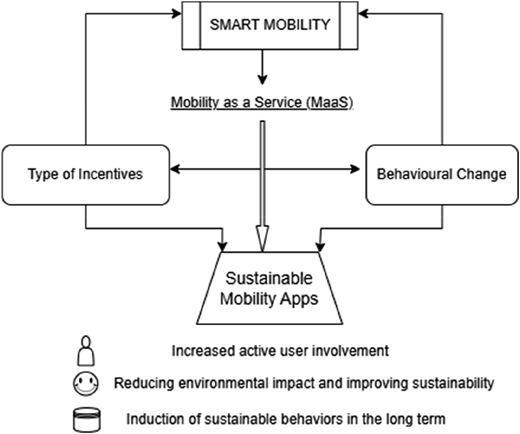
Results reveal interesting insights about the method of identifying the different incentive systems used by smart mobility applications to promote sustainable behavior among users. We derived three directions (Figure 2): the first one is based on the reduction of environmental impact with the final objective to improve sustainability among different users of an ecosystem. This is interested in the niche or industry interested with high search costs and a medium-low level of opportunities derived; the second one has been defined as an increased active user involvement self-serving approach because it is based on the search of value co-creation and it implies low costs and low opportunities. The last one is the induction of sustainable behaviors in the long-term strategic approach, which creates partnerships with similar but non-competing companies and builds new opportunities for the entire network, for example, the launch of a new business in a sustainable perspective. This last approach implies high medium-high costs at the beginning, but it benefits from great opportunities in the short term such as digital positioning and reputation and long term in terms of networking and new business opportunities.
The beneficiaries of this approach are all industry participants that adapt their business models under the influence of a disruptive technology. Therefore, industry convergence occurs through three levels, namely user involvement, MaaS as a new way of internal and external value delivery, and data management through digital platforms that provide a digital infrastructure for the development and adaptation of the business processes of the studied industry. Smart and sustainable are consequences of the formation of a new value, the potential of which is only beginning to be revealed to stakeholders and the industry as a whole. New mechanisms for creating, delivering and capturing value accelerate the processes that are inherent in the industry due to the maturity and conservatism of business processes.
A further theoretical contribution of this study lies in clarifying how different reward mechanisms embedded in MaaS platforms activate distinct motivational processes within the SDT framework. The findings show that social rewards primarily stimulate the need for relatedness, as mechanisms such as feedback systems, reputation building and community interactions foster trust, social connection and a sense of belonging among users. Gamification mechanisms, including points, badges, challenges and progress tracking, mainly support competence by reinforcing users' perceptions of effectiveness and achievement, while also enhancing autonomy through voluntary participation and self-directed goal attainment. In contrast, economic incentives such as discounts, credits, subscriptions and referral bonuses operate predominantly through extrinsic regulation, encouraging users to adopt sustainable mobility options because of tangible external benefits. However, the findings also suggest that these incentives may facilitate the gradual internalization of sustainable behaviors when combined with engaging and socially meaningful experiences. Therefore, this study extends SDT within the MaaS context by showing that sustainable mobility platforms do not rely on a single motivational pathway, but rather orchestrate multiple incentive configurations that simultaneously address autonomy, competence and relatedness, thereby fostering both initial adoption and long-term behavioral change.
Thus, the paper identifies a set of core features that support the proliferation of new business models powered by reward mechanisms from mobility apps with the final aim to encourage sustainable mobility. The vibrant technological environment and the unstoppable growth of digitalization are sustaining the transition from traditional business models to marketing networking strategies. Such evolution is triggered by new sources of networking.
Figure 2 should be interpreted as a dynamic and reinforcing framework rather than as a strictly linear sequence of stages. The model illustrates how different incentive mechanisms embedded in MaaS platforms (i.e. social, gamified and economic rewards) activate users' motivational processes and stimulate sustainable mobility behaviors over time. In this perspective, the three macro-dimensions identified in the findings represent interconnected dynamics. “Reducing environmental impact and improving sustainability” reflects the broader sustainability-oriented outcomes generated through MaaS adoption; “Increased active user engagement” represents the central behavioral mechanism through which users interact with the platform and reinforce participation; while “Induction of sustainable behaviors in the long term” captures the gradual internalization and stabilization of sustainable mobility habits. Therefore, the framework suggests a reinforcing relationship in which incentive mechanisms initially stimulate user engagement, engagement increases the adoption of sustainable mobility practices, and repeated sustainable behaviors progressively strengthen long-term behavioral change and ecosystem sustainability.
5.1 Implications
This study makes a multifaceted contribution to literature at the intersection of MaaS, smart and sustainable behaviors, by empirically investigating how the MaaS can engage the users to improve their sustainable behavior. The findings show that MaaS applications fulfill users' needs according to SDT, indicating that users derive satisfaction from using these platforms. Moreover, the study demonstrates that different types of incentives embedded in MaaS apps can effectively encourage sustainable behavioral changes among users.
This research investigates how sustainable mobility can increase the number of users adopting MaaS platforms by encouraging sustainable behaviors through rewards. The study adopts a three-dimensional approach, integrating economic, social and gamification incentives.
Thus, from a theoretical point of view, despite the fact that the concept of SM has gained more attention because it represents a way for governments to respond to the growing demands of various stakeholders related to climate change, urbanization and population growth (Bibri and Krogstie, 2017), there is currently no universal definition. SM is a subtopic within the broader concept of smart cities (Yigitcanlar and Kamruzzaman, 2020) and is closely connected with the issue of smart cities.
This approach distinguishes the work from previous studies, which have typically analyzed reward mechanisms in isolation, focusing solely on gamification (Militao et al., 2025) or only on economic or social incentives (Macedo et al., 2022). By adopting this integrative perspective, the study contributes to the literature by highlighting how multiple incentive mechanisms can jointly enhance users' sustainable behaviors, offering a more comprehensive understanding of how rewards influence engagement in MaaS.
This research also offers managerial and policy implications in the context of MaaS and sustainable mobility. For practitioners, the findings highlight the importance of investing in technological innovations and paying attention not only to user engagement but also to internal processes, ensuring that platforms are efficient, reliable and adaptable to changing mobility needs. The OECD (2019) defines smart cities as “initiatives or approaches that effectively leverage digitalization to boost citizen well-being and deliver more efficient, sustainable and inclusive urban services and environments as part of a collaborative, multi-stakeholder process”. In accordance with this definition and the results of this research, governments could pay more attention to the development of sustainable mobility policies and are striving to improve the quality of life for citizens (Richter et al., 2022). To maintain more environmentally friendly cities, governments must implement innovative technologies (Wang et al., 2019). However, there is no single strategy for smart cities that can fit all cities in the same way (Clement and Crutzen, 2021), as each city has different needs, resources (Siokas et al., 2021), citizens, visions and priorities that may require different and appropriate solutions (Glasmeier and Christopherson, 2015).
For policymakers, the study provides guidance on raising awareness about the benefits of MaaS for data management and designing regulations that balance privacy concerns with the opportunities offered by data-driven mobility services. City authorities, for example, could implement social reward mechanisms such as carpooling events or community-based mobility challenges to foster social interaction and a sense of belonging among users.
For example, municipalities could implement layered reward strategies that combine short-term economic incentives with longer-term social recognition mechanisms. A city authority could initially encourage citizens to use public transportation or shared mobility services through discounted subscriptions, mobility credits or free ride campaigns, while simultaneously introducing community-based challenges, public sustainability rankings or recognition badges for environmentally responsible users. In this way, external incentives may stimulate initial adoption, whereas social visibility and community engagement may progressively reinforce intrinsic motivation and long-term behavioral commitment. Similarly, MaaS platform developers could design engagement pathways that gradually shift users from extrinsic to intrinsic motivational drivers. Initial economic rewards may attract new users and reduce resistance to behavioral change, while subsequent gamification elements, personalized progress feedback and community interaction features may strengthen users' perceptions of competence, autonomy and relatedness over time. This progressive transition could support the internalization of sustainable mobility habits and enhance the long-term effectiveness of MaaS ecosystems.
For platform developers, designing apps that integrate multiple types of incentives, economic rewards, gamification elements and social incentives within a single platform to promote sustained engagement and encourage long-term sustainable travel behaviors.
6. Conclusion
This research investigated how MaaS platforms can enhance user engagement in sustainable mobility. A multiple case study was conducted, selecting those that provide sustainable mobility services and are based on three different types of reward mechanisms, including social, economic and gamification-based incentives. From the analysis emerged three aggregated dimensions, namely: (1) Reducing environmental impact and improving sustainability; (2) Increased active user engagement and (3) Induction of sustainable behaviors in the long term.
The results show that the apps analyzed in this research play a significant role in reducing environmental impact, promoting more efficient urban mobility planning and offering shared transportation services. At the same time, they are able to stimulate active user involvement, thanks to incentive mechanisms and the creation of real communities. Finally, these platforms help develop greater awareness of sustainability, facilitating the learning and adoption of sustainable behaviors over time through informational events and incentive tools.
Overall, this study contributes to the MaaS and smart mobility literature by demonstrating that sustainable mobility adoption cannot be explained solely through technological efficiency or service availability, but must also be understood as a motivational and engagement-driven process. By integrating social, gamified and economic incentives within a unified analytical framework, the research shows that different reward mechanisms activate distinct motivational pathways capable of influencing both short-term adoption and long-term behavioral internalization. In this sense, the study extends the application of SDT within the MaaS context by illustrating how digital mobility platforms can strategically orchestrate autonomy, competence and relatedness to foster sustainable mobility behaviors. Empirically, the research provides evidence from multiple MaaS cases that sustainable behavioral change emerges not from isolated incentives, but from the interaction between engagement mechanisms, community dynamics and platform-based experiences. Therefore, the main takeaway of this study is that MaaS platforms should be interpreted not only as technological infrastructures for mobility integration but also as behavioral ecosystems capable of shaping users' long-term sustainability-oriented practices.
This research offers an inductive conceptual model to identify the main improvements in smart mobility. Evidence shows the central role of new technologies in the modern economic-industrial environment. In the different complex sectors investigated, the huge amount of data available highlights the need to implement MaaS and processing tools to determine process efficiency. The study provides valuable insight both for the theory, managers and practitioners.
Future research could also integrate quantitative studies making the framework generalizable. Additionally, future research could conduct a comparative analysis among different countries or in a longitudinal perspective.