This study aims to comprehensively review the literature on economic linkages in tourism, offering a timely and relevant perspective in the post-pandemic context. It explores how strong intersectoral linkages foster local economic development, enhance resilience and reduce dependency on external systems. By interpreting prior literature through a novel analytical lens, the review synthesizes recurring patterns, identifies underlying determinants of linkages and highlights critical research gaps. The study contributes a structured understanding of how tourism-driven economic integration can promote sustainability and inclusiveness, making it a valuable resource for researchers and policymakers aiming to strengthen destination economies in the face of global uncertainties.
1. Introduction
Tourism is regarded as an economic growth engine in developing and least developed economies, contributing significantly to employment generation, foreign exchange earnings, enhancing local entrepreneurship and broader local development. In 2019, the tourism sector accounted for 10.4% of global GDP (equivalent to US$10 tn) and supported 334 million jobs, representing 10.3% of total global employment. Nations such as Thailand, Vietnam, India and the Bahamas have emerged as major tourism destinations, witnessing an increasing influx of international tourists and ballooning tourism-related revenue. However, beneath this optimistic academic discourse, there lies a critical and often overlooked issue of economic leakages. Economic leakages in tourism destinations are a widespread and pervasive issue which is often overlooked, yet impactful in deteriorating the economic potential of a destination’s economy. Leakages are mainly defined in academic discourse as the proportion of tourist expenditure that does not stay or leave the destination’s economy, primarily due to importing diverse goods and services, foreign ownership, in-migrant salary remittances, profits repatriation and many more. Economic leakages unknowingly impede the local or host communities from being involved in tourism supply chains and prevent them from reaping the economic benefits of tourism activity. Although they are not always visible from a macro-level or bird’s eye view, their long-term impact can be profoundly detrimental to destinations, particularly when striving for inclusive and sustainable development. Furthermore, leakages limit the local spending of tourists, adversely affecting the multiplier effect and ultimately constraining the destination’s ability to retain and circulate tourism revenue locally. The COVID-19 pandemic strikingly exposed this vulnerability, where destinations heavily dependent on imported inputs for their daily operations have faced acute disruptions as global supply chains faltered, hindering operations and deepening distress. In this context, addressing leakages is not just a desirable goal but a strategic imperative that requires targeted, context-sensitive interventions rooted in the realities of local economies.
In response to the adverse effects of economic leakages, tourism stakeholders have adopted a wide range of strategies to enhance the economic sustainability of destinations. These include promoting alternative forms of tourism, localization of procurement, strengthening of supply chains and warehousing infrastructure, encouraging local ownership of tourism enterprises, upskilling the local workforce and fostering intersectoral linkages (Chaitanya and Swain, 2024). Among these, the establishment and strengthening of economic linkages between the tourism sector and non-tourism sectors has emerged as an effective strategy for integrating host communities into tourism supply chains. According to Pratt et al. (2018), economic linkages or intersectoral linkages refer to the relationships between different sectors of an economy, wherein one sector’s input needs, such as raw materials, labour, capital and technology, are met by another sector within the same economy. For instance, the tourism sector, especially hotels and restaurants, depends heavily on food supplies. When these inputs are procured from local agricultural producers, a robust linkage is formed, facilitating revenue retention and economic sustainability within the destination (Supradist, 2004a). Similarly, Anderson and Juma (2011) and Mitchell and Ashley (2006) referred to economic linkages in tourism as functional relationships between the tourism sector and other local economic sectors, such as agriculture, manufacturing and services, through which tourism-related businesses engage with and stimulate the local economy. These linkages occur through the sourcing of various goods and services, and labour locally, thereby fostering inter-sectoral synergy, enhancing local value chain retention and promoting inclusive economic development within tourism destinations. Empirical research has firmly emphasized that such linkages create additional income opportunities, foster entrepreneurship within local economies and promote an equitable distribution of tourism revenue among host communities (Kirsten and Rogerson, 2002; Supradist, 2004a; Telfer and Wall, 1996). For instance, the Berimbau project in Brazil demonstrates how the effective linkages between local agricultural producers with high-end resorts have increased household incomes and advanced community-level sustainability (Meyer et al., 2014). The extant research on linkages reinforces the understanding that the economic benefits of tourism do not inherently reach local communities; rather, their redistribution largely depends on the existence and strength of linkages within the local economy (Lacher and Nepal, 2010; Wondel and Eckhorst, 2012). Furthermore, strengthening intersectoral linkages amplifies the multiplier effects of tourism expenditure, thus enabling broader economic development and resilience (Anter, 2016; Mitchell and Ashley, 2006). In contrast, destinations which lack robust intersectoral linkages often remain extremely vulnerable to external shocks, including economic downturns, geopolitical tensions, supply chain disruptions and global crises like the COVID pandemic (Mufeeth and Kaldeen, 2023). Despite their critical role in fostering sustainable tourism development, economic linkages have remained an underexplored area within tourism literature, with limited efforts towards comprehensive and systematic synthesis. Existing studies are fragmented and often focus on isolated case-based analyses without offering a broader conceptual or thematic consolidation. In a time when global tourism is increasingly moving towards sustainable and inclusive development, a systematic and updated comprehensive synthesis of the extant literature on economic linkages is both timely and essential. While review studies such as Theuns (2011) offered an early structural review of tourism linkages in the Caribbean context, their relevance is limited today given their pre-2000 scope, lack of a systematic methodology, interdisciplinary theoretical integration and omission of stakeholder perspectives. In light of evolving global tourism dynamics, post-pandemic recovery and the rising need to mitigate leakages, this review aims to map current research trends, identify persistent gaps and offer future research and policy directions grounded in both empirical evidence and theoretical advancement.
In this context, the current research synthesizes key findings and identifies thematic trends and gaps to assess the current state of knowledge. Unlike prior studies, which often examine leakages in isolated case contexts or focus narrowly on individual sectors, this paper offers an integrated multistakeholder and policy-relevant review of economic linkages in tourism, a first of its kind in the existing body of literature. It also explores the factors that influence the strength and effectiveness of economic linkages in tourism destinations. Moreover, the research evaluates the roles of various stakeholders, including government authorities, private businesses and local communities, in fostering or hindering the development of effective linkages and promoting the equitable distribution of tourism revenue. This comprehensive review is timely and provides essential insights for policymakers to integrate local economies into tourism supply chains, enhancing resilience and fostering equitable growth. By providing a detailed understanding of the theoretical and practical dimensions of economic linkages, this study contributes to the discourse on sustainable and inclusive tourism development. In addition, this study makes distinct theoretical contributions by developing a comprehensive multidimensional framework that reconceptualizes tourism-led economic development. It moves beyond traditional supply-side analyses by integrating unexplored demand-side dimensions, particularly tourist behaviour, preferences and awareness, as key determinants of linkages. It highlights the transformative potential of intersectoral linkages in fostering economic resilience, reducing dependency on external inputs and integrating host communities into tourism supply chains. Interestingly, the findings serve as a valuable resource for academicians, tourism authorities and private stakeholders, emphasizing the critical role of linkages in ensuring equitable distribution of tourism benefits and achieving long-term economic sustainability. This study further highlights the importance of involving host communities in tourism supply chains to ensure equitable distribution of tourism revenue. Finally, this study provides theoretical and practical implications for enhancing intersectoral linkages, thereby supporting sustainable and inclusive tourism development.
The paper is outlined in the following way: the subsequent sections elaborate on methodology, followed by results and findings of the study. The discussion section elaborates on the research gaps, leading into the theoretical and practical implications of the study. The paper concludes with a summary of the main arguments, followed by a references section at the end.
2. Methodology
This review adopted the PRISMA (Preferred Reporting Items for Systematic Reviews and Meta-Analysis) framework to ensure a structured, transparent and replicable process of identifying, screening and selecting studies relevant to the investigation of tourism-related economic linkages.
This framework is widely adopted in the tourism and hospitality discipline and includes four key phases: Identification, Screening, Eligibility and Inclusion, as outlined below.
2.1 Data source and identification
The “SCOPUS” database was selected as the primary data source due to its wider recognition within the academic and research community and broader coverage of peer-reviewed and high-quality literature across multiple disciplines. The keywords, including “TOURISM LINKAGES”, “TOURISM LEAKAGES”, “BACKWARD LINKAGES”, “TOURISM”, “INTERSECTORAL LINKAGES”, “AGRICULTURE” AND “LINKAGES” were selected to extract the relevant literature. These keywords were selected based on their repetitive appearance in the economic linkages literature and their specificity to the study’s context.
Although the keyword “Economic Linkage” is central to this study, it was intentionally excluded from the search operation. Preliminary scoping revealed that this term appears across multiple academic disciplines, including construction, water engineering, materials science, etc. without any relevance to tourism. Moreover, in many instances, the keyword “Economic linkages” was used generically to describe any relationships between economic development and specific economic variables, determinants or phenomena, without a tourism-specific focus. Including this term significantly diluted the specificity of the retrieved results. Therefore, to ensure contextual precision and disciplinary relevance, the search was confined to tourism-specific linkage keywords. These keywords were searched within the “Title, Abstract and Keywords” fields in the Scopus database to ensure targeted search results. The Boolean search operations and the corresponding results are detailed in Table 1.
To ensure the study’s relevance, the literature search was updated in May 2025 and all the articles published from the inception until May 2025 were considered. The recent publications post-2022 were explicitly prioritized and included wherever relevant.
2.2 Screening and eligibility
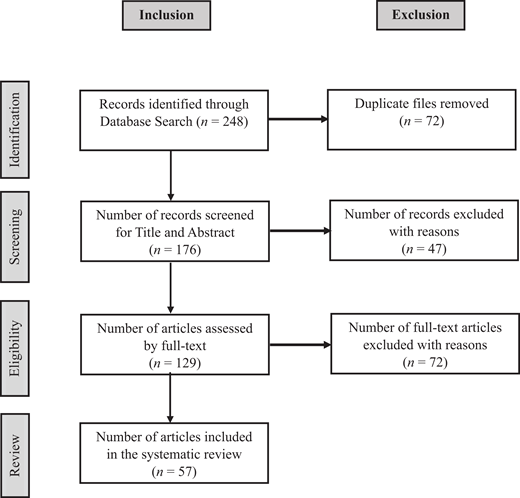
Initial search operations retrieved a total of 248 documents, including journal articles, conference papers, theses, reports and book chapters. As the existing literature on economic linkages is relatively limited, no restrictions were imposed on the publication period to ensure the inclusion of all relevant literature on economic linkages from its inception to date.
The retrieved results were exported as a CSV file containing metadata, including bibliography, abstract, keywords and citation data. Duplicate documents were excluded from the data set, reducing the sample size to 176 documents. During the preliminary screening, documents only in English language were considered to ensure consistency and comprehensibility. Documents encompassing journal articles, conference papers, theses, reports and book chapters, were considered for further analysis, while other types of documents, such as editorials and commentaries, were excluded.
The screening process involved a two-level filtration process:
2.2.1 Title and abstract screening.
Each document’s title and abstract were meticulously examined to ensure it addressed the tourism sector and its integration with other local sectors. Documents were excluded at this stage if they belonged to irrelevant disciplines (e.g. environmental sciences, construction engineering, water leakage studies) or merely used the term “Linkage” in a generic context (e.g. relationship between tourism and macroeconomic indicators or tourism and environmental degradation).
2.2.2 Full-text eligibility.
For the remaining 129 articles, a detailed review of the full text was conducted. Documents were included if they:
Conducted empirical investigations or qualitative assessments of economic linkages between tourism and local economic sectors (e.g. agriculture, handicrafts, etc.)
Used well-established methodologies such as Input-Output analyses, social accounting matrices, CGE models or micro-level field studies.
Offered conceptual or contextual insights into the need for or potential tourism-related linkages, even if they lacked empirical evidence.
Articles were excluded if they:
Focused solely on tourism’s relationship with macroeconomic variables without explicit analyses of linkages (e.g. tourism and GDP, tourism and employment).
Used the term “Linkage” interchangeably with “relationship” to describe economic associations such as tourism and economic growth linkage, tourism-inflation linkage, without clear intersectoral implications.
Explored tourism’s relationship with environmental or social outcomes without economic context.
Were general development or policy discussions mentioning tourism without a linkage-specific focus.
The screening and eligibility filter resulted in the exclusion of 72 documents, with 57 studies retained for final analysis. The full search process is visually summarized in the PRISMA flow diagram (Figure 1).
2.3 Final selection and data analysis
In the final stage, qualitative content analysis was conducted on the 57 eligible documents. Both authors meticulously reviewed each manuscript’s content to extract relevant concepts, methods and findings. Themes were identified inductively, guided by Chaitanya and Swain (2024), such as determinants of linkages, contextual differentiation, methodological differentiation, tourism-workforce integration, empirical research focus, etc. The categorization helped in identifying research trends, patterns, methodological gaps and regional concentration.
Quantitative metrics, such as the frequency of studies under each theme, were used to support the synthesis. Thematic interpretations were further validated using illustrative empirical examples drawn from the selected studies, ensuring contextual relevance and broader applicability. This qualitative review approach aligns well with prior tourism literature synthesis, such as Sharpley (2020), which adopted similar thematic or narrative analysis frameworks over meta-analytic or bibliometric techniques.
3. Results and findings
The comprehensive literature review synthesizes the existing knowledge on economic or intersectoral linkages, exploring key discussions, debates, convergences and divergences across prior studies. The subsequent sections examine the theoretical frameworks and empirical evidence underpinning these linkages in greater detail.
3.1 Publication timeline
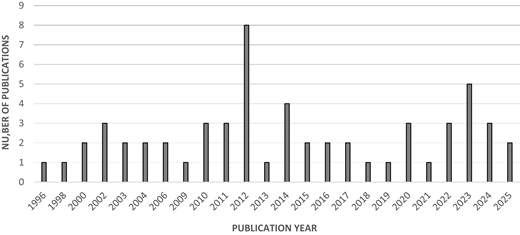
Figure 2 outlines the annual trends in research publications on economic linkages in tourism destinations. The earliest significant contribution in this domain was made by Telfer and Wall (1996), who examined the relationship between tourism and local agriculture, emphasizing the importance of integrating host communities into tourism supply chains to maximize economic benefits to host communities. While the concept of “linkages” existed prior to 1996, it primarily appeared in definitional contexts rather than detailed empirical investigations.
Subsequently, there has been an increase in the number of publications during the first decade of the 21st century. The early 2000s witnessed a significant increase in publications, reflecting growing academic interest driven by the Millennium Development Goals and the emergence of alternative tourism models like pro-poor, responsible and sustainable tourism, each emphasizing local economic development. The publication trend peaked in 2012 with eight publications worldwide, underscoring the importance of economic linkages in tourism destinations and reflecting heightened academic interest in integrating host communities into tourism supply chains.
However, this momentum experienced a sharp decline in 2013, with only one study published that year. From 2014 to 2022, research on economic linkages stabilized with an average of two publications annually. This consistent interest underscores the sustained academic and practical significance of economic linkages in tourism. In the post-COVID period (i.e. 2022–2025), there has been a remarkable increase in research on tourism linkages. The pandemic has severely devastated tourism activity across the world, exposing the vulnerability of developing and small island countries that were heavily reliant on external inputs and lacked robust and strong intersectoral linkages. This crisis prompted a global shift in policy directives towards self-sufficiency, inclusivity and localized development. In response, academic research has increasingly emphasized the need for local integration in tourism-intensive economies, aiming to identify hindrances to effective linkages and propose policy frameworks and strategies to enhance sustainability and resilience.
3.2 Journal publications
Table 2 presents the contributions of leading academic journals to the literature on economic linkages within tourism destinations. The Annual of Tourism Research emerges as the leading journal in this domain, publishing four seminal empirical studies that examined intersectoral linkages, particularly between hotels and local agriculture. These studies identified critical barriers to establishing and strengthening linkages and proposed strategic interventions to overcome them. Notably, their findings were pragmatic, implementable and high-quality, demonstrating how reinforcing these linkages can effectively channel tourism revenue directly to host communities, fostering equitable economic benefits.
Furthermore, Tourism Geographies and Tourism Economics each published three empirical studies, underscoring the interdisciplinary nature of research in this area. These studies spanned diverse geographies, including developed economies such as Mexico, Turkey and Spain, as well as developing economies such as Thailand, Lao PDR and Indonesia. These studies have employed both macro and micro-level methodologies to systematically investigate the state of linkages between hotels and local agriculture sectors, emphasizing their potential to integrate host communities into tourism supply chains.
Development Southern Africa and Journal of International Development have each published two studies, with a primary focus on destinations across the African continent. These micro-level studies emphasized the importance of economic or intersectoral linkages in the developing world. All four studies were conducted at the micro level (i.e. destination level) to keenly observe and understand the state of linkages and to identify factors that either hinder or foster these linkages within the respective destinations. Finally, these studies have proposed local-level strategies to strengthen linkages between tourism and the local economy in alleviating poverty and enhancing the socio-economic conditions of host communities in Africa.
Furthermore, several esteemed academic journals spanning multiple academic disciplines, including Tourism Management, Sustainable Development, International Journal of Economic Research, One Earth, PARKS, etc. have contributed a single publication on economic linkages, reflecting the growing scholarly interest in this field. All these studies commonly emphasize the integration of host communities in tourism supply chains and the resultant economic contributions to host communities.
3.3 Determinants of economic linkages
As discussed earlier, weaker intersectoral linkages limit local community participation in tourism supply chains and obstruct destinations from attaining economic sustainability (Yan and Wall, 2002). A deeper understanding of the underlying factors responsible for such deficient linkages is very crucial for devising strategies tailored to address them. Such factors are inherently destination-specific and influenced by the unique economic, geographical, cultural and political contexts of each destination.
Empirical studies conducted across diverse tourism destinations have highlighted a wide range of interconnected determinants contributing to weaker linkages and can be broadly categorized into demand-side, supply-side and market-driven factors. From a demand-side perspective, tourist choices and preferences exert a significant influence on procurement patterns of tourism businesses, thereby resulting in weaker economic linkages and increased leakages. International tourists often demand products and services aligned with their home country’s tastes and standards, such as imported branded goods, continental cuisines or internationally certified food and beverage items. The procurement decisions of tourism establishments, particularly those belonging to international chains, are thus shaped by the imperative to meet those needs and expectations. In addition, chefs and procurement managers may further prioritize imported goods due to perceived or actual superior quality, authenticity or consistency. As a result, even in situations where local alternatives exist, tourism establishments may continue to rely on imported inputs, resulting in negligible participation of local communities in tourism supply chains. Therefore, such an over-reliance of tourism destinations on imported inputs often results in weaker linkages, percolating meagre economic benefits to local communities.
Moving further, supply-side deficiencies present a significant barrier to strengthening linkages. These include inadequate agricultural production and diversification, limited availability of raw materials for production and seasonality in crop production. Compounding these issues are the lack of investible capital, inaccessible technologies, insufficient storage and cold storage infrastructure and low productivity due to outdated machinery and skills. Many rural suppliers and producers also face logistical hurdles stemming from geographic isolation, limited transportation networks and a general lack of economies of scale. In addition, empirical research highlighted key determinants such as uncompetitive prices of local products, inconsistent input supply, poor knowledge on the needs and requirements of tourism establishments and a lack of food processing industries as key impediments to robust economic linkages.
Finally, market-related determinants further deteriorate the potential for effective linkages. These include asymmetric access to market information, poor communication channels between suppliers and tourism establishments, deficient transportation infrastructure, weaker negotiating power among small and fragmented producer groups, geographical isolation of farmers and local communities from urban centres and monopolistic networks dominated by large or privately owned firms. Inadequate distribution networks, lack of trust between stakeholders, poor marketing skills among local communities, corrupt market dynamics and bureaucratic inefficiencies further exacerbate weaker linkages between tourism establishments and small and local suppliers.
These determinants have been empirically validated through investigations conducted across various destinations, such as Rural Uganda (Sandbrook, 2010), Mexico (Torres, 2003), Costa Rica (Bernardo and Lan-Hung, 2009), Bhutan (Pratt et al., 2018), South Africa (Kirsten and Rogerson, 2002), Zanzibar (Anderson and Juma, 2011), etc. For instance, in Bhutan, deeply rooted Buddhist traditions and geographical bottlenecks have significantly weakened linkages between tourism businesses and local agricultural and meat suppliers (Pratt et al., 2018). Similarly, apartheid-era socioeconomic disparities in South Africa have exacerbated a divide between large tourism businesses, which are predominantly owned by whites, and local businesses that supply input supplies to large tourism enterprises, mostly operated by local communities (Kirsten and Rogerson, 2002).
In response, tourism authorities and local communities in several destinations have implemented targeted strategies addressing these underlying determinants to strengthen potential linkages within tourism destinations (Hussain et al., 2012; Wondel and Eckhorst, 2012). A notable example is the Sandals Group, a major Caribbean resort chain, which identified barriers such as poor crop quality, uncompetitive pricing and inadequate communication between farmers and hotels. To address these challenges. By appointing a farm extension officer to improve seamless communication, provide farmer training on crop quality and marketing and facilitate better pricing and contractual arrangements, this initiative significantly increased farmers’ incomes and enabled hotels to procure higher quality produce more cost-effectively (Meyer et al., 2014; Rebecca Torres, 2002).
3.4 Linkages in developing and developed nations
Tourism is often regarded as a catalyst for economic growth, particularly in developing and least-developed countries (LDCs). Many developing and small island developing states (SIDS) have leveraged tourism for their economic development due to its relatively low initial capital, high-end technology, heavy machinery and skilled workforce (Boz, 2012). Tourism yields innumerable benefits, including income opportunities, infrastructure development, private investments and tax revenues, while earning foreign currencies, which support developing nations in import payments and poverty alleviation (Khanal et al., 2014; Semrad and Villanueva, 2014). However, some studies argue that tourism often fails to deliver equitable economic benefits to small and developing countries because the revenue generated in the tourism sector fails to reach local communities due to inadequate linkages between the tourism and the local economy (Theuns, 2011; Wiranatha et al., 2017). Building upon this, the recent systematic review by Bhatt et al. (2024a, 2024b) elucidates that in emerging and developing economies, tourism-led inclusive development is intrinsically contingent on the reinforcement of local economic linkages, the promotion of indigenous entrepreneurial activity and the equitable distribution of tourism-generated economic benefits across host communities.
In contrast, developed economies are able to leverage tourism to its full potential, with the tourism sector contributing significantly to GDP. This is largely attributed to their economic diversification and robust linkages between the tourism sector and other productive sectors of the economy (Hampton, 1998).
Table 3 outlines that the majority of studies (47 studies or 82.45%) on economic linkages in tourism focus on developing nations, highlighting the imperative to enhance intersectoral linkages in these regions for poverty alleviation and economic upliftment. In contrast, only six research studies (10.53%) pertain to developed economies, while the remaining four studies (i.e. 07.02%) comprise global linkage assessment reports and conceptual and review-based investigations.
The comprehensive review of literature elucidates the underlying structural and economic foundations that enable robust intersectoral linkages in developed economies. Developed economies typically possess essential factors of production, including capital, skilled human resources and technological infrastructure, which collectively facilitate large-scale and diversified production that adheres to global quality standards (Kweka et al., 2003). In addition, stable and continuous production cycles ensure a consistent supply of competitively priced goods and services throughout the year (Khanal et al., 2014). Consequently, the tourism sector in developed economies relies predominantly on domestic production, thereby minimizing import dependency and retaining tourism revenue within the local economy (Rodousakis and Soklis, 2024; Rogerson, 2012a, 2012b). Furthermore, strong forward and backward linkages between tourism and other productive sectors further reinforce this integration, thereby resulting in a low level of revenue leakage and a higher multiplier impact on the region’s economy (Garrigós-Simón et al., 2015).
In contrast, developing economies and SIDS often encounter structural limitations that constrain the formation of robust intersectoral linkages. Constraints such as limited raw materials, inadequate capital, scarcity of skilled labour and insufficient technological advancement severely restrict the scale and diversity of economic production in these regions (Paunić et al., 2025; Singh, 2012). In addition, contextual challenges including geographical, cultural, environmental and political conditions further restrict economic diversification (Pratt et al., 2018; Wiranatha et al., 2017). As a result, the tourism sector in these regions often relies on imported goods and services, ranging from food supplies, capital, skilled labour, beverages, furniture and many more from external economies (Rid et al., 2014). In addition, developing and SIDS often exhibit weaker intersectoral linkages mainly due to the unavailability of essential goods and services in these regions (Odunga, 2022). Compounding this issue is the inability of locally produced goods and services to meet the quality standards and large-scale requirements of tourism businesses (Rylance and Spenceley, 2017). Furthermore, inadequate tourism development planning and poor implementation of development strategies further exacerbate weaker linkages within these destinations (Torres, 2002). Consequently, small and developing economies exhibit weaker intersectoral linkages, resulting in higher revenue leakages (Chaitanya and Swain, 2024). Moreover, a substantial portion of tourism-related economic activity occurs in the informal economic sectors only, such as rural farmers, rural artisans, small-scale input suppliers and small-scale businesses (Anderson and Juma, 2011). These stakeholders may not have formally registered or be statistically visible, yet they play a key role in sustaining tourism supply chains within destinations. Therefore, strengthening links between tourism and informal and marginalized groups is essential for achieving truly inclusive and sustainable tourism development (Odunga, 2022).
Empirical evidences from developing economies, including Indonesia (Telfer and Wall, 2000), Mexico (Torres, 2003), Thailand (Lacher and Nepal, 2010) and SIDS (Hampton and Jeyacheya, 2020) substantiates the theoretical assertions outlined earlier. These studies consistently highlight the importance of fostering intersectoral linkages in mitigating economic leakages and ensuring more equitable distribution of tourism-generated revenue within host communities (Tennekoon and Rajaratne, 2015). For example, research in Jamaica identified that strengthening linkages between farmers’ cooperatives and local hotels and restaurants substantially benefitted host communities by increasing income levels and promoting equitable distribution of tourism revenue (Torres, 2003).
3.4.1 Comparative analysis developing and developed world.
This section offers a comparative analysis highlighting the underlying nuances responsible for substantial differences in the level of linkages across developing and developed nations:
3.4.1.1 Theory and practice gap.
Despite numerous scholarly investigations and policy directives in developing countries for local procurement, the actual practices and ground reality diverge substantially. Large-scale hotels and tourism establishments continue to source heavily from foreign suppliers or from their home country. For instance, as noted by Telfer and Wall (2000), large hotel chains in developing nations are mere extensions of global brands, procuring from foreign suppliers to attain cost efficiency.
In contrast, developed economies often exhibit organic and voluntary procurement behaviour, where tourism businesses consciously procure from local suppliers. These nations do not require policy mandates to encourage local sourcing. Instead, businesses actively realize the value of retaining expenditure within the local economy. For example, hotels in countries like Italy and New Zealand frequently collaborate with local vineyards, dairy farms, etc. without state intervention.
3.4.1.2 Dominant foreign ownership and poor linkages.
Developing nations are predominantly characterized by foreign-owned and operated tourism establishments with well-established supplier relationships with their home countries. The businesses exhibit limited motivation or awareness to engage with local suppliers. For example, the majority of luxury resorts in the Caribbean operate under international chains that import most food and beverages, bypassing local farmers and small producers (Torres and Skillicorn, 2004). Conversely, in developed economies, tourism establishments (including foreign-owned) often engage in local procurement to meet growing tourist preferences for authentic and sustainable experiences, such as the farm-to-table trend evident in Europe and the Americas.
3.4.1.3 Lack of institutional support and market structures.
The lack of robust institutional mechanisms stands as a major impediment in developing economies. Weaker government regulations, Deficient intersectoral coordination and the lack of supportive frameworks, such as certifications for local suppliers, regulatory monitoring over fair pricing, etc. undermine linkages. For instance, agricultural yield in African countries often suffers post-harvest losses due to inadequate storage infrastructure, making timely supply unviable. In contrast, developed nations benefit from strong governance structures and efficient logistics networks that ensure timely delivery and quality assurance. Small farmers and SMEs in developed nations are effectively integrated into tourism supply chains and benefit largely from government schemes and capacity-building programs.
3.4.1.4 Limited communication and information asymmetry.
Poor communication and a lack of trust between tourism establishments and local suppliers stand as a major barrier in developing nations. Tourism establishments are often unaware of the quality, types, seasonality or pricing of local produce and don’t make efforts to acquire this information. On the sidelines, local suppliers lack access to market information and business practices, creating information asymmetry. However, structured information systems and strong institutional support in developed nations facilitate the seamless flow of demand-supply information, helping both parties make informed decisions.
3.4.1.5 Human capital and cultural preferences.
In developing economies, foreign-trained chefs in large-scale hotels often prefer imported ingredients over local ones, citing concerns over quality and hygiene, along with tourist apprehensions, thereby limiting local procurement. In contrast, chefs in developed economies embrace local produce, aligning with culinary tourism and farm-to-table movements that highlight regional identity.
3.4.1.6 Poor government focus on strengthening linkages.
Tourism policies in developing nations are disproportionately focused on increasing tourist arrivals, often neglecting inter-sectoral linkages. The lack of coordinated planning between the Ministry of Tourism and other allied Ministries results in fragmented development. In contrast, developed economies often embed cross-sectional collaboration within their policy frameworks. For example, agritourism policies in Canada are closely aligned with regional development plans.
3.4.2 Actional interventions and future directions for developing economies.
To address these disparities, developing nations should adopt a holistic and multipronged approach that draws inspiration from successful practices in developed economies. Some actionable policy-driven interventions include:
The Ministry of Tourism, along with other supporting Industries/Ministries, should collaboratively devise policies that institutionalize intersectoral linkages within tourism destinations. This can include procurement quotas, capacity-building for suppliers and mandatory supplier directories.
Organizing trade shows, chef supplier meetings and food expos can foster real-time interactions and align supply capabilities with tourism demand. (example Dominican Republic’s Agro-tourism trade fair)
Creation of local food cookbooks and training manuals can help foreign chefs familiarize themselves with indigenous ingredients, encouraging their inclusion in hotel menus.
Educating local suppliers about market demands, contract negotiations, pricing and logistics is essential to reduce exploitation and enhance bargaining power.
Investment in distribution networks, storage infrastructure and quality control systems can help mitigate logistical challenges and enhance supplier reliability.
Governments may implement tax breaks, procurement incentives or certification benefits for hotels procuring a minimum quantity of inputs locally.
3.5 Macro and micro-level research
In recent decades, economic development paradigms have progressively shifted from emphasizing macroeconomic objectives, including GDP growth, inflation control, export expansion, etc. towards prioritizing local-level community development (Atan and Arslanturk, 2012). This transition reflects a broader movement towards decentralization within development policy frameworks, aiming at fostering local-level development and enhancing the economic well-being of host communities (Rebecca Torres, 2002). Correspondingly, scholarly inquiry into linkages has also transitioned, moving away from the macro-level analyses to micro-level investigations, focusing on issues pertinent to particular cities, destinations or ethnic communities (Pratt, 2011).
Macro-level studies often examine the interrelationships between the tourism sector and other economic sectors from a broader perspective, typically at the national level (Kweka et al., 2003; Odunga, 2022). These studies commonly employ methodologies, including Input-Output analysis (Fafurida et al., 2024; Khanal et al., 2014; Li et al., 2024; Purnomo et al., 2019), tourism value chain analysis (Rylance and Spenceley, 2017) or multiplier analysis (Pratt, 2011) to assess the state of linkages within a destination.
However, macro-level methodologies have inherent limitations and often yield inaccurate findings (Lejárraga and Walkenhorst, 2010). Macro-level methods typically estimate the level of linkages at the sectoral level (i.e. by comparing the revenue generated in non-tourism sectors relative to that of the tourism sector). While the revenue generated in non-tourism sectors may indicate the strength of tourism-related linkages, macro-level methods often overlook certain crucial aspects such as ownership structures, foreign interest payments, overseas marketing expenditures and the employment of foreign labour within non-tourism sectors (Lejárraga and Walkenhorst, 2010). These omissions may significantly distort the actual economic contribution to the host economy. Despite their widespread applicability, several researchers argue that macro-level methods overlook critical details that can only be captured through micro or local-level analysis (Bhatt, 2013; Lejárraga and Walkenhorst, 2010). Moreover, some studies have identified that destinations exhibiting stronger linkages when investigated using macro-level models have, in reality, contributed meagrely to the local economy (Mitchell and Ashley, 2006).
Micro-level research addresses these limitations by identifying destination-specific bottlenecks that hinder the establishment and strengthening of linkages between tourism establishments and local suppliers (Supradist, 2004b; Telfer and Wall, 2000; Rebecca Torres, 2002). This approach provides deeper insights into the nature and extent of linkages within destinations, highlighting targeted strategies employed by host communities and tourism establishments to foster linkages between tourism and the local economy. For example, a micro-level study in Kasapa Centre, a holiday village in Ghana, identified local socio-economic barriers exacerbating poverty in the region. The project implemented strategies to support the local economy by creating employment opportunities, such as hiring local manpower for construction, using skilled villagers for carpentry and masonry and engaging local women for tasks such as mud floor stamping. Furthermore, the project relied on local or regional small entrepreneurs to provide essential services, reinforcing the local economic benefits of the project (Meyer et al., 2014).
As previously noted, developing economies are often characterized by tourism establishments predominantly owned or operated by foreign entities, with ancillary sectors similarly dominated by foreign enterprises. In such contexts, macro-level studies often fail to capture the ground realities or the real-time linkages between the tourism sector and local economies across such destinations, primarily due to their inherent limitations, including the omission of critical factors such as ownership of firms, foreign employment, lack of data and others. Furthermore, many tourism establishments in developing economies are small-scale or community-managed, with poor or inconsistent record-keeping practices, making large-scale macro-level estimations unreliable or incomplete.
In contrast, micro or local-level studies are effective in these settings, as they effectively capture the real-time constraints and contextual factors that either facilitate or hinder intersectoral linkages within developing economies, which are often marked by numerous destination-specific impediments. These micro-level investigations enable a deeper understanding of underlying region-specific challenges and devise targeted strategies to strengthen and enhance these linkages.
On the other hand, developed economies typically have more structured tourism sectors with well-documented and transparent business operations. These settings are suitable for both macro- and micro-level analyses, as they often maintain comprehensive, publicly accessible data sets. This allows for robust statistical validation and cross-sectional estimations, making macro-level methodological approaches equally appropriate and effective in such contexts.
3.6 Empirical research focus
This section outlines two distinct empirical research trajectories that have emerged in the literature. The first pertains to a context-specific focus, with a predominant emphasis on linkages between the tourism sector and local agriculture, particularly in rural destinations where agriculture serves as a major source of livelihood. The second pertains to a methodological orientation, wherein most studies have focused on supply-side determinants while largely overlooking demand-side determinants that shape reliance on imported goods and services. The following subsections critically examine each of these empirical patterns separately.
3.6.1 Context-specific focus.
A comprehensive literature review reveals that empirical research has predominantly focused on linkages between the tourism sector and local agriculture (Purnomo et al., 2019; Siringoringo et al., 2022; Tchouamou Njoya and Nikitas, 2020). These tourism-agriculture linkages have garnered significant academic attention, largely because food and accommodation account for a substantial portion of tourist expenditure. As noted by Torres (2003), these two components together constitute one-third of the total tour cost. Therefore, building and strengthening the linkages between the tourism establishments and local agricultural suppliers holds substantial potential for redirecting a significant proportion of tourist expenditure into host communities.
Table 4 reveals that 19 studies (or 33.33%) specifically focused on linkages between the tourism sector (hotels, resorts and restaurants) and local agriculture (local farmers and food suppliers). In addition, 33 studies (or 57.90%) examined linkages between tourism and the overall local economy, with a strong emphasis again on procurement of locally produced food (i.e. tourism-agricultural linkages). These studies also explored other dimensions such as sourcing local goods and services (e.g. construction materials, furniture, handicrafts), involving local artisans, creating market platforms for local handicrafts and souvenirs and employing semi- and unskilled labour from local communities. respectively. In the remaining five studies (i.e. 08.77%), one empirical majorly highlighted the effectiveness of linkages between tourism and local work force, revealing barriers to local community participation and strategies to enhance host community integration in tourism supply chains and the rest 4 studies comprise global linkage assessment reports and conceptual and review-based investigations.
Despite the presence of multiple economic sectors, agricultural linkages have received significant academic attention, primarily because agriculture remains a dominant economic activity and a major source of employment in many rural destinations (Torres, 2003). These regions are well-positioned to supply food to the tourism sector, making the integration of local agriculture with hotels and restaurants both practical and economically viable. Strengthening such linkages can expand new markets for local farmers and generate additional income (Wondel and Eckhorst, 2012). For example, the “Agro-Tourism Farmers Market” initiative in Negril, Jamaica, has effectively strengthened tourism-agricultural linkages by encouraging the use of local Agri-produce, yielding innumerable benefits to local farmers (Nicely and Palakurthi, 2012).
However, the authors argue that the tourism industry must extend its linkages beyond agriculture to encompass a broader array of local economic activities, such as handicrafts, souvenirs, food processing, locally owned transportation services, etc. Expanding these linkages facilitates the integration of diverse segments of host communities into tourism supply chains, thereby enhancing the distributive benefits of tourism-led development. Lacher and Nepal (2010) Similarly, advocate for a multidimensional linkage strategy. For example, research in Yogyakarta, Indonesia, illustrates the establishment of tourism linkages with local weavers, extending beyond Agri-suppliers. By organizing experiential guided tours that showcase the batik-making process, these communities have created an additional tourist market for their produce, thereby improving the income and economic well-being of local weavers (Siringoringo et al., 2022).
3.6.2 Methodological/analytical focus.
Furthermore, empirical research has predominantly focused on addressing supply-side and market-related determinants of deficient linkages, such as price, quality, quantity, consistency, availability, lack of communication, lack of transportation facilities and scarce storage and inventory facilities. However, demand-side determinants influencing the dependence on imported goods and services in the food and accommodation sector remain significantly underexplored.
Although limited in number, existing demand-side studies have strongly emphasized that the procurement behaviour of tourism establishments, especially related to import purchases, is significantly shaped by customer (tourist) preferences and choices (Torres, 2002, 2003). For example, when international tourists, such as Americans visiting China or Japan, express a strong preference for continental cuisine. Hospitality establishments are often compelled to import authentic ingredients from other countries to ensure authenticity and cater to such customer preferences. Despite the availability of local alternatives, tourism establishments, particularly hotels or restaurants, often rely on external suppliers for various goods and services to meet consumer preferences and choices. These findings underscore the pivotal role of tourist consumption behaviour in shaping procurement patterns of tourism enterprises, including hotels and resorts within destinations. In addition, Torres (2002) strongly inferred that tourists’ characteristics, such as “place of origin” and “type of tourist”, are crucial in shaping the procurement decisions of hotels and restaurants. He further asserted that understanding these demand-side determinants is essential for understanding the procurement dynamics within tourism destinations. Nonetheless, this critical dimension has received limited empirical attention and requires rigorous academic investigation.
Furthermore, research demonstrates that tourists’ choices and preferences can be effectively influenced towards local options and strengthen intersectoral linkages through targeted strategies, such as extensive promotion of local cuisine and handicrafts, increasing awareness about the availability and uniqueness of local products, offering immersive experiences, including cultural walking tours, guided tours to local arts and opportunities to interact with indigenous communities, etc. Such initiatives not only enhance tourist engagement but also foster greater consumption of locally produced goods and services (Terzioglu and Gokovali, 2016; Ünlüönen et al., 2011). For instance, studies in Jamaica have revealed that effective promotional strategies, combined with the widespread offering of authentic local cuisines, have successfully shifted tourists’ consumption patterns from imported temperate climate fruits (e.g. apples, pears and peaches) to locally produced tropical fruits, such as mangoes and bananas, pineapples and papayas (R. Torres, 2002). Similarly, Rasoolimanesh et al. (2025) underscore that tourists’ engagement with locally owned tourism businesses, coupled with equitable pricing mechanisms, can enhance destination’s economic sustainability by reinforcing intersectoral linkages with local supply chains, a mechanism that closely aligns with the theoretical construct of backward economic linkages. Therefore, shifting academic attention towards investigating demand-side determinants would open new avenues for future research, further leading towards the formulation of policy-level strategies that foster tourism linkages between tourism establishments and local suppliers.
3.7 Tourism and local workforce
Wages earned through employment in the tourism sector constitute a key channel for redistributing tourism revenues to host communities (Mitchell and Ashley, 2006). Tourism-generated employment significantly contributes to the economic wellbeing of host communities, and labour market linkages play a pivotal role in maximizing tourism’s local economic benefits (Bhatt et al., 2024a, 2024b). Although employment opportunities in tourism are often low-skilled and seasonal, they significantly contribute to local livelihoods. Amid globalization, to meet evolving tourist expectations and needs, tourism establishments increasingly seek skilled workforce proficient in languages, managerial competencies, technological literacy and crisis management (Garrigós-Simón et al., 2015; Meyer et al., 2014). However, rural communities often lack access to such specialized skills, hindering their integration into formal tourism employment, particularly in upscale hotels and resorts (Ntinda et al., 2023). This skill gap enables the employment of foreign employees, resulting in income leakages through salary remittances and missed employment opportunities for local communities. (Boz, 2012; Supradist, 2004b)
Bridging this divide requires targeted policy interventions and capacity-building initiatives (Abdul-Latif and Imzan, 2023). Tailored technical and vocational education and training (TVET) programs aligned with tourism sector needs can enhance employability and strengthen local workforce linkages (Rid et al., 2014). For example, Gambia’s private sector-led Skill Development Policy under the National Training Authority Act, 2002, effectively addressed rural unemployment and poverty through sector-specific skill development initiatives. Such initiatives also hold a transformative potential for gender inclusion, who often lack formal education and increase their participation in the tourism sector, fostering broader community development (Meyer et al., 2014; Mitchell and Ashley, 2006).
3.8 Strategies to strengthen intersectoral linkages in tourism destinations
Strengthening intersectoral linkages between tourism and local economic sectors is essential for mitigating economic leakages and enhancing local economic retention. Following an extensive literature review, this section categorizes policy and actionable strategies under four broader thematic areas, including agricultural integration, institutional and policy support, improving market access and communication and promoting sustainable tourism models. Together, these strategies provide a structured framework that destinations can adapt and replicate according to their destination-specific contexts.
3.8.1 Agricultural integration with tourism supply chains.
Agricultural integration remains one of the most direct and effective approaches. For example, hotels and restaurants in Bhutan have been encouraged to establish kitchen gardens and partner with local farmers to source day-to-day needs such as fruits, vegetables, dairy, etc. thereby supporting rural livelihoods and host communities (Mitchell and Ashley, 2006). Similarly, initiatives such as strategic promotion of local cuisine in international markets, often seen in Turkey and the Caribbean, created a stronger demand for native and authentic ingredients and reinforced linkages between hotels and local agricultural producers (Atan and Arslanturk, 2012; Nicely and Palakurthi, 2012; Salihoglu and Gezici, 2021). Farmer cooperatives have further strengthened these linkages by enabling small and fragmented producers to pool capital resources, improve supply consistency and attain bargaining power with tourism enterprises (Khanal et al., 2014; Petrova et al., 2023; Terzioglu and Gokovali, 2016).
3.8.2 Institutional and policy support.
Institutional and policy support is proven equally vital for strengthening intersectoral linkages. Research from Vietnam and Indonesia highlights how government interventions, including crop incentives, credit facilities, storage infrastructure and technological assistance have empowered local suppliers to meet the needs and requirements of tourism establishments, thereby participating effectively in tourism supply chains (Hussain et al., 2012; Islam et al., 2023; Pratt et al., 2018; Rylance and Spenceley, 2017). Further, the establishment of dedicated marketplaces for local raw materials and semi-processed goods, as seen in St. Lucia, integrated local suppliers directly into tourism supply chains (Rogerson, 2012a, 2012b; K.J. Semrad and Villanueva, 2014). In addition, targeted policy directives from tourism authorities in Port Dickson, Malaysia, such as infrastructure development, extensive promotion of local tourism products and enhanced host community participation in tourism destination planning and development have resulted in addressing competitive gaps and thereby fostering the integration of local suppliers into the tourism value chains (Nair et al., 2016). Similarly, another recent study identified that robust institutional frameworks coupled with private stakeholder collaboration provide a supporting environment for local communities to integrate in tourism supply chains, ultimately mitigating economic leakages in destinations (Hossain et al., 2024). Together, these evidences emphasize targeted policy directives and institutional mechanisms along with stakeholder engagement as sustainable pathways for mitigating leakages and redirecting tourism benefits towards host communities.
3.8.3 Enhancing market access and communication.
Enhancing market access and communication also plays a crucial role. In several destinations, formal platforms for bridging communications gaps between tourism businesses and local producers and suppliers have helped align supply capabilities with the specific needs of hotels and restaurants (Budi et al., 2017; Odunga, 2022; Singh, 2012; Supradist, 2004a). At the same time, the promotion of hotels and restaurants that prioritize local sourcing and workforce in international markets helped create demand for local authentic products, while generating employment opportunities for host communities (Mtapuri et al., 2022; Singh, 2012).
3.8.4 Promotion of sustainable and alternative tourism models.
The promotion of sustainable and alternative tourism models further contributes to the stronger and robust economic linkages. Destinations that have embraced eco-tourism, community-based tourism, sustainable tourism and backpacker travel often benefit from deeper local integration, as these tourist segments are more inclined to choose locally owned accommodations, products and services (Hampton, 1998; Islam et al., 2024; Konar et al., 2024; Rid et al., 2014). These alternative tourism models not only encourage greater retention of tourism revenues but also enhance inclusivity by channelling economic benefits to marginalized groups within host communities.
Together, these strategies highlight the multidimensional nature of interventions required to strengthen economic linkages in tourism destinations. They operate simultaneously at the micro-level (households and small producers), meso-level (market and supply chain structures) and macro-level (institutional and policy frameworks). In the current turbulent global context, excessive dependence on external economies renders destinations extremely vulnerable to severe risks, whereas strengthening local linkages enhances operational autonomy, resilience and the economic well-being of host communities. Moreover, deeper integration of local communities in tourism supply chains contributes to achieving the Sustainable Development Goals (SDGs) by ensuring that tourism’s economic benefits are equitably distributed and by compensating for the costs borne by host communities.
This comprehensive review emphasizes that the strategies mentioned, (tested and proven across various tourism destinations), should not be seen merely as case-specific interventions but as adaptable models. Their contextualized adoption by destination authorities and stakeholders offers a concrete pathway towards economic sustainability, improved host community welfare and long-term resilience in tourism development.
4. Discussion
4.1 Research gaps in the literature
After a thorough review of the literature, the authors have identified several research gaps for future investigation.
4.1.1 Demand-side determinants and tourist behaviour: an unexplored dimension.
While extant literature has extensively investigated supply-side and market-related determinants constraining local procurement, such as limited availability, substandard quality, uncompetitive prices, infrastructural deficiencies, etc. there remains a significant void in academic research on demand-side determinants, particularly tourist behaviour, preferences and awareness. Procurement decisions in tourism establishments, especially in international hotel chains and resorts, are significantly shaped by tourists’ expectations for familiar, imported or premium goods and services. However, there is a limited understanding of how evolving tourist demographics, cultural predispositions and consumption patterns influence import dependency and procurement behaviours at the destination level. In addition, the role of tourist awareness, especially their knowledge of local options such as local cuisines, souvenirs, artworks, etc. and the socioeconomic benefits of supporting local communities, remains empirically underexplored. Although limited research suggests that targeted marketing and promotional interventions exert a positive influence on tourist spending towards local options, systematic research examining the causal relationship between awareness and procurement patterns is lacking.
Future research can adopt behavioural and psychological frameworks to investigate tourists’ decision-making processes and explore the effectiveness of behavioural interventions such as behavioural nudges in shifting preferences towards local products and services. Such an approach offers a novel theoretical perspective to address demand-induced leakages and strengthen economic linkages within tourism destinations.
4.1.2 Neglected sectors, skills and social dimensions: policy-oriented research gaps in strengthening tourism linkages.
Existing research on tourism linkages has predominantly focused on the tourism and agriculture nexus, often overlooking the potential of linkages between tourism and other local industries. In particular, the handicraft sector, small-scale manufacturing industries, etc. encompassing traditional arts such as stone sculpting, wooden crafts, handloom production, handmade paintings and souvenir-making, remains underexplored in academic discourse. Exploring the integration of these sectors into tourism value chains could enhance significant local entrepreneurial opportunities and foster inclusive growth.
Furthermore, there is a lack of research on skill development within local communities, which is vital for their sustained participation in tourism supply chains. Academic research identifying skill gaps in local communities can inform targeted capacity-building programs and vocational training initiatives, thereby enhancing employability and local value addition.
Finally, gender-specific dimensions of tourism linkages remain critically underexplored by academia. The literature offers limited insights into unique opportunities, constraints and contributions of women, particularly in informal and non-tourism sectors that indirectly support the tourism industry. In-depth research into female labour force participation in the tourism ecosystem can guide gender-responsive policies and inclusive development strategies.
Collectively, these gaps underscore the dire need for policy-level empirical research aimed at broadening the scope of tourism’s economic impact through multisectoral integration, inclusive skill development and gender-sensitive interventions. Such research holds the potential to inform holistic policy frameworks that strengthen linkages and promote equitable local development within tourism destinations.
4.1.3 Technological, temporal and systematic dimensions of tourism linkages: critical gaps in the literature.
The extant research on tourism linkages inadequately addresses the crucial role of digital platforms and technological innovations in strengthening linkages between tourism establishments and local suppliers. There is a critical need for research that investigates how digital market interfaces and technology-enabled procurement systems can enhance local producers and suppliers’ integration in tourism supply chains.
Moreover, the literature is majorly dominated by cross-sectional studies, lacking longitudinal perspectives that capture the dynamic evolution of tourism linkages over a period of time. This limits theoretical advancement on the temporal nature of local integration. In addition, the impact of global supply chain disruptions, such as geopolitical tensions, health pandemic, economic shocks, etc. remains extremely underexplored in tourism linkages literature. A holistic understanding of how such disruptions restructure sourcing strategies and stakeholder relationships is vital for developing resilient tourism economies.
Finally, the influence of tourism seasonality on the procurement behaviour of tourism establishments received limited academic attention. Dedicated research on seasonal fluctuations in procurement decisions could yield important insights for the integration of sustainable local communities in tourism supply chains.
4.2 Interpretative framework for understanding economic linkages in tourism destinations
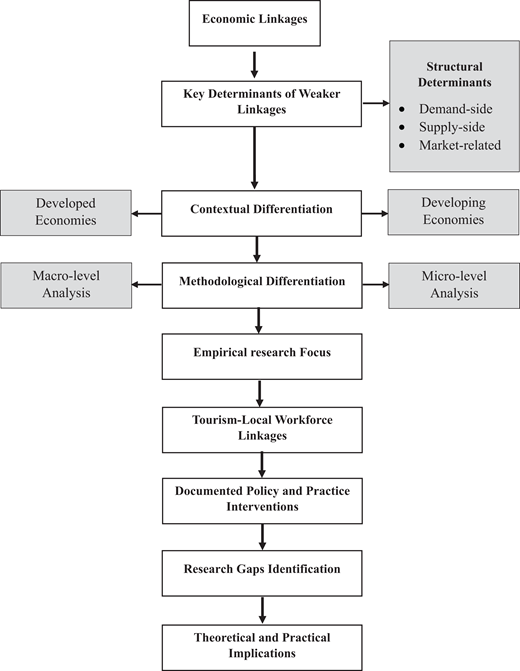
To visually synthesize the diverse themes, recurring patterns, methodological approaches and contextual insights elucidated in the literature, the following interpretative flowchart has been developed (Figure 3). This schematic representation offers a holistic overview of the key determinants influencing economic linkages within tourism destinations, delineating the methodological and contextual differentiations in the extant research, encapsulating documented policy directives and actionable strategies aimed at fostering linkages and the emerging research directions. This flowchart further reflects the integrative logic of this review, systematically connecting empirical focus areas with practical interventions, identified research gaps and implications. It serves as a visual consolidation of the analytical narrative presented thus far and offers a guiding structure for future investigations in this area.
5. Implications
5.1 Theoretical implications
5.1.1 Reframing tourism-led economic development through a multidimensional theoretical lens.
The current study offers a significant theoretical contribution to the evolving discourse on tourism-led local economic development by developing an integrative framework that synthesizes fragmented literature through a multidimensional lens. Drawing upon development theory and sustainable tourism theory, this study distinctively defines patterns in existing research across developed and developing economies, contrasts macro-structural analyses with micro-level case studies and classifies empirical research studies based on sectoral linkages, most notably tourism and agriculture, handicrafts and local workforce integration. A key theoretical advancement is the critical exploration of employment-related constraints that inhibit local workforce participation in tourism establishments, particularly in the Global South. This advances tourism employment theory by embedding it within socio-economic and institutional contexts that are often overlooked in the mainstream tourism literature. Moreover, this study introduces a demand-side perspective by foregrounding the influence of tourist choices and behavioural patterns on procurement behaviours of tourism establishments, thereby opening the field to theoretical engagement with behavioural economics and consumer choice theories. By addressing under-explored dimensions such as gender labour dynamics, informal sector contributions and the implications of technological disruptions, this research not only consolidates existing theoretical insights but also extends the conceptual boundaries of tourism-local economic linkages. It paves the way for future scholarship to develop more holistic, inclusive and behaviorally informed theoretical models of tourism-induced economic development.
5.1.2 Positioning tourist behaviour at the core of local economic linkages.
This study advances the theoretical discourse on tourism and local economic linkages by drawing critical attention to the demand-side dimension, a critical yet largely underexplored aspect in the existing literature. While prior research has predominantly focused on supply-side determinants, this paper offers a novel perspective by emphasizing the crucial role of tourist behaviour, preferences and awareness in shaping the procurement decisions of tourism establishments and consequently the strength of their linkages with the local economy. By doing so, this study introduces a novel conceptual lens that positions tourists not merely as passive consumers but as active agents and their consumption choices and preferences as critical determinants of strengthening or weakening linkages within tourism destinations. Furthermore, the paper highlights the transformative potential of enhancing tourist awareness and shifting tourist behavioural patterns with local options as a strategy to mitigate economic leakages and enhance local community benefits. By doing so, it lays a foundation for integrating behavioural economics theories, particularly nudge theory into the analytical models of tourism development and destination sustainability. Although these behavioural interventions are currently proposed in the context of future research, their theoretical integration expands the scope of tourism linkages research by bridging consumer psychology, behavioural economics and local economic development theories. This multidimensional approach paves the way for a more comprehensive understanding of how demand-side interventions can be strategically leveraged to foster inclusive and sustainable tourism economies.
5.1.3 Advancing economic sustainability through local supply chains.
Finally, this study provides a significant theoretical contribution by extending the academic discourse on economic sustainability in tourism to emphasize the crucial role of localized supply chain networks. While existing theories of sustainable tourism often focus on environmental and socio-cultural dimensions, this study foregrounds economic sustainability as a critical and underexplored pillar, specifically through the lens of local community integration into tourism supply chains. Furthermore, this study significantly contributes to the supply chain theory by challenging the dominance of global supply chains and advocating a transformational shift towards local supply chain networks in tourism-dependent economies. Moving away from traditional supply chain models primarily focused on time and cost efficiency, this study emphasizes the critical role of local sourcing in contexts where tourism is the primary economic activity. By highlighting the integration of local suppliers into tourism supply chains, this paper advances Sustainable Supply Chain Management (SSCM), particularly its economic and social dimensions. It highlights how local supply chains can promote equitable distribution, poverty alleviation and community empowerment. This perspective aligns well with Sustainable Development Goals (SDGs), specifically SDG 8 (Decent Work) and SDG 10 (Reduced Inequalities) and SDG 11 (Sustainable Communities). Theoretically, the study calls for an expansion of supply chain frameworks to recognize local supply restructuring as imperative for inclusive development.
5.2 Practical implications
5.2.1 Policy level directives: Strengthening local economic linkages through tourism.
5.2.1.1 Enhancing local agriculture and handicrafts through targeted policy support.
Governments and tourism authorities should implement policies that actively support local agriculture and handicraft sectors by offering technical training, credit facilities, market connectivity, and capacity-building initiatives. This will improve the reliability, quality and competitiveness of local products within tourism supply chains. For example, Thailand’s One Tambon One Product (OTOP) policy, which promotes unique local products across provinces, has been successful in connecting local handicrafts and agricultural produce with the tourism sector, boosting both rural livelihoods and destination branding.
5.2.1.2 Fostering entrepreneurship through local business development programs.
Policymakers should encourage the formation of small and micro-level enterprises in rural and peri-rural communities to serve the tourism sector. Government schemes can support the development of farming cooperatives, tourism guide associations, local homestays and craft clusters by providing business mentoring, initial capital and marketing assistance. For example, the Rural Tourism Scheme under the Ministry of Tourism, India has substantially supported local communities in developing homestays and curated local experiences in places like Hodka (Gujarat), Kerala and many more destinations. Local artisans in these destinations are encouraged to operate guest accommodations and craft workshops, garnering direct benefits from tourism activity.
5.2.1.3 Establishing dedicated marketplaces and digital supply chain platforms.
Policy directives must focus on creating physical and digital marketplaces where local producers and farmers can directly connect with tourism establishments. These supply chain platforms would streamline procurement processes and provide visibility to local producers, thereby increasing their integration into the tourism economy. For example, community-centric markets in Bali, Indonesia, such as Ubud Market and digital platforms, such as Bali Direct, connect tourists and hospitality establishments with local farmers and artisans, enhancing both transparency and economic integration.
5.2.1.4 Mainstreaming intersectoral linkages in global and national tourism planning.
International tourism organizations like UNWTO, WTTC, IATA and others must integrate the promotion of economic linkages in their global tourism development frameworks and directives. National tourism policies must incorporate intersectoral linkages, highlighting tourism’s role in strengthening local economies across economic sectors such as agriculture, handicrafts and local micro and small industries. For example, the UNWTO Global Code of Ethics for Tourism encourages responsible and sustainable consumption and advocates for inclusive development strategies. Incorporating local sourcing within these ethical frameworks could substantially boost local economic benefits across tourism destinations.
5.2.2 Industry-level implications: implementable actions for tourism establishments and stakeholders.
5.2.2.1 Adopting local procurement strategies to strengthen local supply chains.
Tourism businesses must actively prioritize local sourcing in their procurement practices. Strategic partnerships with nearby farmers, artisans and service providers not only reduce transportation and import-related costs to tourism establishments but also strengthen the brand positioning as a socially responsible and community-driven business. For example, The Six Senses Resorts in Southeast Asia implement a strong local procurement model by sourcing vegetables, seafood and fruits from nearby farms and communities, integrating sustainability with profitability.
5.2.2.2 Integrating local culture into guest experiences.
Hotels and resorts can offer immersive experiences to their guests by offering local cuisines, art and culture in their service offerings. Farm-to-table dining, local artisan showcases, cultural workshops and exhibitions enhance the guest experience while supporting local communities’ livelihoods. For example, the Farm to Fork initiative by Taj Hotels, IHCL Group has prioritized sourcing fresh ingredients from nearby organic farms and incorporates authentic cuisines in their menus to highlight local culinary traditions to guests.
5.2.2.3 Tourist awareness through education and experiences.
Tourism establishments must educate guests on the positive economic and social impacts of sustainable local consumption. This can be achieved through nudging them through in-room brochures, guided local market visits, storytelling events and visual campaigns that connect guests with host communities. For example, tourists in Chumbe Island Coral Park in Tanzania are well informed about the impact of sustainable tourist consumption through guided eco-tours and interpretative materials that promote local sources and conservation efforts.
5.2.2.4 Supporting local entrepreneurship through corporate social responsibility and inclusive business models.
Large tourism enterprises can extend their support for local entrepreneurs through their CSR initiatives. By supporting local communities in developing tour services, handicraft workshops or homestays, these initiatives not only boost local employment but also build long-term supplier relationships and brand loyalty. For example, the Solidarity Accor program by Accor Hotels empowers local communities by supporting micro-entrepreneurs through training and initial seed funding, especially in tourism-dependent developing and small-island economies.
5.2.3 Community-centric implications: strengthening local empowerment and participation.
5.2.3.1 Forming cooperatives to enhance market access and bargaining power.
Local farmers, artisans and producers can form cooperatives to standardize quality, pool resources and negotiate better deals with tourism establishments. This structure helps small and local communities to meet the volume and quality standards required by large hotels, resorts and tour operators. In addition, extending targeted support to informal businesses and marginalized groups through training, micro-credit and market integration initiatives will help bridge the gap between informal suppliers and formal tourism markets, enhancing their participation and visibility in tourism destinations. For example, the constitution of farm cooperatives by rural farmers, such as the Dagana farmers’ Group in Bhutan, has ensured a consistent supply of vegetables, dairy and handmade products to local hotels and guesthouses, aligning with the “High Value, Low Impact” tourism model.
5.2.3.2 Offering authentic tourism services to guests.
Local communities can actively participate in tourism by providing authentic travel services such as local homestays, folkloric storytelling, guided cultural walks, traditional craft workshops or farm visits. These offerings allow tourists to experience local culture while generating income for local communities. For example, the Mawlynnong village community in Meghalaya, India, operates homestays, traditional authentic food stalls and organizes local trekking tours, which are completely owned and operated by rural villagers, making it one of the cleanest and tourism-integrated villages in Asia.
5.2.3.3 Community-owned enterprises with NGOs or government support.
Local communities can set up micro or small-scale enterprises, such as organic farming, food processing units, boat tours, weaving centres, etc. with initial support from local or global NGOs or government schemes. The enterprises gradually transform into self-sustaining business models, contributing directly to household incomes. For example, the Ock Pop Tok Living Crafts Centre in Luang Prabang, Laos, started as an NGO supported weaving project and gradually became a community-owned textile brand, selling to hotels and tourists and offering weaving workshops as a tourism product.
6. Conclusion
This study critically synthesizes the extant literature on economic linkages in tourism, highlighting the pivotal role of integrating local communities, particularly local suppliers, micro and small enterprises and local workforce into tourism supply chains. Such an integration not only mitigates economic leakages but also fosters inclusive economic development by channelling tourism-generated revenue into host economies. The findings affirm that strong and robust intersectoral linkages are not incidental outcomes but require deliberate, context-sensitive policy frameworks and strategic alignment among stakeholders.
The in-depth analysis reveals a wide range of structural determinants that constrain economic linkages in tourism destinations, including poor-quality local produce, fragmented supply chains, market access barriers, inadequate communication between sectors and the dominance of foreign-owned tourism enterprises. However, the literature also underscores that linkages are not solely shaped by external constraints, but by the internal choices of private sector actors, whose procurement practices and employment decisions play a pivotal role in economic integration. Corporate preferences, cost-cutting strategies and operational mechanisms often limit meaningful engagement with local suppliers, an area largely unexplored in empirical research. This review further highlights an overlooked dimension, i.e. the role of tourist preferences and consumption patterns in shaping the procurement behaviour of tourism establishments, particularly hotels and resorts. The findings reveal that tourists’ demand for familiar and imported goods and services significantly drives procurement decisions, thereby exacerbating leakages. This behavioural dimension has been underexplored in prior economic linkages literature.
One major contribution of this review is its mapping of the multidimensional nature of linkages, spanning agricultural supply chains, labour markets and both manufacturing and service sectors., Beyond identifying structural challenges, this review consolidates a wide range of practical, implementable and evidence-based strategies that have been successful in strengthening linkages across tourism destinations worldwide. These include the establishment of kitchen gardens and farmer cooperatives to ensure fresh local supply, creation of market platforms that connect local suppliers with tourism establishments and targeted government incentives such as tax incentives or procurement mandates to encourage local sourcing. In addition, the promotion of sustainable tourism models and skill enhancement programs tailored to the tourism sector were effective in empowering local communities and improving local livelihoods. For instance, the Responsible Tourism Initiative in Kerala mainly encourages tourism enterprises to collaborate with local panchayats to procure vegetables and handicrafts directly from community groups, effectively reducing leakages and enhancing linkages.
At a theoretical level, this review uncovers a persistent tension between globalized tourism practices and localized development goals, highlighting the need for a more integrated framework that combines economic geography, institutional theory and sustainability paradigms. The literature reveals that while environmental sustainability has gained substantial traction in both policy and corporate spheres, economic sustainability, particularly through the empowerment of local communities and the retention of tourism revenue within destinations remain underprioritized., this imbalance underscores the necessity of broadening the sustainability literature to foreground economic sustainability and community engagement as core components of resilient tourism development.
Critically, this review identifies a significant gap in standardized methodologies for measuring the depth and effectiveness of economic linkages. While macro-level statistical frameworks exist to capture the linkages, their utility has been constrained by certain limitations already discussed in the review. On the other hand, micro-level studies, though effective, often suffer from limited generalizability due to their highly localized and context-specific nature. Most existing research remains case-based or descriptive, lacking robust analytical methods that enable comparative assessments or inform broader policy frameworks. Thus, there is a critical need for the development of rigorous and quantitative metrics that can trace the flow of tourism revenues, assess the strength of intersectoral integration and benchmark outcomes across different destinations. This is essential for designing evidence-based interventions and monitoring their impacts.
From a policy perspective, this review emphasizes the crucial need for regulatory frameworks to incentivize rather than merely enforce local economic engagement. Effective policies must balance corporate flexibility with public accountability, offering incentives for local sourcing, workforce integration and community collaborations. Furthermore, early community involvement in tourism planning can ensure that tourism development is both culturally appropriate and economically beneficial.
In conclusion, this review advances the current understanding by offering a comprehensive synthesis of determinants, barriers, patterns and strategies related to economic linkages in tourism. It contributes a multi-scalar, stakeholder-informed perspective that can inform future research studies, policy-making and sustainable destinations planning. By incorporating economic linkages at the core of tourism development strategies, destinations can build more resilient, equitable and adaptive tourism development models capable of withstanding external shocks, from economic crises to climate-related disruptions.
7. Limitations
This study has certain limitations inherent to its scope. This study is confined to the literature indexed in the SCOPUS database while excluding the literature indexed in the Web of Science Database. Cross-referencing SCOPUS literature with Google Scholar yielded similar results or irrelevant literature for the analysis.