Skip to article sections
Purpose

As generative artificial intelligence (AI) technologies continue to advance and become more prevalent in higher education, addressing the ethical concerns associated with their use is essential. This study emphasizes the need for robust AI governance as more young consumers increasingly use generative AI for various applications. This paper aims to examine the ethical challenges posed by generative AI and review the AI policies in higher education to regulate young consumers use of generative AI, focusing on the ethical use of AI from foundational principles to sustainable governance.

Design/methodology/approach

Through a content analysis of literature on generative AI policies in higher education published between 2020 and 2024, this research aims to explore a more holistic approach to integrating generative AI into the educational process. The analysis examines academic policies and governance framework from 28 journal papers regarding generative AI tools in higher education. Data were collected from publicly accessible sources, such as Scopus, Emerald Insights, ProQuest, Web of Science and ScienceDirect.

Findings

This study analyses ten elements of the governance framework to identify potential AI governance and policy setting, benefiting stakeholders aiming at enhancing the regulatory framework of generative AI use in higher education. The discussions indicate a generally balanced yet cautious approach to integrating generative AI technology, especially considering ethical issues, inherent limitations and data privacy concerns.

Originality/value

The findings contribute to ongoing discussions to strengthen universities’ responses to new academic challenges posed by the use of generative AI and promote high AI ethical standards across educational sectors.

In recent years, there has been a growing concern in academic settings about using generative artificial intelligence (GenAI). While advancements in GenAI offer opportunities to enhance student’s educational experiences, they also raise issues around ethical considerations. Given the rapidly evolving nature of this technology, educators show uncertainty and hesitation about integrating GenAI into teaching and learning. They seek institutional guidance and recommendations to effectively incorporate GenAI into educational processes. It is essential to examine how different universities and educators currently adapt to and implement this technology in higher education, and young consumers must understand its underlying principles to preserve academic integrity and ethical use of GenAI (Chan, 2023; Cotton et al., 2023).

Chan (2023) notes that discussions around artificial intelligence (AI) in education often focus on preparing an AI-ready workforce while neglecting the broader transformative potential of AI in education, including ethical implications. This trend risks underfunding and insufficient regulation of GenAI’s role in education (Feldstein, 2019). AI academic policy can help students navigate ethical considerations, such as bias and fairness, and understand the potential consequences of GenAI misuse in academic settings (Heidari and Ferrer, 2020). As GenAI continues to expand its influence across various sectors, concerns have increased about the risks associated with its use and its impact on human activity (AI regulation, 2023; World Economic Forum [WEF], 2023).

This study aims to investigate the policies and guidelines that universities adopt to regulate the ethical use of GenAI, especially GenAI tools like Chat Generative Pre-Trained Transformer (ChatGPT), among young consumers in higher education. Given the potential benefits and risks of GenAI in education, developing a comprehensive AI academic policy and governance framework is crucial to address these concerns and provide guidance on its responsible use. This paper analyses AI governance elements in academic policies from leading journal articles, where the findings contribute to integration of GenAI in higher education and provide guidance for future academic policy development.

This study focuses on evaluating how higher education institutions’ GenAI policies align with the requirements of the AI governance framework (e.g. Camilleri, 2023). With the increasing adoption of GenAI among young consumers, including university and higher education students, there is an urgent need to review the adequacy and relevance of these policies in addressing the emerging challenges and opportunities.

The evolution of AI technology has historically been driven by technological advancements, with the technology struggling to find its market or practical applications until recently. This changed in November 2022 with the launch of ChatGPT-3.5, a GenAI tool that rapidly gained one million users and sparked significant interest in its commercialization potential across various sectors, including cloud services and content creation (Dwivedi et al., 2023). The widespread adoption of GenAI has also made it easily accessible to young consumers, particularly in higher education, where it is increasingly used for learning and academic purposes (Hasanein and Sobaih, 2023). However, this raised concerns regarding its ethical implications and appropriate application.

As ChatGPT, the groundbreaking GenAI, was only launched in 2022, it is appropriate to focus on reviewing academic papers related to higher education’s AI policy and governance frameworks published between 2020 and 2024. The review period is significant as it enables an examination of the impact of GenAI since ChatGPT’s launch, particularly on how universities and higher education institutions have addressed young consumers’ use of GenAI in their learning. While five years is a relatively limited timeframe, it is not feasible to conduct a comprehensive review of all academic papers on AI but specifically on those related to GenAI. To achieve this, the preferred reporting items for systematic reviews and meta-analyses (PRISMA) framework has been used to establish the inclusion criteria for academic papers on AI policy published from 2020 to 2024.

For this study, the authors classify higher education and university students as young consumers. Hence, these two terms: students and young consumers will be used interchangeably throughout this paper. This study examines the gaps in the existing academic discussions on AI policies, assessing their adequacy and relevance when mapped against an AI governance framework.

Without a set of comprehensive policies governing GenAI applications, institutes of higher education are at risk of adopting an uncoordinated approach to managing this technology that could lead to unexpected outcomes and negative consequences. When integrating GenAI into higher education settings, policy developers need to carefully consider the issues of ethical dilemmas and related challenges such as privacy, bias, equity and transparency (Qadhi, et al., 2024; Huang, 2023) in relations to young consumers (i.e. students). To ensure that the AI policies adequately address the relevant aspects of how young consumers use GenAI in higher education, it is essential to map such policies against a rigorous AI governance framework developed by Camilleri’s (2023) to identify the gaps in such policies.

A key objective of AI policy in higher education is to establish robust and stringent controls to ensure the ethical collection and responsible use of young consumers’ data in AI-driven applications (Huang, 2023; Rütti-Joy et al., 2024) because the risks of misuse and data security are ever-present. Without putting in place a set of clear guidelines, educational institutions run the risk of compromising the trust of students and stakeholders, which is essential for fostering a conducive learning environment. As more GenAI tools are adopted by higher education, appropriate policies and procedures need to be in place to support young consumers with the essential skills and knowledge so that they may use such technologies effectively (Boscardin et al., 2024; D’Souza et al., 2024).

While AI offers significant advancements, it also raises ethical considerations which include issues such as fairness, transparency and accountability (Osasona et al., 2024). A major challenge of GenAI in higher education is addressing ethical concerns and potential biases in its algorithms. Careful consideration must be given to decisions regarding data usage, transparency and system governance to ensure the responsible and ethical use of GenAI in higher education (Saaida, 2023). Proper policies and guidelines on ethical considerations could help address the challenges and promote the responsible use of GenAI in higher education. According to Rawas (2023), a key ethical consideration in using GenAI in higher education is ensuring that the system remains unbiased and operates fairly. Bias in GenAI can lead to unfair treatment of specific groups of young consumers, potentially exacerbating existing social issues. The use of GenAI in higher education processes not only demands compliance with applicable laws and regulations such as data protection but also requires a deep understanding of ethical standards and guidelines (Kobis and Mehner, 2021).

2.1.1 Institutional ethical considerations.

Privacy and data protection are critical ethical issues when using ChatGPT in higher education. Given that ChatGPT processes and stores large volumes of personal data, it is essential to ensure that student information is protected, and that the system adheres to relevant data protection laws. Institutions need to carefully design, train, pilot test and validate the safety of AI systems used in higher education (Leslie, 2019).

Transparency and accountability are vital ethical principles when integrating ChatGPT into higher education. Institutions must be transparent about how ChatGPT is used and the data it collects and prove that ChatGPT is being used as intended and does not result in any unintended negative effects on young consumers in higher education. Cope and Kalantzis (2019) emphasized the importance of this, noting that data visualization reflects students’ behaviours and highlights additional support that institutions can offer.

2.1.2 Individual ethical considerations.

At the individual level, ethical challenges include significant societal issues such as systemic bias, discrimination, inequality for marginalized student groups and racism (Hwang et al., 2020), as well as complex ethical concerns surrounding privacy and bias in data collection and processing (Holmes et al., 2021). One of the primary concerns is the potential for bias in the AI model, which could result in unfair treatment of young consumers. Shanklin et al. (2022) assert that even AI algorithms designed to be neutral can produce racially biased outcomes if trained on data that contain racial biases. Similarly, Yoder-Himes et al. (2022) discovered that students and women with darker skin tones were significantly more likely to be flagged for review compared to those with lighter skin tones. Their research indicates that a widely used automated proctoring software may use AI algorithms that are biased against specific student groups.

Furthermore, privacy and security are top concerns because using ChatGPT requires the collection and storage of substantial amounts of personal data. A key function of educational AI systems is gathering user data to make predictions about students’ learning behaviours and performance. However, there is a risk that this data could be tampered with or compromised by third parties, including cybercriminals. This puts students’ personal data at risk of privacy breaches, which goes against the preferences of many students (Li, 2007).

The development of an AI governance framework aims to help stakeholders understand and address the ethical challenges linked to AI technologies, promoting responsible use and maintaining trust within the education system. AI governance framework emphasizes the importance of addressing issues like bias, data privacy, transparency and accountability. Focusing on governance encourages universities to establish clear policies and guidelines, allowing students and educators to navigate the complex ethical landscape surrounding AI (Chan, 2023). AI governance in higher education focuses on how GenAI should be used in education and relevant mechanisms to assure the compatibility between the role of the technology being deployed and its designed purposes, to optimize educational young consumers’ needs and benefits.

In this study, the authors adopt the AI governance framework proposed by Camilleri (2023) that features some of the key elements required for responsible governance of AI and apply it comprehensively in the context of ethical use of GenAI in higher education. This framework highlights the governance considerations related to the use of GenAI in education, encompassing key principles such as accountability and transparency; explainability and interpretability; fairness and inclusiveness; privacy and safety of end users; as well as robustness in mitigating risks and addressing cybersecurity concerns arising from AI systems.

2.2.1 Transparency.

AI transparency involves gaining insight into how AI systems operate, including the decision-making processes, the reasons behind specific outcomes and the data young consumers rely on (Slimi and Carballido, 2023). According to Crawford et al. (2023), using AI must maintain transparency by clearly and accurately disclosing how AI was used in the design, execution and reporting stages. Students in higher education must provide a credible reflection on transparency by disclosing any conflicts of interest associated with the use of AI. GenAI system should clarify any uncertainties regarding its limitations for students, which should be addressed through formal university regulations on transparency and fair use (Polyportis and Pahos, 2024).

2.2.2 Privacy.

Researchers highlight concerns regarding the potential violation of students’ intellectual property rights and risks to data privacy when their work is submitted to AI detection tools (Wang et al., 2024). The use GenAI often involves disclosing personal information to third-party providers. This raises the possibility that sensitive data, linked to student email accounts, could be exposed in a data breach or shared with external parties for targeted advertising, hence, GenAI appears to be optimized for privacy intrusions (Zuboff, 2019). This entails de-identifying any data used for training or testing and implementing adequate security measures to prevent unauthorized access or misuse (Camilleri, 2023). Institutions must ensure that the data used by AI technologies remains private and secure to protect the students.

2.2.3 Fairness.

According to McDonald et al. (2024) and Dwivedi et al. (2023), GenAI systems are generally biased and predisposed to unfairness, which could further exacerbate inequities among young consumers if they are trained on biased data. In many aspects, such biases can influence underrepresented students in how fair and ethical AI is being deployed in higher education. Tanveer et al. (2020) posit that in developing countries where infrastructure is mostly underdeveloped and access is limited, AI policy designs should be anchored on equity and inclusion to ensure fairness to all university students. Montoya-Cantoral et al. (2023) argue that in the absence of appropriate AI policies higher education institutions may unwittingly promote unfairness and dishonesty in academic matters among students.

2.2.4 Accountability.

Accountability issues also pertain to the management of privacy, security and the overall responsibility of stakeholders in the use of AI technologies (Chan, 2023). While AI can be a cost-effective and efficient tool for research tasks such as data collection (Crawford et al., 2023), it is essential for higher education students to thoroughly review and validate AI-generated results before submitting their manuscripts. Plata et al. (2023) argue that young consumers should openly discuss the use of GenAI tools in their courses or integrate them into the learning process to promote transparency and accountability.

2.2.5 Security and safety.

It is critical to ensure that AI systems are safe, secure and protected against tampering or data breaches (IMDA and PDPC, 2020). AI models may face challenges such as accidental corruption of data or deliberate sabotage from hackers, which put the young consumers at risk (Chan, 2023). Both scenarios can compromise the AI system, potentially causing malfunctions (Papagiannidis et al., 2023). AI developers need to enhance the resilience of their systems, aiming to make them as secure and robust as possible (Slimi and Carballido, 2023; Dwivedi et al., 2023). This includes reducing the risk of threats, such as accidental errors, information leaks and privacy breaches, including data contamination and targeted attacks by malicious actors (Agbese et al., 2023; Hamon et al., 2020).

2.2.6 Inclusiveness.

Although GenAI can help students with disabilities and assist non-native speakers with language usage, students from less affluent families who cannot pay for an internet connection cannot take advantage of all these technologies (Bukar et al., 2024; McDonald et al., 2024). Dwivedi et al. (2023) and Chan (2023) argued that AI tools in education should be made available to all students regardless of their socioeconomic background. These studies highlight the need for higher educational institutions to develop policies that cater to those students facing AI accessing challenges, so that the technologies do not further deepen existing inequalities (Dwivedi et al., 2023; Chan, 2023). Similar studies have also pointed out the urgent need for more inclusive policy development by involving various stakeholders to address the needs of the whole university community (Dwivedi et al., 2023; Chan, 2023).

2.2.7 Interpretability, explainability and robustness.

According to Doshi-Velez and Kim (2017), interpretable algorithms such as large language models used in higher education should be reliable, robust, fair and preserve the data privacy of students. Comprehensive institutional training should be provided as challenges such as lack of interpretation and understanding of AI technologies have been reported by academics and students (Spivakovsky et al., 2023).

The ethical guideline of explainability has a strong connection with establishing transparency in information dissemination and AI systems usage (Dwivedi et al., 2023; Chan, 2023). AI systems should be able to explain the technical processes and decisions generated to aid in the understanding and outlining of the AI system decisions. Explainable AI decisions have the potential to improve system processes and decision-making (Slimi and Carballido, 2023).

Robustness refers to the safety and security of the AI systems against data tampering and data breaches (IMDA and PDPC, 2020). The earlier model of the text-GenAI system, GPT-3, was a pre-trained model that had low robustness, low accuracy and poor description ability (Howell and Potgieter, 2023). Hence, newer iterations of AI system tools are expected to provide better outputs and more personalized responses.

A systematic literature review guided by the PRISMA protocol was used to examine scholarly articles on AI policies and governance framework and address the objectives of the research (Moher et al., 2010). This structured approach enhances the credibility and reliability of the findings by ensuring a transparent and replicable research process (Webster and Watson, 2002). By clearly outlining the methodology, other researchers can readily reproduce and validate the results (Tranfield et al., 2003), reinforcing the robustness of the study’s conclusions.

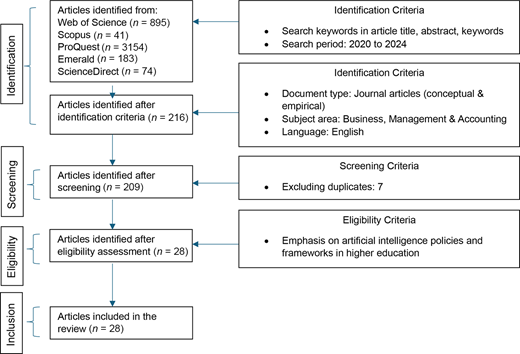
Figure 1 summarizes the PRISMA flow diagram of the research phases.

In the identification phase, journal articles of conceptual and empirical nature were compiled from electronic databases such as Scopus, Emerald Insights, ProQuest, Web of Science and ScienceDirect. These databases are recognized as appropriate journal databases (Paul et al., 2021). The year 2020 was selected as the starting year for the papers as 2020 marks the year GenAI, GPT-3 was first released and gained attraction in the industry as an AI algorithm built to simplify search parameters (Stokel-Walker and Van Noorden, 2023). Keywords and search strategies were selected by using Boolean operators such as “AI” OR “artificial intelligence”, AND “higher education” AND/OR “policies” OR “governance framework”. The keyword search was identified in the article title, abstract and keywords of the journal articles. The articles were then further refined to only include articles in the subject area of Business, Management and Accounting and published in English language. A total of 216 papers were analysed for this study.

In the screening phase, seven duplicates were removed. Next, only articles that emphasized on AI policies and frameworks in higher education were deemed eligible for the study. The eligibility process was screened manually by the co-authors. A total of 28 papers were selected to fit the scope of the study to synthesize the AI governance policies in higher education. The 28 papers were then analysed for similar policy outlines defined from the AI governance framework by Camilleri (2023). The following section will discuss the results of the systematic literature review analysis.

Table 1 summarizes the previous studies done on AI policies in higher education. Most of the papers were published in 2023 and 2024, with 14 (50%) of papers published in 2024 and 11 (39%) of papers published in 2023. A total of two (7%) papers were published in 2022. One (4%) paper was published in 2020. None were published in 2021. Most policy papers published in the past two years were due to the advancement of GenAI tools such as ChatGPT-4, which had better capabilities to produce task responses to help with students’ assessments and learning.

As for the methodology used by these studies, 22 papers (79%) were qualitative studies. Document/content analysis was the most frequently used methodology with 16 (57%) papers using this methodology. Followed by two (7%) papers conducted interviews. One (4%) paper conducted a case study, experiment, ethnography and editorial methodology respectively. One (4%) paper conducted a quantitative survey analysis. A total of five (18%) papers conducted a mixed methods study.

Table 2 shows a summary of the AI governance elements mentioned in the 28 papers that matched against Camilleri’s (2023)AI governance framework. A total of 23 (82%) papers reflected transparency element, 20 (71%) papers highlighted fairness and privacy in their policy papers, 19 (68%) papers discussed accountability element, 17 (61%) papers discussed security element, 15 (54%) papers discussed safety and inclusiveness elements, 10 (36%) papers discussed the interpretability element, while only 9 (32%) papers discussed explainability of AI systems in their papers. Finally, 5 (18%) papers discussed the robustness of AI systems.

This study examines the adequacy of higher education GenAI policies in addressing the requirements of AI governance framework proposed by Camilleri (2023). The discussion focuses on the three most emphasized elements: transparency, privacy and fairness while also exploring potential reasons for the limited emphasis on interpretability, explainability and robustness. Through this analysis, the study investigates how the 28 papers contribute to the understanding of GenAI policies in higher education and universities, particularly in relation to the selected AI governance framework. The framework outlines ten key elements essential for the responsible governance of AI usage, and this research examines how current policies align with these elements.

The findings of this study highlight two significant trends in GenAI policies within the higher education sector. The first trend is the strong emphasis on transparency (23 articles), privacy (20 articles) and fairness (20 articles), reflecting institutions’ concerns about how these elements impact young consumers’ use of GenAI in their studies. The second trend indicates that fewer higher education AI policies focus on technical elements, such as interpretability (ten articles), explainability (nine articles) and robustness (five articles) of AI system. This gap may stem from the complexity of AI systems, which pose challenges for decision-makers who may lack technical expertise in developing policies to address these elements.

The first trend highlights the critical importance of transparency in the implementation of AI policies within higher education. Transparency helps students to understand the processes and criteria behind the algorithms that drive AI technologies, fostering trust and enhancing their ability to leverage these tools for improved learning outcomes (Chaudhry et al., 2022). As AI adoption grows in educational institutions, privacy concerns emerge as a key consideration, particularly regarding the protection of student data. To address these concerns, ethical guidelines and robust governance mechanisms must be integrated into the use of GenAI by students, especially in regions where regulatory frameworks are still evolving (Folorunso et al., 2024). Clear AI policies are essential to ensure the responsible handling of students’ personal data, outlining how data is collected, stored and used. Such policies not only mitigate privacy risks (Harry, 2023) but also enable students to fully benefit from AI-driven learning advancements (Igbokwe, 2024).

Fairness is another keystone in the development and application of GenAI policies in higher education. AI systems must be designed and implemented with principles that actively prevent bias and discrimination, particularly in educational assessments. This can be achieved through transparent communication of grading criteria and the ethical use of AI algorithms (Chai et al., 2024). Additionally, standardized policies on AI literacy are vital to ensure equitable access to AI resources, thereby reducing the risk of exacerbating digital inequalities (Atkinson-Toal and Guo, 2024). Scholars have emphasized fairness as a foundational ethical principle, advocating for AI technologies that avoid perpetuating existing biases or creating new forms of inequity in education (Balta, 2023; Fan, 2024). Bannister (2024) highlighted the underrepresentation of international students in GenAI policy discussions, indicating potential selection bias and the importance of including diverse perspectives, particularly from international students, in shaping inclusive and equitable GenAI academic integrity policies. These frameworks underscore the need for inclusive and equitable AI practices in higher education.

The second trend reveals that interpretability, explainability and robustness have received the least attention among the 28 articles reviewed in this study. A potential explanation for this limited focus is that GenAI systems, particularly those based on deep learning, function as “black boxes” with complex architectures and decision-making processes are difficult for humans to comprehend (Linardatos et al., 2020; Tiwari, 2023). This inherent complexity poses significant challenges to integrating interpretability and explainability into higher education AI policies. As a result, policymakers may prioritize the outcomes of these systems rather than striving to understand their internal mechanisms, where AI-driven decisions can profoundly impact student outcomes (Chellappan, 2024).

Compounding this issue is the general lack of public awareness and understanding of these technical elements, which further impedes the development of comprehensive AI policies (Kieslich et al., 2022). From a policy development perspective, it is crucial to adopt robust frameworks that emphasize explainability and interpretability to foster trust among students and stakeholders in higher education (Choubisa and Choubisa, 2024; Arrieta et al., 2020). AI systems’ robustness still needs to be strengthened and addressed in the higher education context as evidenced from only five articles addressing robustness in their policy framework. While there have been calls for ethical guidelines to ensure transparency and accountability in the use of GenAI by students (Balasubramaniam et al., 2022), many higher education institutions have yet to establish clear protocols for its application. This absence of standardized guidelines can lead to inconsistent interpretations and applications of GenAI (Bhavsar et al., 2024), ultimately hindering the development of a unified approach to achieving interpretable and explainable AI systems in education.

AI policies in higher education should prioritize responsible development and deployment, emphasizing transparency and accountability. Universities need to strengthen the security of AI systems and the implementation of data privacy guidelines to protect the students using GenAI for educational purposes (Wang et al., 2024). To ensure the safe use of GenAI, it is crucial to minimize its potential negative impacts on students and faculty, particularly regarding privacy violations and potential physical harm. AI systems should be made accessible to all young consumers regardless of their learning styles and cultural backgrounds and institutes may also engage related stakeholders to develop AI policies that produce maximum social benefits and minimize most of its risks (Poellhuber et al., 2024). McDonald et al. (2024) reviewed policy documents from 116 US universities, revealing that most institutions promote the use of GenAI in education, with detailed guidance for its integration into classrooms and often linked to diversity, equity and inclusion.

The findings from this study offer valuable insights for practitioners seeking to develop effective GenAI policies in higher education. As AI continues to reshape academic environments, university administrators and policymakers must implement strategies that address the challenges of interpretability, explainability and robustness while maintaining the focus on some important elements, such as transparency, fairness, privacy and security. The analysis of the ten key elements offers a structured framework for creating ethical guidelines and educational AI policies that address specific AI applications in higher education. The study’s findings highlight the need for policymakers to adopt adaptive regulatory mechanisms capable of instantly responding to rapid technological advancements.

For academics, this study stresses the importance of integrating AI literacy in higher education to equip students for a future where AI plays a critical role in both academic and professional settings. Furthermore, AI developers can leverage insights into ethical challenges to design systems that are not only technologically sophisticated but also aligned with the values and norms of the educational community. Ultimately, this study advocates for a collaborative approach to AI governance in higher education, ensuring that AI integration fosters educational progress while maintaining strong ethical standards. By establishing clear governance frameworks, enhancing AI literacy and promoting ethical AI adoption, institutions can create an equitable and responsible AI-driven learning ecosystem that benefits key stakeholders, particularly young consumers.

This study highlights key challenges in adopting responsible AI in higher education, such as the complexity of GenAI, fast-paced technological change and stakeholder scepticism. To address the issue of interpretability, institutions should focus on using explainable AI and set clear transparency standards, especially for tools used in teaching, assessment or personalized learning. Floridi et al. (2018) propose dynamic transparency, which adjusts the level of explanation based on user context and technical literacy, helping to balance interpretability with algorithmic complexity.

Furthermore, to mitigate stakeholder resistance, universities should implement inclusive governance structures that engage academia, civil society and affected communities in the co-creation of AI policies (Jobin et al., 2019). By incorporating diverse perspectives, policymakers can more effectively anticipate risks, strengthen transparency and develop regulatory measures that are equitable, socially responsible and adaptable to the rapidly evolving AI landscape (Ghosh et al., 2025). Regular dialogue and feedback mechanisms can help build trust and ensure that AI integration aligns with institutional values and academic goals. Mechanisms like participatory accountability (Mittelstadt, 2019), professional development and open communication can further support AI integration.

Overall, this study contributes a practical AI governance framework that connects institutional policy with stakeholder needs. Unlike prior research focused only on ethical principles or government guidelines, it emphasizes the combined role of ethical, legal and organizational factors. This integrated model helps institutions move beyond theory to implement real, sustainable practices for AI use in education.

The following practical recommendations aim to address existing policy gaps and enhance the governance of GenAI in higher education. By implementing these recommendations, higher education institutions can foster a more transparent, equitable and ethically sound environment for the integration of GenAI technologies.

5.1.1 Bridging the gap in artificial intelligence interpretability and explainability.

Higher education institutions should continuously invest in research and development initiatives to improve AI interpretability and explainability. Collaborating with AI developers to design user-friendly tools can help students and educators understand how AI-generated outputs are produced. Regular training workshops on AI interpretability should be expanded to build confidence, encourage responsible AI adoption and adapt to new AI capabilities.

5.1.2 Implementing robust artificial intelligence oversight mechanism.

The absence of standardized governance frameworks highlights the need for institutional AI ethics committees to evolve alongside AI advancements. These committees should oversee the ethical deployment of AI, assess risks associated with GenAI tools and ensure compliance with continuously updated regulatory standards. A unified and adaptable AI policy framework can help mitigate inconsistencies in AI adoption across institutions to remain responsive to technological shifts.

5.1.3 Fostering stakeholder engagement for artificial intelligence policy development.

Institutions should establish ongoing dialogue with students, faculty and policymakers to ensure AI policies remain relevant and aligned with the needs of the academic community. Continuous feedback mechanisms where young consumers can share their perspectives should be implemented to allow for iterative policy adjustments. Public awareness campaigns should develop to reflect new AI advancements, helping to demystify AI’s decision-making processes and promote informed engagement.

5.1.4 Promoting interdisciplinary collaboration for artificial intelligence integration.

Given the complexity of AI systems, universities should encourage collaboration between computer science, ethics and education faculties. This interdisciplinary approach will enable the development of balanced AI policies that integrate technological advancements with ethical considerations, ensuring policies are holistic, inclusive and attuned to the shifting landscape of higher education.

The review of AI policy and framework in higher education is constrained by several data and theoretical limitations. Firstly, the limited sample size of 28 journal articles published between 2020 and 2024 means that it may not meaningfully represent the diversity of perspectives, methodologies or higher education AI policies across various regions. The findings could also be biased in these aspects. Furthermore, the review covers a narrow time frame of five years which may not effectively reflect the full evolution of a rapidly advancing field of GenAI impact on higher education policy development and future directions.

It is acknowledged that the perspectives presented in this paper are limited due to the reliance on a few databases and journal articles. Furthermore, the quality of the articles is mixed, possibly weakening the reviewer’s conclusion while regional biases may skew the findings to a particular part of the world such as North America or Europe.

This study’s exclusive focus on peer-reviewed academic literature may result in publication bias, potentially missing key insights from grey literature like policy papers, institutional reports and practitioner case studies. These sources often offer practical perspectives, real-world examples and emerging trends not yet covered in academic research. Future research should incorporate diverse evidence sources to provide a more holistic understanding of AI governance in higher education. The theoretical limitations of this review are its sole focus on policy proposal and development while paying little attention to the practical implementation and effectiveness of AI policies in real-world applications. The other limitation is the lack of well-established models and longitudinal data in this emerging field of AI policy research, making it difficult to evaluate the long-term impact and sustainability of such policies in higher education.

This study examines AI policy and governance framework in higher education context, focusing on concerns surrounding the use of GenAI by young consumers. It identifies ten key elements of AI governance, leading to the development of AI policy that addresses the study’s objectives. However, the study has certain limitations, including a relatively small sample size that may not fully capture the diversity of educational AI policies.

The AI governance framework enhances understanding of the implications of AI integration in teaching and learning and emphasizes the importance of young consumers recognizing their responsibilities in using GenAI. By adopting this framework, educational institutions can ensure responsible and ethical AI usage among students while maximizing its potential benefits. However, more research is needed to fully grasp the advantages and risks of AI in academic environments.
Agbese
,
M.
,
Alanen
,
H.K.
,
Antikainen
,
J.
,
Erika
,
H.
,
Isomaki
,
H.
,
Jantunen
,
M.
,
Kemell
,
K.-K.
,
Rousi
,
R.
,
Vainio-Pekka
,
H.
and
Vakkuri
,
V.
(
2023
), “
Governance in ethical and trustworthy AI systems: extension of the ECCOLA method for AI ethics governance using GARP
”,
E-Informatica Software Engineering Journal
, Vol.
17
No.
1
, p.
230101
.
AI regulation
(
2023
), “
Legal and ethical aspects of ChatGPT: EU parliament’s amendment, French experts’ opinion on ethical issues and other useful resources
”,
available at:
Legal and ethical aspects of ChatGPT: EU parliament’s amendment, French experts’ opinion on ethical issues and other useful resourcesLink to the cited article.
Arrieta
,
A.B.
,
Díaz-Rodríguez
,
N.
,
Del Ser
,
J.
,
Bennetot
,
A.
,
Tabik
,
S.
,
Barbado
,
A.
,
García
,
S.
,
Gil-López
,
S.
,
Molina
,
D.
,
Benjamins
,
R.
and
Chatila
,
R.
(
2020
), “
Explainable artificial intelligence (XAI): concepts, taxonomies, opportunities and challenges toward responsible AI
”,
Information Fusion
, Vol.
58
, pp.
82
-
115
, doi: .
Atkinson-Toal
,
A.
and
Guo
,
C.
(
2024
), “
Generative artificial intelligence (AI) education policies of UK universities
”,
Enhancing Teaching and Learning in Higher Education
, Vol.
2
, doi: .
Bannister
,
P.
,
Alcalde Peñalver
,
E.
and
Santamaría Urbieta
,
A.
(
2024a
), “
International students and generative artificial intelligence: a cross cultural exploratory analysis of higher education academic integrity policy
”,
Journal of International Students
, Vol.
14
No.
3
, pp.
149
-
170
.
Bannister
,
P.
,
Alcalde Peñalver
,
E.
and
Santamaría Urbieta
,
A.
(
2024b
), “
Transnational higher education cultures and generative AI: a nominal group study for policy development in English medium instruction
”,
Journal for Multicultural Education
, Vol.
18
Nos
1-2
, pp.
173
-
191
, doi: .
Balasubramaniam
,
N.
,
Kauppinen
,
M.
,
Hiekkanen
,
K.
and
Kujala
,
S.
(
2022
), “
Transparency and explainability of AI systems: ethical guidelines in practice
”,
International Working Conference on Requirements Engineering: Foundation for Software Quality
, Springer International Publishing, Cham, pp.
3
-
18
.
Balta
,
N.
(
2023
), “
Ethical considerations in using AI in educational research
”,
Journal of Research in Didactical Sciences
, Vol.
2
No.
1
, p.
14205
, doi: .
Bhavsar
,
D.
,
Duffy
,
L.
,
Jo
,
H.
,
Lokker
,
C.
,
Haynes
,
R.B.
,
Iorio
,
A.
,
Marusic
,
A.
and
Ng
,
J.Y.
(
2024
), “
Policies on artificial intelligence Chatbots among academic publishers: a cross-sectional audit
”,
medRxiv
, p.
2024
-
06
, doi: .
Boscardin
,
C.K.
,
Gin
,
B.
,
Golde
,
P.B.
and
Hauer
,
K.E.
(
2024
), “
ChatGPT and generative artificial intelligence for medical education: potential impact and opportunity
”,
Academic Medicine
, Vol.
99
No.
1
, pp.
22
-
27
, doi: .
Bukar
,
U.A.
,
Sayeed
,
M.S.
,
Razak
,
S.F.A.
,
Yogarayan
,
S.
and
Amodu
,
O.A.
(
2024
), An “
Integrative decision-making framework to guide policies on regulating ChatGPT usage
”,
PeerJ Computer Science
, Vol.
10
, p.
e1845
, doi: .
Camilleri
,
M.
(
2023
), “
Artificial intelligence governance: ethical considerations and implications for social responsibility (July 18, 2023)
”,
Expert Systems
, Vol.
41
No.
7
, doi: , available at SSRN: Artificial intelligence governance: ethical considerations and implications for social responsibility (July 18, 2023)Link to the cited article.
Chai
,
F.
,
Ma
,
J.
,
Wang
,
Y.
,
Zhu
,
J.
and
Han
,
T.
(
2024
), “
Grading by AI makes me feel fairer? How different evaluators affect college students’ perception of fairness
”,
Frontiers in Psychology
, Vol.
15
, doi: .
Chan
,
C.K.Y.
(
2023
), “
A comprehensive AI policy education framework for university teaching and learning
”,
International Journal of Educational Technology in Higher Education
, Vol.
20
No.
1
, doi: (
accessed
14 August 2024).
Chaudhry
,
M.A.
,
Cukurova
,
M.
and
Luckin
,
R.
(
2022
), “
A transparency index framework for AI in education
”,
International conference on artificial intelligence in education
, Springer International Publishing, Cham, pp.
195
-
198
. doi:
Chellappan
,
R.B.
(
2024
), “
From algorithms to accountability: the societal and ethical need for explainable AI
”, doi:
Chiu
,
T.K.
(
2024
), “
The impact of Generative AI (GenAI) on practices, policies and research direction in education: a case of ChatGPT and Midjourney
”,
Interactive Learning Environments
, Vol.
32
No.
10
, pp.
6187
-
6203
.
Choubisa
,
V.
and
Choubisa
,
D.
(
2024
), “
Towards trustworthy AI: an analysis of the relationship between explainability and trust in AI systems
”,
International Journal of Science and Research Archive
, Vol.
11
No.
1
, pp.
2219
-
2226
, doi: .
Cope
,
B.
and
Kalantzis
,
M.
(
2019
), “
Education 2.0: artificial intelligence and the end of the test
”,
Beijing International Review of Education
, Vol.
1
, pp.
528
-
543
, doi: .
Cotton
,
D.R.E.
,
Cotton
,
P.A.
and
Shipway
,
J.R.
(
2023
), “
Chatting and cheating: ensuring academic integrity in the era of ChatGPT
”,
Innovations in Education and Teaching International
, Vol.
61
No.
2
, pp.
1
-
12
, doi: .
Crawford
,
J.
,
Cowling
,
M.
,
Ashton-Hay
,
S.
,
Kelder
,
J.
,
Middleton
,
R.
and
Wilson
,
G.S.
(
2023
), “
Artificial intelligence and authorship editor policy: ChatGPT, bard Bing AI, and beyond
”,
Journal of University Teaching and Learning Practice
, Vol.
20
No.
5
, doi: .
De Maio
,
C.
(
2024
), “
Institutional responses to ChatGPT: analysing the academic integrity policies of four public and private institutions of higher education in Australia.
D’Souza
,
R.
,
Mathew
,
M.
,
Mishra
,
V.
and
Surapaneni
,
K.M.
(
2024
), “
Twelve tips for addressing ethical concerns in the implementation of artificial intelligence in medical education
”,
Medical Education Online
, Vol.
29
No.
1
, p.
2330250
, doi: .
Doshi-Velez
,
F.
and
Kim
,
B.
(
2017
), “
Towards a rigorous science of interpretable machine learning
”,
arXiv.org
, pp.
1
-
13
, doi: .
Duah
,
J.E.
and
McGivern
,
P.
(
2024
), “
How generative artificial intelligence has blurred notions of authorial identity and academic norms in higher education, necessitating clear university usage policies
”,
The International Journal of Information and Learning Technology
, Vol.
41
No.
2
, pp.
180
-
193
, doi: .
Dwivedi
,
Y.K.
, et al. (
2023
), “
Opinion paper: ‘so what if ChatGPT wrote it?
”,
International Journal of Information Management
, Vol.
71
, p.
102642
, doi: (
accessed
14 August 2024).
Eden
,
C.A.
,
Chisom
,
O.N.
and
Adeniyi
,
I.S.
(
2024
), “
Integrating AI in education: opportunities, challenges, and ethical considerations
”,
Magna Scientia Advanced Research and Reviews
, Vol.
10
Vol.
2
, pp.
6
-
13
.
Fan
,
L.
(
2024
), “
Artificial intelligence ethics: a dialogue between technological advances and human values
”,
International Journal of Education and Humanities
, Vol.
14
No.
2
, pp.
260
-
265
, doi: .
Feldstein
,
S.
(
2019
), “
The road to digital unfreedom: how artifcial intelligence is reshaping repression
”,
Journal of Democracy
, Vol.
30
No.
1
, pp.
40
-
52
, doi: .
Filgueiras
,
F.
(
2022
), “
Artificial intelligence policy regimes: comparing politics and policy to national strategies for artificial intelligence
”,
Global Perspectives
, Vol.
3
No.
1
, p.
32362
.
Floridi
,
L.
,
Cowls
,
J.
,
Beltrametti
,
M.
,
Chatila
,
R.
,
Chazerand
,
P.
,
Dignum
,
V.
,
Luetge
,
C.
,
Madelin
,
R.
,
Pagallo
,
U.
,
Rossi
,
F.
,
Schafer
,
B.
,
Valcke
,
P.
and
Vayena
,
E.
(
2018
), “
AI4People—an ethical AI governance 161 framework for a good AI society: opportunities, risks, principles, and recommendations
”,
Minds and Machines
, Vol.
28
No.
4
, pp.
689
-
707
, doi: .
Folorunso
,
A.
,
Olanipekun
,
K.
,
Adewumi
,
T.
and
Samuel
,
B.
(
2024
), “
A policy framework on AI usage in developing countries and its impact
”,
Global Journal of Engineering and Technology Advances
, Vol.
21
No.
01
, pp.
154
-
166
, doi: .
Gellai
,
D.B.
(
2023
), “
Enterprising academics: heterarchical policy networks for artificial intelligence in British higher education
”,
ECNU Review of Education
, Vol.
6
No.
4
, pp.
568
-
596
.
Ghosh
,
A.
,
Saini
,
A.
and
Barad
,
H.
(
2025
),
Artificial Intelligence in Governance: recent Trends, Risks, Challenges, Innovative Frameworks and Future Directions
,
AI & SOCIETY
, pp.
1
-
23
.
Hamerman
,
E.J.
,
Aggarwal
,
A.
and
Martins
,
C.
(
2025
), “
An investigation of generative AI in the classroom and its implications for university policy
”,
Quality Assurance in Education
, Vol.
33
No.
2
, pp.
253
-
266
.
Hamon
,
R.
,
Junklewitz
,
H.
and
Sanchez
,
I.
(
2020
),
Robustness and Explainability of Artificial Intelligence
,
Publications Office of the European Union
.
Harry
,
A.
(
2023
), “
Role of AI in education
”,
Interdiciplinary Journal and Hummanity (INJURITY)
, Vol.
2
No.
3
, pp.
260
-
268
, doi: .
Hasanein
,
A.M.
and
Sobaih
,
A.E.E.
(
2023
), “
Drivers and consequences of ChatGPT use in higher education: key stakeholder perspectives
”,
European Journal of Investigation in Health, Psychology and Education
, Vol.
13
No.
11
, pp.
2599
-
2614
, doi: .
Heidari
,
H.
and
Ferrer
,
E.
(
2020
), “
Fairness in machine learning and its implications education
”,
Journal of AI Ethics
, Vol.
1
No.
1
, pp.
29
-
41
, doi: .
Holmes
,
W.
,
Porayska-Pomsta
,
K.
,
Holstein
,
K.
,
Sutherland
,
E.
,
Baker
,
T.
,
Shum
,
S.B.
,
Santos
,
O.C.
,
Rodrigo
,
M.T.
,
Cukurova
,
M.
,
Bittencourt
,
I.I.
and
Koedinger
,
K.R.
(
2021
), “
Ethics of AI in education: towards a community-wide framework
”,
International Journal of Artificial Intelligence in Education
, doi: .
Howell
,
B.E.
and
Potgieter
,
P.H.
(
2023
), “
What do telecommunications policy academics have to fear from GPT-3?
”,
Telecommunications Policy
, Vol.
47
No.
7
, pp.
1
-
10
, doi: .
Huang
,
L.
(
2023
), “
Ethics of artificial intelligence in education: student privacy and data protection
”,
Science Insights Education Frontiers
, Vol.
16
No.
2
, pp.
2577
-
2587
, doi: .
Hwang
,
G.J.
,
Xie
,
H.
,
Wah
,
B.W.
and
Gašević
,
D.
(
2020
), “
Vision, challenges, roles and research issues of artificial intelligence in education
”,
Computers and Education: Artificial Intelligence
, Vol.
1
, p.
100001
, doi: ,
available at:
Vision, challenges, roles and research issues of artificial intelligence in educationLink to a PDF of the cited article.
Igbokwe
,
I.C.
(
2024
), “
Artificial intelligence in educational leadership: risks and responsibilities
”,
European Journal of Arts, Humanities and Social Sciences
, Vol.
1
No.
6
, pp.
3
-
10
, doi: .
IMDA & PDPC
(
2020
), “
Model artificial intelligence governance framework
”,
available at:
Model artificial intelligence governance frameworkLink to a PDF of the cited article.
Jobin
,
A.
,
Ienca
,
M.
and
Vayena
,
E.
(
2019
), “
The global landscape of AI ethics guidelines
”,
Nature Machine Intelligence
, Vol.
1
No.
9
, pp.
389
-
399
, doi: .
Kieslich
,
K.
,
Keller
,
B.
and
Starke
,
C.
(
2022
), “
Artificial intelligence ethics by design. Evaluating public perception on the importance of ethical design principles of artificial intelligence
”,
Big Data & Society
, Vol.
9
No.
1
, doi: .
Kruger-Roux
,
H.
and
Alberts
,
R.
(
2024
), “Generative artificial intelligence policy for academic literacy in South African higher education”,
AI Approaches to Literacy in Higher Education
,
IGI Global Scientific Publishing
, pp.
1
-
22
.
Kobis
,
L.
and
Mehner
,
C.
(
2021
), “
Ethical questions raised by AI-supported mentoring in higher education
”,
Frontiers in Artificial Intelligence
, Vol.
4
, doi: .
Leslie
,
D.
(
2019
), “
Understanding artificial intelligence ethics and safety: a guide for the responsible design and implementation of AI systems in the public sector
”, doi:
Li
,
X.
(
2007
), “
Intelligent agent-supported online education
”,
Decision Sciences Journal of Innovative Education
, Vol.
5
No.
2
, pp.
311
-
331
, doi: .
Linardatos
,
P.
,
Papastefanopoulos
,
V.
and
Kotsiantis
,
S.
(
2020
), “
Explainable AI: a review of machine learning interpretability methods
”,
Entropy
, Vol.
23
No.
1
, p.
18
, doi: .
McDonald
,
N.
,
Johri
,
A.
,
Ali
,
A.
and
Hingle
,
A.
(
2024
), “
Generative artificial intelligence in higher education: evidence from an analysis of institutional policies and guidelines
”,
Journal of Educational Technology and Policy
, Vol.
15
No.
1
, pp.
23
-
45
, doi: .
Marbun
,
T.O.
(
2024
), “
Mapping challenges, opportunities, strategies, and policies on the use of chatpgt in Indonesians theological higher education
”,
Journal of Religious & Theological Information
, Vol.
23
No.
4
, pp.
99
-
110
.
Mittelstadt
,
B.
(
2019
), “
Principles alone cannot guarantee ethical AI
”,
Nature Machine Intelligence
, Vol.
1
No.
11
, pp.
501
-
507
, doi: .
Moher
,
D.
,
Liberati
,
A.
,
Tetzlaff
,
J.
and
Altman
,
D.G.
(
2010
), “
Preferred reporting items for systematic reviews and meta-analyses: the PRISMA statement
”,
International Journal of Surgery
, Vol.
8
No.
5
, pp.
336
-
341
, doi: .
Montoya-Cantoral
,
E.
,
Mamani-Calcina
,
J.
,
Cardona-Reyes
,
H.
,
Espinoza-Suarez
,
S.M.
,
Ponce-Aranibar
,
M.P.
,
Acra-Despradel
,
C.
and
Villalba-Condori
,
K.O.
(
2023
), “
Analysis of institutional policies on the use of chat GPT in Peruvian universities
”,
23rd International Conference on Virtual Campus (JICV)
,
IEEE
,
Lima, Peru
, doi: .
Moya
,
B.A.
and
Eaton
,
S.E.
(
2024
), “
Academic integrity policy analysis of Chilean universities
”,
Journal of Academic Ethics
, Vol.
22
No.
4
, pp.
639
-
663
Osasona
,
F.
,
Amoo
,
O.O.
,
Atadoga
,
A.
,
Abrahams
,
T.O.
,
Farayola
,
O.A.
and
Ayinla
,
B.A.
(
2024
), “
Reviewing the ethical implications of AI in decision-making processes
”,
International Journal of Management & Entrepreneurship Research
, Vol.
6
, pp.
322
-
335
, doi: .
Papagiannidis
,
E.
,
Enholm
,
I.M.
,
Dremel
,
C.
,
Mikalef
,
P.
and
Krogstie
,
J.
(
2023
), “
Toward AI governance: identifying best practices and potential barriers and outcomes
”,
Information Systems Frontiers
, Vol.
25
No.
1
, pp.
123
-
141
.
Paul
,
J.
,
Lim
,
W.M.
,
O’Cass
,
A.
,
Hao
,
A.W.
and
Bresciani
,
S.
(
2021
), “
Scientific procedures and rationales for systematic literature reviews (SPAR‐4‐SLR)
”,
International Journal of Consumer Studies
, Vol.
45
No.
4
, pp.
O1
-
O16
, doi: .
Perkins
,
M.
and
Roe
,
J.
(
2024
), “
Decoding academic integrity policies: a corpus linguistics investigation of AI and other technological threats
”,
Higher Education Policy
, Vol.
37
No.
3
, pp.
633
-
653
.
Plata
,
S.
,
De Guzman
,
M.A.
and
Quesada
,
A.
(
2023
), “
Emerging research and policy themes on academic integrity in the age of chat GPT and generative AI
”,
Asian Journal of University Education (AJUE)
, Vol.
19
No.
4
, pp.
743
-
758
, doi: .
Poellhuber
,
B.
,
Roy
,
N.
and
Lepage
,
A.
(
2024
), “Artificial intelligence in higher education: opportunities, issues, and challenges”,
Human-Centered AI
,
Chapman and Hall/CRC
, pp.
151
-
162
.
Polyportis
,
A.
and
Pahos
,
N.
(
2024
), “
Understanding students’ adoption of the ChatGPT Chatbot in higher education: the role of anthropomorphism, trust, design novelty and institutional policy
”,
Behaviour & Information Technology
, pp.
1
-
22
, doi: .
Qadhi
,
S.M.
,
Alduais
,
A.
,
Chaaban
,
Y.
and
Khraisheh
,
M.
(
2024
), “
Generative AI, research ethics, and higher education research: insights from a scientometric analysis
”,
Information
, Vol.
15
No.
6
, p.
325
, doi: .
Rawas
,
S.
(
2023
), “
ChatGPT: Empowering lifelong learning in the digital age of higher education. Springer science+business media
”,
Education and Information Technologies
, Vol.
29
No.
6
, pp.
6895
-
6908
, doi: .
Rütti-Joy
,
O.
,
Winder
,
G.
and
Biedermann
,
H.
(
2024
), “
Teacher educator professionalism in the age of AI: navigating the new landscape of quality education
”,
IntechOpen
. doi: .
Saaida
,
M.B.E.
(
2023
), “
AI-driven transformations in higher education: opportunities and challenges
”,
International Journal of Educational Research and Studies
, Vol.
5
No.
1
, pp.
29
-
36
.
Online ISSN: 2664-6811, Print ISSN: 2664-6803
.
Shanklin
,
R.
,
Samorani
,
M.
,
Harris
,
S.
and
Santoro
,
M.A.
(
2022
), “
Ethical redress of racial inequities in AI: lessons from decoupling machine learning from optimization in medical appointment scheduling
”,
Philosophy & Technology
, Vol.
35
No.
4
, p.
96
, doi: .
Slimi
,
Z.
and
Carballido
,
B.V.
(
2023
), “
Navigating the ethical challenges of artificial intelligence in higher education: an analysis of seven global AI ethics policies
”,
TEM Journal
, Vol.
12
No.
2
.
Spivakovsky
,
O.V.
,
Omelchuk
,
S.A.
,
Kobets
,
V.V.
,
Valko
,
N.V.
and
Malchykova
,
D.S.
(
2023
), “
Institutional policies on artificial intelligence in university learning, teaching and research
”,
Information Technologies and Learning Tools
, Vol.
97
No.
5
, pp.
181
-
201
, doi: .
Stokel-Walker
,
C.
and
Van Noorden
,
R.
(
2023
), “
The promise and peril of generative AI
”,
Nature
, Vol.
614
No.
7947
, pp.
214
-
216
,
available at:
The promise and peril of generative AILink to a PDF of the cited article.
Sun
,
J.C.
(
2023
), “
Gaps, guesswork, and ghosts lurking in technology integration: laws and policies applicable to student privacy
”,
British Journal of Educational Technology
, Vol.
54
No.
6
, pp.
1604
-
1618
, doi: .
Tanveer
,
M.
,
Hassan
,
S.
and
Bhaumik
,
A.
(
2020
), “
Academic policy regarding sustainability and artificial intelligence (AI)
”,
Sustainability
, Vol.
12
No.
22
, p.
9435
, doi: .
Tiwari
,
R.
(
2023
), “
Explainable AI (XAI) and its applications in building trust and understanding in AI decision making
”,
Interantional Journal of Scientific Research in Engineering and Management
, Vol.
07
No.
01
, pp.
1
-
13
, doi: .
Tranfield
,
D.
,
Denyer
,
D.
and
Smart
,
P.
(
2003
), “
Towards a methodology for developing evidenceinformed management knowledge by means of systematic review
”,
British Journal of Management
, Vol.
14
No.
3
, pp.
207
-
222
.
World Economic Forum (WEF)
(
2023
),
Shaping the future of learning: The role of AI in Education 4.0
,
World Economic Forum
.
Wang
,
T.
,
Li
,
X.
and
Brown
,
S.
(
2024
), “
Generative AI in higher education: ethical, legal, and privacy implications
”,
Journal of Educational Technology Ethics
, Vol.
5
No.
2
, pp.
113
-
128
.
Webster
,
J.
and
Watson
,
R.T.
(
2002
), “
Analyzing the past to prepare for the future: writing a literature review
”,
MIS Quarterly
, Vol.
26
No.
2
, pp.
xiii
-
xxiii
, doi: .
Yoder-Himes
,
D.R.
,
Asif
,
A.
,
Kinney
,
K.
,
Brandt
,
T.J.
,
Cecil
,
R.E.
,
Himes
,
P.R.
,
Cashon
,
C.
,
Hopp
,
R.M.P.
and
Ross
,
E.
(
2022
), “
Racial, skin tone, and sex disparities in automated proctoring software
”,
Frontiers in Education
, Vol.
7
, doi: .
Zuboff
,
S.
(
2019
),
The Age of Surveillance Capitalism: The Fight for a Human Future at the New Frontier of Power
,
PublicAffairs
.
Published by Emerald Publishing Limited. This article is published under the Creative Commons Attribution (CC BY 4.0) licence. Anyone may reproduce, distribute, translate and create derivative works of this article (for both commercial and non-commercial purposes), subject to full attribution to the original publication and authors. The full terms of this licence maybe seen at Link to the terms of the CC BY 4.0 licenceLink to the terms of the CC BY 4.0 licence.

Data & Figures

Figure 1
The diagram presents a four-phase PRISMA-style flowchart for article selection, including Identification, Screening, Eligibility, and Inclusion.In the Identification phase, articles were collected from five databases: Web of Science (n equals 895), Scopus (n equals 41), ProQuest (n equals 3,154), Emerald (n equals 183), and Science Direct (n equals 74), totaling to 4,347 articles. After applying identification criteria based on document type, subject area, language, and keyword presence from 2020 to 2024, 216 articles remained. In the Screening phase, 7 duplicate articles were excluded, leaving 209 articles. The Eligibility phase retained 28 articles after assessing their focus on artificial intelligence policies and frameworks in higher education. Finally, the Inclusion phase resulted in 28 articles included in the review. Each step flows top to bottom, with arrows linking stages and boxes explaining criteria at each decision point.

Flow diagram of SLR using the PRISMA protocol

Source: Authors’ own work

Close Figure 1
Table 1

Summary of previous studies

No.Authors/yearJournalTitleMethodologyResearch aimsFindings of the study
1Chan (2023) International Journal of Educational Technology in Higher EducationA comprehensive AI policy education framework for university teaching and learningMixedThis study aims to develop an AI education policy for higher education by examining the perceptions and implications of text-generative AI technologiesThere are 10 main themes, and 25 subthemes identified to be directly relevant to the planning of an AI policy for teaching and learning in universities
2Tanveer et al. (2020) SustainabilityAcademic policy regarding sustainability and AIDoc analysis (qualitative)This paper analyses how AI can be used to update learning probabilities and provides examples of how it can be integrated with existing educational systems, using data to improve educational capital and quality in developing countriesThere are four main parts to this work: different dimensions regarding the complexities and potential implications, the pros and cons of educational sustainability policy related to AI, carving out AI and its outstanding execution and finally the linkage of AI with higher education within the context of educational expansions
3(Montoya-Cantoral et al. 2023)2023 XIII International Conference on Virtual Campus (JICV)Analysis of institutional policies on the use of ChatGPT in Peruvian UniversitiesDoc analysis (qualitative)This study aims to analyse the institutional policies established in the intellectual property regulations of universities regarding the use of artificial intelligence in academic workThe results of the intellectual property matrix are based on the initial review of copyright and intellectual property concepts, they complement each other. It is necessary for all universities to move from uncertainty to the precision of policies for transparency in the use of this new technology
4(Crawford et al. 2023)Journal of University Teaching and Learning PracticeArtificial intelligence and authorship editor policy: ChatGPT, Bard, Bing and beyondOthersThis study offers five editorial principles to guide decision-making for editors, which will also become policy for the Journal of University Teaching and Learning PracticeFirstly, it articulates that non-human authorship does not constitute authorship. Secondly, artificial intelligence should be leveraged to support authors. Thirdly, artificial intelligence can offer useful feedback and pre-review. Fourthly, transparency of artificial intelligence usage is an expectation. And fifthly, the use of AI in research design, conduct and dissemination must comply with established ethical principles
5(Plata et al. 2023)Asian Journal of University EducationEmerging research and policy themes on academic integrity in the age of ChatGPT and generative AIDoc analysis (qualitative)This paper proposes a 3E model for higher education institutions to start a discussion on creating a roadmap to ensure academic integrity, explore ways to improve classroom assessment practices and encourage exploration of evolving Gen AI toolsThe results showed three themes both in the systematic review of the literature and the content analysis of the policies of the top 20 global universities: enforcement of academic integrity, education of faculty and students on ways to avoid academic misconduct and encouragement of using Gen AI tools in the academe and the workplace, for productivity
6Gellai (2023) ECNU Review of EducationEnterprising academics: heterarchical policy networks for artificial intelligence in British higher educationOthersThis article uses network ethnography and discourse analysis to study how ideas about AI-powered technologies in higher education circulate in policy networks in the UKThe findings evidence a policy network showing signs of a heterarchy permeated by neoliberal rationales and populated by policy actors actively promoting artificial intelligence technologies to be used in education
7Kruger-Roux and Alberts (2024) IGI GlobalGenerative artificial intelligence policy for academic literacy in South African higher educationDoc analysis (qualitative)This paper discusses the generative AI policy for academic literacy in South African higher educationPrinciples proposed for policies include recognising AI’s value if governed well; developing inclusive policies through participation; regular updating as AI advances rapidly; effectively communicating policies; anticipating AI’s impact across teaching, learning, research and assessment; and partnering between universities and AI companies
8Bannister et al. (2024a) Journal of International StudentsInternational students and generative artificial intelligence: a cross-cultural exploratory analysis of higher education academic integrity policyDoc analysis (qualitative)This research focuses on international students in examining the intersection of GenAI and academic integrity, revealing a critical need for inclusive policy reformThese novel findings suggest international students have been largely overlooked by HEIs here despite generally significant economic contributions, reflecting the tenets of the commodification of HE. Results also highlight an urgent need to address gaps by incorporating international student voices in policy development
9Marbun (2024) Journal of Religious and Theological InformationMapping challenges, opportunities, strategies and policies on the use of ChatGPT in Indonesians theological higher educationDoc analysis (qualitative)This research aims to delineate the challenges, opportunities, strategies and policies involved in the execution of ChatGPT within the context of theological higher educationThis research shows challenges, opportunities, strategies and policies concerning using ChatGPT in theological higher education
10Chiu (2024) Interactive Learning EnvironmentsThe impact of GenAI on practices, policies and research direction in education: a case of ChatGPT and midjourneyDoc analysis (qualitative)This study used four domains – learning, teaching, assessment and administration – as the initial framework suggested in a systematic literature review study on AI in educationThe findings provide three suggestions for practices: know-it-all attitude, new prerequisite knowledge, interdisciplinary teaching and three implications for policy: new assessment, AI education and professional standards
11(Polyportis and Pahos, 2024)Behaviour and Information TechnologyUnderstanding students’ adoption of the ChatGPT chatbot in higher education: the role of anthropomorphism, trust, design novelty and institutional policySurvey (quantitative)The research highlights the paramount importance of the exogenous factors of anthropomorphism, design novelty and trust towards ChatGPT, and the need to incorporate policy measures if academic institutions wish to decrease the adoption of ChatGPT in HEBehavioural intention was significantly and positively influenced by attitude, performance expectancy, social influence and facilitating conditions. Anthropomorphism, design novelty, trust, performance expectancy and effort expectancy were unveiled as significant positive antecedents of attitude
12Moya and Eaton (2024) Journal of Academic EthicsAcademic integrity policy analysis of Chilean universitiesDoc analysis (qualitative)This pioneering study in the Chilean context analyses documents addressing academic integrity at 43 accredited universities using a qualitative research design and framed this policy analysis in five elementsFive core elements of exemplary academic integrity policy: access, approach, responsibility, detail and support. The findings revealed challenges with accessing documents online, a strong presence of legal language that might not be understandable to all students and a scarcity of information about review cycles
13Wang et al. (2024) Cornell UniversityGenerative AI in higher education: Seeing ChatGPT through universities’ policies, resources and guidelinesDoc analysis (qualitative)This study aims to explore how universities and educators respond and adapt to the development of GenAI in their academic contexts by analyzing academic policies and guidelines established by top-ranked US universities regarding the use of GenAI, especially ChatGPTThe findings provide four practical pedagogical implications for educators in teaching practices: accept its presence, align its use with learning objectives, evolve curriculum to prevent misuse and adopt multifaceted evaluation strategies rather than relying on AI detectors
14McDonald et al. (2024) Cornell UniversityGenerative artificial intelligence in higher education: evidence from an analysis of institutional policies and guidelinesDoc analysis (qualitative)This paper examined documents produced by 116 US universities categorized as high research activity or R1 institutions to comprehensively understand GenAI related advice and guidance given to institutional stakeholdersThe findings show that faculty guidance can become burdensome as extensive revision of pedagogical approaches is often recommended in the policies
15Duah and McGivern (2024) International Journal of Information and Learning TechnologyHow generative artificial intelligence has blurred notions of authorial identity and academic norms in higher education, necessitating clear university usage policiesInterview (qualitative)This study examines the impact of generative artificial intelligence (GenAI), particularly ChatGPT, on higher education (HE). the ease with which content can be generated using GenAI has raised concerns across academia regarding its role in academic contexts, particularly regarding summative assessmentsFindings showed that students showed a more open engagement with GenAI, considering it a tool for overcoming obstacles rather than a means to plagiarise. Educators were generally more cautious and less optimistic about the academic role of GenAI. Lack of clear institutional policies surrounding such tools also contributed to ethical ambiguities
16(Slimi and Carballido, 2023)TEM JournalNavigating the ethical challenges of artificial intelligence in higher education: an analysis of seven global AI ethics policiesDoc analysis (qualitative)This paper examined three AI objectives related higher education: biased algorithms, AI and decision-making and human displacementUniversities must study the ethical, social and policy implications of AI to ensure responsible development and deployment. The AI ethics policies stress responsible AI development and deployment, with a focus on transparency and accountability
17Filgueiras (2022) Global PerspectivesArtificial intelligence policy regimes: comparing politics and policy to national strategies for artificial intelligenceDoc analysis (qualitative)This article presents the concept of artificial intelligence policy regimes for analysis of design and technology dominance strategiesA typology of artificial intelligence policy regimes is formulated by relating political regimes to governance modes to understand ideas, actors and institutions that establish AI policy dynamics. This framework is applied to an analysis of six national strategies for artificial intelligence: the USA, Brazil, Saudi Arabia, China, Singapore and Russia
18Spivakovsky et al. (2023) Information Technologies and Learning ToolsInstitutional policies on artificial intelligence in university learning, teaching and researchDoc analysis (qualitative)This paper developed institutional policies for students, lecturers and researchers on use of AI for academic and research in Kherson State UniversityThe findings identified the issues requiring further research regarding generative platforms lie in three thematic areas: knowledge base; transparency and ethics; digital transformation of organizations and societies
19De Maio (2024) Journal of Academic Language and LearningInstitutional responses to ChatGPT: analysing the academic integrity policies of four public and private institutions of higher education in AustraliaCase study (qualitative)This paper presents an analysis of the academic integrity policies and procedures of four Australian public and private institutions of higher educationApplying the elements of access, approach, responsibility, detail and support from the framework developed by Bretag and her colleagues (2011), and including the additional elements of currency and flexibility, findings from document analysis of these policies suggests that not all of them contain all these elements so may not be effective enough to respond to the unauthorised use of ChatGPT by students
20Perkins and Roe (2024) Higher Education PolicyDecoding academic integrity policies: a corpus linguistics investigation of AI and other technological threatsDoc analysis (qualitative)This study presents a corpus analysis of academic integrity policies from higher education institutions (HEIs) worldwide, exploring how they address the issues posed by technological threats, such as automated paraphrasing tools and generative-AI tools, such as ChatGPTThis study suggests a modification to Bretag et al.’s (Int J Educ Integr 7, 2011) exemplary academic integrity model, introducing “Technological Explicitness” – emphasizing the need to include explicit guidelines about new technologies in academic integrity policies
21Bannister et al. (2024b) Journal for Multicultural EducationTransnational higher education cultures and generative AI: a nominal group study for policy development in English medium instructionMixedThis paper is to report on the development of an evidence-informed framework created to facilitate the formulation of generative artificial intelligence (GenAI) academic integrity policy responses for English medium instruction (EMI) higher educationThe GenAI academic integrity policy development blueprint for EMI tertiary education is not a definitive mandate but represents a roadmap of inquiry for reflective deliberation as institutions chart their own courses in this complex terrain
22Bukar et al. (2024) Peerj Computer ScienceAn integrative decision-making framework to guide policies on regulating ChatGPT usageDoc analysis (qualitative)This study aims to put forward a policy-making framework of generative artificial intelligence based on the risk, reward and resilience frameworkThe risk, reward and resilience framework provides a comprehensive and flexible decision-making model that allows policymakers and in this use case, higher education institutions to navigate the complexities and trade-offs associated with ChatGPT, which have theoretical and practical implications for the future
23Dwivedi et al. (2023) International Journal of Information ManagementSo what if ChatGPT wrote it? Multidisciplinary perspectives on opportunities, challenges and implications of generative conversational AI for research, practice and policyInterview (qualitative)This study brings together 43 contributions from experts in fields such as computer science, marketing, information systems, education, policy, hospitality and tourism, management, publishing and nursingThe article identifies questions requiring further research across three thematic areas: knowledge, transparency, and ethics; digital transformation of organisations and societies; and teaching, learning and scholarly research
24Qadhi et al. (2024) InformationGenerative AI, research ethics and higher education research: Insights from a scientometric analysisMixedThis study aims to quantify and characterize the current research trends and critically assess the discourse on ethical AI applications within HEThree thematic clusters were identified: ethical frameworks and policy development, academic integrity and content creation and student interaction with AI
25Sun (2023) British Journal of Educational TechnologyGaps, guesswork and ghosts lurking in technology integration: laws and policies applicable to student privacyMixedThis study explores how technology integration and learning analytics in education are governed by laws and policies designed to protect and standardize practicesThis study’s findings reveal that the legal structure among the laws, which are applicable to privacy in higher education, follow legal principles of standardization in four ways (i.e. application, essentiality, consent and security)
26Eden et al. (2024) Magna Scientia Advanced Research and ReviewsIntegrating AI in education: opportunities, challenges and ethical considerationsDoc analysis (qualitative)This study explores the multifaceted landscape of AI integration in education, highlighting its potential to revolutionize traditional pedagogical approaches, personalize learning experiences and streamline administrative tasksThe authors have explored the diverse opportunities presented by integrating AI in education, including personalized learning experiences, improved student engagement and academic outcomes, streamlined administrative tasks and the creation of immersive learning environments
27Hamerman et al. (2025) Quality Assurance in EducationAn investigation of generative AI in the classroom and its implications for university policyMixedThis study aims to investigate the factors that influence students’ current use of GenAI and students’ perceptions of how GenAI can facilitate learning, as well as inform recommendations for institutional policies related to GenAIStudents used GenAI more frequently when they perceived that it helped their learning outcomes and when it was perceived as a social norm. Conversely, the perception that GenAI was cheating reduced its usage. Male (vs female) students used GenAI more frequently. Students preferred institutional policies that allowed the use of GenAI but also set clear boundaries for its use. The assignment that required the use of GenAI enhanced their learning experience
28(Howell and Potgieter, 2023)Telecommunications PolicyWhat do telecommunications policy academics have to fear from GPT-3?Experiment (qualitative)This study engaged in an experiment with the current (Q1 of 2023) version of the AI tool to assess how well it coped with questions on a core and current topic in telecommunications policy educationThe study found that while the outputs were well-written and appeared plausible, there were significant systematic errors. AI use severely undermining the credibility of the assessments of students’ written work in respect of the version of chatbot software has been used
Source(s): Authors’ own work
Table 2

Comparative table of AI governance elements

Dimensions12345678910111213141516171819202122232425262728Total
TransparencyTrueTrueTrueTrueTrueTrueTrueTrueTrueTrueTrueTrueTrueTrueFalseTrueTrueTrueFalseTrueFalseTrueTrueTrueTrueTrueFalseFalse23
PrivacyTrueTrueTrueTrueTrueTrueTrueFalseTrueTrueTrueFalseTrueTrueFalseTrueTrueTrueFalseFalseFalseTrueTrueTrueTrueTrueFalseFalse20
FairnessTrueTrueTrueTrueTrueTrueTrueTrueTrueTrueFalseFalseFalseTrueTrueTrueFalseTrueTrueTrueTrueTrueTrueFalseFalseTrueFalseFalse20
Accountability TrueTrueTrueTrueTrueTrueTrueTrueTrueTrueFalseTrueFalseTrueFalseTrueTrueFalseFalseFalseFalseTrueTrueTrueTrueTrueFalseFalse19
SecurityTrueTrueTrueFalseFalseTrueTrueFalseTrueTrueTrueTrueTrueTrueFalseTrueTrueFalseFalseFalseTrueTrueTrueFalseTrueFalseFalseFalse17
SafetyFalseTrueTrueTrueFalseTrueTrueTrueTrueTrueTrueTrueFalseFalseFalseTrueTrueFalseFalseFalseFalseTrueFalseTrueTrueFalseFalseFalse15
InclusivenessTrueTrueFalseTrueFalseTrueTrueTrueTrueTrueTrueTrueFalseTrueFalseFalseFalseTrueFalseFalseFalseTrueTrueFalseFalseFalseTrueFalse15
InterpretabilityFalseFalseTrueTrueFalseTrueFalseFalseFalseFalseTrueTrueFalseFalseFalseTrueFalseTrueFalseTrueFalseTrueTrueFalseFalseFalseFalseFalse10
ExplainabilityTrueFalseTrueFalseTrueFalseFalseFalseFalseFalseFalseTrueFalseFalseFalseTrueFalseTrueFalseTrueFalseFalseTrueFalseFalseFalseTrueFalse9
RobustnessTrueFalseFalseFalseFalseFalseFalseFalseFalseFalseFalseFalseFalseFalseFalseTrueFalseFalseFalseFalseFalseFalseTrueTrueFalseFalseFalseTrue5
Source(s): Authors’ own work

Supplements

References

Agbese
,
M.
,
Alanen
,
H.K.
,
Antikainen
,
J.
,
Erika
,
H.
,
Isomaki
,
H.
,
Jantunen
,
M.
,
Kemell
,
K.-K.
,
Rousi
,
R.
,
Vainio-Pekka
,
H.
and
Vakkuri
,
V.
(
2023
), “
Governance in ethical and trustworthy AI systems: extension of the ECCOLA method for AI ethics governance using GARP
”,
E-Informatica Software Engineering Journal
, Vol.
17
No.
1
, p.
230101
.
AI regulation
(
2023
), “
Legal and ethical aspects of ChatGPT: EU parliament’s amendment, French experts’ opinion on ethical issues and other useful resources
”,
available at:
Legal and ethical aspects of ChatGPT: EU parliament’s amendment, French experts’ opinion on ethical issues and other useful resourcesLink to the cited article.
Arrieta
,
A.B.
,
Díaz-Rodríguez
,
N.
,
Del Ser
,
J.
,
Bennetot
,
A.
,
Tabik
,
S.
,
Barbado
,
A.
,
García
,
S.
,
Gil-López
,
S.
,
Molina
,
D.
,
Benjamins
,
R.
and
Chatila
,
R.
(
2020
), “
Explainable artificial intelligence (XAI): concepts, taxonomies, opportunities and challenges toward responsible AI
”,
Information Fusion
, Vol.
58
, pp.
82
-
115
, doi: .
Atkinson-Toal
,
A.
and
Guo
,
C.
(
2024
), “
Generative artificial intelligence (AI) education policies of UK universities
”,
Enhancing Teaching and Learning in Higher Education
, Vol.
2
, doi: .
Bannister
,
P.
,
Alcalde Peñalver
,
E.
and
Santamaría Urbieta
,
A.
(
2024a
), “
International students and generative artificial intelligence: a cross cultural exploratory analysis of higher education academic integrity policy
”,
Journal of International Students
, Vol.
14
No.
3
, pp.
149
-
170
.
Bannister
,
P.
,
Alcalde Peñalver
,
E.
and
Santamaría Urbieta
,
A.
(
2024b
), “
Transnational higher education cultures and generative AI: a nominal group study for policy development in English medium instruction
”,
Journal for Multicultural Education
, Vol.
18
Nos
1-2
, pp.
173
-
191
, doi: .
Balasubramaniam
,
N.
,
Kauppinen
,
M.
,
Hiekkanen
,
K.
and
Kujala
,
S.
(
2022
), “
Transparency and explainability of AI systems: ethical guidelines in practice
”,
International Working Conference on Requirements Engineering: Foundation for Software Quality
, Springer International Publishing, Cham, pp.
3
-
18
.
Balta
,
N.
(
2023
), “
Ethical considerations in using AI in educational research
”,
Journal of Research in Didactical Sciences
, Vol.
2
No.
1
, p.
14205
, doi: .
Bhavsar
,
D.
,
Duffy
,
L.
,
Jo
,
H.
,
Lokker
,
C.
,
Haynes
,
R.B.
,
Iorio
,
A.
,
Marusic
,
A.
and
Ng
,
J.Y.
(
2024
), “
Policies on artificial intelligence Chatbots among academic publishers: a cross-sectional audit
”,
medRxiv
, p.
2024
-
06
, doi: .
Boscardin
,
C.K.
,
Gin
,
B.
,
Golde
,
P.B.
and
Hauer
,
K.E.
(
2024
), “
ChatGPT and generative artificial intelligence for medical education: potential impact and opportunity
”,
Academic Medicine
, Vol.
99
No.
1
, pp.
22
-
27
, doi: .
Bukar
,
U.A.
,
Sayeed
,
M.S.
,
Razak
,
S.F.A.
,
Yogarayan
,
S.
and
Amodu
,
O.A.
(
2024
), An “
Integrative decision-making framework to guide policies on regulating ChatGPT usage
”,
PeerJ Computer Science
, Vol.
10
, p.
e1845
, doi: .
Camilleri
,
M.
(
2023
), “
Artificial intelligence governance: ethical considerations and implications for social responsibility (July 18, 2023)
”,
Expert Systems
, Vol.
41
No.
7
, doi: , available at SSRN: Artificial intelligence governance: ethical considerations and implications for social responsibility (July 18, 2023)Link to the cited article.
Chai
,
F.
,
Ma
,
J.
,
Wang
,
Y.
,
Zhu
,
J.
and
Han
,
T.
(
2024
), “
Grading by AI makes me feel fairer? How different evaluators affect college students’ perception of fairness
”,
Frontiers in Psychology
, Vol.
15
, doi: .
Chan
,
C.K.Y.
(
2023
), “
A comprehensive AI policy education framework for university teaching and learning
”,
International Journal of Educational Technology in Higher Education
, Vol.
20
No.
1
, doi: (
accessed
14 August 2024).
Chaudhry
,
M.A.
,
Cukurova
,
M.
and
Luckin
,
R.
(
2022
), “
A transparency index framework for AI in education
”,
International conference on artificial intelligence in education
, Springer International Publishing, Cham, pp.
195
-
198
. doi:
Chellappan
,
R.B.
(
2024
), “
From algorithms to accountability: the societal and ethical need for explainable AI
”, doi:
Chiu
,
T.K.
(
2024
), “
The impact of Generative AI (GenAI) on practices, policies and research direction in education: a case of ChatGPT and Midjourney
”,
Interactive Learning Environments
, Vol.
32
No.
10
, pp.
6187
-
6203
.
Choubisa
,
V.
and
Choubisa
,
D.
(
2024
), “
Towards trustworthy AI: an analysis of the relationship between explainability and trust in AI systems
”,
International Journal of Science and Research Archive
, Vol.
11
No.
1
, pp.
2219
-
2226
, doi: .
Cope
,
B.
and
Kalantzis
,
M.
(
2019
), “
Education 2.0: artificial intelligence and the end of the test
”,
Beijing International Review of Education
, Vol.
1
, pp.
528
-
543
, doi: .
Cotton
,
D.R.E.
,
Cotton
,
P.A.
and
Shipway
,
J.R.
(
2023
), “
Chatting and cheating: ensuring academic integrity in the era of ChatGPT
”,
Innovations in Education and Teaching International
, Vol.
61
No.
2
, pp.
1
-
12
, doi: .
Crawford
,
J.
,
Cowling
,
M.
,
Ashton-Hay
,
S.
,
Kelder
,
J.
,
Middleton
,
R.
and
Wilson
,
G.S.
(
2023
), “
Artificial intelligence and authorship editor policy: ChatGPT, bard Bing AI, and beyond
”,
Journal of University Teaching and Learning Practice
, Vol.
20
No.
5
, doi: .
De Maio
,
C.
(
2024
), “
Institutional responses to ChatGPT: analysing the academic integrity policies of four public and private institutions of higher education in Australia.
D’Souza
,
R.
,
Mathew
,
M.
,
Mishra
,
V.
and
Surapaneni
,
K.M.
(
2024
), “
Twelve tips for addressing ethical concerns in the implementation of artificial intelligence in medical education
”,
Medical Education Online
, Vol.
29
No.
1
, p.
2330250
, doi: .
Doshi-Velez
,
F.
and
Kim
,
B.
(
2017
), “
Towards a rigorous science of interpretable machine learning
”,
arXiv.org
, pp.
1
-
13
, doi: .
Duah
,
J.E.
and
McGivern
,
P.
(
2024
), “
How generative artificial intelligence has blurred notions of authorial identity and academic norms in higher education, necessitating clear university usage policies
”,
The International Journal of Information and Learning Technology
, Vol.
41
No.
2
, pp.
180
-
193
, doi: .
Dwivedi
,
Y.K.
, et al. (
2023
), “
Opinion paper: ‘so what if ChatGPT wrote it?
”,
International Journal of Information Management
, Vol.
71
, p.
102642
, doi: (
accessed
14 August 2024).
Eden
,
C.A.
,
Chisom
,
O.N.
and
Adeniyi
,
I.S.
(
2024
), “
Integrating AI in education: opportunities, challenges, and ethical considerations
”,
Magna Scientia Advanced Research and Reviews
, Vol.
10
Vol.
2
, pp.
6
-
13
.
Fan
,
L.
(
2024
), “
Artificial intelligence ethics: a dialogue between technological advances and human values
”,
International Journal of Education and Humanities
, Vol.
14
No.
2
, pp.
260
-
265
, doi: .
Feldstein
,
S.
(
2019
), “
The road to digital unfreedom: how artifcial intelligence is reshaping repression
”,
Journal of Democracy
, Vol.
30
No.
1
, pp.
40
-
52
, doi: .
Filgueiras
,
F.
(
2022
), “
Artificial intelligence policy regimes: comparing politics and policy to national strategies for artificial intelligence
”,
Global Perspectives
, Vol.
3
No.
1
, p.
32362
.
Floridi
,
L.
,
Cowls
,
J.
,
Beltrametti
,
M.
,
Chatila
,
R.
,
Chazerand
,
P.
,
Dignum
,
V.
,
Luetge
,
C.
,
Madelin
,
R.
,
Pagallo
,
U.
,
Rossi
,
F.
,
Schafer
,
B.
,
Valcke
,
P.
and
Vayena
,
E.
(
2018
), “
AI4People—an ethical AI governance 161 framework for a good AI society: opportunities, risks, principles, and recommendations
”,
Minds and Machines
, Vol.
28
No.
4
, pp.
689
-
707
, doi: .
Folorunso
,
A.
,
Olanipekun
,
K.
,
Adewumi
,
T.
and
Samuel
,
B.
(
2024
), “
A policy framework on AI usage in developing countries and its impact
”,
Global Journal of Engineering and Technology Advances
, Vol.
21
No.
01
, pp.
154
-
166
, doi: .
Gellai
,
D.B.
(
2023
), “
Enterprising academics: heterarchical policy networks for artificial intelligence in British higher education
”,
ECNU Review of Education
, Vol.
6
No.
4
, pp.
568
-
596
.
Ghosh
,
A.
,
Saini
,
A.
and
Barad
,
H.
(
2025
),
Artificial Intelligence in Governance: recent Trends, Risks, Challenges, Innovative Frameworks and Future Directions
,
AI & SOCIETY
, pp.
1
-
23
.
Hamerman
,
E.J.
,
Aggarwal
,
A.
and
Martins
,
C.
(
2025
), “
An investigation of generative AI in the classroom and its implications for university policy
”,
Quality Assurance in Education
, Vol.
33
No.
2
, pp.
253
-
266
.
Hamon
,
R.
,
Junklewitz
,
H.
and
Sanchez
,
I.
(
2020
),
Robustness and Explainability of Artificial Intelligence
,
Publications Office of the European Union
.
Harry
,
A.
(
2023
), “
Role of AI in education
”,
Interdiciplinary Journal and Hummanity (INJURITY)
, Vol.
2
No.
3
, pp.
260
-
268
, doi: .
Hasanein
,
A.M.
and
Sobaih
,
A.E.E.
(
2023
), “
Drivers and consequences of ChatGPT use in higher education: key stakeholder perspectives
”,
European Journal of Investigation in Health, Psychology and Education
, Vol.
13
No.
11
, pp.
2599
-
2614
, doi: .
Heidari
,
H.
and
Ferrer
,
E.
(
2020
), “
Fairness in machine learning and its implications education
”,
Journal of AI Ethics
, Vol.
1
No.
1
, pp.
29
-
41
, doi: .
Holmes
,
W.
,
Porayska-Pomsta
,
K.
,
Holstein
,
K.
,
Sutherland
,
E.
,
Baker
,
T.
,
Shum
,
S.B.
,
Santos
,
O.C.
,
Rodrigo
,
M.T.
,
Cukurova
,
M.
,
Bittencourt
,
I.I.
and
Koedinger
,
K.R.
(
2021
), “
Ethics of AI in education: towards a community-wide framework
”,
International Journal of Artificial Intelligence in Education
, doi: .
Howell
,
B.E.
and
Potgieter
,
P.H.
(
2023
), “
What do telecommunications policy academics have to fear from GPT-3?
”,
Telecommunications Policy
, Vol.
47
No.
7
, pp.
1
-
10
, doi: .
Huang
,
L.
(
2023
), “
Ethics of artificial intelligence in education: student privacy and data protection
”,
Science Insights Education Frontiers
, Vol.
16
No.
2
, pp.
2577
-
2587
, doi: .
Hwang
,
G.J.
,
Xie
,
H.
,
Wah
,
B.W.
and
Gašević
,
D.
(
2020
), “
Vision, challenges, roles and research issues of artificial intelligence in education
”,
Computers and Education: Artificial Intelligence
, Vol.
1
, p.
100001
, doi: ,
available at:
Vision, challenges, roles and research issues of artificial intelligence in educationLink to a PDF of the cited article.
Igbokwe
,
I.C.
(
2024
), “
Artificial intelligence in educational leadership: risks and responsibilities
”,
European Journal of Arts, Humanities and Social Sciences
, Vol.
1
No.
6
, pp.
3
-
10
, doi: .
IMDA & PDPC
(
2020
), “
Model artificial intelligence governance framework
”,
available at:
Model artificial intelligence governance frameworkLink to a PDF of the cited article.
Jobin
,
A.
,
Ienca
,
M.
and
Vayena
,
E.
(
2019
), “
The global landscape of AI ethics guidelines
”,
Nature Machine Intelligence
, Vol.
1
No.
9
, pp.
389
-
399
, doi: .
Kieslich
,
K.
,
Keller
,
B.
and
Starke
,
C.
(
2022
), “
Artificial intelligence ethics by design. Evaluating public perception on the importance of ethical design principles of artificial intelligence
”,
Big Data & Society
, Vol.
9
No.
1
, doi: .
Kruger-Roux
,
H.
and
Alberts
,
R.
(
2024
), “Generative artificial intelligence policy for academic literacy in South African higher education”,
AI Approaches to Literacy in Higher Education
,
IGI Global Scientific Publishing
, pp.
1
-
22
.
Kobis
,
L.
and
Mehner
,
C.
(
2021
), “
Ethical questions raised by AI-supported mentoring in higher education
”,
Frontiers in Artificial Intelligence
, Vol.
4
, doi: .
Leslie
,
D.
(
2019
), “
Understanding artificial intelligence ethics and safety: a guide for the responsible design and implementation of AI systems in the public sector
”, doi:
Li
,
X.
(
2007
), “
Intelligent agent-supported online education
”,
Decision Sciences Journal of Innovative Education
, Vol.
5
No.
2
, pp.
311
-
331
, doi: .
Linardatos
,
P.
,
Papastefanopoulos
,
V.
and
Kotsiantis
,
S.
(
2020
), “
Explainable AI: a review of machine learning interpretability methods
”,
Entropy
, Vol.
23
No.
1
, p.
18
, doi: .
McDonald
,
N.
,
Johri
,
A.
,
Ali
,
A.
and
Hingle
,
A.
(
2024
), “
Generative artificial intelligence in higher education: evidence from an analysis of institutional policies and guidelines
”,
Journal of Educational Technology and Policy
, Vol.
15
No.
1
, pp.
23
-
45
, doi: .
Marbun
,
T.O.
(
2024
), “
Mapping challenges, opportunities, strategies, and policies on the use of chatpgt in Indonesians theological higher education
”,
Journal of Religious & Theological Information
, Vol.
23
No.
4
, pp.
99
-
110
.
Mittelstadt
,
B.
(
2019
), “
Principles alone cannot guarantee ethical AI
”,
Nature Machine Intelligence
, Vol.
1
No.
11
, pp.
501
-
507
, doi: .
Moher
,
D.
,
Liberati
,
A.
,
Tetzlaff
,
J.
and
Altman
,
D.G.
(
2010
), “
Preferred reporting items for systematic reviews and meta-analyses: the PRISMA statement
”,
International Journal of Surgery
, Vol.
8
No.
5
, pp.
336
-
341
, doi: .
Montoya-Cantoral
,
E.
,
Mamani-Calcina
,
J.
,
Cardona-Reyes
,
H.
,
Espinoza-Suarez
,
S.M.
,
Ponce-Aranibar
,
M.P.
,
Acra-Despradel
,
C.
and
Villalba-Condori
,
K.O.
(
2023
), “
Analysis of institutional policies on the use of chat GPT in Peruvian universities
”,
23rd International Conference on Virtual Campus (JICV)
,
IEEE
,
Lima, Peru
, doi: .
Moya
,
B.A.
and
Eaton
,
S.E.
(
2024
), “
Academic integrity policy analysis of Chilean universities
”,
Journal of Academic Ethics
, Vol.
22
No.
4
, pp.
639
-
663
Osasona
,
F.
,
Amoo
,
O.O.
,
Atadoga
,
A.
,
Abrahams
,
T.O.
,
Farayola
,
O.A.
and
Ayinla
,
B.A.
(
2024
), “
Reviewing the ethical implications of AI in decision-making processes
”,
International Journal of Management & Entrepreneurship Research
, Vol.
6
, pp.
322
-
335
, doi: .
Papagiannidis
,
E.
,
Enholm
,
I.M.
,
Dremel
,
C.
,
Mikalef
,
P.
and
Krogstie
,
J.
(
2023
), “
Toward AI governance: identifying best practices and potential barriers and outcomes
”,
Information Systems Frontiers
, Vol.
25
No.
1
, pp.
123
-
141
.
Paul
,
J.
,
Lim
,
W.M.
,
O’Cass
,
A.
,
Hao
,
A.W.
and
Bresciani
,
S.
(
2021
), “
Scientific procedures and rationales for systematic literature reviews (SPAR‐4‐SLR)
”,
International Journal of Consumer Studies
, Vol.
45
No.
4
, pp.
O1
-
O16
, doi: .
Perkins
,
M.
and
Roe
,
J.
(
2024
), “
Decoding academic integrity policies: a corpus linguistics investigation of AI and other technological threats
”,
Higher Education Policy
, Vol.
37
No.
3
, pp.
633
-
653
.
Plata
,
S.
,
De Guzman
,
M.A.
and
Quesada
,
A.
(
2023
), “
Emerging research and policy themes on academic integrity in the age of chat GPT and generative AI
”,
Asian Journal of University Education (AJUE)
, Vol.
19
No.
4
, pp.
743
-
758
, doi: .
Poellhuber
,
B.
,
Roy
,
N.
and
Lepage
,
A.
(
2024
), “Artificial intelligence in higher education: opportunities, issues, and challenges”,
Human-Centered AI
,
Chapman and Hall/CRC
, pp.
151
-
162
.
Polyportis
,
A.
and
Pahos
,
N.
(
2024
), “
Understanding students’ adoption of the ChatGPT Chatbot in higher education: the role of anthropomorphism, trust, design novelty and institutional policy
”,
Behaviour & Information Technology
, pp.
1
-
22
, doi: .
Qadhi
,
S.M.
,
Alduais
,
A.
,
Chaaban
,
Y.
and
Khraisheh
,
M.
(
2024
), “
Generative AI, research ethics, and higher education research: insights from a scientometric analysis
”,
Information
, Vol.
15
No.
6
, p.
325
, doi: .
Rawas
,
S.
(
2023
), “
ChatGPT: Empowering lifelong learning in the digital age of higher education. Springer science+business media
”,
Education and Information Technologies
, Vol.
29
No.
6
, pp.
6895
-
6908
, doi: .
Rütti-Joy
,
O.
,
Winder
,
G.
and
Biedermann
,
H.
(
2024
), “
Teacher educator professionalism in the age of AI: navigating the new landscape of quality education
”,
IntechOpen
. doi: .
Saaida
,
M.B.E.
(
2023
), “
AI-driven transformations in higher education: opportunities and challenges
”,
International Journal of Educational Research and Studies
, Vol.
5
No.
1
, pp.
29
-
36
.
Online ISSN: 2664-6811, Print ISSN: 2664-6803
.
Shanklin
,
R.
,
Samorani
,
M.
,
Harris
,
S.
and
Santoro
,
M.A.
(
2022
), “
Ethical redress of racial inequities in AI: lessons from decoupling machine learning from optimization in medical appointment scheduling
”,
Philosophy & Technology
, Vol.
35
No.
4
, p.
96
, doi: .
Slimi
,
Z.
and
Carballido
,
B.V.
(
2023
), “
Navigating the ethical challenges of artificial intelligence in higher education: an analysis of seven global AI ethics policies
”,
TEM Journal
, Vol.
12
No.
2
.
Spivakovsky
,
O.V.
,
Omelchuk
,
S.A.
,
Kobets
,
V.V.
,
Valko
,
N.V.
and
Malchykova
,
D.S.
(
2023
), “
Institutional policies on artificial intelligence in university learning, teaching and research
”,
Information Technologies and Learning Tools
, Vol.
97
No.
5
, pp.
181
-
201
, doi: .
Stokel-Walker
,
C.
and
Van Noorden
,
R.
(
2023
), “
The promise and peril of generative AI
”,
Nature
, Vol.
614
No.
7947
, pp.
214
-
216
,
available at:
The promise and peril of generative AILink to a PDF of the cited article.
Sun
,
J.C.
(
2023
), “
Gaps, guesswork, and ghosts lurking in technology integration: laws and policies applicable to student privacy
”,
British Journal of Educational Technology
, Vol.
54
No.
6
, pp.
1604
-
1618
, doi: .
Tanveer
,
M.
,
Hassan
,
S.
and
Bhaumik
,
A.
(
2020
), “
Academic policy regarding sustainability and artificial intelligence (AI)
”,
Sustainability
, Vol.
12
No.
22
, p.
9435
, doi: .
Tiwari
,
R.
(
2023
), “
Explainable AI (XAI) and its applications in building trust and understanding in AI decision making
”,
Interantional Journal of Scientific Research in Engineering and Management
, Vol.
07
No.
01
, pp.
1
-
13
, doi: .
Tranfield
,
D.
,
Denyer
,
D.
and
Smart
,
P.
(
2003
), “
Towards a methodology for developing evidenceinformed management knowledge by means of systematic review
”,
British Journal of Management
, Vol.
14
No.
3
, pp.
207
-
222
.
World Economic Forum (WEF)
(
2023
),
Shaping the future of learning: The role of AI in Education 4.0
,
World Economic Forum
.
Wang
,
T.
,
Li
,
X.
and
Brown
,
S.
(
2024
), “
Generative AI in higher education: ethical, legal, and privacy implications
”,
Journal of Educational Technology Ethics
, Vol.
5
No.
2
, pp.
113
-
128
.
Webster
,
J.
and
Watson
,
R.T.
(
2002
), “
Analyzing the past to prepare for the future: writing a literature review
”,
MIS Quarterly
, Vol.
26
No.
2
, pp.
xiii
-
xxiii
, doi: .
Yoder-Himes
,
D.R.
,
Asif
,
A.
,
Kinney
,
K.
,
Brandt
,
T.J.
,
Cecil
,
R.E.
,
Himes
,
P.R.
,
Cashon
,
C.
,
Hopp
,
R.M.P.
and
Ross
,
E.
(
2022
), “
Racial, skin tone, and sex disparities in automated proctoring software
”,
Frontiers in Education
, Vol.
7
, doi: .
Zuboff
,
S.
(
2019
),
The Age of Surveillance Capitalism: The Fight for a Human Future at the New Frontier of Power
,
PublicAffairs
.

Languages

or Create an Account

Close subscription notice
Close access options
