Skip to article sections
Purpose

There is a growing social demand for greater transparency of organisations on sustainability, this is on social and environmental issues. Sustainability in the agri-food sector poses a greater challenge, meanwhile, than in almost any other industry given the sector’s dependence on natural resources, the sheer volume of its inputs and its relationship with human well-being. The purpose of this paper is to analyse the current state of research into sustainability reporting in the agri-food sector.

Design/methodology/approach

A systematic review of the literature has been designed to explore papers published in academic journals included in the Web of Science (WoS) database. The methodology combines a quantitative bibliometric analysis with a qualitative content analysis of the scientific papers.

Findings

The results show that agri-food sustainability, in general, is an emerging field of research despite the role it plays not only in feeding the world’s population but also in the management of natural resources. Sustainability disclosure by agri-food firms, in particular, has to date received very little attention from management and organisational scholars. There has been relatively little research on how agribusinesses engage in demonstrating sustainability through published sustainability reports. This is despite the importance of communicating with stakeholders in order for them to evaluate the company’s activities.

Practical implications

There is a lack of research into the implementation of sustainability practices in the agri-food sector as well as how these practices are communicated to stakeholders once they are up and running. So, first, the agri-food firms must adopt an appropriate communication policy, disclosing information relevant for the stakeholders. The literature on sustainability disclosure in the agri-food sector, corporate social responsibility (CSR) and governance is relatively limited. So, second, further theoretical research is needed to explain observed behaviour in the sector.

Originality/value

The paper presents a systematic review of the scientific literature on sustainability reporting in agri-food firms, an issue which has been much more widely addressed in other industries, but each sector needs to be studied individually to better appreciate its peculiarities and understand its complexity. The methodology combines a quantitative bibliometric analysis, using the VOSviewer software tool, with a qualitative content analysis of the scientific papers included in the final sample, applying a systematic study design to select and classify the articles via a logical and precisely defined process of inquiry. So the contribution of this work, from an academic point of view, is to enrich the sustainability reporting literature in the agri-food sector.

Ongoing events in today’s world, such as financial crises, high-profile bankruptcies and climate change, have heightened unease about the social and environmental impacts caused by both public and private sector organisations. Society in general has thus become increasingly concerned about working conditions, social problems and environmental issues, intensifying demand for effective Corporate Social Responsibility (CSR) initiatives (De Villiers et al., 2017; Manes-Rossi et al., 2018; Anguiano and Salazar, 2022). In the disclosure literature, some researchers have pointed out that high-profile accounting scandals, such as those involving Enron and Parmalat, have resulted in an increasing social demand for greater transparency in organisations (Giacosa et al., 2017). This demand encompasses financial, social and environmental aspects, aimed at improving reputation and fulfilling the informational demands of different stakeholders, including investors or suppliers (Unerman et al., 2007; Fusco and Ricci, 2019).

In the meantime, sustainable development has become an essential to response to challenges like runaway demographic growth, environmental degradation and social inequality. Gunawan et al. (2022) argue that the concept of sustainable development has become a hot topic among academics and stakeholders. Various recent studies have underscored the role of CSR as a key tool for organisations as they roll out sustainability initiatives (Schröder and McEachern, 2005; Rana et al., 2009; Heinen and Hartmann, 2013). According to Coppola et al. (2020), firms deploying CSR strategies form part of a complex global pattern of sustainable development made up of myriad economic, social and environmental elements.

Sustainability reporting has become an essential tool for disclosing CSR practices (Gray et al., 1995). This form of reporting allows for the monitoring, evaluation, and comparison of company´s sustainability performance (Anguiano and Rodríguez, 2024).

For several decades, academic research has used the terms “CSR reporting” and “sustainability reporting” indistinctly. Companies that published these reports voluntarily adopted one term or the other (Park and Brorson, 2005).

In order to encourage responsible corporate behaviour, new sustainability disclosure laws are being introduced with the aim of increasing the reliability of companies in the eyes of stakeholders.

Most of the scholarly papers published since the mid 1990s have focused primarily on major private companies (Montecalvo et al., 2018) on the assumption that such concerns drive the economy.

Among all industries, the agri-food sector warrants special attention due to the rapid growth of interest in CSR, driven by shifts in consumer values, lifestyles, and preferences (Nazzaro et al., 2020). In line with Lafont-Torio et al. (2023, p. 3853), this sector “has been criticised for being responsible for global sustainability issues related to its environmental impact”. The world’s population growth is driving an increase in food demand, which in turn leads to health issues and environmental stress (Cupertino et al., 2021). Critics have pointed out that the agri-food sector is facing social problems stemming from low wages and precarious working conditions for those involved in the supply chain (Lafont-Torio et al., 2023).

Additionally, a new business culture is necessary in this sector to address the social and environmental impacts of their activities (Nazzaro et al., 2020). This is crucial, as they play a vital role in ensuring sustainable production and providing safe, affordable food for everyone (Geldres-Weiss et al., 2021). To enhance sustainability in this sector, it is essential to produce nutritious food while simultaneously reducing resource usage and minimizing environmental impacts (Risku-Norja and Maenpaa, 2007).

Despite the recent proliferation of initiatives like ecological and fair trade labelling, new communication tools are still needed to support the agri-food sector’s sustainability message in relation to social, economic and environmental issues (Sahota et al., 2009; De Haes and de Snoo, 2010; Lehmann et al., 2011).

Based on the previous arguments, the main goal of this paper is to perform a critical review of the existing academic literature to identify the current state of the research into sustainability information disclosure in the agri-food sector. A systematic review of the literature has been designed to explore papers published in academic journals included in the Web of Science (WoS) database. The methodology combines a quantitative bibliometric analysis with a qualitative content analysis of the scientific papers.

Accordingly, this study seeks to answer the following research questions:

RQ1.

How has the subject of sustainability disclosure in the agri-food sector evolved?

RQ2.

What are the active contributions of the regions?

RQ3.

Which are the most influential journals in the researched area?

RQ4.

Which are the most cited authors?

RQ5.

What are the most addressed issues?

RQ6.

What are the research methodologies used by authors in this field?

RQ7.

Which specific theories have been approached?

RQ8.

What is the future of research in this field?

The opportunity of this review paper is justified by the fact that we are currently in a time where the social context is influencing the conditions that foster the development of sustainability reporting (Korca, 2021). Specifically, Giner and Luque (2022) highlight that recent advancements in sustainability reporting regulations and the standard-setting process are contributing to a growing “sustainability reporting momentum”.

The study is organised as follows: the first section after this introduction describes the literature review on sustainability disclosure and the agri-food sector. This is followed by the research methodology adopted for our systematic review of the literature. Subsequently, our findings from the quantitative and qualitative analyses are exposed, which are explored in the discussion. We end by presenting our conclusions and recommendations, and briefly outlining the main limitations inherent in the study.

Society’s ever growing demand for transparent disclosure of sustainability issues offers an opportunity for organisations to enhance their reputations by addressing their stakeholders’ appetite for information (Andrades et al., 2020). They need sustainability information for evaluating the economic, social and environmental activity of the firms. In this regard, different international organisations have stated that the disclosure of sustainability information is a good governance practice because it allows for the measuring of performance of any organisation on social, environmental and economic aspects (Navarro et al., 2017) to all their stakeholders (Grueso and Camisón, 2022). Traditionally, large companies have disclosed non-financial information, through annual reports or sustainability reports, as their visibility can improve relations with internal and external stakeholders, thus increasing the company’s credibility (Buil et al., 2024). Benvenuto et al. (2023) argue that sustainability reporting is the most appropriate tool to improve communication within a company, both internally and with its stakeholders, on environmental, ethical and social issues. Therefore, the objective of sustainability reporting is twofold. Primarily, it is designed to evaluate the current state of an organisation’s economic, environmental and social performance. Secondly, it serves to disseminate information about the organisation’s sustainability initiatives and progress to its stakeholders (Hřebíček et al., 2015). Communication is critical to corporate sustainability. Moreover, an increase in the quantity and quality of reported information often leads to greater attention paid to sustainability issues by companies. The process leads to improved sustainability management and better stakeholder relations (Petera et al., 2019).

In this light, there is a rising trend among firms to prepare and publish sustainability reports presenting environmental, social and corporate governance information as a means to improve their image, credibility and legitimacy (Zorio et al., 2013; De Klerk et al., 2015). Indeed, in recent years there has been a significant increase in corporate reporting on non-financial activities (Falkenberg et al., 2023).

Giacosa et al. (2017), in the context of intellectual capital, distinguish between disclosure as the revelation of information that was previously secret or unknown, and reporting as detailed periodic account of a company’s activities, financial condition and prospects that is made available to shareholders and investors. They assert that researchers often use them interchangeably and that annual reports have been considered appropriate frameworks.

Most of the previous empirical literature on social and environmental accounting research has long focused on studying why companies adopt sustainability reporting practices (Vinnari and Laine, 2013). This empirical research has found three types of factors that can be influential in undertaking sustainability reporting practices: corporate characteristics, internal contextual factors and general contextual factors (Bebbington et al., 2009). Firstly, organisational size and industry membership have been significant corporate attributes in explaining why some companies are more likely to undertake sustainability reporting practices (Reverte, 2009; Tagesson et al., 2009). From a legitimacy theoretical perspective, these studies found that larger enterprises and belonging to sensitive industries tend to be more engaged in sustainability reporting as they are more visible and exposed to public scrutiny. Secondly, other authors have explored how the sustainability reporting activity is driven by the pressure exerted by the external societal context, including variables like the country of origin, cultural background and specific events such as corruption cases or environmental disasters (Bebbington et al., 2009). Thirdly, other scholars, adopting a more qualitative research approach, have examined how internal organisational factors have been influential in the process by which sustainability reporting has emerged (Bebbington et al., 2012). In this way, key individuals within the organisation (e.g. pro-active managers) appeared to be influential actors in initiating the process of sustainability reporting (Contrafatto et al., 2019).

Parallel to this, the current socio-institutional context is changing the conditions for adopting sustainability reporting. In this way, there has been a remarkable movement toward mandatory sustainability reporting to encourage responsible corporate behaviour as well as to increase the reliability of companies in the eyes of stakeholders such as investors, banks, customers, and consumers (La Torre et al., 2020). This movement has particularly been intense in the European context, with the launch of the European Union’s Corporate Sustainability Reporting Directive (CSRD) as one of the most influential sustainability reporting regulations in the world. On April 21st, 2021, the European Commission proposed the CSRD, in line with the commitment made under the European Green Deal, which aims to make Europe the first climate neutral continent by 2050. On January 5th, 2023, the CSRD entered into force. The first companies have to apply the rules for the first time in the 2024 financial year, for reports published in 2025.

The landscape of environmental, social and governance (ESG) reporting is shifting rapidly, and the CSRD is at the heart of this transformation.

Companies are required to provide qualitative and quantitative sustainability disclosures. The CSRD requires companies to report on the impact of corporate activities on the environment and society, and requires the audit (assurance) of reported information. This helps investors, civil society organisations, consumers and other stakeholders to evaluate the sustainability performance of companies. The goal of the CSRD is to arm investors, customers, and other stakeholders with reliable sustainability data so they can make informed decisions. This rule will ensure that investors and other stakeholders have access to the information they need to assess the impact of companies on people and the environment and for investors to assess financial risks and opportunities arising from climate change and other sustainability issues.

The Directive requires all large companies and all listed companies (except listed micro-enterprises) to disclose information on what they see as the risks and opportunities arising from social and environmental issues, and on the impact of their activities on people and the environment. A broader set of large companies, as well as listed SMEs, will now be required to report on sustainability. Some non-European Union (EU) companies will also have to report if they generate over 150 million euros on the EU market.

This regulation has introduced remarkable changes in the current sustainability reporting discourse with the appearance of new institutional actors in this field (Giner and Luque, 2022). Consequently, future research might be linked to the examination of how the current socio-institutional context, driven by the mandatory reporting requirements indicated in the CSRD, affects the practice of sustainability reporting (Cinquini and De Luca, 2022).

According to the Spanish Ministry of Agriculture, Fisheries and Food, the agri-food sector comprises economic activities that make food produced by the agricultural and livestock sectors available to consumers, including processed food from the agri-food industry (Ministry of Agriculture, Fisheries and Food, 2020). The agri-food industry is a subsector of the manufacturing industry and includes the food industry, beverage manufacturing and the tobacco industry (Montoriol, 2019).

In the agri-food sector, interest in the concept of CSR has grown apace driven by changing consumer values, lifestyles and preferences, and by the emergence of a new business culture that is more willing to address the environmental and social impacts of production (Nazzaro et al., 2020). CSR initiatives are important in the agri-food sector for many reasons. In the first place, the production process is closely linked to the use of natural resources, and it has a direct and significant impact on the environment and biodiversity (Cupertino et al., 2021). This often exposes companies to criticism from environmental associations and society as a whole (Lafont-Torio et al., 2023). Second, a series of food safety scandals in recent decades has highlighted the health risks associated with products in the agri-food industry (Soon and Baines, 2013). This situation has led consumers to demand more transparency regarding production methods (Trienekens et al., 2012). Additionally, consumer preferences have increasingly shifted towards more environmentally and socially responsible products (Coppola et al., 2020). As a result, agri-food firms are now faced with a variety of supply-chain-related social and ethical issues, including the use of genetically modified crops, food safety concerns, and animal welfare (Nazzaro et al., 2020). Sustainability poses a greater challenge, meanwhile, than in almost any other industry given the sector’s dependence on natural resources, the sheer volume of its inputs and its relationship with human well-being (Muñoz-Villamizar et al., 2019). Thirdly, agri-food sector greenhouse gas emissions currently account for around 30% of the world total and they are still rising, driven by inexorable demand-side growth (Lafont-Torio et al., 2023). Around one-third of the foodstuffs produced worldwide is lost in the fields and in storage, spoil as they travel along the supply chain or are simply thrown away by consumers. This wastage not only squanders the resources used to produce foodstuffs but adds further gas emissions as organic waste decomposes in landfill sites (Webb and Buratini, 2016). Meanwhile, increasing demand for bioenergy, restrictions on the use of water and other diminishing resources, and recurring crises caused by animal diseases and the contamination of foodstuffs have changed attitudes towards the activity of the agri-food sector amid mounting concern over social, economic and environmental impacts. This has in turn raised consumer awareness of aspects such as the origin, quality and environmental impact of different food products, especially in countries where food is plentiful and cheap.

The agri-food sector has a key role to play in ensuring sustainable production. The direct and indirect public health and welfare outcomes associated with the food industry, its environmental impact, and its contribution to the economy and jobs all reflect its vital importance to society as a whole (Cupertino et al., 2021).

The food industry’s high public profile and external pressures are among the reasons that have led firms in the agri-food supply chain, especially the majors, to adopt more socially responsible attitudes (Nazzaro et al., 2020) as they address new consumer expectations and seek to explain the social, economic and environmental performance of their businesses to customers. A growing number of consumers are asking companies to engage in stakeholder dialogue and implement transparency and are interested in learning about companies’ CSR practices (Topp-Becker and Ellis, 2017).

The challenge of reducing firms’ social and environmental impacts is a question now widely addressed in the management literature. It is necessary to measure and quantify the impact of agricultural business on the economy, the environment and society to move towards a sustainable agricultural system (Monteiro et al., 2023). Increasingly, new frameworks and tools are introduced to help businesses better manage, measure, and reduce their impacts (Feger and Mermet, 2022). Hence the importance of public corporate disclosures, such as those made within annual reports and other publicly released documents (Cuganesan et al., 2010).

Concerned about CSR disclosure in the Australian food and beverage industry, Cuganesan et al. (2010) explored the presence of intra-industry variation in amount and type of CSR disclosure within a single industry. The results indicated that variation in CSR disclosures is greatest where the issue being reported upon is part of “core business operations” rather than part of the “peripheral activities” of the company.

Topp-Becker and Ellis (2017) examined the role of sustainability reporting from agri-food supply chain companies. Results indicated that sustainability reporting is limited among companies involved in the agri-food supply chain and reports focus primarily on environmental aspects of sustainability.

Focusing on the agri-food and beverage sector, Vitale et al. (2023), investigated the direct effect of worldwide mandatory non-financial disclosure on several financial dimensions. The authors found a positive direct impact of mandatory non-financial disclosure on operating return on asset, return on equity and return on sales and the study recommended fostering mandatory non-financial disclosure to increase corporate transparency fostering the sustainability transition of the industry.

As the need for robust sustainability information is critical, the CSRD has a crucial role to play in promoting sustainability and resilience within agri-food supply chains. The Directive aims to encourage the agri-food sector towards an ambitious reduction of its environmental impact and instigate substantial changes in production methods and resource management. Strengthening the agri-food supply chain, in response to the mandates of the Directive, is a complex but essential challenge to ensure transparency and full traceability from producer to consumer. Far from being a mere regulatory obligation, this challenge becomes an opportunity to redefine sustainable agri-food practices.

Adapting to the CSRD in the agri-food sector goes beyond compliance with established requirements; it represents a strategic reorientation towards sustainability and innovation. Beyond compliance, CSRD is acting as a catalyst for profound change in the sector, driving a reassessment of practices, processes and collaborations. From innovative natural resource management and supply chain strengthening to embracing new technologies and promoting the circular economy, the agri-food sector is charting a path to a more sustainable and resilient future.

Given the growing “sustainability reporting momentum”, especially in Europe, driven by recent breakthroughs in the regulatory and standard-setting process (Giner and Luque, 2022), this review paper deserves special attention. Particularly, our paper aims to contribute to the current academic debate in the agri-food sector given the increased interest in the sustainability reporting theme in this setting.

To address our research questions outlined in the introduction, we conducted a systematic literature review (SLR). According to Denyer and Tranfield (2009, p. 671), a “systematic review is a specific methodology that locates existing studies, selects and evaluates contributions, analyses and synthesises data, and reports the evidence in such a way that allows reasonably clear conclusions to be reached about what is and is not known”. A SLR can be defined as a review of a clearly formulated question that uses systematic and explicit methods to identify, select and critically appraise relevant research, and to collect and analyse data from the studies that are included in the review (MacKenzie et al., 2012).

Chaudhary et al. (2024) state that SLR has numerous advantages. First, it allows for synthesising a specific research area. Second, it allows the reduction of errors and biases due to the high quality of the review procedure. Third, in management research, it allows a comprehensive literature review that is transparent, clear, and replicable as it is based on predefined steps. Finally, it enables researchers to integrate extant knowledge on a given field of research.

Additionally, a SLR helps to identify gaps in the literature and potential avenues for future research.

A SLR is a review carried out in a systematic way using a procedure or protocol, in order to be replicable, transparent and, as much as possible, free from bias (MacKenzie et al., 2012). A set of criteria must be established and applied in order to develop a corpus of academic papers that can be the subject of review (Kraus et al., 2022).

To be consistent, our SLR has followed the same protocol proposed by Denyer and Tranfield (2009), which contains the following steps:

  1. Defining the research questions outlined in the introduction.

  2. Collecting data and establishing search criteria.

  3. Evaluating the selected papers.

  4. Descriptive and content analysis.

  5. Analysis and description of the findings.

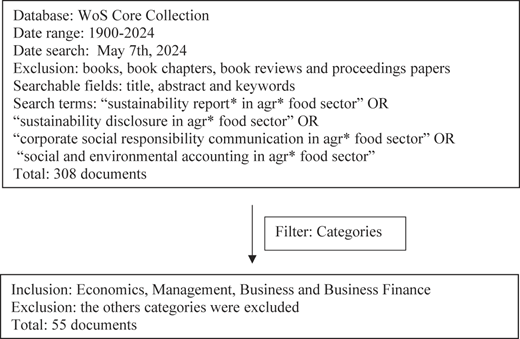
The first phase is to identify the academic articles published in scholarly journals that will be included in the literature review (Ruiz et al., 2018) (see Figure 1). In this regard, we chose the WoS database, especially the principal Web of Science Core Collection, as the source of the papers included in the sample. WoS is considered to be one of the leading databases for the evaluation of scholarly output worldwide (Aparisi and Ribes, 2022). It enjoys international prestige (Pedraja et al., 2022) and it is widely acknowledged that the journals indexed in the site amply represent the academic and scientific community of any review of knowledge in a given field. No time limit was set for the search, in order to ensure a complete picture of the phenomenon given the newness of the subject matter (Fusco and Ricci, 2019), so the search covered the period between 1900 and 2024. The search was performed on May 7th, 2024.

We excluded books, chapters of books, book reviews and conference proceedings from the scope of our review in order to guarantee a reasonable level of quality and availability (Silva and Mueller, 2022).

We used the following search terms, which were manually selected from the literature, entered in the WoS database to find titles, abstracts and keywords:

“sustainability report* in agr* food sector” OR.

“sustainability disclosure in agr* food sector” OR.

“corporate social responsibility communication in agr* food sector” OR.

“social and environmental accounting in agr* food sector”.

The asterisk symbol (*) was used to include all possible endings for the key words concerned and the operator “OR” was used to find all documents including at least one of the search terms.

The search turned up an initial sample of 308 publications.

We then proceeded to filter these papers by category (Grueso and Camisón, 2022; Silva and Mueller, 2022) based on their affinity with the area and subject of our study, which reduced the sample to a total of 55 papers, which represent 17,9%, (see  Appendix I) falling into the following categories: Economics (30), Management (17), Business (14) and Business Finance (5)[1].

We employed a twofold methodology to achieve our proposed objectives. In the initial quantitative phase, we performed conducted a bibliometric analysis of 55 published papers that make up our sample. Bibliometric analysis measures the literature and processes data to analyse, explore, organise, and investigate large amounts of data and allows to objectively analyse a large corpus of articles using quantitative techniques (Kraus et al., 2022). The proliferation of online databases and the development of new bibliometric software applications has encouraged the uptake of analytic techniques of this kind in various fields in recent years (Pedraja et al., 2022).

Specifically, version 1.6.20 of the VOSviewer application (Van Eck and Waltman, 2010) can create networks and maps based on data downloaded from WoS. Used in numerous published bibliometric studies, this software is capable of constructing keyword co-occurrence clusters, co-authorship networks, citation-based and co-citation clusters, and bibliographic coupling networks.

We conducted two different analyses based on the WoS data using the VOSviewer tool to illuminate key features of the selected papers.

  1. Co-authorship analysis

It illustrates the collaboration networks within the topic. Each node represents an author. The size of the node indicates the author´s importance based on the number of publications, while the distance reflects the degree of collaboration among authors.

  1. Keyword co-occurrence analysis

It reveals the most commonly used keywords selected by authors and publishers, as well as the connections between them. Each node represents a keyword. The size of a node reflects its importance based on the frequency of occurrence; a larger node means that the keyword is repeated more often. Additionally, the length and thickness of the lines between nodes indicate the number of papers in which the coupled keywords appear together; a short thick line means a strong coupling between the keywords.

The second phase of our SLR was qualitative and it involved a content analysis of the 55 papers in two senses. The first analysis involved reviewing the abstracts and full texts of all articles to identify the main characteristics of each paper. Building on previous SLRs, the authors developed a coding scheme or analytical framework that includes the following features: subject matter, research methodology, theoretical framework, the sample used and the geographical context of the research project (Guthrie et al., 2012; Dumay et al., 2016; Larrán and Andrades, 2017; Manes-Rossi et al., 2020). The second step was carried out according to the content analysis of each article to discuss the findings according to the different themes investigated. Because previous studies have not adopted this specific analysis, the codes were built based on the research questions. This approach resolved the limitation in their study flagged by Grueso and Camisón (2022), who noted that the bibliometric method can result in confused interpretations unless accompanied by a qualitative analysis.

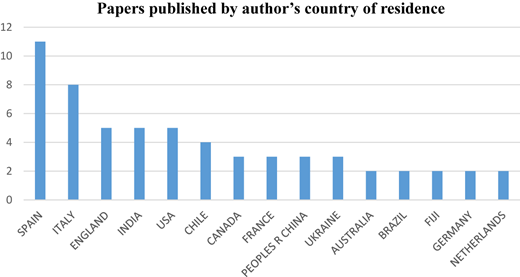
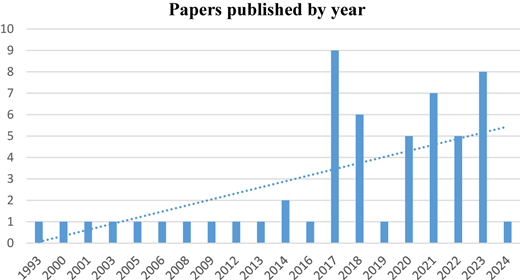
Figure 2 presents how has evolved the publication patterns over time. Data contained in this Chart reveals that the research on sustainability accounting and reporting in the agri-food sector has been limited. However, the number of papers published on this topic has growth since 2017. Although it is an under-explored research field, this finding reflect that there is a growing interest in the issue among the academic community, especially among the Spanish and Italian scholars (see Figure 3), which have been the leading contributors in this research field.

The growing interest for this research theme in European agri-food enterprises could be connected with the efforts made by the EU in promoting and regulating the adoption of sustainability-related practices. Particularly, the transparency of sustainability information has become an important aspect of the EU policy over the last 2 decades (Krasodomska et al., 2021). In 2011, the European Commission issued its CSR strategy for the period 2011–2014, marking the beginning of a significant debate in Europe regarding the regulation of sustainability reporting (Reverte, 2015). As a result, the European Parliament approved Directive 2014/95 on non-financial reporting (NFRD), which marked a critical shift from voluntary to mandatory sustainability reporting (Carungu et al., 2020).

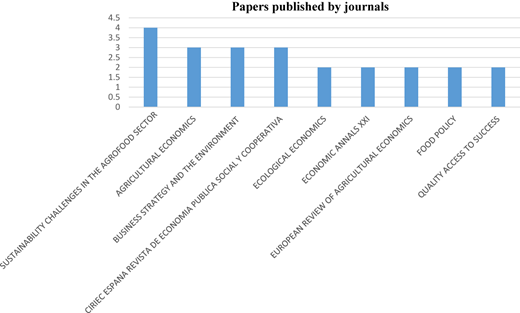
Figure 4 provides information about the journals that have published more than one paper on the topic of sustainability and agri-food sector. According to their aims and scope, these journals cover aspects related to the social and environmental impacts of companies, particularly from the agri-food sector. For example, Sustainability Challenges in the Agrofood Sector “covers a wide range of agrofood-related concerns, including urban and rural agriculture and livelihoods, water-energy management, food and environmental policies, diet and human health”. Agricultural Economics “aims to cover the economics of agriculture in its broadest sense, from food consumption and nutrition to land use and the environment”. Also, more general journals also include the topic of sustainable management within their aims and scope, such as Business Strategy and the Environment, which is a “leading sustainable business journal aiming to advance the understanding of green business strategies for improving the natural environment. Covering topics including corporate environmental management, eco-innovation, green finance, and the circular economy”. However, there is a lack of publications by academic journals specialized in the field of social and environmental accounting research. This might be indicating that social and environmental accounting scholars have not contributed to the sustainability reporting research in this field. Hence, it appears to be that this research topic is in an initial phase of development in the agri-food sector, with a limited amount of publications, mostly published since 2017.

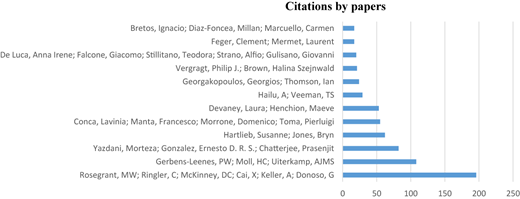
The average citations per item found in WoS is 16,04 and twelve of the 55 papers have a number of citations above the average, with Rosegrant et al. (2000) having the most citations, totalling 196 (see Figure 5).

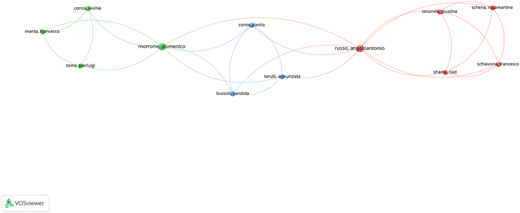
Regarding co-authorship analysis, Figure 6 shows that only 12 of the 167 authors are related to each other, forming three clusters. Cluster 1, shown in red, includes five authors: Russo, Schena, Schiavone, Secundo and Shams. Cluster 2, represented by green, composed of four authors: Conca, Manta, Morrone and Toma, and Cluster 3, displayed in blue, includes Bussoli, Conte and Tarulli. Of these, Russo and Morrone have two publications each.

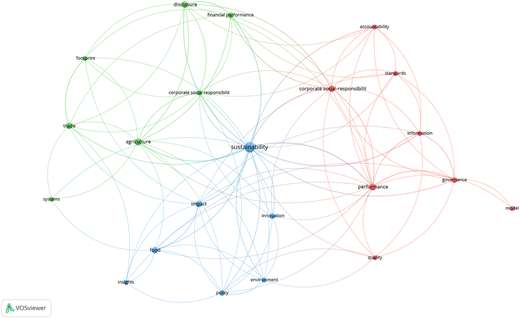
Meanwhile, the keyword co-occurrence analysis, reveals three clusters (see Figure 7). Cluster 1 (red) contains 8 keywords, the most significant being “performance” and “corporate social responsibility”. Cluster 2 (green) contains 7 keywords with “agriculture” occurring most often, followed by “disclosure” and “trade”. There are 7 keywords in cluster 3 (blue), the most significant being “sustainability” followed by “impact” and “food”.

Differences in the number of keywords in each cluster are not material, but we may note that “sustainability” is the item that occurs most often with 14 hits, followed by “agriculture” and “performance” with 6 hits.

On the other hand, Table 1 summarises the results of the qualitative content analysis according to the different features contained in our analytical framework.

  1. Subject matter. The papers were classified into the five broad categories of sustainability, CSR, reporting, governance and environment based on the most commonly occurring subject matters in the sample.

In terms of the subject matter of the papers, the literature examined described primarily research in the areas of Sustainability (30), Reporting (10), Environment (8), CSR (5) and Governance (2) (see  Appendix Table A1). The results show that despite the use of terms such as “report*”, “disclosure”, “communication” and “accounting”, the number of papers on sustainability reporting in the agri-food sector is very low, while most of the papers refer to the management of sustainability.

  1. Research methodology. In the first place, we drew a basic distinction between theoretical and empirical studies. The latter were then further split into three subcategories: 1. Case/field studies and interviews; 2. Content/historical analyses; and 3. Surveys/questionnaires/other empirical studies. The exact classification proved occasionally problematic where a study involved two or three different research methods, and in these cases the paper was coded as employing a mixed methodological approach.

Distinguishing by research methodology, we found ten papers of a theoretical nature and 45 papers describing empirical studies. Twenty-two of these utilized content or historical analysis techniques, twenty employed a mixed methodological approach, while two were based on surveys and questionnaires and one employed case or field studies or was based on interviews.

  1. Theoretical framework. Following the conceptual models used, the papers were classified as (1) multi-theory studies, (2) single theory studies, (3) studies not supported by an underlying theory, and (4) studies using a prior conceptual model.

From a theoretical standpoint, we found a strikingly high proportion of studies that lacked any specific theoretical basis (30) and papers based on prior conceptual models (22) compared to articles supported by some form of theoretical underpinnings (3).

  1. Sample. This item was structured in four categories depending whether the empirical work described in a paper was based on case studies, on a sector analysis or on an analysis focusing on national or country economies.

The data show that the majority of empirical studies focused on analyses of the agri-food sector and its sub-sectors (44 out of 45 papers), and only a case study.

  1. Geographical context. We examined the empirical papers to determine the country or region concerned in the research, distinguishing six regions: North America, Asia, United Kingdom, EU, Africa and the rest of the world.

We found a marked geographical context in the papers. Numerous papers were contextualized in the EU (18 out of 45), referring to countries like Spain where the food industry ranks fourth in terms of its contribution to national income (11.4%) according to the Ministry of Agriculture, Fisheries and Food (2024). By comparison, there were significantly fewer studies set in other parts of the world, with five referring to the Asia nations and United Kingdom and four contextualized in North America.

Despite increased concern from society about agri-food sustainability, there has been relatively little research on how agribusinesses engage in demonstrating it through published sustainability reports.

Our results show the limited attention devoted by previous research on the topic of sustainability reporting in the agrifood sector. This could be connected with the fact that sustainability reporting is uncommon practice within this sector. Particularly, the 2023 report made by the Food and Agriculture Benchmark [2], which ranks the sustainability performance of the 350 most influential companies within this sector, highlights the following findings:

  1. 122 companies (35%) score 10/100 or lower and thus still fail to recognise their role and impact on sustainable food systems.

  2. More companies have set climate targets, but progress remains low. Less than 10% of companies disclose data on optimising the use of fertilisers, and only around 4% of companies disclose data on minimising the use of pesticides.

  3. Lack of corporate accountability hinders meaningful change. More than half of the 350 companies assessed undertake a materiality assessment to identify and prioritise their most relevant sustainability impacts, but only 27 companies follow through with a comprehensive set of sustainability targets.

To begin with the quantitative analysis, the bibliometric study of the data extracted from WoS reveals that the subject matter in question constitutes an emerging issue given the recent proliferation of papers. As Grueso and Camisón (2022) state, 90% of the articles on the topic of non-financial information reporting have been published in the last 10 years, indicating the interest on the part of researchers and the growing importance of this issue in the last decade. Analysis of the data presented in Figure 2 above reveals significant growth in the number of publications on the subject of sustainability in the agri-food sector in recent years, insofar as 81.8% of these papers appeared between 2014 and 2024. This may be explained by the growing pressure to improve sustainability in the sector through the production of more nutritious foodstuffs using less resources while reducing environmental impacts, and by enhanced CSR reporting by companies, in response to EU reporting regulations. Reporting practices provide stakeholders with a robust foundation upon which to base their decisions. But, there are a multitude of reasons for companies to focus on sustainability reporting besides stakeholder pressure, including enhanced reputation, increased risk management capabilities, and reduced costs and increased revenue (Topp-Becker and Ellis, 2017). While there is also evidence that sustainability reporting can be costly for companies. Therefore, several scholars have begun to question the economic and financial consequences of non-financial disclosure (Vitale et al., 2023). However, in our view, companies must have a communication policy that avoids only good news and hides bad news.

In terms of the country of residence of the authors, we observed in Figure 3 eleven papers produced in the Spain and 8 in Italy. Spanish scholars account for 20% of the papers and Italians scholars for 14.5%, with smaller contributions from other countries making up the remainder. In addition to the EU’s efforts to regulate the adoption of reporting practices, this may be a consequence of the relative size of the agri-food sector in the national economies of the main contributors. For example, the food and drinks industry is Spain’s primary manufacturer, accounting for 23.8% of the industrial sector as a whole, 23.3% of jobs, 18.2% of gross value added and 2.3% of gross domestic product. Meanwhile, the country has 28,335 food and drinks firms, representing 17.9% of all manufacturing firms. The sector provides 552,300 jobs and has a higher rate of female employment (36.9% of jobs) than manufacturing industry as a whole (27.9%) (Ministry of Agriculture, Fishing and Food, 2024).

The academic output is primarily concentrated in Sustainability Challenges in the Agrofood Sector (4), Agricultural Economics, Business Strategy and the Environment and CIRIEC-España Revista de Economía Pública Social y Cooperativa (3, respectively). According to the data presented in Figure 4, just four scholarly journals published 23.6% of the papers on the subject of agri-food sector sustainability included in our initial sample. The remaining journals each published only a small proportion of papers in the field. These differences between journals may be explained by their objectives and scope. While, for example, Sustainability Challenges in the Agrofood Sector covers a wide range of agrofood-related concerns or Agricultural Economics embrace the economics of agriculture in its broadest sense, others are generally more tightly focused.

We also observed that papers received few citations, reflecting the incipient nature of research in the field. We found in Figure 5, two papers have more than a hundred citations: Rosegrant et al. (2000) (196) and Gerbens-Leenes et al. (2003) (108). They account for 24% of the total citations while fourteen papers were uncited. It is usual for the older papers to be better known and they are, in general, securely positioned in the literature because they have had more time to accumulate citations than other more recent work (Manes-Rossi et al., 2020).

According to the results obtained from the supplementary analysis run using the VOSviewer software tool, Figure 6 shows a weak co-authorship networks. There is not much collaboration among authors, which corroborates the results of previous studies (Yu and Mu, 2022; Monteiro et al., 2023). Co-authorship with organisations from other countries need not entail a multinational analysis, but can be simply a means of accessing information sources and other resources (Koseoglu, 2016).

Figure 7 shows “sustainability” is the most widely used keyword among both scholars and publishers. Sustainable development, sustainability in agriculture and agribusiness are “hot topic' (Sarkar et al., 2022; Silvestri et al., 2022; Yu and Mu, 2022; Monteiro et al., 2023).

Table 1 presents the results of our analysis of the 55 papers included in our final sample. To begin, we would underscore that research projects focusing on Sustainability in the agri-food sector accounted for 30 out of the 55 papers examined (54.5%), followed by Reporting with 10 papers (18.2%), while explorations of Environment, CSR and Governance in food industry firms remain at an embryonic stage. Significantly, the mapping exercise carried out using the VOSviewer tool also flagged “sustainability” as the most common keyword. This may be attributed to the existence of a multitude of practices and technologies that farmers can employ to mitigate their environmental impact and the existence of greater financial incentives to address certain environmental issues (Konefal et al., 2023).

Turning to the methodological approaches of the papers, the high proportion of empirical studies (81.8%) may be a further indicator that research is still at an early stage. While 40% of the total number of papers use historical and content analysis, we have found that 36.4% of the papers in the sample adopted a mixed methodological approach. By combining such information sources, researchers can maximize their information gathering (Freedman and Park, 2014).

Most of the papers (54.5%) lack any specific theoretical underpinnings, meanwhile, although 40% were based on a prior conceptual model. Only three papers were based on a single theory (legitimacy theory, the natural resource-based view theory and stakeholder theory), again confirming the incipient stage of research in the field. Stakeholder theory has been widely used to develop CSR proposals and has been adopted, regulated and promoted by numerous organisations (Martos et al., 2019). Gray et al. (1995) argued that stakeholder theory and legitimacy theory had become the most widely used approaches in CSR research.

Empirical papers focusing on a specific sector or industry make up 97.8% of the sample, while 1 paper (2.2%) examine individual case study. The focus on certain industries above others may be due to the economic, social and environmental impact of their activities in the national economics concerned.

In geographical terms, 40% of the research projects described in the papers were carried out in the EU, namely in Spain and Italy. These results are in line with the findings of Wohlenberg et al. (2020), Silvestri et al. (2022) and Yu and Mu (2022). Despite growth in the number of publications on the subject of sustainability in the agri-food sector in recent years, not to mention the profound changes in the levels of development achieved by most countries over the last 25 years, much remains to be done to eradicate extreme poverty and achieve Sustainable Development Goal 1 (SDG 1) (Tomich et al., 2019).

With regard to papers related to Reporting, we have attempted to identify the common themes. The thematic analysis revealed four predominant themes.

  1. The first theme concerns the framework for sustainability disclosure. Vergragt and Brown (2008) analysed whether the practice of voluntary corporate sustainability reporting could serve to improve the discourse on genetically modified organisms (GMOs) in agricultura from the perspective of a theoretical discussion. As a result, a framework for managing the public controversy over GMOs in agriculture, involving the widest possible range of stakeholders, was developed. Echanove (2020) provided a reference framework for integrating social accounting into the strategic management process of social economy enterprises. A comparative analysis was conducted between groups of social economy and commercial enterprises from five industrial sectors, according to the Spanish National Classification of Economic Activities codes. The results showed that social economy and commercial companies tended to incorporate equivalent messages in their strategic statements as regards their production and commercial activity and their commitment with society. Buil et al. (2024) presented a methodology that could serve as a tool for analysing the degree of dissemination of the SDGs in sustainability reports. This methodology had three stages. First, a lexicographic analysis of sustainability reports had been carried out, second, a correspondence analysis, and third, outlining through “guided questions” how the information obtained could be useful to analyse SDG communication strategy. For further illustration the methodology had been applied to a company in the Spanish agrifood sector: Ebro Foods.

  2. The second theme concerns the impact of norms and rules on sustainability disclosure. Wichianrak et al. (2022) examined the impact of soft law and institutional signalling on voluntary reporting of environmentally sensitive companies analysing the environmental disclosures in annual reports and sustainability reports of 108 listed companies for the years 2010–2014 in Thailand. Thailand’s sustainability reporting guidelines, released in 2012, were found to have a significant impact on the level of disclosure by companies in the agri-food sector. The increasing trend of voluntary reporting was dominated by the disclosure of emissions data; the age of the company and media attention had a significant positive relationship with environmental disclosure, while profitability was found to have a negative relationship with it. Anguiano and Rodríguez (2024) analysed the Spanish transposition of the Non-Financial Reporting European Directive in the agri-food sector and the impact of the Law 11/2018. The sustainability reports of 16 agri-food companies that used the Global Reporting Initiative standard before and after the enforcement of Law 11/2018 were evaluated. The results showed a low level of disclosure for both periods and that Law 11/2018 did not succeed in improving the level of disclosure.

  3. The third theme is focused on how to improve the sustainability communication. Lumby and Ngwenyama (2023) examined if whether certification has an impact on online sustainability communication. For this purpose, they analysed the websites and social media accounts of three Canadian high scoring B corporations in the food and beverage sector and three matching non-certified companies. The findings indicated that sustainability certifications altered external online sustainability communication. Attaining certification also altered the areas of communication focus, increasing communication about the socially oriented community engagement dimension, which was often underrepresented. Morris and Guenther (2024) addressed the gap between corporate reporting and sustainability practices. Using a case study of water, the paper looked at the public communications made by FTSE 100 companies via their annual and CSR reports, identifying that where present, water management disclosures remained in silo and were not explicitly linked to global sustainable development goals.

  4. The fourth theme is related to the impact of sustainability disclosure. The impact of ESG disclosure on the profitability and value of listed companies was examined by Conca et al. (2021). The results obtained, studying a sample of 57 European-listed companies (EU28) in the agri-food sector observed in the period 2010–2018, showed that the ESG disclosure practices of the companies impact corporate profitability; specifically, evidence was provided for the existence of a positive relationship between profitability and disclosure practices of strictly environmental and social information and a negative effect between company market value and disclosure practices relating to governance. Tarulli et al. (2023) addressed the relevance of non-financial disclosure in influencing the cost of capital. They tested how non-financial disclosure, measured by Bloomberg’s disclosure scores, could influence the cost of capital of a sample of 73 international agricultural firms observed from 2015 to 2019. The results showed a significant and negative relationship, suggesting that a higher level of disclosure could be effective in lowering firms’ financial burden. The possibilities for transforming governance in Brazil´s soybean supply chain based on stakeholders’ accountability were investigated by Medina and Thomé (2021). They used secondary data from companies’ reports and statistical yearbooks to identify key stakeholders in the soybean supply chain. The results revealed that at the global level, multinational corporations along with domestic groups should be held accountable for improving the governance of the soybean supply chain in Brazil.

The agri-food industry has been the focus of numerous research projects because of its social and environmental impact (Martos et al., 2019), but mounting concern about the sector worldwide in recent years has not been reflected in studies of the organisations involved and their management (Fontoura et al., 2016).

This study describes and illustrates the current state of research into sustainability reporting in the agri-food sector by means of a SLR. This review was designed to explore papers published in academic journals included in the WoS database, to compile a sample for critical analysis.

This paper therefore presents a quantitative study using bibliometric techniques to determine the focus of the literature in this area and a qualitative study based on a review and content analysis.

Our results show that agri-food sustainability is an emerging field of research given the sharp increase in the number of papers published in recent years, the relative scarcity of studies dealing with business management issues and the scant citations received by the papers published. Most of the papers refer to the management of sustainability in the agri-food sector to mitigate the environmental impact, while a minority dealt with sustainability disclosure. We found few papers on the issue of sustainability reporting, all of which have been much more widely addressed in other industries. The scarcity of research in this sector in particular may be due to the fact that it has perhaps been assumed that the results of work in more general areas are absolutely applicable. However, given the specific and different characteristics of this sector, in terms of its social and environmental impacts compared to any other, it is advisable to give it special treatment in the research on the disclosure of sustainability reports. In addition, the agri-food sector combines agriculture and the food industry, so it is necessary to separate each activity to better appreciate its peculiarities and understand its complexity. As Topp-Becker and Ellis (2017) proposed, sustainability reporting is not a priority for all companies along the agricultural supply chain in terms of both the quantity and quality of published reports. To briefly answer the RQ1, we have found that sustainability reporting research has grown in recent years, with 50% of the papers published in 2023 and 2024.

In geographical terms, several papers have been contextualized in the EU (Echanove, 2020; Conca et al., 2021; Anguiano and Rodríguez, 2024; Buil et al., 2024), responding to RQ2.

About RQ3, papers on sustainability reporting have been published in general journals, such as Business Strategy and the Environment, not particularly focused on the agri-food sector.

In response to RQ4, two papers on sustainability reporting have a number of citations above the average (Vergragt and Brown, 2008; Conca et al., 2021).

In the literature reviewed, in response to RQ5, we have found that reporting is not the most studied topic (10 papers or 18.2%).

The most widely used research approaches in the empirical literature examined were the historical and content analysis and a mixed methodological approach. The high proportion of empirical studies may be a further indicator that research is still at an early stage. Focusing on sustainability reporting and responding to RQ6, we have found that empirical research methods have been widely used, based on content or historical analysis techniques, or mixed. Only one paper approached the topic from the perspective of a theoretical discussion (Vergragt and Brown, 2008).

Most of the papers lack any theoretical underpinnings, which presents a need for further research with a theoretical basis to explain the observed behaviour in the sector. The general consensus seems to be that stakeholders in the agri-food supply chain need to be coordinated to enhance economic, social and environmental performance (Luo et al., 2018). Regarding sustainability information disclosure and answering RQ7, we have found that only two papers have a theoretical basis. Wichianrak et al. (2022) used the legitimacy theory and Buil et al. (2024) used the stakeholder theory.

The results of our quantitative and qualitative analyses throw light on the current state of the topic and reveal possible future lines for further research in the field, providing an answer to RQ8.

The first issue we have identified is the dearth of research into the implementation of sustainability practices in the agri-food sector and how these practices are communicated to stakeholders once they are up and running. With a growing number of consumers concerned about agri-food sustainability, companies should consider the potential benefits of sustainability reporting.

The second point suggested by the literature review is that so few studies have a theoretical basis, despite the existence of theories that could certainly be considered in future studies according to Luo et al. (2018), such as the dynamic capability theory, agency theory, social network theory and the theory of organisational learning.

A third question related with the regional or national approach of most studies is the possibility of extending research projects to developing countries, as argued by Luo et al. (2018), given that the agri-food sector plays a key role in the supply of affordable foodstuffs and has significant public health implications.

The review proposes the following implications for practice. First, the agri-food firms must adopt an appropriated communication policy, disclosing information relevant for the stakeholders. Second, the literature on sustainability disclosure by agri-food firms is very limited. This issue has received very little attention from management and organisational scholars. Further theoretical research is needed to explain observed behaviour in the sector.

Finally, this paper has its limitations like any other research project, the most important of which is concerned with the selection of the keywords employed in our database searches. We could have used a longer keyword list, including items such as “non-financial information” or “agribusiness” for example.

The fact that we considered only one database would represent a second limitation, as argued by Ruiz et al. (2018), although WoS is generally accepted among the academic community.

A further limitation would be the exclusion of books, chapters of books and conference proceedings from our sample. Unfortunately, the literature is unclear on this matter. Fusco and Ricci (2019) include only papers published in international academic journals in their study, but Grueso and Camisón (2022) include books, chapters and conference proceedings, which they consider an important part of the literature.

A fourth and final limitation is related with the methodology employed. While a qualitative review supplementing the bibliometric analysis is essential to reflect the state of the art and identify possible future lines of research, it may nonetheless entail a degree of subjectivity resulting in inherent bias.

1.

It can be seen that of the 308 articles in the initial sample, other categories group a larger number of papers, such as Environment (Environmental Science, Environmental Studies and Engineering Environmental) grouping 136 articles (44.2%), and Technology (Green Sustainable Science Technology, Food Science Technology, Computer Science Information Systems, Computer Science Interdisciplinary Applications and Nanoscience Nanotechnology) 111 papers (36%).
Adger
,
W.N.
and
Whitby
,
M.C.
(
1993
), “
Natural-resource accounting in the land-use sector: theory and practice
”,
European Review of Agricultural Economics
, Vol. 
20
No. 
1
, pp. 
77
-
97
, doi: .
Andrades Peña
,
F.J.
,
Larrán Jorge
,
M.
,
Muriel de los Reyes
,
M.J.
and
Calzado Cejas
,
M.Y.
(
2020
), “
Influential variables of sustainability disclosures by Spanish public hospitals
”,
Public Performance and Management Reviewand
, Vol. 
43
No. 
6
, pp. 
1390
-
1412
, doi: .
Anguiano
,
C.
and
Rodríguez
,
M.
(
2024
), “
Sustainability reporting in focus: analysing Spanish transposition of the non-financial reporting european directive in the agri-food sector
”,
Agricultural and Food Economics
, Vol. 
12
No. 
10
, doi: .
Anguiano
,
C.
and
Salazar
,
M.
(
2022
), “
Sustainability reporting as a tool for fostering sustainable growth in the agri-food sector: the case of Spain
”,
Journal of Environmental Planning and Management
”, Vol. 
67
No. 
2
, pp. 
426
-
453
, doi: .
Aparisi
,
S.
and
Ribes
,
G.
(
2022
), “
Entrepreneurial leadership factors: a bibliometric analysis for the 2000-2020 period
”,
Cuadernos de Gestión
, Vol. 
22
No. 
2
, pp. 
45
-
60
, doi: .
Bebbington
,
J.
,
Higgins
,
C.
and
Frame
,
B.
(
2009
), “
Initiating sustainable development reporting: evidence from New Zealand
”,
Accounting, Auditing and Accountability Journal
, Vol. 
22
No. 
4
, pp. 
588
-
625
, doi: .
Bebbington
,
J.
,
Kirk
,
E.
and
Larrinaga
,
C.
(
2012
), “
The production of normativity: a comparison of reporting regimes in Spain and the UK
”,
Accounting, Organizations and Society
, Vol. 
37
No. 
2
, pp. 
78
-
94
, doi: .
Benvenuto
,
M.
,
Aufiero
,
C.
and
Viola
,
C.
(
2023
), “
A systematic literature review on the determinants of sustainability reporting systems
”,
Heliyon
, Vol. 
9
No. 
4
. e14893, doi: .
Bishwajit
,
G.
,
Ghosh
,
S.
and
Peneluppi
,
J.R.
, Jr
(
2017
), “Dynamics of grain security in south Asia”, in
Bhat
,
R.
(Ed.),
Sustainability Challenges in the Agrofood Sector
. doi: .
Boggia
,
A.
,
Fagioli
,
F.F.
,
Paolotti
,
L.
,
Ruiz
,
F.
,
Cabello
,
J.M.
and
Rocchi
,
L.
(
2023
), “
Using accounting dataset for agricultural sustainability assessment through a multi-criteria approach: an Italian case study
”,
International Transactions in Operational Research
, Vol. 
30
No. 
4
, pp. 
2071
-
2093
, doi: .
Bretos
,
I.
,
Diaz-Foncea
,
M.
and
Marcuello
,
C.
(
2018
), “
Cooperatives and internationalization: an analysis of the 300 largest cooperatives in the world
”,
CIRIEC - España, Revista de Economía Pública, Social y Cooperativa
, No. 
92
, pp. 
5
-
37
, doi: .
Buil
,
P.
,
Sanjurjo-San Martin
,
E.L.
and
Alfaro-Tanco
,
J.A.
(
2024
), “
Dissemination analysis of SDGs in sustainability reports to enhance corporate communication strategy
”,
Cuadernos de Gestión
, Vol. 
24
No. 
1
, pp. 
73
-
84
, doi: .
Carungu
,
J.
,
Di Pietra
,
R.
and
Molinari
,
M.
(
2020
), “
Mandatory vs voluntary exercise on non-financial reporting: does a normative/coercive isomorphism facilitate an increase in quality?
”,
Meditari Accountancy Research
, Vol. 
29
No. 
3
, pp. 
449
-
476
, doi: .
Chaudhary
,
S.
,
Kaur
,
P.
,
Ferraris
,
A.
,
Bresciani
,
S.
and
Dhir
,
A.
(
2024
), “
Connecting entrepreneurial ecosystem and innovation. grasping at straws or hitting a home run?
”,
Technovation
, Vol. 
130
, 102942, doi: .
Chen
,
X.
,
Cui
,
X.
and
Gao
,
J.
(
2023
), “
Differentiated agricultural sensitivity and adaptability to rising temperatures across regions and sectors in China
”,
Journal of Environmental Economics and Management
, Vol. 
119
, 102801, doi: .
Cinquini
,
L.
and
De Luca
,
F.
(
2022
),
n-Financial Disclosure and Integrated Reporting: Theoretical Framework and Empirical Evidence
,
Springer International Publishing
.
Conca
,
L.
,
Manta
,
F.
,
Morrone
,
D.
and
Toma
,
P.
(
2021
), “
The impact of direct environmental, social, and governance reporting: empirical evidence in European-listed companies in the agri-food sector
”,
Business Strategic and The Environment
, Vol. 
30
No. 
30
, pp. 
1080
-
1093
, doi: .
Contrafatto
,
M.
,
Costa
,
E.
and
Pesci
,
C.
(
2019
), “
Examining the dynamics of SER evolution: an institutional understanding
”,
Accounting, Auditing and Accountability Journal
, Vol. 
32
No. 
6
, pp. 
1771
-
1800
, doi: .
Coppola
,
A.
,
Ianuario
,
S.
,
Romano
,
S.
and
Viccaro
,
M.
(
2020
), “
Corporate social responsibility in agri-food firms: the relationship between CSR actions and firm’s performance
”,
AIMS Environmental Science
, Vol. 
7
No. 
6
, pp. 
542
-
558
, doi: .
Cuganesan
,
S.
,
Guthrie
,
J.
and
Ward
,
L.
(
2010
), “
Examining CSR disclosure strategies within the Australian food and beverage industry
”,
Accounting Forum
, Vol. 
34
No. 
3
, pp. 
169
-
183
, doi: .
Cupertino
,
S.
,
Vitale
,
G.
and
Riccaboni
,
A.
(
2021
), “
Sustainability and short-term profitability in the agri-food sector, a cross-sectional time-series investigation on global corporations
”,
British Food Journal
, Vol. 
123
No. 
13
, pp. 
317
-
336
, doi: .
De Haes
,
H.U.
and
de Snoo
,
G.R.
(
2010
), “Eco-labelling of agricultural food products”, in
Environmental Assessment and Management in the Food Industry
,
Woodhead Publishing
, pp. 
374
-
397
, doi: .
De Klerk
,
M.
,
de Villiers
,
C.
and
van Staden
,
C.
(
2015
), “
The influence of corporate social responsibility disclosure on share prices: evidence from the United Kingdom
”,
Pacific Accounting Review
, Vol. 
27
No. 
2
, pp. 
208
-
228
, doi: .
De Luca
,
A.I.
,
Falcone
,
G.
,
Stillitano
,
T.
,
Strano
,
A.
and
Gulisano
,
G.
(
2014
), “
Sustainability assessment of quality-oriented citrus growing systems in mediterranean área
”,
Food Safety Management
Vol. 
15
No. 
141
, pp. 
103
-
108
.
De Villiers
,
C.
,
Hsiao
,
P.C.K.
and
Maroun
,
W.
(
2017
), “
Developing a conceptual model of influences around integrated reporting, new insights and directions for future research
”,
Meditari Accountancy Research
, Vol. 
25
No. 
4
, pp. 
450
-
460
, doi: .
Denyer
,
D.
and
Tranfield
,
D.
(
2009
), “Producing a systematic review”, in
Buchanan
,
D.A.
and
Bryman
,
A.
(Eds),
The Sage Handbook of Organizational Research Methods
,
Sage Publications
, pp. 
671
-
689
.
Devaney
,
L.
and
Henchion
,
M.
(
2018
), “
Who is a Delphi ‘expert’? Reflections on a bioeconomy expert selection procedure from Ireland
”,
Futures
, Vol. 
99
, pp. 
45
-
55
, doi: .
Directive 2014/95/EU of the European Parliament and of the Council of 22 October
(
2014
), “
Non-financial reporting european directive (NFRD)
”,
available at:
 https://eur-lex.europa.eu/legal-content/EN/TXT/?uri=celex%3A32014L0095 (
accessed
 25 December 2024).
Dumay
,
J.
,
Bernardi
,
C.
,
Guthrie
,
J.
and
Demartini
,
P.
(
2016
), “
Integrated reporting: a structured literature review
”,
Accounting Forum
, Vol. 
40
No. 
3
, pp. 
40
-
185
, doi: .
Echanove
,
A.
(
2020
), “
Marco de referencia para la integración de la contabilidad social en la gestión estratégica de las empresas de Economía Social
”,
CIRIEC - España, Revista de Economía Pública, Social y Cooperativa
, No. 
100
, pp. 
207
-
237
, doi: .
Falkenberg
,
C.
,
Schneeberger
,
C.
and
Pöchtrager
,
S.
(
2023
), “
Is sustainability reporting promoting a circular economy? Analysis of companies’ sustainability reports in the agri-food sector in the scope of corporate sustainability reporting directive and EU taxonomy regulation
”,
Sustainability
, Vol. 
15
No. 
9
, p.
7498
, doi: .
Feger
,
C.
and
Mermet
,
L.
(
2022
), “
New business models for biodiversity and ecosystem management services: action research with a large environmental sector company
”,
Organization and Environment
, Vol. 
35
No. 
2
, pp. 
252
-
281
, doi: .
Fontoura
,
Y.
,
Zareen
,
B.
and
Steffen
,
B.
(
2016
), “
A transnational agri-food system for whom? The struggle for hegemony at Rio+20
”,
Revista de Administracao de Empresas
, Vol. 
56
No. 
56
, pp. 
424
-
437
, doi: .
Freedman
,
M.
and
Park
,
J.D.
(
2014
), “
Mandated climate change disclosures by firms participating in the regional greenhouse gas initiative
”,
Social and Environmental Accountability Journal
, Vol. 
34
No. 
1
, pp. 
29
-
44
, doi: .
Fusco
,
F.
and
Ricci
,
P.
(
2019
), “
What is the stock of the situation? A bibliometric analysis on social and environmental accounting research in public sector
”,
International Journal of Public Sector Management
, Vol. 
32
No. 
1
, pp. 
21
-
41
, doi: .
Garcia
,
S.
,
Kéré
,
E.N.
and
Stenger
,
A.
(
2014
), “
Econometric analysis of social interactions in the production decisions of private forest owners
”,
European Review of Agricultural Economics
, Vol. 
41
No. 
2
, pp. 
177
-
198
, doi: .
Geldres-Weiss
,
V.V.
,
Gambetta
,
N.
,
Massa
,
N.P.
and
Geldres-Weiss
,
S.L.
(
2021
), “
Materiality matrix use in aligning and determining a firm’s sustainable business model archetype and triple bottom line impact on stakeholders
”,
Sustainability
, Vol. 
13
No. 
3
, p.
1065
, doi: .
Georgakopoulos
,
G.
and
Thomson
,
I.
(
2005
), “
Organic salmon farming: risk perceptions, decision heuristics and the absence of environmental accounting
”,
Accounting Forum
, Vol. 
29
No. 
1
, pp. 
49
-
75
, doi: .
Gerbens-Leenes
,
P.W.
,
Moll
,
H.C.
and
Schoot Uiterkamp
,
A.J.M.
(
2003
), “
Design and development of a measuring method for environmental sustainability in food production systems
”,
Ecological Economics
, Vol. 
46
No. 
2
, pp. 
231
-
248
, doi: .
Giacosa
,
E.
,
Ferraris
,
A.
and
Bresciani
,
S.
(
2017
), “
Exploring voluntary external disclosure of intellectual capital in listed companies: an integrated intellectual capital disclosure conceptual model
”,
Journal of Intellectual Capital
, Vol. 
18
No. 
1
, pp. 
149
-
169
, doi: .
Giday
,
A.
and
Tatay
,
T.
(
2022
), “
Financing of agricultural pensions on the European continent
”,
Public Finance Quarterly-Hungary
, Vol. 
67
No. 
1
, pp. 
83
-
99
, doi: .
Giner
,
B.
and
Luque
,
M.
(
2022
), “
A commentary on the ‘new’ institutional actors in sustainability reporting standard-setting: a European perspective
”,
Sustainability Accounting, Management and Policy Journal
, Vol. 
13
No. 
6
, pp. 
1284
-
1309
, doi: .
Gonzalez
,
A.
,
Cuadros
,
F.
and
Cuadros Salcedo
,
F.
(
2017
), “Analysing the environmental, energy and economic feasibility of biomethanation of agrifood waste: a case study from Spain”, in
Bhat
,
R.
(Ed.),
Sustainability Challenges in the Agrofood Sector
. doi: .
Gray
,
R.
,
Kouhy
,
R.
and
Lavers
,
S.
(
1995
), “
Corporate social and environmental reporting: a review of the literature and a longitudinal study of UK disclosure
”,
Accounting, Auditing and Accountability Journal
, Vol. 
8
No. 
2
, pp. 
47
-
77
, doi: .
Grueso
,
M.
and
Camisón
,
C.
(
2022
), “
A bibliometric analysis of the literature on non-financial information reporting: review of the research and network visualization
”,
Cuadernos de Gestión
, Vol. 
22
No. 
1
, pp. 
175
-
192
, doi: .
Gunawan
,
J.
,
Permatasari
,
P.
and
Sharma
,
U.
(
2022
), “
Exploring sustainability and green banking disclosures: a study of banking sector
”,
Environment, Development and Sustainability: A Multidisciplinary Approach to the Theory and Practice of Sustainable Development
, Vol. 
24
No. 
9
, pp. 
11153
-
11194
, doi: .
Guthrie
,
J.
,
Ricceri
,
F.
and
Dumay
,
J.
(
2012
), “
Reflections and projections: a decade of intellectual capital accounting research
”,
The British Accounting Review
, Vol. 
44
No
2
, pp. 
68
-
82
, doi: .
Hailu
,
A.
and
Veeman
,
T.S.
(
2001
), “
Alternative methods for environmentally adjusted productivity analysis
”,
Agricultural Economics
, Vol. 
25
Nos
2-3
, pp.
211
-
218
, doi: .
Hartlieb
,
S.
and
Jones
,
B.
(
2009
), “
Humanising business through ethical labelling: progress and paradoxes in the UK
”,
Journal of Business Ethics
, Vol. 
88
No. 
3
, pp. 
583
-
600
, doi: .
Heinen
,
S.
and
Hartmann
,
M.
(
2013
), “Corporate social responsibility in the German pork industry: relevance and determinants”, in
Proceedings in Food System Dynamics
, pp. 
25
-
46
.
Hoag
,
T.M.
and
Lemme
,
C.F.
(
2018
), “
Animal-derived food industry: risks and opportunities due to farm animal welfare
”,
Rae-Revista de Administração de Empresas
, Vol. 
58
No. 
3
, pp. 
244
-
253
, doi: .
Hřebíček
,
J.
,
Faldík
,
O.
,
Kassem
,
E.
and
Trenz
,
O.
(
2015
), “
Determinants of sustainability reporting in food and agriculture sectors
”,
Acta Universitatis Agriculturae et Silviculturae Mendelianae Brunensis
, Vol. 
63
No. 
2
, pp. 
539
-
552
, doi: .
Hristov
,
J.
,
Martinovska-Stojcheska
,
A.
and
Surry
,
Y.
(
2016
), “
The economic role of water in FYR Macedonia: an input–output analysis and implications for the Western balkan countries
”,
Water Economics and Policy
, Vol. 
2
No. 
4
, 1650025, doi: .
Kallas
,
Z.
,
Gómez-Limón
,
J.
,
Arriaza
,
M.
and
Nekhay
,
O.
(
2006
), “
Demand for non-commodities outputs from agricultural activities: the case of mountain olive groves
”,
Economía Agraria y Recursos Naturales - Agricultural and Resource Economics
, Vol. 
6
No. 
11
, pp.
49
-
79
, doi: .
Kalt
,
G.
,
Kaufmann
,
L.
,
Kastner
,
T.
and
Krausmann
,
F.
(
2021
), “
Tracing Austria’s biomass consumption to source countries: a product-level comparison between bioenergy, food and material
”,
Ecological Economics
, Vol. 
188
, 107129, doi: .
Konefal
,
J.
,
de Olde
,
E.M.
,
Hatanaka
,
M.
and
Oosterveer
,
P.J.M.
(
2023
), “
Signs of agricultural sustainability: a global assessment of sustainability governance initiatives and their indicators in crop farming
”,
Agricultural Systems
, Vol. 
208
, 103658, doi: .
Koniordos
,
M.
,
Matvienko-Bilyaeva
,
G.
and
Strapchuk
,
S.
(
2017
), “
Strategic scenario of an open source of sustainable development for the food system
”,
Economic Annals-XXI
, Vol. 
165
No. 
5-6
, pp. 
56
-
59
, doi: .
Korca
,
B.
(
2021
), “
Thematic review on the concept of normativity in environmental reporting
”,
Social and Environmental Accountability Journal
, Vol. 
41
No. 
3
, pp. 
236
-
238
, doi: .
Koseoglu
,
M.A.
(
2016
), “
Growth and structure of authorship and co-authorship network in the strategic management realm: evidence from the strategic management journal
”,
Business Research Quarterly
, Vol. 
19
No. 
3
, pp. 
153
-
170
, doi: .
Krasodomska
,
J.
,
Simnett
,
R.
and
Street
,
D.
(
2021
), “
Extended external reporting assurance: current practices and challenges
”,
Journal of International Financial Management and Accounting
, Vol. 
32
No. 
1
, pp. 
104
-
142
, doi: .
Kraus
,
S.
,
Breier
,
M.
,
Lim
,
W.M.
,
Dabić
,
M.
,
Kumar
,
S.
,
Kanbach
,
D.
,
Mukherjee
,
D.
,
Corvello
,
V.
,
Piñeiro-Chousa
,
J.
,
Liguori
,
E.
,
Palacios-Marqués
,
D.
,
Schiavone
,
F.
,
Ferraris
,
A.
,
Fernandes
,
C.
and
Ferreira
,
J.J.
(
2022
), “
Literature reviews as independent studies: guidelines for academic practice
”,
Review of Managerial Science
, Vol. 
16
No. 
8
, pp. 
2577
-
2595
, doi: .
La Torre
,
M.
,
Sabelfeld
,
L.
,
Blomkvist
,
M.
and
Dumay
,
J.
(
2020
), “
Rebuilding trust: sustainability and non-financial reporting and the european union regulation
”,
Meditari Accountancy Research
, Vol. 
28
No. 
5
, pp. 
701
-
725
, doi: .
Lafont-Torio
,
J.
,
Calderon-Monge
,
E.
and
Ribeiro-Soriano
,
D.
(
2023
), “
Implementation of the SDGs by social economy enterprises in the agrifood sector
”,
British Food Journal
, Vol. 
125
No. 
11
, pp. 
3853
-
3870
, doi: .
Larrán
,
M.
and
Andrades
,
F.G.
(
2017
), “
Analysing the literature on university social responsibility: a review of selected higher education journals
”,
Higher Education Quarterly
, Vol. 
71
No. 
4
, pp. 
302
-
319
, doi: .
Lehmann
,
R.J.
,
Hermansen
,
J.E.
,
Fritz
,
M.
,
Brinkmann
,
D.
,
Trienekens
,
J.
and
Schiefer
,
G.
(
2011
), “
Information services for European pork chains-closing gaps in information infrastructures
”,
Computers and Electronics in Agriculture
, Vol. 
79
No. 
2
, pp. 
25
-
136
, doi: .
Lukaskova
,
E.
and
Pitrova
,
K.
(
2018
), “Factors and processes affecting food security”, in
Lukaskova
,
E.
and
Pitrova
,
K.
(Eds),
Economic and Social Aspects of Food Security
,
Tomas Bata University
,
Zlín
, pp.
30
-
40
.
Lumby
,
N.
and
Ngwenyama
,
O.
(
2023
), “
Online sustainability claims: lessons from high-scoring B corporations in the Canadian food and beverage sector
”,
Corporate Communications: An International Journal
, Vol. 
28
No. 
6
, pp. 
842
-
856
, doi: .
Luo
,
J.
,
Ji
,
C.
,
Qiu
,
C.
and
Jia
,
F.
(
2018
), “
Agri-food supply chain management: bibliometric and content analyses
”,
Sustainability
, Vol. 
10
No. 
10
, p.
1573
, doi: .
MacKenzie
,
H.
,
Dewey
,
A.
,
Drahota
,
A.
,
Kilburn
,
S.
,
Kalra
,
P.R.
,
Fogg
,
C.
and
Zachariah
,
D.
(
2012
), “
Systematic reviews: what they are, why they are important, and how to get involved
”,
Journal of Clinical and Preventive Cardiology
, Vol. 
1
No. 
4
, pp. 
193
-
202
.
Manes-Rossi
,
F.
,
Tiron-Tudor
,
A.
,
Nicolò
,
G.
and
Zanellato
,
G.
(
2018
), “
Ensuring more sustainable reporting in Europe using non-financial disclosure-De facto and de jure evidence
”,
Sustainability
, Vol. 
10
No. 
4
, p.
1162
, doi: .
Manes-Rossi
,
F.
,
Nicolò
,
G.
and
Argento
,
D.
(
2020
), “
Non-financial reporting formats in public sector organizations: a structured literature review
”,
Journal of Public Budgeting, Accounting and Financial Managementand
, Vol. 
32
No. 
4
, pp. 
639
-
669
, doi: .
Marlow
,
K.
,
Ordoñez
,
J.V.
and
Tapia
,
M.G.
(
2017
), “
Productive specialization by a multi-criteria selection process that considers water use of the products in the province of Loja, Ecuador
”,
Revista Ciencias Estratégicas
, Vol. 
25
No. 
37
, pp. 
181
-
210
.
Martos
,
A.
,
Cortés
,
F.J.
and
Jiménez
,
D.
(
2019
), “
The relationship between social responsibility and business performance: an analysis of the agri-food sector of southeast Spain
”,
Sustainability
, Vol. 
11
No. 
22
, p.
6390
, doi: .
Medina
,
G.
and
Thomé
,
K.
(
2021
), “
Transparency in global agribusiness: transforming Brazil’s soybean supply chain based on companies’ accountability
”,
Logistics
, Vol. 
5
No. 
3
, p.
58
, doi: .
Meinke
,
H.
,
Bonney
,
L.
,
Evans
,
K.
and
Miles
,
M.
(
2017
), “Tasmania’s bioeconomy: employing the seven capitals to sustain innovative and entrepreneurial agrifood value chains”, in
Dabbert
,
S.
,
Lewandowski
,
I.
,
Weiss
,
J.
and
Pyka
,
A.
(Eds),
Knowledge-Driven Developments in the Bioeconomy: Technological and Economic Perspectives
,
Springer
, pp. 
117
-
139
, doi: .
Mendoza
,
L.A.
,
García
,
A.M.
and
Tinoco
,
D.M.
(
2023
), “
Land use of the primary sector from the perspective of consumption in Mexico (2018)
”,
A multisectoral input-output approach
”, Vol. 
90
No. 
359
, pp. 
703
-
730
, doi: .
Ministry of Agriculture, Fisheries and Food
(
2020
), “
Contribución del sistema agroalimentario a la economía española
”,
available at:
 https://www.mapa.gob.es/es/ministerio/servicios/analisis-y-prospectiva/aypagrinfo30vabsaa2018v4_tcm30-550270.pdf (
accessed
 19 November 2024).
Ministry of Agriculture, Fisheries and Food
(
2024
), “
Informe anual de la industria alimentaria española periodo 2023-2024
”,
available at:
 https://www.mapa.gob.es/es/alimentacion/temas/industria-agroalimentaria/20240520informeanualindustria2023-20241t24ok_tcm30-652150.pdf (
accessed
 20 June 2024).
Montecalvo
,
M.
,
Farneti
,
F.
and
De Villiers
,
C.
(
2018
), “
The potential of integrated reporting to enhance sustainability reporting in the public sector
”,
Public Money and Management
, Vol. 
38
No. 
5
, pp. 
365
-
374
, doi: .
Monteiro
,
S.
,
Quesado
,
P.
,
Ribeiro
,
V.
,
Fernandes
,
E.
,
Eugénio
,
T.
and
Costa
,
J.
(
2023
), “
Measuring sustainable practices in agribusiness: a bibliometric analysis
”,
Custos e Agronegocio On Line
, Vol. 
19
No. 
2
, pp. 
197
-
221
, doi: .
Montoriol
,
J.
(
2019
), “
La industria agroalimentaria española: estructura empresarial y productividad
”,
available at:
 https://www.caixabankresearch.com/es/analisis-sectorial/agroalimentario/industria-agroalimentaria-espanola-estructura-empresarial-y (
accessed
 19 November 2024).
Moon
,
W.
and
Pino
,
G.
(
2018
), “
Do U.S. citizens support government intervention in agriculture? Implications for the political economy of agricultural protection
”,
Agricultural Economics
, Vol. 
49
No. 
1
, pp. 
119
-
129
, doi: .
Moorhouse
,
J.V.
and
Brennan
,
R.
(
2021
), “
Controversy and Doxa: sustainable food policy and the English vegetable sector?
”,
Journal of Business and Industrial Marketing
, Vol. 
36
No. 
9
, pp. 
1541
-
1555
, doi: .
Morris
,
J.
and
Guenther
,
E.
(
2024
), “
Can the sustainable development goals support nexus thinking in companies? The case of water
”,
Business Strategy and the Environment
, Vol. 
33
No. 
2
, pp. 
679
-
691
, doi: .
Mozas
,
A.
,
Bernal
,
E.
,
Fernández
,
D.
,
Medina
,
M.J.
and
Puentes
,
R.
(
2020
), “
Second degree cooperativism and ICT adoption
”,
CIRIEC - España, Revista de Economía Pública, Social y Cooperativa
, Vol. 
100
, pp. 
67
-
85
, doi: .
Muñoz-Villamizar
,
A.
,
Santos
,
J.
,
Grau
,
P.
and
Viles
,
E.
(
2019
), “
Trends and gaps for integrating lean and green management in the agri-food sector
”,
British Food Journal
, Vol. 
121
No. 
5
, pp. 
1140
-
1153
, doi: .
Navarro
,
A.
,
de los Ríos
,
A.
,
Ruiz
,
M.
and
Tirado
,
P.
(
2017
), “
Promoting sustainability transparency in European local governments: an empirical analysis based on administrative cultures
”,
Sustainability
, Vol. 
9
No. 
3
, pp. 
1
-
20
.
Nazzaro
,
C.
,
Stanco
,
M.
and
Marotta
,
G.
(
2020
), “
The life cycle of corporate social responsibility in agri-food: value creation models
”,
Sustainability
, Vol. 
12
No. 
4
. p.
1287
, doi: .
Nekrasenko
,
L.
,
Pittman
,
R.
,
Doroshenko
,
O.
,
Chumak
,
V.
and
Doroshenko
,
A.
(
2019
), “
Grain logistics in Ukraine: the main challenges and effective ways to reach sustainability
”,
Economic Annals-XXI
, Vol. 
178
Nos
7-8
, pp.
70
-
83
, doi: .
Park
,
J.
and
Brorson
,
T.
(
2005
), “
Experiences of and views on third-party assurance of corporate environmental and sustainability reports
”,
Journal of Cleaner Production
, Vol. 
13
Nos
10-11
, pp.
1095
-
1106
, doi: .
Pedraja
,
L.
,
Rodríguez
,
E.
and
Muñoz
,
C.
(
2022
), “
Human resource management and performance in ibero-america: bibliometric analysis of scientific production
”,
Cuadernos de Gestión
, Vol. 
22
No. 
2
, pp. 
123
-
137
, doi: .
Petera
,
P.
,
Wagner
,
J.
,
Paksiova
,
R.
and
Krehnacova
,
A.
(
2019
), “
Sustainability information in annual reports of companies domiciled in the Czech republic and the Slovak Republic
”,
Inzinerine Ekonomika-Engineering Economics
, Vol. 
30
No. 
4
, pp. 
483
-
495
, doi: .
Rabasedas
,
M.L.
,
Moneva
,
J.M.
and
Jara-Sarrúa
,
L.
(
2023
), “
Circular reporting, strategy and performance in agri-food companies: a natural resource-based theoretical approach
”,
Revista de Contabilidad - Spanish Accounting Review
, Vol. 
26
, pp.
7
-
20
, doi: .
Raitzer
,
D.A.
and
Maredia
,
M.K.
(
2012
), “
Analysis of agricultural research investment priorities for sustainable poverty reduction in southeast Asia
”,
Food Policy
, Vol. 
37
No. 
4
, pp. 
412
-
426
, doi: .
Rana
,
P.
,
Platts
,
J.
and
Gregory
,
M.
(
2009
), “
Exploration of corporate social responsibility (CSR) in multinational companies within the food industry
”,
Queen’s Discussion Paper Series on Corporate Responsibility Research
, No. 
2
, pp.
4
-
30
.
Reverte
,
C.
(
2009
), “
Determinants of corporate social responsibility disclosure ratings by Spanish listed firms
”,
Journal of Business Ethics
, Vol. 
88
No. 
2
, pp. 
351
-
366
, doi: .
Reverte
,
C.
(
2015
), “
The new Spanish corporate social responsibility strategy 2014-2020: a crucial step forward with new challenges ahead
”,
Journal of Cleaner Production
, Vol. 
91
, pp. 
327
-
336
, doi: .
Risku-Norja
,
H.
and
Mäenpää
,
I.
(
2007
), “
MFA model to assess economic and environmental consequences of food production and consumption
”,
Ecological Economics
, Vol. 
60
No. 
4
, pp. 
700
-
711
, doi: .
Rosegrant
,
M.W.
,
Ringler
,
C.
,
McKinney
,
D.C.
,
Cai
,
X.
,
Keller
,
A.
and
Donoso
,
G.
(
2000
), “
Integrated economic-hydrologic water modeling at the basin scale: the Maipo river basin
”,
Agricultural Economics
, Vol. 
24
No. 
24
, pp. 
33
-
46
, doi: .
Rossolini
,
M.
,
Pedrazzoli
,
A.
and
Ronconi
,
A.
(
2021
), “
Greening crowdfunding campaigns: an investigation of message framing and effective communication strategies for funding success
”,
International Journal of Bank Marketing
, Vol. 
39
No. 
7
, pp. 
1395
-
1419
, doi: .
Ruiz
,
J.L.
,
Uribe
,
J.
,
De Pablo
,
J.
and
Gázquez
,
J.C.
(
2018
), “
Worldwide research on circular economy and environment: a bibliometric analysis
”,
International Journal of Environmental Research and Public Health
, Vol. 
15
No. 
12
, p.
2699
, doi: .
Sahota
,
A.
,
Haumann
,
B.
,
Givens
,
H.
and
Baldwin
,
C.
(
2009
), “Ecolabeling and consumer interest in sustainable products”, in
Baldwin
,
C.
(Ed.),
Sustainability in the Food Industry
,
Wiley‐Blackwell and the Institute of Food Technologists
,
Iowa
, pp.
159
-
184
.
Sanjuán
,
A.I.
,
Philippidis
,
G.
,
Ferrer Pérez
,
H.
and
Gracia de Rentería
,
P.
(
2023
), “
Empirical insights on the dynamics of SPS trade costs: the role of regulatory convergence and experience in EU dairy trade
”,
Food Policy
, Vol. 
119
, doi: .
Sarkar
,
A.
,
Wang
,
H.
,
Rahman
,
A.
,
Memon
,
W.
and
Qian
,
L.
(
2022
), “
A bibliometric analysis of sustainable agriculture: based on the web of science (WOS) platform
”,
Environmental Science and Pollution Research
, Vol. 
29
No. 
26
, pp. 
1
-
22
, doi: .
Schröder
,
M.J.
and
McEachern
,
M.G.
(
2005
), “
Fast foods and ethical consumer value: a focus on McDonald’s and KFC
”,
British Food Journal
, Vol. 
107
No. 
4
, pp. 
212
-
224
, doi: .
Secundo
,
G.
,
Schena
,
R.
,
Russo
,
A.
,
Schiavone
,
F.
and
Shams
,
R.
(
2022
), “
The impact of digital technologies on the achievement of the sustainable development goals: evidence from the agri-food sector
”,
Total Quality Management andand Business Excellence
, Vol. 
April
, pp.
1
-
17
, doi: .
Silva
,
J.L.
and
Mueller
,
A.
(
2022
), “
Resilience in the management and business research field: a bibliometric analysis
”,
Cuadernos de Gestión
, Vol. 
22
No. 
2
, pp. 
61
-
79
, doi: .
Silvestri
,
C.
,
Silvestri
,
L.
,
Piccarozzi
,
M.
and
Ruggieri
,
A.
(
2022
), “
Toward a framework for selecting indicators of measuring sustainability and circular economy in the agri-food sector: a systematic literature review
”,
International Journal of Life Cycle Assessment
, Vol. 
29
No. 
8
, pp. 
1446
-
1484
, doi: .
Singh
,
S.
and
Srivastava
,
S.K.
(
2022
), “
Decision support framework for integrating triple bottom line (TBL) sustainability in agriculture supply chain
”,
Sustainability Accounting, Management and Policy Journal
, Vol. 
13
No. 
2
, pp. 
387
-
413
, doi: .
Sodano
,
V.
and
Gorgitano
,
M.T.
(
2017
), “
Assessing reporting practices in the food sector
”,
Quality-Access to Success
, Vol. 
18
No. 
2
, pp. 
419
-
424
.
Soon
,
J.M.
and
Baines
,
R.
(
2013
),
Managing Food Safety Risks in the agri-food Industries
, (1st ed.) ,
CRC Press
,
Boca Raton
, doi: .
Tagesson
,
T.
,
Blank
,
V.
,
Broberg
,
P.
and
Collin
,
S.
(
2009
), “
What explains the extent and content of social and environmental disclosures on corporate websites: a study of social and environmental reporting in Swedish listed corporations
”,
Corporate Social Responsibility and Environmental Management
, Vol. 
16
No. 
6
, pp. 
352
-
364
, doi: .
Tarulli
,
A.
,
Morrone
,
D.
,
Conte
,
D.
,
Bussoli
,
C.
and
Russo
,
A.
(
2023
), “
The relevance of non-financial disclosure in influencing the cost of capital: empirical evidence from the agri-food sector
”,
Business Strategic and The Environment
, Vol. 
32
No. 
4
, pp. 
1739
-
1751
, doi: .
Tomich
,
T.P.
,
Lidder
,
P.
,
Coley
,
M.
,
Gollin
,
D.
,
Meinzen-Dick
,
R.
,
Webb
,
P.
and
Carberry
,
P.
(
2019
), “
Food and agricultural innovation pathways for prosperity
”,
Agricultural Systems
, Vol. 
172
, pp. 
1
-
15
, doi: .
Topp-Becker
,
J.
and
Ellis
,
J.
(
2017
), “
The role of sustainability reporting in the agri-food supply chain
”,
Journal of Agriculture and Environmental Sciences
, Vol. 
6
No. 
1
, pp.
17
-
29
, doi: .
Trienekens
,
J.H.
,
Wognum
,
P.M.
,
Beulens
,
A.J.M.
and
van der Vorst
,
J.G.A.J.
(
2012
), “
Transparency in complex dynamic food supply chains
”,
Advanced Engineering Informatics
, Vol. 
26
No. 
1
, pp. 
55
-
65
, doi: .
Trifkovic
,
N.
(
2024
), “
Certifiable management standards, labor productivity, and worker wages: evidence from the food sector in Vietnam
”,
Agribusiness
, Vol. 
40
No. 
1
, pp. 
161
-
184
, doi: .
Unerman
,
J.
,
Guthrie
,
J.
and
Striukova
,
L.
(
2007
),
UK Reporting of Intellectual Capital
,
Institutes of Chartered Accountants in England and Wales
,
London
.
Van Eck
,
N.J.
and
Waltman
,
L.
(
2010
), “
Software survey: vosviewer, a computer program for bibliometric mapping
”,
Scientometrics
, Vol. 
84
No. 
2
, pp. 
523
-
538
, doi: .
Vasudevan
,
P.
,
Sen
,
P.K.
,
Singh
,
S.N.
,
Singh
,
P.
,
Davies
,
P.
,
Kumar Dey
,
P.
and
Berry
,
R.
(
2013
), “
Trigeneration using biomass energy for sustainable development
”,
International Journal of Energy Sector Management
, Vol. 
7
No. 
3
, pp. 
309
-
320
, doi: .
Vdovenko
,
N.M.
,
Hryshchenko
,
N.P.
and
Marchenko
,
I.O.
(
2017
), “
Methodological component of forming the market of goat products in Ukraine
”,
Scientific Bulletin of Polissia
, Vol. 
1
No. 
2
, pp. 
198
-
201
, doi: .
Velmourougane
,
K.
and
Bhat
,
R.
(
2017
), “Sustainability challenges in the coffee plantation sector”, in
Bhat
,
R.
(Ed.),
Sustainability Challenges in the Agrofood Sector
. doi: .
Velmourougane
,
K.
and
Blaise
,
D.
(
2017
), “Soil health, crop productivity and sustainability challenges”, in
Bhat
,
R.
(Ed.),
Sustainability Challenges in the Agrofood Sector
. doi: .
Vergragt
,
P.J.
and
Brown
,
H.S.
(
2008
), “
Genetic engineering in agriculture: new approaches for risk management through sustainability reporting
”,
Technological Forecasting and Social Change
, Vol. 
75
No. 
6
, pp. 
783
-
798
, doi: .
Viccaro
,
M.
,
Rocchi
,
B.
,
Cozzi
,
M.
and
Romano
,
S.
(
2018
), “
SAM multipliers and subsystems: structural analysis of the Basilicata’s agri-food sector
”,
Bio-based and Applied Economics
, Vol. 
7
No. 
1
, pp. 
19
-
38
, doi: .
Vinnari
,
E.
and
Laine
,
M.
(
2013
), “
Just a passing fad?: the diffusion and decline of environmental reporting in the Finnish water sector
”,
Accounting, Auditing and Accountability Journal
, Vol. 
26
No. 
7
, pp. 
1107
-
1134
, doi: .
Vitale
,
G.
,
Cupertino
,
S.
and
Riccaboni
,
A.
(
2023
), “
The effects of mandatory non-financial reporting on financial performance. A multidimensional investigation on global agri-food companies
”,
British Food Journal
, Vol. 
125
No. 
13
, pp. 
99
-
124
, doi: .
Webb
,
R.
and
Buratini
,
J.
(
2016
), “
Global challenges for the 21st century: the role and strategy of the agri-food sector
”,
Animal Reproduction
, Vol. 
13
No. 
3
, pp.
133
-
142
, doi: ,
available at:
 http://hdl.handle.net/11449/161858
Weber
,
O.
and
Saunders-Hogberg
,
G.
(
2020
), “
Corporate social responsibility, water management, and financial performance in the food and beverage industry
”,
Corporate Social Responsibility and Environmental Management
, Vol. 
27
No. 
4
, pp. 
1937
-
1946
, doi: .
Wichianrak
,
J.
,
Wong
,
K.
,
Khan
,
T.
,
Siriwardhane
,
P.
and
Dellaportas
,
S.
(
2022
), “
Soft law, institutional signaling-thai corporate environmental disclosures
”,
Social Responsibility Journal
, Vol. 
18
No. 
2
, pp. 
205
-
220
, doi: .
Wohlenberg
,
J.
,
Schneider
,
R.
and
Hoeltz
,
M.
(
2020
), “
Sustainability indicators in the context of family farming: a systematic and bibliometric approach
”,
Environmental Engineering Research
, Vol. 
27
No. 
1
, 200545, doi: .
Yazdani
,
M.
,
Gonzalez
,
E.D.R.S.
and
Chatterjee
,
P.
(
2021
), “
A multi-criteria decision-making framework for agriculture supply chain risk management under a circular economy context
”,
Management Decision
, Vol. 
59
No. 
8
, pp. 
1801
-
1826
, doi: .
Yu
,
S.
and
Mu
,
Y.
(
2022
), “
Sustainable agricultural development assessment: a comprehensive review and bibliometric analysis
”,
Sustainability
,
[s. l.]
, Vol. 
14
No. 
19
, 11824, doi: .
Zorio
,
A.
,
García‐Benau
,
M.A.
and
Sierra
,
L.
(
2013
), “
Sustainability development and the quality of assurance reports: empirical evidence
”,
Business Strategy and the Environment
, Vol. 
22
No. 
7
, pp. 
484
-
500
, doi: .
Directive (UE) 2022/2464 of the European Parliament and of the Council of 14 December 2022
Corporate sustainability reporting directive (CSRD)
”,
available at:
 https://eur-lex.europa.eu/legal-content/EN/TXT/?uri=CELEX%3A32022L2464 (
accessed
 2 December 2024).
Published by Emerald Publishing Limited. This article is published under the Creative Commons Attribution (CC BY 4.0) licence. Anyone may reproduce, distribute, translate and create derivative works of this article (for both commercial and non-commercial purposes), subject to full attribution to the original publication and authors. The full terms of this licence may be seen at Link to the terms of the CC BY 4.0 licence

Data & Figures

Figure 1

Sample selection process. Source: Authors’ own work

Figure 1

Sample selection process. Source: Authors’ own work

Close modal
Figure 2

Papers published by year. Source: Authors’ own work

Figure 2

Papers published by year. Source: Authors’ own work

Close modal
Figure 3

Papers published by author’s country of residence. Note: Fifteen of the 31 countries of residence of authors account for the publication of more than one paper. Source: Authors’ own work

Figure 3

Papers published by author’s country of residence. Note: Fifteen of the 31 countries of residence of authors account for the publication of more than one paper. Source: Authors’ own work

Close modal
Figure 4

Papers published by journals. Note: Nine out of a total 42 journals published more than one paper. Source: Authors’ own work

Figure 4

Papers published by journals. Note: Nine out of a total 42 journals published more than one paper. Source: Authors’ own work

Close modal
Figure 5

Citations by papers. Note: Twelve of the 55 papers have a number of citations above the average (16,04). Source: Authors’ own work

Figure 5

Citations by papers. Note: Twelve of the 55 papers have a number of citations above the average (16,04). Source: Authors’ own work

Close modal
Figure 6

Co-authorship map. Note: Twelve of the 167 authors are related. Source: VOSviewer

Figure 6

Co-authorship map. Note: Twelve of the 167 authors are related. Source: VOSviewer

Close modal
Figure 7

Keyword co-occurrence map. Note: Assuming a minimum number of three occurrences of a keyword, the map represents a network of 22 out of a total 443 keywords. Source: VOSviewer

Figure 7

Keyword co-occurrence map. Note: Assuming a minimum number of three occurrences of a keyword, the map represents a network of 22 out of a total 443 keywords. Source: VOSviewer

Close modal
Table 1

Results of the qualitative analysis of papers

Subject matterNo%Research methodologyNo%Theoretical frameworkNo%SampleNo%Geographical contextNo%
Sustainability3054.5%Theoretical1018.2%Multiple theories00%Case studies12.2%North America48.9%
Corporate social responsibility59.1%Case/field studies/interviews11.8%Single theory35.5%Industry4497.8%Asia511.1%
Reporting1018.2%Content analysis/Historical analysis2240%No theoretical basis3054.5%United Kingdom511.1%
Governance23.6%Survey/questionnaire/other empirical23.6%Prior conceptual model2240%National economy00%European Union1840%
Environment814.5%Mixed method2036.4%Africa00%
Other1328.9%

Source(s): Authors’ own work

Table A1

Papers included in the final sample

Authors (year)TitleJournalSubject matter
Adger and Whitby (1993) Natural-resource accounting in the land-use sector–theory and practiceEuropean Review of Agricultural EconomicsEnvironment
Rosegrant et al. (2000) Integrated economic-hydrologic water modeling at the basin scale: the Maipo river basinAgricultural EconomicsEnvironment
Hailu and Veeman (2001) Alternative methods for environmentally adjusted productivity analysisAgricultural EconomicsEnvironment
Gerbens-Leenes et al. (2003) Design and development of a measuring method for environmental sustainability in food production systemsEcological EconomicsEnvironment
Georgakopoulos and Thomson (2005) Organic salmon farming: risk perceptions, decision heuristics and the absence of environmental accountingAccount ForumSustainability
Kallas et al. (2006) Demand for non-commodities outputs from agricultural activities: the case of mountain olive grovesEconomía Agraria y Recursos NaturalesEnvironment
Vergragt et al. (2008) Genetic engineering in agriculture: new approaches for risk management through sustainability reportingTechnological Forecasting and Social ChangeReporting
Hartlieb and Jones (2009) Humanising business through ethical labelling: progress and paradoxes in the UKJournal of Business EthicsCSR
Raitzer and Maredia (2012) Analysis of agricultural research investment priorities for sustainable poverty reduction in Southeast AsiaFood PolicySustainability
Vasudevan et al. (2013) Trigeneration using biomass energy for sustainable developmentInternational Journal of Energy Sector ManagementSustainability
Garcia et al. (2014) Econometric analysis of social interactions in the production decisions of private forest ownersEuropean Review of Agricultural EconomicsSustainability
De Luca et al. (2014) Sustainability assessment of quality-oriented citrus growing systems in Mediterranean areaFood Safety ManagementSustainability
Hristov et al. (2016) The economic role of water in FYR Macedonia: an input-output analysis and implications for the Western Balkan countriesWater Economics and PolicySustainability
Koniordos et al. (2017) Strategic scenario of an open source of sustainable development for the food systemEconomic Annals-ХХISustainability
Bishwajit et al. (2017) Dynamics of grain security in South Asia: promoting sustainability through self-sufficiencySustainability Challenges in the Agrofood Sector*Sustainability
Vdovenko et al. (2017) Methodological component of forming the market of goat products in UkraineScientific Bulletin of PolissiaSustainability
Meinke et al. (2017) Tasmania’s bioeconomy: employing the seven capitals to sustain innovative and entrepreneurial agrifood value chainsKnowledge-Driven Developments in the Bioeconomy: Technological and Economic PerspectivesSustainability
Velmourougane and Blaise (2017) Soil health, crop productivity and sustainability challengesSustainability Challenges in the Agrofood Sector*Sustainability
Marlow et al. (2017) Productive specialization by a multi-criteria selection process that considers water use of the products in the province of Loja, EcuadorRevista Ciencias EstratégicasEnvironmental
Sodano and Gorgitano (2017) Assessing reporting practices in the food sectorQuality-Access to SuccessCSR
Velmourougane and Bhat (2017) Sustainability challenges in the coffee plantation sectorSustainability Challenges in the Agrofood Sector*Sustainability
Gonzalez et al. (2017) Analysing the environmental, energy and economic feasibility of biomethanation of agrifood waste: a case study from SpainSustainability Challenges in the Agrofood Sector*Sustainability
Viccaro et al. (2018) SAM multipliers and subsystems: structural analysis of the Basilicata’s agri-food sectorBio-Based and Applied EconomicsSustainability
Lukaskova and Pitrova (2018) Factors and processes affecting food securityEconomic and Social Aspects of Food Security*Sustainability
Hoag and Lemme (2018) Animal-derived food industry: risks and opportunities due to farm animal welfareRae-Revista de Administracao de EmpresasSustainability
Moon and Pino (2018) Do US citizens support government intervention in agriculture? Implications for the political economy of agricultural protectionAgricultural EconomicsSustainability
Devaney and Henchion (2018) Who is a Delphi ‘expert’? Reflections on a bioeconomy expert selection procedure from IrelandFuturesGovernance
Bretos et al. (2018) Cooperatives and internationalization: an analysis of the 300 largest cooperatives in the worldCIRIEC-España Revista de Economía Pública Social y CooperativaGovernance
Nekrasenko et al. (2019) Grain logistics in Ukraine: the main challenges and effective ways to reach sustainabilityEconomic Annals-ХХISustainability
Echanove (2020) Reference framework for the integration of social accounting in the strategic management of social economy enterprisesCIRIEC-España Revista de Economía Pública Social y CooperativaReporting
Weber and Saunders-Hogberg (2020) Corporate social responsibility, water management, and financial performance in the food and beverage industryCorporate Social Responsibility and Environmental ManagementCSR
Mozas et al. (2020) Second degree cooperativism and ICT adoptionCIRIEC-España Revista de Economía Pública Social y CooperativaCSR
Kalt et al. (2021) Tracing Austria’s biomass consumption to source countries: a product-level comparison between bioenergy, food and materialEcological EconomicsEnvironmental
Rossolini et al. (2021) Greening crowdfunding campaigns: an investigation of message framing and effective communication strategies for funding successInternational Journal of Bank MarketingSustainability
Conca et al. (2021) The impact of direct environmental, social, and governance reporting: empirical evidence in European-listed companies in the agri-food sectorBusiness Strategy and The EnvironmentReporting
Moorhouse and Brennan (2021) Controversy and doxa: sustainable food policy and the English vegetable sector?Journal of Business and Industrial MarketingSustainability
Medina and Thome (2021) Transparency in Global Agribusiness: transforming Brazil’s Soybean Supply Chain Based on Companies’ AccountabilityLogistics-BaselReporting
Yazdani et al. (2021) A multi-criteria decision-making framework for agriculture supply chain risk management under a circular economy contextManagement DecisionSustainability
Wichianrak et al. (2022) Soft law, institutional signalling–Thai corporate environmental disclosuresSocial Responsibility JournalReporting
Feger and Mermet (2022) New business models for biodiversity and ecosystem management services: an action research with a large environmental sector companyOrganization and EnvironmentSustainability
Singh and Srivastava (2022) Decision support framework for integrating triple bottom line (TBL) sustainability in agriculture supply chainSustainability Accounting Management and Policy JournalSustainability
Giday and Tatay (2022) Financing of agricultural pensions on the European continentPublic Finance Quarterly-HungarySustainability
Secundo et al. (2022) The impact of digital technologies on the achievement of the Sustainable Development Goals: evidence from the agri-food sectorTotal Quality Management and Business ExcellenceSustainability
Monteiro et al. (2023) Measuring sustainable practices in agribusiness: a bibliometric analysisCustos e Agronegocio On LineSustainability
Rabasedas et al. (2023) Circular reporting, strategy and performance in agri-food companies: a natural resource-based theoretical approachRevista de Contabilidad-Spanish Accounting ReviewSustainability
Boggia et al. (2023) Using accounting dataset for agricultural sustainability assessment through a multi-criteria approach: an Italian case studyInternational Transactions in Operational ResearchSustainability
Chen et al. (2023) Differentiated agricultural sensitivity and adaptability to rising temperatures across regions and sectors in ChinaJournal of Environmental Economics and ManagementEnvironmental
Mendoza et al. (2023) Land use of the primary sector from the perspective of consumption in Mexico (2018). A multisectoral input-output approachTrimestre EconómicoSustainability
Lumby and Ngwenyama (2023) Online sustainability claims: lessons from high-scoring B corporations in the Canadian food and beverage sectorCorporate CommunicationsReporting
Tarulli et al. (2023) The relevance of non-financial disclosure in influencing the cost of capital: empirical evidence from the agri-food sectorBusiness Strategy and The EnvironmentReporting
Sanjuán et al. (2023) Empirical insights on the dynamics of SPS trade costs: the role of regulatory convergence and experience in EU dairy tradeFood PolicySustainability
Trifkovic (2024) Certifiable management standards, labor productivity, and worker wages: evidence from the food sector in VietnamAgribusinessCSR
Anguiano and Rodriguez (2024) Sustainability reporting in focus: analysing Spanish transposition of the Non-Financial Reporting European Directive in the agri-food sectorAgricultural and Food EconomicsReporting
Buil et al. (2024) Dissemination analysis of SDGs in sustainability reports to enhance corporate communication strategyCuadernos de GestiónReporting
Morris and Guenther (2024) Can the Sustainable Development Goals support nexus thinking in companies? The case of waterBusiness Strategy and The EnvironmentReporting

Note(s): *WoS explicitly considers them article and book chapter

Source(s): Authors’ own work

Supplements

References

Adger
,
W.N.
and
Whitby
,
M.C.
(
1993
), “
Natural-resource accounting in the land-use sector: theory and practice
”,
European Review of Agricultural Economics
, Vol. 
20
No. 
1
, pp. 
77
-
97
, doi: .
Andrades Peña
,
F.J.
,
Larrán Jorge
,
M.
,
Muriel de los Reyes
,
M.J.
and
Calzado Cejas
,
M.Y.
(
2020
), “
Influential variables of sustainability disclosures by Spanish public hospitals
”,
Public Performance and Management Reviewand
, Vol. 
43
No. 
6
, pp. 
1390
-
1412
, doi: .
Anguiano
,
C.
and
Rodríguez
,
M.
(
2024
), “
Sustainability reporting in focus: analysing Spanish transposition of the non-financial reporting european directive in the agri-food sector
”,
Agricultural and Food Economics
, Vol. 
12
No. 
10
, doi: .
Anguiano
,
C.
and
Salazar
,
M.
(
2022
), “
Sustainability reporting as a tool for fostering sustainable growth in the agri-food sector: the case of Spain
”,
Journal of Environmental Planning and Management
”, Vol. 
67
No. 
2
, pp. 
426
-
453
, doi: .
Aparisi
,
S.
and
Ribes
,
G.
(
2022
), “
Entrepreneurial leadership factors: a bibliometric analysis for the 2000-2020 period
”,
Cuadernos de Gestión
, Vol. 
22
No. 
2
, pp. 
45
-
60
, doi: .
Bebbington
,
J.
,
Higgins
,
C.
and
Frame
,
B.
(
2009
), “
Initiating sustainable development reporting: evidence from New Zealand
”,
Accounting, Auditing and Accountability Journal
, Vol. 
22
No. 
4
, pp. 
588
-
625
, doi: .
Bebbington
,
J.
,
Kirk
,
E.
and
Larrinaga
,
C.
(
2012
), “
The production of normativity: a comparison of reporting regimes in Spain and the UK
”,
Accounting, Organizations and Society
, Vol. 
37
No. 
2
, pp. 
78
-
94
, doi: .
Benvenuto
,
M.
,
Aufiero
,
C.
and
Viola
,
C.
(
2023
), “
A systematic literature review on the determinants of sustainability reporting systems
”,
Heliyon
, Vol. 
9
No. 
4
. e14893, doi: .
Bishwajit
,
G.
,
Ghosh
,
S.
and
Peneluppi
,
J.R.
, Jr
(
2017
), “Dynamics of grain security in south Asia”, in
Bhat
,
R.
(Ed.),
Sustainability Challenges in the Agrofood Sector
. doi: .
Boggia
,
A.
,
Fagioli
,
F.F.
,
Paolotti
,
L.
,
Ruiz
,
F.
,
Cabello
,
J.M.
and
Rocchi
,
L.
(
2023
), “
Using accounting dataset for agricultural sustainability assessment through a multi-criteria approach: an Italian case study
”,
International Transactions in Operational Research
, Vol. 
30
No. 
4
, pp. 
2071
-
2093
, doi: .
Bretos
,
I.
,
Diaz-Foncea
,
M.
and
Marcuello
,
C.
(
2018
), “
Cooperatives and internationalization: an analysis of the 300 largest cooperatives in the world
”,
CIRIEC - España, Revista de Economía Pública, Social y Cooperativa
, No. 
92
, pp. 
5
-
37
, doi: .
Buil
,
P.
,
Sanjurjo-San Martin
,
E.L.
and
Alfaro-Tanco
,
J.A.
(
2024
), “
Dissemination analysis of SDGs in sustainability reports to enhance corporate communication strategy
”,
Cuadernos de Gestión
, Vol. 
24
No. 
1
, pp. 
73
-
84
, doi: .
Carungu
,
J.
,
Di Pietra
,
R.
and
Molinari
,
M.
(
2020
), “
Mandatory vs voluntary exercise on non-financial reporting: does a normative/coercive isomorphism facilitate an increase in quality?
”,
Meditari Accountancy Research
, Vol. 
29
No. 
3
, pp. 
449
-
476
, doi: .
Chaudhary
,
S.
,
Kaur
,
P.
,
Ferraris
,
A.
,
Bresciani
,
S.
and
Dhir
,
A.
(
2024
), “
Connecting entrepreneurial ecosystem and innovation. grasping at straws or hitting a home run?
”,
Technovation
, Vol. 
130
, 102942, doi: .
Chen
,
X.
,
Cui
,
X.
and
Gao
,
J.
(
2023
), “
Differentiated agricultural sensitivity and adaptability to rising temperatures across regions and sectors in China
”,
Journal of Environmental Economics and Management
, Vol. 
119
, 102801, doi: .
Cinquini
,
L.
and
De Luca
,
F.
(
2022
),
n-Financial Disclosure and Integrated Reporting: Theoretical Framework and Empirical Evidence
,
Springer International Publishing
.
Conca
,
L.
,
Manta
,
F.
,
Morrone
,
D.
and
Toma
,
P.
(
2021
), “
The impact of direct environmental, social, and governance reporting: empirical evidence in European-listed companies in the agri-food sector
”,
Business Strategic and The Environment
, Vol. 
30
No. 
30
, pp. 
1080
-
1093
, doi: .
Contrafatto
,
M.
,
Costa
,
E.
and
Pesci
,
C.
(
2019
), “
Examining the dynamics of SER evolution: an institutional understanding
”,
Accounting, Auditing and Accountability Journal
, Vol. 
32
No. 
6
, pp. 
1771
-
1800
, doi: .
Coppola
,
A.
,
Ianuario
,
S.
,
Romano
,
S.
and
Viccaro
,
M.
(
2020
), “
Corporate social responsibility in agri-food firms: the relationship between CSR actions and firm’s performance
”,
AIMS Environmental Science
, Vol. 
7
No. 
6
, pp. 
542
-
558
, doi: .
Cuganesan
,
S.
,
Guthrie
,
J.
and
Ward
,
L.
(
2010
), “
Examining CSR disclosure strategies within the Australian food and beverage industry
”,
Accounting Forum
, Vol. 
34
No. 
3
, pp. 
169
-
183
, doi: .
Cupertino
,
S.
,
Vitale
,
G.
and
Riccaboni
,
A.
(
2021
), “
Sustainability and short-term profitability in the agri-food sector, a cross-sectional time-series investigation on global corporations
”,
British Food Journal
, Vol. 
123
No. 
13
, pp. 
317
-
336
, doi: .
De Haes
,
H.U.
and
de Snoo
,
G.R.
(
2010
), “Eco-labelling of agricultural food products”, in
Environmental Assessment and Management in the Food Industry
,
Woodhead Publishing
, pp. 
374
-
397
, doi: .
De Klerk
,
M.
,
de Villiers
,
C.
and
van Staden
,
C.
(
2015
), “
The influence of corporate social responsibility disclosure on share prices: evidence from the United Kingdom
”,
Pacific Accounting Review
, Vol. 
27
No. 
2
, pp. 
208
-
228
, doi: .
De Luca
,
A.I.
,
Falcone
,
G.
,
Stillitano
,
T.
,
Strano
,
A.
and
Gulisano
,
G.
(
2014
), “
Sustainability assessment of quality-oriented citrus growing systems in mediterranean área
”,
Food Safety Management
Vol. 
15
No. 
141
, pp. 
103
-
108
.
De Villiers
,
C.
,
Hsiao
,
P.C.K.
and
Maroun
,
W.
(
2017
), “
Developing a conceptual model of influences around integrated reporting, new insights and directions for future research
”,
Meditari Accountancy Research
, Vol. 
25
No. 
4
, pp. 
450
-
460
, doi: .
Denyer
,
D.
and
Tranfield
,
D.
(
2009
), “Producing a systematic review”, in
Buchanan
,
D.A.
and
Bryman
,
A.
(Eds),
The Sage Handbook of Organizational Research Methods
,
Sage Publications
, pp. 
671
-
689
.
Devaney
,
L.
and
Henchion
,
M.
(
2018
), “
Who is a Delphi ‘expert’? Reflections on a bioeconomy expert selection procedure from Ireland
”,
Futures
, Vol. 
99
, pp. 
45
-
55
, doi: .
Directive 2014/95/EU of the European Parliament and of the Council of 22 October
(
2014
), “
Non-financial reporting european directive (NFRD)
”,
available at:
 https://eur-lex.europa.eu/legal-content/EN/TXT/?uri=celex%3A32014L0095 (
accessed
 25 December 2024).
Dumay
,
J.
,
Bernardi
,
C.
,
Guthrie
,
J.
and
Demartini
,
P.
(
2016
), “
Integrated reporting: a structured literature review
”,
Accounting Forum
, Vol. 
40
No. 
3
, pp. 
40
-
185
, doi: .
Echanove
,
A.
(
2020
), “
Marco de referencia para la integración de la contabilidad social en la gestión estratégica de las empresas de Economía Social
”,
CIRIEC - España, Revista de Economía Pública, Social y Cooperativa
, No. 
100
, pp. 
207
-
237
, doi: .
Falkenberg
,
C.
,
Schneeberger
,
C.
and
Pöchtrager
,
S.
(
2023
), “
Is sustainability reporting promoting a circular economy? Analysis of companies’ sustainability reports in the agri-food sector in the scope of corporate sustainability reporting directive and EU taxonomy regulation
”,
Sustainability
, Vol. 
15
No. 
9
, p.
7498
, doi: .
Feger
,
C.
and
Mermet
,
L.
(
2022
), “
New business models for biodiversity and ecosystem management services: action research with a large environmental sector company
”,
Organization and Environment
, Vol. 
35
No. 
2
, pp. 
252
-
281
, doi: .
Fontoura
,
Y.
,
Zareen
,
B.
and
Steffen
,
B.
(
2016
), “
A transnational agri-food system for whom? The struggle for hegemony at Rio+20
”,
Revista de Administracao de Empresas
, Vol. 
56
No. 
56
, pp. 
424
-
437
, doi: .
Freedman
,
M.
and
Park
,
J.D.
(
2014
), “
Mandated climate change disclosures by firms participating in the regional greenhouse gas initiative
”,
Social and Environmental Accountability Journal
, Vol. 
34
No. 
1
, pp. 
29
-
44
, doi: .
Fusco
,
F.
and
Ricci
,
P.
(
2019
), “
What is the stock of the situation? A bibliometric analysis on social and environmental accounting research in public sector
”,
International Journal of Public Sector Management
, Vol. 
32
No. 
1
, pp. 
21
-
41
, doi: .
Garcia
,
S.
,
Kéré
,
E.N.
and
Stenger
,
A.
(
2014
), “
Econometric analysis of social interactions in the production decisions of private forest owners
”,
European Review of Agricultural Economics
, Vol. 
41
No. 
2
, pp. 
177
-
198
, doi: .
Geldres-Weiss
,
V.V.
,
Gambetta
,
N.
,
Massa
,
N.P.
and
Geldres-Weiss
,
S.L.
(
2021
), “
Materiality matrix use in aligning and determining a firm’s sustainable business model archetype and triple bottom line impact on stakeholders
”,
Sustainability
, Vol. 
13
No. 
3
, p.
1065
, doi: .
Georgakopoulos
,
G.
and
Thomson
,
I.
(
2005
), “
Organic salmon farming: risk perceptions, decision heuristics and the absence of environmental accounting
”,
Accounting Forum
, Vol. 
29
No. 
1
, pp. 
49
-
75
, doi: .
Gerbens-Leenes
,
P.W.
,
Moll
,
H.C.
and
Schoot Uiterkamp
,
A.J.M.
(
2003
), “
Design and development of a measuring method for environmental sustainability in food production systems
”,
Ecological Economics
, Vol. 
46
No. 
2
, pp. 
231
-
248
, doi: .
Giacosa
,
E.
,
Ferraris
,
A.
and
Bresciani
,
S.
(
2017
), “
Exploring voluntary external disclosure of intellectual capital in listed companies: an integrated intellectual capital disclosure conceptual model
”,
Journal of Intellectual Capital
, Vol. 
18
No. 
1
, pp. 
149
-
169
, doi: .
Giday
,
A.
and
Tatay
,
T.
(
2022
), “
Financing of agricultural pensions on the European continent
”,
Public Finance Quarterly-Hungary
, Vol. 
67
No. 
1
, pp. 
83
-
99
, doi: .
Giner
,
B.
and
Luque
,
M.
(
2022
), “
A commentary on the ‘new’ institutional actors in sustainability reporting standard-setting: a European perspective
”,
Sustainability Accounting, Management and Policy Journal
, Vol. 
13
No. 
6
, pp. 
1284
-
1309
, doi: .
Gonzalez
,
A.
,
Cuadros
,
F.
and
Cuadros Salcedo
,
F.
(
2017
), “Analysing the environmental, energy and economic feasibility of biomethanation of agrifood waste: a case study from Spain”, in
Bhat
,
R.
(Ed.),
Sustainability Challenges in the Agrofood Sector
. doi: .
Gray
,
R.
,
Kouhy
,
R.
and
Lavers
,
S.
(
1995
), “
Corporate social and environmental reporting: a review of the literature and a longitudinal study of UK disclosure
”,
Accounting, Auditing and Accountability Journal
, Vol. 
8
No. 
2
, pp. 
47
-
77
, doi: .
Grueso
,
M.
and
Camisón
,
C.
(
2022
), “
A bibliometric analysis of the literature on non-financial information reporting: review of the research and network visualization
”,
Cuadernos de Gestión
, Vol. 
22
No. 
1
, pp. 
175
-
192
, doi: .
Gunawan
,
J.
,
Permatasari
,
P.
and
Sharma
,
U.
(
2022
), “
Exploring sustainability and green banking disclosures: a study of banking sector
”,
Environment, Development and Sustainability: A Multidisciplinary Approach to the Theory and Practice of Sustainable Development
, Vol. 
24
No. 
9
, pp. 
11153
-
11194
, doi: .
Guthrie
,
J.
,
Ricceri
,
F.
and
Dumay
,
J.
(
2012
), “
Reflections and projections: a decade of intellectual capital accounting research
”,
The British Accounting Review
, Vol. 
44
No
2
, pp. 
68
-
82
, doi: .
Hailu
,
A.
and
Veeman
,
T.S.
(
2001
), “
Alternative methods for environmentally adjusted productivity analysis
”,
Agricultural Economics
, Vol. 
25
Nos
2-3
, pp.
211
-
218
, doi: .
Hartlieb
,
S.
and
Jones
,
B.
(
2009
), “
Humanising business through ethical labelling: progress and paradoxes in the UK
”,
Journal of Business Ethics
, Vol. 
88
No. 
3
, pp. 
583
-
600
, doi: .
Heinen
,
S.
and
Hartmann
,
M.
(
2013
), “Corporate social responsibility in the German pork industry: relevance and determinants”, in
Proceedings in Food System Dynamics
, pp. 
25
-
46
.
Hoag
,
T.M.
and
Lemme
,
C.F.
(
2018
), “
Animal-derived food industry: risks and opportunities due to farm animal welfare
”,
Rae-Revista de Administração de Empresas
, Vol. 
58
No. 
3
, pp. 
244
-
253
, doi: .
Hřebíček
,
J.
,
Faldík
,
O.
,
Kassem
,
E.
and
Trenz
,
O.
(
2015
), “
Determinants of sustainability reporting in food and agriculture sectors
”,
Acta Universitatis Agriculturae et Silviculturae Mendelianae Brunensis
, Vol. 
63
No. 
2
, pp. 
539
-
552
, doi: .
Hristov
,
J.
,
Martinovska-Stojcheska
,
A.
and
Surry
,
Y.
(
2016
), “
The economic role of water in FYR Macedonia: an input–output analysis and implications for the Western balkan countries
”,
Water Economics and Policy
, Vol. 
2
No. 
4
, 1650025, doi: .
Kallas
,
Z.
,
Gómez-Limón
,
J.
,
Arriaza
,
M.
and
Nekhay
,
O.
(
2006
), “
Demand for non-commodities outputs from agricultural activities: the case of mountain olive groves
”,
Economía Agraria y Recursos Naturales - Agricultural and Resource Economics
, Vol. 
6
No. 
11
, pp.
49
-
79
, doi: .
Kalt
,
G.
,
Kaufmann
,
L.
,
Kastner
,
T.
and
Krausmann
,
F.
(
2021
), “
Tracing Austria’s biomass consumption to source countries: a product-level comparison between bioenergy, food and material
”,
Ecological Economics
, Vol. 
188
, 107129, doi: .
Konefal
,
J.
,
de Olde
,
E.M.
,
Hatanaka
,
M.
and
Oosterveer
,
P.J.M.
(
2023
), “
Signs of agricultural sustainability: a global assessment of sustainability governance initiatives and their indicators in crop farming
”,
Agricultural Systems
, Vol. 
208
, 103658, doi: .
Koniordos
,
M.
,
Matvienko-Bilyaeva
,
G.
and
Strapchuk
,
S.
(
2017
), “
Strategic scenario of an open source of sustainable development for the food system
”,
Economic Annals-XXI
, Vol. 
165
No. 
5-6
, pp. 
56
-
59
, doi: .
Korca
,
B.
(
2021
), “
Thematic review on the concept of normativity in environmental reporting
”,
Social and Environmental Accountability Journal
, Vol. 
41
No. 
3
, pp. 
236
-
238
, doi: .
Koseoglu
,
M.A.
(
2016
), “
Growth and structure of authorship and co-authorship network in the strategic management realm: evidence from the strategic management journal
”,
Business Research Quarterly
, Vol. 
19
No. 
3
, pp. 
153
-
170
, doi: .
Krasodomska
,
J.
,
Simnett
,
R.
and
Street
,
D.
(
2021
), “
Extended external reporting assurance: current practices and challenges
”,
Journal of International Financial Management and Accounting
, Vol. 
32
No. 
1
, pp. 
104
-
142
, doi: .
Kraus
,
S.
,
Breier
,
M.
,
Lim
,
W.M.
,
Dabić
,
M.
,
Kumar
,
S.
,
Kanbach
,
D.
,
Mukherjee
,
D.
,
Corvello
,
V.
,
Piñeiro-Chousa
,
J.
,
Liguori
,
E.
,
Palacios-Marqués
,
D.
,
Schiavone
,
F.
,
Ferraris
,
A.
,
Fernandes
,
C.
and
Ferreira
,
J.J.
(
2022
), “
Literature reviews as independent studies: guidelines for academic practice
”,
Review of Managerial Science
, Vol. 
16
No. 
8
, pp. 
2577
-
2595
, doi: .
La Torre
,
M.
,
Sabelfeld
,
L.
,
Blomkvist
,
M.
and
Dumay
,
J.
(
2020
), “
Rebuilding trust: sustainability and non-financial reporting and the european union regulation
”,
Meditari Accountancy Research
, Vol. 
28
No. 
5
, pp. 
701
-
725
, doi: .
Lafont-Torio
,
J.
,
Calderon-Monge
,
E.
and
Ribeiro-Soriano
,
D.
(
2023
), “
Implementation of the SDGs by social economy enterprises in the agrifood sector
”,
British Food Journal
, Vol. 
125
No. 
11
, pp. 
3853
-
3870
, doi: .
Larrán
,
M.
and
Andrades
,
F.G.
(
2017
), “
Analysing the literature on university social responsibility: a review of selected higher education journals
”,
Higher Education Quarterly
, Vol. 
71
No. 
4
, pp. 
302
-
319
, doi: .
Lehmann
,
R.J.
,
Hermansen
,
J.E.
,
Fritz
,
M.
,
Brinkmann
,
D.
,
Trienekens
,
J.
and
Schiefer
,
G.
(
2011
), “
Information services for European pork chains-closing gaps in information infrastructures
”,
Computers and Electronics in Agriculture
, Vol. 
79
No. 
2
, pp. 
25
-
136
, doi: .
Lukaskova
,
E.
and
Pitrova
,
K.
(
2018
), “Factors and processes affecting food security”, in
Lukaskova
,
E.
and
Pitrova
,
K.
(Eds),
Economic and Social Aspects of Food Security
,
Tomas Bata University
,
Zlín
, pp.
30
-
40
.
Lumby
,
N.
and
Ngwenyama
,
O.
(
2023
), “
Online sustainability claims: lessons from high-scoring B corporations in the Canadian food and beverage sector
”,
Corporate Communications: An International Journal
, Vol. 
28
No. 
6
, pp. 
842
-
856
, doi: .
Luo
,
J.
,
Ji
,
C.
,
Qiu
,
C.
and
Jia
,
F.
(
2018
), “
Agri-food supply chain management: bibliometric and content analyses
”,
Sustainability
, Vol. 
10
No. 
10
, p.
1573
, doi: .
MacKenzie
,
H.
,
Dewey
,
A.
,
Drahota
,
A.
,
Kilburn
,
S.
,
Kalra
,
P.R.
,
Fogg
,
C.
and
Zachariah
,
D.
(
2012
), “
Systematic reviews: what they are, why they are important, and how to get involved
”,
Journal of Clinical and Preventive Cardiology
, Vol. 
1
No. 
4
, pp. 
193
-
202
.
Manes-Rossi
,
F.
,
Tiron-Tudor
,
A.
,
Nicolò
,
G.
and
Zanellato
,
G.
(
2018
), “
Ensuring more sustainable reporting in Europe using non-financial disclosure-De facto and de jure evidence
”,
Sustainability
, Vol. 
10
No. 
4
, p.
1162
, doi: .
Manes-Rossi
,
F.
,
Nicolò
,
G.
and
Argento
,
D.
(
2020
), “
Non-financial reporting formats in public sector organizations: a structured literature review
”,
Journal of Public Budgeting, Accounting and Financial Managementand
, Vol. 
32
No. 
4
, pp. 
639
-
669
, doi: .
Marlow
,
K.
,
Ordoñez
,
J.V.
and
Tapia
,
M.G.
(
2017
), “
Productive specialization by a multi-criteria selection process that considers water use of the products in the province of Loja, Ecuador
”,
Revista Ciencias Estratégicas
, Vol. 
25
No. 
37
, pp. 
181
-
210
.
Martos
,
A.
,
Cortés
,
F.J.
and
Jiménez
,
D.
(
2019
), “
The relationship between social responsibility and business performance: an analysis of the agri-food sector of southeast Spain
”,
Sustainability
, Vol. 
11
No. 
22
, p.
6390
, doi: .
Medina
,
G.
and
Thomé
,
K.
(
2021
), “
Transparency in global agribusiness: transforming Brazil’s soybean supply chain based on companies’ accountability
”,
Logistics
, Vol. 
5
No. 
3
, p.
58
, doi: .
Meinke
,
H.
,
Bonney
,
L.
,
Evans
,
K.
and
Miles
,
M.
(
2017
), “Tasmania’s bioeconomy: employing the seven capitals to sustain innovative and entrepreneurial agrifood value chains”, in
Dabbert
,
S.
,
Lewandowski
,
I.
,
Weiss
,
J.
and
Pyka
,
A.
(Eds),
Knowledge-Driven Developments in the Bioeconomy: Technological and Economic Perspectives
,
Springer
, pp. 
117
-
139
, doi: .
Mendoza
,
L.A.
,
García
,
A.M.
and
Tinoco
,
D.M.
(
2023
), “
Land use of the primary sector from the perspective of consumption in Mexico (2018)
”,
A multisectoral input-output approach
”, Vol. 
90
No. 
359
, pp. 
703
-
730
, doi: .
Ministry of Agriculture, Fisheries and Food
(
2020
), “
Contribución del sistema agroalimentario a la economía española
”,
available at:
 https://www.mapa.gob.es/es/ministerio/servicios/analisis-y-prospectiva/aypagrinfo30vabsaa2018v4_tcm30-550270.pdf (
accessed
 19 November 2024).
Ministry of Agriculture, Fisheries and Food
(
2024
), “
Informe anual de la industria alimentaria española periodo 2023-2024
”,
available at:
 https://www.mapa.gob.es/es/alimentacion/temas/industria-agroalimentaria/20240520informeanualindustria2023-20241t24ok_tcm30-652150.pdf (
accessed
 20 June 2024).
Montecalvo
,
M.
,
Farneti
,
F.
and
De Villiers
,
C.
(
2018
), “
The potential of integrated reporting to enhance sustainability reporting in the public sector
”,
Public Money and Management
, Vol. 
38
No. 
5
, pp. 
365
-
374
, doi: .
Monteiro
,
S.
,
Quesado
,
P.
,
Ribeiro
,
V.
,
Fernandes
,
E.
,
Eugénio
,
T.
and
Costa
,
J.
(
2023
), “
Measuring sustainable practices in agribusiness: a bibliometric analysis
”,
Custos e Agronegocio On Line
, Vol. 
19
No. 
2
, pp. 
197
-
221
, doi: .
Montoriol
,
J.
(
2019
), “
La industria agroalimentaria española: estructura empresarial y productividad
”,
available at:
 https://www.caixabankresearch.com/es/analisis-sectorial/agroalimentario/industria-agroalimentaria-espanola-estructura-empresarial-y (
accessed
 19 November 2024).
Moon
,
W.
and
Pino
,
G.
(
2018
), “
Do U.S. citizens support government intervention in agriculture? Implications for the political economy of agricultural protection
”,
Agricultural Economics
, Vol. 
49
No. 
1
, pp. 
119
-
129
, doi: .
Moorhouse
,
J.V.
and
Brennan
,
R.
(
2021
), “
Controversy and Doxa: sustainable food policy and the English vegetable sector?
”,
Journal of Business and Industrial Marketing
, Vol. 
36
No. 
9
, pp. 
1541
-
1555
, doi: .
Morris
,
J.
and
Guenther
,
E.
(
2024
), “
Can the sustainable development goals support nexus thinking in companies? The case of water
”,
Business Strategy and the Environment
, Vol. 
33
No. 
2
, pp. 
679
-
691
, doi: .
Mozas
,
A.
,
Bernal
,
E.
,
Fernández
,
D.
,
Medina
,
M.J.
and
Puentes
,
R.
(
2020
), “
Second degree cooperativism and ICT adoption
”,
CIRIEC - España, Revista de Economía Pública, Social y Cooperativa
, Vol. 
100
, pp. 
67
-
85
, doi: .
Muñoz-Villamizar
,
A.
,
Santos
,
J.
,
Grau
,
P.
and
Viles
,
E.
(
2019
), “
Trends and gaps for integrating lean and green management in the agri-food sector
”,
British Food Journal
, Vol. 
121
No. 
5
, pp. 
1140
-
1153
, doi: .
Navarro
,
A.
,
de los Ríos
,
A.
,
Ruiz
,
M.
and
Tirado
,
P.
(
2017
), “
Promoting sustainability transparency in European local governments: an empirical analysis based on administrative cultures
”,
Sustainability
, Vol. 
9
No. 
3
, pp. 
1
-
20
.
Nazzaro
,
C.
,
Stanco
,
M.
and
Marotta
,
G.
(
2020
), “
The life cycle of corporate social responsibility in agri-food: value creation models
”,
Sustainability
, Vol. 
12
No. 
4
. p.
1287
, doi: .
Nekrasenko
,
L.
,
Pittman
,
R.
,
Doroshenko
,
O.
,
Chumak
,
V.
and
Doroshenko
,
A.
(
2019
), “
Grain logistics in Ukraine: the main challenges and effective ways to reach sustainability
”,
Economic Annals-XXI
, Vol. 
178
Nos
7-8
, pp.
70
-
83
, doi: .
Park
,
J.
and
Brorson
,
T.
(
2005
), “
Experiences of and views on third-party assurance of corporate environmental and sustainability reports
”,
Journal of Cleaner Production
, Vol. 
13
Nos
10-11
, pp.
1095
-
1106
, doi: .
Pedraja
,
L.
,
Rodríguez
,
E.
and
Muñoz
,
C.
(
2022
), “
Human resource management and performance in ibero-america: bibliometric analysis of scientific production
”,
Cuadernos de Gestión
, Vol. 
22
No. 
2
, pp. 
123
-
137
, doi: .
Petera
,
P.
,
Wagner
,
J.
,
Paksiova
,
R.
and
Krehnacova
,
A.
(
2019
), “
Sustainability information in annual reports of companies domiciled in the Czech republic and the Slovak Republic
”,
Inzinerine Ekonomika-Engineering Economics
, Vol. 
30
No. 
4
, pp. 
483
-
495
, doi: .
Rabasedas
,
M.L.
,
Moneva
,
J.M.
and
Jara-Sarrúa
,
L.
(
2023
), “
Circular reporting, strategy and performance in agri-food companies: a natural resource-based theoretical approach
”,
Revista de Contabilidad - Spanish Accounting Review
, Vol. 
26
, pp.
7
-
20
, doi: .
Raitzer
,
D.A.
and
Maredia
,
M.K.
(
2012
), “
Analysis of agricultural research investment priorities for sustainable poverty reduction in southeast Asia
”,
Food Policy
, Vol. 
37
No. 
4
, pp. 
412
-
426
, doi: .
Rana
,
P.
,
Platts
,
J.
and
Gregory
,
M.
(
2009
), “
Exploration of corporate social responsibility (CSR) in multinational companies within the food industry
”,
Queen’s Discussion Paper Series on Corporate Responsibility Research
, No. 
2
, pp.
4
-
30
.
Reverte
,
C.
(
2009
), “
Determinants of corporate social responsibility disclosure ratings by Spanish listed firms
”,
Journal of Business Ethics
, Vol. 
88
No. 
2
, pp. 
351
-
366
, doi: .
Reverte
,
C.
(
2015
), “
The new Spanish corporate social responsibility strategy 2014-2020: a crucial step forward with new challenges ahead
”,
Journal of Cleaner Production
, Vol. 
91
, pp. 
327
-
336
, doi: .
Risku-Norja
,
H.
and
Mäenpää
,
I.
(
2007
), “
MFA model to assess economic and environmental consequences of food production and consumption
”,
Ecological Economics
, Vol. 
60
No. 
4
, pp. 
700
-
711
, doi: .
Rosegrant
,
M.W.
,
Ringler
,
C.
,
McKinney
,
D.C.
,
Cai
,
X.
,
Keller
,
A.
and
Donoso
,
G.
(
2000
), “
Integrated economic-hydrologic water modeling at the basin scale: the Maipo river basin
”,
Agricultural Economics
, Vol. 
24
No. 
24
, pp. 
33
-
46
, doi: .
Rossolini
,
M.
,
Pedrazzoli
,
A.
and
Ronconi
,
A.
(
2021
), “
Greening crowdfunding campaigns: an investigation of message framing and effective communication strategies for funding success
”,
International Journal of Bank Marketing
, Vol. 
39
No. 
7
, pp. 
1395
-
1419
, doi: .
Ruiz
,
J.L.
,
Uribe
,
J.
,
De Pablo
,
J.
and
Gázquez
,
J.C.
(
2018
), “
Worldwide research on circular economy and environment: a bibliometric analysis
”,
International Journal of Environmental Research and Public Health
, Vol. 
15
No. 
12
, p.
2699
, doi: .
Sahota
,
A.
,
Haumann
,
B.
,
Givens
,
H.
and
Baldwin
,
C.
(
2009
), “Ecolabeling and consumer interest in sustainable products”, in
Baldwin
,
C.
(Ed.),
Sustainability in the Food Industry
,
Wiley‐Blackwell and the Institute of Food Technologists
,
Iowa
, pp.
159
-
184
.
Sanjuán
,
A.I.
,
Philippidis
,
G.
,
Ferrer Pérez
,
H.
and
Gracia de Rentería
,
P.
(
2023
), “
Empirical insights on the dynamics of SPS trade costs: the role of regulatory convergence and experience in EU dairy trade
”,
Food Policy
, Vol. 
119
, doi: .
Sarkar
,
A.
,
Wang
,
H.
,
Rahman
,
A.
,
Memon
,
W.
and
Qian
,
L.
(
2022
), “
A bibliometric analysis of sustainable agriculture: based on the web of science (WOS) platform
”,
Environmental Science and Pollution Research
, Vol. 
29
No. 
26
, pp. 
1
-
22
, doi: .
Schröder
,
M.J.
and
McEachern
,
M.G.
(
2005
), “
Fast foods and ethical consumer value: a focus on McDonald’s and KFC
”,
British Food Journal
, Vol. 
107
No. 
4
, pp. 
212
-
224
, doi: .
Secundo
,
G.
,
Schena
,
R.
,
Russo
,
A.
,
Schiavone
,
F.
and
Shams
,
R.
(
2022
), “
The impact of digital technologies on the achievement of the sustainable development goals: evidence from the agri-food sector
”,
Total Quality Management andand Business Excellence
, Vol. 
April
, pp.
1
-
17
, doi: .
Silva
,
J.L.
and
Mueller
,
A.
(
2022
), “
Resilience in the management and business research field: a bibliometric analysis
”,
Cuadernos de Gestión
, Vol. 
22
No. 
2
, pp. 
61
-
79
, doi: .
Silvestri
,
C.
,
Silvestri
,
L.
,
Piccarozzi
,
M.
and
Ruggieri
,
A.
(
2022
), “
Toward a framework for selecting indicators of measuring sustainability and circular economy in the agri-food sector: a systematic literature review
”,
International Journal of Life Cycle Assessment
, Vol. 
29
No. 
8
, pp. 
1446
-
1484
, doi: .
Singh
,
S.
and
Srivastava
,
S.K.
(
2022
), “
Decision support framework for integrating triple bottom line (TBL) sustainability in agriculture supply chain
”,
Sustainability Accounting, Management and Policy Journal
, Vol. 
13
No. 
2
, pp. 
387
-
413
, doi: .
Sodano
,
V.
and
Gorgitano
,
M.T.
(
2017
), “
Assessing reporting practices in the food sector
”,
Quality-Access to Success
, Vol. 
18
No. 
2
, pp. 
419
-
424
.
Soon
,
J.M.
and
Baines
,
R.
(
2013
),
Managing Food Safety Risks in the agri-food Industries
, (1st ed.) ,
CRC Press
,
Boca Raton
, doi: .
Tagesson
,
T.
,
Blank
,
V.
,
Broberg
,
P.
and
Collin
,
S.
(
2009
), “
What explains the extent and content of social and environmental disclosures on corporate websites: a study of social and environmental reporting in Swedish listed corporations
”,
Corporate Social Responsibility and Environmental Management
, Vol. 
16
No. 
6
, pp. 
352
-
364
, doi: .
Tarulli
,
A.
,
Morrone
,
D.
,
Conte
,
D.
,
Bussoli
,
C.
and
Russo
,
A.
(
2023
), “
The relevance of non-financial disclosure in influencing the cost of capital: empirical evidence from the agri-food sector
”,
Business Strategic and The Environment
, Vol. 
32
No. 
4
, pp. 
1739
-
1751
, doi: .
Tomich
,
T.P.
,
Lidder
,
P.
,
Coley
,
M.
,
Gollin
,
D.
,
Meinzen-Dick
,
R.
,
Webb
,
P.
and
Carberry
,
P.
(
2019
), “
Food and agricultural innovation pathways for prosperity
”,
Agricultural Systems
, Vol. 
172
, pp. 
1
-
15
, doi: .
Topp-Becker
,
J.
and
Ellis
,
J.
(
2017
), “
The role of sustainability reporting in the agri-food supply chain
”,
Journal of Agriculture and Environmental Sciences
, Vol. 
6
No. 
1
, pp.
17
-
29
, doi: .
Trienekens
,
J.H.
,
Wognum
,
P.M.
,
Beulens
,
A.J.M.
and
van der Vorst
,
J.G.A.J.
(
2012
), “
Transparency in complex dynamic food supply chains
”,
Advanced Engineering Informatics
, Vol. 
26
No. 
1
, pp. 
55
-
65
, doi: .
Trifkovic
,
N.
(
2024
), “
Certifiable management standards, labor productivity, and worker wages: evidence from the food sector in Vietnam
”,
Agribusiness
, Vol. 
40
No. 
1
, pp. 
161
-
184
, doi: .
Unerman
,
J.
,
Guthrie
,
J.
and
Striukova
,
L.
(
2007
),
UK Reporting of Intellectual Capital
,
Institutes of Chartered Accountants in England and Wales
,
London
.
Van Eck
,
N.J.
and
Waltman
,
L.
(
2010
), “
Software survey: vosviewer, a computer program for bibliometric mapping
”,
Scientometrics
, Vol. 
84
No. 
2
, pp. 
523
-
538
, doi: .
Vasudevan
,
P.
,
Sen
,
P.K.
,
Singh
,
S.N.
,
Singh
,
P.
,
Davies
,
P.
,
Kumar Dey
,
P.
and
Berry
,
R.
(
2013
), “
Trigeneration using biomass energy for sustainable development
”,
International Journal of Energy Sector Management
, Vol. 
7
No. 
3
, pp. 
309
-
320
, doi: .
Vdovenko
,
N.M.
,
Hryshchenko
,
N.P.
and
Marchenko
,
I.O.
(
2017
), “
Methodological component of forming the market of goat products in Ukraine
”,
Scientific Bulletin of Polissia
, Vol. 
1
No. 
2
, pp. 
198
-
201
, doi: .
Velmourougane
,
K.
and
Bhat
,
R.
(
2017
), “Sustainability challenges in the coffee plantation sector”, in
Bhat
,
R.
(Ed.),
Sustainability Challenges in the Agrofood Sector
. doi: .
Velmourougane
,
K.
and
Blaise
,
D.
(
2017
), “Soil health, crop productivity and sustainability challenges”, in
Bhat
,
R.
(Ed.),
Sustainability Challenges in the Agrofood Sector
. doi: .
Vergragt
,
P.J.
and
Brown
,
H.S.
(
2008
), “
Genetic engineering in agriculture: new approaches for risk management through sustainability reporting
”,
Technological Forecasting and Social Change
, Vol. 
75
No. 
6
, pp. 
783
-
798
, doi: .
Viccaro
,
M.
,
Rocchi
,
B.
,
Cozzi
,
M.
and
Romano
,
S.
(
2018
), “
SAM multipliers and subsystems: structural analysis of the Basilicata’s agri-food sector
”,
Bio-based and Applied Economics
, Vol. 
7
No. 
1
, pp. 
19
-
38
, doi: .
Vinnari
,
E.
and
Laine
,
M.
(
2013
), “
Just a passing fad?: the diffusion and decline of environmental reporting in the Finnish water sector
”,
Accounting, Auditing and Accountability Journal
, Vol. 
26
No. 
7
, pp. 
1107
-
1134
, doi: .
Vitale
,
G.
,
Cupertino
,
S.
and
Riccaboni
,
A.
(
2023
), “
The effects of mandatory non-financial reporting on financial performance. A multidimensional investigation on global agri-food companies
”,
British Food Journal
, Vol. 
125
No. 
13
, pp. 
99
-
124
, doi: .
Webb
,
R.
and
Buratini
,
J.
(
2016
), “
Global challenges for the 21st century: the role and strategy of the agri-food sector
”,
Animal Reproduction
, Vol. 
13
No. 
3
, pp.
133
-
142
, doi: ,
available at:
 http://hdl.handle.net/11449/161858
Weber
,
O.
and
Saunders-Hogberg
,
G.
(
2020
), “
Corporate social responsibility, water management, and financial performance in the food and beverage industry
”,
Corporate Social Responsibility and Environmental Management
, Vol. 
27
No. 
4
, pp. 
1937
-
1946
, doi: .
Wichianrak
,
J.
,
Wong
,
K.
,
Khan
,
T.
,
Siriwardhane
,
P.
and
Dellaportas
,
S.
(
2022
), “
Soft law, institutional signaling-thai corporate environmental disclosures
”,
Social Responsibility Journal
, Vol. 
18
No. 
2
, pp. 
205
-
220
, doi: .
Wohlenberg
,
J.
,
Schneider
,
R.
and
Hoeltz
,
M.
(
2020
), “
Sustainability indicators in the context of family farming: a systematic and bibliometric approach
”,
Environmental Engineering Research
, Vol. 
27
No. 
1
, 200545, doi: .
Yazdani
,
M.
,
Gonzalez
,
E.D.R.S.
and
Chatterjee
,
P.
(
2021
), “
A multi-criteria decision-making framework for agriculture supply chain risk management under a circular economy context
”,
Management Decision
, Vol. 
59
No. 
8
, pp. 
1801
-
1826
, doi: .
Yu
,
S.
and
Mu
,
Y.
(
2022
), “
Sustainable agricultural development assessment: a comprehensive review and bibliometric analysis
”,
Sustainability
,
[s. l.]
, Vol. 
14
No. 
19
, 11824, doi: .
Zorio
,
A.
,
García‐Benau
,
M.A.
and
Sierra
,
L.
(
2013
), “
Sustainability development and the quality of assurance reports: empirical evidence
”,
Business Strategy and the Environment
, Vol. 
22
No. 
7
, pp. 
484
-
500
, doi: .
Directive (UE) 2022/2464 of the European Parliament and of the Council of 14 December 2022
Corporate sustainability reporting directive (CSRD)
”,
available at:
 https://eur-lex.europa.eu/legal-content/EN/TXT/?uri=CELEX%3A32022L2464 (
accessed
 2 December 2024).

Languages

or Create an Account

Close Modal
Close Modal