The food environment has received increasing attention in research and policy. It can be defined as the interface in which people interact with food systems. Despite growing interest, we still know too little about how citizens understand and exercise agency in their food environments. A better picture of lived experience is needed for identifying, designing, implementing, and evaluating interventions to deliver better diets for all. This paper examines how participatory research can nurture transformative food environment literacy, understood as the capacity to critically reflect on how food environments shape food choices and to collectively engage in their transformation.
The study draws on a Photovoice process conducted with Finnish youth. Participants documented their everyday food environments through photography, engaged in collective reflection on their experiences, and collaborated with food environment actors to identify potential solutions to problems they had identified. The analysis focuses on how methodological choices throughout the process created conditions for food environment literacy.
According to the results, participatory research can support transformative literacy if it is intentionally designed to do so. Transformative food environment literacy benefits from collective deliberation but requires long-term institutional engagement to utilize the co-created knowledge.
The paper introduces the concept of transformative food environment literacy and examines how participatory research can create conditions for its development. The study extends existing food literacy research beyond individual competencies and highlights the importance of reflection, collective learning, and long-term institutional engagement in food environment transformation.
1. Introduction
Interest in food environments has increased substantially in both research (Downs et al., 2020; Turner et al., 2018, 2025; Swinburn et al., 2013) and policy (HLPE, 2017; SAPEA, 2023). Food environments are acknowledged to shape the availability, accessibility, affordability, desirability, and convenience of food (Turner e et al., 2018). These are key components of food security, also impacting public health (Clapp et al., 2022). Hawkes et al. (2024) remind, however, that a better picture of people’s lived realities is needed when identifying, designing, implementing, and evaluating policies and interventions to deliver better diets for all (Turner et al., 2025). We still know too little about how citizens understand and exercise agency in their food environments, especially outside the home or formal institutions such as schools (Bosco et al., 2017; Brock et al., 2025; Spires et al., 2023).
Participatory research and citizen science can offer fruitful approaches for studying the lived food environments (Oakden et al., 2021; Onwezen et al., 2021; Spires et al., 2023; Vandevijvere et al., 2026; Seppälä et al., 2026). The Photovoice method (Wang and Burris, 1997), in particular, has gained momentum in nutrition and food environment research (Turner et al., 2023). Participatory research represents a shift from a positivist to a more social constructivist approach by engaging citizens in knowledge production (Kaljonen et al., 2019; Muff et al., 2025). In addition to generating data on lived experience, participatory research can support participants’ literacy and their capacity to act.
Food environment literacy can be defined as the ability to situate one’s food choices in relation to the food environment (Ramos-Gerena, 2023). In addition to this reflective capacity, it may also encompass more critical and transformative elements. Participatory research can support communities in strengthening self-determination in their matters of concern (Wang, 2006). Community-based approaches can help communities “disrupt the commonplace, interrogate multiple viewpoints, focus on sociopolitical issues, and take action to promote social justice” (Lewison et al., 2002, p. 382). Whether such critical literacy leads to transformation in food environments, however, remains an open question. The development of transformative literacy requires bringing together communities, researchers, and decision makers to co-create knowledge for improving existing institutional practices (Hawkes et al., 2024; Spires et al., 2023; von Gönner et al., 2023).
In this paper, we explore how participatory research can be designed to nurture food environment literacy through intentional methodological choices. Using a Photovoice study conducted with Finnish youth as an empirical case, we examine how methodological choices can create conditions for transformative literacy. Studying food environments with young people provides a unique transitional perspective (Arnett, 2000; Neufeld et al., 2022). Changes associated with this life phase can make young people vulnerable to unsustainable characteristics of food environments (Seppälä et al., 2026). On the other hand, young people are often seen as pioneers in adopting more sustainable lifestyles (Honkatukia and Rättilä, 2023; Lanham and van der Pols, 2025). This ambivalence makes young people’s food environment literacy particularly relevant (Kaljonen et al., 2025). Better understanding of their lived experience can support designing healthier and sustainable food environments.
2. From reflexive to transformative food environment literacy
The concept of food literacy originates from critical nutrition science, highlighting the skills and capacities needed to navigate contemporary food environments (Perry et al., 2017; Truman et al., 2017; Vidgen and Gallegos, 2014). A plethora of definitions exists, in which the dominant components are (1) physical actions or abilities involving food, (2) informed choices around food, and (3) the ability to understand and seek information about food (Truman et al., 2017; Perry et al., 2017). One of the most cited definitions, by Vidgen and Gallegos (2014), emphasizes the knowledge, skills, and self-efficacy required to plan, manage, select, and prepare food. Nearly half of the studies reviewed by Truman et al. (2017) recognize the broader theme of food systems, albeit often in a narrow sense as factual knowledge of where food comes from.
The concept of the food environment has received relatively little attention in food literacy research. It is commonly defined as the interface through which individuals interact with the broader food system to acquire and consume food (Downs et al., 2020; SAPEA, 2023; Turner et al., 2018; Swinburn et al., 2013). Food environment research builds on socio-ecological theory and the understanding that food-related behaviors are shaped by the interaction of environmental and personal factors (Brug et al., 2008). In their definition, Turner et al. (2018) emphasize the dynamic interplay between the external domain (context-dependent opportunities and constraints such as food availability, pricing, vendor and product characteristics, marketing, and regulation) and the personal domain (individual-level accessibility, affordability, convenience, and desirability) in shaping food behaviors. Recently, the ways in which interactions between the external and personal domains constitute the lived experience of food environment has gained more attention (Seppälä et al., 2026; Spires et al., 2023; Turner et al., 2025).
We welcome this extension and examine further how participatory research can cultivate food environment literacy. We argue that participatory research processes can nurture food environment literacy in at least three ways. First, they can act as a vehicle for learning and reflexivity about one’s own behavior in food environment (Isaacs et al., 2022; Sandhaus et al., 2019). Such learning, especially cultivated in citizen science traditions (Bela et al., 2016), may also lead to behavioral change among participants. In this perspective, literacy is primarily understood at the individual level, although learning may occur at community or even institutional levels. While participation can educate and empower individuals (Peltola and Arpin, 2018; Vandevijvere et al., 2026), it is not a silver bullet for resolving complex problems. Envisioned solutions often remain at the individual level, while structural root causes (Brock et al., 2025) and power asymmetries (Kimura and Kinchy, 2020) may be overlooked.
Second, community-based approaches—particularly those rooted in social scientific traditions or participatory action research—emphasize participatory research as an instrument for empowering communities and strengthening their self-determination (Ramos-Gerena, 2023). The Photovoice method was specifically developed to foster such critical literacy, based on the pedagogical ideas of Paulo Freire (Wang and Burris, 1997). It enhances participants’ critical literacies by enabling them to use photography to reflect on their social context, encouraging group dialogue on issues perceived as meaningful or distressing, and supporting action on these issues (ibid.). Thus, in addition to critical reflexivity, Photovoice explicitly aims to promote community-level empowerment for societal change.
The Photovoice method was initially developed to produce knowledge about the needs of vulnerable communities, such as illiterate women in rural areas (Wang and Burris, 1997). In recent years, several studies have applied the method to explore the lived experience of food environments (Turner et al., 2023). Studies focusing on children and adolescents have typically examined specific contexts, such as the home (Watts et al., 2015), school (Bonnycastle and Bonnycastle, 2015), or urban neighborhoods (Isaacs et al., 2022). Research has also focused on vulnerable groups, such as young people living in low socioeconomic areas (Pradeilles et al., 2021; Wilderink et al., 2021), obese adolescents (Watts et al., 2015), or environmental factors contributing to disease (Haffejee, 2021).
Although community-based approaches such as Photovoice can cultivate critical literacy by helping communities address problems in their food environments, their transformative capacity may remain limited (Turner et al., 2023). Communities can raise broader awareness by mobilizing co-created knowledge, but if such initiatives do not align with institutional and socio-political settings, their impact on problematic practices may remain limited. To support transformative food environment literacy, participatory research must also engage relevant institutional actors and decision-makers in joint knowledge production (Vikström et al., 2025). To date, many Photovoice studies have focused on consumers, while the potential to broaden participation to institutional actors has remained largely untapped (Turner et al., 2023). Achieving socio-political impact requires early engagement with food environment actors and decision-makers and alignment with their ongoing practices (von Gönner et al., 2023). In such cases, reflexive and critical literacy may evolve into transformative literacy, enabling changes in the practices shaping food environments.
In what follows, we build on these approaches to understand how participatory research can be designed to nurture transformative food environment literacy. Our analytical framework outlines three interconnected stages through which participatory research can create conditions for transformative literacy. The first stepping stone is reflexive literacy, focusing on how participatory methods facilitate participants’ capacities and motivation to learn about food environments. Second, critical literacy can be nurtured through collective deliberation by sharing experiences of how food environments shape lived realities, discussing their meanings, and uncovering the underlying structures and norms that influence food choices. Third, transformative literacy refers to the capacity to connect personal and collective insights with broader socio-political and institutional contexts. This stage involves engaging with actors who design and govern food environments and co-creating solutions for transformation. Table 1 summarizes these stages and presents guiding methodological questions for the design of participatory research.
Food environment literacy in participatory research
| Constituents of food environment literacy | Methodological questions for participatory research | |
|---|---|---|
| Reflexive literacy | Individual capacities and motivations to explore food environments | How can participants observe and reflect upon their lived food environments? What kind of individual research tasks facilitate learning about food environments? |
| Critical literacy | Collective understanding of the elements in the lived food environments which condition eating | How can collective deliberation on lived food environments be supported? Do all the participants have equal opportunities to participate in collective deliberation? How can inclusive deliberation be supported? |
| Transformative literacy | Engagement within the socio-political and institutional setting to address the problems of lived food environments | How can actors that make decisions on food environment be engaged in participatory research? What kind of interactions between participating citizens, researchers and decision-makers facilitate co-creation of solutions to the problems? |
3. Photovoice study
3.1 Participants
The Photovoice study was carried out among different groups of Finnish youth in 2023. Participants were recruited from organizations working with young people. One group was recruited through an educational institution providing upper secondary education in photography. This group initially consisted of four members, all of whom had moved out of their parental homes, lived in urban environments, and were familiar with one another. As photography students, they brought relevant expertise to the project. This group met face-to-face in one of Finland’s larger cities.
Another group was recruited through a rural civil society organization for youth, contributing knowledge of rural contexts to the research. The four initial members were part of an activist group within the organization and knew each other beforehand. They had either grown up in or were still living in rural areas and were either studying or working. One lived with their parents, while the others lived independently. This group met online, as participants were located in different parts of Finland.
The third group was recruited through two civil society organizations. As only one participant volunteered via an organization providing social services for young adults, a joint group was formed with participants from an environmental civil society organization. Unlike the other groups, the five initial participants were not familiar with one another. All had moved out of their parental homes and lived in urban environments, either working or studying. This group met in person in another major Finnish city.
All participants, aged between 16 and 33, were asked to provide written informed consent. All but one consented; no further information from that participant is reported. Participants were reimbursed for travel expenses, provided with food during workshops, and given €20 gift cards. Two participants also received monetary compensation for additional contributions to the photo exhibition, a final output of the process. In each group, one participant (three in total) withdrew during the study for personal reasons. In total, ten participants completed the process, which is typical for Photovoice studies (Turner et al., 2023).
3.2 The study process
We applied a standard Photovoice methodology (Wang and Burris, 1997), with particular attention to conditions for transformative literacy. The Photovoice study consisted of six steps (Figure 1). First, the study was introduced to participants in either face-to-face or online workshops. After discussing the concept of the food environment and food-related values, a photography teacher provided guidance on the ethics and practices of photography. To inform potential third parties during the independent task, participants received a printed letter with the researchers’ contact details and an informed consent form. They were offered a disposable camera or film for their own camera, or they could use a digital camera or mobile phone.
 The flowchart details the steps of a Photovoice study. The first step involves an introduction workshop on 1-2/2023, followed by individual photographing from 1-3/2023. The second workshop for sharing learnings occurs on 2-3/2023, and the third workshop for co-creation of solutions is on 4/2023. A photo exhibition is planned for 8/2023, and the study concludes with a reflection phase in 9/2023. Each step is represented by distinct icons and connected by arrows to show the sequence.
The steps of the Photovoice study
The flowchart details the steps of a Photovoice study. The first step involves an introduction workshop on 1-2/2023, followed by individual photographing from 1-3/2023. The second workshop for sharing learnings occurs on 2-3/2023, and the third workshop for co-creation of solutions is on 4/2023. A photo exhibition is planned for 8/2023, and the study concludes with a reflection phase in 9/2023. Each step is represented by distinct icons and connected by arrows to show the sequence.The steps of the Photovoice study
In the second step, participants were asked to take approximately 27 photos of their everyday food environments. The task was guided by the question: What in my everyday food environment enables or prevents me from acting in accordance with my values? Values were defined as guiding principles that help individuals determine what is important to them. During the four-week period, participants were also encouraged to keep a diary describing the places, stories, and values associated with the photographs.
The third phase involved a workshop in which participants shared their photographs and related stories to develop a collective understanding of recurring themes. One workshop was conducted face-to-face, one in a hybrid format, and one online. Participants were encouraged to explain where each photograph was taken and how it reflected their lived food environment and personal values. After each presentation, others were invited to share similar experiences or add new perspectives. Participants were initially asked to present their six most important photos, but more were ultimately discussed. At the end of each workshop, participants identified one collective problem to be addressed in the next workshop. A researcher prepared a mind map to facilitate this process. Participants were also encouraged to consider which food environment actors they would like to invite to the next stage.
The fourth step consisted of a joint workshop in Helsinki, bringing together all participants to discuss potential solutions to the identified problems. In addition to the youth, the workshop included researchers, the photography teacher, and four food environment actors representing the food industry, public food services, the National Nutrition Council (NNC), and the Ministry of Agriculture and Forestry (MAF). Although invited, a representative from the retail sector was unable to attend.
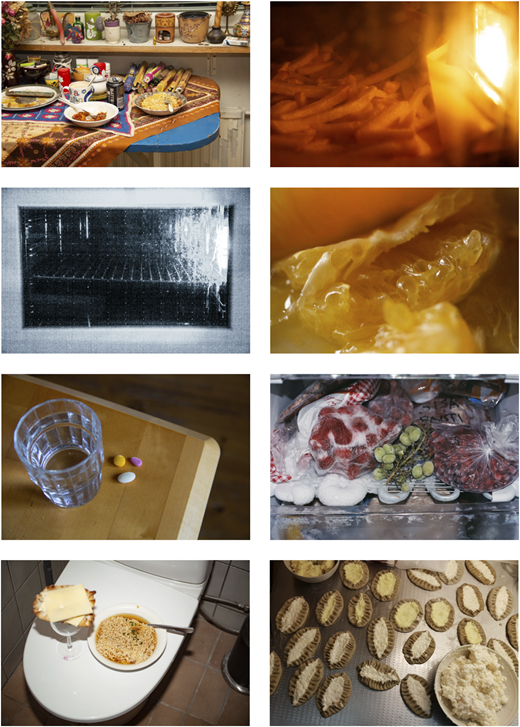
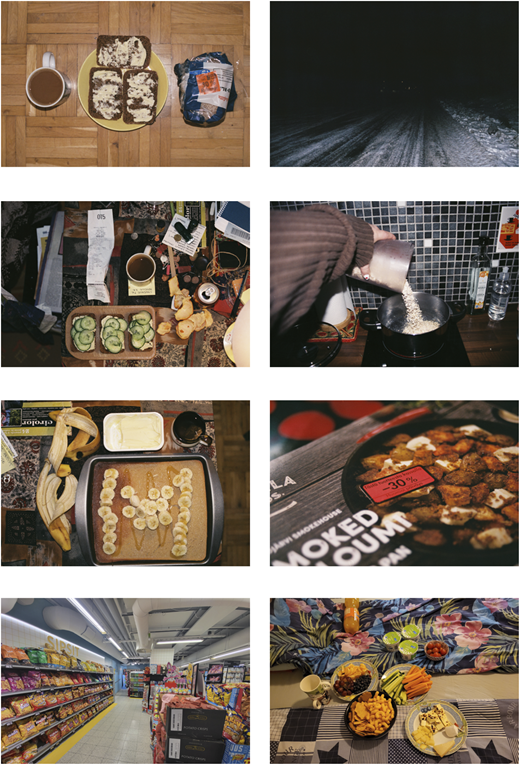
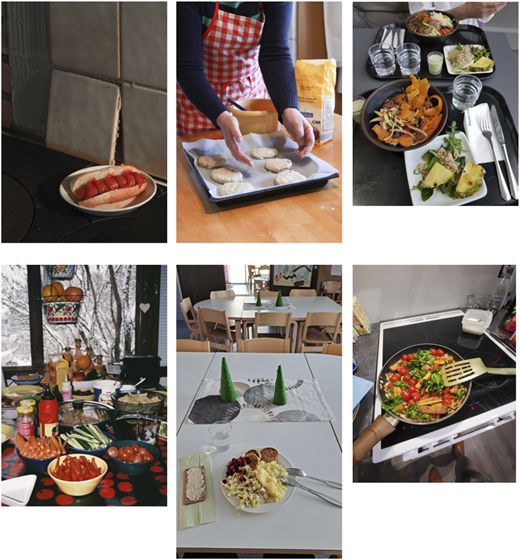
As the fifth step, participants chose to disseminate their experiences through a public exhibition. Some participants collaborated with the photography teacher to prepare exhibition materials, i.e. postcards and tableware. The postcards were largely based on photographs taken during the study ( Appendix), while the photography students also produced new images for the tableware. The exhibition, titled “Table is set” (Pöytä on katettu), was launched at Helsinki Central Library in August 2023 and included a panel discussion with youth and representatives from MAF, NNC, retail, public food services, and environmental civil society organizations (WWF). The exhibition was subsequently displayed in campus restaurants in two other cities and presented at several other events.
The final step consisted of follow-up interviews with participants. Five of the ten participants agreed to be interviewed; one interview was conducted face-to-face and four online. The semi-structured interviews focused on participants’ experiences, lessons learned, and how their food environment literacy had developed.
3.3 Empirical analysis
The data collected during the Photovoice study included a pre-study questionnaire, photographs taken by participants, recorded and partially transcribed workshop discussions, mind maps produced during workshops, materials created for the exhibition, and transcriptions of semi-structured follow-up interviews.
We, the researchers and authors of this article, conducted an ex-post analysis of a process in which we were ourselves closely involved. The analysis focused on how methodological choices made throughout the process created space for different forms of reflexive, critical, and transformative food environment literacy, drawing on the guiding questions presented in Table 1. We thus did not measure changes in transformative food environment literacy but identified methodological and processual elements that were prone to generate favorable conditions for such literacy.
We began the analysis by examining participants’ initial understandings of food environments and their expectations for the study as expressed during the first workshop and in the pre-study questionnaire. We then categorized the photographs taken by participants based on their content and context, providing cross-sectional insights into how participants perceived their lived food environments in the beginning of the study. Next, we analyzed the discussions held during the second workshop. From the discussions, we identified instances in which participants shared reflexive or critical insights regarding food environments. The workshop discussions were first analyzed separately for each group, after which recurring themes were identified across the groups. In the third workshop, the analysis focused on how interactions among youth, food environment actors, and researchers enabled the co-creation of solutions. The mind maps supported the analysis by capturing participants’ evolving understandings of food environments. The exhibition was treated as one tangible outcome of the project. Follow-up interviews were analyzed to identify participants’ key learnings related to reflexive, critical and transformative food environment literacy and to validate findings.
In the second stage of the analysis, we reflected on within the research team how our methodological choices had influenced the insights generated. Analyzing the research process through the stages described above helped to make these choices visible. We want to highlight such methodological reflexivity as a key component of participatory research, where knowledge and understanding (i.e. food environment literacy) is understood to emerge through a shared process involving researchers and participants (Alvesson et al., 2008; Finlay, 2003). In the analysis our aim, hence, was not to minimize or obscure our influence, but to make our epistemic choices explicit (Huang et al., 2026; Kaljonen et al., 2024; Kuehner et al., 2016).
4. Results
4.1 Facilitating reflexive literacy
During the Photovoice process, taking pictures, and sharing and discussing them with others, were decisive in shifting participants’ focus from their own eating habits to the food environment. This transition was not self-evident and required facilitation. At the start of the project, when asked about their expectations, several participants expressed interest in examining their personal eating habits and relationship with food. These expectations were clearly related to how they observed the food environment. Most of the photographs taken portrayed meals they had eaten (Figure 2).
 The x-axis lists different categories of photographs, and the y-axis measures the number of photographs taken. The categories include nature, food environment in public spaces outdoors, food environment in public spaces such as retail restaurants, meals in public spaces, food environment in private spaces, and meals in private spaces. Meals in private spaces have the highest share, followed by food environment in private spaces, meals in public spaces, food environment in public spaces such as retail restaurants, food environment in public spaces outdoors, and nature.
The themes of the photographs taken by the participants
The x-axis lists different categories of photographs, and the y-axis measures the number of photographs taken. The categories include nature, food environment in public spaces outdoors, food environment in public spaces such as retail restaurants, meals in public spaces, food environment in private spaces, and meals in private spaces. Meals in private spaces have the highest share, followed by food environment in private spaces, meals in public spaces, food environment in public spaces such as retail restaurants, food environment in public spaces outdoors, and nature.The themes of the photographs taken by the participants
At the beginning of the second workshop, participants were asked to share photographs reflecting their most important values related to eating. This phase enabled participants to articulate their personal values through visual storytelling. Identifying shared values with others was particularly rewarding. These included eating healthy or plant-based food, commensality, avoiding food waste, convenience and pleasure, and domestic food (Seppälä et al., 2026). In contrast, examining how the food environment enabled or hindered acting according to these values proved more challenging.
Of the 302 photographs taken, the majority were captured in private food environments, such as participants’ own homes or those of parents, relatives, or friends (Figure 2). Only a small number were taken in grocery stores, restaurants, schools, workplaces, leisure settings, or digital environments. This was partly due to practical constraints. Participants reported that they often forgot to take pictures, especially in public places, and instead completed the task at home or while eating. For some, photographing in public was uncomfortable. As one participant explained: “Going to a store is tricky anyway. Then you don’t dare to pull out the camera, or you sort of panic that you’re ashamed to be at the store and to do the groceries, because you feel you do something wrong. Then the camera doubles the feeling that you are doing something illegal.” (Group 1).
Beyond these practical issues, separating observation of the food environment from one’s own eating habits was difficult. As one participant noted: “In principle I liked photographing. However, at times I did not know where to take the pictures. In the end, I took a photo of my bed, where I usually eat my breakfast, and of other places where I prepare or eat food—but I do not know if that is really the food environment” (Group 3). For many participants, the concept itself was difficult to grasp: “I think it was easy to take photos of food environment, but how to think and write about them was challenging for me” (Group 2).
The collective discussions during the second workshop were important for expressing reflexive literacy. For instance, one participant recognized patterns only after seeing their photos together: “Is it so that half of my pictures are such that I’m at home and my eating is really kind of harsh, going where the fence is lowest, and then half are me being with my parents and we make a proper feast together and eat well? I didn’t even notice it before” (Group 1). Another participant initially interpreted a picture as representing commensality but later identified additional meanings: “If you start to analyse it properly, it is domestic [food], for example those milk cans. Most of them are produced nearby. And then home-made food made by my mother—that’s the best” (Group 2). Participants also recognized that interpretation often followed the act of photographing. As one explained in a follow-up interview: “[…] when you take the picture, you start to look at it yourself and decipher what’s in it. That sort of uncovered [the meaning]” (Group 2).
Thus, taking photographs alone was insufficient to create conditions for reflexive literacy; collective discussions were crucial for enabling participants to recognize the shared structural constraints embedded in food environments. We as facilitators also played an important role in directing attention toward the food environment. This helped the participants to articulate the role of the food environment or to give new interpretations to their behavior. For example, one participant described a “bad habit” of buying crisps, even though they considered it “a pointless indulgence.” When the facilitator asked whether aspects of the shop influenced this behavior, the participant reflected: “Well, maybe you just notice how they do the product placement in the store, that there are always goodies to grab quickly at the checkout […] I’ve noticed that I’m like a victim of this product placement” (Group 1). This quote shows how the participant shifts the responsibility for their choice from themself (bad habit) to the food environment (victim) when given the opportunity to reflect.
As facilitators, we also encouraged participants to broaden their perspective from immediate to wider experiences in their lived food environments. For example, when the facilitator asked, “If you think more broadly, in which food environments is domesticity and local food not realized?”, one participant reflected: “Maybe in situations where you don’t know where the food comes from. Almost everywhere other than at home, I would say, you don’t know where the ingredients come from” (Group 2).
The Photovoice study enabled the participants to become reflexive upon their own behavior in food environment, as one participant summarized: “You started to think more about your own choices through the research […] how product placement in stores affects what you take without even being aware of it. And also the social side—how the group I am with affects what I eat” (Group 3). Another participant said that after the project they compiled a list of ingredients that they want to eat and started talking to others about the significance of food environments — for example, discussing snack options with a cinema employee. Meanwhile, others reported that they started to avoid the food environments that they deemed harmful, for example by deleting a food delivery app from their phone (Group 1).
4.2 Defining shared problems for critical literacy
The second workshop was designed to allow collective meaning-making. After presenting the photographs, participants were encouraged to find common denominators in their food environments that support or inhibit them acting according to their values. At the end of the workshop, the groups were asked to collectively identify problems they wished to address in the third workshop with food environment actors. Social cohesion within the groups played an important role in developing a shared understanding.
In the first group, members met face-to-face, knew each other well, and shared similar values and experiences. As a result, they found a common denominator relatively easily. Participants felt they had the skills and knowledge to eat according to their values but lacked the financial resources and mental capacity to do so. They identified “coping and wholesome eating” as their central concern. They located the roots of the problem less in the food environment itself and more in broader societal values and the marginalization of young people. The group also struggled to identify a relevant actor to invite to the third workshop, reflecting their sense of social exclusion.
The second group required more time to define their collective problem. Although they met remotely, participants knew each other as members of a rural youth activist group. Overall, they reported largely positive experiences of their food environments but expressed a broader concern about the “appreciation of food and farmers” in society. The participants collectively discussed their desire to foster greater appreciation for domestic food production and for “the people who have invested considerable effort in producing and preparing food”, noting that “I know domestic food is not a given” (Group 2). Participation in the Photovoice process enabled the group to articulate these shared values more clearly.
Strong social cohesion can sometimes limit critical reflection. This was not the case in the third group, whose members had not met before and came from diverse backgrounds. In this group, sharing photographs created space for new forms of critical reflection. As a result of their discussions, they identified “unhealthy eating and snacking” as their primary concern. Initially, only one participant had visually documented issues related to the availability of unhealthy snacks. However, sharing this observation prompted others to recognize similar concerns: “Now that this came up, I realized that I have often wondered the same thing, but I did not think of taking a picture of it” (Group 3).
All three groups independently shared several similar observations about food environments. Participants across all groups identified school and student meals, family dinners, and eating with friends as important supportive elements in their food environments. Sharing photographs of these occasions helped participants recognize the importance of “commensality” for healthy and sustainable eating (see also Seppälä et al., 2026). As one participant reflected: “Close ones [family and friends] are really important. We should highlight how much the people around you shape your food environment. It is quite important” (Group 3). “With friends you eat much better when you can share the cooking and the clean-up afterwards” (Group 1).
Participants also appreciated easy access to plant-based foods but identified shortcomings in the quality of vegetarian options, particularly in schools. Through discussion, they developed a shared understanding that the “quality and appreciation of plant-based food” in schools and student cafeterias require further attention.
4.3 Engaging with actors shaping food environments
Actors shaping food environments were invited to discuss and co-develop solutions to the problems faced by youth only in the final workshop. The actors represented the food industry, public food services, the National Nutrition Council (NNC), and the Ministry of Agriculture and Forestry (MAF). Solutions were developed in three groups, with mixed combinations of youth and food environment actors.
During the discussions, participants found the most concrete solutions for raising the quality and appreciation of plant-based food at schools. In this case, the food environment was tangible, and participants held ownership of and shared personal experience with it. The expert from the food service company contributed contextual knowledge and was willing to learn more about the concerns of youth, i.e. their customers. The participating youth brought novel and fresh ideas, and the group shared a collective interest in making tastier plant-based food available to all. The youth highlighted the need for broader food education at schools to foster understanding of sustainable food among young people and children, and emphasized that, as a rule, “vegetarian food should be promoted so that it is locally produced.” Gradually, experiences of unappealing vegetarian food evolved into broader calls for professional reskilling and education. This shift was transformative, underlining changes needed in the skills, practices, and food literacy of both youth and food service professionals.
In the second group, the combination of policy expertise (MAF) and young people’s lived experience generated novel insights into how appreciation for school meals could be strengthened, a topic that has been widely debated in Finland (Helenius and Kivimäki, 2023; Kaljonen et al., 2019). With the help of the policy expert’s knowledge, the group developed a shared understanding of how low financial investments in school meals is reflected in their quality, reinforcing students’ reluctance to eat them. The young participants also began to critically reflect on their own role in shaping school meal appreciation. They realized that, in everyday contexts, food appreciation is shaped through interactions between students and canteen staff. Showing appreciation to canteen staff influences their motivation and work, which in turn shapes perceptions of food. The participants concluded that, in addition to improving the atmosphere and comfort of school canteens, catering personnel should be made visible to students and their work explicitly recognized. To support this goal, the group designed a public campaign to acknowledge the contribution of catering staff. In this way, they were able to integrate their concerns about the appreciation of shared school meals with a greater recognition of the work involved in their preparation. This positive framing represented a genuinely novel perspective in the Finnish debate on school meals.
In contrast, identifying feasible solutions to coping and unhealthy food environments proved more difficult. During the discussions, the young participants continued to reflect on the interconnected challenges of coping and healthy eating, describing them as “vicious circle”. They pondered, “how much shame is associated with not being able to cope” and ”to eat properly”. Earlier in the process, the young participants had identified sociopolitical measures, such as basic income and improved mental health services, as potential solutions to coping-related challenges, and they remained consistent in these views. However, these measures extended beyond direct food environment policies, and the responsibility of the experts representing the NNC and the food industry. Rather than proposing concrete changes to food environments, the group concluded that decision-makers should listen to young people and stop belittling them.
The experts were invited to the third workshop to learn about the young people’s lived experiences and to collaboratively develop feasible solutions. After the workshop the experts noted that engagement with the youth was eye-opening, providing novel perspectives for their work. This was particularly evident in relation to the many practical proposals to enhance the appreciation of plant-based foods and school meals. The discussions on coping and unhealthy eating also prompted the experts to reflect on the mental health challenges faced by young people and their relationship with healthy eating. In their feedback, the young participants highlighted that the experts respected their views. Some participants were surprised that the experts even wanted to engage with them. However, the young participants also thought that a single workshop is unlikely to have a meaningful impact on food environments.
As a closing step, participants with skills in photography and curating took responsibility for organizing the exhibition together with the photography teacher. The exhibition aimed to make the concerns of young people visible to a broader audience. Themes related to coping received the most attention in the photographs chosen to the exhibition. The photographs were offered as postcards to visitors so that they can express and send thanks for the food ( Appendix).
The exhibition provided more-than-discursive means for transformative literacy. It engaged participants with artistic skills in drawing attention to broader challenges in the lived food environments of youth. The postcards offered a means to express gratitude for food. The final exhibition was launched in a café run by the food service company that participated in the third workshop.
5. Discussion
The results from the Photovoice study underline how participatory research can create conditions for transformative food environment literacy through multiple stages. While earlier studies pinpoint the integrated dimensions of food literacy (Rowat et al., 2021), our results call attention to the careful and reflexive planning of participatory research. Table 2 synthesizes issues deserving attention in participatory research.
Nurturing transformative food environment literacy with participatory research
| Constituents of literacy | How participatory research can nurture food environment literacy |
|---|---|
| Reflexive literacy Individual capabilities and motivations to explore food environments |
|
| Critical literacy Collective understanding of the elements in the lived food environments which condition eating |
|
| Transformative literacy Engagement within the socio-political setting and the institutional actors to address the problems of lived food environments |
|
Like other critical perspectives on participatory research (Foster-Fishman et al., 2005; Vikström et al., 2025), our study points out that individual photographing alone was insufficient to create conditions for food environment literacy. Collective meaning-making was decisive in understanding how the food environment conditions individual actions. Pertaining to the societal structures, the concept of the food environment was especially hard to grasp for (young) participants (see also Haffejee, 2021). Results suggest that reflexive literacy requires learning from others’ experiences. Hence, participatory research processes should facilitate and create space for iterative individual and collective reflexivity. In addition, participants require active support when observing food environments in public places. The step from an individual shopper or eater to an observer of the external food environment was challenging for the young participants in the study. Support from co-researchers can, however, be particularly motivating and decisive for reflexive literacy, as other studies also highlight (Bonnycastle and Bonnycastle, 2015; Haffejee, 2021).
In participatory food environment research, social cohesion among participants requires careful attention. In this study, participatory research supported the articulation of shared values and empowerment within homogeneous groups. In such settings, collective reflection appeared to reinforce existing shared values rather than broaden critical food environment literacy (see also Bohm et al., 2015). For a complex issue such as the food environment, however, sharing observations within the more diverse group proved fruitful. Nurturing critical literacy requires a safe space in which participants can share and reflect on different perspectives and critical insights. Participants’ identities and shared values should also be explicitly acknowledged and considered during the research design phase.
Providing multiple means of expression and applying various methods (Peltola et al., 2020) at different stages of participatory research is a prerequisite for creating conditions for transformative literacy. By enabling more inclusive participation, critical expressions of the food environment can multiply. This also applies to engaging those who design food environments. Their involvement already in the early phases of participatory research is a precondition for applicable results (von Gönner et al., 2023; Turner et al., 2023). Implementation and uptake of results also require time and attention. In line with earlier research (Wang, 2006; Wilderink et al., 2021), our findings highlight that the co-production of applicable transformative results is not self-evident. This phase calls for particular attention from researchers and institutional actors. Especially for young participants, situating lived experiences within the appropriate institutional context can be difficult, let alone producing readily applicable solutions. Any transformations in food environments require long-lasting partnerships with researchers and practitioners. Participatory research should encourage sustained, rather than one-off, reflection among participants and engage food environment actors early in the process.
The scope for expressing results should also be left open. In this study, the photo exhibition became an important channel to voice the concerns that could not be translated into singular solutions within any specific food environment. Art provided more expressive means to draw attention to coping and the physical and mental health of youth amidst the abundant food environment. This theme also challenged our predefined framings of the food environment as co-researchers. Transformative literacy should therefore also be understood as the ability to pose novel research questions and refine the conceptual understanding of the food environment.
6. Conclusions
This study shows that food environment literacy is not merely an individual competence but a collective and relational capacity that is conditioned by interaction among citizens, researchers, and institutional actors. Participatory research can facilitate collective meaning making and transformation with intentional methodological choices. Participatory research should create conditions that allow long-term, iterative reflection amongst the participants, engage committed food environment actors already to the design of participatory research to ensure the applicability of results, and create opportunities for new perspectives to emerge and be expressed through multiple methods that are meaningful to participants.
The findings underline that the long-term engagement of actors who shape food environments is essential for transformative literacy. Such engagement should take place in concrete settings, such as school canteens or retail environments, where understanding of lived food environments can contribute directly to the development of healthier and sustainable food environments. Participatory research can create spaces in which both consumers and service providers learn from one another and reshape their practices. Insights into lived food environments can also inform the design of more comprehensive policies. The findings of this study highlight the importance of social support mechanisms for coping and healthy eating. Policies seeking to improve diets should pay greater attention to the social and emotional conditions that enable healthy eating, including mental wellbeing and social connectedness.
The results also suggest that closer collaboration with artists could provide additional ways of nurturing transformative food environment literacy. Artistic approaches can help draw attention to issues that are not readily translated into concrete actions or policy measures. One such issue is the limited critical understanding of food environments among the wider public.
AI statement
The Microsoft Co-pilot was utilised for checking the language and grammar.
We wish to thank all the young people who participated in the Photovoice study, as well as the institutional actors involved. We gratefully acknowledge the civic organizations that supported the recruitment of participants. The time and dedication of Tuula Alajoki and the participating youth, together with the collaboration of Compass Group Finland, were essential to the success of the exhibition.
Appendix Postcards