This article provides insights into the methodology of research that can serve to gain a deep understanding of team functional communication patterns. The study aimed to show how disciplined observation and speech-act theory can be a useful tool for measuring behavior and uncovering insights that might not be apparent through other research methods. As a result of this methodological approach, the article presents selected cases of team communication patterns with an in-depth analysis.
We employed a disciplined observation method for functional communication coding, well established in psycholinguistics and adapted for the purpose of research in gameplay. The approach involved trained behavioral coders systematically recording and analyzing functional communication observations. We recorded teams in decision-making processes during business simulation games and analyzed them using quantitative and qualitative methods.
The analysis revealed that winning teams used significantly more References to Present Objects (RPO) and References to Self (RTS), while losing teams employed more Registering Disapproval (DAP). These results might indicate that team success depended less on communication quantity and more on the pragmatic alignment of speech acts. Moreover, we observed other specific communication patterns in both team types, such as asking Questions (QST) or Responses (RES). The findings suggest that speech-act theory and disciplined observation can provide valuable insights into team communicative patterns of game play.
The findings from this study have practical implications for team leaders and managers. By recognizing communication patterns linked to team effectiveness, leaders can foster cohesion and performance. Practically, training should promote grounding strategies (RPO), encourage explicit commitment (RTS), and reframe disapproval (DAP) into constructive feedback. Ultimately, team success does not depend on communication volume but speech acts that translate language into coordinated action. More importantly, using speech-act theory and disciplined observation, leaders can design targeted interventions to enhance team performance.
This research provides a unique perspective on measuring team communication in gameplay. It adds to the growing body of literature on team communication by showing how this approach can serve to gain insights into communication patterns that are useful to analyze game play and its effects. Furthermore, this research provides valuable insights for practitioners and researchers interested in team communication and gameplay performance.
Introduction
Scholars claim that team communication patterns influence teamwork and quality of serious games learning experience (Xiao, Seagull, Mackenzie, Ziegert, & Klein, 2003; Espinosa, Nan, & Carmel, 2015; Tiferes & Bisantz, 2018), hence, they often recommend paying special attention to communication and its role in education. Own (or others') communicative skills or a lack of them deeply affect both team members undertaking game-based learning courses and facilitators. As a highly interdisciplinary field of study, Business Simulation Games (BSG) often focuses on team communication and teamwork effectiveness. This body of research encompasses disciplines like psychology, sociology, anthropology, education, and computer science, to name a few. Therefore, scholars strongly recommend interdisciplinary research methods in such games (Duke & Geurts, 2004). Across all the related fields, there is consensus that communication processes are central to any team's actions. This state-of-the-art encompasses experiential learning and simulation game-based learning as well (Kriz, 2000, 2003; Kayes, Kayes, & Kolb, 2005; Kriz & Hense, 2006; Hergeth, 2007; Kriz & Nöbauer, 2008).
Although systematic behavioral observation of emergent team phenomena using video-based methods is already well-established in the academic literature (Waller & Kaplan, 2018), business simulation games form a very specific research environment that is often compared to a complex research laboratory (Duke & Geurts, 2004), because it often creates a dynamic and sometimes even chaotic, emergent situation.
When researched in a business simulation game (BSG), scholars examine communication processes either in the context of their perceptions/evaluations reported by subjects or researchers (interviews, questionnaires, self-reflection, discussions, observers' notes, etc.) or in a practice-led approach, through simulation of game scenarios designed solely for communicative purposes (current trend) (Mayer, van Dierendonck, Van Ruijven, & Wenzler, 2014; Kurapati, Lukosch, Freese, & Verbraeck, 2017; Mayer, 2018). Table 1 summarizes chosen assessment strategies already present in gameplay research literature and enlists their advantages and disadvantages in the context of communicative process evaluation.
Considering language as a tool of thinking and pragmatic influence (Kurcz, 2000), as Austin (1962) and Searle (1969) describe it in prominent concepts of speech act theory, we find it worthwhile to introduce it in this article. Speech act theory is based on the hypothesis that the purpose of language use is to accomplish something, to cause a new state of affairs. Thus, the authors consider language to be a tool for completing (complex) tasks within the managerial environment of a BSG and offer a more detailed exploration and novel analysis tool [1] to the field of simulation games communication processes in managerial teams. We call this approach disciplined observation, as it starts with a structured plan and is based on the concepts of speech act theory.
Speech act theory allows for analyzing communication along certain categories and developing a taxonomy of speakers' utterances (Austin, 1962; Searle, 1969). We categorize speech acts as locutionary (putting words together following rules of a language – the act of saying something), illocutionary (the intended meaning – the act of saying something), or perlocutionary (the intended change of what is being said – the act achieved by saying something). Further, Searle (1976) proposed a taxonomy of illocutionary goals. These are assertives (committing to a certain truth), directives (committed to a certain action), commissives (committing to a future action), expressives (related to attitudes and emotions), and declarations (effect a change in the surrounding reality). Examples of speech acts are questions, statements, or greetings (Rus, Moldovan, Niraula, & Graesser, 2012). In disciplined observation of player communication, researchers record the speech acts, and experts develop the taxonomy. Thus far, scholars have conducted similar work only in analyzing the chats of players in an educational game (Rus et al., 2012). Cardona-Rivera and Young (2014) propose a new perspective in the field of game studies, called “Games as Conversations.” They borrow ideas from the speech act theory to analyze and describe the communication between player and game, but not between players, as we do in our study. They “consider game-linguistic exchanges oriented toward the performance of some action within a game environment” (Cardona-Rivera & Young, 2014, p. 3). This work defines player actions as locutionary acts, based on the rules of the game. Manninen (2003) acknowledges the relationship between players and game and explores strategies in (online) multiplayer games. However, Manninen uses Habermas' Communicative Act Theory as a framework to understand how existing interaction forms support and enable players' communicative actions. In this theory, communicative actions are just one form of action next to others (such as strategic, normatively regulated, or dramaturgical actions). Manninen proposes that communicative strategies in multiplayer games mainly serve the aim “to bring about consensus through rational discussion under ideal speech conditions” (Manninen, 2003). This article proposes the Communicative Act Theory to study games and game play, but does not provide a case study as we do in this article. Scholars have used speech act theory to analyze movies and entertainment games (e.g. Balogh & Veszelszki, 2020; Anggraini & Nababan, 2022; Wijaya, Wardhani, Bataiv, & Kamaluddin, 2024) and to analyze the content of games for change (Rao, 2011), but not in a structured way to analyze player communication in simulation games. Therefore, we adapted a research approach of disciplined observation, based on speech-act theory, to examine communicative behavior dynamics in the context of BSG processes to explore the applicability of this method in this field. Gameplay results of participants of a BSG served to frame the process with an outcome-oriented effectiveness measure and allowed for more detailed insights and opportunities into successful teamwork management.
Method
We focused on team communicative behaviors, analyzed via video recordings of gameplay. First, we collected demographic data, team composition, and interaction recordings, followed by gameplay results, and then a systematic analysis of the observed communicative behaviors.
Team profiles
We conducted the research was conducted at our university, during the BSG course (employing “Marketplace” managerial game). The subjects were last year, part-time business students of bachelor’s-level studies, aged from 21 to 37 (mean age = 27). A total of 19 students formed four teams of 4–5 members. The students had finished their courses in finance, accounting, strategic management, and marketing before the BSG course. In total, 84% of participants (16 out of 19) were experienced members of the working professionals’ population, which translated into added value of using them as research subjects (Compeau, Marcolin, Kelley, & Higgins, 2012).
Every team member participating in the research filled in a survey that provided information about their demographics, including age, sex, current vocational situation, current study grade average, and the preferred team role (socio- or task-oriented).
The data obtained served to create profiles of all four teams participating in the research. We calculated average measures and ratios where applicable. Table 2 summarizes the examined teams' profiles.
To determine each team’s ratio balance regarding socio-emotional and task-oriented roles preference, we used Fisher, Hunter, and Macrosson's method (Fisher, Hunter, & Macrosson, 1998). It employs Belbin's Self-Perception Inventory [2] (Belbin, 2004) results as a prerequisite for categorization. Therefore, we classified each member's SPI result according to two categories (see: Appendix 1): either as (1) socio-emotional or (2) task-oriented role.
Communicative behaviors
Two trained coders, both psychologists with over nine years of experience in behavioral observation, analyzed communicative behaviors from gameplay videos. Training included written instructions, an in-person briefing on coding categories, and practice with sample videos using INTERACT v. 20.11 software (Mangold International GmbH, Germany), in which both were already proficient. Each coder independently analyzed 30 minutes of material. Then, they discussed discrepancies until they achieved full consensus. This procedure established reliability, and we then applied it to the full dataset.
In the first step of research video analysis, the behavioral judges categorized all behaviors observed during six periods of gameplay into two categories.
Communicative behavior – defined as any oral (i.e., speech or non-linguistic vocalizations) or visual (i.e., gestures or attentional touch) action done intentionally for the sole purpose of communicating something to the other person. Therefore, (1) communicative behavior contains an intention directed to an interaction partner and (2) the behavior is not an operation on an object serving another purpose but communication (Goldin-Meadow & Mylander, 1984).
Non-communicative behavior – opposes the definition of communicative behavior. This included all behaviors containing no intention toward an interaction partner and serving purposes other than communicating with another team member.
In the next step, competent judges determined their communicative functions according to definitions of Functional Communication Coding Categories by Meadow, Greenberg, Erting, and Carmichael (1981), as described in Table 3.
Business simulation game and balanced scorecard
Research subjects participated in an iSpace Simulations' business simulation game (BSG) called Marketplace, configured in a Venture Strategy scenario. During six decisive periods, each team constituted a company and competed in real time against other teams (companies) in a virtual business world. Students managed a newly established enterprise in personal computer market, making realistic business decisions in the areas of: marketing (i.e., brand design and management, pricing, advertising), overall strategy, sales (i.e., sales channels management, sales offices and web sales management, profitability and demand estimations), human resources (i.e., sales force compensation, production worker compensation), manufacturing (i.e., fixed and operating capacity management, inventory management, demand projection), finance and accounting. The game scenario did not rigidly determine the market maturity phase nor the pace of growth. Both factors depended on the quality and timing of decision-making of all teams that constituted the supply side of the virtual market. Each decisive round began with report analysis, team decision submissions, and teacher feedback, followed by a presentation of the next period's game scenario. This cycle repeated each round, enabling students to develop, adjust, and execute a full marketing and business strategy (Cadotte, 2024).
We ranked teams using the Cumulative Balanced Scorecard (CBSC) for their second simulated year. The BSC measures virtual company performance by integrating all functional areas, historical and future perspectives, and stakeholder considerations, while also providing a single grading metric (Cadotte, 2024). Key performance indicators for BSC produce a formula:
This model underscores the importance of all measures, as a negative score in any of these indicators would result in Total Performance = 0.
Research and data analysis procedure
Research procedure. The teacher informed students who gathered in their classroom for the first class meeting about the opportunity to participate in a research study regarding group processes. We separated the research situation from the course context by introducing a research assistant to the group. This way, there was no power imbalance between the researcher present and the students participating in the experiment.
Next, the teacher would leave the room and the research assistant would describe the research procedure, obtain written participation agreements, inform about the possibility to withdraw at any point in time, answer questions, and distribute the Belbin Self Perception Inventory (SPI). Next, the teacher came back to the classroom and started the class by instructing participants to form 4–5 person teams (Wolfe & Chacko, 1983).
All teams worked in the open space of the classroom. Meanwhile, 360-degree video cameras situated in the middle of each team's desk were registering their behaviors.
During the second meeting, two weeks later, the researcher provided participants with individualized, written feedback from the SPI examination and provided a mini-survey of an additional two questions. The course was delivered in two weekend (all-day) sessions, with a two-week interval between them.
Data analysis procedure. Two trained behavioral experts analyzed classroom videos of all six 90-min BSG rounds using Mangold Interact software. Experts received instructions on behavioral categories, completed three hours of training in 30-min sessions, and coded in pairs to ensure over 90% internal consistency. They categorized all observable communicative behaviors for each team member, adding extra notes as needed. Then, the researcher analyzed the coded data, focusing on selected winning and losing teams for detailed comparison.
Results
Game-play results
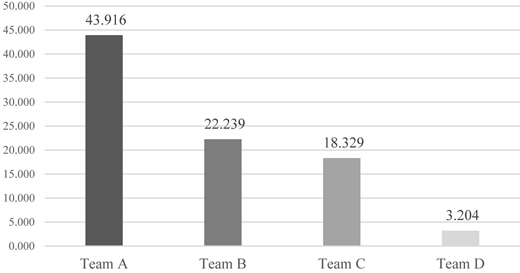
We obtained gameplay results in the form of Cumulative Balanced Scorecard (CSBC) Results, which served to appoint “winning” and “losing” teams. Gameplay results indicated team A to be the winning team, and team D to be the losing team. Team B and Team C held the middle ground as depicted in Figure 1.
We chose teams A and D for deeper analysis of their communicative results as they were on two extremely opposing sides of the results spectrum.
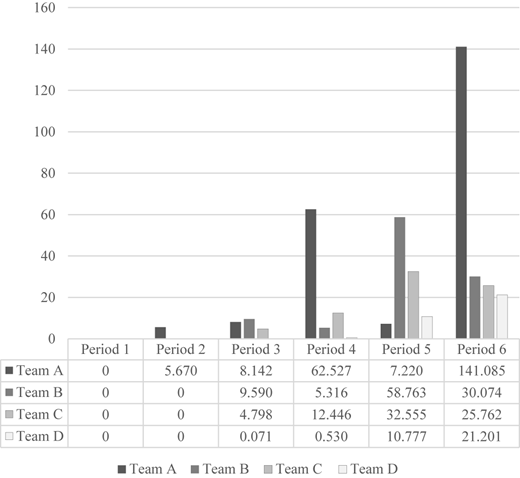
Figure 2 depicts the dynamics of Balanced Scorecard throughout the entire gameplay, showing that the winning team A achieved the break-even point of positive BSC value as the first one in the virtual market, in Period 2. Since then, team A grew in BSC results, and finished the game play with the highest value of BSC. Team D struggled to achieve a positive value of CBS (Period 3) as well as to rise above its decimal values (Period 5), finishing the game with the lowest CBS value (3.2).
Communicative behaviors of the winning team A and the losing team D
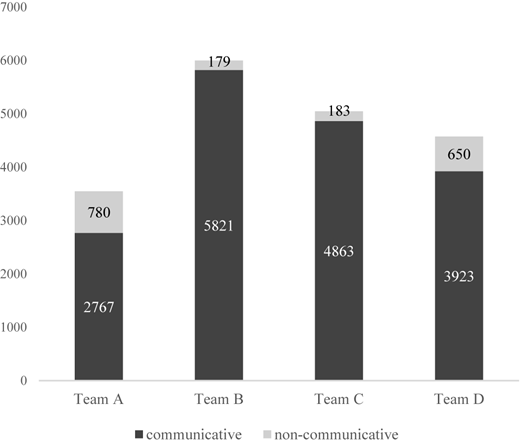
We chose two teams, i.e., the winning team A and the losing team D, for further in-depth investigation of their communicative functional patterns. Figure 3 below presents the total counts of categories in every observed team. The total recording time duration per team accounted for eight hours.
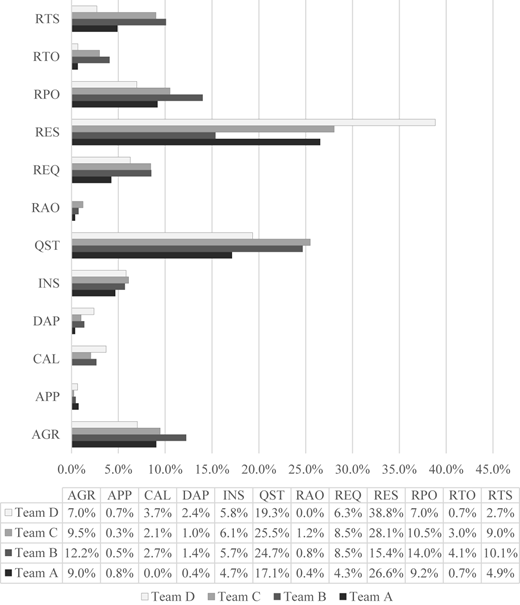
After the coders identified all communicative behaviors, they proceeded with functional categorization in the next step. The procedure employed the Functional Communication Coding Categories by Meadow et al. (1981). Appendix 2 presents the total count of each category coding as raw data. Figure 4 below presents total functional communication observations expressed as a percentage.
Functional communication observations expressed as percentages of each team's total communicative behaviors allowed us to compare winning and losing teams.
For both teams, the response (RES) category was the most frequent, representing 26.6% of all behaviors in Team A and 38.8% in Team D. Asking questions (QST) was the second most common category, accounting for 17.1% in Team A and 19.3% in Team D.
We observed similar patterns in low-frequency categories, including registering approval (APP) (Team A: 0.8%, Team D: 0.7%), reference to others (RTO) (Team A: 0.7%, Team D: 0.7%), and giving instructions (INS) (Team A: 4.7%, Team D: 5.8%).
Total functional communication observations also presented some differences between the teams. For example the attention call category (CAL), which the winning team A did not display at all, represented 3.7% of all team behaviors for the losing team D. Another low-frequency category was registering disapproval (DAP), occurring in 0.4% of behaviors for the winning Team A and 2.4% for the losing Team D. Similarly, referencing to self (RTS) was infrequent, but Team A exhibited this behavior nearly twice as often as Team D (4.9% vs. 2.7%, respectively).
Next, we conducted an Independent Samples t-test analysis, comparing six-period gameplay of communication observation frequencies for Team A and D. We expressed frequencies as percentages due to uneven team member numbers in the examined teams. We evaluated normality with the Shapiro–Wilk Test (results presented in Appendix 3), concluding with the Independent Sample t-test and Mann-Whitney U-test when applicable. Table 4 presents the Independent Sample t-test results.
We spotted the statistically significant differences in two out of eleven examined communication categories: (1) Reference to Present Objects (RPO) was significantly more frequent in winning Team A (MA = 11.97, MD = 8.517, p < 0.05, d = 1.3) and (2) Reference to Self (RTS) was also hinger in the winning Team (MA = 6.07, MD = 3.18, p < 0.05, d = 1.4).
The Mann–Whitney U test revealed a significant difference for Registering Disapproval DAP (p = 0.024), with higher median scores observed in losing Team D (Median = 1.25, IQR = 6.15) compared to game winners A (Median = 0.70, IQR = 0.65). We found no significant differences for INS (p = 0.513), RAO (p = 0.318), or RTO (p = 0.983). Table 5 presents the analysis results.
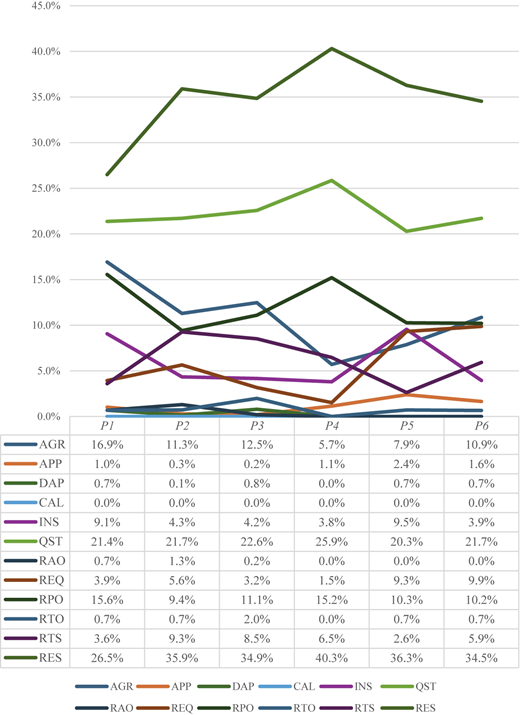
In the next step, a deeper examination of functional communication observation dynamics was possible for each team. Figure 5 presents these dynamics in the winning team A.
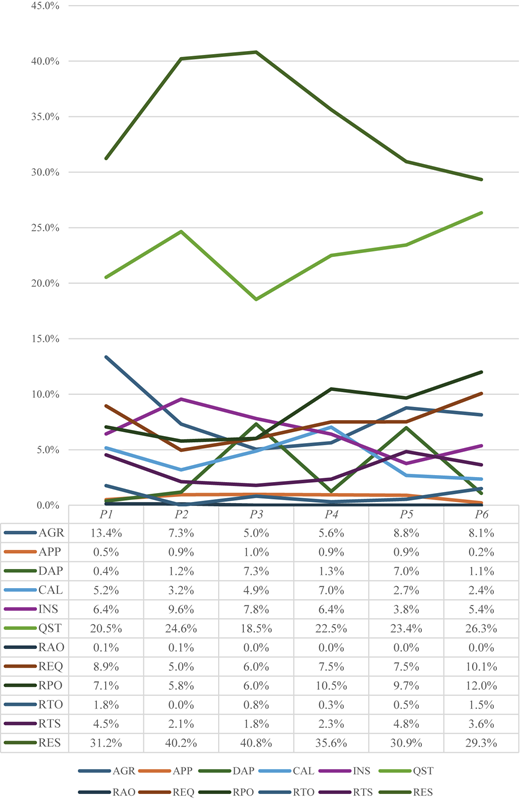
Figure 6 presents the functional communication observations dynamics in losing team D.
This study's refined methodology enabled a deeper comparison of selected categories, focusing on response (RES) and question (QST) frequencies, which were highest in the winning team A and losing team D. Analyzing temporal dynamics revealed nuanced behavioral trends, illustrated in Appendices 4 and 5.
For RES, both teams showed a gradual increase in responses during the first half of gameplay (Periods 1–3), followed by a parallel decline in the second half of gameplay (Periods 4–6). Notably, team A's response frequency was lower initially but surpassed D later. The response decline began earlier in D (Period 3) than in A (Period 4).
Notably, QST exhibited greater volatility than the aggregated data suggested. Both teams started at similar levels, with A maintaining a slow increase until Period 3, then a steeper rise that tapered in Periods 4–5 before a slight uptick at the end. Conversely, D started more dynamically, peaked in Period 1, declined sharply to the lowest point in Period 3, then steadily increased through Period 6.
Discussion
We focused on the communication behaviors of teams in a business simulation game (BSG) and whether the method of disciplined observation, based on speech act theory, can be an effective instrument for such research. We conducted a deepened observation analysis on two task-oriented teams participating in the BSG. A comparison of the behavioral characteristics showed that both the winning and the losing team examined in this research shared some commonalities and displayed differences in their communicative patterns. The statistical analysis revealed significant differences in three speech act categories: Reference to Present Objects (RPO) and Reference to Self (RTS), both more frequent in the winning team, and Registering Disapproval (DAP), more common in the losing team. Viewed through Speech Act Theory (Austin, 1962; Searle, 1969), these findings highlight the performative dimension of language in shaping coordination.
Winning teams' greater use of RPO grounded communication in the immediate environment, orienting attention and enabling mutual recognition of intentions, which are critical for joint action. Similarly, their higher frequency of RTS signaled agency and commitment, functioning as commissives or expressives that clarified roles and stabilized interactional expectations. Both acts exemplify the performative precision of effective team talk: words that bind intentions to coordinated behaviors.
By contrast, the losing team's reliance on DAP suggests that corrective or critical utterances, while sometimes regulatory, often produce interactional friction, threatening and undermining (Brown & Levinson, 1987) cooperation. We did not find any statistically significant differences in generic task-oriented categories (e.g. Instructions), suggesting that team success was less about communication volume and more about the pragmatic fit of speech acts. i.e., their timeliness, relevance, and uptake in interaction (in speech act terms: felicity conditions).
Practically, these results suggest that training programs should promote grounding strategies (RPO), encourage explicit commitment statements (RTS), and reframe disapproval into constructive, face-sensitive feedback. Summarizing, team success does not reflect how much is said but whether speech acts achieve perlocutionary success: turning language into coordinated action.
According to qualitative analysis, both the winning team A and losing team D, responding to ones' interaction partner was the most frequently displayed behavior. Interestingly, the second most frequent code denoted asking questions. As these two correlate in a social context, coded data has shown that team members, irrelevant of their effectiveness (winning or losing) were providing more answers than there were questions asked. This could have resulted from cultural guidelines to social interaction scripts in the region where the study took place. However, it might also suggest a high level of engagement in social interactions. Similarities encompassed low-frequency behaviors as well. For example, in both teams, there was very little appraisal expressed, and very few references made to other present team members. Moreover, both teams displayed similarly low levels of teaching others/giving instructions to others.
We also noted some differences between winning and losing teams in the frequency of calling attention of another team member. Observation has shown that the winning team did not present such behavior at all. Expressing disapproval was also rare. However, for winning team members, such behavior was representative in 0.5% of total behaviors, whereas the losing team amounted to 2.8% in that category. Another low-frequency behavior related to self in teams' discourse. However, the winning team would refer to themselves two times more frequently than the losing team.
The two most frequent behaviors, i.e., responding and asking questions, occurred with similar frequency in both winning and losing teams but formed distinct dynamic patterns when examined as temporal processes. We did not attempt to answer the question of why such a situation occurred, yet its results might serve as a premise to explore this matter further.
Although the systematic behavioral observation of emergent team phenomena using video-based methods is already well-established in the academic literature (Waller & Kaplan, 2018), and it incorporates coder training and calibration (Stachowski, Kaplan, & Waller, 2009) along with a diverse sample from organizational settings (Lehmann-Willenbrock, Meinecke, Rowold, & Kauffeld, 2015). We designed the method employed for the purpose of data collection and analysis of this study in accordance with a practice-led approach focused on pragmatic use of language and communicative behaviors. It stems from, and is well-established in, psycholinguistics, with a special focus on scientific observation. There is a significant difference between everyday observation and scientific observation, as the latter often relies on professionally trained judges, technology, specialized observational software tools, and research frameworks to be strictly defined and completely structured in all of its aspects (Mangold, 2021).
Advantages of such disciplined observation are numerous, as it is unique in the scope and flexibility of information it provides compared to other methods (surveys, measurements, interviews, etc). Table 1 in the Methodology section of this article summarizes communicative process evaluation strategies already present in gameplay research literature, including video and audio recording analysis. Disciplined observation method derived from psycholinguistics and employed in this study brings additional depth and richness into data gathering and expands video analysis potential. Behavioral judges reported it to be non-intrusive for participants. Notably, neither did it disrupt the game flow. As we used a disciplined research protocol in this study, its outcomes seem to be more objective than a post-game questionnaire capturing subjective perceptions of the players. It also holds some of the advantages of the practice-led approach (e.g. adjusting game scenario, isolating communicative behaviors), but without the huge cost of designing and executing one's own simulation game.
To minimize errors in communication behavior data, we predefined observation aspects and provided and evaluated coding training. We carefully structured observations (Mangold, 2021), with a clear separation between teaching and research contexts. Data collection and processing by trained judges ensured objectivity and reduced potential researcher bias. Compared to more recent coding systems, e.g. used by Waller and Kaplan (2016), Goldin-Meadows’ functional communication coding system (1981) used in this study offers several advantages for a gameplay research situation. First of all, it is a well-established (and still widely used in the field of psycholinguistics), mutually exclusive and exhaustive coding system that, similarly to the Co-ACT approach, developed by Kolbe, Burtscher, and Manser (2013), allows for application in different contexts. This contextual universality (Kolbe et al., 2014) translates into adherence to every organizational role possible.
Goldin-Meadows coding system measures the ability and willingness of all kinds of possible interaction partners to seek information, provide responses, agree, disagree, approve or disapprove of something, etc., as it focuses on universal human linguistic functional behaviors. Meanwhile, Waller and Kaplans' coding system is designed for specified roles and requires the researcher to choose and define an initial set of behaviors that seem critical for the study in advance, narrowing the catalogue of possible categories before the observation begins. Furthermore, Goldin-Meadows’ coding system works with volitional utterances only. Waller and Kaplans start with a procedure of standardized tasks that prescribes a catalogue of possible sets of behaviors, making some of them compulsory to perform.
Results obtained with Goldin-Meadow's coding system in this study show compatibility for different data configurations. Video recordings coding for two teams chosen for case study analysis (winning team A and losing team D) have shown more about coding itself, as being fast, comprehensible, objective, and holding a potential for further automated analysis. On the other hand, it was also confirmed to have fulfilled through the years (since 1981) the requirement for numerous research experiences to define a good coding scheme (Mangold, 2005).
Limitations
Although limited by sample size and not suitable for causal inference, the method delivers precise, objective insights into team communication and, when scaled, enables robust quantitative analysis to advance understanding of effective teamwork dynamics.
Amongst procedural decisions regarding this study, we should comment on the fact that participants were allowed to freely form their teams. An argument might arise that this practice could influence the teamwork results. This decision was conscious and aimed to obtain natural team composition and allow better communication from the start (Faria & Wellington, 1994; Wolfe & McCoy, 2008; Thavikulwat & Chang, 2010, 2012, 2015).
Although cameras could potentially influence team behavior, ethical alternatives like direct observation risked greater impact. We informed participants of recording and their right to withdraw, and coders monitored camera-related behaviors. Judges reported rapid participant immersion, with only minimal, negligible attention to the devices.
Ethical statement
The study was conducted in accordance with the ethical standards of Kozminski University. The research involved non-invasive behavioral observation with video recording. All participants provided written informed consent, and participation was voluntary with the right to withdraw at any time. Data were treated confidentially and used solely for research purposes.
Notes
In the process of communicative behaviors video analysis, coders used Mangold Interact software.
We used the Polish translation of the SPI questionnaire. The literature describes this version of the SPI questionnaire as a valuable tool. However, its authors underline that one should approach this method as experimental, due to lack of an in-depth research of its scales accuracy (Witkowski & Ilski, 2000).
The supplementary material for this article can be found online