The lack of a comprehensive understanding of the relationships between transaction cost determinants (TCDs) and supply chain resilience (SCR) has concerned the effective and efficient management of supply chain uncertainties in the offsite construction industry. Therefore, this study aims to examine the influence of TCDs, namely asset specificity, transaction frequency, transaction uncertainty, bounded rationality and opportunism, on SCR, grounded in transaction cost theory (TCT). Furthermore, it investigates the mediating role of governance in the relationship between TCDs and SCR.
Data were collected from 97 Australian offsite construction supply chain partners via a questionnaire survey through a purposive sampling process. Data analysis was conducted quantitatively using partial least square structural equation modelling (PLS-SEM).
The results revealed that asset specificity, transaction frequency and transaction uncertainty were significantly associated with SCR constructs. Governance confirmed a significant mediating effect on these relationships. Interestingly, opportunism did not have a significant negative relationship with the SCR constructs, suggesting the need to explore its behaviour in enhancing SCR. Bounded rationality demonstrated a significant direct association with SCR constructs regardless of the mediating effect of governance.
This study provides novel insights by empirically testing the mediating effect of governance on the relationship between TCDs and SCR. It highlights the importance of promoting SCR with a minimum impact on the cost-effectiveness of offsite construction projects.
Introduction
The global administration of offsite construction supply chain operations faced significant disruptions due to COVID-19. It brought deficiencies in existing supply chain management models to light (Osunsanmi et al., 2022). The studies prior to COVID-19 were typically focused on assessing the supply chain maturity level or emphasising collaboration, supply chain structure, integration, and communication (Kim et al., 2020; Wang et al., 2018; Wu et al., 2019).However, the lack of focus on these models to withstand, adjust, and transform during supply chain uncertainties such as COVID-19 was recognised as a gap that requires attention. (Inman and Green, 2022; Nikookar and Yanadori, 2022). Risk management has been considered as an alternative strategy to face such uncertainties at the project level (Chileshe and John Kikwasi, 2014). Yet, organisations are expected to pivot during disruption and accelerate to new crisis-defined supply chain operations (Inman and Green, 2022). This is characterised by supply chain resilience (SCR), and the measures to improve SCR were instituted as a primary requirement to prepare the supply chain for the next disruption beyond COVID-19 (Nikookar and Yanadori, 2022).
Moreover, supply chain governance in offsite construction differs significantly from the traditional construction approach. Khan et al. (2022) emphasize that the primary supply chain nodes in offsite construction include offsite design, manufacturing or production, logistics, and onsite installation. Similarly, vertical fragmentation is observed across various phases of the project, with each phase involving multiple stakeholders, each with distinct powers and priorities (Jones et al., 2022). Wu et al. (2019) categorize these phases as concept, planning and design, manufacturing, onsite construction, and operations. This fragmentation leads to a dispersed set of agencies throughout the procurement process, prompting stakeholders to prioritize self-interests and shift costs to those involved in subsequent phases. Consequently, this behaviour may undermine long-term outcomes for users (Atkinson et al., 2023; Prosman et al., 2016). Given these dynamics, the role of governance in enhancing supply chain resilience should not be overlooked, as it holds significant potential for managing the costs associated with mitigating supply chain disruptions.
Additionally, Wu et al. (2019) highlight that developers and general contractors assume more transaction costs of offsite construction supply chains compared to other stakeholders. These transaction costs include costs that are not directly attributable to building elements, such as the cost of a consultation with the building consent authority, approval of design features, legal fees, communication charges, cost of preparing and administering the contract and preparing completion compliance certificates (Ramesh et al., 2022; Sheamar et al., 2024). Traditional governance and project delivery strategies have often overlooked these unique phases of construction, stakeholders, and the respective transaction costs of the offsite construction supply chain (Blismas et al., 2009). Governance was considered a mediating factor in this study due to its central role in transaction cost theory (TCT), where it is understood to determine how decisions are made and transactions are managed within a supply chain. According to Williamson (1979), the governance structure plays an important role in the interactions between various TCDs such as asset specificity, transaction frequency, transaction uncertainty, bounded rationality, and opportunism.
Furthermore, Pettit et al. (2019) argue that organizations with heightened vulnerabilities and corresponding capabilities may still experience disruptions. Furthermore, investing in capabilities that are misaligned with risk exposures can lead to a reduction in profits without enhancing resilience. Similarly, Ramesh et al. (2022) discuss the phenomenon of diminishing net returns resulting from the increased transaction costs associated with implementing resilience measures in offsite construction. Tennakoon et al. (2024) emphasize the importance of understanding the role of governance in offsite construction project procurement, particularly in managing the transaction costs involved in the implementation of resilience measures. Accordingly, this paper addresses the following research questions.
- RQ1.
What is the relationship between the determinants of transaction costs and supply chain resilience?
- RQ2.
How does the mediating role of governance affect supply chain resilience?
This paper contributes to the existing body of knowledge by extending the applicability of TCT to SCR research and investigating the mediating role of governance in enhancing supply chain resilience. The study presents a segment of a broader investigation into governance strategies aimed at mitigating transaction costs. Future research could further explore specific governance modifications or strategies for effectively managing these costs. The current paper is structured as follows. Section Two introduces the literature review and hypothesis generation process. Section Three presents the methodology followed in the study. Section Four demonstrates the study’s results. Section Five discusses the results. Finally, Section Six discusses conclusions derived from the research.
Literature review
Supply chain resilience
The significance of SCR has become increasingly evident in light of the disruptions caused by the COVID-19 pandemic. Ponomarov and Holcomb (2009) contextualised the concept of resilience in supply chain management as the capacity to proactively plan and construct a supply chain network that can anticipate and withstand unexpected disruptive events. SCR is crucial for effectively responding to disruptions, maintaining control over the supply chain’s structure and function, and evolving into a more robust operational state after an event; a state that is better than the pre-event condition. This advancement enables a company to achieve a competitive edge (Ponis and Koronis, 2012).
Previous research has examined SCR from various perspectives (Ekanayake et al., 2022; Luqman et al., 2023; Pettit et al., 2019). For instance, Ekanayake et al. (2021) identified nine components of SCR, including flexibility and visibility, but excluded agility. In contrast, Khan et al. (2022) emphasised the “3 As”; adaptability, alignment, and agility as key drivers of post-pandemic supply chain performance. Singh et al. (2019) recognise agility along with collaboration, flexibility, visibility, and robustness as critical factors of SCR. These studies collectively demonstrate the diverse approaches to conceptualizing SCR constructs. In the current study, agility, flexibility, and visibility are specifically considered, as these dimensions are widely recognized for enhancing resilience characteristics such as efficiency, recovery, dispersion, robustness, and financial strength. Furthermore, framing SCR within these three categories facilitates a comprehensive examination of the influence of TCDs and the mediating role of governance. These elements are essential for preparing the supply chain for unforeseen events, effectively addressing disruptions, and restoring operations to ensure continued connectivity over the business structures and functions.
In supply chain research, agility refers to the capacity of the supply chain to respond smoothly and quickly to a sudden change in its usual operations (Nikookar and Yanadori, 2022). For instance, agility is particularly required for adapting to fluctuations in demand and supply, facilitating rapid procurement and adjustments in business processes (Fayezi et al., 2015; Inman and Green, 2022). Abidin and Ingirige (2018) conceptualize supply chain flexibility as an adjustment to the necessities of the supply chain partners and external environmental conditions within a short time. While agility is often viewed as a strategic ability that facilitates organisations to form a strategic long-term vision, flexibility is regarded as an operational ability (Abdelilah et al., 2018). Flexibility is required to respond quickly to disruptions and necessitate the requirements of the supply chain partners (Ghansah and Lu, 2024a). Supply chain visibility pertains to the availability and accessibility of information throughout the supply chain. It promotes data sharing among supply chain actors to facilitate risk assessment and performance improvement (Dharmapalan et al., 2021; Osunsanmi et al., 2022). Visibility also ensures transparent decision-making and knowledge sharing in the supply chain. According to Luqman et al. (2023), visibility is critical for ensuring the performance of the supply chain both during and after a disruption.
However, Wieland and Durach (2021) note the limited application of theory in SCR research in general. It likely has hindered a deeper understanding of resilience and its associated variables, as well as the relationships between them (Tukamuhabwa et al., 2015). It has been argued that the primary theories employed to date are inadequate for fully explaining supply chain resilience. For instance, the Resource-Based View (RBV), the most frequently used theory in this area, focuses on a firm’s internal resources and typically does not consider the costs of acquiring, negotiating, and employing these resources within the supply chain. RBV also emphasises individual resources and their separability, overlooking their synergies, which makes it a reductionist approach (Kraaijenbrink et al., 2010). Similarly, both the Dynamic Capabilities Theory (DCT) and Contingency Theory fail to account for the contributions of supply chain partners, which, while not always directly reflected in the final output, are crucial for enhancing supply chain resilience. Pettit et al. (2019) argue that “the influence of resilience on performance depends on uncertain future vulnerabilities relative to known capability enhancement costs” (p.3). This hints at the extent of efforts to improve capabilities against the nature of the uncertainties leading to disruptions because of the subsequent costs. Thus, there is a call for an alternative theoretical perspective that incorporates these factors to advance the understanding and development of supply chain resilience. This study proposes that transaction cost theory (TCT) offers such a lens. For instance, Hanna et al. (2023) emphasise the importance of considering transaction costs in the emergent market operates on block-chains. Similarly, Tukamuhabwa et al. (2015) stress that SCR should not be taken as merely the ability to respond to risk in a better and more cost-effective way than competitors. Consequently, this study adopts TCT to gain a deeper understanding of supply chain resilience.
Transaction cost theory for SCR in offsite construction
Interventions aimed at promoting SCR incur significant costs, which are classified as transaction costs because they extend beyond the direct costs of the project. TCT positions transactions as the fundamental unit of analysis, emphasizing the effort, resources, or costs required for two parties to engage in an economic exchange (Williamson, 1979). Yang et al. (2021) highlight that the multifaceted, interconnected, and context-dependent features lead to higher transaction costs, particularly in managing uncertainties in demand, supply, and control systems and the environment of the offsite supply chain. Therefore, it is important to identify the determinants of transaction costs in this context. TCT identifies several determinants of transaction costs including asset specificity, transaction frequency, transaction uncertainty, bounded rationality and opportunism (Williamson, 1979). Asset specificity refers to the degree to which assets are tailored for a particular task, resulting in diminished value when utilised for other purposes (Williamson, 1979). Transaction uncertainty manifests in many forms, such as clients’ tastes and preferences, marketing practices and the actions of the competitors, presenting unique challenges for project stakeholders (Wuni and Shen, 2020). Transaction frequency pertains to the degree of the recurrence of the transactions, which influences the supply chain partners to invest in long-term relationships to promote resilience (Shishodia et al., 2022). Cuypers et al. (2020) demonstrate that limitations manifest as constraints in analysis and data processing capabilities, known as bounded rationality. Despite the availability of information, supply chain partners experience challenges in effectively assimilating and leveraging data to formulate and solve complex problems inherent to the offsite construction process because of bounded rationality (Sirisomboonsuk et al., 2018). Opportunistic behaviour includes actions such as distorting information, breaching contracts, exercising undue control, and evading obligations, often stemming from governance inconsistencies (Schmidt and Wagner, 2019; Shi et al., 2018). Bounded rationality and opportunism indicate the behavioural assumptions of the supply chain partners when conducting transactions (Cuypers et al., 2020). Introducing measures to improve SCR could erode the profitability of the projects if their transaction costs are not considered (Pettit et al., 2019). Therefore, it is important to understand how governance shapes TCDs related to SCR.
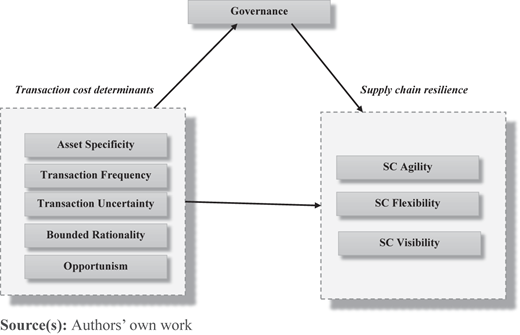
Williamson (1979) explains governance as the structures and mechanisms that organisations use to manage and coordinate transactions effectively and proposes two independent alternative governance mechanisms for organising economic activity: markets and hierarchies. Under favourable conditions, a general contractor and specialised trade subcontractors can create a stable organisational unit known as a “quasi-firm,” akin to Williamson’s (1979) concept of the “inside contracting system.” (Eccles, 1981). Hall et al. (2020) further expand that an independent third party supports the project sponsor in executing the transaction. The unique governance structures and mechanisms of controlling transactions in construction projects are reflected in their procurement choices (Tennakoon et al., 2024). Consequently, multiple procurement routes within the construction industry serve to mediate transaction cost management, including those related to SCR (Nguyen and Le, 2022). Figure 1 illustrates the conceptual relationships between SCR, TCDs, and governance.
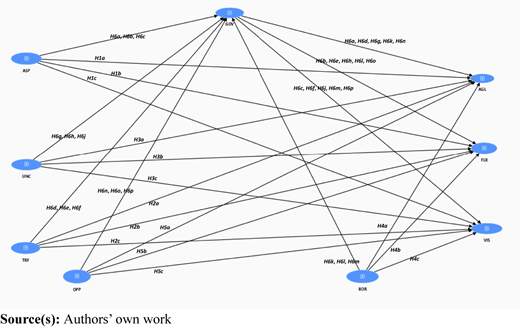
Previous studies have established that supply chain resilience (SCR) is pivotal in mitigating uncertainties across the demand side, supply side, and offsite logistics processes (Tennakoon et al., 2023; Yang et al., 2021). A comprehensive understanding of how TCDs influence the agility, flexibility, and visibility within the offsite construction supply chain forms the basis for the implementation of procurement process aimed at enhancing resilience (Tennakoon et al., 2024)Accordingly, the rationale underlying the relationships depicted in Figure 1 is elucidated, and a series of hypotheses, summarized in Figure 2, are proposed to bridge this gap in knowledge. The hypothesis development section thoroughly explains the development of the research model.
Hypotheses development
In the TCT, the determinants of transaction costs have been identified as asset specificity, transaction frequency, transaction uncertainty bounded rationality and opportunism (Williamson (1979). Governance has been discussed in this theory for its influence over these transaction costs. Therefore, governance has been considered as a mediating factor in this research paper.
Asset specificity and supply chain resilience
Asset specificity can be seen in the specialized equipment, machinery and processes required to manufacture components off-site. Asset specificity increases when equipment and processes are customized to produce specific components or modules (Steinhardt et al., 2020). Ekanayake et al. (2022) have highlighted the specific need for specialized skill profiles and fabricating facilities, leading to higher initial costs when supplying offsite built products. The supply chain could rely on a network of specialized materials suppliers, designers, and technical service providers. If these suppliers face disruptions or constraints, such as financial issues or regulatory changes, it could directly impact the supply chain’s ability to operate smoothly (Yen and Hung, 2013). If demand fluctuates or project scope changes, assets with higher specific investment may be underutilized, resulting in increased unit costs and reduced profitability (Pettit et al., 2010). Rapid technological advances can quickly render specialized equipment obsolete (Osunsanmi et al., 2022). High asset specificity means a greater risk of investments becoming obsolete, especially as the technologies evolve rapidly (Wu et al., 2022). When asset specificity is high, fewer suppliers may be available to provide the required specialized materials or components, and supplier concentration increases the risk of disruption due to supplier failure, quality issues or geopolitical factors (Tennakoon et al., 2024). As such, the following hypotheses are developed.
Asset specificity is negatively associated with supply chain resilience.
Transaction frequency and supply chain resilience
A high frequency of transactions can amplify the impact of disruptions within the supply chain. Each transaction represents a potential point of vulnerability, and disruptions at any stage can quickly propagate throughout the network, leading to delays, cost overruns, and project failures (Perera et al., 2021; Schmidt and Wagner, 2019). Similarly, managing frequent transactions requires significant resources in time, manpower, and technology (Wu et al., 2022). This allocation of resources may divert attention and investment away from activities aimed at building resilience, such as investing in redundant systems or developing contingency plans (Silva, 2021; Um and Kim, 2019). High transaction frequency may result in fragmented relationships among supply chain partners (Killen et al., 2008). Without strong collaboration and coordination, it becomes challenging to implement strategies for enhancing resilience, such as sharing resources, information, and best practices (Killen et al., 2008; Nikookar and Yanadori, 2022). Higher transaction frequency often leads to increased complexity within the supply chain (Chand et al., 2022). Each transaction introduces potential points of failure, such as delays, errors, or disruptions, which can hinder the smooth flow of materials and information in offsite construction projects (Shishodia et al., 2022). Frequent transactions can obscure visibility into the supply chain, making it difficult for stakeholders to identify potential risks and respond effectively (Pettit et al., 2019). This lack of transparency can impede proactively managing disruptions and maintaining resilience. Based on that, the following hypotheses are proposed.
Transaction frequency is negatively associated with SCR.
Transaction uncertainty and supply chain resilience
Uncertainty in transactions introduces a higher risk of disruptions throughout the supply chain. When transaction parameters such as quantity, quality, timing, or price are uncertain, it becomes challenging for suppliers and contractors to plan and execute their operations effectively (Kessler et al., 2024). This leads to longer lead times as suppliers and contractors may need to account for potential delays or changes in transaction requirements (Bildsten, 2014; Wuni and Shen, 2020). These costs may include expedited shipping, buffer inventory, or additional contractual safeguards to mitigate risk (Ramesh et al., 2022). Uncertain transactions make it difficult for supply chain partners to forecast demand and manage inventory levels accurately (Shahparvari et al., 2018). This can result in excess inventory or stockouts, which can have negative financial implications (Pettit et al., 2019). Therefore, it limits the flexibility of supply chain participants to respond to changes in demand or unforeseen events. As such, the following hypotheses are proposed.
Transaction uncertainty is negatively associated with supply chain resilience.
Bounded rationality and supply chain resilience
Bounded rationality presents challenges in the context of offsite construction SCR. This phenomenon manifests through various adverse impacts. Constrained decision-making among project managers and stakeholders may lead to suboptimal choices, stemming from incomplete analysis of available options and information, thereby failing to strengthen SCR or mitigate risks effectively (Luqman et al., 2023). Similarly, bounded rationality inhibits accurate risk assessment and management, potentially resulting in the oversight or underestimation of threats due to cognitive limitations, consequently yielding inadequate risk mitigation strategies (Wamba and Akter, 2019). However, bounded rationality is needed because, without such perception of information seeking, it could obstruct effective collaboration, precipitating misunderstandings and conflicts that undermine collaboration and resilience (Ranatunga et al., 2020). Therefore, the following hypotheses are developed.
Bounded rationality is positively associated with supply chain resilience.
Opportunism and supply chain resilience
Opportunism often leads to contractual disputes and conflicts within the supply chain. Suppliers or contractors may engage in opportunistic behaviours, such as reneging on agreements or demanding unfair advantages, which can disrupt operations and undermine the supply chain’s resilience (Shi et al., 2018). It could erode trust among supply chain partners, as they may exploit vulnerabilities or withhold information to gain an advantage (Ekanayake et al., 2021; Wuni et al., 2022) . This lack of trust inhibits effective collaboration and communication, which is essential for building resilience to disruptions (Shi et al., 2018). Cutting corners or compromising quality standards to maximize short-term gains can lead to reduced reliability of materials and components supplied within the offsite construction supply chain (Um and Kim, 2019). It can exacerbate supply chain disruptions by creating uncertainty and instability. Suppliers or contractors engaging in opportunism may fail to fulfil their obligations or manipulate supply chain dynamics for their benefit, leading to delays, shortages, or cost overruns that disrupt project timelines and undermine resilience (Bildsten, 2014). As such, the following hypotheses are developed.
Opportunism is negatively associated with supply chain resilience.
The mediating effect of governance
Governance structures can vary in their degree of flexibility and agility (Fayezi et al., 2015). Supplier contracts or collaborative decision-making processes, allow supply chain actors to adjust to evolving circumstances and emerging risks, thereby increasing the resilience of the offsite construction industry to unexpected events (Ekanayake et al., 2021). According to the TCT, the governance structure determines how decisions are made in the studied context and thus mediates the interactions and transactions, leading to enhanced SCR (Williamson, 1979). Strategies that promote trust and long-term relationships between supply chain partners contribute to resilience by fostering cooperation, information sharing, and mutual support (Shi et al., 2018). Effective governance strategies, such as long-term contracts or vertical integration, can reduce transaction costs associated with offsite construction. Uyar et al. (2021) have highlighted the mediating effect of governance on logistic performance. Similarly, the procurement process facilitates the implementation of governance strategies, which in return enable smoother interactions and transactions within the offsite construction supply chain, enhancing resilience by promoting stability and predictability (Tennakoon et al., 2024). As elaborated by Rajabi et al. (2022a), strategies such as the use of information solutions such as BIM facilitate better flexibility in addressing design changes. It improves visibility through real-time updates across the supply chain. BIM also ensures that disruptions are addressed quickly, saving both time and costs of change (Rajabi et al., 2022b). Hence, it provides a fine example of how improved governance reduces transaction costs and enhances supply chain resilience. Consequently, the hypotheses are formulated to assess how governance mediates the relationship between the determinants of transaction costs and supply chain resilience.
Governance mediates the relationship between transaction cost determinants and supply chain resilience.
Research methodology
Survey development
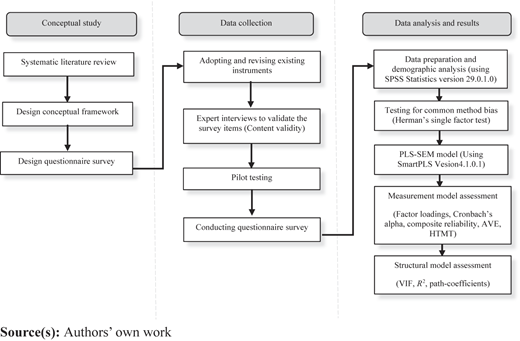
A survey is conducted to acquire data for hypotheses testing. The research design is illustrated in Figure 3. The survey items are developed, adopted, and revised from existing instruments (Sirisomboonsuk et al., 2018). This study derived survey items from previous studies because it provides considerable content validity (Kurniawan et al., 2017). A systematic literature review (SLR) was performed to identify the operating variables. A thorough search for literature was done through the title/abstract/keyword feature in Scopus from 2010 to 2023 because SCR studies are mostly available from 2009 onwards (Ponomarov and Holcomb, 2009). 20 articles were considered suitable for selecting measurement items.
Moreover, six expert interviews were conducted to ensure the suitability of the measurement items. Expert interviews ensure the appropriateness and rationality of the survey items (Ghansah and Lu, 2024b; Munianday et al., 2022). Three of the six experts were academics who had 15-, 12-, and 15 years of experience in teaching and research in construction and a minimum qualification of a doctorate. They ensured that the questions were aligned with the proposed analysis techniques and easily understandable. The remaining three experts were actively involved in the offsite construction supply chain and had 10, 12 and 20 years of experience. All questions were assessed for conformity to the theoretical definitions and redundancy to evaluate content validity. For instance, the questions designed were adopted to measure agility. The experts adjusted the measurement items to reflect the offsite construction industry, adding terminology related to offsite construction supply chain where suitable. Academic experts proposed to alter the terms “suppliers” and “partners” and to replace them with the words “supply chain partners” to maintain consistency with the measurement scales. The adjustments proposed by the experts are summarised and presented with the contextualised questions in Table A1 in Appendix.
Regarding the alignment with the complexity of the variables studied, carefully considered the cognitive load required of participants to ensure that the scale would be interpretable and would not induce response errors. A 5-point scale defined that it was complex enough to warrant multiple levels of agreement or disagreement but not so complex as to confuse respondents or detract from the clarity of the instrument (Wakita et al., 2012). Each item was pre-tested by the experts to ensure that respondents could reliably differentiate between the points on the scale and that the categories reflected meaningful differences in their attitudes toward the key constructs. Accordingly, the measurement instrument used a consistent Likert scale with 5 points (1 = “Strongly disagree”, 2 = “Disagree”, 3 = “Neither agree nor disagree”, 4 = “Agree”, and 5 = “Strongly agree”).
The sample was selected from Australia as it promotes offsite construction by recognizing it as an effective construction method that provides control, standardization, and speed compared to traditional methods (Tennakoon et al., 2024). Prefabrication amounts to only 5% of the current AUD 150 billion worth Australian construction industry, and PrefabAus is the main body representing the offsite construction supply chain members (Zhang et al., 2022).It is a non-profit organisation that supports the Australian building prefabrication industry, fostering networking and collaboration among manufacturing, building, architecture, engineering, project management, consulting, and supplier organisations (PrefabAUS, 2024). A purposive sampling approach was followed to select the respondents from a target population comprised of consultants, manufacturers, suppliers, and builders registered in PrefabAus. A pilot study was initially conducted prior to the data collection of the main study. It acted as the feasibility study designed to test the proposed method of the main study (Arain et al., 2010). The pilot study sample was excluded from the main study sample. This is known as external sampling, which avoids contamination of the main study data set (van Teijlingen and Hundley, 2002). In the main study, out of the 300 questionnaires, only 111 responses were received, of which only 97 were usable. Hence, the response rate was 32.33%. This was deemed acceptable given the small population in offsite construction compared to traditional construction methods.
Data analysis technique
The descriptive statistics and data were prepared using SPSS Statistics version 29.0.1.0 (IBM SPSS Statistics, 2024). Structural Equation Modelling (SEM) is adopted to investigate the structural relationships of the variables. Two principal approaches to SEM are covariance-based (CB-SEM) and partial least squares (PLS-SEM) (Hair et al., 2019). PLS-SEM investigates path models that rely on composite variables where the structural model is intricate, involves several constructs and where the sample size is limited due to smaller populations. (Hair et al., 2019, p. 5). PLS-SEM continues to prove its use in construction and supply chain management research because it can handle multivariate regression with latent variables (Ghansah and Lu, 2024b). Consequently, PLS-SEM was employed to test the model. There are few software solutions to conduct PLS-SEM (SEMinR package in R, WarpPLS and SmartPLS), and SmartPLS Version 4.1.0.1 was employed in this study considering its combined state-of-the-art methods (www.smartpls.com). The fundamental PLS process analyses models following three stages. The analysis involved two steps: (1) measurement model assessment and (2) structural model assessment (Munianday et al., 2022). The assessment of the measurement model is focused on determining its convergent and discriminant validity, while the robustness of the structural model is evaluated through the VIF values and the R2 values (Hair et al., 2019). The model analysis involved an iterative process of estimating latent variable scores, which iterates until either convergence is achieved or the maximum number of iterations is reached (Henseler et al., 2015). Then, R2 values and the importance of path coefficients in PLS-SEM models were anticipated using the bias-corrected accelerated bootstrapping method with a maximum of 1,000 iterations.
Results
Respondents’ profiles
The respondents had to read the background of the study and provide consent to respond by self-assessing their knowledge to answer the survey. The demographic information is shown in Table 1. Table 1 also demonstrates that project managers, operations managers, procurement managers, engineers, architects, and consultants have participated in the study. As can be seen from Table 1, of the respondents, 47.0% have 11–20 years of experience, 34.0% have 6–10 years of experience, 14.0% have more than 20 years of experience, and 5.0% have up to 5 years of experience. The respondent’s expertise and roles provide valuable insights into SCR and transaction costs by directly linking their experience in offsite construction to the specific challenges of supply chain relationships, cost structures, and efficiency gains. All the respondents are part of the offsite construction supply chain. Their background in offsite construction enables them to offer a unique perspective on how SCR practices influence decision-making and performance in the industry.
Common method bias
The measurement items were tested for common method bias (CMB). Herman’s single factor test which views the variance attributed to the measurement items against the constructs used in the study using unrotated factor analysis on a single component (Podsakoff et al., 2003). The test revealed that only 24.21% of the total variance in the current study was explained by a single factor, which indicates the lack of a dominant factor (over 50% explained total variance). Hence, common method bias is not observed in these measurement items.
Assessment of the measurement model
Convergent validity
Convergent validity, the degree to which the multiple items that measure the same concept agree, was examined in Table 2.
Factor loading, Average Variance Explained (AVE) and composite reliability (CR) were used to evaluate the convergent validity of the reflective measurement constructs (Hair et al., 2019). According to the results presented in Table 2, factors above 0.708, which was the recommended value for factor loading, were included in the final measurement model. The items measured in the study were designed to align with the scale’s levels of intensity, thus preserving both the reliability and the construct validity of the data. A reliability analysis was conducted by calculating Cronbach’s alpha to verify internal consistency. The Cronbach’s alpha coefficients of each dimension go beyond the recommended value of 0.70, which was regarded as adequate for evaluating reliability (Chand et al., 2022; Tavakol and Dennick, 2011). The results indicated that the scale is both reliable and valid for the offsite construction supply chain context. The CR value demonstrated the degree to which the indicators measured the underlying construct, and the recommended value is above 0.70 (Hair et al., 2019).The CR value ranges from 0.752–0.942 in the results of the measurement model assessment, indicating that the indicators sufficiently represent the measured constructs. AVE assess the level of variance that is attributable to its measured indicators compared to the measurement error; values above 0.7 are typically considered excellent and 0.5 are deemed acceptable (Hair et al., 2019). In the tested model, the AVE values range from 0.502 to 0.674, ensuring convergent validity. Hence, the reflective measurement model explained adequate convergent validity.
Discriminant validity
Discriminant validity evaluates how distinct a construct is from others within the structural model, contributing to the overall model fit (Hair et al., 2019). Fornell- Larcker citation had been commonly used to evaluate the discriminant validity. Henseler et al. (2015) explained that the Fornell-Larker citation does not perform well when the indicator loading of the construct differs slightly and proposed a heterotrait-monotrait (HTMT) ratio of the correlations, which should be at the threshold value of 0.90 for measurement models with conceptually closer constructs. The HTMT values in Table 3 demonstrate that none of the inter constructs correlations conform with the threshold values. Therefore, discriminant validity is observed in the measurement model.
Assessment of the structural model
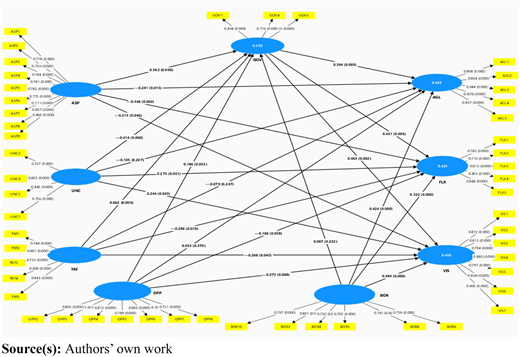
The study’s structural model was assessed for collinearity issues, the level of R2 values and the significance of path coefficients. The collinearity concerns were evaluated through the variance inflation factor (VIF), where VIF values over five raise collinearity issues, three to five are acceptable, and values must be lower or closer to three to claim that there are no collinearity concerns (Hair et al., 2019). Examination of Table 4a showed that the VIF values range from 1.171 to 2.456, confirming no collinearity issue. Then, the R2 values of the endogenous constructs were generated using bias-corrected and accelerated (BCa) bootstrapping to minimise the effect of non-normal data (Henseler et al., 2015). The R2 reflects the variance explained in each endogenous construct and measures the model’s explanatory power (Hair et al., 2019). Then, the R2 values of the endogenous constructs were generated using bias-corrected and accelerated (BCa) bootstrapping to minimise the effect of non-normal data (Henseler et al., 2015). The R2 extends from 0 to 1, where larger values represent a higher explanatory strength. R2 values of 0.75, 0.50 and 0.25 are regarded as substantial, moderate, and weak, respectively, as benchmarks for explanatory power (Henseler et al., 2015). The structural model depicted in Figure 4 illustrates the R2 values of the exogenous variables within the inner model.
The R2 values of agility, flexibility, visibility, and governance were 0.443, 0.425, 0.450, and 0.593, respectively. The results demonstrate the moderate explanatory power of the endogenous constructs measured through the model. Then, Tables 4a and 4b demonstrate the direct and indirect effects of the path coefficients. The value of the coefficient reflects how strongly the variables are related. The positive or negative sign indicates the direction of the relationships. The hypotheses about the relationships are tested using the p-values and the associated t-statistics.
Discussion
Understanding the determinants of transaction costs is critical to developing procurement strategies to enhance SCR (Tennakoon et al., 2024). The standardisation of the construction industry and the transfer of on-site activities to a controlled factory environment require improved governance measures to manage its supply chain. However, monitoring project governance has been challenging in the Australian context due to the country’s reliance on supplier and subcontractor procurement models for offsite construction. Therefore, this paper demonstrates the role of governance in supply chain agility, flexibility, and visibility in making a resilient offsite construction supply chain based on transaction cost economics through the structural model presented in Figure 4, which would be important to understand the procurement practice of offsite construction.
The results provided empirical evidence that asset specificity negatively impacts supply chain agility as hypothesized in H1a (b = −0.241, p < 0.05). Therefore, even though previous studies suggest strategies such as investing in new manufacturing facilities to enhance the uptake of offsite construction to reduce asset specificity (Fayezi et al., 2015), it should be done with care considering the possibility of reduced agility. Similarly, Australia’s extended geographical division makes it challenging to maintain buffers, store, deliver, and share prefabricated components in a contingent situation in a distant manufacturing facility. Instead, strategies such as stakeholder alignment workshops can be tested to streamline the already existing resources, which would enhance agility by reducing asset specificity. Similarly, hypotheses H1b and H1c were confirmed because asset specificity had significant negative effects on supply chain flexibility (b = −0.346, p < 0.05) and visibility (b = -0.213, p < 0.05). The results highlight the higher transaction costs associated with replacing supply chain partners in ongoing offsite projects to improve flexibility. This is because competent supply chain partners are considered specific assets to the organisation, and their replacement incurs both financial and scheduling costs.
Moreover, the results indicated that transaction frequency and transaction uncertainty of the offsite construction supply chain do not have a significant effect on supply chain agility, as hypotheses H2a and H3a suggested. (b = −0.079, p > 0.05; b = −0.105, p > 0.05). This result could be interpreted in favour of having a strategic alliance with an extensive pool of relational contracts that can be drawn if a disruption to a supply chain link occurs (Shishodia et al., 2022). Therefore, adopting such alliances could help mitigate potential disruptions and enhance overall supply chain resilience.
Similarly, transaction frequency significantly negatively affects supply chain flexibility (b = −0.296, p < 0.05) and visibility (b = −0.268, p < 0.001). Previous research underscores managing frequent transactions requires significant resources in time, manpower, and technology (Wu et al., 2022). However, labour availability, especially in regional and outer regional areas, remains uncertain and a persistent issue in the Australian offsite construction industry (Lin et al., 2022). When specialised labour and skilled professionals are recruited frequently due to disruptions, the transaction frequency increases, leading to higher transaction costs associated with making the supply chain more flexible. Therefore, strategies such as proper resource allocation, sharing information, and best practices (Nikookar and Yanadori, 2022) should be considered to improve flexibility.
Furthermore, transaction uncertainty does not demonstrate a significant direct effect on agility, which is a different result from the hypothesised relationships in H3a based on the literature. The likely explanation for the result is that the agility measures are designed to minimise the uncertainties, and when compared to the other TCDs in the structural model, transaction uncertainty is stabilised to a greater extent through the SCR measures (Wacker et al., 2016). For instance, the supply chain partners in the offsite construction industry have recognised the lack of standardization of the payment mechanisms compared to traditional construction (Ekanayake et al., 2021), which has led supply chain partners to use ad hoc approaches and minimise the effect of transaction uncertainty.
Interestingly, bounded rationality did not demonstrate a significant mediating effect from governance, as suggested in H6k-H5m. Previous research indicates that in the event of a disruption, making the optimal decision might not be possible because of the rational practices and network complexities (Chand et al., 2022; Chowdhury et al., 2019). Therefore, the most probable explanation is that despite better governance bounded rationality affects the efforts to collect sufficient information, analyse, and evaluate the outcomes of the decisions against the urgency of a decision.
Contradicting the existing view, the results indicate that the negative effect of the supply chain partners’ opportunism on supply chain agility and flexibility is insignificant (H5a, H5b). It only has a significant impact on supply chain visibility (H5c). Moreover, the mediating effect of governance on opportunism is also revealed to be insignificant (H6n-H6p). Previous literature views opportunism as a negative trait, arguing that economic transactions are based on opportunism (Cuypers et al., 2020; Huo et al., 2019). Therefore, the insignificant effect of opportunism in the Australian offsite construction supply chain is an interesting observation which deviates from the popular view of opportunism. As highlighted by (Geletkanycz and Tepper, 2012).This is a departure from earlier findings, which reveal unexpected boundary conditions, which can be considered a significant theoretical contribution. This phenomenon must be further researched in depth to understand how opportunism can be leveraged if it is not a negative trait affecting supply chain resilience.
Contributions of the study
This empirical study explored the impact of asset specificity, transaction frequency, transaction uncertainty, bounded rationality, and opportunism on SCR in offsite construction while also demonstrating how governance influences transaction costs in supply chain resilience. Scholarly manuscripts can enhance the significance of their contributions by generating new knowledge, deepening the understanding of existing concepts, uncovering unexpected findings, or addressing relevant practical challenges (Brown and Dant, 2008). In the process of unravelling the black box of relationships of the key variables, Lehtinen and Aaltonen (2020) highlight the importance of theoretical and managerial implications of the research. This section examines both the theoretical contributions and practical implications of the study.
Theoretical contribution
One obvious way to contribute to theory is to transform the research question by applying an existing theory to address a distinct question. (Makadok et al., 2018). Accordingly, this study extends the applicability of TCT to SCR research in the off-site construction industry. For instance, the study empirically demonstrates that asset specificity significantly limits supply chain agility. This contributes to TCT as well, in the form of empirical research that uses finer-grained data and surveys with more precise and direct proxies for asset specificity (Cuypers et al., 2020). Therefore, this study provides a significant contribution to TCT by corroborating the theory through empirical findings.
Moreover, the study contributes to SCR research by examining the mediating relationship of governance on supply chain resilience. Geletkanycz and Tepper (2012) suggest that findings could make a significant theoretical contribution by challenging or advancing existing theoretical understanding. In this case, it is an advancement of existing theoretical understanding by demonstrating how governance mediates the relationships between TCDs and supply chain resilience. As a previous study suggests, governance of supplier contracts clearly facilitates manufacturers’ ability to leverage their resources to improve performance (Wacker et al., 2016). The current study supplements it by demonstrating that governance mediates the relationships of asset specificity, transaction frequency, and uncertainty on supply chain resilience. The study thereby provides context to the claim by Um and Kim (2019) of the non-linear relationship of governance on performance and transaction cost advantage. This is a significant theoretical contribution to SCR research, according to (Summers, 2001), which tests a theoretical linkage between two constructs (i.e. TCDs and SCR) that have not previously been tested. Therefore, this study contributes to the potential application of TCT in strategizing governance changes in supply chain operations to enhance resilience while ensuring cost-effectiveness.
Additionally, the findings contribute by deepening the understanding of existing knowledge (Brown and Dant, 2008) by identifying the boundary condition of TCT in the offsite construction industry. For instance, several alternative views on governance that have implications for hybrids and the market hierarchy continuum have been observed with reference to TCT (Cuypers et al., 2020). The current study encourages future research to theorize and empirically investigate the governance properties of different governance alternatives in the offsite construction industry by deepening the understanding of TCT in construction. Moreover, the current study lays the foundation for studies that seek to explore strategies to enhance SCR as it outlines the effect of TCDs on supply chain resilience. For instance, further research on strategies to improve contractual relationships and trust can be conducted, informed by studies such as Shi et al. (2018), to improve supply chain resilience.
Practical implications
The findings from this study provide several practical implications for offsite construction practitioners. Asset specificity was found to significantly affect the resilience of the offsite construction supply chain. Therefore, project managers should aim to reduce asset specificity if they seek to improve supply chain agility. As highlighted in previous literature, this can be achieved by contingency planning and investing in new technologies which reduce asset specificity (Pettit et al., 2019; Wuni and Shen, 2020).
Furthermore, the study identified a significant negative relationship between transaction frequency and supply chain flexibility and visibility. As such, it is recommended that project managers focus on establishing stable, long-term relationships with supply chain partners to reduce transaction frequency. Such an approach is likely to improve operational flexibility and help mitigate the effects of supply chain disruptions, consistent with the findings of Wang et al. (2018).
Moreover, the study highlights the mediating role of governance in offsite construction. It suggests that industry policies should be revised to support a more effective procurement process, which improves governance, thereby strengthening supply chain resilience. For example, the Australian Building Codes Board (ABCB); the standard writing body for the National Construction Code (NCC) has recently published a handbook outlining compliance requirements for offsite construction (ABCB, 2024). According to (Dale et al., 2019), Australian offsite construction industry management frameworks include specific sets of steps, instructions and/or implementation guidelines. In contrast, theoretical frameworks offer new or applications of existing theories that explain relations between the actors and the outcomes. This current study is more around the application of the theoretical framework. Therefore, further research could be conducted to create a management framework for SCR, considering the theoretical framework of this study.
Considering the findings from this study into such regulatory frameworks could facilitate broader adoption of offsite construction, as it underscores the importance of governance in ensuring both compliance and resilience. Since transaction frequency is positively associated with supply chain resilience, strategies such as multi-project tender packages should be encouraged through industry policy. Influential industry bodies in Australia, such as Prefab Aus, have a critical role in advocating them. The findings of this study could provide valuable guidance to the policy making bodies to conduct further research to propose specific future industry policies and practices.
Conclusion
This study evaluates the complex relationship transaction costs of implementing SCR strategies in the offsite construction supply chain. The findings confirm that both asset specificity and transaction frequency exert a negative influence on supply chain flexibility and visibility, highlighting the need for strategic intervention to optimise these factors in the context of supply chain resilience. Specifically, the research emphasises the critical role of agility as a strategic-level measure of SCR, which is particularly affected by asset specificity and bounded rationality. This underscores the importance of efficient decision-making processes that prioritise timely responses over waiting for perfect information in the face of disruptions. The positive relationship between bounded rationality and SCR constructs further demonstrates the value of adaptive decision-making during disruptive events.
The study contributes to a deeper understanding of the structural relationships among supply chain agility, flexibility, visibility, and governance, as revealed through the structural equation model. The findings indicate that TCDs must be carefully managed to facilitate adaptive responses to disruptions. Governance, as a mediator, demonstrated moderate explanatory power in the model. This positions governance as a critical factor in reducing transaction costs and promoting effective SCR measures. By implementing sound governance structures, supported by improved procurement strategies and comprehensive procurement plans, organisations can mitigate the impact of transaction costs on supply chain resilience. The study also highlights a significant gap in the current approach to procurement planning, which is often not designed with resilience in mind, leading to elevated transaction costs during disruptive events. This points to a critical area for further research, particularly in the development of procurement strategies that integrate SCR considerations while controlling transaction costs. Future studies should explore empirical strategies to optimise procurement processes in ways that enhance SCR, reducing both operational risks and costs.
Moreover, the study acknowledges the potential biases introduced by the reliance on self-reported data such as questionnaires and the relatively low representation of respondents from client, supplier, and logistics roles. A potential limitation of the study is that the results, based on the Australian context, may not fully reflect the general conditions or practices in the off-site construction field globally. Future studies could compare the Australian context with those in different countries to assess regional variations in industry conditions, regulations, and practices. Despite these limitations, the study makes a valuable contribution to the growing body of literature on SCR by advancing the understanding of the relationship between TCDs and SCR dimensions. The results underscore the importance of aligning governance and procurement strategies with the overarching goals of supply chain resilience, offering both theoretical insights and practical implications for supply chain managers and policymakers aiming to strengthen resilience in an increasingly volatile and uncertain global environment.
The authors would like to acknowledge the Australian government’s financial support through an Australian Government Research Training Program (RTP) Scholarship for PhD studies and support from the University of South Australia.