This research examines, post adoption, the key psychological mechanisms driving the intention to continue using health and fitness self-tracking apps (health apps, in short) amongst young users (e.g., Generation Z).
It uses a mixed-method approach, combining structural equation modeling and chain mediation analyses based on survey data with thematic analysis of 21 in-depth interviews.
The study finds that general goals shape healthism, or one’s orientation towards attaining good health, leading to flow experience with the health app. Flow experience then leads to continued intention to use health apps and user satisfaction. Perceptions of the behavioural change likely to occur through the technology moderate both links. The interviews further clarify how young individuals set general goals that impact healthism; how they ‘live’ the flow experience; and the outcomes of using health apps.
This research significantly advances the understanding of the continued use of health apps, highlighting how to attain user benefits from health apps.
As such, it yields managerial and societal implications, addressing calls by different stakeholders for positive health changes amongst younger people.
By focusing on the post-adoption stage and through the combination of multiple theoretical lenses, this research breaks down the critical drivers of the continued intention to use health apps, revealing vital prerequisites for positive outcomes for young generations.
1. Introduction
Health apps (e.g., MyFitnessPal, Strava) are apps tracking and monitoring one’s health and fitness, including body weight and diet (Golden et al., 2021; Volpi et al., 2021). They are widely adopted (Koo and Fallon, 2018), amounting to 14 million downloads (Statista, 2024) and over 3.4 billion in revenues in 2023 worldwide (Wylie, 2024). This trend mirrors the global expansion of the mHealth industry, predicted to reach over $111bn in 2025 (Yan et al., 2021). No longer confined to medical domains, health apps yield several social implications (Lupton, 2018a) and are a realistic health care option to the point that it is possible to “link the discontinuance of health app use to the loss of opportunities to effectively manage one’s personal health” (Cho, 2016, p. 81). Health apps also tap into the broader discourse on digital health literacy, an extension of health literacy referring to people’s ability to access, process and internalise health-related information via digital technologies for effective health decisions (Wang and Luan, 2022).
Although they appeal to a wide range of users, deepening the understanding of specific segments more closely linked to the aims/targets of this technology is paramount (Kim and Han, 2021), forming the impetus for the present research. For instance, wellness is a key priority for younger users (e.g., Generation Z), leading a higher purchase of wellness-related products such as wearables and health tracking apps among this group (Callaghan et al., 2024). Indeed, one in four 15- to 19-year-olds and almost 40% of 20- to 29-year-olds use apps to track lifestyle (Statista, 2024). These trends reflect rises in health-conscious lifestyles and habits (Schomakers et al., 2022), especially amongst younger people, matching the aims of public bodies. For example, in the UK, the government has issued physical activity guidelines (Department of Health and Social Care, 2022) and has developed the Food Scanner App to promote healthier eating habits amongst younger generations and families. Other NHS health tracking apps emphasise promoting positive health behaviours, highlighting the increasing role of technology in public health initiatives (NHS, 2025).
Scholarly research on health apps has established that the lifecycle of this technology is considerably reduced unless there is an in-depth understanding of post-adoption behaviour (Cho, 2016). Therefore, theorising and appraising the psychological sub-functions of health apps is vital, as positive outcomes can only be obtained when use is sustained over time (Kim and Han, 2021). Moreover, according to Sampat et al. (2023) and Zhang and Xu (2020), underuse and lapsed use can jeopardise the benefits of health apps.
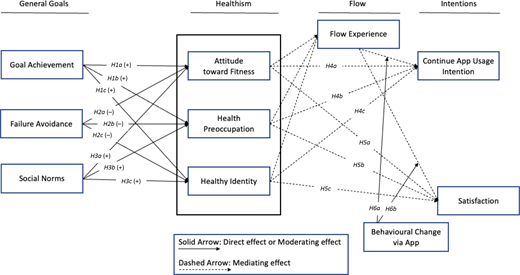
To address this important issue, the aim of the present research is to unravel the psychological mechanisms shaping the continued use of health apps post-adoption amongst younger users. It introduces and empirically tests a model that explains how to attain continued intention to use health apps, leveraging previously undisclosed links between general goals (i.e., one’s focus on attaining success in performance and avoiding failure, see Klatt and Noël, 2020) and healthism (i.e., one’s preoccupation and focus with personal health and wellbeing, see Crawford, 1980). The model also assumes that both factors start the psychological mechanisms leading to the continued use of health apps, jointly influencing flow experience. Finally, the model contends that once accounted for user perceptions of the behavioural change likely to occur via the health app, flow experience leads to continued usage intention and satisfaction with the health app.
Comprehensively, the model combines multiple theoretical lenses including: goals setting and the self-determination theory (SDT) (Deci and Ryan, 2012; Busch et al., 2022); the social norms, as part of classic attitudinal theories (Ajzen, 1991; Mollen et al., 2010); healthism (Lupton, 2013; Crawford, 2006; Anisimova, 2016); flow experience (Bilgihan et al., 2014; Santos-Vijande et al., 2022; Sampat et al., 2023); and Fogg’s behavioural model of persuasive design (Fogg, 2009, 2011; Bardus et al., 2016; Alqahtani et al., 2023). This combination significantly advances the understanding of underlying psychological mechanisms that encourage the sustained use of health apps amongst younger users, adding to research stressing the importance of micro-level aspects shaping health app users’ continuance intention, and of studying post-adoption behaviour (Cho, 2016).
Overall, while health apps offer multiple benefits (Beldad and Hegner, 2018; Flaherty et al., 2021; Stiglbauer et al., 2019), existing literature focuses primarily on adoption pre-requisites and overlooks important psychological factors that “make or break” post-adoption outcomes (Attig and Franke, 2020; Mustafa et al., 2022; Vaghefi and Tulu, 2019). Moreover, most studies adapt technology acceptance models (e.g., Angosto et al., 2020; Barbosa et al., 2023). In contrast, the present study explains how user journeys with health apps unfold for younger demographics; and how to prevent user journeys (Lemon and Verhoef, 2016; Stocchi et al., 2022) from being prematurely interrupted. To this end, the combination of multiple theories unpacks previously conflated and/or underexplored psychological aspects that characterise young users’ journeys with health apps. The proposed framework also originally links goals setting and healthism as crucial determinants of flow experience; and expands the outcomes considered beyond continued use, while accounting for the dynamics of behavioural change perceptions. The conclusions derived are enriched using mixed methods, involving a survey (n = 565 health apps’ users, 35% between 18 and 25 years of age), as well as 21 semi-structured in-depth interviews with Generation Z users of health apps (Creswell and Clark, 2017) to complement and expand the quantitative findings, addressing the following research questions:
How do users set goals with health apps, and what are the motivations and influences to do so, above and beyond healthism?
How do users ‘live’ the flow experience, and how does it relate to the app itself (e.g., functions and features) and to app usage behaviour?
What are the behavioural outcomes of using the health apps?
Considering that health apps are instrumental in preventative public health efforts targeting young people, this research has significant practical and policy relevance for different stakeholders. For example, speaking to the significance of encouraging proactive health management (Alevizou et al., 2024; Spence et al., 2024), this study outlines critical factors needed to ensure that health apps suitably match how young individuals set health goals, and critical dimensions of healthism. It also provides actionable guidelines for the provision of superior flow experiences to young users. Above all, a key implication of this research is that health apps for younger users are not just for information generation and self-understanding; the end goal is a continuum of learning and self-improvement, rendering what Lupton (2018a) calls “agentive capacities suffused with affect”. Indeed, in line with the European Commission framework on digital health literacy, this study suggests that, for younger users, health apps meet quite closely the requirements for information and data literacy; communication and collaboration; digital content creation; safety, and problem-solving or learning resulting from the sustained use of the technology (Carretero et al., 2015).
2. Background
2.1 Health apps post-adoption
Research on post-adoption outcomes of health apps (i.e., studies with intention to continue using health apps, or continued use as the dependent variables) has evolved on the backbone of technology adoption research (Angosto et al., 2020; Barbosa et al., 2023; Chiu and Cho, 2021; Damberg, 2022; Dhiman et al., 2020; García-Fernández et al., 2020; Saheb, 2020) and studies underscoring health apps’ potential for behavioural change (Cowan et al., 2013; Gabbiadini and Greitemeyer, 2018; Soni et al., 2021). Several post-adoption studies indeed maintained a strong focus on technology uptake frameworks (see Yousaf et al., 2021; Schomakers et al., 2022), while others expanded the conceptual lens. For example, Cho (2016) proposed a post-acceptance model combining elements of the expectancy theory and technology acceptance, recognising the importance of expectation confirmation and satisfaction (see also Li et al., 2019; and Wang et al., 2021). Yuan et al. (2015) focused on the analysis of performance and effort expectancies, social influence and other facilitating conditions, including habit. Others considered factors from environmental psychology theory (Kim, 2021) or the psychological continuum model (Tu et al., 2019); and some scholars focused on uses and gratification theory (Chen, Hsiao and Li, 2020), task-technology fit (Yu and Chen, 2019), gamification (Feng et al., 2020) and user experiences (Vaghefi and Tulu, 2019). Although the studies mentioned so far established the importance of exploring psychological mechanisms underpinning health app users’ continued intention (see Beldad and Hegner, 2018), the understanding of more complex psychological mechanisms is rather limited. Particularly lacking is research outlining “micro-mechanisms”, such as perceptual and emotional responses to using this technology that determine continued intention and increase marketability and effectiveness of this type of technology (Cho, 2016).
Amongst the studies that delved into micro-level psychological factors shaping the sustained use of health apps, most lacked a holistic account of dynamic, evolving experiences characterising post-adoption behaviour. For example, there is research based on motivation theory and network externalities, showcasing the importance of self-efficacy (Luo et al., 2021; Zhang and Vaghefi, 2022); a few studies also integrated cognitive, environmental and behavioural factors (e.g., Kim and Han, 2021). Yan et al. (2021) drew on the Information Systems Continuance model to integrate social and psychological factors that predict continued intention to use health apps. Specifically, Yan et al. considered social norms and typical technology adoption drivers (usefulness and ease of use), flow experience (Csikszentmihalyi, 2014) and behavioural change techniques. In contrast, the present research proposes the following conceptual innovations.
2.2 General goals, social norms and healthism
According to Lupton (2013), healthism captures one’s daily thoughts and actions constantly directed by the superordinate goal of obtaining and maintaining good health, denoting positive attitudes towards health and fitness as well as individuals’ preoccupation with health and their healthy identity (Anisimova, 2016; Crawford, 1980, 2006; Robson et al., 2022). Healthism appears in debates on food, healthy eating, wellbeing and obesity (Lee and MacDonald, 2010; Silchenko and Askegaard, 2020), with past research focusing on incentivisation to monitor health (Rich and Miah, 2017; Sharon, 2017). Relevant to the aims and focus of the present study, according to Alevizou et al. (2024) digital technologies such as health apps allow young people to monitor their eating and fitness practices, creating streams of information about one’s body, habits, preferences and social relationships. This stream of information makes individuals “datafied” – i.e. “…actively engaging their bodies and minds as they are ‘becoming-with data’…” (Lupton, 2013, p. 9). The stream of information, and how it becomes internalised by users of digital technologies also has strong correspondence, again, with the broader notion of digital health literacy (Patil et al., 2021).
In essence, healthism entails prioritising health and fitness, and it is based on goal-directed motivation whereby individuals “define themselves on part by how they succeed or fail in adopting healthy practices” (Crawford, 2006, p. 402). As described in the SDT (c.f. Deci and Ryan, 2012) goals’ setting is linked to motivational processes underpinning one’s behaviour and, when applied to health-related behaviours (e.g., the sustained use of health apps), it ascribes the need for a continuum of exercise regulation modes and exercise specific basic needs satisfaction that can be influenced by environments and other factors that support the basic need satisfaction in an individual (Busch et al., 2022, p. 225).
Accordingly, Wang et al. (2021) indirectly explored goals setting through selected elements of the SDT such as the need for competence, autonomy and relatedness – all assumed to enhance intrinsic motivation.
Expanding from this reasoning, regulatory focus in motivation and goal setting (Higgins, 1998) is particularly relevant in shaping health behaviours (Pillai et al., 2019). The theory suggests that individuals may focus on achieving success in performance (promotion focus) or on avoiding failure (prevention focus) (Grant and Dweck, 2003; Klatt and Noël, 2020; Liang et al., 2013; Lockwood et al., 2002). For instance, someone who focuses on goal achievement is likely to pursue a healthy identity, or to possess a positive attitude towards health and fitness, being positively preoccupied with their health (Kay and Grimm, 2017). In contrast, someone with a focus to avoid failure (Hanke et al., 2019) will be less preoccupied with health, resorting mostly to strategies such as avoiding unhealthy food instead of eating healthy or exercising (Gomez et al., 2013; Pillai et al., 2019; Shimul et al., 2021). Hence:
Goal achievement positively impacts (a) one’s attitude toward health and fitness, (b) health preoccupation and (c) healthy identity.
Failure avoidance negatively impacts (a) one’s attitude toward health and fitness, (b) health preoccupation and (c) healthy identity.
Working alongside goals’ setting in shaping healthism are social norms. Social norms denote informal modes of acceptable behaviour whereby opinions and actions are influenced by the social context one belongs to (Chung and Rimal, 2016). Social norms can also be theorised as collective attitudes or individuals’ perceptions of the attitudes and behaviours of others (Cialdini and Trost, 1998). They play a crucial role in initiating the uptake of behaviours and ideas (Ajzen, 1991), including app usage journeys (Hsu and Lin, 2016), and can encourage healthy behaviours and one’s identity (McAlaney and Jenkins, 2017; Minton et al., 2018; Mollen et al., 2010). Specific to health apps, social influence has been included in adaptations of technology acceptance frameworks (e.g., Yuan et al., 2015) and network externalities effects (Luo et al., 2021) – e.g. the number of network users or additional benefits such as access to online discussion groups. Health apps often include social networking and interaction with other users (Gui et al., 2017; Yan et al., 2021; Zhang and Xu, 2020), which shape and reinforce health/fitness attitudes and encourage a preoccupation with health. In fact, social support and socio-demographic contingencies are known to impact digital health literacy resulting from advanced technologies, with younger users showing greater enhancements than older counterparts (Wang and Luan, 2022). Moreover, Alevizou et al. (2024) highlight that interaction and socialisation with friends in the learning and use of health apps is very common among young people and often leads to a preoccupation with fitness and health. Thus:
Social norms positively impact (a) one’s attitude toward health and fitness, (b) health preoccupation and (c) healthy identity.
2.3 Flow experience
Bilgihan et al. (2014) and Zhou (2013a) describe flow as a dynamic state and holistic sensation arising when one acts with total involvement, or full immersion in an activity. The experiences inherent to that activity then become seamless, without interruption. According to Yang and Lee (2018), flow implies a reduction in awareness, filtering out irrelevant perceptions and thoughts; it also implies a reduction in self-consciousness, making an individual more responsive to goals and feedback. Thus, in a flow state, a person’s awareness is narrowed to the point of reducing self-consciousness (Gao and Bai, 2014), leading to seamless responses and positive outcomes (Hsu and Lin, 2023).
For health apps, according to El-Hilly et al. (2016), flow experience can become the perceived reward (or value) users seek; it channels individuals’ preoccupation with health (healthism), leading to positive health behaviour and leaving the user satisfied and wanting to continue using the app. Gómez-Rico et al. (2023) refer to flow experience as underlying perceptions and predispositions, and a marked inclination towards health improvement (i.e., healthism). Flow experience is therefore central to iterative user experiences with health apps post-adoption (see also Santos-Vijande et al., 2022; and Vaghefi and Tulu, 2019).
Flow experience reflects perceived enjoyment/fun, perceived control and attention, and, in line with theoretical links describing classic precursors of behaviour (Chung and Rimal, 2016), it requires health app users to have “clear goals, immediate feedback, and challenges” (Sampat et al., 2023, p. 197). Furthermore, at the heart of flow lies the subjective experience arising from perceived challenges and perceived skills (Liao, 2006). When skills are balanced to the challenges, one can engage clear goals due to immediate feedback, finding the activity intrinsically rewarding (Kim and Ko, 2019; Knaving et al., 2015). In this instance, flow is akin to intrinsic motivation encouraging an activity without reinforcement, cognitively “locking-in” an individual (see Kim et al., 2020), or integrating users via improved digital health literacy (Ji et al., 2024).
Overall, as a reflective second order factor of its own (see Zhou, 2013b; Huang and Liao, 2017; Sampat et al., 2023), flow experience can directly impact continued health usage intentions and satisfaction. There is also theoretical and practical value in ascertaining flow experience’s mediating role in the link between healthism and the continued use of health apps and app satisfaction – see Ameen et al. (2021), An et al. (2021) and Rodríguez-Torrico et al. (2023). Therefore:
Flow experience mediates the impact of (a) one’s attitude toward health and fitness, (b) health preoccupation and (c) healthy identity on continued health app usage intention.
Flow experience mediates the impact of (a) one’s attitude toward health and fitness, (b) health preoccupation and (c) healthy identity on satisfaction with the health app.
2.4 Perceptions of behavioural change
Behavioural change underpins psychological processes instrumental to behaviour modification (Bardus et al., 2016). For health apps, behavioural change refers to users’ perceptions of the extent to which an app helps individuals to change or improve their behaviour (Yan et al., 2021) – e.g. setting goals, or monitoring and reviewing progress. When users perceive they can change their behaviour via health apps, user satisfaction and continued app usage intention are strengthened (Yan et al., 2021). Based on this logic, perceptions of behavioural change potential can reinforce the impact of flow experience on continued intention to use the app and satisfaction with the app (see Gao and Bai, 2014). This assumption matches the behavioural model of persuasive design by Fogg (2009, 2011), according to which the combination of motivation, ability and a trigger above the “activation” threshold are essential to behaviour change. In this instance, the focus shifts to understanding the extent to which users feel the technology can nudge them to form and sustain behaviours, as opposed to explaining their behaviours (Alqahtani et al., 2023).
Based on these premises, flow experience is indicative of the fulfilment (or satisfaction) originating from actual vs expected user experiences, and the summative product of discrete experiences (Kim and Ko, 2019). This final assumption matches the overarching research aim of improving the understanding of user journeys with health apps (Bilgihan et al., 2015; Hsu and Lin, 2023; Stocchi et al., 2022) and the need to address the “dearth of research examining how expectations from fitness applications impact people’s post-adoption consumption and health satisfaction” (Yousaf et al., 2021, p.1). It also broadly matches Wang et al.’s (2021) view on satisfaction with health apps as a reflection of feelings and/or feedback resulting from prior app usage, or post-adoption feedback. Accordingly:
User perceptions of the health app’s potential for behavioural change positively moderate the impact of flow experience on (a) continued health app usage intention and (b) satisfaction with the health app.
Figure 1 portrays the resulting model, which this study evaluates using a mixed methods approach. The widely accepted benefits of mixed methods include the possibility to enhance the validity, accuracy and completeness of findings, assisting the creation of new knowledge (McKim, 2017). Mixed methods also increase confidence in the integration of conclusions. To this end, this research considers quantitative and qualitative methods as complementary, or as a continuum in the attainment of the intended research aims (DeCuir-Gunby, 2008). Specifically, instead of treating the quantitative and qualitative analyses as sequential, this research strives for triangulation (DeCuir-Gunby, 2008) and presents qualitative findings after quantitative outcomes based on the assumption that to fully understand social phenomena there is a need to explore human agency (Baškarada and Koronios, 2018).
3. Methods
In line with past research (e.g., Creswell and Clark, 2017), the quantitative component of this study entailed analyses of online survey data collected via Prolific from individuals in the UK (n = 565). The sample was screened to ensure participants had experience with health apps (e.g., Strava, MyFitnessPal) typically used to track/monitor health behaviours (eating/fitness), given that prior experience is a prerequisite for measuring post-adoption constructs such as flow and continued usage intention (Bhattacherjee, 2001). Participants were young adults aged between 18 and 24 (35% of the sample were between the ages of 18–20) and 65% females, matching statistics of health apps users (Statista, 2024). This demographic profile enhances the ecological validity of the findings, as it reflects the actual user base of health monitoring apps (Chandrasekaran et al., 2025; Leuzzi et al., 2025). Moreover, the focus on younger generation matches their status as a key priority in public policy initiatives addressing pressing global health issues and obesity. Above all, this demographic group faces unique health risks, which has prompted targeted efforts to enhance wellbeing through interventions and policies, often relying on technology (House of Commons Library, 2023). Younger adults also represent an ideal population for studying the relationship between flow experiences and behavioural change perceptions, as they typically exhibit higher engagement with gamified elements in health apps (Hamari et al., 2015). They are also more likely to experience flow states during digital interactions (Issabek et al., 2025). Finally, other authors followed a similar approach (e.g., Kim and Han, 2021), stressing the importance of understanding the psychological drivers of sustained use of health apps for specific groups.
All respondents indicated that they currently used health apps (that track/monitor health) with more than 28 different health apps being mentioned (e.g., Apple’s Fitness, MyFitnessPal, Strava, Fitbit’s App etc.) linked to both several wearable devices (e.g., Fitbit) and smartphones (iPhone and Samsung phones). In addition, 57% of the sample indicated they had been using health apps for more than a year – a time frame matching the post-adoption stage and integration of the app in daily habits (Stocchi et al., 2022).
All measures included in the survey were derived and/or adapted from existing research using seven-point Likert scales. The items used to capture goal achievement/failure avoidance were based on Lockwood et al. (2002). Healthism and flow experience measurements were adapted from Anderson and Cychosz (1994), Bhattacherjee (2001), Lockwood et al. (2002) and Yan et al. (2021). Perceptions of the behavioural change likely to occur via health app, continued app usage intention and satisfaction were derived from Yan et al. (2021); and the items for the social norm were based on Francis et al. (2004) and Venkatesh et al. (2012). The choice of these measures was based on two key factors: i) “face validity” resulting from the same or similar measures being used and/or adapted in relevant research contexts (e.g., the flow experience measurement); and ii) being drawn from highly cited studies with evidence of robust empirical use across a variety of research problems (e.g., the social norm measure).
The qualitative study involved semi-structured in-depth interviews with 21 health apps users from the UK, all between 18 and 24 years of age (Table 1). The suitability of interviews given the aims of this study is further corroborated by their use in research on food-tracking apps by Lupton (2018b), where the method has been used to understand sociocultural and biographical contexts for specific user groups of interest.
The qualitative data were analysed via thematic analysis following Braun and Clarke’s (2022) six steps, with a deductive orientation to data “shaped by existing theoretical constructs” (p. 16). In the extraction and refinement of the themes, the focus was on further exploring the proposed model, expanding quantitative results and addressing key questions.
All interviewees claimed they had been using health apps to track/monitor their health between six months and four years, and at least three times per week. Hence, all participants were, again, at the post-adoption stage. The recruitment approach included a combination of snowballing and purposeful sampling (Patton, 2002), with interview invitations posted on social media and personal networks. All interviews lasted about one hour each; were conducted online, recorded and transcribed verbatim.
4. Results
4.1 Quantitative results
4.1.1 Validity and reliability analyses.
Table 2 shows the results of the confirmatory factor analysis. With respect to reliability, the Cronbach’s alpha and composite reliability (CR), except flow experience (Alpha = 0.540), all values were above the cut-off value of 0.7 (Fornell and Larcker, 1981). While this Alpha value is below the conventional threshold, it is acceptable for research involving complex psychological constructs (Hair et al., 2021) not necessarily highly correlated (Sampat et al., 2023). Furthermore, due to the recent criticism of Alpha’s lower bound values underestimating true reliability, researchers are encouraged to rely on CR (Peterson and Kim, 2013). All factor loadings were above 0.6, confirming the items were good measures of the underlying constructs (Hair et al., 2021). Regarding convergent validity, the average variance extracted (AVE) values stood above 0.5, which is below the corresponding CR values. The Fornell–Larcker criterion (see Table 3) was met too, confirming that each construct is distinct from others in the model (Fornell and Larcker, 1981) since the square root of AVE for each construct was greater than its correlations with other constructs. The occurrence of negative correlations in Table 3 simply indicates a theoretically justified inverse relationship between constructs; it does not undermine discriminant validity (square roots of AVE exceeded absolute values). Finally, the Heterotrait-Monotrait (HTMT) ratio (Henseler et al., 2015) (see Table 4) returned values below the 0.9 threshold (Hair et al., 2021), confirming discriminant validity.
4.1.2 Structural model assessment, chain mediation and moderator analyses.
To assess the structural model and test the hypotheses, this study used partial least squares structural equation modelling (PLS-SEM) and SmartPLS 4.0 (Ringle et al., 2024). PLS-SEM was deemed appropriate given the focus on prediction and on the identification of key drivers of continued health app usage (Hair et al., 2019). The proposed model also included both reflective and formative constructs (e.g., healthism), which PLS-SEM handles without introducing issues that typically arise with covariance-based SEM (Sarstedt et al., 2016). Moreover, PLS-SEM is well-suited for complex models with multiple mediating and moderating relationships (Henseler et al., 2016), as when examining psychological mechanisms in technology user experiences post-adoption (Benitez et al., 2020).
All inner model VIF values were below 1.4, well under the threshold of 5, indicating no multicollinearity (Sarstedt et al., 2017). R-square values were 0.317 (continued app usage), 0.314 (satisfaction), 0.140 (attitude towards fitness), 0.109 (health preoccupation) and 0.108 (healthy identity), demonstrating satisfactory explanatory power (Cohen, 1988). Q-square values from blindfolding (Stone, 1974) exceeded zero for all endogenous constructs, confirming satisfactory predictive power as well (Hair et al., 2021) – see Table 5.
The path analysis revealed mixed support for the hypotheses regarding the antecedents of healthism dimensions (see Table 4). In line with H1a–c, goal achievement had a significant positive effect on attitude towards fitness (β = 0.330, p < 0.001), health preoccupation (β = 0.335, p < 0.001) and healthy identity (β = 0.236, p < 0.001). H2a–c was partially supported: failure avoidance significantly influenced attitude towards fitness (β = −0.109, p = 0.001) and health preoccupation (β = −0.117, p = 0.003), but had no significant effect on healthy identity (β = 0.040, p = 0.177). Similarly, there was partial support for H3a-c: social norms significantly impacted attitude towards fitness (β = −0.083, p = 0.015) and healthy identity (β = −0.162, p < 0.001), but not health preoccupation (β = −0.008, p = 0.433).
In terms of the mediation hypotheses (H4a–c, see Table 4), to capture the strength of the indirect path between variables, this study used bias-corrected confidence intervals at 95% (Hayes and Scharkow, 2013). Specifically, positive values indicate that the mediator transmits the effect of the predictor to the outcome, and the confidence intervals excluding zero confirming statistical significance of these indirect pathways (Preacher and Hayes, 2008). In line with H4a and b, it emerged that flow experience partially mediated the impact of attitude towards fitness and health preoccupation on both continued health app usage intention and satisfaction. This result suggests that flow experience transforms users’ general fitness attitudes and health concerns into engaging, immersive experiences that make app usage more meaningful and rewarding. H4c was also supported, with flow experience fully mediating the relationship between healthy identity and the outcome variables – an outcome suggesting that users with stronger health-oriented identities are more likely to experience flow states, which in turn enhances app engagement and satisfaction. It is nonetheless worth noting that although the mediation effects through flow experience were significant, relatively weak effect sizes emerged. Hence, additional mediating or moderating factors not explored in the model tested might be at play.
Further analysis of chain mediation effects revealed broader support for the proposed conceptual model. Of the 18 tested chain mediation paths (not hypothesised, see Table 4) linking goal achievement, failure avoidance and social norms through healthism dimensions and flow to outcome variables, 16 showed significant effects. For example, the path from failure avoidance through attitude towards fitness and flow experience to continued usage intention demonstrates how reduced anxiety about failure allows users to develop more positive fitness attitudes; this, in turn, leads to deeper engagement and sustained app usage. Similarly, the path from goal achievement through health preoccupation to flow experience and satisfaction illustrates how clear personal goals enhance health awareness, creating conditions conducive to flow experiences, ultimately increasing user satisfaction. Interestingly, social pressure can undermine the development of health identities, reducing flow experiences and subsequent app engagement. This negative impact might reflect a “reactance” response to others’ expectations (Dillard et al., 2023), further corroborating social norms’ established role in shaping health attitudes and behaviours (Minton et al., 2018).
Regarding the moderation hypotheses (H6a–b), results revealed significant but contrary to expected effects (see Table 4). Perceptions of behavioural change via the health app negatively moderate the relationship between flow experience and continued health app usage intention (β = −0.126; T-value= 3.122; p-value = 0.002) as well as satisfaction (β = −0.094; T-value= 2.235; p-value = 0.026).
These findings suggest that individual perceptions of behaviour change likelihood weaken the positive impact of flow experiences on continued app usage intention and satisfaction – an outcome that contrasts assumptions from SDT (Deci and Ryan, 2012) and goal-setting theory (Locke and Latham, 2006), and suggests more complex dynamics might be at play. For example, this outcome seems more closely aligned to Hsiao et al.’s (2016) observation that, if users feel they have already attained their goals, perceived achievement can sometimes diminish continued engagement. Similarly, Hamari et al., (2015) noted that once users perceive sufficient progress towards health goals, motivation for continued app usage might decrease as the instrumental value of the app diminishes. This result can be also explained based on Bhattacherjee’s (2001) study, concluding that users who perceive substantial behavioural change may feel they have completed their journey with the app, reducing the need for continued engagement despite positive flow experiences.
4.2 Qualitative results
4.2.1 Goals, social norms and healthism.
Inferences on the importance of setting goals with health apps were drawn by asking interviewees about how they track their health habits (e.g., eating and exercising) and exploring perceptions of the process as well as of specific functions of health apps. Two main overarching themes emerged: the role of apps in assisting goal achievement and healthism and the integration into the wider social context.
Respondents highlighted a wide range of goal setting practices specific health app functions (e.g., calorie counting, fitness timer etc.) can assisted with. For example, Jack and Milly used calorie counting functions:
I’m trying to gain weight, build muscle and stuff in the gym, so I was tracking[…] I was putting in [the app] everything I was eating. So, I knew how much[…] how many calories I was eating[…] how much protein I was eating. I knew that I was eating the right number of calories to build muscle. (Jack).
So, basically, you have to be in a calorie deficit. […]. So, I was just trying to make sure every day that I was doing that, and it worked, I lost quite a lot of weight quite quickly. (Milly).
Other participants mentioned that health apps assist in achieving healthier lifestyles and self-improve, confirming the connection between goals’ setting, health identity and healthism. Ava, for instance, claimed that the apps helped her improve her personal and professional skills over time:
I think because I constantly want to get better. And I’m in a sort of a tier three team now in England. And I want to be able to push into the second maybe even top tier, so I constantly want to better myself or better my last performance. (Ava).
Key app functions mentioned included numbers, reminders, nudges, visuals and comparison tables. As Sienna explained:
Maybe it’s because the numbers are low, I feel less productive, because I feel I’m not doing anything that day. Because it’s what has been quite a big thing since I was young. So, if the numbers are low, that means I haven’t been exercising or moving around that much on that day. (Sienna).
In this context, apps also shape a mindset where health and personal productivity become intertwined, broadly matching the notion of healthism, reinforcing self-monitoring and incremental progress. Overall, these conclusions are also consistent with the key determinants of digital health literacy, especially in terms of general improvement of one’s skills in the acquisition, retention and use of health-related information for more effective health decisions (van Kessel et al., 2022).
In terms of the second theme (i.e., apps integrated within the wider social context), participants discussed using health apps in conjunction with a range of other lifestyle activities, such as joining local communities, gym memberships, school activities and family and friends’ practices. For example, interviewees noted the importance of interactive and social app functions. As Leo explained, other people like personal trainers can motivate one to use these apps to achieve goals:
[…] But it wasn’t really effective or anything like that and once I had a personal trainer, it’s sort of […] I don’t know her recommendations and things like that, they sort of motivated me to like actually do it properly and like the advice was better to follow than just reading it in like articles on the Internet you know? But having that personalised input gave me the motivation to use the app properly. (Leo).
Considering again how these matters are explored when examining digital health literacy, there is a clear correspondence with young people’s ability to “control, adapt and collaborate” communication about health with others in online environments (van Kessel et al., 2022).
When setting healthy lifestyle goals in general, interviewees also seemed influenced by families, friends, teachers. For instance, most participants looked at their immediate environment and publicly sources (e.g., online influencers, health experts and advisors etc.) for inspiration and while figuring out their own pace, preferences and directions. As Noha explained:
I’d say a part of [using the app] was from the education that kind of made me aware of it in the first place. Another part was obviously seeing my mum wear one […]. And the third part was just my own […] after I knew what it could do, I then want to take my own initiative and learn more about it myself. (Noha).
Arthur, Jack, and Robbie were all involved in friendship or online groups. Leo also mentioned data about one’s progress are often shared through social media:
It’s more like because when you’re on social media and things like that, it’s always the steps that get talked about (Leo).
This conclusion echoes with recent research on digital health literacy resulting other advanced technologies, like social media, where it has been argued that platforms can facilitate as well as limit affordances of technologies used for health purposes (Merga, 2025).
4.2.2 Flow experience.
When describing flow experience, most participants mentioned the importance of setting goals, being in the “right mindset”, reflecting on performance data and reward and feedback app mechanisms. As such, flow experience is a result of the interplay between the individual, contextual and object-related functions, reflecting three overarching themes: preconditioning flow, app mechanisms as facilitators and interrupters of flow, and contextual influences on flow. For example, Robbie stated:
I feel like if anything it’s a good thing. Like, it’s self-discipline really[…] So yeah, I, I can see how maybe for some, it can cause anxiety, this or that, just the pressure they put on themselves. But if you’re in the right mindset, I feel like it’s a good thing. (Robbie).
Similarly, Poppy said:
I think it’s like a knife’s edge, it can go either way quickly, depending on your whole mindset before, during and after. (Poppy).
The interviews also revealed that further exploring specific app functions and features prolongs the flow state. For example, participants outlined app tracking features, visual data and feedback systems for keeping them in the flow, stressing the importance of accurate app tracking functions (e.g., measurements and statistics), reliable feedback and reward mechanisms (e.g., closing circles, receiving rewards for reaching targets etc.). Celine was particularly enthusiastic about the motivational effect of visual data:
I was like just telling my friends about it, so I was like “I did 23,000 steps the other day!” because I thought it was quite impressive [….] obviously like steps isn’t the most important thing. But I think it’s just something I like to challenge myself with and like try and do as many as I can just motivating me to move more and then I feel like I’ve had a productive day. (Celine).
Most participants stressed the importance of app features such as competitions, sharing data and receiving feedback. As Ava recalled:
[…] and everyone involved in the Facebook group was kind of like a community like encouraging other people on and congratulating people on what they’ve done that day. (Ava).
Similarly, Jack mentioned:
[…] I did lots of competitions with my [friends]… every now and again we’d look and say “Oh look. I’ve done more steps than you today!” and that would make someone else want to do more. So, it was always kind of a bit of competition there (Jack).
In contrast, Ella pointed out that having visual feedback can potentially work against the healthy lifestyle goals by creating anxiety and interrupting flow:
[…] and like visual to be able to see it and like that kind of thing. But then sometimes, obviously, when I hadn’t done it, and you’ve gone on and on, not, like complete, it was a bit demotivating in that sense. But then obviously, then it motivated you to do it more, because it was there to tick off. (Ella).
A few interviewees added further context to why and how flow experience can be interrupted, attributing it primarily to app characteristics and app types. For example, Olivia stated about her own progress with her goals:
Yeah, um, so once I lost my stone, it was kind of plateaued. So, for me, I went, I went from doing really well and having a lot of progress to suddenly being on this plateau that I just couldn’t seem to break. And so, for me, that was really frustrating, because I wasn’t seeing any changes. And I think once you stopped seeing those changes, it’s a lot harder to motivate yourself, […]and I went through a phase where it got really, I kept feeling like, is it even worth it? Because it doesn’t seem to work? (Olivia).
A few participants also explained that the effort needed with some healthy eating apps was a challenge, as they had to remember to constantly record food consumption. For example, Daisy recalled:
The reality of that [recoding food consumption] happening each day it was far off, it was never correct […] it just wasn’t convenient, […] it wasn’t motivating it wasn’t convenient or easy, like it was easy I guess you just had to type what type of food you ate and how much you eat of it, but sometimes they didn’t have the right foods […] like when I used to just eat lunch at school, but I didn’t know how much pasta they put in here. I don’t know what, how much stuff they put in, so I used to guess sometimes.” (Daisy). Others highlighted that health app can become repetitive. For instance, Jack stated: I think I got a bit bored of it because they haven’t changed [the app]. Nothing has really changed (Jack).
4.2.3 Perceptions of health apps’ role for behavioural change.
Most participants mentioned health apps played an educational role, allowing them to know more about their body and healthy practices; yet, past a certain point, some interviewees claimed they could no longer see value in health apps whereas others seem to enjoy feeling in control of their own behaviour and habits. As Daisy explained, the apps can contribute to self-awareness and self-reliance:
MyFitnessPal, I don’t use it as much anymore. Ah, that’s because I feel like I have a […] I understand my body enough now to know without having to weigh everything out and stuff like that. (Daisy).
Similarly, Poppy said:
I think in the beginning, they got me on, you know, the right track. But now, I feel like I’ve gotten to a point where I can I do it by myself. (Poppy).
These conclusions also suggest that one’s competence with the digital technology itself (digital literacy) and with health (health literacy) do not simply add to one another: depending on the user’s levels of digital and health competences, they provide different affordances (see Arias López et al., 2023).
Nevertheless, most participants claimed to have benefited from the apps as it helped them attain desired behaviours. For example, Celine, reported enjoying having daily routines under control:
I just think like routine, like productivity, kind of… if that makes sense. That just helps to keep me organised and feel… not organised […] but just feel like I’ve got everything under control! (Celine).
4.3 Synthesis of findings
Table 6 summarises both quantitative and qualitative results, confirming three key dimensions shaping continued usage of health apps among younger individuals. Firstly, the relationship between goal achievement and healthism emerges as foundational, strongly supported by both methodological approaches. The quantitative analysis demonstrated significant links between goal achievement and healthism dimensions (attitude towards fitness, health preoccupation and healthy identity); while qualitative insights revealed the specific mechanisms through which these goals manifested, particularly through app functions like calorie counting and fitness timing. Users’ narratives further explained how app functionalities directly supported goal formation and achievement processes. At the same time, social norms showed complex relationships in the quantitative analysis, and qualitative findings explained these through interactions with personal trainers, family and friends.
Goal achievement and motivation patterns demonstrated clear flow-on effects. Both quantitative and qualitative analyses revealed a progression in users’ engagement with health apps. The path analysis showed how goal achievement positively influenced healthism dimensions, while qualitative insights clarified the specific mechanisms of this influence through features like tracking, reminders and feedback. The micro-level psychological dimensions of these mechanisms became particularly apparent in the qualitative data, revealing how users’ mindset played a crucial role in maintaining motivation and achieving flow states. Besides yielding clear links with digital health literacy and its multifaceted nature encompassing psychological factors, actions and habits of individuals using digital platforms or devices (Ji et al., 2024), these findings align with Lupton (2018b) and the idea of ‘human-app assemblages’ resulting from affordances (i.e., users’ assumptions of what they will do with the app and the extent to which the app can deliver on agential capacities). Based on this premise, as it emerged in the interviews, biometric data, cues, notifications and badges can make users feel good if they demonstrate the goals set are attained but can also demoralise users when this is not the case (Lupton, 2018a).
Finally, both methodological approaches identified key facilitators and barriers to continued app usage, above and beyond bio-pedagogical factors (Lupton, 2018b) and feedback mechanisms (Wang et al., 2021). The quantitative findings demonstrated significant mediation effects of flow experience, while qualitative data explained the psychological forces behind these effects. Moreover, interfering effects emerged from both analyses. From the quantitative analysis, a negative moderation of flow experience on continued usage emerged. From the qualitative results, the same surfaced through identified barriers such as data input burden and progress plateaus. The qualitative data also uniquely revealed important temporal dimensions of continued app usage, showing how users evolved from tracking to intuitive understanding and transitioned from app dependence to self-sufficiency. This progression, not captured in the quantitative component of this study, clarified important psychological mechanisms that onset long-term and shape sustained use.
5. Discussion, implications and limitations
Comprehensively, this study provided a detailed conceptual and empirical exploration of the underlying psychological factors that characterise continued use of and satisfaction with health apps amongst younger generations. The discovery of specific mechanisms linking how young people set goals, navigate key aspects of healthism and experience a flow state significantly advanced research and practice associated with this type of technology. This study also linked these mechanisms to perceptions of behavioural change likelihood, the influence of others (social norms) and specific determinant of long-lasting user journeys. The resulting implications for theory and practice are as follows.
5.1 Theoretical contributions
Prior to this study, limited research investigates flow for health apps (Yan et al., 2021 being an exception) and, despite recent findings by Gómez-Rico et al. (2023), there seems to be limited links with all-encompassing aspects of one’s relationship with health and/or healthy lifestyles like healthism. In addition, previous research primarily focused on continued intentions, overlooking crucial factors such as satisfaction and the interplay with perceptions of behavioural change. The present research has therefore significantly advanced post-adoption research on health apps by identifying the effects of specific, micro-level psychological factors in driving continued use intention and satisfaction with health apps amongst young people – a critical segment, who’s wellbeing prominently features in governments’ agendas and interventions.
Besides strongly repositioning the focus of health apps’ research on the post-adoption stage of user journeys, this study has addressed a set of limitations from existing research on the topic. Firstly, it delved into the factors that onset both sustained use of and satisfaction with health apps. To this end, this study delineated conceptual links with setting and achieving one’s goals, going further than Tu et al. (2019), Kim (2021) or Feng et al. (2020) and Molina and Sundar (2020). For example, healthism is now more explicitly introduced to research on health apps, establishing links with other areas of research touching of healthy eating and habits. This study has also put forward a viable operationalisation of healthism in the context of health app user journeys, which includes attitude towards fitness, health preoccupation and healthy identity, indirectly contributing also to healthism research.
A second theoretical advancement concerns flow experience. Although Yan et al. (2021) has already drawn scholarly attention to flow experience in relation to sustained health app usage, this study has expanded understanding of its mediating effects, linking the concept to important psychological pre-requisites (e.g., goals achievement, social norms and failure avoidance). This study also shed more light on factors shaping continued use intention and satisfaction with health apps that have not been adequately addressed in. It unravels the impact of perceptions of behavioural change likelihood, clarifying the evolution from tracking to intuitive understanding and, therefore, the transition from app dependence to self-sufficiency. Accordingly, it was possible to uncover crucial mechanisms that can either facilitate the continuation of health apps’ user journeys post-adoption or interrupt them. The natural further expansion of these conclusions thus includes the possibility to establish clearer links with the effects of health apps on young people’s digital health literacy.
Finally, this study makes a secondary contribution to mobile apps marketing research, confirming that the understanding of crucial psychological mechanisms within each step of user journeys is vital (see Stocchi et al., 2022).
5.2 Practical implications
The outcomes of the present study yield useful practical implications for health apps design and upkeep (e.g., updates and upgrades) by app developers, app managers and those managing the brand attached to the app. Firstly, based on the results of this research, it seems vital to design and maintain health apps that intuitively tap into goals setting, tracking and achievement. Given its resonance with healthism, jointly shaping flow experiences, this aspect is a key driver of sustained use of health apps amongst young people. To this end, health apps should focus on design features and functionality choices apt to support users as they set, monitor and attain goals and holistically tap on the key facets of healthism. For example, features promoting positive attitudes towards fitness and technical solutions that enable young people ‘keeping in check’ health preoccupation and/or enacting healthy identities are desirable. The motivational mechanisms these features can trigger call for a degree of ongoing customisation to prevent negative perceptions (e.g., demoralisation or the impression of failing) and complacency (e.g., repetitiveness, or attributing lesser value to unaccomplished targets), maximising agential capabilities (Lupton, 2018b). Secondly, health apps need functionalities that facilitate the internalisation of social norms resulting from interactions with other young users (e.g., social media and community access features), or other individuals influencing one’s health journey (e.g., personal trainers, family and friends). Finally, the empirical outcomes of this research point out the need to look beyond health apps’ bio-pedagogical scope: flow experiences can be rather “fickle” and premature interruptions of user journeys post-adoption can occur due to perceptions of limited self-efficacy, stalling of progress or even simply the “burden” resulting from data entry. In contrast, when the health app renders positive flow experiences, there can be a virtuous feedback loop linking past and future use; even though at times, young users might still move on from the app (e.g., due to reaching self-sufficiency). Based on this same logic, it is also possible to draw implications for user retention. More specifically, although self-sufficiency could be seen as a positive outcome of the iterative journey of young users, it could be positively “challenged” with simple approaches such as using reminders of the app’s relevance and helpfulness for maintenance and further improvement of health outcomes over time, or for exploring different health goals to the ones originally attained.
Given health apps’ pivotal role in policy setting exercises and public campaigns aimed at improving the health of younger generation via technology, these implications can be further extended. For example, governments and other relevant bodies could follow these guidelines to engage in the development and deployment of health apps (something we witnessed, to an extent, during the global pandemic of COVID-19 with location tracking apps – see Zhang and Vaghefi, 2022). There is also scope for linking the outcomes of this research to existing frameworks for digital health literacy itemising its critical dimensions (e.g., Carretero et al., 2015), or to new frameworks emerging for other digital technologies – see the work of Merga (2025) on TikTok. If, in contrast, the focus of the social initiatives and/or policies is the promotion of health apps amongst younger generations, this research highlights the most important aspects that should be clearly conveyed to promote broader healthy lifestyle narratives and attitudes on a scale amongst young people.
5.3 Limitations and future research directions
While offering a robust account of psychological mechanisms shaping the sustained use of health apps, one potential limitation of the present research is that it focused on the app overall, as opposed to examining specific functions, even though some insights related to this matter emerged in the in-depth interviews. To this end, future studies should also delineate more explicitly between health apps with the primary focus on health/wellbeing tracking (such as steps or diet apps) vs. health apps with specific functions relevant to the management of medical or health conditions. In addition, the samples deliberately included younger users, reflecting trends in health apps usage on a global scale as well as public policies. Therefore, future research should replicate this study with more varied samples or comparisons across age brackets. Comparisons across different cultural backgrounds, or contextual/personal variables or technological preferences are also needed.
From a theoretical point of view, the framework proposed and validated lends itself to further modifications for longitudinal research directly ascertaining behavioural change through multiple waves of data collection, rather than inferring it from cross-sectional perceptions. In a similar vein, future studies could adopt a similar approach using actual app usage logs, or panel data. Moreover, the construct of healthism could be further expanded to capture changes resulting from specific circumstances and/or the introspective nature of it – e.g., in terms of likely links to self-expression, self-esteem and, more generally, the extension of the self (the device/technology becoming part of one’s identity). Finally, future research could use this study as a template to examine user journeys for other types of apps linkable to behavioural change such as finance or education apps.