Brand names are crucial to a brand’s identity, in building brand resonance and creating customer-based brand equity. This study aims to introduce religious brand names as a novel brand name creation strategy.
Four experiments and one field study explore the effects of religious brand name priming on brand morality perceptions and self-brand connection, and the downstream consequences on consumer responses including brand attitude, purchase intention and actual behavior.
Religious brand names prime brand morality perceptions, subsequent self-brand connection and downstream effects, for those consumers with more religiosity. The relationship between brand morality and self-brand connection following exposure to religious brand names attenuates when more religious consumers place low importance on moral self-identity.
This study is limited to the USA and UK, which are predominantly Christian cultures. This study also looks at brand names only, rather than other religious symbols used in brand logos.
This research is of practical importance as numerous examples of religious brand names such as Worship, Prophet and Heaven in the marketplace suggest that marketers use religious words in the creation of brand names. Marketers and brand managers should consider religious brand names in their brand name creation strategies to enhance self-brand connection and positive consumer responses to the brand.
This research advances brand name creation research in marketing by examining the effectiveness of various religious brand names beyond religious agents (e.g. angel), such as religious objects and practices (e.g. altar, worship and gospel) or spiritual terms (e.g. heaven).
Introduction
Religion remains a defining force in global identity and behavior. By 2050, nearly 60% of the world’s population is expected to identify as either Christian (31%) or Muslim (30%), while only 13% will be religiously unaffiliated (Pew Research Centre, 2022). This widespread religiosity has led marketers to incorporate religious elements into brand names such as The Gospel (whisky), Worship Supplies (streetwear), Prophet (consultancy), Altar (lifestyle goods) and Heaven (Marc Jacobs clothing line), to evoke consumer interest. While religious cues can enhance brand appeal by signaling morality and virtue (Desai and Kouchaki, 2017; Ilicic et al., 2021), they also carry reputational risk. Brands such as Burger King, Nike and Meat & Livestock Australia have faced backlash for perceived misuse or appropriation of sacred symbols or language (Meade, 2017; Usunier and Stolz, 2014; Gauthier and Martikainen, 2013). This research challenges the assumption that religious consumers inherently respond negatively to religious branding due to misuse. Instead, we predict that religious brand names can foster self-brand connection by priming perceptions of brand morality, particularly among more religious consumers.
This research advances the fields of brand priming and moral identity in two key ways. First, prior work on religious brand name priming has narrowly focused on religious agents – terms referencing religious or divine beings (e.g. saintly, godly) – in limited contexts, such as food product health perceptions (Ilicic and Brennan, 2023). However, religious words and cognitions encompass a broader scope. They may reflect institutional objects or practices of religion (e.g. altar, worship and gospel), or abstract spiritual concepts relating to individual relationship to the sacred (e.g. faith, miracle and heaven) (Ritter and Preston, 2013). This broader use of religious language in branding presents a critical and underexplored area of study. Second, we extend moral identity research into the branding domain by showing how moral self-identity shapes consumer responses to religious brand names. While previous studies have linked moral identity to ethical and prosocial behavior (Reynolds and Ceranic, 2007; Aquino et al., 2009; Winterich et al., 2013; Burton and Vu, 2021; Williams et al., 2022; Demasi and Voegtlin, 2023; Yan et al., 2023), they have not examined its role in branding. We advance moral identity research by highlighting the moderating role of moral self-identity in consumer responses to religious brand names. By revealing how congruence between moral self-identity and brand morality perceptions strengthens self-brand connections, and how incongruence can attenuate them, this study bridges a critical gap between self-congruity theory and moral identity.
Across five studies, this research investigates the effects of religious brand names on brand morality perceptions, self-brand connection, and downstream outcomes such as brand attitudes, purchase intentions and actual behaviors. By integrating experimental and field evidence, this research provides convergent evidence into the mechanisms and boundary conditions that shape the effectiveness of religious brand naming strategies. We provide evidence that religious brand names enhance brand morality perceptions only for consumers with more religiosity (establishing a boundary condition of the effect; Study 1). We further show that religious brand names serially prime brand morality perceptions and self-brand connection, with downstream consequences on brand attitude, purchase intention and actual behavior, only for consumers with more religiosity (Studies 2 and 3). We demonstrate that the relationship between religious brand names on brand morality perceptions and subsequent self-brand connection attenuate for those with low moral self-identity (Study 4). Finally, we illustrate our religious brand name priming effect in the field using real-world, Google search behavior (Study 5).
Conceptual development
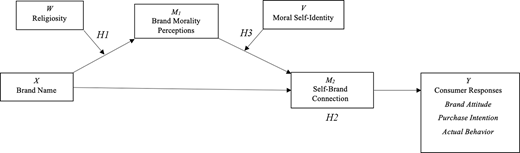
We examine and build on our conceptual framework in our conceptual development (see Figure 1). We first examine research on priming in branding and religious priming in particular and draw on associative network theory and spreading activation to provide an explanation for how religious brand names prime brand morality perceptions. Second, we explore the self-brand connection and moral self-identity literatures and use self-congruity theory to predict the relationships between religiosity, brand morality and self-brand connection.
Semantic priming and associative network theory of memory
Drawing on associative network theory of memory, semantic priming leverages the interconnectedness of concepts in memory to influence consumer perception and behavior (Collins and Loftus, 1975). When a concept (e.g. a brand) is activated, it triggers a spreading activation process, activating similar or semantically related concepts in memory (Meyer and Schvaneveldt, 1971; Anderson, 1983; Collins and Loftus, 1975; McClelland and Rumelhart, 2020; Seidenberg and McClelland, 1989; Hutchison, 2003). This can lead to the activation of brand-related associations, such as attributes, benefits or emotions, which can, in turn, influence consumer judgments and choices. For example, priming the attribute “powerful” can increase preference for mouth wash brand Listerine over competitor brand Scope (Parise and Spence, 2012). Similarly, the brand name KIA can prime the car product category when paired with the semantic associate “tire” (Coane et al., 2015). Semantic primes, such as packaging (Labroo et al., 2008), logos (Belboula and Ackermann, 2021) and colors (Baxter et al., 2018), can influence consumer preferences and perceptions of brands.
Importantly, semantic factors play a crucial role in brand name design. Semantic factors in brand names can significantly impact consumer perception and behavior. Brand names can evoke specific meanings and associations, influencing how consumers process and remember information (Schmitt et al., 1993; Robertson, 1989). For instance, the sound of a brand name can prime certain attributes, such as heaviness or lightness, which can impact product category fit and consumer preference (Lowrey et al., 2003; Pavia and Costa, 1993; Baxter et al., 2014; Luna et al., 2013; Pogacar et al., 2021). In addition, phonesthemes, homophones and pseudohomophones can activate related semantic meanings, influencing consumer judgments and purchase decisions (Davis and Herr, 2014; Baxter et al., 2017; Costello, Walker and Reczek, 2023; Brennan et al., 2024). While research on priming in branding is extensive, the specific role of religious brand name priming in shaping consumer perceptions and behaviors remains largely unexplored. Existing research on religious priming has primarily focused on its impact on individual morality, neglecting its potential influence on branding strategies and consumer responses.
Religious priming and morality
Research on religious priming has extensively explored how exposure to religious cues, such as words (e.g. “sacred” and “God”) or images, influences moral behavior. Morality serves as a critical foundation for assessing ethicality and guiding actions (Wei et al., 2024). It involves evaluating human character, behavior and decisions within social contexts, distinguishing right from wrong and good from evil (Yu, 2016). Religious priming has consistently been shown to reduce unethical behavior and enhance moral decision-making. For instance, recalling the Ten Commandments diminishes the likelihood of cheating (Mazar et al., 2008), while exposure to depictions of deities, such as Krishna, Jesus or Buddha, reduces unethical workplace conduct (Desai and Kouchaki, 2017). Similarly, reminders of a punitive god discourage both theft (DeBono et al., 2017) and dishonesty (Shariff and Norenzayan, 2011). Religious primes also foster positive moral behaviors, such as increased honesty (Randolph-Seng and Nielsen, 2007) and greater charitable giving (Shariff and Norenzayan, 2007). In consumer behavior, moral religious symbols like angel imagery are found to curb indulgent behavior (Ilicic et al., 2021). God or religious salience decreases interest in self-improvement products (Grewal et al., 2022) but promotes a more positive response to failure when accompanied by recovery (Hyodo and Bolton, 2021). Religious priming is also found to attenuate negative word of mouth in everyday service failure encounters among more religious consumers, by reducing sensitivity to violations of fairness norms, which in turn enhances forgiveness (Casidy et al., 2021). This body of research underscores the powerful influence of religious priming in promoting moral conduct and reinforcing moral values across various domains.
A meta-analysis of religious priming studies reveals a distinction in prosocial behavior responses between individuals based on their level of religiosity (Shariff et al., 2016). Religiosity can be defined as the degree to which beliefs in specific religious values and ideals are held and practiced by an individual (Vitell, 2009). Specifically, those with more religiosity exhibit pronounced effects from religious priming, demonstrating significantly greater prosocial behaviors when exposed to religious cues. In contrast, individuals with less religiosity or nonbelievers remain unaffected by such priming, as evidenced by studies showing no measurable increase in prosocial actions for this group (Benjamin et al., 2016; Rand et al., 2013; Shariff et al., 2016). These findings underscore the pivotal role of religiosity in determining the effectiveness of religious priming, with believers being highly responsive, while nonbelievers are largely resistant to its influence. This differentiation highlights the need to consider individual belief systems when evaluating the broader impact of religious priming on behavior.
We propose that religious brand names activate perceptions of brand morality, a concept central to consumer evaluations of a brand’s goodness. Research shows that consumers perceive brands as ethical when they do not engage in brand misconduct (Brunk and de Boer, 2020). Brands that violate moral expectations risk severe backlash and anti-brand behaviors, including boycotts and reputational damage (Romani et al., 2015). Failures in moral branding, such as hypocrisy or greenwashing, erode consumer trust and highlight the critical importance of aligning brand practices with societal moral expectations (Szabo and Webster, 2021). As such, we define brand morality as the alignment of a brand’s values and actions with societal principles of right and wrong (Yu, 2016). This process is rooted in anthropomorphism, which explains how consumers assign human traits to nonhuman entities, such as brands (Guthrie, 1993). We argue that religious brand names evoke moral brand associations in the cognitive associative networks of more religious individuals, as religious concepts are intrinsically linked to moral values in their mental schema (Shariff and Norenzayan, 2007; Desai and Kouchaki, 2017; Ilicic et al., 2021). However, we suggest that these effects are not universal. Evidence shows that individuals with less religiosity are largely unresponsive to religious priming because they lack the cognitive associations needed to connect religion with morality (Shariff et al., 2016; Reddish and Tong, 2023). For less religious individuals, morality is often perceived as independent of religious constructs, rooted instead in secular, personal or universal principles (Epstein, 2010; Norenzayan, 2014). Religious cues lack the cultural or personal relevance to trigger moral associations for these consumers and, as a result, religious brand names are unlikely to evoke perceptions of morality. As such, we argue that the ability of religious brand names to prime brand morality perceptions depends critically on the religiosity of the consumer. We predict that religious brand names activate perceptions of brand morality, but only for individuals with more religiosity. Formally, we hypothesize:
Religious (nonreligious) brand names will prime heightened (weakened) brand morality perceptions for consumers with more religiosity.
Morality, self-brand connection and downstream consequences
Consumers use brands to fulfill self-definitional needs, using them to construct their self-identity and desired self-image (Belk, 1988; Escalas, 2004). Brands can possess images and associations that resonate with consumers’ sense of self, allowing them to enhance or reinforce their identity (Dolich, 1969). For example, consumers prefer brands that possess personalities that are similar to, or congruent with, their own (Phau and Lau, 2001). According to self-congruity theory, consumers feel more connected to a brand when there is a match between the image of a brand and the consumer’s self-identity (Sirgy and Su, 2000; see Sirgy et al., 2016 for meta-analysis; see Kolańska‐Stronka and Singh, 2024 for a literature review). This alignment strengthens consumer-brand relationships including self-brand connection (Harrigan et al., 2018; Li et al., 2021) and brand attachment (Malär et al., 2011; Rabbanee et al., 2020), resulting in favorable brand attitudes, preferences, choices and behavior, such as purchase intentions, brand loyalty, brand advocacy, brand trust and brand engagement (Hosany and Martin, 2012; Van der Westhuizen, 2018; Das and Roy, 2019; Naletelich and Spears, 2020; Chen et al., 2022; Shimul and Phau, 2023). Incongruity between a brand and a consumer’s self-concept generates dissonance and psychological discomfort, threatening their beliefs about the self (Sirgy, 1986; Sirgy, 2018; Kolańska‐Stronka and Singh, 2024), and can lead to negative consumer-brand relationships, including brand hate (Islam et al., 2019). Consumers associate themselves less, or perceive high incongruence, with brands that they perceive to be unfavorable and that they reject (Sprott et al., 2009; Wolter et al., 2016).
Building on this theoretical foundation, we propose that religious brand names prime heightened perceptions of brand morality specifically among more religious consumers, leading to stronger self-brand connections and more favorable consumer responses. Religiosity shapes core cognitive schemas, sensitizing individuals to interpret religious language and symbols as cues for moral meaning (Shariff and Norenzayan, 2007; Ilicic et al., 2021). This sensitivity is grounded in the foundational role of religious teachings in promoting moral values, such as fairness, compassion and honesty, which are often internalized as central to one’s self-concept (Strohminger, Knobe, and Newman, 2017; Reddish and Tong, 2023). When more religious consumers encounter a religious brand name, it activates these deeply ingrained associations, creating a sense of alignment between the brand’s perceived morality and their own religious identity. This perceived self-congruity enhances self-brand connection and promotes positive downstream outcomes including favorable attitudes, purchase intentions and behavior.
In contrast, consumers with less religiosity are not as likely to associate religious brand names as moral because they do not view religious cues as inherently meaningful or virtuous. For these individuals, moral judgments stem more from secular or personal belief systems than from religious frameworks (Norenzayan, 2014; Graham et al., 2011). As such, religious brand names fail to activate moral associations or resonate with their self-concept, leading to perceived incongruity. This lack of alignment undermines self-brand connection and reduces the likelihood of favorable brand responses. As such, we hypothesize:
Religious (nonreligious) brand names will prime heightened (weakened) brand morality perceptions for consumers with more (less) religiosity and subsequently strengthen (weaken) self-brand connection, resulting in positive downstream consequences on consumer responses.
Moral self-identity and self-brand connection
Drawing on self-congruity theory, we argue that the alignment between a consumer’s moral self-identity and their perception of a brand plays a critical role in shaping self-brand connections. Moral self-identity comprises a set of moral traits (e.g. compassionate, honest, kind and friendly) that are central to self-concept (Aquino and Reed, 2002). Moral self-identity is founded on Erikson’s (1964) theoretical definition of an identity, which is rooted in the core of one’s being, and involves being true to oneself in action. Research finds that moral identity is stable over time and results in maintaining consistency between conceptions of the moral self and behaviors (Aquino and Reed, 2002; Ramos et al., 2024). For example, research finds that when moral self-identity is activated, consumers identify with a targeted brand and resent a rival brand more if presented in an unfair narrative (Alvarado-Karste and Kidwell, 2019). Other research proposes that moral identity influences sustainable consumer behaviors (White et al., 2019), donations (Fajardo et al., 2018; Shang et al., 2020) and green advocacy (Zhang et al., 2024).
More religious individuals may place greater importance on moral self-identity due to moral traits often framed as reflections of one’s religiosity and alignment with divine expectations, reinforcing their significance in personal identity (Graham et al., 2011). In addition, religiosity is associated with a structured framework of moral guidelines, which provides clarity and stability in defining and maintaining a moral self-concept (Reddish and Tong, 2023). Conversely, more religious individuals may place low importance on moral self-identity for several reasons including externalized morality, in which more religious individuals might see morality as dictated by divine authority or religious doctrines rather than as an intrinsic part of their self-concept (Graham et al., 2009), or religious teachings encouraging humility and discouraging self-righteousness, leading individuals to downplay their own moral self-identity as an act of modesty (Exline and Martin, 2005).
We predict that the congruence between a consumer’s religiosity, moral self-identity and perceptions of brand morality critically shapes their self-brand connection. For consumers with more religiosity, religious brand names are more likely to activate moral associations because religious cues align with their deeply internalized moral frameworks (Shariff and Norenzayan, 2007; Strohminger et al., 2017; Reddish and Tong, 2023). When these consumers also place high importance on moral self-identity, the perceived morality of the brand reinforces their self-concept, resulting in a strong sense of congruence and a deeper self-brand connection. However, not all highly religious individuals prioritize moral self-identity equally. For those who place lower importance on moral self-identity, whether due to externalized morality (e.g. viewing morality as dictated by religious authority) or religious humility (e.g. downplaying personal virtue to avoid self-righteousness) (Graham et al., 2009; Exline and Martin, 2005), this congruence is weaker. As a result, even if the brand is seen as moral, it does not meaningfully reinforce their self-concept, thereby attenuating the impact on self-brand connection.
In contrast, consumers with less religiosity are not as likely to interpret religious brand names as moral, as they do not associate religious language with moral meaning (Norenzayan, 2014; Graham et al., 2011). For these consumers, religious cues fail to activate moral cognitive schemas, resulting in low or no perceived brand morality. Without this initial perception, moral self-identity becomes irrelevant in the evaluation process, as there is no foundation for either congruence or incongruence with the brand’s moral associations. Consequently, moral self-identity does not meaningfully shape self-brand connections for less religious consumers. Based on this reasoning, we propose the following hypothesis:
Religious (nonreligious) brand names will prime heightened (weakened) brand morality perceptions for consumers with more (less) religiosity and subsequently weaken self-brand connection when consumers place a low importance on moral self-identity.
Overview of studies
We examine the relationship between religious brand names on brand morality perceptions and subsequent self-brand connection and downstream consequences on consumer responses (i.e. brand attitude, purchase intention and actual behavior). We investigate religiosity and moral self-identity as moderators of this relationship. Our conceptual framework is summarized in Figure 1. Study 1 examines the relationship between religious brand names (X) and brand morality perceptions (M1) and the moderating role of religiosity (W). It is proposed that religious brand names are more likely to activate brand morality perceptions than nonreligious brand names, only for consumers with more religiosity; demonstrating a boundary condition of the effect. In Study 2, the moderated serial mediation model between religious brand name (X), brand morality perceptions (M1), moderated by religiosity (W) and self-brand connection (M2) is explored, as well as its downstream consequences on consumer responses (Y; attitude and purchase intention). The conceptual framework posits that religious brand names strengthen self-brand connection as they heighten brand morality perceptions for those with more religiosity, which creates self-congruity. We also propose that strengthening self-brand connection through religious brand names results in positive downstream consequences in terms of brand attitude and purchase intention. In Study 3, we suggest that religious brand names (X), prime brand morality perceptions (M1) for those with more religiosity (W) and subsequent self-brand connection (M2) resulting in actual behavior (purchasing tickets in a lottery; Y). In Study 4, moral self-identity (V) is examined as a moderator of the relationship between brand morality and self-brand connection. We expect that exposure to religious brand names (X) will heighten perceptions of brand morality (M1) for consumers with more religiosity (W), resulting in weaker self-brand connection (M2) when consumers place a low importance on moral self-identity (V), which creates self-incongruity. In Study 5, we examine real-word data in the field to explore the effect of religiosity on consumer search for brands that adopt either a religious or nonreligious brand naming approach.
In designing our studies, we strategically selected religious words directly from Ritter and Preston’s (2013) work to serve as our religious brand names. This seminal research provides a robust and validated foundation for examining religious cognitions, ensuring that the chosen words are strongly associated with religious concepts across diverse cultural contexts. To enable a meaningful comparison and to isolate the effects of religious brand names, we systematically identified nonreligious synonyms for these words using the dictionary. These neutral terms maintained similar general meanings but were deliberately chosen to lack explicit religious connotations. To ensure the rigor and validity of our stimuli, we conducted a manipulation check in each study to confirm that the religious brand names were consistently perceived as religious, compared to the nonreligious synonyms.
Study 1
Study 1 tested the effect of religious brand names on brand morality perceptions, along with the conditional effect of religiosity. Specifically, we proposed that religious brand names, as opposed to nonreligious brand names, would heighten perceptions of brand morality only for consumers who are high in religiosity.
Brand name appeal and product congruence pretest
We conducted a pretest to ensure that the appeal of the brand name and brand name-product congruence would not confound the results of Study 1. A sample of 90 participants from the USA and UK (36 male, 53 female and one other/not specified; MAge = 41.94, SDAge = 13.09) was recruited through Prolific to participate in the pretest. All participants were over the age of 18.
In a between-subjects design, participants were randomly allocated to evaluate one of the two brand names included in Study 1: Heaven (n = 46) or Sky (n = 44). On the first page, participants were asked to rate the appeal of the brand name (seven-point; adapted from Caprioli et al., 2023; What is your opinion of the brand name [Heaven/Sky] for an air freshener: not appealing-very appealing). On the next page, participants were asked to rate the degree to which they believed the brand name (Heaven/Sky) was congruent with the product, air freshener, using six, seven-point items drawn from Bigné et al. (2012; seven-point; incongruent-congruent, incompatible-compatible, meaningless-meaningful, not complementary-complementary, does not go together-does go together, and illogical-logical; Cronbach α = 0.924). We also collected age (open response) and gender (male, female and other/not specified) information, along with participant religiosity (Brown, 1962; e.g. Evil is a reality, strongly disagree-strongly agree; Cronbach α = 0.897).
ANCOVA models were estimated with brand name appeal and brand name-product congruence as separate independent variables. Religiosity was included in the models as a co-variate. Results showed no difference between the two conditions with respect to brand name appeal [F (1, 87) = 1.67, p = 0.200, η2 = 0.019; MHeaven = 4.52, SDHeaven = 1.49; MSky = 4.91, SDSky = 1.56] and brand name-product congruence [F (1, 87) = 0.83, p = 0.363, η2 = 0.008; MHeaven = 4.66, SDHeaven = 1.08; MSky = 4.94, SDSky = 1.22]. Importantly, religiosity did not moderate these effects, suggesting that evaluations of brand appeal and fit were not systematically influenced by individual differences in religiosity. Taken together, these results indicate that Heaven and Sky were perceived as equally appealing and congruent with the air freshener product, regardless of participants’ religiosity levels. Thus, any differences observed in Study 1 can be attributed to the religious semantic content of the brand names, rather than differences in general appeal or perceived fit. As a result, the selected brand names were deemed appropriate for Study 1.
Participants
We conducted an online experiment with 247 participants from the USA. Participants were recruited through the research panel Mechanical Turk. All participants were over 18 years of age. English as a first language was used as an inclusion criterion via both MTurk prescreen criteria and a screening survey question as per other brand name priming research (e.g. Brennan et al., 2024). Once we applied our inclusion criteria, our sample included 217 participants (122 male, 95 female; MAge = 35.67, SDAge = 11.00).
Procedure
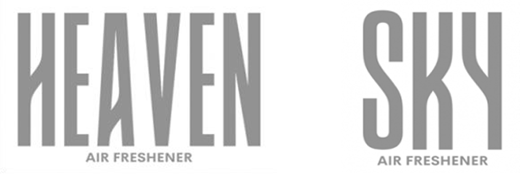
In a between-subject design, participants were randomly allocated to one of two experimental conditions: religious brand name (Heaven; n = 109) or nonreligious brand name (Sky; n = 108). Participants were shown a logo for a fictitious brand of air freshener. Looka Logo Maker was used to create the mock brand logos (see Appendix 1). On the following page, participants were asked to rate their perceptions of brand morality using three seven-point items from Ilicic et al. (2021; immoral-moral, evil-good, wrong-right; Cronbach α = 0.859). On the next page, participants were asked to rate brand name religiosity using three seven-point items adapted from Casidy et al. (2021; The brand name is associated with: religion, God, faith; Cronbach α = 0.959). We also collected age (open response) and gender (male, female and other/not specified) information, along with participant religiosity (Cronbach α = 0.897). On the final page, participants were thanked for their participation.
Common method variance
Study 1 included only two measured variables, brand morality perceptions and brand name religiosity. Statistical tests for common method variance (CMV) were not conducted, as such tests are less appropriate when the number of measured variables is limited (Fuller et al., 2016; Baumgartner et al., 2021). To address potential concerns about CMV, we implemented several procedural safeguards. The independent variable (religious brand name) was manipulated rather than measured. In addition, we used varied item formats (i.e. semantic differential and Likert scales) to reduce response bias. Together, these measures make it unlikely that CMV significantly influenced the findings of Study 1.
Manipulation check
To test the effectiveness of the religious brand name manipulation, an ANCOVA model was estimated with brand name religiosity as the dependent variable, and participant religiosity as a co-variate. Results showed a significant main effect of brand name [F (1, 214) = 37.02, p < 0.001, η2 = 0.147], irrespective of participants own religiosity [F (1, 214) = 81.98, p < 0.001, η2 = 0.277]. As desired, participants perceived the religious brand name, Heaven, to be more religious (MReligious= 5.33; SDReligious = 1.47) when compared to the nonreligious brand name, Sky (MNonreligious = 3.89; SDNonreligious = 1.87). The manipulation was therefore deemed successful.
Results
We expected that for those with more religiosity, a religious brand name would enhance perceptions of brand morality (H1). We tested the effect of brand name on brand morality perceptions, along with the moderating role of religiosity using the PROCESS macro (Model 1, n = 10,000; Preacher et al., 2007). A direct effect was not observed for brand name (b = −0.61, t = 1.42, p = 0.124), however, a significant direct effect was found for religiosity (b = 0.23, t = 3.71, p < 0.001). A significant interaction was observed between brand name and religiosity (b = 0.23, t = 2.63, p = 0.009). When examining the conditional effects (Johnson–Neyman) of religiosity, results showed that the effect of brand name on brand morality transitioned to significance when religiosity was greater than 4.00.
Discussion
Study 1 demonstrates that religious brand names enhance perceptions of brand morality for those with more religiosity. While Study 1 demonstrates that a religious brand name can influence perceptions of brand morality, what effect does brand morality have on a consumer’s connection with a brand, along with their subsequent consumer responses? Study 2 seeks to replicate and build on the findings of Study 1 through examining outcomes of brand morality perceptions following exposure to a religious brand name.
Study 2
Study 2 examines consequences of brand morality perceptions following exposure to a religious brand name. Specifically, we explore self-brand connection as an outcome of brand morality, along with downstream consumer responses; attitude towards the brand and purchase intention.
Brand name appeal and product congruence pretest
A pretest was undertaken to ensure brand name appeal and brand name-product congruence did not confound the results of Study 2. A sample of 85 participants from the USA and UK (32 male, 53 female; MAge = 41.12, SDAge = 12.96) was recruited through Prolific to participate in the pretest. All participants were over the age of 18.
In a between-subjects design, participants were randomly allocated to evaluate one of the two brand names included in Study 2: Prophet (n = 41) or Oracle (n = 44). Procedures followed those used in Study 1, with participants asked to rate the appeal of the brand name along with the degree to which they believed the brand name (Prophet/Oracle) was congruent with the product, deodorant (Cronbach α = 0.942). We also collected age, gender and participant religiosity.
ANCOVA models were estimated with brand name appeal and brand name-product congruence as separate independent variables, religiosity was included in the model as a co-variate. Results showed no difference between the two conditions with respect to brand name appeal [F (1, 82) = 2.75, p = 0.101, η2 = 0.032; MProphet = 2.76, SDProphet = 1.73; MOracle = 3.27, SDOracle = 1.61] and brand name-product congruence [F (1, 82) = 2.09, p = 0.152, η2 = 0.025; MProphet = 2.74, SDProphet = 1.49; MOracle = 3.18, SDOracle = 1.45], irrespective of religiosity. As a result, Prophet and Oracle were confirmed as appropriate test brands for Study 2.
Participants
We conducted an online experiment with 186 participants from the USA and UK. Participants were recruited through the research panel Prolific. All participants were over 18 years of age. English as a first language was used as an inclusion criterion via Prolific and a screening survey question. Once we applied our inclusion criteria, our sample included 172 participants (85 male, 85 female and two other/not specified; MAge = 37.58, SDAge = 13.23).
Procedure
In a between-subject design, participants were randomly allocated to one of two experimental conditions: religious brand name (Prophet; n = 86) or nonreligious brand name (Oracle; n = 86). Participants were shown a logo for a fictitious brand of deodorant. Looka Logo Maker was used to create the mock brand logos (see Appendix 2). On the next page, participants were asked to rate their intention to purchase the branded product using three, seven-point, items from Till and Busler (2000; unlikely-likely, definitely would not-definitely would, improbable-probable; Cronbach α = 0.961). On the following page, participants were asked to report their attitude towards the brand (bad-good, unpleasant-pleasant, poor quality-high quality, unfavourable-favourable and, dislike very much-like very much; Mitchell and Olson, 1981; Cronbach α = 0.954). Following on the next page, participants were asked to rate their self-brand connection using seven, seven-point items drawn from Escalas and Bettman (2005; e.g. I can identify with this brand; Cronbach α = 0.959). Next, participants were asked to rate their perceptions of brand morality (as per Study 1; Cronbach α = 0.917). Next, participants were asked to rate brand name religiosity (as per Study 1; Cronbach α = 0.955). Age (open-response), gender (male, female and other/not specified) and religiosity (Cronbach α = 0.812) was also collected. On the final page, participants were thanked for their participation.
Common method variance
We conducted Harman’s single-factor test to assess for CMV among the measured items for brand morality perceptions, self-brand connection, brand attitude and purchase intention. Results of an unrotated exploratory factor analysis revealed that the first factor accounted for 45.13% of the total variance. Although the estimated CMV was just below the conventional 50% cutoff (see Podsakoff et al., 2003) this value remains within acceptable limits. Prior empirical reviews indicate that CMV at this level typically does not meaningfully inflate effect sizes or bias conclusions in multi-item research (Fuller et al., 2016). Moreover, our design incorporates procedural and statistical safeguards (e.g. validated scales, theoretically driven moderators), further mitigating CMV concerns in Study 2.
Manipulation check
To test the effectiveness of the religious brand name manipulation, an ANCOVA model was estimated with brand name religiosity as the dependent variable and participant religiosity as a co-variate. Results showed that religious brand names had a significant effect on brand name religiosity perceptions [F (1, 169) = 41.42, p < 0.001, η2 = 0.197], irrespective of participants own religiosity [(1, 169) = 2.96, p = 0.087, η2 = 0.017). Participants perceived the religious brand name, Prophet, to be more religious (MReligious= 4.88; SDReligious = 1.68) when compared to the control nonreligious brand name, Oracle (MNonreligious = 3.29; SDNonreligious = 1.58).
Results
Brand morality
We examined the effect of brand name on brand morality perceptions, along with the moderating role of religiosity using the PROCESS macro (Model 1, n = 10,000; Preacher et al., 2007). A significant direct effect was not observed for brand name (b = −0.63, t = 1.54, p = 0.124) or religiosity (b = 0.03, t = 0. 40, p = 0.692). Replicating Study 1, a significant interaction was observed between brand name and religiosity (b = 0.22, t = 2.21, p = 0.029). When examining the conditional effects (Johnson–Neyman) of religiosity, results showed that the effect of brand name on morality transitioned to significance when consumer religiosity was greater than 4.04.
Conditional serial mediation – attitude towards the brand and purchase intention
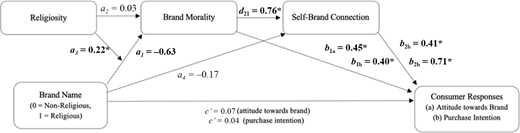
We expected that for those with more religiosity, a religious brand name would lead to heightened perceptions of brand morality, which in turn would strengthen self-brand connection and enhance subsequent a) brand attitude and b) purchase intention. We conducted a moderated mediation analysis (PROCESS macro, Model 83, n = 10,000; Preacher et al., 2007) with brand name (0 = nonreligious, 1 = religious) as the independent variable, religiosity as the moderator, brand morality and self-brand connection as serial mediators and attitude towards the brand and purchase intention as separate dependent variables.
Analysis showed that the 95% bootstrapped confidence interval (CI) of the index of moderated mediation did not include zero for both attitude towards the brand (index = 0.07, SE = 0.04, 95% CI = 0.01–0.15) and purchase intention (index = 0.12, SE = 0.04, 95% CI = 0.01–0.26), confirming significant moderated mediation for both consumer responses (see empirical model Figure 2). As expected, brand name interacted with religiosity to affect brand morality perceptions (a3 = 0.22, t = 2.21, p = 0.029). Brand morality was found to be a significant predictor of self-brand connection (d21 = 0.76, t = 8.10, p < 0.001), and self-brand connection was found to be a significant predictor of attitude towards the brand (b2a = 0.41, t = 6.61, p < 0.001) and purchase intention (b2b = 0.71, t = 9.75, p < 0.001). Brand morality was also found to have a significant direct effect on attitude towards the brand (b1a = 0.45, t = 5.16, p < 0.001) and purchase intention (b1b = 0.40, t = 3.85, p < 0.001). When examining the conditional indirect effect of brand name on (a) attitude towards the brand and (b) purchase intention as moderated by religiosity and mediated by brand morality and subsequent self-brand connection, it was found that the indirect effect of brand name on attitude towards the brand and purchase intention was significant only when religiosity was high (attitude towards brand: M+1SD = 5.06; effect = 0.16, 95% CI = 0.03–0.33; purchase intention: M+1SD = 5.06; effect = 0.27, 95% CI = 0.05–0.26), supporting H2.
Discussion
Study 2 provides further evidence that for those with more religiosity, exposure to a religious brand name heightens perceptions of brand morality. However, Study 2 also demonstrates the positive outcomes of perceived brand morality following exposure to religious brand names. Specifically, Study 2 shows that religious brand names heighten brand morality, which strengthens self-brand connection and leads to more positive brand attitudes and greater intention to purchase the religious branded product for those with more religiosity. In Study 3, we test our model on actual consumer behavior.
Study 3
Using an incentive compatible design, Study 3 examined the effect of religious brand names on actual behavior. It was hypothesized that those with more religiosity would purchase more tickets to win a pair of Gospel (religious brand name) jeans, when compared to Truth (nonreligions brand name) jeans, as the religious brand name would heighten perceptions of brand morality and strengthen self-brand connection, resulting in a positive consumer downstream response.
Brand name appeal and product congruence pretest
To ensure brand name appeal and product congruence did not confound the results of Study 3, a pretest was undertaken to evaluate the chosen brand names. A sample of 86 participants from the USA and UK (46 male, 43 female and one other/not specified; MAge = 40.85, SDAge = 12.66) was recruited through Prolific to participate in the pretest. All participants were over the age of 18.
In a between-subjects design, participants were randomly allocated to evaluate one of the two brand names included in Study 4: Gospel (n = 42) or Truth (n = 44). Procedures followed those used in Studies 1 and 2, with participants asked to rate the appeal of the brand name along with the degree to which they believed the brand name (Gospel/Truth) was congruent with the product, jeans (Cronbach α = 0.936). We also collected age, gender and participant religiosity.
ANCOVA models were estimated with brand name appeal and brand name-product congruence as separate independent variables and religiosity as a co-variate. Results showed no difference between the two conditions with respect to brand name appeal [F (1, 83) = 0.17, p = 0.685, η2 = 0.002; MGospel = 3.24, SDGospel = 1.61; MTruth = 3.36, SDTruth = 1.62] and brand name-product congruence [F (1, 83) = 1.86, p = 0.176, η2 = 0.022; MGospel = 2.91, SDGospel = 1.44; MTruth = 3.37, SDTruth = 1.31], irrespective of religiosity. As a result, the selected brand names were deemed appropriate for Study 3.
Participants
We conducted an online experiment with 200 participants from the USA and the UK. Participants were recruited through the research panel Prolific. All participants were over 18 years of age. English as a first language was used as an inclusion criterion via Prolific and a screening survey question. Once we applied our inclusion criteria, our sample included 192 participants (72 male, 116 female and four other/not specified; MAge = 38.39, SDAge = 13.07).
Procedures
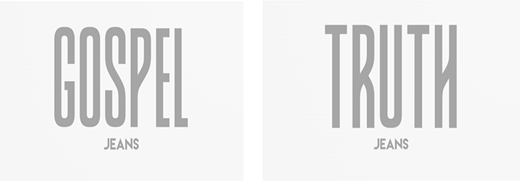
The study used a two-condition between-subjects design. Participants were randomly allocated to one of the two experimental conditions: religious brand name (Gospel; n = 96) or nonreligious brand name (Truth; n = 96). On the next page, participants were shown a logo for a fictitious brand of jeans (developed in Looka Logo Maker; see Appendix 3) and were informed that [Gospel/Truth] is launching a new range of jeans. They offer a perfect blend of fashion and functionality. To make the experiment incentive compatible, on the next page participants were told To celebrate their launch, [GOSPEL/TRUTH] is giving you the opportunity to WIN a pair of their unisex jeans, simply using your Prolific credit! To make the incentive salient, participants were asked to indicate their preferred jean color, style and size prior to selecting the number of lottery tickets to purchase (as per Hydock et al., 2020). On the next page, participants were asked if they would like to purchase tickets (1c each, maximum 10 tickets) to enter the draw to win a new pair of jeans. Participants were informed that the cost of their tickets would be deducted from their payment credit (£0.50). Following on the next page, participants were asked to rate their self-brand connection (Studies 2 and 3 measure; Cronbach α = 0.984). Next, participants were asked to rate their perceptions of brand morality (as per Studies 1–3; Cronbach α = 0.862). On the following page, participants were asked to rate brand name religiosity (as per Studies 1–3; Cronbach α = 0.950). Age, gender and religiosity (Cronbach α = 0.801) was also collected. On the final page, participants were thanked for their participation.
Common method variance
We conducted Harman’s single-factor test to assess for CMV among the measured items for brand morality perceptions, self-brand connection and religiosity. Results of an unrotated exploratory factor analysis revealed that the first factor accounted for 42.08% of the total variance. As the variance of the first factor was below 50%, it was concluded that CMV is unlikely to pose a significant concern in Study 3.
Manipulation check
To test the effectiveness of the religious brand name manipulation, an ANCOVA model was estimated with brand name religiosity as the dependent variable and participant religiosity as a co-variate. Results showed that religious brand names had a significant effect on brand name religiosity perceptions [F (1, 189) = 76.76, p < 0.001, η2 = 0.289], irrespective of participants own religiosity [(1, 189) = 2.09, p = 0.150, η2 = 0.011]. Participants perceived the religious brand name, Gospel, to be more religious (MReligious = 5.36; SDReligious = 1.32) when compared to the control nonreligious brand name, Truth (MNonreligious = 3.50; SDNonreligious = 1.53).
Results
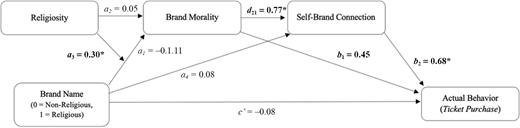
We expected that for those with more religiosity, a religious brand name would lead to heightened perceptions of brand morality, which in turn would strengthen self-brand connection and enhance subsequent actual behavior. We conducted a moderated mediation analysis (PROCESS macro, Model 83, n = 10,000; Preacher et al., 2007) with brand name (0 = nonreligious, 1 = religious) as the independent variable, religiosity as the moderator, brand morality and self-brand connection as serial mediators and number of tickets purchased as the dependent variable.
Analysis showed that the 95% bootstrapped CI of the index of moderated mediation did not include zero (index = 0.15, SE = 0.08, 95% CI = 0.03–0.35), confirming significant moderated mediation (see empirical model Figure 3). As expected, brand name interacted with religiosity to affect brand morality perceptions (a3 = 0.30, t = 2.88, p = 0.005). Brand morality was found to be a significant predictor of self-brand connection (d21 = 0.77, t = 9.09, p < 0.001), and self-brand connection was found to be a significant predictor of number of tickets purchased (b2 = 0.68, t = 2.71, p = 0.007). When examining the conditional indirect effect of brand name on the number of tickets purchased as moderated by religiosity and mediated by brand morality and subsequent self-brand connection, it was found that the indirect effect of brand name on number of tickets purchased was significant only when religiosity was high (M+1SD = 5.00; effect = 0.20, 95% CI = 0.03–0.35), providing further support for H2.
Discussion
Moving beyond consumer attitudes and behavioral intentions, Study 3 demonstrates that brand morality primed through religious brand names can heighten self-brand connection, which in turn positively influences actual consumer behavior. However, do brand morality perceptions following exposure to a religious brand name always lead to consumers feeling a connection with the brand? Study 4 seeks to examine the moderating role of moral self-identity.
Study 4
Study 4 aimed to examine a boundary condition of the brand morality to self-brand connection relationship, following exposure to a religious brand name. Specifically, we proposed that for those who place low importance on moral self-identity, the effect of religious brand name-brand morality relationship on self-brand connection will attenuate.
Brand name appeal and product congruence pretest
We conducted a pretest to ensure that the appeal and product congruence of the brand names chosen for Study 4 would not confound the results. A sample of 94 participants from the USA and UK (43 male, 51 female; MAge = 42.01, SDAge = 13.41) was recruited through Prolific to participate in the pretest. All participants were over the age of 18.
In a between-subjects design, participants were randomly allocated to evaluate one of the two brand names included in Study 4: Worship (n = 47) or Adore (n = 47). Procedures followed those used in Study 1 and 2, with participants asked to rate the appeal of the brand name along with the degree to which they believed the brand name (Worship/Adore) was congruent with the product, sunscreen (Cronbach α = 0.944). We also collected age, gender and participant religiosity.
ANCOVA models were estimated with brand name appeal and brand name-product congruence as separate independent variables and religiosity as a co-variate. Results showed no difference between the two conditions with respect to brand name appeal [F (1, 87) = 0.86, p = 0.355, η2 = 0.008; MWorship = 3.28, SDWorship = 1.49; MAdore = 3.66, SDAdore = 1.58] and brand name-product congruence [F (1, 87) = 1.56, p = 0.215, η2 = 0.017; MWorship = 3.54, SDWorship = 1.48; MAdore = 3.87, SDAdore = 1.41], irrespective of religiosity. The chosen brands were therefore deemed appropriate for Study 4.
Participants
We conducted an online experiment with 192 participants from the USA and UK. Participants were recruited through the research panel Prolific. All participants were over 18 years of age. English as a first language was used as an inclusion criterion via Prolific and a screening survey question. Once we applied our inclusion criteria, our sample included 179 participants (78 male, 95 female and five other/not specified; MAge = 37.74, SDAge = 12.52).
Procedure
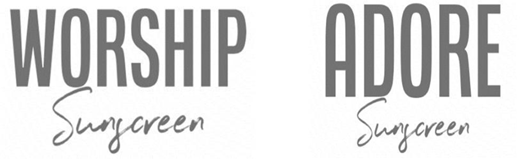
In a between-subject design, participants were randomly allocated to one of two experimental conditions: religious brand name (Worship; n = 89) or nonreligious brand name (Adore; n = 89). Participants were shown a logo for a fictitious brand of sunscreen. Looka Logo Maker was used to create the mock brand logos (see Appendix 4). On the following page, participants were asked to rate their perceptions of brand morality (as per Study 1; Cronbach α = 0.938). On the next page, participants were asked to rate their self-brand connection (as per Study 2; Cronbach α = 0.915). On the following page, participants reported their moral self-identity (drawn from Aquino and Reed, 2002, e.g. Being someone who has these characteristics [e.g. caring, fair and compassionate] is an important part of who I am; Cronbach α = 0.802). On the next page, participants were asked to rate brand name religiosity (as per Studies 1 and 2; Cronbach α = 0.969). Age, gender and religiosity (as per Studies 1 and 2; Cronbach α = 0.828) was also collected. On the final page, participants were thanked for their participation.
Common method variance
We conducted Harman’s single-factor test on all measured survey items (brand morality perceptions, self-brand connection, moral self-identity, brand name religiosity and participant religiosity) to identify concerns associated with CMV. Results of the unrotated exploratory factor analysis showed that the first factor accounted for 32.27% of the total variance, indicating CMV is unlikely to influence the findings of Study 4.
Manipulation check
To test the effectiveness of the religious brand name manipulation, an ANCOVA model was estimated with brand name religiosity as the dependent variable and participant religiosity as a co-variate. Results showed that religious brand names had a significant effect on brand name religiosity perceptions [F (1, 175) = 211.79, p < 0.001, η2 = 0.548], irrespective of participants own religiosity [(1, 175) = 10.64, p < 0.001, η2 = 0.057]. Participants perceived the religious brand name, Worship, to be more religious (MReligious= 5.57; SDReligious = 1.35) when compared to the control nonreligious brand name, Adore (MNonreligious = 2.68; SDNonreligious = 1.40).
Results
Self-brand connection
We examined the effect of brand name on brand morality perceptions (conditional on religiosity), and the effect of brand morality perceptions on self-brand connection using the PROCESS macro (Model 7, n = 10,000; Preacher et al., 2007). Our moderated mediation analysis included brand name (0 = nonreligious, 1 = religious) as the independent variable, brand religiosity as the moderator, brand morality as the mediator and self-brand connection as the dependent variable.
Analysis showed that the 95% bootstrapped CI of the index of moderated mediation did not include zero (index = 0.29, SE = 0.10, 95% CI = 0.07–0.48), confirming significant moderated mediation. Replicating Study 2, brand name interacted with religiosity to affect brand morality perceptions (a3 = 0.41, t = 2.77, p = 0.006). Brand morality was found to be a significant predictor of self-brand connection (b = 0.70, t = 29.23, p < 0.001). We examined the conditional indirect effect of brand name on self-brand connection as moderated by religiosity and mediated by brand morality. Results showed that the indirect effect of brand name on self-brand connection through brand morality was significant only when religiosity was high (+1SD; β = 0.46, 95% CI = 0.001–0.88), providing further support for H2.
Moderated mediation – self-brand connection
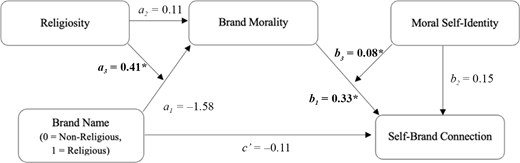
We examined the effect of brand name on brand morality perceptions (conditional on religiosity), along with the effect of brand morality perceptions on self-brand connection (conditional on moral self-identity) using the PROCESS macro (Model 21, n = 10,000; Preacher et al., 2007). Our moderated mediation analysis included brand name (0 = nonreligious, 1 = religious) as the independent variable, brand religiosity as a moderator (W), brand morality as the mediator, moral self-identity as the second moderator (V) and self-brand connection as the dependent variable.
Analysis showed that the 95% bootstrapped CI of the index of moderated mediation did not include zero (index = 0.03, SE = 0.02, 95% CI = 0.01–0.07), confirming significant moderated mediation (see empirical model Figure 4). It was found that brand name interacted with religiosity to affect brand morality perceptions (a3 = 0.41, t = 2.77, p = 0.006). Brand morality was found to interact with moral self-identity to influence self-brand connection (b3= 0.08, t = 2.86, p = 0.005). Results showed that the effect of brand morality on self-brand connection weakens as perceived moral self-identity decreases, providing support for H3.
Discussion
Study 4 provides further evidence that religious brand names enhance perceptions of brand morality for consumers with more religiosity. However, while Studies 2 and 3 demonstrated that brand morality leads to heightened perceptions for self-brand connection, Study 4 shows that this effect is reduced when consumers place a low importance on moral self-identity. Studies 1–4 provide strong, internally valid, evidence for our religions brand name priming effect. Study 5 seeks to provide further, externally valid, evidence.
Study 5
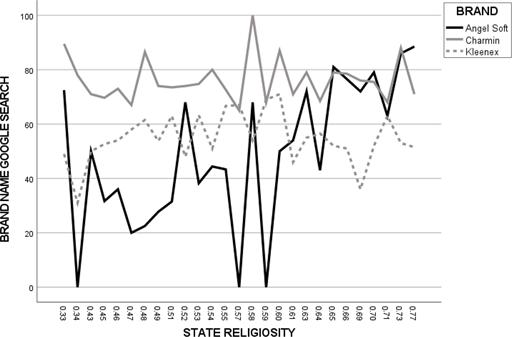
Study 5 brings together Google Trends and state-based religiosity data to explore differences in search pattern for a real-brand that adopts a religious brand name, Angel Soft, when compared to leading competitors with nonreligious brand names (Charmin and Kleenex) in the toilet tissue product category. We propose that religiosity will influence search for a brand that adopts a religious brand name strategy.
Brand religiosity pretest
We conducted a pretest to evaluate the perceived religiosity of the three real brand names chosen for Study 5. A sample of 104 participants from the USA (50 male, 50 female and four other/not specified; MAge = 36.78, SDAge = 12.45) was recruited through Prolific to participate in the pretest. All participants were over the age of 18.
Using a within-subjects design, participants were asked to rate the religiosity (The brand name is associated with religion, God and faith) of the three brand names of toilet tissue examined in Study 5; Angel Soft, Charmin and Kleenex. Order of presentation was randomized across participants. We also collected age (open response) and gender (male, female and other/not specified) information, along with participant religiosity (Cronbach α = 0.834).
To evaluate perceptions of brand name religiosity across the three real brands, a repeated measures ANCOVA model was estimated (participant religiosity included in model as a co-variate). Results showed a significant effect (Wilks’ Lambda = 0.92, p = 0.013, η2 = 0.083), irrespective of participants own religiosity (Wilks’ Lambda = 0.99, p = 0.508, η2 = 0.013). Participants perceived Angel Soft to be a more religious brand name (MReligiosity = 2.74; SDReligiosity = 1.51) when compared to the two competing brand names Kleenex (MReligiosity = 1.50; SDReligiosity = 1.01) and Charmin (MReligiosity = 1.57; SDReligiosity = 1.06).
Data
Data were downloaded from the Google Trends website for the search terms Angel Soft, Kleenex and Charmin (case insensitive). Data were limited to 12 months (May 2023–2024), within the USA, and were downloaded by “sub-region” (i.e. state-based). Next, we merged data reported by Pew Research on state religiosity. State religiosity data represented an index that combines the percentage of residents who state: (1) religion is very important in their lives, (2) they attend worship services at least weekly, (3) they pray daily and (4) they believe in God with absolute certainty. Finally, state-based Census population data were also included (Census.gov).
Model and results
We expected that state religiosity would influence search for a brand that uses a religious brand name strategy. To test our prediction, we estimate an OLS model with brand name search as the dependent variable. Brand, state religiosity, state population and the interaction between brand and state religiosity were included in the model as independent variables. The following model was specified:
Results showed significant model fit (adjusted R2 = 0.10, p < 0.001) with state-religiosity (β = 0.48, t = 3.88, p < 0.001) and brand (β = 1.30, t = 3.19, p = 0.002) found to be significant predictors of search popularity. State population size was found to not be a significant predictor of search behavior (β = 0.10, t = 1.25, p = 0.213). As predicted, a significant interaction was observed between brand and state-religiosity (β = −1.19, t = −2.86, p = 0.005). To unpack this interaction effect, we estimated the following model for each brand:
When considering Angel Soft, results show significant model fit (adjusted R2 = 0.27, p < 0.001) with religiosity found to be a significant predictor of search behavior (β = 0.49, t = 4.01, p < 0.001). Population size was found to not be a significant predictor of search behavior (β = 0.21, t = 1.71, p = 0.093). Next, we tested our model for each competitor brand who did not adopt a religious brand name strategy, Charmin and Kleenex. Significant model fit was not attained for either brand (Charmin: adjusted R2 = −0.03, p = 0.811; Kleenex: adjusted R2 = −0.03, p = 0.785). Findings are visualized in Figure 5.
Discussion
Study 5 provides real-world evidence that consumer religiosity influences Google search behavior for brands that adopt a religious brand name. Specifically, results show that religiosity predicts search behavior for a brand that adopts a religious brand name, however, religiosity does not predict search behavior for a brand that does not have a religious brand name. Results of Study 5 provide external evidence of our phenomenon that consumers respond more positively to religious brand names and that religiosity is a boundary condition of our effect.
General discussion
Effective names for brands are those that develop brand resonance and ultimately customer-based brand equity (Keller, 1993). We provide evidence that religious brand names are a strategic way to enhance consumer perceptions of brand morality for those with more religiosity and subsequently strengthen self-brand connection. Drawing on semantic priming theory, we show that religious brand names act as semantic cues that activate associated morality concepts in the minds of more religious consumers, leading them to infer that the brand is moral. Brand morality perceptions strengthen self-brand connection, yet weaken self-brand connection when consumers place a low importance on moral self-identity. We show the positive downstream consequences of strong self-brand connection on consumer responses in terms of brand attitude, purchase intention and actual behavior (see Table 1 for hypothesis results). We next discuss the theoretical and managerial implications for these findings and suggest directions for future research.
Theoretical implications
This research demonstrates that religious brand names can prime brand perceptions and strengthen self-brand connections. Our research extends the religious brand naming literature beyond benevolent agent-based attributes in brand names (Ilicic and Brennan, 2023; e.g. angelic) to include agent-based brand names (i.e. prophet and angel) and other religious concepts relating to the institutional dimensions of religion (i.e. altar, worship and gospel), or spiritual or abstract concepts relating to individual relationship to the sacred (i.e. heaven). We show that religious priming effects in brand names are generalizable across various religious concepts. We also extend previous work beyond food products and healthfulness perceptions (e.g. Ilicic and Brennan, 2023) to examine brand morality perceptions and self-brand connection. We extend the religious priming literature, which has predominantly focused on examining its effects on an individual’s moral behavior, such as charitable giving (Shariff and Norenzayan, 2007) or honesty (Randolph-Seng and Nielsen, 2007). These studies have not examined religious brand name priming brand morality perceptions. The results of our studies are the first to provide evidence of a novel religious brand name priming effect influencing brand morality perceptions and fostering a self-brand connection, with downstream effects on positive consumer responses.
Our research contributes to the body of work on religiosity in consumer behavior by expanding the understanding of how religiosity influences consumer perceptions and behavior, specifically through the lens of religious brand names and semantic priming and their impact on perceptions of brand morality. While previous research has explored the role of religious salience in shaping consumer responses to products (Grewal et al., 2022) and service failures (Hyodo and Bolton, 2021; Casidy et al., 2021), our study uniquely examines the intersection of religiosity, morality and self-brand connections. According to semantic priming theory, when a concept such as a brand name is activated, it initiates a spreading activation process in memory, triggering related constructs (Meyer and Schvaneveldt, 1971; Anderson, 1983; Collins and Loftus, 1975; McClelland and Rumelhart, 2020; Seidenberg and McClelland, 1989; Hutchison, 2003). In our context, religious brand names activate semantically associated concepts such as brand morality, particularly for consumers with more religiosity, thereby leading them to perceive self-congruity. By integrating self-congruity theory with insights on religiosity, we provide a novel framework for understanding how religious brand names activate moral cognitive frameworks, fostering stronger self-brand connections for more religious consumers.
Our research makes a significant contribution to the self-congruity literature by extending its application to the domain of religious brand names and their influence on self-brand connection. While self-congruity theory traditionally emphasizes the alignment between a brand’s image and a consumer’s self-identity (Sirgy, 1986; Sirgy and Su, 2000), our study integrates this framework with insights on religiosity and morality. We demonstrate how religious brand names activate perceptions of brand morality, creating a unique pathway for self-congruity among more religious consumers whose self-identity is deeply tied to moral and religious values. In addition, we contribute to the literature by introducing moral self-identity as a moderating variable, highlighting its role in shaping the strength of self-brand connections. This nuanced approach expands the scope of self-congruity theory by showing how specific cultural and cognitive factors, such as religiosity, influence the congruence between brand associations and consumer identity.
This research makes a significant theoretical contribution by extending moral self-identity theory into the branding domain, demonstrating how the interplay between perceived brand morality and moral self-identity shapes self-brand connection. While prior work has established that moral self-identity influences prosocial behaviors and ethical decision-making (Aquino and Reed, 2002; White et al., 2019), our research is among the first to show that the importance consumers place on moral self-identity moderates their responses to religious brand name cues. By integrating moral self-identity theory, we uncover an interesting relationship: religious brand names enhance self-brand connection only when they align not just with consumers’ religiosity, but also with the salience of their moral self-identity. Importantly, we identify boundary conditions where even more religious individuals may show attenuated self-brand connection possibly due to factors such as externalized morality or religious modesty (Graham et al., 2009; Exline and Martin, 2005). This work enriches moral self-identity literature by showing that moral self-identity is not uniform in its influence, but can vary depending on how central it is to the individual, and when applied to branding, this distinction helps explain divergent consumer responses to religious brand names.
Managerial implications
This research provides evidence that religious brand name primes effectively enhance perceptions of brand morality among more religious consumers, fostering stronger self-brand connections. With approximately 85% of the global population affiliated with a religion (Statista, 2023), this finding provides a significant opportunity for brand managers to strategically use religious brand names to strengthen self-brand connection. Importantly, this approach can be executed subtly, without explicitly referencing morality, such as in the case of the Moral Code brand for men’s footwear and accessories. This subtlety allows managers to incorporate moral cues seamlessly into brand identity, making religious brand names a versatile tool for naming new brands, repositioning existing ones or developing brand extensions (Keller, Heckler, and Houston, 1998).
Religious brand names also hold powerful potential for targeting more religious consumer segments, particularly in industries where moral alignment is a key driver of consumer choice, such as financial services, healthcare or sustainable goods. By enhancing perceptions of brand morality, religious brand names foster stronger self-brand connections, which translate into improved brand attitudes, increased purchase intentions and actual behavior. Marketing managers have access to detailed demographic data, including religiosity levels at the state level, through publicly available data. This information provides a practical basis for identifying regions with high concentrations of more religious consumers and tailoring brand names and messaging to align with their moral values.
However, the results also indicate that religious brand names are not equally effective across all consumer segments. For consumers with less religiosity, these names are less likely to enhance perceptions of brand morality and may even create disconnection with the brand if perceived as misaligned with their values. To mitigate this risk, managers should adopt segmentation and tailored messaging strategies. For instance, complementing religious cues with universal values such as fairness and compassion can ensure broader appeal and minimize alienation among less- or non-religious audiences.
Finally, while religious brand names effectively strengthen self-brand connections for more religious consumers, this effect diminishes when consumers place a low importance on moral self-identity. Managers should account for this by designing campaigns that activate or emphasize the moral relevance of their products. For example, storytelling that highlights ethical business practices or cause-related marketing initiatives can reinforce moral self-identity, even among consumers who may not naturally prioritize it. These approaches, combined with the ability to leverage regional religiosity data, can amplify the effectiveness of religious brand names, extending their relevance and appeal across a wider spectrum of consumers.
Limitations and future research directions
This study looks at brand names only. However, previous research finds that morality symbols, such as halos and angel wings, can be used by brands in their advertisements (Ilicic et al., 2021). Future research should examine whether brand morality perceptions and self-brand connection can be enhanced using a religious brand name and other morality symbols in the brand’s logo. For example, Gospel Jeans may be perceived to have greater morality and foster stronger self-brand connection resulting in positive consumer responses when featured with a halo or wings in its logo.
This study examined the effect of religious brand names on consumer responses in terms of attitude and behavior. Future research should examine the effect of religious brand names on other aspects of the Brand Relationship Wheel (Fetscherin, 2020), such as affective share of heart responses including brand love and trust, and other behavioral share of voice and wallet responses including WOM, loyalty and switching.
Our study is limited to the USA and UK, which are predominantly Christian cultures. Research examining religious concepts finds religious concepts, in general, are ubiquitous across cultures (Laurin, Kay, and Fitzsimons, 2011). However, future research should be undertaken to examine the effectiveness of religious brand names across cultures and across various languages to identify whether they are as effective in priming brand morality perceptions and strengthening subsequent self-brand connection. Interpretations of language can vary across individuals and cultural contexts. While our study focuses on English-speaking participants within a specific cultural setting, future studies could expand on this work by examining cross-cultural and multilingual variations in how religious brand names are interpreted and how these interpretations influence consumer responses. Research on translating religious brand names into other cultures should also be undertaken (e.g. westernized Chinese brand names; Fetscherin et al., 2015).
We acknowledge the limitations of treating religiosity as an individual trait. However, prior research has effectively used the same (Ilicic and Brennan, 2023) and similar measures to study how religiosity influences consumer decision-making (Delener, 1990), sustainable behavior (Minton et al., 2017) and ethical behavior (Vitell et al., 2007). In addition, we used two measures of religiosity, including one developed by Pew Research (Study 5). This broadens the validity and generalizability of our findings, given its widespread use and acceptance as an instrument for capturing religiosity across diverse populations. While our measures focus on the individual level, they do not exhaustively capture the social and cultural dimensions of religiosity. Nonetheless, future research should explore these broader contextual dimensions to deepen understanding of religiosity as a socially embedded construct.
While research panels such as MTurk and Prolific used in Studies 1–4 provide convenience and scalability, they are not without drawbacks, such as self-selection bias and demographic imbalances (Levay et al., 2016). Across our studies, we observed a general skew toward middle-aged and female participants, which aligns with existing literature on respondent panels and patterns of religiosity, age and gender. For instance, Study 3 relied on a predominantly female sample, which could influence generalizability, particularly given the culturally gendered nature of clothing shopping behavior (Ng et al., 2020). Similarly, moral self-identity, a key construct in our research, tends to stabilize more with age (Lapsley et al., 2023), which may affect the broader applicability of our findings. While we provide convergent evidence and robustness of our effect in the field using state level census data (Study 5), future research could address these limitations by recruiting more diverse and representative samples or using controlled experimental laboratory settings to validate the results.
Cultural orientation, such as individualism versus collectivism, can shape the interpretation of religious cues and brand morality. Collectivist cultures, which emphasize group-based moral standards, may amplify the impact of religious brand names on brand morality perceptions and self-brand connections (Triandis, 2001; Markus and Kitayama, 1994). Similarly, personal values like materialism and altruism could potentially influence consumer responses to religious brand names. Consumers with high altruistic values may resonate more strongly with religious brand names emphasizing moral traits such as compassion and fairness, while materialistic consumers, who prioritize possessions over morality, may exhibit weaker responses (Schwartz, 1993; Richins and Dawson, 1992). These factors underscore the need for future research to explore how cultural and individual values moderate the effectiveness of religious brand names.