This study examines how post-consumption evaluations are expressed in online reviews of luxury hotels and considers the implications of these retrospective narratives for understanding the broader digital customer journey.
A qualitative research design was adopted. Using qualitative content analysis, 250 TripAdvisor reviews from five luxury hotels in Istanbul were analyzed. Reviews were coded according to the FMOT-SMOT framework and examined through thematic analysis. Each review was assigned to one dominant thematic category.
The findings reveal a strong dominance of SMOT-related evaluations. Of the 250 reviews analyzed, 238 were coded as SMOT, while 12 contained both FMOT and SMOT elements. No review was classified exclusively as FMOT. Thirteen themes were identified, with service quality, personalized service and staff recognition, revisit intention and loyalty, and recommendation and electronic word-of-mouth emerging as the most prominent. The reviews were primarily retrospective expressions of SMOT, while references to pre-consumption expectations appeared only when embedded in post-consumption evaluations. Interpersonal service was more prominent than tangible luxury attributes in guests' dominant narrative emphasis.
The study distinguishes empirically observable SMOT narratives from their theoretically proposed role in subsequent customer journeys. It shows that expectations become visible primarily through retrospective confirmation or disconfirmation and proposes that publicly circulated SMOT narratives may enter prospective customers’ FMOT. This cross-customer mechanism is presented as a conceptual proposition requiring direct empirical testing.
Introduction
Online customer reviews have become one of the most influential sources of information in the tourism and hospitality industry. Before making a reservation, potential guests frequently consult review platforms to evaluate hotel quality, compare alternatives, and reduce perceived risk (Litvin, Goldsmith, & Pan, 2008; Xiang & Gretzel, 2010). The growing importance of electronic word-of-mouth (eWOM) has transformed customer reviews from simple expressions of satisfaction into influential communication tools that shape consumer decision-making and brand perceptions (Cheung & Thadani, 2012; Filieri & McLeay, 2014). Online reviews therefore contribute to the broader digital customer journey by making post-consumption experiences publicly available within the information environment encountered by prospective customers.
The hospitality sector is particularly affected by this transformation because hotel services are intangible, experience-based, and difficult to evaluate prior to consumption (Parasuraman, Zeithaml, & Berry, 1985). Unlike physical products, hotel experiences cannot be fully assessed before purchase. Prospective guests often rely on previous customers' experiences when selecting accommodation. Online reviews provide access to detailed descriptions of service encounters, staff interactions, physical facilities, location advantages, and overall satisfaction, making them a valuable source of information for both consumers and hospitality managers (Sparks & Browning, 2011; Banerjee & Chua, 2016).
The increasing influence of online reviews has also attracted considerable academic attention. Previous studies have examined the impact of review valence, review credibility, review volume, and eWOM on consumer decision-making and hotel-related outcomes (Vermeulen & Seegers, 2009; Filieri, 2015; Cantallops & Salvi, 2014). Other studies have explored how online review dynamics, including managerial responses and customer feedback, contribute to hotel performance and online reputation (Schuckert, Liu, & Law, 2015; Xie, Zhang, Zhang, Singh, & Lee, 2016). While this literature has generated important insights into online review behavior, online reviews have often been examined either as information sources influencing purchase decisions or as indicators of post-consumption satisfaction (Vermeulen & Seegers, 2009; Filieri & McLeay, 2014). Less attention has been devoted to how customers express and communicate post-consumption evaluations through review narratives and what these retrospective accounts reveal about service experiences within the broader digital customer journey.
One framework that offers valuable insight into customer experiences is the concept of moments of truth. Popularized by Carlzon (1987), the concept refers to critical interactions in which customers form impressions about a service or brand. Building on this perspective, Procter & Gamble introduced the concept of the First Moment of Truth (FMOT) to describe the stage at which consumers encounter information, compare alternatives, and make purchase decisions (Lecinski, 2011). The Second Moment of Truth (SMOT) refers to the actual consumption experience during which customers evaluate whether a product or service meets their expectations. These concepts provide a useful perspective for understanding how expectations and experiences shape customer evaluations and subsequent behavioral responses. In the context of online reviews, this distinction provides a basis for separating pre-consumption decision processes from experience-based evaluations (Löfgren, Witell, & Gustafsson, 2008; Lemon & Verhoef, 2016; Santos & Gonçalves, 2021).
Online reviews are typically produced after consumption and are therefore primarily retrospective accounts of SMOT. References to prior expectations may nevertheless appear when reviewers compare anticipated service with the experience they received. Examining such narratives can clarify how expectations, service encounters, satisfaction, dissatisfaction, recommendation, and revisit intentions are expressed in post-consumption evaluations. However, the presence of these retrospective narratives does not itself demonstrate how prospective customers use them or establish a direct relationship between one customer's SMOT and another customer's FMOT. Rather, their possible relevance to subsequent stages of the digital customer journey represents a conceptual implication that requires separate empirical testing.
Luxury hotel experiences are characterized by high customer expectations, intensive service encounters, personalized interactions, and strong emotional involvement (Azis & Wibawa, 2025; Wu & Gao, 2019). Guests may therefore evaluate not only facilities, location, and amenities but also employee responsiveness, individualized recognition, service consistency, and whether the experience confirms their expectations. Service failures may be particularly consequential when personalized and consistently high-quality service forms part of the luxury offering. Luxury hotel reviews consequently provide rich material for examining how customers evaluate and communicate service experiences after consumption (Korkmaz Orhan, 2025).
Despite the growing literature on online reviews, eWOM, and luxury customer experiences, further research is needed to explain how post-consumption evaluations are expressed in naturally occurring review narratives and which aspects of luxury service dominate these accounts. Greater attention to thematic and cross-hotel patterns can also show whether evaluations are centered primarily on tangible luxury attributes or on interpersonal service encounters, personalized recognition, satisfaction, dissatisfaction, loyalty, and recommendation intentions.
Accordingly, this study analyzes 250 TripAdvisor reviews of five luxury hotels in Istanbul. It aims to examine how post-consumption evaluations are expressed and communicated in online reviews of luxury hotels and to consider the implications of these retrospective narratives for understanding the broader digital customer journey. The FMOT–SMOT distinction is retained as an analytical lens for identifying post-consumption evaluations and any embedded references to pre-consumption expectations; it is not used to claim an empirically demonstrated crossover between different customers' journey stages.
To achieve this objective, the study addresses the following research questions:
How are post-consumption evaluations expressed in online reviews of luxury hotels?
What dominant themes and cross-hotel patterns characterize guests' post-consumption evaluations of luxury hotel experiences?
Literature review
Moments of truth and post-consumption evaluation
The concept of moments of truth has become an important framework for understanding customer experiences and service evaluations. The term was popularized by Carlzon (1987), who defined moments of truth as critical interactions during which customers form impressions about an organization, service, or brand. Customer perceptions are shaped through direct encounters, making each interaction a potential determinant of satisfaction, loyalty, and future behavior.
Procter & Gamble introduced the First Moment of Truth (FMOT) to describe the stage at which consumers encounter a product or service and make a purchase decision (Lecinski, 2011). FMOT occurs before consumption and is influenced by various information sources, including advertising, recommendations, online reviews, and brand reputation. At this stage, consumers compare alternatives, evaluate available information, and develop expectations regarding the anticipated experience.
The Second Moment of Truth (SMOT) refers to the consumption stage, during which customers interact directly with the product or service and evaluate whether their expectations are fulfilled (Löfgren et al., 2008; Lecinski, 2011). Unlike FMOT, which focuses on decision-making, SMOT focuses on experience and evaluation. This stage is associated with customer satisfaction, dissatisfaction, loyalty, recommendation behavior, and future purchase intentions. SMOT therefore provides the primary conceptual basis for examining how customers retrospectively evaluate and communicate their service experiences. The evaluative process underlying SMOT can also be understood through expectation–confirmation theory. Customers compare perceived service performance with their prior expectations, producing confirmation when performance meets expectations and disconfirmation when it exceeds or falls short of them (Oliver, 1980). In online reviews, references to expectations are therefore likely to appear as part of retrospective assessments of whether the experienced service confirmed or contradicted what the customer had anticipated.
Although FMOT and SMOT were originally developed within marketing practice, the concepts have subsequently been incorporated into academic research on consumer decision-making and customer journey processes (Santos & Gonçalves, 2021). Previous studies indicate that customer evaluations emerge through multiple touchpoints across the customer journey rather than through a single interaction, with each stage contributing to expectations, perceptions, satisfaction, loyalty, and subsequent behavioral intentions (Lemon & Verhoef, 2016). This broader customer journey perspective provides a useful theoretical foundation for understanding post-consumption evaluations as part of a wider sequence of customer–brand interactions in hospitality contexts.
In digital environments, online reviews primarily document customers' post-consumption experiences and evaluations and can therefore be understood as retrospective expressions of SMOT. Once published, these accounts also become available within the information environment encountered by prospective customers. Their availability creates the conceptual possibility that one customer's SMOT narrative may contribute to another customer's FMOT; however, such a crossover cannot be inferred from review content alone and requires direct investigation of how prospective customers use reviews. The present study consequently treats SMOT as the empirically observable focus of the review narratives and the possible SMOT-to-FMOT crossover as a conceptual implication rather than an observed relationship.
Online reviews and electronic word-of-mouth
The rapid expansion of digital communication technologies has fundamentally transformed the way consumers search for information, evaluate alternatives, and share experiences. One of the most significant outcomes of this transformation is electronic word-of-mouth (eWOM), which refers to positive or negative statements about products, services, or organizations made available to a large audience through the internet (Hennig-Thurau, Gwinner, Walsh, & Gremler, 2004). Unlike traditional word-of-mouth communication, eWOM enables consumers to access and distribute information beyond the limitations of time, location, and personal networks.
Online reviews are one of the most visible forms of eWOM. Review platforms allow customers to share detailed evaluations of their experiences while providing prospective consumers with information that influences their purchase decisions. Previous research has demonstrated that online reviews affect consumer trust, perceived risk, purchase intention, and brand evaluation across a variety of industries (Cheung & Thadani, 2012; Filieri, 2015; Elamin, Al Duwaliah, Al Balushi, & Pratomo, 2026). In the hospitality sector, where services are intangible and cannot be fully evaluated before consumption, online reviews have become an important source of information for shaping customer expectations and booking decisions (Sparks & Browning, 2011).
The tourism and hospitality literature has shown that online reviews influence both consumer behavior and organizational performance. Positive reviews can enhance hotel reputation, increase booking intentions, and strengthen customer trust, whereas negative reviews may discourage potential guests and damage brand image (Vermeulen & Seegers, 2009; Schuckert et al., 2015). In addition, review volume, review quality, and perceived credibility have been identified as important factors affecting the persuasive power of online reviews (Filieri & McLeay, 2014; Banerjee & Chua, 2016).
Within the FMOT–SMOT framework, online reviews are primarily retrospective expressions of SMOT because they describe customers' experiences, evaluations, and behavioral intentions after consumption. Once published, these narratives remain available as platform-mediated eWOM within the digital touchpoints encountered by prospective customers. Existing research establishes that reviews can influence expectations and purchase decisions, but review content alone cannot demonstrate how a particular SMOT narrative enters another customer's FMOT.
Despite the growing literature on online reviews and eWOM, most studies have focused on their effects on consumer behavior or on the determinants of review usefulness and credibility. Less attention has been devoted to how post-consumption evaluations are expressed within review narratives and what their thematic patterns reveal about service experiences. Examining these narratives can therefore deepen understanding of SMOT in hospitality while providing a basis for conceptually considering their possible relevance to subsequent customer journeys.
Luxury hospitality and customer experience
Because hotel services are produced and consumed simultaneously, evaluations depend on service quality, employee interactions, physical surroundings, and emotional responses (Pine & Gilmore, 1998; Verhoef et al., 2009; Luna-Cortés, López, & López-Bonilla, 2022).
These considerations are especially relevant in the luxury hospitality segment. Luxury hotels compete not only through tangible attributes such as facilities, location, and amenities but also through intangible elements including personalized service, exclusivity, attention to detail, and emotional engagement (Walls, Okumus, Wang, & Kwun, 2011). Luxury positioning creates expectations extending beyond basic service delivery to include quality, personalization, consistency, and recognition across the functional and experiential dimensions of the stay.
Previous studies have consistently identified service quality as one of the most influential determinants of customer satisfaction and loyalty in luxury hotels. Service quality involves customers' perceptions of service performance, whereas satisfaction represents a broader post-consumption evaluation of the experience (Rust & Oliver, 1994). Interactions with employees are particularly important because staff members represent a direct point of contact between the hotel and its guests. Personalized attention, responsiveness, professionalism, and recognition of individual needs have been found to contribute to positive customer experiences and long-term loyalty (Ladhari, 2009; Ali, Kim, Li, & Jeon, 2018; Kandampully, Zhang, & Bilgihan, 2015). Service failures may generate consequential negative evaluations in luxury settings, while recovery responses can affect post-failure satisfaction and behavioral intentions (Tax, Brown, & Chandrashekaran, 1998).
In addition to service encounters, luxury hotel experiences are shaped by physical and atmospheric factors. Location, architecture, design, views, dining experiences, and the overall ambiance of the property contribute to customers' perceptions of value and luxury (Walls et al., 2011). Customer evaluations in luxury hospitality often reflect a combination of functional, emotional, and symbolic considerations.
The growing importance of online review platforms has provided researchers with new opportunities to examine these evaluations in naturally occurring customer narratives (Litovka-Demenina & Koval, 2025). Luxury hotel reviews frequently contain detailed descriptions of service encounters, personalized experiences, satisfaction, dissatisfaction, loyalty intentions, and recommendation behavior. They offer a particularly rich context for investigating how customers communicate their experiences. Examining these narratives as retrospective expressions of SMOT can provide insight into how lived experiences, expectations, and post-consumption evaluations are articulated in digital review environments. Their potential relevance to future customers' FMOT remains a conceptual implication rather than a relationship directly demonstrated by review content.
Research gap
Existing studies have generally examined online reviews either as information sources influencing consumer choices or as indicators of satisfaction and service evaluation (Vermeulen & Seegers, 2009; Filieri, 2015). Although luxury hospitality research emphasizes service quality, personalization, physical settings, and emotional experience (Walls et al., 2011; Kandampully et al., 2015), less attention has been devoted to how these dimensions are expressed within post-consumption review narratives and how their thematic patterns vary across luxury hotels.
Addressing this gap requires distinguishing what reviews directly reveal from their possible role in later customer journeys. Review content provides evidence of retrospective SMOT evaluations and may contain embedded references to prior expectations, but it cannot demonstrate how prospective customers use these narratives during FMOT. This distinction enables the present study to examine observable post-consumption evaluations without treating the proposed SMOT-to-FMOT crossover as an empirically established relationship.
The study accordingly uses the FMOT–SMOT distinction to identify post-consumption evaluations and embedded expectation references, while thematic and cross-hotel analysis explains how luxury service experiences are expressed in online reviews. The possible circulation of SMOT narratives into future FMOT processes is developed later as a conceptual proposition requiring separate empirical testing.
Methodology
The study employed qualitative content analysis to examine post-consumption evaluations in user-generated online reviews. The research process comprised sample selection and data collection, FMOT–SMOT classification, and thematic analysis.
Research design
This study adopted a qualitative research design based on qualitative content analysis. This approach was appropriate because the study aimed to examine how hotel guests express post-consumption evaluations in their online review narratives rather than to test predetermined statistical relationships. Qualitative content analysis is suitable for systematically interpreting textual data and identifying recurring patterns, meanings, and themes within communication materials (Hsieh & Shannon, 2005; Schreier, 2012).
The unit of analysis was the individual TripAdvisor review. Each review was examined as a customer-generated narrative reflecting the guest's evaluation of the hotel experience. These naturally occurring narratives enabled the analysis of voluntarily expressed experiences, expectations, satisfaction, dissatisfaction, recommendation intentions, and revisit intentions without researcher elicitation.
FMOT was used to identify review segments referring to pre-consumption expectations, choice-related cues, information search, or decision-making influences. SMOT captured review segments referring to post-consumption evaluations, service encounters, satisfaction, dissatisfaction, recommendation behavior, and revisit intentions. Reviews containing elements of both categories were coded as FMOT + SMOT. This classification identified whether reviews contained post-consumption evaluations, embedded references to pre-consumption expectations, or both; it was not used to infer a relationship between different customers' journey stages.
The research design was exploratory and interpretive. It did not seek to generalize statistically to all luxury hotel customers. Instead, it aimed to provide an in-depth understanding of how customers express post-consumption evaluations in online review environments. The design is consistent with qualitative analyses of consumer-generated and experience-based texts (Hsieh & Shannon, 2005; Schreier, 2012; Filieri & McLeay, 2014).
Data collection
The data were collected from TripAdvisor, a widely used travel platform containing publicly accessible narrative reviews suitable for examining customer experiences and eWOM (Ayeh, Au, & Law, 2013; Filieri & McLeay, 2014).
Data collection was conducted between 15 and 17 June 2026. The dataset consisted of customer reviews posted about five luxury hotels in Istanbul. Reviews were selected consecutively from the most recent backwards until the required number of eligible reviews was reached for each hotel.
Only reviews written by hotel guests and containing substantive comments about the customer experience were included. A comment was considered substantive when it referred to at least one identifiable aspect of the hotel experience, such as service, staff, facilities, amenities, dining, satisfaction, or dissatisfaction. Rating-only entries and comments lacking an identifiable experience-related evaluation were excluded. The review texts and ratings were transferred to a spreadsheet and prepared for coding and thematic analysis.
Because the study relied exclusively on publicly available online reviews, no direct interaction with participants occurred. All reviews were analyzed in their publicly accessible form, and no personally identifiable information was included in the dataset. The study complied with accepted ethical principles for research using publicly available online data.
Sample and hotels
The sample consisted of customer reviews of five luxury hotels operating in Istanbul: Four Seasons Hotel Istanbul at the Bosphorus, Hilton Istanbul Bosphorus, Mandarin Oriental Bosphorus Istanbul, The Peninsula Istanbul, and Swissotel the Bosphorus Istanbul. These hotels were selected through purposive sampling because they represent internationally recognized luxury hotel brands and have a substantial volume of customer reviews on TripAdvisor. Focusing on hotels within the same destination limited destination-level variation and supported comparison of customer experiences across properties.
To ensure comparability, fifty reviews were collected from each hotel, resulting in a total sample of 250 reviews. Using an equal number of reviews from each hotel reduced the risk of overrepresenting properties with larger review volumes and ensured balanced cross-hotel comparisons. The sample was designed for balanced, close qualitative interpretation rather than statistical representation or automated large-scale content analysis. Its size enabled repeated review of individual narratives while supporting thematic comparison across five properties.
For analytical purposes, the hotels were coded as FS (Four Seasons), HIL (Hilton), MAN (Mandarin Oriental), PEN (The Peninsula), and SWI (Swissotel). The codes simplified the presentation of quotations, tables, and thematic comparisons. A summary of the hotels and codes is presented in Appendix A.
Luxury hotels provide an analytically relevant context because their offerings combine tangible attributes with personalized service, employee interactions, individualized attention, and experiential value. Their reviews therefore enable examination of how these dimensions are expressed in post-consumption evaluations.
Thematic coding and analysis procedure
The analysis followed a multi-stage coding process (Hsieh & Shannon, 2005; Schreier, 2012). First, all 250 reviews were read repeatedly to identify recurring patterns related to customer expectations, experiences, evaluations, and behavioral intentions. During this stage, preliminary notes and descriptive labels were assigned to relevant segments of text.
In the second stage, each review was coded according to the FMOT and SMOT framework. Review segments referring to expectations, information search, decision-making influences, or choice-related considerations were coded as FMOT. Segments referring to actual hotel experiences, service encounters, satisfaction, dissatisfaction, recommendation behavior, loyalty, or revisit intentions were coded as SMOT. Reviews containing both pre-consumption and post-consumption elements were coded as FMOT + SMOT.
After the FMOT–SMOT classification, initial codes were compared, refined, and grouped according to conceptual similarities. Related codes were consolidated into thirteen broader themes used in the subsequent analysis. Although a review could mention several aspects of the experience, each review was assigned to one dominant theme based on its central evaluative emphasis; consequently, the thematic frequencies total 250. The themes were developed inductively from the review data while remaining conceptually informed by the FMOT–SMOT framework.
The final stage focused on comparing thematic patterns across the five hotels. Frequencies were calculated to support thematic interpretation and to identify dominant patterns. Representative quotations were selected to illustrate the themes. Coding was conducted by the author; no independent second coder or formal intercoder reliability statistic was used. Trustworthiness was supported through explicit category definitions, repeated reading, and iterative comparison of the assigned codes and themes with the original review texts. A final consistency review was conducted to confirm that the same coding criteria had been applied across all five hotels.
OpenAI's ChatGPT was used solely for language editing and did not contribute to data collection, coding, analysis, or interpretation.
Findings
A total of 250 customer reviews from five luxury hotels in Istanbul were analyzed. The hotels were identified as FS, HIL, MAN, PEN, and SWI. The reviews were examined to determine whether they reflected the First Moment of Truth (FMOT), the Second Moment of Truth (SMOT), or a combination of both.
Distribution of FMOT and SMOT codes
Table 1 shows that most reviews were coded as SMOT (n = 238, 95.2%). Only 12 reviews (4.8%) contained both FMOT and SMOT elements, while no review was coded exclusively as FMOT. This distribution reflects the retrospective structure of online reviews: customers predominantly described experienced service, while prior expectations appeared only when incorporated into post-consumption evaluations. It does not provide evidence of a crossover between different customers' FMOT and SMOT.
Table 2 shows that the dominance of SMOT narratives was consistent across all five hotels. While FMOT did not appear as a stand-alone category in any review, FMOT + SMOT combinations were identified in four hotels. FS contained the highest number of FMOT + SMOT reviews (n = 5), followed by PEN (n = 4), MAN (n = 2), and HIL (n = 1). No FMOT + SMOT reviews were identified in SWI. Pre-consumption expectations were therefore visible only in relation to the actual service experience and subsequent evaluation.
Cross-hotel theme distribution
Table 3 presents the hotel-theme matrix.
Table 3 shows that service-related evaluations were most prominent in the dataset. “Service quality” was the most frequent theme overall (n = 54), followed by “Personalized service and staff recognition” (n = 46). Together, these themes accounted for 40% of all reviews analyzed. Their prominence indicates that interpersonal service, rather than tangible luxury alone, formed the principal basis of many post-consumption evaluations.
At the hotel level, HIL was dominated by service quality (n = 21) and recommendation-related evaluations (n = 13). SWI showed a strong concentration of personalized service and staff recognition (n = 37), while PEN showed the highest concentration of revisit intention and loyalty (n = 13). FS contained the highest number of dissatisfaction and service failure comments (n = 12). MAN was primarily associated with service quality (n = 16) and personalized service and staff recognition (n = 8). These differences show that the general prominence of service was expressed through property-specific patterns: service quality at HIL and MAN, staff recognition at SWI, loyalty at PEN, and service failure at FS.
The prominence of service-related themes is also evident in the review narratives. For example, one PEN guest stated that “the hotel staff were amazing; the service was excellent” (PEN 02). Personalized service was frequently reflected through direct references to individual employees. For example, one guest stated that a staff member “made me feel at home” (MAN 13). These examples illustrate how service encounters and employee interactions became central reference points in guests' post-consumption evaluations.
The themes of recommendation and revisit intention were also reflected in the reviews. One guest described the service as excellent and concluded, “Highly recommend!” (PEN 04), while another stated that “we are already looking forward to coming back” (MAN 37). These comments show how positive experiences were communicated through recommendation and revisit intentions.
Service quality as the dominant post-consumption theme
Service quality was the most frequent theme (n = 54), accounting for more than one-fifth of all reviews analyzed. It was most prominent in HIL (n = 21), followed by MAN (n = 16) and PEN (n = 9).
Customers described service quality through attentiveness, professionalism, efficiency, helpfulness, and consistency. One HIL review states, “The staff is fantastic” (HIL 34), while another notes that the service was “professional, helpful, and kind” (HIL 47). A FS review describes the service “from pick up at the airport to the return to the airport” as “flawless” (FS 08).
These narratives show that service quality was evaluated through both interpersonal conduct and consistency across the stay. Its prominence indicates that guests' retrospective evaluations centered more frequently on service delivery than on tangible luxury attributes. The frequencies represent differences in narrative emphasis rather than objective comparisons of hotel performance.
Personalized service and staff recognition
The theme of personalized service and staff recognition was the second most frequent (n = 46) and was most evident in SWI reviews. In SWI, 37 of the 50 reviews were coded under this category, accounting for 37 of its 46 occurrences across the dataset. This concentration indicates a property-specific narrative pattern rather than a uniform feature of all five hotels.
SWI reviews frequently referred to individual staff members by name and linked positive evaluations to personalized attention. One review described the staff as “attentive and professional” (SWI 03). Another guest thanked an employee for his “friendly demeanor and warm welcome” (SWI 04). Similar patterns were observed in other hotels. For example, MAN reviews frequently acknowledged individual employees. One guest stated that a staff member “made me feel special” during the stay (MAN 11).
Unlike general service-quality comments, these narratives emphasized recognition, personal attention, and individualized care. The naming and thanking of employees made interpersonal encounters visible as a distinct basis of post-consumption evaluation, particularly at SWI.
Recommendation, revisit intention and loyalty
Positive post-consumption evaluations were frequently accompanied by expressions of intended behavior. “Revisit intention and loyalty” appeared 34 times, while “Recommendation and eWOM” appeared 33 times.
HIL had the highest number of recommendation-related comments (n = 13). One guest wrote, “I honestly cannot recommend this hotel enough” (HIL 09). PEN showed the strongest concentration of loyalty and revisit-related comments (n = 13). One PEN review states, “There is a very good reason we keep coming back” (PEN 13).
Although most concentrated at HIL and PEN, recommendation- and loyalty-related expressions appeared across all five hotels. These narratives moved beyond evaluation of the completed stay to communicate recommendation, revisit, or loyalty intentions. They indicate stated intentions rather than verified future behavior.
Luxury, location and physical experience
Although service-related themes dominated the dataset, physical and atmospheric elements appeared in 25 reviews. This theme was most visible in FS (n = 11) and PEN (n = 8), with additional occurrences in MAN and HIL.
Guests associated luxury with the Bosphorus view, location, atmosphere, and property setting. A FS review states, “The best view of the Bosphorus is from the terrace” (FS 02). A PEN review notes that the hotel has “one of the best views in Istanbul” and is “a luxurious place to stay” (PEN 01).
Similar evaluations appeared at MAN, where one guest described the property as “a perfect mix of luxury, calm, and convenience” (MAN 23). These accounts combined physical setting and atmosphere within broader evaluations of the stay.
Compared with service quality (n = 54) and personalized service and staff recognition (n = 46), physical attributes appeared less frequently as the dominant theme (n = 25). They therefore occupied a secondary, but still visible, position in the narrative emphasis of post-consumption evaluations.
Dissatisfaction and service failure
Negative experiences were less frequent than positive evaluations but remained an important part of the dataset. A total of 19 reviews were grouped under “Dissatisfaction and Service Failure.” This theme was most visible in FS, where 12 of the 50 reviews reflected dissatisfaction, service failure, unmet expectations, loyalty shifts, or negative recommendation intentions.
Several negative reviews were associated with perceived inconsistencies between expected and delivered service quality. For example, one FS reviewer stated that guests were “disappointed by the unprofessional and overly casual attitude” of a staff member (FS 05). Another guest expressed severe dissatisfaction by stating that “the service was below 0” and that “the name of this hotel could be: disappointment” (FS 23). A PEN reviewer expressed “deep disappointment” regarding the experience at the Topside Bar (PEN 03).
Within this theme, dissatisfaction centered mainly on employee behavior, responsiveness, communication, and service inconsistency rather than physical attributes. Some reviewers also incorporated negative behavioral intentions into their evaluations; for example, one FS guest stated, “I would not suggest this place” (FS 27). Thus, the same interpersonal service dimension that supported positive evaluations also became the principal focus of negative narratives when expectations were not met.
Although this theme accounted for 19 of 250 reviews, its concentration at FS and the intensity of the language used made service failure a visible dimension of post-consumption evaluation. The concentration describes the reviewed narratives and should not be interpreted as an objective comparison of failure rates across hotels.
Discussion
The findings show that luxury hotel reviews are predominantly retrospective, post-consumption narratives. While the FMOT–SMOT framework is generally presented as a sequence progressing from pre-purchase decision-making to post-consumption evaluation (Löfgren et al., 2008; Lemon & Verhoef, 2016), the findings suggest that customer-generated online reviews do not represent these two moments equally. Of the 250 reviews analyzed, 238 were coded as SMOT, whereas none was classified exclusively as FMOT. This imbalance is an expected consequence of analyzing reviews written after service consumption rather than evidence that FMOT is absent from the customer journey. Its analytical value lies in showing what guests emphasize when retrospectively evaluating luxury experiences and how references to prior expectations become embedded in these accounts.
Expectations rarely appeared in isolation because reviewers typically referred to them only when comparing anticipated experiences with actual service encounters. Consequently, FMOT emerged primarily through expectation confirmation or disconfirmation rather than as a separate narrative. This pattern accords with expectation–confirmation theory: prior expectations become analytically visible when customers assess whether experienced performance met, exceeded, or fell short of what they anticipated (Oliver, 1980). The findings therefore locate expectations inside retrospective evaluation rather than demonstrating a direct empirical connection between different journey stages.
Another key finding concerns the dominant role of service encounters in post-consumption evaluations. Although luxury hotels are traditionally associated with tangible attributes such as architecture, location, views, and premium facilities, the findings indicate that guests primarily evaluate their experiences through interpersonal interactions. Service quality emerged as the most frequently identified theme, followed by personalized service and staff recognition, indicating the prominence of human interaction in luxury hotel evaluations. Rather than functioning as incidental aspects of the experience, employee responsiveness, professionalism, consistency and individualized attention became the principal criteria through which guests interpreted and assessed their overall experience. Consistent with Rust and Oliver (1994), these narratives distinguish perceptions of service performance from broader post-consumption evaluations of the hotel experience. This finding reinforces previous research emphasizing the strategic importance of service quality and personalized service in luxury hospitality (Ladhari, 2009; Kandampully et al., 2015; Ali et al., 2018). Within these narratives, interpersonal service appeared more frequently as the dominant evaluative emphasis than physical attributes.
Beyond service encounters, recommendation behavior, revisit intention, and loyalty appeared across all five hotels. Reviews coded under recommendation and eWOM, as well as revisit intention and loyalty, showed that favorable post-consumption evaluations were frequently accompanied by stated longer-term behavioral intentions. This pattern is consistent with previous research showing that satisfied customers are more likely to engage in positive word-of-mouth communication and maintain long-term relationships with service providers (Hennig-Thurau et al., 2004; Schuckert et al., 2015). The present findings add that reviewers incorporate recommendation, revisit, and loyalty intentions directly into post-consumption narratives. These are stated intentions rather than subsequently verified behaviors.
The findings also show that physical and atmospheric elements remain important components of luxury hotel experiences, although they appeared less frequently as dominant themes than service-related evaluations. Themes related to luxury, location, views, and amenities appeared frequently, particularly in reviews of FS and PEN. However, these attributes were rarely evaluated in isolation and were typically discussed alongside service encounters, personalized attention, and overall customer experience. The narratives therefore integrated tangible features with interpersonal service and the overall experience, while physical surroundings occupied a secondary position in guests' dominant evaluative emphasis. This interpretation is consistent with previous studies emphasizing the multidimensional nature of luxury hospitality experiences (Walls et al., 2011).
Negative evaluations, although less frequent than positive ones, provide important insights into customers' luxury hotel experiences. While dissatisfaction represented a relatively small proportion of the dataset, it was primarily associated with service-related issues rather than physical shortcomings. Guests who expressed dissatisfaction most frequently referred to employee behavior, communication problems, service inconsistency, and unmet expectations. These findings reinforce the central role of service encounters in shaping customer evaluations, with failures in interpersonal interactions becoming particularly salient in negative narratives. Because luxury positioning creates expectations of personalized and consistently high-quality service, failures in interpersonal delivery can be interpreted as forms of expectation disconfirmation. This interpretation is consistent with service quality and expectation–confirmation research emphasizing the importance of expectation confirmation and service performance in shaping customer satisfaction and dissatisfaction (Parasuraman, Zeithaml, & Berry, 1988; Kandampully et al., 2015; Oliver, 1980). Service recovery research further shows that organizational responses can influence post-failure satisfaction and behavioral intentions (Tax et al., 1998). The present data do not examine hotel responses, but the failure narratives identify service encounters at which recovery may become consequential.
Theoretical implications
The study makes three related theoretical contributions. First, it identifies online reviews as empirically observable expressions of SMOT rather than as equivalent representations of FMOT and SMOT. Second, it shows that pre-consumption expectations appear within reviews mainly through retrospective confirmation or disconfirmation. Third, it proposes—without claiming to demonstrate—that the public circulation of SMOT narratives may allow them to enter the informational environment of subsequent customers' FMOT.
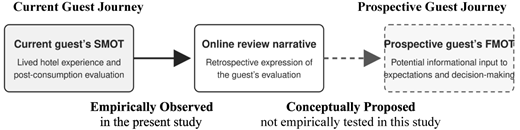
This third contribution combines the observed post-consumption character of the reviews with prior evidence that online reviews can influence expectations and booking decisions (Vermeulen & Seegers, 2009; Filieri & McLeay, 2014; Schuckert et al., 2015). The present data do not show whether prospective customers read particular reviews or how those reviews affect their decisions. The SMOT-to-FMOT crossover should therefore be understood as a theoretically derived, cross-customer proposition requiring direct empirical testing. Figure 1 represents this proposed mechanism and distinguishes the empirically observed review narrative from its hypothesized role in a subsequent customer journey.
Conclusion
This study examined how post-consumption evaluations are expressed in online reviews of luxury hotels and considered their implications for understanding the broader digital customer journey. Based on 250 TripAdvisor reviews from five luxury hotels in Istanbul, the findings revealed a clear dominance of SMOT-related narratives. Of the 250 reviews analyzed, 238 were classified as SMOT, 12 contained both FMOT and SMOT elements, and none was classified exclusively as FMOT. References to expectations and choice-related considerations appeared only when reviewers compared them with their actual experiences. This pattern shows that online hotel reviews are primarily retrospective accounts of consumption, while references to pre-consumption expectations remain embedded within post-consumption evaluations.
The findings also show that luxury hotel experiences are interpreted mainly through service encounters. Service quality and personalized service and staff recognition were the two most prominent themes, followed by revisit intention, loyalty, recommendation behavior, and electronic word-of-mouth. Physical and atmospheric attributes, including location, views, amenities, and perceptions of luxury, remained relevant but were generally evaluated in combination with employee interactions and service delivery. Negative evaluations followed a similar pattern. Dissatisfaction was associated primarily with employee behavior, communication problems, service inconsistency, and unmet expectations rather than with physical shortcomings. Luxury hospitality is therefore experienced not only through premium facilities but through the extent to which service encounters make guests feel recognized, valued, and individually attended to. These patterns represent the dominant emphases of the review narratives rather than objective comparisons of hotel performance.
The main theoretical contribution of the study lies in its distinction between the empirically observed content of review narratives and their conceptually proposed role in subsequent customer journeys. Existing applications of the framework generally treat FMOT and SMOT as sequential stages within the journey of an individual consumer. The present findings establish that reviews express one guest's SMOT; when interpreted alongside prior eWOM research, they support the proposition that these publicly available narratives may subsequently become informational inputs into another guest's FMOT. The study does not empirically demonstrate this crossover or its effects on future decisions. This interpretation moves beyond treating reviews solely as records of satisfaction or sources of booking information. It conceptualizes online review platforms as potential sites through which moments of truth may circulate between consumers and identifies this process as requiring direct empirical testing.
The absence of independent FMOT narratives also offers a further insight into the structure of online review narratives. It does not indicate that FMOT is irrelevant to online hotel reviews. Rather, it reflects the retrospective structure of the data. Reviewers rarely discuss expectations independently of what happened during the stay. Pre-consumption expectations become visible through expectation confirmation, expectation disconfirmation, or explanations of why the experience differed from what had been anticipated. Thus, expectations appear as components of retrospective evaluation rather than as independently observed FMOT processes.
Luxury hotel managers should view online reviews not only as evaluations of completed stays but as part of the digital information environment available to future guests. A service encounter directly affects the current guest and may also become visible to prospective guests through the resulting review. Investments in employee professionalism, responsiveness, service consistency, and personalized attention can generate benefits beyond immediate satisfaction by strengthening expressed recommendation behavior and revisit intention. At the same time, service failures should be addressed quickly because negative accounts of employee behavior or unmet expectations may become information cues for prospective customers. Although managerial responses were not examined in this study, review monitoring, service recovery, and managerial responses should therefore be integrated into the broader management of the customer journey rather than treated solely as reputation-management activities.
Several limitations should be considered when interpreting the findings. The study focused on five luxury hotels in Istanbul and reflects the characteristics of a single destination and market segment. The data were obtained from one review platform, and the most recent reviews available during the data collection period were selected. The equal selection of 50 reviews per hotel supported balanced comparison but did not reproduce differences in the hotels' total review volumes. Each review was also assigned to one dominant theme, which necessarily reduced the complexity of narratives containing multiple evaluative elements. The study examined publicly expressed narratives rather than customers' full decision-making processes. It therefore cannot determine precisely which information sources shaped each guest's original FMOT or how future consumers used the reviews in their booking decisions. Coding was conducted by one author without an independent coder or formal intercoder reliability analysis, although repeated comparison with the original texts was used to support consistency. The qualitative design was intended to generate interpretive insight rather than statistical generalization.
Future studies could compare luxury and non-luxury hotels, different destinations, or multiple review platforms to determine whether the dominance of SMOT remains consistent across contexts. Interviews or survey data could be combined with online review analysis to examine how consumers move from reading previous guests' SMOT narratives to forming their own expectations and purchase decisions. Experimental or behavioral research could directly test whether particular review themes influence prospective customers' FMOT. Longitudinal research could investigate how reviews, managerial responses, and later customer experiences interact over time. Such approaches would test whether and how digital platforms connect successive moments of truth.
Online hotel reviews should ultimately be understood as more than descriptions of completed stays. They document how guests interpret service encounters, and, once published, may carry those interpretations forward into future customer journeys. In luxury hospitality, this possibility extends the theoretical relevance of customer experiences beyond individual stays while remaining a proposition for future empirical investigation.
AI generative
The author acknowledges the use of OpenAI's ChatGPT for language editing. The author reviewed and approved the final text and takes full responsibility for the manuscript.
The supplementary material for this article can be found online.