This study aims to formulate propositions based on combinations of causal conditions that lead to high or low financial anxiety among European students, particularly in Poland and Czechia.
The data for this study were collected in September 2023 from 265 undergraduate and graduate students with their income at one university in Poland and three in Czechia. Students’ views on financial anxiety were explored using a seven-item Likert scale. This study uses fuzzy set qualitative comparative analysis (fsQCA), an emerging marketing research technique.
There are specific factors that may cause increased financial anxiety among young adults in Poland and Czechia, leading to the following key findings: (1) A mix of factors such as perceived lack of financial knowledge, being female, living with parents, having a low monthly income, single status and working a few hours or not at all is linked to higher financial anxiety. (2) Experiencing financial anxiety is also likely when there is low financial knowledge, female gender, living away from parents, single status and a high number of work hours. (3) The combination of low financial literacy, female gender, living with parents, being single and working more hours can elevate financial anxiety.
This study expands the scope of personal financial research by examining how cultural, socioeconomic and psychological factors affect students’ financial anxiety in two European countries that were infrequently studied in this context. It contributes to identifying the drivers of increased and diminished financial anxiety among young adults in Poland and Czechia.
Introduction
In recent years, the financial anxiety of university students garnered significant attention from researchers (Ahamed and Limbu, 2024). This group of the population represents a pivotal segment of society that shapes economic trends, consumption patterns, and financial markets (Lanz et al., 2020). Students are representative of a diverse subset of young consumers who are at various stages of financial independence, from those still reliant on parental support to those managing their finances independently. Financial habits established during young adulthood often persist into later stages of life. Transitioning into adulthood comes with numerous financial challenges, such as student loan debt, which is less frequent in Poland or Czechia than in the USA or Western Europe, managing expenses while studying and planning for future financial goals. Current trends imply that college students confront higher expenses for attending college without an equivalent increase in financial help (Tran et al., 2018). As a result, it is reasonable to predict that financial anxiety or stress will continue to be a significant factor influencing college students' mental health. Among the various factors influencing student well-being, financial anxiety emerged as a critical concern. Financial anxiety is a construct deeply influenced by contextual elements (Medyanik, 2021) and is influenced by a range of socio-demographic factors Ahamed and Limbu (2024), defined it as “a psychometrically distinct concept from general anxiety and depression and is based on people’s money-related beliefs, attitudes, and behaviours that are often influenced by prolonged negative experiences with finance, either personally or in the environment, and are similar to phobias, as they encourage people not to pay attention to their financial stresses” (). Financial anxiety, characterized by persistent worry about money and financial stability, can adversely affect students' academic performance, mental health, and overall quality of life (Archuleta, 2013; Norvilitis and Linn, 2021; Potter et al., 2020). This issue is particularly salient in Central and Eastern Europe, where historical, economic, and social transformations have profoundly impacted the financial landscapes of countries like Poland and Czechia. Both countries experienced economic transformations since the fall of communism, leading to shifts in employment patterns, income distribution, and social welfare systems. Economic instability and disparities can contribute to heightened financial anxiety among students, who may face uncertainties regarding their prospects and financial security.
The study of students' financial anxiety is a critical topic in the contemporary European landscape. Findings from research involving student samples can inform the development of educational programs, financial literacy initiatives, and policy interventions aimed at alleviating financial anxiety and promoting financial resilience among young consumers (She et al., 2023a, b). While extensive research was conducted in the United States and different countries in Europe; Poland, and Czechia was not explored as deeply. University students in Eastern European countries navigate unique economic environments shaped by their respective countries' transition from centrally planned economies to market-driven systems. These transitions introduced both opportunities and challenges, creating a complex financial milieu for students. Prior studies report that the financial self-sufficiency of university students in postsocialist countries is a key factor in their adulthood and life. These students encounter stress due to factors like academic pressure, financial constraints, uncertain futures, and self-doubt (Lovin and Bernardeau-Moreau, 2022). Rising tuition fees, limited access to financial aid, and the necessity of balancing work and study contribute to the financial stress experienced by many students. Cultural attitudes towards money and financial independence further influence students' perceptions and experiences of financial anxiety. Additionally, the financialization of public postsecondary education contributes to an “anxiety epidemic” among students, highlighting the impact of the financial sector on university and social subjects (Haiven and Komporozos-Athanasiou, 2022). Understanding how these factors impact the mental well-being of young consumers is crucial for developing targeted interventions and support systems.
The urgency of this topic in Europe is heightened by several factors. Firstly, the ongoing geopolitical tensions, especially those related to Ukraine, have significant economic and social impacts that directly affect students' financial well-being. Secondly, rising inflation across Europe is exacerbating financial stress among students, making it more challenging for them to manage their expenses and investments in education. Thirdly, job market challenges, especially concerns about finding stable employment opportunities post-graduation, can contribute to financial anxiety among students, as they grapple with the pressures of student loan repayment and achieving financial independence. These unique circumstances make it a pertinent time to study financial anxiety among students in Europe, with a specific focus on Poland and Czechia, to understand their specific challenges and develop targeted strategies to support them.
The motivation for this research stems from the observed gap in the literature concerning the multifaceted nature of financial anxiety among European students, particularly in Poland and Czechia. Despite the extensive research conducted in other regions, the unique socio-economic contexts of these countries were not adequately explored. This study seeks to address this gap by examining the interplay of socio-demographic factors in shaping financial anxiety. The inclusion of socio-demographic factors in understanding financial decision-making is consistently supported by previous research. By doing so, we aim to contribute to the development of tailored strategies and policies that can effectively support students in managing financial stress and achieving financial well-being.
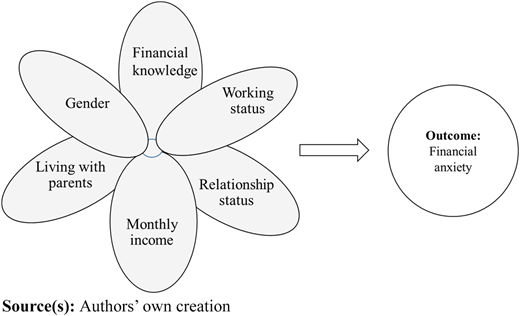
It is important to understand how financial anxiety and socio-demographic factors interrelate and influence each other. We assumed that financial anxiety can be influenced by a complex interplay of factors including gender, financial knowledge, employment status, relationship status, monthly income, and living arrangements. Research suggests that women often report higher levels of financial stress compared to men, influenced by income disparities and societal expectations (Tran et al., 2018). Higher financial literacy tends to mitigate financial anxiety by enhancing individuals' confidence in managing money (Bai, 2023). Employment instability or unemployment can significantly heighten financial anxiety due to concerns about income stability and meeting financial obligations (Vieira et al., 2021). Understanding these interconnected factors is essential for developing effective strategies to mitigate financial anxiety and promote financial well-being among diverse populations. Currently, there is a lack of research incorporating the specific factors that our study considers (Figure 1). This gap in research highlights the need for our unique approach to examining the multifaceted nature of financial anxiety.
This complex interplay necessitates a comprehensive analytical approach like Qualitative Comparative Analysis (QCA) to unravel the nuanced relationships and identify the conditions under which financial anxiety is heightened or alleviated. To date, no research on financial anxiety utilized QCA, an asymmetric, nonlinear analytical tool based on Boolean algebra and set theory assumptions (Franklin, 2020; Ragin, 2009). Given that social concepts are interconnected, examining the same fa-ctors in different combinations can yield diverse outcomes. Therefore, employing QCA in financial anxiety research is compelling, as it allows for a nuanced understanding of how various factors interplay and contribute to financial anxiety, emphasizing the importance of a multifaceted analytical approach.
The fsQCA (fuzzy-set Qualitative Comparative Analysis) approach uses set theory and Boolean algebra to examine complex causal relationships through case comparisons, unlike traditional methods like OLS, which often miss interactive effects between multiple factors (Ragin, 2009). FsQCA excels at identifying different configurations of conditions that lead to the same outcome, focusing on conjunction, equifinality, and asymmetry (Pappas and Woodside, 2021). FsQCA is particularly effective for small-N studies and non-linear phenomena, allowing for the analysis of qualitative, quantitative, or mixed data. This approach captures the richness and contextual dependencies of data that traditional methods might overlook (Ahamed, 2024; Chaouali et al., 2024; Gil-Cordero et al., 2024; Mason et al., 2023; Ragin, 2009).
This research investigates the factors contributing to financial anxiety among university students in Poland and Czechia, utilizing Qualitative Comparative Analysis (QCA) to explore various combinations of socio-demographic conditions. Through this innovative methodological approach, we aim to uncover the specific pathways leading to high or low financial anxiety among students. Our research is not focused on testing existing theories; rather, we aim to explore and formulate propositions based on combinations of causal conditions that lead to high or low financial anxiety among European students, particularly in Poland and Czechia. This approach will lay the groundwork for the development of new theories in this field. By applying fsQCA, this study seeks to uncover the nuanced interplay of economic, social, and personal factors that underpin financial anxiety among students in these two countries. Through a comprehensive analysis of survey data, this research will provide valuable insights into the specific conditions that exacerbate or alleviate financial anxiety among university students. Understanding these conditions is crucial for developing targeted interventions and policies that can effectively support students' financial well-being and enhance their overall academic experience. By shedding light on the factors contributing to financial anxiety in a comparative context, this study contributes to the broader discourse on student mental health and financial security. It also highlights the importance of considering regional and cultural differences when addressing financial anxiety among university students. We assume that financial anxiety is not merely the result of isolated factors but emerges from specific configurations of socio-demographic conditions. These insights provide a foundation for developing targeted interventions to mitigate financial anxiety and enhance financial resilience among students.
Literature review
The literature on financial anxiety has grown in recent years due to the importance that these topics play in individuals' financial decision-making process (Kim et al., 2023). However, the body of literature studying the sources and effects of financial anxiety is scarce and it is still a relatively new field of study. Thus, further research needs to be developed to understand the possible sources of financial anxiety and how it manifests itself through consumer behaviour.
Several studies explore the broader implications of financial concerns on students' overall anxiety and stress (Potter et al., 2020). Baker discusses how demographic characteristics interact with financial concerns, emphasizing the role of student debt in exacerbating financial anxiety. Similarly, Archuleta et al. (2013) and Baker point out that high debt loads contribute to elevated financial stress, affecting students' perceptions and objective measures of their financial situations, which in turn influence their academic engagement and outcomes. The role of social comparison is also found as a significant cause of financial anxiety; Potter et al. (2020) show that comparing one’s financial position to peers can heighten financial anxiety, while students' subjective financial knowledge also correlates with increased anxiety. On an international scale, Larbi et al. found differences in financial anxiety among international students in the U.S. and China, with those the U.S. experiencing lower anxiety levels. Finally Potter et al. (2020) note that certain groups, including first-year and first-generation students, are more susceptible to financial stress due to factors like low perceived mastery, net worth, and median student loan debt. In the following sections, drawing on the pertinent literature, we discuss the relevant factors that can either heighten or reduce financial anxiety among young adults.
Financial knowledge and financial anxiety
The literature provides evidence that an important role in shaping the financial anxiety of consumers is financial knowledge, which is an individual’s basic understanding of finance-related topics (Dogra et al., 2024). Financial knowledge also refers to the ability to understand, manage, and make finance-related decisions. It explains how someone earns, manages, and invests their money, as well as how they contribute to assisting others. Particularly, it refers to skills and information that allow people to make informed and productive financial decisions using all of their resources. Financial knowledge consists of two components: objective and subjective. Objective financial knowledge refers to an individual’s actual financial understanding, while subjective financial knowledge is their confidence in making financial judgements. Unlike financial literacy, which typically involves objective measures of financial knowledge and skills, perceived financial knowledge is a self-perception that reflects individuals' beliefs about their ability to comprehend and navigate financial concepts, processes, and decisions. It refers to individuals' subjective evaluation and assessment of their understanding and proficiency in financial matters. The way individuals perceive their financial understanding can impact their confidence, decision-making, and overall financial well-being (Aristei and Gallo, 2021). Conceptualizing perceived financial knowledge involves recognizing that individuals may not always accurately gauge their level of financial understanding. This subjective assessment is influenced by various psychological, social, and cultural factors (Vidyakala et al., 2018). It encompasses individuals' confidence in their financial capabilities, their comfort level with financial decision-making, and their overall sense of mastery in handling financial matters (Xiao and Meng, 2024) and found a strong negative effect of financial knowledge on financial anxiety.
The notion that financial knowledge impacts financial anxiety is primarily based on Behavioural Finance Theory. This theory suggests that behavioural factors significantly influence financial decisions (Abdeldayem and Aldulaimi, 2024). In this research, grounded in this perspective, we hypothesize that higher levels of subjective financial knowledge, in combination with other factors, are associated with lower financial anxiety among students. Behavioural Finance Theory supports this by explaining how better financial knowledge can reduce the influence of cognitive biases and lead to more rational financial decisions, thereby decreasing financial anxiety.
Living status (living with parents or not) and financial anxiety
The stages of transition to maturity, such as completing one’s education and establishing an independent household, demand a large financial investment (Bea and Yi, 2019). Rising housing costs and the expansion of post-secondary education led to significant spending on housing and financial education for young people (Addo et al., 2016). Many of them face significant burdens and uncertainty as they navigate this landscape with different levels of resources, skills, and knowledge, as they move towards financial independence. Some students experience independent living for the first time during their studies. This decision is related to long-term health and academic functioning (Howard et al., 2022). Studies show that students living off-campus tend to maintain better physical health than their on-campus counterparts (Henry et al., 2018). However, students living on campus drop out less often and have fewer symptoms of anxiety and depression (Eisenberg et al., 2013). Financial stress is associated with more symptoms of depression, anxiety, and stress (Richardson et al., 2017). Living with parents can reduce anxiety related to living expenses. Individuals may not have to worry about paying rent, utilities, or purchasing groceries, leading to lower financial stress and anxiety. However, the impact of receiving financial assistance and support from the family on depression, and consequently on financial anxiety, is not conclusively supported. Fan and Lei (2023) found no evidence that receiving financial assistance from the family reduces depression. On the other hand, if individuals are contributing financially to the household, it can create additional financial pressure. Young adults may become financially dependent on their parents, potentially hindering their ability to develop financial independence and manage their finances effectively. Therefore, living with parents can have both positive and negative effects and the impact may vary based on individual circumstances.
Using Franco Modigliani’s and Richard Brumberg’s Life Cycle Hypothesis (LCH) (Martini and Spataro, 2023), which suggests individuals plan their consumption and savings over their life cycle, this research focuses on young adulthood. During this phase, high expenses and low income make living with parents beneficial by reducing financial burdens like rent and utilities, thereby lowering financial anxiety. Conversely, living independently increases financial responsibility and anxiety due to limited resources. Therefore, we propose that living with parents during this dependent phase helps manage financial pressures and reduce anxiety.
Gender and financial anxiety
Previous research identified significant gender differences in financial knowledge (Aristei and Gallo, 2021). The majority of the gender disparity in financial knowledge can be attributed to variations in confidence, with the remainder being real knowledge differences (Bucher-Koenen et al., 2021). Some authors present research indicating that women tend to underestimate their true financial skills rather than overstate them, unlike males (Aristei and Gallo, 2021). Gender can also play a significant role in shaping the financial attitudes, behaviours, and financial anxiety of consumers (Lind et al., 2020). Men and women may approach financial decisions differently. Females are significantly less likely to engage in any of the financial behaviours compared to men. These differences can influence financial anxiety levels depending on household conditions. Gender pay gaps can impact the financial well-being of consumers. If there are disparities in earnings between genders, this may lead to different levels of financial anxiety, with individuals facing lower incomes potentially experiencing higher levels of stress (Lind et al., 2020). There are significant disparities in financial stress across racial and gender lines, and females generally report greater financial anxiety than males. These findings are supported by Montalto et al., who also document gender and racial/ethnic differences in financial stress among college students.
Based on the preceding discussions, we propose that gender differences in financial knowledge and confidence significantly contribute to variations in financial anxiety. Women’s lower confidence and social pressure increase their financial anxiety, while men’s higher confidence and perceived control reduce theirs. Therefore, gender differences, along with other factors, lead to varying levels of financial anxiety.
Working status and financial anxiety
Employment serves as an important source of income that can offset debt and reduce worries related to financial strain. Furthermore, it helps individuals to develop social networks and acquire social status, which can boost both economic and mental health well-being. Employment provides a source of income, financial independence, and the ability to cover expenses, but it can also introduce stress and time constraints. A growing body of literature suggests that unemployment has significantly adverse effects on mental health (Drydakis, 2015). Students’ decision to work during their university years can be justified by the need to pay a high scholarship price and cover living expenses. The working status of young adults, particularly students, can have an impact on their financial anxiety. Employment provides a higher income, offering more financial stability. This can significantly reduce anxiety related to meeting basic needs, tuition, and other expenses. While full-time employment provides financial stability, it may limit the time available for academic pursuits. Students may struggle to find a balance between work commitments and their academic responsibilities, which can potentially lead to increased stress and anxiety. Employed students are at a higher risk of burnout because combining a job with a student role reduces their ability to successfully manage time and energy to achieve both employment and academic tasks. Not working allows students to focus entirely on their academics, potentially leading to higher academic performance. However, financial stress may arise if there is insufficient support to cover living and educational expenses. Students who are not working may be more dependent on financial support from family, scholarships, or loans. This dependency can contribute to financial anxiety if external support is limited. They face various psychological difficulties due to exposure to stressful situations, such as anxiety, depression, stress, anger, and mental illness, indicative of negative adaptation (Schramer et al., 2020).
Based on the aforementioned discussion, employment status influences financial anxiety, with employed students experiencing lower anxiety due to financial stability but higher stress from time constraints. According to the Life Cycle Hypothesis (LCH) of Modigliani and Brumberg (Martini and Spataro, 2023), young adulthood involves lower income and higher expenses. Employment provides essential income, reducing financial anxiety by offsetting debt and living costs. However, balancing work and academic responsibilities introduces significant stress. Thus, we conceptualize that a student’s employment status can reduce financial anxiety through increased stability but also increase anxiety due to time constraints.
Income and financial anxiety
Research indicates that income plays a significant role in determining one’s financial behaviour and overall financial health, as shown by the results of multiple studies conducted in various settings (Mahdzan et al., 2019; Netemeyer et al., 2018; Chen and Jin, 2017). Serido et al. (2014) established a strong correlation between financial distress and income levels, significantly affecting students' financial satisfaction and anxiety. Limited income is a significant worry for students' academic progress and mental health (Howard et al., 2022). The level of income directly influences students' ability to meet their basic needs, cover educational expenses, and manage financial responsibilities. High income provides financial security and reduces anxiety related to meeting basic needs and covering expenses. Low income may lead to financial strain, impacting overall well-being and contributing to anxiety. Students experiencing financial difficulties confront challenging budgeting decisions to ensure they pay their tuition and fees. In some cases, this means reducing or foregoing spending on basic needs (Broton and Goldrick-Rab, 2018). Financially stressed students are less likely to complete their degrees than their counterparts from higher-income families and peers with less debt. Consequently, students from lower-income families indicate higher levels of financial stress than students from better-income homes (Houle, 2014). Studies show that financial stress is associated with more symptoms of depression, anxiety, and stress (Richardson et al., 2017).
The Socioeconomic Status and Stress Theory posits that individuals with higher socioeconomic status (SES) experience lower stress due to greater financial security, better access to resources, and more effective coping mechanisms. For students, higher income reduces financial anxiety by meeting basic needs and educational expenses, providing access to quality resources, and offering various stress management options. Thus, following this theory, we conceptualize that higher income levels, in combination with other factors, are associated with lower financial anxiety among students.
Marital status and financial anxiety
While employment, living status, and income level contribute to financial anxiety among students, it’s also important to explore how marital status may interact with and potentially worsen or reduce financial problems. Marital status was linked to wealth creation. Individuals who are married, single, divorced, or widowed have distinct financial obligations and requirements (Lee and Kelley, 2023). Important financial decisions like paying for school, supporting a family, investing, and setting aside money for retirement are also influenced by marriage (Lee and Lesli, 2021; Korankye and Kalenkoski, 2021). Marital status can also impact the financial anxiety of young adults. The influence of relationship status on financial well-being is multifaceted, encompassing shared expenses, financial goals, and emotional support. Research indicates that women are more likely than men to experience financial stress and that single women and divorced people, irrespective of gender, report lower levels of financial happiness than married people (Fan and Babiarz, 2019). Single students may have more independent financial responsibilities, covering their living expenses, tuition, and other costs. While this independence provides autonomy, it can also lead to financial anxiety, especially if income is limited. Students in a relationship may benefit from shared living expenses, potentially reducing individual financial burdens. This can lead to lower financial anxiety as the financial load is distributed between partners. It also discovered that married individuals are more likely to engage in positive saving activities than unmarried individuals (Heckman and Hanna, 2015). These previous studies prove that marital status plays a role in financial perception and behaviour (Heckman et al., 2014). Hence, in this research, we conceptualize that marital status along with other factors heightened or decreased financial anxiety among students.
Summary of the literature review
The review of the existing literature provides a foundation on critical issues related to financial anxiety and its significance in consumer behaviour. Despite this, there is a need for further analysis to understand the causes of financial anxiety, particularly the various combinations of causes that make young consumers financially anxious. This exploratory research aims to identify several causes highlighted in past studies and establish their causal combinations affecting financial anxiety. Rather than testing a singular overarching theory, this research aligns with the assumptions of Qualitative Comparative Analysis (QCA) to advance theory development on financial anxiety. The causes discussed are grounded in established theories, as detailed in previous sections. To address gaps in the literature, we propose the following model (Figure 1). Social phenomena do not operate in isolation; instead, a complex interplay of causes leads to outcomes (Ahamed, 2024; Ragin, 2009). This research identifies several causal factors from the literature that may lead to financial anxiety among young adults and conceptualizes an interconnected Qualitative Comparative Analysis (QCA) model. This model provides a nuanced understanding of how various factors contribute to financial anxiety, emphasizing the need for a multifaceted approach. As the QCA approach differs from the hypothesis testing and p-value approach common in quantitative research, we did not develop any hypotheses for testing. Instead, adhering to the exploratory nature of this research, we present several propositions for high and low student financial anxiety in the results section.
Our work aims to contribute to the literature by providing new insights into the role of financial anxiety in shaping individual financial behaviour. Using data from an international young adults’ survey, we assessed the influence of different factors on financial anxiety. Understanding the importance of perceived financial anxiety within the context of family life in Poland (PL) and Czechia (CZ) sheds light on the factors influencing financial anxiety among students.
Methodology
Sample profile and data collection
Data collection occurred in Czechia and Poland. We collected 265 undergraduates and graduates on their income (Table 1). In Czechia, the data came from three universities (Prague University of Economics and Business, University of West Bohemia in Pilsen, and Czech Technical University in Prague) and in Poland the data came from one university (The University of Warmia and Mazury in Olsztyn). While mixing respondents from different universities and academic levels might initially suggest a violation of the homogeneity assumption, we argue that financial anxiety is a construct that may equally affect young adults at both undergraduate and graduate levels. Additionally, the curricula of business departments across universities are generally similar. Contextually, this supports the argument that our study did not violate the assumption of homogeneity. Moreover, the literature in similar domains includes studies on such mixing. For instance, Norvilitis and Linn (2021) mixed students from different levels, as did Potter et al. (2020). Furthermore, we conducted a test for homogeneity of variance using the Levene Statistic in SPSS and found the result to be non-significant. This allows us to assume equal variance levels in our dataset, despite the mixing of different academic levels and universities. The tests of homogeneity of variance are attached in Appendix 1.
Measurement items
Financial anxiety was measured using a 7-item Likert scale adopted from (Archuleta et al., 2013). This scale spans 7 points, ranging from 1 (Never) to 7 (Always). Monthly income was initially recorded in local currency and later converted to Euros. To assess perceived financial knowledge, respondents were asked to rate their knowledge on a scale from 1 (No knowledge at all) to 10 (Very knowledgeable). Relationship status was determined using a three-option query: single, living with a partner, or other. Gender was recorded as a binary variable: female (0) or male (1). Lastly, working hours were categorized into three groups: unemployed or not working, part-time (up to 20 h per week), and full-time (up to 40 h per week). Appendix 2 demonstrates the perceptual constructs, including the items used to operationalize them, as well as the average and standard deviation of the measurement items. A Pearson correlation table of the measurement items is annexed in the Appendix 3. The questionnaire was translated into Polish and Czech, with back-translation to ensure accuracy. This process was overseen by the co-authors, who are native speakers of Polish and Czech, to identify any discrepancies.
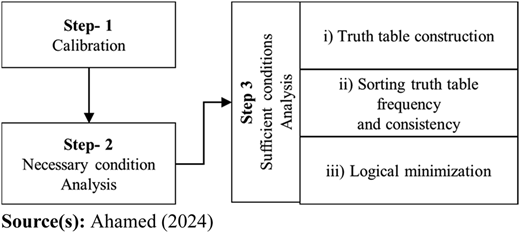
In this research, we employed three statistical software tools: SPSS (Statistical Package for the Social Sciences), SmartPLS, and fsQCA (Fuzzy set Qualitative Comparative Analysis) (Ragin, 2009). The core purpose of QCA, including fsQCA, is to unravel the causal complexity of social phenomena. It operates on three principles: conjunctural causation, equifinality, and causal asymmetry (Mello, 2021). Conjunctural causation involves different combinations of conditions, equifinality suggests multiple pathways to the same outcome, and causal asymmetry implies different explanations for outcomes and non-outcomes (Pappas and Woodside, 2021; Ragin, 2009; Rihoux and Ragin, 2008). QCA variants include crisp-set QCA (csQCA), multivalue QCA (mvQCA), and fuzzy set QCA (fsQCA) (Pappas and Woodside, 2021). FsQCA, in particular, enhances the methodology by integrating Boolean algebra, fuzzy set theory, and fuzzy logic with QCA theory, allowing for a systematic analysis of condition combinations (Ragin, 2009). This approach gained traction across various social science disciplines (Pappas and Woodside, 2021). For this study, we used FsQCA 3.0. The analysis and results section will detail the step-by-step procedure of applying fsQCA in our research (Figure 2).
Research results
Our data analysis was carried out in three phases. In the first phase, we focused on data cleansing, which involved removing outliers and missing values and examining the dataset for biases and multicollinearity using SPSS. The second phase entailed assessing the reliability and validity of the variables in our research model through confirmatory factor analysis (CFA), which was conducted using SmartPLS. Finally, the third phase involved testing the necessary conditions and causal combinations using fsQCA.
The dataset underwent a thorough review for missing values and outliers. During this process, we removed two responses due to anomalously high monthly income and four responses due to missing data. Following this data cleaning, the sample size was adjusted to 265. The requirements for sample size in QCA analysis are flexible, ranging from a small to a very large number of cases (Pappas and Woodside, 2021). According to Mello (2021), a minimum of four cases per condition is advisable. Therefore, our sample size of 265 is considered adequate for this analysis. We examined two prevalent biases often encountered in survey research: non-response bias and common-method variance (CMV) (Crnjak-Karanović et al., 2023). To assess non-response bias, we followed the method proposed by (Armstrong and Overton, 1977), which involves comparing early and late responses to the survey. Our analysis revealed no differences between these groups of responses, leading us to conclude that non-response bias does not pose a threat to our research findings. To mitigate the risk of CMV, we adopted several strategies. First, we emphasized the subjectivity of responses and guaranteed the anonymity and confidentiality of respondents during data collection (Crnjak-Karanović et al., 2023). Additionally, we conducted Harman’s single-factor test to determine if a single factor could account for most of the variance in our data. The results indicated that CMV does not pose a significant problem in our research. We furthermore conducted a variance inflation factor (VIF) test to assess the potential for multicollinearity. The VIF values obtained fell within the acceptable range, suggesting that multicollinearity does not significantly affect our research.
In the second phase, we focused on assessing the reliability and validity of the latent constructs. Initially, we observed the factor loadings, noting that all item loadings significantly surpassed the 0.60 benchmark (Hair et al., 2014). We then proceeded with a two-step process to further assess reliability and validity. The first step involved evaluating composite reliability (CR) and Cronbach’s alpha of the construct (i.e. financial anxiety). Here, both CR (rho_a and rho_c) and Cronbach’s alpha demonstrated values of 0.95, 0.95, and 0.94, respectively, well above the 0.70 threshold (Hair et al., 2014). Furthermore, the average variance extracted (AVE) for the construct was 0.75, surpassing the minimum standard of 0.50. Given that all indicators significantly exceed these thresholds, we concluded that the indicators exhibit strong convergent validity. To assess discriminant validity, we utilized the Fornell-Larcker criterion, which stipulates that the square root of the Average Variance Extracted (AVE) for each variable should be larger than its correlation with any other construct. As illustrated in Table 2, the constructs in our study meet the criteria for acceptable discriminant validity (Fornell and Larcker, 1981; Henseler et al., 2016).
FsQCA analysis
Figure 2 illustrates the process of data analysis using the fsQCA software:
Calibration
The first step in fsQCA analysis is calibration (Pappas and Woodside, 2021). This stage entails allocating a fuzzy membership score to each data point to run further analysis. For calibrating the data, three key thresholds were established: full non-membership at 5%, a crossover point at 50%, and full membership at 95%. In this research, gender, living, and relationship status are represented as dichotomous variables. Gender is coded as “0” for males and “1” for females. Similarly, living with parents is coded as “0” for not living with parents and “1” for living with parents. Relationship status is also dichotomized, with “0” indicating single and “1” indicating in a relationship, which includes living with a partner, being married, or any other status labelled as 'others'. These three variables did not require to be calibrated. Table 3 provides a summary of the variables and their respective calibrations.
The financial literacy and financial knowledge both in Poland and Czechia is well developed and relatively inclusive, more than 95% of inhabitants aged 15 and older have a bank account (Demirgüç-Kunt et al., 2022). On the one hand, an increasing number of Poles and Czechs declared to be saving and the COVID-19 pandemic, it seems that Poles and Czechs are more aware of the importance of savings in these turbulent economic times (OECD, 2022). On the other hand, many Poles and Czech have low amounts of savings or prefer keeping their savings liquid in the form of cash or bank deposits, potentially missing returns on investments, especially in the context of low interest rates and high inflation (OECD, 2022). In general, the overall situation both in Poland and Czechia could be considered comparable, even though the average monthly net salary was in 2023 different (Poland = 1,127 USD, Czechia = 1,641 USD) (Country Cassette, 2024).
Necessary condition analysis
The subsequent phase of our analysis involves examining the necessary conditions. Generally, configurations with low consistency are not empirically supported, while coverage indicates the frequency of the configuration’s occurrence in the sample (Ragin, 2009; Rihoux and Ragin, 2008). For a condition to be deemed necessary, it must have a consistency value of at least 0.90 (Ragin, 2009; Rihoux and Ragin, 2008). In Table 4, we present the necessary conditions for two distinct outcomes: high financial anxiety and low/medium financial anxiety within our sample. However, as shown in Table 4, none of the conditions meet the consistency benchmark for being necessary. This suggests that no single condition is indispensable for either high or low financial anxiety, implying that these outcomes are likely the result of a combination of various conditions.
Sufficient conditions analysis
The final step in our analysis is conducting a sufficiency analysis (Ragin, 2009; Rihoux and Ragin, 2008). This process begins with the creation of a truth table (using the “Analyze > Truth Table Algorithm”) to categorize each observation into a specific configuration (Ragin, 2009; Pappas and Woodside, 2021). The resulting truth tables are included in Appendix 1 and 2. Subsequently, the frequency and consistency of the truth table are analysed and sorted (Ragin, 2009). For the outcomes of high financial anxiety and low/medium financial anxiety, the frequency cutoffs were set at 3 and 2, with consistency cutoffs of 0.91 and 0.89, respectively. The next step involves defining causal patterns using logical statements and then reducing these patterns (Ragin, 2009; Rihoux and Ragin, 2008). As a result, we identified three configurations of sufficient conditions that lead to high financial anxiety and one configuration that leads to low/medium financial anxiety, as detailed in Table 5.
Discussion
We identified three configurations that can lead to elevated financial anxiety among young adults in Poland and Czechia. We propose these configurations as potential avenues for future theory development (i.e. propositions). They are outlined below:
A combination of limited perceived financial knowledge, being female, living with parents, having a low monthly income, being single, and working limited hours (or not working at all) can result in elevated levels of financial anxiety (CC = 0.93, RC = 0.05, UC = 0.02).
A combination of low perceived financial knowledge, being female, living independently from parents, being single, and maintaining high working hours can also significantly contribute to the experience of financial anxiety among students (CC = 0.92, RC = 0.04, UC = 0.04)
Despite earning a high monthly income, a combination of factors including low perceived financial knowledge, being female, residing with parents, being single, and working more hours can still lead to heightened levels of financial anxiety. (CC = 0.91, RC = 0.07, UC = 0.04)
In all three configurations, low perceived financial knowledge is a common factor (and a core factor). This suggests that regardless of other variables (such as income, living situation, or employment status), a lack of confidence or understanding in managing finances is a significant contributor to financial anxiety. Many students experience a significant transition to independent living when they move away from home for their studies. This transition may coincide with newfound financial responsibilities, such as managing rent, utilities, and groceries, without adequate preparation or support in financial management skills. University education systems in both countries often prioritize academic subjects over practical life skills such as financial literacy. As a result, students may graduate with advanced knowledge in their chosen fields but lack the essential financial management skills needed to navigate real-world financial decisions. It implies a need for improved financial education and support for young adults (mostly university students) which is in line with previous research (Swiecka et al., 2020; MENA, 2021). The consistent mention of being female in all scenarios highlights a potential gender disparity in financial anxiety. This could be reflective of broader societal factors, such as wage gaps, differing societal expectations, or other stressors that disproportionately affect women (Stephens and Al Bahrani, 2023). There is a complex interplay between living arrangements, income levels, and financial anxiety. Living with parents, whether with low or high monthly income, appears to be linked to higher financial anxiety. This might indicate that the security or dependency of living with parents does not necessarily mitigate financial worries, and in some cases, might even exacerbate them due to additional familial or societal expectations (Tambling et al., 2021). Being single and the nature of employment (whether high working hours or limited/no work) are also key factors. High working hours might indicate a struggle to balance work and study, leading to stress, while limited or no work might reflect financial instability. Being single might also add to the financial pressure due to the absence of a potential secondary income or support system. Factors such as the cost of living, availability of student support systems, cultural attitudes towards education and employment, and the overall economic climate in Poland and Czechia play a crucial role in shaping these outcomes (Gignac et al., 2023). In an additional analysis, we employed a Structural Equation Model using Smart-PLS, with financial anxiety as the dependent variable and perceived financial knowledge, gender, living with parents, monthly income, relationship status, and working hours as the independent variables. The results revealed that perceived financial knowledge hurts financial anxiety (b = −0.23, p = 0.00), living with parents has a positive effect on financial anxiety (b = 0.33, p = 0.01), and monthly income hurts financial anxiety (b = −0.18, p = 0.00). Gender, relationship status, and working hours did not show any significant effects on financial anxiety. These findings align somewhat with the results from the Qualitative Comparative Analysis (QCA) reported in the propositions, although QCA provides more insight into how different combinations of variables can lead to high financial anxiety.
The configurations and discussions above suggest that financial anxiety among university students in Poland and Czechia is influenced by a multifaceted set of factors and their combinations including perceived knowledge, gender, socio-economic status, and personal circumstances. Addressing financial anxiety in this demographic thus would require a holistic approach, considering all these diverse but interrelated elements (Jones, 2021).
We also found one configuration for leading to low/medium financial anxiety among young adults in Poland and Czechia, which we write as a proposition:
A combination of low perceived financial knowledge, being male, living with parents, having a high monthly income, not being single, and having moderate working hours could lead to reduced financial anxiety (CC = 0.89, RC = 0.04, UC = 0.04).
Interestingly, even with low perceived financial knowledge, students experience lower levels of financial anxiety in this scenario. This indicates that other factors may play a more significant role in mitigating financial anxiety, or that the impact of perceived financial knowledge varies depending on other contextual factors (Potter et al., 2020). The inclusion of the male gender in this scenario, as opposed to the female gender in high financial anxiety conditions, might indicate gender-related differences in experiencing financial anxiety. This could be due to a variety of reasons, including societal expectations, gender pay gap issues, or differing financial responsibilities and pressures faced by male students (Stephens and Al Bahrani, 2023). Gender-related differences in experiencing financial anxiety among university students in Poland and Czechia are complex and multifaceted. In both Poland and Czechia, women may experience lower average incomes compared to men, even among university students. Gender stereotypes and societal expectations regarding career choices may cause male students to feel more confident in their ability to find well-paying jobs after graduation, whereas female students may be more likely to have caregiving responsibilities, such as childcare or eldercare, which can impact their financial situation and contribute to feelings of anxiety. Residing with parents while having a high monthly income appears to be a favourable condition. This combination likely provides a safety net and reduces financial burden, leading to lower anxiety. The high income offers financial stability, while living with parents might reduce living expenses and provide emotional or practical support (Wheeler and Brooks, 2023). In both Poland and Czechia, there is a strong tradition of intergenerational support within families. It is common for young adults to continue living with their parents, particularly in urban areas where housing costs are high. Both countries offer relatively affordable higher education options compared to many other European countries, however, the cost of living at university still represents a significant financial burden for many students. Residing with parents allows students to maintain a degree of financial interdependence with their families, which can provide stability and security during times of economic uncertainty. Not being single and having moderate working hours are also key factors in this scenario. Being in a relationship might provide additional emotional or financial support, reducing stress and anxiety. Moderate working hours suggest a balanced approach to work and study, allowing for a stable income without the excessive stress of overworking. These aforementioned conditions indicate that a combination of financial stability, supportive living arrangements, balanced work-life integration, and possibly the supportive aspects of a romantic relationship, can collectively contribute to lower levels of financial anxiety among university students in Poland and Czechia. This suggests that financial anxiety is not solely dependent on financial knowledge or income but is also significantly influenced by social and personal circumstances and perhaps most importantly their different configurations.
Conclusions and implications
Poland and Czechia have distinct cultural, historical, and economic backgrounds, allowing for the analysis of financial anxiety within similar contexts. Both countries are situated in Eastern Europe and they have unique regional characteristics that may influence financial behaviours and attitudes. They share geographical proximity and historical cultural ties, despite having distinct identities. This similarity can ensure that the findings are relevant and applicable within the Central European context. Both countries have educational systems that follow similar structures and face comparable challenges. Olsztyn is located in the northeastern part of Poland. Including a university in this region ensures representation beyond major urban centres. Prague, as a major European city, tends to have a more internationalized environment. By selecting universities that are diverse in terms of size, location, and academic disciplines offered, we aim to create a sample that is representative of the broader student population within Central Europe. This approach enhances the generalizability of the findings and ensures that the research outcomes can be applied to a wide range of contexts.
Given the current financial and political scenario in Poland and Czechia, particularly in the context of the ongoing geopolitical tensions and economic repercussions of the conflict in neighbouring Ukraine, it is important to study the financial anxiety of young adults in these countries. The conflict in Ukraine had significant economic implications for Poland and Czechia, including increased geopolitical uncertainty, disruptions in trade and investment, and heightened security concerns. Such uncertainties could exacerbate financial anxiety among young adults, who face concerns about job security, economic stability and prospects in the face of geopolitical instability. Young adults entering the job market or pursuing higher education may face heightened competition for employment opportunities, reduced job prospects, and uncertainty about future career paths. Rising inflation erodes purchasing power and increases the cost of living, making it more challenging for young adults to meet their financial obligations. As living expenses continue to rise, young adults may struggle to afford higher education or manage student loan repayments. The economic uncertainties resulting from the conflict in Ukraine may further compound these challenges, making it even more difficult for young adults to pursue their educational aspirations without experiencing financial strain and anxiety. In light of these current financial and political challenges facing young adults in Europe, studying the prevalence and impact of financial anxiety among this demographic group is crucial. Having drawn a dataset from university students in Poland and Czechia, we conducted an analysis using fsQCA, which revealed three causal combinations leading to high financial anxiety and one configuration associated with low financial anxiety (presented as propositions). These configurations were thoroughly examined and discussed in the preceding section.
Limitations
In the presented research, there exist a couple of limitations. First, the research sample structure does not reflect exactly the structure of the population as we did not address Generation Z members without any education or just a lower-level vocational school. In general, the presented sample is not valid for the structure of the entire Polish and Czech population. Second, we focused mostly on the capital city and cities with more than 300,000 inhabitants, and respondents who studied in smaller regional cities were omitted. Third, measuring financial knowledge on a subjective scale and more objective techniques, such as large-sample literacy tests should be used to use valid results. Fourth, we focused only on Poland and Czechia and therefore we did not cover all countries in Central and Eastern Europe. Fifth, the research model of the fsQCA should be more complex. Finally, further research should more focus on the time comparison of the data on how the situation is evolving under the influence of various external factors.
Theoretical and practical implications
Analysing financial anxiety among university students in Poland and Czechia offers valuable insights both theoretically and practically. Theoretical contributions include understanding how cultural, socio-economic, and psychological factors shape financial attitudes and behaviours among students. This research helps to identify determinants of financial anxiety, refining theoretical models and informing targeted interventions. On a practical level, understanding the specific financial challenges and knowledge gaps faced by Polish and Czech students allows for the development of tailored financial education programs. These programs can address country-specific financial topics, regulations, and resources, equipping students with practical skills to manage their finances effectively. These should focus on increasing financial literacy, teaching practical money management skills, and providing resources for financial planning. By incorporating our insights into the specific financial anxieties faced by students, these programs can be designed to address their unique challenges, such as managing student loans, budgeting, and understanding credit. Policymakers can use our findings to advocate for increased financial aid, scholarships, and grants to reduce the financial burden on students, as previous research highlights the importance of behavioural aspects in public policy (Fan and Lei, 2023). Economic strategies targeting student financial well-being could be developed by universities and local governments. For example, creating partnerships with local businesses to offer student discounts, providing on-campus employment opportunities, and developing financial counselling services can directly address the factors contributing to financial anxiety.
Overall, studying financial anxiety among Polish and Czech university students contributes to a deeper understanding of the phenomenon and facilitates the development of effective strategies to support students' financial well-being. Our analysis of these propositions indicated that females exhibit higher levels of financial anxiety within the sampled population. Considering that the gender equality index in Poland stands at 57.7 and in Czechia at 57.2, on a scale from 1 to 100, where 100 signifies full gender equality, it becomes evident that there are significant opportunities to investigate the reasons behind elevated financial anxiety among females. Universities, governmental bodies, and future research endeavours must delve into the causes of financial anxiety among female students. A qualitative approach may prove to be more suitable for further investigation in this regard (Stephens and Al Bahrani, 2023).
An intriguing finding of this research is the lack of perceived financial knowledge, which contributes to heightened financial anxiety. While we did not survey the objective financial knowledge (Financial Literacy test) of the given population, we observed that the overall financial literacy of Poland and Czechia is lower compared to their European Union counterparts (Klapper et al., 2015). Additionally, our research indicates that self-reported perceived financial knowledge is a significant factor in heightened financial anxiety. Therefore, governments and authorities must take initiatives to enhance the financial knowledge of students. One potential solution could involve implementing a compulsory course on financial literacy for all students, irrespective of their departmental orientation (Kim et al., 2023).
Future research implications
Future research could employ both objective and subjective measures of financial knowledge and delve deeper into the causes of financial anxiety using a representative sample from these countries. Future research should aim to deepen the understanding of financial anxiety through longitudinal and comparative studies. Longitudinal studies would provide deeper insights into how financial anxiety evolves and its long-term effects on a student’s academic performance and mental health. Tracking students' financial anxiety from their first year through graduation and into their early careers could reveal critical periods where interventions are most needed. For policymakers, these studies could highlight the importance of continuous support throughout a student’s academic journey, potentially leading to policies that ensure sustained financial aid and mental health resources. Comparative studies involving other countries could help identify unique versus universal factors contributing to financial anxiety. Such comparative research would enhance our understanding of the cultural and economic influences on financial anxiety and inform more globally applicable strategies. Educational institutions could use these insights to benchmark their support services against international standards and adopt best practices from other regions to better address their students' needs.
Being single can be a common cause of high financial anxiety in Polish and Czech cultures due to societal pressures, housing costs, financial support, and future aspirations. Both Polish and Czech societies traditionally place a strong emphasis on family cohesion and support. Marriage and family life are often regarded as essential components of personal fulfilment and social stability. As a result, individuals who remain single may face societal pressures. The university is often seen as a time for young adults to gain independence and establish themselves financially. However, single students may feel additional pressure to achieve financial independence without the support of a partner. In addition, single students may face difficulties in finding affordable accommodation, as they do not have the option to share expenses with a partner or roommate. Another big difference with the Anglo-Saxon countries (USA, UK) is that in Poland and Czechia, students pay no tuition fee if they study the program taught in the domestic language (e.g. Polish or Czech). Thus, financial anxiety is not connected with the payment of the students’ loans but with the payment of their living expenses that grew steadily in the last years in the large Polish and Czech cities as a result of the high inflation rate and inflow of refugees from Ukraine which increases the demand.