The purpose of this study is to conduct a critical review of technological innovations, attendee engagement and their dynamic relationships, while proposing a future research agenda for experience design in the digital age.
A total of 79 articles on technology-facilitated engagement, collected from commonly used online databases and leading event journals, were analyzed using bibliometric and thematic methods.
The results identify three categories of event technology: media technology, immersive technology and smart consumer-assistive technology. The analysis examines their impact on attendees’ cognitive, affective and behavioral engagement across pre-, during- and post-event phases. Finally, the authors propose a future agenda to fill existing gaps, providing theoretical understandings of attendee engagement in the digital era and practical implications regarding enhanced event experience design through technology.
This study contributes to research on engagement dynamics by categorizing three technology contexts and interpreting how they shape attendees’ engagement from a temporal perspective. The findings offer insights for practitioners to enhance engagement, operational efficiency and inclusivity through technology-driven strategies.
This study advances knowledge of technology-facilitated engagement by redefining a multidimensional, multiphase conceptualization, proposing a categorization of technology types and pointing out directions for further exploration.
1. Introduction
Technology is reshaping the event industry, revolutionizing planning, marketing, execution and attendee engagement (Ryan et al., 2020). Event professionals increasingly leverage technology to attract and retain attendees across business conferences, entertainment, cultural festivals and sports events. For instance, the Paris Olympic Opening Ceremony featured a laser show at the Eiffel Tower and illuminated landmarks to create a visually immersive experience. The Decentraland metaverse music festival engaged attendees through gamified activities and real-time avatar interactions. At business events, robotic baristas and the 3D holographic server “Jenny” provide novel, entertaining experiences (Singh et al., 2021). To strategically enhance attendee engagement, 85% of professionals use event management software, 50% use artificial intelligence (AI) and 41% use mobile apps (Cvent, 2025). Ryan et al. (2020) describe the progression of digital maturity through the Event 1.0 to Event 4.0 paradigm, from elementary technology use to technology-assisted, technology-enhanced/enriched and technology-empowered engagement. Because technology enables all these stages, we refer to them as technology-facilitated engagement, which is defined as attendee interaction and involvement facilitated by the use or integration of technology.
From the attendee’s perspective, technology expands the temporal scope of engagement and enables more dynamic interactions throughout the event lifecycle. According to Bizzabo (2025), 73% of attendees expect modern technology to be integrated into their event experience. This expectation is especially prominent among digital natives, Millennials and Gen Zs. As they become key participants in today’s events, understanding their interactions with technology for enhanced engagement is crucial (Llopis-Amorós et al., 2019). However, traditional conceptualizations of engagement often treat it as static, overlooking its inherently dynamic and evolving nature (Hao, 2020). Given that events unfold as experiential journeys composed of various service encounters over time, it is essential to study event engagement as a fluid, dynamic and iterative process.
Existing systematic reviews on technology’s impact on customers either focus on specific technologies (e.g. virtual technologies, AI and information and communication technologies) (Wang and Uysal, 2024; Li et al., 2021) or on technology adoption and service innovation in the broader hospitality and tourism context (Park et al., 2023; Sjukriana et al., 2024). However, a systematic analysis of how event technology influences customer engagement across experience phases remains lacking. Unlike general tourism, which emphasizes service delivery and leisure, events present a unique co-creative context centered on relationship-building and interpersonal communication. This limits the direct applicability of prior findings and underscores the need to investigate attendee engagement specifically. As a vital subsector of hospitality and tourism, events boost destination attractiveness and drive economic growth (Cavallin Toscani et al., 2024). Insights into engagement at events can inform broader tourist engagement strategies. Given the critical role of technology in shaping attendee engagement across event phases, a systematic literature review provides a structured, comprehensive synthesis to capture the temporal dynamics of event engagement from the pre-event through the post-event phase.
To fill these gaps, our study systematically reviews the existing literature to advance the understanding of technology-facilitated engagement and provide implications for event management in the digital era. Using a combination of bibliometric and thematic analyses, this study analyzes the characteristics of research on technology-facilitated event engagement; categorizes the types of event technologies used to facilitate attendee engagement; identifies how engagement manifests from a multidimensional and temporal perspective and examines the role of event technology in facilitating engagement across the event lifecycle; and highlights gaps and proposes an agenda for future research in this area.
The following sections define event technology and engagement, followed by an outline of our systematic review methods. The review presents a holistic framework showing how technology influences attendee engagement across event phases (before, during and after) and dimensions (cognitive, emotional and behavioral). It offers both theoretical and practical implications, deepening understanding of the technology–engagement relationship and guiding event organizers and technology providers in optimizing attendee experiences and engagement strategies.
2. Literature review
2.1 Event technology
Event technology is defined as the integration of technology, whether hardware or software, in the planning, management, or execution of events. Audiovisual technology paved the way for vibrant live performances, while the early 2010s saw the rise of mobile apps and social media (Talantis et al., 2020), transforming one-way communication into two-way interaction and shifting event participants from passive recipients to proactive co-creators. More advanced technologies such as AI, biotechnology (e.g. wearables and facial recognition) and augmented reality/virtual reality (AR/VR) have since been incorporated and seamlessly integrated into the event lifecycle – from pre-event planning and real-time engagement to post-event analysis (Celuch, 2021).
As technology evolved and matured in the event industry, academic interest and output have increased, particularly since the 2010s, with a notable intensification from 2015 (Duignan, 2023). Previous research on event technology has focused on two perspectives: managers and attendees. From a managerial view, studies have concentrated on industry professionals’ acceptance, attitudes and adoption of event technology (e.g. Bossey, 2022). Findings indicate that technologies such as robotics, AI and AR/VR effectively streamline event logistics and facilitate the experience-delivery process (Ryan et al., 2020). These benefits to operational efficiency are especially prominent amid post-COVID-19 labor shortages in event tourism.
However, in today’s customer-centric, experience-focused era, the endpoint of leveraging event technology should remain on attendees. Research from an attendee-focused perspective has primarily examined the acceptance, usage and continued usage intention (Talantis et al., 2020; Wei et al., 2023). Technologies act as information providers and interaction enablers, helping attendees navigate events and communicate efficiently (Ozturk et al., 2021). Once adopted, technologies can amplify engagement by facilitating the co-creation of meaningful experiences, boosting satisfaction (Sjukriana et al., 2024). Engagement in events refers to the depth and quality of interactive experiences, while experience encompasses broader subjective outcomes resulting from these interactions (Godovykh and Tasci, 2020). As technology becomes increasingly integral to event management, understanding its evolution, current applications and its unique impact on attendee engagement is crucial for shaping future event strategies.
2.2 Approach to understanding attendee engagement
Customer engagement was originally conceptualized as a unidimensional behavioral construct, focusing on observable actions such as purchases, participation, or involvement (So et al., 2021). However, recognizing that physical presence does not necessarily equate to psychological engagement, scholars now widely adopt a multidimensional perspective that integrates cognitive, emotional and behavioral dimensions (Lim et al., 2022). Specifically, cognitive engagement involves identification, attention and absorption; emotional engagement covers feelings, attitudes and interests; and behavioral engagement is characterized by visible actions.
Although event tourism is an experiential journey involving multiple service encounters over time, engagement is often examined in isolation, with a primary focus on the during-event phase when participants’ immersion and learning responses tend to peak (Folgado-Fernández et al., 2021; Hao, 2020). Limited research from a temporal perspective studied attendees’ spatiotemporal engagement using heatmaps to track crowd density (Abkarian et al., 2022). Scholars have emphasized that pre-event perception and post-event reflection are also important for the continued success of an event (Cimbaljević et al., 2021). Thus, our study extends existing studies by identifying engagement variables and mapping changes in engagement across different event phases through a systematic review. Accordingly, this study defines event engagement as a fluid, dynamic and iterative process encompassing an individual’s cognitive, affective and behavioral involvement throughout a planned event.
Effective engagement strategies can create more satisfying event experiences, leading to positive word-of-mouth and greater willingness to pay (Jung et al., 2024b). Over the past decade, rapid technological growth has introduced layers of complexity to attendee engagement dynamics. While real-time and immersive technologies can enhance attendee engagement, poor implementation may hinder authenticity and cause digital fatigue (Park et al., 2023). These mixed findings indicate the intricate impact of technology’s benefits and unintended consequences on attendee engagement. Against this backdrop, this study reviews and synthesizes existing literature to provide an overall picture of how technology facilitates attendee engagement, including its dimensions, antecedents and outcomes, while also proposing an agenda for future research.
3. Methodology
3.1 Data selection
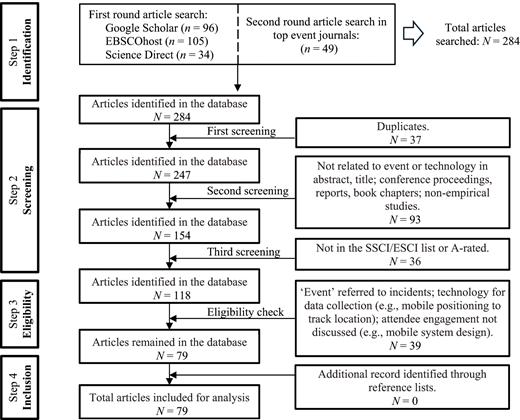
This systematic literature review followed the Preferred Reporting Items for Systematic Reviews and Meta-Analyses (PRISMA) guidelines. PRISMA offers strong cross-disciplinary recognition and enables transparent and rigorous documentation (Page et al., 2021). Data selection included four steps: identification, screening, eligibility and inclusion (see Figure 1). The identification process targeted English-language articles from peer-reviewed journals. To comprehensively capture studies on technology use across diverse event contexts, keywords were divided into two categories: technology-related and event-related. Seventeen technology-related keywords (e.g. “technology,” “big data,” “social media,” “robot,” “virtual reality” and “artificial intelligence”) represented technological innovations in the event industry (Celuch, 2021). Event-related keywords, comprising “event,” “festival,” “conferences,” “sports” and “entertainment,” were identified based on established definitions and key categories to ensure comprehensive yet focused coverage of various events (Getz and Page, 2016).
Two rounds of searches were conducted to build a comprehensive database. The first round was carried out on three widely used, high-index databases: Google Scholar, ScienceDirect and EBSCOhost. All 17 × 5 keyword combinations were entered using “AND” or “OR,” with truncation (e.g. event for “events,” “eventscape,” etc.) applied. The second round was performed in leading event management journals, including Event Management, Journal of Convention and Event Tourism and International Journal of Event and Festival Management (Draper et al., 2018). In this round, only 17 technology keywords were used. An article was identified and selected if any of the keywords appeared in the title, abstract or keywords list.
The initial screening was conducted by the first author and subsequently reviewed and validated by the other two authors, both experts in events and tourism management. All articles were imported into EndNote 20 for duplication checks, removing 37 duplicates. In the second screening stage, 93 articles were excluded for being non-peer-reviewed or non-empirical. The third screening stage eliminated 36 studies not published in SSCI/ESCI journals or A-rated ABDC journals to ensure data set quality. During eligibility assessment, we evaluated each article’s alignment with our study’s focus. We excluded 39 articles that used “event” to mean incidents, not gatherings; technology solely for data collection; or did not discuss attendee engagement. The inclusion step finalized 79 articles for data analysis.
3.2 Data analysis
Both bibliometric and thematic analyses were conducted. Thematic analysis is well-suited for unpacking intricate constructs such as engagement and generating new theoretical insights. We followed the six-step process outlined by Walters (2016) (see Figure 2). First, the lead author read all articles to gain familiarity and take notes (Step 1). A coding book, based on the PRISMA checklist, was developed to ensure coding validity, including attributes such as title, journal, context, technology type, engagement dimension, etc. Articles were reread to extract as many relevant codes as possible (Step 2). To minimize subjective bias, the coded book was randomly reassigned and independently reviewed by two additional authors. An inter-coder reliability rate of 92.5% was achieved. Discrepancies were resolved through discussion. Coded data were then imported into NVivo 15 to organize codes, generate and compile sub-themes and finalize main themes (Steps 3–5). During these steps, event technology categories were developed through emergent (inductive) coding, with themes derived from the data. Engagement themes followed a priori (deductive) coding, where codes fall under the three-dimensional framework to ensure validity. Finally, based on the finalized themes, a thematic framework was developed (Step 6).
4. Discussion
4.1 Bibliometric analysis results
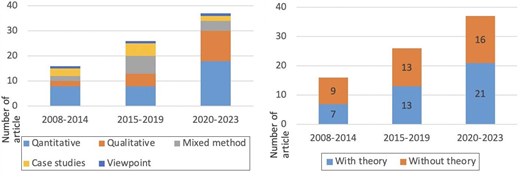
This study segments the data into three periods: 2008–2014 (16 articles), 2015–2019 (26 articles) and 2020–2023 (37 articles), to reflect key stages in technological development and its application in the events industry (see Table 1). The first period begins with the earliest article published in 2008, which discussed the use of big screens and blogs in creating superior experiences (Frew and McGillivray, 2008). This period includes the 2007 iPhone launch and the mid-2000s rise of social media, which transformed communication from linear to reciprocal and sparked academic interest in media technologies (Chen et al., 2021). The second period, starting in 2015, marks a notable rise in academic output and coincides with the industry’s adoption of service robots (Ivanov et al., 2019). The third period (after 2020) reflects a significant leap toward advanced innovations such as holographic virtual servers, metaverse and AI (Di Paolo et al., 2025; Hradecky et al., 2022). These technologies were introduced to transform event immersion and novelty. Consequently, academic research in this domain has grown, with 16 articles published before 2015 and 37 after 2020.
Studies are wide-ranging with regard to methodology. Figure 3 demonstrates that quantitative and qualitative approaches are most common, followed by case studies and mixed methods. Few papers adopt a viewpoint-based approach, presenting author perspectives on event technology. Data collection methods include interviews, focus groups, documentary analysis, surveys, scenario-based experimental design and field experiments. Interviews and surveys are the most popular. Interviews explore perceptions, readiness and potential challenges and opportunities (Estanyol, 2022; Wreford et al., 2019), while surveys test relationships and offer statistical evidence (Schivinski et al., 2019).
Nearly half of the 79 articles did not clarify their theoretical foundations, while the remaining 41 papers (52%) drew on 30 different theories, models and frameworks (see Table 2). The lack of theoretical grounding may result from rapid industry advancements outpacing existing technology-related theories, which emphasizes the need for new or adapted frameworks from other disciplines. Our analysis outlines theories in three categories. The first category is technology-related, with the technology adoption model (TAM) being the most popular, appearing in 13% of studies. The unified theory of acceptance and use of technology (UTAUT) and its extension, UTAUT2, have also been significantly used. After gaining a fundamental understanding of why users adopt technology, TAM has been integrated with other theories. Examples include the theory of reasoned action (TRA), uses and gratifications theory (U&G theory) and the theory of planned behavior (TPB) (e.g. Dieck et al., 2021; Tsai et al., 2022). These combinations indicate the adaptability of technology-related theories and enrich the understanding of engagement from a multidisciplinary perspective. As the decade progressed, niche technology-specific theories, such as the diffusion of innovation theory, the technology–organization–environment framework and the technology readiness index (e.g. Hradecky et al., 2022), were applied.
The second category represents social and psychological adoption paradigms, aligning with the sociological foundations of the event industry and the psychological dimensions of engagement (Lim et al., 2022). Popular adopted theories include TRA, U&G theory, TPB and service-dominant logic. Entering the 2020s, more theories have been discovered and used, such as neuropsychological theory, environmental psychology theory, social representation theory and trust transfer theory (e.g. Huh, 2018; Hur et al., 2022). This interdisciplinary approach enhances the diversity of theoretical frameworks related to technology usage in events and stimulates innovation.
The third category involves communication theories, reflecting technology’s role in reshaping event communication (Ryan et al., 2020). Particularly post-2020, theories such as situational crisis communication theory and the social-mediated crisis communication model guided social media use for event crisis management (Devine et al., 2017). The integration of frameworks such as agenda-setting theory and cultivation theory deepens our insight into how media shapes and molds attendee perceptions over time (Dodds et al., 2020; Hur et al., 2022).
Of the 79 articles analyzed, 69% focused on the attendee perspective, while 15% explored the views of industry professionals such as managers, producers and organizers. Another 15% adopted a mixed or multi-stakeholder perspective, incorporating roles such as volunteers, athletes and suppliers (e.g. Adha et al., 2019; Thorpe, 2016). Only about 1% addressed the academic perspective. The limited attention to diverse groups restricts our insights into how different stakeholders co-create engagement and experience within the event ecosystem.
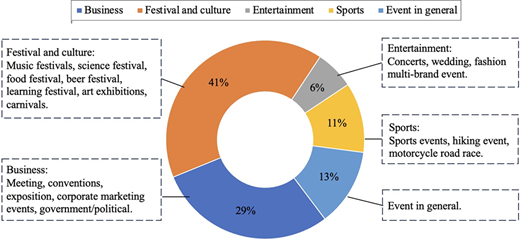
Guided by Getz and Page (2016), events can be categorized into four types: business, festival and cultural events, entertainment and sports. A diverse range of events has been studied (see Figure 4 for details). Festivals and cultural events dominate, accounting for 32 (41%) papers, followed by business events (29%). Other categories account for 13% or less.
4.2 Thematic analysis results
4.2.1 Technology context.
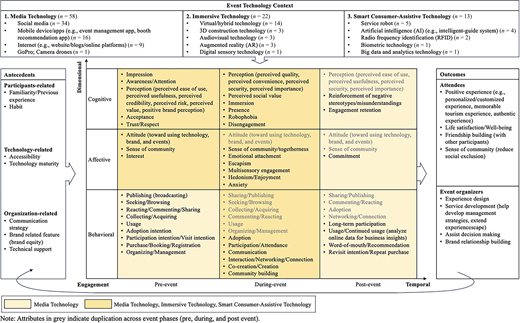
Our thematic analysis identified three main technology categories that enhance attendee engagement:
media technology (58 articles);
immersive technology (22 articles); and
smart consumer-assistive technology (13 articles) (see Figure 5).
The numbers indicate the articles that discussed each technology, with some articles covering multiple types of technologies.
A substantial pool of literature focused on media technology – systems and tools for creating, communicating and consuming information and content (Yujie et al., 2022) – including social networking sites, blogs and other media platforms. Social media, being the most researched, serves two primary functions: information transmitter and communication hub (e.g. Devine et al., 2017). Mobile devices and event apps are another focus, centering on their role in enhancing interactions with event organizers and fellow participants (e.g. Jung et al., 2024c). GoPro and camera drones in live sports events coverage allow participants to consume more embodied and affective media content (Thorpe, 2016). As media technology advances, future trends point to its integration with emerging technologies (e.g. AI-driven influencers) and established tools such as live streaming to augment engagement.
Another group of articles discussed immersive technologies, which enable users to experience a subjective impression of immersion (Dede, 2009). Within this category, VR applications have been widely studied in meetings, concerts, science festivals and exhibitions for enhancing attendees’ psychological presence and engagement (e.g. Dieck et al., 2021; Lei et al., 2023). 3D reconstruction and visualization of sports fields and games can provide a more comprehensive, realistic experience for viewers (e.g. Dieck et al., 2021). The addition of audiovisual technologies (e.g. high-tech lighting and giant screens) and digital sensory technologies (e.g. music apps) brings a greater sense of physical immersion to festivals and tasting events (Sisson and Alcorn, 2022; Spence et al., 2021). However, with only three articles highlighting AR’s potential in augmenting immersive experiences, the challenge of balancing real-life interactions with virtualization remains.
A recent small pool of research analyzed smart consumer-assistive technologies that use AI, robotics, sensors and computing systems to facilitate individuals’ participation. These technologies improve functionality and support independence and overall well-being. Service robots, for instance, provide not only entertainment but also functional assistance such as information provision and traffic flow management (Fukunaga et al., 2012). Other solutions, such as chatbots, offer personalized and consistent professional experiences (Hradecky et al., 2022). AI-powered tools, including intelligent guiding systems and virtual assistants, enhance co-creation and accessibility (Hradecky et al., 2022). Additional assistive tools, such as Radio-Frequency Identification (RFID) and biometric technologies (e.g. facial and iris scanning), have streamlined processes and enhanced customer engagement (Norfolk and O'Regan, 2021; Ryan et al., 2020). However, occasional malfunctions may impact customer experience (Neuhofer et al., 2021). As participants’ needs evolve and become more sophisticated, big data and analytics can assist through real-time monitoring. Given the public’s positive perception of assistive technology, further research is needed into its role in ensuring seamless engagement and strengthening on-site security.
4.2.2 Engagement factors facilitated by event technologies.
As indicated in the literature review, event engagement is three-dimensional: cognitive, affective and behavioral. Considering attendee engagement as a fluid, dynamic and iterative process, it should also be examined across pre-, during- and post-event phases.
In the digital era, engagement begins before the event launch. The pre-event engagement phase prepares prospects cognitively, forming their intentions to participate in events or adopt technology. During this phase, customers navigate media, either passively engaging by seeking or browsing (Hudson and Hudson, 2013) or actively participating through likes, comments, shares or reposts (Park et al., 2021). Exposure to information sparks impressions, awareness and familiarity with upcoming events and festivals (Strand and Robertson, 2020). It also builds general perceptions of event technology, including perceived ease of use, usefulness, credibility, risk and value, which are key to formulating trust and acceptance of technology and event brands (Pearlman and Gates, 2010).
Technology adoption can further stimulate customers’ emotional engagement. Attitude – toward the event and its associated brands – has been the most researched topic (Godovykh et al., 2022) and is significantly influenced by user-generated content on social media (Schivinski et al., 2019). Additionally, attendees’ activity on event apps or social media can spark their interest in physical attendance and create a sense of “communitas” prior to the event (Estanyol, 2022). Our analysis also highlights the interaction between cognitive and affective engagements in influencing behavioral intentions. Positive predispositions toward technology and events catalyze intentions to use and participate in live or virtual events (Sox and Campbell, 2018). These psychological engagements also trigger tangible actions, including purchasing tickets, registering, or booking travel-related activities (Strand and Robertson, 2020). Throughout the pre-event engagement stage, media technologies transform traditional one-way information flow into vibrant two-way dialogues, where engagement naturally arises through interaction.
During-event engagement is characterized by cognitive and emotional arousal, alongside actual behavior. This is when attendees are physically present, actively participating and leveraging technology to enhance their experience. During this phase, attendees use media technologies to network with peers, organizers and stakeholders, co-create experiences and build community; however, overuse may reduce genuine face-to-face interaction and lead to disengagement (Lei et al., 2023; Sisson and Alcorn, 2022).
Leveraging technology for event execution can inspire both affective and cognitive engagement. Virtual concerts and metaverse music festivals can cultivate a sense of emotional togetherness and escapism, particularly during the pandemic (Dieck et al., 2021; Hudson et al., 2015). Other experiential events, such as online wine tastings, use digital tools to deliver multisensory immersive experiences (Spence et al., 2021). The adoption of service robots has yielded mixed emotional responses. While their interactive presence can elevate enjoyment (Fukunaga et al., 2012), their use for security and flow management at exhibitions may provoke anxiety (Neuhofer et al., 2021).
The fast pace and information overload at events push cognitive engagement beyond basic usability concerns. Our analysis shows that participants value the direct and immediate assistance of smart consumer-assistive technology. For instance, biometric systems streamline attendee movements and transactions, enhancing convenience while securing identity (Norfolk and O'Regan, 2021). Similarly, RFID wristbands simplify check-ins, payments and social media connectivity (Hudson and Hudson, 2013). Beyond convenience, the socially intensive nature of events underscores the importance of technology’s social functions (Wei et al., 2017). In event social interactions, immersive technologies are most effective at fostering engagement when participants feel others’ presence (Wreford et al., 2019). This principle extends to robotic technology, where the perceived presence of service robots can enhance attendee experiences and satisfaction (Singh et al., 2021).
Post-event engagement refers to all interactions after an event to continue to engage or re-engage customers. This stage is often overlooked in event management practice and research. Our findings indicate that participants may engage in attending events repeatedly when organizers provide follow-up communication, technical support and ongoing community-building activities (Ozturk et al., 2021). Post-event engagement through media technologies, such as social media and webinars, plays an integral role in promoting positive emotions and satisfaction. This combination of an enhanced event experience followed by digital post-event engagement creates a state of psychological arousal, motivating attendees to actively participate through word-of-mouth recommendations, intentions to revisit and repeat purchases (Strand and Robertson, 2020). However, our analysis showed that poorly leveraged technology can have unintended consequences. If concerns are not efficiently addressed and communicated via social media, participants may reinforce negative stereotypes of the event or destination (Devine et al., 2017).
4.2.3 Antecedents of engagement.
Our analysis identified three antecedent categories: participant-related, technology-based and organization-related (see Figure 5). These antecedents influence engagement before any event connection is established. Participant-related antecedents include their previous experiences and habits. Individuals with greater familiarity with technology, such as frequent users of smart devices and mobile apps, are more likely to engage with social media and adopt similar technologies at events (Lee, 2011; Ozturk et al., 2021). This finding suggests that patterns of everyday technology use, along with users’ comfort and dependence on these tools, shape their likelihood of engaging with event technologies. Future research should account for these factors when investigating technology usage phenomena, either by controlling for their influence or incorporating them into predictive relationships.
Intrinsic characteristics of technology are crucial in attracting potential adopters. Technology-based antecedents center on perceived accessibility and maturity. Accessibility encourages usage, especially for those with disabilities. Attendees also associated higher technology maturity with more positive attitudes and greater openness to using these tools (Hur et al., 2022). This was particularly evident with immersive technologies. As VR has advanced, it is increasingly seen as reliable and well-developed, leading to higher participation in virtual and hybrid conferences and concerts. Technology maturity influences not only attendees’ willingness to try new technologies but also organizers’ psychological readiness to incorporate them into event design.
Organization-related factors, including communication strategies, brand reputation and technical support, are instrumental in sparking potential participants’ initial interest in an event and reducing their hesitation toward using new technologies (Gyimóthy and Larson, 2015; Llopis-Amorós et al., 2019). Access to technical support was also critical, with participants expressing that guidance and troubleshooting assistance lowered psychological resistance among those less familiar with technology (Koo et al., 2017). Our analysis highlights that organizations’ communication and support strategies serve as an important first step in raising prospects’ awareness and lowering their psychological barriers to technology adoption, laying the foundation for deeper engagement.
4.2.4 Outcomes of engagement.
Attendees’ engagement can lead to significant outcomes for key stakeholders after events. First, engagement facilitated by various event technologies can create personalized and memorable experiences (Neuhofer et al., 2021). Such high-quality, deep and active engagement during events has multifaceted ripple effects on attendees’ everyday lives, driving their sustained happiness, life satisfaction and well-being (Liu and Draper, 2022). Moreover, active engagement during the event fosters relationships that last beyond the event itself. For instance, the camaraderie and friendships formed at live esports events often carry over into online communities, enriching participants’ regular gaming experiences (Jung et al., 2024a).
Participant engagement can yield invaluable benefits for event organizers in terms of design inspiration and relationship reinforcement. Data from real-time event interactions informs experience design, product development and decision-making for effective event experience management (Pasanen and Konu, 2016). This data-driven approach ensures strategies are informed by, and aligned with, participants’ evolving preferences. For example, music festival planners can adapt lineups and activities based on real-time social media sentiment analysis (Strand and Robertson, 2020). Immersive technologies such as VR/AR empower organizers to amplify their impact by cultivating emotional bonds (Wreford et al., 2019). For instance, at a wildlife conservation conference, participants can virtually walk alongside endangered species in their habitats, arousing their emotional connection to the cause and inspiring action. Technology adoption pre/during/post events enables event organizers to engage in cost-effective and flexible interactions, which play a crucial role in enhancing customer relationships, improving service delivery processes and quality and ultimately driving better business outcomes (Hudson et al., 2015).
5. Conclusions and implications
5.1 Conclusions
This study examines 79 articles published between 2008 and 2023 on technology-facilitated event engagement, addressing all research objectives. The bibliometric analysis identifies key characteristics, including publication trends (see Table 1), methodological approaches (see Figure 3), theoretical foundations (see Table 2) and event types (see Figure 4). To fulfill the second objective, the thematic analysis categorizes event technologies into three main contexts: media technology, immersive technology and smart consumer-assistive technology. In response to the third objective, we propose a new definition of event engagement that captures its temporal nature and introduces a comprehensive framework (see Figure 5) illustrating how different technology contexts influence cognitive, affective and behavioral engagement across pre-, during- and post-event stages. Subsection 5.2 discusses the implications of these findings and outlines future directions to achieve the final objective (see supplementary material for the research questions and practical implications).
5.2 Theoretical implications and research agenda
This study makes five theoretical contributions, each elaborated in subsections 5.2.1–5.2.5 to inform corresponding future research agendas. First, it categorizes three distinct technology contexts, offering a structured lens to understand their unique roles in facilitating engagement (subsection 5.2.1). Second, by incorporating a temporal perspective, the study presents a comprehensive framework that captures the fluid, dynamic and iterative nature of engagement (subsection 5.2.2). In addition, it broadens the understanding of actors involved in event engagement, illustrating how technology supports inclusive participation among diverse stakeholders (subsection 5.2.3) and how collaboration among them fosters innovative engagement (subsection 5.2.4). Finally, we propose avenues for advancing methodological and theoretical development (subsection 5.2.5).
5.2.1 Future research agenda 1: strategic implementation of event technology.
Our analysis of three technology categories reveals underexplored areas and highlights contextual distinctions in how each shapes engagement, offering guidance for future research. Studies on media technology’s impact on engagement are well-established (see Figure 5, Technology Context 1), primarily focusing on its benefits. However, our findings reveal two additional dynamics that warrant future investigation. On the one hand, inappropriate use or overreliance on media can lead to disengagement or detachment. Participants have indicated that excessive mobile device use at music festivals can hinder meaningful interpersonal interactions (Sisson and Alcorn, 2022). On the other hand, media can generate spillover effects; by accelerating information flow and reinforcing brand networks, social media engagement with event brands can extend to related or competing brands (Geissinger and Laurell, 2020). Future research should delve into these two underexplored areas, investigating disengagement phenomena (e.g. identifying thresholds for quality engagement) or cross-brand impact to improve the brand ecosystem.
Second, meaningful engagement facilitated by immersive technologies (see Figure 5, Technology Context 2) emphasizes counterbalancing immersion with a sense of presence. Our analysis suggests that, in a digital sense, making users feel present and connected with others encourages affective and cognitive engagement (Wreford et al., 2019). In a physical sense, behavioral engagement is stimulated by motivating users to travel and attend events (Buhalis et al., 2023). Both aspects suggest that immersive technology is not just for deepening virtual experiences but for enhancing connections, either with others or with the physical world. This concept is exemplified by recent metaverse wine-tasting events designed to encourage winery tourism to Lombardy, Italy (Di Paolo et al., 2025). Recognizing this trend, we call for future research on digital event design, including virtual/hybrid formats, that preserves human connections and examines how immersive technologies translate digital engagement into physical exploration.
Although research on smart consumer-assistive technologies is scarce (see Figure 5, Technology Context 3), their potential to elevate accessible event tourism and engage broader audiences cannot be underestimated. We should continue to expand the exploration of assistive technologies (e.g. RFID and biometric technology) to improve event engagement and processes, particularly for attendees with physical limitations. For robotic AI technologies, while their application in hotels for task-based services has been effective, their adoption in events – where interaction is central – has been less successful (Webster and Ivanov, 2022). Beyond frontline technologies, backend systems such as onsite logistics software and infrastructure platforms are critical for ensuring smooth event operations. The evolving roles of smart consumer-assistive technologies – including AI-enabled event management platforms, AI-driven matching systems and chatbots – in supporting attendee connections and engagement require deeper investigation. In general, future research should adopt a broader lens when examining different technology categories to advance the evolution of event engagement.
5.2.2 Future research agenda 2: temporal fluidity of engagement.
Our study expands the multidimensional understanding of event engagement by integrating a temporal perspective that highlights it as a fluid, dynamic, iterative process across three phases. This framework redefines engagement as an ongoing journey, complementing traditional views and addressing Chen’s (2021) call to explore the temporal impact of technology. According to our analysis, media technology is implemented across all nine engagement cells. It raises awareness, shapes attitudes and influences participation intentions pre-event (e.g. Lee et al., 2012); serves as an information hub and platform for community engagement during the event; and fosters ongoing engagement while addressing negative feedback post-event (Devine et al., 2017; Ozturk et al., 2021). However, immersive technology and smart consumer-assistive technology mainly focus on pre- and during-event phases, such as attendees’ pre-event psychological preparedness and during-event adoption to promote immersive experiences (Lei et al., 2023; Webster and Ivanov, 2022), overlooking their post-event impact.
What occurs before and after the event is no less important than at-event activities. Pre/post-event phases are when emotions form, community sense builds, learning deepens and key decisions are made. We therefore call for further research into the dynamic characteristics of technology-facilitated engagement. Specifically, how technology supports pre/post-event engagement, how engagement changes, differs or evolves across different phases and what factors drive transitions between engagement and disengagement throughout the process.
5.2.3 Future research agenda 3: inclusive event engagement.
Our study deepens the discussion of how technology broadens attendees’ inclusive participation by accommodating diverse needs. Accessibility – a core feature of technology – enhances inclusivity by lowering participation barriers. For example, RFID wristbands assist attendees with physical limitations, such as visual impairments, in navigating venues, supporting behavioral engagement. Beyond physical accessibility, technology also addresses the needs of individuals with mental or emotional diversity. In the metaverse, individuals with communication difficulties can use digital avatars to interact more freely and confidently (Buhalis et al., 2023). This capability is particularly relevant to smart consumer-assistive technologies, which are designed to facilitate participation and improve overall well-being. For instance, robot-assisted interventions have shown the potential to reduce social anxiety in event settings, thereby increasing satisfaction and enhancing mental well-being (Rasouli et al., 2022). Greater research attention should be devoted to which technologies and how they influence attendees’ physical and psychological engagement to maximize well-being outcomes.
5.2.4 Future research agenda 4: collaborative innovation in event engagement.
This study enriches the discourse on multi-stakeholder collaboration in shaping technology-facilitated engagement and advancing service innovation. Organizations and event organizers play critical roles throughout the entire process. Their strategic priorities and resource allocation influence the types and approaches of technology implementation. Event organizers can also leverage event data to inform a continuous loop of experience design and service development, exemplifying technology-driven service innovation (Park et al., 2023). Our analysis highlights that engagement is enhanced through innovations in marketing (e.g. social media marketing), product/experience (e.g. immersive virtual experiences) and experience-delivery process (e.g. RFID for efficient logistics) (Norfolk and O'Regan, 2021; Park et al., 2021).
These innovations are enabled not only by event organizers but also through collaboration with participants, vendors/suppliers, volunteers (e.g. Adha et al., 2019; Thorpe, 2016) and even service robots, which are increasingly regarded as active assistants in service settings (Fukunaga et al., 2012). Yet, existing research centers on the customer–firm dyad, overlooking the intricate dynamics of co-created engagement (Carvalho and Alves, 2023). In today’s era of “ubiquitous computing intelligence,” technology serves as a connective force that drives service innovation. For example, New Orleans and Company, the city’s destination marketing organization (DMO), partnered with the Nieux Society in 2023 to launch Mardi Gras-themed NFTs, allowing attendees to collect digital memories and enhance both engagement and well-being (NFTplazas, 2023). Moving forward, scholars should further investigate how underrepresented groups, DMOs, destination management companies, technology developers and service contractors interact and use technology to co-create event engagement and drive service innovation.
5.2.5 Future research agenda 5: advancement in theory and methodology.
Our bibliometric analysis reveals that many technologies are studied in fewer than five articles (see Figure 5), reflecting a fragmented, trend-driven approach. Nearly half of the studies lack a theoretical foundation, while the remainder draw on varied theories from technology, social psychology and communication (see Figure 3 and Table 2). To advance the field, future research should work toward building a rich and theoretically grounded knowledge base. Given the interdisciplinary nature of events, additional cross-disciplinary theories may help illuminate the diverse roles of technology in shaping engagement. For example, when service robots facilitate interaction at social events, media richness theory from communication studies can guide the design of robotic cues to improve participant engagement in human-robot interaction.
Advancing knowledge on technology-facilitated engagement also requires methodological updates. Despite recognizing technology’s role, few studies have used advanced data collection and analytics. Future research could adopt tools such as eye-tracking, motion sensors and physiological monitors to capture real-time, multisensory engagement data. Longitudinal methods, such as experience sampling methods, web scraping, or sequential mixed-method approaches, are particularly valuable for examining how engagement evolves across phases in recurring events.
5.3 Practical implications
Our findings offer valuable practical insights to enhance engagement, operational efficiency and inclusivity through technology-driven strategies. In practice, technology use should align with event types and attendee profiles. At entertainment and cultural festivals, attendees often seek novelty, sensory stimulation and social sharing. Organizers can leverage immersive technologies to amplify these experiences. For example, at Coachella, Pinterest introduced a digital discovery space, where users created digital mood boards and tried on curated looks, leaving a memorable impression on festival-goers (Proctor, 2025). In contrast, business event attendees prioritize efficiency and goal-directed interactions. To meet these needs, smart consumer-assistive technologies streamline operational processes and facilitate connections. Practices similar to those at CES 2025, where Bluetooth and AI-powered indoor mapping systems enabled seamless indoor navigation, can be adopted in future event settings (Eventbase, 2025). This study provides a framework for event planners to strategically apply technology by aligning it with attendee profiles and event objectives, enabling more inclusive and engaging experiences for diverse audience segments.
Insights into the temporal dynamics of engagement enable event planners, travel agencies and hotel practitioners to design extended service journeys and continuous engagement loops, potentially helping to mitigate service failures. The findings of our study also encourage diverse stakeholders, including researchers, policymakers, DMOs and suppliers, to collaborate in better predicting engagement patterns and co-developing more adaptive, inclusive and resilient service strategies. From a societal perspective, this study underscores the potential of technologies such as intelligent voice assistants, AI-driven personalization and hybrid event formats to advance social inclusion and belonging. We argue that implementing these technologies, particularly in public or publicly funded settings, empowers organizers to engage a wider spectrum of participants, including individuals with physical or neurodiverse conditions and varied personality types, thereby generating meaningful social impact.
5.4 Limitations
Our study is not without limitations. First, while the thematic review outlines the temporal evolution of engagement, it lacks empirical validation. Future research could conduct longitudinal studies to support and extend these findings. Second, the analysis focused only on SSCI-listed, English-language empirical journal articles. Broader insights could be gained by incorporating industry reports, books, conference proceedings and magazines. Furthermore, despite using PRISMA guidelines and rigorous thematic analysis, subjective bias may persist. Future research could mitigate this by using methods such as triangulation with multiple data sources or software-assisted approaches such as text mining and topic modeling.
References
Supplementary material
The supplementary material for this article can be found online.