The rapid digitalization and emergence of AI tools are transforming school organizations. However, limited research exists on how school leaders integrate these technologies into their leadership practices. This study focuses on the experiences of school leaders in Cyprus, exploring the benefits and challenges of adopting digital and AI tools in their roles. The research seeks to enhance understanding of these topics as they relate to the pandemic aftermath and the current emergence of cutting-edge technologies.
A qualitative research approach was used, with semi-structured interviews serving as the primary data collection method. The sample consisted of 43 school leaders from primary and secondary schools across five districts in Cyprus, who voluntarily participated in the study.
The findings reveal that while digital tools enhance communication and administrative efficiency, challenges associated with poor infrastructure and inadequate targeted training were disclosed. In addition, school leaders acknowledge the potential of AI to support their leadership practice, while also addressing the challenges of integrating these tools due to limited knowledge and understanding, lack of appropriate training and the need of an ongoing support.
The study emphasizes the need for tailored professional development, better infrastructure and continuous support to help school leaders effectively integrate digital and AI tools into their daily leadership practices.
This research contributes uniquely to the field by focusing on the integration of digital tools, while also exploring, to some extent, perspectives on AI within school leadership in Cyprus, in an area that has been largely underexplored.
Introduction
Leadership in school organizations is recognized as a critical factor in achieving school effectiveness (e.g. Gurr et al., 2021; Gurr and Drysdale, 2020; Leithwood et al., 2020; Pashiardis, 2014). Yet, recent crises have underscored the importance of further examining various aspects of the field of school leadership, necessitating additional exploration (Netolicky, 2020). Notably, the pandemic crisis has acted as a catalyst for a deeper exploration into crisis management within school organizations (Berkovich and Hassan, 2024; Striepe and Cunningham, 2022; Bush, 2021), as well as affecting related areas such as digital skills and literacy (Pressley et al., 2023; AlAjm, 2022). As a result, school leaders’ role within the digital context was significantly altered and intertwined (Harris, 2020; Harris and Jones, 2020; Ärlestig et al., 2021). Krein (2023), in her systematic literature review on school leadership and digitalization over the past 20 years, found a limited number of studies on digitalization, mostly associated with the integration of digital media or social networks. Also, Wollscheid et al. (2024), in their review of the literature on digital school leadership trends over the past few decades, argued that most publications emerged significantly after 2019, which is mostly associated with the pandemic crisis that accelerated the use of digital tools and AI in school organizations.
Additionally, the rise of advanced Artificial Technology (AI), such as OpenAI and GenAI, particularly the ChatGPT tool, is expected to significantly impact school organizations and the need to carefully evaluated the role of it in school leadership is crucial (Igbokwe, 2023). Scoping reviews (e.g. Chen et al., 2020) highlight the growing acceptance and use of AI in education, which has evolved from computer-based technologies to web-based intelligent education systems. As Wang (2021) suggested, AI tools can enhance school leaders' decision-making and shift the focus from traditional digitalization to cutting-edge technologies, such as the ChatGPT tool, in school leadership. Yet, limited literature on the intersection of AI and leadership roles in education is available (Wang, 2021; Karakose et al., 2023).
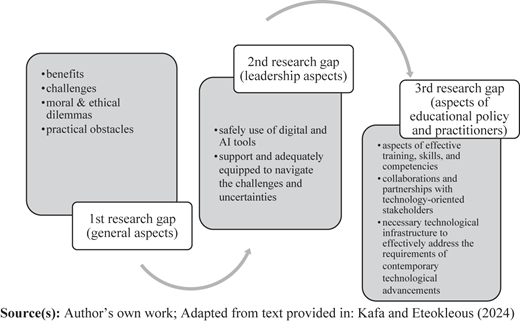
Therefore, both topics raise numerous questions that require the collective engagement of the research community. Based on the Figure 1, adapted from Kafa and Eteokleous (2024), the importance of understanding digitalization and AI in future research is important and the current scarcity of studies indicates a need for empirical research to address several areas: first, a detailed understanding of the benefits, challenges, moral and ethical considerations and competencies required for effective digitalization and AI implementation; second, how school leaders within school organizations navigate digital tools and AI tools and third, how educational policy and practitioners can support school leaders.
In response to that, as highlighted in the first research gap in Figure 1, this paper aims to address the initial steps in research by focusing particularly into two main objectives. Firstly, to explore the benefits and challenges of integrating digital tools into school leadership practices in Cyprus (1st objective) and then to examine, to some extent, the benefits and challenges of adopting AI tools in school leadership (2nd objective). Overall, this research seeks to enhance understanding of these two topics as they relate to the aftermath of the pandemic crisis and the current emergence of cutting-edge technologies. Given the scarcity of studies on the intersection of school leadership and technology, this research adds to the existing body of literature by contributing valuable insights and empirical data into these topics within the context of Cyprus. In fact, it is important to recognize that the significance of AI, as a key evolution in digitalization, extends beyond the existing references and use of digitalization in school leadership.
Understanding the effect of digitalization and AI in school leadership
School leadership and digitalization is a dynamic and multifaceted combination that plays a significant role in navigating the complexities of the digital era in school organizations, as well as in the broader modern educational landscape (Goh and Mansor, 2024; Ming et al., 2023). Despite the availability of research on the role of school leaders in effectively integrating technology (e.g. Thannimalai and Raman, 2018; Dexter, 2018; Raman and Thannimalai, 2019; Dexter et al., 2016; Dexter and Richardson, 2020), as an aftermath of the pandemic crisis, literature supports that school leaders are now considered even more important stakeholders to supporting innovative teaching and learning through digital transformation in school organizations (Berkovich and Hassan, 2024; Håkansson Lindqvist and Pettersson, 2019; Goh and Mansor, 2024; Schmitz et al., 2023). Therefore, the pandemic crisis highlighted the need to better understand how school leaders navigated technology during an emergency situation and in general, the fact that all school leaders needed to utilize technology, regardless of their context. As technology, both in terms of digitalization and cutting edge technologies (AI), advances, it is crucial that education systems across the globe take into consideration integration aspects of digitalization and AI, for school leaders who could have the ability to use these technological resources and opportunities.
Digitalization in education can be defined as the process of using technology to support the teaching and learning process (Arısoy, 2022) and in general the school organization. For Haleem et al. (2022), digitalization in education is associated to the introduction and use of technology-assisted tools such as computers, tablets, smartboards, mobile devices etc. For the purpose of this paper, digitalization is associated with the aforementioned and the use of digital tools that can further support school leaders’ practices, while cutting edge technologies is associate with the rise of advanced AI technologies, such as OpenAI and GenAI, particularly the ChatGPT tool. However, there are concerns about whether school leaders are adequately prepared for this role (Afshari et al., 2012; Schiller, 2003). Following the worldwide pandemic crisis, which significantly reshaped how school organizations operate through the integration of technology, it has become increasingly important that digital capacity building for school leaders is now essential in modern education (De Voto and Superfine, 2023; Fernandes et al., 2023; Ferris et al., 2022; Erol and Altunay, 2022; Baroudi, 2022; Kafa, 2021).
As a result, with the ongoing digital transformation in education, a significant number of school leaders may find themselves lacking the necessary training or readiness to effectively integrate digital tools and strategies into their leadership practices (Adams et al., 2021; Lien et al., 2022). Therefore, it is important to first and foremost understand the benefits and challenges that school leaders perceive when it comes to digitalization. In fact, their perspectives on these aspects are key to effectively navigating the first step of the digital transformation of leadership within school organizations.
Furthermore, a few studies conducted before the pandemic crisis attempted to explore the digital aspect of school leadership. For example, Håkansson Lindqvist and Pettersson (2019) found that school leaders in Sweden view digitalization as a broad and complex concept that encompasses technical, pedagogical, administrative and organizational challenges at all levels of the school system. Similarly, Chua (2015) reported that school leaders in Singapore, in the face of digital educational reform, experienced shifting identities, emerging roles and uncertainties when leading technological integration. Although several research studies have previously explored the concept of technology, primarily through the aspect of digitalization (e.g. McLeod and Richardson, 2011; Håkansson Lindqvist and Pettersson, 2019; Dexter and Richardson, 2020; Dexter et al., 2016), the relationship between school leadership and digitalization has gained increasing significance, particularly in empirical research, due to the pandemic crisis. For instance, Baroudi (2022) and De Voto and Superfine (2023) illustrate how school leaders have supported the transition to digitalization. In other research (Arham et al., 2023), it was found that during the pandemic, schools faced several challenges when trying to implement digital leadership. These challenges included resistance to change, insufficient digital skills, tight budgets and the need for continuous professional development. Additionally, a study conducted in Spain by Lozano-Díaz et al. (2024) found that school leaders there often lack adequate training in digital leadership.
Although these research studies addressed the topic of digitalization, it is understandable that they conducted their research as part of the COVID-19 emergency situation. Therefore, these studies did not explore how school leaders viewed the benefits and challenges of digital tools in general, nor their perspectives on the latest technological breakthroughs, like the integration of AI in their leadership practices.
In fact, AI is becoming a leading technology, often seen for its potential to either enhance or challenge the teaching and learning experience for both students and teachers (Chen et al., 2020). Despite the fact that a universal definition of AI does not exist (Collins et al., 2021), AI is considered to be algorithms that perform cognitive, perceptual and conversational functions typical of the human mind (Longoni et al., 2019). More recently, Ofosu-Ampong et al. (2023) defined AI as a model that has the ability to learn and act autonomously as a human’s behavior. Also, Wang et al. (2024), supported that AI is a computer science subfield that recreates human’s effects through information systems. A comprehensive literature review by Feng and Law (2021), which analyzed 1,839 research papers on AI in education from 2010 to 2019, shows that while AI research has been extensive, it has mainly focused on intelligent tutoring systems and massive open online courses (MOOCs).
In regards to the school leadership perspective, there has been limited to non-existing research studies on how AI can be applied to enhance the practices of school leaders (Fullan et al., 2023; Wang, 2021). To date, efforts have been made to integrate AI into the school leadership field, primarily through simulation techniques used in the professional development of school leaders (Shapira-Lishchinsky, 2015, 2020). These simulations aim to prepare school leaders for real-world scenarios by incorporating AI tools. Yet, technological advances, associated with AI, such as the tool ChatGPT, is expected to have a considerable impact on education and on school leaders’ practices in school organizations. ChatGPT, introduced in 2022, has gained recognition for its ability to generate human-like text using existing digital data and represents a significant leap forward by generating text that mimics human communication (Kafa and Eteokleous, 2024). Yet, it is important to acknowledge that AI could support human decision-making process and, in our case, to support school leaders, without replacing the moral judgment of school leaders’ decisions within their school organization (Wang, 2021). This tool could illuminate various aspects of AI in education, revealing both its strengths and limitations, and guiding its use within school organizations. As Wang (2021) argued AI could benefit school leadership not in terms of solving technical problems but rather about enhancing school leaders’ leadership processes and practices.
Despite the limited research available on this topic, a study by Chiu (2023) found that school leaders are optimistic about the potential of ChatGPT applications to streamline and improve administrative tasks. They have used this tool to draft initial email responses for handling parental inquiries, create project proposals, design posters for school events and support educational decision-making with well-informed data and recommendations. Fullan et al. (2023) suggest that while the exact future impact of AI is uncertain, tools like ChatGPT have the potential to significantly transform school leadership practices.
As technology continues to evolve, it is essential to investigate how school leaders approach the topic of digital tools and whether they are prepared and capable of integrating them in their leadership work. Yet, it is important to take into consideration the concerns around security, biases and transparency in AI tools, highlighting the fact that school leaders need to learn and use AI ethically and carefully, without replacing the human aspect (Wang, 2021). This paper, in addition to addressing digitalization, also explores, to some extent, perspectives on AI within school leadership in Cyprus.
Digitalization in the educational context of Cyprus
This study was conducted in Cyprus, a full member of the European Union. Cyprus has a highly centralized education system, with the Ministry of Education, Culture, Youth and Sports holding significant power. The Ministry is responsible for implementing education policies across the nation, setting rules and regulations and overseeing every aspect of school organization (Pashiardis and Tsiakkiros, 2015). In Cyprus, efforts to incorporate technology into schools were minimal even before the pandemic. The European Commission (2020) in the “Eurostat Education and Training Monitoring Report” mentioned that digitalization and AI could be integrated into school curricula, effective teaching methods and proper assessment tools. Yet, in Cyprus’ education sector, the use of technology and digitalization remains ambiguous, making it hard to assess the level of technological adoption. Additionally, educational policies had not prioritized technology, leaving school leaders unprepared for the digital challenges that arose during the pandemic (Kafa, 2021). However, recent strategic goals set by the annual report by the Ministry of Education, Sports and Youth (2022), suggest a strong commitment to accelerating digital transformation within school organizations across Cyprus, together with innovative programs in advanced technologies, such as robotics, and AI. Yet, these efforts are targeting students, with no reference to school leaders’ support and professional development.
Methods
Method and research tool
This study employed a qualitative approach, focusing on collecting data through semi-structured interviews (Creswell, 2014). The methodology aimed to explore school leaders’ insights regarding the benefits and challenges of integrating digital and AI tools into their leadership practices, within the Cypriot educational system. Particularly, interviews provide a valuable way to capture an individual’s perspective, aligning with the research study’s goal of understanding personal viewpoints (Bogdan and Biklen, 2007). Semi-structured interviews were selected as the primary data collection method because they allowed for flexibility in discussing participants' experiences while maintaining a structured format for analysis. The interview protocol was developed based on a thorough review of international literature (papers and reports) on digital technologies and AI, with a specific focus on the Cypriot educational context. Unfortunately, no existing validated and reliable instruments were available for adaptation. As a result, the designed tool was piloted with a small group of school leaders, and feedback from this pilot study was used to refine the final version of the protocol. Additionally, the interview questions were reviewed and discussed with a peer expert in educational technology to ensure their relevance and accuracy. Table 1 presents some of the questions included in the interview protocol, covering both digital and AI technology aspects.
Research sample and data collection process
The research population included all primary and secondary school leaders from the five districts of Cyprus. Based on lists provided by the Ministry of Education for the academic school year 2024–2025, an email invitation was sent to all school organizations (Primary education: N = 329; Secondary education: N = 108). Since this particular qualitative study did not aim for generalization but rather sought to gain a deeper understanding on how school leaders in Cyprus perceive the benefits and challenges of digital and AI tools, school leaders voluntarily participated in the study. Therefore, 43 school leaders responded: 24 from the primary education (8 from Paphos, 2 from Limassol, 5 from Famagusta, 5 from Larnaca and 4 from Nicosia) and 19 from the secondary education (4 from Paphos, 5 from Limassol, 7 from Larnaca and 3 from Nicosia). Particularly, from primary education, 24 school organizations out of 329 participated, representing approximately 7.29% of the total school organizations. Additionally, for secondary education, 19 school organizations out of 108 participated, representing approximately 17.59% of the total school organizations.
The interviews were held at times and locations determined by the school organizations. Data collecting was place from early January 2024 to mid-April 2024, with each interview taking approximately 45 min on average, while “The Centre of Educational Research and Evaluation” in Cyprus approved the research study. Participants were informed of their rights, such as the voluntary nature of their participation, the confidentiality of their responses, and the option to withdraw from the study at any time. This information was presented before to the interviews through an information sheet and a consent form.
Data analysis
To analyze the data and identify the benefits and challenges associated with school leaders’ integration perspective within the digital and AI framework, a content analysis of the qualitative data was performed. The recorded interviews were transcribed and analyzed using the three-step content analysis approach outlined by Elo and Kyngäs (2007). In the first step, open coding (1), notes and headings were made directly in the text while reading and re-reading the material, focusing on identifying both the challenges and opportunities. The second step (2) involved creating categories, where the notes and headings from the margins were organized into coding sheets, leading to the development of categories. Quotations were also included to support these categories. Lastly, the third step (3) provided an overall description of the topic, presenting the final set of categories aligned with the study’s main objectives.
Findings
Based on the qualitative data, this part highlights the main findings of school leaders' perspectives on both the benefits and challenges of incorporating digital and AI tools into their leadership practices.
Benefits and challenges of integrating digital tools in school leadership (1st study objective)
The majority of school leaders in both primary and secondary education have recognized that technology is evolving, and therefore, it must be integrated into their daily leadership practices. In fact, drawing from their experiences during the pandemic and how they utilized various resources, they consider it beneficial to know, learn and effectively use digital tools. One notable outcome is the way school leaders now use digital tools to communicate with both internal and external stakeholders. As one school leader explains:
I now use technology by utilizing our school's website. Previously, I didn’t engage with it much, but now I see it as an excellent opportunity for communication—whether with parents, students, or the local community—allowing them to stay informed about what we are doing at the school (school leader 14).
Also, digital tools such as Viber are extensively used to facilitate communication between school leaders and teachers. Viber groups, organized by class and for the whole school, became a central platform for sharing both administrative updates and educational matters. School leaders stated the following:
In matters of communication or administration that concern teachers, updates are shared through Viber groups, organized by class and for the entire school (school leader 34).
We use Viber extensively, and now the teachers continue to use class-specific Viber groups, with occasional updates on the school's official page (school leader 21).
Another significant outcome relates to how school leaders now support their teachers in using digital tools for posting materials and sharing documents. Specifically, digital platforms such as Dropbox, Google Drive and Cloud are increasingly used to streamline collaboration between school leaders and teachers within the school. The following quote highlights this development:
Other platforms, like Google Drive and Dropbox, or even the Cloud are useful and everyone knows how to use them. They help us share materials without printing them, making everything immediately accessible to all of us (school leader 7).
Also, school leaders have increasingly relied on digital tools like MS Teams for both administrative tasks and communication with various stakeholders, including parents. This integration of MS Teams reflects a broader shift towards leveraging technology to enhance both internal and external communications within the educational context. As two school leaders noted:
We have been using MS Teams since the pandemic, and it has proven to be highly useful. It facilitates communication within the school for pedagogical matters and with parents regarding school programs (school leader 41).
I use it not only for administrative purposes but also to keep parents informed about ongoing programs and initiatives, thus promoting them effectively (school leader 1).
Additionally, an interesting finding about the digital usage, is that most school leaders make extensive use of the school’s website. They regularly update it with materials and information about various activities, ensuring that the school community stays informed As few school leaders explained:
I continuously refresh the website and monitor its content. I also use it to communicate with regional offices and other stakeholders (school leader 27).
Through the website, I promote the school’s goals, highlight specific projects and activities related to different student groups, and provide updates on various initiatives (school leader 11).
The findings reveal that a significant challenge faced by school leaders in Cypriot schools is the promotion of digital transformation. One of the main issues identified is the insufficient infrastructure to support this shift. While some school leaders noted that school organizations promote digital tools, many expressed concerns that achieving an optimal level of equipment for both general operations and classroom instruction remains a distant goal. As one school leader highlighted:
The school needs maintenance. We require computer repairs and have issues with our logistical infrastructure here (school leader 17).
Another school leader added:
We need both equipment and materials, as well as access to certain platforms, which comes with costs and licensing fees. The internet has improved, but the internet speeds are still lacking (school leader 38).
Finally, all school leaders reported feeling inadequately prepared to handle the digital tools within their leadership tasks and roles. They struggle with managing the digital administration, organization, decision-making, regulation enforcement and implementing internal policies due to insufficient digital training. Despite the challenges, there was a notable reference to the absence of targeted and structured training sessions specifically designed for school leaders. While general digital training was provided for teachers during the pandemic, school leaders did not benefit from such specialized training, which many felt hindered their effectiveness. However, some school leaders were less affected, based on their personal initiative in self-training or their pre-existing digital knowledge and skills. School leaders stated the following:
We did not have special training for the use of digital technology for our administrative tasks or in general for our role as school leaders. Training in digital technology was done only for teachers (school leader 3).
We participate in pedagogical seminars if available, or other seminars shared by organizations, as there is no specific training on digital issues and the use of administrative tools (school leader 31).
We were forced to learn on our own. Sometimes I would ask other principals for advice because there was no training available (school leader 23).
Benefits and challenges of integrating AI in school leadership (2nd study objective)
Regarding cutting-edge technological advancements, such as AI tools (e.g. ChatGPT), most school leaders across both educational levels expressed optimism about the positive impact in their leadership practice and are interested to embrace these changes. Therefore, despite their limited knowledge and the fact that they are navigating through uncharted waters, they all acknowledge that learning about AI tools would be highly beneficial and relevant for their leadership practice. The following quotations are characteristic:
Yes, it would be useful; I would consult it. Continuous learning and advancing technology go hand in hand (school leader 17).
I can learn a lot from this tool, in terms of using it in my own daily leadership tasks. However, I have no idea how I can do this (school leader 9).
In fact, they emphasize the importance of continuous learning, believing that technological developments should align with the evolving role of school leadership. Many school leaders also believe that these tools could significantly impact their administrative tasks, making tasks more automatic and time-efficient. Therefore, as useful and evolving tools, AI technologies could enhance their leadership roles, allowing for practical applications. The following quotes are illustrative of these findings:
It’s very useful and timely. We want to learn anything modern that can help us. It will help us, too, by allowing us to learn a few things and apply them when we have time. I will have more time, if I use ChatGPT. I will get automatic answers (school leader 34).
Yes, they will affect us. They’ll help us complete administrative tasks faster, or even automatically. It would be helpful, and we would refer to it whenever needed (school leader 29).
Additionally, several secondary school leaders suggested that also training students in these tools would be beneficial, while others expressed the view that their use should be restricted until specific criteria are established. The following quotation is from a secondary school leader:
It's not just about us as school leaders; these tools could also support students in their learning process, and we need to address that. (school leader 25).
I think, students, also can use this tool. However, we must establish a clear framework for how students use these tools. We need to be careful (school leader 5).
An interesting outcome is that only one school leader, after receiving voluntary training outside of the school, took the initiative to study guides and videos on how to use ChatGPT, as a tool in teaching physics and not for leadership purposes. Although, this school leader is familiar with such technologies, he has primarily applied them within the context of teaching and learning rather than utilizing them in their leadership role. The following quote is characteristic:
I am currently using tools like ChatGPT by following guides. I find that it helps me, especially in my physics class, where I sometimes have to step in to teach. I have seen great things come from using it as a teacher. I am sure that using this tool during my leadership practice and administrative tasks will be beneficial too (school leader 38).
Yet, an obstacle to utilizing this particular tool, despite its recognized benefits, is that many school leaders lack the knowledge of how to effectively use or implement it in their leadership practices. Additionally, a few school leaders mentioned that limited time and the constraints of the centralized education system, along with the guidelines they must adhere to, further impede their ability to incorporate the tool. Effective time management remains a significant challenge for school leaders. Therefore, school leaders generally agreed that increased administrative workloads hinder their ability to participate in training, suggesting that dedicated time for professional development should be allocated, without negatively impacting their duties. They argued that many of the goals imposed by the ministry and the school are challenging to manage alongside other pressing school issues The following quotations are from school leaders:
It will be helpful, though I am not sure how, unless we receive proper information about each new tool. We need to be correctly informed and have time to do this. We want to further know about this. But lack of time and lack of training is a barrier (school leader 26).
It is a good tool, and if it is truly necessary, but we currently do not have time for anything beyond what we already have. Therefore, it is difficult for us to learn about this (school leader 12).
While technology and AI tools might seem important for us as school leaders, the lack of time we have affects our ability to prioritize and create a suitable environment for using these tools (school leader 42).
But we need time to learn and apply them, and to see if they will be accepted by everyone (school leader 26).
Although many school leaders from both primary and secondary levels acknowledged that AI tools, such as ChatGPT, could potentially enhance school administration, they all identified a significant obstacle, associated with the need for comprehensive professional development related to this tool. This includes both initial training and ongoing support. In fact, they suggested that training and the exchange of best practices would be particularly beneficial. Most of the school leaders expressed willingness to use these tools if they received appropriate training, though they also voiced concerns and uncertainties about implementing a tool whose full utility they did not yet fully understand. The following quotes highlight this finding:
There is currently no training available. While these tools could be helpful for administrative purposes and appear useful, there is a transitional phase required for their use, which involves specialized training (school leader 2).
We need training. But not only initial training. I think it is important for us to also have an ongoing support and training as this tool evolves (school leader 36).
In fact, school leaders expressed the need for more than just a guide to be sent to them. They emphasized the need for proper training to ensure effective implementation and use of these tools. This concern may stem from their previous inadequate training during the pandemic, which left them struggling to adapt in the context of Cyprus. Given the importance they place on these tools and modern technology in general, they believe that training should extend beyond simply providing a guide. As one school leader stated:
A guide would be useful, but having just a guide and a checklist to ensure we are using it correctly is not enough. We would also need training from experts (school leader 19).
Moreover, this concern about the lack of training for AI and tools such as the ChatGPT extends to identifying who is best suited to teach it to school leaders. They emphasize that training needs to be systematic and provided not only by the trainers from the Cyprus Pedagogical Institute [1], but also by qualified and specialized personnel to ensure in-depth rather than superficial training. As one school leader expressed:
What is available is useful, but proper training is essential. Training should cover all aspects systematically. Also, it would be ideal if the training could be conducted within the school themselves (school leader 5).
I think training can come for technological experts and trainers outside the school environment. We can learn a lot from them. We need this support if we even consider using this kind of tool. This support cannot be provided by the Ministry or the Cyprus Pedagogical Institute. I don’t think that they have the expertise (school leader 23).
Furthermore, they stressed that training should not be limited to informative presentations instruction, but should include continuous communication with the instructors and the ability to consult with appropriate experts whenever needed. One school leader mentioned:
Training from the right experts is crucial, and it would be helpful if we could reach out to them for guidance as needed (school leader 16).
Therefore, following the initial training, there should be mechanisms in place to address any questions or issues that arise. A training framework alone is insufficient without support for resolving queries. Two school leaders highlighted:
We would use the tool, but only if it were properly explained to us. We need training and instruction from specialists. There is currently no training available (school leader 39).
While the tool could be administratively beneficial and seems useful, it will be effective only if we receive proper guidance and have people to ask questions whenever is needed (school leader 18).
Discussion
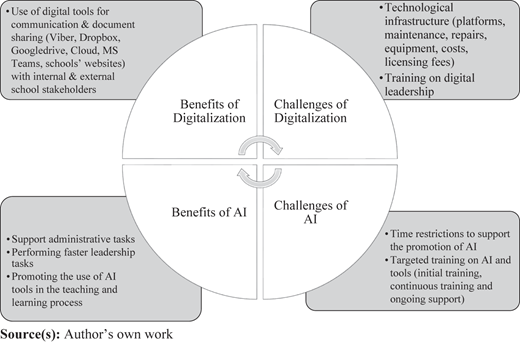
The findings highlight the benefits and challenges that primary and secondary school leaders in Cyprus place on digitalization and AI frameworks. The school leaders who participated in the study emphasized the significance of digital opportunities and their optimism regarding the future use of AI in their leadership practices. The findings, particularly concerning the future use of AI, are align with other recent references (Fullan et al., 2023; Wang, 2021). Yet, school leaders have identified not only the benefits of promoting these tools but also the challenges they face within the complex centralized educational system of Cyprus. These challenges act as obstacles to advancing digital and AI developments within school organizations and in particular within their leadership practice. The following Figure 2 summarized the findings from this study.
As shown in Figure 2, school leaders recognize the benefits of digitalization and have begun using some available digital tools for communication and sharing, yet it is crucial to further enhance their digital capabilities in school organizations. Beyond tools like Viber, Google Drive and Microsoft Teams, school leaders need to fully embrace digitalization to improve communication and streamline administrative and leadership processes. This highlights the necessity for digital literacy among school leaders, as well as the need for infrastructural support to advance digitalization within school organizations. To achieve this, educational systems in Cyprus and elsewhere must adopt a structured strategy and vision to support digitalization in school organizations and ensure its successful implementation. This digital perspective in school leadership should encompass both digital communication with internal and external school stakeholders and digital support during leadership practices. Thus, training in digital leadership is undeniably important. Ertmer et al. (2020) highlighted the significance of appropriate professional development for successful digital integration in school organizations, particularly in school leadership, as evidenced by this study. Therefore, it is crucial for key stakeholders to provide structured professional development in digital skills to school leaders by assessing individual training needs and offering tailored programs. McLeod (2021) noted that education systems with prior investments in digital tools benefited during the pandemic. Consequently, adequate training in school leadership is essential to guide school organizations effectively in the future. Additionally, since the results show that school leaders are using digital tools with both internal and external stakeholders, further training is needed to encourage teaching staff and external stakeholders, such as parents, to do the same (Hamzah et al., 2021). In this context, educational policies should emphasize the importance of involving additional stakeholders, such as academia, companies and governmental bodies (e.g. ministries dealing with digital policy), to further support school leaders' digital expertise. For example, Girelli et al. (2021) noted that during the pandemic, the Italian government sought support from universities to advance e-learning fundamentals. Also, in Cyprus, school inspectors play a crucial role in school organizations. They act as liaisons between schools and the ministry and have a role in promoting digitalization within schools (Sterrett and Richardson, 2019). Therefore, as suggested by Richardson et al. (2020), school inspectors could enhance digitalization by communicating the needs of school leaders and providing relevant and timely professional development opportunities.
Additionally, building a robust technological infrastructure is crucial for enhancing digital competence in school organizations. This includes setting up effective platforms, maintaining and repairing equipment, managing costs and handling licensing fees. It is essential for school leaders to ensure that their schools are equipped with the necessary hardware, software and network systems to facilitate technology integration. They must also guarantee that all students have equal access to these technologies and use them responsibly, with a focus on protecting student data privacy. Moreover, allocating appropriate budgets and implementing supportive educational policies are important for developing school leaders' digital skills. This involves integrating the right technological infrastructure into schools and collaborating with organizations and businesses that specialize in digital technologies to provide professional development for school leaders. To address these needs, the Ministries of Education and Finance should coordinate closely to ensure adequate funding is available to support school organizations in adapting to the digital age (Kafa, 2021).
Furthermore, the integration of AI tools in school leadership offers significant promise but also comes with several challenges. This study highlights both the advantages and obstacles of using AI tools like ChatGPT in school leadership. One major finding is that school leaders see the value of AI technologies for automating administrative tasks and speeding up leadership functions. Rodafinos (2024) notes that AI can aid in these areas, while Kafa (2021) emphasize that AI could ease the heavy administrative and managerial burdens faced by school leaders in today’s evolving educational landscape.
However, challenges persist, such as the time restriction within the centralized education system of Cyprus to support AI implementation, and the necessity for targeted training. This training should not only include initial instruction but also ongoing professional development as AI tools evolve. Advanced training and skill-building are crucial for empowering school leaders to effectively adopt AI as shown by the literature (Rodafinos, 2024; Wang, 2021). Specifically, AI professional development programs should encompass data analysis, algorithmic literacy and ethics (Rodafinos, 2024). Moreover, while the study suggests that AI tools can support teaching and learning, aligning with current research on their potential benefits (Rodafinos, 2024), many school leaders remain hesitant due to a lack of understanding. Despite the promising applications, the long-term impact of AI tools like ChatGPT on school leadership is still uncertain (Rodafinos, 2024; Kafa and Eteokleous, 2024; Fullan et al., 2023).
Implications
Based on the study’s findings, several key implications emerge regarding digitalization and the integration of AI tools in school leadership. For school leaders, themselves, should prioritize in digital infrastructure and digital tools for communication in their school organizations, and learn how to utilize AI tools such as ChatGPT in order to support the administrative tasks.
For educational policy, the results highlight the need for increased support in infrastructure, training and time allocation to address the challenges associated with these technologies. Reducing the administrative burden on school leaders and aligning service plans with the gradual autonomy of schools are essential steps in this process. In addition to general professional development programs, educational policies and relevant stakeholders must ensure ongoing support for technological advancements. This includes providing necessary infrastructure such as platforms, equipment and licensing fees to facilitate effective implementation and use by school leaders. It is also crucial for educational stakeholders to assist school leaders in remaining adaptable and forward-thinking as technology evolves, enhancing both administrative efficiency and overall leadership. Comprehensive training and professional development for school leaders are critical. While digital literacy training often focuses on teachers, this study emphasizes the need for programs specifically designed for school leaders. These programs should address both technical aspects and strategic leadership skills to help leaders effectively leverage technology in decision-making and organizational management. Furthermore, the study underscores the importance of improving infrastructure to support digitalization in schools. Similarly, in their study Ertmer et al. (2020) emphasized the need of appropriate support and professional development of school leaders for successful technology integration. Despite advancements, particularly during the pandemic, many school leaders still face challenges with inadequate technological resources. Bridging this gap is vital for ensuring equitable access to educational technology across all schools.
Also, AI tools, such as ChatGPT, have the potential to transform school leadership by automating routine tasks and allowing leaders to focus on strategic and pedagogical work. Educational policymakers must provide specific and ongoing training, along with the future trends of AI to ensure that school leaders are adequately prepared to adopt AI tools, creating specific frameworks for the safe and ethical use of these tools into their leadership practice. Even if the future of AI is unknown (Fullan et al., 2023) the current integration of AI and tools such as the ChatGPT, can facilitate the efficiency of administrative roles (Karakose, 2024). Currently, AI tools could be used to enhance school leaders’ practices in decision-making, planning, budgeting, communication and students’ keeping and analyzing records (Karakose, 2024; Wang, 2021). However, successful integration of these tools depends on adequate training and ongoing support. In fact, Dunnigan et al. (2023) argued that AI that includes tools such as ChatGPT does not come with a user manual. Therefore, there is a risk that AI tools may be underutilized or misused, potentially worsening existing challenges and an ongoing support and training is necessary. Additionally, policymakers need to consider AI integration as part of a broader educational reform that includes ethical considerations, data privacy concerns and the role of AI in decision-making.
Future research should build on these findings by exploring the long-term impacts of digitalization and AI on school leadership in diverse educational contexts. Regarding digitization, future research could explore how digital tools impact school leaders’ leadership effectiveness and student outcomes. A thorough examination of the benefits, challenges and ethical implications of AI, along with the necessary skills and training for effective implementation, is essential. The research community’s active involvement is needed to address these questions, with further empirical studies required to investigate the practical use of AI and technological tools in school settings and to address remaining research gaps. In general, as illustrated in Figure 1 in the introduction, future research should prioritize the second research gap on school leadership aspects and the third research gap on educational policy and practitioners. Moreover, the integration of digital and AI tools in school leadership also raises important legal and ethical issues, such as data privacy, intellectual property rights and cybersecurity and therefore, future research must investigate how school organizations comply with relevant laws and policies to safeguard students and staff in the digital era. Additionally, future research on AI tools should examine, how these tools can support school leaders’ administrative tasks and enhance their decision-making in school organizations.
Although this study provides valuable insights, it has several limitations. It focuses solely on Cyprus, a country with a centralized education system, which may not fully represent other educational contexts, especially those with decentralized systems or varying levels of technology use. More research is needed to understand how digital tools and AI work in different educational settings that already use digital tools, including comparisons between public and private schools or those with varying degrees of autonomy. Additionally, the study’s reliance on qualitative data from semi-structured interviews and therefore, future research could benefit from combining qualitative and quantitative methods through multiple perspectives to offer a more complete view of digitalization and AI integration in school organizations.
Notes
The Cyprus Pedagogical Institute was founded in 1972 with the mission of providing continuous professional development for educators at all levels.