This study aims to analyze how IT capability, Industry 4.0 implementation capability, and external cooperation intensity interact to enhance supply chain resilience in manufacturing firms. The research addresses the gap in understanding the sequential capability-building mechanisms through which digital resources are transformed into resilient supply chain outcomes by integrating Dynamic Capabilities Theory and the Relational View.
Using a survey-based research design, 580 firms were invited to participate. The effective response rate reached 52.41%, yielding a final sample of 304 valid observations which were analyzed through Partial Least Squares Structural Equation Modeling (PLS-SEM).
The results demonstrate that IT capability significantly strengthens Industry 4.0 implementation capability, which in turn intensifies external cooperation and enhances supply chain resilience. The findings further reveal that the effect of IT capability on resilience is largely indirect, operating through cumulative digital and relational capabilities. This sequential mechanism highlights the complementary roles of technological reconfiguration and inter-organizational collaboration in building adaptive capacity.
This study contributes to the supply chain and operations management literature by integrating Dynamic Capabilities Theory and the Relational View into a unified framework that explains resilience in manufacturing companies. It advances knowledge by empirically distinguishing digital resources from digital implementation capability and demonstrating how resilience emerges from the interplay between internal technological transformation and external cooperation intensity.
1. Introduction
Manufacturing supply chains are increasingly exposed to systemic disruptions arising from geopolitical tensions, pandemics, climate-related events, and demand volatility. These disturbances have intensified scholarly and managerial attention to supply chain resilience, defined as the capability of a supply chain to anticipate, absorb, adapt to, and recover from unexpected disruptions (Ponomarov and Holcomb, 2009; Wieland and Wallenburg, 2013). While resilience has become a central theme in operations and supply chain management, there remains ongoing debate regarding its underlying antecedents and capability foundations (Ivanov, 2021; Scholten and Schilder, 2015).
At the same time, manufacturing firms are undergoing profound digital transformation driven by Industry 4.0 technologies, including cyber-physical systems, advanced analytics, automation, and real-time data integration (Frank et al., 2019; Queiroz et al., 2020). These technologies promise enhanced visibility, flexibility, and coordination across supply networks. However, empirical evidence regarding how digital transformation translates into resilience remains fragmented. Existing research often treats digitalization as a direct enabler of resilience (Dubey et al., 2021; Ivanov and Dolgui, 2020), without sufficiently unpacking the intermediate capability-building mechanisms through which digital resources are transformed into adaptive outcomes.
This limitation reflects a broader theoretical gap between resource-based and relational explanations of resilience. Dynamic Capabilities Theory argues that firms achieve sustained performance in volatile environments through sensing, seizing, and reconfiguring capabilities (Teece, 2007, 2018). From this perspective, digital resources such as IT infrastructure constitute necessary but insufficient conditions for adaptive advantage; firms must develop higher-order implementation and reconfiguration capabilities to transform these resources into strategic outcomes (Eisenhardt and Martin, 2017). In contrast, the Relational View emphasizes that competitive advantage and adaptive capacity emerge from interorganizational routines, joint investments, and knowledge-sharing mechanisms across firm boundaries (Dyer and Singh, 1998).
Therefore, supply chain resilience may be embedded not only in internal technological competence but also in the intensity and quality of external cooperation (Wieland and Wallenburg, 2013). Nevertheless, prior literature has largely examined digital capability and relational coordination separately. Research on Industry 4.0 has predominantly focused on operational efficiency and performance outcomes (Frank et al., 2019), whereas resilience studies have emphasized collaboration and information sharing without fully integrating digital transformation processes (Scholten and Schilder, 2015; Dubey et al., 2019). Consequently, what remains insufficiently understood is how IT capability, Industry 4.0 implementation capability, and external cooperation intensity jointly shape supply chain resilience within a unified theoretical framework.
This study addresses this gap by integrating Dynamic Capabilities Theory and the Relational View to examine a sequential capability-building process linking digital resources, implementation competence, interorganizational cooperation, and resilience outcomes. Specifically, the study distinguishes IT capability as a foundational digital resource, Industry 4.0 implementation capability as a higher-order reconfiguration capability, and external cooperation intensity as a relational mechanism through which resilience is operationalized across supply networks. Accordingly, the research questions guiding this study are:
To what extent does IT capability act as a foundational antecedent of Industry 4.0 implementation capability and external cooperation intensity in manufacturing firms?
How does Industry 4.0 implementation capability influence external cooperation intensity and supply chain resilience?
To what extent does external cooperation intensity explain the mechanism through which digital capabilities are translated into supply chain resilience?
The novelty of this paper lies in explaining supply chain resilience as the outcome of a sequential and cumulative capability-building process rather than as a direct consequence of digitalization. Theoretically, the paper contributes to the supply chain resilience and operations management literature by integrating Dynamic Capabilities Theory and the Relational View into a unified framework that explains how internal digital resources are transformed into resilient outcomes through implementation and relational mechanisms (Teece, 2007; Dyer and Singh, 1998). In doing so, the study advances prior research by empirically distinguishing IT capability from Industry 4.0 implementation capability and by showing that external cooperation intensity constitutes a key mechanism through which digital transformation supports resilience. From a practical perspective, the study offers manufacturing managers a staged roadmap for resilience development: firms should first consolidate their IT capability, then institutionalize Industry 4.0 implementation processes, and finally strengthen cooperative routines with suppliers, customers, competitors, technology intermediaries, and governmental actors to enhance adaptive capacity.
The rest of the paper is structured as follows. Section 2 reviews the relevant literature and develops the hypotheses linking IT capability, Industry 4.0 implementation capability, external cooperation intensity, and supply chain resilience. Section 3 describes the research methodology, including the sample, measurement scales, and procedures used to assess common method bias. Section 4 presents the results of the PLS-SEM analysis, including the measurement model, structural model, and predictive validity assessment. Section 5 discusses the theoretical and practical implications of the findings. Finally, Section 6 presents the conclusions, limitations, and directions for future research.
2. Literature review
The growing frequency and magnitude of global supply chain disruptions have shifted production and operations management research from an efficiency-oriented view toward supply chain resilience as a strategic and operational capability for sustaining performance under uncertainty (Wong et al., 2020; Ivanov and Dolgui, 2020; El Baz and Ruel, 2021). Recent studies conceptualize resilience as a multidimensional dynamic capability, supported by organizational, technological, and relational mechanisms that allow firms to anticipate, absorb, adapt to, and recover from disruptions (Scholten et al., 2020; Dubey et al., 2023; Stadtfeld and Gruchmann, 2024). Accordingly, resilience is increasingly understood as a set of coordinated processes and routines embedded across supply networks, rather than as an isolated firm-level attribute (Queiroz et al., 2020; Chowdhury et al., 2021).
Within this perspective, digitalization alone does not guarantee resilience; its value depends on digital capabilities that transform technological resources into operational responses (Spieske and Birkel, 2021; Huang et al., 2023; Zhao et al., 2023). Dynamic Capabilities Theory (Teece, 2007) explains how firms build resilience by integrating, deploying, and reconfiguring digital assets. Recent studies distinguish IT capability (Warner and Wäger, 2019; Dubey et al., 2023), understood as IT infrastructure, process integration, and digital human capital (Bharadwaj et al., 2013), from higher-order I4.0 implementation capability, which includes top management commitment, workforce training, and disciplined digital governance (Tortorella et al., 2020; Nayernia et al., 2022; Dubey et al., 2023). This distinction is supported by evidence showing that robust IT foundations facilitate Industry 4.0 deployment, whereas weak implementation capabilities limit the conversion of digital investments into operational and resilience outcomes (Sony and Naik, 2020; Frank et al., 2019; Huang et al., 2023; Belhadi et al., 2021).
However, resilience-related capabilities also extend beyond firm boundaries and operate at the network level (Scholten et al., 2020; Dubey et al., 2023). The Relational View (Dyer and Singh, 1998) complements this argument by explaining external cooperation intensity as an interorganizational mechanism that converts internal digital capabilities into systemic resilience (Wieland and Wallenburg, 2013; Wong et al., 2020). Empirical evidence suggests that digitalization and Industry 4.0 enhance resilience through collaboration, information sharing, visibility, and coordinated decision-making with key partners, including technology intermediaries and institutional actors (Huang et al., 2023; Li et al., 2023; Dubey et al., 2023; Bag et al., 2021). Thus, external cooperation strengthens the effects of digital capabilities by enabling synchronized responses, access to alternative resources, and reciprocal support during disruptions, improving flexibility, redundancy, and recovery capacity (Wong et al., 2020; Zhao et al., 2023; Stadtfeld and Gruchmann, 2024).
2.1 IT capability, Industry 4.0 implementation capability, and external cooperation intensity
Recent scholarship conceptualizes the relationship between IT capability and Industry 4.0 implementation capability as a cumulative capability-building process, whereby a solid information technology base enables the development of higher-order organizational competencies required for digital transformation (Frank et al., 2019; Trieu et al., 2024). IT capability refers to the availability, integration, and effective use of IT infrastructure, applications, data resources, and digital human capital (Gu et al., 2021; Spieske and Birkel, 2021; Dubey et al., 2023). In contrast, Industry 4.0 implementation capability reflects the firm’s ability to orchestrate advanced manufacturing technologies through top management commitment, workforce upskilling, structured change management, and disciplined digital project governance (Sony and Naik, 2020; Antony et al., 2023). Empirical evidence indicates that Industry 4.0 technologies depend on pre-existing information systems and on the firm’s capacity to align them with operational processes, positioning IT capability as a foundational antecedent of implementation capability (Tortorella et al., 2020; Huang et al., 2023; Belhadi et al., 2021).
However, this relationship is not uniform across manufacturing subsectors, as it depends on technological intensity, production architecture, and interorganizational integration requirements (Zhang et al., 2017; Queiroz et al., 2020). In technologically complex industries such as automotive and aerospace, robust IT capability is critical for supporting cyber-physical systems and coordinated supply network operations (Wiengarten et al., 2020; Cagliano et al., 2019). In textiles and metal-mechanics, IT capability often plays a more basic enabling role associated with standardization, operational visibility, and process control, while in the chemical subsector it is closely linked to process reliability, risk management, and data integrity (Ahmadi et al., 2024). Thus, although IT capability can reduce technical and organizational frictions during Industry 4.0 deployment by improving interoperability, data quality, standardization, and cross-functional coordination (Frank et al., 2019; Nayernia et al., 2022), it remains an enabling rather than self-sufficient condition.
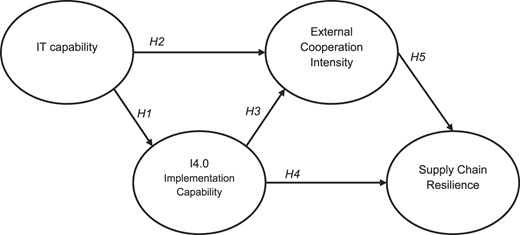
Indeed, firms with higher IT maturity are more likely to implement Industry 4.0 initiatives systematically rather than through isolated pilot projects (Kamble et al., 2020), since they possess routines for organizational learning, data governance, and analytics-driven decision-making (Tortorella et al., 2020; Spieske and Birkel, 2021; Dubey et al., 2023). Nevertheless, technological debt, fragmented legacy systems, insufficient integration standards, weak leadership, limited change management, and inadequate workforce development may constrain the translation of IT resources into successful Industry 4.0 implementation (Frank et al., 2019; Sony and Naik, 2020; Nayernia et al., 2022; Antony et al., 2023). These constraints are particularly relevant in emerging economies such as Mexico, where manufacturing firms exhibit substantial sectoral and organizational heterogeneity (OECD, 2020), and where digital adoption trajectories are shaped by global value chain participation, specialized talent availability, and internal managerial capabilities (Tortorella et al., 2020; Spieske and Birkel, 2021; Antony et al., 2023). Therefore, while IT capability is necessary but insufficient, it provides the foundation for developing Industry 4.0 implementation capability. Accordingly, the first hypothesis is proposed:
IT capability has a positive and significant effect on Industry 4.0 implementation capability.
Beyond its internal role, IT capability may also enhance external cooperation intensity by reducing coordination costs, enabling timely information exchange, and supporting interorganizational integration across supply chain actors (Wong et al., 2020; Spieske and Birkel, 2021; Dubey et al., 2023; Zhao et al., 2023). IT resources extend digital transformation beyond the firm by supporting more frequent, structured, and strategically embedded cooperation mechanisms (Kunkel et al., 2022; Bag et al., 2021). Digital mechanisms such as shared platforms (Cenamor et al., 2019), connectivity (Jasko et al., 2020), advanced analytics (Wamba et al., 2020), and traceability systems (Francisco and Swanson, 2018) improve visibility, synchronization, and joint responsiveness with suppliers, customers, technological intermediaries, and governmental agencies (Kunkel et al., 2022; Huang et al., 2023).
Nevertheless, IT capability does not automatically translate into effective cooperation. Rather, it expands the firm’s capacity to cooperate when aligned with relational routines such as collaboration, information sharing, visibility, and coordinated decision-making (Huang et al., 2023; Li et al., 2023; Wieland and Wallenburg, 2013). Enhanced IT capability can strengthen supplier–customer interfaces through interoperability, data standardization, communication quality, and task coordination (Tortorella et al., 2020; Li et al., 2023), materializing in joint planning, synchronized production scheduling, collaborative inventory management, and coordinated quality assurance (Wiengarten et al., 2019; Sahin and Robinson, 2005). This role has become especially relevant under post-pandemic uncertainty, where IT-enabled information processing improves firms’ ability to coordinate disruption responses with external partners (Wong et al., 2020; El Baz and Ruel, 2021; Dubey et al., 2023).
However, digital infrastructures may also increase formalized data exchange without generating trust or incentive alignment (Kunkel et al., 2022), while expanded digital integration can heighten cybersecurity risks, information asymmetries, and sensitive data exposure (Nayernia et al., 2022; Belhadi et al., 2021). In hierarchical supply chains, dominant firms may also impose digital standards that less capable suppliers struggle to adopt, widening power asymmetries and limiting inclusive cooperation (Li et al., 2023). Thus, although IT capability does not guarantee collaboration, the literature suggests that it creates the technological and informational conditions that enable external cooperation intensity. Accordingly, the second hypothesis is proposed:
IT capability has a positive and significant effect on external cooperation intensity.
2.2 Industry 4.0 implementation capability, external cooperation intensity, and supply chain resilience
Industry 4.0 implementation capability may strengthen external cooperation intensity because advanced digital technologies support real-time monitoring, data integration, predictive analytics, and coordinated decision-making across supply chains (Spieske and Birkel, 2021; Huang et al., 2023; Dubey et al., 2023). When firms systematically implement Industry 4.0 technologies, cooperation can become embedded in operational routines through shared data standards, synchronized planning, and integrated production interfaces (Ghobakhloo et al., 2024; Nayernia et al., 2022). In this sense, Industry 4.0 should be understood not only as an operational improvement but also as a strategic enabler of organizational renewal and interorganizational synergy (Kafetzopoulos and Kafetzopoulos, 2026). Similarly, cooperation in logistics contexts supported by Industry 4.0 can help eliminate non-value-adding processes, thereby improving productive and organizational performance (Maldonado-Guzman, 2026).
However, this relationship is not necessarily linear or guaranteed. Industry 4.0 implementation may increase technological complexity and create new coordination burdens among supply chain partners. When partners differ in digital maturity, technological standards, or absorptive capacity, Industry 4.0 implementation may generate integration barriers rather than deeper cooperation (Nayernia et al., 2022; Li et al., 2023). Advanced digital systems may also increase dependence on specialized technology providers and require new governance mechanisms to regulate data access, interoperability, and accountability (Schmidt and Wagner, 2019; Belhadi et al., 2021). Therefore, although Industry 4.0 implementation capability can intensify external cooperation, its effect depends on compatible routines, partner readiness, and effective interorganizational governance. This reasoning establishes the following hypothesis:
Industry 4.0 implementation capability has a positive and significant effect on external cooperation intensity.
Industry 4.0 implementation capability may also enhance supply chain resilience by improving real-time visibility, predictive capacity, process automation, and flexible reconfiguration of production and logistics systems (Ivanov and Dolgui, 2020; Spieske and Birkel, 2021; Huang et al., 2023). These mechanisms are consistent with Dynamic Capabilities Theory because they support the sensing, seizing, and reconfiguring processes required to respond to environmental volatility (Teece, 2007, 2018). Post-pandemic evidence indicates that firms with more resilient supply chains were better able not only to survive disruptive events but also to improve organizational performance (Roque Junior et al., 2023). Likewise, sustainable manufacturing firms tend to combine digital technologies with the capabilities required to implement and use them, while maintaining innovation and regulatory alignment (Hermawan et al., 2023).
Nevertheless, the effect of Industry 4.0 implementation capability on resilience is not automatic. Digital transformation may increase cybersecurity risks, data reliability problems, socio-technical complexity, and dependence on digital infrastructures (Belhadi et al., 2021; Spieske and Birkel, 2021; Dubey et al., 2023). Moreover, when Industry 4.0 initiatives remain isolated pilot projects rather than embedded organizational routines, they may improve operational efficiency without necessarily strengthening resilience (Frank et al., 2019; Kamble et al., 2020; Nayernia et al., 2022). The literature further suggests that digitalization contributes more effectively to resilience when combined with relational capabilities such as collaboration, visibility, and coordinated decision-making (Scholten et al., 2020; Dubey et al., 2023; Zhao et al., 2023). Thus, while Industry 4.0 implementation can support resilience through visibility and reconfiguration, its benefits depend on organizational readiness, digital governance, and relational integration. This reasoning establishes the following hypothesis:
Industry 4.0 implementation capability has a positive and significant effect on supply chain resilience.
2.3 External cooperation intensity and supply chain resilience
From a relational and information-processing perspective, external cooperation intensity constitutes a central mechanism for supply chain resilience by enabling timely information exchange, coordinated decision-making, and joint resource mobilization among interdependent actors (Wong et al., 2020; Scholten et al., 2020; El Baz and Ruel, 2021). Rather than being an isolated relational attribute, cooperation operates as the conduit through which digital and organizational capabilities are translated into collective responses to disruptions (Scholten et al., 2020; Dubey et al., 2023). Recent empirical research demonstrates that collaboration with supply chain partners strengthens core resilience dimensions—such as flexibility, visibility, and recovery capacity—by facilitating synchronized adjustments in production, sourcing, and distribution under conditions of heightened uncertainty (Huang et al., 2023; Dubey et al., 2023; Zhao et al., 2023).
Therefore, higher levels of external cooperation enhance resilience by expanding access to alternative resources (e.g. substitute suppliers or external production capacity), promoting joint learning, and enabling reciprocal support during crises, thereby reducing both recovery time and disruption severity (Wieland and Wallenburg, 2013; Li et al., 2023; Dubey et al., 2023). Post-COVID-19 evidence reinforces this argument, showing that supply chains characterized by stronger interorganizational collaboration and trust exhibited faster and more coordinated responses to lockdowns, supply shortages, and demand volatility (El Baz and Ruel, 2021; Ivanov and Dolgui, 2020). In developing economies, where institutional and infrastructural constraints are more pronounced, external cooperation assumes an even more strategic role by compensating for internal resource limitations through information sharing networks and formal and informal coordination mechanisms (Antony et al., 2023; Dubey et al., 2023; Bag et al., 2021).
However, the literature also emphasizes that intensified cooperation may generate adverse effects if not governed appropriately. Increased interdependence can amplify exposure to disruption contagion, particularly when partners rely on shared critical infrastructures, digital platforms, or common supply bases (Ivanov and Dolgui, 2020; Wieland and Wallenburg, 2013). Moreover, higher cooperation intensity may entail substantial coordination costs, dependency on dominant partners, and risks associated with sensitive information disclosure, potentially undermining resilience in the absence of effective governance structures and incentive alignment (Li et al., 2023; Nayernia et al., 2022; Belhadi et al., 2021).
Overall, the accumulated evidence indicates that external cooperation intensity is a critical driver of supply chain resilience, yet its effectiveness is contingent upon the quality of interorganizational governance, incentive alignment, and the complementarity of capabilities among network partners. Therefore, the following hypothesis is proposed:
External cooperation intensity has a positive and significant effect on supply chain resilience.
Figure 1, which is presented below, shows the formulation of the five hypotheses in the research model.
3. Methodology
3.1 Sample
This research adopted the National Statistical Directory of Economic Units (DENUE) as the sampling frame. According to official records, in 2022 the directory reported 38,583 manufacturing firms employing more than ten workers across all industrial subsectors (INEGI, 2021). The empirical scope of the study was limited to five strategic subsectors: automotive, aerospace, metal-mechanic, chemical, and textile industries. Primary data were gathered through a structured questionnaire specifically developed for this investigation. The instrument was administered to senior managers and decision-makers of the selected firms via face-to-face interviews conducted from April to December 2022. Initially, 580 firms were invited to participate. The effective response rate reached 52.41%, yielding a final sample of 304 valid observations. A simple random sampling procedure was implemented, ensuring a maximum sampling error of ±5% at a 95% confidence level. Fieldwork and survey administration were carried out by a specialized firm with expertise in industrial data collection processes. The descriptive data for the sample are shown in Appendix 1.
3.2 Variables
The measurement instrument was constructed through the adaptation of previously validated scales to ensure methodological rigor and suitability for subsequent statistical analysis. To operationalize IT capability, the scale proposed by Tippins and Sohi (2003) was adopted. The degree of I4.0 implementation capability was assessed using the scale developed by Bag et al. (2021), which captures the extent to which advanced digital and cyber-physical technologies are integrated into organizational processes. External cooperation intensity was measured based on the instrument proposed by Laursen and Salter (2006). Finally, Supply chain resilience was measured using the scale of Chowdhury and Quaddus (2017). The items used, as well as their factor loadings and p-values, are shown in Appendix 2; all values are above suggested threshold of 0.70.
3.3 Assessment of common method bias
Given that all constructs were measured using self-reported survey data collected from single respondents per firm, the potential presence of common method bias (CMB) was assessed through multiple complementary statistical procedures, as recommended in contemporary methodological literature (Podsakoff et al., 2003; Kock, 2015).
3.3.1 Full collinearity VIF test
First, CMB was examined using the full collinearity assessment procedure proposed by Kock (2015), which evaluates both vertical and lateral collinearity by regressing all latent constructs on a common criterion construct. This approach is particularly suitable in variance-based structural equation modeling (PLS-SEM), as it simultaneously captures potential method-induced covariance among constructs. Following Kock (2015), variance inflation factors (VIFs) were calculated at the latent construct level. A conservative threshold of 3.3 was used as the benchmark for identifying potential common method bias. The results indicated that VIF values were within acceptable levels based on the traditional threshold of 5.0 (Hair et al., 2022), although some constructs approached or exceeded the stricter 3.3 criterion. None of the values approached critical multicollinearity levels (VIF ≥10), suggesting moderate but not severe collinearity concerns. Therefore, while some shared variance among constructs may be present, the results do not indicate substantial common method bias that would invalidate the structural relationships.
3.3.2 Unmeasured latent method construct (ULMC) approach
Second, an unmeasured latent method construct (ULMC) was modeled using the repeated-indicators approach in SmartPLS, consistent with recommendations for detecting method effects in PLS-SEM (Chin et al., 2013; Liang et al., 2007). A common method factor was specified by assigning all observed indicators to an additional latent construct and estimating its paths to the endogenous constructs. The structural model was re-estimated including the method factor, and the path coefficients were compared with those obtained from the baseline model. The inclusion of the method construct did not substantially alter the magnitude or significance of the hypothesized relationships. Changes in standardized path coefficients (Δβ) remained within acceptable limits, indicating that the substantive theoretical paths were robust to the inclusion of a latent method factor. Moreover, although the method factor accounted for a portion of shared variance, it did not dominate the explanatory power of the endogenous constructs. This stability suggests that common method variance does not materially distort the structural relationships in the model.
3.3.3 Marker variable consideration
Finally, consistent with recommendations by Podsakoff et al. (2003) and Rönkkö and Ylitalo (2011), a marker-variable logic was considered to evaluate potential systematic method variance. The stability of the structural coefficients across alternative specifications provided additional support that the hypothesized relationships are not artifacts of measurement method.
Taken together, the convergence of results across the full collinearity VIF test, the ULMC procedure, and marker-based logic provides reasonable confidence that common method bias does not pose a serious threat to the validity of the study’s findings.
4. Results
4.1 Structural model assessment
After confirming the reliability and validity of the measurement model, the structural model was assessed using Partial Least Squares Structural Equation Modeling (PLS-SEM), which is appropriate for complex predictive models, theory development, and mediation analysis in organizational research (Hair et al., 2019, 2022; Rigdon, 2012). The results are presented in four sequential steps: direct effects, indirect effects and mediation, effect sizes, and explained variance.
4.1.1 Direct effects
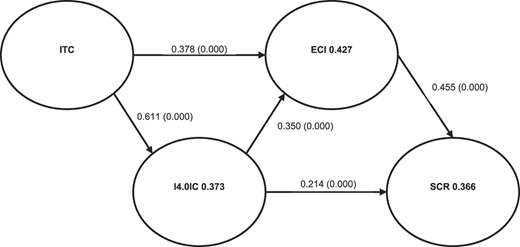
The direct effects of the structural model were first examined through standardized path coefficients, bootstrapped t-values, p-values, and 95% confidence intervals, following established PLS-SEM procedures (Hair et al., 2019, 2022). As shown in Table 1, all hypothesized direct relationships were positive and statistically significant, providing support for H1–H5.
The strongest direct effect was observed between IT capability and Industry 4.0 implementation capability (β = 0.611, p < 0.001), supporting H1. This indicates that firms with stronger IT capability are more likely to develop stronger Industry 4.0 implementation capability.
IT capability also had a positive and significant effect on external cooperation intensity (β = 0.378, p < 0.001), supporting H2. This suggests that IT capability facilitates the development of interorganizational cooperation with external actors.
The effect of Industry 4.0 implementation capability on external cooperation intensity was also positive and significant (β = 0.350, p < 0.001), supporting H3. This finding indicates that firms capable of implementing Industry 4.0 technologies are better positioned to intensify cooperation with supply chain partners and other external stakeholders.
External cooperation intensity had a positive and significant effect on supply chain resilience (β = 0.455, p < 0.001), supporting H4. This result confirms the central role of external cooperation in strengthening resilience outcomes.
Finally, Industry 4.0 implementation capability had a positive and significant direct effect on supply chain resilience (β = 0.214, p = 0.003), supporting H5. Although significant, this relationship was weaker than the effect of external cooperation intensity on resilience, suggesting that Industry 4.0 implementation contributes to resilience both directly and through relational mechanisms. Figure 2 shows the direct effects graphically.
4.1.2 Indirect effects and mediation
The indirect effects were then examined to determine whether the proposed relationships operate through mediation mechanisms. In PLS-SEM, mediation analysis is particularly useful for identifying whether the effect of an antecedent variable is transmitted through one or more intervening constructs (Hair et al., 2022). The results are reported in Table 2.
First, the indirect effect of Industry 4.0 implementation capability on supply chain resilience through external cooperation intensity was positive and significant (β = 0.154, p < 0.001). Since the direct effect of Industry 4.0 implementation capability on supply chain resilience was also positive and significant, this result indicates partial complementary mediation. In other words, Industry 4.0 implementation capability enhances supply chain resilience directly, but part of its effect is also transmitted through external cooperation intensity.
Second, IT capability showed a positive and significant indirect effect on supply chain resilience (β = 0.400, p < 0.001). This result indicates that IT capability contributes to supply chain resilience through an indirect sequential mechanism involving Industry 4.0 implementation capability and external cooperation intensity. Therefore, IT capability should be interpreted as an enabling digital resource whose resilience impact is transmitted through higher-order implementation and relational capabilities.
Overall, these indirect effects provide evidence that supply chain resilience is not generated by digital resources alone but through a cumulative capability-building process linking IT capability, Industry 4.0 implementation capability, external cooperation intensity, and resilience.
4.1.3 Effect sizes
Effect sizes were assessed using f2 values to determine the substantive impact of each predictor on the endogenous constructs. The interpretation of f2 followed Cohen’s (1988) benchmarks, where values around 0.02, 0.15, and 0.35 are commonly interpreted as small, medium, and large effects, respectively. The results are presented in Table 3.
The largest effect size was found for the relationship between IT capability and Industry 4.0 implementation capability (f2 = 0.595), indicating a large effect. This confirms that IT capability is a major antecedent of Industry 4.0 implementation capability.
The effect of external cooperation intensity on supply chain resilience was medium-sized (f2 = 0.217), showing that cooperation has an important substantive contribution to resilience. The effect of IT capability on external cooperation intensity was also meaningful, with a medium effect size (f2 = 0.157).
The effect of Industry 4.0 implementation capability on external cooperation intensity was smaller but still relevant (f2 = 0.134), while the direct effect of Industry 4.0 implementation capability on supply chain resilience was small (f2 = 0.048). This pattern reinforces the interpretation that Industry 4.0 implementation capability contributes to resilience not only directly, but also indirectly through external cooperation intensity.
4.1.4 Explained variance
Finally, the explanatory power of the model was assessed using adjusted R2 values for the endogenous constructs. R2 is commonly used in PLS-SEM to evaluate the proportion of variance explained in endogenous variables and to assess the model’s explanatory power (Hair et al., 2022). The adjusted R2 values are reported in Table 4.
The model explained 37.1% of the variance in Industry 4.0 implementation capability. This indicates that IT capability accounts for a substantial proportion of the variance in firms’ Industry 4.0 implementation capability.
For external cooperation intensity, the model explained 42.3% of the variance. This suggests that IT capability and Industry 4.0 implementation capability jointly provide meaningful explanatory power for firms’ external cooperation intensity.
For supply chain resilience, the model explained 36.2% of the variance. This indicates that Industry 4.0 implementation capability and external cooperation intensity explain a relevant proportion of resilience outcomes in Mexican manufacturing firms.
Taken together, the results confirm that the model has adequate explanatory power and that supply chain resilience is shaped by both digital implementation capability and relational cooperation mechanisms.
4.2 Predictive validity
Predictive performance was assessed using the PLS Predict procedure (Hair et al., 2022). Q2_predict values were positive for all endogenous constructs (Industry 4.0 implementation capability = 0.367; external cooperation intensity = 0.342; supply chain resilience = 0.319), indicating out-of-sample predictive relevance. These findings confirm that the model possesses meaningful predictive capability beyond in-sample explanatory power as shown in Table 5.
5. Discussion
The results of this study support the central argument that supply chain resilience is not merely a direct consequence of digitalization. Rather, resilience emerges through a sequential capability-building process in which IT capability enables Industry 4.0 implementation capability, which then strengthens external cooperation intensity and supply chain resilience. This finding is theoretically relevant because prior studies have highlighted the role of digitalization and data analytics in resilience (Ivanov and Dolgui, 2020; Dubey et al., 2021; Queiroz et al., 2020), but have offered less empirical clarity on the internal and relational mechanisms through which digital resources become adaptive supply chain outcomes.
The strongest relationship in the model was the effect of IT capability on Industry 4.0 implementation capability. This suggests that IT capability operates as a foundational resource that allows firms to structure, coordinate, and scale Industry 4.0 initiatives. Firms with stronger IT capability are likely to possess better data integration, information processing capacity, digital infrastructure, and IT-related human capital. This result corroborates previous research arguing that IT capability supports digital transformation and organizational value creation (Bharadwaj, 2000; Chen et al., 2014; Warner and Wäger, 2019). It also aligns with Dynamic Capabilities Theory, which argues that resources generate strategic outcomes only when they are integrated, deployed, and reconfigured through higher-order capabilities (Eisenhardt and Martin, 2017; Teece, 2007).
However, the findings also refine this literature by showing that IT capability should not be equated with Industry 4.0 implementation capability. While IT capability provides the technological foundation, Industry 4.0 implementation capability reflects the firm’s ability to convert that foundation into operational routines, digital projects, and reconfigured manufacturing processes. This distinction is important because prior studies warn that digital investments may fail to produce performance or resilience outcomes when firms lack the managerial, organizational, and implementation capabilities needed to use them effectively (Frank et al., 2019; Sony and Naik, 2020; Nayernia et al., 2022). Thus, IT capability is necessary but not sufficient for resilience-oriented digital transformation.
The results also show that IT capability positively affects external cooperation intensity. This indicates that IT capability not only supports internal digital transformation but also facilitates interaction with external actors. Firms with stronger IT capability may be better able to exchange information, coordinate processes, share data, and synchronize decisions with suppliers, customers, technology partners, and institutional actors. This finding is consistent with studies suggesting that digital connectivity, analytics, shared platforms, and traceability systems enhance interorganizational coordination and supply chain visibility (Cenamor et al., 2019; Francisco and Swanson, 2018; Wamba et al., 2020; Wong et al., 2020).
At the same time, the moderate size of this effect suggests that IT capability does not automatically generate cooperation. Digital infrastructure may enable information exchange, but cooperation also requires trust, governance, incentive alignment, and relational routines. This interpretation is consistent with the Relational View, which emphasizes that interorganizational advantage arises not only from resource possession but also from joint routines, knowledge sharing, and complementary resource alignment between partners (Dyer and Singh, 1998). Therefore, IT capability creates the conditions for external cooperation, but meaningful collaboration depends on relational mechanisms.
The positive effect of Industry 4.0 implementation capability on external cooperation intensity further reinforces this interpretation. Once firms move beyond basic IT infrastructure and develop the ability to systematically implement Industry 4.0 technologies, they become better positioned to coordinate with external actors. Industry 4.0 implementation can increase real-time visibility, improve process synchronization, reduce information asymmetries, and support collaborative decision-making across supply networks. This finding corroborates previous studies arguing that Industry 4.0 and digital transformation strengthen supply chain integration and coordination (Ivanov and Dolgui, 2020; Queiroz et al., 2020; Huang et al., 2023; Dubey et al., 2023). It also shows that Industry 4.0 implementation has a relational dimension, as it reconfigures not only internal processes but also interfaces with external partners (Scholten et al., 2020; Dubey et al., 2023).
External cooperation intensity also had a positive and substantial effect on supply chain resilience. This finding indicates that cooperation with external actors helps firms anticipate, absorb, adapt to, and recover from disruptions. Firms that cooperate more intensively with suppliers, customers, competitors, technology intermediaries, and governmental institutions may access information, alternative resources, joint problem-solving mechanisms, and coordinated responses more rapidly. This result corroborates prior resilience research emphasizing collaboration, information sharing, and relational competencies as key drivers of supply chain resilience (Ponomarov and Holcomb, 2009; Wieland and Wallenburg, 2013; Scholten and Schilder, 2015; Dubey et al., 2019).
This finding also explains why external cooperation intensity had a stronger effect on resilience than the direct effect of Industry 4.0 implementation capability. Although Industry 4.0 can improve visibility, automation, and responsiveness, resilience often requires coordinated action across multiple actors because disruptions propagate through suppliers, customers, logistics providers, and institutional environments. Therefore, external cooperation appears to be the mechanism through which digital capabilities become operationally useful during disruptions. This supports the Relational View by showing that resilience can be understood as a network-level outcome generated through interorganizational coordination and complementary resources (Dyer and Singh, 1998; Wieland and Wallenburg, 2013).
The direct effect of Industry 4.0 implementation capability on supply chain resilience was positive but comparatively smaller. This qualifies the assumption that Industry 4.0 automatically produces resilience. The result suggests that Industry 4.0 contributes to resilience by improving visibility, predictive capacity, automation, and operational flexibility (Ivanov and Dolgui, 2020; Spieske and Birkel, 2021; Huang et al., 2023). However, its smaller effect indicates that digital implementation alone may be insufficient and that its resilience value increases when combined with external cooperation intensity. This interpretation is consistent with research arguing that digitalization contributes to resilience when embedded in organizational and relational capabilities (Dubey et al., 2023; Zhao et al., 2023).
Finally, the mediation results provide the clearest evidence of the study’s theoretical contribution. The significant indirect effect of IT capability on supply chain resilience indicates that IT capability influences resilience mainly through Industry 4.0 implementation capability and external cooperation intensity. Thus, IT capability should be understood as a strategic input rather than a direct resilience capability. Similarly, the indirect effect of Industry 4.0 implementation capability through external cooperation intensity shows that cooperation partially explains how Industry 4.0 contributes to resilience. Overall, the findings corroborate prior studies linking digital transformation, cooperation, and resilience, but extend the literature by specifying the mechanism through which these relationships unfold: resilience emerges from the cumulative interaction between digital resources, implementation capabilities, and external cooperation mechanisms.
5.1 Practical and theoretical implications
This study offers relevant theoretical and practical implications for understanding how manufacturing firms can build supply chain resilience through digital and relational capabilities. From a theoretical perspective, the findings contribute to Dynamic Capabilities Theory by showing that IT capability does not directly guarantee resilience. Instead, IT capability operates as a foundational resource that must be transformed into higher-order Industry 4.0 implementation capability before it can generate adaptive value. This supports the argument that resources only become strategically valuable when firms are able to integrate, deploy, and reconfigure them in response to environmental uncertainty (Eisenhardt and Martin, 2017; Teece, 2007, 2018).
The study also contributes to the Relational View by demonstrating that external cooperation intensity is a key mechanism through which digital capabilities are translated into resilience outcomes. The results indicate that resilience is not only an internal organizational capability but also a network-level outcome embedded in interorganizational routines, knowledge sharing, and complementary resources among supply chain partners (Dyer and Singh, 1998; Wieland and Wallenburg, 2013). This finding is consistent with prior studies emphasizing the importance of collaboration, information sharing, and relational competencies for supply chain resilience (Ponomarov and Holcomb, 2009; Scholten and Schilder, 2015; Dubey et al., 2019).
A central theoretical contribution of this study is the integration of Dynamic Capabilities Theory and the Relational View into a single explanatory framework. Previous research has often examined digital capabilities and relational coordination separately. In contrast, this study shows that they operate sequentially and complementarily: IT capability strengthens Industry 4.0 implementation capability; Industry 4.0 implementation capability enhances external cooperation intensity; and external cooperation intensity improves supply chain resilience. Therefore, the findings refine prior research on digital transformation and resilience by showing that Industry 4.0 contributes to resilience not only through internal visibility, automation, and flexibility, but also by enabling stronger coordination with external partners (Ivanov and Dolgui, 2020; Dubey et al., 2021; Spieske and Birkel, 2021; Huang et al., 2023).
From a practical perspective, the findings suggest that managers should not treat digital transformation as a simple process of technology acquisition. Investments in IT infrastructure are important, but they are insufficient unless accompanied by implementation routines, employee training, data governance, managerial alignment, and structured Industry 4.0 project management. Firms should therefore follow a staged capability-building roadmap: first, strengthen IT capability; second, institutionalize Industry 4.0 implementation processes; and third, use these capabilities to develop stronger cooperation with suppliers, customers, technology intermediaries, universities, and governmental agencies.
The results also show that external cooperation intensity has a substantial effect on supply chain resilience. This implies that manufacturing firms should treat collaboration as a strategic resilience capability. Managers can benefit from establishing mechanisms for joint planning, shared risk monitoring, collaborative inventory management, supplier development, and coordinated disruption response. In volatile environments, the ability to exchange timely information and mobilize external resources may be as important as internal operational efficiency.
For policymakers and industrial development agencies, the findings suggest that resilience-oriented policies should go beyond supporting technology adoption. Public programs should also promote digital skills, supplier integration, interorganizational collaboration, cybersecurity practices, and shared platforms that connect firms with technology providers and public institutions. This is particularly relevant in emerging manufacturing contexts, where firms often face uneven digital maturity, resource constraints, and strong exposure to global supply chain disruptions.
6. Conclusions
This study examined how IT capability, Industry 4.0 implementation capability, and external cooperation intensity interact to enhance supply chain resilience in Mexican manufacturing firms. The findings show that IT capability is a key foundation for developing Industry 4.0 implementation capability, but it does not generate resilience by itself. Instead, resilience emerges through a sequential capability-building process in which digital resources are transformed into implementation capabilities and then reinforced through external cooperation. The results also confirm that external cooperation intensity plays a central role in strengthening supply chain resilience, since collaboration with suppliers, customers, technology partners, and institutional actors enables firms to improve coordination, information exchange, adaptation, and recovery when facing disruptions.
Overall, the study contributes to a better understanding of supply chain resilience by showing that it is both digitally enabled and relationally embedded. For managers, the findings suggest that resilience strategies should not focus only on acquiring digital technologies, but also on developing the organizational routines required to implement Industry 4.0 and on building stronger cooperation with external partners. Despite its contributions, the study has some limitations, including its focus on Mexican manufacturing firms, its cross-sectional design, and the use of self-reported survey data. Future research could extend the model to other countries and industries, use longitudinal or multi-informant designs, and examine additional factors such as organizational learning, cybersecurity capability, institutional support, or environmental uncertainty. In conclusion, this study advances research by demonstrating that supply chain resilience emerges from a structured sequence of digital and relational capability development. By integrating Dynamic Capabilities Theory and the Relational View, the research offers both theoretical refinement and actionable managerial guidance for manufacturing firms operating in increasingly volatile environments.
The authors acknowledge the use of ChatGPT and Grammarly during the language review of the article.
The supplementary material for this article can be found online