The global rise in non-communicable diseases (NCDs) is a major health concern, with growing prevalence among African immigrants in Western countries. This study aims to explore the experiences of West African immigrant mothers in Finland, focusing on lifestyle patterns perceived to promote well-being or increase NCD risk, and the cultural factors influencing these health behaviors.
This qualitative study used in-depth semi-structured interviews with 29 first-generation West African immigrant mothers in Finland, recruited through snowball sampling. Inductive content analysis was applied, with emerging themes organized using the PEN-3 model, which also provided the framework for the study.
The findings underscore the dual role of culture in both supporting and hindering the health of West African immigrant mothers in Finland. Cultural values act as protective factors but also pose barriers to NCD prevention and healthy living. While participants retained traditional diets, many adopted health behaviors that meets Finnish nutritional recommendations. However, cultural norms and structural barriers often limit consistent healthy practices, despite awareness of NCD risks. Mental health challenges were also prevalent, with many reporting chronic stress. However, mistrust in the healthcare system posed a significant barrier to seeking help.
The study highlights the need for culturally grounded public health interventions that consider cultural strengths while addressing barriers to NCD prevention. Further research is recommended to explore healthcare mistrust and perceived NCD risk among immigrants in Finland.
Abbreviations
Introduction
Non-communicable Diseases (NCDs), also known as chronic or lifestyle diseases, account for 75% of global deaths and affect people of all ages (World Health Organisation, 2024). With rising morbidity and mortality in both low- and high-income countries, they represent a major health challenge of the 21st century (Yach et al., 2004; Cooper et al., 2012; World Health Organisation, 2019; World Health Organisation, 2024). The four leading NCDs are cardiovascular diseases, cancers, chronic respiratory diseases, diabetes and kidney diseases caused by diabetes, accounting for 80% of NCD-related deaths (World Health Organisation, 2024). NCDs are closely linked to lifestyle factors, including poor diet, physical inactivity, tobacco use or exposure to tobacco smoke, excessive alcohol consumption and other harmful substances (Cooper et al., 2012; World Health Organisation, 2024).
NCD rates are rising among African and African migrant populations, with increased morbidity and mortality reported in Europe and the US, particularly from diabetes, cardiovascular disease and cancer (Harding et al., 2008; Venters and Gany, 2011; Cooper et al., 2012; Vandenheede et al., 2012). Migration is shaped by complex factors, including acculturation stress, shifts in diet, sociocultural and socioeconomic changes (Tamankag et al., 2025). Health behaviors, central to the development of NCDs, are strongly shaped by cultural beliefs related to health, body image, diet and mealtime practices (Hurston et al., 2024; Tamankag et al., 2025).
Interpersonal and structural mistrust experienced by patients during healthcare encounters can negatively affect NCD outcomes, as patients who lack confidence in providers may delay care, miss appointments, underuse services or forgo preventive care (Shukla et al., 2025). It is also associated with nonadherence to treatment, poorer health outcomes, and reduced healthcare utilization, limiting early detection and effective NCD management (Shaughnessy et al., 2023). Among racialized immigrants, mistrust is often shaped by experiences or perceptions of systemic discrimination and unequal treatment (Oakley et al., 2019; Shukla et al., 2025). An integrated review in the Nordic countries on humanitarian migrant women′s experiences of maternity care reported care-related discrimination (Lemppälä et al., 2020), which may contribute to structural mistrust between mothers and healthcare providers and act as a major barrier to accessing care, as also shown in studies among African immigrant populations in the USA (Hansen et al., 2016; Webb Hooper et al., 2019). Research among immigrant mothers in Finland further emphasizes the need for effective communication, culturally sensitive care, and explicitly addressing racism and bias to strengthen trust in health and social services (Kankaanpää et al., 2023).
Over the past decade, the number of African immigrants in Finland has increased significantly, although the proportion of the population is still small. As of 2024, there are 75,953 people with an African background, 1.4% of the population, with 54,046 born in Africa and around 35,500 living in the Helsinki Metropolitan Area (Statistics Finland, 2024). African immigrant mothers in Finland face multiple challenges related to motherhood and healthcare access. Cultural differences, language barriers and experiences of discrimination can significantly shape their experiences during pregnancy, childbirth, postnatal care and child upbringing (Ebot, 2014; EMN Study, 2022; Sibbie et al., 2024). In addition, gender-specific challenges arise as traditional gender roles often conflict with those in Western societies (Tamankag et al., 2025).
Research by the (Finnish Institutute for Health and Welfare, 2023, 2025) reports, based on data from the Maamu survey (2012), that approximately 73% of Somali women in Finland were overweight or obese. Additional studies, such as (FinMonik, 2020) and (Monisuomi, 2022), provide broader insights into immigrant well-being. A report from the Maamu Survey found obesity rates highest among women from sub-Saharan Africa (23%) and the Middle East and North Africa (21%), with African women also reporting low physical activity. However, immigrants are often treated as a homogeneous group, overlooking differences by origin. Notably, African immigrant mothers remain underrepresented in health research. A European study further revealed elevated rates of NCDs, such as hypertension, diabetes and obesity, among sub-Saharan African migrants (Modesti et al., 2016).
In this study, West African immigrant mothers refer to women who migrated to Finland from West African countries as defined by the United Nation (United Nation, 2023). The sample does not include all countries in the region. In addition, participants from Cameroon were included, particularly those from the Anglophone regions (Northwest and Southwest) due to their linguistic, historic and cultural ties with West African populations, including similarities in cuisine, traditions and beliefs (Nfi, 2024). The region has approximately 458 million people with primarily English and French as official languages (World Band Group, 2024). In Finland, the largest West African immigrant communities are from Nigeria and Ghana, followed by The Gambia, Sierra Leone and Liberia. Migration is mainly driven by family reunification, education and asylum seeking (Finnish Immigration Services, 2023; Statistics Finland, 2024). Within West African families, mothers play a central role as the cohesive force of the household (Akujobi, 2011; Adhunga, 2014; Ebot, 2014), making them key agents in promoting family health and preventing NCDs.
Lifestyle patterns can be defined as routines and behaviors like diet, sleep, physical activity and stress management, strongly influencing health and well-being, and are tied to self-identity (Vajdi et al., 2020). For West African mothers in Finland, migration and motherhood demand adapting these patterns to a new cultural setting, often without familiar community support. These shifts can conflict with prior beliefs and practices affecting health behaviors and potentially increasing NCD risk (Conner, 2015). The root causes of lifestyle changes are complex and dynamic shaped by ongoing negotiations between cultural traditions and new norms in the host country (Tamankag et al., 2025).
The aim of this study is to explore the experiences of West African immigrant mothers in Finland, focusing on lifestyle patterns perceived to promote well-being or increase NCD risk, and the cultural factors influencing these health behaviors, using the lens of the PEN-3 Model. It seeks to answer the following questions 1) Which health behaviors do West African immigrant mothers in Finland perceive as supporting well-being or contributing to the risk of NCDs? 2) What cultural factors influence the health behaviors of West African immigrant mothers in Finland?’
Conceptual framework
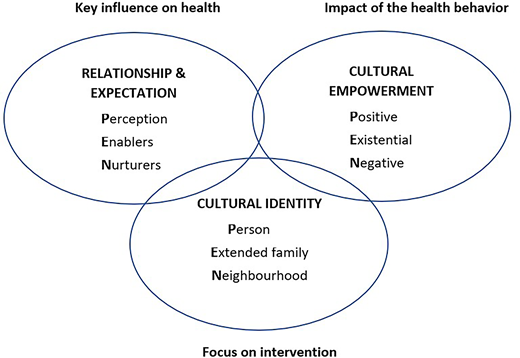
The PEN-3 model (Figure 1) was developed by Airhihenbuwa (1989). The model serves as the conceptual framework for this study. It emphasizes the role of culture in shaping health behaviors and has been widely applied in health promotion and disease prevention (Airhihenbuwa, 1992; Iwelunmor et al., 2014). The model consists of three interrelated domains: Cultural Identity (Person, Extended Family, Neighborhood), Relationships and Expectations (Perceptions, Enablers, Nurturers), and Cultural Empowerment (Positive, Existential, Negative) (Airhihenbuwa, 1989; Airhihenbuwa et al., 2013; Iwelunmor et al., 2014). Cultural Identity informs interventions, while Relationships and Expectations and Cultural Empowerment guide assessment, helping to identify harmful behaviors and promote culturally meaningful health practices (Airhihenbuwa et al., 2009, 1989, 1992).
Methodology
The qualitative research approach explores people’s behavior, feelings and experiences, aiming to understand the meanings that lies at the core of their everyday lives (Holloway and Galvin, 2023). This approach was appropriate for examining the experiences of West African immigrant mothers in Finland, focusing on lifestyle patterns and their culturally influenced determinants, which are difficult to quantify.
Participants
Participants were first-generation West African immigrant mothers living in Finland, recruited through snowball sampling starting with community leaders. A sampling frame ensured diversity in age and country of origin. Participants were single or married mothers living with their biological or adopted children. Mothers who were married to African partners were included, while those in biracial relationships were excluded, as their experiences were considered significantly different. Duration of stay in Finland was 1–30 years, to capture lifestyle patterns influenced by migration while accounting for cultural adaptation over time. Participants’ employment status was considered; however, information on their specific occupations was excluded from the study to focus on cultural factors and protect participant anonymity given the small community size.
Conducting the interview
The semi-structured interviews were conducted with 29 West African immigrant mothers in the Helsinki Metropolitan Area of Finland between July 2021 and October 2022. A pilot with three mothers led to minor revisions. Individual interviews were used to promote openness and allow in-depth exploration of participants’ experiences in a small community. The interview questions were grouped into themes that align with the purpose of the study, such as dietary practices and other lifestyle patterns. Experience with the healthcare system also emerged during the interviews. Follow-up questions were asked to shed more light on participants’ responses, including how experiences during healthcare encounters have influenced their views of the Finnish healthcare system ( Appendix). Interviews lasted an average of 67 min, were conducted mostly in English (97%), and took place on a date and time chosen by the participants. Audio recordings were securely stored with pseudonymized codes assigned to the participants (M1, M2 M3 and so on). The interviewer also kept a reflective diary to support data analysis. Participants provided informed consent, and data saturation was reached when no new themes emerged.
(see Table 1: Demographic characteristics of the sample).
Data analysis
Inductive thematic content analysis was used to analyze the data (Holloway and Galvin, 2023). The first author (XX), who is familiar with English, Pidgin English and the slangs used by participants, transcribed all interviews using an edited transcription approach, where minor grammatical adjustments and punctuation were made for clarity without altering sentence structure or meaning. The transcripts, comprising 319 pages of Word documents, were imported into ATLAS.ti for analysis. Data was analyzed using grounded theory coding procedures. Open coding was first conducted by the first author, while XX and XX independently coded selected portions of the data. This was followed by axial coding to identify relationships between categories, and finally selective coding to integrate categories into overarching themes capturing central patterns in the data (Tie et al., 2019). Discrepancies were resolved through discussion, after which a final coding framework was applied to all transcripts. Emerging themes were aligned with the PEN-3 model to ground the findings in theory.
As shown in Table 1, the sample consisted of twenty-nine West African immigrant mothers living in the Helsinki Metropolitan Area in Finland, home to more than 1.5 million inhabitants (Info Finland, 2025). The mean age of the mothers was 37 years (M = 37 ± 5.04). The average duration of stay in Finland was 11 years (M = 11 ± 6.02), and the mean number of children was 2.7 (M = 2.7 ± 0.97), while the mean age of the children was 6.6 years (M = 6.6 ± 4.90). Most participants migrated from Nigeria (38%) and Ghana (24%). Most participants were married or are cohabiting (72%), and the majority were fully employed (69%).
Ethical issues
Participation was voluntary, and informed consent was obtained through signed consent forms after participants had reviewed the information letter. They were informed of their right to withdraw at any time without consequence. Data were securely stored, and pseudonyms were used to ensure confidentiality and anonymity of the participants. No identifiable information was included in the analysis, and direct quotes were used to reflect participants’ voices in the findings. Acknowledging the first author′s shared cultural background, maintaining a clear researcher-participant boundaries was an imperative aspect of reflexive practice. In Finland, ethical review is not required in this type of research setting. Ethical approval was waived by the University of Helsinki Research Ethics Committee in the Humanities and Social and Behavioural Sciences because the research did not include any of the factors that would require an ethical review. In addition, as this research falls within the human sciences and does not constitute medical research, it is not subject to the guidelines of the World Medication Association (WMA) Declaration of Helsinki. (TENK, 2023). ChatGPT has been used as an editing tool in correcting, formatting, modifying and refining some parts of the text in this report.
Findings
This study utilized two domains of the PEN-3 model, Relationships and Expectations, and Cultural Empowerment, focusing on assessment rather than intervention. The model’s 3x3 matrix was adapted to create nine cells by intersecting the Relationships and Expectations domain (Perceptions, Enablers, Nurturers) with the Cultural Empowerment domain (Positive, Existential, Negative) (see Figure 1). Perceptions represent participants’ beliefs, thoughts and feelings about health behaviors related to NCDs; Enablers are external factors influencing these behaviors; and Nurturers involve social support or pressures affecting health decisions. Positive factors support health and NCD prevention, Existential factors are culturally rooted but neutral, and Negative factors increase NCD risk (Airhihenbuwa, 1992; Airhihenbuwa et al., 2013). Emerging themes were categorized accordingly. (see Tables 2 and 3)
Lifestyle patterns perceived to promote well-being or increase ncd risk among west african immigrant mothers in Finland
Perception
Positive.
Perceptions of traditional african dishes.
African cuisines carry strong cultural meaning and are traditionally prepared with whole foods rich in resistant starch, fiber and natural antimicrobial compounds. Participants mentioned foods such as corn, fufu, cassava, yams, banku, plantains, egusi, jollof rice, beans and vegetables like okra, cassava leaves and eru (Ukazi/Afang). These dishes helped manage homesickness and preserve cultural identity. Rather than removing them, participants often modified preparation, grilling or air-frying instead of deep-frying, and added natural spices such as garlic, ginger and chili. As one participant explained: “I have really preserved my African dishes and improvised on the method of preparing it.” (M27) Other participants highlighted the perceived health benefits of African food, emphasizing its organic and minimally processed nature “Our food is more organic…plantains and yams are rich in fiber.” (M10)
Perceptions of healthy eating.
Many participants highlighted a growing awareness of healthy eating, which has gradually reshaped their relationship with food, despite ongoing challenges such as managing portion size, particularly when it comes to traditional dishes. One participant shared, “Lately, my eating habits have also changed drastically. I find myself not eating just to get full or just for the taste.” (M2) Others described efforts to stay motivated by trying different diets and adopting personal strategies. As another participant explained, “I have a picture of a heavy woman on my fridge, so when I am tempted to take some snacks, I look at that picture.” (M1)
Perceptions of substance use.
Participants’ reactions to the question “Do you smoke?” reflected the influence of cultural norms in which women’s smoking is socially stigmatized, which may have influenced their attitude as none of the participants reported using cigarettes. Only a few consumed alcohol on special occasions. As one participant noted, “I don’t smoke. I drink only during parties.” (M13)
Negative.
Traditional beliefs about cooking methods and oil usage.
While many participants reported adopting practices, they considered healthier from Finnish culture, others retained traditional dietary habits, such as frying, that conflicted with health recommendations but preserved the original taste of cultural dishes. “I fry plantains … I deep fry yam, sometimes fish, and chicken.” (M3) The use of large amounts of oil also carried cultural symbolism, representing abundance and proper cooking. One participant noted, “In my culture, when you are cooking and oil is not floating on top of the food, then you have not prepared the food well.” (M29)
Perceptions of large portion sizes.
Most participants reported being more mindful of portion sizes when eating Finnish meals but found it harder to control portions with traditional foods. Cultural eating norms shaped this behavior. “We don’t have portion size in Africa… we just eat and when we are full, we are full… when I am eating my African food, I eat to the brim. (M27)
Perceptions of leftovers.
Some participants described how the cultural norm of not wasting food made them feel compelled to eat leftovers instead of throwing them away. Leftover in the context of this study refers to food that cannot be stored and consumed later. This behavior was identified by several participants as a contributing factor to weight gain. As one participant explained, “There is the temptation of eating their leftovers because you don’t want the food to be wasted… So, you might end up eating more than what you were supposed to eat.” (M22)
Enablers
Positive.
Availability and accessibility of foods in Finnish grocery stores.
All participants stated that they regularly shop at Finnish grocery stores for healthy foods like fruits, vegetables, dairy, meats ( or chicken, salmon), rice and pasta. They found the availability of these items supportive of healthier eating and adapting to Finnish dietary habits. As one participant said, “I buy spinach, tomatoes, greens like broccoli, carrots, spaghetti, rice, and carrots.” (M4) Many appreciated the variety of fruits and cruciferous vegetables, which encouraged also plant-based eating. Some adopted new practices like making green smoothies. One shared “I drink green smoothies regularly…” (M18)
Availability of heathier oils.
Participants expressed awareness of different healthy cooking oils and their health-related benefits and viewed their availability in Finnish shops as a positive factor that facilitated healthier choices. While sunflower oil remained the most used, many participants reported using olive oil after learning about its benefits for cardiovascular health. Palm oil was still used by most participants, but only when preparing specific traditional dishes that could not be made with other oils. As one participant explained, “I use olive oil. I used to use sunflowers, but I stopped. I also use palm oil when I am preparing African dishes.” (M14) Most participants had not heard of avocado oil, and none had used it in their cooking.
Availability of gyms and walking paths.
Participants appreciated the availability of gyms and walking paths in Finland, which encouraged physical activity despite limited time and energy. Walking was especially valued, seen as a cultural shift from home countries where it was often linked to poverty. Many were inspired by older Finnish couples walking regularly and began incorporating it into their routines. As one participant said, “Every day at least 30 min to 1 h…I walk at least 4 times a week.” (M20) Even though gyms were accessible, regular attendance was challenging. Some stayed active by involving their children: “We do a lot of dancing, almost every day I dance with the kids. We do some Zumba activities.” (M23)
Other health-promoting lifestyle adaptations.
Participants indicated that they had adopted behaviors they considered healthier due to growing health awareness, including switching from frying to grilling, steaming or using air fryers. As one participant shared, “I use an air fryer to fry my fish.” (M13) Others reported regular consumption of salad “I eat salad at least 3 time a week.” (M9), reduction in oil consumption and salt intake “I have let go of using too much oil.” (M7) and “My salt consumption has also reduced.” (M14)
Additional practices reported by participants included drinking more water, “I drink about two liters or more of water every day” (M15), and frequent sauna use by a few: “I like sauna. I go at least once a week.” (M10) Some also reported taking vitamin D3 supplements though not regularly: “I take vitamin D supplements during winter.” (M5) A few participants mentioned reading food labels to make informed dietary choices.
Nearly all participants acknowledged learning to prepare Finnish meals like casseroles, mashed potatoes, and regularly consumed fish such as salmon, along with fiber-rich foods like rye bread and oats. Participants mainly prepared these foods because of their children, who regularly ate them at school “I also make sure that I make the Finnish food since they were born here.” (M27) Many also reported becoming more mindful of portion sizes, particularly when eating Finnish foods. One participant noted, “I have adopted food portion size, something which I have learned from the Finnish culture.” (M27)
Negative.
Barriers to physical activity.
Almost all participants explained that they had gained weight due to limited time for physical activity, insufficient sleep and poor eating habits, and expressed dissatisfaction with their current body weight. One participant shared: “I am struggling with my weight, but I cannot get back to my previous weight…” (M14) Despite understanding the benefits of physical activity, many found it difficult to engage in regular physical activity. Some registered at gyms but struggled with time, lack of spousal support and childcare demands: “When I started going to the gym, my husband would be like, ‘What time are you coming?’ because when he is home with the kids, he can’t handle them… So, I had to stop.” (M11) Another added, “I paid for almost one year without going to the gym. I do two jobs, and when I come home, there is too much load.” (M15) For others, remittance responsibilities made gym costs unjustifiable: “I asked myself why I am paying 20 euros every month when I needed to send money back home. Back home that money is like 200,000.” (M11)
Irregular sleep pattern.
Sleep deprivation was a common issue expressed by nearly all participants, with most reporting less than the recommended 6–8 h of sleep. “I haven’t slept for 9 years. I don’t know the last time I got good sleep for a week,” (M14) said one mother. Another shared, “Averagely I sleep like 4–5 h per night.” (M19) Stress, anxiety and motherly duties were mentioned as the reason for lack of sleep and irregular sleep pattern, increasing participants’ vulnerability to NCDs.
Irregular eating patterns.
Irregular eating habits were also common. Some reported eating only once a day due to busy schedules, while others ate late at night after work. “…here you come back late from work, and you cannot sleep with an empty stomach. Late eating is one big problem for me.” (M3) These patterns, skipping meals and eating late, can negatively impact nutrition and increase NCD risk over time.
Nurturers
Positive.
Spousal support.
Some participants highlighted supportive spouses as key to their well-being. “He tries to help, he cooks sometimes. We have a division of labor in the home.” (M7) In Finland, where both partners often work, shared responsibilities were seen as essential. “He has been helpful and like my backbone.” (M12)
Existential
Church and community support
Churches and community organizations were important sources of social and emotional support. Most participants were involved in church groups or cultural associations, appreciating the sense of belonging. “We are always together, dining together, fellowship together.” (M7) These spaces also promote mental well-being through prayer and connection. “I gained friendship, which helped me mentally.” (M17) For some, church served as informal counseling and stress relief. “If I have a problem and I go to church, during the sermon, I forget about everything… there would be someone to confide in like the pastor.” (M9)
Negative.
Lack of spousal support.
Although some men shared household responsibilities, many women reported little spousal support, increasing their physical and emotional burden. As one explained, “Most of us our men don’t help us. So, we do almost everything besides the work. So, before you realize you are so tired” (M26). This was linked to cultural norms assigning domestic duties to women, while men focused on financial provision. Many husbands had not adapted to Finland’s context where both partners work full-time: “I work two shifts, so if I come back from the night shift, instead of sleeping, I have to cater for the kids even though my husband is here… my average sleep is like 4 h” (M13).
Cultural factors influencing heath behaviors of West African immigrant mothers in Finland
Perception
Positive.
Perception of health.
Most participants described understanding the components of health and the importance of maintaining good health, which has changed post migration to Finland, often shaped by personal experiences. As one shared, “To me health is well-being. Physically, emotionally, psychologically.” (M19) Another one explained: “Coming here and seeing that health is not only physical has expanded my mentality and broadened my understanding of what health is all about.” (M2)
Perception of the role of lifestyle in non-communicable disease prevention.
Most participants stated that they understand the role of lifestyle in NCD prevention, often informed by personal or family experiences. As one shared, “My mum has hypertension, and my dad has diabetes.” (M1) They recognized contributing factors such as “Eating junk, drinking, and smoking excessively. If you are too stressed all the time like me.” (M8) Many also emphasized healthy lifestyle practices as a way to prevent NCDs: “Healthy eating, physical activity, and drinking enough water.” (M3)
Perceived role of the mother in the family.
Participants highlighted the central role mothers play in shaping the health of the family, particularly through food choices and meal preparation. All participants viewed cooking and deciding what to eat as a key maternal responsibility: “I actually make decisions when it comes to food…” (M9) This underscores mothers’ influence on household nutrition and, by extension, the prevention of NCDs. Their understanding of the link between nutrition and NCD prevention was seen as essential, not just for their own health, but for the long-term well-being of their families.
Perception of homemade foods.
Although fast-food restaurants offering high-fat, processed meals were readily available, participants expressed the importance of cooking at home, even with very busy schedules. Dining out, particularly at fast-food places, was uncommon. As one participant noted, “Occasionally we buy pizza or burgers.” (M20) Participants also highlighted that preparing meals themselves ensures better control over ingredients, oil quantities and cooking techniques, promoting healthier dietary choices.
Existential.
Perception of African food vs Finnish food.
Almost all participants preferred African food over Finnish cuisine due to taste and greater satiety. As one explained, “African food tastes great… When I eat Finnish food, I am hungry already in the next 1–2 h.” (M24)
Negative.
Perception of body image and health.
Cultural beliefs about body image significantly influenced participants’ health behaviors. Many participants expressed the pressure to maintain a fuller figure due to ideals associating thinness with illness or poor care, and overweight with wealth. As one participant shared, “I think Men want big breasts, and big butts and not women.” (M18) Limited awareness among some partners about the health risks of being overweight further complicated efforts to adopt healthier health behaviors. Submissiveness in marital relationships also posed a barrier. “You don’t want to do certain things that will ruin your marriage,” (M13) one participant explained. Even those who tried to exercise or diet did so inconsistently, fearing changes in appearance. One participant described a friend’s dilemma: “I have a few friends whose husbands always say whatever you do don′t touch this body. Keep the body fluffy.” (M23)
Motherhood expectations and their impact on well-being.
Almost all participants highlighted the intense demands of motherhood in the diaspora, juggling multiple jobs and full household responsibilities. While many reported fair physical health, mental well-being was poor: “Physically I am fine, mentally I am not fine.” (M29) Cultural expectations placed full domestic duties on mothers: “Both my husband and kids are my responsibilities… I provide for my kids what they want.” (M13) Stress and frequent headaches were common: “I think a lot… I have a lot of headaches.” (M10) Compared to their home countries, where parenting was communal, “A child belongs to the whole community… mother-in-law, sister-in-law, and family friends who could come around to help” (M12), Motherhood in Finland was described as isolating by most participants. As one participant, who had two children before migrating to Finland, noted: “Just one child born in Finland is more difficult than all the three kids put together.” (M3)
This was the most emotional part of the interview, revealing deep fatigue, sleep loss and emotional exhaustion. One participant recalled, “I have collapsed twice… and was down for like close to 2 h. (M28) Stress also led to unhealthy habits, such as late-night binge eating: “I get so tired that in the middle of the night, I start eating.” (M13) Despite all these symptoms and experiences, mistrust in healthcare and fear of being misunderstood discouraged participants from seeking help: “…I didn′t want to tell them I was stressed even though I was stressed.” (M8)
Enablers
Positive.
Availability of ethnic food stores.
Participants also expressed a strong preference for traditional food and were satisfied with the availability of ethnic grocery stores, which made healthy traditional ingredients available. However, they noted that these items were significantly more expensive due to import taxes. “Food from the African shop normally costs more. A tuber of yam is 5–6 euros compared to potatoes, which might cost 1 euro.” (M10) Despite the cost, traditional foods were seen as essential for maintaining cultural identity: “Even though it’s expensive, we cannot do without it because it’s one of the things that make us feel at home.” (M19)
Negative.
Extended family obligations.
Almost all participants sent regular financial support home, creating strain in Finland. One noted, “I have two siblings that I am supporting, my grandmother is under my care, and I take care of my late uncle’s family” (M12). To cope, some worked extra jobs: “Sometimes I have to work extra to be able to keep up here and there” (M6). Most sent money monthly or twice monthly: “Even though I send them about 300 euros a month, it’s never enough. I sometimes have to send some additions” (M13). Financial pressure limited access to healthy food and recreation: “Someone might not go to the gym because it’s expensive… There are many times I think of making a specific type of food, but because I have to pay bills and send money back home, I can’t” (M17).
Lack of available support from extended family.
Motherhood in Finland differed sharply from participants’ home countries, with many reporting emotional struggles and little support. Immigration officials were seen as failing to understand African family dynamics, as parents were often denied visas despite financial stability: “We have a permanent job, we have been here for many years…It’s always been declined 3 times now” (M1). Mothers’ presence was viewed as crucial “If my mum had been granted the visa, the whole stress would have been reduced” (M29), yet even when granted, visas were too short, and extensions rejected: “Three months is not enough… I tried to extend the visa, but it was rejected” (M20). The lack of support left participants stressed and depressed: “I was depressed 2–3 months ago. Sometimes I am just there, and I am crying” (M8). Compared to home, where relatives cared for the baby, “Back home your mother-in-law or mother takes care of the baby… you only get the baby during breastfeeding” (M27), the burden in Finland was overwhelming, leading to physical symptoms: “If you look at my hair, I have lost so much hair which is caused by stress” (M28).
Discussion
This study explores the experiences of West African immigrant mothers in Finland, focusing on lifestyle patterns perceived to promote well-being or increase NCD risk, and the cultural factors influencing these health behaviors. Guided by the PEN-3 model, the findings highlight how culture both promotes and hinders health (Airhihenbuwa et al., 2013), as lifestyle and health beliefs are strongly shaped by cultural values (Rodrigues et al., 2014).
Food was the most significant cultural marker, providing identity and a sense of belonging (Ngoubene-Atioky et al., 2021). Many participants retained their premigration dietary habits due to the availability of traditional ingredients in Finland, which they prioritized despite the high cost compared to local alternatives. Traditional staple foods, which contain high levels of antioxidants that help reduce oxidative stress (Chandrasekara and Kumar, 2016), were perceived as both health-promoting and essential for cultural continuity (Leung and Stanner, 2011). This is consistent with the findings of a study of African Nova Scotians (Beagana and Chapmanb, 2012). At the same time, food practices reflected both preservation and adaptation. In line with Turk et al. (2015), participants reported adopting healthier preparation methods such a grilling rather than frying, increasing their vegetable intake, and incorporating Finnish foods such as rye bread and salmon into their diets. However, Cultural preferences and the desire to preserve familiar flavors strongly shape ongoing cooking practices. Emotional and cultural attachments to traditional meals make portion control challenging while the avoidance of food waste often encourages overeating, all of which echoes findings among African women in Australia (Babatunde-Sowole et al., 2018).
The Finnish environment provides several enablers for healthier lifestyles, including diverse food choices, access to healthier food options, walking paths and gyms, aligning with Simonsen et al. (2015). However, barriers such as long work hours, childcare responsibilities and financial obligations undermine the establishment of healthy routines, illustrating how cultural and familial obligations may conflict with personal health practices in the host country. Migration also appears to raise awareness of health and health practices, as participants demonstrate knowledge of NCDs, risks factors and prevention. Health is viewed holistically, and Finnish norms, such as walking, are gradually adopted despite earlier associations with poverty, resonating with Tamankag et al. (2025). These findings contrast with a study on health susceptibility perceptions among Iranian, Afghan and Tajik minorities, where health perceptions reflect the combined impact of cultural, religious and migration-related experiences (Ahmadinia et al., 2024). However, despite this knowledge, participants also reported difficulties in translating it into sustained health behaviors. Cultural norms discouraging smoking and alcohol use among women emerged as a protective factor for NCD prevention, as none of the participants reported smoking cigarettes and only a few reported occasional alcohol consumptions. This also reflects behaviors that participants have consciously preserved despite living in an environment where such habits are more socially accepted. However, the PEN-3 framework states that knowledge alone does not ensure behavior change as cultural influences and emotional attachment to foods, body ideals and structural barriers often constrained action (Airhihenbuwa et al., 2013).
In addition, cultural beliefs surrounding body size further shape participants’ behaviors: fuller body figures are associated with health, wealth and attractiveness, whereas thinness is linked to illness or neglect. These ideals are sometimes reinforced by spouses, which discourages dietary modification and physical activity despite awareness of health risks, consistent with prior literature on body image and overweight prevalence among African immigrants. (Babatunde-Sowole et al., 2018; Hurston et al., 2024).
Family members and the community strongly influenced participant′s attitudes and health behaviors. Supportive spouse for instance facilitated healthier routines, illustrating how shared domestic responsibilities can act as protective factors against stress and exhaustion, enabling mothers to better balance work, family care and personal well-being. Conversely, a lack of spousal combined with restrictive immigration policies, such as the denial of parental visas, exacerbates stress and heightens feelings of isolation. (Kaplan et al., 2015; EMN Study, 2022). Mental health challenges, including stress and depression, emerged as notable barriers to healthy lifestyle choices, shaped in part by cultural expectations that mothers serve as primary caregivers and household managers (Kaplan et al., 2015; EMN Study, 2022; Sibbie et al., 2024). Participants described juggling multiple jobs alongside family responsibilities, resulting in stress, fatigue, irregular eating patterns and limited physical activity, factors that may increase NCD risk. These findings align with research indicating that immigrants are more susceptible to mental health problems than the host population (Kieseppä et al., 2022).
Despite experiencing stress and depression, a lack of trust in the social and healthcare system prevents participants from seeking help, including mental health services. This aligns with previous literature identifying healthcare mistrust as a key barrier to care among immigrants (Hansen et al., 2016; Webb Hooper et al., 2019; Kankaanpää et al., 2023). Such reluctance to seek care may partly explain why immigrants incur lower healthcare costs compared to the Finnish population, as shown in research examining healthcare use as an aspect of immigrant integration (Vaalavuo et al., 2025). Conversely, trust-building measures such as enhancing healthcare professionals’ cultural competence, may facilitate help-seeking (Kankaanpää et al., 2023; Lemppälä et al., 2020). In addition, churches provide connection, resilience and informal counseling, serving as important platforms for health promotion (Parra-Cardona et al., 2021), while friends and family significantly influence mental well-being and health-seeking behaviors, consistent with research among asylum seekers and refugees in Finland (Ahmadinia, 2022).
Significance of the study
This study contributes to a deeper understanding of the lived experiences of West African immigrant mothers in Finland. Given the challenges of acculturation and using the PEN-3 model as a framework, this study demonstrates how culturally rooted lifestyle patterns can both support and hinder the prevention of NCDs among West African immigrant mothers in Finland. It also underscores the central role of the mother in family health, positioning her as a key agent in NCD prevention. Therefore, health promotion strategies and interventions should consider cultural strengths while addressing the barriers that limit participants′ ability to achieve and maintain good health. Interventions, include culturally adapted physical activity programs with flexible scheduling and childcare support, training immigrant mothers as community health navigators to build trust in services, structured collaboration with churches on health promotion, routine culturally sensitive maternal mental health screening, and policies like providing visas for family support during postpartum care to enhance maternal health.
Strengths and limitations
This study addresses a key gap in public health by examining West African immigrant mothers in Finland, an underrepresented group in European research. Guided by the PEN-3 model, it explored cultural, family and community influences on NCD-related behaviors. Interviews in participants’ languages provided rich, culturally grounded insights, while team coding and the first author′s shared background with participants enhanced rigor and trust and facilitated understanding of culturally specific expressions. Though cross-sectional and small in scale, diverse perspectives emerged, supporting culturally sensitive prevention strategies. Limitations include restricted generalizability, PEN-3’s limited attention to structural factors, and reliance on self-reports. To address potential bias, reflexive practices such as keeping a diary and discussions with coauthors were used to examine how positionality may have influenced data collection and interpretation. Collecting information about participants’ occupations could have helped explain some of the barriers they face in engaging in health-promoting behaviors.
Conclusion
This study examined the lifestyle patterns and cultural influences on the health behaviors of West African immigrant mothers in Finland, using two domains of the PEN-3 model. The findings reveal a balance between cultural preservation and adaptation, as participants maintained traditional diets while adopting some Finnish health practices. Although aware of the link between lifestyle and NCD risk, many struggled to apply this knowledge due to cultural norms and structural barriers like limited social support. The study highlights the need for culturally sensitive health interventions that build on cultural strengths while addressing challenges to NCD prevention. In addition, trust-building measures, for instance cultural sensitivity training, will enhance social and health service providers′ ability to effectively engage with mothers from diverse backgrounds.
Originality and recommendations
The study highlights the need for culturally grounded public health interventions that build on cultural strengths while addressing barriers to NCD prevention among immigrant populations. For instance, a funded community-based, culturally sensitive NCD prevention program targeting immigrant women and mothers in particular and promote the use of cultural mediators from similar background as the participants who would act as a bridge to improve and narrow the mistrust gap. Future studies could explore experiences of mistrust and its impact on health-seeking behaviors among West African immigrant mothers.
Erratum: It has come to the attention of the publisher that the article, Tamankag E, Valkendorff T, Lämsä RM (2026), “Lifestyle patterns and cultural influences on non-communicable disease risk among West African immigrant mothers in Finland: a PEN-3 model approach”, International Journal of Migration, Health and Social Care, Vol. ahead-of-print No. ahead-of-print, Link to Lifestyle patterns and cultural influences on non-communicable disease risk among West African immigrant mothers in Finland: a PEN-3 model approachLink to the cited article, was published with an error in the affiliation details of the author Emmaculate Tamankag. The affiliation was published as “Department of Medicine, Helsingin Yliopisto, Helsinki, Finland”. The affiliation should read “Faculty of Medicine, Department of Public Health, Helsingin Yliopisto, Helsinki, Finland” and has been corrected in the online version of the article. The publisher sincerely apologises for this error and any inconvenience caused.
References
Further reading
Appendix 1
Interview Themes and Questions
PERCEPTION OF HEALTH
Tell me in your own words what health means to you. What are some of the things that health contains? And how important are these things to you?
Has your perception of health changed during your lifetime?
How can you rate your health now compared to your health before you moved to Finland? What are some of the things about your health that has changed because you moved to Finland?
What in your opinion are the reasons why your health has changed?
Are there some things or events that have had an effect to your health?
2. LIFESTYLE PATTERNS AND HEALTH BEHAVIORS
Eating habits
What are the typical food items that you buy from the shop?
How can you describe your food preparation techniques
Do you eat fast food?
What are the types of oils that you use in food preparation?
What is the typical content of your weekly menu like?
What are the things that influence your food choices?
Do you ever pay attention to portion sizes of your meal and that of family members?
Do you consume alcohol? What about cigarette smoking?
Do you think that you have the freedom to choose? If not, why not?
Physical activity
How can you describe your physical activity?
Do you have a hobby?
How can you describe your physical activity for the week?
Do you think you have a heathy weight at the moment?
Are there some barriers for you achieving a heathy weight?
Sleep pattern?
How can you describe your sleep pattern?
What is the average number of hours that you sleep each night?
Do you know the recommended number of hours of sleep per night?
Are there some barriers to your sleep pattern?
What do you think are the differences between West Africa and Finland in terms of food, physical activity, alcohol, smoking and sleep pattern?
3. ROLE EXPECTANCY
How do you see your role as a mother in the family?
What are your responsibilities as a mother in the family?
Do you think your role as a mother can affect your health? If yes how?
How do you, as a mother, affect your family members’ lifestyle patterns, habits, and choices?
What do you think are the differences in your role as a mother in Finland We compared to your country of origin?
4. SOCIO-CULTURAL FACTORS
What in your opinion are the aspects of your culture that influence your lifestyle patterns and health?
Has the Finnish culture changed your perception of health and your lifestyle patterns? If yes, why, and how?
What are some aspects of your culture that influence your lifestyle patterns and health that you would like to give up? What about the ones you would like to preserve?
5. SOCIO-ECONOMIC FACTORS
Do you have to take care of family members back home? If yes, how often do they need your support?
Does the external support affect your economic situation in Finland?
How does your economic situation impact your lifestyle choices?
6. SOCIAL NETWORK
How big is your social network?
Do you belong to any community, be it church or a cultural group?
As a member of a community, what in your opinion are some of the benefits related to health
Do you have trusted friends with whom you can hang out with or talk to?
7. HEALTH PROMOTION AND DISEASE PREVENTION
What do you know about NCDs?
Is there something you can do to prevent these diseases?
How does lifestyle reflect in health and NCDs?
What kind of lifestyle could lead to better health and prevent NCDs?
8. How have your experiences influenced your view of the health care system?
CONCLUSION
Is there anything you would like to add to what we have discussed?
Do you have any questions or clarification concerning the interview?
Source(s): Authors’ own work