


This pilot study aimed to examine the factor structure of the Stakeholders’ Engagement in the Smart City Development Process (SESCDP) and validate its reliability. The objective was to develop a robust tool for future applications, including cross-validation and generalization to broader contexts, such as emerging markets.
In 2021, a survey was conducted in Szczecin, Poland, using CATI (computer-assisted telephone interviewing) and CAWI (computer-assisted web interviewing) methods. A random sample of 225 citizens and 120 companies provided primary data via a structured questionnaire. Quantitative analysis employed Cronbach’s alpha, confirmatory factor analysis (CFA), Pearson correlation and descriptive statistics using R (packages “lavaan” and “Hmisc”) and Microsoft Excel.
The SESCDP scale demonstrated high reliability, with Cronbach’s alpha confirming internal consistency across three items: public institutions, local businesses and citizens’ engagement in smart city development. CFA supported a unidimensional structure and validated the scale’s reliability and generalizability. Consistent fit indices across samples underscored the scale’s utility in measuring stakeholders’ engagement.
Limitations include the small sample size and focus on one city. Future research should expand to larger populations and diverse contexts to enhance cross-validation and explore stakeholder perspectives further.
The validated SESCDP scale can guide stakeholder engagement practices in Smart City initiatives, with potential for application in emerging markets and varying socio-economic contexts.
This study confirms the SESCDP scale’s reliability and offers a practical tool for evaluating stakeholder roles in Smart City development globally.
1. Introduction
With the rise of the smart city and the development of the concept itself, a holistic approach is increasingly emphasized (Caragliu et al., 2011). Such a broad view requires taking into account not only the technology used or the efficiency of the city’s operation (Mora et al., 2017) but also the satisfaction of the needs of all stakeholders. The process of satisfying needs requires not only their identification but often also the engagement of all parties in the smart city development process. Therefore, it is fundamental to understand the perspectives of stakeholders (Kummitha and Crutzen, 2017) and focus on adopting a more inclusive approach, particularly in emerging markets (Michelotto and Joia, 2023).
The engagement of stakeholders requires the co-creation of a smart city together with the private sector, civil society and government (Wiścicka-Fernando, 2024). The literature indicates that by abandoning the typically classic profit-maximizing approach and implementing new strategies that are also geared toward environmental and social development, companies contribute to the co-creation of sustainable smart cities (Garri, 2022). From this point of view, the concept of social entrepreneurship is particularly important (Gupta et al., 2020; Rivera-Santos et al., 2015). Citizens, through their engagement, can also co-create their cities and make them smarter and more sustainable (Khanna and Khanra, 2023). Smart city governance, with a special focus on the relationship between smart city initiatives and governance (for example tourism governance) is also highly discussed in the literature (Ivars-Baidal et al., 2023). According to Meijer and Bolívar (2016), smart city governance integrates collaborative governance, technology and human capital. Therefore, the development of a smart city should focus rather on that approach than on technology. It is also worth emphasizing that education, which is inclusive of all stakeholders, is crucial to the development of smart and sustainable cities (Hassan, 2020; Roslan et al., 2022).
For successful smart city creation, an integrated strategy is needed, which includes collaboration, knowledge-sharing, innovativeness, sustainability and participation (Angelidou, 2015; Bibri and Krogstie, 2017a; Fernandez-Anez et al., 2018; Ivars-Baidal et al., 2023; Kramers et al., 2014; Mora et al., 2019). The development of a smart city is a long-term process, where synergies, challenges and opportunities should be taken into consideration (Marchesani and Masciarelli, 2024; Schachtner and Baumann, 2024). This process is a continuous set of interrelated and interdependent activities.
Stakeholder engagement is a critical component in the development of smart cities, as it facilitates collaboration among various entities, including government agencies, private sector organizations and the community (Bibri and Krogstie, 2017b). Recent literature emphasizes the necessity of involving diverse stakeholders to ensure that smart city initiatives align with the needs and expectations of the populace, thereby enhancing the overall effectiveness and sustainability of these projects. Especially when it comes to emerging markets where city management is more challenging and engagement requires a solid framework (Anand and Navío-Marco, 2018). In conclusion, the literature on stakeholder engagement in smart city development highlights its multifaceted nature, emphasizing the importance of collaboration, inclusivity, education and responsiveness to community needs (Hörisch et al., 2014). As cities continue to evolve into smart environments, the integration of diverse stakeholder perspectives will be vital for achieving sustainable and effective urban governance. The development, also in the area of social entrepreneurship, is dependent on the role of a supportive institutional environment (Salimath and Cullen, 2010). This approach will facilitate the advancement of emerging markets and contribute to the attainment of Sustainable Development Goals (van Zanten and van Tulder, 2021). Moreover, it is not only important whether stakeholders are involved, but also whether this involvement is recognized by other parties. It is this subjective assessment of stakeholder involvement in smart city development that is analyzed in this paper.
The existing literature indicates a lack of empirical validation of scales that assess stakeholder engagement in the smart city development process. In this paper, the authors attempt to fill this research gap by validating the scale in specific urban settings. The use of this scale provides an opportunity to further apply it to different cultural and socio-economic contexts in emerging markets. To the authors’ knowledge, in the literature, there has been insufficient validation of a scale that assesses stakeholder engagement in smart city development in emerging markets (Anand and Navío-Marco, 2018; Ray and Miller, 2017). As a pilot study, the primary objective was to examine the factor structure of the Stakeholders’ Engagement in the Smart City Development Process (SESCDP) scale. The intent was to validate the factor model, allowing for its application in future analyses, either through cross-validation or generalization to broader contexts, so that it could be used in other markets, including emerging markets.
The paper is structured as follows. In the “Literature Review” section, theoretical constructs regarding the smart city and stakeholders’ engagement are presented. The “Materials and Methods” section is devoted to research objectives, research questions, hypotheses and conceptual model. The “Results” section is divided into four subsections, in which Descriptive Analysis, Internal consistency of the SESCDP scale, Factor structure of SESCDP and Correlation Analysis are described. In the “Discussion” section, special focus is placed on cross-validation metrics, and the generalization of the created model is highlighted. Next, the authors identified “Implications of the study,” followed by “Conclusions” and “Limitations and Future Research Suggestions.”
2. Literature review
The concept of the smart city has been a topic of interest for over a century, with a growing number of people engaged with it. Initially, the focus was on urban planning and improved governance (Shelton et al., 2015). As time has marched on, new technological challenges have emerged, including the Internet of Things (IoT), big data and artificial intelligence (AI). These have begun to dominate the discussion of smart cities (Hämäläinen, 2020; Thakker et al., 2020; Zanella et al., 2014). Nevertheless, this is not the only appropriate direction for the development of smart cities (Trivellato, 2017). It is imperative to consider not only technological advancement and managerial efficiency but also to address the social and cultural urban challenges that arise (Allam and Newman, 2018). It has been demonstrated that there is a requirement to redefine how cities are governed. This should entail a shift in focus away from the neoclassical approach to the management of public institutions and toward a greater emphasis on transparency and accountability (Gamayanto and Nurhindarto, 2020; Kitchin, 2016; Lalicic and Önder, 2018). An approach that incorporates economic, cultural and social aspects can ensure the effectiveness of implemented measures while meeting the needs of different stakeholders in a more optimal manner.
The literature indicates that the optimal operational model for a smart city should be situated at the intersection of social and technological dimensions (Anand and Navío-Marco, 2018). This is confirmed by the Sustainable Development Goals (SDGs) set by the United Nations (Tarek, 2023). The development of technology and the rise of sustainability are precipitating a transformation in the roles of cities, which are consequently being redefined (Silva et al., 2020). It would appear that the most logical and responsible course of action would be to integrate all of the relevant areas, thereby combining governance, sustainability, technology and socio-economic issues.
Nevertheless, critics have identified a number of potential risks associated with the smart city concept. These include concerns related to urban planning, ethical issues surrounding the utilization of data and privacy, as well as challenges related to disparities in access to education and skills, and the failure to adequately address the needs of smaller communities. Additionally, there are cultural and historical aspects of cities that must be considered (Ivanova and Ganzha, 2017; Shelton et al., 2015; Williamson, 2015).
The indicated disparity in the conceptualization of the smart city concept illustrates the lack of consensus on the definition of a smart city (Biercewicz et al., 2024) and the significance of the involvement of stakeholders.
As urban areas develop into smart cities, it is vital to integrate the views of a variety of stakeholders. It is essential to highlight that collaboration, integration and responsiveness to community needs will result from stakeholder engagement. Adopting this approach will also facilitate the development of emerging markets.
The essential premise for collaboration with stakeholders is their sense of responsibility and engagement. One such area is the perception of residents and their involvement in urban development, which is derived from the quality of life that a smart city offers (Chen and Chan, 2022; Del-Real et al., 2023).
Additionally, the implementation of modern technologies has the potential to foster a closer relationship between residents and the city, thereby enhancing their involvement in public affairs, including smart city projects. It is also important to note that the utilization of public funds requires a greater degree of involvement from residents (Goodman et al., 2020).
The implementation of transparent and clearly defined governance structures, together with a willingness to engage with stakeholders, will be crucial to the successful realization of initiatives such as living labs (Park and Fujii, 2023). The same is true concerning the engagement of residents in the process of achieving sustainable goals (Dash, 2023).
The engagement process should not neglect the significance of social communication, which can be facilitated by the utilization of modern technologies, such as e-communication and e-participation (Legutko-Kobus, 2021; Lim and Yigitcanlar, 2022; Mutiarin and Lawelai, 2023; Neupane et al., 2021).
A second key stakeholder in the city is the private sector, comprising companies. In this context, the specific role of companies is that they are, on the one hand, stakeholders who benefit from smart city solutions. Conversely, they also function as suppliers of products and services pertaining to the development of smart cities. The dual role of companies in this context makes it challenging to clearly define their involvement in the development of the smart city concept.
The most frequently observed form of collaboration between corporate entities and local governments is the public-private partnership (PPP). Such partnerships enable companies to apply their expertise and investment capabilities to the improvement of urban development while meeting public needs (Nederhand and Klijn, 2019). They are linked to the concept of the smart city, in that they facilitate access to technology, accelerate the implementation of innovation and increase efficiency (Almarri, 2022; Lam and Yang, 2020). Nevertheless, it is possible that PPP collaborations may not be the most appropriate model for smart city ventures. The research indicates the necessity for the creation of more flexible institutional frameworks between public and private actors, based on the integration of technological innovations (Cruz and Sarmento, 2017; Mostafa, 2020; Pianezzi et al., 2023). The implementation of smart city concepts in collaboration with PPP may give rise to challenges pertaining to the transparency of operations and delineation of responsibilities (Calzada, 2020). It should be regarded as a flexible solution based on the implementation of technological innovations in the delivery of services (Selim and ElGohary, 2020) and the engagement of stakeholders (Jayasena et al., 2022).
A significant aspect of engagement is the establishment of trust, which is a key factor for both residents and businesses alike (Dameri, 2012). The participation of both residents and companies is of vital importance to the creation of a smart city. If the trust placed in leaders and their leadership has a direct impact on the commitment of teams to projects, then, by analogy, the trust of residents and local businesses in the city government and its vision for smart city development is of great consequence (Sontiwanich et al., 2022).
A crucial aspect of the evolution of the smart city concept is the collaboration between various stakeholders, including government institutions, the private sector and local communities. Consequently, the participation of a diverse range of stakeholders enhances the effectiveness and sustainability of the projects in question (Neupane et al., 2021).
The selection of appropriate tools is of paramount importance in engagement research, particularly in the assessment of the involvement of residents, local entrepreneurs and municipal institutions. This is a crucial factor in determining the success and effective implementation of smart city projects (Goodman et al., 2020; Jayasena et al., 2019; Sontiwanich et al., 2022).
The research findings also indicate that the involvement of local companies and private sector partners has an impact on the development of the smart city concept (Cardullo and Kitchin, 2019; Tran Thi Hoang et al., 2019). Nevertheless, it is of the utmost importance to guarantee that the private sector’s actions do not impose the smart city concept from above and that citizens are granted the opportunity to play an active role in its development (Capdevila and Zarlenga, 2015). The results of the study on engagement demonstrate that the role of residents is not the sole factor that should be taken into account; the community also plays a significant part in this process (Allahar, 2020).
The published research findings indicate a need to increase stakeholder engagement (Engelbert et al., 2022; Wirsbinna et al., 2023). Despite the existence of research examining the phenomenon of resident engagement (Chantry, 2023; Del-Real et al., 2023; Hoogen et al., 2022; Jayasena et al., 2019; Remr, 2023; Senior et al., 2023), as well as research investigating company engagement (Cleveland and Cleveland, 2018; Jun and Kim, 2021; Lende and Ambadkar, 2024; Surminski and Eldridge, 2015), there is currently no research that has yielded validated tools for measuring engagement. Nevertheless, research on engagement does exist (Allahar, 2020; Cardullo and Kitchin, 2019; Jayasena et al., 2019; Sontiwanich et al., 2022). Yet, there is a lack of standardized measurement tools to evaluate the nature and extent of such engagement. Likewise, the role of local companies and private sector partners in the smart city development process has been highlighted (Cardullo and Kitchin, 2019; Cleveland and Cleveland, 2018; Tran Thi Hoang et al., 2019). However, there is limited empirical research on how to efficiently measure the level of contribution and involvement. The preparation of a tool and the validation of comprehensive stakeholder engagement scales would enable its use in different settings and markets, including emerging markets. Furthermore, it would facilitate a more transparent, inclusive, and tailored stakeholder engagement survey.
In conclusion, the key research gap is the lack of empirically validated measurement instruments to assess stakeholder engagement in smart city development. This should encompass the perspectives of city institutions, local businesses, and the local community. Filling this gap would be a valuable contribution to the development of smart city research, providing a tool that can be applied to different types of cities and markets. The research identifies a significant gap in the empirical validation of scales that measure stakeholder engagement in smart city development. Specifically, there is a need for validated tools to assess the involvement of city institutions, local businesses, and the community. While literature emphasizes the importance of stakeholder engagement for successful smart city initiatives, there is a lack of standardized measurement instruments. Addressing this gap would enhance understanding and improve the inclusivity and effectiveness of smart city projects.
Stakeholder engagement is widely recognized as a critical success factor in smart city development. However, existing literature lacks empirically validated scales to measure stakeholder engagement, particularly concerning city institutions, local businesses, and community participation. While theoretical frameworks highlight the importance of inclusivity and active involvement, the absence of standardized and validated tools limits the ability to assess and improve stakeholder engagement effectively. This gap impedes the ability of researchers and policymakers to measure the impact of stakeholder dynamics on the success of smart city initiatives. Addressing this issue is essential to foster inclusivity, optimize collaboration and enhance the overall effectiveness of smart city projects.
3. Materials and methods
In the year 2021, a preliminary survey was conducted using both CATI (computer-assisted telephone interviewing) and CAWI (computer-assisted web interviewing) methods on a random sample comprising 225 citizens and 120 companies from Szczecin, the regional capital of the West Pomeranian region in Poland. Both samples can be considered as representative in the terms of regional research process (Bazarnik et al., 1992). The study employed a primarily quantitative approach. Confirmatory factor analysis (CFA) was used to examine the factor structure of SESCDP. Cronbach’s alpha was calculated to evaluate the internal consistency of the Stakeholders’ Engagement in the Smart City Development Process (SESCDP) scale, which consisted of three items (Table 1).
The stakeholders’ engagement in the smart city development process (SESCDP) – description of variables
| Latent variable | Observed variables | |||
|---|---|---|---|---|
| Variable definition | Stakeholders’ engagement in the smart city development process | The engagement of the city institutions in developing smart city | The engagement of local businesses in developing smart city | The engagement of the local community in developing smart city |
| Symbol | SESCDP | c1 | c2 | c3 |
Three observed variables in the SESCDP scale are the engagement of the city institutions (c1), local businesses (c2) and local community (c3) in developing a smart city. A graphical representation of the hypothesized model is shown in Figure 1.
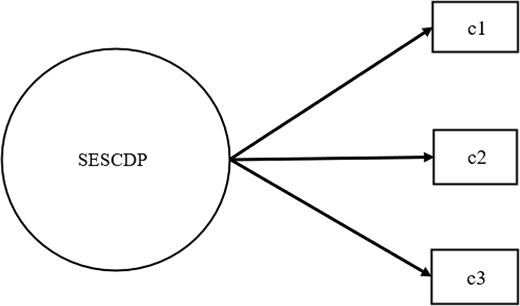
The primary objective of the paper was to examine the factor structure of the SESCDP. The intent was to validate the factor model, allowing for its application in future analyses, either through cross-validation or generalization to broader contexts, so that it could be used in other markets, including emerging markets. In the course of the study, the authors formulated two research objectives:
RO1. The objective is to determine whether the proposed model structure aligns with the observed data from the sample of citizens, assessing the significance and consistency of identified factors within the stakeholders’ engagement in the smart city development process.
RO2. The objective is to determine whether the proposed model structure aligns with the observed data from the sample of companies, assessing the significance and consistency of identified factors within the stakeholders’ engagement in the smart city development process.
Next, the authors formulated two research questions:
Does the proposed model structure of the stakeholders’ engagement in the smart city development process align with the observed data from the sample of citizens?
Does the proposed model structure of the stakeholders’ engagement in the smart city development process align with the observed data from the sample of companies?
The formulated statistical hypotheses are as follows:
The proposed factor structure of the stakeholders’ engagement in the smart city development process adequately fits the data from a sample of citizens.
The proposed factor structure of the stakeholders’ engagement in the smart city development process does not adequately fit the data from a sample of citizens.
The proposed factor structure of the stakeholders’ engagement in the smart city development process adequately fits the data from a sample of companies.
The proposed factor structure of the stakeholders’ engagement in the smart city development process does not adequately fit the data from a sample of companies.
Additionally, Pearson correlation analysis was performed to explore the relationships between variables c1, c2 and c3 among the surveyed citizens and companies. Primary data were collected using a structured questionnaire designed to gather ratio-scale data (Stevens, 1946). Responses were recorded on a scale from 0 to 100, where 0 indicated no engagement in the Smart City Development Process, and 100 represented full engagement. Data analysis was constructed using package “lavaan” (Rosseel et al., 2024) and package “Hmisc” (Harrell and Dupont, 2024) in R (RStudio R version 4.2.2) combined with Microsoft Excel. Moreover, descriptive statistical analysis was conducted by using the Microsoft Excel data analysis tools (Microsoft Support-ToolPak, 2024).
4. Results
4.1 Descriptive analysis
During the course of the study, the respondents were asked to assess the perceived engagement of city institutions (c1), local businesses (c2) and local community (c3). The results of descriptive analysis among citizens are presented in Table 2.
Results of descriptive analysis – citizens (n = 225)
| Citizens (n = 225) | Mean | Standard error | Median | Mode | SD | Sample variance |
|---|---|---|---|---|---|---|
| c1 | 57.77 | 1.67 | 61.00 | 50.00 | 25.08 | 629.09 |
| c2 | 57.56 | 1.60 | 59.00 | 50.00 | 23.96 | 574.16 |
| c3 | 58.21 | 1.55 | 60.00 | 50.00 | 23.26 | 541.15 |
The median assessment of stakeholders’ engagement ranged from 59 for local businesses to 61 for city institutions. Analysis of the data allows the conclusion to be drawn that citizens rate stakeholder engagement at a very similar level.
The results of descriptive analysis regarding stakeholders’ engagement among companies are presented in Table 3.
Results of descriptive analysis – companies (n = 120)
| Companies (n = 120) | Mean | Standard error | Median | Mode | SD | Sample variance |
|---|---|---|---|---|---|---|
| c1 | 45.01 | 2.04 | 42.50 | 40.00 | 22.31 | 497.94 |
| c2 | 48.48 | 1.94 | 50.00 | 50.00 | 21.24 | 451.24 |
| c3 | 49.78 | 2.01 | 50.00 | 60.00 | 22.00 | 483.91 |
The companies’ assessment of stakeholder engagement shows a little more disparity. Companies rated the engagement of city institutions (Median = 42.5) at a lower level than other parties (local businesses: Median = 50; local community: Median = 50).
4.2 Internal consistency of the Stakeholders’ Engagement in the Smart City Development Process scale
Cronbach’s alpha was calculated to measure the internal consistency of the SESCDP scale with three items (Table 1: c1, c2 and c3). The sample, consisting of 225 citizens from the Polish city of Szczecin, used to calculate the SESCDP scale, demonstrates excellent consistency with a Cronbach’s alpha of 0.93, indicating a high level of reliability for the three items. Moreover, the sample consisting of 120 companies from the Polish city of Szczecin, used to calculate SESCDP scale also demonstrates excellent consistency with a Cronbach’s alpha of 0.82, indicating that the three items have high reliability.
4.3 Factor structure of Stakeholders’ Engagement in the Smart City Development Process
A CFA was conducted to examine the factor structure of the SESCDP with a sample size of 225 citizens from the Polish city of Szczecin and the hypothesized model specified a single factor with three items loading onto this factor (Table 4, Figure 2). To determine whether the model fits, the (H1) and (H1a) were formulated. According to the Chi-Square test, the CFA results indicated an inadequate fit of the model to the data [χ2 (3) = 555.86, p < 0.005]. However, the other results indicated an adequate fit of the model to the data including CFI = 1.0, TLI = 1.0, RMSEA = 0.00 and SRMR = 0.00. According to accepted thresholds (CFI and TLI > 0.90, RMSEA < 0.08, SRMR < 0.08), these indices suggest that the model fits the data well. Moreover, the standardized factor loadings for the items ranged from 0.863 to 0.938, and c1, c2 and c3 were statistically significant (p < 0.005) (Table 4). Thus, the CFA supported the unidimensional structure of the SESCDP, confirming its reliability.
Standardized factor loadings for the SESCDP – citizens (n = 225)
| Item | Factor loading |
|---|---|
| Item 1 (c1) | 0.863 |
| Item 2 (c2) | 0.938 |
| Item 3 (c3) | 0.910 |
 The diagram shows a central circle labelled stakeholders' engagement in the smart city development process. Three arrows extend to rectangular boxes labelled c 1, c 2, and c 3. The paths from the circle are marked with values 0.86 to c 1, 0.93 to c 2, and 0.91 to c 3. Additional arrows point towards each box from the right with values 0.26 for c 1, 0.12 for c 2, and 0.17 for c 3, indicating associated external values.
The hypothesized reflective model for the stakeholders’ engagement in the smart city development process – citizens (n = 225)
Source: Own confirmatory factor analysis (CFA) based on the field data 2021
The diagram shows a central circle labelled stakeholders' engagement in the smart city development process. Three arrows extend to rectangular boxes labelled c 1, c 2, and c 3. The paths from the circle are marked with values 0.86 to c 1, 0.93 to c 2, and 0.91 to c 3. Additional arrows point towards each box from the right with values 0.26 for c 1, 0.12 for c 2, and 0.17 for c 3, indicating associated external values.The hypothesized reflective model for the stakeholders’ engagement in the smart city development process – citizens (n = 225)
Source: Own confirmatory factor analysis (CFA) based on the field data 2021
Based on the results of the survey on citizens, the authors created the Hypothesized Reflective Model for the Stakeholders’ Engagement in the Smart City Development Process, which is presented in Figure 2.
Moreover, a CFA was conducted to examine the factor structure of the SESCDP with a sample size of 120 companies from the Polish city of Szczecin and the hypothesized model specified a single factor with three items loading onto this factor (Table 5, Figure 3). To determine whether the model fits, the (H2) and (H2a) were formulated. According to the Chi-Square test, the CFA results indicated an inadequate fit of the model to the data [χ2 (3) = 130.55, p < 0.005]. However, the other results indicated an adequate fit of the model to the data including CFI = 1.0, TLI = 1.0, RMSEA = 0.00, and SRMR = 0.00. According to accepted thresholds (CFI and TLI > 0.90, RMSEA < 0.08, SRMR < 0.08), these indices suggest that the model fits the data well. Moreover, the standardized factor loadings for the items ranged from 0.70 to 0.89, and c1, c2 and c3 were statistically significant (p < 0.005) (Table 5). Thus, the CFA supported the unidimensional structure of the SESCDP, confirming its reliability.
Standardized factor loadings for the SESCDP – companies (n = 120)
| Item | Factor loading |
|---|---|
| Item 1 (c1) | 0.70 |
| Item 2 (c2) | 0.727 |
| Item 3 (c3) | 0.899 |
 The diagram shows a central circle labelled stakeholders' engagement in the smart city development process. Three arrows extend to rectangular boxes labelled c 1, c 2, and c 3. The paths from the circle are marked with values 0.70 to c 1, 0.72 to c 2, and 0.89 to c 3. Additional arrows point towards each box from the right with values 0.51 for c 1, 0.47 for c 2, and 0.19 for c 3, indicating associated external values.
The hypothesized reflective model for the stakeholders’ engagement in the smart city development process – companies (n = 120)
Source: Own CFA based on the field data 2021
The diagram shows a central circle labelled stakeholders' engagement in the smart city development process. Three arrows extend to rectangular boxes labelled c 1, c 2, and c 3. The paths from the circle are marked with values 0.70 to c 1, 0.72 to c 2, and 0.89 to c 3. Additional arrows point towards each box from the right with values 0.51 for c 1, 0.47 for c 2, and 0.19 for c 3, indicating associated external values.The hypothesized reflective model for the stakeholders’ engagement in the smart city development process – companies (n = 120)
Source: Own CFA based on the field data 2021
Based on the results of the survey on companies, the authors created the Hypothesized Reflective Model for the Stakeholders’ Engagement in the Smart City Development Process, which is presented in Figure 3.
4.4 Correlation analysis
A Pearson correlation analysis was conducted to examine the relationships between variables c1, c2 and c3 based on a sample size of 225 citizens from the Polish city of Szczecin (Table 6).
Correlation matrix – citizens’ evaluation (n = 225)
| c1 | c2 | c3 | |
|---|---|---|---|
| c1 | – | 0.80* (0.000) | 0.78* (0.000) |
| c2 | 0.80* (0.000) | – | 0.85* (0.000) |
| c3 | 0.78* (0.000) | 0.85* (0.000) | – |
Note(s): p < 0.05 are marked with an asterisk (*)
The results showed a significant positive correlation between c1 and c2, r(3) = 0.80, p = 0.000. Similarly, c1 and c3 were significantly correlated, r(3) = 0.78, p = 0.000. Further, the results showed a significant positive correlation between c2 and c3, r(3) = 0.85, p = 0.000.
A Pearson correlation analysis was also conducted to examine the relationships between variables c1, c2 and c3 based on a sample size of 120 companies from the Polish city of Szczecin (Table 7).
Correlation matrix – companies’ evaluation (n = 120)
| c1 | c2 | c3 | |
|---|---|---|---|
| c1 | – | 0.50* (0.000) | 0.62* (0.000) |
| c2 | 0.50* (0.000) | – | 0.65* (0.000) |
| c3 | 0.62* (0.000) | 0.65* (0.000) | – |
Note(s): p < 0.05 are marked with an asterisk (*)
The results showed a significant positive correlation between c1 and c2, r(3) = 0.50, p = 0.000. Similarly, c1 and c3 were significantly correlated, r(3) = 0.62, p = 0.000. Further, the results showed a significant positive correlation between c2 and c3, r(3) = 0.65, p = 0.000.
5. Discussion
The authors compared the fit indices across the two models (based on the citizens’ responses and companies’ responses) to assess the cross-validation of the hypothesized single-factor model for the SESCDP (Table 8).
Cross-validation metrics
| Metric | Threshold for good fit | Model based on the citizens response | Model based on the companies’ response |
|---|---|---|---|
| Chi-square (χ²) | Nonsignificant (p > 0.05) | χ² (3) = 555.86, p < 0.005 | χ² (3) = 130.55, p < 0.005 |
| CFI | >0.90 | 1.0 | 1.0 |
| TLI | >0.90 | 1.0 | 1.0 |
| RMSEA | <0.08 | 0.00 | 0.00 |
| SRMR | <0.08 | 0.00 | 0.00 |
| Factor loadings | ≥0.70 | 0.863–0.938 | 0.70–0.89 |
In both models, the Chi-Square statistic indicates a significant difference between the model-implied and observed covariance matrices (p < 0.005), suggesting inadequate fit. However, The Chi-Square is extremely sensitive to sample size, often leading to over-rejection of models in large samples or under-rejection in small samples. Thus, depending on alternative fit indices such as CFI, TLI, RMSEA, SRMR and factor loadings is necessary. The Comparative Fit Index CFI value of 1.0 in both models demonstrates an excellent fit of the model in both citizen and company samples, exceeding the threshold of 0.90. This indicates that the model effectively explains the variance-covariance structure relative to a null (independence) model. Likewise, the Tucker-Lewis Index TLI value of 1.0 in both models also reflect a perfect fit. Like the CFI, this suggests the model is parsimonious and well-suited for both samples. Moreover, Root Mean Square Error of Approximation RMSEA values of 0.00 in both models indicate an excellent fit. Values below 0.08 are considered acceptable, however, the observed values signify the absence of a significant misfit in the data for both samples. Further, Standardized Root Mean Square Residual SRMR values of 0.00 in both models reinforce the excellent fit. Values below 0.08 confirm that the discrepancies between the observed and predicted correlations are negligible. Finally, factor loadings in both models meet or exceed the acceptable threshold of 0.70. For citizens, the range (0.863–0.938) indicates strong item contributions to the latent construct. For companies, while slightly lower (0.70–0.89), the loadings are still adequate and support the model’s reliability.
According to the conducted research, citizens rate stakeholder engagement at a very similar level, where the median ranged from 59 to 61. To compare, the assessment of stakeholder engagement made by companies is not that high. The median for local businesses and local communities was 50, and for city institutions 42.5. This shows that companies do not fully recognize or are not necessarily satisfied with stakeholder engagement, particularly city institutions. The lower ratings of stakeholder engagement by companies, particularly city institutions, may stem from a combination of opportunistic engagement practices (Manetti, 2011), inadequate governance structures (Spitzeck and Hansen, 2010), perceiving the institutions of the city, as being slower to respond to social needs (Ardiana, 2021) and a lack of genuine inclusivity in stakeholder interactions (Concannon et al., 2014). This situation highlights the need for city institutions to reassess their engagement strategies to align more closely with the community’s expectations and perceptions. This is particularly important in highly socially diverse emerging markets, where empirical frameworks can guide these engagements (Ruess and Lindner, 2023).
Examining the relationship between analyzed variables, research results indicated positive and significant correlations between all of them. For both samples (citizens and companies), their assessment of the engagement of the city institutions is positively correlated with the engagement of local businesses and the engagement of the local community. Similarly, the assessment of the engagement of local businesses is positively correlated with the engagement of the local community in developing a smart city. It is also worth noting that the correlations among citizens’ assessment of stakeholder engagement are stronger than those among companies.
The significance of stakeholder engagement in the context of data-driven smart cities is also highlighted in the literature. (Bibri and Krogstie, 2017b) focus on the integration of innovative solutions and propose a framework that enables the identification and categorization of stakeholders. The basis for such division is the contribution to smart city initiatives. In contrast, other findings on stakeholder engagement link it to trust in the government and the perceived benefits of initiatives supporting smart city development (Hamamurad et al., 2022).
The literature on models of stakeholder engagement is relatively limited. One alternative is the concept of living labs as a model for citizen engagement in smart cities (Park and Fujii, 2023). Keh et al. also propose models of the Ethical Smart City Framework, where community engagement is fundamental and should occur from the beginning of project development (Keh et al., 2021). Additionally, there is a proposed model in which the integration of social media and ICT tools creates an area for increased citizen engagement (Pereira et al., 2018). Moreover, a collaborative governance model involves various stakeholders in the planning and implementation of smart city policies. Ongoing research in other areas suggests a dual process model that includes different aspects, such as behavioral, cognitive and secondary engagement. This model emphasizes that the satisfaction of needs, like autonomy, is central to students’ engagement in learning (Bong, 2023).
Moreover, the vision of future smart cities is linked rather with sustainability and quality of life than the usage of new technologies (Del-Real et al., 2023). In this regard, concepts such as Corporate Sustainability, Corporate Citizenship and Corporate Social Responsibility should be taken into consideration (Lee, 2021; Schaltegger et al., 2022). Implementation of sustainable, green behavior is challenging (Miah et al., 2024), and gamification can be a way to motivate employees and increase their commitment to such initiatives (Haque et al., 2024). Another way to achieve sustainable behavior in various stakeholders is education through designing training programs and combating cultural hesitations (Arslan et al., 2023).
5.1 Generalization of the model
Despite differences in sample characteristics (citizens versus companies), the fit indices (CFI, TLI, RMSEA and SRMR) are consistently excellent in both data sets, suggesting that the unidimensional structure of the SESCDP scale is robust and generalizable. Thus, model consistency across samples is visible. Studies presented in the literature indicate that it is important to use alternative fit indices such as TLI, CFI, SRMR and RMSEA as they provide a better assessment of model fit. This is important when stakeholder engagement is examined (Forsythe et al., 2016; Ray and Miller, 2017). Even though the Chi-Square test results should not undermine the model fit, alternative indices strongly indicate a good fit. This discrepancy is common when relying on Chi-Square in real-world data applications, particularly with varying sample sizes (Concannon et al., 2014). The Chi-Square statistic is widely recognized for its sensitivity to sample size, which can lead to misleading conclusions regarding model fit. In large samples, even trivial discrepancies between observed and model-implied covariance matrices can result in significant Chi-Square values, leading to the rejection of models that may otherwise be acceptable. Conversely, in smaller samples, the Chi-Square may not detect genuine misfits (Concannon et al., 2014). However, the Confirmatory Factor Analysis CFA results confirm that the SESCDP performs well across different populations (citizens and companies) in the Polish city of Szczecin. The consistent fit indices across samples demonstrate that the scale is reliable, valid and generalizable, making it a strong tool for measuring stakeholders’ engagement in smart city development processes. Thereby, this tool can be also used in other cities, also on emerging markets. This aligns with the findings of Nunkoo et al., who emphasize the importance of advanced statistical techniques, including confirmatory factor analysis (CFA), in establishing the reliability of measurement instruments in contemporary research (Nunkoo et al., 2017).
A review of the literature indicates that to successfully build a smart city, stakeholder involvement is crucial and contributes significantly to the success of the initiatives undertaken (Jayasena et al., 2019). Taking this into account, the research described in the paper gains importance. Smart cities, according to the literature review, have a positive and significant influence on sustainable development (Dogan, 2024). Thus, it is worth building them.
6. Implications of the study
The research conducted takes stakeholders into account and can be adopted as good practice in the area of smart city development processes, which constitutes added value to this paper. The created model is, according to the authors, simple to use and easy to understand. Therefore, it can constitute as a base model and a solid approach to any further studies related to the stakeholders’ engagement in the smart city development process. This is consistent with the notion that a validated scale to measure stakeholder engagement can enable urban planners and decision-makers to make informed, data-driven decisions (Papagiannakis et al., 2019).
Since emerging markets need a solid framework for managing sustainable cities (Ruess and Lindner, 2023), the use of the model and its further validation can prove to be an effective tool. This allows for the application of scale in emerging markets and its further validation in different cultural and socio-economic contexts. The more researchers use the scale, the more this will influence future validation. Also, it will influence the acquisition of data to assess engagement in different cities geographically.
Taking into consideration the fact that companies in Szczecin do not fully recognize or are not necessarily satisfied with stakeholder engagement, particularly city institutions, it is worth intensifying smart and sustainable initiatives and promoting the current ones. City institutions in Szczecin, from the point of view of research results, should also focus on the communication process and promote activities and innovations that are implemented. Although the citizens’ assessment of the engagement of city institutions is higher than that of the companies, it still cannot be considered very high. The implication from the conducted research for all parties is that stakeholder engagement is rated at a medium level.
The results of the research presented in this paper might be significant for regional policymakers in Szczecin. The first step in implementing recommendations is to conduct in-depth qualitative research to identify stakeholder needs. The second step involves analyzing and selecting alternatives. In this stage, it is essential to invite stakeholders to consult, analyze, and choose alternatives. The third step focuses on the implementation of the selected activities, where co-creation plays a key role. The final step is to evaluate satisfaction. Moreover, other cities, interested in implementing smart and sustainable initiatives, can also benefit from the content of the paper. Researchers interested in the topic of smart and sustainable city development and stakeholders’ engagement might also find the content of this paper useful. The topic of the paper is gaining importance among various stakeholders; therefore, it is worth sharing the knowledge and practical and social implications presented in the paper. Theoretical considerations highlighted the role of all key stakeholders, emphasizing not only the importance of their engagement but also its recognition by other parties.
When developing a smart city, it is also important to consider its broader societal impact. The basic concept of a smart city is quality of life, which should be improved not only for the present generation but also for future generations. Consciously co-creating a smart city with stakeholders also requires education in this regard. Public education plays a key role in this process.
Various recommendations for emerging markets can arise from the research results. First and foremost, the adoption and further validation of the model. Next, awareness should also be placed on the significance of recognition of engagement in the smart city development process by different stakeholders. Policymakers need to build relationships with other stakeholders and create a communication plan that would promote initiatives related to the development of a smart city. Undertaking such activities is crucial and should always be a first step, together with understanding the needs of all stakeholders, but without knowledge sharing, relationship building, and co-creation, awareness, and then assessment will not be very high. A key recommendation that arises from the literature review and research results while developing a smart city is to include all significant stakeholders. Finally, the authors also recommend including a sustainable approach during smart city planning.
7. Conclusions
This pilot study successfully confirmed the reliability of the SESCDP scale in measuring stakeholder engagement in smart city development. Thus, according to the analytical results of the alternative fit indices, the researchers have robust evidence to accept the null hypotheses (H1 and H2) formulated in this research study. The scale’s unidimensional structure was validated, making it a useful tool for assessing the role of public institutions, companies, and citizens in other cities, including emerging markets. This has to take into account the fact that residents of emerging markets are characterized by unequal access to technology, which is one of the determinants of the social inequalities found in these markets (Michelotto and Joia, 2023). It is therefore worthwhile using different practices to engage citizens (Johnson et al., 2020).
In the paper, Pearson correlation analysis was also conducted. Citizens and companies were asked to assess the engagement of three stakeholders – city institutions, local businesses and the local community. Research results indicated that all variables are positively and significantly correlated. Yet, the correlations among citizens’ assessments of stakeholder engagement are stronger than those among companies.
The research contributes to the growing field of smart city studies by providing empirically validated measurement tools for stakeholder engagement. It addresses a critical gap in the literature by developing and testing a model structure for stakeholders’ involvement, offering a foundation for future empirical studies and theory-building in this domain. Further, by validating a scale to measure stakeholder engagement, the study equips city planners, policymakers, and urban developers with reliable tools to assess and enhance engagement practices.
As emphasized by Papagiannakis et al., effective stakeholder engagement is pivotal for effective environmental management and innovation (Papagiannakis et al., 2019). It is suggested that effective stakeholder engagement can yield improved outcomes in a variety of contexts, including urban development. This can lead to more inclusive, data-driven decision-making processes, ensuring that smart city initiatives cater to the needs and expectations of diverse stakeholders, including citizens and businesses. The literature also describes how different stakeholder engagement strategies can affect the quality of disclosure and decision-making in a corporate context. It is indicated that tailored engagement approaches are necessary to meet the diverse needs of stakeholders (Moratis and Brandt, 2017). Moreover, enhanced stakeholder engagement contributes to the inclusivity and sustainability of smart city projects. This is a key action, especially when producing sustainability reports, as it leads to a more inclusive city (Kaur and Lodhia, 2014). Communication at all stages of smart city development is also of strategic importance, as it ensures that all stakeholder needs are taken into account (Erkul et al., 2019).
The findings of the pilot study described in this paper promote the active participation of citizens, local businesses, and institutions, fostering collaboration and trust. This ensures that smart city initiatives are not only technologically advanced but also socially equitable and responsive to community needs, which is particularly relevant in emerging markets.
8. Limitations and future research suggestions
The pilot study had some limitations, primarily the small sample size and the focus on just one city, which may limit the broader applicability of the findings. Future research should expand to larger, more diverse populations to cross-validate the scale and gather deeper insights into the varying perspectives of different stakeholder groups. More qualitative research could also help in a better understanding of the nuances of stakeholder engagement in the smart city development process. Notwithstanding these limitations, both study samples are representative of the city of Szczecin. As a result, the conclusions of the research can serve as a basis for the institutions of Szczecin in building a further strategy for the development of the smart city. The comparative approach, in turn, has the potential to facilitate a more profound comprehension of the distinctive challenges confronting emerging markets in their endeavors to engage stakeholders effectively.
The data presented in the article refers to the assessment of stakeholder engagement by other parties. Further analysis could provide data that takes into account the actual involvement of specific parties. Such an approach would allow a multi-faceted comparison of real engagement and its assessment and perception by key stakeholders.
From the point of view of the average level of stakeholder engagement assessment, it is also worth deepening the research on this aspect. A research question that could be posed would concern the reasons for such an assessment. Is it due to such low involvement? Or rather, is it due to a lack of activities to inform and promote them, which in turn affects the rather low rating of stakeholder engagement, particularly city institutions by companies?
Future research should continue to explore the implications of these findings in the context of stakeholder engagement practices, potentially leading to enhanced strategies for effective engagement. If the validated scale is used for research in other cities, then interested parties will have access to more data for analysis. This would allow an indication of how different cultural, economic, or political environments affect stakeholder engagement practices in emerging markets. It would also enable the identification of best practices and strategies. A validated scale would also save time and financial resources, which may be particularly important in emerging markets. In the future, it would also be interesting to conduct a comparative study with other empirical studies and competing models to identify each model’s strengths and weaknesses. This paper can serve as a solid foundation for addressing another research gap in the future – a comparison with other models or similar studies.
It would be interesting to undertake research that would broaden the understanding of the motivations and constraints to stakeholder engagement in smart city development. This would allow a better understanding of the reasons for reluctance to engage. The research process could also be extended to include qualitative research such as focus groups, to gain in-depth insights. Conducting research on engagement assessment will also be important for creating inclusive smart city development strategies.
The project is co-financed by the Minister of Science under the “Regional Excellence Initiative”.

Conflicts of interest: The authors declared no conflict of interest.

