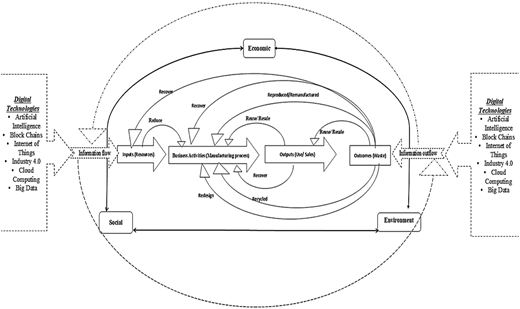
The research aims to identify the practical benefits of implementing Digital Technologies (DTs) and the Circular Economy (CE) for Sustainable Development (SD) by enabling informed decision-making.
The research consists of 148 articles, including quantitative (61), qualitative (52) and literature review studies (35), covering various fields such as ecology, supply chain management, marketing and circular business models, sourced from WOS, Scopus and Direct Science. Science-mapping techniques have been employed to analyse citations in published articles, measure their impact and identify leading and emerging trends in the literature.
The study demonstrates that artificial intelligence (AI) is developing intelligent devices and processes that analyse large datasets to identify patterns, verify and report on organisational activity, enabling real-time decision-making. Furthermore, companies that excel in CE principles – a system focused on minimising waste and making the most of resources – are more likely to engage with Industry 4.0, which refers to the integration of DTs such as the Internet of Things (IoT), automation and data exchange in manufacturing. This subsequently results in improved financial outcomes and more rational decision-making. In addition, the research highlights limited connections within Industry 5.0 – an industry phase emphasising collaboration between humans and machines – with a particular focus on CE and SD.
This research provides a unique overview in exploring DTs and CE across environmental performance, financial metrics, accounting relationships and the impact of computer-based analysis on decision-making, thus highlighting significant gaps in the literature. Moreover, this study offers practitioners interesting insights to improve financial outcomes, resource use, DT and CE adoption and decision-making processes.
1. Introduction
Environmental management aims to sustain society's environmental balance (Xiao, 2025) by meeting human needs, promoting resource development and conserving natural resources (Pearce and Turner, 1991; Long et al., 2025). Current economic systems prioritise gross domestic product (GDP) and organisational gains but overlook negative impacts on global resources and issues related to sustainable management, such as environmental change, food security and biodiversity, which require a more practical approach (UNEP, 2021).
Digital technologies (DTs) and Circular economy (CE) offer advantages, including tracking product waste, transforming waste into resources, reducing resource use, reusing waste and products, redesigning products and reducing carbon emissions (Jørgensen et al., 2023; Sànchez-Garcia et al., 2024; Nazir et al., 2025; Singh et al., 2025; Fusillo et al., 2025). The United Nations Environment Programme (UNEP, 2021) emphasises DTs and CE for sustainable growth, efficient resource allocation, precision agriculture and resource traceability.
Meanwhile, the European Commission (2019a, b) demonstrates that DTs and CE enhance resource profitability, generate employment and boost GDP through information systems, data analytics, innovative technologies, optimising production, reducing waste and improving economic, environmental and social outcomes (Long et al., 2025). This study examines DTs, CE and SD in depth and develops a framework that integrates these concepts to support decision-making informed by the existing literature. It offers a systematic understanding of the key principles of DTs and CE for addressing sustainability and supporting decision-making. This systematic literature review (SLR) provides an overview of DTs related to CE for SD, using a transparent and scientific process to minimise bias through extensive searches and science-mapping techniques to analyse citations, impact, trends and emerging topics (Denyer and Tranfield, 2009).
Several issues contribute to the growth of this study, including increasingly complex environmental challenges affecting ecosystems, biodiversity and human health, which make sustainability efforts highly relevant. Furthermore, decision-makers often lack a holistic understanding of sustainability, which leads to ineffective decisions (Bakhsh et al., 2024). Traditional decision-making processes hinder sustainability initiatives by not allowing immediate adjustments, especially in critical forecasting situations where accuracy is vital.
Although many decision-forecasting techniques are available (Alkaraan et al., 2023), none incorporate DT and CE to reveal opportunities for business analytics. These interconnected factors highlight the necessity for further investigation into environmental protection, focusing on identifying gaps and developing a framework for applying DT and CE to decision-making. The study presents a framework that also consolidates various perspectives and theoretical viewpoints to help explain how DTs and CE can overcome SD challenges. Accordingly, the study poses the following research question.
To what extent can the relationship between DTs and CE support SD and enable informed decision-making?
This research is unique in exploring DTs and CE across environmental performance, financial metrics, accounting relationships and the impact of computer-based analysis on decision-making, thus highlighting significant gaps in the literature.
The study analysed 148 articles, evaluated the potential of DTs and CE as strategic tools for addressing climate change and resource management issues and emphasised their importance in high-risk decision-making. It makes a significant contribution to knowledge by identifying factors influencing DT adoption and proposing a decision-making framework. It offers practitioners an overview to improve financial outcomes, resource use, DT and CE adoption and decision-making processes, thereby strengthening the SD context. It highlights the connection between DTs and CE for sustainability and encourages future research and practice. Overall, it provides a scientific foundation for policy and industrial development, fostering informed decisions for sustainability. The study also focused on an accountability approach to support managers in adapting to market and environmental uncertainties and in enhancing operations. Furthermore, the study endorses policies requiring DTs and CE in sustainability strategies. The guidelines help policymakers recognise the potential of DTs and CE to enable a multidisciplinary future.
The paper is organised as follows: firstly, an introduction; secondly, definitions and an overview of DT, CE and SD; thirdly, findings and discussion; and ultimately, a conclusion, limitations, practical implications and future research.
2. Digital technologies
The concept of “digital technology” has received considerable attention from practitioners and scholars across disciplines such as engineering, information systems and management (Valenduc and Vendramin, 2017). However, no single widely accepted definition of DTs exists, as DTs’ boundaries are rapidly evolving and it is difficult to provide a sound conceptualisation (Rossato and Castellani, 2020). According to Hinings et al. (2018), the term “digital” refers to the conversion of analogue information into the binary language by computers. Hence, digitisation has the potential to decouple information types from the storage, transmission and processing technologies (Alkaraan et al., 2023). Digitalisation initiatives across business models, services, or products are creating new value-creating opportunities and revenues, as seen in Industry 4.0 (Garay-Rondero et al., 2020; Agrawal et al., 2025).
A digital platform is a shared set of services and architecture that supports complementary offerings (Awan et al., 2021). Digital infrastructure comprises tools and systems characterised by communication, collaboration and computing capabilities that support innovation processes (Feroz et al., 2023; Agrawal et al., 2025). Specifically, these technologies involve connecting objects via Internet-connected equipment with sensors and actuators to develop new applications or improve existing ones (Nazir et al., 2025). Most of the DTs studied are related to social media, mobile devices, analytics, cloud computing and IoT (Awan et al., 2021). Notably, the growing pervasiveness of DT has drawn attention to so-called new-age technologies that fall under the Industry 4.0 or IoT paradigm (Jørgensen et al., 2023) and scholars, researchers and practitioners have focused on the impacts of DTs within organisations, particularly on processes and structural effects (Nazir et al., 2025; Agrawal et al., 2025; Alkaraan et al., 2023). The rise of new DTs enables firms to pursue new opportunities and integrate these technologies into their business models, resulting in positive financial and non-financial outcomes. In this regard, DTs provide value when companies unlock their embedded potential through their business models (Agrawal et al., 2025; Alkaraan et al., 2022, 2023) or when firms leverage such technologies to uncover new ways to create value (Nazir et al., 2025). DTs play a key role in creating SD at the economic, social and environmental levels, triggering strategic reactions by organisations that employ DTs to change value-creation and value-capture mechanisms (Singh et al., 2025).
2.1 Circular economy
The Ellen MacArthur Foundation (Ellen MacArthur and Heading, 2019) has substantially advanced CE practices across various domains, including sustainable design and formation. CE aims to maximise economic benefits and minimise pressure on non-renewable resources. CE is “beneficial for regenerative product or parts by purpose and plan” (EMF, 2012, p. 7) and considers the potential for crossovers within supply chains (Barnabè and Nazir, 2021, 2022).
CE is an economic framework based on the R principles: reduce, reuse, recycle, remanufacture, redesign and recover (Goyal et al., 2021; Nazir and Doni, 2024). Reduce refers to the design stage of products, in which product producers are responsible for minimising the use of products or components (Barnabè and Nazir, 2021, 2022). Reuse is a non-destructive process that extends the lifespan of a second-hand item (Nazir and Doni, 2024) and retains a significant portion of its embodied energy. Recycling involves extracting secondary raw materials from end-of-life products (Nazir et al., 2025). Implementing high-quality closed-loop recycling poses challenges compared with downcycling (European Commission, 2019a, b). Remanufacturing involves restoring used products to near-new quality through reprocessing or replacing components, thus maximising value recovery (Nazir and Capocchi, 2024). Redesign includes a form of reuse that involves minor operations before reusing the product (e.g. polishing, repackaging and refilling) (Barnabè and Nazir, 2021, 2022). Maintenance and repair extend a product's operational life by reducing or preventing downtime (Nazir and Doni, 2024).
In other words, the CE relies on circulating products or parts within the technical cycle at their maximum value for as long as feasible, using the following circular strategies (Barnabè and Nazir, 2021, 2022). Circular strategies encompass two dimensions (Hansen and Revellio, 2020): downstream circular service strategies, which focus on closing product life cycles to preserve value over time and upstream circular design strategies – such as designing for reparability – which modify a product's architecture, including physical goods, digital hardware and software, to enhance the effectiveness and capability of cycling. Progress towards a CE is crucial and DTs play a fundamental role (Fusillo et al., 2025) in optimising material flows across value chain stages, enhancing energy efficiency and effectively managing supplies.
2.2 Sustainable development
The concept of SD has evolved over more than 30 years. The 1972 United Nations (UN) Conference on the Human Environment in Stockholm, Sweden, contributed to this evolution by emphasising that safeguarding the human environment is a vital part of the development agenda. Following that conference, the UN Environment Programme Secretariat was established to promote international environmental cooperation (Handl, 2012). Globally, countries began establishing and strengthening their environmental institutions. In 1970, the United States established the Environmental Protection Agency (EPA) to unify federal research, monitoring and enforcement of environmental laws and to supervise air, water and waste to protect human health.
Furthermore, the World Commission on Environment and Development published a report titled “Our Common Future”, also known as the Brundtland Report, in 1987. This landmark document argues that establishing separate environmental institutions is not enough, as environmental issues are integral to all development policies. Since the phrase “sustainable development” gained prominence after the 1987 publication of Our Common Future, the report defines SD as “progress that meets the needs of the present without compromising the ability of future generations to meet their own needs” (Brundtland, 1987). The next milestone in the evolution of SD was the 1992 UN Conference on Environment and Development in Rio de Janeiro, also known as the Earth Summit. Its main contribution was to recognise the equal importance of both environment and development.
Moreover, the UN Agenda 2030 was established in 2015 to broadly address the world's critical economic, social and environmental challenges, comprising 17 SDGs and 169 targets and to provide a global roadmap for tackling interconnected issues such as poverty reduction, inequality and climate action (UN, 2015). Recently, the European Green Deal, a significant initiative by the European Commission, has set sustainability targets and strategic directions (European Commission, 2019a, b). The main aims of these organisations are to create a system that supports environmental management strategies, such as cleaner production, pollution remediation and environmental management; identify overconsumption of resources worldwide and locally; and improve energy productivity (Nazir et al., 2024).
Additionally, Industry 5.0 allows businesses to take positive steps towards more environmentally friendly operations (Ghobakhloo et al., 2024) with greater access to data, more efficient technologies, and better-informed decision-making. Whether it's using renewable energy efficiently, ensuring their end-of-life products become part of the CE, or minimising waste, Industry 5.0 will help manufacturers protect the Earth for future generations (Kannan et al., 2024). However, adoption meets challenges such as high initial investment, integration with existing systems, and workforce reskilling. Despite these obstacles, the transition to Industry 5.0 presents a vital opportunity for manufacturers who seek not only to adapt but to lead in sustainable innovation for years to come (Kannan et al., 2024). However, the European Commission has stated that the fifth industrial revolution is already in progress. Like Industry 4.0, which focused solely on developing industrial production technologies to increase profitability and productivity. Industry 5.0 aims to acknowledge the global manufacturing sector's significant impact and leverage it to drive major societal change (Fraga-Lamas et al., 2021). Industry 5.0 involves addressing climate change, enhancing conditions for human workers and making product lifecycle management more flexible and intelligent. Industry 5.0 does not replace 4.0; rather, it is a necessary evolution that balances the digital advancements of the fourth industrial revolution with the human need for purposeful, sustainable and resilient work (see Table 1).
Technological advances drove the fourth revolution; values will guide the fifth. Instead of solely innovating for profit and efficiency, new cyber systems will focus on making manufacturing more sustainable, human-centric and resilient. With the rise of the Internet of Things (IoT) and the growth of automation and artificial intelligence, connectivity among machines was a key focus of Industry 4.0 (Ghobakhloo et al., 2024). In contrast, Industry 5.0 will prioritise enhanced collaboration between humans and machines through technologies. Alongside making industrial production more human-centric, Industry 5.0 will emphasise a better understanding and more effective addressing of customer needs – ranging from strengthening supply chain resilience to creating interactive products and improving the overall customer experience.
3. Findings and discussions
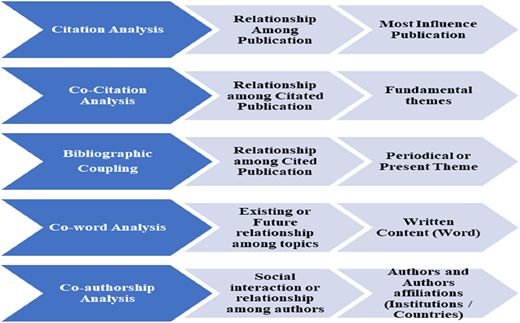
The SLR uses various systematic methods to answer the question: To what extent can the relationship between DTs and the CE support SD and enable informed decision-making? Initially, we focused on creating a systematic approach to collecting data and examining available published literature, including origin, titles, references and keywords (De Bellis, 2009) to identify specific research areas (Fetscherin and Usunier, 2012), represent measures and assess a particular field over time (Fetscherin and Heinrich, 2015). The research was conducted within the field of business economics (see Appendix). Scientific mapping techniques were used to carry out the analysis (see Figure 1 below).
A fundamental method for scientific mapping is citation analysis, which assumes that citations reflect intellectual connections between publications, as one article cites another (Appio et al., 2014). The more citations an article receives, the greater its impact. According to Hjørland (2013), co-citation analysis is a science-mapping technique that presumes that works frequently cited together share similar themes (Rossetto et al., 2018). Co-citation analysis can then uncover the underlying ideas of a study and its thematic clusters (Liu et al., 2015). More specifically, two articles are linked when one appears in the reference list of the other. Co-citation analysis, however, excludes current or specialised articles from its theme clusters and concentrates solely on highly cited publications. Co-citation analysis is suitable for business researchers aiming to identify key works and theoretical foundations (Donthu et al., 2021).
Bibliographic coupling, instead, is based on the idea that two articles cite the same reference and share similar content (Kessler, 1963; Weinberg, 1974). Articles are grouped into thematic clusters based on standard references and the analysis is most effective when applied to a specific time period (Donthu et al., 2021). When academics wish to explore broader themes and new developments, this type of analysis is often the most suitable. Furthermore, co-word analysis relies on “words.” The study was conducted in the context of publications, with a particular focus on “keywords.” If keywords are unavailable, the complete text, abstracts, or article titles are used to extract words. The purpose of this technique is to identify and share a thematic connection. However, when words are too general, it can be difficult to assign them to specific thematic groups (Chang et al., 2015). Moreover, when words are used in multiple contexts, it is essential to understand the underlying relationships between them.
Therefore, co-word analysis is advisable to use as a complement to co-citation or bibliographic coupling analyses. When significant “words” from a publication's implications and future research directions are incorporated into the analysis, co-word analysis can anticipate future research on the subject. By first assessing the thematic coupling derived from previous techniques, co-word analysis can help elaborate on past trends (co-citation) and present trends (bibliographic coupling), as well as the future of a research field. Finally, co-authorship analysis examines collaborations among researchers. Understanding how academics engage with one another is crucial, as co-authorship is a formal form of intellectual cooperation among researchers (Acedo et al., 2006; Cisneros et al., 2018). When scholars collaborate, significant advances can be achieved in the field of study. By implementing co-authorship research, we can identify which regions' collaborations are most prevalent and where research should be encouraged in other regions. It is also possible to specify the period during which collaborations grew, enabling the determination of the intellectual development trajectory.
To address the RQ, conducting an SLR and identifying the primary outcomes are beneficial. This analysis can evaluate the state of the evidence in a specific field by delimiting and rationalising the research problem (Donthu et al., 2021). SLR differs from traditional narrative reviews in the sense that SLR adopts “a replicable, scientific and transparent process to minimise bias through exhaustive literature searches of published and unpublished studies and by providing an audit trail of the reviewer's decisions, procedures and conclusions” (Denyer and Tranfield, 2009). The rationale for SLR is to reduce bias that the researcher might introduce when evaluating evidence. In particular, research identifies a smaller set of publications within a larger pool of studies by analysing articles against predetermined criteria, enabling conclusions to be drawn.
These techniques aid in analysing published citations and articles to measure their impact, understand leading trends in literature (e.g. leading authors, journals), explore the conceptual structure of the literature (Donthu et al., 2021) and identify emerging trends. The methods applied included: (1) Citation analysis, (2) Co-Citation analysis, (3) Bibliographic coupling, (4) Co-word analysis, (5) Co-authorship analysis and content analysis. For this purpose, VOSviewer is used to visualise research networks within the DTs, CE and SD literature. A series of charts, tables and figures accompanied by textual descriptions has presented the results, synthesising the data obtained and helping to answer the research question.
Table 2 illustrates the number of publications on DTs, CE and SD over the past decade. The figure shows that the number of publications is increasing annually, indicating an emerging research area. Recently, the highest number of articles was published in 2024, compared to other years, while from 2015 to 2019, the publication trend in this area remained steady. Citations reliably represent the impact of published articles, as well as the frequency with which papers are cited in other works (Rossetto et al., 2018) and are used to establish the relationship. Move forward to publication as per the journal index.
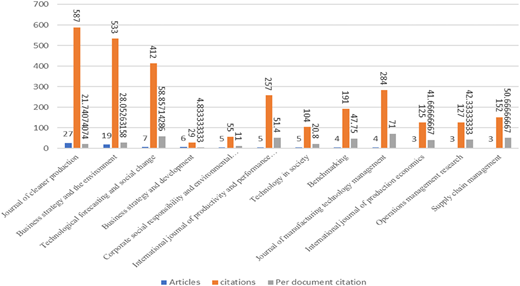
The study calculates citations for each journal by using the total citations of each journal's articles as the reference for citation counts, then dividing by the number of articles. Nevertheless, the Journal of Cleaner Production has more publications than others (see Figure 2). On the other hand, Business Strategy and the Environment rank second among publications. However, from a citation perspective, Business Strategy and Environment rank higher than those in the Cleaner Production Journal. That indicates that a few players have taken the lead in conceptualising this emerging topic; this finding suggests that research on the CE, DTs and SD may be far from saturated and there is significant room for improvement in terms of conceptual development and cross-fertilisation from other research fields (See below the 62% of articles published).
The research trends thus align with the theme of increased collaboration and its effects, as seen in the table of top publishing journals, which covers over 62% of the articles. The table includes papers introducing the concepts of DTs, CE and SD, primarily published after 2014. Table 3 lists the top publishing journals that cover over 62% of the articles and we have also included the Q1 SJR journals (see Figure 3).
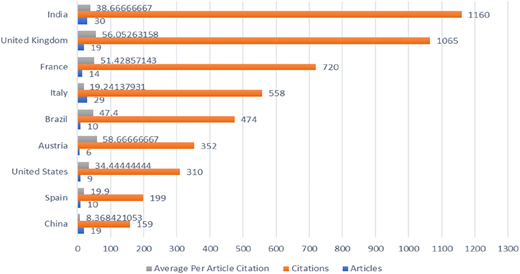
Interestingly, India and Italy, countries that have published articles in the domain of DTs, CE and SD, reflect the efforts the countries have been taking since CE action plans (European Commission, 2020) and the Green Deal (European Commission, 2019a), inspiring not only new practices and evidence but also authors covering the geographical contexts and jurisdictional performances. While India has a considerable population, good universities and many scientists, it has only one more publication than Italy. According to the country articles' citation rankings, Austria ranks first, the United Kingdom second and China last. Articles published between 2014 and 2025 include comparisons between countries or continents, such as Europe and China, as well as between developed and developing countries. However, most of the countries belong to the European region. Move forward to the most influential authors (see Figure 4).
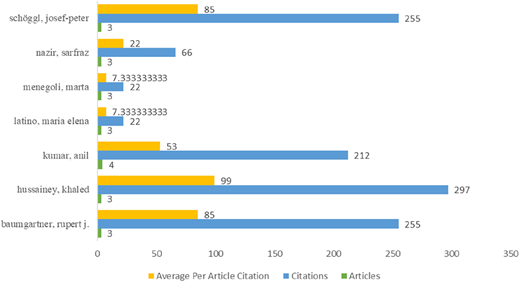
The citation analysis was used to identify the most influential scholars, and the following criteria were established in VOSviewer: an author must have at least 3 documents and 20 citations. Out of 494 authors, 7 met the requirements. We found that scholar Hussainey has three publications in DTs, CE and SD, ranking first with 297 citations. In contrast, Baumgartner and Schoggl secured second place with 255 citations and three publications (as noted in the sole-author citations) (see Figure 5).
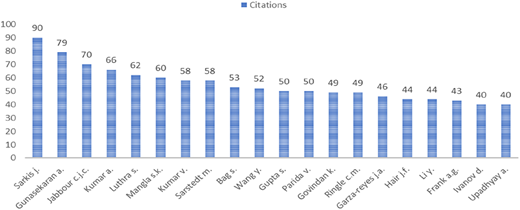
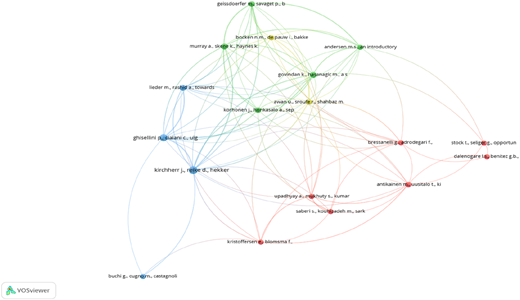
Individual authors' citations were analysed using authors as the unit of analysis. Therefore, the SLR established the following criteria: a minimum of 40 citations per author and a total of 20,330 authors. The study meets the threshold of 20, indicating that 20 authors have at least 40 citations each. Sarkis has secured 90 citations, ranking first, while Ivanov, Kirchherr and Upadhyay have 40 citations and rank last, based on the citation threshold. Moving forward to the co-cited references table, which identifies co-citations in the documents using a threshold of at least five citations and shortlists 18 articles. For this, we set a query with a minimum citation threshold of 5; of the total 11,098 references, only 18 met the threshold. See the map and table of co-cited references below (see Figure 6).
Table 3 provides a list of the 18 articles that are most frequently co-cited. Kirchherr et al. (2017) characterise CE as a regenerative framework in which resource reduction, waste outflow and energy spillage are limited by diminishing techniques and material consumption is reduced by closed-loop cycles and accomplished through continuing frameworks such as maintenance, fixing, reusing, remanufacturing, restoring and reducing (Ghisellini et al., 2016). Geissdoerfer et al. (2017) characterise SD as the stable incorporation of economic performance, social comprehensiveness and ecological benefits for present and future outcomes. DTs, CE and SD are rising topics that have attracted growing research attention. Chinese and European researchers have embraced this idea, leading to exponential development in production (Murray et al., 2017; Büchi et al., 2020), which reflects the expanded enthusiasm of organisations, policymakers, NGOs and the government in these areas (Awan et al., 2021; Saberi et al., 2019). Move forward to Table 3 co-cited reference.
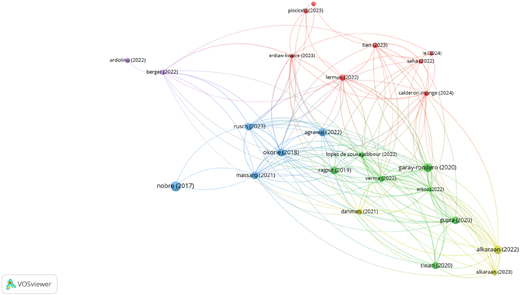
To respond to the primary research question: To what extent can the relationship between DTs and the CE support sustainable development and facilitate informed decision-making? It is evident from this literature review that the gap for exploration in this research is compelling, despite the concept of relationships. Particularly, in Table 3, Kirchherr et al. (2017) hold the first co-citation rank, cited 12 times in other studies, while Ghisellini et al. (2016) rank second, cited 10 times. Other studies, such as Govindan and Hasanagic (2018), Lieder and Rashid (2016) and Murray et al. (2017), are cited 7 times in other studies (see Table 4 and see Figure 7)
The study utilised bibliographic analysis to identify a document for established visualisation. The minimum number of citations per document was 40 across 148 papers. The study meets the threshold of 29, indicating that 29 documents have at least 40 citations. The most extensive set of connected items comprises 25 items, divided into five clusters (see Table 5).
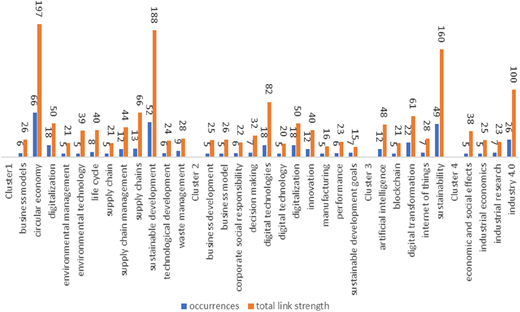
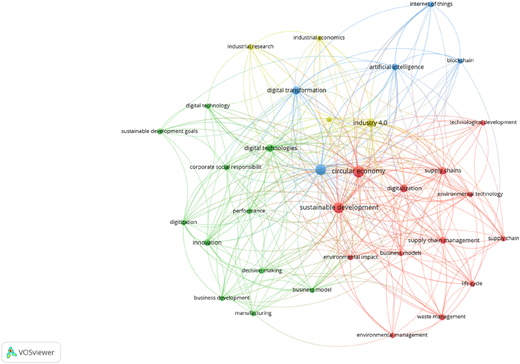
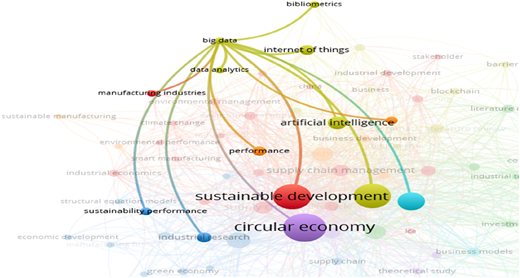
The use of DTs such as artificial intelligence (AI), big data analytics, the Internet of Things (IoT) and blockchain technology is increasingly regarded as a critical enabler, not only for traditional operations (Lerman et al., 2022) and supply chain management (Nazir et al., 2025; Agrawal et al., 2025) but also for sustainable and circular product management (Piscicelli, 2023; Wynn and Wiegand, 2025). For instance, DTs monitor products and parts across multiple life cycles at the industrial level (Calderón Monge et al., 2024). With this capability, AI may identify new business opportunities and sources of competitive advantage. Surprisingly, studies on conceptual frameworks addressing AI, machine learning, big data, cloud computing, information systems and CE in relation to SD are limited (Sahoo et al., 2023; Tiwari and Khan, 2020; Calderón Monge et al., 2024). A gap remains in expertise on effectively leveraging AI to support the operational aspects of circular practices and to uncover new CE potential. Consequently, questions remain unanswered about whether, under what conditions and how AI can enhance companies' competitive performance by improving the leveraging of circular strategies. The study used the keyword co-occurrence. The study established a threshold for the minimum co-occurrence of Keyword 5 and found that 33 keywords were divided into 4 clusters; see the key cluster below (see Figure 8).
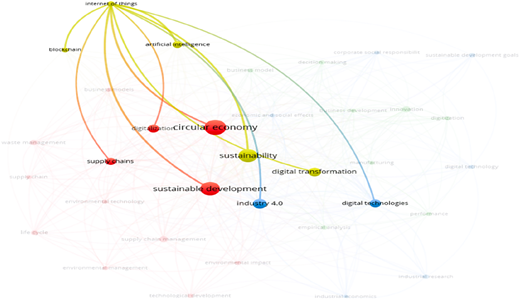
The first cluster shows strong co-occurrence between the keywords “circular economy” (66 occurrences) and “sustainable development” (52 occurrences). Furthermore, the second highlighted “digital technologies,” with 18 occurrences and the third cluster, “Industry 4.0,” with 26 occurrences, respectively indicating that the CE and SD have a strong relationship, whereas DTs have a weak relationship. In addition, AI can precisely predict product demands and influence decision-making (Okorie et al., 2018; Nazir et al., 2025). AI can assist in circular product design by providing specific information on resources to reduce resource utilisation and increase material efficiency. Product designers and top-level management play a key role in developing circular products. According to Lu et al. (2020), the current disclosure framework in corporate securities law has minimal impact on reducing opacity in AI systems and there is a strong advocacy for implementing a practical disclosure framework for AI products and services to combat AI opacity. Therefore, an advanced disclosure framework can enhance transparency, minimise stakeholder risks, stabilise capital markets and foster long-term sustainability.
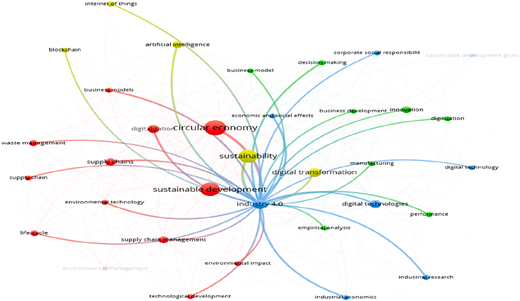
Figure 9 presents the most popular keywords. Among them are CE subtopics such as recycling, reuse, supply chain management, waste management and eco-efficiency. The figure also highlights the links of Industry 4.0 with SD, CE and DTs. Artificial intelligence (AI) is a game-changer in the era of Industry 4.0, enabling the development of intelligent devices that interpret vast amounts of data collected from various machines at different stages of manufacturing. These data are then categorised to identify patterns and correlations, empowering real-time decision-making. This potential of AI to enhance decision-making instils confidence in the roles of manufacturing, remanufacturing, designing, redesigning, selling and reselling across different industries (Calderón Monge et al., 2024; Nazir et al., 2025). Recent studies underscore the importance of integrating these DTs to create a CE that is both economically and environmentally sustainable (Verma et al., 2022a, b; Le et al., 2026). For more information, the study explored the relationship between Industry 4.0, and CE and SD.
Figure 10 shows that organisational ambidexterity improves collaboration between Industry 4.0 technologies and CE techniques, greatly enhances sustainable value creation and financial performance across various industry sectors (Alkaraan et al., 2023; Virmani et al., 2024). Industry 4.0 offers valuable insights for scholars, designers and managers on how to implement sustainable product design strategies and meet customer expectations (Dahmani et al., 2021). It also suggests that firms excelling in ESG are more likely to provide adequate Industry 4.0 disclosures, leading to better financial outcomes (Alkaraan et al., 2022).
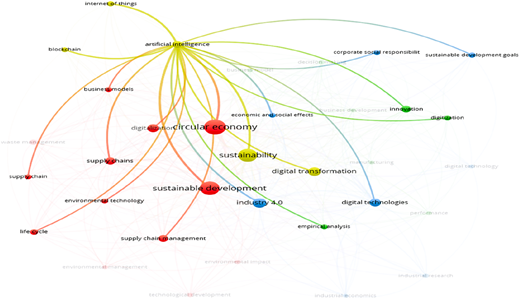
Figure 11 states that AI has strong relationships with the DTs, SD and CE. Moreover, AI is also closely linked to Industry 4.0. AI technologies in waste recycling systems can identify recyclable and recoverable products and materials through image recognition and analyse user behaviour data (Sánchez Garcia et al., 2024). AI-based optimisation techniques are already being employed in waste collection systems to analyse incoming waste materials, the sizes of waste bins and the types of waste collection vehicles required.
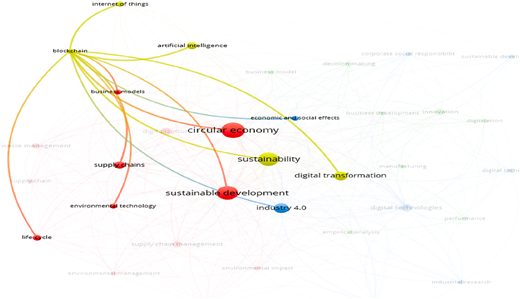
Figure 12 shows that Blockchain technology has strong relationships with CE, SD and Industry 4.0. Blockchain technology is crucial in advancing CE by improving resource efficiency and optimising supply chains. Blockchain technology encourages sustainable business models, product life cycles and collaborative innovation. Additionally, integration promotes ethical considerations and bolsters the growing bioeconomy, providing substantial economic and environmental benefits (Sánchez Garcia et al., 2024).
Internet of Things technologies enable real-time monitoring and data collection, allowing companies to optimise resource utilisation and enhance operational efficiency (Sánchez Garcia et al., 2024 and see Figure 13). Designing for circularity is a new trend among companies seeking to improve the sustainability of their products and services and reduce material use.
Big data analytics, which collects massive amounts of data throughout a product's lifecycle, is a key component of big data (Figure 14). Conventional tools cannot manage, store, or analyse this data. In contrast, analytics employs tools and techniques to transform unstructured data into valuable business insights (Rusch et al., 2023). Therefore, big data analytics, advanced simulations and digital twinning enhance a firm's production, cost and handling efficiency across the supply chain (Alvarez-Aros and Bernal-Torres, 2021). See the table below (Table 6) on the relationship between Industry 4.0 and the CE principles with references on SD.
The CE reduction principle is linked to enhancing resource efficiency throughout all stages of the product lifecycle and is a practical way to adopt DTs and CE for SD. Improving production and energy efficiency has proven benefits of Industry 4.0 (IEA, 2017; Dahmani et al., 2021; Alkaraan et al., 2023) and serves as a sustainable value driver. DTs applied monitoring, optimisation and automated data control to forecast, track, trace and collect materials, all of which strongly support the CE reduction principle. Furthermore, AI is well-connected with waste generators and collectors to boost waste recovery efficiency (Nazir et al., 2025).
Reuse: DTs are to facilitate product reuse through resale and second-hand markets. Used products in good condition can extend their lifespan when purchased by second-hand buyers. DTs primarily support the relocation of used products by identifying reusable items and selling them to second-hand customers. However, many functions, such as track-and-trace, monitoring and collection, are considered helpful for identifying and providing product information ready for reuse, including in-use data, real-time conditions and location (Wynn and Jones, 2022).
Recycle: DTs focus on fundamental changes in product and service design, production processes and user behaviour, aiming to eliminate wasteful practices and replace non-renewable materials with recycled or renewable alternatives. It emphasises DTs related to data analysis, collection and integration rather than automation. Additionally, AI can assess the stability and quality of various design models and accelerate the design process by reducing the number of prototypes required (Neri et al., 2025; Piedra-Muñoz et al., 2025; Nazir et al., 2025). It can also be employed to identify suitable renewable or recycled raw materials to replace non-renewable options (Neri et al., 2025).
Repurposes/Remanufacture: The repurposing approach focuses on using DTs to promote industrial symbiosis, where product waste is transformed into resources for other sectors. Companies often lack the knowledge to engage in cross-sectoral exchanges of waste, materials and services, which involve sharing information across multiple industries to help companies uncover new opportunities. Data shared on information platforms can support real-time waste-to-resource matching, reduce uncertainty in by-product availability and ensure suitable quality for further use (Nazir et al., 2025).
Redesign: The redesign process uses DTs to extract functional parts from non-functional products, repairing and rebuilding products into new products similar to the originals. DTs can support the entire redesign process, which involves identifying functional parts, disassembling, repairing, reselling and rebuilding the products into a new design. Track-and-trace provides insights into the availability and condition of used products and spare parts, enabling companies to tailor redesign processes to minimise waste and material consumption while optimising process efficiency.
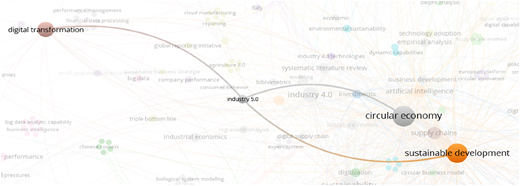
Recover: DTs facilitate predictive and prescriptive maintenance. The recovery mechanism employs DTs to extend the lifespan of machines and products by performing customised maintenance tasks on devices before failures occur. DTs can support detection, condition-based maintenance and automatic task scheduling for products and machines and can accurately predict with prescribed actions. Move forward to figure out Industry 5.0's relationship with CE & SD.
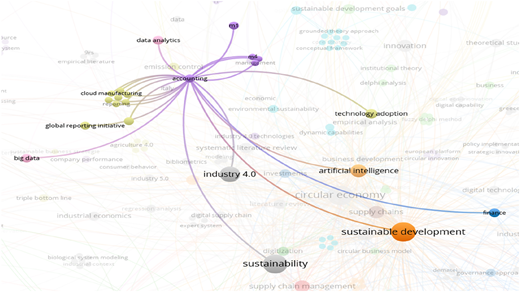
Figure 15 illustrates the link between Industry 5.0 and the CE for SD. Industry 5.0 is a term used to describe the next stage of the industrial revolution, focusing on the relationship between humans and machines in manufacturing (Leng et al., 2022). Industry 5.0 builds on the advances of Industry 4.0, which highlighted the integration of robotic systems, the Internet of Things (IoT) and Big Data analytics to enhance manufacturing processes (Leng et al., 2022; Fraga-Lamas et al., 2021). However, Industry 5.0 further emphasises the importance of human involvement and interaction in manufacturing (Li and Duan, 2025). The European Union has recently begun implementing this concept, but further research and industry development are still necessary.
Firm-level green initiatives are recognised as effective methods for enhancing financial performance (Alkaraan et al., 2022), but implementing them also presents challenges, including increased costs (Alkaraan et al., 2022). From a practical standpoint, the financial feasibility of CE practices is vital for building confidence among businesses and investors in CE (Nazir et al., 2024). The research emphasised the need for increased financing and investment in CE activities, but the idea of DTs was absent. The transition to CE is highly complex, involving many stakeholders and factors that directly or indirectly influence both financial and technological systems. Addressing the financial constraints faced by CE practices requires more than focusing on firms' and financiers' behaviour (see Figure 16).
According to Carnegie et al. (2021), accounting should be viewed as a technical, social and ethical practice. This perspective has been shaped by recent developments that emphasise the importance of integrating sustainability issues into accounting practices. At the same time, the traditional definition of accounting no longer meets contemporary societal needs. Carnegie et al. (2021, p. 18) define accounting as: “Accounting is a technical, social and moral practice concerned with the sustainable utilisation of resources and proper accountability to all stakeholders to enable the flourishing organisation, people and nature”. In this context, AI is seen as new methods, practices, technologies, or approaches that alter how accounting data is collected, processed, analysed and reported. These innovations aim to enhance the effectiveness, efficiency, accuracy and relevance of accounting processes and information, thereby better meeting stakeholders' needs and supporting decision-making (Nazir et al., 2025). These advancements in AI can potentially transform the nature of accounting standardisation and the preparation and consumption of corporate reporting information. AI offers new methods for measuring, recording, verifying, analysing and reporting organisational activity in corporate reports (Tiwari and Khan, 2020). Recently, Nazir and Doni (2024) and Barnabè and Nazir (2021, 2022) emphasised the nexus between CE and integrated reporting (IR), yet they overlooked governance and the role of AI. CE and AI-based reporting can benefit the corporate information market by enabling users to access extensive datasets of corporate reports at no cost. While no comprehensive research on the interaction between CE and IR practices has been published, the concept of AI has not been considered. Recently, EFRAG introduced new ESRS5 standards related to the CE, but AI standards are still lacking (see Figure 17).
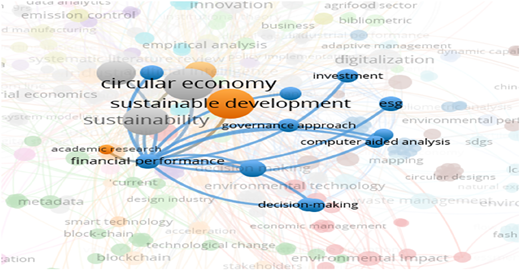
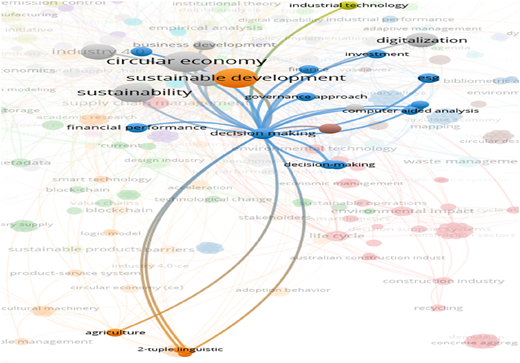
Figure 18 highlights not only the relationship between rational decision-making and computer-based analysis, but also the relationships with CE, SD and financial performance. However, the ReSOLVE framework, developed by the Ellen MacArthur Foundation, includes Regenerate, Share, Optimise, Loop, Virtualise and Exchange to promote circularity in the built environment. This approach not only focuses on building materials and advanced techniques but also requires new business models to support the socioeconomic system in enabling circular practices.
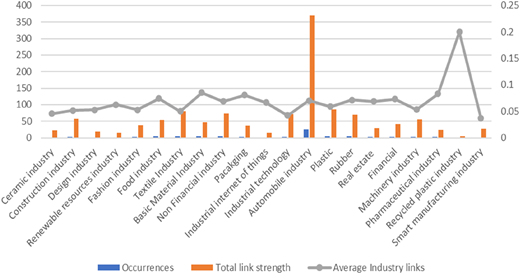
Industries categorise additional information extracted from quantitative and qualitative articles, focusing on the relationships among DTs, CE and SD research across sectors. From an industrial relationship perspective, most industries have strong links with CE and DTs for SD. For instance, Kristoffersen, a renowned researcher in sustainability, examined manufacturing industry firms (Kristoffersen et al., 2020). In some cases, the investigation considered companies from all industries, with certain exceptions, excluding the financial sector (see Figure 19).
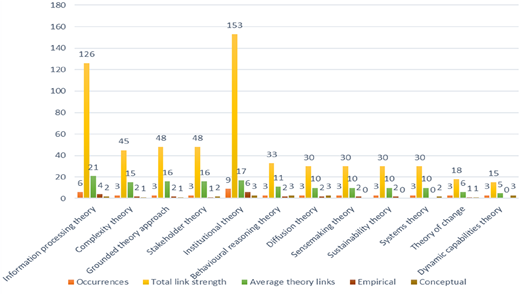
Figure 20 emphasises the theoretical relationship with DTs, CE and SD, advocating for a deeper understanding of how DTs can support various CE strategies. It also finds that institutional theory has a stronger link compared to others. Specifically, it presents a novel approach to identifying how DT-enabled digital functions can enhance CE performance. The study offers a comprehensive theoretical SD and CE framework by reviewing IoT, big data, AI, blockchain and general DTs. After analysing papers and creating keyword links and occurrence metrics, the study identified key digital functions of DTs and highlighted both conceptual and empirical papers that appeared at least 3 times. There were overall links with occurrences and an average theoretical link appearance.
Jabbour et al. (2019) employed stakeholder theory to develop a comprehensive business model for corporate environmentalism (CE) and an integrated framework for green human resources. Nazir et al. (2024) utilise institutional theory to empirically validate a firm's performance through the implementation of CE and advanced data analytics capabilities. CE can be understood as one of several complementary strategies for SD (Rusch et al., 2023), envisioning a regenerative system that minimises natural resource consumption (Rusch et al., 2023; Geissdoerfer et al., 2017). Our analysis builds upon and utilises the CE-R principles to ensure comprehensive coverage of CE strategies. The frameworks of DTs, CE and SD uncover several mechanisms through which DTs can currently enhance CE performance. The combined framework expands the “capability mapping” of CE strategies (Nazir et al., 2024), establishes a functional layer for the “DT-Base-CE framework” (Kristoffersen et al., 2020) and enhances the CE “cross-section occurrence map” (Nazir et al., 2025) by incorporating functions from a broader range of DTs and CE perspectives. Move forward to the combined framework (see Figure 21).
In the combined framework, “reducing” is a cost-effective step in circular models, while “reuse” refers to using a component or parts again for the same or a different purpose. The term “recycle” is crucial in CE but is considered when material reuse is impossible (Ellen MacArthur and Heading, 2019). AI-related CE models and practices address global challenges and help to redesign an inclusive, diverse and distributed economy that leads to SD. This research will benefit first movers in developing these activities within their organisations and in disclosing them to stakeholders to support rational decision-making.
4. Conclusions
This paper used systematic analytical strategies to explore the links among DTs, CE and SD. It carefully untangled developments in these areas and identified the most relevant scholarly works. The study suggests that CE, DTs and SD together can provide organisational pathways. These pathways increase resource productivity and create a framework for effective resource consumption management. Stakeholders have affirmed the need to shift business networks to pursue new AI-driven circular business models. Firms aim to improve the effectiveness, efficiency, accuracy and relevance of accounting processes and information, thereby better meeting stakeholders' needs and supporting decision-making.
Empirical research on AI, IoT, big data and CE remains limited (Tiwari and Khan, 2020; Calderón Monge et al., 2024). Currently, there is insufficient expertise in using AI to support operational circular practices or to find new CE opportunities. Some scholars, together with policymakers, advocate AI-driven circular business models to reduce environmental impacts (Agrawal et al., 2025; Alkaraan et al., 2022, 2023; Nazir et al., 2025), yet some international organisations do not mandate them due to a lack of official guidance. Advances in AI may transform accounting standardisation through streamlining how organisations measure, record, verify, analyse and report their activities (Tiwari and Khan, 2020). CE- and DT-based reporting could benefit the corporate information market by providing users with free access to large datasets (Nazir and Capocchi, 2024). However, research on how CE and integrated reporting interact is limited and the specific contribution of DTs remains underexplored. Recently, EFRAG introduced ESRS5 standards for CE, but DT-specific standards have not been created. Expertise is still needed to use DTs effectively in support of circular practices and to discover new SD potential.
Regardless of these challenges, the shift to Industry 5.0 presents a key opportunity for manufacturers who intend not just to adapt but to pioneer eco-friendly innovation in the coming years. However, the European Commission has stated that the fifth industrial revolution is already underway. Industry 4.0 was primarily focused on developing advanced manufacturing technologies to boost profitability and productivity, whereas Industry 5.0 recognises the global manufacturing sector's significant social impact and leverages it to drive meaningful societal change. The study points to a lack of research grounded in management theory, given the interdisciplinary nature of the DTs and CE fields. Most research centres on creating exploratory conceptual frameworks. Only a few studies seek to improve the understanding of DTs, CE and SD implementation through management theories, such as institutional theory or stakeholder theory (Awan et al., 2021; Dhamija and Bag, 2020; Nazir and Doni, 2024).
4.1 Practical implications
The SLR identifies clear types of connections and subset relationships between these areas. It also illustrates how these links lead to practical uses and provides specific information for supervisors, policymakers and stakeholders. DTs and CE provide tools for immediate monitoring and data collection, helping companies use resources more efficiently and operate more smoothly (Sánchez Garcia et al., 2024). Financially, it is important for CE practices to be viable to gain support from businesses and investors in implementing DTs for sustainability (Nazir et al., 2024). The research stresses that more funding and investment are needed in DTs and CE activities aimed at sustainability. The transition to combining DTs and CE is complex, as it involves many parties and factors that affect both financial and non-financial strategies. Overcoming these challenges requires targeted action focused on a firm's behaviour, culture and finances.
4.2 Limitations
The study has several limitations. The DTs analysed mainly include AI, the Internet of Things (IoT), blockchain, cloud computing and big data. In contrast, DTs such as 3D printing and virtual reality were not explored. Including additional technologies for the CE could yield greater insights. Another limitation is the focus on literature from only the business economy field. Exploring other disciplines, like physics or chemistry, could provide a better understanding of the effects of DT and CE on SD. Additionally, the analysis did not include documents such as annual reports, company records, or funding institution reports.
4.3 Future research
Additional research should deal with these gaps by using diverse methods to validate findings and clarify where they may not apply. This call for investigation invites the audience to contribute to ongoing academic discussion and to influence how organisations, governments, NGOs and stakeholders perceive the relationships under discussion. Connections between DTs, CE and SD – regarding the performance economy, the sharing economy, new business frameworks, strategies and value-driven enterprises – could also be explored. Researchers should analyse the concrete effects of DTs and CE activities on financial and non-financial (ESG) performance and their role in “solid sustainability”, defined as consistent sustainable practices that reduce resource consumption. The study suggests testing its framework with quantitative methods. Sector-specific case studies and interview approaches could be used. Future agendas should include topics on AI governance and ethics for CE transition and implementation. Additionally, new human-centric metrics should be developed to assess Industry 5.0's impact on CE and SD.
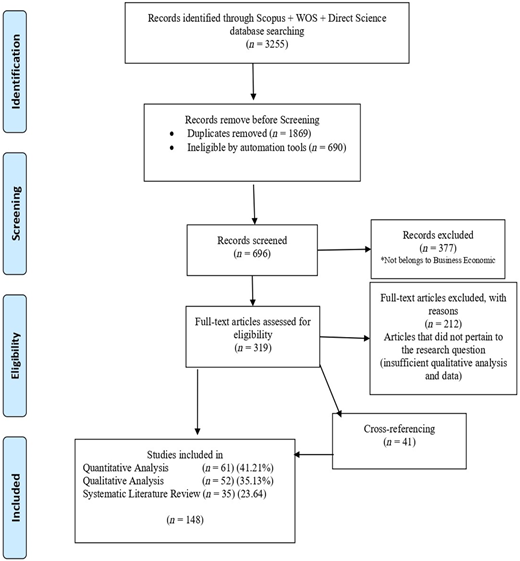
Appendix Search string and screening criteria
Appendix illustrates the PRISMA diagram, which visually represents the SLR process and provides a clear overview of the steps taken and decisions made, thereby enhancing the study's transparency and reproducibility. These steps provide a comprehensive understanding of the coverage of our research topic. This review began with a selection of relevant papers published in highly cited journals and authored by leading academics. Articles were retrieved from Scopus, Direct Science, and the Web of Science (WOS), focusing on digital technologies, the circular economy, and sustainable development, were published in journals from 2014 to 2025. A second round of article selection, including 41 cross-referenced articles, was conducted to gain a more in-depth understanding of the breadth of the future research agenda.
The researchers first examined the full content of 3,255 articles retrieved from a search for “digital technologies”, “circular economy”, and “sustainable development”, limiting the analysis to English-language articles. The PRISMA Diagram reflects the increasing interest among businesses and the economy in a DTs and CE approach to SD, as evidenced by the keywords “Digital Technologies”, “Circular Economy”, and “Sustainable Development”. This research identified 148 articles, including quantitative (61), qualitative (52), and literature review studies (35), focusing on various sectors of the economy such as ecology, supply chain management, marketing, circular business models, barriers, challenges, evidence, rethinking the circular economy, technology transfer, low carbon, sustainable technology, and the economic performance of remanufacturing plastics, among others. The aim is to explore the gaps among DTs, CE, and SD issues in business economics. The main purpose of including business economics is to create a multidisciplinary framework for tackling complex real-world challenges related to sustainability and efficiency. The review also supports linking technical feasibility (engineering), environmental impact (natural sciences), and economic viability (business) to identify research gaps, develop a theoretical foundation, and ensure comprehensive analysis. This approach also blends financial strategy with technical innovation and environmental considerations, fostering proactive business models, optimised resource management, and informed decision-making to generate long-term value.
After reviewing our initial sample, we identified and scanned articles referenced by the reviewed articles, along with other relevant works in our sample. The inclusion/exclusion process depended on whether the publications could provide new insights into the phenomena under investigation, and decisions were made after analysing their titles, contents, and abstracts. SLR analysis evaluates the contributions of research components, including authors, countries, institutions, and journals, to a specific field of study. This type of investigation is often carried out in reviews, and commonly used analysis metrics are also employed. Articles were retrieved from Direct Science, WOS/Scopus for SLR analysis and large enough to warrant SLR analysis (Donthu et al., 2021).