This study aims to systematically examine the relationship between sustainable finance investment and organisational performance through a bibliometric review and theories, characteristics, context and methodologies (TCCM) analysis. It seeks to explore key theoretical frameworks, publication trends and emerging themes in the literature on sustainable finance and organisational performance.
A systematic literature review (SLR) was conducted following the SPAR-4 SLR protocol. A bibliometric analysis was performed on 159 articles published between 2003 and 2023, using data from the Scopus database. The study employed performance analysis, science mapping and the TCCM framework to identify key trends, theoretical perspectives and methodological approaches.
The study finds that sustainable finance positively influences organisational performance, with frequent use of theories like stakeholder theory, RBV, institutional theory and agency theory. Bibliometric analysis reveals top journals, authors, institutions and countries. Research is grouped into four themes: sustainability-performance link, ESG, CSR with mediators/moderators and SRI. It also highlights underdeveloped theories such as upper echelons theory, responsible leadership theory, signalling theory and configuration theory. Key gaps include limited theory integration, methodology diversity and geographic scope, for longitudinal and cross-country studies and inclusion of non-financial metrics.
This study is among the first to systematically review sustainable finance and its impact on organisational performance using the TCCM framework. By integrating bibliometric analysis and a structured review, it provides a comprehensive roadmap for future research. This study presents an integrated TCCM and Paradox Theory framework that addresses research gaps, enhances understanding of the sustainable finance and performance relationship and provides direction for future research.
1. Introduction
Rapid progress in human development has brought with it a series of pressing repercussions that have only recently begun to come into sharp focus. Traditionally, the primary objective of making substantial investments has been to secure long-term economic gains. However, this approach has often overlooked the concurrent emergence of critical societal and environmental issues. In light of these challenges, it has become imperative to adopt investment strategies that consider the triple bottom line – economic, social and environmental impact. Recent events, such as the COVID-19 pandemic; escalating environmental catastrophes like rising sea levels; the recent fire in Los Angeles and pervasive social issues like hunger have highlighted the urgent need for a unified global response. Recognising this, the United Nations introduced the 17 sustainable development goals (SDGs) as part of the 2030 Agenda for Sustainable Development. Achieving these ambitious goals is estimated to require an investment of $5 to $7 trillion annually (UNEP, 2022; Craig, 2021), highlighting the critical role of sustainable finance in addressing these global challenges. At the national level, countries are actively pursuing initiatives to promote sustainable finance. For example, the United States introduced the International Climate Finance Plan in 2021, aiming to mobilise $11.4 billion annually to assist developing nations in addressing climate change (U.S. Department of State, 2023). Similarly, developing countries like India are making significant progress in this area. Recently, India issued their first sovereign green bonds to raise $1 billion to finance public projects, which are aimed at reducing carbon intensity (LSE, 2023). Additionally, the Securities and Exchange Board of India (capital markets regulator) has mandated Business Responsibility and Sustainability Reporting (BRSR) for the top thousand listed companies. This ensures greater transparency and accountability in environmental, social and governance (ESG) practices and disclosures (CDP, 2021).
The term “sustainable finance” is a comprehensive concept that incorporates several sustainable methods for attaining financial and investment goals (Kumar et al., 2022). The European Commission (2023) defines sustainable finance as an ongoing process that incorporates ESG factors into investment and financial decision-making. However, this definition, which only encompasses ESG factors, is relatively limited in scope. In this regard, we suggest that sustainable finance should cover all actions and elements that would make finance sustainable and promote sustainability (Kumar et al., 2022). The increased emphasis on sustainable development, combined with the global push for ecologically responsible practices, has resulted in a considerable transformation in the financial sector (Goutte and Sanin, 2024). For instance, in 2020, the financial markets attracted around $400 billion in new investment, with $357.5 billion being invested in sustainability bonds and $76.5 billion from green bonds (Refinitiv, 2020; United Nations, 2020). This shift highlights the integration of ESG criteria into both investment strategies and business operations (Wu et al., 2023; Zopounidis & Lemonakis, 2024).
Sustainable finance involves the consideration of ESG factors (Nirino et al., 2021). The COVID-19 pandemic has further emphasised the importance of ESG practices, making them essential for organisations to consider when making investment decisions in uncertain times (Mukhtar et al., 2024). In the recent study, Chen, Song, and Gao (2023) found that stronger ESG practices enhance an organisation’s financial performance. They explained that ESG contributes to success by improving reputation, building stakeholder trust, fostering customer loyalty and promoting sustainability, which together lead to better financial outcomes. They also revealed that the level of ESG contribution differs from country to country; it is based on how successfully they integrate ESG principles into their industrial operations. In the same vein, Liu et al. (2022) suggested that strengthening social responsibility practices can be an effective way to enhance their financial performance in new energy companies. They also suggested that each ESG pillar alone is less effective than the combined impact of all three on a company's financial performance.
Although the ESG and financial performance literature is supported by strong empirical evidence, it lacks conceptual cohesion. Examining this relationship through mediating and moderating variables could provide deeper insights for future research. From a theoretical point of view, Martinez-Ferrero and Frias-Aceituno (2015) have proposed that sustainability performance acts as a mediator between corporate governance and firm value, thereby highlighting the importance of integrating sustainability into financial strategy. Similarly, Malik (2015) reviewed the value-enhancing capabilities of CSR and argued that socially responsible practices can significantly help in competitive advantage. These foundational frameworks are vital in understanding how sustainable investment strategies help in firm-level outcomes. Both studies provide valuable theoretical insights linking sustainability and firm value; these frameworks have largely remained theoretically grounded without integration into broader framework-based reviews. This gap presents an opportunity to expand their implications through a bibliometric and TCCM approach.
Despite these contributions, recent literature calls for more insights, particularly from emerging markets and newer financial instruments. Further, emerging market perspectives are critical in diversifying the understanding of sustainable finance. For instance, Bansal, Mani, Gupta, and Maurya (2022) analysed major obstacles to the growth of India's green bond market and highlighted that the absence of clear risk assessment frameworks and inadequate legislative backing, along with a lack of market awareness and weak investor interest, are the major obstacles. They also suggested that the development of standardised regulations and clear guidelines stands out as the most effective strategy to overcome the existing challenges and support the growth of India's green bond market. However, Shi et al. (2023) suggested that green bond issuance boosts the volume of green innovation, particularly patent applications, but has little effect on the overall quality of innovation, as indicated by approval rates and citation frequency. These studies emphasise the regional and contextual uniqueness of sustainable finance mechanisms.
Gidage and Bhide (2024) add to this body of knowledge through a panel data study of 12 developing economies. They found that ESG dimensions significantly improve SDG outcomes and that economic growth enhances this effect, offering empirical support for combining ESG strategies with national development policies. Similarly, Bhutta, Tariq, Farrukh, Raza, and Iqbal (2022) review the role of green bonds in promoting sustainable development and highlight their impact on both financial and non-financial performance, such as profitability, reputation and stakeholder trust. Their findings support the view that green bonds act as strategic ESG tools, reinforcing the link between sustainability initiatives and organisational outcomes. Further, Galeone et al. (2024) examine the link between ESG and FinTech through a case study of BNP Paribas, and it highlights that ESG considerations drive technology adoption. They also conclude that FinTech partnerships help firms achieve sustainability goals more effectively. This suggests that integrating ESG and digital innovation is essential for future models of organisational performance.
Table 1 presents a summary of existing review studies, illustrating how sustainable finance has largely been explored in isolation without an integrated or comprehensive approach. Although these studies offer valuable insights, they tend to examine these areas in isolation. Several bibliometric and systematic reviews, including those by Cunha, Meira, and Orsato (2021), Luo et al. (2022), Naeem et al. (2022), Kumar et al. (2022), Poyser and Daugaard (2023) and Singhania et al. (2023), focus primarily on sustainable finance without exploring its linkages to broader organisational outcomes. Most of these works also rely on a single methodological lens, either bibliometric or systematic review, limiting the depth and dimensionality of their analyses. While Ren et al. (2023) offer a novel perspective by examining the integration of blockchain in sustainable finance, their scope is highly technology-specific. Notably, Joshipura et al. (2024) combine bibliometric analysis with the TCCM framework, yet their study remains narrowly confined to sustainable finance. Their limited use of search strings and lack of theoretical model development constrain the applicability and generalisability of their findings.
Unlike prior studies that focused on sustainable finance alone or used only one method, this study combines bibliometric analysis with the TCCM framework to explore the connection between sustainable finance and organisational performance. It also uses a broader set of keywords and examines underdeveloped theories to provide fresh insights. Several questions from previous research remain unanswered. The following research questions are.
What is the current status of research on sustainable finance investment and organisational performance, including the chronological distribution of publications, publication types, prolific journals, most productive geographical region and co-occurrence network of keywords, bibliographic coupling?
What is the current understanding of the characteristics, context, methodologies and theoretical frameworks applied in sustainable finance investment and organisational performance?
What are the future research directions in sustainable finance investment and organisational performance?
The paper is structured into seven sections. The second section serves as the methodological foundation. Following this, the third and fourth sections explain performance analysis, science mapping and the TCCM framework, respectively. The fifth section includes the discussion and implications. The sixth section shed light on future research directions. Finally, the seventh section provides the concluding remarks.
2. Methodology
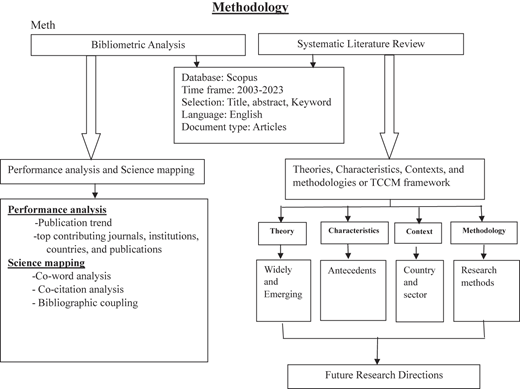
The study employs a systematic combination of bibliometric analysis and TCCM framework, as summarised in Figure 1, which provides an overview of the research methodologies used in the study. We further follow Paul et al.'s (2021) recommended systematic review protocol, SPAR-4-SLR (Scientific Procedures and Rationales for Systematic Literature Reviews), to investigate the research questions. SPAR-4-SLR provides a structured and transparent method for conducting systematic literature reviews, especially in management and sustainability research, where the field is still developing and not yet fully organised (Paul et al., 2021). Additionally, we apply the bibliometric techniques suggested by Donthu et al. (2021a,b), which involve techniques such as performance analysis, science mapping and the TCCM framework (Paul & Rosado-Serrano, 2019). To do so, we basically follow three steps: assembling, arranging and assessing the data.
2.1 Assembling
This study examined sustainable finance-related searches to identify and compile relevant literature. A previous literature review led to these questions. Google Scholar was searched to find suitable terms for the research topics. We create search strings using the research paper's abstract and title from related studies. The search query used Boolean operators. A simple “OR” operator separated terms, and the addition of “*” after a word allows the search to find many variations of it. The search string has 48 keywords: these are the search keywords which we used in our study. ((“Sustainable financ*” OR “Green finance*” OR “sustainable development” OR “Sustainable invest*” OR “Green invest*” OR “Green bond” OR “Green loans” OR “Ethical finance*” OR “Sustainable corporate finance*” OR “Triple bottom line” OR “Environmental social and governance” OR “Impact invest*” OR “Ethical invest*” OR “Environmental invest*” OR “Governance invest*” OR “Environmental social and governance issues” OR “Responsible invest*” OR “Socially responsible invest*” OR “SRI” OR “ESG invest*” OR “ESG” OR “SDGs” OR “Sustainable development goals” OR “Climate change” OR “Green credit” OR “Green lending” OR “Sustainable lending” OR “Financing decarboni ? ation” OR “Climate finance*” OR “Green invest*” OR “Environmental finance*” OR “Energy finance*” OR “Carbon finance*”) AND (“Financial outcomes” OR “Financial performance” OR “Organi ? ational performance” OR “Firm performance”) AND (“Stakeholder theory” OR “Shareholder theory” OR “Agency theory” OR “Slack resources theory” OR “Institutional theory” OR “Resource based theory” OR “Resource based view” OR “RBV” OR “CSR” OR “Corporate social responsibility”)).
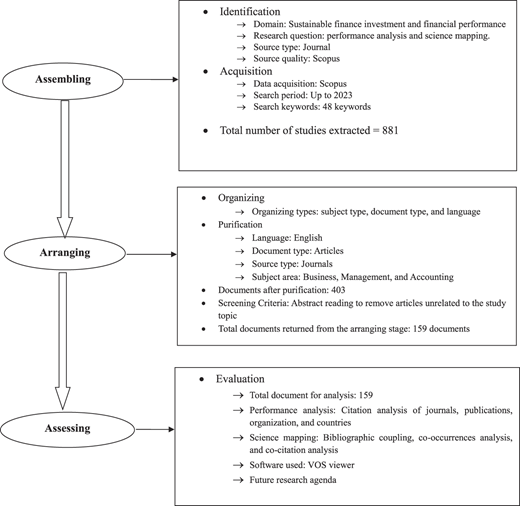
After identifying the search terms, this study used the same search string in the “article title, abstract, and keywords” section of Scopus, which is the largest high-quality scientific database of academic articles (Comerio & Strozzi, 2019; Norris & Oppenheim, 2007). Scopus was selected as the main database for this study because it offers wider coverage and useful features for bibliometric analysis. Paul et al. (2021) noted that Scopus includes more research articles than Web of Science (WoS), making it more suitable for literature reviews. Similarly, Gavel and Iselid (2008) found that Scopus covers about 84% of WoS content and also includes many additional journals. Feng et al. (2017) also confirmed that Scopus has broader coverage across subjects and is well organised and also allows easy export of data and metadata, which is important for this type of analysis (Cobo, López-Herrera, Herrera-Viedma, & Herrera, 2011). Using Scopus, we collected 881 documents for this study.
2.2 Arranging
Initially, we obtained 881 articles. Following Paul et al. (2021), we used filters to meet inclusion and exclusion criteria. According to Paul et al. (2021), research articles should be retained for further analysis if they are peer-reviewed, written in English, full-text journal articles, review articles or early access; and published in business, management and accounting. We also apply filters to the time span of publication, i.e. retain papers published between 2003 and 2023. Applying inclusion and exclusion criteria yielded 403 possibly relevant studies for screening.
2.3 Assessing
We use bibliometric analysis as our methodology to examine the 403 papers and determine the final results. A bibliometric study can highlight current trends and suggest future directions for study (Li et al., 2017). There are various software available for bibliometric analysis, including Biblioshiny, VOSviewer, Gephi, BibExcel and others. VOSviewer is a widely validated tool for bibliometric visualisation, capable of mapping co-authorships, keyword co-occurrences and thematic clusters (Van Eck & Waltman, 2010), and it has received praise from Cobo et al. (2011) and Feng et al. (2017) for its effective graphical user interface that makes it simple to create mapping for bibliometric studies. So, we chose VOSviewer 1.6.15 software for the study. A summarised graphical representation of the SPAR-4 SLR protocol is presented in Figure 2.
3. Bibliometric analysis
In simple terms, bibliometric analysis is the study of publications using data like citations and keywords to understand trends, themes, and impact in a particular field. It primarily combines mathematics, statistics, and bibliographies to quantitatively analyse academic literature (Hood & Wilson, 2001), which facilitates the researcher's interchange of research accomplishments and academic concepts (Mark et al., 2010). This research builds on prior reviews (Cobo et al., 2011; Donthu, Reinartz, Kumar, & Pattnaik, 2020). Bibliometric analysis has two types of analysis: performance analysis and science mapping.
3.1 Performance analysis
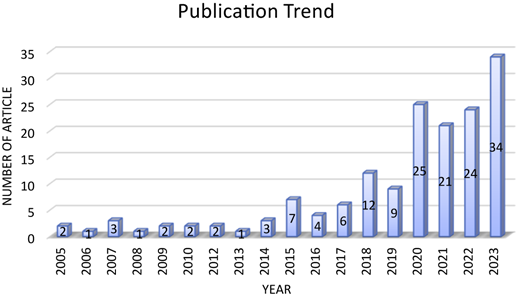
Performance analysis evaluates the contributions of authors, institutions, countries and journals to a specific subject (Cobo et al., 2011; Ramos-Rodrígue & Ruíz-Navarro, 2004). This section examines these elements in the context of sustainable finance and investment. Figure 3 illustrates publication trends from 2003 to 2023, showing fluctuations in output, with declines in 2013, 2016 and 2019. A significant rise began in 2021, peaking in 2023 with 34 publications. Articles on this topic first appeared in 2003, and Figure 3 predicts an upward trend in future research.
3.1.1 Top journals
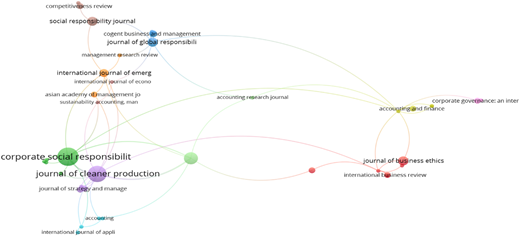
In this, we discussed the top 10 journals based on citations. Table 1 displays the total number of citations and publications, as well as the ABDC rank according to the 2022 list. The most cited journals are the Journal of Cleaner Production, Strategic Management Journal, and Corporate Social Responsibility and Environmental Management, with citation counts of 1746, 1,403 and 1,337, respectively, as shown in Table 2 and Figure 4. In terms of the most publications, Corporate Social Responsibility and Environmental Management and the Journal of Cleaner Production have 20 and 16 publications, respectively. It also shows that the sources are more likely to accept research publications on sustainable finance. Journals like Journal of Cleaner Production and Corporate Social Responsibility and Environmental Management show that sustainable finance research covers many different areas. These publications connect environmental, ethical and financial studies, proving there's strong academic interest in bringing sustainability into general business research.
In Figure 4, journals are represented as nodes, and their citation relationships are depicted by links between them. The size of each node represents the level of a journal's contribution to sustainable finance and investment studies. For instance, the Journal of Cleaner Production and Corporate Social Responsibility and Environmental Management are shown with larger nodes, indicating their strong influence and importance in this field.
3.1.2 Top contributing country
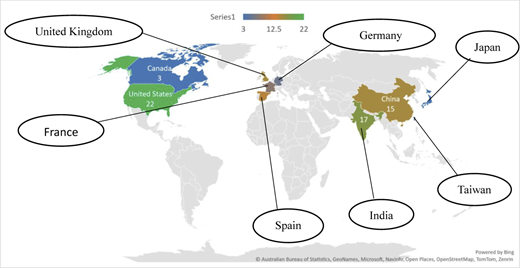
In the analysis, we identify the top 10 contributing countries in sustainable finance and investment literature. The United States, Spain, and Canada are the top three countries in terms of the number of citations, with 3,710, 1,225 and 670, respectively. However, in terms of the highest number of publications, the United States, India and China occupy the top three positions with 22, 17 and 15 publications, respectively. Table 3 and Figure 5 consist of the top 10 countries having the highest number of articles. The United States leads ESG and CSR research, with the highest number of publications and citations. This trend is likely due to its strong academic resources and significant policy involvement. Meanwhile, India's increasing contributions show its growing national focus on sustainability reporting and green finance policies, such as BRSR.
Figure 5 shows the countries with the most publications on sustainable finance, mostly developed and Western countries.
3.1.3 Top active organisation
VOSviewer analysis identifies the top 10 organisations with the most citations. The College of Business Administration, University of South Florida, and Stern School of Business at New York University led with 862 citations, followed by California Polytechnic State University in the UN and Ohio State University with 684 each. Further, the fact that most of these leading institutions are located in developed countries suggests they benefit from greater research funding and a sustained commitment to corporate responsibility. Table 4 shows that 5 of 10 organisations are from the US, 3 from Japan and 1 each from Canada and Spain. This suggests that the United States is more involved in sustainable finance and investment.
3.1.4 Top contributing publication
Table 4 outlines the highly cited research articles on sustainable finance investment and organisational performance. Table 5 and Figure 6 highlight the top 10 most-cited articles, showcasing the titles of these influential papers, their total citation counts and the journals in which they were published.
The most frequently cited articles in sustainable finance highlight the connections between corporate social responsibility (CSR), ESG practices and a company's financial performance. These studies used established theories like stakeholder theory and the resource-based view. The mix of empirical and conceptual works suggests a healthy theoretical and methodological diversity in foundational research.
3.2 Science mapping
Science mapping provides a visual representation of the relationships among research studies, keywords and authors. The relationships between research components are examined by science mapping (Cobo et al., 2011; Ramos Rodrígue & Ruíz-Navarro, 2004). Donthu et al. (2021a,b) describe different methods used in science mapping, such as citation analysis, co-citation, bibliographic coupling, co-authorship and co-word analysis.
3.2.1 Co-word analysis
Co-word analysis identifies the frequency of keywords appearing together in research papers, helping to show the main topics and connections in a field.
3.2.1.1 Author's keywords
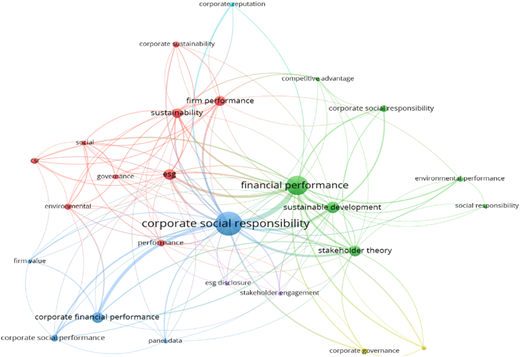
Based on the keywords used in the research paper, there were a total of 395, out of which only 26 met the threshold of having a minimum occurrence of 4 (Figure 7). Corporate social responsibility has the highest number of occurrences in terms of the author's keyword, followed by financial performance, sustainable development, stakeholder theory and ESG. These keywords appear often, which shows they are important topics and main areas that the research focuses on. The presence of terms like “stakeholder theory” and “ESG” shows that researchers are using more theory-based ideas in their empirical studies. This approach helps in mapping the key themes in this field.
3.2.2 Bibliographic coupling
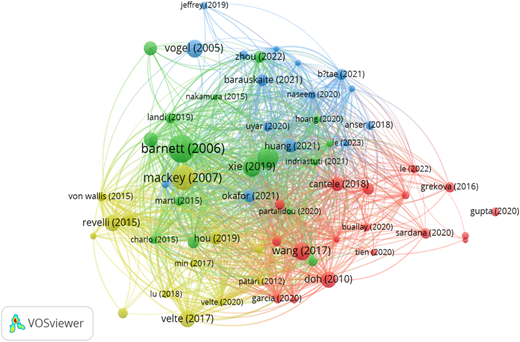
Bibliographic coupling is a science mapping technique that links papers that cite the same sources, helping to identify related studies and emerging topics (Kessler, 1963). The more solid the bibliographic coupling link between two research publications is, the higher the similarity in references between them (Van Eck & Waltman, 2010). We examined the data by establishing a threshold of 45 citations per paper to identify feasible clusters and remove isolated nodes. However, after analysing the data, we identified four clusters, as shown in Figure 8. We named these clusters sustainability and firm performance, ESG, CSR, mediators, moderators, financial performance and socially responsible investing (SRI). While these separate themes might suggest the field is fragmented, they also offer chances to combine insights from studies focused on theory and those focused on outcomes.
3.2.2.1 Cluster 1 Sustainability and Firm Performance
Cluster 1 consists of eighteen articles that have been cited 2,182 times, according to Scopus. The top three cited articles in this cluster are Wang and Sarkis (2017), Doh, Howton, Howton, and Siegel (2010), and Cantele and Zardini (2018), with 342, 306 and 228 citations, respectively. The theme of this cluster is sustainability and firm performance, encapsulating topics such as environmental, social and governance; corporate social responsibility; corporate sustainability; green innovation and financial performance. In this cluster, publications are about studying sustainability and firm performance. However, this relationship is not new, having undergone testing many years ago. Wang and Sarkis (2017) look at how CSR outcomes and governance affect financial performance. They found that CSR outcomes entirely mediate the relationship between CSR governance and financial outcomes. In addition, Cantele and Zardini (2018) tested the relationship with the new model, which included the two-level mediators. They found that sustainability has a favourable impact on competitive advantage through business reputation, customer satisfaction and organisational dedication. Moreover, Grekova et al. (2016) revealed that even environmental sustainability can enhance financial performance, both directly and indirectly, by encouraging the target company to adopt greener practices that boost its performance.
3.2.2.2 Cluster 2 environmental, social, governance
According to Scopus, Cluster 2 comprises seventeen articles with a total citation count of 3,351. The publications of this cluster have more citations than cluster 1. The theme of this ESG cluster includes topics such as corporate social performance, social responsibility, green investment, ethical CSR investment, sustainable business and environmental, social and governance activities. The publications in this cluster adopt a study of sustainable development. The most cited publication of this cluster is Barnett and Salomon (2006), with 862 citations, which revealed the curvilinear relationship between social and financial performance. They combined modern portfolio theory with stakeholder theory and suggested that the financial losses of an SRI fund from poor diversification can be reduced through stronger social screening, which helps select better-managed and more stable companies for the portfolio. They indicate that financial returns initially decrease as the number of social screens utilised by an SRI fund increases, but they subsequently rebound as the number of screens reaches a maximum. Ortiz-de-Mandojana and Bansal (2015), with 541 citations, tested the relationship between social and environmental practices and organisational resilience and described that how social and environmental practices lead to lower financial volatility, higher growth rates and greater survival rates in the long run.
3.2.2.3 Cluster 3 corporate social responsibility, mediators, moderators and financial performance
Cluster 3 consists of fifteen articles on corporate social responsibility and financial performance that have been cited 1,696 times, according to Scopus. The theme of this cluster is corporate social responsibility, mediators, moderators and financial performance, encapsulating topics such as corporate environmental strategy, corporate social responsibility performance, environmental, social and governance, environmental, social, and financial performance, firm performance and organisational performance. The publications in this cluster adopt a study about corporate social responsibility and financial performance with the help of various mediators and moderators. Vogel (2005), with 353 citations, revealed that a direct positive relationship between CSR and financial performance is unclear. The research indicates that more responsible firms are not necessarily more profitable, and the connection between CSR and financial performance is complex and influenced by various factors, whereas Okafor et al. (2021), with 158 citations, examined the relationship between CSR and financial performance in the US tech industry and concluded that there is a positive correlation between CSR spending and revenue growth. Moreover, they revealed that the more money spent on CSR activities, the greater the organisation's profitability.
3.2.2.4 Cluster 4 socially responsible investing
Cluster 4 consists of thirteen articles that have been cited 2,163 times. The theme of the cluster is SRI. The publications of this cluster are about socially responsible investing and its relation with financial performance. The top three cited articles in this cluster are Mackey et al. (2007), Velte (2017), and Revelli and Viviani (2015), with 684, 312, and 291 citations, respectively. Mackey et al. (2007) found that companies can create economic value by investing in socially responsible activities, especially when demand for such activities is higher than the supply. Similarly, Hill et al. (2007) suggested that organisations that practise social responsibility show better financial performance over a long period of time. On the contrary, Revelli and Viviani (2015) revealed that there is no significant relationship between socially responsible investing and financial performance. Specifically, adopting ESG norms has no significant costs or benefits for global investors.
3.2.3 Co-citation analysis
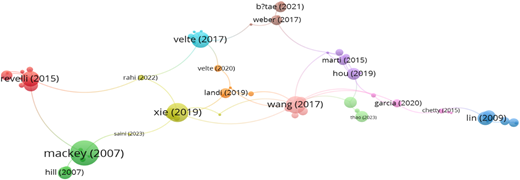
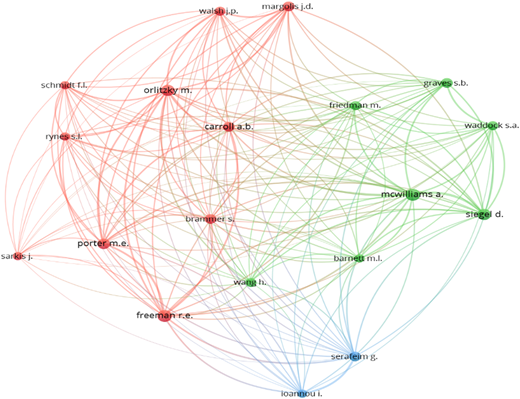
Co-citation analysis is a science mapping technique based on when two papers are mentioned together by other papers, showing that they are related in topic (Hjørland, 2013). This analysis can reveal how knowledge and ideas are organised in a research field (Rossetto et al., 2018), including its underlying themes (Liu et al., 2015). In addition, when two publications are listed together in another publication’s reference list, they are linked in a co-citation network (Donthu et al., 2021a, b). Figure 9 displays the network visualisation, revealing the formation of three clusters.
4. TCCM framework
The TCCM framework stands for theories, characteristics, context and methodologies advocated by Paul and Rosado-Serrano (2019). The TCCM framework overcomes the limitations of traditional systematic reviews by providing a clearer understanding of both the theoretical and empirical dimensions of a research area (Roy Bhattacharjee et al., 2022). TCCM analysis helps identify gaps in existing literature and offers directions for future research (Paul & Rosado-Serrano, 2019).
4.1 Theoretical lenses (T)
In this study, we also delved into several theories utilised in the literature on sustainable finance investment and financial performance. We identified the theories used in the papers by analysing their abstracts, keywords and bodies. Table 6 summarises the top 7 most commonly used theories and models in order of frequency. We discuss the three theories most frequently used in this domain.
4.1.1 Stakeholder theory
Stakeholder theory (ST) is a management approach that focuses on business ethics and responsibility (Schaltegger, Hörisch, & Freeman, 2019). It explains that organisations should create value for all their stakeholders, such as customers, employees, governments, shareholders, suppliers and communities (Freeman, 1984). In short, it provides a framework for understanding how businesses are connected to society.
Several empirical studies (Jones, 1995; Shahzad et al., 2018) show that when firms meet stakeholders’ needs through active CSR activities, their financial performance improves. In the same vein, companies that participate in CSR can position themselves as having better products than rivals while simultaneously trying to increase profits (Fisman et al., 2008). Moreover, according to Maignan and Ferrell (2004), a lot of businesses use CSR activities to support socially conscious practices and policies and to efficiently address the needs of stakeholders.
4.1.2 Resource-based view (RBV)
In contrast to previous studies (Wernerfelt, 1984; Dierickx & Cool, 1989) that focused on how the external environment affected the performance of organisations. Resource-based theory says that a company’s performance depends on its internal competencies and capabilities. Internal competences and capabilities of a company can be developed for the company’s competitive advantage (Grant, 1991). A resource that works well for one kind of organisation might not work well for another (Collis & Montgomery, 1997). Moreover, resources can be classified as tangible (physical) or intangible (non-physical) (Grant, 1991). According to Mowery et al. (1998), an enterprise is characterised by unique resources and competencies that are difficult to replicate. Resources and capabilities are interconnected (Amit and Schoemaker, 1993). In addition, resources are essential in the RBV for a firm’s operations (Grant, 1991).
4.1.3 Institutional theory
Scott (1987) explained institutional theory as the study of how organisations follow and adapt to the rules, values and expectations of society. According to institutional theory, corporations adopt particular business practices to secure resources and support from key stakeholders (DiMaggio & Powell, 1983; Oliver, 1991). Institutional theory focuses on how businesses behave in ways that society sees as acceptable, such as how they deal with suppliers, customers, governments, employees and other groups (DiMaggio & Powell, 1983).
In addition, institutional theory elaborates on how pressures might lead to changes (Wongthongchai & Saenchaiyathon, 2019). Moreover, management research has increasingly focused on how an organisation’s operations are influenced by its surroundings (Matten & Moon, 2008; Zhang et al., 2012). Maletič et al. (2016) applied institutional theory to corporate sustainability, helping to fill a gap in earlier research where such studies were largely missing (see Table 6).
4.2 Characteristics (C)
This section covers the most commonly utilised antecedents and mediators of sustainable finance investment and financial performance. According to the research, sustainable finance investment antecedents fall into three major categories: environmental sustainability and practices, social responsibility and stakeholder involvement, governance and accountability.
Given its strong ties to environmental concerns, this stands for the core of sustainable finance. It includes things like green innovation (Khan & Johl, 2019), green investment (Indriastuti & Chariri, 2021), environmental sustainability (Gupta & Gupta, 2020) and environmental compliance (Gupta & Gupta, 2021). The globe is very concerned about the environment, and we should all do our part to decrease it, not just as individuals but also as a culture, organisation or nation. Social responsibility is also an important factor in sustainable finance. As social responsibility includes the social aspects of ESG and CSR, like CSR (customer, workers and community), CSR practices and behaviours of companies, socially responsible activities and people-related SDGs. Corporate governance is a key driver of sustainable finance because it provides a framework for organisations to make ethical decisions, be transparent and be accountable. Organisations that promote effective governance practices can strike a balance between profitability and long-term sustainability goals.
4.3 Context (C)
In this section, we have organised the analysis into two parts: one focusing on countries and the other on sectors.
4.3.1 Country
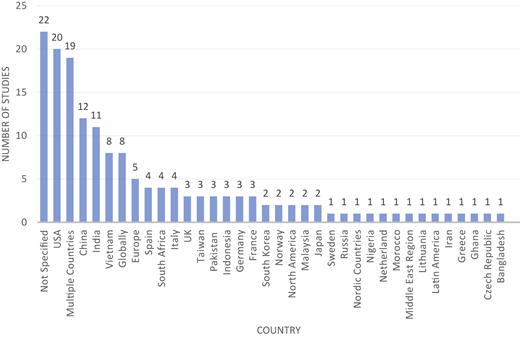
The current analysis indicates that the relationship between sustainable finance and financial performance has predominantly been studied in developed economies. As shown in Figure 10, North America ranks first with 22 articles, mostly contributed by the USA (20 articles), reflecting significant scholarly activity. Furthermore, China leads with 12 articles, while India is not far behind with 11 articles, suggesting that India is increasingly prioritising sustainability. Furthermore, Europe contributes 31 articles, with significant input from Spain and Italy (each contributing four articles), followed by Germany, France and the United Kingdom (each with three articles). Norway has two articles.
4.3.2 Sector
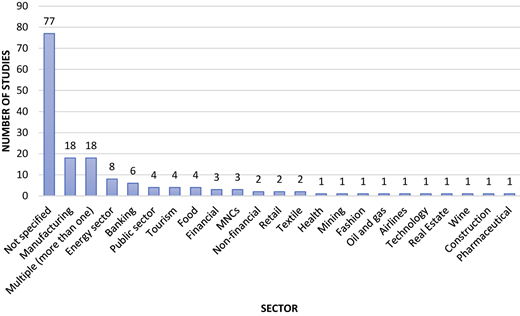
This review highlights the diverse sectors explored in the literature on sustainable finance and financial performance. As shown in Figure 11, the manufacturing sector emerges as the most prominent, with 18 studies focusing on this area. The financial sector, including the banking industry, also demonstrates significant interest, with nine articles addressing this domain. This indicates the financial sector's growing engagement with sustainable finance initiatives. Studies spanning multiple sectors comprise 18 articles, reflecting a widespread interest in cross-industry analysis.
4.4 Methodology (M)
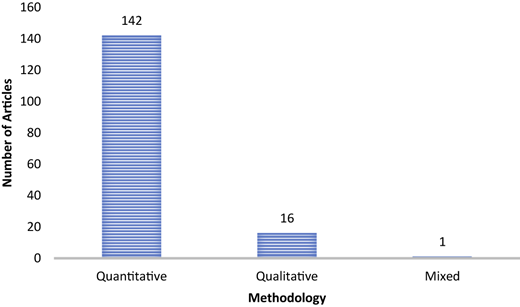
Figure 12 outlines the methodologies used in the research paper and reveals that the majority of the research used quantitative approaches with 142 articles, followed by qualitative methods only with 16 articles. The data collection method used in quantitative studies includes secondary data, surveys, questionnaires and databases (e.g. Bloomberg, Thomson Reuters, ASSET4 database, CMIE, China Stock Market and Accounting Research (CSMAR), etc.). Further, the quantitative methods used statistical analysis such as structural equation modelling, exploratory/confirmatory factor analysis, correlation, regression and ANOVA/MANOVA, mathematical analysis and econometrics. Only one study used both qualitative and quantitative.
5. Discussion and implications
5.1 Discussion
This study addressed RQ1 by analysing network mapping to examine not just the evolution of current literature but also to present a structured perspective of major contributors, such as top-performing countries, institutions, journals and influential publications. Three types of network analyses-co-occurrence, co-citation and bibliographic coupling were used to identify significant research topics. The findings indicate that research on sustainable finance and organisational performance has grown substantially since 2020, with the United States, India and China leading in contributions. The co-occurrence of keywords such as CSR, ESG, and financial performance highlights a thematic focus that remains centred around ethically motivated and outcome-related constructs. This study highlights a potential gap for future research, as the current literature is dominated by commonly used keywords. Upcoming studies can explore emerging areas such as green bonds, climate finance and other innovative themes within sustainable finance that remain under-represented. The bibliographic coupling analysis found thematic clusters such as corporate social responsibility, ESG, socially responsible investing, financial performance and sustainability. Moreover, the bibliometric clusters of CSR-performance linkages, ESG themes, and socially responsible investing indicate the presence of multiple research streams that intersect around sustainability goals.
Furthermore, in RQ2, the TCCM framework was applied in identifying dominant theories as well as commonly used methodologies, variables, and sectors in sustainable finance investment literature. The dominance of theories such as stakeholder theory, resource-based view (RBV), institutional theory, agency theory and legitimacy theory indicates a growing conceptual maturity in the field. However, empirical studies tend to apply these frameworks either in isolation or in limited combinations, which restricts deeper theoretical development. This highlights the need for more integrated theoretical approaches, particularly those that bridge traditional finance theories with sustainability-oriented frameworks. Such integration could offer a more comprehensive understanding of sustainable finance dynamics and advance both theoretical and practical insights in future research. However, there is also potential to explore lesser-used or emerging theories that have not yet been widely applied in this field. In addressing RQ3, the study proposes a conceptual framework that includes mediators such as board characteristics and strategic planning and considers both financial and non-financial performance outcomes. This provides a foundation for scholars to explore under-researched sectors and geographies and to adopt longitudinal or mixed-method approaches.
This study also adds to the ongoing debate about whether sustainability efforts really create value or just add extra costs for companies. Earlier research (Pham et al., 2021; Nakamura, 2015; Revelli & Viviani, 2015) gave mixed results, but our review shows that ESG and CSR practices usually strengthen a firm's resilience, build stakeholder trust and support long-term growth, even if the short-term impact may differ. By bringing together different strands of research, such as CSR and performance links, ESG investments and socially responsible investing, this study makes clear that the link between sustainability and performance is generally positive, though it depends on the context. This clearer view helps reduce confusion in past studies and shows the value of our work for both researchers and practitioners in sustainable finance.
5.2 Implications
5.2.1 Theoretical implications
This study presents multiple theoretical contributions. First, as per our knowledge, this is the first research to apply bibliometric analysis and the TCCM framework in the field of sustainable finance investment and organisational performance, including all relevant Scopus publications. Second, bibliometric and network analysis shed light on recent trends, influential authors, countries, institutions, journals and keywords. These findings help in understanding the evaluation of sustainable finance investment and organisational performance. Third, this study explores that theories, including stakeholder theory, RBV, institutional theory, agency theory, legitimacy theory and slack resources theory, are the most dominant theories in this field. Further, the finding highlights how these frameworks explain the financial benefits of sustainable finance investments. The findings reveal that sustainable finance and financial performance are explored using numerous theories rather than a single framework. For example, stakeholder theory and legitimacy theory are commonly used together to describe how firms engage in sustainable practices to meet stakeholder expectations while maintaining legitimacy. Similarly, RBV and institutional theory shed light on how internal and external variables influence long-term financial decisions. Fourth, the study also highlighted that theories like upper Echelons theory, responsible leadership theory, signalling theory and configuration theory are underdeveloped or rarely used. Further, the upper echelons theory offers valuable insight into how leadership traits, experiences and values influence strategic decisions related to CSR, ESG and environmental performance, directly supporting the inclusion of leadership style and board characteristics in our proposed model.
In addition, several core finance theories can be effectively applied to the context of sustainable finance and organisational performance. Notably, the Fama and French multi-factor model and the Arbitrage Pricing Theory provide helpful guidelines for understanding how sustainability-related factors influence asset pricing, investment risk and firm-level financial outcomes. Similarly, modern portfolio theory provides a basis for analysing the risk-return efficiency of socially responsible investments. Future empirical research can build on these theories to model the financial implications of sustainability strategies more precisely, thereby enriching the theoretical base of the field. Such integration will not only enhance the explanatory power of sustainable finance studies but also contribute to the development of more comprehensive and theoretically grounded models in the field. This study uses the TCCM (Theories, Characteristics, Context and Methodologies) framework to provide a structured examination of the topic, assisting researchers in identifying theoretical gaps and opportunities for future research. This study extracted several constructs from the literature, such as competitiveness, board characteristics, corporate strategies and leadership style, to explore their potential roles as mediators or moderators in the relationship between sustainable finance investment and organisational performance.
5.2.2 Practical implications
The study shows that organisations that focus on stakeholders and follow ESG practices are more likely to see both financial and non-financial benefits. The company boards should treat sustainability as an important part of their business strategy, not just an extra task or as window dressing. When boards integrate sustainability into core decision-making, they not only build stronger trust with stakeholders but also reduce long-term risks, attract sustainability-focused investors and ensure compliance with tightening global regulations. In addition, having diverse and independent board members, such as including women on the board, can help improve ESG performance and strengthen the company's image. This enhances fairness and inclusivity for investors and society but also improves stakeholder trust, attracts socially responsible investors and helps companies to stay competitive in markets where diversity and transparency are increasingly demanded. In practice, boards can set diversity quotas (e.g. 30% women directors by 2027), appoint at least one director with sustainability expertise, provide sustainability training for senior managers and regularly report progress on diversity metrics to ensure accountability.
Further, study shows that SRI is not only beneficial for society and the environment but can also lead to better financial returns. Investment managers should think about including ESG checks in their portfolios, which can lower risks, protect reputations and access the fast-growing pool of sustainable capital. Practically, investors should actively screen companies to see if they follow ESG practices before deciding to invest. If a company scores poorly, such as being involved in heavy pollution, unsafe labour practices or weak governance, investors can divest (pull money out) to avoid reputational, legal or financial risks. At the same time, investors can redirect their capital into sustainable funds that specifically support firms working in areas like clean energy, fair labour or community development. These steps lower risks and build stronger long-term growth.
Government should offer support like green finance incentives, tax benefits and rules that require ESG reporting to encourage more companies to follow. Making these rules match global standards like the EU Green Deal or the UN's Sustainable Development Goals can also help bring in more international investment. These clear and consistent policies not only speed up adoption but also make local markets more attractive, create fair competition and turn sustainability into a measurable national impact. While policymakers should introduce industry-specific ESG disclosure rules (for banking, manufacturing, energy, etc.), offer tax credits for companies meeting sustainability targets, and provide low-interest green credit schemes for SMEs.
While most research has focused on big companies in developed countries, the growing number of studies from India and China shows that things are changing. Small- and medium-sized businesses (SMEs) in developing countries have a chance to benefit by adopting sustainability early. This can help them stand out in the market as a differentiator to access green funding, build international business partnerships and become more competitive and open doors to new markets where sustainability is increasingly a requirement. These steps will help ensure that sustainable finance practices are widely adopted and that the study's insights move beyond theory into real-world action, benefiting both business and society.
5.3 Proposed framework
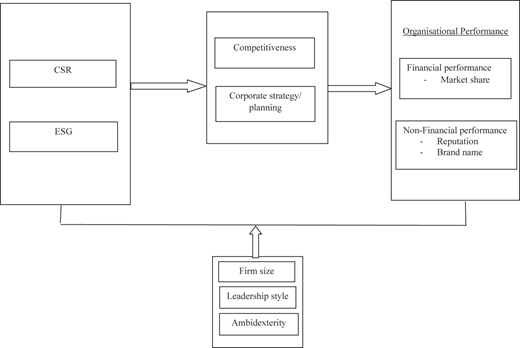
Through an extensive literature review, this study identified several variables for future research and proposed a conceptual framework shown in Figure 13. In the proposed model, we adopt paradox theory as its primary theoretical lens to examine the complex interplay between sustainable finance and organisational performance. We use ambidexterity as a moderator to help explain paradox theory, which shows how organisations balance both sustainability and financial goals at the same time. It provides a compelling framework for understanding how organisations simultaneously manage competing yet interdependent demands, such as achieving short-term financial returns while investing in long-term environmental and social goals (Smith & Lewis, 2011). The proposed model shows how tensions arise, where CSR and ESG practices are shaped by the board's traits, leadership style and corporate strategy, which affect both financial and non-financial results. It also gives useful insights for future studies, particularly regarding variables, contexts, theories and methodologies. Numerous constructs have been identified as influencing sustainable finance and financial performance. Several studies recommend examining mediators and moderators that impact this relationship (Singh et al., 2023; Le, 2023; Okafor et al., 2021; Moneva et al., 2020). Additionally, certain variables affecting this relationship have been highlighted, including stakeholder relationships (Khalil & Nimmanunta, 2023), leadership styles such as transformational and authentic leadership (Khanchel et al., 2023), corporate strategy (Park, 2023; Huang, 2021), ownership structure and board characteristics (Buallay, 2020; Theiri & Alareeni, 2023).
P1. Ambidexterity moderated the relationship between CSR, ESG and organisational performance.
P2. CSR, ESG influences competitiveness and corporate strategy and is moderated by firm size and leadership style, which leads to financial performance and non-financial performance.
6. Future directions
This study proposes some future research directions for researchers. Table 7 provides a concise overview of the future research agenda.
6.1 Theory
There were many theories used in sustainable finance investment and financial performance. To address the limits of the SRBV (stakeholder resource-based view), we propose an additional analysis of using a combination of institutional theory and SRBV with supply chain social sustainability on organisational performance (Mani et al., 2020). Likewise, previous studies used these three theories: resource dependency theory, agency theory and stewardship theory. However, Wijethilake and Ekanayake (2019) discovered that the integration of these three ideas does not demonstrate the full extent of advancement in corporate governance. So, he suggested that the integration of stakeholder, social network and institutional theories can determine the other contentious questions in the field of corporate governance. Additionally, social movement theory, upper echelons theory and signalling theory present valuable opportunities for further exploration in this field.
6.2 Characteristics
Past research has mostly focused on the organisation financial performance. However, Bahadori, Kaymak, and Seraj (2021) suggested that a multidimensional method including non-financial measures can be used for assessing organisation performance; those non-financial measures can be brand name recognition or firm reputation. Moreover, Khatib et al. (2020) discovered that just two studies examined non-financial performance like productivity and asset growth, providing the opportunity to explore the non-financial dimensions of company performance.
6.3 Context
This research offers several insights for future studies. It highlights that most existing research has focused on the United States, Europe, China and India. As a result, a significant portion of the empirical literature on sustainable finance investments and financial performance relies on data from participants in these four countries, which raises concerns about the generalizability of the findings. Future research should aim to include empirical studies from other regions, such as the Middle East, Russia and countries like Nigeria, Ghana and Japan, to further explore this field. Additionally, we can conduct comparative studies between developed and developing countries to gain insights into the strategies employed by developed nations.
6.4 Methodology
Figure 12 shows that sustainable finance investment and financial performance studies have predominantly adopted quantitative research methods (142 out of 159 papers). Qualitative studies are extremely scarce in this research field, with just sixteen, including review articles, identified by this review. Future researchers can use more qualitative analysis and contribute to the literature. Moreover, scholars can also use a mixed approach, as combining qualitative and quantitative data provides more insightful findings than using these methods individually. Furthermore, new approaches and methods like qualitative comparative analysis (QCA) have been developed (Shin et al., 2023). Additionally, this study relied solely on the Scopus database. Future research could benefit from combining both Scopus and Web of Science to enhance the comprehensiveness and depth of the results (see Table 7).
7. Conclusion
Sustainable finance investment literature has been growing fast over the last couple of decades. Within this time frame alone, more than 881 publications were published in different journals. A total of 159 articles were taken out of Scopus after filtering for bibliometric analysis. In this study, we not only analyse the data acquired from the database but also the growth of existing literature utilising network mapping. The bibliometric analysis also considers the top contributing countries, institutions, journals and publications. In addition, three types of network analysis were discussed in this study, i.e. co-occurrence analysis, co-citation analysis and bibliographic coupling. Further, the systematic literature review's TCCM framework finds various theories that were used in sustainable finance investment in various sectors, the most commonly used variables, sectors and methodologies in the field of sustainable finance investment literature. However, we focus on the most frequently used theories, including stakeholder theory, agency theory, institutional theory, legitimacy theory and RBV. Findings revealed that corporate social responsibility, ESG, socially responsible investing, financial performance and sustainability are among the popular research themes used in the current literature. Building on these bibliometric findings, the study bridges empirical evidence and theoretical understanding by linking the bibliometric mapping results with the proposed paradox theory-based synthesis. This approach shows how the TCCM framework can be expanded to explain how sustainability and performance can exist together in organisations. In addition, it also highlighted that underdeveloped theories such as upper echelons theory, responsible leadership theory, signalling theory and configuration theory. Moreover, this study proposed a framework that emphasises the application of paradox theory. It also adds value by proposing a new framework based on emerging theories and covering a wider range of topics, helping to improve both future research and real-world applications.