A review of recent and forthcoming developments at the Institution of Civil Engineers by ICE director of communications and marketing Anne Moir. For further information please contact the Communications Office on +44 20 7665 2150, email communications@ice.org.uk or visit www.ice.org.uk/news_events/latest.asp.
Infrastructure funding summit
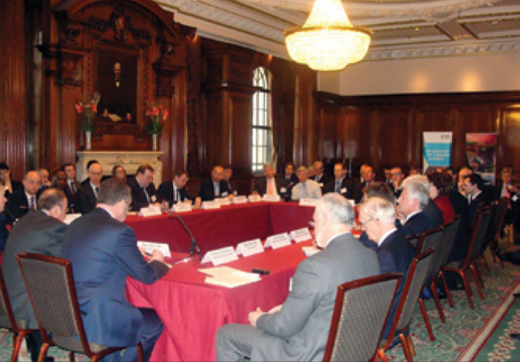
A recent ICE event brought together representatives from the three main political parties, industry leaders and policy specialists to discuss the future funding of UK infrastructure.
There is a wide consensus that the UK will need to invest heavily in infrastructure in the coming decades if we are to meet climate change targets, improve energy security and boost our economic performance. However, there is debate and uncertainty amongst the political parties about where the funding for vital infrastructure projects will come from in the future.
The infrastructure funding summit, hosted by ICE and sponsored by Bechtel and Local Partnerships, was attended by Treasury economic secretary Ian Pearson, who used the opportunity to announce that the government will unveil its long-awaited strategic approach to national infrastructure in the coming budget, via the newly formed body Infrastructure UK.
Other key speakers included Conservative shadow Treasury minister Mark Hoban and Liberal Democrat shadow chancellor Vince Cable.
Manifesto for infrastructure
ICE recently published a manifesto for UK Infrastructure, aimed at addressing some of the main issues facing the UK in terms of investing, building and maintaining infrastructure.
ICE believes it is vital that existing projects which will underpin economic recovery and drive a low-carbon agenda – such as Crossrail, Thames Tideway Tunnels and the new nuclear energy programme – still go ahead despite the strain on the public purse. Feasibility studies for proposals such as the Severn tidal project and high-speed rail links to Scotland must also be driven forward.
ICE has also long been calling for the creation of a UK national infrastructure investment bank, or similar funding mechanism, as a way of attracting large volumes of private capital to help fund infrastructure projects. The concept has gained support from across the political spectrum.
ICE echoed these calls in its budget submission, asking that the government's strategy for UK infrastructure delivers new thinking on how to unlock the long-term sources of funding needed to finance essential transport, energy, waste and water infrastructure projects.
The manifesto is available at www.ice.org.uk/ knowledge/policy_statements.asp.
Report on future of airports
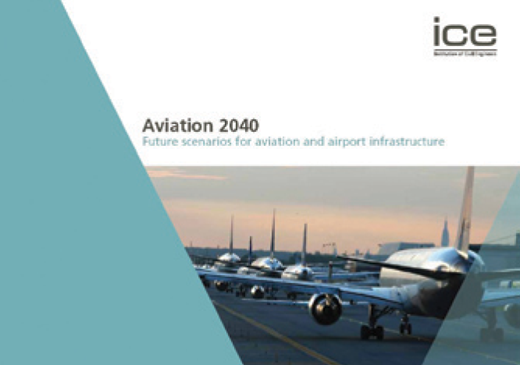
ICE published four provocative scenarios in its report Aviation 2040 showing how UK airport infrastructure and air transport could look in 2040.
Developed by ICE in conjunction with Arup, the scenarios – entitled ‘vortex of despair’, ‘eco angst’, ‘big stick’, and ‘laissez-faire’ – are based on assessments of key social, technical, economic, environmental and political factors that could cause dramatic change to British airports and air-transport sectors over the next 30 years.
They present a challenge to government and industry to think creatively about the long-term development of the UK's airports and their place in the wider transport system.
The report can be downloaded from www. ice.org.uk/aviation2040.
Report on facing rising seas
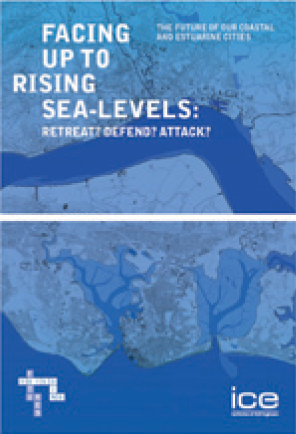
Retreating inland, creating habitable defence structures and building out into the sea are three options proposed to cope with the extremes of rising sea levels, in a futuristic project developed by ICE in conjunction with Royal Institute of British Architects.
The ‘think-piece’ report Facing up to rising sea levels: retreat, defend, attack? warns that the future of coastal cities is in jeopardy due to rising sea levels, sinking land masses and an increase in storm frequency. With over 12 000 km of coastline, radical thinking is urgently needed to protect the UK's at-risk communities from extreme flooding.
Focusing on Kingston upon Hull and Portsmouth, two of the UK's highest flood risk areas, the research presents six scenarios set up to 90 years in the future, proposing different solutions based around the three approaches: retreat inland, continue to defend against the risk or attack – building out into the water.
The report can be read at www.ice.org.uk/facing-up.