Caribbean small island developing states are experiencing multiple interconnected crises, including susceptibility to natural hazards, increased vulnerability to climate change, biodiversity loss and reduced accessibility to development funding. Nature-based solutions (NbS) can provide an integrated approach to boost Caribbean coastal resilience as they are economic and practical solutions that capably balance competing interests. This study used a participatory method (group model building) to engage stakeholders across varying disciplines and levels of decision making to collaboratively identify the underlying causes of low uptake of NbS regionally and potential intervention mechanisms. Six overarching factors were found to contribute to low adoption, including data and knowledge limitations, a propensity towards hard engineering, low collaborative engagement and limited implementation capacity. Some areas identified for intervention were comprehensive data collection, reducing uncertainty surrounding the implementation of NbS, effective collaboration, using case studies and best practices, and knowledge translation and dissemination. The outputs demonstrate a critical role for engineers in mainstreaming NbS through adopting a systematic and holistic design approach. Concomitant to this is the need for engineers to operate successfully within transdisciplinary teams to enhance transformative communication skills and ensure that solutions not only minimise environmental impact but also support the conservation of biodiversity and ecosystem services.
1. Introduction
Small island developing states (SIDS) in the Caribbean are facing diverse interconnected crises and vulnerabilities concentrated within the coastal zone (Martyr-Koller and Schleussner, 2023; Mycoo et al., 2022; Vousdoukas et al., 2023), creating an unequivocal need for holistic and strategic approaches to coastal resilience. Despite contributing less than 1% to global greenhouse gas emissions, Caribbean islands are anticipated to confront some of the earliest and most severe repercussions of climate change in the forthcoming decades (Hadré et al., 2023; Mycoo, 2018). In addition to accommodating more than 55% of the Caribbean population, the coast hosts most economic activity, ports for global trade, cultural heritage, and ecosystems critical for human health, livelihoods and coastal protection (Briguglio, 1995; Burke et al., 2001; Miloslavich et al., 2010; Mycoo, 2022). Several of the region’s economic sectors and coastal ecosystems are already vulnerable to climate change, and projections are worrying (Eclac, 2014; Lorde et al., 2013; Mycoo et al., 2022; Toba, 2007). Furthermore, because of the large coastline to land area ratios, there is little space for retreat further inward. In fact, the United Nations Framework Convention on Climate Change recognises Caribbean SIDS as having several attributes that make them extremely susceptible to climate change, such as being (a) small island countries, (b) countries with low-lying coastal areas, (c) countries with areas prone to natural disasters and (d) countries with areas with fragile ecosystems (UNFCCC, 1992). In particular, Caribbean SIDS are expected to face increased sea levels and increasing frequency and intensity of extreme weather events. In nations within the Caribbean Community, a 1 m rise in sea level, not considering the coupled impact of storm surges, is predicted to displace an estimated 110 000 people, inundate approximately 80% of seaports and destroy economically and culturally important land areas, including those situating tourism infrastructure, agriculture and major roads (Simpson et al., 2010). Moreover, coastal ecosystems that provide critical coastal protection are already impacted by anthropogenic and climatic pressures (Bove et al., 2022; Ellison and Farnsworth, 1996; Mudge and Bruno, 2023), resulting in overall reduction of their adaptive and protective capacity (Beck et al., 2018; Menéndez et al., 2020; Quataert et al., 2015). Despite the commitments made by some more-developed nations through international pledges and legally binding environmental agreements, Caribbean countries continue to face challenges in securing adequate funding to address the impacts of climate change (Mohan, 2023). As already resource-limited Caribbean SIDS grapple with debilitating debt, coastal climate hazards threaten their ability to adapt and recover financially (Gahman et al., 2021; Mycoo et al., 2021; UNEP, 2017).
Coastal engineers in the Caribbean can play a significant role in the creation and adoption of holistic, adaptive and strategic approaches to coastal resilience. Nature-based solutions (NbS) are promising for Caribbean SIDS and can be effectively adopted by coastal engineers in the region. However, to realise maximum achievable outcomes, all actors must embrace a strong collaborative approach. While NbS have demonstrated potential for addressing coastal resilience across the world, uptake is still relatively low in the Caribbean (Moreno et al., 2022), particularly in projects that involve coastal engineers. Furthermore, while there are prompts to increase the uptake of NbS in the region (Bailey et al., 2022; Oliver et al., 2021; Ozment et al., 2021), few attempts have been made to holistically assess the reasons behind their low adoption using a systems approach.
The aim of this work was to contribute to the mainstreaming of NbS in the Caribbean, specifically by coastal engineers, through collaborative identification of holistic intervention strategies, utilising the participatory method of group model building (GMB). The study was underscored by two distinct concepts: (a) that coastal engineers in the Caribbean are keen to integrate high levels of biological, social, ecological, geographical, economic and other knowledge into their designs and (b) collaborative attempts to identify and co-produce suitable intervention mechanisms for improving adoption and monitoring of NbS for coastal protection across the region are lacking.
The paper firstly presents a brief synopsis of the NbS approach and its context in Caribbean SIDS, including the need for a transdisciplinary approach. This is followed by a presentation of the methodology implemented in this study, the key findings and a discussion of results emanating from the group exercise involving two stakeholder workshops. The findings demonstrate that Caribbean coastal engineers must regard NbS as suitable intervention mechanisms and facilitate wider integration of these types of options into designed solutions, and also engender strategic action based on identified intervention pathways.
2. Relevant background
2.1 The NbS approach
NbS are increasingly perceived as an integrated approach that can provide multi-faceted and practical solutions capable of addressing ‘wicked’ problems and delivering a wide range of benefits across systems and localities (Lönngren and van Poeck, 2021). This approach, as defined by the United Nations Environment Assembly (UNEP, 2023) involves actions to protect, conserve, restore, sustainably use and manage natural or modified terrestrial, freshwater, coastal and marine ecosystems, which address social, economic and environmental challenges effectively and adaptively, while simultaneously providing human well-being, ecosystem services and resilience and biodiversity benefits. Therefore, NbS can be thought of as an umbrella concept for a number of strategies, as outlined in Table 1.
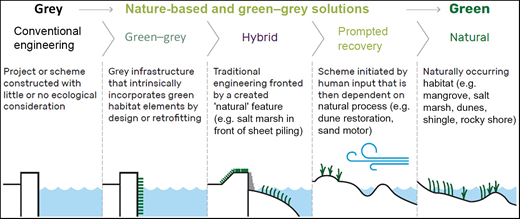
The recognition that hazards related to climate change can have deleterious impacts on coastal zones has driven a global impetus to improve disaster mitigation, resilience and adaptation through (a) restoration, rehabilitation and conservation of existing coastal habitats and (b) the implementation of hybrid approaches that combine the benefits of traditional infrastructure and support ecological functioning (Currin, 2019; Guerry et al., 2022; Sutton-Grier et al., 2015). Historically, hard engineering structures such as revetments, seawalls and breakwaters have been conventionally used to protect coastlines and communities against coastal erosion and flooding. However, if these hard solutions are not implemented with consideration for local socio-ecological dynamics, they may yield detrimental effects on ecosystems, hydrodynamics and socio-economic and socio-cultural community dynamics (Angnuureng et al., 2023; Moschella et al., 2005; Schoonees et al., 2019). Compared with traditional hard engineering methodologies, nature-based approaches exhibit greater cost-effectiveness, reduce raw material utilisation, enhance system adaptability and have the potential to augment ecosystem services (Inácio et al., 2020; Perricone et al., 2023; Pontee et al., 2016). Conversely, natural-only strategies, like conservation, restoration and rehabilitation, face challenges due to their time-intensive nature and susceptibility to anthropogenic and climate-related impacts (Boström Einarsson et al., 2020; Hughes et al., 2017; Lovelock et al., 2022). The natural and assisted regeneration of mangroves and coral reefs after hurricanes and ocean warming events can be slow, during which time these ecosystems remain vulnerable to recurring events (Hughes et al., 2018; Walcker et al., 2019; Webb et al., 2023). Severe events can drastically reshape coastal morphology, restricting space for restoration efforts. Moreover, coastal development diminishes the feasibility of habitat restoration in previously viable areas (Griggs and Reguero, 2021). Engineered nature-based interventions can exist along a continuum that progressively includes the role of nature (Suedel et al., 2021) (Figure 1). For maximum benefits to be realised, these strategies necessitate a robust understanding of ecological and hydrological processes, site suitability, economic feasibility, existing legislation, policy frameworks and cultural relevance. Therefore, a diversity of stakeholders must be involved (Davids et al., 2024; Sánchez-Arcilla et al., 2022). For example, in the Mekong Delta in Vietnam, the construction of fences using native timber assisted wave attenuation, sediment deposition and natural and assisted regeneration of mangroves, and involved the local community in its design and implementation as well as supported economic opportunities through the sustainable timber economy (Van Cuong et al., 2015). Ideally, nature-based coastal engineering approaches that support the maintenance or flourishing of these valuable ecological systems also support community livelihoods and promote sustainable tourism activities. This is especially important for Caribbean SIDS where small land size, high coastal population density, large coastline to land area ratios and limited resources necessarily imply that any development must be sustainable and capable of meeting needs across a wide cross-section of the population now and in the future.
2.2 Coastal NbS in Caribbean SIDS
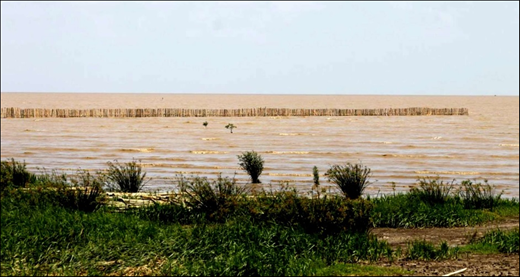
While coastal nature-based approaches have been studied and implemented across the world, uptake is still relatively low in Latin America and the Caribbean (Marsters et al., 2021; Ozment et al., 2021; Schueler, 2017). Although legal frameworks that explicitly incorporate NbS are limited, several Caribbean SIDS have employed strategies that integrate coastal NbS, such as ecosystem-based adaptation, ridge-to-reef approaches and eco-disaster risk reduction (Lee et al., 2022; Mercer et al., 2012; Suedel et al., 2023). However, there are still engineering performance limitations and knowledge gaps that hinder the widescale adoption of NbS among coastal engineers in the region (Seddon et al., 2020; Vogelsang et al., 2023). Efforts are ongoing to address these deficiencies, for example in the project At the Water’s Edge (CG, 2024) and the NBS Mangrove Project (NBSMP, 2024). At the Water’s Edge (Grenada) worked closely with local communities, in partnership with coastal engineers, habitat restoration experts, landscape architects, government and the tourism industry, to design and implement solutions that integrate hard structures and natural regeneration zones to support livelihoods, adaptive capacity and reduce climate risk impact in a storm surge prone area of the country (Reguero et al., 2018). The NBS Mangrove Project in Guyana, facilitated by the National Agricultural Research Institute and Conservation International Guyana, undertook a comprehensive technical assessment and baseline study, including an evaluation of coastal vulnerability, existing coastal defence mechanisms, predicted climate changes, economic feasibility, anthropogenic and environmental factors, policy and governance, and existing coastal modelling tools, towards an integrated management plan for mangrove systems to reduce flood risk (Bovell, 2019; Mak et al., 2019) (Figure 2).
Ecosystem restoration projects make up the majority of coastal NbS in the Caribbean. Notably, the employment of these strategies in the region has been dominated by the biological, ecological, planning and management sectors (Lee et al., 2022; Mercer et al., 2012; Schueler, 2017). These strategies rarely explicitly aim to achieve coastal protection benefit and, as noted by Lee et al. (2022), even if co-benefits for coastal protection can be realised, there are rarely long-term monitoring strategies in place, thus limiting the capacity to definitively prove these co-benefits. Furthermore, these methods do not necessarily attempt to account for quantifying the levels of protection afforded by the NbS themselves, especially under changing climate scenarios, which could be useful for integration into engineering designs. Engineered strategies that support ecosystem restoration and provide additional coastal protection can be suitable in most Caribbean SIDS where restoration efforts are widespread and there are international examples of engineered solutions specifically designed for ecosystem restoration through wave attenuation, thus providing infrastructural and ecological benefits (Sánchez-Arcilla et al., 2022; Van Cuong et al., 2015).
Like other SIDS, the Caribbean region has demonstrated a propensity towards hard engineering defences (e.g. seawalls, revetments, breakwaters) for coastal protection (Spalding et al., 2014). Seawalls in particular are viewed as a maladaptive practice for island nations, yet widely and perhaps inscrutably adopted due to the perception of their success in other countries (Nunn et al., 2021; Piggott-McKellar et al., 2020). Hybrid approaches are other NbS interventions that work alongside or support ecosystem restoration, and combine the traditional hard engineering infrastructure with natural systems (e.g. mangroves fronted by breakwaters and artificial reefs). Hybrid structures can provide protection and enhance the ecological and social benefit throughout the structures’ life cycle. Existing hard structures can be adapted to a hybrid design, but specific suitability would depend on the state of the existing infrastructure, existing and projected flood and erosion risk, projected changes in vulnerability, ecosystem services to be provided, perceived aesthetic value and economic benefits. These interventions must be carefully assessed, considering the current and projected climate impacts on Caribbean coasts, as they may only provide value and the intended outcomes in the short to medium term (Mycoo et al., 2022; Nunn et al., 2021). Regardless, in hybrid approaches, steps must be taken to avoid unnecessary impairment to the ecosystems and the services they provide (Pathak et al., 2022).
Cunniff and Schwartz (2015) provide a succinct documentation of the performance of various coastal ecosystems in terms of risk reduction. Some main factors important for identifying what kind of engineered NbS could be suitable for coastal protection in the Caribbean include the state of knowledge of NbS performance factors, availability of NbS evaluation and design metrics, site suitability (which can exhibit spatial and temporal variations), financial costs and community investment (Cunniff and Schwartz, 2015). Specific suitability of NbS would also depend on ecological factors (e.g. the state of the ecosystem), socio-cultural perceptions, management factors (e.g. marine protected areas) and governance needs and indicators (Lee et al., 2022). Historical and current contexts of coastal resilience measures can also inform the suitability of various NbS approaches (Châles et al., 2023; Pittman et al., 2022). Oliver et al. (2021) identified 156 NbS projects throughout Latin America and the Caribbean that address a multitude of areas, including reduction of coastal flooding and coastal erosion. They also reported that more than 50% of these identified NbS projects were still in the preparation phase, where generally the main hindrance to implementation was lack of adequate funds, thus highlighting the impact of financial costs on the adoption of NbS. Moreover, the local community’s involvement is critical to project success and overall project sustainability through inclusion of local socio-ecological dynamics and traditional ecological knowledge and incentivisation of community investment (Pathak et al., 2022; Wylie et al., 2016). This is especially relevant to the Caribbean where most of the population lives or works within the coastal zone. Engineered NbS projects that would be suitable are those that strategically and intentionally include local communities at every phase of the project (planning, design, implementation, monitoring and evaluation).
2.3 Transdisciplinarity and the GMB method
Transdisciplinarity provides a promising pathway for co-production of knowledge, problem solving and decision-making frameworks, overcoming identity boundaries and prevailing power dynamics. It is regarded as imperative to generating innovative solutions to global challenges by enabling a holistic view, integrating diverse perspectives and utilising novel approaches that synthesise and transcend discipline-specific theories, methods and strategies (Nicolescu, 2002; Stokols et al., 2013). An important feature of transdisciplinarity is its ability to generate emergent outcomes (Unesco, 1998). Indeed, the practice of NbS inherently demands a transdisciplinary approach if co-benefits for society, economy and environment are to be realised (Lang et al., 2012; Wiek and Walter, 2009). The urgency of the climate crisis and the multi-dimensional importance of the coastline necessitates that coastal engineers in Caribbean SIDS are able to transcend disciplinary and sectoral boundaries and involve themselves in the co-creation of holistic interventions for coastal resilience (Adger et al., 2013; Mycoo, 2018; Mycoo et al., 2021). Engineers will need to work alongside other professionals and stakeholders to understand current and historical geographic, environmental, economic, legislative and governance frameworks and their implications for NbS design and implementation. For example, ecosystem and restoration experts contribute to adaptive management of engineered NbS, and can inform designs that protect, support and enhance local ecosystems and ecosystem processes and mitigate potential unintended consequences to them. Geographers can inform on site suitability and assess the distribution of impacts and/or benefits. Economists are crucial for evaluating cost-effectiveness, economic benefits and financial mechanisms to support NbS projects (Davids et al., 2024; UNEP, 2020).
Post-colonial power dynamics, institutional bureaucracy, lack of public involvement, limited financial resources and disciplinary narrowness can altogether be attributed to the intractable nature of co-creating coastal NbS in Caribbean SIDS (Clarke, 1983; Hara et al., 2003; Thompson et al., 2017). Systems analysis provides a robust framework for dissecting the determinants of vulnerability and resilience within a system through emphasis on comprehension of the entire system rather than isolated components. Systems analysis methodologies effectively facilitate identification of leverage points for most impactful intervention (Fischer and Riechers, 2019; Meadows, 1999).
GMB has emerged as a participatory research method from the field of system dynamics modelling, which works by the collaborative elicitation of knowledge from stakeholder groups to support group decision making on a strategic problem (Richardson and Andersen, 1995). GMB is typically used in situations when disagreements or differing interests and views on the problem hinder necessary clarification, thus becoming problematic for decision making (Vennix, 1996). GMB is therefore preferentially utilised in instances of several conflicting perspectives on a problem, due to its perceived influence on trust, persuasion and consensus building among groups and individuals (Rouwette, 2011; Rouwette et al., 2011; Scott et al., 2015a). The goals of GMB are twofold – (a) to build a model of a strategic problem situation by helping experts and stakeholders in identifying, structuring and visualising the important elements, causal links and polarities in the problem situation and (b) to reach consensus and commitment on results of the modelling through facilitation of communication in the group. As highlighted by Videira et al. (2009, 2012) and reiterated by Sedlacko et al. (2012), such methodologies provide structured frameworks for diverse stakeholder groups to actively engage in policy and decision-making processes, fostering knowledge co-production, shared learning and the cultivation of critical thinking skills (Lembani et al., 2020; Richardson and Andersen, 1995; Siokou et al., 2014). Compared with traditional facilitation techniques, GMB has demonstrated effectiveness in strategy development and implementation, and intra- and inter-organisational agreement (Scott, 2018). Furthermore, GMB is perceived to produce group and individual level effects through its emphasis and influence on persuasion, trust building and models as boundary objects (McCardle-Keurentjes et al., 2018; Scott, 2018; Scott et al., 2015a).
The GMB approach involves a structured series of workshops where trained facilitators solicit feedback on causes, consequences and solutions following a set of scripted activities. The process comprises phases from divergent thinking about the problem to convergent thinking and the creation of quantitative and qualitative diagrams such as causal loop diagrams (CLDs). CLDs serve as essential visualisation and communication tools within GMB, elucidating the causal relationships among selected variables, with a focus on delineating feedback loops and developmental trajectories (Trochim et al., 2006), thus illuminating areas for intervention (Lembani et al., 2020). At the end, the group is expected to present an agreed-upon set of proposed solutions. Unfortunately, however, stakeholder participation throughout the entire GMB process requires substantial time and resources and the process can be filled with ambiguity and confusion (Ghatari et al., 2021).
3. Methodology
The Nature Based Solutions – Engineered for Sustainable Development (NBS-Engrossed) project is a two-year multi-disciplinary research project aimed at advancing the current state of the assessment of NbS to inform their design and implementation in Caribbean SIDS (NBSE, 2024). Ongoing research by the NBS-Engrossed team seeks to quantify the protection provided by Caribbean coastal ecosystems, specifically mangrove forests, coral reefs, seagrass meadows and upper-beach vegetation, under various climate change scenarios, using physical and numerical modelling methods. Stakeholder engagement is critical to the relevance of the project outcomes through collective identification of (a) the underlying causes contributing to the low uptake of NbS in the Caribbean, (b) potential intervention mechanisms and (c) strategic approaches to implementing interventions.
Stakeholders were invited to attend two participatory workshops. The first workshop (hybrid format) sought to build consensus on the problem and associated variables and develop an initial CLD. The second workshop took place online and was viewed as a validation activity, focused on the review of the key factors in the preliminary CLD and improved understanding of the interactions and feedback mechanisms. Additionally, participants were involved in the identification of intervention mechanisms. For both workshops, there were main GMB facilitators and scribes for each group. Other roles included a timekeeper, recorder and photographer. The various activities executed as part of the GMB process are summarised as follows.
3.1 Stakeholder identification
This activity occurred from project conceptualisation and was amended as warranted with each engagement to ensure a diverse range of actors, including those who have influence to effect a shift towards NbS, those who are most impacted by the decisions made and those who are instrumental in the effective implementation of NbS. Initial stakeholders were identified during the project proposal stage and additional experts and stakeholders were identified from the networks of research team members and already engaged stakeholders, professional recommendations and through post-workshop surveys. Experts and stakeholders were invited based on their professional background, influence and/or interest in (a) Caribbean affairs and (b) various types of NbS (e.g. ecosystem-based adaptation, ridge-to-reef approaches and eco-disaster risk reduction), encompassing themes such as climate change adaptation, sustainable development, coastal and urban planning/management and biodiversity conservation.
3.2 Precursory activities to GMB process
Members of the NBS-Engrossed project team engaged in planning and training sessions. During training sessions, team members were explained the key elements of the overall GMB process and the functions of the various actors in the process. Planning sessions prior to the execution of the main GMB workshops allowed for identification of the key roles (facilitator, scribe etc.) and a suitable reference mode.
3.3 Defining the problem and reference mode
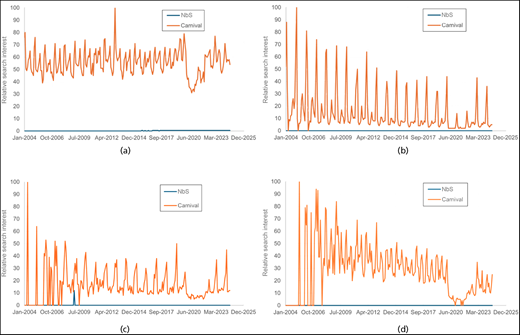
The purpose of this activity was to propose and develop a reference mode and obtain agreement among participants on the actual dynamic problem. A reference mode is a graphical representation of a variable over time that shows the important characteristic of the variable for the problem statement in question. For this activity, Google Trends was used to provide global and regional historical information on NbS, which was contrasted with Carnival (an annual celebration held in many Caribbean islands where locals and visitors engage in celebrating culture through masquerades (or playing ‘Mas’), music, dance and food) for various Caribbean SIDS to demonstrate the trends in regional interest in these subject areas from 2004 to the present (Figure 3). Google Trends shows search interest relative to the highest popularity score for the selected region; the peak popularity score was assigned a value of 100 and other scores are represented relative to this.
3.4 Elicitation of variables
This activity facilitated consensus-based group discussion about the model problem and boundaries at the divergent thinking stage using the nominal group technique. During the first workshop, the facilitator gave each participant a turn to list a cause or consequence related to the identified reference mode during a plenary session. The list was collated and participants were then separated into groups (one online group and two in-person groups) for further clarification and feedback on the proposed variables. Participants reviewed the list of variables and discussed relevance and connectedness to other variables, amending, discarding or adding variables as required.
3.5 Preliminary elaboration of CLD
This exercise entered the convergent thinking phase, once participants agreed upon the set of variables associated with the problem. This activity was used to get an initial idea of central concepts and their relationships. The facilitator asked participants which variable from the collected list was a cause for changes in the problem variable, visualising the connection within the model and ensuring group agreement once a suggestion was made. Clarification and consensus were sought from the group in instances of disagreement. Participants iteratively refined the causal relationships between variables and developed a preliminary CLD using Vensim simulation software.
3.6 Presentation of the preliminary CLD and initial stakeholder validation
Participants reviewed the CLD and assessed the variables and the connected relationships, specifically seeking enhancement through identification of additional variables, groupings, connections or potential alterations. This activity yielded suggestions for refinement of the CLD.
3.7 Preliminary identification of intervention mechanisms
The aim of this session was to elucidate and prioritise possible intervention actions through consensus. Participants were split into groups and used the concepts of low hanging fruit, showstoppers and trainwrecks to identify feasible and priority options. Low hanging fruits were described as interventions that require less effort but may not bring about significant change, in contrast to trainwrecks, which are significantly more challenging to address but more likely to bring about meaningful change.
3.8 Identification of feedback loops
This was done as a retrospective exercise by the authors. Feedback loops were drawn by identifying positive and negative relationships between the variables.
4. Outcomes and findings
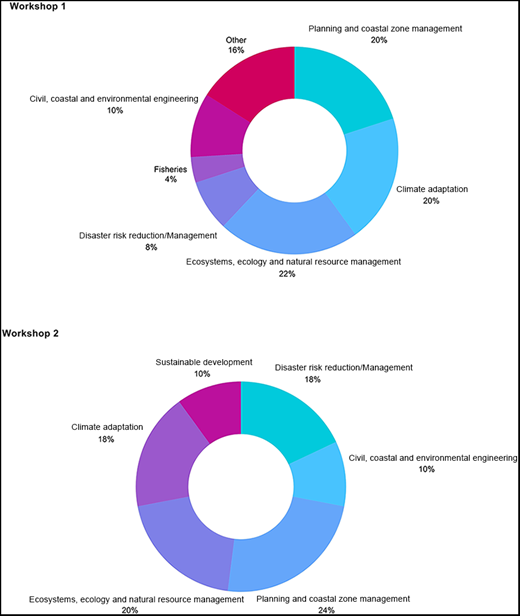
A total of 50 individuals attended the first workshop and 23 participated in the second workshop. Notably, the second workshop comprised new and existing participants. For the workshops, sectoral representation varied somewhat, although academia was dominant in both. For the first workshop, the next main groups were international agencies followed by civil society organisations. For the second workshop civil society was the next dominant group followed by government agencies. For the first workshop, 16% of attendees were from the public sector and 4% from the private sector. Geographically, the majority of participants (70%) hailed from the Caribbean, with additional representation from stakeholders in Latin America and North America. For the second workshop, academia constituted the majority of participants (52%) followed by civil society organisations (22%) and the public sector (22%). Again, the majority (91%) of participants were from the Caribbean. The participants exhibited diverse expertise, spanning disciplines such as climate change adaptation, coastal, civil and environmental engineering, ecology, ecosystems, natural resource management, planning, coastal zone management and disaster risk reduction. Other sectors, such as tourism, education and fisheries, were less represented, albeit intersecting with identified sectors such as climate change adaptation. Figure 4 shows the areas of specialisation of the participants in the two workshops.
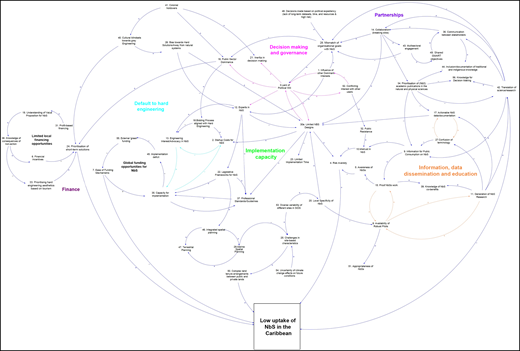
The need to revise the initial CLD was underscored during the second workshop and prompted a comprehensive reassessment of the CLD, resulting in the incorporation of several new variables, reorganisation of groupings, the establishment of additional connections and overall enhancements to the diagram’s comprehensiveness and accuracy. At the end of this review, 56 interconnected variables associated with the low uptake of NbS in the Caribbean were identified and incorporated into the CLD (Figure 5). The positive (+) arrows between variables indicate that an increase in the originating variable will cause an increase in the consequential variable (e.g. an increase in the ease of funding mechanisms (variable 7) will increase the capacity for implementation (variable 35)), whereas negative (−) arrows indicate that an increase in the causal variable will result in a decrease in the consequential variable (e.g. an increase in financial incentives (variable 6) will result in decreased prioritisation of short-term solutions (variable 24)). Participants categorised each variable into overarching groups based on their shared interpretation, which were refined to
- ▪
default to hard engineering
- ▪
information, data dissemination and education
- ▪
decision making and governance
- ▪
partnerships
- ▪
finance
- ▪
implementation capacity.
Each of these groups are now briefly summarised.
4.1 Default to hard engineering
It was agreed that a cultural mindset towards hard or grey engineering exists in the Caribbean, leading to a bias away from natural/nature-based approaches and also prioritisation of short-term solutions. The default to hard engineering was mainly defined by colonial holdovers, lack of engineering interest and advocacy in nature-based approaches, profit-based financing and a lack of supporting nature-based documentation. This was also thought to be strongly influenced by lack of political will, lack of financial incentives and/or support for nature-based approaches and prioritising aesthetics (driven by the tourism sector). A clear feedback loop (shown in blue in Figure 5) was drawn between engineering interest and NbS advocacy (+), capacity for implementation (−) and startup costs for NbS (−). Notably, the variable prioritisation of short-term solutions was identified mainly as the outcome of other variables then feeding directly into the low uptake of NbS.
4.2 Information, data dissemination and education
This overarching group was perceived as a direct cause for several other variables as well as other overarching groups, specifically decision making and governance, partnerships and implementation capacity. One variable from this group led directly to low NbS uptake, namely translation of science/research. Several feedback loops (shown in orange) were drawn under this grouping, namely between variables designated under education, data dissemination and information/knowledge, hence the group’s name.
4.3 Decision making and governance
This group was linked to every other overarching group either directly or indirectly. In particular, lack of political will formed part of several feedback loops (see purple arrows in Figure 5) as a predominant cause. Mismatch of organisational goals with NbS was thought to be most directly related to variables within partnerships, as a consequential variable. Public sector dominance, on the other hand, was thought to be a direct cause of variables within the default to hard engineering group.
4.4 Partnerships
Variables in this group were most strongly linked to decision making and governance as causes, and as consequences of the variables in the information, data dissemination and education group. Only four variables comprised the group, namely low collaboration, insufficient multi-sectoral engagement, lack of shared SMART (specific, measurable, achievable, relevant and time-bound) objectives and limited communication between stakeholders. These variables formed a positive feedback loop with each other.
4.5 Finance
The overarching theme of 'finance' can be subdivided into two groups: limited local financing opportunities and global funding opportunities for NbS. The latter is linked to the low uptake of NbS as a cause. This theme is also connected to the establishment of variable 37 (professional standards/guidelines) as both a cause and a consequence. Additionally, the group limited local financing opportunities directly feeds into the variable prioritisation of short-term solutions (variable 24), which has already been discussed to be linked to the low uptake of NbS and the hard engineering default theme.
4.6 Implementation capacity
Variables in this group were linked to every other group either directly or indirectly, as both cause and consequence, forming part of several feedback loops.
4.7 Intervention areas
Several leverage points for intervention were identified
- ▪
continuous comprehensive data collection across the region
- ▪
effective collaboration for better use of limited resources
- ▪
engagement of local or indigenous communities, in particular those that have applied NbS
- ▪
identifying and utilising case studies and best practices
- ▪
effective knowledge translation and dissemination
- ▪
creating learning opportunities for upcoming generations
- ▪
reducing uncertainty surrounding the implementation of NbS
- ▪
ensuring project objectives are SMART.
5. Discussion of findings
The outcomes of the participatory process underscore the importance of a transdisciplinary approach in improving coastal resilience through the adoption of NbS. In particular, the GMB process proved effective in building group trust and consensus, as the techniques were useful in dissipating friction between experts and stakeholders of different disciplinary, sectoral and decision-making perspectives, which was perceived to contribute to the activities’ overall success. A clear momentum was gained in the second half of the first workshop and evident also in the second workshop. Moving through the phases from divergent to convergent thinking made clear that identifying the six overarching themes and leverage points for intervention could not have been possible through only the individual knowledge of each participant. Furthermore, the dispositions and attitudes of the individual attendees were important to overall group success. In order to move beyond divergent thinking, participants must be willing and conscious about moving beyond epistemological positions, discipline-specific perspectives, autonomic codes and internalised biases (Rigolot, 2020; Scott, 2018; Scott et al., 2015b; Sellberg et al., 2021). The Caribbean has inherited a political culture through which institutional bureaucracy, cultural hierarchy and resultant siloed efforts have become a mainstay in contemporary working environments and the GMB process can be effective in shaping a different narrative for the design process. Although GMB has mainly been used in public health contexts globally (Estrada-Magbanua et al., 2023; Gerritsen et al., 2020), its success in this work demonstrates its usefulness in similar applications in the Caribbean.
Finally, based on the complexity of the exercise, the role of the facilitator cannot be understated in ensuring group success. Facilitation is an essential skill for situating ease into complex processes and bridging the theory–practice gap. Several studies have supported the evidence of facilitation as a critical part of GMB (Abbott and Winterburn, 2022; Dogherty et al., 2010; Gregory and Romm, 2001; Wardale, 2013). Understanding the complexity of systems and the challenge presented by transdisciplinarity, sufficient training of facilitators must be considered critical in the GMB process.
The six overarching causes for low uptake of NbS in the Caribbean echo output from other studies (Sánchez-Arcilla et al., 2022; UNEP, 2022) and reinforce the view that coastal engineers must engage beyond disciplinary and sectoral boundaries and incorporate multi-disciplinary perspectives in order to effectively gain from and contribute to the knowledge required for the design and implementation of coastal resilient solutions. In particular, the default to hard engineering calls for engineers to become more involved in every aspect of the pursuit towards adoption of NbS. Unsurprisingly, variables in this group were related most closely to decision making and governance as consequences, to finance as both cause and consequence, and to implementation capacity as causes. The variables elicited under the partnerships group underscore the view that siloes must be dissolved for success at every phase of the NbS process. Stakeholder exercises such as these can be viewed as a step towards that goal. Furthermore, it was clear that the finance group was strongly interlinked with the group default to hard engineering. This is especially important for the Caribbean as it faces high and growing debt with each extreme weather event, and continued unfulfilled promises of international funding for mitigation, adaptation and disaster risk reduction (Lewis, 2022; UNEP, 2021). Specifically, efforts must be integrated to ensure the best possible outcomes that are also cost-effective, in order to bolster local and international funding. Finally, as outcomes of the information, data dissemination and education group, sustainability of NbS, public investment and trust in NbS are all tightly interlinked and must be considered as important as every other group and adopted by every actor involved.
Leverage points for intervention were easily identified in the second workshop as the CLD was cleaned and categorised into groups for visual clarity. Coastal engineers can strategically adopt or contribute to any of the identified intervention areas. The role of the CLD in disentangling the causes and consequences of the problem statement cannot be understated. Figure 5 emphasises the complexity of these issues and the evolution of transdisciplinary drivers. The feedback loops in the CLD serve to visualise the relationships between variables and therefore make clear where intervention is necessary in the system. The delineation of these positive and negative relationships and feedback loops strengthens the underlying assumption that the emergence of effective solutions to complex problems requires an exchange of knowledge and experiences among a diversity of disciplines with stakeholders in both public and private sectors and across several levels of decision making (Blythe et al., 2017).
There were a few limitations identified in the GMB process as executed. A notable drawback was the predominance of academic stakeholders and the lack of private sector stakeholders. There was also considerable time elapsed between the first and second workshops. This setback resulted in a somewhat decreased momentum of the exercise. Additionally, continuity of discussions was impeded as there were new stakeholders in the second workshop, and some participants from the first workshop were unable to attend the second one. For future GMB studies, a comprehensive assessment of individual and group characteristics should be completed to determine the effect on the outcomes. Future workshops would be useful and are planned to solidify intervention mechanisms and co-create strategic collaborative approaches, along with completion of the systems modelling and the generation of a validated digital twin to model the impact of intervention mechanisms. The NBS-Engrossed project website (NBSE, 2024) will also serve to further support stakeholder dialogue and continued reflection on the issue, and application of lessons learnt.
6. Conclusions
This work highlights the critical role of systems analysis methodologies, particularly GMB, in facilitating the necessary transcendence of disciplinary and sectoral boundaries towards mainstreaming the adoption of NbS for coastal resilience in the Caribbean. Through the integration of perspectives from a diverse group of experts and stakeholders and the collaborative development of a CLD, the study identified 56 interconnected variables contributing to the challenges faced in adopting NbS in the region and several preliminary areas for intervention. The process not only highlighted the importance of holistic problem solving but also emphasised the need for transdisciplinary collaboration in addressing complex coastal resilience issues.
The findings thus far support the notion that the methodology employed in addressing complex systems should be viewed as of comparable significance to the anticipated outcome.
The utilisation of CLDs within GMB proved instrumental in visualising the causal relationships among identified variables, thereby facilitating the identification of leverage points for intervention. By fostering knowledge co-production and shared learning among stakeholders, the GMB empowered participants in locating mechanisms for intervention. Furthermore, the study underscores the importance of building trust and consensus among stakeholders as well as the role of facilitators in successful completion. The key findings clearly demonstrate that designers of coastal infrastructure need to be more involved in the implementation of NbS. By embracing a transdisciplinary approach and applying systems analysis methodologies, coastal engineers can play a pivotal role in developing innovative and sustainable solutions that integrate ecological, socio-economic and governance considerations. Collectively, continued participation will be essential in driving meaningful change and building coastal resilience in Caribbean SIDS.
Acknowledgements
The authors would like to acknowledge the tremendous support of the Gordon and Betty Moore Foundation and Future Earth as this work summarises outputs from the ongoing Nature Based Solutions – Engineered for Sustainable Development (NBS-Engrossed) project, which is part of the Program for Early-stage Grants Advancing Sustainability Science (PEGASuS). PEGASuS is funded by the Gordon and Betty Moore Foundation’s Science Program and administered by Future Earth.