

This paper summarises the technical tour undertaken by a member of the British Dam Society in the international group of International Committee on Large Dams (ICOLD) 2013 attendees. The tour group travelled to the Cushman Hydro Project dams to the west of Seattle, where the dams are located in the Olympic National Park.
1. Introduction
On Thursday 15 August, a coach carrying the tour group left for the TT4 Cushman Hydro Project tour.
The Cushman Hydro Project is owned and operated by Tacoma Power and comprises two dams and three power houses on the North Fork Skokomish River. The Project supplies about 5% of the electrical needs of around 169 000 people.
2. Cushman Hydro Project statistics
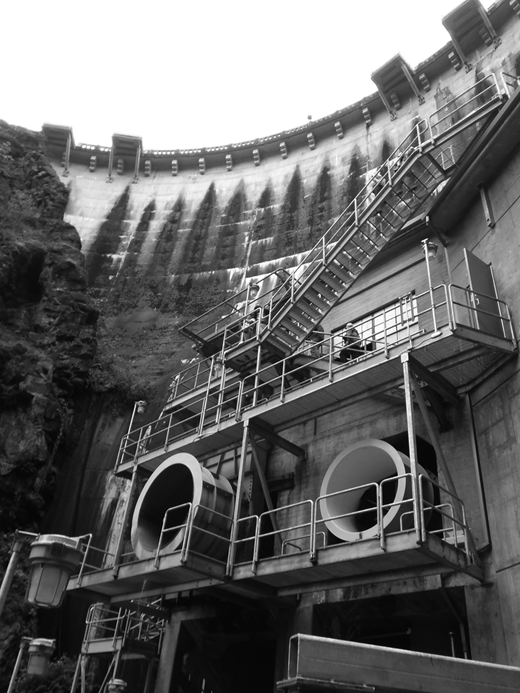
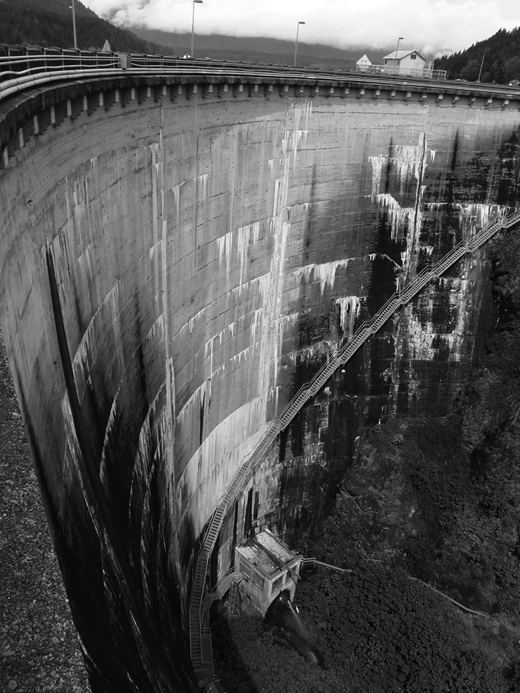
Both dams are of concrete arch gravity type: Cushman no. 1 is 72 m high above the riverbed, is 339 m long, has a catchment area of 243 km2 and reservoir capacity of 559 199 Ml (see Figure 1). It has an average annual generation of 127 million kWH through two 21 600 kW generators. Cushman no. 2 is 53 m high above the riverbed, is 175 m long, has a catchment area of 259 km2 and reservoir capacity of 9868 Ml (see Figure 2). It has an average annual generation of 233 million kWH through three 27 000 kW generators.
3. Cushman no. 2
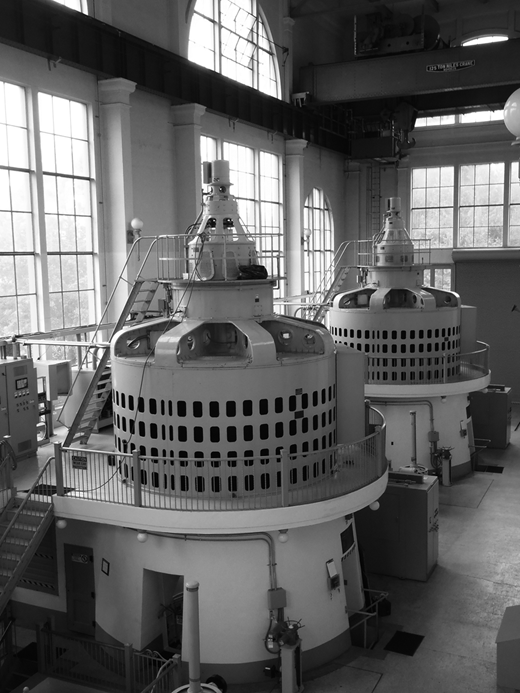
The tour began at one of the two Cushman no. 2 power houses (see Figures 3 and 4). This was the original power house built in the late 1920s.
In 2013, the third of the three power houses on the Cushman Hydro Project was constructed to supply an additional 3ṡ6 MW of generating capacity at Cushman dam no. 2. Also, an innovative fish collection and passage system was added to support the reintroduction of salmon and steelhead populations upstream of the dam. The facility collects adult fish at the base of the dam (see Figure 5) and transports them to the top of the dam, where they are sorted, then hauled around the dams and released to the upper river or used to breed hatchery fish. Previously, fish passage had been blocked since the two Cushman dams were built in the late 1920s. The total project cost was about $28 million.
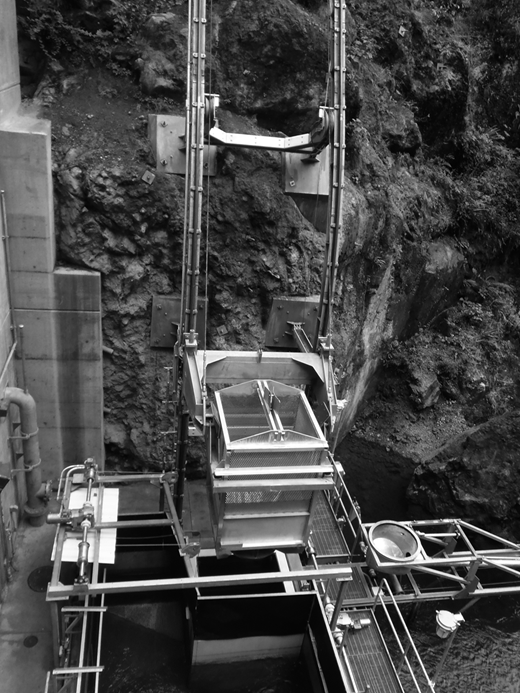
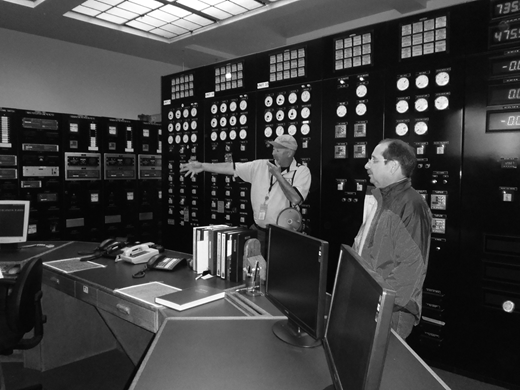
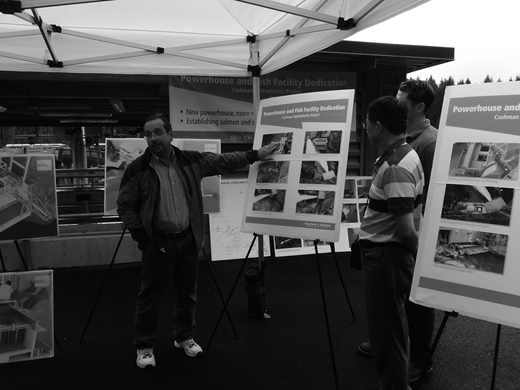
On arrival at Cushman no. 2, the tour group were given a presentation on the project (see Figure 6) and then permitted full access to the dam and fish collection facility to take in all the details.
4. Cushman no. 1
After a buffet lunch next the reservoir with stunning views, the coach took the group to Cushman dam no. 1. This dam provides electricity to 9000 homes, while the reservoir offers fishing, boating, water sports, swimming and other recreational activities.
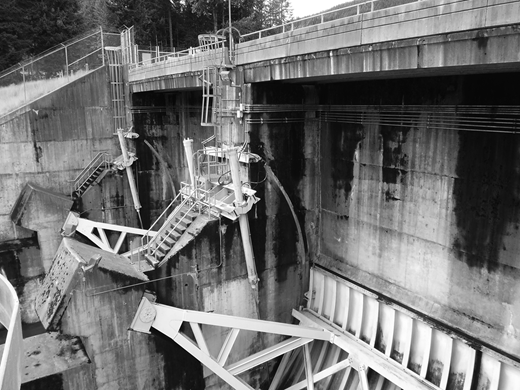
A small group were taken to the new spillway structure, approximately 1 km from the dam to view the two new radial gates (see Figure 7).
The author would like to acknowledge Tacoma Power and their representatives, who arranged the visit and allowed us full access to view all parts of the dam. The site staff were extremely welcoming and very open and informative.

