


Microbially induced carbonate precipitation (MICP) is extensively used for soil stabilisation, sand erosion control, bioremediation and concrete repair. However, detailed bibliometric studies on MICP are scarce, particularly regarding industrial feedstocks, such as urea for ureolytic bacteria and calcium chloride, and the associated ammonia gas production, which poses challenges for large-scale applications. This study reviews 857 articles from the Scopus database (2000–2024), using the VOSviewer software to visualise data on publications, citations, authors, countries, journals, trending keywords and research topics. Significant global collaboration is evident, led by China and the USA. The most cited papers discuss ureolytic microorganisms enhancing soil properties, the basic MICP process, reducing concrete damage, improving soil and groundwater systems and the impacts of MICP on urea hydrolysis and ammonia production. Key terms such as ‘calcium carbonate’, ‘ammonia’ and ‘Sporosarcina pasteurii’ are central to MICP research. Co-occurrence analysis highlights thematic clusters such as microbial cementation and geological features, emphasising the multidisciplinary role of MICP in tackling environmental problems. This review highlights the need to mitigate environmental impacts, particularly those of ammonia production and energy use, in ureolytic MICP. Life-cycle assessments reveal that while ureolytic MICP reduces carbon dioxide emissions, it often consumes more energy, necessitating alternative nutrient sources and cost-effective practices for large-scale applications.
Introduction
Since the start of the twenty-first century, the global economic growth has been increased significantly by robust infrastructure development, particularly in densely populated developing regions. This rapid growth has introduced various engineering challenges such as soil stabilisation, water conservation, structural repairs and hazardous waste management (Omoregie et al., 2024). As a result, there is a shift towards more sustainable practices such as microbially induced carbonate precipitation (MICP), which offers an eco-friendly solution for enhancing soil stability and reducing environmental harm (Sharma, 2024).
Brief background of the MICP process
There are three prominent methods for MICP, which include the use of ureolytic bacteria for the degradation of urea (CO(NH2)2); the use of denitrifying bacteria, which carry out dissimilation of nitrates; and the use of aerobic non-ureolytic bacteria, which participate in the carbon cycle by oxidizing organic carbon (Justo-Reinoso et al., 2021; Whitaker et al., 2018). Each method utilises different microbial metabolic pathways to induce the precipitation of calcium carbonate (CaCO3), a process that has significant applications in soil stabilisation, concrete repair and environmental remediation (Bagga et al., 2022; Tan et al., 2023a, 2023b).
MICP using ureolytic bacteria such as Sporosarcina pasteurii has been extensively researched for decades. Urease breaks down urea, raising pH and forming calcium carbonate, which strengthens soil and reduces permeability and stabilise soils (Justo-Reinoso et al., 2023; Omoregie et al., 2024). Denitrifying bacteria such as Pseudomonas denitrificans reduce nitrate to nitrogen gas, increasing pH and promoting calcium carbonate formation, beneficial for water bioremediation and soil stabilisation (Tsesarsky et al., 2018). Non-ureolytic bacteria such as Sporosarcina ureae use organic carbon to produce carbonate ions, forming calcium carbonate and enhancing concrete durability and environmental bioremediation (Chaurasia et al., 2019; Lee and Gomez, 2024). This review provides a strategic comparison of MICP across different metabolic pathways, focusing on the bacteria involved, required environmental conditions, various applications, environmental impact, scalability and more.
MICP is widely used in geotechnical engineering and environmental management for its effectiveness in stabilising soil slopes, improving expansive soil properties and mitigating erosion (Behzadipour et al., 2020). It also plays a crucial role in environmental remediation, including carbon dioxide (CO2) sequestration, heavy metal removal and dust control. The success of MICP depends on accurately managing ureolysis kinetics, the supply of urea and calcium chloride (CaCl2), the distribution of reactants and injection rates, all of which are crucial for optimal calcium carbonate formation and distribution (Bao et al., 2017). These factors are crucial to enhancing the effectiveness of MICP and ensuring the long-term durability and sustainability of treated materials and infrastructure (Bahmani et al., 2019; Chen et al., 2021a).
Conventional MICP with ureolytic bacteria rapidly forms calcium carbonate but produces significant ammonia (NH3), posing environmental risks and weakening concrete strength (Li et al., 2011). Ammonia emissions can harm ecosystems and human health, affecting air and water quality (Ganendra et al., 2015; Lala and El-Sayed, 2015). To address this, modifications to the MICP process or alternative methods are needed to minimise ammonia emissions while effectively stabilising soil and repairing concrete (Basri et al., 2023; Omoregie et al., 2023a, 2024). Managing the environmental impact of ammonia is crucial for the sustainability and acceptance of MICP technology (Dawoud et al., 2014; Fauriel and Laloui, 2012).
While current research acknowledges the environmental drawbacks of traditional ground improvement methods and highlights the growing use of MICP to mitigate these issues (Carter et al., 2023; Omoregie et al., 2024), there is still a noticeable lack of detailed analysis in the literature on the global research scope of MICP, particularly its use of urea for ureolytic bacteria, which eventually produces ammonia and calcium chloride from industrial sources as a calcium supplement (Omoregie et al., 2023b, 2024). The Scopus database, known for its extensive coverage and meticulous curation, provides a detailed perspective on MICP research, which is crucial for accurate bibliometric analysis (Choi et al., 2020; Konstantinou and Wang, 2023). Its global scope and sophisticated search capabilities enable a deep dive into the trends, gaps and collaborations across various research domains, enhancing understanding of MICP applications and developments (Omoregie et al., 2024).
Scopus was selected for its exceptional coverage of scientific publications, far exceeding that of other databases such as Web of Science (WoS), which is limited by a maximum of 50 search terms. It offers an array of valuable bibliometric tools, including citation counts, H-index and SCImago Journal Rank, which are crucial for comprehensive research analysis (Alhassan et al., 2024). Scopus’s extensive catalogue of documents, such as journal articles, conference proceedings and book chapters, significantly enhances its utility for detailed bibliometric studies (Visser et al., 2021). In contrast, Google Scholar, with its broader but less regulated content, includes lower-impact journals and unpublished materials, making it less suitable for rigorous bibliometric analysis (Leydesdorff et al., 2013). Dimensions AI strives for comprehensive coverage but has not yet achieved the depth provided by Scopus, which could impact the accuracy and completeness of research studies (Singh et al., 2021). Furthermore, integrating data from different databases such as WoS and Scopus introduces complexities such as biases in search string selection and the potential for human error in data processing, complicating the comparative assessment of databases (Kumpulainen and Seppänen, 2022; Singh et al., 2021). Given its extensive international coverage, robust citation tracking, user-friendly interface and consistent data integrity, Scopus was deemed the most suitable database for conducting a study on the dynamics of MICP.
Objectives of the review paper
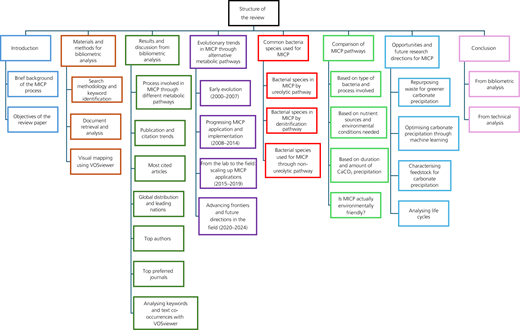
The objectives of this study are to identify key research trends, uncover existing gaps and examine collaborations in MICP research and different methodologies, specifically focusing on the use of urea and ammonia production. Utilising data from the Scopus database from 2000 to 2024, this research employs bibliometric analysis through the VOSviewer tool (version 1.6.19). This analysis aims to delineate research trends, identify gaps and reveal interdisciplinary connections within MICP research. The importance of this bibliometric analysis lies in its ability to deepen understanding of MICP with different metabolic pathways, providing a comprehensive view of the research landscape. This, in turn, guides and shapes future research directions in this evolving field. Figure 1 shows a detailed road map of this review paper for better understanding of the flow of work and analysis.
Materials and methods for bibliometric analysis
Search methodology and keyword identification
This study utilised the Scopus database to analyse thoroughly the global research advancements and trends in MICP research. The bibliometric data were extracted from Scopus as of 7 June 2024. To ensure comprehensive coverage, multiple keyword sets pertinent to the research topic were used to retrieve relevant publications from this scientific database. The search was conducted using the following command: TITLE-ABS-KEY ((MICP) OR (microbial and induced and carbonate and precipitation) OR (microbial and induced and calcite and precipitation) OR (microbially and induced and calcium and carbonate and precipitation) AND (urea) OR (urease and activity) OR (ammonia) OR (calcium and chloride) OR (biocementation) OR (biomineralisation) OR (bacteria) OR (sporosarcina and pasteurii) OR (soil) OR (sand) OR (bacillus species) OR (urea and hydrolysis) OR (non-ureolytic) OR (crystal distribution) OR (industry chemicals) OR (soil stabilisation) OR (ground improvement) OR (urea hydrolysis) OR (ureolytic) OR (crystal growth) OR (bioremediation) OR (biogeotechnics) OR (biocementation) OR (pollution and control) OR (crystal and precipitation)). Employing Boolean operators ‘OR’ and ‘AND’ in the Scopus database search enhances the functionality and precision of the queries (de Souza Oliveira Filho and Pereira, 2021). The selected keywords give a detailed insight into MICP-related research, particularly focusing on the supply of urea and calcium chloride from industry, ammonia production during the MICP process, environmental impact and the characteristics of ureolytic bacteria. This research aims to examine the ways in which MICP using ureolytic bacteria modifies cementation in geomaterials, potentially influencing groundwater quality, ammonia production and the management of environment resources.
Document retrieval and analysis
The search query in the Scopus database yielded 3070 documents, with 897 (29.22%) of these available as open access. These open-access articles were further broken down into categories: gold (517), green (356), bronze (87) and hybrid Gold (145). A vast majority of the indexed publications, 2879 (93.77%), were in English, with the remainder in various languages, including Chinese (181) and smaller counts in Polish (3), French (2), Korean (2), Russian (1), Portuguese (1), Japanese (1), Italian (1), German (1) and Azerbaijani (1) languages. The documents spanned several subject areas, with earth and planetary sciences (1333), engineering (1031) and environmental science (729) being the most prominent. The search was refined further using the Scopus tool to focus specifically on articles published between 2000 and 2024, primarily those in English language.
Visual mapping using the VOSviewer software
The VOSviewer software (version 1.6.19), developed at Leiden University in the Netherlands, is a robust tool used extensively for visualising bibliometric networks (Visser et al., 2021). It runs on the Java platform and supports the creation of detailed visual maps from bibliographic data, such as co-authorship and keyword co-occurrence networks. In the VOSviewer software, different elements such as co-authorship, bibliographic coupling and co-citation are visually distinguished using nodes shaped as circles or rectangles (Muniz and Oliveira-Filho, 2023; Purba et al., 2022). The size of each node indicates the strength of its connections, with larger nodes suggesting higher centrality (Visser et al., 2021). Lines between nodes depict relationships, with thicker lines showing stronger connections (Omoregie et al., 2022). This visualisation helps in analysing the relationships and link strength among various entities such as countries, authors, journals or keywords, facilitating the grouping of related items based on the strength and frequency of their connections, thereby providing valuable insights into the structure of a research field (Hasan et al., 2023; Hong et al., 2023).
In this study, co-authorship analysis revealed 2882 authors, with 144 of them meeting the collaboration threshold of at least two documents. Similarly, analysis of countries showed 60 countries involved, with 59 reaching the minimum threshold of one document for collaboration. In the co-occurrence analysis of author keywords, 4897 keywords were identified, with 484 keywords meeting the minimum occurrence threshold of five. The analysis of text data from titles and abstracts found 16 649 terms, with 345 terms surpassing the threshold of 15 occurrences. The VOSviewer software selected 207 of these terms as the most relevant, representing 60% of the key terms for further analysis. The co-citation analysis of cited authors involved 30 492 individuals, with 191 authors meeting the citation threshold of 100. Additionally, the co-citation analysis of cited references showed 30 313 references, with 29 references exceeding the citation threshold of 25. Bibliographic coupling analysis included 245 journals, with 21 journals meeting the collaboration threshold of ten documents, and analysis of countries through bibliographic coupling identified 60 countries, with 28 meeting the collaboration threshold of five documents. These analyses offer crucial insights into scholarly interactions and patterns of research.
Results and discussion of bibliometric analysis
Process involved in MICP through different metabolic pathways
MICP using ureolytic bacteria, particularly S. pasteurii, is the most used method in research over the past three decades (Justo-Reinoso et al., 2023). This process relies on the enzyme urease breaking down urea into ammonia and carbonic acid, which then forms bicarbonate (Omoregie et al., 2024). These chemical reactions increase pH, promoting calcium carbonate formation when soluble calcium is present (Achal et al., 2011; Omoregie et al., 2024). The resulting calcium carbonate biominerals fill soil pores, cementing particles together, thereby strengthening the soil, increasing its stiffness and reducing permeability (Omoregie et al., 2024).
Denitrifying bacteria, such as P. denitrificans, facilitate MICP by reducing nitrate to nitrogen gas, consuming protons and increasing pH, which promotes calcium carbonate precipitation in the presence of calcium ions (Tsesarsky et al., 2018). This process is beneficial for bioremediating nitrate-contaminated water, stabilising soil and enhancing concrete properties, particularly where urea-based processes are unsuitable (O’Donnell and Kavazanjian, 2015; O’Donnell et al., 2017a).
Non-ureolytic bacteria, such as S. ureae and Leuconostoc mesenteroides, use organic carbon for metabolism to produce carbonate ions, which react with calcium (Ca2+) ions to form calcium carbonate (Chaurasia et al., 2019; Yu et al., 2022). This method is applied in enhancing concrete durability, stabilising construction materials and bioremediating environments contaminated with heavy metals, offering an alternative MICP pathway where ureolytic or denitrifying processes are not feasible (Hemayati et al., 2023; Lee et al., 2017; Omoregie et al., 2021; Tan et al., 2023b).
Publication and citation trends
Figure 2 shows the trends in publications and citations within the research area, attracting significant academic interest. Initially, the Scopus database yielded 3070 documents and publications using a specific search string. After refining the search parameters to focus solely on articles, limit the language to English, target journal articles as the source type and eliminate irrelevant papers using their Electronic Identifier, the data set was narrowed down to 857 articles with a total of 70 570 citations. This meticulous refinement was crucial to ensuring a more precise and relevant data set for the bibliometric analysis, enabling a focused examination of citation trends pertinent to the study. Such precision in selecting the data set is vital to ensure that the analysis accurately reflects publications that directly address the research objectives.
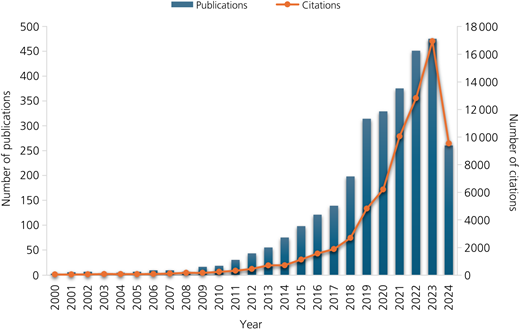
MICP publications rose from just two in 2000 and 2003 to 475 in 2023. Citations followed, starting at 25 in 2000 and peaking at 16 933 in 2023. A significant increase began in 2013, with rapid growth until 2018, and continued climbing post-2021, indicating ongoing research potential. This trend underscores the need for greener MICP methods, avoiding urea and ammonia. Publication and citation counts have surged from double digits to thousands, reflecting escalating interest and impact.
The H-index of 93 from Scopus indicates high productivity and impact, with many documents cited at least 93 times. While many articles have garnered citations, recent publications have not yet been cited due to their newness. Earlier publications show varied citation counts, reflecting periods of high and modest impact. This fluctuation highlights the dynamic nature of academic research, influenced by relevance, visibility and ongoing academic discussions.
Figure 2 shows that while predictions for publication and citation trends in 2024 are possible, they should be approached with caution, given that the 2024 data cover only just less than the first half of the year. These early data indicate 260 publications and 9519 citations, suggesting that research activity and its impact are likely to continue growing; a prediction of more than 530 publications with around 20 000 citations can be made for 2024. However, these forecasts must be interpreted carefully due to the limited scope of the data and potential unforeseen factors that could alter research trends, akin to disruptions seen during the Covid-19 pandemic (Omoregie et al., 2024). This emphasises the importance of ongoing monitoring and analytical efforts to refine these forecasts and adapt to shifts in the research landscape. Keeping a vigilant eye on these dynamics ensures that the role of MICP within scientific discourse remains relevant and well understood, highlighting the necessity for continuous adaptation in response to emerging trends and data (Omoregie et al., 2024).
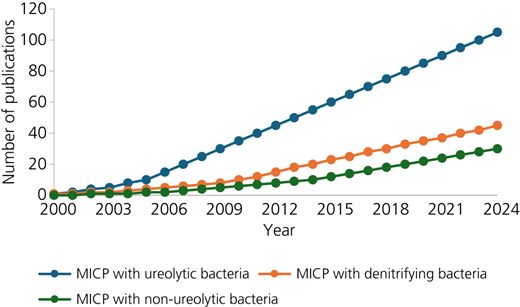
Figure 3 shows that ureolytic bacteria have consistently been the most studied metabolic pathway in MICP research, with publications growing from just a few in the early 2000s to over 100 per year by 2024 (Gat et al., 2011). This reflects extensive research interest and applications in geotechnical engineering (Jiang et al., 2016). Denitrifying bacteria are the second most researched pathway, showing a steady but slower increase in publications, particularly noticeable from the mid-2010s, reaching around 45 publications by 2024 (Huang et al., 2024; Zango et al., 2018). Non-ureolytic bacteria are the least researched, with a gradual rise in publications starting around the 2010s and reaching approximately 30 by 2024 (Hemayati et al., 2023). These data highlight that while ureolytic bacteria dominate MICP research, there is growing interest in alternative pathways such as denitrifying and non-ureolytic bacteria, albeit at a slower pace (Fahimizadeh et al., 2022; Tan et al., 2023b), and thus presents opportunities for further research to improve or verify their performances in terms of efficiency and environmental friendliness.
From 2000 to 2024, MICP research has significantly evolved, aligning with the increasing focus on sustainable practices in construction and environmental management. The early years from 2000 to 2007 marked the inception of MICP research, with studies primarily examining the basic properties of microbial species and their chemical processes. The following era, from 2008 to 2014, witnessed substantial growth in MICP research, fuelled by innovations in biotechnology and environmental engineering. Between 2015 and 2019, the field saw further maturation, concentrating on the practical implementation and scalability of MICP in real-world projects. The most recent phase, from 2020 to 2024, has seen a rapid expansion and diversification of MICP research, spurred by the need for more sustainable environmental solutions. This period has been characterised by the exploration and development of new MICP methods. Further insights into the progression of this research are detailed in the following sections.
Most cited articles
Table 1 highlights the top ten cited articles in MICP research from 2000 to 2024. DeJong et al. (2006) explored the use of ureolytic microorganisms to enhance soil properties such as non-collapse strain softening and cemented sand behaviour. De Muynck et al. (2010) reviewed how the choice of microbial strains affects MICP. Harkes et al. (2010) focused on optimising bacterial fixation in porous media to prevent clogging and achieve homogeneous reinforcement. Whiffin et al. (2007) quantified stiffness increase as a function of grouting agent volume and distance from injection points. Al Qabany et al. (2012) found that lower chemical concentrations improved calcite distribution at low cementation levels. Cheng et al. (2013) noted higher soil strength at a similar calcium carbonate content under low saturation. Al Qabany and Soga (2013b) showed that strength increase depends on chemical concentration. Mortensen and Dejong (2011) highlighted environmental conditions affecting ureolytic activity. Anbu et al. (2016) discussed key properties for MICP performance, including permeability and calcium carbonate content.
List of the highest cited articles in the research domain
| Title of article | Year | Citations | References |
|---|---|---|---|
| Microbially induced cementation to control sand response to undrained shear | 2006 | 1249 | DeJong et al. (2006) |
| Microbial carbonate precipitation in construction materials: a review | 2010 | 1095 | De Muynck et al. (2010) |
| Quantifying biomediated ground improvement by ureolysis: large-scale biogrout experiment | 2010 | 732 | Van Paassen et al. (2010a) |
| Fixation and distribution of bacterial activity in sand to induce carbonate precipitation for ground reinforcement | 2010 | 584 | Harkes et al. (2010) |
| Factors affecting efficiency of microbially induced calcite precipitation | 2012 | 571 | Al Qabany et al. (2012) |
| Cementation of sand soil by microbially induced calcite precipitation at various degrees of saturation | 2013 | 565 | Cheng et al. (2013) |
| Formations of calcium carbonate minerals by bacteria and its multiple applications | 2016 | 468 | Anbu et al. (2016) |
| Effect of chemical treatment used in MICP on engineering properties of cemented soils | 2013 | 461 | Al Qabany and Soga (2013a) |
| Effects of environmental factors on microbial induced calcium carbonate precipitation | 2011 | 457 | Mortensen et al. (2011) |
| Experimental optimization of microbial-induced carbonate precipitation for soil improvement | 2013 | 423 | Martinez et al. (2013) |
Global distribution and leading nations
MICP research has attracted global attention, with involvement from 59 countries. In Figure 4, China leads with 325 publications, followed by the USA with 218. Other notable contributors include India (85), Singapore (44), Japan (42), Australia (56) and the UK (39). Countries such as Malaysia (34), Nigeria (24), South Korea (22), Canada (19), Switzerland (16), Taiwan (14), the Netherlands (13) and France (10) also contribute. Some countries such as Indonesia, Italy, Qatar, Poland, Portugal, New Zealand, Hong Kong and Sri Lanka show minimal output, highlighting regional variations in research intensity.
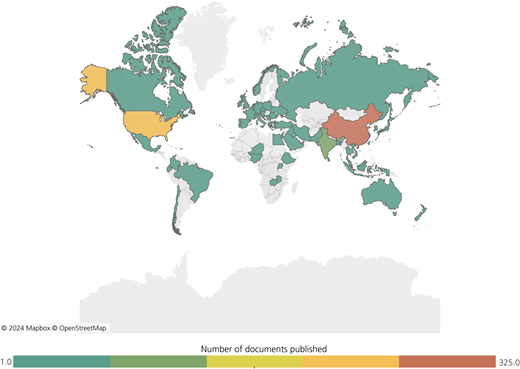
Countries such as China, the USA, India, the UK and Australia lead MICP research, reflecting global interest. China and the USA, with robust resources and funding, conduct detailed studies on MICP alternatives to urea usage and ammonia production, influencing global MICP technology development. Nations with fewer publications may face funding and infrastructure constraints but still contribute to the diversity and collective understanding of MICP research.
The authors utilised the VOSviewer software to carry out a co-authorship analysis among countries, illustrating the patterns of international collaboration and knowledge sharing. In Figure 5, countries grouped from before and up to 2018 are shown in purple, those from 2018 to early 2019 are represented in turquoise, those spanning mid-2019 to 2021 appear in green and those from 2022 onwards are marked in yellow. This visual classification enables viewers to recognise connections of each country quickly, enhancing the geographical interpretation of the international co-authorship patterns observed with the VOSviewer software.
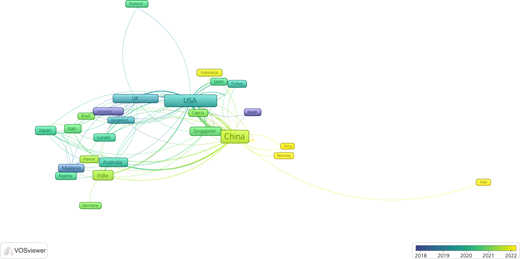
Overlay visualisation of bibliographic links between countries in the research field
Overlay visualisation of bibliographic links between countries in the research field
Countries such as China, the USA, Singapore, Australia and Japan are leading contributors to MICP research, supported by strong academic infrastructures, substantial funding and expertise (Hasan et al., 2022). China and the USA have advanced MICP through international collaborations, while Singapore reflects significant technological innovation. Australia’s focus on environmental research enhances MICP applications in soil improvement and water management. Japan excels due to its advanced technology and strong institutions. Despite smaller contributions, countries such as Iran, Canada and the Netherlands have also made impactful advancements in MICP research (Omoregie et al., 2024).
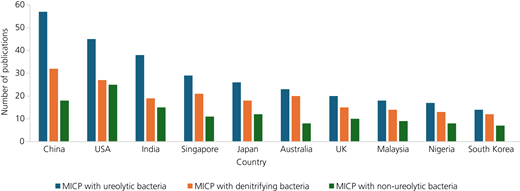
Figure 6 shows the global distribution of research publications on MICP from the top ten countries. China leads with over 50 publications on ureolytic bacteria, followed by significant contributions in denitrifying and non-ureolytic pathways. The USA follows closely with over 40 publications on ureolytic bacteria and substantial research on the other pathways. India, Singapore, Japan, Australia, the UK, Malaysia, Nigeria and South Korea also show strong research activity, particularly in ureolytic MICP, with varied but notable contributions in denitrifying bacteria and non-ureolytic bacteria pathways. Overall, ureolytic bacteria dominate MICP research globally, reflecting their widespread application and effectiveness, while the denitrifying and non-ureolytic pathways also garner considerable interest, particularly in China and the USA.
Top authors
Table 2 and Figure 7 showcase important details about the authors who have significantly impacted the field of study, as revealed by the bibliometric data. Recognising these leading authors through bibliometric analysis is vital for grasping research trends and encouraging collaborations in the research area.
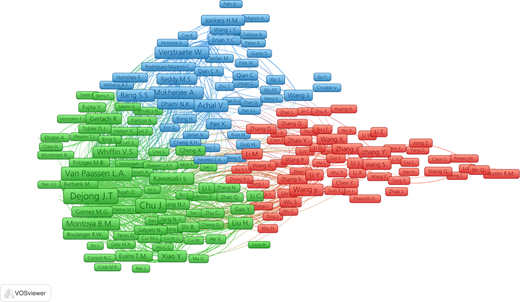
Co-citation analysis of cited authors; each cluster is represented by a different colour: red for cluster 1, green for cluster 2, blue for cluster 3 and yellow for cluster 4
Co-citation analysis of cited authors; each cluster is represented by a different colour: red for cluster 1, green for cluster 2, blue for cluster 3 and yellow for cluster 4
List of the top ten authors in the research area based on publication output
| Author | Publications | Citations | References |
|---|---|---|---|
| Chu, Jian | 64 | 2828 | Chu et al. (2020) |
| Xiao, Yang | 58 | 1956 | Xiao et al. (2023a) |
| Kawasaki, Satoru | 54 | 1812 | Li et al. (2018a) |
| Cheng, Liang | 49 | 1680 | Cheng and Shahin (2017a) |
| Montoya, Brina Mortensen | 49 | 1308 | Montoya and Dejong (2013) |
| Nakashima, Kazunori | 41 | 1148 | Chen et al. (2021b) |
| Tang, Chao-Sheng | 35 | 925 | Tang and Wang (2024) |
| Achal, Varenyam | 34 | 2992 | Achal and Mukherjee (2015) |
| Gomez, Michael G. | 29 | 2141 | Gomez et al. (2014) |
| Dejong, Jason T. | 28 | 3679 | DeJong et al. (2013) |
Table 2 showcases the most prolific authors in the field, with Chu, Jian, from Nanyang Technological University at the forefront with 64 publications and 2828 citations, followed by Xiao, Yang, with 58 publications and 1956 citations. Other prominent contributors include Achal, Varenyam, from Guangdong Technion–Israel Institute of Technology, and Cheng, Liang, from Jiangsu University.
The co-citation analysis of authors, shown in Figure 7, underscores their scholarly influence and thematic interconnections. The network visualisation generated by the VOSviewer software displays the co-citation analysis of cited authors organised into four color-coded clusters. Red represents cluster 1, green cluster 2, blue cluster 3 and yellow Cluster 4, allowing for clear visual differentiation among the groups based on their co-citation relationships within the data set. This organisation facilitates the identification of groups of authors whose works are frequently cited together, offering valuable insights into the key figures and prevailing themes in MICP research.
Cluster 1, featuring authors such as Zhang, J., and Wang, Y., has high co-citation counts, highlighting their pivotal contributions to MICP in geotechnical engineering and environmental remediation. Cluster 2, with authors such as Chu, J.; DeJong, J. T.; Van Paassen, L. A.; and Soga, K., reflects significant collaborative work in MICP technology and biogeotechnical engineering. Cluster 3, including Verstraete, W.; Bang, S. S.; and Achal, V., focuses on microbiology, cementitious materials and sustainable construction. Cluster 4, with authors such as Gerlach, R., and Tobler, D. J., studies factors affecting MICP processes. These clusters demonstrate the extensive collaboration and knowledge exchange within the MICP research community, fostering innovative methodologies and interdisciplinary research.
Top preferred journals
Table 3 highlights the top Scopus-indexed journals in MICP research. Construction and Building Materials (Elsevier, UK) leads with 72 publications, 3465 citations and a CiteScore of 12.4 (Q1). Other notable journals include Marine and Petroleum Geology (Elsevier, the Netherlands), with 37 publications and a CiteScore of 9.3 (Q1), and Acta Geotechnica (Springer Nature), with 34 publications and a CiteScore of 8.7 (Q1). These journals, with high publication and citation numbers and Q1 rankings, underscore their influence in the field. Publishing in these journals boosts the visibility and impact of MICP research, covering areas such as construction materials, geotechnical engineering and environmental science.
Top journals in the research field that are listed in the Scopus database
| Journal | Publications | Citations | Publisher |
|---|---|---|---|
| Construction and Building Materials | 72 | 3465 | Elsevier |
| Marine and Petroleum Geology | 37 | 1528 | Elsevier |
| Acta Geotechnica | 34 | 994 | Springer Nature |
| Journal of Petroleum Science and Engineering | 31 | 749 | Elsevier |
| Journal of Hazardous Materials | 25 | 1251 | Elsevier |
| Journal of Materials in Civil Engineering | 24 | 901 | American Society of Civil Engineers |
| Journal of Geotechnical and Geoenvironmental Engineering | 21 | 3179 | American Society of Civil Engineers |
| Journal of Environmental Management | 18 | 419 | Elsevier |
| Chemosphere | 17 | 391 | Elsevier |
| Geomicrobiology Journal | 15 | 1089 | Taylor & Francis Ltd |
Analysing keywords and text co-occurrences with the VOSviewer software
In the keyword co-occurrence analysis shown in Figure 8, the VOSviewer software explores how frequently the keywords selected by authors encapsulate the core themes of their research publications. The VOSviewer software detects patterns within the scholarly publication metadata, uncovering common themes and the relationships between various research topics based on how often they are mentioned by authors (Omoregie et al., 2019a, 2024). The analysis revealed that 484 keywords appeared at least five times across the literature. Among these, certain terms were particularly noteworthy due to their high occurrence rates. Notably, ‘calcite’ leads with 429 occurrences, followed by ‘soils’ with 297 occurrences, ‘calcite precipitation’ with 280 occurrences and ‘MICP’ with 201 occurrences, highlighting their significant prevalence and relevance within the research field.
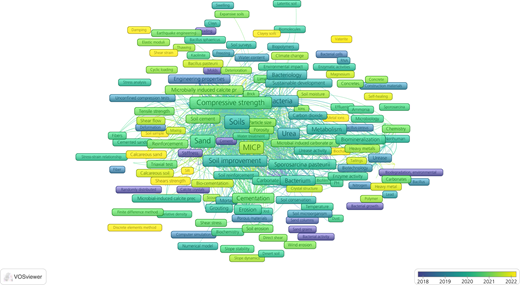
Network visualisation of co-occurrence of author keywords in the research domain. The clusters in the figure and their respective colours include cluster 1 (red), cluster 2 (green), cluster 3 (blue), cluster 4 (yellow), cluster 5 (purple), cluster 6 (turquoise), cluster 7 (brown), cluster 8 (chocolate) and cluster 9 (Pink)
Network visualisation of co-occurrence of author keywords in the research domain. The clusters in the figure and their respective colours include cluster 1 (red), cluster 2 (green), cluster 3 (blue), cluster 4 (yellow), cluster 5 (purple), cluster 6 (turquoise), cluster 7 (brown), cluster 8 (chocolate) and cluster 9 (Pink)
A significant keyword, ‘urea’, appears 153 times and stands out in this analysis. It has robust connections with other key terms such as ‘MICP’, ‘soils’, ‘bacteria’, ‘microbial activity’, ‘metabolism’ and ‘sustainable development’. This highlights an important direction for future research: exploring cleaner MICP processes that could potentially substitute urea usage to prevent ammonia production. This shift would align with UN Sustainable Development Goals by mitigating environmental impacts.
Figure 8 shows nine thematic clusters in MICP research. Cluster 1 (red) focuses on ‘metabolism’ and ‘Sporosarcina pasteurii’, crucial for urea hydrolysis and ammonia production (Abo-El-Enein et al., 2012; Amiri and Bundur, 2018). Cluster 2 (green) emphasises ‘sand’ and ‘stabilisation’, showcasing biocementation for enhancing the compressive strength of sand (Bernat-Maso et al., 2021; Xiao et al., 2023b). Cluster 3 (blue) highlights ‘bacteria’ and ‘calcite precipitation’ in environmental engineering and soil enhancement (Al Imran et al., 2019; Al-Salloum et al., 2017). Cluster 4 (yellow) investigates ‘soil improvement’ using urea for ureolytic bacteria (Bai et al., 2017; Omoregie et al., 2019b).
Cluster 5 (purple) delves into ‘soils’ and ‘biocementation’ for geotechnical engineering (Kwon et al., 2000). Cluster 6 (turquoise) centres on ‘biomineralisation’ and ‘solidification’ for dust and sand (Ramakrishnan et al., 2005). Cluster 7 (brown) highlights ‘permeability’, ‘stiffness’ and ‘compressive strength’ in geotechnical tests. Cluster 8 (chocolate) focuses on ‘cementation’, ‘microorganisms’ and ‘biostimulation’ for sustainable geotechnical methods (Aboujafar, 2009). Cluster 9 (pink) examines ‘saline soil’ stabilisation techniques (Montoya et al., 2012; Sarda et al., 2009).
Evolutionary trends in MICP through alternative metabolic pathways
Early evolution (2000–2007)
From 2000 to 2007, foundational research on MICP using ureolytic bacteria primarily focused on understanding microbial processes and their potential applications. S. pasteurii, formerly known as Bacillus pasteurii, played a pivotal role in enhancing calcium carbonate precipitation. Minayeva and Hopwood (2002) demonstrated its effectiveness in environmental remediation, while Cho et al. (2003) extended this application to concrete repair, showing significant improvements in mortar strength. Ramakrishnan et al. (2005) highlighted the critical role of urease in calcite production, providing a biochemical understanding essential for future developments. These studies underscored the ability of ureolytic bacteria to precipitate calcium carbonate, filling soil pores, cementing particles together and improving soil and construction material properties.
During this same period, research on denitrifying bacteria such as Pseudomonas stutzeri focused on their potential in MICP. DeJong et al. (2006) and Revil (2007) explored the environmental implications of using these bacteria, showcasing their effectiveness in biogeotechnical engineering and environmental remediation. These studies laid the groundwork for understanding how denitrifying bacteria could facilitate calcite precipitation through nitrate reduction, enhancing soil stability and reducing contamination. Initial research on non-ureolytic bacteria in MICP aimed at exploring alternative pathways for calcium carbonate precipitation (Omoregie et al., 2016). These studies were foundational, identifying suitable bacteria and understanding their metabolic processes. Although detailed applications were not the primary focus, this research highlighted the potential of non-ureolytic bacteria to precipitate calcium carbonate without producing harmful by-products such as ammonia.
Progressing MICP application and implementation (2008–2014)
Between 2008 and 2014, researchers focused on practical applications and optimising the ureolytic pathway for MICP (Omoregie et al., 2017). DeJong et al. (2011) demonstrated significant improvements in soil shear behaviour and cementation through natural microbial processes. Van Der Star et al. (2010) developed techniques for consolidating porous limestone using ureolytic bacteria. Van Paassen et al. (2010b) explored biogrouting, enhancing soil strength and stiffness, showcasing the applicability of the method in geotechnical engineering. The optimisation of the ureolytic pathway during this period involved experimenting with different microbial strains, nutrients and conditions to maximise the efficiency and effectiveness of calcium carbonate precipitation (Gat et al., 2011; Jiang et al., 2016; Omoregie et al., 2016).
From 2008 to 2014, research expanded into practical applications of denitrifying bacteria in MICP. Van Paassen et al. (2010a) used P. stutzeri for biogrouting, improving ground properties by triggering calcium carbonate formation in soils (Omoregie et al., 2017). De Muynck et al. (2011) demonstrated the flexibility of this method in stone consolidation by adjusting chemical variables, highlighting the potential for effective and sustainable applications in soil stabilisation and environmental remediation. Non-ureolytic bacteria such as L. mesenteroides were tested for enhancing soil and building material properties (Gat et al., 2011; Xu et al., 2014). This period marked a transition from theoretical studies to practical applications, emphasising the environmental benefits and sustainability of non-ureolytic pathways, which do not produce ammonia as a by-product.
From the lab to the field: scaling up MICP applications (2015–2019)
From 2015 to 2019, research addressed environmental concerns associated with the ureolytic MICP process, particularly ammonia production. Van Paassen et al. (2012) noted the high levels of ammonia produced, while Reeksting et al. (2020) highlighted the environmental risks, with laboratory concentrations exceeding safe thresholds. Despite these challenges, significant advancements were made in enhancing material properties, such as increased compressive strength of cement–sand mortar (Fauriel and Laloui, 2011) and applications such as reducing rock permeability for environmental remediation (Gomaa et al., 2006). Researchers continued to explore innovative methods to mitigate ammonia production while maintaining the effectiveness of MICP.
Between 2015 and 2019, studies highlighted the environmental benefits of using denitrifying bacteria in MICP. Cuthbert et al. (2012) and Omoregie et al. (2024) successfully applied this method to reduce rock permeability, demonstrating its potential for pollution mitigation. Researchers optimised conditions for effective calcium carbonate precipitation while minimising environmental impacts, exploring innovations such as co-culture techniques to reduce ammonia emissions (Cheng and Shahin, 2017a). Non-ureolytic MICP advanced in improving soil stability and reducing concrete cracks (Tan et al., 2023b). These studies underscored the sustainable nature of non-ureolytic pathways and their potential for broader use in geotechnical engineering and environmental remediation.
Advancing frontiers and future directions in the field (2020–2024)
From 2020 to 2024, MICP research focused on sustainable practices. Gomez et al. (2018a) explored the enrichment of native ureolytic microorganisms for biocementation, offering potential cost and environmental benefits. Raveh-Amit and Tsesarsky (2020) and Raveh-Amit et al. (2024) used bio-stimulation to reduce soil erosion and cracks. Researchers also explored alternative nutrient sources such as industrial by-products to reduce ammonia emissions, aiming for more environmentally friendly MICP processes (Omoregie et al., 2023b; Pei et al., 2021). These efforts reflect a growing emphasis on sustainability in MICP research, addressing environmental concerns associated with traditional ureolytic pathways.
In recent years, research has aimed to enhance the sustainability of MICP using denitrifying bacteria. Raveh-Amit et al. (2024) used bio-stimulation to induce MICP in loess soil, reducing erosion. Liu et al. (2022) demonstrated the ability of MICP to improve clayey soil structure. Emerging studies are exploring alternative substrates to support bacterial activity without harmful by-products, enhancing the environmental applicability of MICP (Gowthaman et al., 2021). From 2020 to 2024, researchers focused on optimising non-ureolytic MICP for practical applications. Xu et al. (2014) and Gomez et al. (2018b) investigated using industrial by-products as nutrient sources for non-ureolytic bacteria, reducing environmental impact and costs. Studies have shown the effectiveness of these bacteria under various environmental conditions, enhancing construction materials and mitigating pollution without producing ammonia (Fahimizadeh et al., 2022; Hemayati et al., 2023; Justo-Reinoso et al., 2021; Pal et al., 2022). This period highlighted the integration of microbiology, environmental engineering and materials science to develop more sustainable and effective MICP technologies.
Common bacterial species used for MICP
Bacterial species in MICP by ureolytic pathway
Table 4 shows that S. pasteurii is widely regarded as one of the most effective bacteria for MICP. Originating from soil in Germany, it is widely used in China for construction and soil stabilisation, excels in improving soil strength by 60% and is effective under saline conditions up to 10% sodium chloride (NaCl). It precipitates 14.8 g/l of calcium carbonate and produces 9.0 g/l of ammonia.
Various bacteria used for MICP through the ureolytic pathway
| Bacterial species | Calcium carbonate precipitation: g/l | Country of origin | Ammonia production: g/l | Time taken to precipitate: h | Saline condition (sodium chloride (NaCl) %) | Environmental requirements | Wide range of applications |
|---|---|---|---|---|---|---|---|
| S. pasteurii | 14.8 | Germany | 9 | 24 | Yes (up to 10%) | pH 7–9, 30–37°C | Improves soil strength by 60%, used in concrete for crack healing (Bhaduri et al., 2016) |
| Bacillus megaterium | 12.5 | India | 8.2 | 36 | No | pH 6–8, 25–35°C | Removes cadmium up to 90%, used in bioremediation of heavy metals (Bhaduri et al., 2016) |
| Bacillus sphaericus | 11.3 | Netherlands | 7.5 | 48 | Yes (up to 8%) | pH 7–9, 30–37°C | Increases concrete compressive strength by 2 MPa (Velpuri et al., 2016) |
| Pseudomonas aeruginosa | 10.5 | USA | 7.2 | 30 | No | pH 6–8, 25–35°C | Used in biocementation for soil stabilisation (Feng and Montoya, 2016) |
| Escherichia coli | 10 | Germany | 7 | 24 | No | pH 6–8, 25–37°C | Enhances soil shear strength, used in bio-concrete (Mortensen et al., 2011) |
| Bacillus subtilis | 9.8 | Japan | 6.8 | 36 | Yes (up to 5%) | pH 7–9, 30–37°C | Used in agriculture for improving soil health (Silva et al., 2015) |
| Bacillus cereus | 9.5 | USA | 6.5 | 24 | No | pH 6–8, 25–35°C | Improves soil load-bearing capacity (Kim and Youn, 2016) |
| Proteus mirabilis | 9.2 | Germany | 6.2 | 30 | No | pH 6–8, 25–37°C | Enhances biocementation processes, useful in MICP (Mortensen et al., 2011) |
| Klebsiella pneumoniae | 8.8 | USA | 6 | 48 | Yes (up to 3%) | pH 7–9, 30–37°C | Used in biocementation for soil improvement (Kirkland et al., 2017) |
| Helicobacter pylori | 8.5 | Japan | 5.8 | 36 | No | pH 6–8, 25–37°C | Enhances soil stabilisation processes (Sasaki and Kuwano, 2016) |
| Bacillus thuringiensis | 8.3 | India | 5.6 | 48 | Yes (up to 8%) | pH 7–9, 30–37°C | Used in agriculture to improve crop yield (Wu et al., 2017) |
| Bacillus licheniformis | 8 | USA | 5.4 | 30 | No | pH 6–8, 25–35°C | Used in detergents, enhances biocementation (Whitaker et al., 2018) |
| Bacillus pumilus | 7.8 | India | 5.2 | 24 | Yes (up to 4%) | pH 7–9, 30–37°C | Used in soil improvement processes (Chittoori and Neupane, 2019) |
| Bacillus firmus | 7.5 | USA | 5 | 36 | No | pH 6–8, 25–35°C | Enhances soil stabilisation (Sarda et al., 2009) |
| Bacillus mycoides | 7.3 | USA | 4.8 | 48 | Yes (up to 6%) | pH 7–9, 30–37°C | Used in microbial-induced calcium carbonate precipitation (Whitaker et al., 2018) |
| Micrococcus luteus | 7 | Netherlands | 4.5 | 30 | No | pH 6–8, 25–35°C | Used in biocementation for enhancing soil properties (Silva et al., 2015) |
In the USA, Bacillus megaterium excels in biocementation and bioremediation, removing 90% of cadmium and precipitating 12.5 g/l of calcium carbonate. Bacillus sphaericus strengthens concrete by 2 MPa in up to 8% sodium chloride. Pseudomonas aeruginosa and Escherichia coli are used for soil stabilisation, precipitating 10.5 and 10.0 g/l of calcium carbonate, respectively. Bacillus subtilis and Proteus mirabilis are effective in biocementation, with Bacillus thuringiensis enhancing crop yield in up to 8% sodium chloride.
Bacterial species in MICP by denitrification pathway
Table 5 shows that P. stutzeri, a denitrifying bacterium sourced from soil and water in Germany, can precipitate 10.2 g/l of calcium carbonate within 24 h. It is highly effective in removing up to 85% of nitrate and enhancing soil stability by 50%, making it valuable for environmental remediation and soil stabilisation. Bacillus licheniformis, originating from soil in the USA, precipitates 9.8 g/l of calcium carbonate over 36 h. This bacterium is widely used in agriculture for improving soil health due to its ability to enhance soil properties and nutrient availability.
Various bacteria used for MICP through denitrification
| Bacterial species | Calcium carbonate precipitation: g/l | Source | Country of origin | Time taken to precipitate: h | Wide range of applications |
|---|---|---|---|---|---|
| P. stutzeri | 10.2 | Soil, water | Germany | 24 | Removes nitrate up to 85%, enhances soil stability by 50% (Yin et al., 2021) |
| Bacillus licheniformis | 9.8 | Soil | USA | 36 | Used in agriculture for improving soil health (Wang et al., 2022) |
| Paracoccus denitrificans | 9.5 | Soil, water | Netherlands | 48 | Reduces nitrate concentration by 80%, used in soil stabilisation (Guan et al., 2021) |
| Alcaligenes faecalis | 9.2 | Soil, water | USA | 30 | Effective in waste water treatment, reduces nitrate by 75% (Wang et al., 2021) |
| P. aeruginosa | 9 | Soil, water | USA | 36 | Enhances biocementation, removes nitrate up to 70% (O’Donnell et al., 2017b) |
| B. subtilis | 8.8 | Soil | Japan | 48 | Used in agriculture to improve crop yield (O’Donnell et al., 2017b) |
| Pseudomonas putida | 8.5 | Soil, water | USA | 24 | Reduces nitrate concentration by 65%, improves soil strength (O’Donnell et al., 2017b) |
| Acinetobacter sp. | 8.3 | Soil, water | Netherlands | 30 | Effective in waste water treatment, reduces nitrate by 60% (Huang et al., 2024) |
| Pseudomonas fluorescens | 8 | Soil, water | USA | 36 | Enhances soil stabilisation, removes nitrate up to 55% (Sonmez and Erşan, 2022) |
| Bacillus cereus | 7.8 | Soil | USA | 24 | Improves soil load-bearing capacity (Jain et al., 2021) |
| Serratia marcescens | 7.5 | Soil, water | USA | 30 | Enhances biocementation, reduces nitrate by 50% (Guo et al., 2023) |
| B. thuringiensis | 7.3 | Soil | India | 48 | Used in agriculture for pest control and soil improvement (O’Donnell et al., 2017a) |
| Pseudomonas mendocina | 7 | Soil, water | USA | 36 | Improves soil strength, reduces nitrate concentration by 45% (O’Donnell et al., 2017a) |
| Bacillus pumilus | 6.8 | Soil | India | 24 | Enhances soil stabilisation processes (Ersan et al., 2015) |
| Bacillus amyloliquefaciens | 6.5 | Soil | India | 36 | Improves soil fertility, used in biocementation (Ersan et al., 2015) |
| Bacillus firmus | 6.3 | Soil | USA | 48 | Enhances soil stability, used in microbially induced calcium carbonate precipitation (Van Der Star et al., 2010) |
| B. megaterium | 6 | Soil | India | 30 | Removes heavy metals, enhances soil strength (Zango et al., 2018) |
Paracoccus denitrificans from the Netherlands precipitates 9.5 g/l of calcium carbonate in 48 h, reducing nitrate concentration by 80%, making it effective for soil stabilisation and nitrate pollution reduction. Alcaligenes faecalis from the USA precipitates 9.2 g/l of calcium carbonate in 30 h, reducing nitrate levels by 75%, and is highly effective in waste water treatment. P. aeruginosa from the USA precipitates 9 g/l of calcium carbonate in 36 h, enhancing biocementation and removing up to 70% of nitrate for various environmental applications. B. subtilis from Japan precipitates 8.8 g/l of calcium carbonate in 48 h and is used in agriculture to improve crop yield.
These bacteria exemplify the potential of denitrifying bacteria in MICP applications. They offer significant environmental benefits by reducing nitrate pollution and improving soil properties without producing harmful by-products such as ammonia. Their ability to utilise various sources, such as soil, water and industrial waste, further enhances their applicability in sustainable environmental management and agricultural practices.
Bacterial species used for MICP through the non-ureolytic pathway
S. ureae, a non-ureolytic bacterium sourced from soil in Germany, can precipitate 11.5 g/l of calcium carbonate within 24 h (Table 6). It effectively enhances soil stability by 55% and is particularly valuable for construction applications where rapid soil stabilisation is required. The ability to utilise organic compounds makes it an excellent candidate for projects that aim to recycle industrial waste such as brewery and winery by-products.
Various bacteria used for MICP through the non-ureolytic pathway
| Bacterial species | Calcium carbonate precipitation: g/l | Source | Country of origin | Time taken to precipitate: h | Food sources | Wide range of applications |
|---|---|---|---|---|---|---|
| S. ureae | 11.5 | Soil | Germany | 24 | Nitrate, organic compounds | Enhances soil stability by 55%, used in construction (Gat et al., 2011) |
| B. pasteurii | 10.8 | Soil | USA | 36 | Organic matter, nitrate | Used in agriculture for improving soil health (Gat et al., 2011) |
| Paracoccus versutus | 10.2 | Soil, water | Netherlands | 48 | Nitrate, organic compounds | Reduces nitrate concentration by 85%, used in soil stabilisation (Xu et al., 2014) |
| Lysinibacillus sphaericus | 9.9 | Soil, water | USA | 30 | Nitrate, ammonia | Effective in waste water treatment, reduces nitrate by 80% (Lee et al., 2017) |
| Desulfovibrio vulgaris | 9.5 | Soil, water | USA | 36 | Organic compounds, nitrate | Enhances biocementation, removes nitrate up to 75% (Gat et al., 2014) |
| Rhodopseudomonas palustris | 9 | Soil | Japan | 48 | Organic matter, nitrate | Used in agriculture to improve crop yield (Gat et al., 2014) |
| Bacillus cereus | 8.8 | Soil | USA | 24 | Organic matter, nitrate | Improves soil load-bearing capacity (Lee et al., 2017) |
| Geobacter sulfurreducens | 8.5 | Soil, water | Netherlands | 30 | Nitrate, organic matter | Effective in waste water treatment, reduces nitrate by 70% (Justo-Reinoso et al., 2023) |
| Shewanella oneidensis | 8 | Soil, water | USA | 36 | Nitrate, organic compounds | Enhances soil stabilisation, removes nitrate up to 65% (Tsesarsky et al., 2018) |
| Clostridium bifermentans | 7.8 | Soil | USA | 24 | Organic matter, nitrate | Enhances soil load-bearing capacity (Xu et al., 2014) |
| B. megaterium | 7.5 | Soil | India | 48 | Organic matter, nitrate | Used in agriculture for soil improvement (Pal et al., 2022) |
| B. thuringiensis | 7.3 | Soil | India | 36 | Organic matter, nitrate | Used in agriculture for pest control and soil improvement (Fahimizadeh et al., 2022) |
| Rhodococcus sp. | 7 | Soil, water | USA | 36 | Nitrate, organic compounds | Enhances soil strength, reduces nitrate concentration by 60% (Tan et al., 2023a) |
| Bacillus pumilus | 6.8 | Soil | India | 24 | Organic matter, nitrate | Enhances soil stabilisation processes (Tan et al., 2023b) |
| Pseudomonas putida | 6.5 | Soil, water | USA | 36 | Nitrate, organic compounds | Reduces nitrate concentration by 55%, improves soil strength (Tan et al., 2023b) |
| Desulfotomaculum sp. | 6.3 | Soil, water | USA | 48 | Nitrate, organic matter | Effective in waste water treatment, reduces nitrate by 50% (Tan et al., 2023b) |
| Nitrosomonas europaea | 6 | Soil | India | 30 | Organic matter, nitrate | Enhances soil strength, used in microbially induced calcium carbonate precipitation (Shaheen et al., 2021) |
B. pasteurii, originating from soil in the USA, precipitates 10.8 g/l of calcium carbonate over 36 h. It is commonly used in agriculture to improve soil health and fertility, leveraging organic matter and nitrate from agricultural run-off. This bacterium’s ability to enhance soil properties without producing ammonia aligns well with sustainable agricultural practices. Paracoccus versutus, from soil and water in the Netherlands, precipitates 10.2 g/l of calcium carbonate in 48 h and reduces nitrate concentration by 85%. It is effective in soil stabilisation and environmental remediation, utilising organic compounds and nitrates, thus contributing to waste reduction and resource efficiency.
Lysinibacillus sphaericus, sourced from soil and water in the USA, precipitates 9.9 g/l of calcium carbonate in 30 h and is highly effective in waste water treatment, reducing nitrate levels by 80%. It is particularly useful in treating industrial effluents, making it a key player in sustainable waste management strategies. Desulfovibrio vulgaris, also from the USA, precipitates 9.5 g/l of calcium carbonate over 36 h. It is notable for its ability to enhance biocementation processes and remove up to 75% of nitrates, making it suitable for both environmental and construction applications.
These non-ureolytic bacteria offer significant environmental benefits by using organic compounds and industrial waste sugars for calcium carbonate precipitation without producing ammonia, making them eco-friendly. Their versatility in utilising various organic sources makes them suitable for agriculture, environmental remediation, construction and waste water treatment. This approach supports sustainability and promotes industrial waste recycling, aligning with circular economy principles.
Comparison of MICP pathways
Based on the type of bacteria and process involved
The ureolytic pathway, exemplified by S. pasteurii, B. megaterium and B. sphaericus, is highly efficient in calcium carbonate precipitation, with S. pasteurii achieving up to 14.8 g/l (Gat et al., 2011; Kumari et al., 2014). This process involves the hydrolysis of urea by urease, leading to the production of ammonia and carbonate ions, which subsequently precipitate calcium carbonate (Cheng and Shahin, 2017b; Shougrakpam and Trivedi, 2018). While effective, this pathway generates substantial ammonia, exceeding 1000 parts per million (ppm) in lab settings, necessitating rigorous environmental controls in large-scale applications (Chen et al., 2016; Gat et al., 2011; Shougrakpam and Trivedi, 2018; Whiffin et al., 2007). Denitrifying bacteria, such as P. stutzeri, B. licheniformis and P. denitrificans, offer a cleaner MICP alternative through nitrate reduction, avoiding ammonia production (Pham et al., 2018).
P. stutzeri can precipitate 10.2 g/l of calcium carbonate and effectively remove up to 85% of nitrate, making it suitable for bioremediation and soil stabilisation (Kwon et al., 2024). This pathway, although generally yielding lower calcium carbonate precipitation rates than the ureolytic pathway, is particularly beneficial in applications where reduced environmental impact is crucial (O’Donnell et al., 2017b). Non-ureolytic bacteria, including S. ureae, B. pasteurii and P. versutus, utilise organic compounds and complex sugars for calcium carbonate precipitation without producing ammonia (Lee et al., 2017; Pal et al., 2022). S. ureae can precipitate 11.5 g/l of calcium carbonate, thriving on industrial waste such as spent grains and yeast. This makes these bacteria ideal for sustainable applications that focus on environmental sustainability and waste recycling, offering significant environmental and economic benefits, particularly for large-scale applications (Justo-Reinoso et al., 2023; Xu et al., 2014).
Based on nutrient sources and environmental conditions needed
Ureolytic bacteria require urea and calcium sources, typically from calcium chloride, for the MICP process. The hydrolysis of urea generates ammonia, necessitating strict environmental controls to manage its release, as permissible ammonia levels are <5 ppm in labs and <50 ppm for large-scale applications, to protect aquatic life (Whiffin et al., 2007). These bacteria are highly effective but demand rigorous ammonia-management strategies (Sadjadi et al., 2014; Tsesarsky et al., 2018).
Denitrifying bacteria utilise nitrate as an electron acceptor and organic compounds or hydrogen as electron donors (Shahid, 2022; Zango et al., 2018). They require specific conditions, such as low-oxygen environments, to reduce nitrate to nitrogen gas and precipitate calcium carbonate effectively. This pathway is cleaner, as it does not produce ammonia, making it suitable for applications where environmental impact needs to be minimised (Jin et al., 2022). Non-ureolytic bacteria thrive on organic compounds and complex sugars, often sourced from industrial waste such as brewery and winery by-products. These bacteria do not produce ammonia, making them environmentally friendly. They can utilise various organic wastes, reducing the ecological footprint and adding value to what would otherwise be waste materials (Chaurasia et al., 2019). This pathway aligns well with sustainability goals and supports large-scale applications focused on environmental sustainability (Hemayati et al., 2023; Pal et al., 2022; Tan et al., 2023b).
Based on the duration and amount of calcium carbonate precipitation
S. pasteurii in the ureolytic pathway can precipitate up to 14.8 g/l of calcium carbonate within 24 h, significantly enhancing soil strength but producing high levels of ammonia. Applications include construction and soil stabilisation, where rapid and substantial calcium carbonate precipitation is essential. However, the high ammonia production necessitates remediation strategies (Wang et al., 2021). P. stutzeri in the denitrifying pathway precipitates 10.2 g/l of calcium carbonate in 24 h and is effective in nitrate removal, making it suitable for bioremediation and soil stabilisation. Although it generally produces lower amounts of calcium carbonate compared with ureolytic bacteria, its lack of ammonia production makes it ideal for environmentally sensitive projects (Min et al., 2024; Sonmez and Erşan, 2022; Tan et al., 2023b). Non-ureolytic bacteria such as S. ureae precipitate 11.5 g/l of calcium carbonate within 24 h and thrive on industrial waste, making them suitable for sustainable applications such as environmental remediation and waste recycling (Barkouki et al., 2011; Li et al., 2018b). Their ability to utilise organic waste without producing harmful by-products highlights their potential for large-scale, environmentally friendly applications (Almajed et al., 2021; Wang et al., 2019).
In summary, the choice of MICP pathway depends on specific application requirements and environmental considerations. Ureolytic bacteria offer high efficiency but require stringent ammonia management. Denitrifying bacteria provide a cleaner alternative, effective in nitrate-rich environments but requiring specific conditions. Non-ureolytic bacteria stand out for their sustainability and versatility, utilising industrial waste without producing harmful by-products, making them ideal for large-scale, environmentally friendly applications. Bacteria such as B. megaterium and B. licheniformis are versatile across multiple pathways, adapting to various applications based on environmental and economic considerations (Gat et al., 2011; Justo-Reinoso et al., 2021; Tan et al., 2023b; Xu et al., 2014).
Is MICP actually environmentally friendly?
Recent research trends in MICP highlight the exploration of alternative pathways, indicating a need for further investigation into their environmental impacts to optimise MICP performance. MICP has garnered attention across various applications for its alignment with UN Sustainable Development Goals, aiming to foster safe, efficient and environmentally friendly technologies (Zhang et al., 2023). Assessing the environmental friendliness of MICP can be achieved through life-cycle assessment (LCA), a systematic approach commonly used to evaluate the environmental impacts and resource utilisation of a product throughout its life cycle. The MICP life cycle encompasses raw material extraction, production, application and final disposal phases. While biocementation is known for its sustainability and eco-friendliness, the slow pace of its natural cementation process and its reliance on limited resources hinder its industrial feasibility. Researchers are thus focusing on engineered biocementation to meet industrial standards, although this often involves costly, energy-intensive materials, necessitating a comprehensive assessment of their true environmental impacts, particularly in large-scale applications.
The typical engineered biocementation and cement production processes are shown in Figure 9. Porter et al. (2021) identified urea and calcium chloride production as the main contributors to embodied energy in biocementation, as opposed to cement manufacturing, where energy consumption primarily occurs during limestone combustion, preheating and clinker production. Specifically, urea consumes 30.54 MJ/kg and calcium chloride 11.76 MJ/kg in biocementation and 6.21 MJ/kg in ordinary Portland cement manufacturing (Porter et al., 2021). These findings emphasise the importance of evaluating the efficiency and sustainability of engineered biocementation for industrial applications.
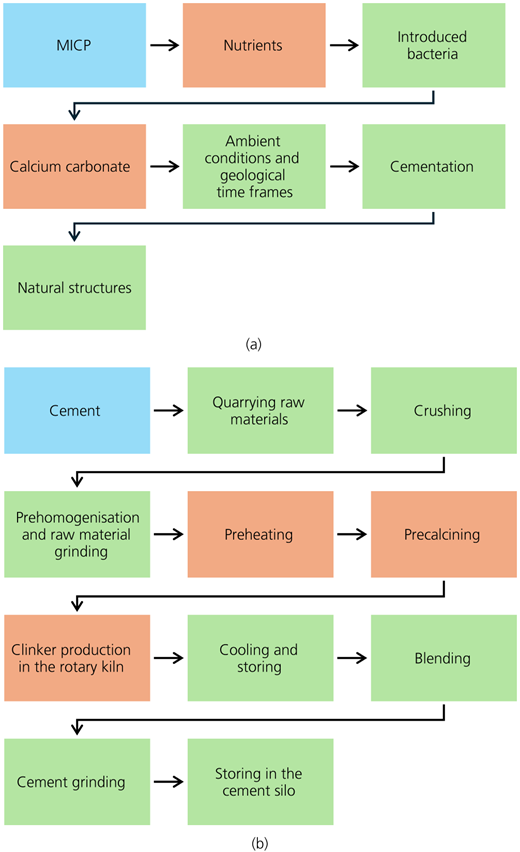
Comparison of the process with primary contributors to embodied energy (orange box): (a) engineered biocementation; (b) cement production
Comparison of the process with primary contributors to embodied energy (orange box): (a) engineered biocementation; (b) cement production
Porter et al. (2021) conducted a comparative life-cycle analysis to assess the environmental and economic impacts of different biocementation methods (see Tables 7 and 8). They focused on calcium carbonate produced through various MICP pathways using laboratory-grade chemicals against manufactured calcium carbonate, using 1 kg of calcium carbonate as the functional unit (Porter et al., 2021). For carbon dioxide emissions (‘carbon emissions’), MICP with ureolytic bacteria produced 2.06 carbon dioxide/kg calcium carbonate, while the conventional process emitted 2.37 carbon dioxide/kg calcium carbonate, making MICP 13.08% lower in emissions. However, MICP consumed more energy (28.4 MJ/kg calcium carbonate) compared with the conventional process (7.2 MJ/kg calcium carbonate), which is 55.28% higher due to the use of laboratory-grade chemicals. When using commercial-grade chemicals, it was found that the carbon emissions of MICP decreased to 1.51 carbon dioxide/kg calcium carbonate and energy consumption decreased to 16.1 MJ/kg calcium carbonate, reducing emissions and energy use by 26.70 and 43.31%, respectively. This improvement is attributed to the lower energy requirements of commercially sourced calcium chloride, obtained through hypochlorination of allyl chloride, which has a low concentration. In terms of cost, the expenses associated with using laboratory-grade chemicals generally exceed those for producing manufactured calcium carbonate. Calcium chloride, in particular, is a major cost driver, followed by urea. Table 8 summarises these cost implications, revealing that carbonates produced through MICP using laboratory-grade chemicals are significantly more expensive compared with manufactured calcium carbonate.
Environmental performance of MICP through ureolytic bacteria, using laboratory-grade and commercial-grade chemicals, against the manufactured calcium carbonate (Porter et al., 2021)
| Carbonation process | Carbon dioxide emission: carbon dioxide/kg calcium carbonate | Energy consumption: MJ/kg calcium carbonate |
|---|---|---|
| Manufactured calcium carbonate | 2.37 | 7.2 |
| MICP through ureolytic bacteria (using laboratory-grade chemicals) | 2.06 | 28.4 |
| MICP through ureolytic bacteria (using commercial-grade chemicals) | 1.51 | 16.1 |
Cost implications of MICP through ureolytic bacteria, using laboratory-grade and commercial-grade chemicals, against the manufactured calcium carbonate (Porter et al., 2021)
| Grade of chemical used | Cost of the carbonation process: AU$/kg calcium carbonate | |
|---|---|---|
| Manufactured calcium carbonate | MICP through ureolytic bacteria | |
| Laboratory grade | 61 | 107 |
| Commercial grade | 0.4 | 3.1 |
AU$1 = US$0.655
The study by Porter et al. (2021) shows that using carbon sources for producing carbonates through MICP results in a higher environmental impact compared with traditional methods such as manufactured calcium carbonate. To make MICP more viable and sustainable, previous studies suggest alternatives to mitigate environmental impacts. Researchers have explored other calcium sources, such as calcium acetate and calcium nitrate (Abo-El-Enein et al., 2012), dissolved limestone in lactic acid (Phua and Røyne, 2018) and eggshells (Choi et al., 2016), to enhance the sustainability of MICP by improving physical and chemical properties and utilising low-cost, sustainable raw materials.
Field-scale biocementation is costly, necessitating significant cost reductions if large-scale applications are desired. Researchers often use commercially available reagents, with analytical-grade growing media being a major financial burden. About 60% of MICP process costs are due to nutrients for ureolytic bacterial culture, a figure expected to rise with increased research interest (Yoosathaporn et al., 2016). Recently, researchers have explored replacing expensive laboratory-grade materials with more practical alternatives for MICP. Omoregie et al. (2019a) assessed cost-effective technical-grade reagents for large-scale MICP, comparing the performance of S. pasteurii with technical-grade reagents against that with analytical-grade reagents for sand biocementation (Omoregie et al., 2019a). Technical-grade cementation solutions showed results in surface strength (1448 ± 69 to 4826 kPa) and calcium carbonate content (5.56 ± 1.15 to 33.24 ± 0.59%) comparable with those treated with analytical-grade solutions but were significantly cheaper (US$0.07–0.26/l against US$3.33–13.29/l).
In addition to the study by Porter et al. (2021), Deng et al. (2021) conducted a comprehensive LCA of MICP through urea hydrolysis, evaluating energy consumption and carbon emissions from a resource utilisation perspective. The LCA considered the impacts of raw material consumption, material processing, carbon emissions, energy consumption, and product and by-product in every process. Their analysis revealed that the reaction between 1 mol of urea and 1 mol of calcium ions produced 1 mol of calcium carbonate. The primary raw materials for MICP were bacterial solution and nutrient salts (i.e. urea and calcium chloride) in a 1:10 ratio for the reaction process. For the theoretical experiment, S. pasteurii bacteria were used. To produce 1 t of calcium carbonate, 0.64 t of urea and 1.08 t of calcium chloride were required, forming the basis for the comparison of environmental impacts. The consumption of raw materials for the theoretical experiment of MICP is summarised in Table 9.
Optimal ratio of raw materials needed to produce 1 t of calcium carbonate (Deng et al., 2021)
| Raw material | Ammonia | Carbon dioxide | Calcium carbonate | Hydrochloric acid (HCl) | Water (H2O) | Yeast extract | Ammonium chloride (NH4Cl) | Nickel (II) chloride (NiCl2) |
| Material consumption: kg/t | 400 | 440 | 1000 | 720 | 400 | 20 | 10 | 0.00124 |
Deng et al. (2021) found that the carbon emissions from the bacterial solution process mainly resulted from bacterial respiration during growth and were relatively minimal. The energy consumption in this process came from the equipment used for bacterial cultivation. For nutrient salts such as urea and calcium chloride, their production involved significant energy consumption from coal and electricity. The MICP process itself was driven by bacterial activity and required no additional energy, consuming only the bacterial solution, urea and calcium chloride. Producing 1 t of calcium carbonate through MICP through urea hydrolysis resulted in 3399.5 kg of carbon emissions and consumed an energy equivalent of 1847.3 kg of coal. The carbon emissions and energy consumption were attributed to the production of raw materials rather than the MICP reaction. Specifically, 72.4% of carbon emissions came from calcium chloride, 8.0% from urea and 19.6% from producing the bacterial solution (see Figure 10). In the study, energy consumption was predominantly from raw materials (96%), with 80.2% of the energy coming from coal and 19.8% from electricity (see Figure 11). The bacterial solution production accounted for only 4% of the energy consumption. Most electricity consumption (79.8%) was attributed to the production of calcium chloride and urea, with the remainder from the bacterial solution process, while coal consumption was entirely from raw materials. Thus, raw materials were identified as the main contributors to the environmental impacts of MICP.
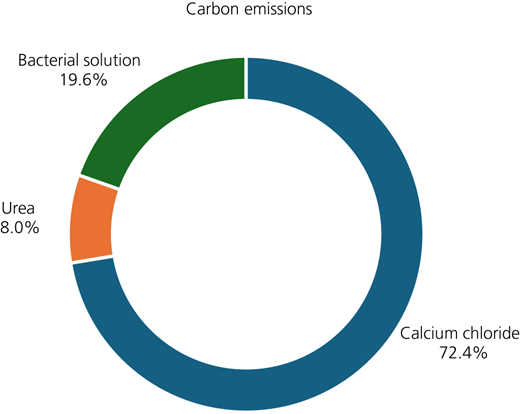
Carbon emissions of MICP raw materials and process (adapted from Deng et al. (2021))
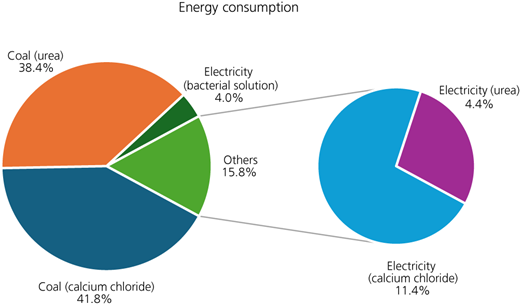
Energy consumption of MICP raw materials and process (adapted from Deng et al. (2021))
Opportunities and future research directions for MICP
Repurposing waste for greener carbonate precipitation
While MICP shows promise for soil improvement and material strengthening, its current environmental impacts, particularly regarding energy consumption and carbon emissions, remain a challenge that necessitates further research. The use of raw materials and generation of ammonium waste in MICP requires careful consideration of environmental implications. To make MICP a sustainable construction technology, reusing by-products or naturally existing materials is a viable alternative. Using recycled waste materials as nutrients for microorganisms and cementation reagents, rather than commercial reagents, could enhance the sustainability of biocementation practices. The ongoing use of urea and calcium chloride impacts the viability of MICP as a sustainable method. Considerations of alternative materials for urea, urease enzymes and calcium sources is crucial to optimise fully the environmental potential of MICP (Faruqi et al., 2023). These include industrial by-products and waste materials such as fly ash and recycled aggregates (Chahal et al., 2012; Zhao et al., 2022), activated sludge (Yang et al., 2020), kitchen waste (Meng et al., 2021) and pig urine (Chen et al., 2019).
Optimising carbonate precipitation through machine learning
In recent years, artificial intelligence and/or machine learning techniques have gained popularity in geotechnical engineering due to their capabilities in developing robust predictive models to process complex data sets that can enhance existing engineering design processes (Jong et al., 2021). This presents an opportunity for future research on MICP by harnessing the capabilities of machine learning to optimise the MICP process, as well as its performance. Among various techniques available, Bayesian inference has been widely employed for the study of geomaterial characterisation (Hu et al., 2021; Jin et al., 2019; Jong et al., 2022; Yang et al., 2019). This is because it treats design parameters as random variables and computes their probability distributions, rather than providing deterministic solutions, which treat parameters as constants and may not reflect their true values (Ching and Phoon, 2018; Qi and Zhou, 2017). Additionally, this probabilistic approach allows for a reasonable quantification of model prediction uncertainty, enabling users to capture confidence levels associated with the model output and aiding in decision making for future studies. This optimisation concept is definitely applicable to the MICP process.
Characterising feedstock for carbonate precipitation
Since the MICP process involves various raw materials that would impact its strength development and thus its effectiveness, the Bayesian method might be a feasible approach for material characterisation in MICP applications. In a similar context, for example, Jong et al. (2022) employed a variant of the Bayesian method, known as Bayesian regression, to investigate the optimum strength gain in sustainable geomaterials such as fly-ash-based geopolymer concrete and sustainable cementitious blends for soft soil stabilisation (Jong et al., 2022). The selection process enabled the influence of different factors to be ranked based on their significance on the model output (i.e. strength), aiding in the decision making to prioritise important factors for future studies. On the other hand, another variant of the Bayesian method, the Bayesian network, could be potentially applied to study the soil–structure interactions of MICP-treated ground in soil stabilisation (Jong et al., 2022) For example, a Bayesian network that incorporates the Bayesian updating process could be used to study ground deformations induced by dynamic loads (i.e. traffic loads) to assess the performance of a subgrade treated using the MICP technique in pavement applications.
Analysing life cycles
Despite claims of MICP being a sustainable, low-energy and low carbon dioxide method since it does not directly produce greenhouse gas emissions and it can absorb carbon dioxide from the environment, producing the necessary raw materials for MICP involves significant energy use and carbon emissions. Some research suggests that the carbon dioxide footprint of MICP is higher than that of ordinary Portland cement due to the embodied energy in urea and calcium chloride, which are derived from natural gas and coal emissions (Deng et al., 2021). The energy consumption for urea is 30.54 MJ/kg, and for calcium chloride, it is 11.76 MJ/kg, whereas ordinary Portland cement manufacturing consumes 6.21 MJ/kg (Porter et al., 2021). Therefore, using calcium-rich resources and urea alternatives could reduce environmental costs and improve MICP sustainability. Although studies on various MICP alternatives have been conducted, the overall sustainability of these alternatives is uncertain due to a lack of comprehensive data on resource requirements, thus presenting opportunities for more research. Future experiments could include a thorough life-cycle analysis to assess the environmental impacts of alternative calcium sources for MICP.
Conclusion
From the bibliometric analysis
The comprehensive analysis of publication and citation trends, global participation, leading authors, preferred journals and keyword co-occurrence in MICP research provides substantial insights into the evolution of the field, particularly regarding the use of raw materials from industry sources and the impact that ammonia production has on the environment. Since 2018, there has been a notable increase in both publications and citations, illustrating growing interest and recognition of the potential of MICP in addressing modern environmental and civil engineering challenges. This trend underscores the dynamic nature of MICP research and its rising prominence within the academic community. The global distribution of contributions, with active participation from 59 countries, including China, the USA and European nations such as the UK, Germany and the Netherlands, reflects worldwide relevance and collaborative essence in MICP research.
Keyword co-occurrence analysis further highlights thematic clusters and key research areas, identifying vital topics such as permeability, bacterial activity, calcite precipitation and ground improvement. These analyses provide valuable insights into the current research landscape and point towards emerging trends within the field. The identification of top prolific authors and preferred journals emphasises the collaborative and interdisciplinary nature of MICP research, facilitating global collaboration and knowledge exchange. Collectively, these findings not only offer a comprehensive understanding of the progression of MICP research but also guide future research directions, interdisciplinary collaborations and strategic planning essential for advancing MICP applications to tackle environmental challenges and enhance civil engineering practices effectively.
From the technical analysis
Based on the insights gathered from this bibliometric review and the evolution of research, several avenues for future research are suggested. There is potential to investigate alternatives to industrial urea for feeding ureolytic bacteria in MICP processes through holistic life-cycle analysis and optimising cultural conditions through machine learning. Options such as complex carbohydrates and sugars derived from brewery and winery waste, or other dairy and sugar mill by-products, could serve as eco-friendly substitutes that minimise the production of ammonia, a problematic by-product in traditional MICP methods. Additionally, research could venture into utilising bacterial strains other than ureolytic bacteria, such as a concoction of multiple types of denitrifying and non-ureolytic Bacillus species, which might enable cleaner MICP processes suitable for large-scale applications without environmental detriment. Further research should also focus on enhancing the efficiency of non-ureolytic bacteria, particularly in terms of the rate of precipitation, as well as the homogeneity and distribution of the precipitated crystals. In the context of applying MICP to marine and saline environments – such as for sand stabilisation, coastal erosion control and protection of marine structures – investigating halotolerant microbial strains such as Halomonas eurihalina is crucial to maintain the effectiveness of MICP under saline conditions. Continuous monitoring and analysis of the latest trends in MICP research will be crucial for maintaining a leading edge in innovation and making significant contributions to overcoming environmental challenges and advancing civil engineering methodologies.

