Sudden-onset disasters impact the health and well-being of millions of people each year. Typically, a sudden-onset disaster will lead to a surge of patients that require immediate acute care, even though health infrastructure and resources may be destroyed or not accessible. The challenge of patient flow logistics is transporting those in need of acute care rapidly to locations where they can be treated. The fields and disciplines tackling these challenges, therefore, span from disaster-related to health-related logistics, but it is not known whether and how research and approaches across these fields align. This study aims to scope this emergent field, identify research gaps and develop a conceptual framework that bridges the disaster-related and health-related logistics literature.
This paper follows a scoping review protocol. The authors screened an initial 8,491 papers, of which 127 were retained for a full-text review. Analyzing these papers, the authors map out the key concepts such as actors, locations, transportation modes and decision problems used in the literature. The study identifies research gaps and synthesize the findings into a conceptual framework to guide future research.
This review identified four gaps in the existing literature: (1) The literature focuses primarily on earthquakes and terrorist attacks, limited attention is given to other sudden-onset disaster types despite their frequency; (2) The literature focuses on formal actors such as health providers or civil protection bodies, while communities are largely portrayed as passive patients or victims; (3) Actors are largely assumed to follow standardized protocols, often ignoring emergent roles or behavioral changes typical for sudden-onset disasters; (4) Objectives predominantly relate to either efficiency or effectiveness, neglecting fairness and multiobjective problems.
To the best of the authors’ knowledge, this scoping review is the first to explore the different aspects of patient logistics in sudden-onset disasters by bridging the disaster-related and health-related literature.
1. Introduction
Sudden-onset disasters such as storms, floods or earthquakes can have significant acute and long-term health impacts on hundreds of millions of people. Examples range from earthquakes in Turkey, Syria (Deniz Dogan et al., 2024), or floods in Mozambique (Petricola et al., 2022) and Italy (Valente et al., 2023). All sudden-onset disasters lead to a rapid influx of patients who require immediate medical attention, causing strain on healthcare systems and infrastructures, even though access to medical acute care and health infrastructures is likely to be disrupted by the sudden-onset disaster (Labrague and Hammad, 2023).
To address this double challenge, sudden-onset disaster patient flow logistics (Vissers, 2005) is pivotal. Following COVID-19 pandemic, there is an increasing interest in the impact of infectious diseases after disasters in general, and to outbreaks in refugee and internally displaced people settlements more specifically (Aylett-Bullock et al., 2022). So far, less attention is paid to the immediate need for acute care, and the resulting logistic needs in the aftermath of a disaster.
Sudden-onset disaster patient logistics represent all the actions performed to transport patients to where they can receive acute care in the health system. It is commonly referred as “casualty transportation” (Hosseini et al., 2023; Schwarz et al., 2023). Within the domain of (humanitarian) logistics, this entails a broad variety of operations across different phases of a disaster. To mitigate disaster consequences, evacuation of hospitals or care facilities are often initiated as a part of early warnings (Evetts, 2019). At the onset of the response phase, search and rescue operations focus on locating (Zafren et al., 2018) and physically removing individuals who may be trapped or injured in disaster-affected areas (Service Medical du Raid et al., 2019). These efforts, often carried out by specialized search and rescue teams are essential for rescuing, transporting and eventually providing initial en route medical assistance to those in need. Once patients are located and extracted, triage facilitates the rapid assessment and categorization of patients based on the severity of their injuries (Emami et al., 2005) or medical conditions (Muzzammil et al., 2021). Subsequently, patients are transported to care facilities using a range of transport modes (Babaqi and Vizva′ri, 2023; Barbarosog˘lu et al., 2002; Mirhashemi et al., 2007; Shavarani and Vizvari, 2018). Here, traditional logistics problems such as routing or allocation come into play, for instance, the choices for optimal and fair transport routes (Adarang et al., 2020; Aringhieri et al., 2022; Horner and Widener, 2011; Shavarani and Vizvari, 2018; Wilson et al., 2013b; Yi and Kumar, 2007) or optimal allocation of resources (Oksuz and Satoglu, 2024; Yassin et al., 2022) or having an optimal number of casualties transported (Babaqi and Vizva′ri, 2023; Yi and Ozdamar, 2007). In contrast, the health logistics literature predominantly studies patient flow logistics with a focus on flows within health facilities (mostly hospitals) (Hanne et al., 2009; Villa et al., 2014), to hospitals (Babaqi and Vizva′ri, 2023; Shavarani and Vizvari, 2018) or between hospitals by specialized ambulances (Talarico et al., 2015).
Existing reviews from humanitarian logistics started a discussion on the missing concepts and future studies of importance (Altay and Green, 2006; Galindo and Batta, 2013) in disaster logistics. Furthermore, reviews in the broader literature beyond operations research and management have a limited scope. For example, the reviews mentioning patient logistics elements focus to a limited extent on sudden-onset disasters (Barten et al., 2022; Hains et al., 2011; Van Stekelenburg et al., 2025), on actions to perform before patient transportation for health emergency responders such as nurses (Al Thobaity, 2024), anesthesiologists (Kamassai, 2025), on specific actors such as emergency clinicians (Ishiki et al., 2024; Kelly et al., 2023; Kravets et al., 2022; Long et al., 2023; Suda et al., 2025; Tikkanen and Sundberg, 2024; Yilmaz et al., 2024), air transport professionals (Haberland et al., 2023), on potential prehospital degrading factors (Abu-Zidan et al., 2023; Alruqi et al., 2023) and on military protocols before patient transport (Rush et al., 2024). The reviews also often focus on a specific part of the problem, e.g. by analyzing flows within the hospital (Barten et al., 2022; Ong et al., 2012; Tohira et al., 2014; Zimmer and Reuter, 2023), focusing on hospital evacuations (Barten et al., 2022; Moslehi et al., 2024; Rajendra et al., 2022), only through ambulance transportation (Lemay et al., 2020), or only to hospitals (Farahani et al., 2020), on the impact of national insurance programs on health services (Riza et al., 2023). There also exist published reviews in the field of operations research and management studies that have explored the range of studies addressing patient logistics and/or disaster management in their respective fields (Caunhye et al., 2012; Galindo and Batta, 2013; Kamyabniya et al., 2024; Tippong et al., 2022), often with a focus on optimization models [see, for example Caunhye et al. (2012); Kamyabniya et al. (2024)]. However, these reviews are limited to studies within operations research and management studies and do not include the broader literature that addresses the topic of patient logistics, such as health services, emergency medicine and health policy.
What is missing is thus a comprehensive scoping review that maps out and clarifies the core concepts across the health and disaster-related literature on patient transportation operations in sudden-onset disasters, develops a conceptual framework of how these concepts relate and identifies knowledge gaps.
We have identified four key knowledge gaps in our study. The first gap concerns the representation of sudden-onset disaster types. The literature predominantly focuses on earthquakes and terrorist attacks, likely due to their immediate and visible impact. However, climate-related sudden-onset disasters such as floods and storms are increasing in frequency and severity due to climate change, yet their effects on patient flow logistics remain underexplored. The second gap concerns the focus on specific actor types. Existing literature primarily includes formal actors such as health providers or civil protection bodies, treating communities and affected individuals only as passive recipients of aid. However, in reality, local populations, volunteers and informal networks play a crucial role in sudden-onset disaster response, particularly in the immediate aftermath. The third gap relates to assumptions about decision-making. Many studies assume that actors follow standardized protocols and rational decision-making processes. However, sudden-onset disasters often trigger emergent behaviors, where individuals and organizations deviate from expected procedures due to urgency, fear, uncertainty or resource constraints. The fourth and final gap concerns the objectives considered in patient logistics studies. Most studies prioritize efficiency (e.g. speed of transportation) and effectiveness (e.g. reducing mortality), while fairness and multiobjective considerations receive far less attention.
This article is organized as follows. Section 2 presents key concepts followed by our methodology (Section 3). The results derived from descriptive and content analysis of the literature are presented in Section 4. Section 5 discusses key findings, the conceptual framework and summarizes the research gaps and future research avenues. Finally, Section 6 presents the conclusion, limitations and recommendations for further research.
2. Key concepts
In this study, the term patient logistics refers to all processes and decisions involved in moving patients from disaster zones to points of acute care. These flows span a variety of locations, including hospitals, temporary care sites, shelters and even private homes. While hospitals are the most frequently studied in the literature, alternative and improvised acute care sites also play a critical role in realworld sudden-onset disaster scenarios (Edwards et al., 2021; Helou et al., 2022).
To ensure conceptual clarity, this study adopts specific definitions for the terms frequently used throughout the analysis. The health system is defined in line with the World Health Organization (World Health Organization, 2007) as “all organizations, people and actions whose primary intent is to promote, restore or maintain health.” In the context of disasters, this includes both formal (e.g. health services and clinical staff) and informal (e.g. community members and families) actors engaged in providing or supporting care services. The system may comprise hospitals, mobile medical units (e.g. field hospitals), shelters and other improvised facilities where victims can receive acute care during emergencies (Halpern et al., 2003).
We have categorized actors involved in patient logistics during sudden-onset across five categories:
organized emergency services (health), including hospital-based professionals (e.g. emergency physicians, surgeons) and out-of-hospital responders (e.g. EMTs, field units);
organized emergency services (non-health), including military units, civil protection forces and structured NGOs such as the Red Cross;
private sector, covering public-private partnerships, logistics companies and infrastructure operators (e.g. airlines, utility companies);
communities, which include both affected populations (patients, civilians) and spontaneous volunteers; and
government actors, referring to institutional authorities across levels, from local mayors to national public health agencies and disaster management bodies.
This classification reflects both formal and informal actors for patient logistics.
Actors can also be seen through three levels of decision-making: strategic, operational and tactical levels. Strategic level involves overarching policies and resource planning by entities such as national ministries of health or international bodies such as the WHO (Smith and Swacina, 2017). Operational level involves coordination and support activities by NGOs and aid organizations (Dhungana and Cornish, 2021). Tactical level represents frontline responders such as emergency medical services, military units, volunteers or civil protection agents, who make real-time decisions about triage and patient transport (Bobko and Kamin, 2015).
Depending on the national governance structure, sudden-onset disaster response systems can be centralized, where national agencies direct the response [e.g. China (Hsu et al., 2023)], or decentralized, where local authorities or regions hold primary responsibility [e.g. Germany (Domres et al., 2000)].
3. Methodology
Scoping reviews are designed to determine the scope or coverage of an (emergent) body of literature on a given topic and provide an overview of its focus (Munn et al., 2018). Our focus is on patient flow logistics in sudden-onset disasters across the health and disaster-related literature. We have followed the guidance for scoping reviews and meta-analyses in the PRISMA checklist (Tricco et al., 2018) and the Prisma-ScR extension to the PRISMA Statement for Reporting Literature Searches in Scoping Reviews (Rethlefsen et al., 2021; Tricco et al., 2018). We describe the steps taken for our scoping review below.
3.1 Database search methods
An exhaustive search strategy was developed by an experienced information specialist (WMB) in cooperation with the lead author (JM). The search was developed in Embase.com, optimized for sensitivity and then translated to other databases following the method as described by Bramer et al. (2018). The search was carried out in the databases Medline ALL via Ovid (1946 to Daily Update), Embase.com (1971–present), Web of Science Core Collection [Science Citation Index Expanded (1975–present)], Social Sciences Citation Index (1975–present), Arts & Humanities Citation Index (1975–present), Conference Proceedings Citation Index- Science (1990–present), Conference Proceedings Citation Index- Social Science & Humanities (1990–present), Emerging Sources Citation Index (2015–present) and Scopus.com (1823–present).
The search strategies for Medline and Embase used relevant thesaurus terms from Medical Subject Headings (MeSH) and Emtree, respectively. In all databases, terms were searched in titles, abstracts and author keywords. The search contained terms for 1) natural disaster or specific examples of disasters, such as tsunamis and earthquakes and 2) triage or transportation of patients.
We excluded articles where the main topic was traffic accidents or COVID-19 in the search (see AppendixTable A2). Terms were combined with Boolean operators AND and OR, and proximity operators were used to combine terms into phrases. The full search strategies of all databases are available in the Appendix. The searches in Embase and Web of Science were limited to exclude conference papers older than three years. In all databases, non-English articles were excluded from the search results.
After the original search was performed in July 2023, the search was last updated on January 30, 2025, using the methods as described by Bramer and Bain (2017) (see AppendixTable A1), and the scope broadened, including more key words such as: “bomb,” “mass-casualt*,” “mass*-injur*,” “major-incident*” and “mass*-catastroph*,” as well as extended variations of natural and man-made hazards (e.g. “tidal-Wave*,” “wild-fire*,” “earth-quake*,” “land-slide*”). Furthermore, patient logistics terms were expanded to include keywords like “routing*,” “ambulance diversion” and combinations involving “allocat*,” “distribut*” and “maldistribut*.”
3.2 Eligibility criteria
To ensure that the studies included in our analysis met our defined criteria, we focused on specific types of events and responses (see Appendix A). We included articles that met the following criteria:
Setting/Disaster magnitude and type: Studies had to focus on patient logistics during rapid- onset large-scale disasters with at least 100 casualties to highlight the significant impact on the healthcare system. This decision excluded smaller events such as traffic accidents. We included studies that dealt with sudden-onset natural disasters such as floods, tsunamis, earthquakes, storms, wildfires, volcanic eruptions and heat waves, as these events typically create immediate and severe disruptions. In addition, we considered human-made disasters, including terrorist attacks, bio- terrorism, nuclear incidents, industrial incidents and chemical incidents, due to their potential to cause widespread harm and require extensive logistical responses for civilian patients. Studies related to slow-onset disasters, such as droughts, sea level rise and increasing temperatures, were excluded because they do not present the same immediate logistical challenges.
Similarly, we excluded studies focusing only on epidemics and pandemics, such as COVID-19 or Ebola, despite their undeniable impact on healthcare systems. Our scope is limited to sudden-onset disasters generating an immediate, concentrated surge of patients that acutely stress transport and rapid care logistics (e.g. earthquakes, floods). By contrast, pandemics and epidemics unfold over extended periods and waves, creating a gradual and evolving patient influx, also stressing the healthcare system. In addition, the logistical challenges during COVID-19 pandemic focused primarily on long-term hospital capacity and systemic adaptations rather than acute transport needs. Including such studies would have introduced significant heterogeneity and shifted the scope of our review away from the immediate patient flow dynamics that occur in sudden-onset disasters. We acknowledge that in some countries, the first year of COVID-19 pandemic necessitated extraordinary hospital expansion; however, these adaptations responded to prolonged demand rather than the immediate, high-volume transport needs characteristic of sudden-onset disasters, which we aim to represent in our study. To ensure we did not overlook relevant insights from compound crises, we made exceptions for studies where COVID-19 pandemic directly coincided with an acute disaster (e.g. the Beirut port explosion). These cases were retained when they provided data on acute transport logistics within the disaster context.
We also excluded events such as festivals, which are usually planned, unlike sudden onset disasters. To maintain a clear focus on civilian patient logistics, we excluded studies involving military operations only (such as the evacuation of warships), as these scenarios involve different preparations, structures and responses. Studies that focus on civil-military collaboration were included.
Activity: We focus on the transport of patients from the disaster scene to healthcare facilities rather than transport within or between hospitals, as it is an organized process within the health system, focusing on “evacuation” more than on “logistics” of new patients created by the disaster. Furthermore, our analysis focused on patient management, transport and logistics rather than medical treatment.
Study type: Original research papers (empirical, modeling or conceptual studies found in peer-reviewed journals and conference proceedings) were included. Commentaries, editorials and reviews were excluded.
Language and date: To ensure consistency and reliability, we only included articles published in English. No date restrictions were applied.
3.3 Study selection
The references were imported into Rayyan (Ouzzani et al., 2016), and duplicates were removed by an experienced information specialist using the method as described by Bramer et al. (2016). Two reviewers independently screened titles and abstracts in Rayyan. Any discrepancies in the verdict were resolved by discussion with a third reviewer.
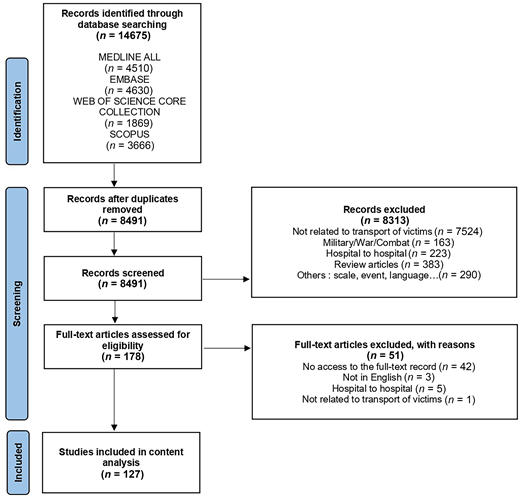
Following our final full-text screening, 127 were included in full-text review and content analysis, as shown in our PRISMA diagram (Figure 1).
3.4 Data extraction, analysis and interpretation
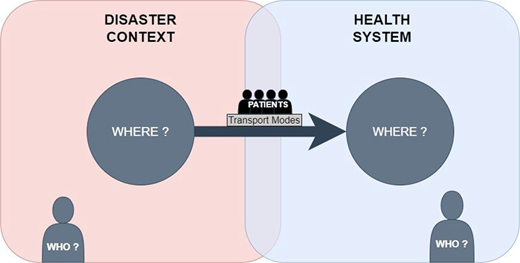
We developed a theoretical framework (Figure 2) to guide the data extraction and analysis of the included articles. Our framework is inspired by the humanitarian logistics literature, as we aimed to capture the flow across disaster-affected systems and actors (Altay et al., 2018; Jahre et al., 2009). As is typical in humanitarian logistics, we focus on the context, locations (where?), actors (who?) and the material, financial and informational flows that bridge the different locations and disaster and health system contexts. We also include the how? in terms of transportation modes, and choices that need to be made to align and coordinate. As such, the framework follows the patient from the disaster hit zone to the healthcare system, where patients receive acute care. Because these frameworks are related to humanitarian logistics but not specifically to patient logistics in disasters, we adapted ours to be composed of the main concepts relevant to patient logistics with the locations of departure and arrival, the transportation modes, the actors involved and the decision-problems mentioned.
We start from the hypothesis that the existing literature focuses mostly on ambulances, hospitals and health workers. In addition, we hypothesize that the health and disaster-related literatures are largely separated, and that they are characterized by different goals, perceptions, approaches and priorities, with patient transportation not correctly understood through reductive transport modes, actors, locations and logistics concepts.
The data extracted from the full text review was analyzed to highlight the representation of each concept in the literature. We also use tables as well as a Sankey diagram to showcase the prominent paths that exist in the literature.
4. Results
As noted in the PRISMA diagram (Figure 1) a total of 127 studies were included in the final review for content analysis. We outline the key results in the following sections.
4.1 Scoping the field: journals and methodologies
Table 1 shows the main journals represented in the included studies. By classifying all the articles included in our study (n = 127) into the broad domain categories of “health”, “disaster” or “other,” we observe that the health journals dominate the scientific discourse, with 92 articles from health-related journals (76%), versus 5 from disaster-related journals. The most prominent journal is Prehospital Disaster Medicine (n = 23), covering mostly health-related issues on how to transport patients without aggravating their conditions (Kondo et al., 2012; Yancey, 1990), what lessons derive from disasters when it comes to the prehospital patient trajectory (Schwartz et al., 2006), the role of emergency medical services (Leiba et al., 2005; Maningas et al., 1997; Pokorny, 1999) or the evaluation of patient conditions in disasters (Emami et al., 2005). While almost all journals presented in Table 1 focus on studies within the health domain, the exception is Annals of Operational Research which is an outlet focusing on humanitarian operations management, including articles on transporting disaster victims (Jin et al., 2015).
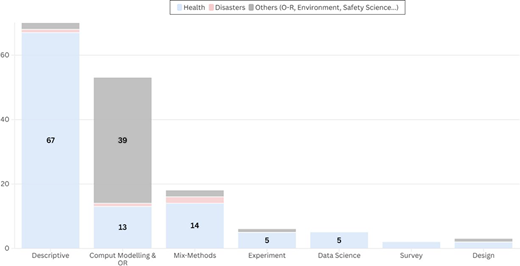
Finally, we analyzed the methods used in the included studies. Figure 3 shows that descriptive studies are the most common, representing case studies of disasters (n = 70), followed by computational modeling and operations research/optimization studies (n = 53). Other types of approaches, ranging from data science (which represents studies using algorithms, statistical methods and machine learning techniques to analyze large data sets and extract meaningful insights, (n = 5), experiments which are testing hypotheses (in laboratories, simulations or field settings) to observe cause-and-effect relationships (n = 6) to mixed-methods representing studies combining both qualitative and quantitative approaches (n = 18) are less common. Figure 3 also shows that in the disaster literature, simulation modeling and optimization dominate (Aringhieri et al., 2022; Dean and Nair, 2014; Liu, 2020; Yassin et al., 2022; Zhu et al., 2023). This can be explained by the rich tradition and use of operations management in humanitarian logistics. Conversely, the health literature leans toward descriptive methods, exploring social, cultural and behavioral aspects (Hai et al., 2014; Muzzammil et al., 2021; Sasaki et al., 2017; Waage et al., 2006).
4.2 Disasters, time and spatial contexts covered
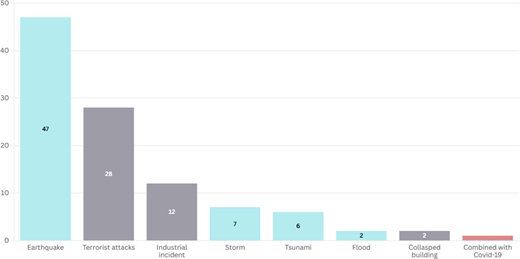
We identified a large variety of disaster types that we separated into two categories: disasters caused by natural hazards in light blue (n = 62 out of 105) and human-made disasters in grey (n = 43 out of 105) in Figure 4. The disasters addressed are mostly earthquakes (n = 47 with 2 combined with a tsunami) and terrorist attacks (n = 28), most likely due to the immediate and severe health impacts of these disasters (Mirhashemi et al., 2007; Taviloglu et al., 2005), while climate-related disasters, such as storms, wildfires and floods, have received less attention. One additional category represented in red on our figure is the combination of a disaster with COVID-19 pandemic; it is the case for the Beirut port explosion (Hallal et al., 2021).
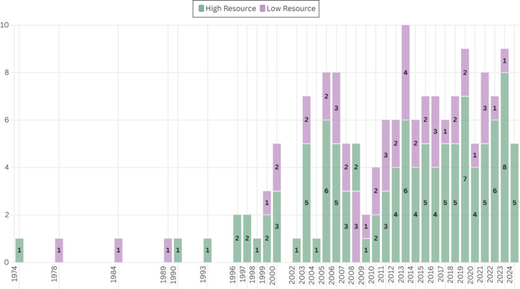
Figure 5 provides a timeline of publications on patient logistics in disasters. It shows that since the first articles on patient logistics in 1974 and in the late 1990s, there has been a consistent interest in the topic. The topic is also recent, with humanitarian and health logistics being relatively recent research fields from the 1990s.
Major sudden-onset disasters created peaks in subsequent years, such as the Boxing Day Tsunami in 2004 (Dries and Perry Jr, 2005), the Haiti Earthquake in 2010 (Pape et al., 2010) or the Fukushima disaster in 2011 (Yasui, 2014).
Even though low and lower-middle-income countries are disproportionately affected by sudden-onset disasters, only 48 out of the 178 studies are situated in these regions. The majority of studies on patient logistics in sudden-onset disasters are concentrated in the USA, Iran, Japan and China, represented here in the high or upper middle income category (World, 2010) in green. Therefore, the disproportionate impact of sudden-onset disasters on lower-income countries raises the question of why fewer studies originate from these regions.
4.3 Who? Overview of actors
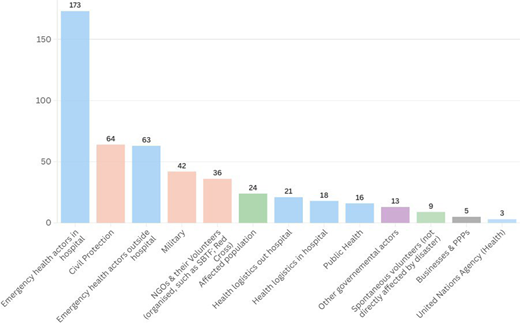
Figure 6 shows that most actors considered in patient logistics literature are organized emergency services (health-focused) (n = 299), represented in blue on the figure. Following them, is organized emergency services (nonhealth) (n = 142) in red, communities (n = 33) in green, actors from the private sector (n = 5) in grey and governments (n = 13) in purple. It seems that the literature focuses mostly on organized emergency services health-related with most mentions being emergency health actors in hospitals (n = 173). Patient(s) are therefore located in a hospital and taken care of by health workers (Ausset et al., 2016; Kondo et al., 2012; Li et al., 2021). If not in a hospital context, it includes emergency health actors outside of hospital (n = 63), shown in the second blue column on Figure 6. Other health actors mentioned in the literature are Public Health actors (n = 16). The last category making the link between sudden-onset disaster and health actors and flow is the “Health logistics operating outside the hospital (n = 21) and inside (n = 18) the hospital” (Figure 6), which represents the actors in charge of dispatching patients, organizing the flow, planning and triaging the victims.
Another group of actors are the emergency responders and civil protection actors (n = 64), represented in red in Figure 6: the police (Bolling et al., 2007; Gamberini et al., 2021; Pokorny, 1999), the army (Djalali et al., 2011; Kang et al., 2015; Walk et al., 2012) and the firefighters (Barrier, 1989; Kondo et al., 2012; Maningas et al., 1997; Waage et al., 2006), often first responders as well, coming to give first aid to victims in need of immediate attention and transporting them to healthcare facilities as well.
The actors underrepresented in the literature are the communities, who are often present on the disaster site, and rush to assist and transport victims to healthcare facilities themselves (Djalali et al., 2011; Mirhashemi et al., 2007; Nia et al., 2008). In the literature, these groups are described as “affected population” (n = 24) or as “spontaneous volunteers” (n = 9), both represented in green in Figure 6. Additional actors represented in the literature are private companies (Djalali et al., 2011), private public partnerships (Yasui, 2014).
4.4 Where? Locations, facilities and main flows
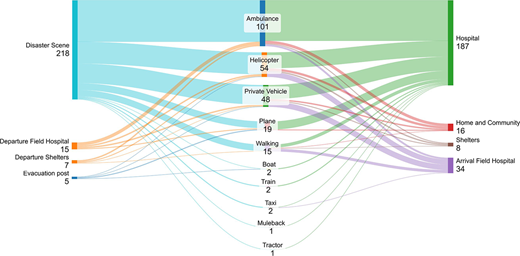
The Sankey diagram (Figure 7) shows the trajectory of patients, consisting of a departure and an arrival point, via a transport mode. Figure 7 highlights that the most prominent pathway departs from the disaster scene (n = 218) to hospitals (n = 187) by using ambulances (n = 101), helicopters (n = 54) and private vehicles (n = 48). However, other transport modes are also discussed, ranging from walking (n = 15) to farm tractors (n = 1) (Sarani et al., 2022), mules (Zafren et al., 2018), taxis (n = 2) (Noji et al., 1993) or boats (n = 2) (Schwartz et al., 2006).
The most represented health facility is the hospital. Other options such as alternative care locations like homes and communities (n = 16), field hospitals (n = 34) (Helou et al., 2022) or to shelters (n = 8) (Edwards et al., 2021) are less represented in the included studies.
4.5 How? Decision problems
Patient flow logistics in disasters involves complex, interconnected decision problems spanning facility location, patient allocation, routing and scheduling. Table 2 presents an overview of the optimization approaches identified in the literature, showing both the predominant methods, criteria and solution methods.
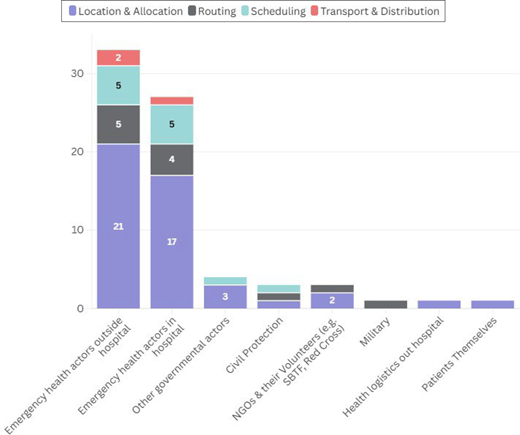
The literature concentrates on three primary decision categories: facility location, patient allocation and routing/scheduling. Allocation (n = 19) and location (n = 18) algorithms dominate, frequently combined as location-allocation problems (n = 11) (Aghaie and Karimi, 2022; Caglayan and Satoglu, 2021; Caunhye et al., 2015; Dean and Nair, 2014; Gao et al., 2017; Ghasemi et al., 2019; Liu et al., 2019; Mousavi et al., 2022; Pouralia et al., 2018; Salman and Gül, 2014; Sirbiladze et al., 2024; Sun et al., 2021; Yassin et al., 2022). Routing (n = 6) and scheduling (n = 5) receive considerably less attention. Few studies integrate routing with location decisions (Aghaie and Karimi, 2022; Memari et al., 2020; Xu et al., 2016) or combine routing and scheduling (Munawar et al., 2023). This distribution reveals a methodological bias toward static placement decisions over dynamic approaches that manage patient flows across disrupted networks.
Most studies use linear programming (LP) or mixed integer programming (MIP) formulations (Pınarbaşı et al., 2022; Salman and Gül, 2014; Yassin et al., 2022; Zhang, 2018), despite their limited suitability for disaster contexts. These approaches assume stable parameters and certainty rarely available during emergencies. While computationally tractable, such formulations require simplifying assumptions, including homogeneous resources, constant travel speeds and simplified routing (Sun et al., 2021), potentially underestimating response complexity and delivery times.
Many patient flow logistics problems are inherently NP-hard (nondeterministic polynomial time), meaning exact solution methods scale poorly with problem size and realism. Examples include facility location with capacity constraints, vehicle routing with time windows and integrated routing-scheduling problems. However, only two papers explicitly acknowledge this computational complexity (Babaqi and Vizva′ri, 2023; Shavarani and Vizvari, 2018), suggesting that complexity considerations remain largely implicit in model design. When confronted with computational intractability, studies typically employ heuristic methods, predominantly genetic algorithms (NSGA or NSGA-II) or ϵ-constraint approaches, which provide feasible but not necessarily optimal solutions.
Disaster response is characterized by high uncertainty and dynamic conditions, yet most models use deterministic formulations that inadequately represent these realities. Some studies attempt to address uncertainty through robust optimization (Kaviyani-Charati et al., 2018) or stochastic programming (Caglayan and Satoglu, 2021; Li et al., 2020a), but these approaches typically reduce uncertainty to a limited set of scenarios. Behavioral and organizational uncertainty are largely absent, including patient self-transport decisions, community responses and changing care capacity availability.
The predominance of traditional optimization methods reflects a preference for computational tractability over behavioral realism, potentially limiting the practical relevance of the resulting models (Baharmand et al., 2022; Kunz et al., 2017). Few papers consider innovative methodological approaches: one study uses agent-based modeling, despite its potential for capturing emergent coordination beahviours. Integration of machine learning and artificial intelligence approaches is similarly limited, despite its potential (Christhia et al., 2025).
“NP’ indicates the problem is considered NP-hard (no known polynomial-time algorithm exists). Total: 31 optimization studies. LP/MIP approaches: 20 studies (65%); Heuristic/metaheuristic: 11 studies (35%). Single-objective: 21 studies (68%); Multiobjective: 10 studies (32%). Only two studies explicitly address fairness objectives.
Regarding optimization criteria, single-objective approaches dominate (n optimization = 21 of 31 studies). Humanitarian logistics distinguishes three foci for optimization: effectiveness, efficiency and fairness-based approaches (Holgu′ın-Veras et al., 2013). Our review highlights stark differences in focus: 23 studies prioritize efficiency objectives such as minimizing travel distance (Mousavi et al., 2022; Munawar et al., 2023), time (Bronfman et al., 2022; Caglayan and Satoglu, 2021; Caunhye et al., 2015; Gao et al., 2017; Ghasemi et al., 2019; Kaviyani-Charati et al., 2018; Munawar et al., 2023; Pınarbaşı et al., 2022; Salman and Gül, 2014; Shavarani and Vizvari, 2018; Sirbiladze et al., 2024; Wilson et al., 2013a; Xu et al., 2016) or costs (Aghaie and Karimi, 2022; Caunhye et al., 2015; Ghasemi et al., 2019; Li et al., 2020b; Liu, 2020; Liu et al., 2019; Memari et al., 2020; Mousavi et al., 2022; Salman and Gül, 2014; Sirbiladze et al., 2024; Tlili et al., 2018; Yassin et al., 2022). Sixteen studies focus on effectiveness objectives, minimizing casualties or maximizing survival rates (Dean and Nair, 2014; Jin et al., 2015; Liu et al., 2019; Niyazi and Behnamian, 2023; Sun et al., 2021; Wilson et al., 2013a; Zhang et al., 2018). Nine studies combine effectiveness and efficiency criteria. Fairness receives minimal attention, appearing in just two studies Liu (2020); Pouralia et al. (2018), despite widespread acknowledgment that disasters disproportionately affect vulnerable populations (Coleman et al., 2024). This result shows that the formulation of objective functions and tradeoffs between efficiency, effectiveness and fairness objectives receives insufficient attention in current literature.
Simulation models complement optimization approaches by exploring system behavior under uncertainty. However, the methodological diversity of the papers identified in this review is limited, with discrete event simulation predominating. The single agent-based model represents a significant gap given this approach’s value for studying emergent beahviours in complex systems. Most simulation studies focus on resource allocation (seven of nine papers) rather than behavioral and coordination dynamics, limiting insights into actor interactions and emergent response patterns. Scenario analysis varies widely (3–300 scenarios), but none explicitly model uncertainty in patient, community or responder behavior. Performance metrics similarly emphasize efficiency measures (transport time, throughput, costs) (Christie and Levary, 1998; Mas et al., 2022; Mills et al., 2018; Su and Jin, 2008; C, aglayan and Satoglu, 2022), over health-related effectiveness criteria (Carr et al., 2016; Hager et al., 2024; Shin and Lee, 2020; C, aglayan and Satoglu, 2022) (Table 3).
When combining decision problems with actor categories (Figure 8), similar patterns emerge as in the Actor Section. Decision problems focus on strategic and static issues of location and allocation that are predominantly addressed through the lens of emergency health actors in or outside hospitals, overlooking the broader range of actors identified in our analysis and neglecting the responses of patients, communities and informal actors.
5. Discussion
In this section we reflect back on the results and present our key findings.
Our findings show a great range of actors, locations, transport mode, decisions and methods of patient flow logistics. Table 4 synthesizes the main findings from the scoping review, including the aspects that the current literature focuses on and the research gaps that remain.
5.1 Disaster types
Our review shows that the literature focuses on patient flow logistics in the aftermath of earthquakes and terrorist attacks, likely because of the clear and immediate impact on human health. Other types of disasters have not been studied to the same extent, especially climate-related disasters such as floods, storms or wildfires. Yet, also these types of disasters come with a significant surge of patients, ranging from burns to hypothermia or other injuries (Agrawal et al., 2013). In addition, climate-related disasters are expected to become increasingly frequent and severe due to global climate change (Visser et al., 2014). This leads us to the first finding: the literature focuses primarily on earthquakes and terrorist attacks, and limited attention is given to other disaster types despite their frequency.
Therefore, there are research opportunities in shifting the focus toward a broader set of disaster types, along with their secondary health effects. We mention here especially outbreaks of infectious diseases (Abdullah et al., 2024), well-documented for cases where water, sanitation and hygiene infrastructures are destroyed, or the security concerns or cross-contamination after terrorist attacks. Addressing the specifics of the different hazards will require interdisciplinary collaborations with specialists on e.g. epidemiology and public health, trauma care and mental health or the specifics of treating CBRN patients. For modeling, this could mean including new constraints or objective functions on how patients need to be transported or treated, or it may mean coupling optimization with simulation models (Buyuktahtakin et al., 2018) that are typically used in epidemiology (system dynamics or agent-based models [Aylett-Bullock et al., 2022]).
5.2 Actors
Our analysis of the actors and associated decisions were presented in Sections 4.3, 4.4 and 4.6. We identified that the literature primarily focuses on formal actors (such as hospital personnel or emergency responders), while patients or “victims” are seen as a passive entity that is being transported to where they receive assistance or care, neglecting the well-known phenomenon of self-organization in disasters (Comfort, 1994). This focus on formal actors (Emergency health professionals in and out of hospitals, civil protection, military and NGOs) is also represented by the choice of departure/arrival points and transport modes, all of which focus on formalized care institutions. This implies that the role of community actors, volunteers and affected populations as providers of assistance, care or transportation (Gingerich and Cohen, 2015; Hai et al., 2014; World Health Organization, 2007) remains largely unstudied. Yet, informal actors frequently play a crucial role in disaster response, particularly in the immediate aftermath when they are often the first to reach the scene (Holgu′ın-Veras et al., 2012; Patterson et al., 2010). This leads to our second finding: the literature focuses on formal actors such as health providers or civil protection bodies, and communities are largely portrayed as passive patients or victims.
A first step in integrating communities and volunteers is mapping out and understanding their behavior, preferences, objectives and social networks. This is difficult to capture given the nature of sudden-onset disasters and the personal objectives of each individual, which may differ according to the situation they are in, their priorities, how vulnerable they can be at the moment or how they perceive risk.
In climate science, longitudinal surveys are often used to understand risk preference, population movements and adaptation, connected to theories from economics (such as prospect theory) or psychology (e.g. Protection motivation theory) (Aerts et al., 2018). Yet, in disasters, these surveys need to be complemented with field research and experiments to understand behavioral changes that typically occur within a relatively short time frame. Further research opportunities arise, especially in understanding coordination (see also Daddoust et al., 2021; Holgu′ın-Veras et al., 2012; Nespeca et al., 2020). Here, also network science (Kim and Hastak, 2018) and agent-based modeling could be used to study the connections between diverse groups (Nespeca et al., 2023), or the emergence of boundary spanners.
5.3 Emergent behavior
We described decision problems addressed in the included studies in Section 4.5 While some of the studies that we investigated aimed to understand decision behavior empirically (Aerts et al., 2018; Kowalski-Trakofler et al., 2003; Thakur et al., 2022; Zulfa et al., 2024), most studies, especially in the field of optimization and simulation models, assume that decision-makers follow standardized rules and protocols (Aringhieri et al., 2022; Memari et al., 2020; Munawar et al., 2023; Tlili et al., 2018). However, it is well-documented that in crises, decision-makers and communities do not act rationally (Comes et al., 2020; Holgu′ın-Veras et al., 2012; Klein et al., 1986). Therefore, emergent behaviors, which are unpredictable and often irrational, play a significant role in disasters and significantly affect overall operations, creating coordination problems leading to inefficiencies (Aerts et al., 2018; Altay and Green, 2006; Provitolo et al., 2011; Quarantelli, 1985). This leads us to our third finding: actors are largely assumed to follow standardized protocols, often ignoring emergent roles or behavioral changes typical for disasters.
Complexity science is promising to understand the emergent patterns that arise from the interaction of diverse and heterogeneous actors (Helbing et al., 2007). This entails both the interaction between people, as well as the interaction between different systems at multiple scales, in our case, most prominently the health, logistics and disaster response systems. Applications in urban resilience have shown that network science, and new computational tools such as digital twins, can be helpful to understand how behavioral change in one system cascades into other systems or networks (Caldarelli et al., 2023). These models and insights, in turn, can feed back into or be coupled with optimization models.
5.4 Objective functions
In the humanitarian logistics literature, broadly three types of objectives are recognized: related to effectiveness, efficiency and equity (or fairness) (Holgu′ın-Veras et al., 2013). However, we find that most studies focus on either effectiveness (mortality rates, number of survivors), or on efficiency (e.g. transportation time, costs) as described in Section 4.5 and Table 2. The concept of fairness (equity), is largely neglected, even though it has been recognized as essential (Holgu′ın- Veras et al., 2013; Paciarotti et al., 2021; Soden et al., 2023), and also is increasingly prominent in the discourse around disaster response and resilience (Coleman et al., 2024). Only a few studies pursued a multiple criteria approach, combining effectiveness and efficiency criteria (Carr et al., 2016). Optimization approaches must account for the ethical and moral dilemmas typical of disaster logistics (Alsoussi et al., 2024; Comes, 2024), and formulate them into clear tradeoffs. This leads us to our fourth and final finding: the literature focuses primarily on efficiency (and effectiveness), while less attention is given to multiple objectives and fairness.
Disaster preparedness and response models should not only optimize operational costs and delivery time but also ensure that services are distributed equitably (Soden et al., 2023). While efficiency and effectiveness are crucial, they do not capture the full scope of needs in disaster-stricken areas, especially for marginalized populations.
Equity in itself is a multifaceted concept that entails distributional, capacity and procedural aspects (Coleman et al., 2024). To capture equity and fairness, the humanitarian logistics literature has proposed to use welfare economics principles around deprivation costs (Holgu′ın-Veras et al., 2013). Others have also advocated for access or accessibility-based metrics to capture the distributional and capacity-related aspects of equal access to (health) infrastructure and care (Coleman et al., 2024). For procedural equity, in the field of health, citizen science is proposed to engage communities and marginalized populations and develop equitable alternatives (Rosas et al., 2022). In sum, a comprehensive approach is needed that measures and integrates the different aspects of resilience into quantifiable objective functions.
Regarding tradeoffs between the objective, multicriteria decision analysis offers a plethora of approaches to formalize the relation between different criteria and objectives (Gutjahr and Nolz, 2016). What is missing here is an understanding of the different preferences and objectives across the different actors and stakeholders. Here, decision experiments and serious games can help to create an understanding of how different actors prioritize the different objectives in varying circumstances (Lukosch and Comes, 2019). Furthermore, given the high-stakes nature of disasters, nonlinear aggregation and taboo tradeoffs may need to be considered (Chorus et al., 2017). These taboo tradeoffs have already proven successful to model moral preference in the context of logistics and transportation, yet have not been used in the context of humanitarian disasters yet.
5.5 Conceptual framework for patient logistics
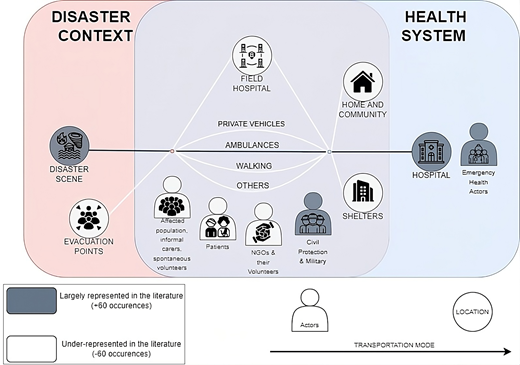
Our scoping review is the first to focus on the different aspects of patient logistics in disasters, including the actors involved, flows and decisions problems. Based on our findings, we designed a conceptual framework of patient logistics in disasters shown in Figure 9. The model highlights both well-represented (>60 occurrences out of 127) and underrepresented (<60 occurrences out of 127) elements within the literature, representing patient flows from disaster contexts.
The model highlights that the disaster context and the health care system are deeply linked. Besides the movement of patients, there is a continuous stream of information and resources across both realms. Patient flows typically originate from the disaster context (red section). From there, patients enter the health system (blue section), receiving care in hospitals, shelters, homes or communities. Despite distinct priorities in terms of operations (transporting victims quickly vs giving care) and focus points (efficiency vs effectiveness), both contexts must exchange information and resources to coordinate and align. Transport modes, shown as arrows connecting facilities, include ambulances and private vehicles, with less common modes such as walking, boats or even mules.
The flow is managed by various actors: emergency services dominate the disaster context, while health workers are prominent in hospitals. However, informal communities and carers, often significant in early response and care, are underrepresented. There are clear overlaps between these actors, suggested also by one of the expanded definitions of a health system by the World Health Organization, where they assert that a health system “consists of all organizations, people and actions whose primary intent is to promote, restore or maintain health” (World Health Organization, 2007), which can include actors outside the formal health providers. In the context of patient logistics during disasters, the inclusion of the various actors as conceptualized in Figure 9 becomes especially pertinent.
In conclusion, the model outlines the key elements of patient logistics, revealing gaps, especially regarding informal actors, and guiding the paper’s focus on well-represented and underexplored aspects, their consequences and proposed solutions.
6. Conclusions
This study set out to explore the key elements representing patient logistics during disasters, aiming to identify the principal elements, gaps in the existing literature and recommend approaches to address them.
We are convinced that a more comprehensive research approach is needed, one that expands the scope of disaster types studied, accounts for the contributions of both formal and informal actors, the consideration of emergent behaviors, and incorporates the three E’s (effectiveness, efficiency and equity) in optimization studies.
The identification of gaps in disaster logistics models suggests that broader study scopes could better equip societies to handle the future threats of disasters by including climate disasters, informal actors, the emergent behaviors of all actors and the three E’s.
In addition, our conceptual model places most patient logistics elements at the intersection of the disaster context and the health system. Despite this strong intersection, we noticed that priorities differ across the different research fields addressing the same patient logistics challenge, that is, while disaster response prioritizes rapid transport, healthcare focuses on effective treatment, although both systems must work together for better overall responses.
6.1 Implications for practice and society
For practitioners, this review highlights the need to broaden disaster preparedness beyond the dominant focus on earthquakes and terrorist attacks. Tailoring strategies, such as integrating waterborne disease disruptions in flood scenarios, can significantly improve response effectiveness. Our findings also emphasize the value of engaging communities and patients themselves as active agents in disaster response rather than passive recipients of care. This includes training community volunteers in basic triage and patient transport, integrating them into disaster simulations and co developing localized logistics plans, particularly in rural or under-served areas. Such approaches can enhance local response capacity, foster community resilience and ensure that interventions are more inclusive and contextually relevant.
Finally, disaster logistics frameworks should balance efficiency, effectiveness and fairness. Embedding equity-based performance indicators alongside traditional efficiency metrics can help ensure that responses are both rapid and just. Furthermore, decision-making should be embedded into planning and training, allowing responders to move beyond rigid, protocol-driven approaches.
Flexible playbooks, supported by realtime data and informed by behavioral science, can better accommodate the improvization and emergent behaviors often required in the field. From a societal perspective, these shifts can contribute to more inclusive, ethically sound and effective disaster response systems, ultimately improving trust in institutions and strengthening social cohesion in affected communities.
6.2 Limitations
Several limitations have been identified throughout our scoping review process. First, no formal quality assessment was conducted beyond peer-reviewed academic and conference papers selection. In addition, grey literature was excluded, potentially overlooking relevant insights from nonacademic sources. Furthermore, the theoretical framework used may introduce unintended bias and restrict the scope of the review, as the framework’s categories defined the boundaries of the analysis in terms of elements integrated in our search query. Finally, our study is limited to studies in English, which may have excluded global studies focusing on other types of disaster in different health systems with different disaster types and potentially a different group of included actors in disaster response.
Acknowledgements
This research is conducted and funded as part of the Pandemic Disaster Preparedness Center Front-runner project 3: “Pandemic Lessons for Flood Disaster Preparedness.” The authors acknowledge the Pandemic Disaster Preparedness Center for their funding and support.
References
Appendix 1
The following platforms were used and all files were combined into a single.ris file with all the references.
Medline
(exp * Natural Disasters/OR * Disaster Planning/OR * Disaster Medicine/OR * Mass Casualty Incidents/OR * Disasters/OR * Cyclonic Storms/OR exp * Terrorism/OR exp * Radioactive Hazard Release/OR ((Accidents, Occupational/OR Disasters/) AND (exp * Industry/)) OR exp * Chemical Hazard Release/OR exp * Bombs/OR (((natural* OR Man-Made* OR ManMade*) ADJ3 (disaster* OR postdisaster* OR catastroph*)) OR flood* OR tsunami* OR Earthquake* OR Earth-quake* OR storm* OR snowstorm* OR wildfire* OR wild-fire* OR volcan* OR Eruption* OR avalanche* OR hurricane* OR Cyclon* OR landslide* OR land-slide* OR Tidal-Wave* OR tornado* OR terroris* OR (terror* ADJ3 attack*) OR bioterroris* OR ((nuclear* OR occupation* OR industr* OR factor* OR chemical*) ADJ3 (accident* OR disaster* OR incident*)) OR bomb* OR mass*-casualt* OR mass*-injur* OR Major-incident* OR mass*-catastroph* OR Major-catastroph*).ti. OR (disaster* OR postdisaster* OR catastroph*).ti.) AND (Transportation of Patients/OR Triage/OR exp Ambulances/OR Ambulance Diversion/OR (((patient* OR wounded* OR injured* OR victim* OR interhospital* OR prehospital* OR location* OR interlocation* OR hospital* OR casualt* OR helicopter* OR humanitarian* OR medical-service*) ADJ3 (transport* OR triage* OR severit*-assess* OR Allocat* OR Transfer* OR Distribut* OR maldistribut* OR processing*)) OR ambulance* OR evacuat* OR field-hospital* OR mobile-hospital* OR (alternat* ADJ3 (transport* OR Transfer* OR destinat*))).ab,ti,kw. OR (triage*).ti.) NOT (* Accidents, Traffic/OR exp * Transportation/OR (traffic* OR train* OR railway* OR railroad* OR highway* OR crash* OR airplane* OR aircraft* OR airplane* OR aircraft*).ti.) AND english.la.
Embase
(’natural disaster’/mj/de OR ’disaster planning’/mj/de OR ’disaster medicine’/mj/de OR ’mass disaster’/mj/de OR disaster/mj/de OR flooding/mj/de OR tsunami/mj/de OR earthquake/mj/de OR ’storm (weather)’/mj/de OR snowstorm/mj/de OR wildfire/mj/exp OR volcano/mj/de OR avalanche/mj/de OR hurricane/mj/de OR landslide/mj/de OR tornado/mj/de OR terrorism/mj/exp OR ’nuclear accident’/mj/exp OR (’occupational accident’/mj/de AND (industry/mj/exp)) OR ’chemical accident’/mj/exp OR bomb/mj/exp OR (((natural* OR Man-Made* OR ManMade*) NEAR/3 (disaster* OR postdisaster* OR catastroph*)) OR flood* OR tsunami* OR Earthquake* OR Earth-quake* OR storm* OR snowstorm* OR wildfire* OR wild-fire* OR volcan* OR Eruption* OR avalanche* OR hurricane* OR Cyclon* OR landslide* OR land-slide* OR Tidal-Wave* OR tornado* OR terroris* OR (terror* NEAR/3 attack*) OR bioterroris* OR ((nuclear* OR occupation* OR industr* OR factor* OR chemical*) NEAR/3 (accident* OR disaster* OR incident*)) OR bomb* OR mass*-casualt* OR mass*-injur* OR Major-incident* OR mass*-catastroph* OR Major-catastroph*):ti OR (disaster* OR postdisaster* OR catastroph*):ti) AND (’patient transport’/exp OR ’patient triage’/de OR evacuation/de OR ambulance/de OR (((patient* OR wounded* OR injured* OR victim* OR interhospital* OR prehospital* OR location* OR interlocation* OR hospital* OR casualt* OR helicopter* OR humanitarian* OR medical-service*) NEAR/3 (transport* OR triage* OR severit*-assess* OR Allocat* OR Transfer* OR Distribut* OR maldistribut* OR routing* OR processing* OR logistic* OR flow* OR handling* OR planning*)) OR ambulance* OR evacuat* OR field-hospital* OR mobile-hospital* OR (alternat* NEAR/3 (transport* OR Transfer* OR destinat*))):ab,ti,kw OR (triage*):ti) NOT (’traffic accident’/mj OR traffic/mj OR (traffic* OR train* OR railway* OR railroad* OR highway* OR crash* OR airplane* OR aircraft* OR airplane* OR aircraft*):ti) NOT ([conference abstract]/lim AND [2000–2020]/py) AND [english]/lim.
Web of science
TI=((((natural* OR Man-Made* OR ManMade*) NEAR/2 (disaster* OR postdisaster* OR catastroph*)) OR flood* OR tsunami* OR Earthquake* OR Earth-quake* OR storm* OR snowstorm* OR wildfire* OR wild-fire* OR volcan* OR Eruption* OR avalanche* OR hurricane* OR Cyclon* OR landslide* OR land-slide* OR Tidal-Wave* OR tornado* OR terroris* OR (terror* NEAR/2 attack*) OR bioterroris* OR ((nuclear* OR occupation* OR industr* OR factor* OR chemical*) NEAR/2 (accident* OR disaster* OR incident*)) OR bomb* OR mass*-casualt* OR mass*-injur* OR Major-incident* OR mass*-catastroph* OR Major-catastroph*) OR (disaster* OR postdisaster* OR catastroph*)) AND (TI=(((patient* OR wounded* OR injured* OR victim* OR interhospital* OR prehospital* OR location* OR interlocation* OR hospital* OR casualt* OR helicopter* OR humanitarian* OR medical-service*) NEAR/2 (transport* OR triage* OR severit*-assess* OR Allocat* OR Transfer* OR Distribut* OR maldistribut* OR routing* OR processing* OR logistic* OR flow* OR handling* OR planning*)) OR ambulance* OR evacuat* OR field-hospital* OR mobile-hospital* OR (alternat* NEAR/2 (transport* OR Transfer* OR destinat*))) OR TI=(triage*)) NOT TI=((traffic* OR train* OR railway* OR railroad* OR highway* OR crash* OR airplane* OR aircraft* OR airplane* OR aircraft*)) AND DT=(article) AND LA=(english).
Scopus
TITLE((((natural* OR Man-Made* OR ManMade*) W/2 (disaster* OR postdisaster* OR catastroph*)) OR flood* OR tsunami* OR Earthquake* OR Earth-quake* OR storm* OR snowstorm* OR wildfire* OR wild-fire* OR volcan* OR Eruption* OR avalanche* OR hurricane* OR Cyclon* ORlandslide* OR land-slide* OR Tidal-Wave* OR tornado* OR terroris* OR (terror* W/2 attack*) OR bioterroris* OR ((nuclear* OR occupation* OR industr* OR factor* OR chemical*) W/2 (accident* OR disaster* OR incident*)) OR bomb* OR mass*-casualt* OR mass*-injur* OR Major-incident* OR mass*-catastroph* OR Major-catastroph*) OR (disaster* OR postdisaster* OR catastroph*)) AND (TITLE(((patient* OR wounded* OR injured* OR victim* OR interhospital* OR prehospital* OR location* OR interlocation* OR hospital* OR casualt* OR helicopter* OR humanitarian* OR medical-service*) W/2 (transport* OR triage* OR severit*-assess* OR Allocat* OR Transfer* OR Distribut* OR maldistribut* OR routing* OR processing* OR logistic* OR flow* OR handling* OR planning*)) OR ambulance* OR evacuat* OR field-hospital* OR mobile-hospital* OR (alternat* W/2 (transport* OR Transfer* OR destinat*))) OR TITLE(triage*)) AND NOT TITLE((traffic* OR train* OR railway* OR railroad* OR highway* OR crash* OR airplane* OR aircraft* OR airplane* OR aircraft*)) AND LANGUAGE(en).