


The purpose of this paper is to construct a typology of a disaster that informs humanitarian-relief supply chain (HRSC) design across the stages of disaster relief.
In addition to an interdisciplinary review of pertinent literature, this paper utilises a typology construction method to propose theoretically and methodologically sound dimensions of disasters.
Whilst semantic arguments surrounding the concept of a “disaster” are ongoing, the authors propose three typologies based upon six dimensions that serve as interdependent variables informing resultant HRSC design considerations. These are speed of onset, time horizon, spatial considerations, affected population needs, perceived probability of occurrence and perceived magnitude of consequence. These combinational and independent relationships of the variables offer insight into key HRSC design-making considerations.
The study improves conceptual knowledge of disasters, distilling the concept to only the dimensions applicable to HRSC design, omitting other applications. The typologies provide empirical cell types based on extant literature, but do not apply the models towards new or future phenomena.
This paper provides HRSC practitioners with normative guidance through a more targeted approach to disaster relief, with a focus on the impacted system and resulting interactions’ correspondence to HRSC design.
This paper provides three typological models of disasters uniquely constructed for HRSC design across the various stages of disaster relief.
1. Introduction
Disasters affect populations and infrastructure systems, rendering them unable to fully recover or continue sustaining themselves without exogenous intervention (Whybark, 2007). The resulting social and economic consequences trigger a mass mobilisation of those seeking to provide humanitarian relief (Maghsoudi and Pazirandeh, 2016; Santos et al., 2014). Conceptually, disasters result in a sudden, largely unexpected surge in demand that cannot be served by existing mechanisms, thus requiring humanitarian relief supply chains (HRSCs) to facilitate recovery and continued viability of the impacted system.
Recently, supply chains have been tasked with humanitarian relief, receiving considerable attention from scholars and practitioners. Particular focus has been placed on the role of design and its influence on aid delivery effectiveness, resultant lives saved and scale of human suffering alleviation (Kovács and Spens, 2007; Van Wassenhove, 2006).
Consistent with the design thinking tradition (Brown, 2008), supply chain performance (Beamon, 1999), capabilities (Melnyk et al., 2014), adaptability (Lee, 2004) and outcomes (Melnyk et al., 2010) are influenced by its design. Whilst there is no single model for supply chain design in all contexts (Melnyk et al., 2014), an important component of supply chain design is determining how an effective design is achieved that serves to meet relevant performance goals (Beamon, 1998). The current models used to design HRSCs, although flawed, are a product of decision making under uncertainty and the uncertain environments in which they operate (Day et al., 2012). This gap creates a unique opportunity to reduce the uncertainty by better informing HRSC design by augmenting the practice of classifying events inclusive of perceived risk elements aimed at assisting practitioner decision-making rationale.
This paper seeks to develop conceptual guidance towards HRSC design, emphasising the role of conceptualisation towards measurement and theory building (Wacker, 2004). Viewing communities struck by disasters as systems under risks, this paper proposes a number of independent variables (referred to as “dimensions”) that can inform HRSC design choices. These dimensions are presented in a typological format, reflecting the utility of such models as a means of both conceptualization and theory building. Although typologies are a common conceptualization technique towards understanding complex phenomena (Paré et al., 2015), rigorous development is necessary to avoid criticisms of oversimplifying complex phenomena (Collier et al., 2012; Doty and Glick, 1994). Accordingly, this paper follows a typology construction method discussed in Collier et al. (2012), in order to develop a rigorous disaster typology for HRSC design. This process seeks to address three criteria towards using typologies as theory-building tools: construct identification (e.g. independent variables), relationships between constructs being specified and falsifiability amongst the relationships (Doty and Glick, 1994).
This paper is organised as follows. The literature review looks at theoretical perspectives of disasters, namely about how conceptualising disaster events across various relief stages can assist HRSC design. Next, the methodology discusses the role of typologies as a means of both understanding complex phenomena, and as a theory building tool. Following this, relevant dimensions and their implications for HRSC design result in proposing three typology models. The resulting types of disasters are discussed, followed by conclusions and future research directions.
2. Literature review
2.1 Conceptualization of disasters
Various streams within the literature offer unique perspectives on disasters. Works within crises management conceptualise disaster events as the central unit of analysis, rather than focusing on available resources or the supply chain as the central unit of analysis (Roux-Dufort, 2007). Unique to disasters, the event itself (or a perception of its future occurrence) triggers the organisation of HRSC activities (Day et al., 2012). These activities are organised to satisfy the needs of affected populations, analogous to the procurement of a product or service to complete a particular job (Christensen et al., 2007).
Roux-Dufort (2007) expands upon this event-centric approach by viewing crises as a process, whereby a crisis event itself is the amplification of existing manifestations that emerge over time. A parallel argument exists in the risk analysis literature (Haimes, 2006), whereby manifestations of existing system states over time increase the vulnerability of the system towards disaster events. Another theoretical approach towards disasters is surprise management theory (Farazmand, 2007). This approach incorporates complex and chaos system theories (Paraskevas, 2006; Ritchie, 2004) towards an understanding of disasters as unpredictable, non-routine and non-linear events. Such an approach falls in contrast to the incubation process proposed by Roux-Dufort (2007), as disasters may possess a degree of predictability.
2.2 Theoretical perspectives on HRSCs
Theories within HRSC research are often borrowed from the supply chain management literature (Tabaklar et al., 2015). Supply chain management theories have long been developed (Carter et al., 2015; Defee et al., 2010), with systems theories (Boulding, 1956; Von Bertalanffy, 1950) and resource-based view (Wernerfelt, 1984) being the most commonly deployed theories within the discipline (Defee et al., 2010).
As HRSCs respond to surges in demand that cannot be met by existing mechanisms, external inputs are required to satisfy aid recipients’ needs (Day, 2014), with time to delivery being a common critical factor to minimise losses (Roni et al., 2016). Although the surge in demand bears conceptual similarities to commercial supply chains, the pattern of demand differs due to discrepancies surrounding demand rates (Beamon and Balcik, 2008); therefore, knowledge cannot be simply transferred from commercial to HRSC supply chains (Charles et al., 2016). Numerous considerations including information distortions (Day et al., 2009) and variance (including conflict) amongst goals and objectives between actors (Fahimnia et al., 2017; Nurmala et al., 2017) differentiate HRSCs from their commercial counterparts. Although HRSCs can learn from adopting commercial principles towards their operations (Cozzolino et al., 2012; Day et al., 2012), borrowing solely from commercial SCM theory runs the risk of potentially ignoring the unique differences between these two systems (Mays et al., 2012).
HRSCs as a project
Disasters and HRSC design appear to neither be driven by a source of supply or a readily observable demand, with neither approach appearing to be appropriate (Melnyk et al., 2014). However, HRSCs can be conceptualised as multiple concurrent projects (Crawford et al., 2013) that bare similarities with public project management tasks (Lin Moe and Pathranarakul, 2006). Linking SCM and projects is a common occurrence (Diran Wickramatillake et al., 2007; Gaudenzi and Christopher, 2016), and adopting such a perspective can be tied to value creation (Chang-Richards et al., 2017). Thus, it is proposed that viewing HRSCs as supply chains designed to serve the objectives of a project can facilitate clarity in design efforts and resulting effectiveness. However, conventional project management approaches possess numerous limitations concerning knowledge transferability towards the HRSC sphere (Vahanvati and Mulligan, 2017), comparable to mismatches between commercial and humanitarian supply chain theory (Mays et al., 2012). This necessitates the need for HRSC projects to be inherently flexible to mitigate the emergent nature of disaster transient responses (Crawford et al., 2013).
2.3 Disasters’ influence on HRSC design
Meanwhile, the design of HRSCs remains devoid of the normative guidance needed to effectively deliver aid to those affected by disasters. Attempts to derive such guidance from practice have not been reported to be fruitful, as reports by Thomas and Kopczak (2005) point to few disaster relief agencies paying attention to the design and implementation of supply chain or logistics management operations. Rather, HRSC operations typically involve most resources going to support the more visible aspects of disaster relief operations, and as a consequence, these may not be as effective and efficient as possible (Maon et al., 2009). Although there has been little conceptual discussion of disasters within the context of HRSCs, a popular argument views disaster relief as a multi-faceted, multi-stage process (Long, 1997; Nisha de Silva, 2001) that needs to be carried out by a dynamic and adaptive supply chain (Carter et al., 2015).
Analogous to a project with a clear definition of the situation and job to be done (Swink et al., 2017), one approach is the recognition of the delineation of disasters into a series of “stages” that reflect particular tasks (Kovács and Spens, 2007). Cottrill (2002) characterises the disaster management process into stages of planning, mitigation, detection, response and recovery. These stages have been further reinterpreted as three phases: preparation, immediate response and recovery (Kovács and Spens, 2007). Incorporating the stages of disaster relief into HRSC management is crucial towards understanding the unique nature of disasters (Besiou et al., 2011). As distinct phases have markedly differing requirements for HRSC design (Kovács and Spens, 2009; Kovács and Spens, 2007), each phase is discussed in terms of their design implications relative to disaster dimensions. It should be noted that these stages are interdependent; Maon et al. (2009) argue that these stages may overlap and occur simultaneously.
Preparation
In order for HRSCs to be designed adequately, knowledge about the assessment and planning of aid delivery to affected populations is required. Without adequate preparation, a system runs the risk of being unable to return to an acceptable level of performance post-disruption (Sheffi and Rice, 2005). The preparation stage involves the measures taken to mitigate the impact of a disaster and is regarded as essential to successful disaster responses (Glenn Richey et al., 2009; Kovács and Spens, 2007). By ensuring adequate preparation, practitioners reduce uncertainty surrounding disaster probability and magnitude by implementing strategies that shift the impact of such events towards an acceptable level in accordance with accepted risks and trade-offs (Crowther et al., 2007). Additionally, HRSCs may invest in holding additional inventory in reserve to increasing service levels (Roni et al., 2016), enhancing the capacity to meet surges in demand (Kamalahmadi and Parast, 2016; Sheffi and Rice, 2005). Other considerations during this stage include those pertaining to pre-positioning strategies (Heaslip and Barber, 2014; Long and Wood, 1995) or efforts made to acquire additional flexibility in logistics arrangements proactively (Heaslip and Barber, 2014).
Immediate response
Depending on the nature of the demand, there may be a sudden point in time that necessitates response. The immediate response phase will involve operations focused on providing assistance to the affected population quickly and preventing further degradation (Eriksson, 2009). Push strategies may be deployed to saturate disaster struck regions with resources (Cozzolino et al., 2012; Day et al., 2012). Another approach has been to improve actor collaboration through clustering, with actors being organised into a hierarchal group with centralised control (Jahre and Jensen, 2010) to eliminate task duplication (Apte et al., 2016), and facilitating effective operations and thus saving more lives (Balcik et al., 2010).
Recovery
Once the immediate effects of a disaster have been addressed, disaster relief shifts towards long-term stabilisation (Altay and Green, 2006) as demand for volumes decrease relative to the immediate response phase (Heaslip and Barber, 2014). Recovery operations involve reconstruction activities to restore affected population to pre-disaster or even a better state (Campbell and Jones, 2011). HRSC focus during this stage shifts towards cost reduction strategies – such as shifting from air to road transport due to demand stabilising (Kovács and Spens, 2009) – allowing the HRSC to assist more affected populations with fewer resources (Cozzolino et al., 2012).
If the operation is sustained over a longer time frame, the HRSC is expected to progressively become more structured (Maon et al., 2009) and operational priorities shift towards addressing cost and productivity issues (Slack et al., 2013). Prolonged system recovery entails numerous social and economic costs (Altay and Green, 2006; Li et al., 2013) and in parallel, funding lines and resources will become harder to secure (Kovács and Tatham, 2009). As disasters can have long-term impacts on a region, HRSCs need to be tasked with assisting a system recovery over the long term (Kovács and Spens, 2007). As the disaster conditions change due to either returning stability or a saturation of HRSCs, the HRSC may either be terminated or adapted towards different operational goals (Maon et al., 2009), analogous to a project (Crawford et al., 2013). If future disruptive events are known or expected, recovery stage activities will assist in preparation efforts for future disasters (Kovács and Spens, 2007, 2009). This may indeed be the case for cyclical disasters such as floods and bushfires (Kovács and Spens, 2009; Van Wassenhove, 2006). Additionally, this feedback approach assists in the assessment of HRSC performance (Beamon and Balcik, 2008). Measurement is critical for understanding HRSC success (Beamon and Balcik, 2008), and there are numerous approaches towards this, including the identification of critical success factors, often regarded as a powerful performance measurement tool within the commercial sector (Pettit and Beresford, 2009).
It is important to acknowledge that events possessing particular characteristics (notably rapid emergencies) often will not follow the above stages. Rather, in such events immediate deployment becomes the first stage of the process. This has numerous implications for HRSC design as discussed within the latter part of the paper.
2.4 Disaster typologies
A review of the literature uncovers various contributions to conceptualising disasters into a classification model. Following the basic premise of developing typologies through selecting dimensions that reflect the phenomenon of interest, two broad perspectives of dimensions have been applied towards disasters: causative and descriptive. Causative approaches aim to classify disasters by the root cause of the event (Guha-Sapir et al., 2016; Rao and Goldsby, 2009), while descriptive approaches aim to define the disaster event itself into a set of dimensions (Apte, 2010; L’Hermitte et al., 2014) (Table I).
Disaster classification models
| Author | Dimensions of classification |
|---|---|
| Berren et al. (1980) | Type (man-made, natural) Duration of disaster Degree of personal impact Potential for occurrence/reoccurrence Control over future impact |
| Kaplan and Garrick (1981) | Probability of occurrence Magnitude of consequence |
| Fothergill (1998) | Exposure to risk Risk perception Preparedness behaviour Warning communication and response Physical impacts Psychological impacts Emergency response Recovery and reconstruction |
| Barton (2005) | Societal scope (local, segmental, regional and national) Concentration in time (sudden, gradual and chronic) |
| Gundel (2005) | Predictability Influence of response |
| Sheffi and Rice (2005) | Probability of occurrence Magnitude of consequence |
| Van Wassenhove (2006) | Cause (man-made, natural) Speed of onset (slow-onset and sudden-onset) |
| Haimes (2009) | Time Probability of occurrence Probability of consequences Vector of system states Vector of resulting consequences |
| Rao and Goldsby (2009) | Source of risk (environmental, industry, organisational, problem specific and decision maker) |
| Apte (2010) | Time (slow-onset and sudden-onset) Location (localised and dispersed) |
| L’Hermitte et al. (2014) | Time (slow-onset, sudden-onset) Location (localised and dispersed) System characteristics |
| Guha-Sapir et al. (2016) | Natural cause (geophysical, hydrological, meteorological, climatological, biological and extra-terrestrial) |
Rao and Goldsby (2009) identify causative dimensions towards overall risk, highlighting dimensions, specifically exogenous factors such as environmental, industry, organisational, problem specific and decision maker. Another approach views the source of a disaster arising from either man-made or natural origins (Galindo and Batta, 2013). Van Wassenhove (2006) adds to this view by incorporating a second causal binary in the speed of onset (expressed as being either rapid or slow). Guha-Sapir et al. (2016) delineate natural disasters into geophysical, hydrological, meteorological, climatological, biological and extra-terrestrial. The risk literature generally discusses such events as a function of its probability of occurrence and magnitude of consequence (Haimes, 2009; Kaplan and Garrick, 1981; Sheffi and Rice, 2005). Haimes (2009) expands this view by encompassing the overall system exposure towards a disaster as a product of probability and magnitude, in addition to the vector of various system states at a particular point in time. Although classifying disasters across causative dimensions has been popular, they run the risk of not capturing complexity of disasters events, namely identifying root causes within multi-faceted events (L’Hermitte et al., 2014). Furthermore, although these methods of classification offer a unique interpretation of the event, they do not offer the same degree of utility for informing decision making than descriptive approaches towards typology construction.
An example of this classification in practise is the East African drought. Utilising this approach, the drought can be classified as a natural phenomenon due to climatological events, namely poor rainfall (Lyon and DeWitt, 2012).
However, Branch (2018, p. 9) is critical of this approach, as it becomes dismissive of holistic intersections between the natural phenomena and human-induced action (notably war in northern Uganda) that lead to the humanitarian crises.
Descriptive approaches offer tools that can be used to informing design-based decision making. Fothergill (1998) develops a disaster typology that discussed nine dimensions: exposure to risk, risk perception, preparedness behaviour, warning communication and response, physical impacts, psychological impacts, emergency response, recovery and reconstruction. Gundel (2005) develops a typology of crisis based upon two human-based perceptions (predictability and influence), degree of magnitude that can be adequately addressed and external intervention. Berren et al. (1980) adopt a psychological perspective on disaster classification, incorporating the degree of personal impact and potential for reoccurrence and control in addition to the traditional man-made vs natural binary. The causative binary has been utilised within more recent models (Apte, 2010) that have incorporated speed of onset as a critical factor in classifying disasters. Returning to the example of the East African drought, a more descriptive-driven classification approach would perhaps acknowledge multiple classifications. Periods of drought followed by intermittent heavy rains (as acknowledged in Branch, 2018) would perhaps be classified differently than human-based actions (such as forced internments and displacements). For example, in accordance with the above descriptive classifications, the former may be described as a rapid speed on onset coupled with a low degree of predictability. In contrast, the later may be expressed as rapid onset with a heightened degree of predictability. These differences in classification have variances in their HRSC implications (as discussed later in the paper), however offer more utility for decision making than a simple natural/man-made causative classification.
A recent attempt to develop a disaster typology in relation towards HRSC efforts is proposed by L’Hermitte et al. (2014). Incorporating two binary dimensions: speed of onset and geographic spread existing within a background of system characteristics, L’Hermitte et al. (2014, p. 7) argue that by developing a purpose built model for HRSC logistics, practitioners are able to “predict the disaster’s operational context and outcomes”. Despite recent efforts to construct typologies for HRSC logistics considerations, little is known about how knowledge about a disaster event can transfer into better HRSC design.
3. Methodology
Typologies seek to understand phenomena through processes that combine various dimensions or attributes into groups (Bailey, 1994; Kluge, 2000; McKinney, 1969) as a means of making sense of seemingly complex ideas (Doty and Glick, 1994). Typologies are frequently developed as a tool for distilling complexity into smaller, easier to interpret categories (Bailey, 1994). As typologies often seek to predict variance in independent variables that inform an overarching dependent variable (Doty and Glick, 1994; George et al., 2005), they can be viewed as adopting a variance perspective on theory development (Burton-Jones et al., 2015). This perspective on theory emphasises fixed constructs (e.g. speed of onset) with dynamic variation over time (Burton-Jones et al., 2015) and accordingly, has been identified as important tools towards theory development (Doty and Glick, 1994).
Typologies serve four analytical tasks: concept development, discovering dimensions, establishing measurement categories and sorting cases (Collier et al., 2012). The end product of typologies – types – can be established through conceptual or constructed means. Early works on typological development by Weber (1949) propose ideal types, representing all potential abstract conceptualisations within a typology (Bailey, 1994). Weber (1949) argues that ideal types cannot exist empirically, leading to debates in academic discourse surrounding their metaphysical nature (McKinney, 1969). Despite this, ideal types are important for theoretical development as they are derived from conceptualisation rather than empirical evidence (Doty and Glick, 1994). Furthermore, ideal types can be expressed as extreme ends of a continuum (Bailey, 1994).
The opposite approach to this kind of abstract conceptualisation is to develop types based upon constructed (and often empirical means). Constructed types represent commonly found characteristics of a phenomena (Bailey, 1994), expressed as representing both first-order and second-order types. First-order types often represent subjective experiences or interpretations of particular phenomena by participants within a system (McKinney, 1969; Schuetz, 1954). Often these exist as data to be interpreted (McKinney, 1969) due to their conceptualisation by participants within a system. Therefore, the more pragmatic typologies that are rigorously developed from these observations are regarded as second-order types. Second-order types build upon these perceptions to develop a scientifically derived constructs (McKinney, 1969). Thus, the culmination of the conceptual and constructed types can lead to the establishment of empirically grounded types (Kluge, 2000).
Typologies have a rich and widespread use across various literature streams (see Collier et al. (2012), Doty and Glick (1994) and Kluge (2000) for a comprehensive list of “popular” extant typologies). They are commonly used within the supply chain and operations literature, such as evaluating buyer–supplier relationships (Kim and Choi, 2015), purchasing configurations (Lakemond et al., 2001) and supply chain strategy (McKone-Sweet and Lee, 2009). As discussed within the literature review, typologies have been a popular tool for explaining disasters and crises. This statement can be extended to the risk management literature, with ideas such as the vulnerability framework (Sheffi and Rice, 2005) and the risk psychometric paradigm (Slovic, 1987) demonstrating their popularity.
The discourse surrounding typology development is varied as their interdisciplinary utility. To assist in following a rigorous approach towards typology development, this paper follows a methodological process for developing typologies (adapted from Collier et al., 2012, outlined in Figure 1). The original model was proposed acknowledging a gap in the literature surrounding typology “building blocks” (Collier et al., 2012), consistent with Bailey’s (1994) idea of typologies being analogous with electricity – often used, seldom understood. This approach allows for a step-by-step process of typology development to be outlined, thus seeking to provide a rigorous approach to theory development. Typologies are only advantageous as a theory if patterns of first-order constructs are explicitly defined (Doty and Glick, 1994). As such, multiple first-order constructs can be combined to determine the typology to describe a wide range of ideal types. It is noted, however, that this approach serves to provide abstract guidance for the typology development rather than guidelines for model presentation.
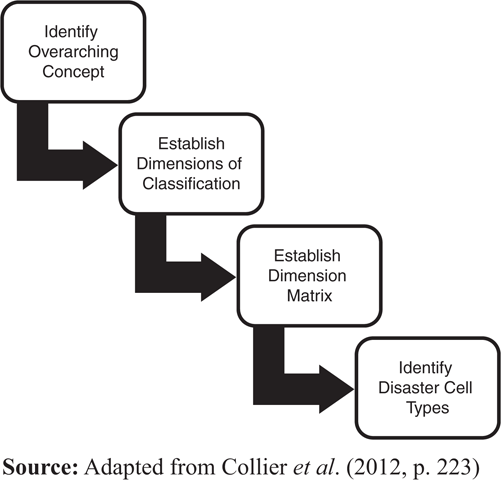
Due to their methodological ambiguity, there is no standardised procedure for typology development (McKinney, 1966); therefore, typologies can be presented in a number of forms. The presentation is often restricted by the number of dimensions that are uncovered; Bailey (1994) argues that dimensions increase exponentially for both dichotomous and polytomous dimensions. For example, 5 dichotomous dimensions will yield 32 cells (25), 12 dichotomous dimensions will yield 4,096 cells (212) (Bailey, 1994). Other approaches for presenting multi-dimensional typologies exist (Collier et al., 2012) with one approach being to present three dimensions in a cube format (e.g. Lin and Morefield, 2011; Tangpong et al., 2015). However, although this approach allows dimensional aggregation through the synthesis of multiple dimensions into a single model, the authors argue that this approach runs the risk of misinterpretation in terms of causal relationships amongst the dimensions. Accordingly, this would potentially violate the core idea of independent variables as a tenant of typological theories discussed in George et al. (2005).
Another approach for multi-dimensional typologies is reduction, whereby cells are eliminated in order to propose a more succinct typological model (Bailey, 1994; Lazarsfeld, 1937). Of particular interest towards this paper is the idea of pragmatic reduction, whereby “certain groups of combinations are contracted to one class in view of the research purpose” (Lazarsfeld, 1937, p. 12). Although this approach is often used for combining contiguous cells (Bailey, 1994), we propose that this approach can be used to propose separate models based on commonalities (but still ensuring dimensional independence).
An additional comment regarding the typology development process is that the presented typologies are not assigned quantitative values in recognition of the pitfalls of many contemporary risk-based matrices (Cox, 2008) and potential inaccuracies of dimensions as indicators (Lin and Morefield, 2011). Furthermore, the resultant typologies are presented as continuous variables, with two contrasting states (e.g. low/high) presented in various models for simplicity. Rather than multiple items such as low/medium/high or a fixed numerical scale, this paper aims to emphasise key differences between two ideal types existing at the extreme ends of a continuum (Doty and Glick, 1994).
4. Typology construction
4.1 Disaster as a concept
Academia remains at an impasse towards a universal definition of disaster (Britton, 2005). At best, this can often lead to semantic inconsistencies (Alexander, 2005); however, at an extreme conceptual inconsistencies can lead to improper measurement and hinders sound theorisation (Wacker, 2008). A common definition of disaster within the HRSC literature is provided by UNISDR (2009, p. 9):
A serious disruption of the functioning of a community or a society involving widespread human, material, economic or environmental losses and impacts, which exceeds the ability of the affected community or society to cope using its own resources.
As is common in research, the meaning of a term is subject to multiple interpretations based upon its perceived value towards a specific research goal or epistemological framework (Buckle, 2005). Acknowledging interdisciplinary variance amongst disaster definitions, it becomes prudent to understand common elements of extant definitions for use within this paper as it provides clarity for typology construction (Collier et al., 2012; Wacker, 2004). The purpose of advancing this goal towards understanding conceptual components of disasters allows for reduction of ambiguity and supports “good” theory development (Wacker, 2004).
Rather than seeking to create a universally applicable definition, the common elements of extant definitions are explored in terms of their relevance towards HRSC management. Table II outlines the common elements of disasters sourced from a variety of definitions within the literature.
Common elements of disasters
| Reference | An event/s in time/space | Causes system disruption | Overwhelms system capabilities | Declared a disaster | Prompt for external assistance |
|---|---|---|---|---|---|
| UNISDR (2009, p. 9) | ✓ | ✓ | |||
| Guha-Sapir et al. (2016, p. 7) | ✓ | ✓ | ✓ | ||
| Mohamed Shaluf (2007, p. 704) | ✓ | ✓ | |||
| The International Federation of Red Cross and Red Crescent Societies (2015) | ✓ | ✓ | ✓ | ||
| Quarantelli (1985, pp. 43-44) | ✓ | ✓ | ✓ | ||
| Emergency Management Australia (1998, pp. 32-33) | ✓ | ✓ | ✓ | ||
| Dynes (1998, p. 113) | ✓ | ||||
| Federal Emergency Management Agency (2013, p. 2) | ✓ | ✓ | |||
| Smith (2005, p. 221) | ✓ | ||||
| Rautela (2006, p. 802) | ✓ | ✓ | |||
| Porfiriev (1998, pp. 61-62) | ✓ | ✓ | |||
| Keller and Al-Madhari (1996, p. 1) | ✓ | ||||
| Asian Development Bank (2004, p. 1) | ✓ | ✓ | ✓ | ||
| Van Wassenhove (2006, p. 476) | ✓ |
Despite some variation amongst presented definitions, general consensus exists around the first three descriptors of a disaster as an event occurrence that causes a disruption to a system, leading to capabilities to recover being overwhelmed. Although these descriptors provide useful information as to the conceptual nature of disasters, they offer little guidance towards HRSC design:
Event occurrence: event occurrences are bound in time and space, and may occur across a sudden or protracted timeframe and occur in a concentrated or dispersed geographic scope (Keller and Al-Madhari, 1996; Van Wassenhove, 2006).
System disruption: the event disrupts the system as observed in the performance transient response as measured through metrics such as physical casualties and property damage (Federal Emergency Management Agency, 2013; Keller and Al-Madhari, 1996).
Overwhelmed capabilities: the disaster also impacts the system in ways that overwhelm the resilience capacity of a system, with a return to an acceptable performance level requiring external intervention (Rautela, 2006; UNISDR, 2009). This also suggests the existence of extant capability, or robustness (Durach et al., 2015), that a system consumes after a disaster has occurred.
With the three major components of disasters in consideration, the next stage of the typology construction process has been to identify common dimensions of disasters that can be utilised towards informing HRSC design. The dimensions proposed are temporal considerations (speed of onset and time horizon), spatial concentration, affected population needs and risk perceptions (perceived probability and magnitude). The dimensions are linked to the three disaster descriptors: first, event occurrence influences both the risk perceptions and temporal considerations dimensions. Second, system disruption influences both the spatial concentration and affected population needs. Third, overwhelmed capabilities can be linked to both the affected population needs and the risk perceptions dimensions.
As a criterion of a theory being hypothesised relationships amongst constructs (Doty and Glick, 1994), a number of models offer hypothetical relationships amongst the dimensions with contextual examples. The grouping exercise serves as a means of organising the dimensions into common themes, rather than relationships. Therefore, although speeds of onset and time horizon are identified as being both “temporal considerations” (and probability/magnitude as “risk perceptions”), they both remain independent dimensions. Similarly, the grouping of spatial considerations and affected population needs suggests that – although there is no causal or correlational relationship between these two dimensions – they still offer a number of contextual implications for HRSC design when grouped together.
4.2 Temporal considerations
The two temporal considerations identified as key dimensions for classifying disasters are the speed of onset and the time horizon of disaster.
Speed of onset
Within HRSCs, speed of onset can be expressed as the rate of demand increase for particular aid products and services. Speed of onset is a common occurrence within various extant classification models (see Apte et al., 2016; Barton, 2005; L’Hermitte et al., 2014; Van Wassenhove, 2006), with most of the models delineating speed of onset according to a slow-rapid scale.
Within commercial supply chains, anticipated future demand surges lead to firms optimising services levels to reduce stock-out probability (Simchi-Levi et al., 2008). A rapid increase in end-user needs may necessitate a likewise rapid response from HRSCs. Rapid demand surges prompt HRSCs to deploy immediately to meet aid recipient needs and mitigate long-term impact. Whilst customers in commercial supply chains accept a degree of lead time for certain products, aid recipients may require immediate support (Oloruntoba and Kovács, 2015), resulting in additional time pressures created for HRSC practitioners (Kunz et al., 2017). Supply chain design considerations for immediate deployment include establishing demand-driven supply chains and incorporating agile principles from the commercial supply chain literature (Cozzolino et al., 2012; Oloruntoba and Gray, 2006). Agile strategies are flexible in nature, and thus are appropriate for environments with dynamic demand levels (Christopher, 2000; Oloruntoba and Kovács, 2015). Within sudden onset disasters, an agile strategy would enable HRSCs to meet structural market shifts and changes in environmental circumstance (Day et al., 2012; Lee, 2004), therefore being more capable to address changes in aid recipient needs.
In contrast, slower-onset events require different design considerations. The longer time it takes to plan and deploy HRSCs enables the establishment of cost-effective supply chains (Kovács and Spens, 2009). Provided that demand rates can be accurately forecasted, commercial principles such as lean can be incorporated into HRSC design in order to establish a sustainable long-term HRSC (Cozzolino et al., 2012). Lean principles allow for low-cost sustainable supply chains to be slowly deployed in situations, where demand maintains a relatively smooth level of predictability and the overall organisational priorities remain constant (Christopher, 2000). HRSC practitioners should not view both lean and agile as mutually exclusive HRSC strategies (Naylor et al., 1999). Demand rates within disasters may tend to fluctuate between stability and instability. Practitioners may be required to develop hybrid strategies which incorporate both lean and agile principles to mitigate the effects of rapidly changing demand and/or system conditions (Christopher, 2000). By understanding the point whereby beneficiary demand forecasts meet order-driven activities, practitioners can develop strategies to address volatility in demand whilst maintaining steady material flows upstream from suppliers (Mason-Jones et al., 2000). Encompassing the idea of a continuum based on rapidity, speed of onset affects HRSC design as it leads to a demarcation between rapid response and slow deployment, in turn impacting the overall lead time for aid.
Time horizon of disaster
The time horizon of a disaster refers to the total operational lifespan of a HRSC across the various stages of disaster relief. The time horizon impacts planning associated with HRSC operations (Özdamar et al., 2004) due to shifts in temporal availability for logistics scheduling, routing and optimal delivery loads designed to meet service level targets (Beamon and Kotleba, 2006; Özdamar et al., 2004). HRSC operations can possess short-time horizons that provide a sudden change in system performance. Most HRSCs act as transient actors within a system impacted by a disaster (Day et al., 2012), whereby deployment begins after a disaster has occurred. At the other end of the scale, long-time horizons often see HRSCs become a permanent fixture of a system by investing into long-term capital infrastructure and future disaster preparedness (Chang et al., 2012). Therefore, it can be stated that the time horizon of a disaster influences the duration of HRSC operations across a continuum ranging from temporary deployments to permanent fixtures (Figure 2).
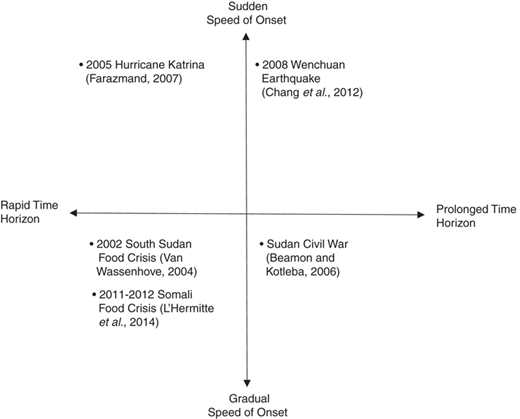
The synthesis of the speed of onset and time horizon is evident in the following empirical example. The UN World Food Programme can be regarded as incorporating lean and agile principles within their operations depending upon the speed of onset and time horizon of the events (Cozzolino et al., 2012). For short time-horizon emergency operations for up to 12 months, suppliers are often chosen depending upon their ability to quickly respond to events regardless of cost. In contrast, “Protracted Relief and Recovery Operations” for long-term projects are viewed as pursuing more efficient, lean goals (Cozzolino et al., 2012).
4.3 Spatial considerations
The physical space in which a disaster unfolds determines the need for investment in supply chain capabilities, particularly logistics. Shifting between transport modes induces a trade-off, as faster modes of transportation (such as air freight) will come at a higher overall logistics cost (Long and Wood, 1995). Geographic factors can refer to the degree of geographic dispersion such as highly concentrated populations in urban settings as opposed to disperse systems (Kunz and Reiner, 2012; Lysons and Farrington, 2012). The geographic space of a system also impacts the availability of infrastructure; including transport routes and power supplies; which may have been either significantly damaged or non-existent prior to an event (Kunz and Reiner, 2012; L’Hermitte et al., 2013). In other words, a highly concentrated population may have greater reliance on a smaller number of infrastructure assets for access to aid relative to disperse systems with access via more infrastructure options.
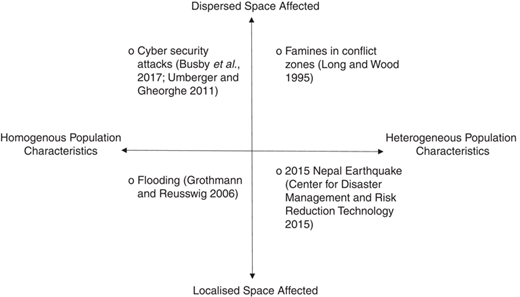
Systems with dispersed geographic space represent numerous challenges for transportation and distribution due to their dispersed nature and distance from logistical hubs (Apte, 2010) which may increase the risk of isolation (Altay et al., 2009). This was common with the 2015 Nepal Earthquake, where numerous regions were inaccessible in the aftermath of the event (Center for Disaster Management and Risk Reduction Technology, 2015). HRSCs deployed to dispersed systems (e.g. across international borders) may also have to coordinate with multiple governments and agencies with multiple goals (Balcik et al., 2010).
At the extreme end of the spatial considerations, non-geographically bound systems (such as the internet) require minimal logistical capabilities, yet may require HRSC intervention due to the interconnectivity of critical infrastructure with the internet (Umberger and Gheorghe, 2011). Cyber-attacks can cripple infrastructure across non-geographically bound space (Paté-Cornell et al., 2017), particularly when such systems are connected to public assets (Busby et al., 2017). As such, HRSCs tasked with delivering aid to spatially dispersed communities will have vastly different design considerations to their counterparts servicing settings with higher population concentrations. Accordingly, it is argued that spatial considerations affect design as they determine the overall required spread of HRSC operations, influencing geographical routing and the availability of logistics capabilities.
4.4 Affected population needs
Disasters can further be classified according to the range of affected population needs. Greater heterogeneity of products (as informed by customer needs) can lead to more variable supply chain complexity (James et al., 2016). This is particularly the case for complex emergencies, whereby numerous competing factors blur the hierarchal needs of populations (Van Wassenhove, 2006). For such events with varying levels of product heterogeneity, HRSCs may need to possess mix flexibility (Slack, 1987), whereby rapid changes in products supplied can be executed (Beamon, 1999). Additionally, the extant facilities and capabilities to deliver basic needs within a specified location may be rendered inoperable by a disaster (Burkart et al., 2017), therefore requiring additional attention from HRSC practitioners.
Conversely, events with relatively homogenous population needs allow HRSC practitioners to develop HRSCs according to fewer product types. For example, Long and Wood (1995) differentiate famines according to their degrees of product heterogeneity as: environmental famines (whereby aid recipients often need clean water supplies), political famines (whereby recipients require water as well as security) and refugee famine victims (whereby recipients require water, security and housing). As this complexity increases, product requirements may become more heterogeneous.
Other characteristics – such as political and socio-economic factors (Kunz and Reiner, 2012) – can inform product heterogeneity as aid may require base products and additional assistance such as convoys to ensure supply chain security (L’Hermitte et al., 2013). Socio-economic factors can impact system vulnerabilities – such as potential for inter-cultural and sectarian conflict in addition to metrics such as education and labour rates (Kunz and Reiner, 2012; Lysons and Farrington, 2012) – which, in turn, may increase the overall product mix required by end-user aid recipients. Therefore, it can be stated that affected population needs affect design as they determine the variance amongst product mix on a continuum from strict homogeneity to heterogeneity.
As discussed in the Methodology section, spatial dimensions and affected population needs can be grouped together to demonstrate a relationship amongst these dimensions (Figure 3).
4.5 Risk perceptions
Experimental psychology scholars have researched much about how human beings’ cognitive limitations influence decision making in uncertain environments (Simon, 1972; Slovic, 1987; Tversky et al., 1982). Individuals often rely on intuition when facing events such as disasters and will develop risk perceptions that influence future decision making (Slovic, 2000; Slovic et al., 1979). Such perceptions are influenced by cognitive biases that differ from quantitative risk assessments, impeding design decision making (Gierlach et al., 2010; Tversky et al., 1982; Wachinger et al., 2013). As practitioners will never possess perfect information about disaster likelihood and requirements (Day et al., 2009; Kunz et al., 2017), decision makers will have to make decisions based upon their individual interpretations and judgements. These subjective assessments of risk can be expressed in the same format as quantitative determinations, namely the probability of occurrence and magnitude of consequences (Haimes, 2009; Kaplan and Garrick, 1981).
Perceived probability of occurrence
The perception of a disaster’s occurrence influences HRSC preparation strategies. Empirically, events that occur within a cyclical nature – such as annual flooding (Miceli et al., 2008) or bushfires (Westcott et al., 2017) – can be expressed as continuously possessing perceived probabilities in the minds of individuals impacted. Events that are perceived as likely to occur in the future allow for investment into the preparation stage of HRSCs. Such investments may include pre-positioning resources for rapid deployment (Oloruntoba and Gray, 2006) and the establishment of expediting hubs (Mamani and Moinzadeh, 2014), both of which allow for critical aid to be provided within a quick time-frame (Balcik and Beamon, 2008). These strategies allow demand surges to be met in the immediate aftermath of a disaster occurring (Beamon and Kotleba, 2006) through the development of hybrid inventory management strategies to satisfy both constant and surge demand (Roni et al., 2016). Hybrid strategies with surge orders may provide cost benefits for the HRSC if backorder costs are high (Johansen and Thorstenson, 1998).
Conversely, preparation strategies for events with lower perceptions of probability often face unwillingness to collaborate from various actors within a system (Linnerooth-Bayer et al., 2005). Despite disasters and other events often being low probability (Pearson and Clair, 1998), attention is often guided towards events that are more readily perceivable (Merz et al., 2009). Therefore, there is a potential for indifference rendering the system susceptible to one-off events. Acknowledging these two continuum end points, perceived probability of occurrence affects HRSC design as it influences the ability to undertake preparation strategies.
Perceived magnitude of consequence
The perceived magnitude of consequence can be expressed as the anticipated surge in demand for particular products or services in the aftermath of a disaster, or the volume of aid required. As the entire ranges of adverse events cannot be wholly addressed, attention is commonly driven towards events with high magnitudes of consequence due to their perceived severity of performance degradation.
Similar to perceived probability, psychological inferences of event consequences play an important role in influencing decision making (Tversky et al., 1982). Uncertainty surrounding perceived magnitude of consequence can lead to subjective influences on demand forecasts (Johnson and Wood, 2011; Webby and O’Connor, 1996). Events such as seasonal weather patterns can lead to perceptions of magnitude normality (Merz et al., 2009; Miceli et al., 2008), leading to decisions being anchored on previous experience (Tversky et al., 1982). Such strategies may be unable to satisfy anticipated service levels in the event of surges in demand. For example, scenario training prior to the 2005 floods in South Sweden (Eriksson, 2009) was criticised as not foreseeing the flooding magnitude, which, in turn, impacted the resilience of local communities.
Concurrently, the infrequency of high magnitude events may lead to their occurrence lying outside the perceived realm of possibility and may only be understood as predictable after their occurrence, such as the 9/11 terrorist attacks (Taleb, 2007). The ability to recall high-magnitude events can inhibit future decision making as individuals may weigh more-memorable events that possess a greater magnitude higher than more frequent, low-magnitude events (Tversky and Kahneman, 1973).
Classifying disasters according to their perceived magnitude of consequence allows practitioners to develop inventory management strategies based on anticipated beneficiary needs. The identification of needs allows hybrid inventory strategies to be developed to better respond to both regular and surge demand rates (Roni et al., 2016). The development of anticipated demand-led strategies can also act as a buffer to counter the unique demand patterns of disasters (Beamon and Kotleba, 2006). Demand-led systems based on a fixed perception of demand rates can allow inventory to be postponed based on supply chain decoupling points (Oloruntoba and Gray, 2006; Van Hoek, 1997). Time postponement allows HRSCs to reduce logistics costs by delaying movement of goods until orders are received upstream in the supply chain (Van Hoek, 1997). Additionally, postponing the final design of goods allows for volatile demand spikes to be addressed through rapid reconfiguration (Yang and Yang, 2010). Thus, it is argued that the perceived magnitude of consequence affects HRSC design as it influences the anticipated demand rates of particular products or services.
Figure 4 proposes a synthesis of both probability and magnitude, providing contextualisation of these dimensions based on their established continuums.
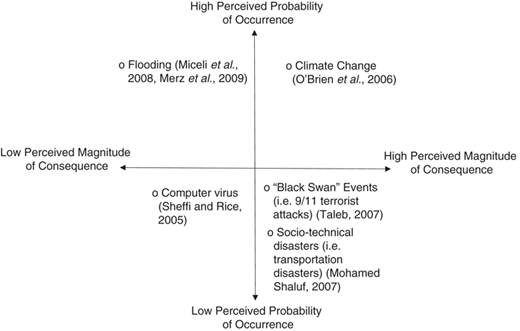
It is noted that not all the cells will trigger an event’s classification as a disaster (notably for low probability/low magnitude events)[1].
5. Discussion
The typologies proposed offer unique insights into distilling disasters into general dimensions purpose built for informing HRSC design. Further refinement of existing disaster classifications towards a new goal of informing HRSC design provides an opportunity for greater efficiencies than those that may be learned from previous, infrequent disasters (Flynn et al., 2016).
Despite the extant literature proposing a number of dimensions utilised within the proposed typologies, post-disaster population needs and risk perceptions provide unique interpretations for HRSC design. Through the establishment of the typologies via a rigorous construction process, inference can be drawn concerning both theory and HRSC practise. In addition, the “pairing” of dimensions into various matrices provides practical demonstration towards informing HRSC design choices. Although the dimensions are presented as a binary within their respective models, it is recognised that dimensions exist in a continuum. Accordingly, an event may display characteristics that cannot be simply described as binary variables, but rather a continuous scale with emergent changes throughout the course of disaster relief (e.g. a protracted civil conflict with sudden shifts in demand).
The six dimensions discussed above provide a model of a disaster aimed at informing HRSC design. The core arguments discussed above are synthesised in Table III.
Summative framework of disaster dimensions and independent variables
| Dimension | Factors | Design implications |
|---|---|---|
| Speed of onset | Speed dictates rate of demand increase Faster speeds may warrant a more responsive HRSC design, whereas slower speeds may allow more efficient HRSCs to be designed | Rapid onset events require swift deployment to meet demand surges Pre-positioning inventory allows for rapid deployment Slower onset events allow for cost-effective HRSCs to be designed to meet more stable demand patterns |
| Time horizon | HRSCs may be finite or a permanent fixture of a system | Finite supply chains have different operational requirement than establishing permanent fixtures Permanent supply chains may require greater investment into a system through local training and new infrastructure |
| Spatial concentration | Determines the degree of space upon which a disaster unfolds | Large geographic boundaries require dispersed HRSCs Event such as cyber-attacks requires immediate deployment with unique design that transcends geography |
| Affected population needs | End-user requirements can be homogenous or heterogeneous in nature | Design considerations, by nature, increase in complexity when product mix is increased Degree of heterogeneity is often informed by socio-political factors that increase the complexity of HRSC operations |
| Perceived probability of occurrence | Influences decision making due to subjective biases Has capacity to make system prepared/ill prepared for event depending on known nature of threat | High perceived probability of occurrence allows for preparedness and mitigation strategies to be developed Low perceived probability may result in slow deployment of flexibility and contingency strategies due to reluctance of preparatory investment |
| Perceived magnitude of consequence | Influences the manner in which pre-event system environmental factors (such as redundancies) are developed Influenced by perceived probability | Severe perceived magnitude of consequence may influence inventory prepositioning strategies for rapid deployment |
Table III provides a number of novel interpretations. Following a particular complex disaster, for example climate change, it can be seen that the model provides a number of prescriptive anecdotes. In general, climate change can be expressed as a slow-onset event coupled with an increase in frequency of rapid-onset disasters (e.g. extreme weather events), therefore representing contrasts amongst required HRSC design. A similar statement can be expressed to other dimensions; climate change as a global phenomenon can be viewed as a dispersed spatial concentration, but the resultant extreme events may occur across more localised settings.
Therefore, it can be inferred from the typologies that more complex phenomena require delineation (e.g. climate change) into individual discrete events. A pitfall of this is that it may lead to an insular perspective on HRSC design, rather than a holistic overview. Ultimately, what the typology has sought to create are a number of tools (expressed as the dimensions) for providing HRSC-design based perspectives on disaster events.
6. Conclusion
This paper sets out to distil the complex phenomenon of a disaster into essential pieces of information necessary for the effective design of the supply chains tasked with delivering aid to affected communities. This paper argues that as HRSC design decisions are made with imperfect information due to processing capacity constraints in disaster situations, a typology can help distil the phenomena into a small number of relevant pieces of information that help designers make more effective decisions.
6.1 Limitations and model falsifiability
In line with the above propositions of HRSC designs, it is recognised that these can be both tested and disproved based on the overall assumptions of the model (Doty and Glick, 1994). For example, the paper has argued for the perspective of HRSCs as project-driven supply chains; there may be empirical instances, where HRSC design finds being supply driven or demand driven, as described by Melnyk et al. (2014).
A further limitation of the typologies is the presentation of dimensions as continuous variables (expressed as a binary within the models). The purpose of this mode of presentation has been to acknowledge the contrast between two opposite ideal types at the extreme end of each continuum. Accordingly, further research and refinement may lead to more precise measurement tools being development; we consider this an area for future research.
6.2 Theoretical implications and future research
The paper has sought to develop a typology of disasters for the purposes of informing HRSC design. Utilising typology development guidance, the resultant typologies provide a set of ideal types based upon the continuums of the discussed dimensions. The models allow for conceptualisation of disasters according to these variables to occur, and for inferences regarding HRSC design to be drawn. In order to provide validation of the dimensions as ideal types, empirical cases have drawn from the literature to support the assertions being made. Rather than seeking to provide a new theory on HRSC design, the paper has sought to provide conceptualisation leading to future research in empirical validation of the dimensions away from the ideal types and refinement of the conceptual typology through its application to non-disaster scenarios.
6.3 Practical implications
The practical utility of the proposed typologies is three-fold. First, the typologies have been constructed to be generalisable, therefore providing a conceptual framework that can be universally applied towards any system operating under risk.
Second, the typologies – and their respective dimensions – offer a path for gathering information from extant events as a means of learning for future events (Hanson et al., 2011). As the information constraints during disasters are well documented (Day et al., 2009), it becomes apparent that generalisable metrics which can be adaptable towards specific scenarios can influence design, and thus, HRSC success. In particular, as HRSC decision makers will always be operating under uncertainty, greater understanding of the relationship between perceptions of risk and HRSC design for extant events serves as a feedback mechanism to ensure best practice for future events.
Finally, a number of the typologies offer a simplistic method of gathering information during the critical early stages of disaster occurrence for unexpected events. Practically this allows for, information to be gathered concerning the population needs and the speed of demand surges offer practical guidance towards informing HRSC design decision making, as evident in Table III. However, this approach is limited by making the assumption that there exists a link between these dimensions and ensuring minimal loss of life in the early stages of disaster occurrence.
The devastating impact of disasters on human communities has seen an academic shift towards better understanding the role of supply chains in disaster relief. Viewing disasters as a dependent variable than informs HRSC design, the paper proposes a number of dimensions (serving as independent variables) of disasters that can be used to inform HRSC design. In the context of HRSCs, effective design can serve to minimise the loss incurred by the disaster event and enhance future capabilities to mitigate and recovery where lesser or no external intervention efforts are required.
Note
It is acknowledged that the event type within this cell (computer virus) may, depending on context, fall within other cells. However, the paper follows the work of Sheffi and Rice (2005) in allocating this event within its respective cell for illustrative purposes.

