Empirical research into individuals’ telepresence experiences has been undertaken and adapted over decades. This study aims to systmatically reivew the literature of telepresence and its relationship with human behaviour across different settings for the period covering 1992–2023. Additionally, a cross-tabulation study was conducted to construct a detailed comparison of telepresence experiences in the hospitality and tourism context, with other contexts.
A systematic review methodology was used as a rigorous search approach to provide an overview of the existing literature on telepresence experience from the past 31 years. A total of 85 studies were selected for the purpose of this review, with 23 of these studies conducted in the hospitality and tourism context.
The findings offer significant insights into telepresence and suggest potential themes for future research relating to human behaviour within the telepresence experience. The study concludes with implications for future researchers and practitioners.
To the best of the authors’ knowledge, the current study is the first detailed review to comprehensively and meticulously analyse the impact of telepresence experience on human behaviour; the findings provide potential themes for future research into human behaviour and interaction. In addition, they offer advice to practitioners on how they can enhance their technological solutions to provide customers with improved telepresence experiences.
1. Introduction
In the fast-paced age of technology, several studies have investigated mediated settings that can lead to virtual product encounters (Ye et al., 2020; Chen and Yao, 2022). Based on user experiences in virtual spaces, telepresence is the level to which an individual feels present in a mediated environment, as opposed to the immediate physical environment. This environment can be either a temporally or spatially distant real environment or a computer-generated animated but non-existent virtual world.
Initial telepresence research focused primarily on evaluating its effectiveness in technological machinery (Sheridan, 1992; Shih, 1998). For instance, Shih (1998) investigated the question of how communication technology functions in conjunction with user interaction. Current telepresence research has expanded significantly beyond its technological roots. In particular, some researchers have conducted empirical studies to examine the technical aspects of creating immersive virtual environments. while also exploring the profound human psychological implications of telepresence (Huang et al., 2023; Kim et al., 2021). The study of the application of telepresence in disciplines such as healthcare, education and entertainment, are additional compelling areas of exploration. Three-dimensional virtual worlds in hospital service, for instance, use telepresence technologies to interact with consumers to enhance brand equity by customers’ hedonic outcomes (Alkarney and Almakki, 2022). In other words, this cross-disciplinary approach acknowledges that telepresence is a transformative force that is reshaping human experiences in the digital age.
The present study has systematically and critically reviewed previous empirical work relating to users’ telepresence experiences and associated human behaviour within differing contexts. The aim was to gain an understanding of the interrelation of telepresence and human experience through a range of contextual lenses. In addition, a cross-tabulation study was conducted to offer a thorough understanding of the telepresence experience within the context of hospitality and tourism, in comparison with other industries. The results obtained from this comprehensive analysis have provided several valuable contributions by creating themes for potential future research. This paper commences with a comprehensive examination of existing literature pertaining to the fundamental characteristics of the telepresence experience, as well as the theories and factors that contribute to its occurrence. The systematic review procedures utilised in the current study are also elucidated. The conclusions reached by this study encompass implications for future researchers and practitioners, as well as statements pertaining to the study’s limitations.
2. Literature review
2.1 Telepresence experience in human behavioural research
According to Draper et al. (2008), there are three definitions of telepresence: the simple, the cybernetic and the experiential. Of these, the “simple” and the “cybernetic” definitions focus on the operation of a computer-mediated environment, and the human–machine interface. The “experiential” definition, however, refers to a totally different aspect of telepresence. It not only relates to machines but also to human psychology. Specifically, through the use of telerobotics to give people the impression of being present at a remote location (Zhang and Hansen, 2022). Recent studies have also revealed that telepresence has been used to improve human intention through remote experience (Alkarney and Almakki, 2022; Han et al., 2020). Some scholars proposed that human interaction works effectively in the context of telepresence (Hyun and O’Keefe, 2012). Recent studies have provided empirical evidence demonstrating the positive effects of telepresence on human responses (Ye et al., 2020; Choirisa, 2022; Zhong et al., 2024). For example, Zhu et al. (2023) suggested that there was a connection between telepresence experience and human mental imagination. In particular, telepresence suggests that even in such advanced interfaces as digital media, users use mental imaging to process information and create a coherent and engaging environment, creating a realistic sense of presence (Zhu et al., 2023). Specifically, telepresence technology may improve the cognitive and imaginative abilities of virtual reality (VR) users, such as with the introduction of holograms in museum exhibitions. Its ability to enable natural interactions with the virtual environment enhances the sense of presence in the simulated world (Caggianese et al., 2020).
Orth et al. (2019) demonstrated that VR informational variables (e.g. mystery and coherence) can increase consumer approach intentions by evoking telepresence, and Kim and Hyun (2016) also advised technological developers to improve system and information quality due to their effect on telepresence. Consumers view telepresence as crucial to their continued use of the technology. The research of Bin Kim and Choo (2023) revealed that individuals are more likely to approach an immersive VR store if they perceive more vividness and interactivity. The perception of telepresence and experiential purchasing value sequentially mediate these positive effects. Building on this, Lee and Kwon (2023) emphasized the importance of mitigating risks like unauthorized access through enhanced data security and privacy measures in remote collaborative environments. This integrated understanding underscores the need for telepresence strategies that not only leverage technological advancements but also prioritize human psychology to optimize user experiences. This study also supports previous recommendations for future research and practical applications.
2.2 Telepresence experience theories
A range of noteworthy theories have been used in research relating to the telepresence experience. These theories (as outlined below) have been used in previous research as structured frameworks to understand the telepresence context. In this way, they help to enhance the research’s validity and contribute to telepresence knowledge.
2.2.1 The stimulus–organism–response framework.
Preliminary investigations used various theoretical frameworks to analyse the influence of telepresence on user intention. The theory used by the majority of investigations is the stimulus–organism–response (S-O-R) theory (Surovaya et al., 2020; Ying et al., 2022). Angelino et al. (2022) developed a paradigm to gain an understanding of students’ participation by analysing their telepresence in an educational VR setting, and a number of other studies have also employed the S-O-R framework to investigate the impact of VR on telepresence among users (Muhammad Sohail Jafar et al., 2024; Zhong et al., 2024) . For example, Ying et al. (2022) examined the cognitive effects of VR on individuals, while Kim et al. (2023) explored the emotional connections experienced by VR users. In several contexts within the realm of VR, S-O-R has been used, and this theory has served as a comprehensive framework for investigating the interplay between VR and telepresence, as well as the effects of telepresence on user intention (Choirisa, 2022; Muhammad Sohail Jafar et al., 2024).
2.2.2 Flow theory.
Several researchers utilised flow theory, which refers to the extent to which VR users have a sense of being present in the virtual environment, to elucidate the concept of telepresence. This presence is believed to have an influence on the various internal states of users, including their attitude (Wu and Kim, 2022), enjoyment, control and curiosity (Pelet et al., 2017) and playfulness and intention (Han et al., 2020). Furthermore, this theory clearly illustrates the crucial correlation between VR and a consumer’s perceptions of flow (Han et al., 2020); it presents compelling data suggesting that telepresence is achieved within the VR environment, especially when users engage with VR applications.
2.2.3 The technology acceptance model.
The technology acceptance model (TAM) is a widely used theoretical framework in the field of telepresence research (Ongsakul et al., 2021; Liu et al., 2022; Huang et al., 2023). This theory has been used to comprehend the way in which consumers perceive VR and the resulting impact on their attitudes towards the technology, as well as their behavioural intentions (Kim et al., 2023). The TAM offers useful insights into the effects of telepresence in VR on users’ perceptions; it has also been used for the purpose of assessing consumer behavioural intention (Huang et al., 2023). In essence, this theory posits that the comprehension of consumer behavioural intents through the utilisation of VR and telepresence constitutes a crucial determinant in the realm of VR simulation.
2.2.4 Narrative transportation theory.
Narrative transportation theory has been used to elucidate the favourable persuasive impacts of a narrative voiceover on the affective and cognitive attitudes of participants, as well as their behavioural intentions. These effects have been attributed to the phenomenon of transportation, as discussed by Shen et al. (2020). Several researchers have utilised empirical research methods to illustrate that individuals who had been immersed in a narrative, have experienced a reduction in their tendencies to engage in critical thinking relating to the facts conveyed during a virtual property tour. Immersion in the narrative caused them to shift their attention from the environment and to construct mental representatives of the characters, thereby enhancing their emotional attachment (Chen and Yao, 2022).
2.3 Draper’s telepresence approaches including psychology
The research of Draper et al. (2008) divided telepresence into two approaches: the technological and the psychological. The latter approach provides valuable insights relating to the current study’s aim of understanding the human consciousness experience in a computer-mediated environment. According to Draper et al. (2008), the technological approach commences with the premise that telepresence is a given, and then it proceeds to describe the characteristics of this phenomenon and to explain how it is induced by a synthetic environmental system. They additionally claim that the psychological approach establishes a connection between telepresence and common phenomena. It is not reasonable to expect that synthetic environments possess such revolutionary qualities that they give rise to entirely unprecedented human experiences. Ultimately, individuals retain their inherent identities even when using a teleoperator, a VR system or an advanced telecommunications system. In addition, a number of current researchers have demonstrated telepresence to be a phenomenon of VR technology that enhances technological quality (Chang and Chiang, 2022; Khandelwal, 2023). For example, the vividness and interaction levels in VR have been measured by the effectiveness of users’ telepresence experiences, which has enhanced the quality of VR technology (Kim et al., 2021). Other research has revealed that telepresence in VR can be mediated by the behaviour of users (Surovaya et al., 2020; Zhong et al., 2024). Telepresence experiences have also triggered VR users’ intentions, such as their “willingness to purchase” (Orth et al., 2019) and “visit intention” (Ying et al., 2022). However, there is a lack of research focusing on the psychological aspect of telepresence, despite the fact that this perspective offers potential for future technological research into human behaviour. This paper has focused on telepresence using a psychological approach, in keeping with the approaches of Draper et al. (2008), and it has incorporated a systematic review of empirical research into the telepresence experience.
3. Methodology
This study conducted a systematic literature review covering the years 1992–2023. Cronin et al. (2008) defined a systematic review as “a secondary study that utilises a rigorous and methodical approach to identify, gather, assess, and integrate research studies from various sources to address a specific research inquiry, adhering to predetermined and stringent eligibility criteria”. The aim of the systematic review was to thoroughly integrate and evaluate existing literature, to identify any gaps in current understanding and provide specific guidance for future empirical research on human behaviour in the telepresence experience. This investigation sought to:
systematically review the application of telepresence research in human intentions across different fields; and
identify potential gaps in tourists’ intentions that could guide future tourism research.
3.1 Literature search
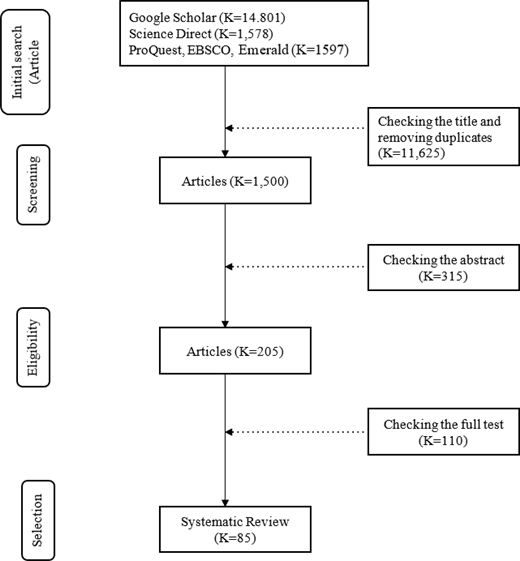
Firstly, a protocol was devised to document the analysis method and inclusion criteria. The comprehensive database platforms, Google Scholar, Science Direct, ProQuest, Emerald and EBSCO host, were used for the period ranging from 1990 to 2023. The initial search identified 17,976 studies. After manually checking titles and removing duplicates, 11,625 articles remained. The abstracts were then checked, based on the exclusion criteria, and 85 studies were discarded. Data were collected from electronic databases by searching the following relevant keywords: “telepresence experience”, “telepresence experience in tourism”, “customer behaviour” and “customer intention”. Finally, the relevant metadata, including title, abstract, keywords, authors’ names and affiliations, journal name and year of publication, were extracted and saved into a Microsoft Excel file.
3.2 Study selection
The search results were evaluated based on the following inclusion and exclusion criteria. To ensure the suitability of publications for inclusion in the study, they had to meet the following requirements:
The focus must be on empirical research relating to telepresence experience.
They must be published as a journal article or a conference paper.
They must be written in English.
To ensure the relevance and applicability of the collected data, the following exclusion criteria were implemented. Research that fell within any of the following criteria was excluded:
The study did not use empirical research methods, such as the utilisation of books, conceptual works, research notes or review articles.
There was no central construct associated with the concept of telepresence.
The study was written in a language other than English.
Full access to the article was not able to be gained.
The MS Excel spreadsheet underwent modifications through the inclusion of components that were necessary for the purpose of data management. According to PRISMA (preferred reporting items for systematic reviews and meta-analysis) guidelines (Moher et al., 2009), the step-by-step process of selection of significant studies for the review included (see Figure 1):
identifying relevant studies;
checking their eligibility;
assessing their quality; and
selecting those that met the criteria.
3.3 Analysis
3.3.1 Coding.
The systematic review used coding analysis, which was initially conducted by the primary author. The research team cross-validated the coding for accuracy. Data management was implemented through the use of Microsoft Excel 2019. Data was manually checked for organisation and formatting, prior to coding analysis being undertaken. According to the guidelines of Bryman (2016), the coding manual covered all possible categories for each dimension, and the following eight dimensions were coded: author names, paper sources, publication years, geographical origins, research contexts, themes, subjects and journal references. This thorough coding approach sought to understand telepresence experience factors. Eighty-one papers were selected, and to reach consensus, these were cross-validated by the research team during coding.
3.3.2 Descriptive and cross-tabulation analysis.
Once the database table had been computed and appropriately formatted, a comprehensive review of the 85 empirical studies was undertaken using descriptive analysis techniques, with the objective being to present the data in a manner that would enhance their comprehensibility and interpretability. Employing descriptive data analysis served as a critical step in gaining a holistic understanding of how telepresence experiences, including their antecedents and attributes, were distributed across the various research domains. It is essential to emphasise that the preliminary analysis laid the foundation for the subsequent cross-tabulation analysis, and that the cross-tabulation analysis was applied concurrently to reveal the empirical telepresence research in “non-hospitality and tourism” contexts, as well as in the hospitality and tourism sectors.
4. Results
4.1 Publication by region
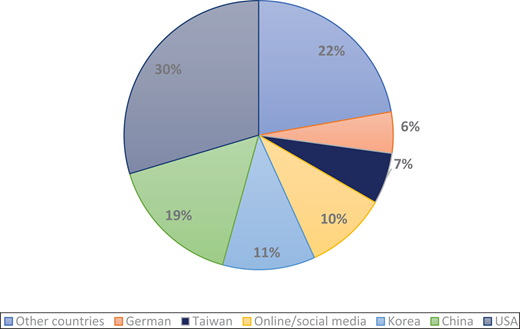
The regional distribution of telepresence experience publications is shown in Figure 2. The USA led with 30% of publications. This highlights a keen interest in technology development within a stimulating environment in the USA. China followed with 19% of the publications, indicating its growing interest and investment in virtual experiences. Korea published 11% of telepresence experience research, demonstrating its active participation; other contributors were Taiwan and Germany (6% and 7%, respectively). These numbers not only indicate global interest in telepresence within synthesised environments but also emphasise the level of active engagement in this realm of telepresence research, by country. This demonstrates the significance of telepresence experience as a contemporary topic of inquiry and innovation in international research. Notably, 22% of publications were from different countries, demonstrating the global scope of telepresence experience development. The diverse range of countries makes evident the collaborative and cross-cultural nature of telepresence, which could revolutionise many industries.
4.2 Publications by year
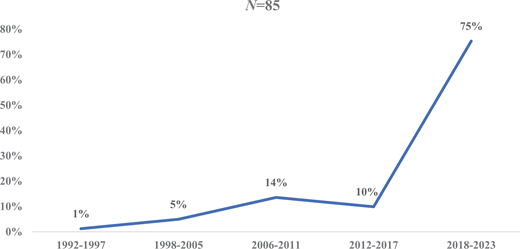
Figure 3 presents the distribution of journal publications relating to telepresence research, by reputable publisher. The data spans from 1992 to 2023 and reveals a scattered pattern of research activity in this area over the course of the 30 years. From 1992 to 2005, publications were infrequent, indicating slow growth and limited interest in the field, with 1% in the period 1992–1997 and 5% in the period 1998–2005, respectively. There was a slight increase in the periods 2006–2011 and 2012–2017 (14% and 10%, respectively). Specifically, the empirical research trend peaked in the period from 2018 to 2023 (75%). This can be explained by it encompassing the period of the COVID-19 pandemic. After the initial outbreak (2020) there was a notable increase in telepresence research to find alternative solutions for social distancing at that time (Medai and Wu, 2023). Generally, while telepresence with human behaviour has been a known concept since the 1990s, its exploration has primarily been contemporary, particularly during the COVID-19 lockdown period, when it gained heightened attention (Lee and Kim, 2021; Medai and Wu, 2023).
4.3 Research context
Table 1 demonstrates the research context in which studies on telepresence were conducted. Over half of the selected studies related to business and marketing contexts (58%). Computer science/technology contributed only 8% of the total of studies, tourism comprised 19% (which shows the potential interest in telepresence experience in tourism research) and 8% concentrated on the hotel industry. Meanwhile, other sectors, such as medical health, education and hospitals comprised 9%. This finding demonstrates the multifaceted integration of telepresence experience across sectors.
4.4 Research design
As can be seen in Table 1, cross-sectional studies were dominant at 70% (57 out of 85 studies). Thirty percent (30%) used experimental techniques in which participants engaged in experimental scenarios. A smaller percentage of mixed-method studies accounted for 5%. These numbers highlight the methodological diversity of telepresence research, demonstrating the importance of hands-on experiences and immersive experiments. This diverse approach contributed to a comprehensive investigation of telepresence and reflected its complexity.
4.5 Publication by theory
The data highlighted the wide range of theoretical frameworks used in telepresence research. It is worth noting that 20% of the papers examined did not include any theories, implying an empirical or exploratory approach. The S-O-R theory and flow theory emerged as the dominant choices among the 85 papers, with both of accounting for 13%. Telepresence theory was used in 8% of the studies, while the media richness theory and TAM theory (TAM) accounted for 6% and 5%, respectively. Several other theories, including cognitive elaboration theory, self-determination theory and social identity theory were also used. This diverse theoretical landscape reflects the breadth of perspectives applied to telepresence research, providing opportunities for further investigation within multiple theoretical frameworks and the possibility of interdisciplinary insights.
4.6 Antecedents of telepresence experience in empirical research in human behaviour
As analysed in the systematic review, telepresence is a construct that has been investigated to improve the quality of VR for users. An exploration of the antecedents of telepresence will provide potential research opportunities that will extend the understanding of telepresence experience and human behaviour. Analysis of the antecedents has been classified into four themes, to include interaction and engagement, immersion and realism, psychological aspects and technological aspects.
In Table 2, factors relating to interaction and engagement were investigated to evaluate their effect on the telepresence experience. Of these, the most examined antecedent was “interactivity” (N = 13). In terms of immersion and realism attributes, the most common antecedent was “vividness” (N = 11), followed by “immersion” (N = 4). In particular, the psychological aspects were measured with various antecedents, with “cognitive attribute”, “emotional attribute” and “pleasantness” being the most outstanding. The antecedent “quality” (N = 9), in technological aspects, was one of the more significant to measure telepresence experience. Hence, the investigation underscores “interactivity” and “vividness” as crucial for telepresence, with a strong emphasis on psychological aspects like “cognitive” and “emotional attributes”.
4.7 Analysis of research methods via cross-tabulation between the “non-hospitality and tourism” and the hospitality and tourism sectors
The objective of performing cross-tabulation within this evaluation was to discern the disparities between two distinct sectors (“non-hospitality and tourism” and “hospitality and tourism”) (see AppendixTable A1) within the realm of telepresence experience in human behavioural research. The study investigated the relationships between the factors pertaining to three overarching topics, namely, “research context”, “research design” and “theory”. The results obtained from the cross-tabulation study offer significant insights into the impact of telepresence on human behaviour, both in a general context and specifically within the hospitality and tourism industry.
4.7.1 Research context.
The information in Table 1 sheds light on the research context in which telepresence studies in human behaviour have been conducted, particularly in the hospitality and tourism sectors. The majority of previous studies (73%, 62 journals) focused on diverse domains such as computer science, business and marketing and media, which highlights the broad applicability of telepresence across the various fields. However, only 27% (23 journals) focused on hospitality and tourism. This disparity points to a potential area for further investigation and development, implying that telepresence could be used more extensively in the tourism industry. Given the recognised limitations in user experiences, and the current level of adoption in this context, there is plenty of opportunity to conduct future research that uses the concept of telepresence to improve user engagement and experiences in the hospitality and tourism industries.
4.7.2 Research design.
Table 3 illustrates the cross-tabulation analysis performed on the research methodology employed within the study. It is clear that a substantial portion of the participants indicated a preference for cross-sectional utilisation across both domains. Notably, the majority of cross-sectional studies in the field of hospitality and tourism have primarily concentrated on the hotel context (Khandelwal, 2023; Lee, 2018).
4.7.3 Theorical approaches.
As can be seen in Table 3, the utilisation of flow theory in the tourist and hospitality sector is somewhat less prevalent than in other industries – the majority of past investigations have used TAM and S-O-R theories. It has been demonstrated that numerous scholars have shown a strong interest in the advantages of integrating technology to enhance human telepresence experiences (Han et al., 2020; Kim et al., 2023; Surovaya et al., 2020).
4.7.4 A historical perspective of telepresence experience research in hospitality and tourism.
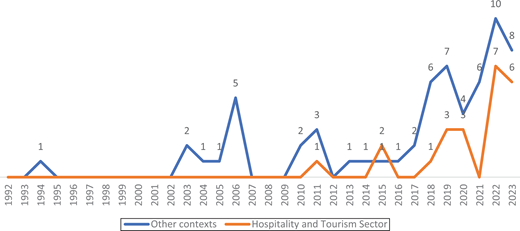
Figure 4 illustrates the trend of empirical telepresence experience research in human behaviour by comparing the timeline of the hospitality and tourism sector, with the other contexts. Despite the abundance of research in various other fields, the tourism sector is still contemporary in terms of telepresence experience investigation. The first example of empirical telepresence experience research in the hospitality and tourism sector occurred in 2011 (Hyun and O’Keefe, 2012); this marked a more than 15-year gap since the first empirical research in the “non-hospitality and tourism” sectors. From 2019, empirical studies relating to telepresence experience in hospitality and tourism have continued in a stable manner. This is understandable given the onset of the COVID-19 pandemic, which prompted managers to consider the harmony between virtual tourism and in-person travel in the post-COVID-19 era, allowing these modalities to complement each other and facilitate effective management (Zhang et al., 2022). Current research articles primarily concentrate on an analysis of telepresence relating to customers within the hospitality context, specifically focusing on such aspects as a person’s behavioural intentions when using hotel websites (Ongsakul et al., 2021; Khandelwal et al., 2023) and the use of telepresence when portraying the service environment (Liu et al., 2022). Drawing upon two decades of research on virtual and augmented reality (AR) within the tourism context, Loureiro et al. (2020) asserted that techniques associated with VR and AR are undergoing continuous evolution, thereby generating valuable opportunities for the tourism industry. VR has found application in a variety of tourism-related functions, including planning, management, promotion, education and the creation and transformation of tourist experiences. Nevertheless, it is worth noting that the volume of research papers concerning telepresence experience has exhibited a gradual increase since 2018. This trend underscores the potential significance of telepresence within the hospitality and tourism context, particularly in relation to customer intention.
5. Discussion and conclusions
5.1 Conclusions
The current systematic review provides a detailed overview of the existing literature on telepresence. In the 1990s, telepresence was already being explored, indicating that this concept is not novel within the academic domain. From 2000 onwards, telepresence has received scholarly attention in the area of technological advancements. This was evident in the majority of studies, with 80 out of 85 focusing on this concept during that period. A number of scholars have also undertaken empirical studies to examine the impact of telepresence on human psychology (Pelet et al., 2017; Liao et al., 2023). These studies have not only exclusively concentrated on telepresence but also encompassed other related aspects.
During the decades of the 1990s and 2000s, however, there was a lack of research conducted in the hospitality and tourism sector. When compared to other sectors such as computer science, business and fashion, it appears that researchers in the field of hospitality and tourism have shown less interest in the concept of telepresence, despite the existence of previous studies on VR and AR (Israel et al., 2019; Shahab et al., 2022). Initial investigations into telepresence within this field commenced in 2018 and experienced a substantial surge in prominence by 2022. The potential explanation for this phenomenon may be attributed to the temporal delays caused by the COVID-19 pandemic, which have resulted in an increase in publications for the period of 2020–2023. This review has successfully identified trends of research into telepresence experiences in human behaviour, as well as indicating antecedents that will support future research.
5.2 Theoretical implications
5.2.1 Theme 1: technological quality, content factors and system aspects to human behaviour.
This theme covers telepresence technology quality and efficacy. In this theme, high-definition visuals and pristine audio, as well as simulated technology’s vividness and interactivity, reveal how technology can easily bridge physical distance to users (Jafar and Ahmad, 2023; Lim and Ayyagari, 2018). Users can engage with virtual or remote environments based on their technology expectations (Omran et al., 2024). Information quality is crucial to remote telepresence because accurate information improves the experience (Han et al., 2021). The research of Ongsakul et al. (2021) demonstrates that at a business level, antecedents shape the telepresence experiences of hotel guests. Hotel websites are easy to use for booking and information, and their functionality helps users to plan travel, as well as protecting data. A hotel website often displays a range of experiences, and these can trigger telepresence and behavioural intention (Ongsakul et al., 2021). At the destination level, offering tourists telepresence experiences through the use of VR technologies can not only be of benefit when they visit, but can also be used to promote destination marketing strategies. In addition, holograms and holotwins are also potential technological aspects of telepresence that might be used in museums or heritage destinations, triggering users’ exploration of cultural object (Caggianese et al., 2020; Poulkov et al., 2023). In other words, this theme is a prerequisite for telepresence research into enhancing quality, as well as the development of policies to engage potential customers within this technology. This is an incentive for future studies to explore and identify the link between the use of telepresence experience, and the development of technological infrastructure, business strategies and policies. The data security and privacy preservation should be concerned to avoid as unauthorized access (Lee and Kwon, 2023).
5.2.2 Theme 2: externally generated absorption experience.
According to Lee et al. (2020), “absorption” refers to the act of capturing a person’s focus by immersing them in an experience within their thoughts. This theme focuses on internal and external variables that have a significant impact on the telepresence experience in simulated environments. It includes the within-visitor internal characteristics associated with escapism and aesthetics in VR experience (Angelino et al., 2022) and prior user experiences, as well as the overall quality and interactivity of user-generated content, such as streamer expertise, streamer pleasantness and streamer interaction (Cho et al., 2022). Internally generated absorption experience highlights the influence that telepresence experiences have on shaping users’ behavioural intentions. Externally, it clarifies previous research into AR or VR environments, i.e. that users are easily affected by the creation of simulated environments in technology. Lee et al. (2020) asserted that absorptive experiences need to be analysed for more insights to shed light on their role relating to immersive experiences and intention to revisit the actual site. It is possible that different destinations with distinctive characteristics will impact the level of enjoyment and the perceived authenticity of an experience. For example, Hincapié et al. (2021) conducted an experimental study using an AR mobile app. Eighty percent (80%) of their research users agreed that the application promoted learning, but also the “appropriation of cultural heritage”. This type of research could be encouraged and further investigated, to provide more theoretical references for decision-making around telepresence experience investment. It also shows that internally and externally generated absorption experiences reign supreme in enhancing user behavioural outcomes, such as learning intention (Angelino et al., 2022), purchase intention (Cho et al., 2022) and destination success in attracting and satisfying their visitors (Ying et al., 2022; Zhong et al., 2024).
5.2.3 Theme 3: users’ interaction and experience.
This theme encompasses the range of attributes associated with how users engage with and perceive their interactions within the telepresence environment. Factors in this theme include perceived enjoyment and perceived professionalism (Liu et al., 2023), mental imagery (Zhu et al., 2023) and responsiveness (Gao et al., 2023). Previous research has indicated that telepresence experiences in simulated environments have the potential to enhance a user’s sense of presence and immersion (Tussyadiah et al., 2018) . However, VR technologies also include a range of potentially negative impacts for users. Therefore, to gain a deeper understanding of users’ interactions in these simulated environments, it is essential to explore their perceptions of these telepresence experiences, e.g. their emotional consequences (Wu and Lai, 2022). This theme aligns with the findings of a prior review conducted by Diemer et al. (2015), which successfully elicited emotional reactions within VR, providing insights into the impact of telepresence on users’ behavioural intentions.
5.2.4 Theme 4: psychological factors of telepresence.
Several studies (Pelet et al., 2017; Chen and Yao, 2022) have suggested that telepresence can be considered a psychological factor worth investigating when scrutinising a user’s intentions relating to services or sites that interact in simulated environments. Chen and Yao (2022) discovered that when participants engage in gaming, using either a VR headset or a conventional flat-screen computer, enhanced telepresence in VR led to a decrease in memory performance and distracted them from remembering specific details within the virtual environment.
It is important, however, to note that the majority of research in this field has primarily concentrated on the technological aspects of telepresence, rather than its psychological implications. In 2023, Gao et al. (2023) conducted research that emphasised the potential influence of telepresence on purchasing intentions in streaming contexts; however, this study was context specific. To establish the impact of telepresence on user intentions, it will be necessary to conduct additional empirical research in a variety of settings. For example, Hwang et al. (2022) mentioned that technological aspects, such as informativeness, interactivity and enjoyment, can trigger employees’ motivation. An exploration of how telepresence and human intent interact and are influenced by each another, could be a promising area for future research.
5.3 Practical implications
The establishment of a telepresence experience within the realm of behavioural research requires a substantial investment of knowledge and effort, as well as a synthesis of technology and psychology (Wilkie and Rao Hill, 2022). The current systematic review, therefore, is of genuine value for hospitality and tourism, as well as other professionals. The purpose of the review was to assist stakeholders in understanding the complexities of telepresence, so that the practical advice uncovered could be used in the design of cutting-edge interventions.
Practitioners can work on improving their technological applications to give users better telepresence experiences, e.g. the provision of AR mobile apps (Hincapié et al., 2021) and VR stores (Jang et al., 2019). The hospitality and tourism industries face both opportunities and challenges. Telepresence experiences offer unique opportunities to improve hotel image, travel bookings and destination marketing (Surovaya et al., 2020; Choirisa, 2022; Wu and Lai, 2022). Prior research has recommended that managers understand the technological quality attributes that satisfy users, such as “vividness” and “interactivity” (Kim et al., 2021); the complicated processes involved often depend on individual perceptions (Ongsakul et al., 2021; Ying et al., 2022). Specifically, human telepresence experiences are complex and should be understood by practitioners and policymakers. Thus, practitioners can use this review to identify relevant factors and conduct user-specific analyses. While this study focuses on the impact of telepresence on users, it is acknowledged that exploring the implications for employees in the hospitality and tourism sectors could provide valuable insights. Future research could investigate how VR influences employee training, performance and job satisfaction in these industries. This understanding will help create more effective telepresence strategies that prioritise human psychology over technology.
5.4 Limitations and future research
This systematic review provides important academic context for future research, which increases the scholarly value of the study. Nevertheless, due to the numerous academic contexts, it should be noted that even exhaustive reviews may overlook relevant research, which as such, is still a limitation, and future research could employ broader research strategies to minimise this risk. The literature search undertaken was limited to papers written in English, which may limit its scope; there, no doubt, exists many valuable contributions written in other languages. Future reviews could include multilingual searches; this would expand the available literature set, enabling more robust and exhaustive results.