This study aims to illustrate how a university can leverage a Blended Intensive Programme (BIP) to act as a boundary spanner in international collaborations and multi-stakeholder value co-creation. This research explores the potential of a reimagined study abroad program to connect disparate entrepreneurial ecosystems and enhance the university’s role in fostering international collaborative projects.
This study uses a case study methodology to investigate an Erasmus+ BIP aimed at integrating real-world entrepreneurship with international learning. Data were collected through surveys, interviews and participant observation, providing a robust analysis of how such programs can bridge entrepreneurial ecosystems internationally.
The study shows how a blended study-abroad program not only enhances students’ learning outcomes but also can bridge local and international entrepreneurial ecosystems. By facilitating rich exchanges and value co-creation among students, faculty, industry and government stakeholders, the blended format of the program—integrating virtual and in-person elements—proved crucial in maintaining continuity and engagement amid global disruptions. The study highlights the university’s pivotal role both as a facilitator of global business education and international collaboration.
The study’s findings are based on a single BIP, so they may not apply to all similar programs worldwide. To understand the broader applicability and impact across different contexts, future research should include diverse BIPs from various regions and sectors.
This research highlights the multifaceted benefits of blended intensive study-abroad programs. The collaborative model serves as a template for enhancing the practical value of higher education globally.
The study provides insights into the potential of blended intensive programs for universities to extend their role as boundary-spanners through a unique model for international collaboration and multi-stakeholder engagement. This approach addresses the challenges of global disruptions and sets a precedent for future educational practices in international business.
Introduction
The rapid evolution of global business education, accelerated by the pandemic, has necessitated innovative approaches to study abroad programs. One such innovation is the Erasmus+ Blended Intensive Program (BIP), a short-term study programme which combines physical mobility and virtual learning within the context of an international setting. This blended short-term study abroad program is not only a response to recent global disruptions but also a strategic adaptation to the broader trends in international education that seek to enhance accessibility and flexibility in learning environments.
Our study provides an example of how this blended extensive programme can be successfully implemented to integrate real-world entrepreneurship with international learning. While the integration of real-world entrepreneurship with international learning has gained significant attention in higher education in recent years (Green et al., 2017), the examples of successful implementations have not been described in academic literature.
Many entrepreneurship education programs attempt to implement the Stanford Model approach (Etzkowitz et al., 2019), which relies heavily on input from a local ecosystem such as Silicon Valley. However, this approach often faces challenges, as the local environment of most universities is drastically different from that of Silicon Valley. This difference, especially for small-town and peripheral universities, highlights the need for alternative models adapting to diverse regional contexts.
Our study investigates a blended intensive study abroad program as an example of how universities may play an essential role as international boundary-spanners to bridge otherwise disconnected entrepreneurial ecosystems. By combining physical mobility with virtual learning, BIPs are not only to draw on and leverage the local ecosystems but also to enrich, cross-fertilize and bring together different perspectives of otherwise disconnected localities and actors. By fostering an inclusive environment for international collaboration through the combination of digital and in-person interactions, the programs allow students, faculty and representatives of industry and government to work together, enriching the learning experience by exposing participants to diverse perspectives and practices, thereby preparing them for the realms of the modern-day globalized economy. By integrating real-world entrepreneurial challenges with international multi-stakeholder collaboration, the project aims to bridge the distance between local ecosystems for the benefit of all stakeholders involved. This model fosters collaborative value creation and equips students with the skills and mindset needed to succeed in a globalized economy.
This paper offers a comprehensive analysis of an Erasmus+ BIP, a program designed to enhance entrepreneurship education in an international context (see Appendix). We elaborate on the program’s structure, activities and outcomes, with a particular focus on its role in connecting smaller institutions with less robust regional ecosystems. By examining the program’s impact on student learning, engagement and stakeholder collaboration, we aim to provide insights into the potential of BIPs to reimagine the study abroad program as a meaningful project for multi-stakeholder value co-creation and lasting impact for interregional development.
In the following sections, we will review the existing literature on short-term study programs and entrepreneurship education in international contexts, identify the gaps addressed by our study and outline the methodology used to collect and analyze data. Our findings emphasize the effectiveness of the blended approach in fostering entrepreneurial competencies and benefits to other participants of the collaborative educational project. In the discussion, we explore the broader implications for global business education, where universities develop and implement international collaborative projects and act as boundary-spanners connecting multiple actors from different regional ecosystems. Ultimately, we aim to contribute to both educational practice and academic literature by demonstrating how blended international collaboration can enhance the impact of entrepreneurship education both on students and other parties involved.
Literature review
In the evolving landscape of higher education, internationalization has become crucial in preparing students for the globalized world. This literature review explores three key areas: short-term study abroad programs, entrepreneurship education and the collaborative Triple Helix model involving universities, industry and government. Each area offers unique insights into developing global competencies for students and lays the ground for effective collaboration between various stakeholders.
Short-term study abroad programs
Recent literature reviews on short-term study abroad programs (Bradly et al., 2024; Bradly and Iskhakova, 2023; Iskhakova and Bradly, 2022) have revealed several key findings regarding the multifaceted benefits and challenges of these programs. These studies collectively highlight the rising popularity of short-term study abroad programs (Barr, 2013), mostly due to their affordability, less daunting time commitments and their ability to deliver substantial educational and intercultural benefits that are comparable to their longer-term counterparts.
The literature suggests that short-term study abroad programs significantly enhance students’ global awareness and cultural sensitivity through intensive coursework, cultural immersion and industry visits. These programs align with experiential learning theories, suggesting that even brief immersive educational experiences can profoundly impact students’ cognitive and affective development (Iskhakova and Bradly, 2022). Participants often report enhanced employability skills, such as improved language abilities and cross-cultural communication, essential in the global job market (Bradly and Iskhakova, 2023). Additionally, these programs are lauded for their accessibility to a broader demographic, including those unable to commit to long-term programs, thus supporting efforts to promote diversity and inclusion in international education (Bradly et al., 2024). However, challenges remain, such as the need for effective predeparture and reentry programming and debates concerning the depth of cultural immersion possible within the abbreviated duration of these programs (Iskhakova and Bradly, 2022). However, said challenges outlined above can be addressed by the deliberate design of the proposed collaborative blended study program.
Entrepreneurship education
Entrepreneurship education has evolved to emphasize international experiences and real-world applications in the curriculum. Traditionally, this field focused on developing entrepreneurial skills within localized contexts. However, as business becomes more globalized, preparing students for entrepreneurial activities across borders has become crucial. Scholars like Audretsch (2014) and Zahra and Wright (2011) advocate for embedding international experiences within entrepreneurship curricula to better prepare students for the global market.
BIPs, particularly within the Erasmus+ framework, have emerged as powerful tools for enhancing entrepreneurship education, which combine physical mobility with virtual learning, facilitating international collaboration among students and educators. This blended approach creates a more flexible and inclusive learning environment with the ability to accommodate diverse student needs and schedules. Garrison and Vaughan (2012) highlight the effectiveness of blended learning environments in fostering more profound educational experiences. Similarly, Wu and Martin (2018) emphasize enriching students’ learning experiences through short-term study abroad components, which expose them to different cultural and market dynamics essential for developing a global entrepreneurial mindset.
Despite recognized benefits, comprehensive studies examining the specific impacts of entrepreneurship education programs, including BIPs, are lacking. Nabi et al. (2017) identified critical gaps in the current understanding of entrepreneurship education’s role in fostering international competencies, which includes the development of an international entrepreneurship mindset, the engagement and reciprocal impact of diverse stakeholders and the learning-related implications of educational interventions. Our study aims to address these gaps by exploring how BIPs can develop a mindset and competencies that embraces international opportunities and challenges, involving students in experiential learning with aspiring or young global entrepreneurs.
University, industry and government collaboration
The main concept for the interaction between universities, industry and government Triple-Helix model, has been pivotal in entrepreneurship education (Etzkowitz and Leydesdorff, 2000; Etzkowitz et al., 2000). As Etzkowitz et al. (2019) noted this model often relies on a strong local ecosystem, which may not be present in all regions. This limitation highlights the importance of transnational collaborations in creating supportive entrepreneurial environments. Bischoff et al. (2018) discussed the potential of stakeholder collaboration within European higher education institutions, emphasizing the value of interconnected entrepreneurial ecosystems. Their research reveals that stakeholder involvement—ranging from entrepreneurs and companies to financial institutions and support service providers—plays a critical role in the success of entrepreneurship education programs.
The COVID-19 pandemic further emphasizes the need for adaptable and resilient educational models (Upson and Bergiel, 2023). The shift to virtual learning and the changing profiles of students, for example, such as the increase in students working part- or full-time during their studies, necessitate innovative approaches to education. Blended learning environments, such as those provided by BIPs, offer the flexibility needed to accommodate these changes in the post-Covid context as not only does it addresses the logistical challenges posed by the pandemic but also enriches the educational landscape by integrating diverse learning modalities. While existing research provides a solid foundation, there remains a need to explore the specific impacts of a blended collaborative study abroad program on students and other stakeholders.
Theoretical background: the role of the university in the triple helix model
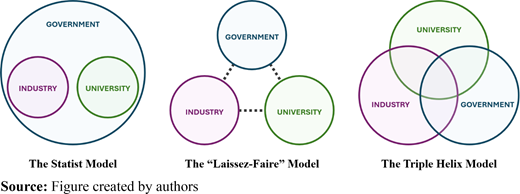
Unlike the Statist Model and the “Laissez-Faire” Model, shown in Figure 1, the Triple Helix model posits that universities play a crucial role in driving innovation within increasingly knowledge-based societies. According to the Triple Helix model (Etzkowitz et al., 2000; Leydesdorff and Etzkowitz, 1998), interactions among universities, industry and government facilitate the flow of knowledge, significantly contributing to regional innovation and development. Universities have become key institutions in this model, bridging the gap between research, teaching and practical application.
Research incorporating the concept of the ‘entrepreneurial university’ (Etzkowitz, 2003) has extensively documented how universities contribute to local development (Smith and Bagchi-Sen, 2012; Marques et al., 2006; O’Kane et al., 2015). These contributions take various forms, such as university spin-off firms, trilateral initiatives aimed at fostering knowledge-based development, and strategic alliances among companies of varying sizes and technological capabilities, as well as collaborations with government laboratories and academic research groups. Building on the Triple Helix Model, we aim to interlink the trilateral initiatives presented in the “entrepreneurial university” literature to show how collaboration between actors fosters knowledge sharing and development.
The overarching goal of the Triple Helix model is to create an innovative ecosystem where diverse entities operate synergistically. Universities, by providing a steady stream of students, academic expertise and research capabilities, serve as crucial hubs for learning and innovation development (Anderson et al., 2007; Carayannis et al., 2000). As identified by Liu and Huang (2018), universities integrate into the Triple Helix model by providing specific capabilities that facilitate productive and positive interaction among the involved actors. These capabilities are essential for fostering a collaborative environment where knowledge and resources can be effectively exchanged, leading to mutual benefits and development.
Among others, a key capability is mobilizing and integrating Resources Necessary for Development, which includes human capital and expertise, as well as the establishment of knowledge hubs that are crucial or beneficial for development (Lockett and Wright, 2005; Youtie and Shapira, 2008). In our BIP, knowledge is delivered through the student’s participation, and supervision of university staff academic but also administrative, e.g. Erasmus/third mission, which allows knowledge sharing and enhancement.
Enhancing and realizing Motivation and Objectives for Collaboration is also a capability observable in the specific project. Universities must have the motivation and clearly defined objectives that align with working alongside the other two actors in the model (i.e. industry and government). This includes embracing the mission of the entrepreneurial university, which focuses on fostering an entrepreneurial spirit and promoting development through knowledge sharing and cooperation (Fugazzotto, 2009).
Entrepreneurship education benefits from the collaboration of various stakeholders, each contributing unique resources and expertise. The Triple-Helix model, which consists of universities, industry and government, offers a strong framework for understanding these interactions. Table 1 below categorizes stakeholders according to this model and outlines their specific roles within the entrepreneurial ecosystem.
In the authors’ conceptualization, stakeholders in entrepreneurship education encompass all groups directly or indirectly affected by entrepreneurship education either through active involvement in the provision of education or by being recipients of education. In this respect, external stakeholders include nonuniversity stakeholders who are directly involved in or related to entrepreneurship education in the respective universities (Amaral and Magalhaes, 2002; Bartell, 2003). All those stakeholder groups can be considered interconnected actors in the entrepreneurial ecosystem.
While this helix-based stakeholder-oriented approach to collaborative projects in entrepreneurship education remains relevant and valuable, our study aims to develop it further by cultivating an international element through the deliberate educational design of a short-term study abroad program blended with virtual predeparture activities. A description of the program is provided in the Appendix.
Methodology
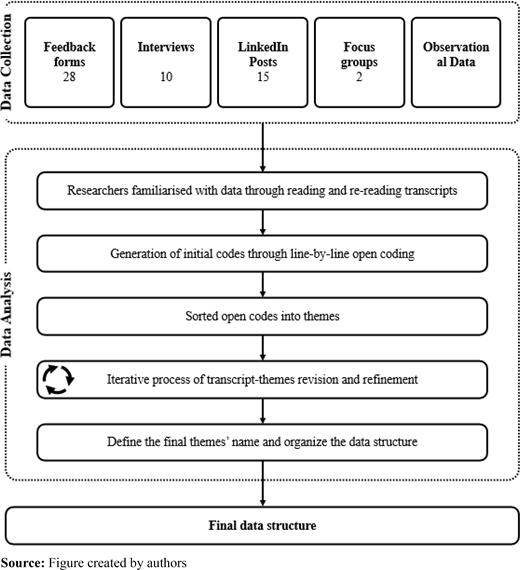
Our study investigates an Erasmus+ BIP designed to promote an international mindset and entrepreneurial skills through virtual and physical components, culminating in a hackathon (see Appendix). The objective was to assess the influence of the program on learning outcomes and its impact on other stakeholders involved. Data was collected from various sources to understand the influence of the project by understanding the views of multiple participants, including students, start-ups and faculty members. The data collection and analysis (Figure 2) were guided by the theoretical framework outlined above focusing on the interactions between universities, industry and government.
Feedback forms were administered to two student cohorts (2023 and 2024), whose aims are to understand learnings related to entrepreneurial skills, international competencies and overall satisfaction with the program. Furthermore, focus groups were also conducted with students from both cohorts to have a detailed insight into the participants’ experiences and challenges and how they thought the program affected their entrepreneurial mindset.
Representatives from startups and other partners involved in the program were also interviewed to assess the program’s effectiveness in involving stakeholders. These interviews focused on the type and quality of interactions between students and industry partners, the practical relevance of the projects undertaken and the overall benefits of participating in the BIP. Faculty members who participated in the program as mentors or organizers were also interviewed to get their viewpoints on its design, implementation and educational impact.
Additionally, LinkedIn posts and comments were analyzed to collect data. LinkedIn provides a credible source of data due to its focus on professional networking and interactions. The voluntary nature of these posts and comments indicated that participants were interested and enthusiastic about the projects, often sharing their experiences and opinions because they were proud of their involvement.
Finally, observational data were collected during the on-site phase of the program, particularly during the hackathon and community night events (see Appendix). Observations focused on student engagement, teamwork, problem-solving processes and interactions with mentors and industry experts, which complemented the survey and interview data by contextualizing the participants’ behaviors and dynamics during the program.
The data were first anonymized and transcribed by the research team, ensuring participant privacy and preserving the integrity of the qualitative data. This initial phase was pivotal in preparing the data set for a rigorous and systematic analysis. We used thematic analysis, a widely recognized method in qualitative research for identifying, analyzing and reporting patterns (themes) within data (King, 2004) as it allows researchers to discover underlying meanings and relationships by organizing and describing the data set in rich detail.
Then, we started with an iterative process of reading and rereading the transcripts, an essential step for fully grasping the content, context and nuances of the data (Nowell et al., 2017). This comprehensive understanding informed the subsequent coding and categorization phases independently performed by two researchers. During the open coding phase, we analyzed the transcripts, generating initial codes that emerged directly from the data and sorted them into themes. The inductive approach, grounded in the participants’ perspectives and experiences, is central to thematic analysis and ensures that the codes accurately reflect the data (Boyatzis, 1998). Then, we revisited the transcripts and the coding framework, making necessary adjustments to capture the complexities and nuances of the data more accurately (King and Brooks, 2017).
In the final stages, we reviewed and assigned final names to themes to ensure they accurately represented the data’s content and significance. The last step involved organizing the data into a coherent and systematic framework that encapsulated the key findings of our analysis, providing a robust foundation for the study’s conclusions (King and Brooks, 2017).
Results
The results section presents the findings from implementing and evaluating the Erasmus+ BIP in entrepreneurship education. Data collected through two feedback forms, interviews and observations are analyzed to assess the program’s impact on students’ entrepreneurial skills and international competencies. In addition, stakeholder feedback related to the multifaceted effects on and between various stakeholders involved in the program (Table 2).
During the final two years of the project, during which it transformed into a BIP, the group of participants consisted of individuals ranging in age from 21 to 41. Significantly, there was a clear dominance in the 21–25 age bracket, accounting for 64% of the total cohort.
The project has attracted participants from 13 different nationalities, with Italians comprising a significant majority, reflective of the project’s affiliation with the University of Pavia in Italy (Table 3). Notably, Finnish and German participants also feature prominently in terms of numerical representation.
Regarding gender distribution, there is a relatively balanced representation between males and females, albeit with a slight predominance of female participants.
In examining the universities from which the students originate, it is notable that there is a balanced representation, with equal numbers enrolled at both the University of Pavia in Italy and LUT University in Finland. Subsequently, significant contributions are also made by students from the Austrian FHV - University of Applied Sciences, along with those from the German institutions the University of Tubingen and the University of Cologne.
On the corporate side, the total number of companies over the two years amounts to 20 (with some companies opting to participate in the project for multiple years). The majority of these companies are Italian and Austrian, followed by German and Finnish companies.
Furthermore, it is noteworthy that the selection process considered the possibility of including companies with diverse characteristics such as age, country of origin and industry affiliation (e.g. AI, Software, Manufacturing, Services, R&D; Energy). Consequently, the selection encompassed a variety of entities, including university spin-offs, startups and more established firms.
Student feedback: Entrepreneurial skill development as learning outcomes
In total, 29 over 53 students provided us with feedback on the BIP project. As is illustrated in Table 4 below, learning outcomes are multiple and in line with the objectives of implementing international entrepreneurship educational programs.
Hard skills.
The hard skills the students mentioned were mainly related to the core aim and tasks of the project, that is assisting “their” startup to enter the international arena. This includes, for example, searching for relevant market data, evaluating international markets, understanding industry value drivers and developing international business plans. Direct collaboration with startups allows students to expand and apply their academic knowledge in practical, real-world circumstances:
Working with the startup gave me new insight into researching entry modes and comparing different markets.
Another student emphasized the development of critical analytical skills, adding that the program “improved market research skills and data filtering,” as well as provided insight into a “new industry and how it operates.”
Students gained practical experience in developing, in co-creation with companies and senior experts, international business plans and marketing strategies. This collaborative process not only reinforces the theoretical concepts taught in class but also gives students a practical perspective and the possibility to apply their knowledge in a real global business context. The creation and discussion of internationalization plans by students for new ventures generate mutual benefit for both parties involved, perfectly illustrating the actual relevance and real-world applicability of the program.
Soft skills.
The BIP fosters students’ personal and professional growth by emphasizing soft skills such as public speaking, understanding team dynamics, conflict resolution, cross-cultural communication, time management and leadership.
Students highlighted the impact of the project on developing these skills:
Analyze a project from a different perspective, discuss, and put the perspectives together […]” “Learn to reason before acting, although one is caught by stress and deadlines […].
Understand how to split the tasks within the group with a clear diversification of the roles along the strengths of the members.
These reflections emphasize the need for critical team thinking, working and reasoning skills, as well as the capacity to efficiently assign work within a team. The program also teaches students to manage time and stress: “[…] especially under pressure (the two games have a key time pressure factor).”
Students can learn how to work well under pressure through time-sensitive activities, an important skill for future professional settings.
Finally, students had the opportunity to practice public speaking via their pitches, enhancing their ability to communicate and discuss effectively and persuasively:
The assignment with a real company is a great opportunity to enhance your critical thinking and gain practical experience.
Pitching in front of a jury was a challenge but at the same time an opportunity to learn.
Hybrid skills.
Hybrid skills represent an interplay of technical and interpersonal skills, encompassing both specialized knowledge gained through study and professional experience (hard skills) and inherent personal attributes and social skills (soft skills).
For example, the program enables participants to manage complex projects in both in-person and remote settings, while dealing at the same time with cultural differences. It is a blend of project management skills with cross-cultural understanding:
During the serious game, I developed skills in project management and transversal competencies.
The students challenged the startups, prompting them to consider and analyze factors for their internationalization strategies that they had not thought about. Yet at the same time, their recommendations were challenged by the ventures. The theoretical concepts and notions were put into practice but molded by and combined with the professional knowledge of startuppers and the real-life setting, fostering a dynamic learning environment:
This project allowed me to put the international entrepreneurship and business theories into practice, in a practical way with a real company.
The holistic approach educates students about mutually beneficial relationships and negotiations, enabling them to use their strengths and compensate for weaknesses within a team while still aligning with the company’s objectives and strategy. It promotes well-rounded skills development, enhancing vertical knowledge on specific projects and general skills applicable to real-world situations.
Stakeholder feedback
Feedback from entrepreneurs, senior mentors/angels, academic staff and institutions was overwhelmingly positive. Stakeholders noted the high quality of student projects and the innovative solutions presented. They also commended the program’s structure and the emphasis on real-world applications.
Feedback from entrepreneurs.
Entrepreneurs were able to learn business knowledge, even for ventures with less experience. For instance, the case of a startup that was a university spin-off in chemistry and lacked specific business knowledge, and through this project, they were able to augment their expertise by exploiting the knowledge of the students:
Having started through a scientific research project our business knowledge is limited, this project allowed us to learn more about our company and clarify future goals.
This view was amply supported by another venture:
At the beginning, the challenging questions from students were most useful to reflect on what we were doing.
Companies, by providing answers and information to students, trigger a process of self-reflection that helps them think critically and deeply reconsider their priorities.
The project’s format has received excellent feedback from company founders, who have described it as a “cool format!”. The ventures have the opportunity to collaborate closely with the students, however, the students primarily operate autonomously, resulting in a reasonable allocation of time and resources for the company. Nevertheless, the fact that the work is not of inferior quality should not be overlooked. The feedback from one startup indicates the project’s value and their willingness to participate again:
I would have never expected so high-quality outcomes from the project, ready to join other editions.
The objective of the Project is to establish an ecosystem that involves young individuals (future employees), companies and potential investors. The idea is to facilitate ongoing collaboration and communication among these stakeholders, even after the conclusion of the project.
This can be viewed as the fact that startups offer students a chance to continue working with them “If there are any students interested in an intern just let us know!” or from a student who participated in the project, participates again the following year with their startup:
Having previously attended this event last year as a student, being able to return from the perspective of a startup, showcasing my project, has been incredibly stimulating and motivating.
The continuity in the relationship was also a motivating factor for our Company Partner to join the students throughout the week-long in-person assignment. Even though one of the company’s core values is the opportunity to contribute back to the community, it also had a means of promoting itself and attempting to attract talent:
[…] We can present ourselves to international students because we have an Internet globally international company, and we would like to have more international students. And I like very much the program that you have, that the students are working together internationally.
The blended format of the program, combining remote and in-person interactions, effectively mirrors the working environment of global companies. This approach allows students to experience working together in different countries and living environments, thereby preparing them for real-world scenarios:
They get experience of how it is to work together, not just coming from different countries but also ‘living’ together, seeing different backgrounds. They have digitally worked together, and then they meet each other in person. That's great for global companies. We also work with international teams, people from different backgrounds and different countries, and we also have to work, partly, digitally with each other.
Feedback from government and industry actors.
The learning process includes not only students or entrepreneurs but also extends to all project participants, including senior specialists and institutions. Senior executives and specialists have acquired expertise and derived advantages from the project. They have regularly accepted to participate in this initiative for both years and also value the progression of it:
The project is improving year by year, and it is always a pleasure to take part in this successful program.
They shared their expertise with the students and entrepreneurs while also gaining the opportunity to listen to and learn about novel and emerging business ideas:
I would say that the main benefit is in terms of stimuli […] there were a dozen projects different from each other in terms of products, business and sectors. And so, it is a good stimulus for 2 reasons, the first is to devote attention to some new, interesting products or sectors. The second being all of different cultural backgrounds and countries, I noticed that each group, that is, each university, also brought different approaches in my opinion.
There is the opportunity to listen to projects that are always very interesting. Often it is possible to have design ideas for future projects, here, I always find interesting ideas:
The institutions that participated in the study also confirmed the potential for generating ideas for future projects:
We are now planning to do a similar project on an institutional level.
The program was not only valued for its contents but also widely acknowledged for its structural efficiency. Institutions deemed the form to be valid to such an extent that they desired to replicate the format inside their work environment. Additionally, they acquired an understanding of the investment strategies used by startups with the capital they offer:
It is very interesting to see the topic from the other side.
Looking jointly at the quotes of the different stakeholders (students, companies and institutions) involved in the project, they can be collapsed into two themes: context and network as displayed in Table 5.
The atmosphere during the BIP was lively and active, a fact that contributed considerably to the program’s success. The diverse, multicultural and multinational context, from the student and startup side, resulted in a very unique and welcoming community. One participant emphasized the advantages of this diversity, saying that:
Multicultural team […] great in helping me understand how different backgrounds of individuals have different ways of thinking that stem from their past experiences both personal and cultural. This diversity fostered a rich exchange of ideas and perspectives, essential for innovative thinking.
The program’s hybrid setting provided learners with the flexibility and adaptation required in today’s global workplace as mentioned above. However, it was the in-person week and its environment that was described as particularly vibrant:
[…] always energetic. This energy was not chaotic but focused and productive, creating a conducive environment for collaboration and creativity.
The informal and joyful nature of the program further enhanced the experience, enabling participants to engage deeply with their work without the pressure and stress often associated with more rigid environments. The spirit of the program was also emphasized:
The atmosphere was good; it was very open-minded and very cooperative.
Furthermore, the program’s gamification strategy and friendly competition enhanced engagement and excitement. The program components worked together to create an atmosphere where participants were inspired by their initiatives.
The project significantly facilitates the development of both professional and social, national and international networks, offering students invaluable opportunities to connect with peers, industry professionals and institutions. Students, for example, highlighted:
It is a nice experience to get to know people from different parts of the world.
I have lost my heart in Italy, and I will for sure be back to see my new friends.
Start uppers highly valued the hackathon and related social events where they got to know each other and had the opportunity to exchange with their peers, the senior mentors/angels and the institutions.
The findings from the Erasmus+ BIP demonstrate that the program significantly enhances participants’ entrepreneurial skills and international competencies, while also yielding high levels of satisfaction. The blended approach, which combines virtual and physical components, has proven to be particularly effective in engaging students and facilitating practical, real-world learning experiences. These results underscore the importance of further developing and implementing BIPs in entrepreneurship education, as they have the potential to better prepare students for the challenges of global entrepreneurial environments.
Future improvement for the project
Notwithstanding the positive reaction to the project, its outcomes and its organization, the collected data allow for the identification of potential areas for improvement and reflection for future editions.
Institutions and experts are usually integrated in the second phase of the project, not including them in the online part. Intensifying their presence could enhance opportunities for exchange and collaboration. As stated by the expert:
We need to reflect on the balance between smart work and in-depth work. More time spent working collaboratively between students and experts could be beneficial.
The format itself has been appreciated, as well as the Hackathon format, which enables students to work under pressure and develop practical work-related skills, has been much appreciated:
It's not necessarily negative; it's a choice. In a sense, the students are also getting used to working quickly with limited time, which reflects the reality of daily work.
However, complementing this format with more intensive, recurring and structured preparatory activities would enable students to delve into specific issues directly related to their areas of interest and expertise, improving the level of detail and professionalism:
There is a risk that rushing the process makes the work somewhat superficial.
Furthermore, although the communication side has evolved a lot over the years with the creation of a webpage, social media advertising and flyers, it has become evident that enhancing the program’s communication and promotion is desirable to facilitate broader public visibility and to let others get to know such a positive project that involves diverse but complementary actors:
This project doesn't have much exposure; therefore, it probably deserves better communication.
This also allows the involved parties to derive advantages from outward communication. Indeed, acknowledging the substantial participation and contributions of the various actors involved in the project could generate positive impacts for the single parties actively involved:
The fact that companies have committed to this initiative, supported the students, dedicated time and personnel to this effort and contributed to the growth of the Italian public university in an international project is significant.
So, these are all very positive aspects that become valuable for the companies involved, but it's only valuable if it is communicated effectively.
From the perspective of the universities, we could also take into account the possibilities of collaborating with various startup centers from the many universities involved. This would stimulate networking and knowledge exchange among the companies and further raise the potential value that might be achieved.
Discussion
In this section, we reflect upon the results of implementing the blended short-term study program from the perspective of the Triple Helix and advocate for a unique role of universities as boundary-spanners not only between various elements of the helix but also between different helixes. The extant research on university capability within the Triple Helix model generally rests on the basic assumptions that the three key actors (i.e. Universities, Industry and Government) are geographically proximate. This assumption is challenged by the increasing recognition of the global flow of knowledge and the mobility of knowledge workers. This mobility presents an alternative to the traditional reliance on the local availability of university capabilities. The literature on global talent movement (Stokes et al., 2016) and entrepreneurial mobility (Liu and Almor, 2016) demonstrates that knowledge can be effectively disseminated across regions, fostering innovation and development beyond local or national borders.
Our project aligns with this second emerging line of thought. It is based on the idea that cross-country (interregional) collaboration, involving diverse actors (i.e. students, universities, companies and institutions) with complementary goals, can increase the mutual benefits generated and contribute to the creation of an international ecosystem. Also, by creating a short-term hybrid international program, the project enabled participation from actors who were otherwise unable to engage in international long-term in-person activities. This initiative thus broadens access to educational opportunities and enhances collaboration between academia and industry. Hence, the project highlights the necessity of integrating global perspectives into the Triple Helix model and of finding alternative opportunities for inclusion.
Focusing on the relationship between universities and the government within the Triple Helix model, it is crucial to highlight that the successful implementation of the project was made possible through the funding provided by the European Union through the Erasmus+ programs, whose financial support was instrumental in enabling the implementation of the project, which involved students from different European countries and organizing in-person networking activities and events.
The project also involved Italian national institutions like the Italian Trade Agency (ICE-ITA) and SIMEST. The ICE-ITA promotes the economic development of Italian enterprises abroad and attracts foreign investments to Italy, offering information, assistance, consultancy, promotion and training to small and medium-sized enterprises (SMEs). SIMEST supports Italian businesses’ international growth, providing financing, export credit support and equity participation from market assessment to direct investments. The university, through this project, facilitates the establishment of a direct communication channel between businesses and institutions to enhance and strengthen their network.
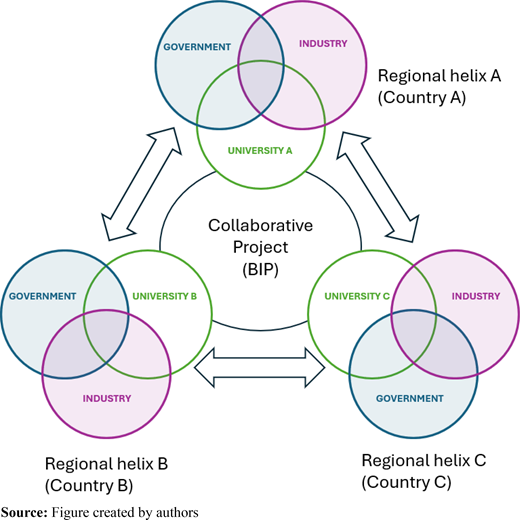
As discussed previously, this program not only extends the model geographically but also deepens its sectoral engagement by bringing together educational institutions, government entities and industries from different countries in a dynamic, collaborative framework. The collaborative projects, which in this case is a BIP, serve as a vital conduit for cross-regional collaboration, facilitating an exchange of ideas and resources that transcends geographical and sectoral boundaries, which solidify the university’s stakeholders’ position in international collaboration (Kompanets and Väätänen, 2019). In essence, the BIP is the bridge between different regional helixes that previously did not have a channel to interact with each other due to their geographical boundaries. This relationship is illustrated in Figure 3.
Hence, the collaborative project BIP – Entrepreneurship goes International is an example of the successful implementation of the proposed collaborative framework in the domain of entrepreneurship education, and at the same time propels the universities to become key players in interregional economic development and knowledge transfer (Rubens et al., 2017). However, we believe that this framework can be similarly applied to other domains, such as collaborative research and development projects. While we admit that in practice, there are other good examples of successful international collaborations, we still know very little about how different national innovation systems may be coordinated for international collaboration, as the international angle in the Triple helix model influence on education is under-researched (Zakaria et al., 2023). The proposed framework provides a solid conceptual basis for designing, implementing, analyzing and further developing collaborative projects coordinated by universities.
This perspective promotes the university’s role from providing educational programs to its students to fulfilling its other economic and social missions (Audretsch, 2014; Compagnucci and Spigarelli, 2020). Hence, the application of this perspective implies supplementing the traditional intended learning outcomes with the other goals and objectives related to the potential benefits for other participants, thus explicating the intended societal impact. The proposed approach aligns well with the recent policy initiatives related to the Smart Specialization for EU regions and Partnerships for Regional Innovation while universities may reinforce their capacity both in the territory they are located and beyond for positive societal transformation (Bianchi et al., 2024).
Conclusion
This study has demonstrated the impact of the Erasmus+ BIPs on enhancing entrepreneurship education through an international and practical framework where universities become boundary-spanners to organize educational projects as a platform for international collaboration between otherwise disconnected actors from various countries. By melding physical mobility with virtual learning, the BIPs not only addressed the disruptions caused by the COVID-19 pandemic but also tapped into the broader trends of increasing accessibility and flexibility in learning environments. One part of our findings reveals that these programs significantly boost participants’ global awareness, cultural sensitivity and employability skills, aligning with experiential learning theories that advocate for the educational richness of immersive experiences, even if they are brief (Iskhakova and Bradly, 2022; Bradly and Iskhakova, 2023).
Furthermore, such a platform not only fosters conducive international learning experiences for participating students but is also valuable for other project participants. While initially developing this project, the faculty focused on satisfying its academic mission, the third mission has become paramount, and the project has become a vehicle to explore and enhance the benefits for other actors involved. Continuous improvement based on feedback received from all the participants involved in the project allows better alignment of goals and increases value generated for all stakeholders.
The insights from this study contribute valuable perspectives to academic literature and offer practical guidance for practitioners from universities, industry and government. By integrating real-world entrepreneurship challenges with structured international teamwork, international collaborative projects (such as BIPs) serve as a model for other educational institutions aiming to enhance global business education. They illustrate how universities can act as boundary-spanners in the Triple Helix model, facilitating innovation and knowledge exchange across geographical and cultural divides. The theoretical framework for collaborative projects (Figure 3) proposed in this has wide potential across diverse educational contexts. While the specific findings are based on a European setting, the Triple Helix model and blended learning approach can be effectively used globally in entrepreneurship education. As a vital addition to the development of the local Triple Helix model, this approach is especially relevant for universities from smaller towns and peripheral regions. While continuing urbanization and migration toward metropolitan areas, the existence of the university might be an effective policy instrument for the revitalization and resilience of small towns and peripheral regions (Evers, 2019). The interregional collaborative projects advocated by this study may be effectively adopted by other universities across Europe and globally, regardless of the size and level of regional development. The program’s combination of virtual and in-person elements fosters international collaboration and practical skill development, making it adaptable to various regions and participant groups.
While the theoretical framework is widely applicable, several limitations must be considered. The study is based on European institutions supported by frameworks like Erasmus+, which may not be as readily available elsewhere, potentially limiting the model’s applicability in regions with fewer resources. Additionally, participants came from universities and industries with relatively established international collaborations, which may not represent institutions in regions with the least developed entrepreneurial ecosystems. Finally, the program’s blended approach may not be as effective in fully virtual or purely in-person settings, as its success relies on the combination of digital and physical interaction.
For future research, we recommend exploring the long-term impacts of BIPs on students’ careers and entrepreneurial aspirations, as well as further examination of the third mission of universities – engaging with the wider community and economic development. This will help ascertain the sustainability and broader societal contributions of such programmes, ensuring they continue to evolve in alignment with global educational needs and market demands.
The authors wish to express their sincere gratitude to Simona Amerio for her valuable assistance with the interviews. They are also deeply appreciative of Rosangela Amato and Michela Cobelli for their support in securing Erasmus Blended Intensive Program funding. Finally, they extend their thanks to the startups, university colleagues and all other stakeholders involved in this project for their continued support and active participation. Their contributions were essential to the success of this program and associated research.
Appendix
Entrepreneurship goes international: Course description and implementation
The BIP – Entrepreneurship goes international - brings together the stakeholders of the triple helix mentioned above, extending the idea of the entrepreneurial local ecosystem to the international level – a setting that mirrors well the characteristics of today’s interconnected global landscape. Universities (learners, academic staff, knowledge transfer center), startups, mentors/angels and institutions (e.g. the Italian trade agency, the technology center) from Italy, Finland, Germany, France and Austria are involved in various project activities. The core of these activities is the design of international strategies that international student teams, jointly with ‘their’ entrepreneurs and startups, develop.
The participants
All universities involved have longstanding positive relationships either via double degrees or Erasmus projects. All offer an International Entrepreneurship/International Business Curriculum so that participating students are well-equipped to put their theoretical knowledge into practice. Through discussions with entrepreneurs, exposure to the startup environment and collaboration in international teams, students learn to choose and apply the relevant knowledge to real-life problems and challenges and to discuss recommendations. In doing so, they acquire valuable skills, competencies and networks that will assist them in their future international careers. Beyond university staff (Erasmus teams and third mission included), the international ecosystem approach provides for the participation of startups from various countries, public institutions relevant for international activities, a company partner that is world leader in its business and senior mentors/angels with international experience. Stakeholders, including startups, benefit from new ideas, a blend of theoretical and practical knowledge and exposure to and involvement in international professional and social networks.
The program
In general, the BIP program development benefitted from experience over the years. For example, we learned that participating startups needed to be chosen carefully, asking them to commit time along the project duration to their teams. We also learned to channel the interaction between teams and startups and to set clear deadlines for the various tasks. We ‘tested’ the hackathon first with just one of our partner universities, and then extended the project participation to others. Only after the pandemic, when we had run the project virtually, we actively developed a remote phase, which enabled again international ‘scaling’ of the project. Senior mentors/angels were invited in later editions of the project and our longstanding company partner, now integral part of the program, had come for project-independent activities. Collaboration with the local ecosystem (e.g. the University third mission department and the science and technology parks, startups) instead was one of the basic pillars right from the start.
The content in brief
The university recruitment phase introduces students to the challenge, “Entrepreneurship Goes International”. The selected students and startups first meet in a virtual kickoff event, the Community Night, designed to facilitate introductions and form teams. This is followed by a series of virtual preparatory team activities, such as getting acquainted with the startup’s business model and team, as well as beginning project tasks. These virtual interactions culminate in a 5-day, in-person program held at the University of Pavia in Italy.
The in-person week starts with the first two days focusing on ice-breaking and skill-building through activities which are facilitated by both university staff and the local student team. These activities include interactive sessions such as CultureRally and the Entrepreneurship and Diversity and Inclusion Lego Serious Game, which are aimed at fostering cross-cultural communication and collaboration across international teams.
The Hackathon takes place on Days 4 and 5 and is held at the Technology Park (Polo Tecnologico) in Pavia. It spans two full days, with sessions running from 9:00 AM to 6:00 PM. During the Hackathon, student teams work intensively on solving entrepreneurial challenges in collaboration with their startups. University staff provide coaching, while senior mentors and business angels offer live support to guide the teams through the process of drafting an international business plan.
The Hackathon concludes with final team pitches to a high-level jury consisting of experienced entrepreneurs and representatives of public institutions. After the jury provides feedback, awards are given to the top-performing teams.
After returning home, students work in their virtual teams to integrate the feedback received during the Hackathon and finalize their business plans. The final reports are submitted to the respective entrepreneurs for further implementation and feedback.
Key components of the program can be summarized as follows:
Community Night (virtual): A 2-hour informal session that allows students, startups, faculty and other stakeholders to network and exchange ideas.
Team interactions (virtual and physical): The program offers multiple touchpoints for student-startup interactions, including virtual workshops, mentorship sessions and in-person team-building exercises that set the stage for the Hackathon.
Hackathon (physical): A two-day event where student teams work intensively on entrepreneurial challenges presented by the startups. With live support from university staff and senior mentors, students develop their business plans, which are pitched to a high-level jury.
Final report preparation (virtual): After the Hackathon, students have two weeks to incorporate feedback and refine their business plans. These final reports are submitted to the participating startups for review and potential implementation.