This study aims to improve platform-based supply chain performance by examining how artificial intelligence (AI)–enabled analytics can translate user-generated reviews into context-sensitive operational decisions. Focusing on Shopee's Vietnam and Taiwan markets, the study investigates how AI-driven decision support systems (DSS) enhance logistics responsiveness under heterogeneous market conditions.
The study applies sentiment analysis and topic modeling to approximately 37,000 user reviews, combined with simulation modeling to evaluate alternative logistics responses. A contingency-based DSS framework is developed to operationalize contextual fit between market conditions and AI-supported supply chain strategies.
Results show that logistics failures and service expectations differ significantly across markets, requiring adaptive rather than standardized AI deployment. Context-aware AI integration improves delivery performance, reduces mismatch between user expectations and logistics execution, and supports more resilient supply chain configurations.
This study advances supply chain literature by conceptualizing algorithmic adaptability as a contingency factor. It provides a reproducible analytical pipeline linking user reviews, AI analytics, and decision support, offering practical guidance for platform operators managing cross-market logistics complexity.
1. Introduction
The rapid expansion of platform-based e-commerce has reshaped logistics operations across Southeast Asia, introducing new levels of complexity in managing fulfillment and delivery (Arora et al., 2022). As digital platforms scale across national boundaries, they are increasingly confronted with diverse infrastructural, behavioral, and institutional challenges (Stallkamp and Schotter, 2020). Among these platforms, Shopee stands out for its dual success in both emerging economies like Vietnam and mature digital markets like Taiwan (Affifa, 2024). While its success reflects a degree of localization, persistent inefficiencies highlight the limits of universal strategy design (Okonkwo et al., 2023).
Vietnam continues to grapple with weak logistics infrastructure, low digital penetration in rural areas, and a high dependence on Cash-On-Delivery (COD), which frequently causes payment and delivery failures (World Bank, 2023a, b). In contrast, Taiwan offers a highly digitized and infrastructure-rich ecosystem, where consumers trust digital payments and demand seamless logistics performance (Ng et al., 2024). These divergent conditions result in distinct operational bottlenecks, which are ranging from stockouts and app errors in Vietnam to pickup point congestion in Taiwan (Ti-Insight, 2024). Despite Shopee's localized interface and payment options, many failures remain unaddressed, particularly during peak campaign periods (e.g. 11.11, 12.12), suggesting a misalignment between strategy and context.
Traditional supply chain optimization often assumes that global solutions can be deployed uniformly. However, Contingency Theory in operations management argues that no strategy is inherently superior unless it fits the environment (Donaldson, 2006; Sousa and Voss, 2008). In this view, effectiveness hinges on the alignment between supply chain design and external contingencies such as infrastructure, technology adoption, and customer preferences (Fisher, 1997; Hofmann and Knébel, 2016).
This study adopts Contingency Theory as its theoretical lens to explore how User-Generated Content (UGC), in the form of Shopee reviews, can support context-sensitive logistics redesign (Malinova et al., 2022). Using AI tools like sentiment analysis and topic modeling, we analyze over 37,000 reviews from Vietnam and Taiwan to extract common operational failure points and guide adaptive interventions. These insights are then used to construct an AI-powered Decision Support System (DSS) that enables localized logistics optimization via simulation modeling (Toorajipour et al., 2021).
The contribution of this research is twofold: practically, it demonstrates how platforms can move beyond surface-level localization to build data-driven operational alignment; theoretically, it offers a novel integration of AI, UGC analytics, and Contingency Theory in platform-based supply chain design.
2. Literature review
2.1 E-commerce logistics in platform ecosystems
E-commerce platforms such as Shopee, Lazada, and JD operate complex, multi-layered supply chains that must balance speed, cost, and customer expectations (Rahman, 2025). In Southeast Asia, logistical operations are particularly challenging due to the region's infrastructural disparities and consumer diversity (Chu et al., 2024). Last-mile delivery is especially problematic, accounting for over 50% of total logistics costs, due to unreliable courier networks, rural access difficulties, and a persistent reliance on cash-on-delivery (Chopra and Meindl, 2019). Technological interventions such as cloud-based inventory systems and real-time routing have improved operational visibility and efficiency. However, implementation stays uneven. Mature markets like Taiwan benefit from high digital literacy, reliable urban planning, and cashless payment adoption (Akin, 2024; Global Taiwan Institute, 2022). In contrast, markets such as Vietnam face basic infrastructure constraints, fragmented delivery networks, and user mistrust in technology, requiring tailored operational solutions (Lenain et al., 2023). These contextual differences signal the need for a theory-driven approach to designing adaptive supply chain strategies.
2.2 Contingency theory in supply chain management
Contingency Theory posits that organizational effectiveness is maximized when strategy aligns with contextual conditions (Donaldson, 2001). Within supply chain management, this theory has been widely used to explain why standardized logistics models often fail in heterogeneous markets (Halldorsson et al., 2007). Key contingencies relevant to SCM include infrastructure, regulatory environment, consumer behavior, payment ecosystems, and technological readiness (Wu et al., 2014).
In emerging markets, infrastructural limitations and the dominance of cash-based transactions demand logistics models that are resilient, flexible, and often partially offline (Noor et al., 2024). Meanwhile, in mature environments, supply chain strategies prioritize efficiency, automation, and data integration (Lin et al., 2022). Applying Contingency Theory enables firms to shift from one-size-fits-all AI-driven SCM to localized, context-sensitive approaches that better reflect environmental variability (Chukwu et al., 2024).
This study adopts Contingency Theory as its guiding framework to interpret logistics performance variation and to evaluate how user-generated data (UGD) and AI-driven decision support systems (DSS) may improve strategic alignment.
Beyond efficiency considerations, classical logistics scholarship emphasizes spatial and infrastructural constraints in last-mile fulfillment (Hesse and Rodrigue, 2004). These insights complement recent international trade analyses showing how cross-border e-commerce reshapes distribution networks (OECD, 2024; Rahman et al., 2024). Integrating these perspectives highlights that platform-based logistics must reconcile both macro-level trade dynamics and micro-level delivery execution.
2.3 User-generated content and AI in SCM
User-generated content (UGC), especially customer reviews, offers a valuable source of operational feedback that is rarely leveraged in supply chain strategy (Liu et al., 2021). Reviews often include user complaints about delivery failures, stockouts, app crashes, and service inconsistencies, offering real-time indicators of underlying supply chain issues (Starbird and Weber, 2018).
Sentiment analysis tools like VADER and TextBlob help classify user sentiment and track satisfaction trends over time (Hutto and Gilbert, 2015). Topic modeling techniques such as Latent Dirichlet Allocation (LDA) are frequently used to extract operational themes from large text corpora (Blei et al., 2003; Jelodar et al., 2018), offering insight into recurring patterns like COD failures or pickup delays (Vayansky and Kumar, 2020).
In parallel, AI-driven DSS tools are increasingly deployed in SCM to facilitate predictive analytics, dynamic inventory allocation, and intelligent routing (Raji et al., 2024; Hamou et al., 2024). However, most DSS systems rely on internal operational data, while UGC-based DSS design remains underexplored, particularly in cross-market contexts where supply chain responses must reflect localized customer feedback (Teniwut and Hasyim, 2020).
While prior studies have leveraged user-generated content (UGC) for marketing analytics or customer engagement (Sykora et al., 2022; Naem and Okafor, 2022), its operational potential within supply chain management remains underexplored. In particular, few studies have employed UGC to diagnose logistics inefficiencies or simulate adaptive interventions. This study fills that gap by reframing UGC as an input to AI-driven decision support systems, linking user sentiment directly to supply chain performance improvement.
2.4 Research gap
Although existing literature has explored AI applications in SCM (Toorajipour et al., 2021), it lacks theoretical framing to explain contextual performance variance across markets. Few studies apply Contingency Theory to platform logistics, despite its potential to explain why strategies must differ in Vietnam versus Taiwan.
While Contingency Theory serves as the primary explanatory lens, complementary frameworks such as Dynamic Capabilities (Teece et al., 1997) and Institutional Theory (Scott, 2014) also offer valuable perspectives on adaptation and legitimacy. In addition, the Information-Technology and Organizational Performance (ITOP) model (Goodhue and Thompson, 1995) links system–environment fit with user effectiveness, providing a micro-level complement to the strategic “fit” logic emphasized here. However, these frameworks emphasize firm-level reconfiguration, compliance, or user alignment rather than contextual “fit,” which is central to this study. Future research could integrate these lenses to explore how algorithmic capabilities, institutional pressures, and user–system interactions jointly influence logistics adaptation.
Recent research on platform-specific contingency models (Alabdali et al., 2025) emphasizes that digital platforms must continuously recalibrate their operational configurations to align with national-level contingencies such as infrastructure maturity, payment trust, and regulatory conditions. However, these studies remain largely conceptual, with limited empirical linkage to operational analytics (Li et al., 2025).
In parallel, emerging literature on AI ethics in developing economies (Yuxuan and Wan Hussain, 2025) underscores disparities in data governance, algorithmic accountability, and automation readiness, particularly across Southeast Asia. These perspectives reinforce the importance of designing context-aware, ethically grounded AI systems for platform logistics.Moreover, while sentiment analysis and topic modeling have become standard in consumer research, their integration into supply chain decision-making frameworks remains limited (Holloway, 2025). The intersection of UGC analytics, AI-driven logistics simulation, and contingency theory is not yet addressed in the literature (Chen et al., 2024).
This study addresses these gaps by integrating AI-powered UGC analysis with simulation modeling to evaluate how logistics strategies can be aligned to contextual contingencies, using Vietnam and Taiwan as contrasting cases.
3. Research questions and conceptual framework
The rise of platform-based e-commerce has led to increasingly complex logistics operations, especially in cross-market environments where consumer behavior, infrastructure, and payment systems vary drastically (Ballerini et al., 2024). While platforms such as Shopee have implemented partial localization, operational failures persist, suggesting a deeper misalignment between logistics strategy and market context. Drawing on Contingency Theory (Donaldson, 2001; Sousa and Voss, 2008), this study posits that optimal supply chain design requires context-strategy fit, where adaptive strategies are formulated in response to localized environmental conditions (Taleizadeh et al., 2022).
To examine this, the study proposes the following research questions:
How do operational failure types differ between mature and emerging e-commerce markets?
How can AI-driven logistics strategies be adapted to contextual contingencies?
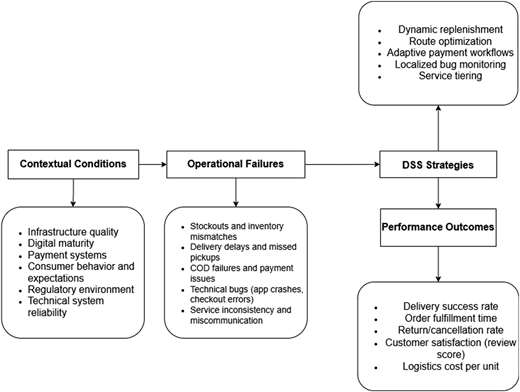
To answer these questions, a four-stage conceptual framework is introduced (Figure 1), grounded in both empirical observations and theoretical logic. The model begins with the identification of contextual factors, followed by the extraction of operational failure types from user-generated reviews. These failures inform an AI-powered Decision Support System (DSS), which generates market-specific logistics strategies. The ultimate goal is to improve key performance outcomes.
3.1 Contextual factors
Contextual variables refer to the environmental and institutional conditions that shape logistics performance in each market. These include:
Infrastructure quality: The availability and reliability of road networks, warehousing, and last-mile delivery channels (Sénquiz-Díaz, 2021; World Bank, 2023a, b).
Digital maturity: Internet access, smartphone usage, and comfort with digital platforms (UNCTAD, 2024).
Payment systems: The prevalence of cash-on-delivery (COD) versus digital payments (Deloitte, 2024).
Consumer behavior and expectations: Sensitivity to delivery speed, tracking needs, and customer service (PWC, 2023).
Regulatory environment: Import policies, e-commerce regulation, and consumer protection laws (World Trade Press, 2022).
Technical system reliability: Frequency of app crashes, checkout errors, and system downtimes (Sykora et al., 2022).
These factors differ significantly across markets. As Vietnam is a developing country with low Logistics Performance Index (LPI Vietnam = 3.3) with low Infrastructure score (=3.2), while Taiwan is a developed area with good LPI (LPI Taiwan = 3.9) and high Infrastructure score (=3.8); this leads to huge differences in supply chain and logistics for Shopee in both countries (World Bank, 2023a, b). For instance, Vietnam's reliance on COD and low rural infrastructure leads to recurrent delivery failures, whereas Taiwan's high urban density and digital payment adoption pose different challenges, such as pickup congestion and high service expectations (Phuong et al., 2024a, b; Lin et al., 2023; Leu et al., 2021; Phuong et al., 2024a, b).
3.2 Operational failures
User-generated reviews serve as a rich source of real-time operational feedback (Ray and Bala, 2021). By applying sentiment analysis and topic modeling (e.g. LDA), this study identifies and categorizes common failure types, including in stockouts and inventory mismatches; delivery delays and missed pickups; COD failures and payment issues; technical bugs (app crashes, checkout errors); service inconsistency and miscommunication. The types and frequencies of these failures vary by market, reflecting the influence of contextual factors. For example, reviews from Vietnam are expected to show more COD and delivery failures, while Taiwanese reviews may emphasize technical reliability and service speed.
The heavy reliance on user reviews as the primary data source introduces potential biases, including sentiment exaggeration, non-representative sampling, and linguistic distortion. To mitigate these issues, all texts were normalized through language detection, translation alignment, and token standardization before analysis. A manual validation of 2% of the dataset was conducted to cross-check automated sentiment outputs. Moreover, comparisons between Vietnam and Taiwan served as an internal control, as cultural and infrastructural differences allow contextual triangulation. While these measures reduce bias, they do not eliminate it, but inherentate the limitation acknowledged in Section 7.
3.3 DSS-enabled strategy
Once failures are identified, an AI-powered DSS module is designed to recommend targeted interventions. These strategies are informed by both contextual variables and failure types. Examples include:
Dynamic replenishment: AI predicts stockouts and reallocates inventory across regions (Nweje and Taiwo, 2025).
Route optimization: Adjusting delivery paths in real time to minimize delays (Giaglis et al., 2004)
Adaptive payment workflows: Encouraging digital payment in markets with COD dominance (Miglionico, 2023).
Localized bug monitoring: Using AI to detect platform-specific system issues based on user complaints (Diego, 2015)
Service tiering: Offering differentiated logistics promises based on region (König et al., 2018), e.g. guaranteed pickup in Taiwan vs. flexible delivery windows in Vietnam.
This AI-DSS approach aligns operational tactics with local constraints, embodying the logic of Contingency Theory while leveraging real-time analytics (Mahroof et al., 2025).
3.4 Performance outcomes
The effectiveness of these strategies is measured through improvements in:
Delivery success rate
Order fulfillment time
Return/cancellation rate
Customer satisfaction (review score)
Logistics cost per unit
These metrics are consistent with SCM performance KPIs in e-commerce platforms (Chopra and Meindl, 2019). They can be simulated using tools like AnyLogistix or tracked via operational dashboards and customer reviews.
3.5 Summary of framework logic
In summary, the proposed model follows the logic in Figure 1.
The framework (from Figure 1) integrates environmental realism with AI-driven analytics, offering both a theoretical lens and practical roadmap for platform logistics in heterogeneous e-commerce environments (Ferrantino and Koten, 2023).
4. Methodology
This study applies to a multi-stage analytical pipeline to investigate cross-market logistics failures and formulate AI-based strategic interventions. Following the logic of Contingency Theory and cross-case comparison, the method integrates text mining techniques and simulation modeling to translate user-generated content into operational insights.
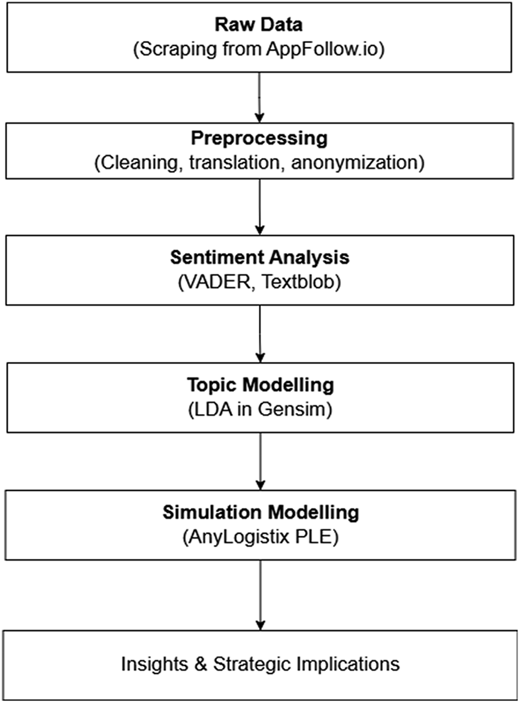
This study adopts a mixed-method approach combining qualitative and quantitative analytics. The design integrates user-perception mining (sentiment and topic modeling) with logistics simulation, creating a theory-driven triangulation between human experience, algorithmic insight, and operational performance. Figure 2 below shows the process of method that we adopted for this research.
4.1 Dataset and scope
The dataset comprises approximately ≈37,000 user reviews extracted from Shopee's Android and iOS platforms using AppFollow, a tool for aggregating app store feedback. The data spans two distinct markets:
Vietnam: approximately 19,000 reviews collected between January 1, 2024–December 31, 2024, capturing seasonal dynamics such as Lunar New Year and 11.11 campaigns.
Taiwan: 18,224 reviews spanning a longer period, January 1, 2023–January 2, 2025, enabling both short-term and long-term trend analysis.
The disparity in volume reflects Vietnam's expanding digital user base versus Taiwan's more stabilized market. Collecting data from multiple platforms ensures diversity in user representation and interaction modes (Schelenz et al., 2021).
Appendix A provides an overview of dataset composition, review distribution, and dominant complaint categories across the two markets.
4.2 Data preprocessing
Preprocessing was essential to ensure data consistency and ethical compliance. The following steps were applied:
Cleaning: Removal of duplicates, empty strings, and spam entries.
Anonymization: All personally identifiable information (PII) was removed to ensure compliance with ethical research standards (Throne, 2023; El Emam, 2013).
Translation: Machine translation was applied to Vietnamese and Traditional Chinese reviews using Google Translate API, followed by idiom normalization to address semantic drift.
Standardization: All texts were lowercased, stripped of special characters, and tokenized using Python's NLTK and spaCy libraries for further analysis.
These steps ensured the dataset was both ethically sound and analytically robust for multilingual processing (Ragni et al., 2014).
4.3 Sentiment analysis
Two Python libraries were employed for lexicon-based sentiment scoring:
VADER: Tuned for short, informal texts such as app reviews, offering compound sentiment scores (Hoti and Ajdari, 2023).
TextBlob: Used for polarity and subjectivity scoring, adding nuance to user emotion capture (Kaur et al., 2024).
Although transformer-based models such as BERT and RoBERTa have recently demonstrated high accuracy in sentiment classification, their effectiveness depends on domain-specific retraining and large, monolingual datasets. The review corpus in this study consists of short, multilingual, and highly informal app comments that blend Vietnamese, Chinese, and English expressions. Under these conditions, lexicon-based methods such as VADER and TextBlob provide more stable and interpretable results without extensive data preprocessing or computational overhead. This choice aligns with the study's focus on operational interpretability and reproducibility rather than linguistic fine-tuning.
The authors acknowledge that lexicon-based tools may misinterpret sarcasm or context in multilingual app reviews. To mitigate these limitations, the data were normalized via machine translation and idiom correction, and a manual 2% sample validation was conducted. The analysis therefore emphasizes aggregate sentiment distributions rather than single-review classification accuracy.
Each review was classified as:
Positive: Satisfaction with delivery time, product quality, or pricing.
Negative: Frustration over COD failures, bugs, or long shipping delays.
Neutral: Factual comments without emotional tone.
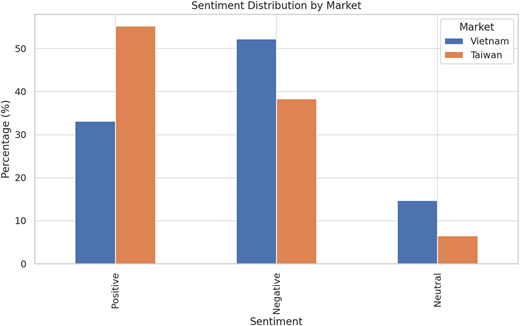
Cross-market results showed that Vietnam had 52.2% negative reviews, compared to 38.3% in Taiwan, indicating a higher level of operational dissatisfaction in emerging markets (Section 5.2).
The detailed sentiment analysis workflow, including preprocessing steps and classification rules, is provided in Appendix B.
4.4 Topic modeling
Latent Dirichlet Allocation (LDA) was implemented using the Gensim Python package to uncover latent topics in review corpora (Kuo, 2023). Key procedures included:
Tokenization and stopword removal.
Lemmatization to reduce words to base forms.
Coherence-based tuning to select the optimal number of topics.
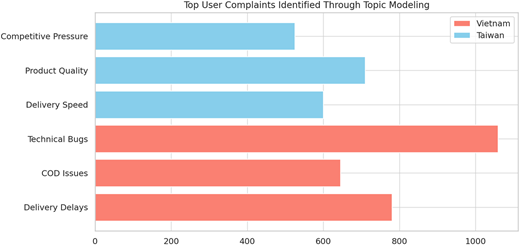
Recurring themes identified include:
Delivery Delays: Vietnam-specific, linked to infrastructure constraints.
Payment Failures: Mostly COD-related complaints in Vietnam.
Technical Bugs: Cross-market, but more frequent in Vietnam (1,059 vs. 525 in Taiwan).
These thematic clusters reflect specific logistical pain points across contexts (Guest and McLellan, 2003).
Because short-text data often reduces topic-coherence quality, the corpus was pre-processed using bigram/trigram tokenization and optimized by coherence-score tuning, improving LDA interpretability for short app reviews.
4.5 Simulation modeling
The simulation design was primarily implemented in Python, using custom-coded scripts to model dynamic replenishment and inventory adjustments derived from user-review insights. Python was chosen for its flexibility and transparency, allowing seamless integration of sentiment and topic outputs into parameterized logistics models.
The network model comprised five distribution nodes, two fulfillment centers, and stochastic customer demand distributions fitted with variance of ±15% based on observed order seasonality. Lead times followed a triangular distribution (0.5–2.5 days), reflecting regional transport uncertainty. Dynamic Replenishment and Inventory Optimization modules were selected because they directly address the two most prevalent user-reported failures: stockouts and delivery delays. Other AnyLogistix (ALX) functions such as network redesign or risk analysis were excluded due to the absence of firm-level structural data but are highlighted as potential extensions for future research.
To complement this analytical layer, AnyLogistix PLE served as a visualization and benchmarking interface for validating network structure, KPI realism, and delivery flow consistency. This hybrid Python–AnyLogistix configuration ensured both computational control and logistics-domain interpretability, minimizing black-box dependency.
The simulation evaluated two core interventions:
Dynamic Replenishment – Predictive stock allocation based on demand clusters extracted from negative reviews.
Inventory Optimization Real-time adjustment of buffer stock levels across regional warehouses.
Input parameters were defined as follows: (1) demand fluctuation of ±15% during peak events, (2) lead-time variance of ±10% across urban and rural zones, and (3) COD share variation of ±10% in Vietnam. Sensitivity tests confirmed stable trends across these variations, indicating that AI-driven replenishment strategies remain robust under shifting demand and infrastructure conditions.
This hybrid approach combines the flexibility of Python-based parametric testing with the visualization capability of AnyLogistix. Compared to commercial packages like Arena or Simio, it provides a transparent, reproducible, and context-aware simulation pipeline suitable for e-commerce logistics studies. Table 1 below will present simulation parameters and sensitivity test results.
From results of Table 1, compared with general-purpose simulation tools such as Arena, FlexSim, or AnyLogic, AnyLogistix PLE offers supply-chain-specific KPIs and easier integration with Python-based analytical workflows. This hybrid configuration enables transparent parameter testing while retaining a domain-specific visualization layer, ensuring both reproducibility and practical relevance.
Appendix C illustrates the simulation scenarios and network layouts supporting the performance comparisons discussed above.
4.6 Ethical considerations
This study followed best practices in data ethics and transparency. All user review data were obtained through AppFollow, a third-party analytics platform that aggregates publicly available user-generated content from mobile applications in compliance with platform usage policies. The analyzed Shopee reviews were publicly accessible at the time of collection and did not involve access to restricted or private content.
Anonymization was fully applied prior to analysis. No personal identifiable information (PII) was collected, retained, or processed. All analyses were conducted on aggregated data to ensure that individual users could not be identified.
The study relied on the informed use of secondary data, as all reviews were publicly available and non-identifiable. Data collection and analytical use were conducted in accordance with Shopee's Terms of Service, which permit the use of publicly displayed user reviews for research and analytical purposes.
To address potential analytical bias, the study employed aggregate-level analysis to avoid singling out individual users or overfitting extreme sentiment patterns, consistent with established recommendations in platform-based analytics research (van Giffen et al., 2022).
These precautions ensure that the research complies with ethical standards for empirical studies using secondary data in digital platform environments and does not raise concerns related to privacy, consent, or potential harm to individuals.
5. Findings
This section presents the empirical findings from sentiment analysis, topic modeling, and simulation modeling based on approximately 37,000 user reviews from Shopee's Vietnam and Taiwan markets. The analysis uncovers market-specific challenges and highlights the potential of AI-driven strategies for supply chain optimization.
5.1 Sentiment analysis results
The sentiment analysis revealed significant differences in user perceptions between the two markets:
Vietnam: Approximately 52.2% of reviews expressed negative sentiment, predominantly related to delivery delays, technical bugs, and payment issues. Positive reviews (33.1%) typically praised product variety and pricing, while the remaining 14.7% were neutral. The elevated negative sentiment underscores systemic issues in logistics and app performance, particularly during high-traffic periods.
Taiwan: In contrast, 55.2% of reviews were positive, reflecting a generally high level of customer satisfaction. Nonetheless, 38.3% of reviews expressed negative sentiment, frequently citing service reliability issues, such as inconsistent courier performance and occasional fulfillment errors. Neutral reviews accounted for only 6.5%, suggesting more decisive user experiences.
These sentiment distributions should be interpreted as indicative trends rather than absolute measures. Although language normalization and validation were applied, translation noise and sarcasm can introduce misclassification. The results therefore reflect aggregate sentiment dynamics rather than exact user emotions.
These results (indicated in Figure 3) suggest that while Taiwan's operations are relatively more stable, Vietnam's e-commerce infrastructure still faces serious performance bottlenecks, particularly under stress.
5.2 Key insights from topic modeling
Latent Dirichlet Allocation (LDA) identified 8 topics for Vietnam and 7 for Taiwan, determined via coherence-score optimization (average Cv = 0.46 and 0.51, respectively). The topics were validated through inspection of high-probability keyword sets and inter-topic distance mapping using pyLDAvis. Table 2 belows lists representative keywords and their interpreted labels, illustrating how user concerns cluster around logistics coordination, payment friction, and technical instability. While some semantic overlap exists across minor topics, these clusters provide a coherent representation of market-specific operational pain points.
The topics were further examined using pyLDAvis intertopic-distance maps to ensure interpretive validity. These visualizations from Figure 4 confirmed the separability of major clusters and the linguistic overlap in minor topics, reflecting the inherent ambiguity of short-form, multilingual user reviews.
While the topic distributions appear distinct, certain cross-market overlaps (e.g. delivery reliability and customer support) indicate shared systemic bottlenecks across the two ecosystems. This reinforces the argument that market differences are contextual rather than categorical, consistent with Contingency Theory's interpretation of environmental fit.
The contrast reflects not only infrastructural gaps but also differing user expectations and maturity levels across the two markets.
5.3 Demand patterns inferred from reviews
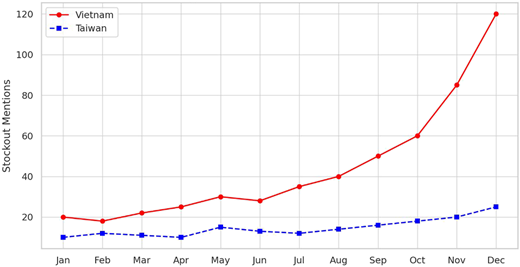
User feedback also revealed consistent patterns in demand fluctuations, as reflected in Figure 5:
In Vietnam, December stood out as the most problematic month due to major campaigns like 12.12 and holiday-related shopping. Stockouts and delayed deliveries surged during this period. The data also highlighted regional differences, where urban customers were more tolerant of digital payments and system glitches, while rural customers emphasized delivery reliability.
In Taiwan, demand peaks were more evenly distributed, with slightly elevated activity during the Lunar New Year and Double Eleven (11.11). However, operational systems managed demand more effectively, with fewer complaints about delivery disruptions.
These insights underline the importance of dynamic inventory and logistics planning tailored to temporal and geographic consumption patterns.
5.4 Simulation results
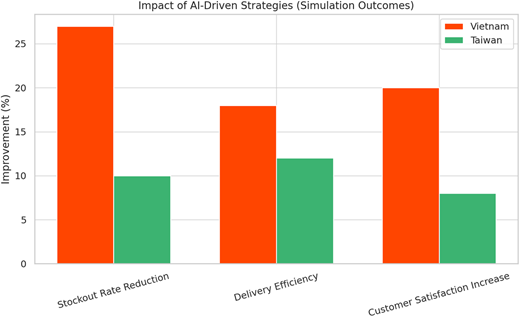
Simulation modeling in AnyLogistix PLE evaluated the effectiveness of AI-powered strategies under different operational scenarios, as stated according to Figure 6:
Stockout Rate Reduction: AI-driven demand forecasting and dynamic replenishment strategies reduced stockout rates by up to 27% in Vietnam during peak events, especially in regions previously underserved by traditional restocking methods.
Delivery Efficiency Improvement: Predictive delivery planning and rerouting based on real-time constraints enhanced average delivery speed by 18%, significantly narrowing the urban-rural delivery gap.
Customer Satisfaction Boost: Simulated Net Promoter Score (NPS) proxies, based on sentiment distributions, showed an estimated 20% increase in customer satisfaction for Vietnam and 8% for Taiwan, driven by more consistent service and reduced operational friction.
These results validate the operational potential of AI when aligned with localized constraints, offering scalable solutions for Shopee's expansion across heterogeneous markets.
To validate the robustness of the simulated performance gains, a two-sample proportion test was applied to compare stockout rates before and after AI-driven interventions. The test results confirmed statistical significance (p < 0.05) for the 27% reduction in Vietnam and (p < 0.10) for the smaller 8% improvement observed in Taiwan. This confirms that the simulated differences are not random but reflect meaningful improvements driven by context-aligned AI strategies.
Table 3 will summarize all the related dimensions of the sentiments due to the analysis based on the data collected for the logistics problems in Vietnam and Taiwan.
6. Discussion
This section interprets the empirical findings through the lens of Contingency Theory, with a particular focus on how user-generated data and AI-powered strategies can enable supply chain adaptation in divergent e-commerce environments. Both theoretical contributions and managerial implications are discussed.
These statistically validated improvements, coupled with contextual overlays in Figure 7, further illustrate how environmental contingencies shape the effectiveness of AI-driven logistics interventions.
6.1 Theoretical contributions
This study contributes to operations and logistics theory in three significant ways:
Extending Contingency Theory to Platform Logistics
Traditional applications of contingency theory have focused on manufacturing or service operations (Sousa and Voss, 2008; Ketokivi, 2009). By applying it to platform-based logistics, this study shows that fulfillment strategies must be adapted to infrastructural, technological, and behavioral differences across markets. In the case of Shopee, Vietnam and Taiwan exhibit distinct environmental constraints that demand differentiated logistics responses.
User-Generated Content as a Strategic Resource
While UGC has traditionally been studied in the context of marketing or user experience (Naem and Okafor, 2022), this study reframes it as a real-time operations signal, enabling firms to diagnose failures and simulate interventions. This elevates UGC from a reactive feedback source to a proactive input for AI-powered decision-making tools.
Challenging One-Size-Fits-All AI Deployment
The findings show that uniform AI strategies underperform when deployed across heterogeneous markets. Instead, context-sensitive AI configurations, informed by topic modeling and sentiment shifts, yield superior outcomes, supporting a modular DSS design that allows local parameterization.
These contributions advance the integration of AI, logistics, and strategy theory, pointing to a future where DSS design is not only data-driven, but environment-aware.
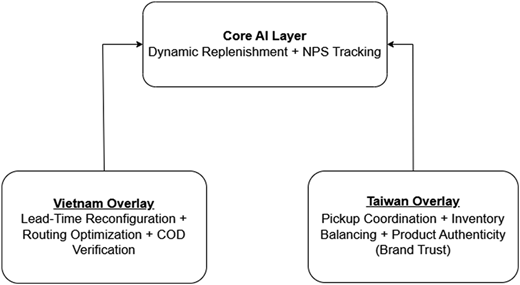
This study further advances Contingency Theory by operationalizing its core concept of “fit” through a dual-layer Decision Support System (DSS) architecture. While previous AI–SCM studies (e.g. Toorajipour et al., 2021) discussed adaptability in descriptive terms, our framework translates contextual alignment into parameterized AI modules. The core DSS layer represents universal optimization routines (e.g. dynamic replenishment), while the market overlay layer encodes contextual contingencies such as infrastructure maturity, digital payment adoption, and customer expectations. This dual-layer design converts theoretical “fit” into algorithmic logic, offering a tangible instantiation of Contingency Theory in platform-based logistics. Thus, the contribution is both conceptual and methodological, demonstrating how theoretical alignment can guide the computational design of AI-enabled supply chains.
Beyond describing market variation, the findings provide a critical interpretation of fit and misfit within Contingency Theory. Vietnam's operational environment, marked by infrastructural fragmentation and heavy reliance on cash-on-delivery, illustrates a partial misfit when standardized, globally designed algorithms are applied. In contrast, Taiwan's high digital maturity and integrated logistics networks represent a closer strategic fit between technological capability and contextual demand. This contrast highlights that algorithmic adaptability itself functions as a contingency variable: the extent to which an AI system can recalibrate to local constraints determines its strategic effectiveness. By framing digital adaptation as a measurable expression of fit, the study advances Contingency Theory from a static alignment model toward a dynamic, data-responsive paradigm.
6.2 Managerial implications
The refined simulation and topic-modeling results indicate that logistics performance improvements depend not only on algorithmic sophistication but also on environmental fit. AI-driven Decision Support Systems (DSS) show the highest effectiveness when their parameters correspond to contextual contingencies such as infrastructure maturity, payment behavior, and service reliability. Managers should therefore view AI adoption as a process of contextual calibration rather than a uniform technological upgrade.
The results also hold important implications for practitioners operating across complex platform ecosystems:
Context-Aligned DSS Architecture
Decision support systems must be designed to reflect the environmental contingencies of each market. For instance, Vietnam benefits from stock visibility and lead-time verification, while Taiwan responds better to routing optimization. Firms must avoid “algorithmic uniformity” and invest in modular AI frameworks with local overlays.
- (2)
Dual-Layer Logistics Model
Based on the findings, the study proposes a dual-layer logistics architecture:
Core Layer: Universal algorithms (e.g. dynamic replenishment, NPS tracking).
Market Overlay Layer: Contextual adjustments based on payment habits, infrastructure, and app performance.
This two-tier model enables scalability without losing localization fidelity.
- (3)
Leveraging UGC for Continuous Adaptation
Rather than treating customer feedback as an afterthought, firms should develop real-time feedback ingestion loops, using topic distributions and sentiment shifts to trigger strategic pivots or simulations. This supports agile operations and real-time market sensing.
These managerial insights are especially relevant for platforms navigating multiple regulatory zones, consumer segments, and infrastructure baselines, as in the case of Southeast Asia's digital economy.
Figure 7 below illustrates the proposed dual-layer Decision Support System (DSS) architecture. The core layer consists of universal algorithms (e.g. dynamic replenishment, NPS tracking), while the market overlay layer adapts these to localized contingencies such as payment systems, infrastructure maturity, and customer expectations.
The diagram above overlays key contingency variables for each market.
Vietnam: Low infrastructure maturity, high COD dependence, low digital readiness.
Taiwan: High infrastructure maturity, digital payment dominance, advanced logistics coordination.
Beyond large-scale platforms such as Shopee, the proposed dual-layer DSS framework can be modularly scaled for small and medium-sized e-commerce firms. By adopting simplified AI components (e.g. rule-based replenishment or delivery routing algorithms), smaller firms can enhance responsiveness without requiring extensive infrastructure investment.
Furthermore, the findings carry policy implications for emerging markets like Vietnam. The persistent inefficiencies linked to cash-on-delivery (COD) suggest a need for regulatory or incentive-based interventions, such as promoting digital payment adoption, setting COD liability standards, or providing tax incentives for logistics digitalization. These policy measures could amplify the impact of firm-level technological strategies and foster a more resilient, data-driven e-commerce ecosystem.
Collectively, these implications integrate methodological and empirical refinements with managerial practice. They demonstrate that technological success in logistics is not solely a matter of algorithmic precision but of achieving strategic fit between AI capabilities, institutional conditions, and infrastructural realities, which help fulfilling the core premise of Contingency Theory in the context of digital platforms.
7. Conclusion and future research
This study introduced an AI-enabled Decision Support System (DSS) framework that leverages user-generated content (UGC) to identify and resolve operational failures in platform-based e-commerce logistics. By analyzing over 37,000 Shopee user reviews from Vietnam and Taiwan and validating AI-based strategies through simulation modeling, the research demonstrated that contextual alignment is essential for logistics optimization across heterogeneous markets.
Key findings revealed that Vietnam's operational pain points, including in delivery delays, COD-related issues, and technical instability, require targeted, infrastructure-sensitive interventions, whereas Taiwan's concerns in pickup timing and service reliability, which demand refinements in coordination and routing. Simulation results showed that AI-powered strategies improved performance more significantly when tailored to the market environment, validating the core logic of Contingency Theory in logistics settings.
The study also contributes to the broader discourse on algorithmic localization in international logistics. Achieving cross-market performance alignment requires more than technical precision; it demands critical awareness of the institutional, infrastructural, and behavioral contingencies that shape each market. In this sense, the research not only operationalizes Contingency Theory but also extends it to the governance of AI-enabled supply chains, showing how data-driven algorithms can embody or violate contextual “fit”. By viewing algorithmic adaptation itself as a contingency mechanism, the paper advances theoretical understanding of how digital platforms internalize local complexity within global operations.
Theoretically, the study advances the integration of user feedback into real-time operations strategy and challenges the assumption of universal algorithmic solutions. Practically, it proposes a dual-layer DSS architecture that combines scalable core algorithms with localized overlays, which could be offering a blueprint for platforms seeking both efficiency and market responsiveness.
However, several limitations should be acknowledged:
The analysis was confined to two markets, limiting generalizability.
The dataset comprised short-form app reviews, which lack deeper behavioral or demographic segmentation.
The study relied solely on external user data, without integrating internal operational metrics or firm-level capability indicators.
Future research should follow the following directions:
Longitudinal analysis to track sentiment and operational issues over time, revealing how platform strategies evolve.
Data fusion with firm-level performance indicators, warehouse telemetry, or logistics KPIs to enhance simulation realism.
Expansion to other markets (e.g. Indonesia, Thailand) and inclusion of policy, cultural, and infrastructural moderators to improve model generalizability.
Exploration of firm capabilities (e.g. absorptive capacity, supply chain resilience) as mediators between UGC signals and strategy formulation.
By bridging AI, user insight, and supply chain contingency, this research offers a scalable and adaptive framework for real-time, market-sensitive logistics optimization in digital commerce.
Ultimately, this study advances both scholarly understanding and managerial practice by integrating Contingency Theory with AI-enabled logistics design. The proposed dual-layer DSS not only enriches theoretical discussions on platform strategy in heterogeneous environments but also provides an actionable blueprint for firms seeking real-time, context-aware supply chain optimization in the digital era.
Additionally, the review dataset lacks explicit demographic or geographic metadata such as user location or income group. Consequently, the study's notion of “localized strategy” is inferred from linguistic and sentiment-based patterns rather than direct user segmentation. Future studies may enhance this framework by integrating geotagged or demographic data to validate these inferred localization effects.
The supplementary material for this article can be found online