This study aims to offer the first systematic, management-focused synthesis of reverse mentoring (RM) since 2012. The authors map the field using the ADO–TCM framework to (i) clarify theoretical foundations, contexts, methods, antecedents, decision choices and outcomes of RM; (ii) propose a conceptual framework and (iii) derive a forward-looking research agenda. The authors update the knowledge base and inform both scholars and practitioners on how RM operates, where it creates value and which gaps most urgently warrant rigorous investigation.
Following SPAR-4-SLR procedures the authors identified 36 pertinent papers. The authors coded them along theory–context–method (TCM) for descriptive structure and along ADO (Antecedents–Decisions–Outcomes) for explanatory insights, highlighting moderators/mediators where present.
RM research is empirically oriented but methodologically narrow. Context is skewed toward India/Asia and Technology/ICT sector; cross-country/sector comparisons are scarce. Decisions evidence a tension between formalization and flexibility, with limited evidence on optimal designs, matching formats and facilitation roles. Outcomes concentrate on dyadic knowledge transfer, engagement and retention; organizational, market-facing and well-being effects remain underexplored.
To the best of the authors’ knowledge, this review is the first to integrate RM knowledge through the ADO–TCM lens, bridging descriptive fragmentation and offering an actionable roadmap. The authors advance a rigorous agenda with 15 themes and 33 future research questions.
1. Introduction
Reverse mentoring (RM) has recently gained growing prominence in the practitioner world and, more recently, in the academic debate (Raberger et al., 2024). RM matches younger employees with members of the executive team to guide them on various topics of strategic and cultural relevance (Jordan and Sorell, 2019; Cotugna and Vickery, 1998). In management, this translates into the possibility for organizations to leverage the skills and technological expertise of younger workers, which can represent a particularly important competitive asset (Marcinkus Murphy, 2012; Gabriel et al., 2020). Recent data and reports leave little doubt about the significance that this practice is assuming across diverse contexts.
Multinationals such as Procter and Gamble (Greengard, 2002) have celebrated more than 20 years of implementation, becoming best-in-class examples of the phenomenon with a continuous update of the exchanged content. Today, the focus lies on digital transformation, where junior tech mentors support senior leaders in accelerating digital change (McKinsey, 2024). Other companies, including British Airways, Estée Lauder and PwC, as reported by The Times, Contributor (2025), have introduced RM within top management, highlighting benefits in terms of diversity and innovation and showing how the practice has already scaled at a corporate level. Similarly, Harvard Business Review legitimizes RM as a tool for diversity and inclusion as well as for two-way leadership development (Nemanick, 2023) and also the Wall Street Journal, Deloitte (2024) listed RM among the key upskilling strategies now required of C-level IT executives.
However, in the field of management, this surge of attention from the media and practitioners – especially in recent years – has not been matched by a corresponding academic response in terms of research output. The most influential academic contribution on the subject, Marcinkus Murphy (2012), conceptually provided an extensive overview of the phenomenon within organizations, but in 2026 it will be fourteen years old. Rapid technological and digital transformations (Zhang and Chen, 2024), new work approaches (Peters et al., 2014) and evolving managerial practices (Barrero et al., 2023) have since emerged, requiring the scientific community to offer a new systematization and updated perspective on the state of the art of this phenomenon in management. Historically, RM has been more closely associated with educational contexts (Leedahl et al., 2019; Leedahl et al., 2020; Farrell et al., 2022) than with management, yet this does not diminish its importance.
Accordingly, this study aims to map and systematize the existing literature on RM fourteen years after the last comprehensive contribution, while adopting a new methodological paradigm – ADO-TCM framework (Lim et al., 2022) – that allows for a rigorous examination of antecedents, outcomes and implementation decisions of RM programs, in addition to providing an overview of the main theoretical, contextual and methodological approaches used in the literature. This approach has recently been adopted by articles in top journals to review the literature in management and related fields (Thomas and Gupta, 2022; Khan and Nasim, 2025).
The objectives of this paper are therefore threefold: (i) to map the existing body of research through this framework, (ii) to identify the main gaps emerging from the review and (iii) to propose future research avenues that scholars should address to advance this field. Beyond its academic contribution, this study also has practical implications for managers and organizations, who can draw on the findings to inform their daily activities.
The paper is structured as follows. After a brief introduction and theoretical background that outlines the construct and its evolution in both practitioner and academic domains, the methodological steps are presented. The descriptive results (TCM) are then reported, followed by thematic insights (ADO), which culminate in the development of a visual framework providing an immediate overview of the current state of knowledge. Finally, theoretical and managerial implications are discussed and future research directions are proposed based on the gaps identified.
2. Theoretical background
From a historical perspective, the emergence of RM can be traced through two closely related but analytically distinct trajectories: an early academic appearance of the term and its later practitioner institutionalization in managerial practice. Although the exact origin of the concept remains somewhat unclear, one of the earliest academic uses of the term can be found in Cotugna and Vickery (1998), who discussed RM in an educational setting, particularly as a technology-related learning arrangement. This contribution is important because it marks an early scholarly recognition of the term, but it was not specifically focused on management. In contrast, RM became widely visible in the managerial and practitioner domain in 1999, when Jack Welch introduced a formal RM programme at General Electric, an initiative that is frequently cited as the starting point for its diffusion in business practice. More recent contributions have continued to refer to Welch’s initiative as a landmark practitioner moment in the evolution of RM. Within the academic literature on RM in management, however, the most influential and widely recognized contribution is Marcinkus Murphy (2012), which provided one of the first systematic managerial conceptualizations of the phenomenon. In that work, RM is defined as the pairing of a younger employee in the role of mentor, as bearer of specific expertise, with a more senior colleague in the role of mentee, primarily for knowledge sharing and for the developmental benefit of both actors, including leadership development for the junior mentor. This contribution is particularly important because it positioned RM as a distinctive form of mentoring characterized by hierarchical inversion, a strong content-knowledge dimension and an intergenerational perspective. Building on this evolution, the literature has progressively interpreted RM not only as a tool for skills development, but also as a broader managerial practice supporting organizational transformation, bidirectional learning, intergenerational integration, and, more recently, diversity, equity and inclusion (DEI)-related objectives (Lawrence, 2017; Chaudhuri et al., 2022a, 2022b; Saxena, 2024; Upadhyay and Singh, 2024). At the same time, the literature reveals several ongoing debates that point to a lack of conceptual consolidation and theoretical integration of RM within the management field. Firstly, although RM can be applied across different settings, the phenomenon has often been explored more extensively in educational and training contexts than in business and management ones (Clarke et al., 2019; Chaudhuri et al., 2022a, 2022b; Boysen et al., 2016). Secondly, from a managerial perspective there is debate over the content of RM programmes. A significant stream of studies associates RM primarily with the transfer of digital and technological skills from younger to older employees, especially in contexts of digital transformation (Juriševič Brčić and Mihelič, 2015; Chaudhuri et al., 2022a, 2022b; Lužar et al., 2023). However, other contributions argue that RM should not be reduced to the “technology gap” alone, as it may also involve leadership development, inclusion, engagement and broader strategic reflection (Garg and Singh, 2020; Jordan and Sorell, 2019). This divergence suggests that RM is still predominantly interpreted through a narrow functional lens, while its potential as a multi-dimensional organizational practice remains only partially theorized. A third critical issue concerns the conceptual positioning of RM within broader organizational learning dynamics. In particular, an important interpretive issue concerns whether RM should be understood as a distinct managerial practice in its own right or rather as a specific manifestation of wider intergenerational learning processes within organizations (Singh et al., 2021). This ambiguity further reflects the absence of a clear theoretical positioning of RM within established management frameworks. Taken together, these considerations highlight that, despite its growing diffusion in both practice and research, RM remains a concept characterized by fragmented interpretations and limited theoretical integration within the management literature (e.g. Chaudhuri et al., 2022a, 2022b; Garg and Singh, 2020). In particular, existing studies tend to emphasize specific aspects of the phenomenon - such as digital knowledge transfer or generational exchange - without providing a comprehensive and structured understanding of its antecedents, implementation choices and outcomes. This lack of systematization calls for a more integrative perspective capable of organizing the existing knowledge and clarifying how RM operates within organizational contexts. Addressing this gap represents the primary objective of the present study. To position the present study within the existing literature, Table 1 summarizes prior review efforts on RM and highlights the distinctive contribution of the present systematic literature review.
3. Methodology
This article presents a systematic review of the literature and offers insights for future research on RM. Following the methodological guidelines proposed by Tranfield et al. (2003), the aim is to synthesize and evaluate the existing literature on RM in the field of management. Systematic literature review (SLR)s enable the identification, selection, critical evaluation and synthesis of literature in a rigorous, transparent and replicable manner, leading to robust and reliable results within a specific research domain. As highlighted by Snyder (2019), SLRs are particularly effective in clarifying and deepening specific phenomena, especially when the existing literature is fragmented or presents conflicting results (Thorpe et al., 2005).
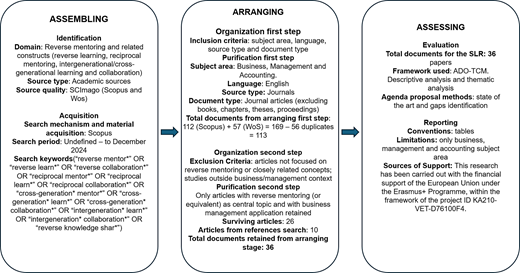
3.1 The SPAR-4-SLR protocol: assembling
To ensure robustness and rigour, this study uses the Scientific Procedures and Rationales for SLR (SPAR-4-SLR) framework developed by Paul et al. (2021). As illustrated in Figure 2, the SPAR-4-SLR methodology consists of three main phases: assembling, arranging and assessing. This protocol provides solid guidelines, helping to anticipate potential problems and ensuring the integrity of the research process (Paul et al., 2021). With regard to the analysis process, the initial phase is assembling, which comprises two key actions: identification and acquisition. During the identification phase, essential elements such as research topic, research questions, types of sources and quality of sources were carefully selected. Data collection was conducted using Scopus and Web of Science (WoS), academic databases widely recognized for their rigorous indexing criteria (Materla et al., 2019). To gain a comprehensive understanding of the phenomenon, the analysis was performed without time limits (Yadav and Chakrabarti, 2022). The database searches were carried out in December 2024. During the acquisition phase, a crucial step involved defining the keywords that would guide the investigation. Based on the terminology used in the literature, several relevant terms were identified that were used to express the same meaning. All possible combinations were therefore constructed using the Boolean operators “AND” and “OR”. The search string was therefore as follows: “reverse mentor” OR “reverse learn” OR “reverse collaboration*” OR “reciprocal mentor*” OR “reciprocal learn*” OR “reciprocal collaboration*” OR “cross-generation* mentor*” OR “cross-generation* learn*” OR “cross-generation* collaboration*” OR “intergeneration* learn*” OR “intergeneration* collaboration*” OR “reverse knowledge shar*”.
3.2 Second phase: “arranging”
The second phase of the SPAR-4-SLR protocol is arranging, divided into two distinct steps: a first step in which broad inclusion criteria are defined and a second step in which more detailed and specific criteria are outlined. For the first organizational step, articles were selected exclusively from the subject area “Business, Management and Accounting” on Scopus and “Business and Management” on WoS. Only articles in English published in academic journals were considered, excluding books, book chapters, theses and conference proceedings. This first step yielded 112 articles on Scopus and 57 on WoS. The two data sets were merged, resulting in a total sample of 169 documents. Subsequently, 56 duplicates were eliminated, leaving 113 articles for the application of the detailed inclusion-exclusion criteria.
In the second organizational step, following the research objective of this SLR, detailed exclusion and inclusion criteria were identified, consistent with the framework proposed by Tranfield et al. (2003). At the end of this systematic funnel, only documents relevant to the specific objectives of the study remained, that is, only articles that had RM or a virtually identical concept as their central topic and articles whose primary field of application was business management. This resulted in a total of 26 articles. Subsequently, in line with the recommendations of Hirt et al., (2021), a cross-reference analysis was carried out to identify further relevant works: at this stage, 10 articles were deemed eligible because they met the inclusion criteria. The final data set therefore comprises 36 documents.
3.3 Third phase: “assessing”
The concluding phase is assessing, regarded as the most critical stage within the SPAR-4-SLR protocol, as it constitutes the core of the analysis. This step focuses on the evaluation and reporting of findings. Following the rigorous selection of articles on RM in business management and their contribution to knowledge advancement, each document was analyzed with respect to the focal dimensions under examination. Two junior researchers divided the corpus evenly and then exchanged assignments for cross-validation, while a senior researcher oversaw and validated the entire process. In line with Lim et al. (2022), the results were subsequently presented in tables and figures.
4. Results
4.1 Descriptive results
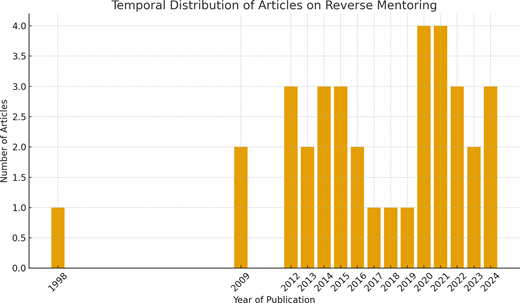
The distribution of articles across journals (see Table 2) reveals a high degree of heterogeneity: aside from the three journals with multiple contributions, all others are represented by a single article each. Furthermore, there is considerable variation in journal prestige, ranging from highly ranked outlets such as Human Resource Management (ABS 4*) or Management Decision (Scimago Q1) to mid-tier journals like Knowledge and Process Management and Journal of Organizational Change Management (ABS 2), as well as less established outlets. Concerning the temporal distribution, as illustrated in Figure 3, results show a recent acceleration of publications, with a marked concentration from 2020 onwards and several contributions in 2023–2024. Earlier studies appear sporadically, indicating that RM has only recently gained systematic scholarly attention.
4.2 TCM results
4.2.1 Theory.
Theories provide the conceptual backbone of scholarly inquiry, offering interpretative lenses to address complex and multidimensional phenomena (Homer and Lim, 2024; Lim et al., 2022). The analysis of the 36 articles included in this review reveals a wide yet uneven reliance on theoretical frameworks. While a substantial share of contributions is anchored in established perspectives, other studies draw on more descriptive or loosely defined references, suggesting that RM is not always examined through strong theoretical foundations.
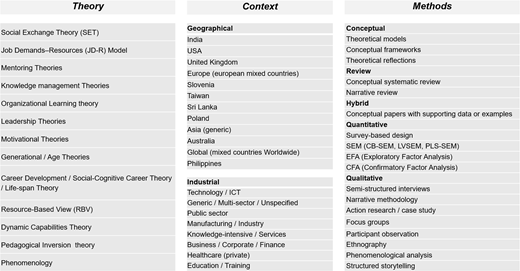
The most frequently used framework is the social exchange theory (SET) (Blau, 1964; Cropanzano and Mitchell, 2005), cited in nearly half of the studies. SET is used to explain reciprocity and value exchange within mentor–mentee relationships and, more broadly, between employees and organizations. In more recent contributions, SET is often combined with the job demands–resources (JD-R) model (Bakker and Demerouti, 2007), which appears in five articles and conceptualizes RM as a job resource that fosters engagement while mitigating work-related strain.
Alongside these dominant references, a set of additional theories plays a more limited yet meaningful role in diversifying the conceptual landscape. These include classical mentoring theories (Kram, 1988; Scandura, 1992; Noe, 1988) and models of organizational learning and knowledge management – such as the socialization, externalization, combination and internalization model (Nonaka et al., 2000), the 4I Framework (Crossan et al., 1999) and intergenerational learning approaches – that frame RM as a mechanism of knowledge transfer and transformation. Other theoretical perspectives include motivational models (Maslow, 1943; Keller, 1983; Fredrickson, 2001) and generational frameworks (Organizational Age Theory like Chaudhuri and Ghosh, 2012), which emphasize the role of individual needs and cohort differences as drivers of interaction.
Finally, more strategic and systemic perspectives – such as the resource-based view (RBV) (Wernerfelt, 1984) and Dynamic Capabilities (Teece et al., 1997) – emerge only sporadically, while more niche epistemological approaches, including phenomenology (Paley, 1998), appear exclusively in isolated contributions.
4.2.2 Geographical context.
The analysis of the geographical distribution of the studies reveals a strong concentration in the Asian context, with India emerging as the most recurrent country (10 out of 36 articles). This finding is particularly noteworthy for two reasons. Firstly, it appears to contrast with the conclusions of a recent review by Chaudhuri et al. (2022a, 2022b), which emphasized that RM has been more typical in the Western hemisphere than in the East, pointing to a resistance in Eastern contexts toward practices that subvert traditional hierarchies. Secondly, it is interesting because this pattern not only reflects the academic vitality of the region but also underscores the role that India and other emerging economies have long played as natural laboratories for innovative human resource practices and digital transformation in management. India is followed by the USA (four articles) and the UK (3 articles), which emerge as consolidated contexts of application, often associated with structured mentoring programmes and more formalized managerial traditions (Boselie et al., 2021). Beyond these main regions, individual contributions emerge from contexts such as Slovenia, Taiwan, Sri Lanka, Poland, Australia and the Philippines, attesting to an expanding but fragmented interest. Six studies do not report a defined geographical context, signalling a degree of empirical non-localization and a more conceptual or theoretical orientation in those contributions.
4.2.3 Industrial context.
The sectoral mapping of the reviewed articles confirms a clear predominance of technological and digital contexts highlighting how RM is primarily perceived and applied as a lever to bridge the generational gap in digital competences and technological innovation (Juriševič Brčić and Mihelič, 2015; Chaudhuri et al., 2022a, 2022b). Alongside technology, a significant number of studies (9 articles) fall into generic, multi-sector or unspecified contexts. Although more heterogeneous, this category illustrates the growing interest in RM as a transversal practice, not circumscribed to a single industry (e.g. Chaudhuri, 2019).
Other less represented yet relevant domains include the public sector (5 articles), where RM has been explored within government departments and healthcare systems (e.g. Burdett, 2014; Raza and Onyesoh, 2020); the manufacturing/industrial sector (3 articles), reflecting applications in more traditional industries such as metallurgy (Jammulamadaka, 2021) and knowledge-intensive services (2 articles), which leverage RM to enhance learning and knowledge sharing (Flinchbaugh et al., 2016). Single studies also emerge in contexts such as business/finance (Baily, 2009), healthcare (Raza and Onyesoh, 2020) and education/training (Kaše et al., 2019).
4.2.4 Method.
The methodology refers to how the arguments and/or evidence are obtained (Lim, 2025). The research approaches used can be classified as conceptual, empirical (divided into qualitative, quantitative and mixed), review and hybrid, that is, works that are explicitly conceptual but integrate empirical evidence to support them.
Out of 36 articles, 10 are conceptual (27.8%) (e.g. Marcinkus Murphy, 2012; Chaudhuri and Ghosh, 2012), 3 are reviews (8.3%; two conceptual + systematic reviews and one narrative: Singh et al., 2021; Jayathilake et al., 2021; Chaudhuri et al., 2022a, 2022b) and 1 is a hybrid conceptual paper with empirical support (Ropes, 2015). The empirical component accounts for 22 studies (61.1%), indicating a strong orientation toward data-driven inquiry.
Within the empirical set, quantitative designs are slightly predominant (54.5%, n = 12), followed by qualitative approaches (40.9%, n = 9); mixed methods remain rare (4.5%, n = 1). Quantitative papers rely primarily on survey-based designs (n = 11) with measurement validation and latent-variable modelling. The structural equation modeling family (CB-SEM/LVSEM/PLS-SEM) appears in 5 studies (e.g. Kaše et al., 2019; Garg et al., 2022), EFA (n = 3) and CFA (n = 2) are used in scale development/validation (e.g. Chen, 2016; Chen, 2014; Garg et al., 2021).
Qualitative contributions hinge primarily on semi-structured interviews (n = 6), often complemented by additional interpretive tools. Representative designs include narrative methodology and interviews (Browne, 2021); semi-structured interviews with mentor-mentee dyads and HR (Gadomska-Lila, 2020) or with managers (Jain and Maheshwari, 2020); action-research/case combining open interviews, focus groups and participant observation (Jammulamadaka, 2021); and multi-source qualitative designs with interviews, participant observation and document analysis (Gabriel et al., 2020). More interpretive variants include, ethnographic observation, phenomenological analysis and structured storytelling (Raza and Onyesoh, 2020). Figure 4 provides a visual synthesis of the TCM results, summarizing the main theoretical, contextual and methodological characteristics of the reviewed literature.
4.3 ADO results
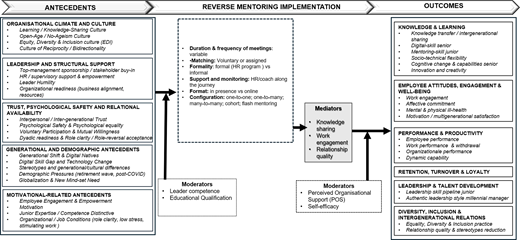
The ADO-TCM framework, in addition to mapping largely descriptive dimensions – such as the theories, methods and contexts most frequently examined in the extant literature – also facilitates the identification of the drivers and antecedents of RM, the decision‐making processes governing its implementation, and, ultimately, the outcomes it can deliver. Figure 4 presents the visual framework that underpins this representation. To furnish as comprehensive a picture as possible and accurately capture the current state of the art of the phenomenon within the business-management domain, we also incorporate every force that amplifies or attenuates the effects of reverse-mentoring programmes on outcomes (moderators), together with any constructs positioned in the intervening space (mediators) that explain – or diminish – the strength of these relationships.
4.3.1 Antecedents.
Antecedents are defined in the managerial literature as any pre-existing factor capable of shaping a phenomenon (Lim et al., 2022) or, more specifically, the bundle of personal or organizational resources that precede and determine the outcome of RM. A first macro-area of antecedents concerns the organizational climate and culture that enable the programme’s deployment. A culture oriented toward learning and knowledge exchange is essential (Saxena, 2024; Marcinkus Murphy, 2012). Put simply, RM programmes take root where the organization values intergenerational exchange as a widespread learning routine: without a culture that rewards sharing, the transfer of know-how from junior to senior neither gains legitimacy nor endures over time (Agarwal and Raghav, 2023; Burdett, 2014; Ropes, 2014). Cultivating such an enabling climate requires reducing generational perceptions and negative stereotypes that erode trust (Lužar et al., 2023); consequently, in organizations where age no longer coincides with status, roles can invert without undermining senior employees’ professional identity (Ropes, 2014). All this fits within the broader DEI framework: a shared set of diversity, equity and inclusion objectives bolsters the legitimacy of RM, casting it as a structural inclusion practice and a vehicle for minority generational or ethnic voices (Raza and Onyesoh, 2020; Saxena, 2024).
The second macro-area centres on leadership and structural support from higher hierarchical levels. The first dimension is top-management sponsorship, which may translate into the allocation of substantive time and budget to RM initiatives (Gadomska-Lila, 2020), the direct participation of leaders as senior mentees (Burdett, 2014) or the launch of dedicated projects (Raza and Onyesoh, 2020). While a favourable climate enables RM, it is the example set by the top management that legitimizes role inversion (“if the CEO becomes a mentee, it is safe for everyone”, Burdett (2014), ensures stable resources (Ropes, 2015) and aligns learning with strategic priorities. An additional recent insight by Upadhyay and Singh (2024) shows that leader humility predicts willingness to engage in RM because senior managers who admit their gaps and value junior input foster a positive implementation climate. The second dimension is the internal backing not only of top management but also of HR, chiefly for younger staff: HR support reduces status asymmetry (Browne, 2021) and provides operational tools – training and guidelines – that enhance junior mentors’ self-efficacy (Agarwal and Raghav, 2023); HR thus acts as a cultural broker and creates reflection moments (Marcinkus Murphy, 2012). All these elements converge in the organization’s readiness for RM: beyond sponsorship, legitimization and a supportive climate, the launch phase also requires assessing strategic alignment, resource availability (time and budget) and, above all, reward systems that acknowledge both juniors and seniors (Chaudhuri, 2019; Chaudhuri, 2022a, 2022 b). Absent these factors, programmes face a heightened risk of failure or marginalization.
The literature also identifies individual-level antecedents. Firstly, it is essential that the junior employee has a distinctive and fundamental skill that the senior employee recognizes and accepts. Secondly, a recurring and interrelated theme is parity and psychological safety (Jammulamadaka, 2021; Raza and Onyesoh, 2020; Browne, 2021): this condition creates a space that lowers the risk of “losing face”, enabling seniors to ask questions without feeling incompetent and juniors to challenge ideas without fear of retaliation. Building such a space thus promotes open dialogue and psychological safety as an enabling routine (Jammulamadaka, 2021). This links to interpersonal trust, the emotional adhesive that eases senior status anxiety and junior insecurity (Deshwal, 2015). Moreover also personal traits matter and individual predispositions are equally necessary: in this vein learning curiosity empowers RM because, when imposed, the programme is perceived by seniors as punitive training, whereas voluntary participation reframes role inversion as a shared growth opportunity and facilitates the acceptance of new roles (Browne, 2021; Chaudhuri and Ghosh, 2012; Deshwal, 2015). Only by combining this voluntary stance with the aforementioned structural support can true readiness for RM emerge (Chaudhuri and Ghosh, 2012).
These factors connect to the antecedents outlined in “block 5”. Firstly, employee engagement acts as a psychological driver – already engaged staff are more inclined to invest in reciprocal learning – and empowerment lowers junior mentors’ fear of making mistakes (Agarwal and Raghav, 2023; Sharma and Nagi, 2018). Moreover, employees facing a moderate job challenge perceive RM as a growth opportunity rather than additional pressure (Agarwal and Raghav, 2023; Sharma and Nagi, 2018).
Beyond these intra-firm antecedents, a further set of antecedents resides outside the organization and stems from structural shifts that enable RM. Generational change, especially the rise of digital natives, has rendered traditional mentoring obsolete and elevated RM to a structural response: Generations Y and Z demand horizontal, tech-enabled learning (Saxena, 2024). The COVID-19 pandemic reshaped their preference paradigm (Jayathilake et al., 2021) and millennial managers, possessing intrinsic digital fluency, legitimize RM (Gabriel et al., 2020). These external conditions intersect with the main driver for implementing RM – the technological-digital gap between juniors and seniors. In management literature, this technical gap is the most frequently cited cause of role inversion, as juniors hold critical competences in social media and analytics often absent among seniors (Green and Roberts, 2012; Saxena, 2024; Harvey et al., 2009; Chaudhuri et al., 2022a, 2022b). Finally, demographic and global dynamics compound the picture: first of all the Boomer exodus has heightened the risk of knowledge loss, positioning RM as a knowledge-retention strategy (Jayathilake et al., 2021; Green and Roberts, 2012). At a global level, escalating complexity demands cross-cultural agility and younger, more global-savvy employees can therefore serve as mentors in international contexts (Harvey et al., 2009).
4.3.2 Decision.
While the antecedents explains the drivers and conditions that enable RM, the “Decision” block of the ADO-TCM illustrates how the organization transforms these favourable conditions into a real operational programme. The framework recently proposed by Saxena (2024) is particularly useful in providing a concise but sufficiently clear overview of the main steps in a RM programme, which take the form of a five-step roadmap: designing the programme, attracting participants, matching pairs, guiding the process and measuring results.
After outlining the steps, when deciding to launch the programme, it is necessary to verify that organizational factors (clarity of objectives, trust, ethics), favourable working conditions (empowerment, definition of roles), reward and benefit systems aligned with objectives and career development opportunities are already in place or are included as part of the initiative (Sharma and Nagi, 2018). With regard to recognition, the conferral of status on seniors and career visibility for juniors have been identified as fundamental mechanisms of enhancement in RM (Chaudhuri and Ghosh, 2012). To prevent RM from degenerating into a simple exchange of “digital tricks”, the pairs must explicitly cover the three classic functions of mentoring – career, psychosocial and role model – recalibrated for the reverse setting (Chen, 2014). This means, for example, that the junior mentor must offer exposure and visibility, while the senior mentee provides career sponsorship and that both support each other emotionally in an equal relationship. Therefore, when it comes to design, it is clear that optimality lies in combining structural and formal elements – primarily the definition of strict rules – with flexibility. In concrete terms, RM projects only work if they are formalised with clear objectives, fixed timelines and monitoring of results (Burdett, 2014), but they yield better results when pairs join voluntarily and can organize themselves independently (Garg et al., 2012). RM should therefore be conceived as a “tailor-made” process, leaving room for both formal moments and informal exchanges, as everyone learns differently (Jain and Maheshwari, 2020) and as a “win-win” relationship in which both parties gain in reputation, networking and leadership skills (Browne, 2021). Chaudhuri et al. (2022a, 2022b) identify four critical success factors – alignment with corporate or national culture, targeted training on humility and trust, initial pilot projects and continuous evaluation – which show that there is no single model and where the format must be adapted to the specific context. However, there remains a cultural complexity in that the resistance of seniors to learning from young people remains a significant problem (Baily, 2009). This is also due to the fact that if seniors view juniors as “inexperienced” or “entitled”, RM fails. For this reason, pilot programmes that debunk stereotypes are useful for increasing acceptance of the programmes (Lužar et al., 2023; Deshwal, 2015).
Other considerations arise at the operational level. Firstly, if breaking down age stereotypes is an enabling condition, once the programme is launched, knowledge must circulate rapidly among participants (Gruber, 1998). Secondly, RM should not be isolated or seen as the only tool for people development: it should complement traditional and reciprocal mentoring in an integrated portfolio of knowledge-sharing practices (Harvey et al., 2009). Green and Roberts (2012) emphasize that the boundaries between different forms of mentoring are so blurred that a systematic flow in both directions is necessary, with young people teaching technology and seniors offering an overview. Moving to the actors involved, most studies (approximately 70%) do not specify the number of participants or simply use the term “mentor-mentee”, suggesting a one-to-one configuration (Garg et al., 2022; Gadomska-Lila, 2020; Hechl, 2017; Saxena, 2024; Upadhyay and Singh, 2024; Chen, 2014). This configuration is more profound but requires careful matching (Hechl, 2017). A second option is the one-to-many format, in which a junior mentor follows several seniors (or vice versa): studies by Burdett (2014) and Ropes (2015) describe it as effective when digital know-how is very scarce among seniors and the mentor is in high demand. Less investigated variants are the many-to-many or “cohort” format, with small teams learning on a project basis and “flash mentoring”, that is, a single meeting or a micro-cycle of one or two sessions on a technical skill (Baily, 2009). The literature also identifies the figure of the manager-facilitator (Singh et al., 2021), who monitors learning objectives, manages feedback and ensures the continuity of the flow of tacit knowledge. Matching can occur for a variety of reasons: to bridge a technology gap – typical of IT contexts or DEI programmes (Green and Roberts, 2012; Gadomska-Lila, 2020); to develop high-potential juniors by pairing them with seniors who can offer networks and visibility (Kaše, 2019; Jayathilake et al., 2021); or maximizing relational compatibility (Agarwal and Raghav, 2023). Once launched, the programme must be monitored using dedicated tools: the 19-item RM functioning scale developed by Chen (2014) allows us to quantify how much career, psychosocial and role-model functioning each pair is actually experiencing. Furthermore, integrating the ARCS model (attention, relevance, confidence, satisfaction) into the design, together with a formalised programme, training sessions and the selection of participants with a good educational background, significantly increases the perceived quality of RM (Chen, 2016). Finally, in terms of timing, the literature identifies three interconnected variables: phases, overall duration and frequency of meetings. It converges on a “standard” cycle of four to six months with five to six monthly meetings, preceded by a two- to four-week onboarding period and supported by digital micro touchpoints between sessions. However, there are some differences: some IT studies (Garg et al., 2021) get similar results by squeezing the programme into three months with weekly meetings, while more strategic roadmaps (Saxena, 2024; Chen, 2014) recommend longer cycles of six to twelve months with quarterly checkpoints. Flash mentoring (one or two sessions) is useful for specific skills, but it is no substitute for longer programmes.
4.3.3 Outcomes.
Outcomes are all the results that RM activities and programmes can generate within a company. Firstly, directly related to the first type of antecedents are the outcomes concerning the effective transfer of knowledge and expertise, whether tacit or explicit (Lužar et al., 2023). Focusing on this aspect (see also the framework in the figure), the logical flow starts from a culture of shared knowledge transfer within the company, passes through effective RM programmes and ends with the actual transfer of knowledge (Jain and Maheshwari, 2020). This knowledge often takes the form of seniors acquiring digital skills transferred from juniors (Kase, 2019; Gabriel et al., 2020) and, for juniors themselves, the development of coaching, feedback and networking skills (Kase et al., 2019). Not only that: with regard to senior executives, that is, those belonging to top management, literature has shown that when exposed to junior mentors, they restructure their “mental models” and acquire digital sensing and seizing skills (Jammulamadaka, 2021). Mirroring and correlating with these aspects are the outcomes relating to leadership and talent development. RM creates daily opportunities for junior talents to guide, train and dialogue with senior management, training them to speak the “language of top management” and making them viable candidates for future succession plans. This first macro-block also includes more specific aspects of the outcomes. In this sense, socio-technical flexibility, defined as the ability to move between social processes and 4.0 technologies, is indicated as a result of RM programmes understood as “participatory practices” (Flinchbaugh et al., 2016), while innovation and creativity are included as expected benefits in inter-generational learning (IGL) programmes (Ropes, 2014). The second macro-block concerns the attitudinal and well-being-related outcomes of RM. In this respect, the literature primarily highlights work engagement, namely, a positive state of involvement in work (Attridge, 2009) and affective commitment, that is, the employee’s emotional attachment to the organization (Bouraoui et al., 2019), as two recurring attitudinal outcomes. In this vein, RM has been conceptualized as a mechanism for keeping older workers engaged while increasing younger employees’ commitment and more recent evidence also links it to higher engagement under enabling conditions such as knowledge sharing, perceived organizational support and self-efficacy (Chaudhuri and Ghosh, 2012; Harshani et al., 2024; Hechl, 2017). Beyond these attitudinal effects, RM has also been associated with broader psychological outcomes, as the literature suggests that higher engagement may contribute to reduced mental and physical ill-health and to more positive individual experiences at work (Garg et al., 2021). In addition, some contributions also portray RM as a practice that may foster motivation, intergenerational alignment and multigenerational satisfaction, although these outcomes remain more often proposed than directly measured (Chaudhuri and Ghosh, 2012).
In the performance and productivity strand, the literature on RM points to outcomes at both the micro and macro levels. At the individual level, RM has been associated with improved employee performance; for example, Sharma and Nagi (2018) identify it as a particularly strong driver of performance, even surpassing employer branding among the factors they examined. In some cases, these effects are explained through intermediate mechanisms such as work engagement, which helps translate RM into more positive individual work outcomes. At the organizational level, the literature also suggests that RM may contribute to broader firm-level benefits, including organizational performance and the development of dynamic capabilities. In this sense, some studies push the boundary further by linking RM to organizational renewal and, in specific cases, even to tangible business indicators such as EBITDA (Jammulamadaka, 2021). With regard to employee retention and turnover (block 4), RM has been positively associated with the former and negatively associated with the latter. In essence, when RM is active, employees – especially younger ones – appear less likely to consider changing organizations (Raza and Onyesoh, 2020; Gadomska-Lila, 2020; Garg, Murphy and Singh, 2021), while well-designed RM programmes may create a sense of reciprocity and belonging in which seniors feel valued, juniors see prospects for growth and the desire to stay increases (Chaudhuri and Ghosh, 2012; Jayathilake et al., 2021; Gadomska-Lila, 2020). In the Leadership and Talent Development strand (block 5), RM is portrayed as a mechanism through which junior mentors can strengthen leadership-related capabilities, visibility and confidence (Burdett, 2014), while senior participants may also benefit from more authentic and reflective leadership styles (Gabriel et al., 2020). In this sense, RM is not only a knowledge-sharing practice, but also a developmental arena for identifying and nurturing future talent. Finally, concerning Diversity, Equity, Inclusion and Intergenerational Relations, an inclusive and low-ageist climate facilitates the acceptance of role reversal, while effective RM may in turn reinforce inclusion, reduce stereotypes and improve intergenerational relationship quality (Ropes, 2014, 2015). This suggests a virtuous cycle in which inclusion enables RM and RM, in turn, further strengthens inclusion.
5. Future research directions
In light of the in-depth examination of antecedents, decisions and outcomes, as well as the theories, contexts and methods employed in RM research within the field of management, it becomes essential to reflect on the areas that future scholarship should investigate. This section outlines prospective research directions, highlighting potential avenues for exploration. To conclude, two tables (Table 3 and Table 4) will be presented that synthesize, for each dimension, both the current state of the art and the possible research questions emerging from the identified gaps.
5.1 Antecedents
With regard to antecedents, it is evident that future research should focus on three fundamental dimensions: (i) a reinterpretation of the antecedents already identified in the literature, (ii) the identification of novel antecedents that may explain the initiation of RMprograms and (iii) a shift in the analytical perspective, whereby certain elements previously considered as program contents are reframed as potential enablers of the program itself. Concerning the latter point, the reference is explicitly to the role of technology and digital tools. In this respect, the literature has consistently emphasized how technology has predominantly been framed as the object of RM, with junior employees transferring digital competences to senior leaders (Green and Roberts, 2012; Saxena, 2024). Studies further acknowledge the digital divide as a primary driver of role inversion (Chaudhuri et al., 2022a, 2022b). However, there remains limited investigation of technology as a facilitator of relationship management and of the initiation of RM programs (e.g. digital collaboration platforms, artificial intelligence, VR/AR tools), rather than merely as content exchanged. With respect to the second point, the analysis can be extended on two levels. At the individual level, the literature has clearly identified behavioural and personality traits-related antecedents such as openness, curiosity, psychological safety and trust as necessary conditions for participation in RM (Chaudhuri and Ghosh, 2012; Browne, 2021; Jammulamadaka, 2021). Building on this, future research could explore advanced individual dispositions, including cultural intelligence (CQ), digital resilience, mindfulness and learning goal orientation. At the external level, existing contributions (see also the proposed framework) recognize that environmental factors may act as drivers of the phenomenon; yet, little attention has been devoted to how national culture, industrial policy, or, for instance, a country’s degree of collectivism versus individualism may influence the decision to implement RM programs. Finally, regarding the first point – namely, the reinterpretation of antecedents – prior research has largely remained confined within intra-firm boundaries (Upadhyay and Singh, 2024; Saxena, 2024), conceptualizing the phenomenon exclusively within the organizational domain. This highlights the urgency of exploring RM in broader ecosystemic contexts, where multiple firms interact within a potential network or in cross-organizational settings where the dynamics of RM may assume distinct configurations.
5.2 Decision
The phenomenon of RM has been recognized, with reference to the implementation of effective programs, as the ability to optimally combine structural elements with elements of flexibility (Burdett, 2014; Garg et al., 2012). However, it remains unclear how this balance should be determined, in what form and to what extent, nor how the pursuit of different objectives – whether primarily technical-functional or more strategically oriented – may influence the very degree of balance between these two components.
Similarly, program configuration remains a relatively underexplored and ill-defined issue. Firstly, the literature generally refers to RM as a one-to-one (mentor–mentee) relationship (Jayathilake et al., 2021; Gadomska-Lila, 2020), yet the optimal structure in terms of the number and nature of actors involved is not well understood, nor is it clear whether different structures may lead to different outcomes. Secondly, emerging or adjacent roles, such as the facilitator (Singh et al., 2021), require deeper and more systematic examination to clarify their actual contribution to program success.
A third and perhaps most critical aspect concerns the measurement of program efficiency and effectiveness. Some instruments have been developed, such as the RM functioning scale (Chen, 2014) and the ARCS motivational model (Chen, 2016), to support program evaluation. Yet, existing studies are predominantly cross-sectional and self-reported and remain largely theoretical rather than practical. What is therefore needed is the development of operational tools capable of effectively supporting organizations in the concrete measurement and assessment of RM programs.
5.3 Outcomes
Existing research shows that RM facilitates bidirectional knowledge transfer, with senior employees acquiring, for instance, digital literacy from juniors, while juniors enhance their coaching, communication and networking abilities (Kaše et al., 2019, Gabriel et al., 2020; Jain and Maheshwari, 2020). This reciprocal exchange fosters mutual learning and strengthens the overall capability base of the organization (Jammulamadaka, 2021). Nonetheless, current studies remain limited in that RM is seldom analyzed at the organizational level (beyond the individual), for example in terms of understanding how diffused learning improves the collective learning capacity of the firm. Future research could address this by examining long-term effects through longitudinal approaches or by investigating the link between RM and absorptive capacity, that is, the firm’s ability to absorb and reconfigure knowledge.
Similarly, available evidence highlights that RM supports succession planning processes (e.g. preparing new generations of leaders), yet few studies explicitly connect RM to actual leadership pipeline outcomes, namely, the development of new leaders. As with antecedents, it is equally relevant to explore additional and novel outcomes in light of the identified gaps. For instance, while DEI has become increasingly central to corporate strategy (Ferraro et al., 2023), one of its sub-themes – employee well-being – remains underexplored. It would therefore be valuable to investigate how RM impacts the mental health and overall well-being of mentors and/or mentees. This focus on well-being can also be extended to the team level, assessing the potential effects of RM on team cohesion.
All these considerations converge toward an additional and particularly intriguing gap. To date, RM outcomes have predominantly been assessed with reference to internal variables, such as employee turnover reduction (Jayathilake et al., 2021), engagement (Garget al., 2021) and individual or organizational learning (Jain and Maheshwari, 2020). Yet, little attention has been paid to whether these programs may also generate positive external effects, namely, in how they are perceived by markets and potential customers/clients. Future research could therefore examine whether RM within firms influences B2B purchasing processes, consumer purchase intentions, and, more broadly, whether it contributes to enhancing corporate reputation and brand image.
5.4 Theory
The theoretical foundations underpinning the literature on RM clearly show that SET (Blau, 1964; Cropanzano and Mitchell, 2005) is the most widely applied framework. Its use appears particularly pertinent, as it explains reciprocity and value exchanges between mentor and mentee (e.g. knowledge, trust, status, social capital). In some studies, SET is combined with the JD-R model (Bakker and Demerouti, 2007), also effectively, to analyze how RM can serve as a job resource that reduces stress and enhances engagement.
However, the current state of the art highlights three main limitations in the theoretical approaches used. Firstly, beyond the studies that apply SET and JD-R, a significant share of contributions displays an excessive reliance on descriptive or loosely defined perspectives, with many studies addressing RM in a merely narrative or conceptual way, without anchoring the phenomenon to solid and testable frameworks (e.g., Ropes, 2015). Secondly, there is limited use of macro-level strategic theories, such as the RBV or dynamic capabilities, which could help explain how RM contributes to firms’ competitiveness. Thirdly, there is an evident absence of integrative multi-level frameworks. Existing research predominantly examines RM at the individual level (mentor–mentee), (Juriševič Brčić and Mihelič, 2015) but lacks theories capable of connecting the micro level (individuals and their dyadic relationships), the meso level (teams or organizations) and the macro level (institutions, national cultures, industrial systems).
5.5 Context
In terms of the geographical context of investigation, the corpus of studies reveals a strong concentration in Asia and particularly in India (10 out of 36 articles), followed by the USA (four) and the UK (three). Other countries present isolated contributions, indicating a growing yet fragmented and unsystematic interest. Notably, there is a lack of balanced cross-country comparisons and very few studies have examined how RM operates across different national systems (e.g. Asia vs Europe, developed vs emerging countries). In addition, limited attention has been devoted to exploring the country system as a contingent factor, with scarce investigation of the role of institutions and national culture as contextual moderators. Furthermore, many studies do not explicitly state the geographical context, thereby limiting the generalizability of findings and the understanding of how culture or institutions shape RM effectiveness.
Future research could address this by examining underrepresented contexts such as Africa, Latin America, the Middle East, as well as much of Europe. Countries like Italy, for example, characterized by a predominance of small and medium-sized enterprises (European Commission, 2025), an ageing workforce (De Rose et al., 2019), and a growing need for upskilling policies (OECD, 2021), represent promising contexts for further investigation. A similar line of reasoning applies to the industrial domain. Given that technological and digital skills remain the most common object of exchange in RM programs, the IT industry is currently the most frequently investigated. However, there is a pressing need to extend research to other professional settings and industry sectors. Comparative analyses across industries (e.g. manufacturing vs services) could shed light on substantial differences and generate valuable insights for theory and practice.
5.6 Methods
The literature on RM within the managerial domain has shown a clear predominance of empirical approaches, with qualitative (12 studies) and quantitative (9 studies) designs that are almost evenly balanced. However, what emerges as an urgent methodological need – given the striking scarcity of such works (only one study identified) – is the adoption of mixed-method approaches. The broader methodological literature has long emphasized that mixed methods allow researchers to capture complex and multidimensional phenomena more effectively than single-method designs, particularly in studies involving human relationships, organizational change and dynamic processes (Plano Clark, 2017; McKim, 2017). Closely connected to this discussion – and particularly relevant to the outcomes dimension – is the temporal horizon on which RM research should be based. Specifically, distinguishing between longitudinal studies, capable of capturing temporal changes (Ployhart and Vandenberg, 2010) and cross-sectional studies, which measure relationships at a single point in time (Spector, 2019), it becomes evident that the former remain underused, even though they could more accurately explain the long-term effectiveness and evolution of RM programmes over the years.
6. Implications and final remarks
The phenomenon of RM represents a relatively recent yet increasingly acknowledged practice within the management field. Originating primarily from the practitioner and corporate domains, it has subsequently attracted the attention of the academic community, which has sought to investigate it more systematically and in depth. However, as evidenced by the modest number of studies included in the final sample (36), scholarly research on RM remains at an early stage and the scientific community still has substantial progress to make in advancing theoretical and empirical understanding of this phenomenon.
This review therefore aims to serve as a bridge between what is already known and what remains underexplored, identifying critical knowledge gaps and future research directions. It synthesizes the extant body of work into 15 thematic clusters and 33 corresponding research questions, derived from systematically identified gaps and highlights where and how future investigations should be directed. Consequently, this Systematic Literature Review (SLR) provides a significant contribution to the managerial literature on RM by offering conceptual clarity through a comprehensive and integrative mapping of the field, articulated along six analytical dimensions of the ADO–TCM framework. By thoroughly examining the literature, this study delineates the principal interconnections across constructs, providing a structured and theory-informed understanding of the topic. Furthermore, its initial descriptive analysis offers insights into the journals most receptive to research on RM, which may inform future publication strategies.
In addition to its academic value, the review also offers practical implications for managers who have implemented or intend to implement, RM programmes. Firstly, it provides evidence that RM is neither a managerial fad nor a symbolic gesture of modernity, but rather a strategically actionable practice capable of generating tangible benefits for both organizations and their employees. Secondly, in light of recent demographic shifts and the steady ageing of the workforce, RM emerges as an inevitable necessity for organizations because it compels them to rethink traditional training models by inverting learning flows, ensuring that senior employees remain continuously upskilled while simultaneously preparing younger generations for future leadership roles.
Finally, with regard to this study’s limitations and methodological considerations, it is essential to note that – despite prior claims suggesting that a systematic review should include a fixed minimum number of studies (Paul and Criado, 2020) – recent methodological contributions (e.g. Shaheen et al., 2023; Hiebl, 2023) have underlined that in management research no universal threshold exists for the size of the final sample. What truly matters is transparency in selection procedures and rigour in the screening and inclusion process. The determination of the final number of articles must be guided by the specific research question and in emerging fields where limited research exists, a smaller sample is not a methodological flaw but rather a reflection of the current maturity of the discipline – provided that this is clearly justified.
This review was conducted using both the SCOPUS and Web of Science (WoS) databases to ensure the quality and comprehensiveness of the sources, following the methodological recommendations of Gavel and Iselid (2008), who emphasize the importance of combining multiple databases to achieve adequate coverage of the relevant literature. Nonetheless, while SCOPUS and WoS encompass most major publishers (e.g. Emerald, Sage, Elsevier, Wiley, Taylor and Francis), it remains conceivable that some potentially relevant studies may have been excluded if indexed in other databases not considered in the present search.
The authors would like to express their sincere gratitude to Giorgio Menichelli, General Secretary of Confartigianato Macerata, Fermo e Ascoli Piceno, for the inspiration that contributed to the development of this paper, stemming from the work carried out on RM.
Declaration
During the preparation of this work, the author(s) used AI in order to support grammatical correction, syntactic improvement and general proofreading, as all authors are non-native English speakers. After using this tool, the author(s) reviewed and edited the content as needed and take(s) full responsibility for the content of the publication.