


Transformative consumption experiences present a significant business opportunity in the experience economy. However, due to their prolonged and sustained nature, consumer transformation processes have been difficult to research, resulting in a limited understanding of business opportunities of transformations involving specific sub-cultures.
To provide novel insights into consumer transformation processes and related business opportunities, this study adopts an autoethnographic approach to explore the researcher's personal transformation through the case of speed puzzling, a rapidly growing sports phenomenon where jigsaw puzzles are assembled competitively against time. Comprehensive reflective journaling (n = 106 journal entries) is used to systematically document the researcher's transformation journey of becoming a speed puzzler and joining the organized sub-culture of speed puzzlers over a continuous 16-month period.
The study illustrates how autoethnography may contribute to the understanding of sustained consumer transformations by highlighting the opportunities of monetizing transformative consumption experiences in the context of speed puzzling. Drawing on Pine and Gilmore's Experience Economy theory, Neuhofer's Transformative Experience Integration framework and the Hero's Journey model, findings offer theoretical insights into understanding consumer transformation processes and the formation of consumer sub-cultures.
Prior research on jigsaw puzzles has mainly focused on their benefits for health and well-being. There is a dearth of research on prolonged consumer consumption contexts in general and in the specific case of speed puzzling, limiting customer-oriented companies' ability to innovate around consumer transformation processes. This paper puts forward a novel six-stage consumer transformation process model and illustrates monetization opportunities across each stage.
1. Introduction
Consumer transformations, which facilitate profound and enduring changes in individuals' lives, present a significant business opportunity in the evolving experience economy (Pine and Gilmore, 2011). Unlike traditional services or experiences, transformative service offerings aim to achieve lasting personal development, such as improved health, enhanced skills or increased well-being (Neuhofer et al., 2024). Going further, the shift from providing services to staging experiences and finally to enabling and guiding personal transformations allows service businesses to create even deeper connections with consumers, fostering loyalty and differentiation in a competitive market (Neuhofer et al., 2021; Neuhofer and Dulbecco, 2024). However, the subjective and sustained nature of consumer transformations poses substantial challenges for research, particularly in measuring outcomes of transformation and understanding consumer's individual experiences and transformation processes over time.
Autoethnography and its derivatives, e.g., auto-netnography (Coombes, 2025), understood as deep qualitative research methods that involve the researcher's systematic, longitudinal self-reflection and writing to analyze personal experiences to understand cultural experiences (Ellis et al., 2011), may offer one useful approach to studying transformations and their business potential. By documenting their own transformative journeys, researchers can provide rich insider's perspectives that illustrate the intricate processes and personal significances of transformation. In particular, approaches rooted in narrative inquiry (James, 2018) may allow for an in-depth understanding of the emotional, cognitive and social dimensions of transformative experiences, which are often inaccessible through traditional consumer research methodologies, e.g., surveys or interviews. Moreover, autoethnography acknowledges the researcher's subjectivity as a valuable component of the research process itself, fostering empathy and deeper insight into the participant's perspective and day-to-day experience (Ellis et al., 2011).
Recent studies have highlighted the efficacy of autoethnography in capturing the complexities of transformative experiences. Adams and Ellis (2014) detail the purposes, practices and principles of autoethnographic research, stressing its value in understanding human behavior within qualitative social research and psychology. In a similar vein, Stadlbauer and Ploder (2024) discuss evocative autoethnography as a method within performative social science, emphasizing its potential for cultural psychology and its ability to explore and formalize new phenomena and perspectives. Humberstone and Nicol (2019) demonstrate how autoethnography can capture and represent personal experiences, illustrating its applicability in various fields where personal transformation is central, e.g., one's relationship with nature through outdoor travel experiences.
Adopting an autoethnographic approach rooted in narrative inquiry, this study explores the transformative consumption process of becoming a competitive jigsaw puzzler. As a hobby and a form of cultural, performative experience, assembling physical jigsaw puzzles alone and with others has seen a stark increase in consumer interest, particularly during and post the COVID-19 pandemic (Bodenheimer, 2020; Doubler and Silverman, 2020). Competitive jigsaw puzzling, colloquially referred to as speed puzzling, refers to the competitive practice of assembling jigsaw puzzles individually, in pairs or in larger teams, as quickly as possible (Ravensburger, 2024). Informally overseen by the World Jigsaw Puzzle Federation since 2019, several regional, national and international speed puzzling competition events are held annually (World Jigsaw Puzzle Federation, 2025). For instance, the World Jigsaw Puzzle Championships 2024 attracted circa 3,500 competitors (Draghia, 2024), bringing thousands of international visitors to Valladolid, Spain, to spectate and compete.
Prior research on jigsaw puzzles has mainly focused on the positive impacts of assembling puzzles on personal well-being, e.g., in the context of mental health issues such as anxiety, addressing or mitigating cognitive decline, e.g., loss of memory, or improving one's hand-eye coordination and learning (Fissler et al., 2018; Rodenbaugh et al., 2014). Despite growth in consumer interest and the growing importance of jigsaw puzzle competition events as a novel type of service business, there is a lack of research on the consumer sub-culture surrounding jigsaw puzzles in general and in the specific context of competitive jigsaw puzzling in particular. Against this backdrop, the present study seeks to make two key contributions to theory and practice at the intersection of service management, organized sub-cultures consumer behavior, consumer consumption theory, transformation economy and autoethnographic approaches.
First, in terms of theory, this study aims to explore how and to what degree an autoethnographic approach might offer novel insights for the study of subjective and sustained personal transformations in the context of organized consumer sub-cultures. On one hand, there is ample research stemming from, e.g., marketing disciplines on the topic of deep consumer insight as part of companies' innovation efforts (Stremersch et al., 2024). There is also a rich methodological tradition centered around narrative inquiry (James, 2018) stemming from social sciences and humanities, highlighting the usefulness of the approach for understanding sociocultural phenomena. However, there is limited understanding of how approaches rooted in narrative inquiry might offer novel insight for the emerging study of sustained personal transformations, particularly what Neuhofer (2024) refers to as the integration process of transformations, and the role of organized consumer sub-cultures as enablers of transformation.
Second, in terms of practical contributions, given the recent consumer demand and in the light of limited research on the potential business opportunities linked to the phenomenon of competitive jigsaw puzzling, the study aims to highlight opportunities and challenges for monetizing different stages of the consumer transformation process in the context of speed puzzling, arguing that such insights might also be applicable to other shapes and forms of the transformation economy (cf. Neuhofer et al., 2021; Neuhofer, 2024). Given the difficulty of obtaining continuous access to research participants through traditional social science methods (e.g., interviews, surveys), the present study posits the researcher as the studied subject, thus highlighting lived experiences throughout the transformation process from which business opportunities might emerge. Doing so is important for a better understanding of the transformation economy and its impacts on societies, organizations and organizing, and the individual. To that end, the study addresses the following research questions (RQs):
How and to what degree might an autoethnographic approach offer novel insights for the study of subjective and sustained personal transformations in the context of transformation economy and organized through consumer sub-cultures?
What are the opportunities for monetizing the different stages of the consumer transformation process in the specific context of speed puzzling and in general?
By following an autoethnographic approach and rooting the study in Pine and Gilmore's (1999, 2011) seminal writing on the experience economy, Neuhofer's (2024) Transformative Experience Integration model and the Hero's Journey framework (cf. Williams, 2019), the present study aims to contribute novel insights into the transformative experiences of consumers and the role of organized consumer sub-cultures as enablers of such transformations. These insights are crucial for designing and delivering new service and product offerings that not only meet consumers' evolving desires for personal growth but also do so in an ethically responsible and sustainable manner. Incorporating autoethnography into research strategies for the study of transformations enables a more comprehensive understanding of the transformation economy compared to prior research, ultimately aiding businesses in capitalizing on this emerging frontier.
2. From services to experiences and transformations
Since Pine and Gilmore (1999) posited the “experience economy” paradigm, the progression of economic value beyond service offerings into experiences and, ultimately, transformations has gained significant academic attention. While the term “experience economy” is understood to refer to the creation of immersive, memorable customer engagements, the concept of a “transformation economy” takes this one step further: organizations strive not merely to engage customers but to effect meaningful sustained changes in their lives (Pine and Gilmore, 2011). Further, as put by Neuhofer (2024), transformative experience can only be considered complete when new insights are accommodated, new knowledge structures emerge and epistemic expansion occurs. This emphasis on personal, social or organizational metamorphosis represents a distinct shift in how businesses conceive of their value propositions.
A cornerstone of this evolution is the notion that while experiences may be staged, transformations are co-created and guided with the active participation of the customer (Vargo and Lusch, 2004; Neuhofer et al., 2021). Drawing on Service-Dominant (S-D) Logic, transformations entail a collaborative process whereby firms and customers jointly develop interventions, programs or contexts aimed at achieving positive, lasting change in individuals. In this sense, the role of the firm and its employees extends beyond the delivery of benefits, becoming an orchestrator of so-called aspirants' (Pine and Gilmore, 2011) developmental or transformative journeys (Neuhofer et al., 2024).
Indeed, according to Pine and Gilmore (20211), central to the transformation economy is the understanding that value emerges from deeply personalized encounters. Businesses operating in this realm focus on tailoring offerings to individual goals and aspirations, potentially encompassing health, professional development, education or lifestyle changes. Such an approach often involves “co-creation” practices (Prahalad and Ramaswamy, 2004), where the DART framework – Dialogue, Access, Risk-benefits and Transparency – enables customers to take ownership of their transformation. For example, in a wellness program context, firms might provide expert guidance on nutrition or exercise, technological platforms for tracking progress and continual feedback loops – yet the customers themselves actively shape and direct their personal developmental journey.
Extant research on the transformation economy has mainly focused on the triggers of transformation (Neuhofer, 2024), generally suggesting that successful transformation-centric initiatives may lead to heightened customer loyalty, stronger emotional bonds and sustained growth. Indeed, transformations often yield not only improvements in the individual customer's life but also allow businesses to differentiate themselves through a unique competitive advantage. As Schmitt (1999) notes in the context of experiential marketing, consumers seek holistic, multisensory encounters that resonate cognitively, emotionally and socially. Transformations push this logic further by aiming to align offerings with customers' evolving sense of self and identity.
Nonetheless, empirical work evaluating the efficacy of transformation-oriented strategies remains somewhat limited (Neuhofer, 2024). One key consideration is the difficulty of capturing longitudinal consumer data as well as formulating how the “success” of transformations might even be defined. Most recently, Neuhofer (2024) put forward the Transformative Experience Integration framework, attempting to go beyond customer experience-related standard metrics such as customer satisfaction indices or net promoter scores to facilitate a deeper assessment of transformation-induced changes in individual behavior, personal development and well-being.
This procedural approach sits well with the Hero's Journey framework, a mainstay in experience economy literature (Brown, 2009; Pine and Gilmore, 2011). The Hero's Journey is a narrative framework popularized by Joseph Campbell, outlining an abstract, somewhat universal structure of transformation. It involves three main stages: departure, initiation and return, and it has been widely applied in storytelling and experience design (Brown, 2009). For instance, in the context of tourism, Moin et al. (2020) used the Hero's Journey framework to analyze narratives in destination brands' promotional videos.
Despite existing frameworks for structuring transformation processes, the practical issue of acquiring deep, longitudinal data on how consumer transformations actually unfold over time remains difficult, whereby businesses may face ethical and operational dilemmas, particularly where boundaries between commercial influence and personal agency become blurred, and thus companies' innovation capabilities remain limited (Stremersch et al., 2024). To that end, academic research on the practical examples of transformation processes may play a key role in systematically highlighting nascent opportunities for building businesses around the consumer transformation process.
3. Consumption communities and consumer culture
Central to the concept of human transformation is the notion of social interaction, and as such, it is important to consider how social interaction unfolds and how communities function in a commercial consumption context. Consumer culture theory positions consumption as a sociocultural practice through which people make meaning, form identities and organize collective life (Arnould and Thompson, 2005). Consumer cultures should thus be seen as patterned relations among consumers, brands and institutions rather than as isolated buyer decisions. For speed puzzling culture, this could mean directing attention away from puzzles as mere products to be bought toward how material objects, assembly techniques, social and traditional media, institutionalized and emergent communities, as well as live events, become resources for consumers' sense of belonging, status and self-making.
Brand community research provides one vocabulary for mapping these relations. Muniz and O'Guinn (2001) define brand community through shared consciousness, rituals and traditions, and moral responsibility, foregrounding how community is enacted through practice. In their work, McAlexander et al. (2002) extend this by conceptualizing brand community as a fabric of relationships, including links between customer and product, brand, company and other customers. Brand community is also an emergent accomplishment. O'Sullivan et al. (2011) show how community formation can be catalyzed through conversion experiences in which novices are recruited and socialized through narratives, mentoring and situated participation. Such mechanisms highlight how newcomers in technical leisure cultures learn norms of practice, authenticity and evaluation.
Yet consumer culture work also warns against treating these collectives as stable or fully brand-centered. In their seminal ethnographic study of feline consumption, Holbrook (1997) legitimizes attention to mundane, non-instrumental practices by demonstrating how consumption unfolds through embodied routines, affective attachments and tacit competencies that often escape overt reflexivity. Complementing this, the consumer tribes tradition emphasizes more fluid, affective and often episodic forms of togetherness organized around shared passions (Cova et al., 2007). Goulding et al. (2013) describe tribal membership as learned through social processes that align participants into a common sensibility and shared practices. Canniford (2011) further argues that tribes resist managerial capture because their cohesion depends on participant agency and the maintenance of boundaries that are not reducible to brand strategy.
In line with the shift in logic from services to experiences, research in consumer cultures has also highlighted the eventful and spectacular dimensions of consumption. Kozinets et al. (2004) theorize ludic agency in retail spectacle, highlighting how playful participation can produce meanings that exceed marketer intentions. Kjeldgaard and Bode (2017) broaden the notion of so-called “brandfests” by showing how play and ludic engagement can involve a wider set of actors and extend beyond bounded event frames. O'Sullivan (2016) pushes this further through the branded carnival, where collective excitement can tip into transgressive intensities that both energize and destabilize brand-led experience.
Together, these streams of literature could suggest that organized forms of speed puzzling competitions, meetups and online performances could be seen as forms of the experience economy, with staged yet negotiable spaces where participants co-produce value, rules and reputational hierarchies. The question remains, how might such consumption experiences become transformative for the individual participants, and what types of commercial logics could amplify such monetization of consumer transformation processes en masse.
4. Research traditions in narrative inquiry
One potential approach for studying consumer transformation processes at the individual level is narrative inquiry, understood as the study of human experience understood through narrated stories. As a research tradition, different permutations of narrative inquiry have emerged from multiple disciplinary roots, each contributing unique theoretical and methodological perspectives (Andrews et al., 2013). Early sociolinguistic work by Labov (1972) provided a foundational structural approach for analyzing personal narratives, focusing on the form and function of storytelling. This set the stage for subsequent developments that drew from, e.g., philosophy, education, psychology and sociology, to shape narrative inquiry into the multifaceted field it is today.
Philosophically, Bruner (1991) posited that humans construct reality through narratives, illustrating how storytelling is central to cognitive and cultural processes and sensemaking. Polkinghorne (1995) expanded on this, demonstrating that narratives serve as frameworks for mapping and interpreting temporal experiences. More recently, scholars have engaged phenomenological perspectives to explore how narrative embodies and conveys lived experience (Smith and Sparkes, 2008). To illustrate, Clandinin and Connelly's (2000) work established narrative inquiry as a robust methodology predicated on the relational and temporal aspects of experience. They introduced the concept of a “three-dimensional narrative inquiry space” – interaction, continuity and place – to stress the significance of context, time and social relationships in story construction. Goodson and Gill (2011) further examined how broader institutional and cultural contexts shape narratives, reinforcing that personal stories cannot be fully understood without attending to the larger social structures in which they are situated.
From a sociological perspective, Riessman (2008) emphasized the performative and dialogic dimensions of narration, illustrating how storytellers actively construct meaning and negotiate identities in contextually bound interactions. Phoenix and Smith (2011) illustrate how power dynamics and social norms influence the telling and reception of narratives, highlighting the political and ethical dimensions of narrative work. Squire (2013) built upon these insights to advocate for a socioculturally oriented approach, foregrounding the interplay between individual experience and collective discourses.
In a similar vein, autoethnography foregrounds the researcher's own lived experience as both the topic and the method of study (Ellis, 2004). As put by Wall (2006, 148), autoethnography facilitates the “sharing of unique, subjective, and evocative stories of experience that contribute to our understanding of the social world and allow us to reflect on what could be different because of what we have learned.” In autoethnographic research, researchers situate themselves as the primary participants, examining personal narratives in relation to broader cultural, social and political contexts they find themselves situated in (Adams and Ellis, 2014). Through reflective and often evocative storytelling, autoethnographers use their own experiences to identify collective patterns, thus challenging traditional boundaries between the researcher and the researched.
Reflexivity per se is of course nothing new in qualitative research, whereby Willig (2012) suggests that reflexivity can help qualitative researchers set aside personal biases, assumptions or experiences that might influence the research process. For others, reflexivity can serve as a valuable interpretive tool, enabling them to consider how their phrasing of questions or reactions to participants may have shaped the data, or how their personal feelings or experiences of a phenomenon might enhance or challenge the perspectives offered by participants. Similarly, Williams and Morrow (2009) stress the importance of maintaining a balance between reflexivity and subjectivity in qualitative research. With reflection built in, combined with effectively weaving together the personal and the cultural, autoethnography may expand narrative inquiry's capacity to reveal how individual stories both shape and are shaped by larger social phenomena, offering nuanced insights into the complexities of human experience and subsequent transformation.
5. Method
This study followed an autoethnographic approach to collect deep qualitative data. As discussed, in autoethnographic research, the researcher is both the data generator and collector, whereby the researcher immerses themself, overtly or covertly, in the studied setting to systematically capture narrative insight on personal thoughts, feelings and reflections related to the studied phenomenon. Thus, as a method, autoethnography is both a process and a product (Ellis et al., 2011).
In this study, the researched phenomenon was the sub-culture surrounding physical jigsaw puzzles, specifically competitive jigsaw puzzling, also known as speed puzzling. Rooted in Pine and Gilmore's (2011) theory of personal transformation as an economic commodity, as well as the theory of Hero's Journey and Neuhofer's (2024) Transformative Experience Integration framework, the focus of deep consumer immersion was the personal transformation of the researcher-aspirant (Pine and Gilmore, 2011) from a complete novice to a competitive speed puzzler.
The study took place between September 2024 and December 2025, whereby the researcher systematically followed their personal transformation process for a 16-month continuous period through extensive note-taking and reflective self-interviewing. In line with Ellis et al. (2011), self-interviewing is seen as a method in which the researcher conducts a reflexive interview with the self, positioning personal experience as both data and site of analysis. Consistent with interpretive autoethnography, the emphasis is on meaning-making, emotional recall and relational context while situating individual experience within broader cultural and social frameworks.
The transformation process began through a call to adventure (Moin et al., 2020), in this case with the researcher-aspirant participating in the World Jigsaw Puzzle Championship 2024 competition as a spectator-journalist tasked to report about the event for a travel industry magazine. The annual Championship event, organized in Valladolid, Spain, is one of the largest in-person speed puzzling competitions in the world, bringing together thousands of competitors and spectators (Ravensburger, 2024). Observing the competitors' enthusiasm and dedication first-hand became a catalyst for the transformation process to begin, whereby the atmosphere and the liminality of the week-long event, along with its surrounding communitas (Neuhofer et al., 2021), played a major role in sparking the researcher's interest to dive deeper into the sub-culture of speed puzzling. The event included many intentionally designed experience-enriching elements, e.g., narrated livestream broadcasts, invited guest speakers, community competitions, puzzle-related and event-specific merchandise, team costumes, etc. Even though the researcher-aspirant participated in the event as a spectator, the event acted as a first glimpse and induction to this specific sub-culture and its surrounding sociocultural phenomena, e.g., rules and rituals (Pine and Gilmore, 2011).
Soon after the event, the project idea for an autoethnographic study on the sub-culture of speed puzzling emerged, with a focus on capturing the subjective and sustained personal transformation of becoming a speed puzzler oneself, along with identifying the key opportunities and challenges for monetizing the different stages of the consumer transformation process. This business-oriented undertone stemmed from the researcher's context, i.e., being positioned at a business school. Following Fetterman's (2015) notion that studies leaning toward ethnographic research traditions should include an extended, deep immersion into the studied phenomena, 16 months was set as a feasible duration of data collection.
The process started with a diagnostic stage, whereby the researcher noted down their experiences, pre-assumptions, thoughts and feelings about jigsaw puzzles and the upcoming project. The rest of the 16-month period centered around systematically capturing the gradually deepening immersion process into the speed puzzling culture. In practice, the researcher completed 106 jigsaw puzzles during the 16-month period, and after each puzzle, followed Hubbs and Brand's (2005) and Ellis et al.’s (2011) views on reflective journaling and self-interviewing to write down personal thoughts, feelings and reflections that emerged before, during and after the puzzle assembly process for circa 30 min per each reflection session. In practice, the self-interview process followed a simple interview protocol, which consisted of three reflective questions (around 10 min of reflection per question): (1) How did this puzzle and the puzzling experience make me feel?; (2) What new insights did I gain through the puzzle and the puzzling experience?; and (3) How do I see myself as a puzzler and in relation to the broader speed puzzling culture as a result of the experience?
The individual puzzles varied between 100 and 1,000 pieces, and in total, the researcher assembled 43,500 puzzle pieces throughout the 16-month period. As the focus of the study was competitive speed puzzling, the researcher also participated as a competitor in 16 speed puzzling competitions and acted as an organizer of 1 speed puzzling competition. Further, to simulate a competitive environment, of the 106 completed puzzles, the completion of 47 was timed. The researcher also immersed themself in speed puzzlers' sub-culture-specific Internet forums and other sub-tribes related to the studied phenomenon to better understand the tacit rules, rituals and other traditions, whereby, e.g., the completed puzzles were listed on the website MySpeedPuzzling.com, the researcher listened to 21 episodes of puzzle-related podcasts, subscribed to 2 puzzle related newsletters, watched several livestreams and recordings of speed puzzling competitions and consulted more experienced speed puzzlers for tips for improving competition performance.
The resulting qualitative data, i.e., the 106 reflective journal entries, were analyzed narratively to understand the emerging narrative of the individual transformation process, whereby the notes were chronologically hand coded through an abductive process including open coding, axial coding and theoretical coding and using key themes derived from Pine and Gilmore (2011) and Neuhofer et al. (2021) as its theoretical grounding. According to Squire (2013), a key part in narrative inquiry is finding a balance between providing structure and allowing the story to emerge. In this vein, the Hero's Journey framework (Williams, 2019; Moin et al., 2020) was used to generally structure the findings and to align with Neuhofer's (2024) Transformative Experience Integration model.
Figures 1 and 2 illustrate the number of puzzles and puzzle pieces assembled throughout the entire data collection period.
 The horizontal axis shows months in order from “September” through “December” of the following year. The vertical axis ranges from 0 to 12 in increments of 2 units. A single line connects the monthly data points to show changes over time. The line begins at about 5 in “September”, rises slightly in “October” and “November”, and reaches a first peak of about 10 in “December”. The line then drops through “January” and “February” to around 6 and 5, increases to about 8 in “April”, dips again near 5 in “May”, and then rises sharply to the highest peak of approximately 11 in “July”. After “July”, the number falls back to around 5 in “August” and “September”, increases modestly to about 7 in “October”, drops to around 4 in “November”, and ends with a small rise to about 6 in “December”. Note: All numerical data values are approximated.
Number of completed puzzles, September 2024–December 2025. Source: Authors’ own
The horizontal axis shows months in order from “September” through “December” of the following year. The vertical axis ranges from 0 to 12 in increments of 2 units. A single line connects the monthly data points to show changes over time. The line begins at about 5 in “September”, rises slightly in “October” and “November”, and reaches a first peak of about 10 in “December”. The line then drops through “January” and “February” to around 6 and 5, increases to about 8 in “April”, dips again near 5 in “May”, and then rises sharply to the highest peak of approximately 11 in “July”. After “July”, the number falls back to around 5 in “August” and “September”, increases modestly to about 7 in “October”, drops to around 4 in “November”, and ends with a small rise to about 6 in “December”. Note: All numerical data values are approximated.Number of completed puzzles, September 2024–December 2025. Source: Authors’ own
 The horizontal axis shows months in order from “September” through “December” of the following year. The vertical axis ranges from 0 to 6000 in increments of 1000 units. A line tracks the number of completed puzzle pieces each month. The line begins near 1000 in “September”, rises to about 2700 in “October”, dips slightly in “November”, and increases to around 4650 in “December”. The count drops to just above 2000 in “January” and “February”, reaches a low near 1800 in “March”, and then climbs to roughly 4000 in “April”. After a dip near 2000 in “May”, it rises again to about 4000 in “June” and peaks around 5000 in “July”. The total falls to about 2500 in “August” and “September”, increases to around 3500 in “October”, dips to near 2000 in “November”, and ends near 3000 in “December”. Note: All numerical data values are approximated.
Number of completed puzzle pieces, September 2024–December 2025. Source: Authors’ own
The horizontal axis shows months in order from “September” through “December” of the following year. The vertical axis ranges from 0 to 6000 in increments of 1000 units. A line tracks the number of completed puzzle pieces each month. The line begins near 1000 in “September”, rises to about 2700 in “October”, dips slightly in “November”, and increases to around 4650 in “December”. The count drops to just above 2000 in “January” and “February”, reaches a low near 1800 in “March”, and then climbs to roughly 4000 in “April”. After a dip near 2000 in “May”, it rises again to about 4000 in “June” and peaks around 5000 in “July”. The total falls to about 2500 in “August” and “September”, increases to around 3500 in “October”, dips to near 2000 in “November”, and ends near 3000 in “December”. Note: All numerical data values are approximated.Number of completed puzzle pieces, September 2024–December 2025. Source: Authors’ own
6. Findings
Following the Hero's Journey framework (Moin et al., 2020) and aligning with Neuhofer's (2024) Transformative Experience Integration framework, the findings are presented in six “stages”: (1) call to adventure, i.e., becoming interested in a new sub-culture through first-hand exposure; (2) transformation, i.e., formally and informally joining the communitas of the sub-culture; (3) return, i.e., realizing the ineffability of transformative experience; (4) tale, i.e., becoming an advocate of the sub-culture, inviting others to join the journey; (5) fellowship, i.e., experimenting with new perspectives and social-ties within the sub-culture to establish one's own standing; and (6) legacy, i.e., giving back to the communitas by becoming an institutionally formalized gatekeeper of the sub-culture. Verbatim excerpts from the researcher's personal notes are used to structure and illustrate the findings. Following Pine and Gilmore (2011), the study subject, i.e., the autoethnographer, is referred to as researcher-aspirant throughout the findings section.
6.1 Stage 1: call to adventure
The transformation process began with a self-diagnostic assessment of the researcher-aspirant's preconceptions about jigsaw puzzles as a pastime, puzzlers as a communitas surrounding this sub-culture and speed puzzling as a competitive activity. As exemplified by an excerpt from the reflective journaling process, the initial state of mind toward the sub-culture under study was mostly negative:
I’m definitely not a puzzler, let alone speed puzzler. In all my life I’ve made perhaps one proper puzzle from scratch. It’s so time consuming, and I get fed up so easily, that I’ve never thought about finding it fun to do puzzles. I’ve never seen their value. I mean, if I have free time, I’d rather play video games or watch series, instant gratification stuff. Puzzles intimidate me. I feel stupid and afraid that I can’t complete them. – Personal notes, September 2024
Despite these preconceptions, the initial stages of the researcher-aspirant's transformation process included the assembly of 11 puzzles, totaling 3,800 pieces, between September and October 2024. The researcher-aspirant also started to immerse themself deeper into the speed puzzling sub-culture by exploring established forms of communitas. In practice, the researcher-aspirant subscribed to 2 jigsaw puzzle-related newsletters and podcasts and watched 14 speed puzzling competition videos on YouTube. Toward the end of Stage 1, the researcher-aspirant also enlisted the help of a more experienced speed puzzler for practicing puzzle assembly in pairs and for improving completion times in general.
Narratively, personal notes revolved, on one hand, around the initial excitement sparked by the beginning of the project and the prospect of self-development and discovery. However, on the other hand, personal notes also reflected the realities of learning something new from scratch, whereby thoughts and feelings of frustration, isolation, inability and seeming lack of progress were frequently reported in the reflective journaling process (Hubbs and Brand, 2005). These were partially mitigated by encouragement and guidance from the more experienced puzzler, highlighting the importance of acquiring what Neuhofer (2024) dubs the experience guide to provide personal help during the transformation process. As illustrated by excerpts from the reflective journaling process:
My back hurts. Lower back is on fire, still. I did not know that puzzling would be such hard work. It's been a week already since the competition, and I still have a constant reminder of what I’ve done every time I try to get up from the sofa. – Personal notes, October 2024
Today during practice I felt like I was only on the way of my pair, even though they kept saying that it’s okay. Hearing them click pieces together all the time only added to my anxiety. I get stuck in it, and slow down. – Personal notes, October 2024
Based on the reflective journaling entries analyzed herewith, a recurring question in the first stages of the transformation process in the consumer's mind seems to be “why am I doing this.” In terms of business opportunities for monetizing consumer transformation processes, it seems that in the first stages of the transformation process these revolve around providing personalized support, guidance, reassurance and encouragement, i.e., services that mitigate the self-doubt and second-guessing that might emerge as part of the transformation process, offering the aspirant (Pine and Gilmore, 2011) a means to vent out frustration and to keep them on track. In other words, services that make it easier to commit or provide support seem central to this stage.
6.2 Stage 2: transformation
After the initial Call to Adventure (Williams, 2019), i.e., the first steps of immersion into the speed puzzling sub-culture, the second stage of the transformation process was arguably the stage at which sustained transformation started to slowly take root. This stage, spanning between November and December 2024, saw the researcher-aspirant complete 17 puzzles (total 6,800 pieces).
Looking at the narrative of the transformation process evidenced by reflective journaling, at this stage, the researcher-aspirant started to actively compare their puzzle completion times against others on the website MySpeedPuzzling.com, a social media platform that allows users to track and share their completed puzzles with others. Further, compared to the previous stage, overall, the reflection seemed to take a more developmental approach, whereby each session was started to be seen as an opportunity to learn more about the sub-culture and oneself as a part of this specific communitas (Neuhofer, 2024). As illustrated by excerpts from the reflective journaling process:
What kind of a puzzler am I? Which parts of the puzzle assembly process do I like? Where do I excel at? What are my strengths and weaknesses as a puzzler? These are the questions I was wondering today, and the realization was that I like the beginning and the end of the puzzle, like the first and last 25 percent. The middle bit is the difficult one for me. Also, I like to add pieces to the frame, rather than try to make ready-made sections out of pre-sorted pieces. This is because I’m bad at seeing where ready-made things should be placed as part of the entire whole. – Personal notes, November 2024
The surrounding elements (table height, surface (table cloth or not), colour) have a huge implication on final completion time. This was the first time I reflected on things outside of the puzzle and the assembly process that influence the performance. For best performance, you want to invest in a good puzzling table and sub-assembly trays, just like you'd invest in special sports gear. Also, I learnt the importance of communication when speed puzzling with a pair. You really need to talk with your partner to split tasks and plan ahead! – Personal notes, December 2024
Today I re-assembled a puzzle I had previously done. I learned the importance of practicing, i.e. if you have ever completed the puzzle before, re-assembling the same one for the second time should improve your time by a significant margin. That’s why a key part of competitive puzzling at the highest level seems to be both trying to practice with as many different puzzles as possible and to make predictions, based on historical data, for which puzzles are more likely to be the competition puzzles, in order to increase the likelihood that you will have practiced with the competition puzzle beforehand. It’s like when I did trail running, and before the competition, would practice the route in advance. – Personal notes, December 2024
Analyzing the reflective journal entries in this stage, it seems that a recurring question in the immediate and intermediate integration (Neuhofer, 2024) stages of the transformation process in the consumer's mind could be “what might I become.” As the transformation process progresses past the initial learning curve and the transformation starts to take root, services that help deepen one's expertise in a niche domain, or services that offer inspiration or a sounding board for one's self-discovery, seem to become increasingly important.
6.3 Stage 3: return
Aligning with Neuhofer (2024), the third stage of the transformation integration process marks the return to normal, whereby the transformation becomes so integrated into one's own life that it becomes the new normal. This stage, spanning between January and February 2025, saw the researcher-aspirant complete 14 puzzles (total 4,300 pieces). According to Neuhofer (2024) a key consideration in this stage is the ineffability of transformative experiences, i.e., the difficulty of putting the experience into words. Neuhofer et al. (2021) illustrate this in their discussion of Burners – individuals who have attended the Burning Man festival and thus become lifelong members of the sub-culture – whereby only those who have undergone the same transformation can truly understand the newfound realizations of the process. Indeed, slivers of a similar ineffability could be found in the researcher-aspirant's notes in January–February.
I decided not to time the assembly this time, but rather, take my time and complete the puzzle whilst listening to a podcast. It was a surprisingly nice way of unwinding after a busy day. The time juts flew by! – Personal notes, January 2025
Never judge a puzzle by its cover. That’s the main feeling I had after completing this one. Looking at the image, I had initially thought that it was bad and that the puzzle would feel horrible to assemble. In the end, I think this was my favourite 500-piece puzzle so far. Clear sections, nice landmarks, easy to spot where each piece should go. Perhaps because of that, me and my pair did our joint personal best time, 38 minutes, and we placed 11th out of 22 competitors. Not bad. Not bad at all! – Personal notes, January 2025
Did my personal best time today! 2h 8 min for a 500 piece puzzle. With that, I placed 24 out of 28 contestants, so I’m still not at the top, but it doesn’t even matter, it was a great experience nevertheless. Towards the end the pieces just flew to their places. This time I didn’t check the time at all, usually I peek a few times and start to panic, but now I felt like I was in a pretty strong flow state through most of the puzzle. Very meditative. – Personal notes, February 2025
Summarizing the reflective journal entries in this stage of the transformation integration process, the recurring question in the consumer's mind seems to be “what could I do next.” Central themes to this stage seem to be empowerment, growth, relaxation and appreciation, stemming from reflecting on one's journey and the acquisition of new skills and knowledge as part of the transformation process. There is also a deep sense of exclusivity at this stage, whereby having undergone the transformation process unlocks an insider's perspective to a new domain. In terms of services that could support the later stages of consumer transformation, services that focus on social interaction and community-building, especially those focusing on facilitating mentorship between aspirants (Pine and Gilmore, 2011) and more experienced members of the community, become important.
6.4 Stage 4: tale
Extant research have positioned transformations as ongoing processes, where the formal beginning and the end of the process are often impossible to pinpoint. Indeed, in the case of this study, the transformation process did not end on the last “formal” stage of Neuhofer's (2024) transformation integration process framework, but instead evoked a new, gradually deepening the layering of transformation. This fourth stage was identified when analyzing the reflective journal entries spanning between March and May 2025 and saw the researcher-aspirant complete 18 puzzles (total 7,800 pieces). Many new types of activities were also experienced here, e.g., participating in pair competitions with new pairs, training with different team compositions, taking part in a fully remote speed puzzling competition and even taking part in an escape room type business-to-business experience where different teams from the same organization compete with each other on who assembles the same puzzle the fastest.
Ended up taking part in a remote speed puzzling competition. There were 16 of us online, sat in a Google Meet call, filming our assembly. There was a separate website used for tracking everyone’s finish times, and the host would periodically shout out times and instructions. Otherwise it was quiet, everyone in their own zones. I didn’t even realize 2 hours had flown by when we finished. – Personal notes, May 2025
Besides this period of discovering new perspectives to the sub-culture, interestingly, in this fourth stage, the ineffability of the transformation experience started to gradually dissipate, in that the researcher-aspirant slowly started to become an advocate of the sub-culture, inviting others to join. This reflects O'Sullivan et al. (2011) notion of catalyzing community formation through the recruitment and socialization of novices via personal narratives and mentoring.
Weirdest thing happened. A friend of mine came to me asking for tips for improving their puzzling. Even though I just blurted out stuff based on my own experience, it felt good to be of help. – Personal notes, April 2025
Summarizing the reflective journal entries in this stage of the transformation integration process, the recurring question in the consumer's mind seems to be “how could my experience influence others.” Central themes to this stage seemed to be seeing one's place in a new sub-group in a new light, with a newfound interest on exploring new perspectives to the sub-culture and for advocating the transformative experience to others. Indeed, for monetizing this stage of the transformation process, services that focus on advocacy and idea-spread, e.g., by facilitating consumer-to-consumer referrals or in other ways lowering the bar for others to try the transformative experience for the first time, could become feasible (see Figure 3).
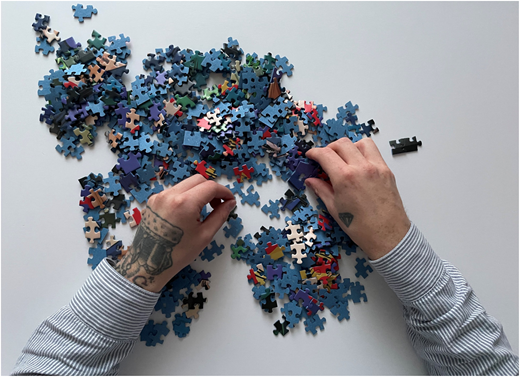
Illustrative example of the puzzle assembly process, personal notes, May 2025. Source: Authors’ own
Illustrative example of the puzzle assembly process, personal notes, May 2025. Source: Authors’ own
6.5 Stage 5: fellowship
While Stage 4 of the consumer transformation process focused on discovery, experimentation and advocacy, the fifth stage, taking place between June and October 2025 and seeing the completion of 36 puzzles (total 17,600 pieces), unearthed even more layers to the transformation process. Based on the self-journaling entries, here the researcher-aspirant holistically became a member of the speed puzzling sub-culture. One of the key milestones included in this stage was witnessing the annual World Jigsaw Puzzle Championships 2025 for the first time as a member of the speed puzzling community. Experiencing the event which sparked the transformation process from new eyes and with new knowledge of all of the tacit and formal rules and rituals of the sub-culture made the transformation process, at this point ongoing already for around a year, tangible and unmissable.
It is time for the World Jigsaw Puzzle Championships again. There’s like 20 different competitions going on, with all the qualifiers, semi-finals etc and all the different categories included. I checked when people I know are competing and made a schedule for when to tune in for the livestream. Even though I can’t go in person this year, it’s great to be able to follow along and cheer for the competitors remotely. – Personal notes, September 2025
Seems like this year there’s even more competitors than before, as even in the livestream, they have inserted these ads, like commercial breaks, assumably from the event sponsors. – Personal notes, September 2025
Looking at researcher's personal notes from this period, it is also clear how a shift in the types of puzzles to be assembled has taken place. While up until June 2025 each individual puzzling month included different-sized puzzles (100–1,000 pieces), the time period leading up to the World Jigsaw Puzzle Championships event primarily included 500-piece puzzles, which is, in many speed puzzling competition types, the most common puzzle size. Looking back, this is as if the researcher-aspirant wanted implicitly to be part of the build-up and buzz of the community's biggest annual event without even formally taking part in the competition itself.
Besides noting the importance of the World Jigsaw Puzzle Championships as a milestone event, analyzing the self-journals of this stage provides further nuance to services that focus on community building. Indeed, overall, the recurring question in the consumer's mind in this stage seems to be “how can I support the transformation of others.” This is illustrated by monetization opportunities. While in Stage 3 the focus was on monetization through establishing services that foster making mentor–mentee connections, in Stage 5, the focus shifts to services that facilitate making connections between people in order to build new sub-communities within the sub-culture itself, e.g., finding members for speed puzzling teams or finding a partner for pair competitions. In any team, the composition of complementary capabilities is important, so a service which focuses on quick trial runs of different compositions – speed puzzle speed dating of sorts – could become feasible. In a similar vein, providing a platform that facilitates peer-to-peer puzzle sharing to get the most training out of each individual puzzle product could be launched to monetize the consumer transformation process in Stage 5 (see Figure 4).
 The puzzle depicts various tea packages with distinct shapes and decorative designs. Visible labels include “TEA TIME”, “EARL GREY”, “Lavender night time”, “MASALA CHAI TEA”, “ENGLISH BREAKFAST TEA”, “RED FRUITS TEA”, “BERRY TEA”, “Chamomile INFUSION”, “SPICED ORANGE TEA”, and “Lemon TEA”, with a diagonal stack of assorted tea sachets on the right.
Illustrative example of the puzzle assembly process, personal notes, August 2025. Source: Authors’ own
The puzzle depicts various tea packages with distinct shapes and decorative designs. Visible labels include “TEA TIME”, “EARL GREY”, “Lavender night time”, “MASALA CHAI TEA”, “ENGLISH BREAKFAST TEA”, “RED FRUITS TEA”, “BERRY TEA”, “Chamomile INFUSION”, “SPICED ORANGE TEA”, and “Lemon TEA”, with a diagonal stack of assorted tea sachets on the right.Illustrative example of the puzzle assembly process, personal notes, August 2025. Source: Authors’ own
6.6 Stage 6: legacy
The sixth and final stage of the consumer transformation process reported in this study, spanning between November and December 2025 and seeing the researcher-aspirant assemble a total of 10 puzzles (total 5,000 pieces), focuses on the full consolidation of one's position as a member of the sub-culture. Analyzing the self-journaling entries, the central theme in this stage is giving back to the community by organizing experiences for others and thus becoming an (in)formal gatekeeper of the sub-culture. This nascent shift from participator to organizer has deep personal implications, raising questions around identity and sense of self.
I was asked to help host a speed puzzling event for the first time! It was pretty fun being the organizer rather than a competitor. At the end of the competition, we go through a kind of debriefing where we discuss the puzzle and share tips for assembly. I felt a bit like an impostor, as many of the competitors got much better times than I would had I been competing. Who am I to give tips to people who are already better than me? Regardless, it was cool to be on the other side of the table for a change! – Personal notes, November 2025
Summarizing this stage of the consumer transformation process, the recurring question in the consumer's mind seems to be related to legacy and letting go: “what do I wish to leave behind?” Again, this presents new opportunities for monetization. From the perspective of gatekeeping and initiating other aspirants to the rules and rituals of the sub-culture, services that formalize and legitimize the process of giving advice, e.g., companies that provide train-the-trainer certifications and other forms of establishing the legitimacy of expertise become relevant. Interestingly, finding new meanings in one's identity seems to also lead to deep sensations of letting go, as available personal resources start to become the constraining factor of transformation. In this vein, services that focus on career planning and life coaching more broadly than the sub-culture alone, helping the aspirant with figuring out how the new “piece” of them should fit with the whole, become important for figuring out what to metaphorically keep and what to leave behind.
7. Discussion
Stemming from the autoethnographic study presented here, both theoretical and managerial implications can be drawn.
7.1 Theoretical implications
As discussed and illustrated, autoethnographic approaches offer researchers a systematic way for capturing in situ data on a specific phenomenon, based on their own lived experiences (Ellis et al., 2011). In commercial contexts, such approaches may be useful in deepening other approaches for collecting deep customer insight, e.g., co-creation workshops, customer satisfaction surveys or stakeholder interviews (Stremersch et al., 2024). To that end, this study sought to explore how and to what degree an autoethnographic approach might offer novel methodological insights for the study of subjective and sustained personal transformations in consumption contexts and surrounding organized consumer sub-cultures, given Neuhofer's (2024) characterization of the transformation process into different phases: integration preparation, immediate integration, intermediate integration and ultimate integration.
As illustrated, personal narrative journaling is central in autoethnographic research. Squire (2013) notes that narratives offer insight into personal transformations, whereby the way in which we describe our lived experiences at a given point in time can be used as a proxy for how we have changed over time. Analyzing the personal notes taken throughout the transformation process described in this study provide insights that support Squire's (2013) notions, whereby in the first stages of the Transformative Experience Integration (Neuhofer, 2024), the tone of the personal notes is markedly negative, mainly focusing on the challenges faced and the discomfort felt, perhaps reflective of the learning curve involved in starting a new activity or a hobby as a novice. However, the negative tone seems to shift toward the middle and end of the transformation process analyzed herewith, whereby the focus of the introspection shifts to a deepening of appreciation of the activity itself (i.e., discovering new aspects of the hobby) and of the personal transformation process of the researcher-aspirant (i.e., discovering new aspects of oneself; rediscovering again and again one's own position within the organized sub-culture). This provides novel methodological evidence on the usefulness of narrative inquiry, particularly an autoethnographic approach focused on reflective note-taking or journaling (Hubbs and Brand, 2005), in understanding the personal transformation process in consumer-facing contexts, especially ones involving organized sub-cultures, as they unfold over time.
From the point of view of organizational ethnographic research, this study contributes to the current body of knowledge by demonstrating how an organized consumption sub-culture and one's deepening role within it as an active member can be examined as a processual, meaning-laden social organization rather than a static community. Through autoethnography, the six stages of the consumer transformation process presented here illustrate how participation in speed puzzling is sustained by iterative social processes – mentorship, comparison, ritualized competition, advocacy and gatekeeping – which collectively produce shared meanings and stabilize commitment over time. The findings show how shared, sub-culture-specific practices such as timing, equipment optimization, pair coordination, livestreamed events and post-competition debriefs function as organizing mechanisms that align individual trajectories with collective norms.
Importantly, the study captures how identity work unfolds longitudinally through the focus on consumer transformation processes. Through the 16-month study period, the researcher-aspirant moves from peripheral participation to legitimated membership and eventually to institutionalized roles that reproduce the sub-culture itself. This highlights how organizational roles emerge informally through practice before becoming formalized, extending organizational ethnography beyond bounded firms into consumer-driven, partially institutionalized settings. In dialogue with consumer culture theory, the study conceptualizes speed puzzling as a site of consumer transformation where market-mediated resources, communal validation and narrative sensemaking co-constitute value. By integrating transformation frameworks with ethnographic self-reflexivity, the article advances organizational ethnography as a method capable of capturing how consumption communities organize, govern and renew themselves through lived experience.
Based on this, a novel six-stage framework for consumer transformation process is presented in Figure 5, coupled with the recurring questions for each stage of the transformation process (Table 1). Rooted in the Hero's Journey and abductively informed by both Neuhofer's (2024) Transformative Experience Integration model and the empirical data presented herewith, the novel framework contributes to a better understanding of consumer transformation processes. The intertwined nature of the six stages, combined with the deepening hue of the colors in the model, illustrate the gradual formalization and deepening crystallization of the transformation process.
 The diagram shows six nested semicircles stacked from largest at the top to smallest at the bottom, forming a layered funnel shape. Each layer represents a stage and is labeled with text. The outermost layer reads “Stage 1: Call to adventure”, followed by “Stage 2: Transformation”, “Stage 3: Return”, “Stage 4: Tale”, “Stage 5: Fellowship”, and the smallest inner layer labeled “Stage 6: Legacy”. At the very bottom, beneath the smallest layer, a small circle contains a question mark.
Six stages of the consumer transformation process. Source: Authors’ own
The diagram shows six nested semicircles stacked from largest at the top to smallest at the bottom, forming a layered funnel shape. Each layer represents a stage and is labeled with text. The outermost layer reads “Stage 1: Call to adventure”, followed by “Stage 2: Transformation”, “Stage 3: Return”, “Stage 4: Tale”, “Stage 5: Fellowship”, and the smallest inner layer labeled “Stage 6: Legacy”. At the very bottom, beneath the smallest layer, a small circle contains a question mark.Six stages of the consumer transformation process. Source: Authors’ own
Recurring questions during the transformation process
| Stage of the consumer transformation process | Recurring questions during the transformation process |
|---|---|
| Stage 1: Call to Adventure | Stage 1: Why am I doing this? |
| Stage 2: Transformation | Stage 2: What might I become? |
| Stage 3: Return | Stage 3: What could I do next? |
| Stage 4: Tale | Stage 4: How could my experience influence others? |
| Stage 5: Fellowship | Stage 5: How can I support the transformation of others? |
| Stage 6: Legacy | Stage 6: What do I wish to leave behind? |
However, the caveats to such an approach should also be noted. In their work, Phoenix and Smith (2011) illustrate how power dynamics and social norms influence the telling and reception of narratives. As an autoethnographic research study is both a process and the end product (Ellis et al., 2011), the narratives produced need to be interpreted in their confined contexts. In other words, the reliability and validity of the approach should be carefully considered and any claim of generalizability of findings should be taken with caution. Given the deeply personal nature of transformations, the boundary conditions of recommendations made are difficult to pinpoint. However, that does not necessarily mean that such an approach is not able to yield useful or actionable insight – indeed, the broader research tradition of ethnography should be a testament to the usefulness of the approach.
7.2 Managerial implications
Besides exploring the usefulness of autoethnographic approaches as one way for studying sustained transformation processes in consumption contexts, it is important to consider the practical opportunities and challenges for monetizing the different stages of the consumer transformation process in the context of speed puzzling and in general.
As discussed, Pine and Gilmore (2011) argue that the extraction of economic value has multiple layers, from product commoditization to experience-enriching additional elements. In particular, a key question for business-minded researchers is the monetization of consumer transformations, i.e., how to recognize and deliberatively build business opportunities that support individuals' personal and sustained transformation processes (Neuhofer et al., 2021). As discussed by Neuhofer (2024), one of the defining features of transformations is that they involve sustained change.
According to Bandura's (2001) social cognitive theory, an individual's decision to change their own behavior is underlined by four principles, whereby it needs to be intentional, planned, self-regulated and self-reflective. In this vein, monetizing individuals' transformation processes should support such intentionality and offer mechanisms or checks and balances for measuring and sustaining “progress” – however progress might be defined. In the context of speed puzzling, this might be, e.g., a coach offering services for analyzing current performance and providing personalized suggestions for improving one's puzzle completion speed, akin to a guide or coach (Neuhofer, 2024). This social support for personal transformation could also come in the shape of an influencer focused on creating self-developmental content (e.g., guides, how-to videos) that might interest so-called aspirants and more experienced practitioners to hone their skills further.
In a similar vein, for measuring and illustrating that a transformation is ongoing or has taken place, some unit of analysis should typically be measurable. For jigsaw puzzles, there are multiple websites that allow puzzlers to track and share their puzzle completion times, whereby, for instance, MySpeedPuzzling.com offers features such as integrated stopwatches, leaderboards and a community hub, allowing users to self-report and track their times, compare with others, and participate in both online and offline competitions (MySpeedPuzzling, 2024). In terms of underexplored business opportunities and in the specific case of competitive speed puzzling, there could also be a need for novel tools for pairing up with other suitable puzzlers to compete in pairs or team competitions.
Besides planning and sustaining behavioral change, Neuhofer et al. (2024) stress the importance of communities to support transformation processes. For speed puzzlers, inter- and intranational organizations such as the World Jigsaw Puzzle Federation or the Finnish Speed Puzzling Association offer a shared intersubjective social construct for “aspirants” to belong to. Although often informally or formally framed as non-profits, hobbyist groups and other similar organizations are, in essence, structured support systems for sustaining their community members' transformations. From a business perspective, this might mean membership fees in return for members-only events, private discussion forums or other benefits such as discounts or access to regular, hobby-related news.
Rooted in individuals' sense of belonging and personal identity, hobbyist communities might also leverage liminality to further support transformation, perhaps best illustrated by community-led speed puzzling events or local puzzle clubs. For instance, at the World Jigsaw Puzzle Competition, many competitors wear their team-specific, custom-made clothing, akin to sports teams' uniforms, in order to signal belonging to a specific sub-group within the broader sub-culture of speed puzzlers. Indeed, the formalization of a sub-culture's community brings opportunities for specialized merchants to capitalize on, from retailers selling the puzzles and related accessories themselves, to, e.g., French company Ou La Puzzles, which offers a puzzle rental services. For a recurring subscription fee, customers can have puzzles delivered to their homes. To allow personalization based on skill level, the puzzle packages come in different difficulty levels, from beginner to intermediate and expert.
Moving to Stages 4, 5 and 6 of the consumer transformation process identified, as the sense of transformation deepens, the aspirants' ability to make sense of the ineffability gradually improves, and with it, a need for advocacy, i.e., spreading the narrative tale of one's own transformation, becomes important. After all, as McAlexander et al. (2002) note, brand communities are structured around social relationships – e.g., consumer-brand, consumer-consumer – of which the strength and level of engagement can be managed. Indeed, for monetizing this stage of the transformation process, services that focus on advocacy and idea-spread, e.g., by facilitating consumer-to-consumer referrals or in other ways lowering the bar for others to try for the first time, could become feasible. Helsinki-based Palasina Studio provides an example of this: they provide a webshop through which consumers can buy a ticket to a puzzle competition for others, e.g., friends and family, framing it as a gift.
In addition to advocacy, the gradual formalization of one's own position as part of the sub-culture highlights the importance of recurring rituals. In the fifth stage of the consumer transformation process, a key milestone was “reliving” the annual World Jigsaw Puzzle Championship event the following year. Experiencing the same event again, now as a formalized part of the sub-culture for which the event is aimed at, resonates well with O'Sullivan's (2016) notion of branded carnivals and Kjeldgaard and Bode's (2017) brandfests, whereby as sub-cultures grow bigger, the commercialization of their key rituals and gatherings becomes a playground for profit-driven brands. From a monetization perspective, the key consideration here seems to be coherence and brand-sub-culture fit. In the case of the World Jigsaw Puzzle Championships (2025), one of the key sponsors of the event was a company that produces modular toilet units. For an on-site participant, this probably makes sense, as the company is assumably in charge of providing the toilets for the participants. However, for the remote spectators of the YouTube-broadcasted livestream, understanding the connection between the brand and the sub-culture can destabilize the brand experience instead of energizing it (O'Sullivan, 2016).
Finally, as the consumer transformation process moves so deeply that the lines between being a member of the sub-culture to being its gatekeeper start to blur, monetizing opportunities emerge. In particular, services that help with this mindset-shift and identity-building phase, e.g., companies providing formal certification to sub-culture members for them to act as institutionalized gatekeepers, become relevant. Looking for parallels, a similar institutionalized gatekeeper formalization process has emerged, e.g., in the context of service design, whereby the quasi-official global Service Design Network, due to the growth of service design as a practice and as service designers as a job position, has in recent years started to formally certify Master Trainers in service design to evoke a train-the-trainer layer of quality control to and standardization to recruiting new initiates.
In terms of challenges for capitalizing on the business opportunities discussed, the key question is grasping the size of the total achievable market. In other words, identifying the point at which a specific target group of “aspirants” is large enough for profitable business opportunities to be built around. In the case of speed puzzling, it seems many service providers aim to mitigate this by flexibly tapping into a local and a global market based on the product or service category, in order to establish a large enough customer base.
Summarizing the practical contributions stemming from this study, from a managerial perspective, the opportunities for monetizing the consumer transformation process captured in this study are collated in Table 2.
Opportunities for monetizing the different stages of the speed puzzling transformation process
| Stage of the consumer transformation process | Opportunities for monetizing |
|---|---|
| Stage 1: Call to Adventure | Services that provide guidance and personalized help Services that foster intrinsic motivation and evoke commitment |
| Stage 2: Transformation | Services that help deepen one's domain expertise Services that provide inspiration, content and a sounding board for one's self-discovery Services that facilitate progress tracking |
| Stage 3: Return | Services that support community-building, especially the formation of mentorship relationships among aspirants |
| Stage 4: Tale | Services that facilitate consumer-to-consumer referrals, lowering the bar for others to try for the first time |
| Stage 5: Fellowship | Services that facilitate making new connections between people in order to form new sub-groups, e.g., matchmaking for the purpose of forming puzzle teams or pairs, peer-to-peer puzzle sharing groups |
| Stage 6: Legacy | Services that formalize and legitimize the process of giving advice, e.g., certifications, train-the-trainer schemes Services that focus on career planning and life coaching more broadly than the sub-culture alone, helping the aspirant with figuring out how the new “piece” of them should fit with the whole |
8. Conclusion, limitations and future research
This study sought to contribute novel insights into the transformative experiences of individuals. By following an autoethnographic approach and rooting the study in Pine and Gilmore's (1999, 2011) seminal writing on the experience economy, Neuhofer's (2024) Transformative Experience Integration framework, the Hero's Journey framework (cf. Williams, 2019) and the broad notions of consumer culture theory and brand tribalism (cf. Arnould and Thompson, 2005; Goulding et al., 2013), the case of speed puzzling was illustrated, focusing on the researcher-aspirant's consumer transformation process over a 16 month's sustained period from a spectator of the sports to a participant, competitor, advocate and finally competition organizer. The research process and its end product (Ellis et al., 2011) highlight the usefulness of an autoethnographic approach in providing insights into consumer's transformation processes in the context of organized consumer sub-cultures, highlighting the learned and performed nature of tribal membership over time and at the individual level (Goulding et al., 2013).
Consumer culture theory posits that consumer tribes cannot be “managed” in the traditional sense, but rather, companies can orchestrate conditions for context-specific rules and rituals to flourish (Canniford, 2011). To support the sustaining of personal transformations, several business opportunities in the context of speed puzzling are highlighted across the six novel stages of the consumer transformation process. The key argument of this paper is that throughout the transformation process, the consumer undergoes specific stages of transformation, and stemming from these new business opportunities can be built.
These stages can be summarized into six key questions, reflective of the introspective nature of one's personal transformation:
why am I doing this, marking opportunities in the early stages of the transformation process for services that mitigate the self-doubt and second-guessing that might emerge as part of the “learning curve” in the beginning of the transformation process, offering the aspirant a means to vent out frustration and to keep them on track,
what might I become, that is, a need for services in the early-to-mid-stages of the transformation process that help deepen one's expertise in a niche domain, or services that offer inspiration or a sounding board for one's self-discovery and exploration of new sub-culture norms, rules and rituals,
what could I do next, i.e., services aimed at the latter stages of the consumer transformation process, with a focus on social interaction and community-building, especially services focusing on facilitating mentor-mentee relationships between aspirants and more experienced members of the community,
how could my experience influence others, i.e., after the aspirant has formally joined the sub-culture, there emerges a need for services that facilitate consumer-to-consumer referrals, affording tangibility and traction to mitigate the ineffability of the transformation process,
how can I support the transformation of others, that is, services that help build entirely new sub-cultures within the broader parent culture through connecting like-minded members of the sub-culture to form smaller groups and
what do I wish to leave behind, that is, a call for services that help formalize and institutionalize one's shift in position from a member of the sub-culture to its formalized gatekeeper, as well as broader life coach and career support services that help aspirants make sense of their new priorities and goals in life, put to question by the newfound transformation process.
Besides highlighting the usefulness of an autoethnographic approach for studying consumer transformations and illustrating business opportunities for monetizing consumer transformation processes in the novel context of consumer sub-culture of speed puzzling, this study has limitations that should be noted. As is typical of autoethnographic research, the major limitations of this study stem from the sole reliance on the autoethnographer's own reflective journaling practice, evidently limiting the generalizability or repeatability of findings reported herewith. Indeed, Clandinin and Connelly (2000) stress the importance of recognizing the three-dimensional narrative inquiry space – interaction, continuity and place – to underscore the significance of context, time and social relationships in story construction. Similarly, Goodson and Gill (2011) stress that personal stories cannot be fully understood without attending to the larger social structures in which they are situated.
In this study, the transformation process took place at a specific place and time, with specific resources and affordances available (e.g., different puzzles to practice with, time off from work during holidays to work on the project, a willing and available guide to help support the transformation process, opportunity to move from participant to event organizer, etc.), which inevitably influenced the study. There is ample room for future research on different types of transformation processes, focusing on different sub-cultures, consumer tribes, consumption activities, time frames, etc., to better understand the emerging transformation economy and individual consumer transformations therewith. Particularly useful might be the triangulation of data across sources, e.g., cross-analysis of multiple consumer transformation processes, or the use of additional methods, e.g., interviews or participant observation.

