Purpose
The authors study how enabling perceptions (flexibility, reparability and internal and global transparency) of a budgetary control system are formed, and whether enabling perceptions empower lower-level managers and make them form less negative attitudes about red tape in the organization. This study research is warranted because of the lack of knowledge on how perceptual variation in flexibility, repairability and transparency of a control system within an organization, where managers experiencing the same control system design, can be explained.
Design/methodology/approach
Survey data with answers from 211 managers from a large local government organization in Sweden is analyzed with structural equation modeling.
Findings
The extent to which the budget system is perceived as having enabling qualities (being flexible, reparable and transparent) is explained by the safeness of the individual manager's psychological climate. This climate is characterized by trust and fairness perceptions in upper management. In turn, enabling perceptions positively affect a sense of psychological empowerment and reduces attitudes toward red tape in the organization.
Originality/value
The authors contribute by identifying an important factor explaining individual-level variability in enabling perceptions of control systems within organizations. Compared to previous research that has taken an interest in the organizational-level climate, the authors theorize about and investigate (parts of) the individual-level psychological climate as an explanation of within-system variability.
1. Introduction
Public sector organizations are often organized as bureaucracies (Wilson, 1989). As such they make use of elaborate administrative and control systems for planning and accountability, often in the form of a budget control system (Johansson and Siverbo, 2014; Anessi-Pessina et al., 2016; Steccolini, 2019). One apparent risk with elaborate formal control systems is the emergence of various dysfunctions (Adler and Borys, 1996; Bozeman, 1993; Anessi-Pessina et al., 2016; Siverbo et al., 2019). There is a risk that formal control systems stifle the organization, deskill professional workers and produce negative attitudes. Bridging the literature on the functions and dysfunctions of formalization, Adler and Borys (1996) made a seminal contribution to the study of formalization in organizations. They conceptualized a difference between two types of bureaucracy: coercive and enabling. They argued that to understand the functions and dysfunctions of formalization as organizational technologies (systems), it is not the degree of formalization, which is the key concept, but the type of formalization. If designed correctly, formalization, such as a budget control system in a public organization, does not have to lead to negative attitudes and could empower, rather than merely constrain, the subjects of it. Therefore, developing knowledge about the enabling qualities of formal control systems and their consequences for public sector bureaucracies is important. This is a line of research that has gained very little attention within the public sector context as compared to the private sector, but deserves further attention (Ferry and Ahrens, 2017).
The mainly private sector accounting literature on enabling control demonstrates the scholarly and practical value of developing knowledge about the enabling qualities of management accounting and controls (Ekström, 2018; Strauss and Tessier, 2019; Väisänen et al., 2021). Enabling control has been related to several types of outcomes such as financial, environmental and individual performance (Chapman and Kihn, 2009; Heggen and Sridharan, 2021; Van der Hauwaert et al., 2022; van Triest et al., 2023), autonomous work motivation (Van der Hauwaert et al., 2022), empowerment (Mahama and Cheng, 2013), innovation (Bernd and Beuren, 2022) and mental representations and goal commitment (Santos and Beuren, 2022).
Another strand of the literature has instead studied antecedents to enabling control. Adler and Borys (1996) themselves proposed that the presence of the four design features per se leads to enabling formalization. However, case studies in the accounting literature show that employees can perceive controls as enabling, despite the absence of enabling design elements (Jordan and Messner, 2012; O'Grady, 2019; Väisänen et al., 2021). Following Adler and Borys, other studies have shown that development and implementation processes play a role for enabling control (Englund and Gerdin, 2015; Henttu-Aho, 2016; Wouters and Wilderom, 2008). Other case studies also show that certain contextual factors are important for enabling control. For example, higher managers' attitudes (Ahrens and Chapman, 2004), managers' sense giving (Jordan and Messner, 2012), a culture of trust (Väisänen et al., 2021; Kristensen and Sabye, 2021) and leadership styles (Gong and Subramaniam, 2020). However, these studies either focus on a single case aiming at an in-depth analysis of contextual factors surrounding the control system or survey different organizations or settings where variation in control system design is present.
Consequently, less attention has been directed at understanding individual-level variation in perceptions of the four design qualities of a control system when there is no variation in the design. This means that we lack an explicit focus on individual-level drivers of perceptual differences within an organization and control system (Adler and Borys, 1996; Ndikumana, 2021; Strauss and Tessier, 2019; Tessier and Otley, 2012). An important argument for directing explicit attention toward individual-level variation in perceptions, in the absence of design variation, is that the content and design intent of a control system in an organization may differ from the process in which it becomes situated and made sense by individuals (Adler and Borys, 1996; Nishii and Wright, 2008). For this reason, variability in perceptions of the design of a formal control system in an organization (its flexibility, repairability and transparency) will be present and affect the attitudes and performance of individuals (Kehoe and Wright, 2013). To the best of our knowledge, the only study explicitly exploring individual-level drivers of enabling design perceptions within a control system design is the study by Ndikumana (2021). He studies cognitive factors (experience) and national culture as antecedents to enabling perceptions. Ndikumana's finds great variability in perceptions between individuals experiencing the same control system and he urges future research to explore additional factors explaining variability within a control system design. In this study, we thus aim to develop knowledge about the drivers of individual-level variation in managers' perceptions of the enabling design qualities of a uniformly designed control system within an organization. We do so by studying the perceptions of the budget control system among managers in a large public sector organization.
To identify individual-level drivers of perceptual differences, we depart from, but re-theorize, case-based research on enabling control. Such case-based research has cumulatively evidenced that a trusting, fair and allowing “context” is important for enabling, and positive perceptions to emerge in organizations (Ahrens and Chapman, 2004; Free, 2007; Väisänen et al., 2021). We move the level of analysis from the organizational climate level (general quality of the case and context) to the individual level. We do so by mobilizing psychological climate theory and research, focusing on the individual-level climate within organizations and contexts (Parker et al., 2003). An individual's trusting and fair climate relates to a positive and safe psychological climate (James et al., 2008). In this article, we argue that the safeness of the psychological climate will make individuals perceive the control system as less threatening and motivate them to be proactive and embrace the enabling design qualities of a control system for their own productive use. Consequently, individuals will adopt a more favorable view of the control system as being enabling.
Using survey data with answers from 211 lower-level managers in a large public sector organization, we quantitatively show that there is evident variation in how the uniformly designed budget control system is perceived as flexible and repairable, and to what extent it induces internal and global transparency. We show that this variation can be explained by an individual's unique perception of their psychological climate. Furthermore, perceptions of the enabling qualities of the budget control system affect a sense of psychological empowerment and are related to attitudes of less red tape (coercive formalization) within the organization, as predicted by Adler and Borys (1996). In the structural equation models, we controlled for various factors, including individual-level stable traits in the form of personality (Big 5). These results demonstrate the practical importance of higher-level managers in creating a safe psychological climate. A climate that spurs lower-level managers' enabling perceptions of control systems and affecting their attitudes toward formalization and empowering them. Furthermore, the results contribute to the literature on enabling control as one of the first studies explicitly and quantitatively focusing on explanations of within-system variability in perceptions and introducing the importance of individuals' psychological climate as a driver of enabling perceptions of a control system's design characteristics.
The remainder of this paper is organized as follows. In the next section, we review the literature dealing with enabling perceptions of formal controls and develop hypotheses to be tested. We then present our method and empirical results. In the last section, we discuss our findings and present contributions to the concept and literature on enabling control.
2. Background literature and hypotheses development
2.1 Enabling control and employee perceptions
The accounting literature on enabling control finds that Adler and Borys's (1996) four enabling design features are important for positive employee attitudes (Ahrens and Chapman, 2004; Chapman and Kihn, 2009; Free, 2007; Jordan and Messner, 2012; Jørgensen and Messner, 2009). The four design features consist of a system's flexibility and repairability, and the extent to which the use of the system induces internal and global transparency of operations and the organization (Adler and Borys, 1996). The latter refers to how individuals perceive and interpret information and information structures in a system. The information made visible in a budget control system or from a budget document may help users see patterns and realize their role in a manner that has the potential to reduce a sense of alienation and to enable an understanding of how their tasks and role fit with the whole (Chapman and Kihn, 2009). This aspect and ability of transparency is labeled global transparency (Adler and Borys, 1996). Transparency and information visibility in a budget control system or a budget document may also spur experimentation, understanding and learning of their operations as such (Adler and Borys, 1996; Ahrens and Chapman, 2004; Ekström, 2018). This ability of transparency is labeled internal transparency (Adler and Borys, 1996). Regarding the more technical and tangible aspects of a control system, flexibility in the context of a budget control system has been conceptualized and operationalized as the extent to which it is possible to adjust the budget to face unforeseen contingencies (Chapman and Kihn, 2009). Repair has been conceptualized and operationalized as the possibility to allow for user-driven adjustments of reports to accommodate the analysis of unforeseen events (Chapman and Kihn, 2009). That is, if standard reports become obsolete and the system breaks down (Adler and Borys, 1996), managers using the budget control system can customize reports to their needs.
These distinctions make it possible to distinguish an enabling design from a coercive one by comparing different designs (e.g. a cross-organizational study). Adler and Borys argued that these design features are related to a central tendency in employee perceptions. The four design features play a role related to the explicit design intention of managers (e.g. Doornich et al., 2019; Jordan and Messner, 2012), but also in situations where the control system is implemented and used (e.g. Englund and Gerdin, 2015; Wouters and Wilderom, 2008), and when employees give the control system attention (e.g. Doornich et al., 2019; Jordan and Messner, 2012; O'Grady, 2019).
Interestingly, results from several case studies find that all four design features need not be present for control to be experienced as enabling (Englund and Gerdin, 2015; Free, 2007; O'Grady, 2019). Furthermore, despite an all-encompassing enabling design, the system can be used coercively and thus perceived as less enabling by employees (Ahrens and Chapman, 2004). Perceptions can also change over time, although objective design features remain stable (Jordan and Messner, 2012). This literature shows that it is important to consider employee perceptions per se because the enabling quality of control is formed in practice when employees work with the control system in a specific context (Bedford et al., 2022).
In accordance with Adler and Borys' original framework, Monteiro and Adler (2022) showed that formal structures must be combined with specific patterns of informal relations to be enabling and flexible, and if so, will account for positive employee outcomes. Informal relations between hierarchical levels can be measured and observed by the level of trust or distrust between the higher and lower levels in the hierarchy (Long, 2010; Rousseau et al., 1998). Trust has been strongly associated with enabling control perceptions and attitudes in previous case studies (Adler et al., 1999; Ahrens and Chapman, 2004; Free, 2007; Jørgensen and Messner, 2009; Kristensen and Saabye, 2021; Väisänen et al., 2021). Ahrens and Chapman (2004) found that reciprocated mistrust between the head office and managers was associated with coercive control in the restaurant case. Free (2007) concluded that a cycle of distrust, defensive behavior, and conflict increases the emphasis on monitoring and coercive control. He also found that perceptions of unfairness and skepticism heightened coercive modes of accounting control. On the other hand, a strong collaborative intent and trust atmosphere were associated with enabling forms of control. In the case studies by Jørgensen and Messner (2009) and Kristensen and Saabye (2021), trust was also seen as a factor implicated in a culture of tolerance and acceptance of error and associated with enabling features. Kristensen and Saabye (2021) specifically find that managers who use a coaching and supporting management style create an organizational environment that will increase enabling perceptions.
As argued in the introduction, all studies referred to above either focus on single cases aimed at an in-depth analysis of contextual factors surrounding the control system or study different organizations or settings where variation in control system design is present. Since these analyses are not concerned with the variability between individuals and their differing perceptions of the design qualities of the same control system, we consequently lack knowledge about managers' different perceptions within a design and homogeneous setting. A development path of the enabling control concept that Adler and Borys (1996) argued was a limitation of their system design theory.
Contributing to such knowledge we, next, mobilize research and theory on individuals' psychological climate within organizations. We develop hypotheses that explain how and why the safeness of the psychological climate of a manager using and experiencing a control system affects to what extent the enabling design qualities of the system are embraced.
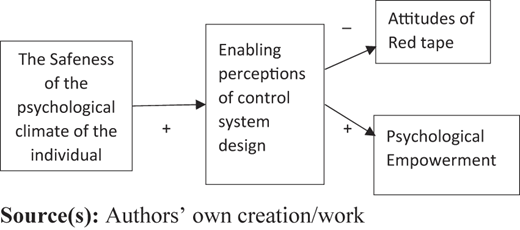
Figure 1 presents a summary of the hypotheses and constructs.
2.2 Hypotheses development
2.2.1 A psychological climate of safety – trust in management and fairness
In this article, we are concerned with to what extent the nature of individuals' psychological climate affects their perceptions about a control system's enabling qualities in cases where system design is uniform. The psychological climate is defined as an individual's psychologically meaningful representations of proximal organizational structures, processes and events (Parker et al., 2003). Denoting the meaning individuals impute to their work environment rather than to the objective nature of the environment. Lower-level managers' perceptions of the design features of organizational control and administrative structures (Tessier and Otley, 2012) will consequently hold a certain amount of variation based on the argument that an individual's own psychological climate differs from other individuals' psychological climates (see, e.g. Lewin et al., 1939; Nischii and Wright, 2008; Parker et al., 2003). One important domain of a positive psychological climate is the perceived social relationship between a subordinate and his or her superior, which varies in terms of support, trust, and fairness (Brower et al., 2000; James and Jones, 1974; Koys and DeCotiis, 1991; James et al., 2008). Below, we label the aggregate of trust and fairness perceptions of the individual in relation to supervisors and hierarchical structures as the individual is embedded in a mentally safe psychological climate.
A trusting climate consists of superiors' efforts to promote for subordinates “a psychological state comprising the intention to accept vulnerability based upon positive expectations of the intentions or behavior of another” (Rousseau et al., 1998, p. 395). Lower-level managers who trust their upper managers will feel assured that upper managers will protect and further their interests, care about their needs and interests, and fulfill their promises (Long, 2010). Since trust reduces ambiguity and uncertainty in social perceptions, cooperative and productive activity can take place (Dirks and Ferrin, 2002). When trust is high, lower-level managers will dare to take more personal initiatives (Frese and Fay, 2001) and engage in control processes more proactively (Parker et al., 2006). They can thus utilize this safe psychological climate as a resource to draw on when carrying out their work tasks and engage themselves in control processes. The safeness of the climate will give them the courage to be proactive, taking charge to improve work methods, solve problems proactively and take more personal initiatives (Bindl and Parker, 2011). Without fear (of punishment) lower-level managers can use their skills and intelligence when engaging in control processes.
Consequently, when a lower-level manager carries out her work and engages in control processes she will more likely acknowledge, realize and apricate the control systems' enabling features, i.e. she will see repair possibilities and possibilities to use the budget control system more flexibly. She will also more readily acknowledge the transparency of the system. As argued by Adler and Borys (1996), in the enabling logic or philosophy, the employee is a source of skill and intelligence to be supported (Adler and Borys, 1996). When a lower-level manager trusts her superior and feels safe, she will come to understand that the organization and manager want her to use her capabilities and intelligence when engaging in control processes. Implying that a proactive approach to control processes is wanted.
On the other hand, when trust is low, negative behavior expectations regarding higher-level managers' conduct may instead prevail and manifest in fear, vigilance or suspicion (Sitkin and Roth, 1993). In such a climate, the lower-level manager will be more passive about control processes and will to a lesser extent engage in control processes. In an “unsafe” psychologically de-motivating climate, employees are unlikely to take the risk to be proactive (Bindl and Parker, 2011). In such a situation lower-level managers will therefore not easily acknowledge the control systems' enabling qualities.
Further, each lower-level manager's interaction with upper management will carry an element of uniqueness within it, in terms of how much trust is held in management (Mayer et al., 1995). Therefore, variation in trust perceptions among lower-level managers will be present and affect the willingness to be vulnerable, both about the control system and the upper management enacting it for control purposes.
In line with the psychological climate literature, we also argue that fairness perceptions of the wider control process are part of forming a safe psychological climate (Koys and DeCotiis, 1991; Liao and Rupp, 2005). Fairness perceptions relate to how individuals in organizations see systems and the decisions those systems produce (Cugueró-Escofet and Rosanas, 2013). In this respect, we draw on the procedural fairness literature that maintains that controls can be used by authorities “to secure sustained commitments from their subordinates only so long as subordinates believe those controls are fairly applied” (Long et al., 2011, p. 1045). When the budget control process is perceived as fair it will consequently provide lower-level managers with evidence that their manager is providing them important opportunities to succeed in their work environment (Long, 2010). In other words, give them evidence that their manager provides them with opportunities to better master their tasks. Perceptions of fairness are thus important for enabling perceptions of control systems to emerge. The basic premise of such an explanation is substantiated empirically in the study by Free (2007). He shows that management accounting processes perceived as (un)fair were associated with perceptions of controls being (coercive) enabling.
Based on this we propose that a safe psychological climate allows lower-level managers to perceive the control system as less threatening. Consequently, they are more likely to feel safe and comfortable about how the manager will respond to their actions and enable their engagement with the budget control processes. This will thereby increase the likelihood that they will embrace the system for their productive use and to a greater extent perceive it as being flexible, repairable, and internally and globally transparent, i.e. enabling (Adler and Borys, 1996). From this, we pose the following hypothesis:
A safe psychological climate is positively related to having enabling perceptions of the control system, i.e. perceiving the system as being repairable, flexible, and internally and globally transparent.
2.2.2 Enabling perception and psychological empowerment
Enabling control is in our case related to formalization and administrative systems that leads lower-level managers to better master their tasks, rather than strict compliance and automation of workflows. Whether lower-level managers feel empowered is thus an important outcome for the theory and concept of enabling control (Adler and Borys, 1996; Ekström, 2018). Psychological empowerment refers to increased intrinsic task motivation, reflecting a sense of control in relation to one's work and an active orientation to one's work role that is manifested in four cognitions: meaning, self-determination, competence and impact (Spreitzer, 1995; Thomas and Velthouse, 1990). Impact refers to the degree to which behavior is seen as “making a difference” and producing intended effects. It is a belief that one can influence important activities and outcomes in one's work unit. Competence is an individual's belief that he or she has the capacity to perform a job with skill. Meaning is the notion of the outcome of a relative comparison between the perceived value of the purpose of a task and the individual's ideal. When a task is meaningful to an employee, it means that he or she intrinsically cares for that task. Experienced responsibility or choice refers to the degree to which employees perceive their work behaviors as self-determined (Thomas and Velthouse, 1990). Perceived self-determination improves individuals' resiliency, initiative, creativity and flexibility (Conger and Kanungo, 1988).
Following Adler and Borys' theory, Mahama and Cheng (2013) argue for a relationship between enabling perceptions and all four dimensions of a sense of psychological empowerment. First, when a control system is perceived as enabling, it supports employees in their work roles, it “counts” as something meaningful for them in their work, and thus it positively influences employees' sense of meaningfulness. Furthermore, enabling perceptions make work more meaningful because these favorable perceptions support managers in their tasks instead of constraining them. Enabling perceptions contribute to an understanding of how the system and its information fit with organizational tasks and activities, which makes tasks and activities more meaningful to carry out and creates a feeling of purpose (Spreitzer, 1995). Enabling perceptions give work more personal meaning because managers understand how their work fits into larger goals and strategies of the organization (Seibert et al., 2011). Second, when employees perceive that the system enables them to do their jobs, they will feel more competent when they execute their tasks, thus impacting the competence dimension of empowerment. When employees embrace enabling possibilities they skillfully, and with their own initiative, execute their tasks and thus experience high personal competence. Enabling perceptions is also important to reinforcing a sense of competence that one is a valued part of the organization (Spreitzer, 1995). Third, when considering enabling perceptions, employees will evaluate whether the system supports them in decision-making processes related to how and what tasks are to be undertaken, and this will influence feelings of self-determination. Hence, when employees perceive enabling possibilities, they feel that they can make own decisions, thus affecting feelings of their own responsibility and choice. Enabling perception also gives employees the possibility to better determine for themselves what actions to take, thus increasing feelings of self-determination (Seibert et al., 2011). Fourth, enabling perceptions will invoke feelings of possibilities to influence work outcomes and improves the ability to influence and act in ways that are consistent with organizational priorities and goals, thus increasing the dimension of impact. Enabling perceptions also increase the possibility one takes to make choices regarding how to accomplish tasks that are important to the organization, thus affecting feelings of having an impact (Mahama and Cheng, 2013; Seibert et al., 2011). Based on the above, we pose the following hypothesis:
Enabling perceptions of the control system (i.e. perceiving the system being repairable, flexible, and internally and globally transparent) will positively influence a psychological sense of empowerment.
2.2.3 Enabling perceptions and red tape
Adler and Borys' (1996) theory not only predicts that enabling formalization (design intent or perceptions) will lead to lower-level managers being empowered; it also foresees that it leads them adopt a less negative attitude toward formalization in the organization. In the public sector, a common phenomenon under study is attitudes about “red tape” (Kaufmann and Tummers, 2017). Red tape includes organizational rules, regulations and procedures that remain in force and entail a compliance burden for the organization but have no efficacy for the rules' functional object (Bozeman, 1993). Red tape is one important dimension of the work context evaluated by employees in the process of forming work attitudes and perceptions (DeHart-Davis et al., 2015) and captures perceptions of formalization that stifle organizations. This formalization is perceived as overly excessive or ineffective, a common scenario and risk factor of formalization in organizations (Adler and Borys, 1996). Arguably, perceptions that the control system in place is transparent, reparable and flexible will likely have a spill-over effect on the general attitude toward rule formalization and regulations in place in the organization. For example, perceptions of global transparency of a system enable employees to see the logical link between their own actions and overall regulations and rules (Ahrens and Chapman, 2004). In such situations, rules and regulations are perceived to be a necessary part of a larger system that strengthens enabling perceptions rather than implies a negative stance on the enabling qualities of a control system (Ekström, 2018). Furthermore, if for example reparability perceptions are formed out of experiencing the control system, an experience that is one of the most genuine encounters with bureaucracy and formalization for the lower-level manager, such a view likely transmits to attitudes about the value of bureaucracy and formalization more generally in the organization. Thus, we treat perceptions of rule formalization as a logical attitudinal outcome of enabling perceptions of a control system and hypothesize that perceptions about the enabling qualities of a control system are negatively related to perceptions of red tape. Based on this, we pose the following hypothesis:
Enabling perceptions of the control system (i.e. perceiving the system as being repairable, flexible, and internally and globally transparent) will negatively influence perceptions of red tape in the organization.
3. Method
3.1 The context, sample and survey
We gained access to respondents within a large local government organization in Sweden. The organization has about 12,000 employees and is one of Sweden's 290 municipalities. Its responsibilities cover everything from physical planning, water and sewage, housing, childcare, and primary and secondary schooling to eldercare. We excluded the top-management level (directly below the CEO/Director, at the time about 10) because they are not only subjects of control but are also an active part of the control system in its control function. By contacting the CFO and explaining our research mission and interests, we gained access to email addresses of the full set of 465 middle- and lower-level managers [1]. The CFO and five other members of the finance function in the organization also read and commented on the questions about the budgeting system to ensure that we used the appropriate jargon and terms relevant to the setting.
Since this is a large public sector organization, the budgeting system is elaborated and is the formal system used for planning, evaluation and development (cf. Williams et al., 1990; Johansson and Siverbo, 2014) in the organization. The budgeting system represents a formalized system (Adler and Borys, 1996) and has a uniform design (e.g. information architecture, report generator, and rules and procedures) for the managers surveyed [2]. The budgeting system is also embedded in a budgeting process labeled “the yearly process” which is a formalized uniform flow of information collection and evaluation. Budgets (spending for various broad areas of responsibility) and overarching operational targets are set by the political assembly; otherwise, the budgeting process has significant bottom-up features from the perspective of the managers investigated. The national setting also implies a culture and work climate that is democratic and decentralized rather than centralized and authority centered (Greve et al., 2017).
We submitted our questionnaire during the autumn of 2018, and after three reminders, we had collected answers from 211 managers (21 middle and 190 lower-level managers), implying a response rate of 45%. The mean respondent had worked for 7.5 years at their current position, was 51 years old, and female (66% females).
Item non-responses were generally very few (a maximum of four on two questions). A highly insignificant Little's MCAR test (X2 379.261; df 491; sig. 1.000) indicates that item non-responses are randomly distributed. To preserve statistical power, we use imputation (mean) to handle missing values (Hair et al., 2010) (a complete data matrix is also assessed). All models thus contain the full set of 211 observations.
We actively designed the survey to reduce potential problems with common method variance (Podsakoff et al., 2003). We promised anonymity and instructed the respondents that we were interested in their opinions and thus that there were no right or wrong answers to our questions. Instead of asking for all background information such as years in current position, years in the municipality, managerial experience, use aspects of the control system from the start [3], we utilized such question batteries as “mental cleansing” (emptying short-term memory and reducing situational framing) between the predictor and outcome variables to create a psychological separation between constructs (Podsakoff et al., 2003, p. 888). To assess that the data do not have obscure covariance patterns potentially due to a common method effect, we conducted Harman's one-factor test. It resulted in 11 factors with an eigenvalue above 1 (70% of variance explained), and the first factor accounts for 21% of the variance, signifying that data does not merge into one common factor that explains the majority of the variance.
Social desirability (SD) is to a large extent a culturally laden method problem and studies show that in Sweden SD is generally not a major concern (Steenkamp et al., 2010). Still, for the research question involving attitudes of trust in management, portraying the control system as being enabling rather than coercive and revealing attitudes about red tape, SD might be influential (Speklé and Widener, 2018). To assess the influence of SD, we made use of a construct with two items (see Appendix 2) capturing individual SD tendencies of portraying oneself in an overly positive (saint-like) way (Smith, 1967; Parker and Kyj, 2006; Steenkamp et al., 2010) and related it by paths to all model variables (Parker and Kyj, 2006). Although significantly (p < 0.05) related to SafeClimate and Empower, the control for SD did not substantially change any of the estimates for the hypothesis tests, as seen in Table 2. It shows that SD is not an obvious threat to the study. Thus, results for the original uncorrected measures are used in the study (Parker and Kyj, 2006).
3.2 Measures and control variables
We operationalize and measure the individual's enabling perceptions of budgeting system design (Enabling perceptions) with items from the instrument developed and validated by Chapman and Kihn (2009) (see also Heggen and Sridharan, 2021; Ndikumana, 2021). It consists of questions related to the four enabling qualities of a budgeting system: flexibility, repair, internal transparency and global transparency (Adler and Borys, 1996). The items are designed to be reflectors of the latent notion of the four enabling qualities (Chapman and Kihn, 2009) and are thus treated as reflective constructs. Further, we model the four reflective lower-order constructs (LOC) into a formative higher-order construct (HOC) of enabling perceptions. From Adler and Borys' (1996) theorizing, and the empirical results of, e.g. Chapman and Kihn (2009) pointing to medium to weak correlations between the LOCs, it is evident that the four LOCs are related, but that they are unique antecedents to a system's enabling qualities, implying a formative logic of the HOC (Sarstedt et al., 2019). To fit the context of our respondents to enhance face validity (Kwok and Sharp, 1998), we changed some wording and did not use all of Chapman and Kihn's items [4] for the four LOCs. The full set of items used is listed in Appendix 1. Flexibility consists of two items capturing the extent to which it is possible to make changes to the budget. Repair consists of two items capturing the ease of detailing and customizing reports from the budget control system. Internal transparency consists of four items capturing the extent to which the budget process and system help visualize and clarify internal operations. Global transparency consists of three items capturing the extent to which the budget and budget control system (information) contribute to aligning the local operations with the “whole” and the extent to which it induces higher-order reflection.
The safeness of the psychological climate (SafeClimate) of the individual is modeled as a reflective–reflective HOC reflected by the two LOCs: Trust in management (ManTrust) and Fairness perceptions of the budgeting context (Fairness). ManTrust is measured with four items capturing the perceived trustworthiness of management in terms of its goodwill, integrity and benevolence (See Read, 1962; Mayer et al., 1995 for conceptual underpinnings and Hartmann and Slapničar, 2009; Johansson and Wennblom, 2017 for empirical applications in control research). Fairness is measured with two items asking for the perceived procedural fairness (see Colquitt, 2001) of the budgeting context (Hartmann and Slapničar, 2012; Johansson and Wennblom, 2017). It focuses on the wider budget control process and context in which the budget control system is embedded (see enabling perceptions of the budget control design above).
We take an interest in perceptions of formalization as “burdensome” and “ineffective” as an indication of negative attitudes toward formalization in our context. Within public administration research and practice, this is often labeled as red tape and concerns “rules, regulations, and procedures that remain in force and entail a compliance burden for the organization but have no efficacy for the rules' functional object” (Bozeman, 1993, p. 283). We measure the perceptions of general red tape (RedTape) in our case organization by a validated and frequently used one-item instrument that asks the respondents to indicate the amount of red tape (defined in the question; see Appendix 1) (Rainey et al., 1995).
As a measure of empowerment, we make use of an instrument of psychological empowerment (Empower) developed by Spreitzer (1995). We follow Spreitzer's (1995) original modeling and model psychological empowerment as a reflective–reflective HOC. It includes LOCs of four empowerment dimensions: meaning, competence, self-determination and impact. This instrument has been used in accounting and control research by, for example, Hall (2008) and Mahama and Cheng (2013).
We make use of several control variables to account for possible context and individual-level differences in how the budget control system is enacted and used by top management and how it is interpreted and perceived by the respondents. That is, we control for variables potentially also influencing how trust, fairness and enabling perceptions of the budget control system are (co-) formed. To rule out systematic differences in how the budget control system is enacted and used (including different budgeting cultures) for the different levels of management and responsibilities in our sample, we include three fixed effect controls. First, we control for the two different management levels (second-line vs first-line manager) (ManLevel). Second, we control for differences between managers having personnel responsibility vs managers being only responsible for a budget (Personnel). Third, we control for managers also being headmasters (vs others) (HeadM) [5] since this position also means other responsibilities beyond the mere manager function. As individual level controls potentially affect how respondents perceive the budget control differently, we use tenure (years in the current position) to control for experience with the budget control system (Ndikumana, 2021), sex (male vs female) and educational background (Edu) within business administration, political science or law (vs other). The latter is used to control for the possibility that people with such educational backgrounds might generally have a less negative stance on formalization and control due to the importance put on hierarchy, authority and formal structures in these study programs (Ndikumana, 2021). Last, but not least, we also control for personality (Big 5), a usual suspect of variability in perceptions when being interested in interpersonal relations and their effects at work (e.g. Mooradian et al., 2006), by using the 10-item condensed scale by Gosling et al. (2003). Personality has been shown to correlate with many other stable traits such as locus of control and self-efficacy (Judge et al., 2002), which are other individual-level traits that potentially could affect how perceptions related to the variables in Figure 1 are formed.
3.3 Measurement model
We use component- or variance-based structural equation modeling (PLS-SEM) (Lohmöller, 1989) as the main method to estimate our measurement (MM) and structural model (SM). The use of PLS is warranted because of the model complexity implied using the many HOCs (in itself and vis-à-vis the number of observations per parameter) and because one of the central HOC – Enabling perceptions – is modeled as a second-order reflective-formative construct. In such situations, PLS-SEM is the convenient method (Hair et al., 2019). However, we also make a robustness test of the LOC MM using covariance-based SEM (Kline, 2015).
We estimate and evaluate the MM with the disjointed two-stage approach (Sarstedt et al., 2019). First, we estimate one MM with all LOC latent variables to assess the convergent and discriminant validity of the multi-item latent variables and to produce latent scores of them. Second, we use the latent scores of the LOCs for evaluating the HOCs and testing the hypotheses (SM). Panel A, in Table 1, shows the results of the MM of the LOCs (incl. descriptive statistics of the control variables). The Flexibility LOC showed evidence of low convergent validity (Item 1 loading <0.4). For that reason, we chose to make use of flexibility as a one-item variable measured only by Item 2 [6] as reported in Table 1. In all other instances, the LOCs show good convergent validity (CR > 0.7; AVE>0.5). Discriminant validity was assessed by the Fornell and Larcker (1981) criteria as well as the HTMT approach. Although the correlation ( Appendix 2) between internal and global transparency is high (r = 0.68) they fall within suggested thresholds of discriminant validity. As a global test of the LOC MM in Panel A, the model was assessed by CFA and CB-SEM [7]. Model fit statistics evidence good fit to data (CFI = 0.964, RMSEA = 0.038) (Kline, 2015).
Panel B, in Table 1, shows the results of the HOC MM. The two reflective constructs show good convergent validity (AVE>0.5). Validity of the formative construct is assured by VIF-values <3 and statistically significant (p > 0.01) paths. The HTMT-ratio between Empower and SafeClimate is 0.470 and no excessive correlations between the HOCs exist (paths in Table 2), evidencing discriminant validity between reflective and formative constructs (Gerdin et al., 2019).
4. Structural model results
4.1 PLS path results
In Table 2 the PLS path analysis is shown. From Table 2, it is evident that our theorizing and hypotheses (Figure 1) are supported. SafeClimate is statistically and evidently related to Enabling perceptions (B = 0.517), lending strong support for H1. Enabling perceptions are, in turn, statistically significant and positively related to Empower (H2) (B = 0.173), and statistically significant and negatively related to RedTape (H3) (B = −0.303). Table 2 also shows that SafeClimate is positively and directly related to Empower (B = 0.206) but unrelated (B = −0.038; p > 0.1) to RedTape. For explaining variation in enabling perceptions, the control variables are not that influential. It is the personality trait of openness to experience that is weakly negatively related to Enabling perceptions. The personality factors are, however, important drivers of variation in psychological empowerment.
4.2 Additional analyses
Two additional analyses were made. First, as a robustness check, we re-ran the model in Table 2 with a complete data matrix (no imputation). The results were substantially identical. Second, indirect effects on RedTape and Empower from SafeClimate, through Enabling perceptions, were estimated. The results are shown in Table 3. SafeClimate indirectly affects RedTape (B = −0.156; p < 0.01) and Empower (B = 0.090; p < 0.05). In combination with the main analyses in Table 2, this additional analysis shows that Enabling perceptions fully mediates the relationship between SafeClimate and RedTape and that it adds significantly to the total effect of SafeClimate on Empower. So, even if Enabling perceptions are most crucial for understanding “the mechanism” between SafeClimate and RedTape (only indirect effect), Enabling perceptions also add significantly to the understanding of how SafeClimate and Empower are related.
5. Discussion and contributions
Public sector organizations often rely on highly formalized budget control systems for planning and control. Apart from being functional for accountability and control (Johansson and Siverbo, 2014), a well-covered problem with such systems is that they create several dysfunctions and coerce employees (Bozeman, 1993; Anessi-Pessina et al., 2016; Siverbo et al., 2019). Therefore, when developing knowledge on the functions and dysfunctions of formal control systems within the public sector accounting and budgeting literature (e.g. Steccolini, 2019), it is important to move beyond the dichotomy of formalization and bureaucracy as either good or bad (Adler and Borys, 1996). In this study, we contribute to the development of such knowledge by focusing on the enabling qualities of formal control systems in the public sector. More specifically, we contribute by answering the original call of Adler and Borys (1996) to focus on the varied perceptions of formal systems as having enabling qualities within an organization. At present, there are only a few ideas about what could explain such individual-level variations (Adler and Borys, 1996; Ndikumana, 2021; Strauss and Tessier, 2019). In this respect, we focus on how individuals embedded in a psychological climate where they feel safe by trusting management and perceiving the control context as fair, will be more proactive in their use of the budget system and less defensive in their approach. As such, they will more easily realize and embrace their enabling design qualities. Our results support this hypothesis. In the public sector organization where we collected our data, middle- and lower-level managers being embedded in a safe(r) climate, perceive the budgeting system as having greater enabling qualities (flexible, repairable and transparent). On the other hand, employees who feel less safe, trust management less and perceive the control context as less fair perceive the budget system as less enabling. Enabling perceptions are, in turn, related to experiencing less red tape in the organization and being more psychologically empowered. Empirically, it is also shown that the safeness of the psychological climate has an additional direct effect on psychological empowerment. This finding strengthens the importance of such a climate of the individual more generally. These results have both practical and scholarly implications.
The most intuitive practical, as well as a general implication, is that higher-level management must engage in trustworthiness and fairness-promoting activities (Long, 2010). Such activities will embed the control system in a safe psychological climate of the individual employee that leads him/her to embrace the “usability” and enabling qualities of the system. This is important in public sector organizations because most elaborate formal control systems have a dual purpose where they are designed to delimit actions and behavior, as well as being an aid for operational experimentation and performance (Hartmann, 2000). How to make users form enabling, rather than coercive perceptions of these control systems, thus, becomes an important task for managers in public sector organizations. This implication might be more important for a public sector organization because formalization and formal control design are not choice variables to the same extent as can be the case in private organizations. Democratic and legalistic institutions that embed public sector organizations require strong formalization. Being aware of how to spur enabling rather than coercive perceptions of formalization regardless of its design, is, thus, an important knowledge for higher-level managers and control designers in public sector organizations (see also Anessi-Pessina et al., 2016 on the lack of research on the use vis-à-vis the design of budgeting in the public sector).
Regarding scholarly implications, we contribute to the accounting literature on enabling control primarily in the following ways. We commence by defining an individual's enabling perceptions of a control system in an organization (not between control systems designs) as perceptions of the four enabling qualities of repair, flexibility, and internal and global transparency of a system, as depicted by Adler and Borys. Contributing to Adler and Borys's (1996) original call and Ndikumana's (2021) pioneering empirical study of managers within international aid-programs, we add further evidence of the variability of such perceptions within organizations where the control system design, along with its implementation and development process, in generic terms are uniform. This result questions the importance of mere design attributes to understand enabling perceptions of formal control. Something that has been problematized in both previous enabling control research (Bedford et al., 2022) and the more general management control research (Tessier and Otley, 2012). Thus, the results point to the importance of future quantitative research on design differences to develop multilevel empirical designs. Designs that can distinguish between within-organization perception and between-organization design differences.
Our focus on a safe psychological climate as an individual-level antecedent to perceptions about enabling design qualities of control systems in organizations does not represent a random selection of a factor from the versatile social psychology environment that potentially affects such perceptions. It is an attempt to (re)theorize and empirically mobilize the concurrent notion in case-based qualitative research: that a trusting, fair, supporting, and thus “allowing” and “safe” context is important for enabling perceptions to emerge (Adler et al., 1999; Ahrens and Chapman, 2004; Free, 2007; Väisänen et al., 2021). By introducing theory and research on the psychological climate of individuals, we contribute to a re-theorization that directs attention to the context of the individual, rather than the context of the organization or single case. We further direct empirical attention to explanations of the varied perceptions between individuals experiencing the same control system. As such, we add evidence of the importance of a safe climate and contribute more significantly with a new perspective and analysis of how a safe and allowing climate of the individual manager relates to enabling perceptions of control systems with a uniform design. Furthermore, previous case studies have focused on creating an in-depth understanding of enabling control design, development- or implementation processes (e.g. O’Grady, 2019; Väisänen et al., 2021). By doing so they have not clearly evidenced the association between individuals' perceptions of the enabling qualities of a control system and individuals' being enabled. Consequently, we contribute to this stream of research by detailing and quantitatively evidencing (statistical paths) that lower-level managers' unique perceptions of the four enabling qualities of the control system in the organization affect how control becomes enabling. That is so by empowering them and leading them to have less negative attitudes toward formalization.
Our research is not without limitations. We made several attempts to alleviate potential problems of common method variance and social desirability. Nevertheless, our results are based on single-source data and explore an additive path model, in which such concerns cannot be fully excluded. Despite these limitations, we believe that our study represents a relevant account of the importance of the individual-level psychological climate in understanding employee perceptions. More precisely, how lower-level managers experiencing a uniformly designed budgeting system in a public sector organization have quite different perceptions of its enabling qualities. And further, how enabling perceptions lead them to be empowered and have less red tape attitudes towards formalization in the organization. Future research can explore and test other drivers of an individual's psychological climate that affect enabling perceptions of control system designs.
Funding: This research received financial support from the Handelsbanken Jan Wallander and Tom Hedelius Foundation.
Notes
The sample concerned the local government organization (not Ltds or joint ventures). At the time of this study the nature of the data collection did not require approval from the national ethical review board. The data collection was registered at the second author's university for GDPR reasons.
Verified by our meetings with the people at the finance function.
All of these variables on the same theme had no exact theoretical meaning, and most of them were not primarily designed to be of interest for the study (e.g. as control variables) but were mainly posed as mental cleansing (method) variables to alleviate CMV.
It concerns, for example, two items related to business unit strategy in the Chapman and Kihn instrument of global transparency. This is not relevant in our public-sector organization setting.
The headmaster category includes both headmasters of schools (primary and secondary education) and heads of kindergartens. In Sweden, the latter is considered as schooling as well.
We picked Item 2 because it had the highest loading (>0.9) and revealed some relationships with the other variables. Item 1 had no such relationships.
Model complexity (the reason for using PLS-SEM) is related mostly to the HOCs in Panel B in Table 1. Therefore, the use of CFA is appropriate for the assessment of the LOC MM in Panel A.
References
Appendix 1
Repair (scale 1, agree to a low extent, to 7, agree completely)
REPAIR_1: It is easy for me to modify budget information and reports (or have them modified for me)
REPAIR 2: I easily get access to very detailed information to investigate budget deviations
Internal transparency (Scale: scale 1, agree to a low extent, to 7, agree complete)
ITrans_1: The budgeting process helps to clarify the activities that make up my organization
ITrans_2: The budgeting process increases my understanding of the operations of my organization
ITrans_3: The budget process increases my understanding of what drives our revenue/cost levels
ITrans_4: The budget process increases my understanding of how my organization works as a whole
Global transparency (Scale: scale 1, agree to a low extent, to 7, agree complete)
GTrans_1: The budgeting process makes visible how my unit is linked to the overall visions and goals of the municipality
GTrans_2: During the budgeting process there is a flow of information which often makes me think in new ways about my operations
GTrans_3: Our budgeting process aims to generate regular and frequent flows of strategic information between my unit and the central head of the municipal.
Flexibility (Scale: scale 1, agree to a low extent, to 7, agree complete)
FLEX_1_r: I can only make expenditures that have been built into the budget
FLEX_2_ r: Discussion during the budgeting process focuses on ensuring strict adherence to original assumptions and action plans.
Meaning (scale 1, strongly disagree, 4 neither agree nor disagree, to 7, strongly agree)
MEAN_1. The work I do is very important to me.
MEAN_2: My job activities are personally meaningful to me.
MEAN_3: The work I do is meaningful to me.
Competence (Scale: scale 1, strongly disagree, 4 neither agree nor disagree, to 7, strongly agree)
COMP_1: I am confident about my ability to do my job.
COMP_2: I am self-assured about my capabilities to perform my work activities.
COMP_3: I have mastered the skills necessary for my job.
Self-Determination (Scale: scale 1, strongly disagree, 4 neither agree nor disagree, to 7, strongly agree)
SD_1: I have significant autonomy in determining how I do my job.
SD_2: I can decide on my own how to go about doing my work.
SD_3: I have considerable independence and freedom in how I do my job.
Impact (Scale: scale 1, strongly disagree, 4 neither agree nor disagree, to 7, strongly agree)
IMP_1: I have a large impact on what happens in my department.
IMP_2: I have a great deal of control over what happens in my department.
IMP_3: I have significant influence over what happens in my department.
Trust in management (Scale: scale 1, strongly disagree, 4 neither agree nor disagree, to 7, strongly agree)
TRUST_1: If my superiors take a decision that is against my interest, I am convinced that this decision is justified for other reasons.
TRUST_2: My superiors will always fully and honestly keep me up to date on everything that is important to me.
TRUST_3: Management act in the best interest of my unit.
TRUST_4: My superiors care about me and my unit's needs and desires.
Procedural fairness (Scale: scale 1, strongly disagree, 4 neither agree nor disagree, to 7, strongly agree)
FAIR_1: The budget process and evaluation is generally fair.
FAIR_2: The process of determining goals and budget targets is done in a fair manner.
Red tape (scale: 0–10)
If “red tape” is defined as burdensome administrative policies and procedures that have negative effects on the municipality's performance, please assess the level of red tape in the municipality.
Social desirability (method variable) (scale: 1, definitely false to 5 definitely true).
Have you ever envied the success of other managers in the organization.
Have you ever felt you were being critiqued without justification in the organization.
Source(s): Authors' own creation/work. Table of questionnaire items (for control variables, please see method section)