This study aims to examine the key factors influencing the successful implementation of Internet of Things (IoT) technologies in transforming tourism destinations into smart ecosystems. Through an in-depth case study of Fars Province, a prominent tourist hub in Iran, this research provides an empirical framework for understanding the drivers and barriers of IoT adoption in smart tourism.
A multi-method approach is employed in this study. Data are collected through a systematic literature review, interviews, and questionnaires. Scenario Wizard and MICMAC software are used for data analysis, with MICMAC identifying critical variables that impact IoT implementation. The study further develops two future scenarios based on favorable and critical conditions surrounding IoT adoption in tourism.
The MICMAC analysis reveals 14 key variables that significantly influence the implementation of IoT technologies for smart tourism in Fars Province. These variables serve as the foundation for constructing two potential future scenarios, offering insights into both favorable and challenging pathways for IoT adoption.
This research provides tourism stakeholders, particularly decision-makers in the field, with valuable tools for long-term strategic planning. By identifying the key factors driving IoT adoption and exploring potential future outcomes, the study empowers stakeholders to make informed decisions and actively contribute to the development of smart tourism ecosystems, promoting sustainable and prosperous tourism destinations.
1. Introduction
In recent years, the adoption and implementation of smart technologies in tourism destinations and attractions to enrich tourists' experiences and increase their satisfaction have become a significant trend (Zhang et al., 2022). Modern technologies, particularly the Internet of Things (IoT), have revolutionized the tourism industry, transforming it into a smart sector (Verma et al., 2021). IoT is a novel technological model designed to connect anyone and anything, anytime and anywhere, fostering the creation of innovative programs and services (Liu et al., 2018). This technology plays a crucial role in enhancing tourist experiences, efficiently managing tourism destinations, and facilitating data exchange within the tourism industry (Ordóñez et al., 2021). Additionally, IoT can effectively introduce previously unknown tourist regions to travelers (Femenia-Serra et al., 2019; Lopez de Ávila and García, 2015).
Tourism is a vital source of foreign exchange revenue for both developing and developed countries, with particular significance for economies seeking to diversify beyond dependence on natural resources such as oil. In particular, it can help Iran, with its diverse range of tourist attractions, reduce its reliance on oil revenues and enhance its national economy by boosting Gross Domestic Product (GDP) and Gross National Product (GNP) (Nematpour et al., 2020). Fars Province, one of the key tourism hubs in Iran, has historically focused on developing its tourism industry to provide superior services, attract foreign tourists, and achieve higher economic objectives, entrepreneurship, and the goals outlined in the provincial development plan for 2025 (Bagheri et al., 2018). Despite these potentials, Fars Province lacks smart tourism infrastructure, and many of its tourism areas remain largely unknown to tourists. In recent years, research on smart tourism destinations has increased, but studies specifically examining IoT and its impact on tourist experiences remain limited (Mehraliyev et al., 2019). Considering IoT's critical role in the creation and enhancement of smart tourism systems (Wang et al., 2016; Babu and Subramoniam, 2016), it is essential to identify the key factors influencing the implementation of this technology to transform tourism destinations into smart destinations.
This study aims to forecast and identify the key factors influencing IoT implementation to transform tourism destinations in Fars Province, employing a future study approach. Future studies have gained traction among scientists and researchers from various fields due to their ability to predict development trends by comprehensively understanding the past, present, and future of a subject (Jahanian, 2017). This research proposes a strategic approach based on future study principles to lay the groundwork for developing the necessary infrastructure to smarten tourism destinations in Fars Province through long-term planning and IoT technology.
The methodology employed in this study includes cross-impact analysis, a common quantitative technique in future studies (Gordon, 2009). The study utilizes MICMAC and Scenario Wizard as its primary tools. In the first step, effective and key factors are identified, followed by the design of possible and favorable future scenarios using Scenario Wizard. The structure of this paper is organized as follows: Section 2 reviews the relevant literature, Section 3 outlines the methodology, Section 4 discusses and analyzes the results, Section 5 provides discussion and conclusions, and offers strategies aligned with the derived scenarios, and Section 6 presents limitations and future research opportunities.
2. Literature review
2.1 Smart tourism destination
The concept of Smart Tourism Destinations (STDs) has been widely adopted in recent years, leveraging new technologies to shape tourism products and enhance destination competitiveness (Buonincontri and Micera, 2016). These destinations use advanced technological infrastructure to ensure sustainable development, facilitate environmental access, and improve both tourist experiences and residents' quality of life (Gretzel, 2018). However, critiques of this framework highlight potential downsides that need more attention. Coca-Stefaniak (2021) calls for a shift from smart cities to “wise” tourism destinations, arguing that existing smart tourism models often neglect the social issues faced by tourism cities, such as inequality, wellness, and resilience. This critique urges a broader focus on sustainable tourism practices that consider the well-being of both visitors and locals, aligning with the emerging post-smart paradigm. This vision challenges the often utopian portrayal of smart tourism, where technology is seen as a panacea for urban and tourism issues.
Smart tourism destinations aim to integrate both physical and technological infrastructures, enhancing the experiences of tourists and improving the quality of life for residents (Sorokina et al., 2022). However, Gretzel (2021) critiques the dominant “smart tourism mindset,” which, despite its promise, often falls short of transformative potential. By framing smart tourism as a utopian endeavor, this approach risks overlooking the critical values that should underpin smart tourism development, such as inclusivity, sustainability, and long-term community engagement. The essential components of a smart tourism destination include IoT, cloud computing, and end-user internet service systems (Gelter et al., 2020), which together create an interconnected environment that aims to meet individual tourist needs (Gretzel, 2018). A smart tourism destination encompasses three IT components: cloud computing services, the Internet of Things (IoT), and end-user internet service systems (Gelter et al., 2020). Researchers have identified IoT as an integral part of the smart tourism destination ecosystem (Wang et al., 2013; Zhu et al., 2014). IoT consists of inanimate objects such as RFID tags, sensors, and mobile phones that interact and cooperate to achieve common goals (Gretzel, 2018). Nevertheless, Fuchs and Sigala (2021) argue that while these technologies are strategically utilized, their broader social impacts, including inequalities in access and control, are often neglected. They highlight the “ICT Productivity Paradox,” where the anticipated productivity gains from ICT adoption in tourism are inconsistent, often due to organizational and structural challenges.
The COVID-19 pandemic accelerated the implementation of smart technologies, particularly in terms of data collection and IoT applications for space and service management (Wen et al., 2020). For example, classic directories and restaurant menus were replaced with QR codes to reduce contact (Wen et al., 2020). This shift highlighted the dependency on real-time data for decision-making and operational efficiency. However, Krivý (2018) warns that the increasing reliance on digital technologies in urban and tourism management could lead to a “society of control,” where citizens' behaviors and movements are increasingly monitored and shaped by these systems. This critique suggests a need for more thoughtful consideration of the balance between technology and individual freedom in smart tourism development. While smart tourism is seen as a necessary evolution for tourism destinations, Oakes (2024) introduces a critical geopolitical perspective on smart tourism. He highlights how the digital infrastructuralization of tourism, particularly through platformization and data governance, raises important geopolitical concerns. These include the control of data flows across borders and the influence of state and corporate powers in shaping the tourism experience. This raises questions about the ethics of data use, surveillance, and the potential for digital inequalities that smart tourism initiatives may exacerbate.
Gong et al. (2023) extend these critiques of technological dependence through their analysis of digital detox tourism. Although positioned as an escape from pervasive digitalization, such initiatives are frequently commodified, providing only superficial disconnection from the technologies they claim to resist. This perspective reinforces wider concerns regarding the limitations of smart tourism models, which may intensify inequalities and encourage shallow rather than transformative engagements with technology. In line with Gretzel's (2021) critique of the dominant “smart tourism mindset,” Gong et al.’s (2023) analysis draws attention to a paradox whereby tourism systems simultaneously promote hyper-digitalized experiences and market contrived forms of technological withdrawal. These contradictions highlight the importance of advancing smart tourism frameworks that move beyond a narrow technological focus to prioritize sustainability, community well-being, and ethical governance. As modern technologies continue to evolve, the smartening of tourism destinations will remain essential (Shafiee et al., 2019).
2.2 IoT applications in smart tourism destinations
With the advancement of modern technologies, the integration of the Internet of Things (IoT) in the tourism industry has become inevitable for its development, transformation, and enhancement. IoT in tourism is employed for rapid and accurate access to dynamic data by installing sensor devices in physical locations within the tourism sector (Wu, 2017). This allows tourists to obtain real-time information on previously visited attractions, weather conditions, locations, and more (Carlos Cepeda-Pacheco and Carmen Domingo, 2022). One significant advantage of IoT in tourism is the potential for trip personalization based on data collected from tourists. Understanding tourists' preferences can facilitate the delivery of customized information, thereby meeting their expectations and fostering loyalty (Ordóñez et al., 2021). IoT applications in smart tourism destinations are extensive and continually evolving with the addition of new devices and features. This technology is poised to revolutionize the travel and tourism industry, making various aspects of tourism more accessible and efficient. IoT can significantly enhance customer services and boost revenue in the tourism sector. The importance of IoT for tourism destinations lies in its potential to soon dominate the entire operational cycle of the tourism industry, aligning with the increasing expectations of tourists. The adoption of IoT will become an essential requirement for tourism destinations in the near future (Ordóñez et al., 2021).
2.3 Futures study based on scenario-building in tourism industry
Futures study is a systematic effort to explore the long-term future across various fields such as technology, sciences, community, and economics. It aims to identify emerging technologies and maximize socioeconomic benefits for strategic regions (Karami and Keshavarzi, 2014). In future studies, both possible and desirable futures are examined to benefit human communities (Mahdizadeh, 2009). This approach is especially critical today for tourism development and the attraction of international tourists, given the competitive global landscape. The primary goal of tourism development is to achieve extensive benefits, particularly economic gains (Nematpour et al., 2020). Adopting modern future study methodologies, especially scenario-building, is highly beneficial for tourism planning and management. This approach helps create flexible strategies that can adapt to various future scenarios (Nematpour et al., 2020). Scenario-based planning in tourism involves creating possible scenarios in hypothetical environments to better prepare for the future (Gössling and Scott, 2012; Mai and Smith, 2018; Nematpour and Faraji, 2019; Postma, 2015). It aids in anticipating possible, probable, and desirable futures, thereby facilitating informed decision-making (Nematpour et al., 2020).
Taken together, the three thematic areas of smart tourism, IoT applications, and futures studies provide a multidimensional foundation for understanding the evolution of tourism destinations in the digital era. Smart tourism offers a critical lens on how destinations integrate technology to enhance visitor experiences and sustainability, while also revealing socio-political challenges such as digital inequality, surveillance, and governance. IoT serves as the operational backbone of this transformation, enabling real-time data flows, personalised services, and responsive management systems – yet raising questions about control, access, and ethical use of data. Futures studies, particularly through scenario-building, contribute a forward-looking perspective that allows stakeholders to anticipate and strategically prepare for complex, uncertain trajectories shaped by these technologies. A synthesis of these areas reveals the necessity of approaching smart tourism not just as a technological upgrade but as a deeply socio-technical process requiring inclusive governance, ethical foresight, and adaptive planning. This integrated perspective provides a conceptual bridge into the methodology, which aims to explore these interconnections in practice.
2.4 Studied zone: Fars Province
Fars Province, located in southern Iran, is a significant center of civilization and the birthplace of many of Iran's literary and mystical figures. The province features diverse climatic conditions, categorized into three types: mountainous, temperate, and hot climates (Sharbatian and Bagheri, 2016). Fars Province is renowned for being one of the most attractive tourist regions globally, boasting approximately 2,800 registered historical monuments (Fars Province Investment Services Center, 2021). Some of the most prominent and internationally recognized monuments in Fars Province include the World Heritage Sites of Takht-e-Jamshid (Persepolis), Naqsh-e-Rustam (Rustam's Inscription), and Pasargadae (Sharbatian and Bagheri, 2016). These sites underscore the province's rich historical and cultural heritage. Additionally, Fars Province is strategically positioned as an international communication hub within the geopolitical zone of southern Iran, serving as a socioeconomic link between Iran and the Persian Gulf littoral states (Bagheri et al., 2018).
3. Methodology
Futurologists employ various methods for future studies. In this research, we utilized a structural analytical methodology based on the cross-impact analysis methodology (Cabrera et al., 2002) and the scenario-building method of the cross-impact balance analysis technique algorithm. Both Cross-Impact Analysis (CIA) and Cross-Impact Balance (CIB) methods are instrumental in future studies, highlighting the role and importance of variables in relation to each other within the tourism system. These methods analyze all potential interactions and ultimately design suitable scenarios (Asan and Asan, 2007). Each of these methods is described in the following sections.
3.1 Structural analysis method
The structural analysis method is a powerful and appropriate tool for sharing knowledge and conveying intergroup experiences among experts (Glenn and Gordon, 2003). This method aims to specify key variables – both explicit and implicit – by gathering comments from participants and stakeholders about the complex and unpredictable dimensions and behaviors of a system (Omran et al., 2014). The primary outcome of structural analysis is the identification of key controlling variables that drive the system's evolution (Cabrera et al., 2002). Cross-impact analysis is recognized as one of the most prominent methodologies in future studies (Gordon, 2009).
The structural analysis methodology is conducted in several steps:
- (1)
Identification of Variables
The first step in the analysis process involved identifying variables related to the subject under study. This was achieved using a combination of techniques, including environmental surveys, interviews, and literature reviews. A total of 93 variables were identified, drawing on expert opinions and academic research. For more details on the methods used, see Sections 4.1 and 4.2.
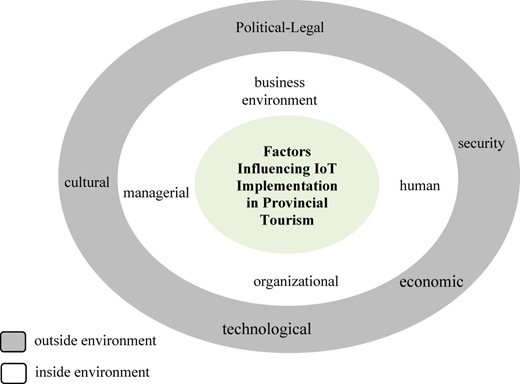
To ensure the validity of these variables, a content validity assessment was conducted using the Lawshe method (1975) and the Leedy and Ormrod (2001) approach. During this process, variables that scored below a content validity ratio (CVR) of 0.59 were excluded. As a result, a final set of 76 variables was retained, as shown in Tables 5–11. These variables were categorized into two main themes: the inside environment and the outside environment. Additionally, they were further subdivided into nine sub-themes based on their conceptual relationships. The outside environment factors included political-legal, security, technological, economic, and cultural aspects, while the inside environment factors comprised business environment, organizational, managerial, and human aspects.
- (2)
Formation of Structural Analysis Matrix
Folowing the identification and validation of the variables, a structural analysis matrix was created. This matrix, a 76x76 grid, was designed to capture the binary relationships between the 76 identified variables. The relationships between these variables were scored according to the principles of cross-impact analysis. Experts conducted the scoring, where the variables in the rows (representing influential variables) impacted the variables in the columns (representing dependent variables). The evaluation scale ranged from 0 to 3, with “0” representing no influence, “1” indicating weak influence, “2” reflecting moderate influence, and “3” signifying strong influence. This approach allowed the experts to quantify the potential impact of each factor on the implementation of IoT technologies, specifically in the context of enhancing tourism destinations in Fars Province.
- (3)
Analysis with MICMAC Software
Once the matrix was scored, it was input into MICMAC software, which stands for “Matrix of Crossed Impact Multiplications Applied to a Classification” (Godet et al., 2008). MICMAC is a specialized software tool used for structural analysis and is designed to process matrices like the one created in this study. The software identifies the most influential and dependent variables, providing insights into the structural relationships within the system. This analysis allowed for a deeper understanding of how different factors interact and influence the potential implementation of IoT technologies in tourism management.
3.1.1 Framework of diagram and structural analysis
The output of the cross-impact analysis model shows the relationships between variables, which MICMAC software converts into specific forms and diagrams. This allows for easy analysis of the relationships and structure of the system. The software outputs include two types of matrices and diagrams:
Matrix of Direct Influence (MDI): Shows the direct relationships between variables and the related diagrams.
Matrix of Indirect Influence (MII): Includes indirect relationships and relevant diagrams.
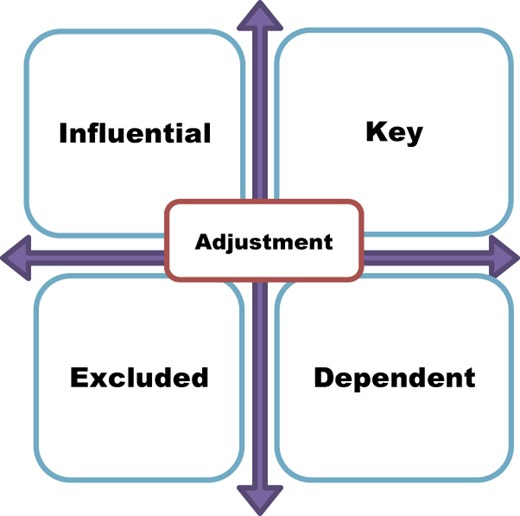
The diagram derived from MICMAC includes a 2D map with horizontal and vertical axes indicating influence and dependency, respectively. Each variable is placed at a certain point based on its influence and dependency. The position of variables in this diagram reflects their state in the system and their role in the system's dynamics and future changes (Asan and Asan, 2007; Godet et al., 2008; Villacorta et al., 2014).
Generally, these variables are classified into five categories (See Figure 1):
Input/Influential Variables: These variables are more effective and less dependent on others. The system depends heavily on these variables, which act as system inputs.
Intermediate/Key Variables: These variables are both highly influential and highly dependent, characterized by their inherent instability.
Output/Dependent Variables: These variables are less influential but highly dependent. They are very sensitive to the evolution of influential and dual-entry variables and represent the system's outputs.
Independent and Exclusive Variables: These variables neither depend on nor influence other system variables and are minimally related to the system.
Adjustment Variables: Positioned at the boundary zones of each quadrant, these variables can connect with other variables due to their intermediary positions (Nematpour and Faraji, 2019).
The classification of variables is based on the following criteria:
Influence Score: Calculated as the sum of scores in the row of the matrix, representing how much a variable affects other variables.
Dependency Score: Calculated as the sum of scores in the column of the matrix, representing how much a variable is affected by other variables.
Position in the Diagram: Variables are plotted on the influence-dependency chart based on their calculated scores. The quadrant in which a variable falls determines its classification.
3.2 Scenario-building
Scenario-building is a strategic programming technique developed to help managers and decision-makers better adapt to or prepare for possible future consequences (Mai and Smith, 2018). Scenario-building juxtaposes a wide range of realizable or desirable futures (Kreibich et al., 2012). Investigations show that most large enterprises tend to use scenario-building and evaluate it as a useful and even very helpful method (Weimer-Jehle, 2008).
3.2.1 Scenario-building based on cross-impact balance
An algorithm is utilized for scenario analysis called Cross-Impact Balance (CIB) Analysis. This algorithm is a standard tool for scenario techniques that presents structured processes to extract acceptable future developments in scenario forms. It involves systematic actions and reactions of factors based on related judgments by experts and scholars (Weimer-Jehle, 2006).
3.3 Study methodology process
We predicted and identified the most effective factors on IoT implementation for smartening tourism destinations in Fars Province by focusing on structural analysis (Gordon, 2009) based on cross-impact analysis (using MICMAC software) (Nematpour and Faraji, 2019) to achieve the best scenarios for this purpose (using Scenario Wizard). The steps taken in this study are as follows:
3.3.1 First step: sampling and selection of statistical population
We used a purposive sampling method to select experts in this study. This technique was employed to choose a group of experts with deep perception and rich information about the discussed subject (Neuman, 2007), capable of providing perfect insight into the research questions (Devers and Frankel, 2000). The structural analysis method relies on expert comments.
In this study, 15 local knowledgeable experts known for their activities related to tourism and IoT were selected from research and academic centers. The minimum number of experts recommended for a suitable panel size is seven (Sourani, 2015). The invited experts were chosen based on their expertise, experience, willingness to participate, adequate time availability, and efficient communication skills (Rådestad et al., 2013). The panel's size and composition should ensure the expertise complies with the research subjects (Donohoe, 2011). All 15 designated experts participated throughout the study.
3.3.2 Second step: data collection method and tools
3.3.2.1 First stage: systematic literature review on IoT in smart tourism
Researchers initially collected qualitative data on factors affecting IoT implementation in the tourism industry using systematic literature review methods. This technique is explicit and comprehensive, aiming to identify, integrate, evaluate, and summarize existing studies' results on a specific subject (Fink, 2005).
3.3.2.2 Second stage: field study - semi-structured interviews
Next, researchers identified effective factors on IoT implementation in smart tourism destinations in Fars Province by conducting semi-structured interviews with the selected statistical population. The interview method's advantages have been fully proven in tourism studies (Picken, 2017; Veal, 2017; Jennings, 2005; Phillimore and Goodson, 2004), and it is described as one of the most popular qualitative methods in social sciences (Denzin and Lincoln, 2003; Travers, 2010). Following Braun and Clarke's (2006) thematic analysis approach, the interview data were coded inductively. Participants emphasized both external and internal factors. Externally, the availability of adequate internet infrastructure and the presence of enabling regulations were seen as critical. As one respondent noted, “One of the key infrastructures is good internet coverage across the entire province” (I14). Another added, “There must be enabling regulations so that private companies, especially startups, can easily enter this field” (I13). Internally, organizational readiness and human resource awareness were highlighted. One interviewee stressed the role of authority: “Tourism authorities need to exert sufficient influence to unify and coordinate relevant institutions” (I6). Others emphasized staff preparedness: “Employees in tourism organizations lack awareness of smart technologies and need training to update their knowledge” (I5). These insights helped structure the thematic coding and informed the identification of key variables for the next analytical stage.
3.3.3 Third step: identification of primary variables
Data from the systematic literature review and interviews were merged at this phase. The Lawshe (1975) method was employed for content validity determination. In this method, a questionnaire is given to experts who are asked to rate the necessity, usefulness, and necessity of each item.
3.3.4 Fourth step: analysis of relationships
Obtained data from previous stages were entered into a cross-impact analysis matrix, and pairwise analysis was performed to evaluate the level of relationship between variables. The relationship value is measured on a scale of 0–3 (Dewangan et al., 2015):
0 = No influence
1 = Weak influence
2 = Moderate influence
3 = Strong influence
Experts evaluated the rate of influence/dependency of variables in the cross-impact analysis (CIA) matrix using these numbers.
3.3.5 Fifth step: diagram analysis
An influence-dependency diagram (Asan and Asan, 2007) was obtained for interpreting results using the MICMAC method. Each variable is placed in a specific position based on its influence and dependency rate, representing its role and function in the system as input/influential variables, intermediate/key variables, output/dependent variables, independent and exclusive variables, and adjustment variables (Schlange and Jüttner, 1997).
3.3.6 Sixth step: selection of key variables
There are two types of relationship classifications for variables: direct and indirect. Both classifications were used in this study. Given direct and indirect classifications and analysis of the diagram derived from MICMAC, influential and dependent variables were identified (Asan and Asan, 2007).
3.3.7 Seventh step: building possible scenarios
Possible scenarios were determined using the CIB method. At the beginning of this step, factors were classified into various states, and these states for all variables were provided in cross-impacts matrices to experts. States can show negative impacts in the matrix, and matrix numbers vary from −3 to 3 (Weimer-Jehle, 2013) (Table 1).
Next, impact network adaptive settings (adaptive scenarios) were computed in Scenario Wizard software using the CIB algorithm. Scenario Wizard software is commonly applied in CIB analysis, utilizing a dual interactive system (Nematpour et al., 2020).
4. Results
4.1 Data analysis method: systematic literature review
This study employs a systematic literature review based on the framework of Okoli and Schabram (2010), integrating Silva's (2015) selection criteria to ensure a rigorous and transparent selection process. The review follows a structured, multi-stage approach, including article identification, duplicate removal, screening (title, abstract, introduction, and conclusion), and final evaluation based on the research objectives. To identify relevant studies, a systematic search was conducted using predefined keywords such as “smart tourism,” “smart tourism destinations,” “e-tourism,” “IT in tourism,” “tourism in Fars Province,” “e-tourism in Fars Province,” “smart technologies in provincial tourism,” “IoT,” and “future of IoT.” The search was limited to publications from 2000 to 2022 and was performed in major academic databases, including Emerald, ScienceDirect, Scopus, and Wiley. The initial search yielded 253 studies. After removing duplicates and irrelevant articles, 120 studies remained. A secondary screening based on abstracts and conclusions further refined the selection to 57 studies. Finally, an in-depth content analysis resulted in 22 studies being selected for inclusion in the final synthesis. This methodological approach ensures a comprehensive and systematic selection of high-quality studies, providing a robust foundation for analyzing smart tourism and its technological applications in Fars Province. From these studies, 46 primary variables across nine sub-themes were identified as summarized in Table 2.
Table 3 presents an overview of the 22 selected academic studies, outlining their main areas of focus and the associated sub-themes. This categorization helps to illustrate how different studies contribute to various aspects of the topic.
4.2 Field study: semi-structured interviews
Semi-structured interviews were conducted to facilitate an exchange of comments and guide the discussion towards the study's objectives. The researcher took measures to prevent bias by avoiding interference from personal attitudes and knowledge during the interviews. The participants included a diverse group of experts from academia, industry, and government, ensuring a well-rounded perspective on the influence and dependency of variables in smart tourism. Table 4 provides a summary of the participants' qualifications and expertise.
A total of 15 interviews were conducted, each lasting approximately 60 min. The interviews followed Cohen and Manion's (1986) six-stage process and continued until theoretical saturation was achieved. The interview questions focused on key themes, including the current status of smart tourism and adoption timeline, key influencing factors, policy and governance, technical and financial challenges, human and cultural factors, security and privacy, and stakeholder roles and strategic planning. The data resulting from the interviews were transcribed, coded, and categorized into themes, word by word, in alignment with the research objectives. Coding was conducted using thematic analysis based on Braun and Clarke's (2006) model, which involves six key steps: familiarization with the data, generating initial codes, searching for themes, reviewing themes, defining and naming themes, and producing the final report. During the coding process, 56 initial variables were identified within the codes, main themes, and sub-themes. The themes and codes were validated by two experts. Expertise validation was conducted at different steps of the research process by individuals familiar with the case study, including research colleagues, a board of referees, and participant experts (Brink, 1993) (See Table 5).
To integrate the findings from the literature review and interviews, the factors identified from the interviews and the systematic literature review were compared, and similar factors were merged. To assess content validity, the methods proposed by Lawshe (1975) and Leedy and Ormrod (2001) were applied, resulting in the removal of five factors with a CVR below 0.59, reducing the total number of factors from 93 to 88. Subsequently, these factors, along with their primary and secondary themes, were reviewed by experts, who suggested necessary modifications. After final refinements, the number of factors was consolidated to 76, categorized into 9 sub-themes and 2 main themes. Figure 2 summarizes these 76 factors providing a concise overview of the final classification.
In contrast to Figure 2, which provides a concise overview of the 76 factors, Tables 6–12 present the full set of variables organized by sub-theme, along with explanatory descriptions. These variables serve as the direct input for the MICMAC software, which is used to identify the key driving factors. In this study, the 76 variables represent the initial influencing factors for implementing the Internet of Things (IoT) in tourism. They are subsequently analyzed to determine the critical determinants shaping IoT adoption within the provincial tourism industry.
4.3 Identification of effective key factors on cross-impact analysis
In this stage of the research, the analysis involved 76 initial variables previously identified, which were systematically arranged in a 76x76 cross-impact matrix. This matrix was presented to a panel of experts, tasked with evaluating the potential influence of each variable on others. The evaluation was structured on a scale from 0 to 3, where “0” represents no influence, “1” denotes weak influence, “2” indicates moderate influence, and “3” signifies strong influence. This evaluative approach enabled the experts to quantify the prospective impact of each factor on the implementation of IoT technologies aimed at enhancing tourism destinations in Fars Province. The validity of the structural analysis was ensured through the use of MICMAC software, which is supported by the findings of Patidar et al. (2017). This software is integral to processing the direct influences matrix, adhering to a systemic paradigm that guides the overall modeling approach. Following the input of data into the MICMAC software, the output was meticulously analyzed to identify key influential factors. The specifics of these influences, as revealed by the analysis, are detailed in Table 13.
4.3.1 Influential and dependent matrix analysis
The results of the final matrix delineate five principal zones within the diagram: input/influential, intermediate/key, output/dependent, independent and exclusive, and adjustment variables. This study focuses specifically on the intermediate/key variables, as identifying these is crucial for systematic analysis of the impact dynamics (Nematpour et al., 2020). The criteria used to determine these key variables are based on their degree of influence, a method supported by earlier studies (Asan and Asan, 2007; Godet et al., 2008). This focus is essential to understanding the core drivers that shape the implementation of IoT in enhancing smart tourism destinations.
4.3.2 Drawing of direct relations between effective factors
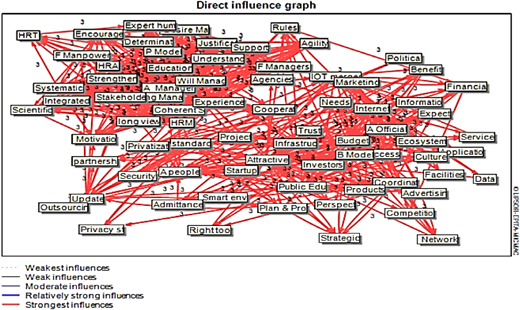
Illustrating the relationships among key factors can significantly enhance our understanding of their direct interactions and influences. After identifying and grouping the factors affecting IoT implementation for enhancing tourism in Fars Province, a visual representation has been created. This map details the very strong influences between key factors, providing clear insights into the dynamics at play. The map of these direct influences is presented in Figure 3.
4.3.3 Indirect influences analysis of effective key factors
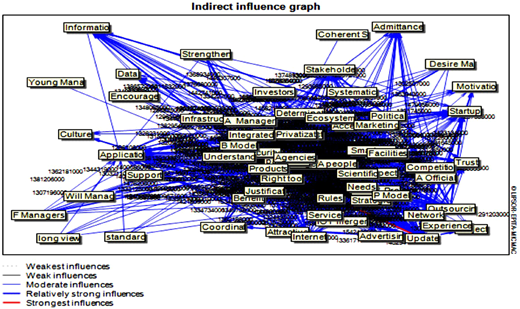
MICMAC software offers the capability to assign powers ranging from 2 to 5, and possibly beyond, to each of the relations between variables. Consequently, the software can measure the indirect influence of variables on each other. As depicted in Figure 4, the indirect influences of variables reveal a classification of effective key factors that does not fundamentally differ from their direct influences. In essence, there is no significant displacement observed in the position and rank of key factors when assessed separately based on direct and indirect influence. The displacement diagram of variables, based on both direct and indirect influence, serving as additional evidence supporting this assumption. For a clearer understanding of these relationships and the indirect influences of effective key factors on each other, please refer to Figure 4.
4.3.4 Effective key factors for IoT implementation
The 76 × 76 matrix posed a significant challenge for experts to respond to effectively. To address this issue, we assembled a panel of experts with expertise in IoT and tourism. Despite considerable time and effort invested in solving the matrix, it became evident that the sheer quantity of factors made it impractical to find a solution. In response, we convened a session with the experts to reassess the obtained factors. Upon entering the matrix data into MICMAC software and considering the feedback from the experts, certain factors that initially received higher scores but proved difficult to address during the matrix solution process were identified as influential factors and carried forward to the next stage. To ensure the validity of the identified factors, we consulted with the expert panel twice and employed the following criteria to finalize the key variables: (1) Higher rates of direct and indirect influences of variables; (2) Expert feedback; and (3) Their positions in the diagram. These effective key factors represent the primary and most influential variables in IoT implementation for enhancing tourism destinations in this province.
Initially, 23 effective key factors were identified, along with their rates of influence and dependency. Based on the experts' feedback, some of these factors were merged to streamline the size of the matrix for the next stage, namely the formation of the cross-impact matrix, and to facilitate the response process. Ultimately, 14 effective key factors were recognized for IoT implementation to enhance tourism destinations in Fars Province (refer to Table 14).
The identification of 14 key variables not only clarifies the structural dynamics of IoT implementation in smart tourism but also facilitates practical planning. For example, variables such as financial support, managerial awareness of IoT, and the availability of infrastructure directly highlight priority areas for strategic investment. Policymakers can leverage these variables to allocate resources effectively, revise regulatory frameworks, and develop capacity-building initiatives. In this context, the MICMAC analysis serves as a strategic tool that translates expert insights into a practical roadmap, enabling local tourism stakeholders to formulate clear and region-specific action plans.
4.4 Building consistent scenarios based on CIB
To ensure compatibility and coherence across various descriptors of influence, an appropriate structure was developed from scenario assumptions following the completion of the cross-impact analysis and determination of effective key factors. The primary objective was to construct probable scenarios for the 14 main variables identified in this study using the cross-impact algorithm. These variables were prioritized within the CIB method according to encoded rules. Expert input was sought at this stage to refine the work and generate qualitative choices (types) that describe the potential states of the variables within the system. These probable states are crucial for future tourism planning, as accurate analysis of the conditions under which these states may occur is necessary for scenario preparation.
In total, 38 possible states were defined for the 14 final effective factors based on scenario-building. Each variable had its own set of possible states, with the range encompassing both desirable and undesirable outcomes. These states were categorized into 2 or 3 states per key variable, as appropriate (refer to Table 15). Subsequently, cross-impact matrices were constructed at a dimension of 38 × 38. These matrices were presented to a panel of experts, who were tasked with completing them based on three categories: enabler, no-effect, and limiter. Experts were asked to specify the degree of influence of each state using a scale ranging from −3 to 3, indicating the impact on the occurrence or non-occurrence of other states if each of the 38 states were to occur. The data obtained from the experts' responses were then input into the Scenario Wizard software. This software facilitated the extraction of the weakest and strongest scenarios, as well as those with a high probability of compliance and compatibility, through complex computational analysis.
4.4.1 Analysis of strong scenarios
In current study, 944′784 probable combined states (3 × 3 × 3 × 3 × 3 × 3 × 3 × 3 × 3 × 3 × 2 × 2 × 2 × 2) were extracted from Scenario Wizard software. The given scenarios include 2 strong scenarios, 1′548 weak scenarios, and 9 highly consistent scenarios. In this study, two strong scenarios with high scores in terms of progress are imagined, among which one scenario shows promising and favorable conditions and the other scenario shows almost critical conditions. (See Table 16).
5. Discussion and conclusion
Tourism has undergone significant transformations in recent years, with technological advancements being a notable aspect of these changes (Verma et al., 2021). In light of these developments, it is imperative for managers to adopt innovative approaches to predict and identify the driving forces shaping the future of the industry (Formica and Kothar, 2008). Future studies offer a valuable framework for this purpose, enabling the creation of flexible strategies, particularly through scenario-building for tourism planning and management (Nematpour et al., 2020). Cross-Impact Analysis (CIA) and Cross-Impact Balance (CIB) analysis serve as effective tools in this context, shedding light on the interrelationships among various variables within the tourism system and facilitating the design of appropriate scenarios (Weimer-Jehle, 2018).
The primary objective of this study is to forecast and identify the key factors that will influence the implementation of IoT for enhancing tourism destinations in Fars Province, Iran. These factors are essential for formulating strategies aimed at smartening tourism destinations in the region over the long term. By identifying the most influential variables, we can develop better scenarios and strategies for implementing this smart technology. In this study, 14 main influential variables were identified across various domains such as political/legal, economic, technological, business, and managerial fields. Subsequently, two strong scenarios were derived. The following section presents suggested strategies based on these findings.
5.1 Suggested strategies
In light of the promising and favorable conditions depicted in scenario number one, researchers have formulated strategic proposals tailored to planners and policymakers in this domain. Table 17 provides an overview of the potential states for each key factor in scenario No. 1, along with their respective compatibility values at each possible status.
K1 (Development of modern commercial models) holds the highest integration value in this scenario. Considering the critical role of existing business models for IoT platforms (Abbate et al., 2019), the Cultural Heritage and Tourism Organization in Fars Province should focus on designing economically viable business models with reasonable and logical capital returns to attract private sector investors. This process should be facilitated by expert personnel proficient in system design for smart tourism destinations (Gcaba and Dlodlo, 2016) as well as marketing specialists in the tourism industry. Business models are crucial because they outline how value is created, delivered, and captured. For IoT platforms in smart tourism, these models must ensure that investments in IoT yield sufficient returns to justify the costs. The integration of IoT into tourism can lead to enhanced visitor experiences through personalized services, real-time information, and seamless connectivity. Therefore, having a robust business model can significantly enhance the attractiveness of smart tourism projects to private investors who are looking for viable opportunities.
B1 (Updated rules and regulations in tourism and IT sectors to streamline operations) ranks as the second most stable variable in scenario No. 1. Government intervention is essential to reduce uncertainty and encourage private enterprises, particularly in the tourism sector, by implementing appropriate laws and robust IoT standards (Liu et al., 2018). Clear and updated regulations can facilitate smoother operations, reduce bureaucratic red tape, and provide a supportive environment for IoT integration. Governments can play a pivotal role by setting standards that ensure compatibility, security, and privacy of IoT systems. These regulations not only protect consumers but also provide a clear framework within which businesses can operate. For instance, data privacy laws are crucial in ensuring that the data collected from tourists via IoT devices is used ethically and securely.
D1 (Governmental support for importing IoT to provincial tourism and allocation of specific budgets) is the third variable with high stability in the first scenario. Managers in the Cultural Heritage and Tourism Administration should develop strategies that promote long-term financial independence in the tourism sector, reducing reliance on government funding for modern technologies. This can include creating revenue-generating initiatives within the tourism sector that utilize IoT to enhance visitor experiences and operational efficiency.
N1 (Providing necessary information for managers and changing their attitudes to increase their commitment to IoT technologies in tourism) and M1 (Increasing managers' familiarity with and attention to smart technologies in tourism, with a long-term outlook) show stable compatibility at levels 49 and 40, respectively, in the first scenario. Both variables are crucial to managerial activities, necessitating the creation of an environment that encourages and supports smart projects and the development of smart tourism destinations. Awareness and knowledge can be increased through news bulletins, training pamphlets, professional meetings, seminars, conferences, and proposals, enhancing managers' understanding of modern smart technologies. Managers should view IoT as an opportunity to achieve new levels of efficiency and effectiveness (Liu et al., 2018). Managerial support is vital for the successful implementation of IoT in tourism. Managers need to be well-informed about the benefits and applications of IoT to make strategic decisions that leverage this technology. Continuous education and exposure to the latest trends and innovations in IoT can help managers stay ahead and drive the adoption of smart technologies.
G1 (Enhancement of necessary infrastructures, including improved internet coverage and integrated technological services, as well as existing communication standards like data exchange infrastructures) has stable compatibility at level 41 in the first scenario. These infrastructures, including NB-IoT and data processing facilities, are essential for providing rich tourism experiences and personalized trips, enabling real-time decision-making through comprehensive data collection (Ordóñez et al., 2021). The foundation of any smart tourism initiative is robust infrastructure. High-speed internet, reliable communication networks, and data processing capabilities are fundamental to the functioning of IoT devices. These infrastructures ensure that data is collected, transmitted, and analyzed efficiently, allowing for real-time responses and personalized services for tourists.
Other variables in the first scenario, such as A1, J1, L1, C1, E1, H1, I1, and F1, also play significant roles in facilitating IoT implementation and smartening tourism destinations. Factors like F1 (Increasing financial facilities and solvency in organizations to utilize IoT technology) and I1 (Improving professional knowledge) highlight the importance of financial resources and skilled manpower for leveraging IoT technology in tourism (Sofronijević et al., 2014; Gcaba and Dlodlo, 2016).
Financial facilities ensure that organizations have the necessary funds to invest in IoT technologies. This includes purchasing devices, setting up infrastructure, and maintaining systems. Similarly, professional knowledge ensures that the workforce is capable of managing and utilizing these technologies effectively. Training programs and continuous professional development are essential to keep the workforce updated with the latest technological advancements.
H1 (Availability of suitable, easy, and low-cost tools) such as application programs on smartphones and tablets for tourists (Rotchanakitumnuai, 2017) and generally those programs that can improve tourist experiences are crucial. The incidence of COVID-19 has highlighted the potential of IoT to revolutionize tourism through contactless services and real-time information updates. IoT systems can collect data on tourist feedback in real-time using sensors and mobile applications, ensuring updated information is available to tourists and stakeholders through continuous data collection (Fernandes, 2021).
The availability of user-friendly and affordable tools can significantly enhance the tourist experience. These tools can provide tourists with real-time information, personalized recommendations, and seamless services, making their visit more enjoyable and hassle-free. The rising trend of communication and cooperation with relevant organizations and ministries, such as the Ministry of Tourism, Ministry of Communications, Cultural Heritage and Tourism Organization at Fars Province, universities, and parks of sciences and technologies (E1), emphasizes the necessity for developing strong cooperation and coordination between all key stakeholders (Fernandes, 2021). Effective collaboration among various stakeholders ensures that resources are pooled, expertise is shared, and efforts are aligned towards common goals. This collaborative approach can lead to the successful implementation of IoT projects in tourism, benefiting all parties involved.
C1 (Rising governmental emphasis on privatization and outsourcing of activities to the private sector, improving their support, and creating desirable attractiveness for entrepreneurs and private sector) can be achieved by preparing an appropriate platform for the entry of private sector investors, entrepreneurs, and startups. This includes facilitating the issuance of necessary licenses, creating incentive policies, granting advantages such as tax exemptions, assisting with equipment importation, and removing bureaucratic hurdles.
Privatization and outsourcing can drive innovation and efficiency in the tourism sector. By creating an enabling environment for private sector participation, the government can stimulate investment and foster a competitive market that benefits tourists and the economy. To create an integrated management system and a stable tourism sector (L1), it is necessary to increase the enforcement power of the Cultural Heritage and Tourism Administration to guide, lead, organize, and control all public and private institutions active in tourism in the province. This will lead to the integration of decision-making processes and activities in this sector, preventing redundant efforts. An integrated management system ensures that all activities are coordinated and aligned towards common objectives. It reduces duplication of efforts, enhances efficiency, and ensures that all stakeholders are working towards the same goals.
Similarly, J1 (Rising speed to form boards of trustees in touristic places) and assigning necessary power to them can lead to quick decision-making and the rapid implementation of modern technologies such as IoT. A1 (Rising political stability in the country and increasing clear and transparent policies) is essential not only for Fars Province but also for the smartening of all tourism destinations in the country using modern and intelligent technologies. Political stability and clear policies create a conducive environment for investment and development. They provide the certainty and predictability needed for long-term planning and implementation of smart technologies in tourism.
The MICMAC classification and scenario findings provide clear guidance for translating strategic variables into practical actions. For example, improving updated regulations (B1) suggests a policy initiative involving collaboration between the ICT and tourism ministries to create smart-tourism-friendly legislation. Similarly, enhancing managers' awareness and commitment (N1, M1) can be operationalized through continuous training, e-learning modules, and pilot projects. Investment in smart infrastructure (G1) should be reflected in dedicated provincial funding programs. These variables are not merely conceptual; they represent focal points around which tourism authorities and private actors can align their operational strategies.
In conclusion, these comprehensive strategies underscore the broader contribution of this research by highlighting the importance of a multifaceted approach that includes robust business models, supportive regulations, government backing, managerial education, and technological infrastructure. By addressing these key factors, Fars Province can successfully implement IoT to enhance its tourism sector, creating smart destinations that offer enriched experiences for tourists and sustainable growth for the industry. This research contributes to the understanding of how integrated strategies can drive technological adoption and innovation in tourism, providing a blueprint for other regions aiming to leverage IoT for economic and cultural development.
6. Futures-based implications for smart tourism
The findings of this study offer valuable insights not only for the specific case of Fars Province in Iran but also for broader applications in smart tourism development worldwide. As the tourism industry increasingly adopts advanced technologies such as the Internet of Things (IoT), the implications for the future of tourism destinations extend well beyond Iran, especially in the context of global trends towards smart cities and digital transformation.
One key implication of this study is the recognition of the essential role of IoT in shaping the future of tourism destinations, particularly in terms of enhancing visitor experiences and managing destination sustainability. The scenario analysis presented here highlights two distinct pathways for IoT adoption in tourism: one where favorable conditions lead to effective IoT integration, and another where challenges such as political instability, insufficient infrastructure, and lack of financial resources may hinder progress. These divergent futures underscore the importance of proactive planning and strategic foresight for tourism stakeholders worldwide, emphasizing the need for a long-term vision that incorporates the dynamic interplay between technological, economic, and managerial factors. For destinations outside Iran, the findings suggest that the successful implementation of IoT in tourism requires addressing several critical factors: political stability, governmental support for infrastructure development, financial investment in smart technologies, and the alignment of private and public sector efforts. The study's future scenarios indicate that regions with stable governance, strong public-private partnerships, and robust digital infrastructure will be better positioned to embrace IoT advancements and develop smart tourism ecosystems that cater to the growing demand for personalized, real-time tourist experiences.
Moreover, the integration of IoT in tourism is not solely about technological infrastructure. The study also highlights the importance of managerial adaptation, particularly the training and awareness of tourism managers and stakeholders regarding the potential benefits of smart technologies. As tourism destinations globally strive to adapt to the digital age, fostering a culture of innovation and continual learning among tourism professionals will be crucial to harness the full potential of IoT systems. This is particularly relevant in light of the growing importance of sustainable and inclusive tourism, as highlighted by the emerging discourse around “wise” tourism destinations (Coca-Stefaniak, 2021), which balance technological advancement with community well-being and environmental sustainability. In addition to the technological and managerial implications, the research also raises important considerations for the ethical governance of smart tourism. The data-driven nature of IoT systems necessitates the careful handling of tourist data, ensuring privacy and security while also promoting transparency in data use. This global concern will become more pronounced as more regions adopt IoT technologies, making it essential for policymakers and tourism organizations to develop and enforce comprehensive frameworks that protect user privacy while facilitating the exchange of valuable data to improve tourism services.
In summary, the futures-based implications of this study underscore the critical need for tourism destinations globally to adopt a forward-thinking approach to IoT implementation. By learning from the experiences and challenges identified in Fars Province, other destinations can navigate the complexities of smart tourism and make informed decisions that lead to sustainable, equitable, and innovative tourism futures. As the tourism landscape continues to evolve, fostering collaboration, strengthening infrastructure, and ensuring ethical governance will be key drivers of success in the transition to smart tourism destinations worldwide.
7. Research limitations and suggestions for future research
This study is highly expert-oriented, relying heavily on expert feedback for advancing and validating results. The large cross-impact matrix posed challenges, making progress difficult for experts and researchers. To address these issues, extensive discussions and consultations were held, considering all aspects of IoT and tourism. Analyses using Scenario Wizard and MICMAC revealed the complexity of variable relationships. Despite the thorough approach, limitations exist. The study focuses on Fars Province, which may limit the generalizability of the findings to other regions with different tourism infrastructures, governance models, or technological readiness. Additionally, while the perspectives of executive officials and experts were extensively considered, the study did not incorporate tourists' viewpoints. This limitation was primarily due to COVID-19 constraints, which restricted direct engagement with end-users. The exclusion of tourists' perspectives means that the study primarily reflects the supply-side view of IoT implementation in tourism. Another limitation relates to the number of variables evaluated. The large number of variables made it difficult for experts to assess cross-impact relationships objectively, potentially introducing subjective bias in influence-dependency evaluations. Additionally, the time-consuming and complex nature of designing matrices, particularly the interaction matrix and uncertainty matrix, posed significant challenges. The large number of questions in these matrices and the extensive time required to answer them created difficulties for both the researcher and the participating experts.
To enhance the scope and applicability of the findings, future research should integrate tourists' perspectives alongside expert opinions to provide a more comprehensive understanding of IoT adoption in smart tourism. While this study highlights the benefits of IoT, further validation and research are necessary. Future studies should explore the practical implementation of IoT technologies, assessing their effectiveness and impact on both tourists and industry stakeholders. This will ensure that IoT adoption in tourism is based on empirical evidence and meets the needs of all parties involved. Expanding the study to multiple regions would allow for a comparative analysis of how different contextual factors influence IoT implementation. Longitudinal studies could also help track the evolution of IoT adoption and assess its long-term impact on tourism stakeholders. Additionally, researchers can optimize the MICMAC analysis by applying dimensionality reduction techniques such as Principal Component Analysis (PCA) to eliminate less significant variables before the MICMAC analysis stage. Furthermore, a pre-analysis phase using Fuzzy Logic can be implemented to identify strong relationships and filter out weak ones from the final interaction matrix, reducing complexity and improving efficiency. By addressing these aspects, future research can build upon the foundation established in this study, ensuring a more holistic and data-driven approach to understanding the role of IoT in the transformation of tourism destinations.