This study investigates male and female teachers’ perceptions of information and communication technology (ICT) use in English teaching and the challenges they face in public secondary schools in Punjab, Pakistan. By identifying gendered differences, the study aims to provide actionable recommendations for policymakers and educators to promote equitable ICT integration and improve English teaching practices. While prior research has addressed general ICT challenges in education, few have examined the gender-specific experiences of English teachers in Pakistan’s public school context. This study offers novel, context-specific insights to inform gender-sensitive policy reforms and professional development initiatives, contributing to the broader discourse on digital equity in education.
This study adopted a descriptive research design, using a quantitative approach to examine the attitudes and challenges of male and female teachers regarding the use of ICT in English language teaching. Descriptive research is particularly effective for observing phenomena as they naturally occur, providing insights into existing conditions and uncovering patterns and meanings (Siedlecki, 2020). While the study used a quantitative design, a few open-ended comments from participants were also reviewed descriptively to support the interpretation of statistical findings. However, these were not analyzed through formal qualitative methods. The study focused on analyzing teachers’ attitudes toward and challenges in ICT usage within their natural educational settings. A survey design was used due to its suitability for gathering data on attitudes, perceptions and challenges from a specific population. A structured questionnaire, adapted from established instruments, was reviewed by experts in education and ICT integration to ensure content validity and alignment with the study’s objectives (Tavakol and Wetzel, 2020). This study focuses on gender differences in ICT adoption, which are often overlooked in existing literature. It aims to uncover how gender-specific barriers and opportunities influence ICT usage in English teaching.
The study found significant gender-based differences in attitudes toward ICT integration in English teaching. Female teachers were more likely to view ICT as a tool for fostering student engagement, interaction and dynamic learning environments. They were also more inclined to emphasize ICT’s role in enhancing language skills through personalized, student-centered approaches. In contrast, male teachers focused more on ICT’s practical benefits, such as time-saving and efficiency. Regarding challenges, both genders cited limited class time, lack of training and inadequate resources as major barriers. However, female teachers were more likely to report issues with insufficient training and technical support. These findings highlight the need for targeted professional development and resource allocation to support effective ICT use, especially for female teachers.
This study provides valuable insights into gender-based differences in attitudes toward ICT use in English teaching in secondary schools. By examining both male and female teachers’ perceptions, it highlights the unique challenges they face, including time constraints, insufficient training and lack of resources. The findings underscore the importance of gender-sensitive policies and targeted interventions to enhance ICT integration in classrooms. This research contributes to the growing body of knowledge on educational technology, offering recommendations for improving professional development and institutional support to foster equitable and effective ICT use in teaching practices.
Introduction
Information and communication technology (ICT) integration in education is pivotal to modernizing teaching and learning worldwide (Sibagariang et al., 2023). As highlighted by UNESCO (2023), global initiatives aim to improve learning outcomes, engage students and equip them with essential 21st-century skills. Both developed and developing countries are investing significantly in ICT infrastructure to shift traditional classrooms toward interactive, student-centered environments (Hamdan, 2018). These efforts emphasize ICT’s crucial role in enhancing teaching methodologies and meeting diverse educational needs.
In English language teaching, ICT plays a vital role in developing essential skills like listening, speaking, reading and writing (Sivakami and Gunasekaran, 2024). Tools such as multimedia presentations, digital dictionaries and interactive platforms help teachers design engaging activities to strengthen vocabulary, grammar and comprehension (Shadiev and Yang, 2020). In addition, ICT promotes learner autonomy, encouraging students to explore and apply knowledge, which increases their engagement and motivation (Lee and Hannafin, 2016). Successful ICT integration, however, depends not only on infrastructure but also on teachers’ preparedness and positive attitudes (Ouma et al., 2013).
The Pakistani Government has made significant efforts to promote ICT in education, including the establishment of computer labs, distribution of laptops and recruitment of ICT instructors. Despite these efforts, ICT implementation in public schools remains inconsistent (Saif et al., 2022). Challenges such as inadequate teacher training, resource shortages and reliance on traditional methods hinder ICT adoption, particularly in rural areas (Ofosu-Asare, 2024). Teachers’ perceptions and attitudes are crucial in determining ICT integration. Those who perceive ICT as beneficial are more likely to adopt it, while those with limited confidence or negative views may resist (Li, 2024). Understanding these perceptions is key to overcoming barriers and encouraging effective ICT use (Nazir and Khan, 2024).
Gender differences significantly influence ICT integration in education. However, gender alone does not determine ICT adoption. Factors such as teachers’ age, years of experience, the quality of ICT infrastructure and the institutional culture also play a role. Younger teachers often report higher digital fluency, while veteran teachers in under-resourced schools may face greater challenges. Recognizing these intersecting factors is essential for understanding the complex patterns of ICT adoption explored in this gender-based analysis (Habimana et al., 2025).
Studies show that male teachers tend to have higher confidence and technical proficiency with ICT, while female teachers often face additional barriers, such as limited training opportunities and societal constraints (Campos and Scherer, 2024). These differences can affect ICT use in classrooms, especially in English language teaching, which demands interactive and creative approaches (Al-khresheh, 2024). Understanding these gender-specific dynamics is essential for designing strategies to support teachers in effectively using ICT (Rehman et al., 2021). Although there is growing research on ICT in education, few studies focus on gender-based differences in teachers’ attitudes and challenges, especially in Pakistan (Nazir et al., 2024). Most research focuses on general barriers to ICT adoption, neglecting the unique experiences of male and female teachers in English language teaching (Al-kfairy et al., 2024). This study aims to fill this gap by conducting a comparative analysis of male and female teachers’ perceptions of ICT use in English teaching and the challenges they face in public secondary schools in Punjab, Pakistan. By identifying these gendered differences, the study seeks to provide actionable recommendations for policymakers and educators to promote equitable ICT adoption and enhance English teaching practices. While prior studies have explored general challenges related to ICT adoption in education, few have examined the gender-specific experiences of English language teachers within the context of Pakistan’s public school system. This study makes a novel contribution by offering context-specific insights that are currently underrepresented in the literature. The findings aim to inform gender-sensitive policy interventions and professional development programs that promote equitable ICT use in classrooms, contributing to both the local educational context and the broader discourse on gender and technology in education.
Research questions
How do male and female teachers perceive the use of ICT in English teaching, and what are the key differences in their attitudes?
What challenges and resource-related factors influence male and female teachers’ use of ICT in English teaching in public schools?
Literature review
This study builds upon a range of studies that examine teachers’ attitudes, perceptions and challenges in integrating ICT into education. While previous research has focused on the general pedagogical benefits of ICT, particularly from the student perspective (e.g. Thapaliya, 2014; Harlen et al., 2003; Rehman et al., 2024a). This paper emphasizes teacher-specific studies. Such studies are critical for understanding how gender shapes ICT integration in English language teaching, especially in the context of Pakistan’s public schools.
Attitudes toward information and communication technology integration in teaching
Teachers’ attitudes play a pivotal role in the successful adoption of ICT in classrooms. The literature acknowledges that positive attitudes motivate teachers to explore innovative uses of ICT, fostering student engagement and improving teaching effectiveness. On the other hand, negative perceptions act as significant barriers. The references to Rehman et al. (2024b) and Rehman et al. (2022), regarding teachers’ positive and negative attitudes, help ground these claims in prior research. The revised text also emphasizes that teachers who perceive ICT as a practical tool for enhancing teaching outcomes are more likely to integrate it into their pedagogy (Bharti et al., 2024).
The addition of gender differences is particularly important. Research findings suggest male teachers typically exhibit more confidence in using ICT than female teachers, often due to societal norms and differences in exposure to technology (Li, 2024). Female teachers, conversely, may find ICT adoption challenging because of insufficient training, lack of technical support and limited access to resources. This gender-specific view is supported by references to Alieto et al. (2024), who examined the barriers faced by female teachers in ICT adoption.
Recent research further confirms that gendered attitudes toward ICT are often shaped by access to digital literacy training and evolving policy environments. For instance, Pham and Van Tam (2025) found that post-pandemic professional development programs significantly boosted female teachers’ confidence in integrating ICT, especially when delivered in supportive, peer-led formats. Similarly, a cross-national study by Alqahtani (2025) revealed that while male teachers consistently reported higher self-efficacy in ICT use, targeted training programs helped reduce this gap in countries with strong institutional support systems. These findings underscore that attitude are not fixed, but shaped by contextual factors such as leadership, access and ongoing training, making professional development a crucial lever for promoting gender-equitable ICT integration.
Importance of information and communication technology in English language teaching
ICT has revolutionized English language teaching by providing tools that cater to diverse learning styles and needs. Multimedia resources, such as videos, audio recordings and interactive software, enable teachers to create dynamic learning environments that strengthen students’ listening, speaking, reading and writing skills (Rehman et al., 2024a). For instance, tools like online dictionaries, grammar correction software and digital storytelling platforms facilitate vocabulary building and pronunciation practice, making English language learning more engaging and interactive (Hadjer, 2024). Research by Thapaliya (2014) emphasizes that ICT motivates students to participate actively in classroom activities. Students exposed to ICT-based instruction demonstrate improved critical thinking skills, enhanced academic performance and greater engagement in learning tasks (Harlen et al., 2003). Moreover, ICT enables teachers to differentiate instruction, catering to the unique needs of visual, auditory and kinesthetic learners. For example, visual learners may benefit from multimedia presentations, while auditory learners gain from podcasts and audio recordings (Wang et al., 2014). Despite its significant advantages, ICT integration in English teaching remains inconsistent, particularly in resource-constrained settings such as public schools in Pakistan(Shoukat et al., 2024). Numerous studies have explored the pedagogical differences between traditional classroom instruction and ICT-supported English language teaching. Traditional methods, while grounded in teacher-centred delivery, often limit opportunities for interaction, differentiation and multimodal learning (Owusu and Baah, 2025). In contrast, ICT-enhanced instruction has been shown to foster learner autonomy, support differentiated instruction and increase motivation through multimedia and gamified approaches (Aina et al, 2025; Gachuiga et al., 2025). For instance, Saharuddin et al. (2025) emphasizes that digital technologies not only support skill development but also provide students with authentic, real-time language exposure, which is often lacking in conventional classrooms. However, these benefits are not uniformly experienced across all educational settings due to disparities in training, access and pedagogical readiness (Okada et al., 2025). This study builds on such findings by exploring how gendered experiences influence the adoption and effectiveness of ICT in English teaching, especially in resource-constrained public-school environments.
More recent studies emphasize the growing role of mobile-assisted language learning, gamified platforms and AI-supported tools in English teaching. For example, Sabani (2025) found that mobile-based applications such as Duolingo and BBC Learning English significantly enhanced vocabulary retention and learner motivation, particularly among ESL students in blended classrooms. Similarly, Nazir and Khan (2024) highlight that post-pandemic adoption of digital platforms like Zoom and Google Classroom allowed teachers to integrate authentic language resources and real-time feedback into their instruction. These shifts have redefined teacher roles from content deliverers to learning facilitators, promoting learner autonomy and engagement. However, as Xu et al. (2025) note, successful ICT integration in English language teaching depends on not just tool availability, but also teacher training, digital literacy and institutional support factors often lacking in public education systems in developing countries
Challenges in information and communication technology integration
Barriers to ICT integration in education have been extensively studied. Teachers frequently encounter challenges such as a lack of functional ICT infrastructure, inadequate training and insufficient institutional support (Lawrence and Tar, 2018). Many teachers lack the technical skills required to effectively use ICT tools in their classrooms, especially older educators or those who have not received formal ICT training. Institutional obstacles, including outdated equipment, insufficient funding and rigid curricula, further impede ICT adoption (Mirzajani et al., 2016). Teachers in public schools often report inadequate access to reliable internet connections, functional computer labs and multimedia facilities. According to Abedi and Ackah-Jnr (2023), these obstacles can be categorized as “first-order” challenges (external factors like infrastructure and resources) and “second-order” challenges (internal factors like beliefs, attitudes and confidence). Gender differences exacerbate these challenges. Female teachers, in particular, often cite insufficient training and lack of technical support as significant barriers (Wood et al., 2005). (Kaimara et al., 2021) found that female teachers are more likely to perceive ICT as complex and intimidating, which discourages them from experimenting with new technologies. Male teachers, in contrast, tend to be more willing to explore ICT tools, even in resource-limited settings (Rehman et al., 2023). Addressing these disparities requires a multi-faceted approach, including gender-sensitive training programs, mentorship opportunities and policy reforms to ensure equitable access to ICT resources (Mahmood et al., 2025a).
Recent research continues to underscore the evolving nature of ICT integration challenges, especially in post-pandemic educational contexts. A study by Ayub et al. (2025) revealed that while ICT adoption increased during remote learning phases, many teachers in public schools still lacked the pedagogical and technical competencies needed to sustain digital practices afterward. Furthermore, Bharti et al. (2024) found that infrastructure gaps, including irregular power supply, poor internet connectivity and lack of technical assistance, disproportionately affected teachers in rural and underserved areas, exacerbating existing inequalities. These challenges are not limited to resources; digital confidence also plays a significant role. According to Danjuma et al. (2025), female teachers in particular reported lower self-efficacy in troubleshooting and applying ICT in class, often due to prior lack of exposure and culturally influenced attitudes. These findings highlight the need for ongoing, inclusive professional development and investments that go beyond hardware to include long-term capacity building.
Gender-Based differences in information and communication technology usage
Gender disparities in ICT usage have been the focus of many studies. While gender is a key lens for understanding ICT use, it intersects with other variables, particularly age, years of teaching experience, school ICT infrastructure and institutional culture, to shape educators’ attitudes and behaviors (Gosain, 2025; Ayub et al., 2025). Younger teachers, for example, often report higher digital fluency (Mhlanga, 2023), whereas veteran teachers in under-resourced schools face steeper learning curves (Kiran et al., 2024). Schools with strong leadership support and clear technology policies tend to foster more positive perceptions of ease-of-use across genders, while resource-poor environments amplify confidence gaps. Recognizing these intersecting factors provides a more nuanced foundation for our gender‐based analysis.
Research by Kay (2006) highlights that male teachers often exhibit greater familiarity with ICT tools and are more likely to use them for both instructional and administrative purposes (Mahmood et al., 2025b). Female teachers, on the other hand, tend to use ICT for specific teaching activities, such as preparing lesson plans or creating visual aids. These differences may stem from underlying societal norms and expectations regarding technology use. In English language teaching, such disparities can impact the quality of instruction. Male teachers are more likely to experiment with advanced ICT tools, such as virtual reality platforms and collaborative online applications, to enhance student engagement. Female teachers, while equally capable, often report feeling less confident in using such technologies due to limited technical training and support (Ritzhaupt et al., 2013). Studies also show that female teachers frequently face additional obstacles, such as balancing professional and personal responsibilities, cultural restrictions and limited access to professional development opportunities (Nazarov, 2023). These barriers not only limit their ICT usage but also negatively affect their confidence and attitudes toward technology adoption (Lai Wah and Hashim, 2021). Bridging this gender gap requires targeted interventions that provide female teachers with the resources, training and support necessary to build their technical skills and confidence.
Research in the Pakistani context
In Pakistan, ICT integration in education is still in its early stages. Government initiatives, such as the provision of free laptops and the establishment of computer labs in schools, aim to promote digital literacy and encourage ICT usage (Asad et al., 2020). However, these efforts have been concentrated mainly in urban areas, leaving rural schools with limited access to ICT resources. Teachers in public schools often rely on traditional teaching methods due to inadequate training and a lack of functional ICT infrastructure. Gender-based differences in ICT adoption are particularly pronounced in Pakistan, with female teachers frequently encountering additional challenges such as cultural restrictions, limited mobility and fewer opportunities for professional development. These barriers not only restrict their use of ICT but also contribute to lower confidence levels and a lack of enthusiasm for technology adoption (Butt et al., 2020). Despite these challenges, research highlights the potential of ICT to transform English language teaching in Pakistan. Studies by Mahmood et al. (2025a) and Sivakami and Gunasekaran (2024) emphasize the positive impact of ICT on student motivation, engagement and academic performance. ICT enables students to learn at their own pace, access a broader range of learning materials and develop critical skills for the digital age. However, these studies also stress the need for targeted interventions to address the unique challenges faced by male and female teachers. These interventions could include gender-sensitive training programs, improved infrastructure and policies that promote equitable access to ICT resources across all regions (Akram et al., 2021; Jamil, 2021).
Recent global studies reaffirm that gender-based differences in ICT usage are complex, context-dependent and deeply embedded in cultural norms. For example, Hennessy et al. (2022) found that in several low- and middle-income countries, female teachers still face challenges in developing digital confidence, primarily due to lower participation in formal ICT training and fewer opportunities for hands-on practice. A study by Hameed et al. (2018) focusing on South Asian contexts, including Pakistan, noted that societal expectations and institutional hierarchies often limit female teachers’ autonomy in experimenting with new technologies. While urban male teachers are increasingly using advanced ICT tools such as AI-assisted lesson planners or gamified platforms, their female counterparts often remain confined to basic applications due to role-based expectations and a lack of encouragement. These findings suggest that bridging the gender gap in ICT integration requires not only technical training but also structural reforms in schools, leadership attitudes and gender-sensitive ICT policies.
Theoretical background
This study is grounded in two complementary theoretical frameworks: the technology acceptance model (TAM) developed by Davis (1989) and Social Constructivism, rooted in Vygotsky (1978)’s work. Together, these frameworks offer a robust approach to understanding gender-based differences in ICT adoption and integration within English language teaching.
Technology acceptance model
The TAM proposed by Davis (1989), has long been used to study technology adoption, positing that perceived usefulness (PU) and perceived ease of use (PEOU) are the primary factors influencing an individual’s decision to accept or reject technology (Natasia et al., 2022). In this study, TAM guides the analysis of gender-based differences in teachers’ perceptions of ICT. Specifically, we examine how male and female teachers view ICT’s usefulness in enhancing teaching effectiveness and how they perceive the ease with which ICT tools can be integrated into their pedagogical practices. These perceptions are explored in relation to the study’s research questions, which seek to understand how male and female teachers’ attitudes toward ICT differ, particularly in terms of its utility for engagement, time-saving and enhancing language skills (Mustafa and Garcia, 2021). For example, male teachers tend to focus on ICT’s utility as a time-saving tool, which aligns with TAM’s emphasis on PU (Raman and Mohamed, 2013). On the other hand, female teachers focus more on ICT’s role in facilitating student engagement and collaborative learning, reflecting different perceptions of ICT’s usefulness (Alfadda and Mahdi, 2021). TAM helps contextualize how gender influences these perceptions and how external factors, such as access to resources and professional development, shape teachers’ willingness to adopt ICT.
Social constructivism
In contrast to TAM’s individual focus, Social Constructivism, as proposed by Vygotsky (1978), emphasizes the role of social interaction and cultural context in learning. This framework is particularly useful for understanding how institutional and socio-cultural factors influence ICT adoption, especially through collaborative and peer-supported environments. In the context of this study, Social Constructivism informs our analysis of how institutional support and societal norms shape male and female teachers’ attitudes and experiences with ICT (Wu et al., 2022). For example, female teachers, influenced by cultural norms, often face institutional barriers that limit their access to ICT training and resources, affecting their engagement with technology (Wu et al., 2022). This framework allows us to examine how institutional and cultural factors interact with individual perceptions, providing insights into the broader challenges that female teachers face in adopting ICT (Buabeng-Andoh, 2012). In addition, Social Constructivism highlights how peer collaboration and mentorship can support teachers in overcoming these barriers, reinforcing the importance of institutional support in promoting ICT integration (Aljasir, 2023). For example, collaborative professional development sessions or peer mentoring programs can help teachers overcome technical challenges and build confidence in using ICT tools. In this way, the theory provides a lens for understanding how male and female teachers navigate the institutional and cultural contexts that influence their ICT adoption.
Integrating technology acceptance model and social constructivism
The complementary use of TAM and Social Constructivism is particularly valuable for interpreting the gender differences observed in our data. The following section explains how these frameworks inform our understanding of the empirical patterns.
By integrating TAM and Social Constructivism, this study provides a more comprehensive lens for analyzing the gender-based differences in ICT adoption (Bekmurodov, 2024). While TAM focuses on individual-level factors such as PU and ease of use, Social Constructivism broadens the analysis to include social and institutional factors, such as peer collaboration and leadership support (Sayaf, 2023). This integrated approach helps explain why male teachers tend to adopt ICT more readily, given their higher confidence and PEOU. In contrast, female teachers often encounter additional challenges due to societal expectations, limited access to training and a lack of institutional support (Dang and Khanra, 2024). Together, these frameworks offer a holistic view of ICT adoption, emphasizing both individual perceptions and the broader socio-cultural and institutional contexts that shape teachers’ experiences with technology. This integrated theoretical foundation strengthens the study’s analysis and interpretation of the findings by directly informing the development of the research questions, particularly those addressing how gender influences teachers’ attitudes toward ICT and the barriers they face. For instance, TAM shaped the design of items assessing PU and ease of use, while Social Constructivism guided our exploration of institutional and socio-cultural influences through qualitative interviews. This dual-theory lens allows us to contextualize the ways in which male and female teachers approach ICT differently, not only in terms of PU and ease of use, but also in how institutional and cultural conditions mediate these perceptions. As such, the themes and patterns identified in the results, such as male teachers’ confidence in technology use or female teachers’ limited access to resources, are not only grounded in the data but also interpreted through the lens of these theoretical perspectives. This alignment between theory, inquiry and analysis enhances the explanatory power of the study.
Relevance to information and communication technology adoption challenges
The integration of these frameworks also sheds light on the challenges teachers face in integrating ICT into English teaching. Teachers often encounter barriers such as inadequate infrastructure, lack of training and time constraints, which can negatively affect their perceptions of ICT’s usefulness and ease of use (Ayim et al., 2022). From a TAM perspective, these challenges directly impact teachers’ attitudes toward ICT adoption. From a Social Constructivist perspective, however, these barriers are not merely technical but are shaped by broader institutional and cultural contexts (Atkinson et al., 2021). For instance, a lack of administrative support or peer collaboration can exacerbate teachers’ difficulties in adopting ICT, particularly for female teachers who may already face additional constraints related to societal norms and expectations. The combined application of TAM and Social Constructivism provides a comprehensive framework for analyzing these challenges (Hassan, 2020). For instance, while individual attitudes may influence PU, it is also shaped by institutional factors such as the availability of resources and training programs. Similarly, collaborative environments emphasized in Social Constructivism can help teachers overcome barriers by facilitating knowledge-sharing and peer support, ultimately enhancing their confidence and willingness to adopt ICT.
In summary, the integration of TAM and Social Constructivism offers a robust theoretical foundation that directly informs both the construction of research questions and the interpretation of findings. TAM helped frame questions on individual attitudes, such as usefulness and ease of use, while Social Constructivism informed questions exploring institutional support and cultural norms (Hassan, 2020). The resulting data quantitative patterns and qualitative narratives were interpreted through this dual lens, revealing how personal beliefs and systemic conditions interact to shape ICT adoption, particularly along gender lines. This ensures theoretical coherence throughout the study and strengthens its contribution to gender-sensitive educational research (Liesa-Orús et al., 2020).
Research methodology
This study adopted a descriptive research design, using a quantitative approach to examine the attitudes and challenges of male and female teachers regarding the use of ICT in English language teaching. Descriptive research is particularly effective for observing phenomena as they naturally occur, providing insights into existing conditions and uncovering patterns and meanings (Siedlecki, 2020). While the study used a quantitative design, a few open-ended comments from participants were also reviewed descriptively to support the interpretation of statistical findings. However, these were not analyzed through formal qualitative methods. The study focused on analyzing teachers’ attitudes toward and challenges in ICT usage within their natural educational settings. A survey design was employed due to its suitability for gathering data on attitudes, perceptions and challenges from a specific population. A structured questionnaire, adapted from established instruments, was reviewed by experts in education and ICT integration to ensure content validity and alignment with the study’s objectives (Tavakol and Wetzel, 2020). This study focuses on gender differences in ICT adoption, which are often overlooked in existing literature. It aims to uncover how gender-specific barriers and opportunities influence ICT usage in English teaching.
Population and sampling
The population for this study consisted of male and female teachers of English teaching 9th-grade students in public secondary schools under the Punjab Education Department, specifically within Rawalpindi city. The selected schools predominantly serve middle- and lower-income communities and are situated in areas with limited technological infrastructure. These schools are also characterized by large class sizes and a lack of sustained professional development opportunities, all of which contribute to significant barriers in ICT integration into teaching practices. The purposive sampling strategy ensured that the selected schools reflected diverse challenges in ICT adoption, with a specific focus on gender differences in ICT use and integration. Schools were chosen from both urban and rural parts of Rawalpindi to ensure representativeness of socioeconomic diversity and geographical variation in access to ICT resources. In addition, schools were selected to reflect the gender-segregated nature of public schooling in Pakistan, with 20 boys’ schools and 20 girls’ schools included in the sample. Seven English teachers from each school were purposively selected, ensuring that each teacher had direct experience using or attempting to integrate ICT into their classroom teaching. While the study does not claim broad generalizability beyond Rawalpindi or public schools, this approach allows for an in-depth exploration of the challenges faced by teachers in this specific context. Teachers’ experiences were analyzed against a backdrop of societal expectations, which often shape male and female teachers’ use of ICT, with male teachers tending to emphasise efficiency and technical aspects. In contrast, female teachers often focus on student-centred learning and collaborative ICT uses. By including teachers from diverse socioeconomic backgrounds and school types, this study aims to capture a more nuanced understanding of how ICT adoption is shaped by both gender and resource availability in Pakistani public education.
Instrumentation
The primary data collection instrument was a structured questionnaire designed to capture teachers’ attitudes, perceptions, and challenges regarding ICT integration in English teaching. The instrument was adapted from existing instruments developed by Raman and Mohamed (2013) and Mahmood et al. (2025b) due to their focus on teacher attitudes and ICT integration challenges. Modifications were made to contextualize the questionnaire for the Pakistani education system and ensure its relevance to English teaching. The questionnaire consisted of 23 items formatted on a five-point Likert scale, ranging from “Strongly Agree” (5) to “Strongly Disagree” (1). Items were grouped into three key sections:
perceptions of ICT use;
challenges in ICT integration; and
attitudes toward ICT’s role in teaching English.
Experts in education and ICT integration reviewed the instrument to ensure content validity. Feedback emphasized the importance of clearly defining ICT tools and refining items related to pedagogical integration. Based on this feedback, minor revisions were made and the instrument was finalized for data collection.
Ethical considerations
This study adhered to ethical research principles throughout the data collection and analysis processes. Participation was voluntary, with informed consent obtained from all respondents. All responses were confidential and anonymous, and participants were free to withdraw at any time without penalty. The purpose of the research was clearly explained, and respondents were allowed to withdraw at any point without penalty. Although formal institutional review board approval was not mandatory under the university’s research policy for non-experimental studies in public settings, ethical guidelines were followed in line with the university’s ethical research framework.
Instrument validation and reliability
To ensure both validity and reliability, the questionnaire was reviewed by experts for content relevance and clarity, yielding a high Cronbach’s alpha of 0.89, confirming its robustness for measuring the targeted perceptions and challenges. Reliability was assessed using Cronbach’s alpha, which yielded a value of 0.89, indicating a high level of internal consistency (Field, 2013). Before full-scale implementation, the questionnaire was pilot-tested with a sample of 30 teachers, comprising 15 male and 15 female English teachers. The pilot test aimed to identify potential ambiguities and ensure the instrument’s clarity and relevance. Participants provided feedback on the clarity, comprehensiveness and relevance of the items. Adjustments were made based on their input, including refining the wording of certain items and explicitly defining terms related to ICT tools. For example, phrases such as “interactive software” and “multimedia resources” were clarified to ensure consistency in participant interpretation.
Results
Demographic characteristics of the sample
A total of 280 English teachers participated in the study, with an equal representation of male (140) and female (140) teachers. Teachers’ educational qualifications ranged from graduate/postgraduate degrees (42.9%) to master’s degrees (35.7%) and PhDs (21.4%). In terms of age, 39.3% of the respondents were between 20 and 30 years, 32.1% between 31 and 40 years, 17.9% between 41 and 50 years, and 10.7% were 51 years and above. Regarding teaching experience, 39.3% of teachers had 6–10 years of experience, 25% had 1–5 years, 21.4% had 11–15 years and 14.3% had over 16 years of experience. This diverse demographic distribution provided a comprehensive perspective on attitudes toward ICT use and the challenges faced in English teaching (please see Table 1).
While gender differences are central to the findings, it is important to acknowledge that other contextual factors, such as teaching experience, school infrastructure and available resources, also influence ICT usage. These factors may contribute to the way both male and female teachers perceive and use ICT in English teaching. For example, teachers in schools with limited resources may face more barriers, regardless of gender, when compared to those in better-equipped schools. The following results are interpreted through the lens of the dual theoretical framework outlined above, providing insight into both individual and systemic dimensions of ICT adoption across gender lines.
Attitudes toward information and communication technology
Information and communication technology as a tool for engagement and interaction
The results showed that 63.3% of female teachers agreed that ICT enhances teacher-student interaction, compared to 53.3% of male teachers (X2 = 12.567, p = 0.038). Similarly, 70% of female teachers agreed that ICT fosters student interest in learning English, while only 40% of male teachers shared this view (see Table 2). These findings suggest that female teachers are more inclined to perceive ICT as a means of fostering collaborative and engaging learning environments. This aligns with Social Constructivist theory, which emphasizes the role of interaction and collaboration in learning. Female teachers may prioritize the social and interactive aspects of ICT, such as using multimedia to facilitate discussions or engaging students in group activities (Vygotsky, 1978). By contrast, male teachers may focus more on individual efficiency, as supported by TAM, which highlights perceptions of utility and practicality as key to technology adoption (Davis, 1989).
Information and communication technology’s role in enhancing language skills
Both male and female teachers recognized ICT’s effectiveness in improving language skills, but female teachers were more likely to emphasize its role in creating dynamic, student-centred learning environments (73.3% vs 43.3%; X2= 18.435, p = 0.015). Tools such as interactive apps, pronunciation software and online resources align with this perception, offering personalized learning opportunities that benefit diverse learners. These results are consistent with studies by Irkinovich (2021) and Pranawengtias (2022), which highlight how ICT enhances core language skills by providing interactive and multimedia-rich environments. Female teachers’ stronger agreement may reflect a focus on catering to students’ individual learning needs, an approach supported by Social Constructivism.
Information and communication technology as a Time-Saving tool
Male teachers showed a stronger inclination to view ICT as a time-saving tool (66.6% vs 56.6%; X2= 11.349, p = 0.046). This aligns with TAM, which suggests that PU, including time efficiency, drives technology adoption. However, 30% of female teachers responded neutrally, indicating potential ambivalence about the practical benefits of ICT for time management. This disparity may stem from institutional challenges or gender-specific barriers, such as differing levels of access to training or technical support. Studies indicate that male teachers are often more confident in their technical skills, which could explain their higher perception of ICT as a practical and time-saving tool (Bikanga Ada, 2024; Pranawengtias, 2022).
Integration into the curriculum
Female teachers demonstrated greater enthusiasm for integrating ICT into modern teaching methods, with 53.3% agreeing compared to 33.3% of male teachers (X2= 14.678, p = 0.029). Female teachers may be more willing to experiment with ICT for innovative pedagogical approaches, aligning with findings that female educators often adopt more student-centered teaching strategies (Bikanga Ada, 2024; Gonfa et al., 2024; Murithi and Yoo, 2021).
These patterns reflect deeper gendered perspectives on pedagogy. Female teachers may associate ICT with relational teaching styles, aligning with Vygotsky’s view of learning as socially constructed. In contrast, male teachers’ practical focus aligns with utilitarian views supported by the TAM framework. This suggests that gender influences not just if ICT is used, but how it is perceived pedagogically.
ANOVA results for Gender-Based attitude differences
The ANOVA test confirmed significant gender differences in attitude scores (F = 17.05, p = 0.003). Female teachers scored higher overall, reflecting a more positive outlook on ICT’s potential to enhance English teaching. This supports the hypothesis that gender influences attitudes, with female teachers emphasizing ICT’s collaborative and pedagogical benefits, while male teachers focus more on efficiency and utility (see Table 3).
The gender-based differences in attitudes, as identified by the ANOVA results, must also be interpreted in light of other critical factors such as the level of school ICT resources and teaching experience. For instance, male teachers from well-equipped schools tended to show greater confidence in the use of ICT tools, which may explain the more positive attitude scores reported by this group. The significant ANOVA findings indicate that gender is not a peripheral variable but a key determinant in shaping ICT attitudes. This supports calls for gender-responsive ICT training, as blanket professional development strategies may fail to meet the unique motivational drivers of male and female educators.
The results in Table 4 show that the gender gap in perceiving ICT as a time-saving tool varies notably with both teaching experience and the school’s level of ICT resources. Among teachers with more than ten years of experience, male educators reported significantly higher efficiency scores (M = 3.80, SD = 0.60) than their female counterparts (M = 3.30, SD = 0.65; p = 0.02), indicating that veteran male teachers feel more confident about ICT’s practical benefits. This disparity widens further in schools with low ICT availability, where males (M = 3.70, SD = 0.60) outscored females (M = 3.10, SD = 0.70; p = 0.01), suggesting that resource constraints amplify gendered perceptions of ICT’s efficiency. In contrast, among teachers with 10 years or less of experience, the mean difference of 0.20 did not reach significance (p = 0.12), and in well-equipped schools the gap narrowed to 0.25 (p = 0.05), implying that both newer entrants and those in high-resource settings share more similar views. Together, these findings highlight that the strongest gender disparities emerge among experienced teachers in under-resourced environments, underscoring the need for targeted training and support to build confidence and practical skills where they are most needed.
What challenges and resource-related factors influence male and female teachers’ use of information and communication technology in English teaching in public schools?
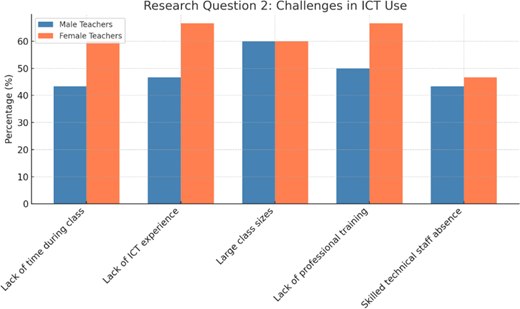
The study identified several challenges and barriers to the effective use of ICT in English teaching, with notable differences in how male and female teachers perceive these challenges. One significant issue highlighted by both groups was the lack of time during class periods to integrate ICT into their teaching. Among female teachers, 60% agreed that limited time in class is a barrier, compared to 43.3% of male teachers. This indicates that female teachers may feel greater pressure to adhere to time constraints, which limits their ability to incorporate ICT tools effectively.
Another challenge frequently cited was the lack of teaching experience with ICT. A majority of female teachers (66.6%) agreed that insufficient experience with ICT is a barrier, compared to 46.6% of male teachers. This suggests that female teachers are more likely to perceive a lack of technical competence as an obstacle to ICT integration. Male teachers, on the other hand, were more likely to remain neutral (16.6%) or disagree (13.3%), indicating either greater confidence in their abilities or less acknowledgement of this issue as a barrier.
Another significant hurdle was the issue of large class sizes. Both male and female teachers agreed that managing large classes poses challenges for effective ICT use, with 60% of each group agreeing to this statement. However, female teachers (20%) were slightly more likely than male teachers (16.6%) to strongly agree, highlighting their heightened awareness of the logistical difficulties posed by large class sizes in using ICT effectively.
A critical barrier reported by both genders was the lack of professional training in ICT. Female teachers were particularly vocal about this issue, with 66.6% agreeing and 30% strongly agreeing that insufficient professional training is a significant obstacle. In contrast, 50% of male teachers agreed and 23.3% strongly agreed, reflecting slightly lower concern compared to their female counterparts. These findings emphasize the importance of providing targeted professional development opportunities, particularly for female teachers, to enhance their confidence and competence in using ICT tools effectively.
In addition, the availability of skilled support staff for ICT usage in schools was another concern highlighted in the findings. Female teachers (40% strongly agreed and 46.6% agreed) were more likely than male teachers (33.3% strongly agreed and 43.3% agreed) to report that the absence of skilled staff in computer labs hindered their ability to use ICT effectively. This indicates that female teachers may rely more on external technical support to facilitate their ICT usage.
In summary, the study underscores the various challenges faced by male and female teachers in integrating ICT into English teaching. Female teachers are more likely to identify barriers such as a lack of time, insufficient training and inadequate technical support. In contrast, male teachers are comparatively less likely to view these factors as significant obstacles. These findings highlight the need for targeted interventions, including professional training programs and improved technical support, to address the challenges faced by teachers in using ICT effectively in their classrooms (see Figure 1).
Qualitative findings
The viewpoints of male and female English teachers regarding the advantages of using ICT in English teaching in public secondary schools are as under:
Advantages of using information and communication technology in English teaching
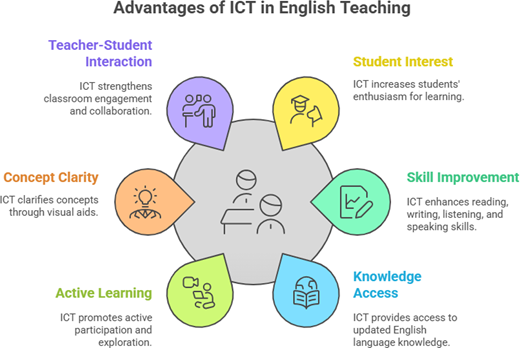
The analysis reveals that the majority of male and female teachers recognize the significant advantages of incorporating ICT in English teaching. They agree that ICT enhances students’ interest in learning, improves their skills (reading, writing, listening and speaking) and facilitates access to a wide range of updated knowledge about the English language (see Figure 2).
One male respondent stated, “students become active learners, and they are motivated to explore new things for English language learning, while the teacher transitions into more of a facilitator.” Male teachers emphasized that ICT improves students’ grammar, vocabulary, comprehension, writing skills and pronunciation. They also noted that using ICT in classrooms clarifies concepts for students, making lessons more engaging and effective.
Female teachers highlighted ICT’s ability to accelerate the learning process. According to one female respondent, “By using different images, a teacher can provide clear concepts to her students.” Many female teachers mentioned that ICT fosters students’ interest and motivation to learn. One female teacher added, “The use of ICT in English language classrooms enhances teacher-student interaction,” demonstrating how ICT strengthens classroom engagement and collaboration. The qualitative data highlights a crucial insight that female teachers tend to view ICT as a student-centred innovation, while male teachers focus on performance enhancement. These narratives reinforce the statistical findings and show how gendered beliefs influence ICT integration beyond access or skill level.
Challenges of using information and communication technology in English teaching
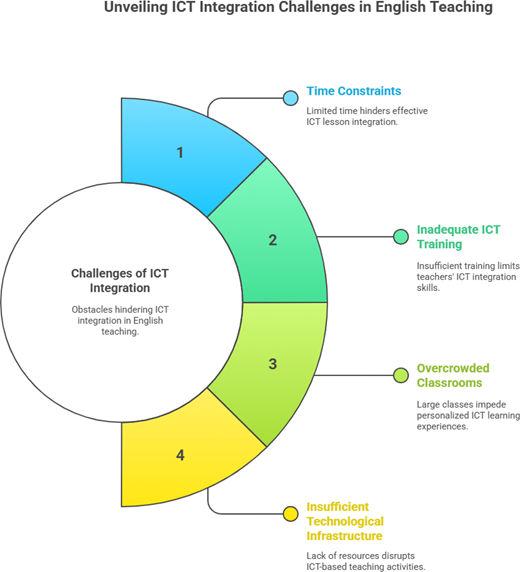
The findings also reveal that both male and female teachers face several barriers to integrating ICT into English teaching in public secondary schools (see Figure 3). A common challenge cited by both genders is the limited time available during a class period. Typically, a class period in public secondary schools is 40 min, which teachers find insufficient to set up and use ICT tools effectively. One male respondent commented:
The main problem of using ICT in English teaching is the lack of time because the duration of the period is too short to set up multimedia, it could take half of the period.
Another major obstacle identified by teachers is the lack of training and experience with ICT. A male respondent noted, “There is a lack of proper training for teachers on how to utilize ICT in English teaching.” In addition, male teachers expressed concerns about students becoming overly dependent on technology, with two respondents stating, “By using ICT in English teaching and learning, students rely entirely on technology. They find all the answers on the internet, which limits their creativity.”
Female teachers highlighted the lack of access to computers and multimedia facilities in classrooms as a significant challenge. One female teacher observed, “Many teachers are highly educated, but they lack command over computers. Some of them cannot even operate such modern technologies.” Female respondents also emphasized the difficulty of managing large class sizes in public secondary schools, with typical classrooms accommodating 45–50 students. This overcrowding complicates the effective use of ICT in English teaching. Interestingly, female teachers’ heightened concern about time and training may not only reflect technical barriers, but also deeper socio-cultural burdens, such as increased teaching load, administrative responsibilities or limited digital exposure, especially in traditionally male-dominated tech spaces.
The qualitative findings reveal more profound insights into the gendered nature of ICT adoption. Female teachers, particularly those with less teaching experience or working in schools with limited resources, reported more challenges related to time and ICT training. Male teachers, however, with greater experience or teaching in better-equipped schools, appeared to prioritize efficiency and practical uses of technology. For example, a male teacher in an urban school with ample resources reported that ICT is useful primarily for efficiency. In contrast, a female teacher in a rural school with fewer resources highlighted the collaborative benefits ICT brings to student interaction. The findings also indicate that female teachers were more likely to report challenges such as lack of time, insufficient training and large class sizes, which may be exacerbated in under-resourced environments. These gendered barriers reflect the need for more tailored professional development opportunities and the importance of considering socio-economic contexts when addressing ICT adoption in education. In summary, while both male and female teachers recognize the advantages of ICT in enhancing English teaching and learning, they also face critical challenges, including limited class time, insufficient training, lack of resources and large class sizes. Addressing these issues could significantly improve the integration and effectiveness of ICT in English classrooms.
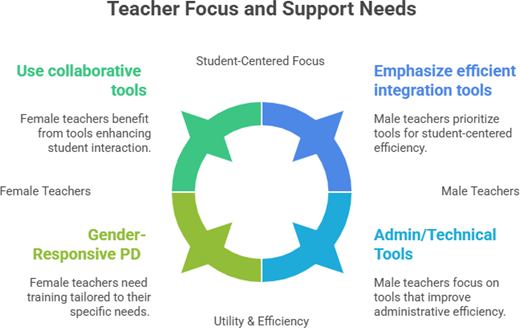
To visually consolidate the gender-based variations in attitudes and challenges related to ICT use in English teaching, Table 5 presents a comparative summary of the findings. This includes the percentage responses, perceived barriers and pedagogical inclinations of male and female teachers. Based on these patterns, context-specific recommendations are offered to inform targeted interventions. In addition, as illustrated in Figure 4, female teachers tend to favor collaborative, student-centred ICT tools, whereas male teachers emphasise administrative and efficiency-enhancing technologies. These insights suggest the need for differentiated professional development strategies.
Discussion
This study aimed to explore the perceptions, attitudes and challenges faced by male and female teachers in the use of ICT for English teaching at the 9th-grade level in public secondary schools of Rawalpindi, Punjab. The sample consisted of 280 English teachers, equally divided between male and female respondents, providing balanced gender representation. The study’s findings contribute to the growing body of literature on ICT integration in education, focusing on gender-based differences in attitudes and challenges. While the presence of functional labs and internet suggests progress, the lack of classroom-integrated tools like projectors raises questions about the depth of ICT integration. This reveals a tendency for policy implementation to focus on surface-level infrastructure rather than pedagogically relevant tools. Without classroom-level integration, teachers may view ICT as peripheral rather than central to instruction.
The findings revealed that a majority of public secondary schools in Rawalpindi have functional computer labs and internet connectivity. Post hoc analysis revealed that the gap in viewing ICT as a time-saving tool was greatest among teachers with over ten years’ experience and in schools with scarce ICT resources. In contrast, both younger cohorts and those in well-equipped schools held more similar views. This suggests that digital nativity and resource availability interact with gender to shape teachers’ attitudes, underscoring the need for intersectional support, tailoring training and infrastructure improvements not just by gender but also by experience level and school context. This finding aligns with Social Constructivist perspectives on how context mediates technology use (Vygotsky, 1978) and with extensions of TAM that incorporate institutional factors (Venkatesh and Bala, 2008).
This finding contrasts with earlier studies, such as Hamid et al. (2021), Murithi and Yoo (2021), and Wahyuningtyas et al. (2022), which reported that many schools in Pakistan lacked computers and internet facilities. This infrastructure improvement could be attributed to recent government initiatives aimed at increasing digital literacy and ICT access in schools (UNESCO, 2019). However, the analysis also showed that most schools lacked projectors and multimedia facilities in classrooms, which aligns with the findings of Alvi et al. (2024), who also noted the limited availability of such tools in Punjab schools. These gaps highlight the uneven distribution of ICT resources, with basic infrastructure being prioritized over advanced teaching tools. The study found that both male and female teachers perceive ICT positively in English teaching, emphasizing its role in developing student interest, enhancing learning speed and improving language skills. Similar to the findings of Chau (2021), this study revealed that students respond positively to ICT because it motivates them and provides real-life learning experiences. ICT tools like multimedia, online resources and interactive applications were reported to enhance students’ vocabulary, pronunciation and comprehension skills, corroborating the findings of Alobaid (2020). These tools shift the classroom dynamic, making students active participants rather than passive learners. Female teachers were particularly more likely to emphasize the collaborative and interactive potential of ICT, aligning with Social Constructivist principles, which highlight the importance of interaction and collaboration in learning (Vygotsky, 1978). On the other hand, male teachers placed greater emphasis on ICT’s efficiency and practicality, a perspective supported by the TAM, which suggests that PU drives technology adoption (Davis, 1989). These gendered differences in perceptions reflect broader societal and cultural influences on how teachers approach technology. These differences in perception are not merely personal preferences but reflect systemic inequalities in training access, support structures and societal expectations. Addressing this requires not just training, but redesigning institutional practices that make ICT use more accessible and comfortable for female teachers, such as women-led mentorship programs and flexible technical support systems.
Both male and female teachers expressed positive attitudes toward ICT use, agreeing that it saves time, reduces energy consumption and supports lesson preparation. Female teachers, however, were more likely to view ICT as enhancing teacher-student interaction and fostering student interest. These gender-based differences must be understood within the broader socio-cultural and institutional fabric of Pakistan’s education system. Female teachers in public schools often navigate cultural expectations that limit their mobility, reduce their access to off-site training opportunities, and increase their unpaid caregiving responsibilities, all of which restrict time and energy for professional development. Moreover, systemic issues such as male-dominated school leadership, unequal access to ICT infrastructure and the absence of gender-sensitive policy implementation further constrain women’s engagement with technology. Thus, the challenges reported by female teachers, ranging from limited confidence to reliance on external ICT support, are not just individual deficits but reflect more profound structural inequities. Addressing these disparities requires transformative policies that go beyond training, including equitable leadership pathways, localized mentoring programs and infrastructure policies tailored to the unique needs of female educators in both urban and rural settings. This finding aligns with studies by Ong and Quek (2023), which found that English teachers generally have positive attitudes toward ICT use but often lack the knowledge or training to use these tools effectively. The integration of ICT in English teaching was perceived to enhance learning outcomes, particularly in developing language skills such as vocabulary, grammar and pronunciation(Wei, 2021). Saad (2023) similarly found that teachers had high perceptions of ICT use and integrated technology into their teaching, supporting the findings of the current study. However, the effectiveness of ICT integration depends significantly on teacher competence and the availability of resources, which remain inconsistent across schools.
Challenges in information and communication technology integration
Despite the positive perceptions, several challenges hinder the effective use of ICT in English teaching. Both male and female teachers identified common barriers, including lack of time during class periods, limited teaching experience with ICT, large class sizes, insufficient professional training and inadequate technical support. These challenges are consistent with the findings of Champa et al. (2021), who reported that a shortage of class time, a lack of technical support and inadequate internet access were significant obstacles to ICT integration in high schools. Female teachers were more likely to report challenges related to technical competence and training, which aligns with studies by Abel et al. (2022), indicating that female teachers often face greater barriers to ICT adoption. This disparity underscores the need for targeted professional development programs to address gender-specific challenges and build confidence among female teachers. Similarly, the absence of skilled support staff was a notable issue, with female teachers relying more on external technical assistance than their male counterparts (Iqbal et al., 2022). Large class sizes were another significant barrier, with both male and female teachers agreeing that overcrowded classrooms make it challenging to implement ICT-based teaching methods effectively. This finding is supported by Ng and Yunus (2021), who highlighted logistical challenges as a critical factor limiting technology use in education. Time constraints during class periods further exacerbate this issue, as setting up ICT tools often consumes valuable teaching time, leaving little room for effective implementation.
The findings of this study align with and expand upon existing literature. For example, Dele-Ajayi et al. (2021) emphasize the motivational and skill-enhancing benefits of ICT, which were similarly observed in the current study. However, unlike previous studies that predominantly focused on the availability of resources (Yakin et al., 2022), this study delved deeper into gendered differences in attitudes and challenges, providing a more nuanced understanding of ICT integration in English teaching. The study’s results also highlight the applicability of theoretical frameworks. The TAM explains how perceptions of usefulness and ease of use influence male teachers’ focus on ICT’s efficiency and practicality, while Social Constructivism underscores female teachers’ emphasis on interaction and collaboration. This dual theoretical perspective offers valuable insights into how individual and contextual factors shape ICT adoption in education. The observed gender-based differences must be interpreted within the broader socio-cultural and institutional contexts of Pakistani public schools. Factors such as access to in-service training, exposure to digital tools during teacher education, and prevailing gender norms around technology use likely influence the differing attitudes and experiences. For instance, limited mobility or family responsibilities may impact female teachers’ opportunities for digital skill development, while male teachers may benefit from more institutional encouragement to engage with ICT. These contextual dimensions deserve further exploration to avoid reinforcing simplistic or stereotypical gender narratives. A critical issue emerging from the data is that the current model of ICT integration may not be sustainable without systemic reform. If training, infrastructure and pedagogical alignment are not addressed simultaneously, the burden falls solely on the teacher. This may exacerbate burnout, particularly among female educators already facing institutional constraints. A more holistic strategy is needed, one that includes infrastructure, support and continuous pedagogical upskilling.
While this study reports differences in how male and female English language teachers perceive and use ICT, it is essential to interpret these findings through a critical and inclusive lens. The intention is not to suggest inherent deficiencies in either gender but to highlight how contextual factors such as access to training, cultural expectations and institutional support can differently shape teachers’ experiences. For instance, female teachers’ reported challenges with ICT may reflect structural inequalities in access to professional development, rather than lower competence. Conversely, male teachers’ reported confidence may be linked to greater exposure or social encouragement to engage with technology. This study advocates for gender-responsive and equitable professional development strategies that empower all teachers, irrespective of gender, to integrate ICT effectively.
Practical implications for policy and practice
This study offers several practical implications for promoting gender-equitable ICT integration in Pakistani public schools. First, there is a need to establish school-based ICT mentorship programs, particularly led by experienced female teachers, to support their peers in navigating digital tools and fostering confidence through peer learning. In addition, mobile ICT training units can be introduced in rural areas to ensure that teachers with limited mobility or access to training centers are not left behind. Education departments should also consider adopting gender-responsive budgeting strategies to ensure equitable distribution of ICT infrastructure and technical support, especially in female-majority schools. Furthermore, integrating ICT competency into teacher evaluation and promotion criteria while accommodating gender-specific challenges could incentivize broader technology adoption. These interventions, when tailored to local needs and implemented through collaborative partnerships with NGOs and teacher training institutions, can help bridge the gender gap in ICT use and enhance the quality of English language instruction in public secondary schools.
Limitations and future research implications
Although this study was situated in public secondary schools in Rawalpindi, Pakistan, the gender-based differences in ICT integration resonate with findings from other developing and transitional educational systems. Similar challenges, such as limited access to training, infrastructure gaps and socio-cultural barriers, have been reported in countries like Bangladesh, Nigeria and Indonesia, where female teachers often face structural disadvantages in adopting technology (Rahman et al., 2022; Tondeur et al., 2020). The observed gendered patterns in perceptions of female teachers emphasise collaboration and student-centred use. In contrast, male teachers focus on utility and efficiency, reflecting broader pedagogical orientations that may transcend national boundaries. These findings offer a basis for comparative studies and highlight the need for context-sensitive, gender-responsive ICT policies across diverse educational systems, particularly in the Global South. Future research should expand the scope to include both urban and rural settings as well as private schools to offer a more comprehensive picture of ICT integration nationwide. While this study highlighted gender-based differences, it did not fully address the socio-cultural and institutional factors that shape these differences. Future research should explore how cultural norms, leadership support and access to ICT training influence teacher attitudes and practices, specifically regarding gender. Longitudinal studies could also be conducted to examine the sustained impact of ICT interventions and training programs over time, providing insights into how these changes evolve. Finally, this study acknowledges that while gender was the primary variable, other intersecting factors such as age, years of teaching experience, previous exposure to ICT training and school location likely influence ICT attitudes and practices. Future research incorporating intersectional analyses will offer a deeper and more inclusive understanding of ICT adoption in education.
Conclusion
This study offers insights into gender-based attitudes and challenges and the use of ICT in English teaching. Both groups see value in using technology, but their experiences differ. While male teachers in this study often emphasized the efficiency and technical benefits of ICT, female teachers highlighted its role in fostering collaboration and student interaction, likely reflecting differing professional experiences and access to training opportunities. The study also identified significant challenges that prevent effective ICT use, such as limited training, large class sizes, time constraints and lack of technical support. These challenges are more pronounced for female teachers, pointing to a need for targeted support and resources. Despite these barriers, ICT has a strong potential to improve English language teaching. It can increase student engagement, support language skill development and encourage modern teaching methods. To fully realize these benefits, schools and policymakers must ensure fair access to resources and training for all teachers. As technology becomes more central to education, inclusive and effective ICT integration will be critical for improving learning outcomes.
Ethics statement
This study received ethics approval from the Institutional Ethical Board (IEB) of Zhejiang Normal University. All participants were informed about the purpose of the study and the confidentiality of their personal information. Written informed consent was obtained from each participant before their involvement in the research. Participants were assured that their participation was voluntary, and they had the right to withdraw from the study at any time without any consequences. All data collected for this study were anonymized and securely stored to protect participants’ privacy. The research team adhered to the ethical guidelines and principles set forth by Zhejiang Normal University throughout the study to ensure the responsible and respectful treatment of all participants involved.
Informed consent
For this study, informed consent was obtained, and all participants provided written consent. In addition, the ethics committee reviewed and approved the need for consent.
Declaration of AI assistance
Upon completing this manuscript, the authors used ChatGPT and Grammarly for final language polishing, coherence and readability enhancement. Post-editing with these tools, the authors thoroughly reviewed and made necessary modifications, assuming full responsibility for the content presented in this publication.
Funding
No funding is provided for this study.