This study aims to examine the relationship between six specific Audit Committee (AC) features (size, independence, gender diversity, financial expertise, meeting frequency and tenure) and the degree of Environmental, Social and Governance (ESG) decoupling.
On a sample of 3,465 publicly listed large firms worldwide from 2009 to 2023 (13,488 firm-year observations) a random-effects Tobit regression for panel data and the generalized method of moments (GMM) were estimated.
The results show that ACs with greater gender diversity and financial expertise are more effective at improving the ESG reporting reliability by reducing ESG decoupling. However, AC resources and diligence, as measured by AC size, tenure and meeting frequency, do not significantly impact ESG decoupling.
The findings suggest that the AC configuration enhances the quality and integrity of ESG information by reducing the divergence between symbolic disclosures and substantive actions.
The study provides actionable insights for strengthening ESG accountability frameworks and reducing ESG decoupling in corporate reporting.
This is the first study to systematically examine the relationship between AC characteristics and ESG decoupling.
1. Introduction
Environmental, social, and governance (ESG) information has become as important as financial information in corporate reporting (Saeed et al., 2026). However, the subjective and flexible nature of ESG reporting frameworks enables firms to select which information to disclose (Velte, 2023), resulting in discrepancies between reported ESG commitments and actual actions and performance (Sauerwald and Su, 2019). These discrepancies, known as ESG decoupling, compromise the reliability of ESG information, reducing its potential to drive corporate accountability and societal change (Kazim et al., 2025). Therefore, it is essential to identify mechanisms that reduce ESG decoupling to ensure that ESG reporting serves its intended purpose of informing stakeholder decisions and promoting organizational transparency (Cepêda et al., 2025b).
In this respect, the role of corporate governance (CG) in promoting sustainability and in enhancing transparency in ESG reporting has been highlighted (García-Sánchez, 2021). Evidence has demonstrated that effective CG structures are paramount for improving the reliability of corporate disclosures and mitigating the risk of ESG decoupling (Bataineh et al., 2025). Boards of directors are an important governance mechanism, overseeing reporting processes, internal controls, and compliance with standards (Abweny et al., 2025). Recent studies demonstrate that specialized committees, particularly those focused on corporate social responsibility (CSR), help reduce ESG decoupling (Gull et al., 2024). However, little research has examined the role of audit committees (ACs) in mitigating ESG decoupling (Velte, 2023, 2025a), despite ACs' growing involvement in overseeing ESG disclosure processes (Al-Shaer and Zaman, 2018). Aside from Velte's (2025c) study, which examined the impact of gender diversity in ACs on environmental decoupling, no prior research has investigated the relationship between ACs and ESG decoupling (Cepêda et al., 2025a).
Widely recognized for their effectiveness in monitoring financial reporting quality (Alcaide-Ruiz and Bravo-Urquiza, 2022), ACs can bridge the gap between symbolic ESG commitments and substantive corporate actions by enforcing stricter disclosure practices (Pasko et al., 2024). As firms increasingly integrate sustainability into their strategies, ACs should play a more active role in guaranteeing the reliability of ESG reporting (Velte, 2025a). However, how effectively ACs fulfill this role depends on their composition, structure, and functioning, as these attributes determine their capacity to monitor complex and evolving ESG issues (Pozzoli et al., 2022).
This study aims to address a gap in the literature by empirically investigating how AC characteristics influence ESG decoupling. Using an extensive dataset of 13,488 firm-year observations from 3,465 publicly listed large firms worldwide from 2009 to 2023, we examined the relationship between six specific AC features (size, independence, gender diversity, financial expertise, meeting frequency, and tenure) and ESG decoupling. We selected these attributes because of their widespread recognition as indicators of internal audit quality and effectiveness (Al-Shaer et al., 2017) and their potential to improve the quality and credibility of ESG reporting (Velte, 2025a). To substantiate the influence of these attributes on ESG decoupling, we draw on agency theory (AT) and the resource-based view (RBV), widely accepted frameworks for examining the role of CG mechanisms in ESG disclosure (García-Sánchez, 2021). Our results reveal that well-structured ACs meaningfully enhance the credibility of ESG reporting by mitigating the discrepancy between symbolic disclosures and substantive actions. Specifically, we demonstrate that ACs with greater gender diversity and financial expertise are more effective at improving ESG reporting reliability by reducing decoupling. However, AC resources and diligence, as measured by AC size, tenure, and meeting frequency, do not significantly affect ESG decoupling.
This study makes several significant contributions to the literature. First, to our knowledge, this is the first study to systematically examine the relationship between AC characteristics and ESG decoupling, offering a more detailed understanding of how internal governance design affects ESG transparency. Our findings emphasize the strategic importance of ACs as distinct governance structures with specialized oversight responsibilities. Additionally, the study offers new insights into the conditions under which ACs can effectively curb ESG decoupling by demonstrating the importance of AC gender diversity and financial expertise in this regard. Furthermore, the results reinforce key tenets of AT and RBV by showing that diverse, skilled ACs can serve as monitoring agents, reducing managerial discretion, while also providing expertise and external legitimacy in the increasingly complex domain of ESG reporting. These findings have practical implications for firms, investors, and policymakers concerned with improving the reliability of ESG information by providing actionable insights for strengthening ESG accountability frameworks and reducing greenwashing in corporate reporting.
The remainder of this paper is as follows: Section 2 summarizes previous research on the relationship between ACs and ESG reporting. Section 3 presents the theoretical framework and research hypotheses. Section 4 describes the study's empirical design. The results are presented in Section 5. Section 6 includes robustness checks and additional analyses. Section 7 discusses the implications of the findings, and Section 8 outlines the study's main conclusions.
2. Background and literature review
ACs are a pivotal component of effective CG systems (Almarayeh et al., 2022). Considered “the ultimate monitor” of a company's reporting process (BRC, 1999, p. 7), ACs ensure transparency and credibility in all company activities; though, their focus has primarily been on compulsory financial disclosure. Due to increased stakeholder demands for ESG information disclosure, however, ACs' role has expanded to include non-financial disclosure (Pucheta-Martínez et al., 2023). Therefore, AC characteristics influence management decisions regarding information disclosure, including ESG-related disclosure (Al-Shaer and Zaman, 2018).
Previous studies have primarily examined the existence and composition of ACs in relation to ESG reporting (Velte, 2023, 2025a). To a lesser extent, research has examined the association between AC characteristics and ESG performance, as well as the use of assurance services for ESG information. Most of this empirical evidence is based on single-country settings, often in emerging markets, and yields inconclusive or mixed results. Additionally, several studies have examined how AC existence and composition influence the quality, tone, and credibility of ESG disclosures. Once again, the results of these studies are mixed. Overall, however, AC attributes positively impact the quality, tone, and perceived credibility of ESG reports. Appendix A (in the Supplementary Online Appendix) summarizes the main findings from these prior studies.
Despite the growing body of research on ACs and ESG reporting (Velte, 2025a), there is virtually no empirical evidence explicitly addressing the relationship between AC characteristics and ESG decoupling. To the authors' knowledge, only one study has analyzed the impact of AC characteristics on environmental decoupling: Velte (2025c) examined the impact of AC gender diversity on environmental decoupling among STOXX Europe 600-listed companies, finding that greater AC gender diversity results in less decoupling. Other AC characteristics, specifically AC size, independence, and meeting frequency, were considered control variables in the study and were negatively associated with environmental decoupling. Additionally, two recent studies have incorporated AC-related variables into their models. Saeed et al. (2026) analyzed the impact of audit quality on ESG decoupling and found a significant negative association between AC independence—conceptualized as an audit quality attribute—and ESG decoupling. However, Pisano et al. (2025) examined the effect of board-level governance mechanisms on environmental decoupling and found that the presence of an AC was associated with non-significant or positive effects.
3. Theoretical framework and research hypotheses
This study uses AT and RBV to examine how ESG decoupling is influenced by AC characteristics. AT posits that managers may prioritize their own interests over those of shareholders (Jensen and Meckling, 1976), especially regarding ESG initiatives and disclosures (Tumwebaze et al., 2022). This opportunistic behavior may result in ESG disclosures intended to boost legitimacy without backing them up with substantive actions (Pisano et al., 2025). To the extent that ACs serve as monitoring mechanisms that oversee financial and non-financial disclosures (Musallam, 2018), an effective AC can prevent ESG decoupling (Pozzoli et al., 2022).
RBV posits that differences in firm performance arise from internal resources that are difficult to acquire or imitate (Barney, 1991). In this context, ACs enable firms to adapt, access critical information, and enhance performance (Al-Shaer and Zaman, 2018). Consequently, ACs can be viewed as strategic resources that enhance firms' monitoring capabilities and provide access to diverse perspectives (Meqbel et al., 2025). As such, they improve the quality of ESG reporting oversight and mitigate the risk of ESG decoupling.
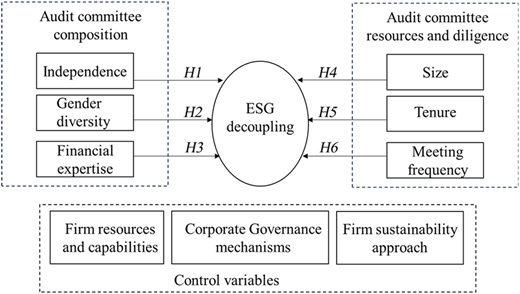
Based on these theories, we hypothesize that well-structured ACs can reduce the discrepancy between ESG reporting and actual results. Following Ghafran and O'Sullivan's (2013) categorization, AC attributes are grouped into two categories: AC composition (independence, gender diversity, and financial expertise) and AC resources and diligence (size, tenure, and meeting frequency).
3.1 Audit committee composition
3.1.1 Audit committee independence
Monitoring effectiveness is widely recognized as being linked to independence (Albitar et al., 2023). Independent AC members are expected to prioritize the interests of shareholders and external stakeholders over management's interests (Pasko et al., 2024), which enhances the objectivity of oversight functions and mitigates opportunistic reporting behavior (Uyar et al., 2023). From an AT perspective, independence strengthens the AC's ability to perform its supervisory role effectively (Raimo et al., 2021), enabling a more accurate reflection of actual performance in ESG disclosures (Hasan et al., 2022). Empirical evidence consistently shows that greater AC independence is linked with higher-quality and more comprehensive ESG reporting (Meqbel et al., 2025). Furthermore, Saeed et al. (2026) and Velte (2025c) report a negative association between AC independence and ESG decoupling.
Based on this theoretical and empirical foundation, we argue that greater AC independence enhances ACs' capacity to scrutinize corporate reporting and to prevent opportunistic or symbolic disclosure practices, thereby reducing the risk of ESG decoupling. Thus, we propose the following hypothesis:
AC independence is negatively associated with ESG decoupling.
3.1.2 Audit committee gender diversity
Gender diversity improves group decision-making and expands the range of perspectives within governance bodies (Velte, 2025c). According to RBV, women in top management positions are more attuned to ethical issues and stakeholder demands (Khemakhem et al., 2023). Accordingly, it is reasonable to assume that the presence of female directors on the AC could result in more rigorous oversight of ESG disclosures by improving deliberation, reducing groupthink, and incorporating broader stakeholder concerns (Gull et al., 2023a).
Previous studies have demonstrated that gender-diverse ACs tend to prioritize transparency and accountability (Khemakhem et al., 2023), diminishing the likelihood of symbolic or superficial ESG reporting. Consequently, gender-diverse ACs may be more effective in identifying discrepancies between ESG claims and actual practices, potentially leading to a reduction in ESG decoupling. Velte (2025c) is the only study that has analyzed the impact of AC gender diversity on environmental decoupling and found that higher gender diversity in ACs leads to less environmental decoupling. Therefore, the following hypothesis is proposed:
AC gender diversity is negatively associated with ESG decoupling.
3.1.3 Audit committee financial expertise
AC members' knowledge and experience in accounting, auditing, and finance enable them to provide high-quality oversight, as they are better prepared to interpret ESG information and detect discrepancies or inaccuracies (Pucheta-Martínez et al., 2021). According to RBV, AC members' financial expertise is a key resource that strengthens their ability to supervise disclosed information (Alcaide-Ruiz and Bravo-Urquiza, 2022), thereby mitigating the risk of token compliance or greenwashing. Similarly, AT suggests that AC members' expertise improves supervision quality and reduces information asymmetries (Dwekat et al., 2022). Empirical evidence supports this notion, demonstrating that AC members' financial knowledge and expertise lead to more accurate and comprehensive ESG reporting (Al-Shaer et al., 2017; Mohammadi et al., 2021; Pucheta-Martinez et al., 2021; Uyar et al., 2023; Meqbel et al., 2025). Accordingly, we propose the following hypothesis:
AC financial expertise is negatively associated with ESG decoupling.
3.2 Audit committee resources and diligence
3.2.1 Audit committee size
AC size reflects its structural capacity to distribute responsibilities and manage complex oversight functions (Dwekat et al., 2022), including those related to ESG reporting (Raimo et al., 2021). From a RBV perspective, larger ACs benefit from a broader pool of knowledge, skills, and viewpoints, strengthening oversight and facilitating deeper scrutiny of ESG disclosures (Meqbel et al., 2025). While excessive size can hinder coordination and reduce efficiency, a moderately larger AC is generally better equipped to detect inconsistencies between ESG communications and actual practices, ensuring alignment between disclosure and performance (Pasko et al., 2024).
Previous studies have reported positive impacts of AC size on the quantity and quality of disclosed ESG information (Mohammadi et al., 2021; Hassan et al., 2022; Albitar et al., 2023; Pasko et al., 2024; Umar et al., 2024; Meqbel et al., 2025). Regarding ESG decoupling, Velte (2025c) found that larger ACs are more effective in preventing environmental decoupling. Based on this theoretical foundation and empirical findings, we propose the following hypothesis:
AC size is negatively associated with ESG decoupling.
3.2.2 Audit committee tenure
AC members' tenure reflects their accumulated experience and knowledge of the firm's operations, culture, and governance processes (Pozzoli et al., 2022). According to AT, longer-serving AC members are more effective monitors because they have a better grasp of internal controls, reporting standards, and managerial behavior (Paolone et al., 2023). From a RBV perspective, longer tenure enables AC members to develop social capital and institutional knowledge (Paolone et al., 2023), enabling more effective ESG oversight (Bravo and Reguera-Alvarado, 2019). However, excessive tenure may compromise independence, reduce critical oversight, and lead to familiarity threats (Patro et al., 2018).
Regarding ESG reporting, Bravo and Reguera-Alvarado (2019) show that longer AC tenure results in more comprehensive and relevant disclosures. In contrast, Gull et al. (2023b) demonstrate that longer tenure of CSR committee members decreases ESG decoupling. We argue that moderate tenure, as a proxy for embedded, firm-specific expertise and knowledge, while maintaining critical distance (Asad et al., 2024), enhances AC effectiveness by balancing expertise and objectivity, thereby contributing to more accurate and faithful ESG reporting (Gull et al., 2023b). Therefore, the following hypothesis is stated:
AC tenure is negatively associated with ESG decoupling.
3.2.3 Audit committee meeting frequency
The frequency with which an AC meets is an indicator of its diligence, engagement, and commitment to fulfilling its oversight responsibilities (Dwekat et al., 2022). More frequent meetings signal a proactive governance approach, offering additional opportunities to address ESG-related matters, monitor reporting practices, and question managerial claims (Pasko et al., 2024). According to AT, increased oversight through regular meetings improves the reliability of disclosed information (Buallay and Al-Ajmi, 2020). From a RBV perspective, frequent engagement enables the AC to mobilize its resources more effectively for monitoring corporate reporting, thereby improving reporting quality (Al-Shaer and Zaman, 2018).
Empirical research shows that AC meeting frequency positively influences the extent and quality of ESG reporting (Appuhami and Tashakor, 2017; Bravo and Reguera-Alvarado, 2019; Arif et al., 2021; Pucheta-Martínez et al., 2023). Regarding ESG decoupling, Velte (2025c) found a negative association between higher AC meeting frequency and environmental decoupling. Based on the above discussion and empirical evidence, we posit that a higher meeting frequency signals greater AC proactivity and diligence and can help prevent symbolic ESG reporting practices. Therefore, we formulate the following hypothesis:
AC meeting frequency is negatively associated with ESG decoupling.
Figure 1 depicts the research model.
4. Material and methods
4.1 Population and sample
We selected international, listed companies as our target population. We focused on large, listed companies because they face stronger regulatory, investor, and public pressure to disclose ESG information (Belhouchet and Chouaibi, 2024). Furthermore, larger companies are more likely to overstate their ESG performance due to their high visibility (Abweny et al., 2025). To this end, we extracted a set of financial and sustainability information from the LSEG Refinitiv database for the period from 2009 to 2023. We chose this database because it is widely recognized and covers a broad range of ESG factors (Velte, 2023). Additionally, the study period is marked by substantial regulatory changes and heightened demand for ESG information (Velte, 2025b).
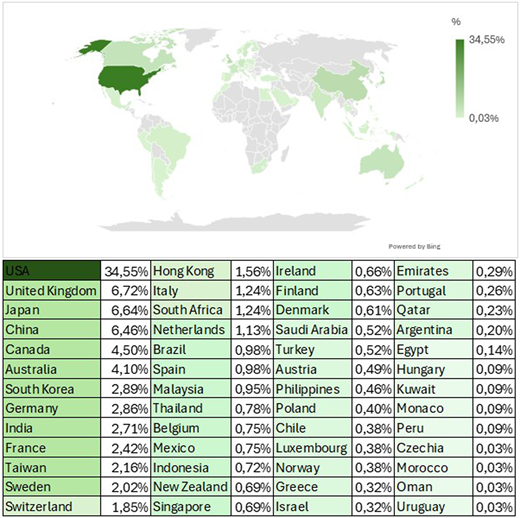
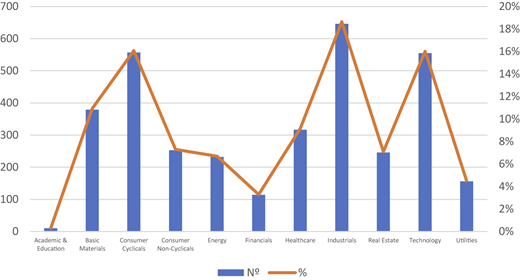
The sample was drawn from an initial unbalanced panel dataset consisting of 6,409 firms and 96,135 observations. Cases with missing information on the study variables and companies without information available for at least five consecutive years were eliminated from this initial panel (García-Sánchez et al., 2025). The final sample included 3,465 firms (13,488 observations). Figures 2 and 3 show the absolute and relative frequencies, respectively, by country and sector.
4.2 Variable conceptualization
The dependent variable (CSRGap) represents ESG decoupling. According to Cepêda et al.’s (2025b) literature review on ESG decoupling, the proxy developed by Hawn and Ioannou (2016) is commonly used to assess ESG decoupling. It reflects the absolute gap between a company's internal ESG policies and its external ESG disclosures, as measured by dummy variables constructed from specific ESG indicators sourced from the LSEG Refinitiv database. Following García-Sánchez et al. (2022) and Cepêda et al. (2025b), we used a modified version of the Hawn and Ioannou (2016) proxy, excluding certain items to prevent overlap. Thus, the CSRGap variable is based on 18 external and 20 internal items. After normalizing these items, we determined the CSRGap by subtracting the normalized values for two consecutive time periods (t and t−1).
The independent variables are the AC characteristics in terms of composition (independence (ACIndep), gender diversity (ACGenderDiv), and financial expertise (ACExpert)) and resources and diligence (size (ACSize), tenure (ACTenure), and meeting frequency (ACMeet)).
Furthermore, in line with previous research on ESG decoupling, we included a comprehensive set of control variables to minimize potential bias (Cepêda et al., 2025b). These variables include firm resources and capabilities such as firm size (Size), capital investment intensity (CAPEX), operating liquidity (CashFlowOA), economic profitability (ROA), leverage (Leverage), market value (TobinsQ), financial losses (LOSS), and total accruals scaled by cash flow (Accruals). We also included several variables related to CG mechanisms, including board size (Bsize), board gender diversity (BGenderDiv), and chief executive officer duality (CEO Duality), and other board committees, including the CG committee (GovCommittee) and the CSR committee (CSRCommittee). Finally, we included several variables related to the firm's sustainability approach: ESG transparency score (ESGS), external assurance of ESG reports (Assurance), and two variables representing the European Union's (EU) ESG reporting standardization (EUTaxonomy and CSRD). Three categorical variables were also included as control variables: country, year, and industry. Appendix B (in the Supplementary Online Appendix) shows the definitions of the variables.
4.3 Model
The model represented by the following equation analyzes the impact of AC attributes on ESG decoupling.
Where i identifies the firm and t is the year, ∝ are the coefficients to be estimated. The symbol η represents the unobservable heterogeneity, and ε represents the disturbance term.
For the empirical analysis, we employed Tobit regression for panel data. We used a random effects regression model, as indicated by the results of the Hausman test. This method captures unobserved differences across firms and combines cross-sectional and time-series data. We corrected for endogeneity by instrumenting the explanatory variables using time lags (García-Sánchez et al., 2022).
5. Results
5.1 Descriptive statistics
The average CSRGap is negative (−0.149), indicating that firms tend to mask their ESG reporting. In terms of AC characteristics, the average AC has 10 members, most of whom are independent (72%) and have financial expertise (83%). However, gender diversity is low (26%). On average, the AC holds 14 meetings per year. The average tenure of AC members is 10 years. Forty-four percent of companies provide assurance on their ESG reports. Appendix C (in the Supplementary Online Appendix) shows the descriptive statistics of the sample.
Appendix D (in the Supplementary Online Appendix) presents the Pearson correlation matrix and the results of the Variance Inflation Factor (VIF) test. The results indicate that the CSRGap variable is not significantly correlated with the independent or control variables, as evidenced by values below 0.8. Additionally, multicollinearity is absent, as all the variables in the model have VIF values below 10 (Uyar et al., 2023).
5.2 Main findings
As shown in Table 1, there is no statistically significant association between AC independence and CSRGap (∝1 = 0.0012808; p > 0.05). Therefore, we cannot accept hypothesis H1, which posited that AC independence reduces ESG decoupling. However, AC gender diversity (∝2 = −0.0004499; p < 0.05) and AC financial expertise (∝3 = −0.0359191; p < 0.01), are negatively and significantly associated with CSRGap. These results indicate that both AC compositional attributes reduce ESG decoupling, as hypothesized by hypotheses H2 and H3. Accordingly, these hypotheses can be accepted.
Regarding AC resources and diligence, the association between CSRGap and AC size (∝4 = −0.0012064; p > 0.1), between CSRGap and AC tenure (∝5 = 0.0002177; p > 0.1), and between CSRGap and AC meeting frequency (∝6 = −0.0202324; p > 0.1) are not statistically significant. These findings suggest that these three AC attributes do not affect ESG decoupling. Therefore, we reject hypotheses H4, H5 and H6.
Regarding the control variables, our results show that the EU's ESG reporting standardization negatively affects CSRGap. Specifically, the EU Taxonomy is negatively associated with CSRGap (∝21 = −0.0094624; p < 0.05), indicating that alignment with EU sustainability standards promotes greater consistency between ESG reporting and actual corporate practices. Similarly, the CSRD showed a negative and highly significant relationship with CSRGap (∝22 = −0.0082087; p < 0.01), suggesting that adoption of this European directive reduces ESG decoupling.
6. Complementary analysis and robustness tests
6.1 The effect of organizational and institutional context
Considering that the effect of AC characteristics on ESG decoupling can vary according to organizational and institutional context (Gull et al., 2023b, 2024), we analyzed how our results vary depending on CG quality, ESG industry sensitivity, and firms' origin country's development level. First, firms were classified into two groups according to their CG performance scores: those with good CG (scores above the sample average) and those with poor CG (scores below the sample average). Second, firms were categorized based on their industry's environmental sensitivity. Firms operating in sensitive industries, such as oil and gas, metals, mining, paper, and chemicals, were grouped together. All other industries were considered non-sensitive. Finally, according to Cepêda et al.'s (2025b, p. 17) country classification, we grouped firms by their country of origin into two categories: developed or emerging.
All tests are presented in Table 2 (the full online Table 2 is available in the Supplementary Online Appendix). The results for the AC compositional attributes are consistent with those from the main analysis. AC independence is not significantly associated with CSRGap. Meanwhile, AC gender diversity and AC expertise are negatively and significantly associated with CSRGap across all models, except for AC gender diversity in firms from emerging countries and operating in sensitive industries.
As in the main analysis, the attributes related to AC resources and diligence are not significantly associated with CSRGap, except for AC size in companies with poor CG, where a negative, significant association is revealed.
6.2 Analysis of AC typologies based on the percentage of independents, size, tenure, and meeting frequency
Because the main findings revealed a lack of significant impact, we delved deeper into the effect of AC independence, size, tenure, and meeting frequency on ESG decoupling. Based on sources such as the Blue Ribbon Committee, the United Kingdom Corporate Governance Code, and Organisation for Economic Co-operation and Development (OECD) reports, among others, we created categorical variables reflecting different AC configurations.
Regarding AC independence, the thresholds are based on regulatory recommendations favoring a majority of at least 50% on the independent committee, as well as guidelines considering a 100% majority to be the most stringent practice (OECD, 2021, 2022). Thus, we propose three AC typologies: LOW (≤50% independent members), MEDIUM (>50% and ˂100%), and HIGH (100%).
Regarding AC size, most codes and stock exchanges require or recommend that ACs have at least three directors (OECD, 2021, 2022). Additionally, the literature indicates that the most common range for efficacy is four to six members (Bravo and Reguera-Alvarado, 2019). We consider the following AC typologies: SMALL (≤3 members), MEDIUM (>3 and ≤ 6 members), and LARGE (≥7 members).
As regards AC tenure, the literature (Pozzoli et al., 2022) indicates that the median term for AC directors is five years. Furthermore, the UK Corporate Governance Code (2018) suggests that independence may erode after nine years. We consider the following AC typologies: LOW (≤5 years), MEDIUM (>5 and ≤ 9 years), and HIGH (>9 years).
Finally, although there is no consensus on the optimal number of AC meetings, CG codes and guidelines generally recommend three to four meetings per year for an effective AC. In line with common governance practices, we propose the following three AC typologies: LOW (<3 meetings), MEDIUM (3 or 4 meetings), and HIGH (>4 meetings).
In the model represented by Equation (2) we replaced the independent variables with twelve numerical variables. Each variable reflects a typology of AC: LOW/SMALL (0), MEDIUM (1), or HIGH/LARGE (2).
The results in Table 3 show that none of the proposed AC typologies are statistically significant predictors of the CSR Gap. This lack of significance indicates that variations in AC structural composition, categorized by these thresholds, support the stability of our primary findings, implying that they are not driven by subgroup effects based on AC distribution according to these attributes. The findings confirm a significant negative relationship between AC gender diversity ( = −0.0003601; p < 0.05) and financial expertise ( = −0.0378465; p < 0.01) and ESG decoupling.
The results demonstrate a significant influence of various control variables on ESG decoupling. Specifically, firm size ( = −0.0064318; p < 0.1) and CAPEX ( = −0.0001103; p < 0.01) are significantly and negatively associated with CSRGap, while firm operating liquidity ( = 2.71e-12; p < 0.05) and CEO duality ( = 0.0152728; p < 0.05) are positively and significantly associated with CSRGap. Finally, the results confirm the mitigating impact of the EU's ESG reporting standardization on ESG decoupling, as found in the primary analysis. Both the EU Taxonomy ( = −0.0090487; p < 0.05) and the CSRD ( = −0.0079151; p < 0.05) are both significantly and negatively associated with CSR Gap, suggesting that alignment with EU sustainability standards promotes greater consistency between ESG reporting and actual corporate practices. However, ESG performance is significantly and positively associated with CSRGap ( = 0.0010207; p < 0.01), indicating that firms with higher ESG performance tend to engage in ESG decoupling.
6.3 Addressing endogeneity concerns
To ensure that our main results are not affected by endogeneity issues, we reevaluated the main model represented in Equation (1) using the generalized method of moments (GMM). Previous research has adopted this approach in to address potential endogeneity in panel data (García-Sánchez et al., 2025). The results of the regressions are presented in Table 4. Estimations were performed using Stata, providing estimated coefficients and their standard errors for each explanatory variable. Additionally, we conducted the Arellano-Bond AR(2) test for first differences and the Hansen test for instrument validity. The AR(2) test is not significant (Pr > z = 0.542), indicating the absence of second-order autocorrelation. The Hansen test does not reject the null hypothesis (Prob > χ2 = 0.823), confirming the adequacy of the instruments. These diagnostics confirm the robustness of the GMM system results.
7. Discussion
The findings reveal that certain AC compositional attributes, such as gender diversity and financial expertise, are significantly associated with lower levels of ESG decoupling, highlighting the importance of AC composition in aligning ESG disclosures with actual sustainability practices (Meqbel et al., 2025). The negative association between AC gender diversity and ESG decoupling aligns with previous studies suggesting that female directors pay closer attention to ethical, social, and environmental issues and are more committed to transparency and accountability (Khemakhem et al., 2023), thereby reducing symbolic disclosure and promoting substantive engagement. This result aligns with Bravo and Reguera-Alvarado's (2019) findings that AC gender diversity improves the quality of ESG reporting. Our results also align with those of Velte (2025c), who found that greater gender diversity in ACs leads to environmental decoupling. Similarly, the negative association between AC financial expertise and ESG decoupling underscores the significance of AC members' professional competence in overseeing non-financial disclosures (Pozzoli et al., 2022). These findings align with those of Al-Shaer et al. (2017) and reinforce the notion that AC members' expertise enhances corporate reporting quality. Contrary to expectations, our results reveal no significant effect of AC independence on ESG decoupling. This finding contradicts previous studies associating higher AC independence with more complete ESG reporting (Buallay and Al-Ajmi, 2020; Meqbel et al., 2025) and less decoupling (Saeed et al., 2026; Velte, 2025c). However, our results align with those of Al-Shaer et al. (2017) and Pasko et al. (2024) regarding ESG reporting quality.
Regarding AC resources and diligence, our results do not indicate a significant impact on ESG decoupling. The lack of a significant effect for AC size and tenure may be due to the need for an adequately sized and tenured ACs (Asad et al., 2024); which could also explain previous mixed findings. Regarding AC meeting frequency, although ACs that meet more frequently may be able to more effectively monitor evolving ESG issues (Pasko et al., 2024), our findings suggest that simply meeting more frequently does not necessarily translate into greater effectiveness in aligning ESG disclosures with actual practices. Our findings regarding AC size and meeting frequency contrast with those of Velte (2025c), who found a negative association between both AC characteristics and environmental decoupling.
The absence of significant results for AC independence, size, tenure and meeting frequency does not negate their potential influence. Rather, these results suggest that the influence of these AC attributes may hinge on the context or interact with other board- or firm-level factors (Abweny et al., 2025). In this respect, the results of the complementary analyses indicate that the impact of AC characteristics on ESG decoupling varies depending on the organizational and institutional context. These findings align with those reported by Gull et al. (2024), Cepêda et al. (2025b) and He and Gan (2025). Specifically, AC gender diversity does not significantly affect ESG decoupling in companies based in emerging countries or operating in environmentally sensitive sectors. Conversely, AC size significantly reduces ESG decoupling in companies with poor CG.
Finally, our findings demonstrate that institutional pressures resulting from the new EU ESG reporting standards mitigate ESG decoupling. Alignment with the EU Taxonomy and the CSRD fosters greater consistency between ESG reporting and actual corporate practices, thereby mitigating decoupling. These results corroborate the positive influence of the EU regulatory framework on corporate transparency in sustainability reporting, as documented by García-Sánchez et al. (2023).
Theoretically, our findings support AT and RBV. We demonstrate that AC members' financial experience and gender diversity contribute to the reliability of ESG information and reduce symbolic ESG information (Dewkat et al., 2022). Th AC serves as a control mechanism and a strategic resource that strengthens the company's ability to adapt to external ESG pressures. Furthermore, our findings have practical implications for companies seeking to strengthen the credibility of their ESG disclosures and mitigate the risks associated with symbolic disclosure; they emphasize the importance of considering AC design as a key governance element, not just compliance obligation. From a regulatory perspective, our findings provide empirical evidence for current debates on CG reforms and ESG reporting standards (García-Sánchez et al., 2023), supporting the integration of ESG oversight responsibilities into the AC's formal mandate to strengthen sustainability accountability.
8. Conclusion
This study presents robust empirical evidence on the role of ACs in mitigating ESG decoupling. Our results show that ACs with greater gender diversity and financial expertise are more effective at bridging the gap between symbolic ESG disclosures and actual sustainability practices. These findings suggest that the AC configuration improves the quality and integrity of ESG information by mitigating decoupling.
However, this study has certain limitations that should be noted. First, while the analysis is based on a large, diverse sample, the results may not be extended to smaller companies or those in less-regulated markets, where governance structures and ESG reporting practices may differ significantly. Second, while the measure of ESG decoupling is based on existing literature, it may not fully capture the intricacies of symbolic sustainability reporting. Third, the study uses a quantitative approach and therefore does not provide qualitative insights into the internal dynamics of AC deliberations or the organizational processes that drive (or constrain) ESG transparency.
Future research could expand upon the study findings in several ways. First, the influence of gender diversity on ESG decoupling could be analyzed further by considering whether it depends on a critical mass of women on the AC. Second, scholars could examine the combined effects of AC characteristics and other governance mechanisms to gain a more comprehensive understanding of their roles in ESG accountability. Third, longitudinal and qualitative studies could examine how changes in AC composition or functioning affect ESG reporting behavior over time, offering a richer understanding of causal mechanisms. Finally, cross-country comparative analyses could investigate how institutional environments and regulatory regimes mediate the relationship between AC structures and ESG decoupling, shedding light on context-specific dynamics.
AI use disclosure statement
The authors declare that generative AI tools (DeepL Write) were used solely for language editing and translation under their full supervision. No AI tool contributed to the generation of research ideas, theoretical content, empirical analyses, or interpretations.
The supplementary material for this article can be found online.